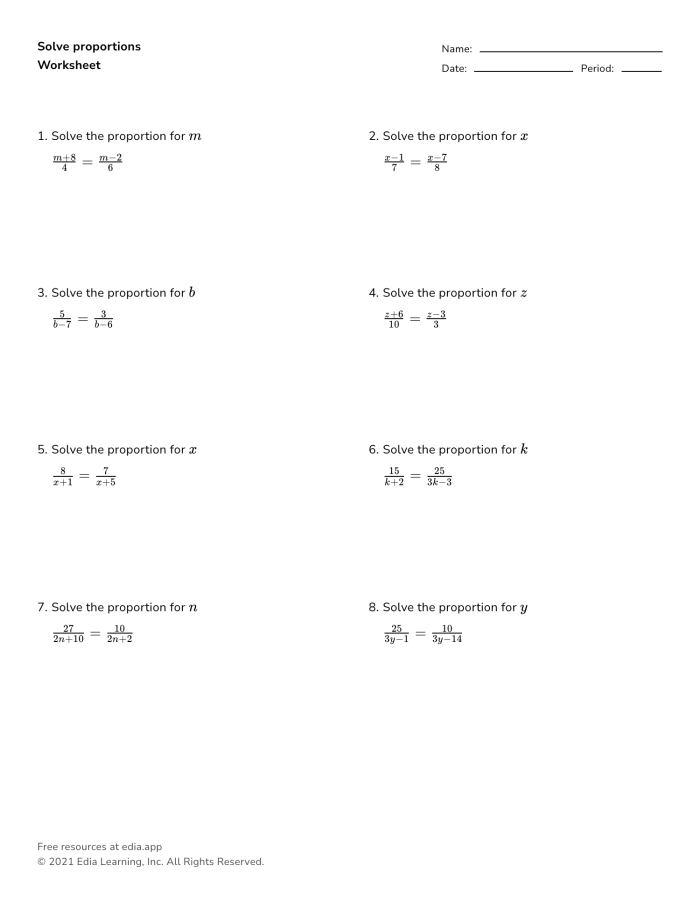
Proportions show up everywhere in seventh-grade math, and students who master them early gain confidence with more advanced algebra later. When you understand how to solve proportions, you’re learning to recognize relationships between numbers that scale together. This skill transfers directly to real-world situations like recipes, maps, and construction blueprints.
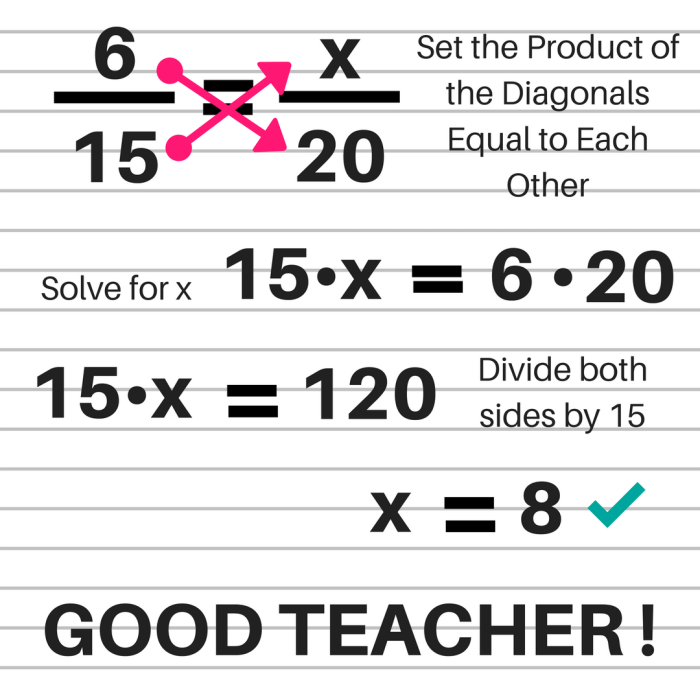
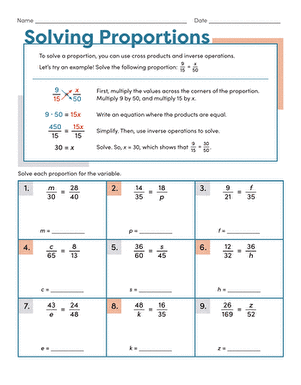
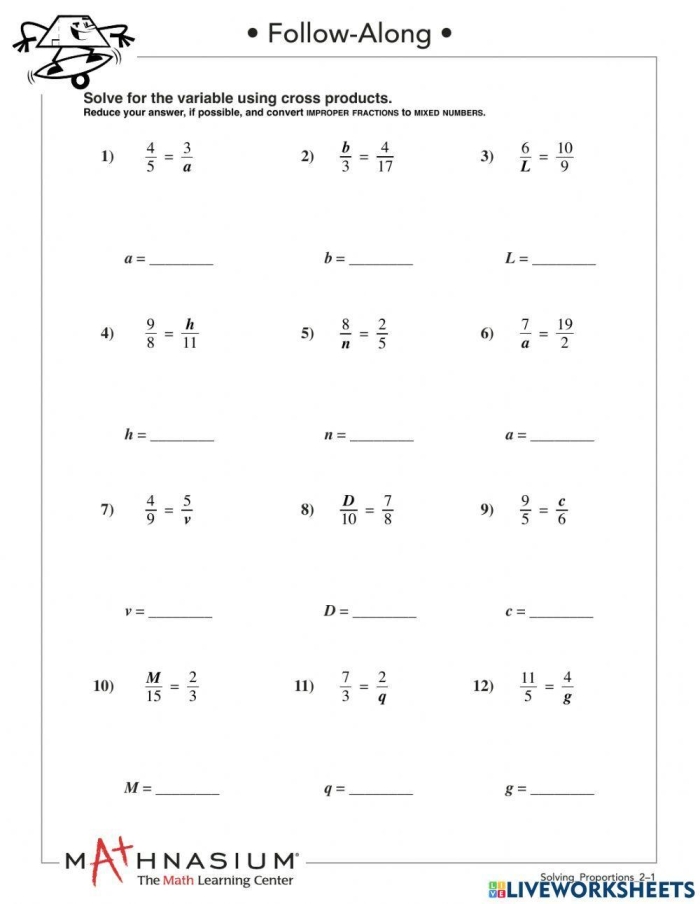
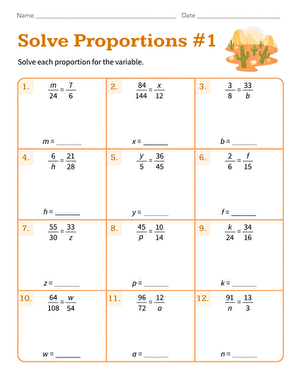
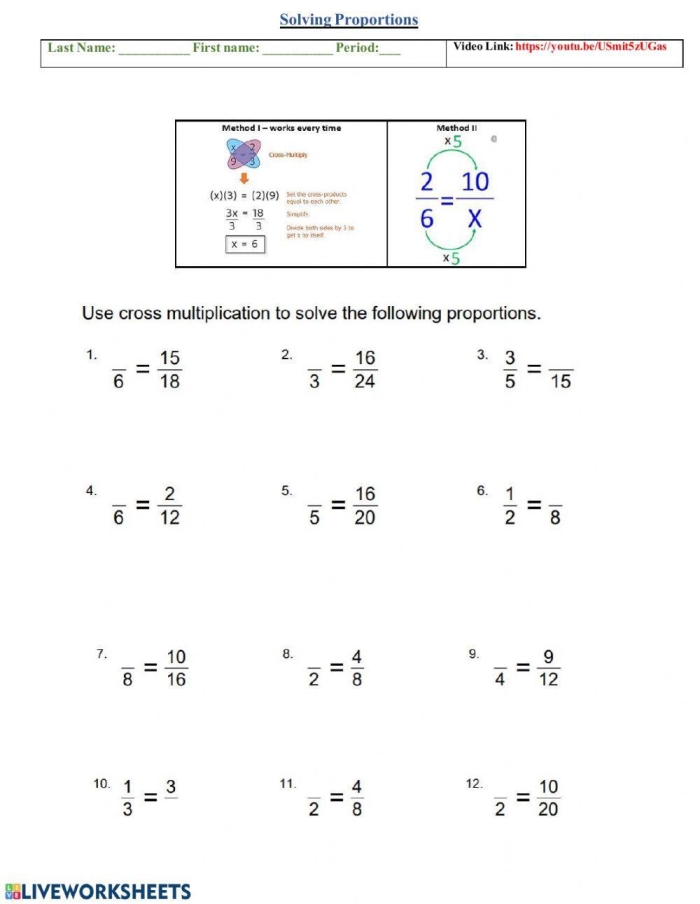
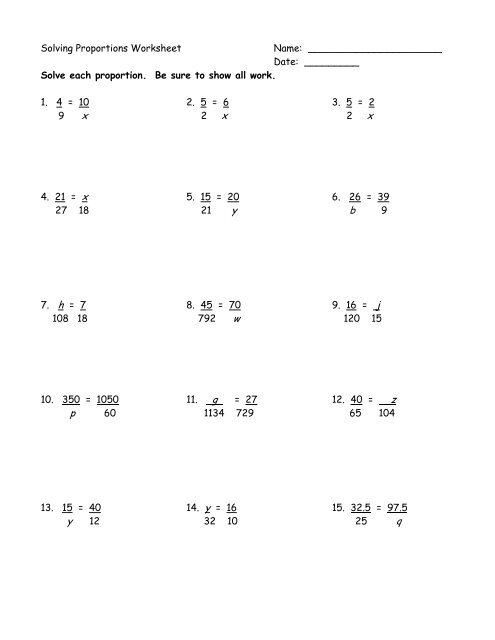
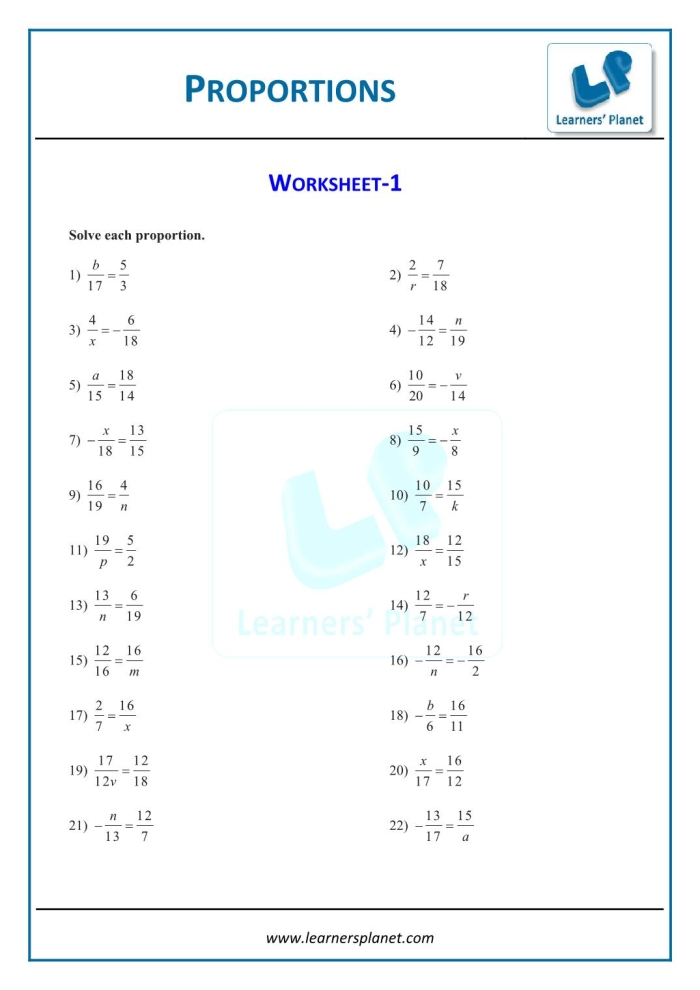
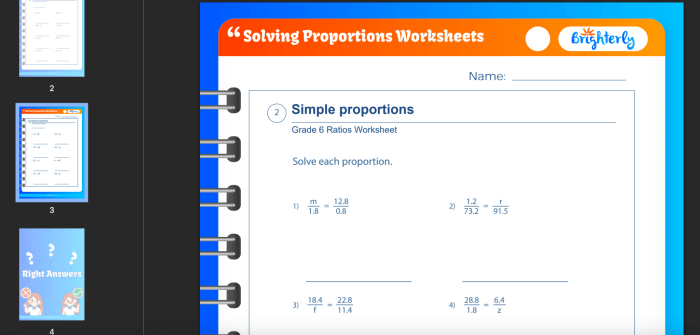
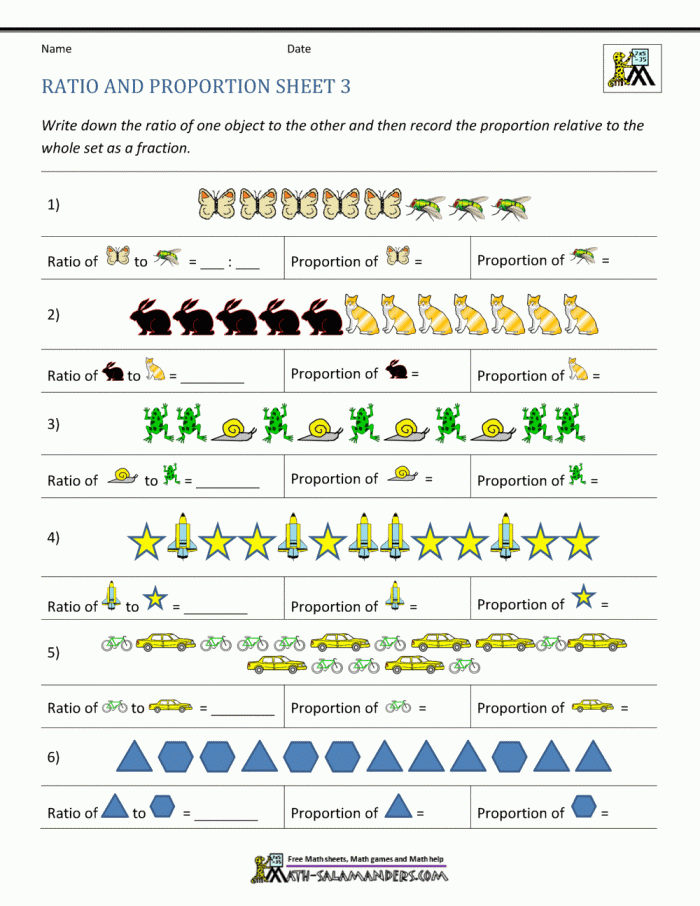
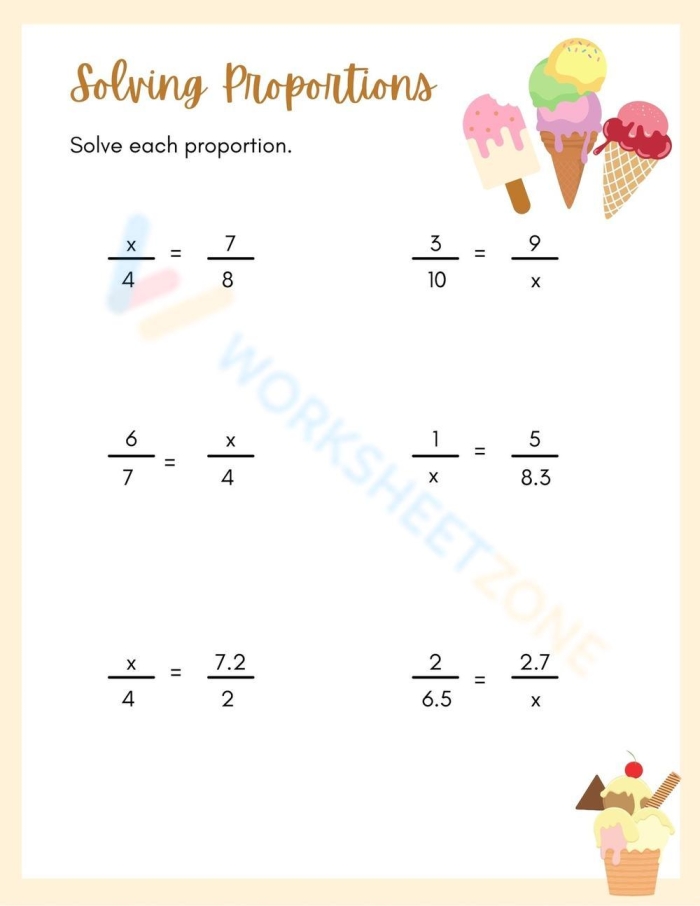
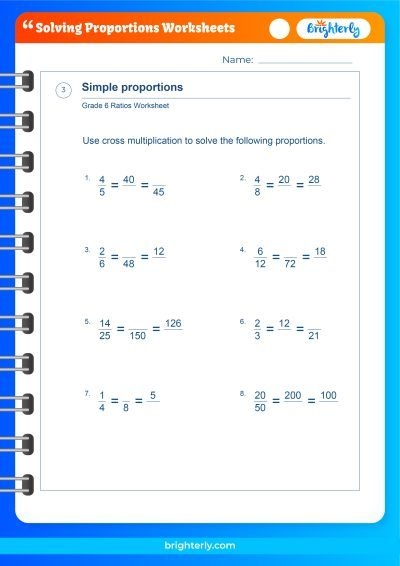
A proportion is simply an equation stating that two ratios are equal. For example, if 3 apples cost $2, then 6 apples cost $4. The basic setup looks like this: a/b = c/d. To solve, students cross-multiply and isolate the unknown variable. It sounds mechanical at first, but once students practice solving proportions through worksheets, the pattern becomes automatic and intuitive.
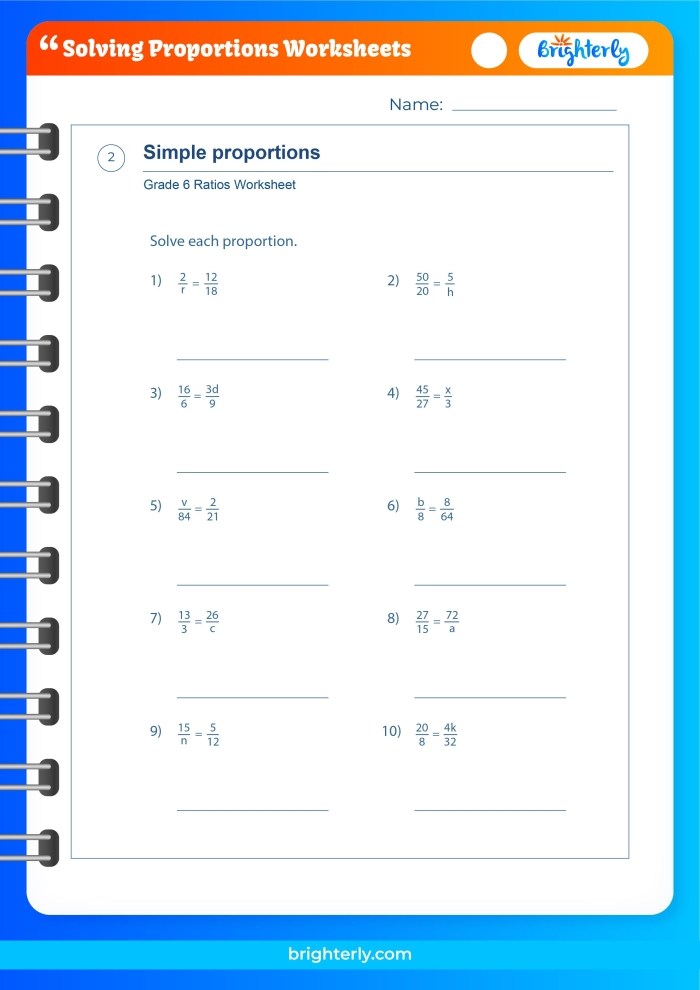
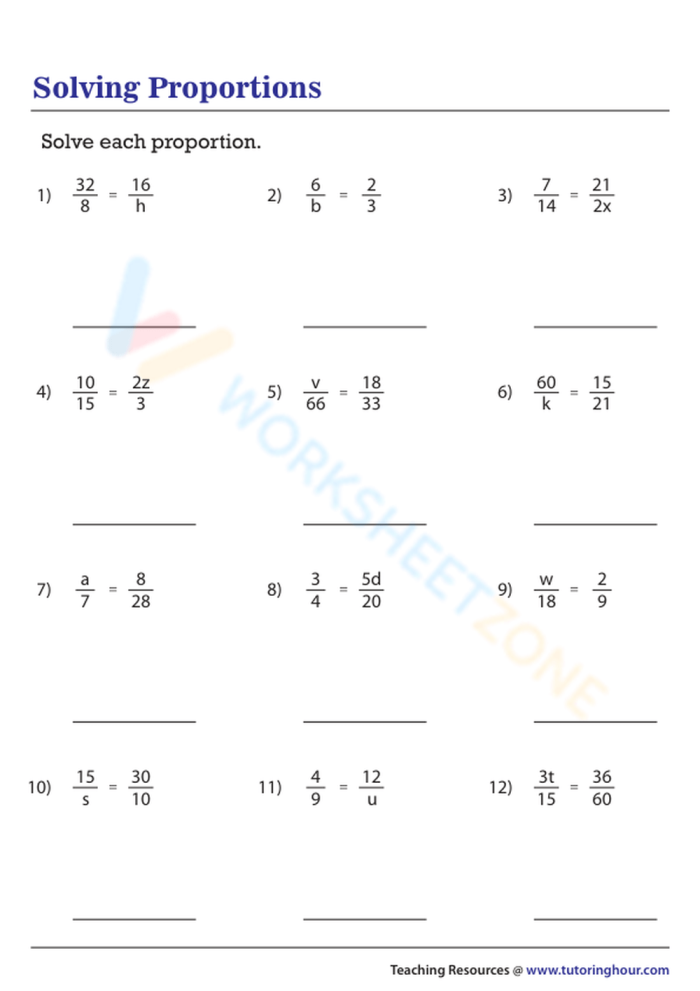
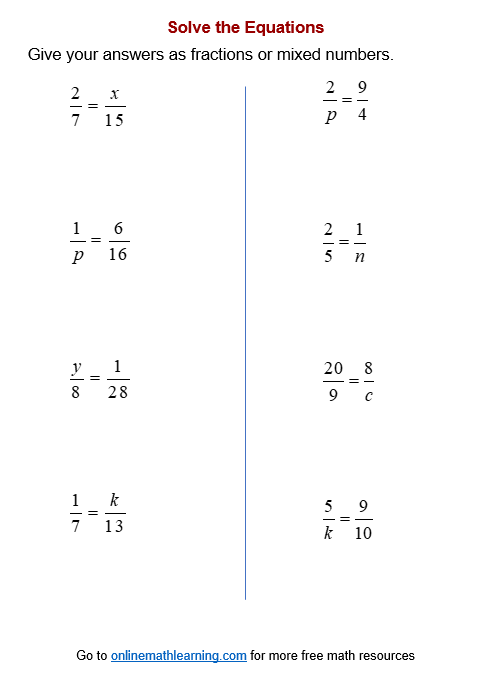
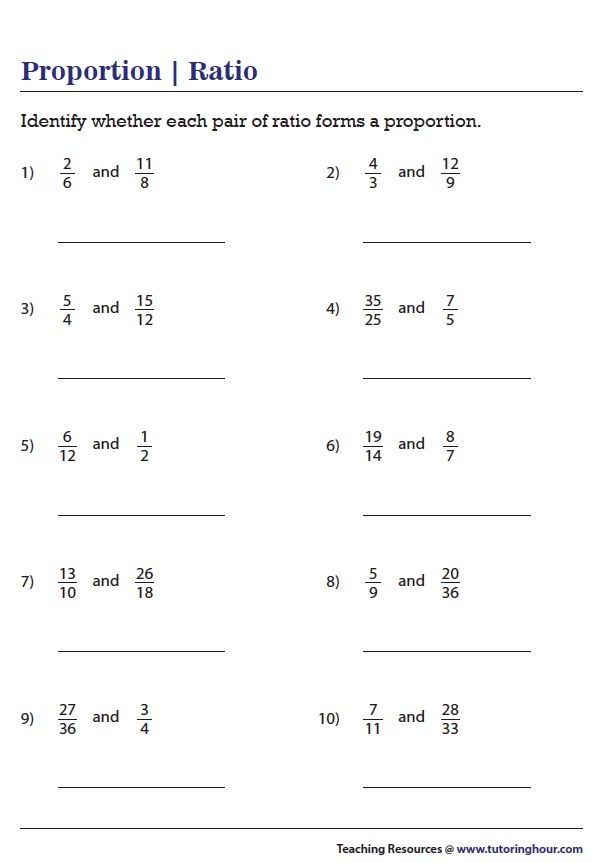
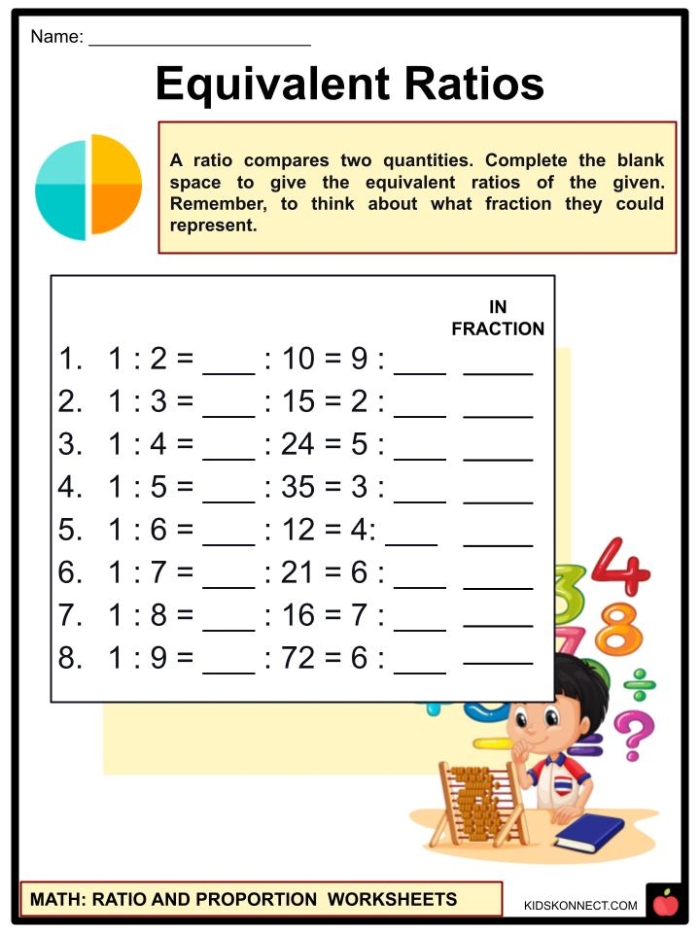
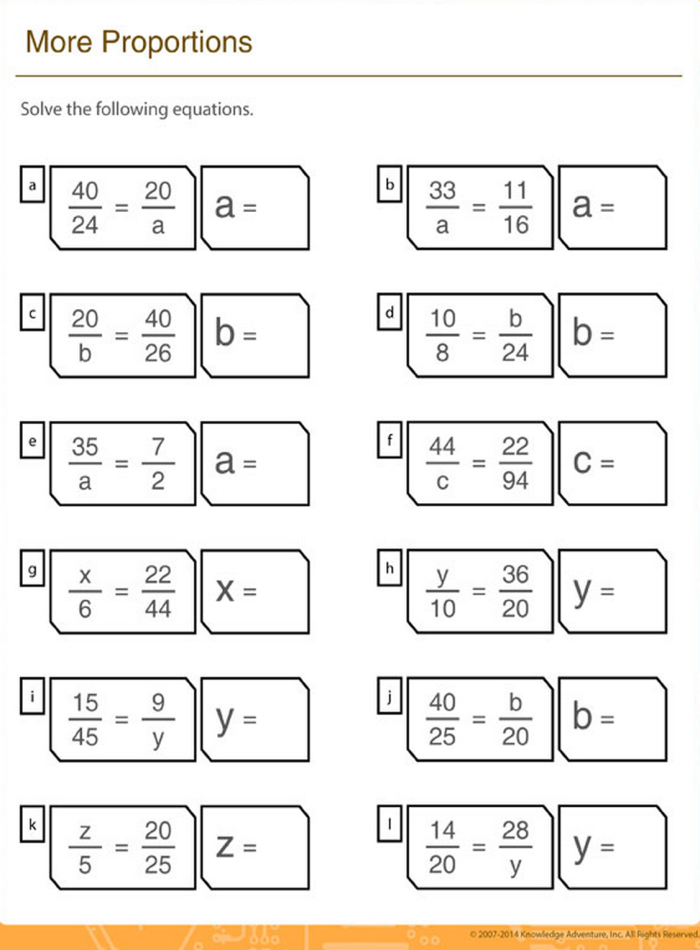
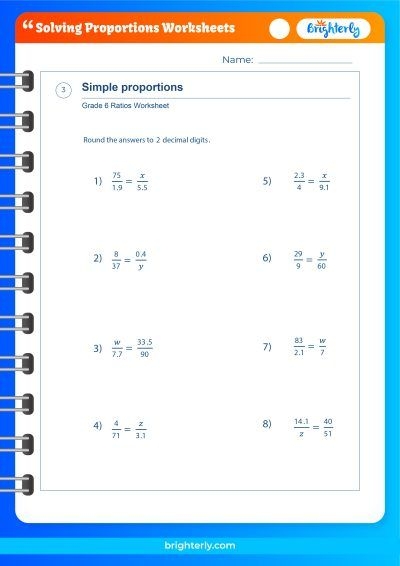
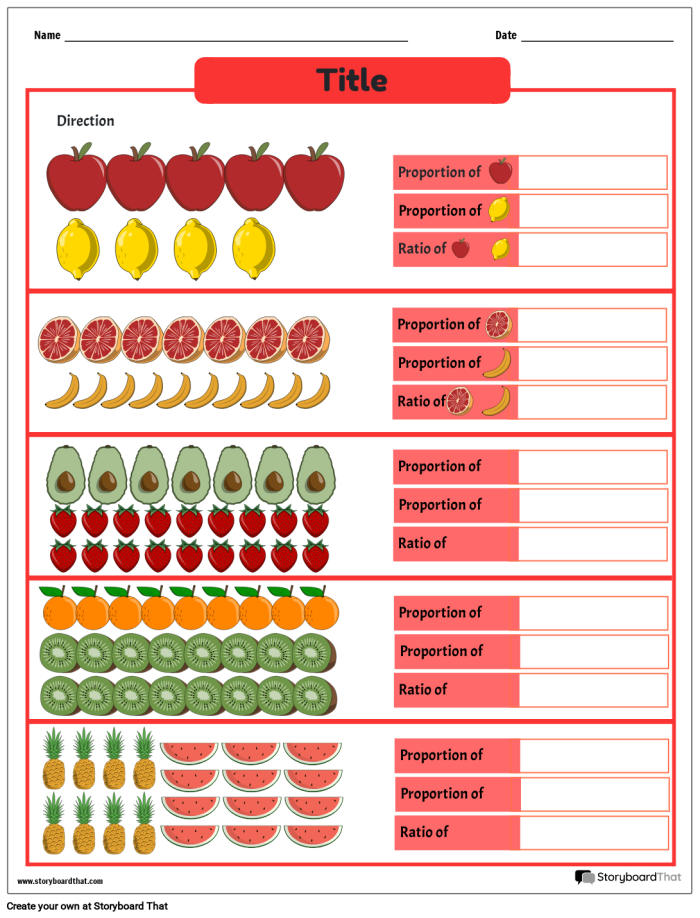
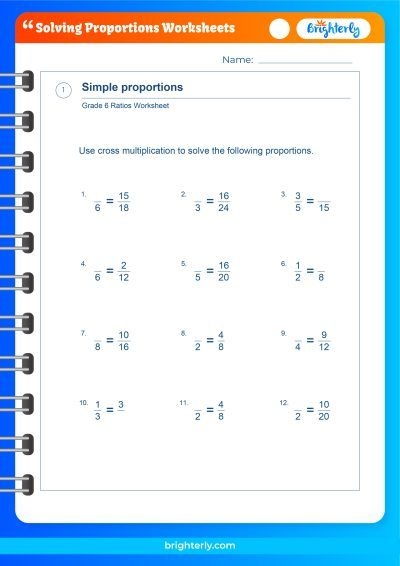
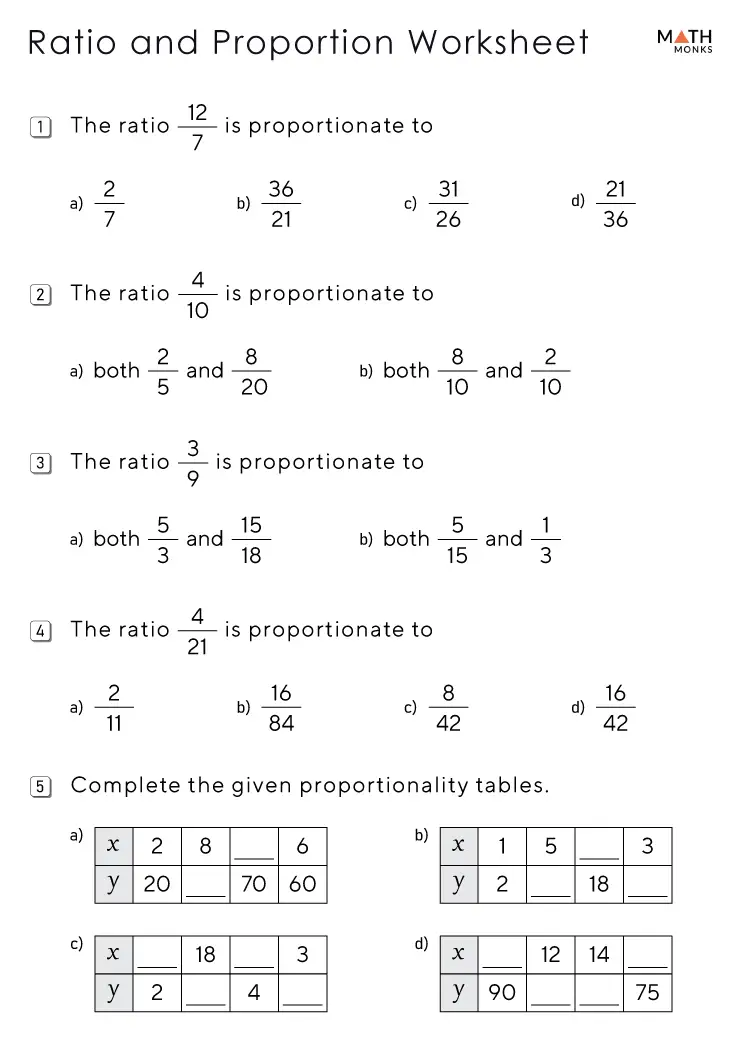
What makes proportion practice worksheets effective is repetition with variety. A well-designed printable solving proportions worksheet includes problems where the unknown appears in different positions, forcing students to think rather than simply follow a memorized routine. Some problems might have the unknown in the numerator, others in the denominator. This variation strengthens problem-solving flexibility.
Seventh-grade reading comprehension also benefits from mathematical thinking. When students work through informational reading about real-world topics, they encounter proportional relationships described in text form. The ability to translate words into mathematical equations becomes valuable across subjects.
Beyond pure computation, solving proportions connects to probability and geometry. Students who understand proportional reasoning find it easier to work with experimental probability models and angle relationships. Even when studying angle pairs in geometry, proportional thinking helps students see how measurements relate.
Starting with focused worksheet practice builds the foundation seventh-grade students need. Regular exposure to different problem types removes confusion and builds speed. Students who invest time now in understanding proportions find themselves better prepared for everything from scaling recipes to solving complex word problems later in their math journey.
Printable Worksheets for Practice