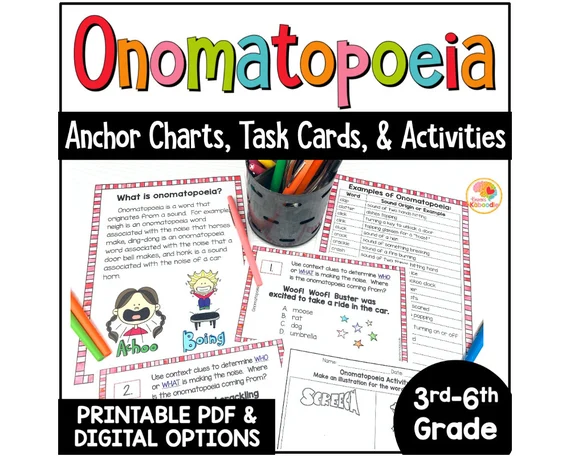
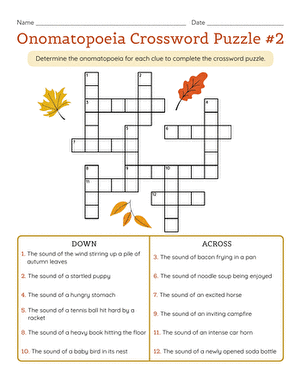
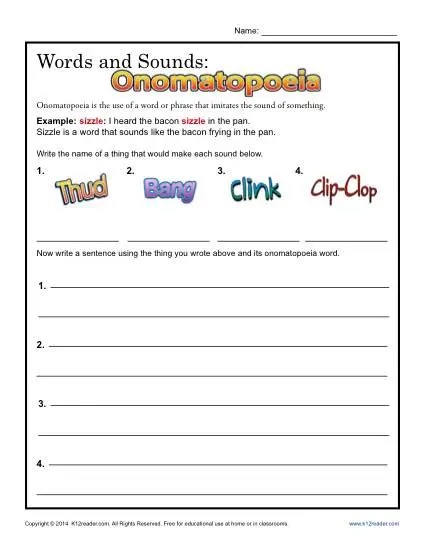
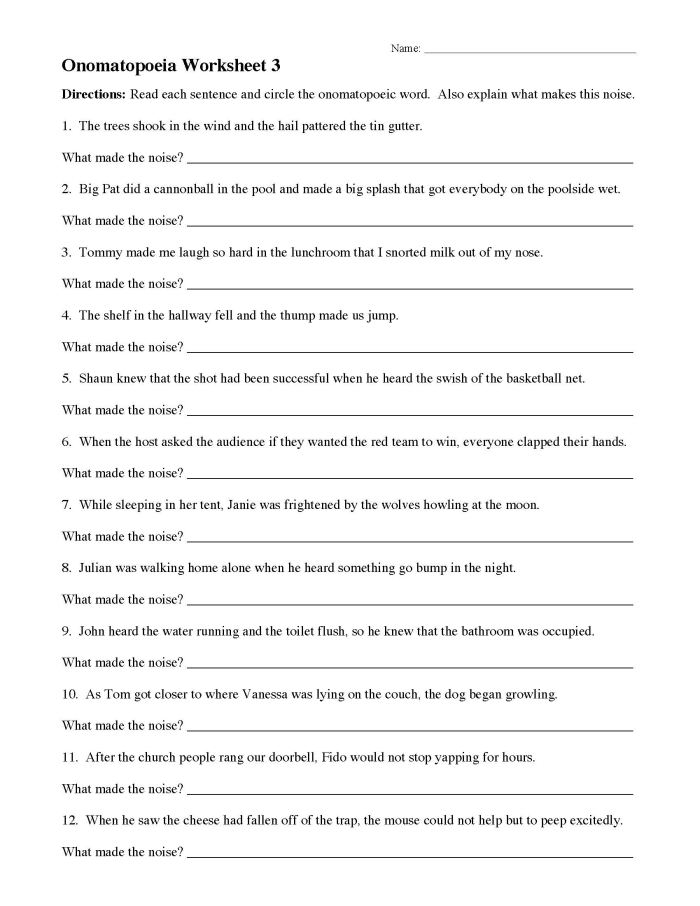
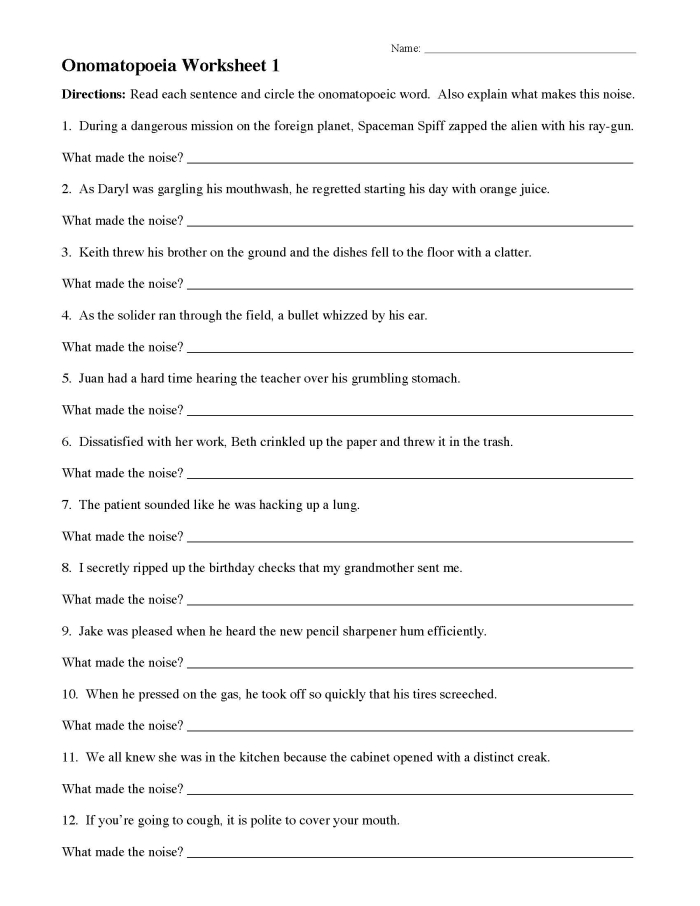
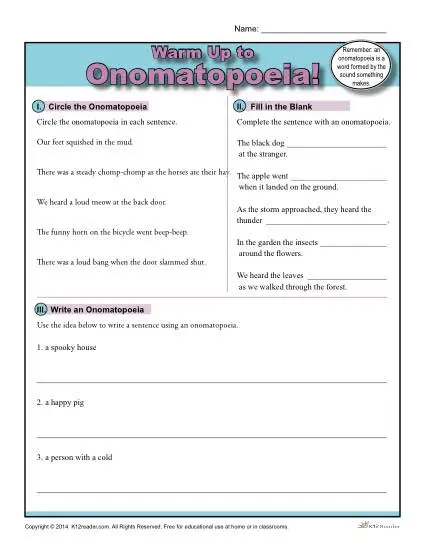
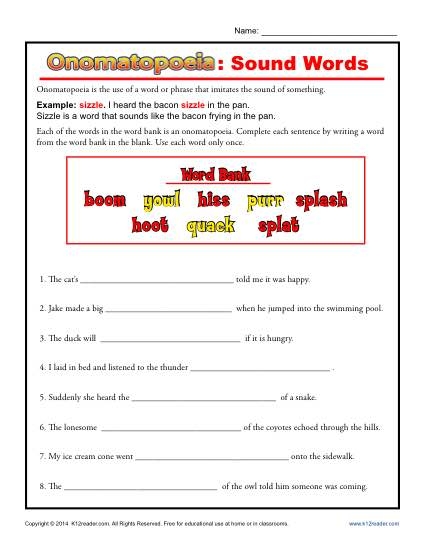
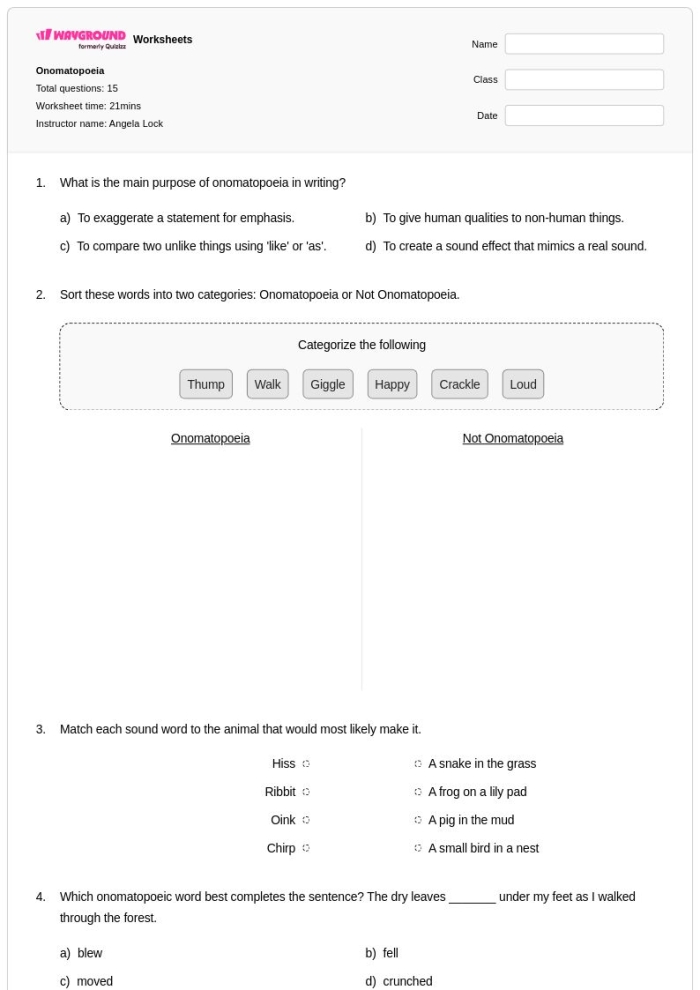
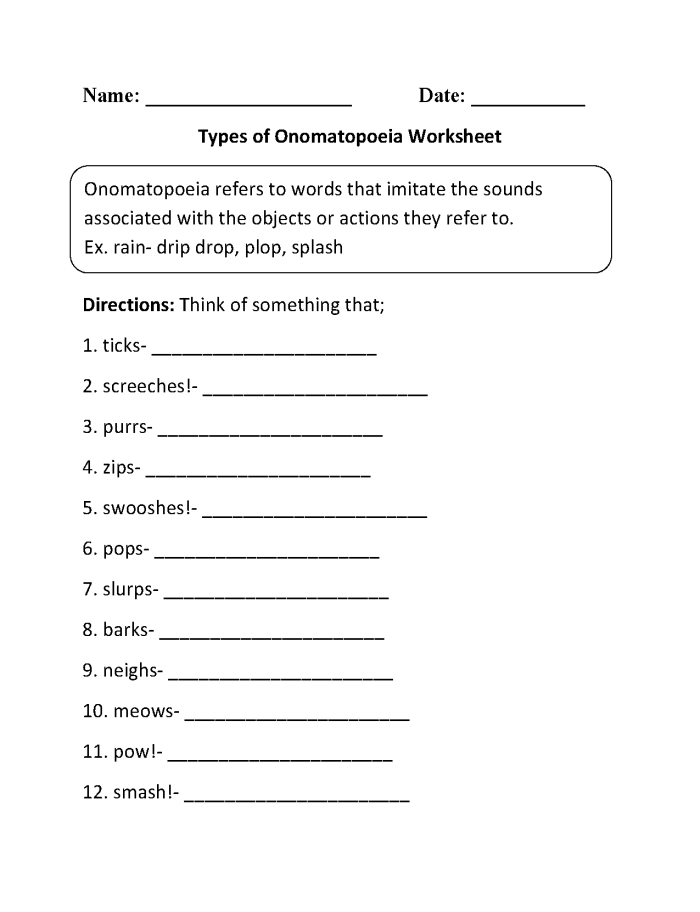
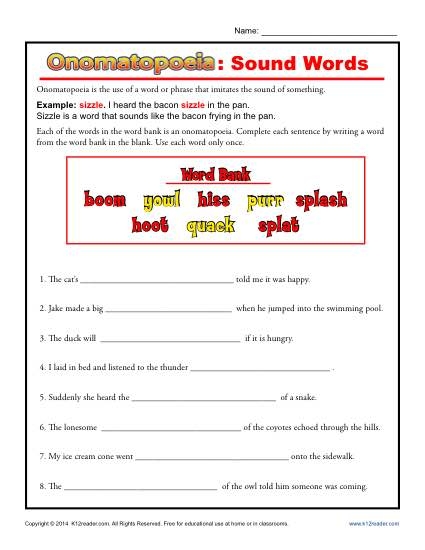
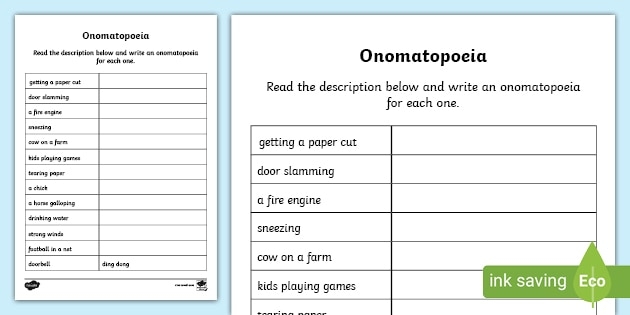
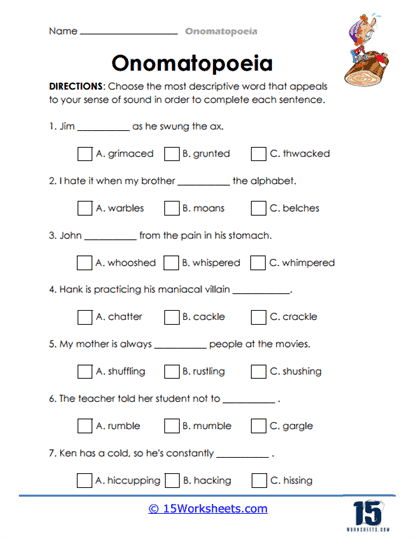
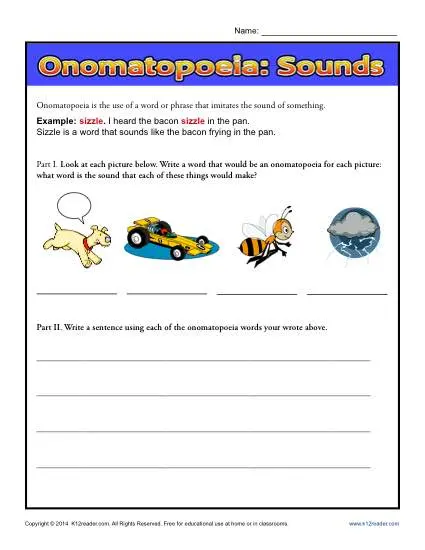
BOOM! That word just jumped off the page and made a sound in your head, didn’t it? That’s onomatopoeia at work, and it’s one of the most fun language tools fourth grade readers can master. This worksheet is full of all kinds of sound-based words, from creaks to squeaks, and it teaches students to recognize and use these words that actually imitate the sounds they represent.
Onomatopoeia comes from Greek words meaning “name-making,” and that’s exactly what it does. When you read “sizzle,” you hear butter hitting a hot pan. When you see “buzz,” you feel a bee flying past your ear. Fourth grade is the perfect time to introduce this concept because students are ready to understand that language can do more than just describe things, it can actually sound like them.
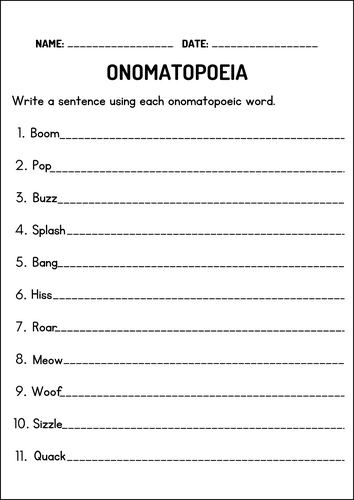
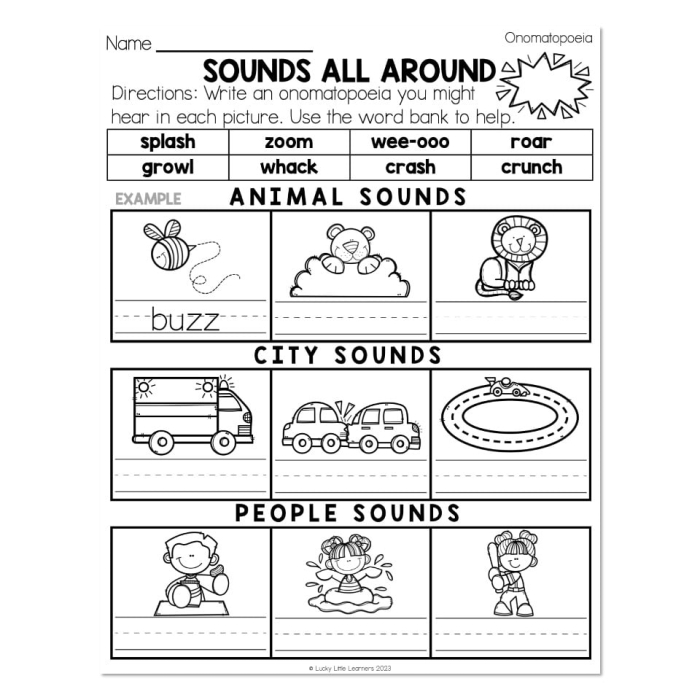
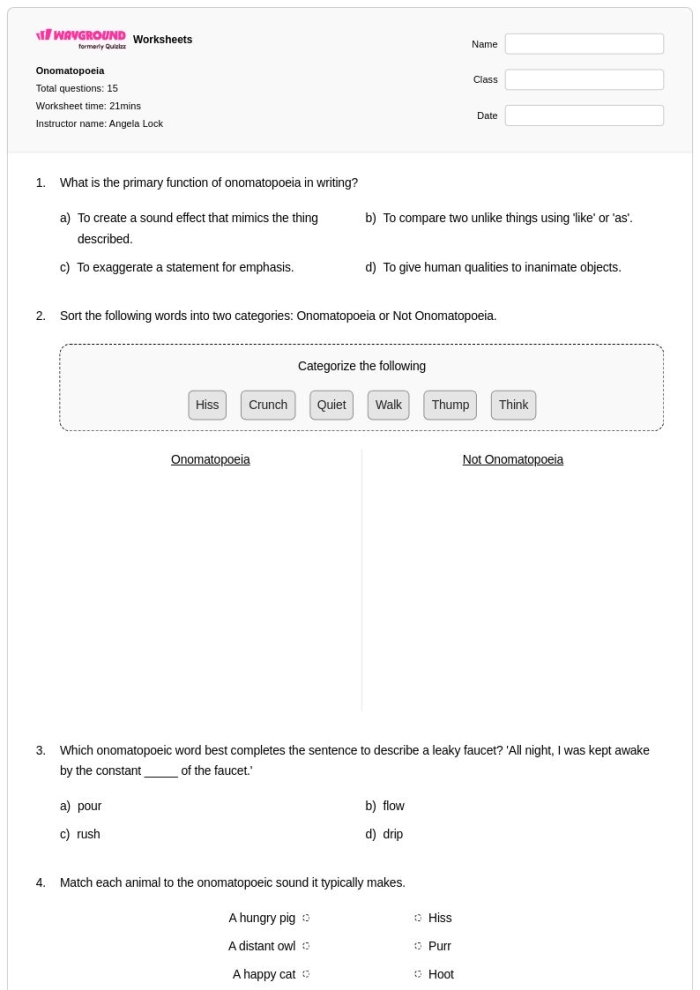
The worksheet focuses on common onomatopoeia that fourth graders encounter in everyday life. Words like “splash,” “thud,” “hiss,” and “pop” appear throughout, giving students multiple chances to practice identifying these sound words. This hands-on approach helps reading comprehension because students start noticing how authors use sound words to make their writing more vivid and engaging.
Learning onomatopoeia also strengthens vocabulary in a memorable way. When students connect a word to an actual sound, they’re more likely to remember it than if they simply memorized a definition. This makes onomatopoeia worksheets particularly effective for building reading skills at the fourth grade level.
Beyond just recognition, students benefit from exploring how onomatopoeia appears in different contexts. You might pair this worksheet with other reading activities, such as working on main idea and details, or diving into idioms and figurative language. Together, these tools help fourth graders become more sophisticated readers who appreciate the artistry behind word choice.
Printable Worksheets for Practice