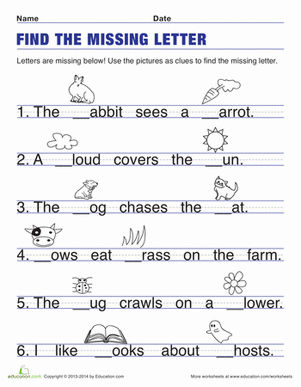
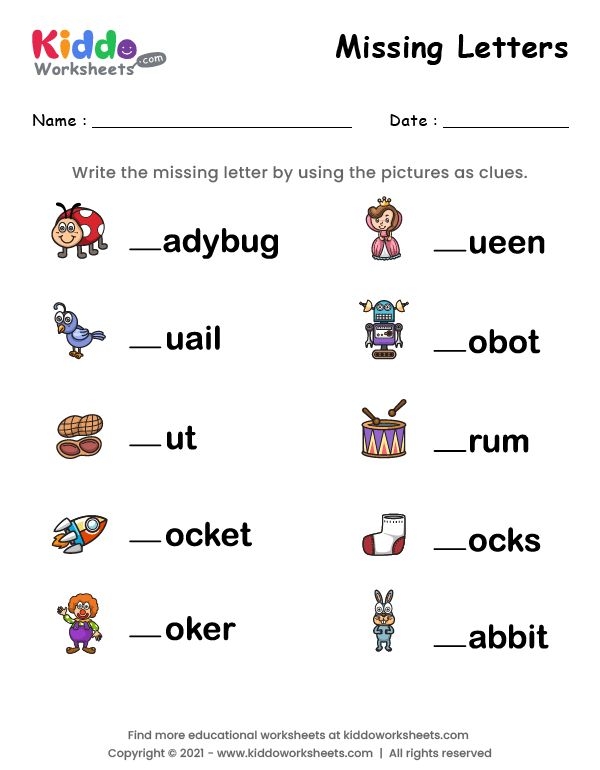
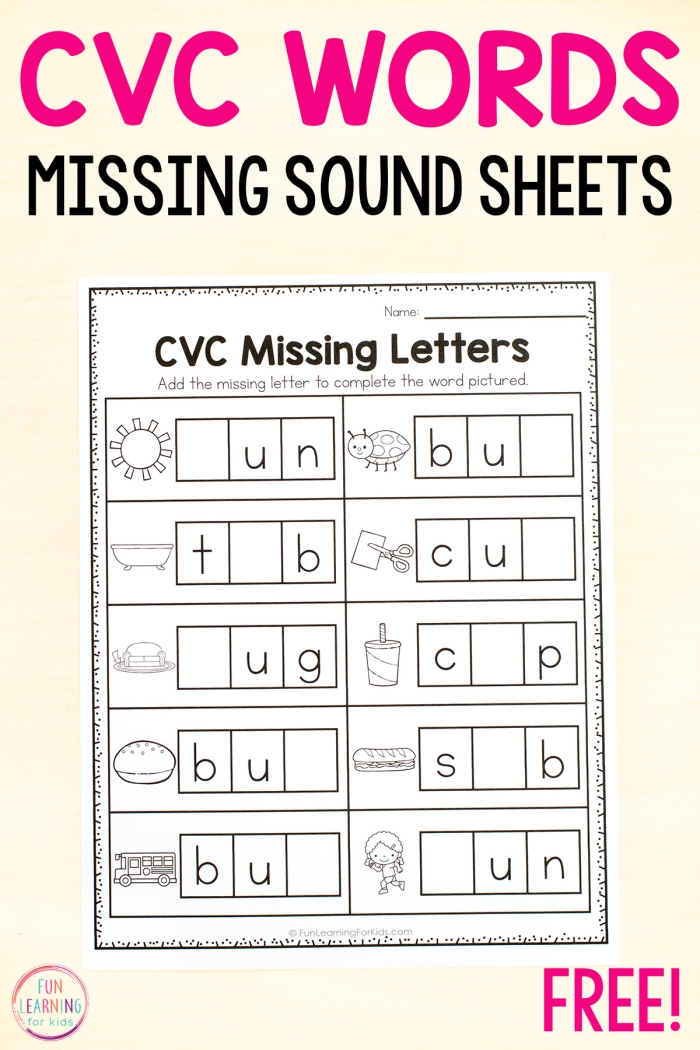
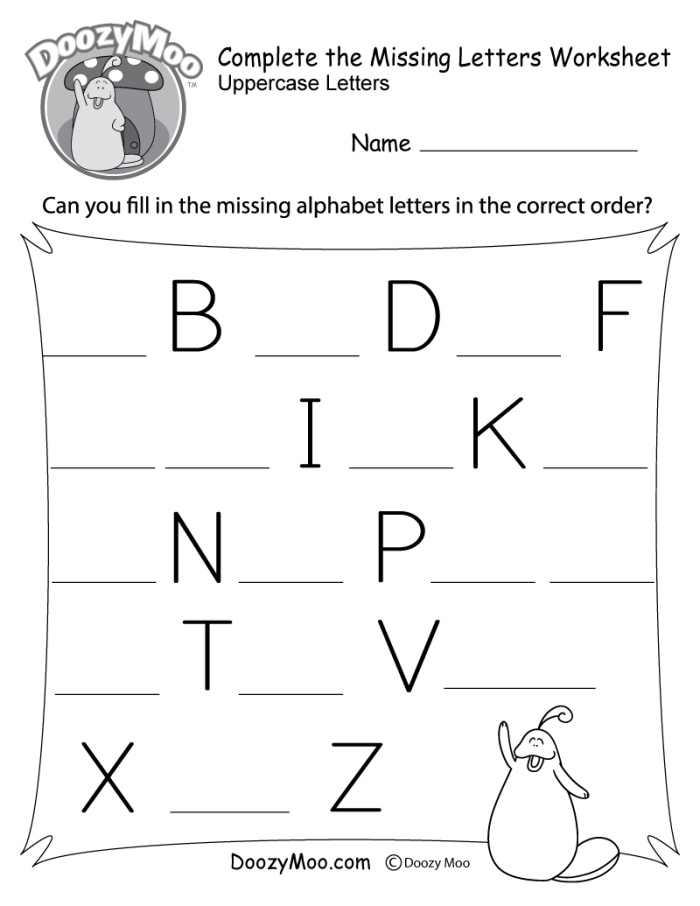
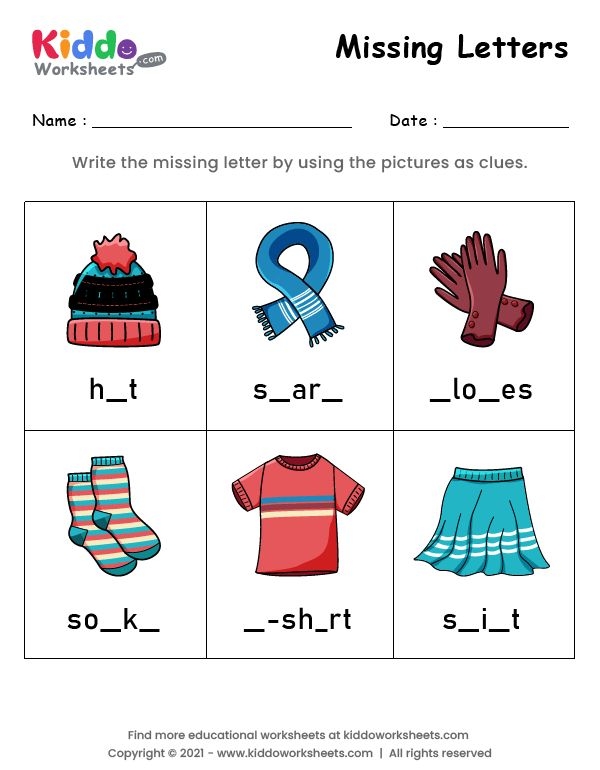
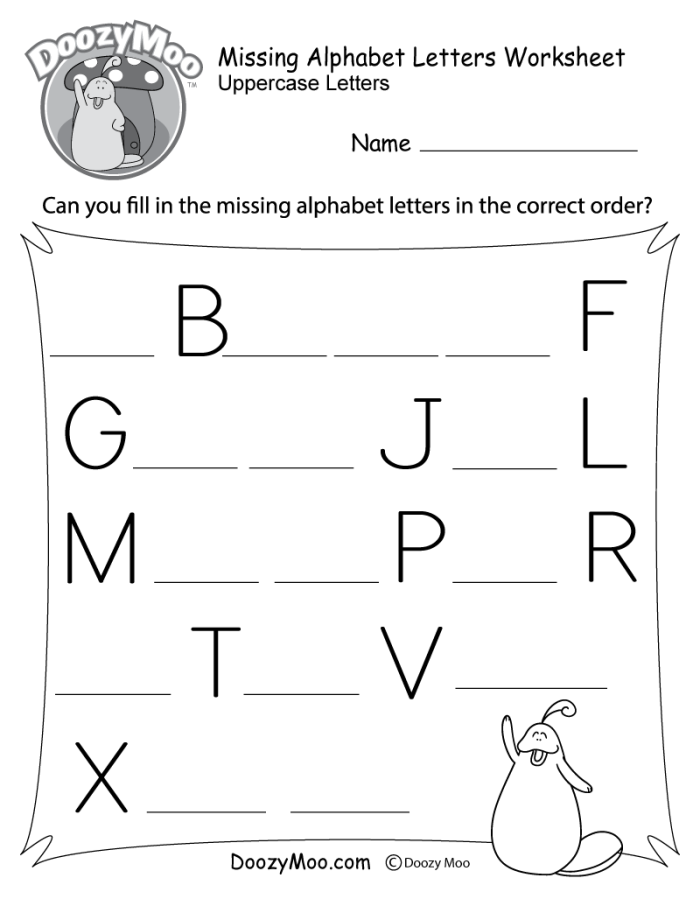
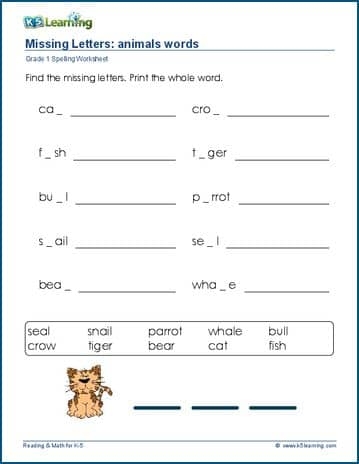
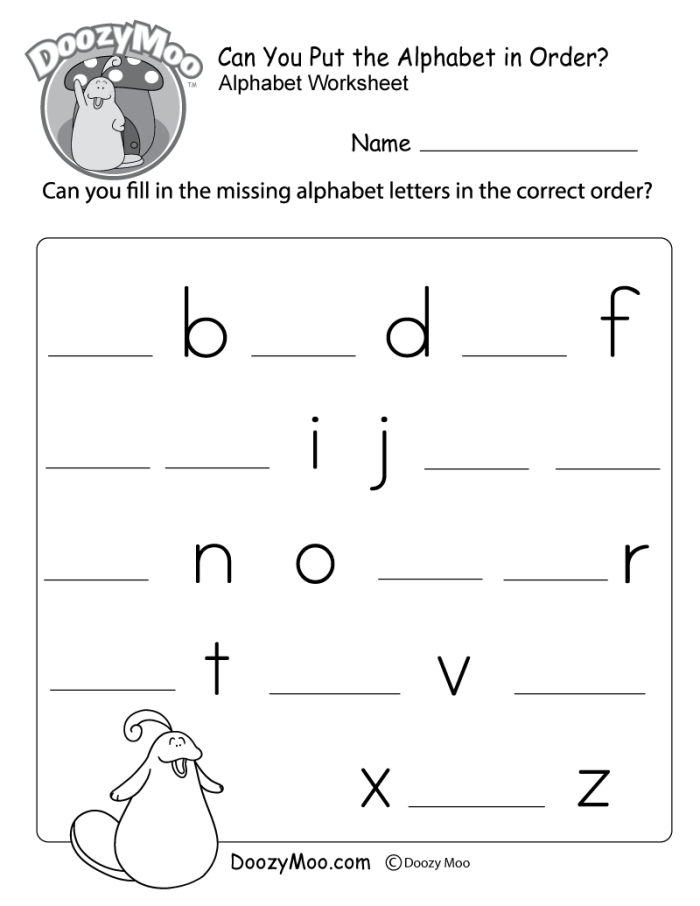
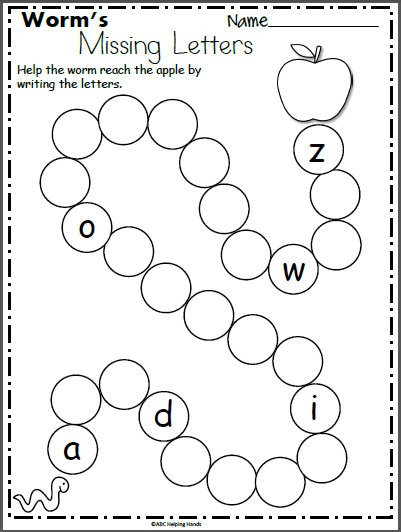
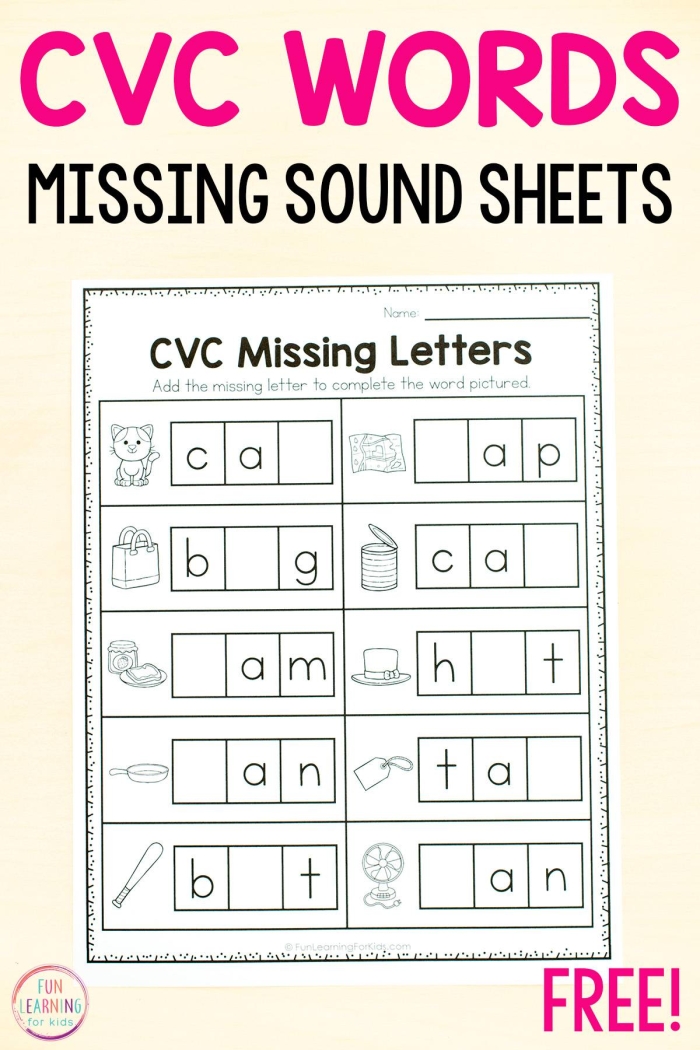
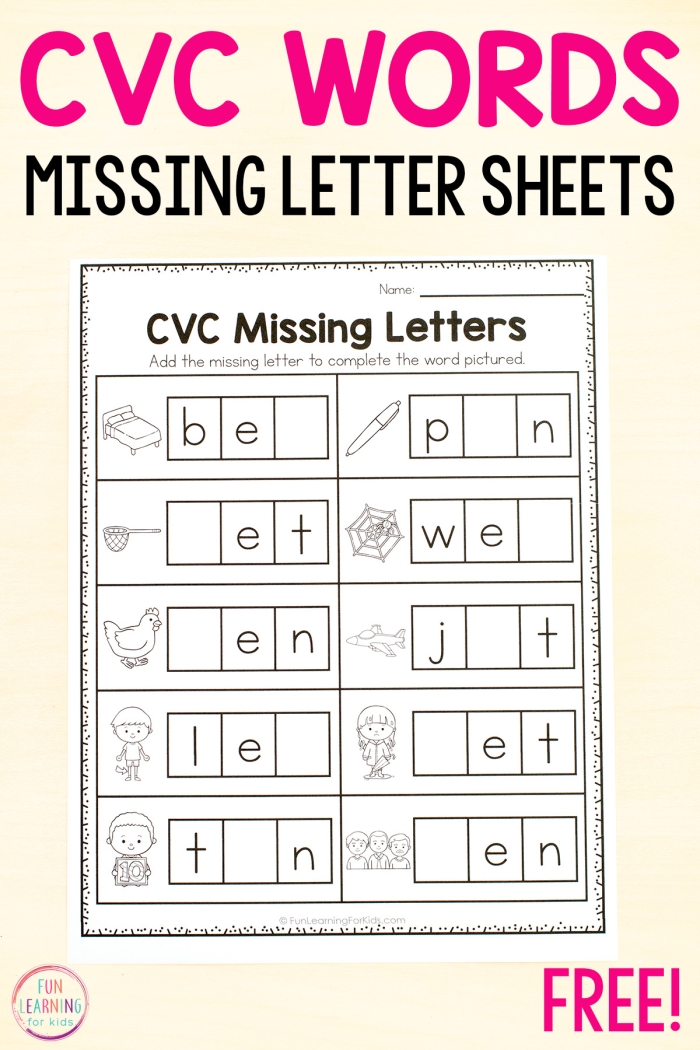
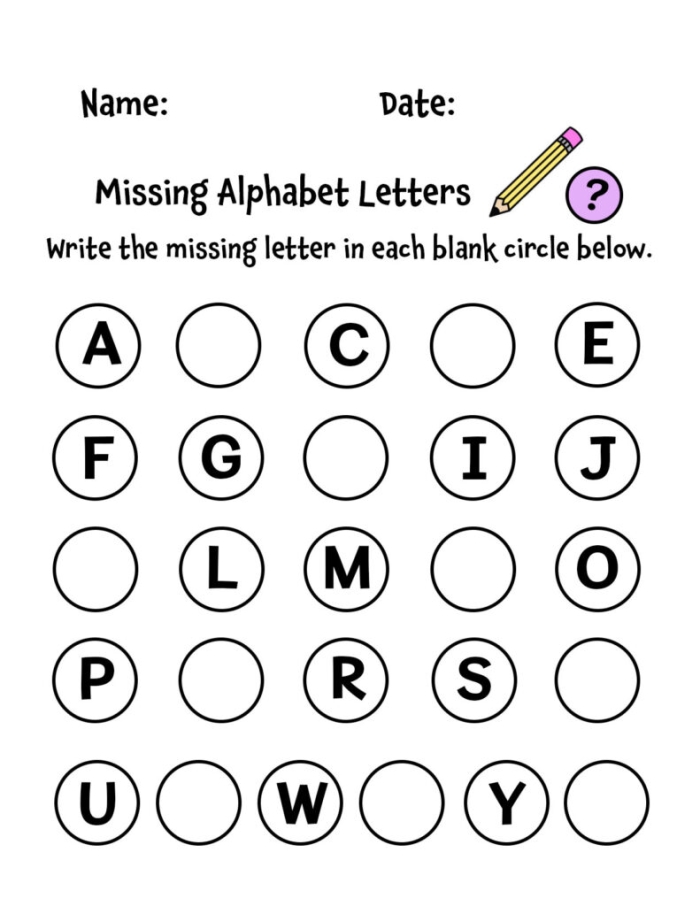
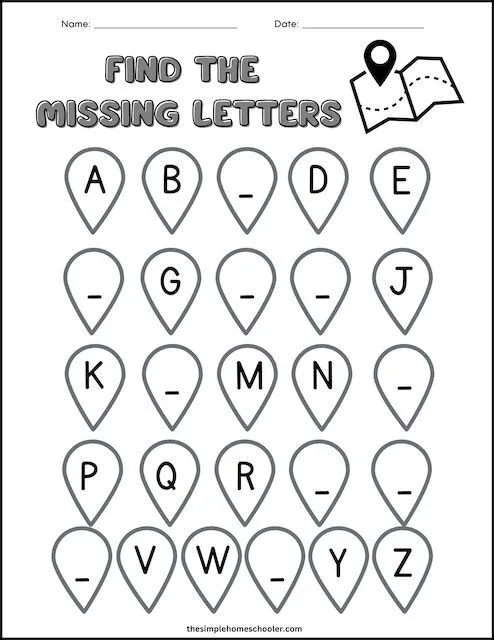
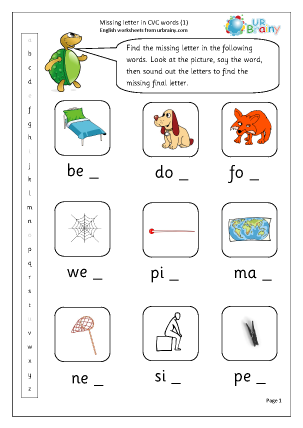
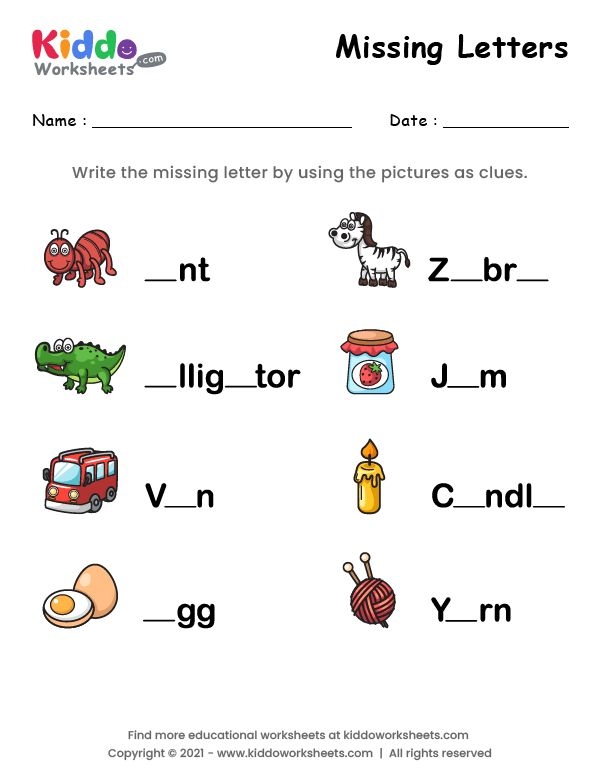
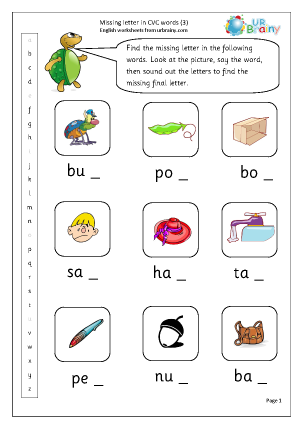
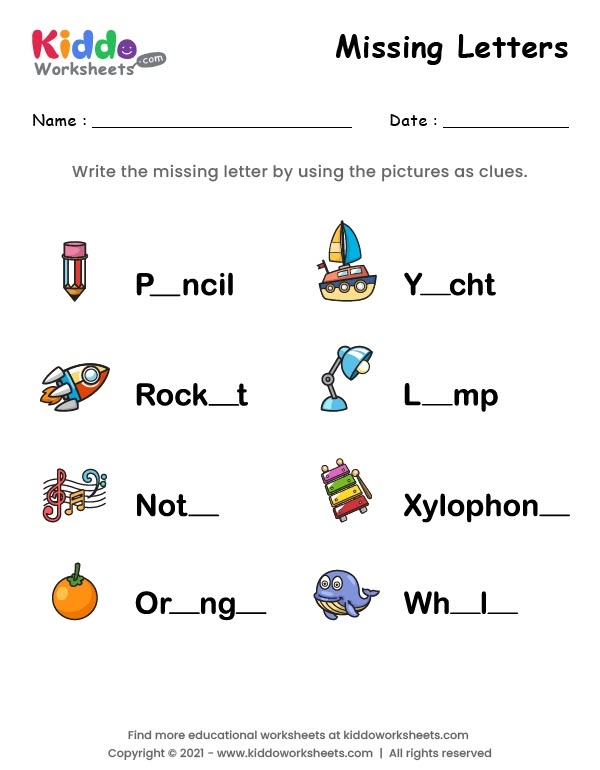
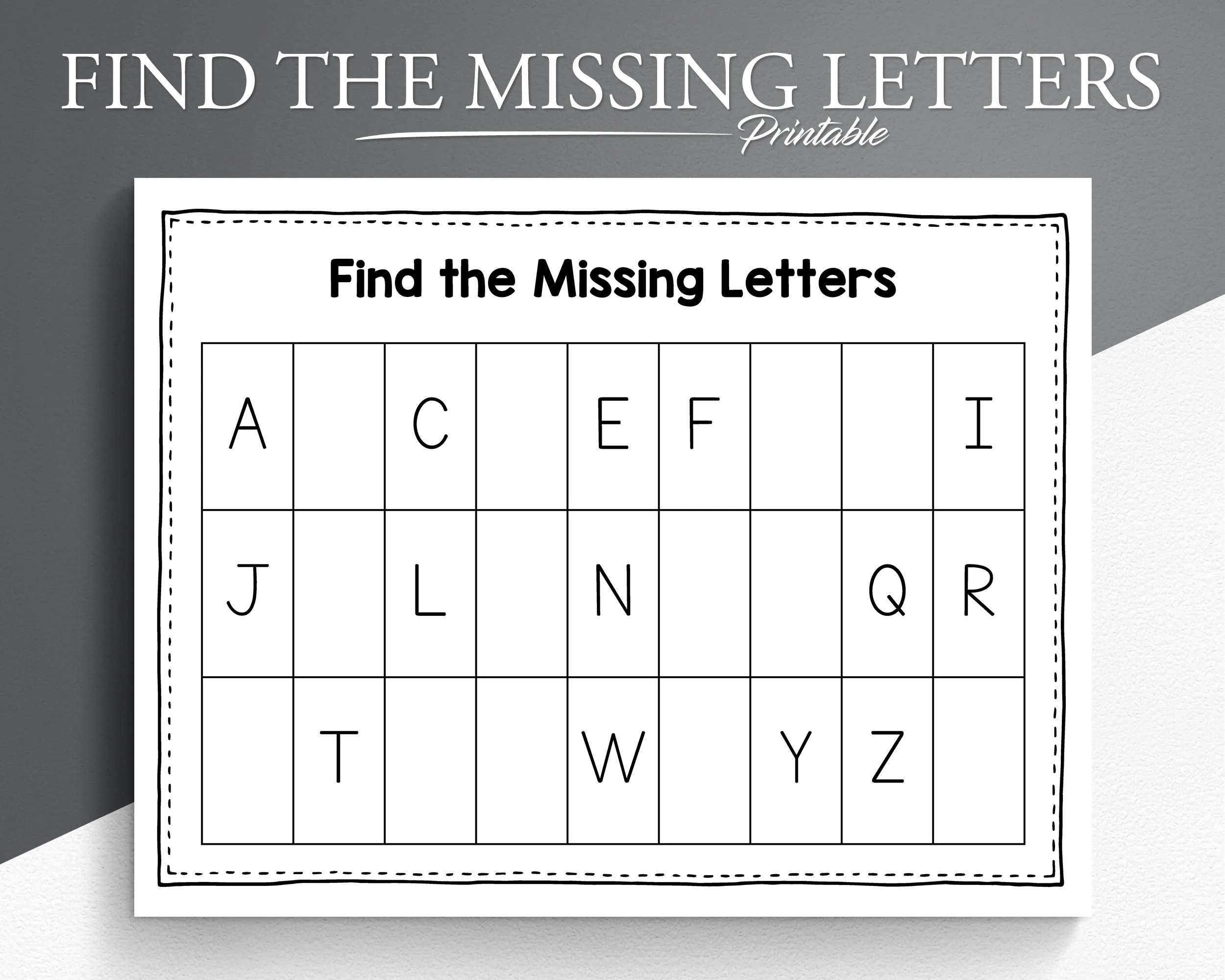
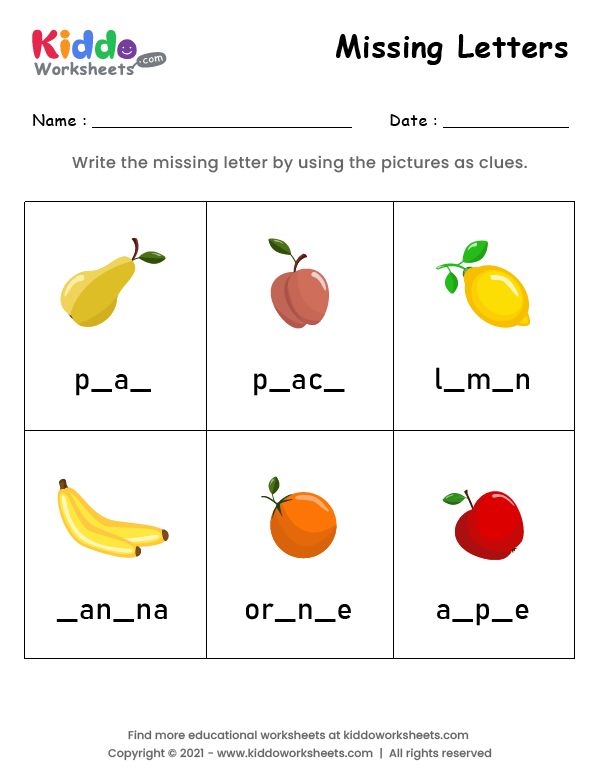
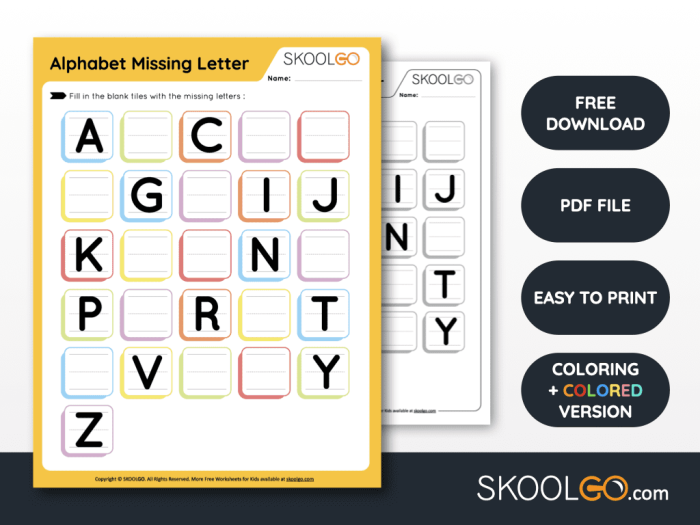
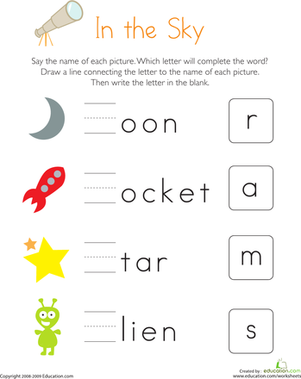
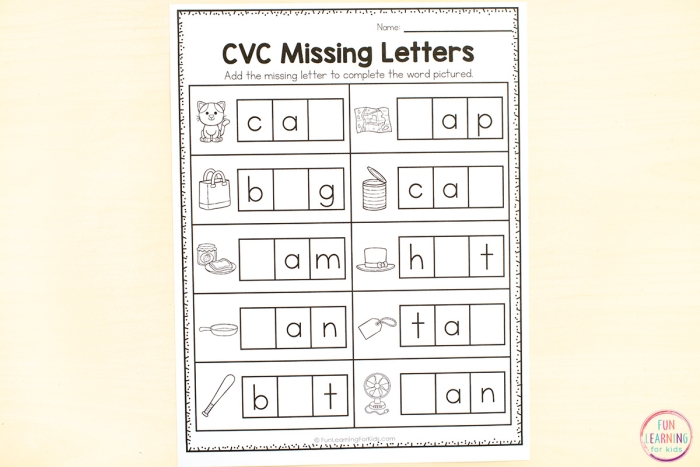
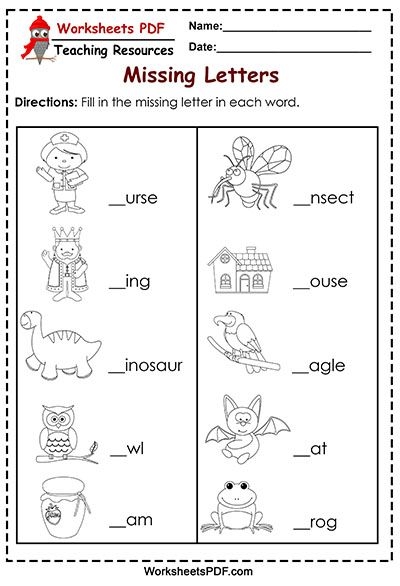
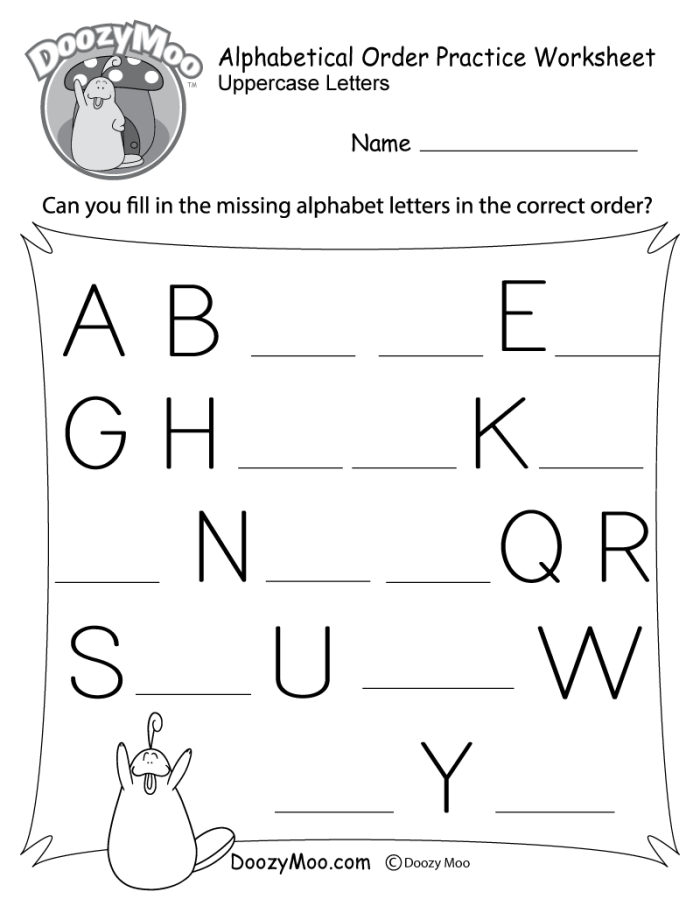
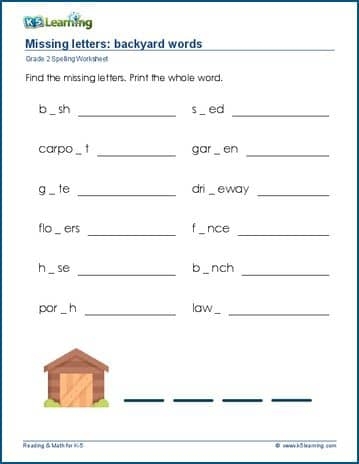
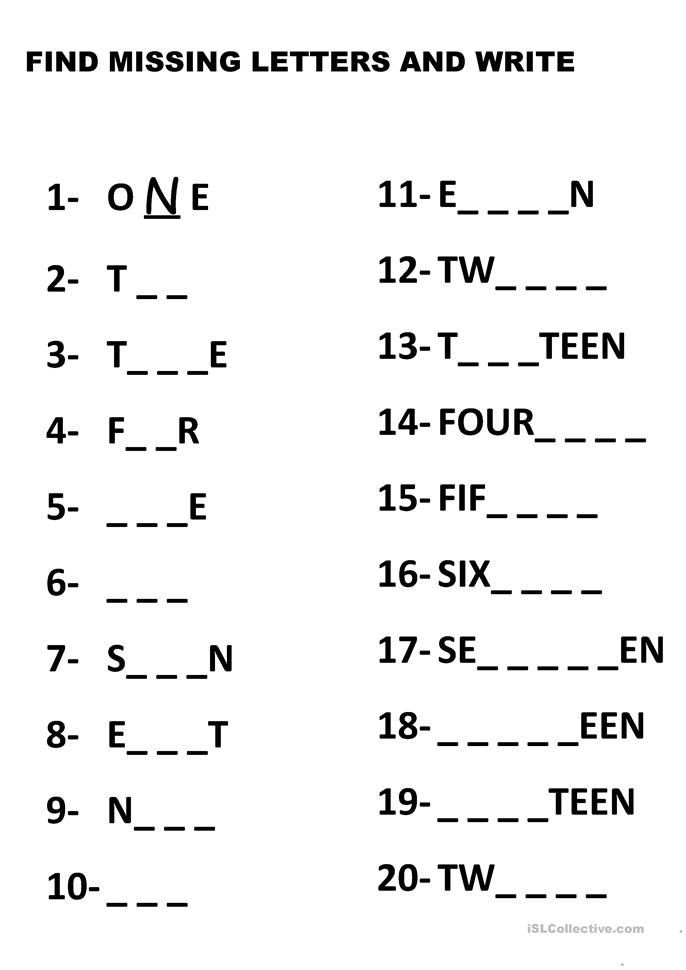
A worksheet where kids hunt for missing letters might seem simple on the surface, but it’s actually one of the most effective ways to build early literacy confidence. When kindergarten students scan a word and realize which letter is absent, they’re not just filling in blanks, they’re actively engaging with letter recognition and phonetic awareness at the same time.
The playful nature of this activity keeps young learners motivated. Rather than drilling letters in isolation, students see them within familiar words and contexts. This approach makes reading feel like a puzzle to solve rather than a chore to complete. A child who spots that “c_t” needs an “a” is learning spelling patterns while reinforcing their understanding of how letters work together to create meaning.
Writing skills develop naturally alongside this reading work. When students write in the missing letter, they’re practicing fine motor control and letter formation. They’re also making connections between what they see and what they produce with their pencil. This dual engagement strengthens both receptive and expressive language skills.
These worksheets work best when they connect to themes kids already enjoy. For instance, pairing letter activities with story sequences from familiar tales or structured alphabet learning creates a richer learning experience. Students who explore vowel patterns through missing letter activities often develop stronger phonetic foundations than those using traditional flashcards alone.
The beauty of this approach lies in its simplicity. No elaborate setup required, just printable worksheets that challenge students to think critically about letter sequences and word construction. For kindergarten reading practice, missing letter activities deliver measurable progress without sacrificing the playfulness that keeps young learners engaged.
Grab These Worksheets Now