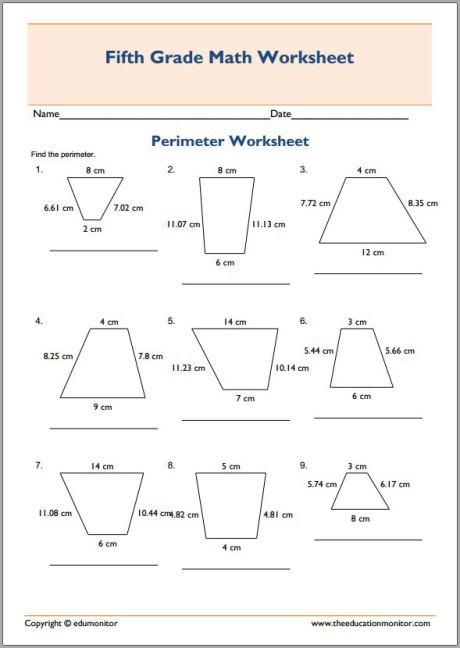
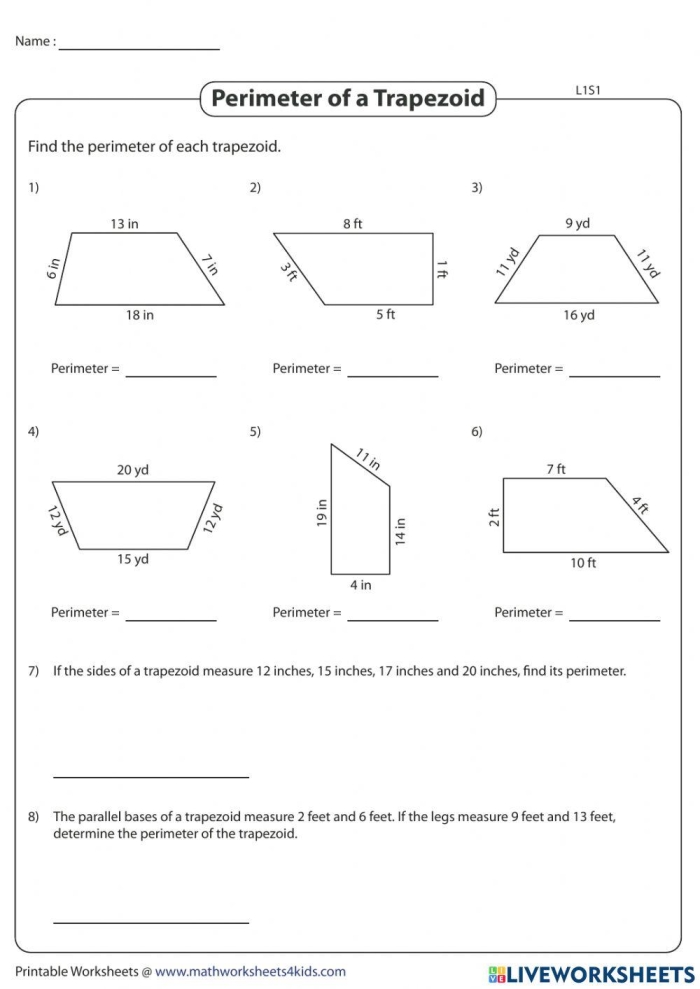
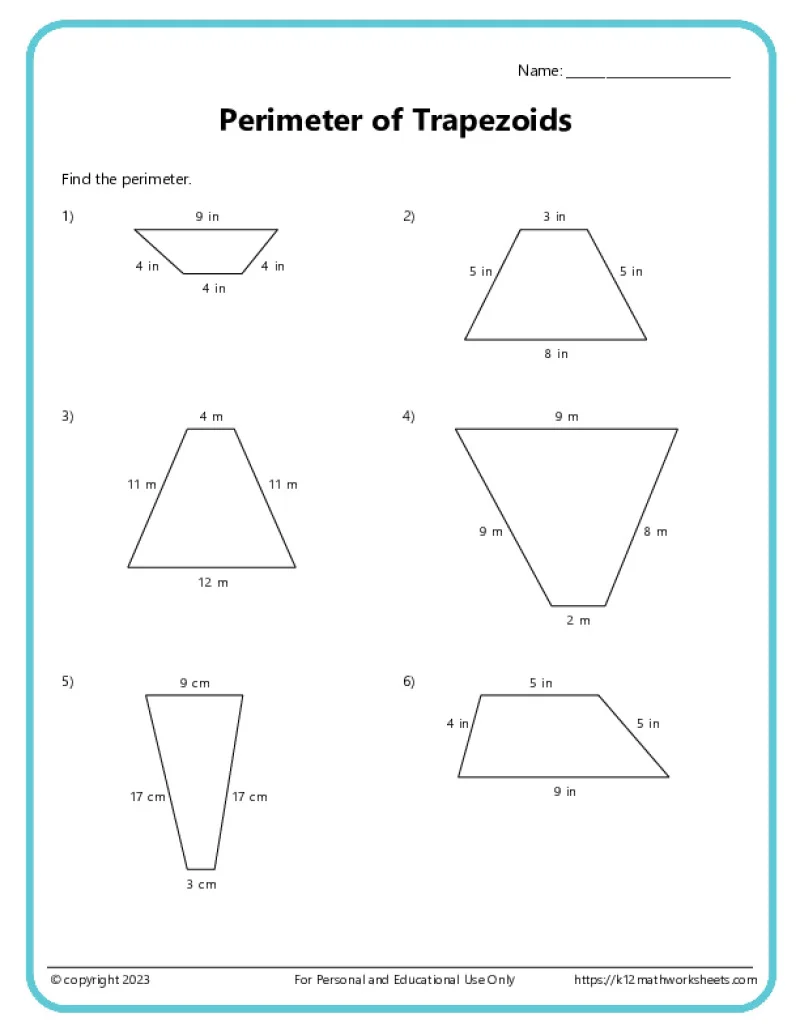
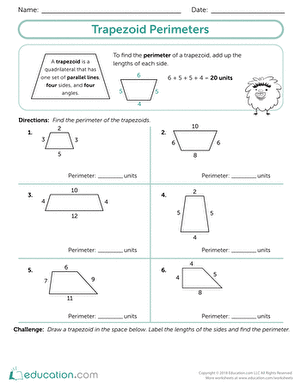
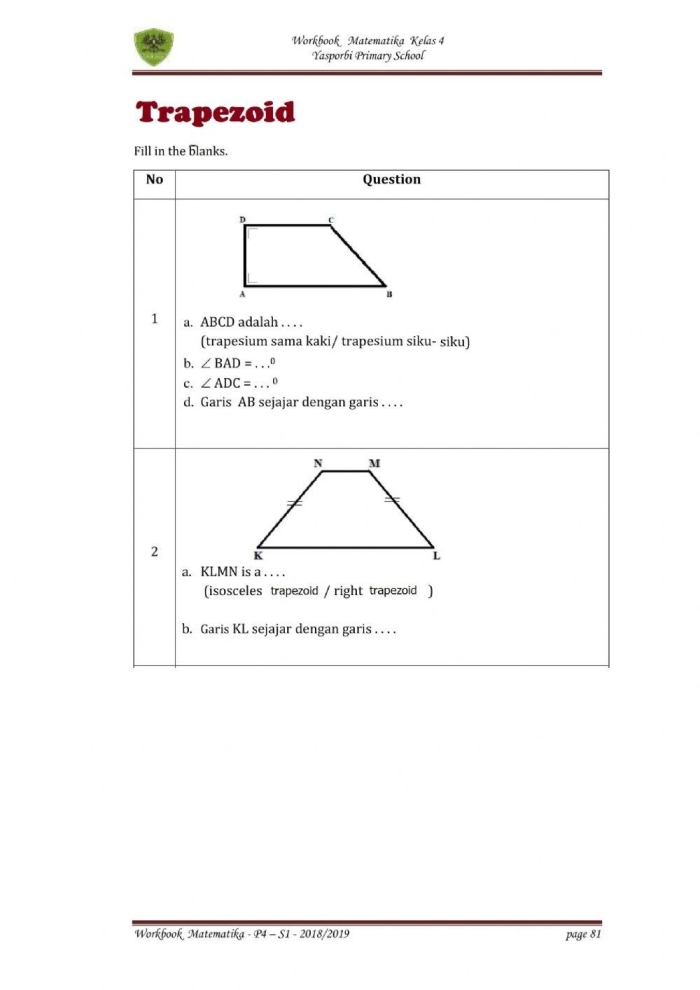
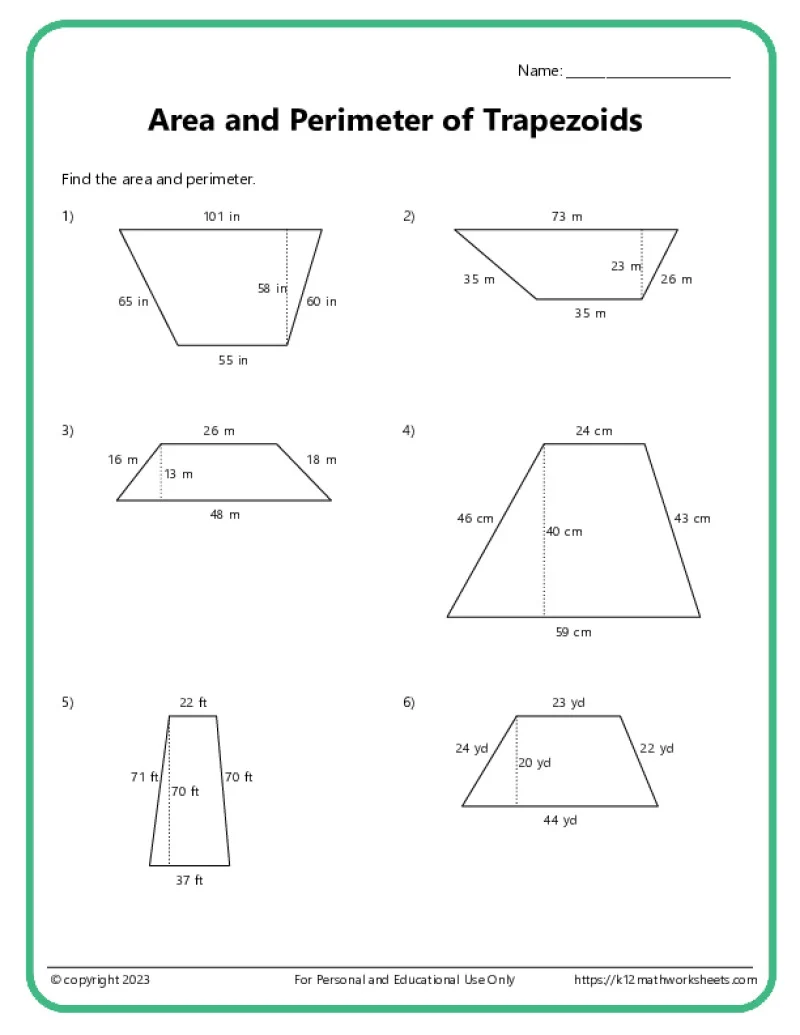
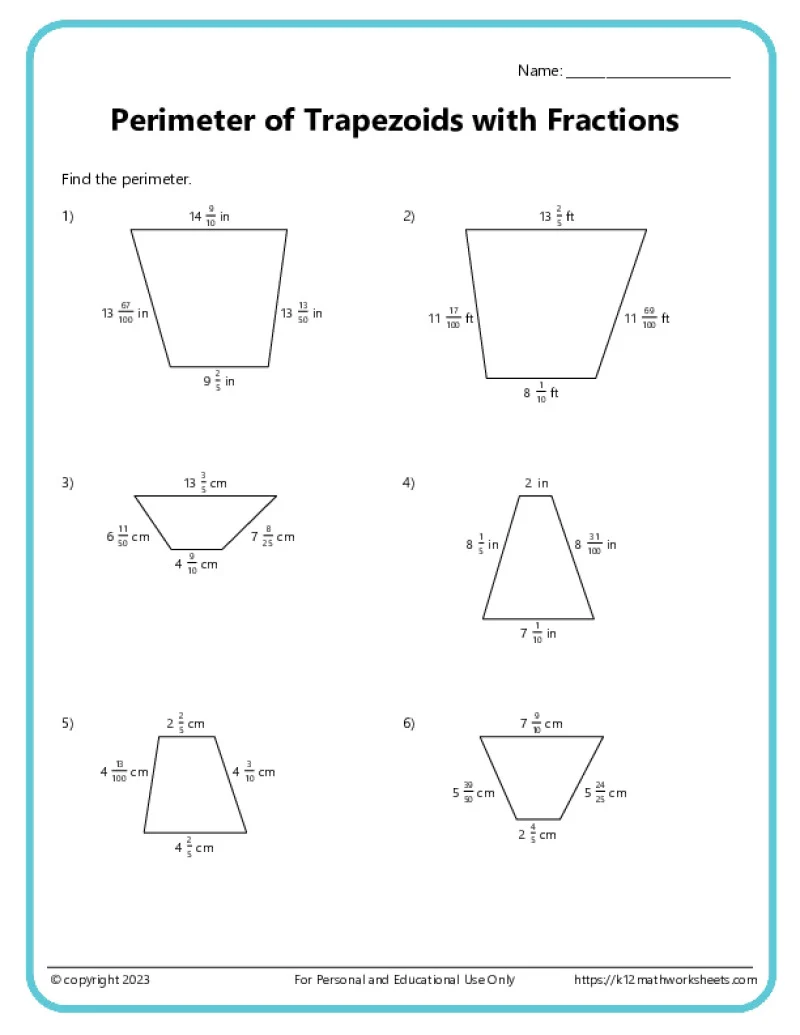
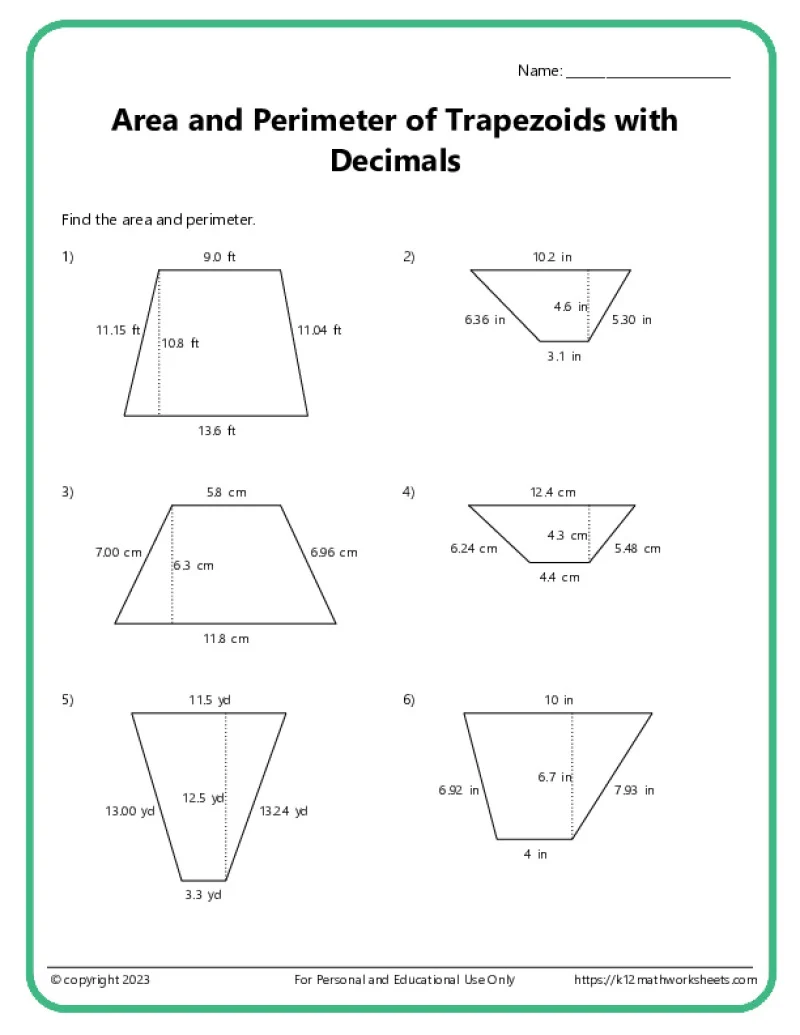
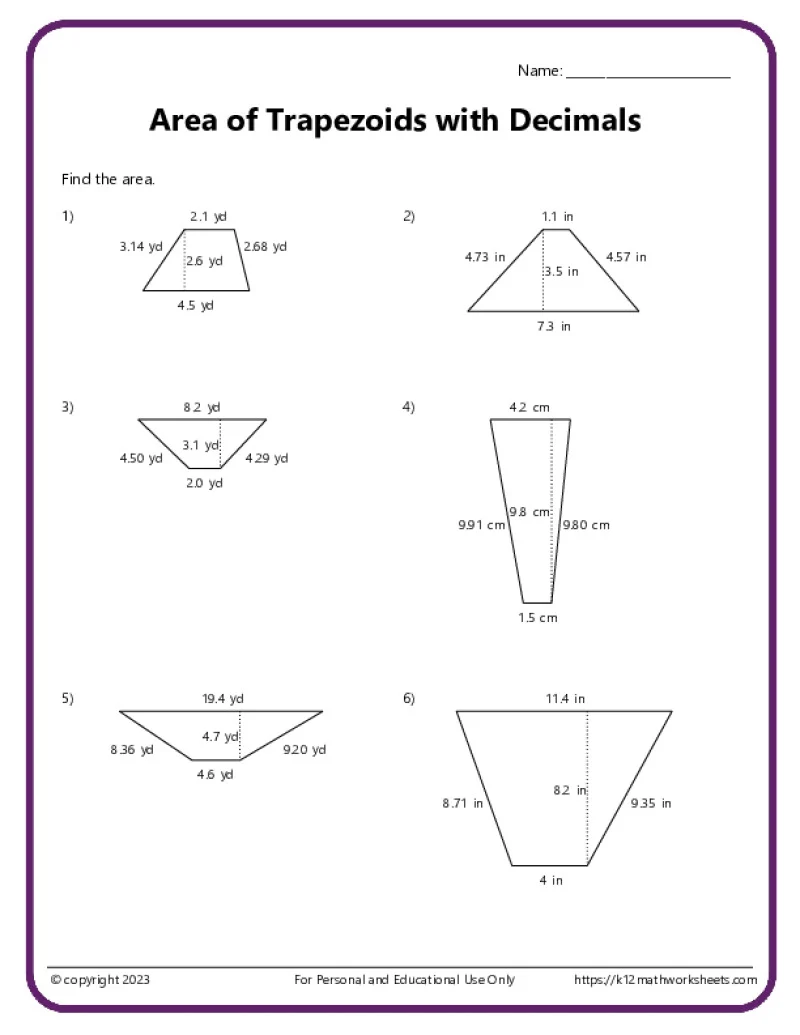
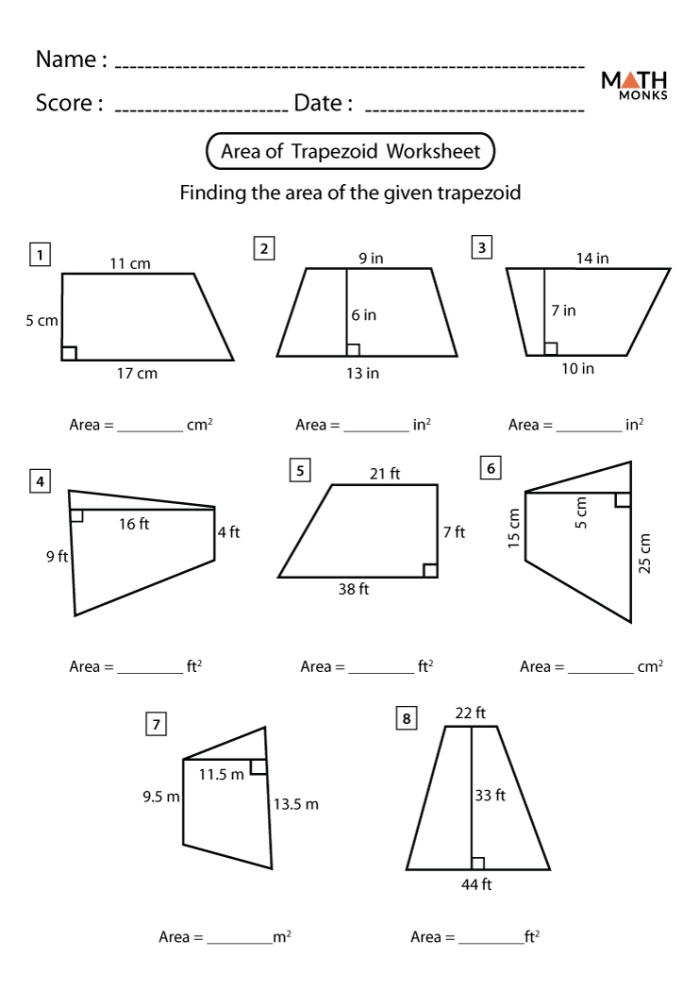
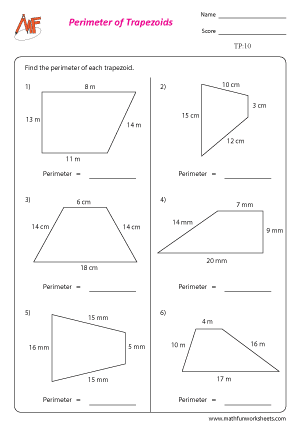
Calculating the perimeter of trapezoids can be an exciting challenge for third graders. This geometry exercise engages children by having them measure the lengths of the trapezoid’s sides and add them together. By doing so, they not only practice their math skills but also develop a deeper understanding of geometric shapes.
To start, it’s essential to explain what a trapezoid is. A trapezoid is a four-sided figure (quadrilateral) that has at least one pair of parallel sides. This unique characteristic sets trapezoids apart from other shapes. When children learn to calculate the perimeter, they must first identify the lengths of all four sides. For example, if a trapezoid has sides measuring 5 cm, 7 cm, 4 cm, and 6 cm, the perimeter would be calculated by adding these lengths together: 5 + 7 + 4 + 6 = 22 cm.
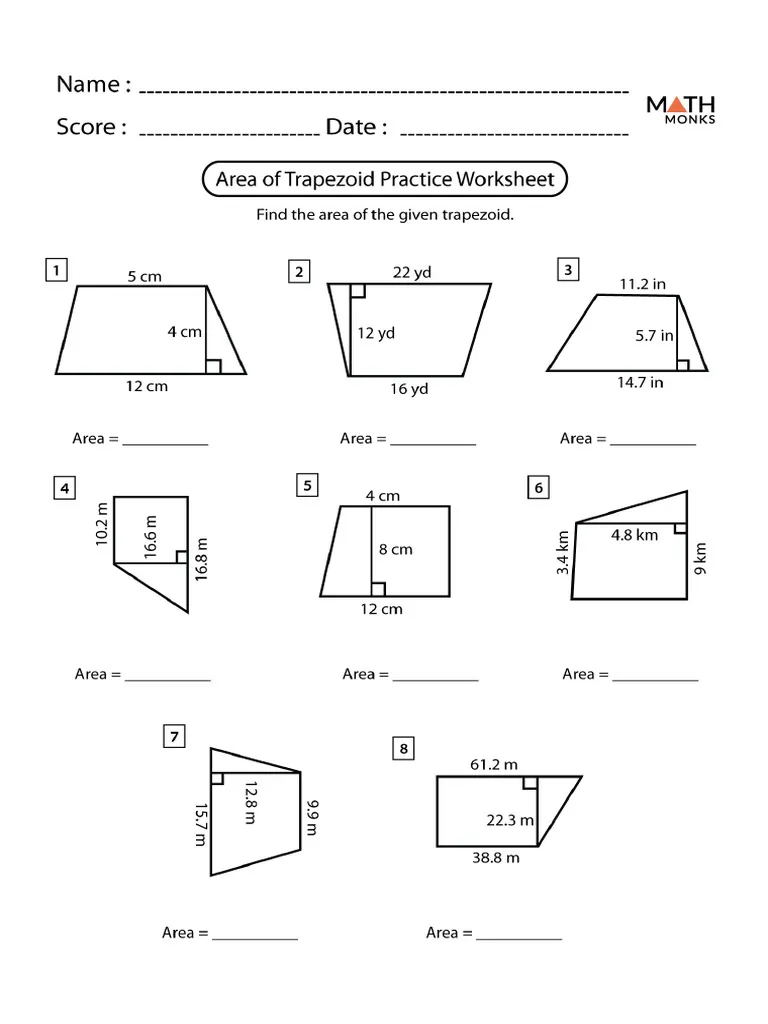
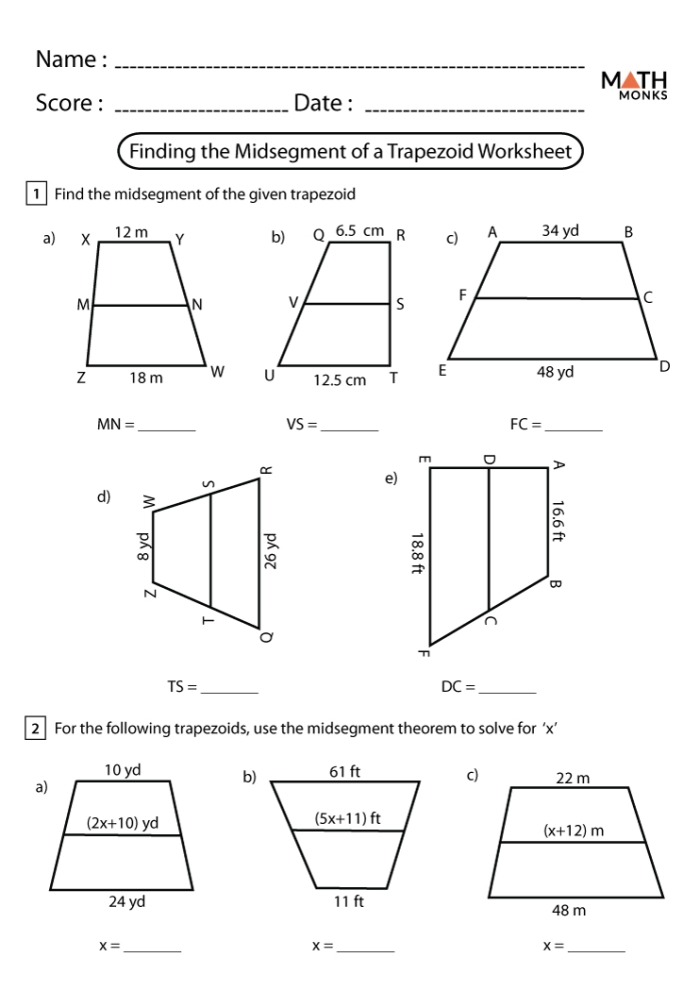
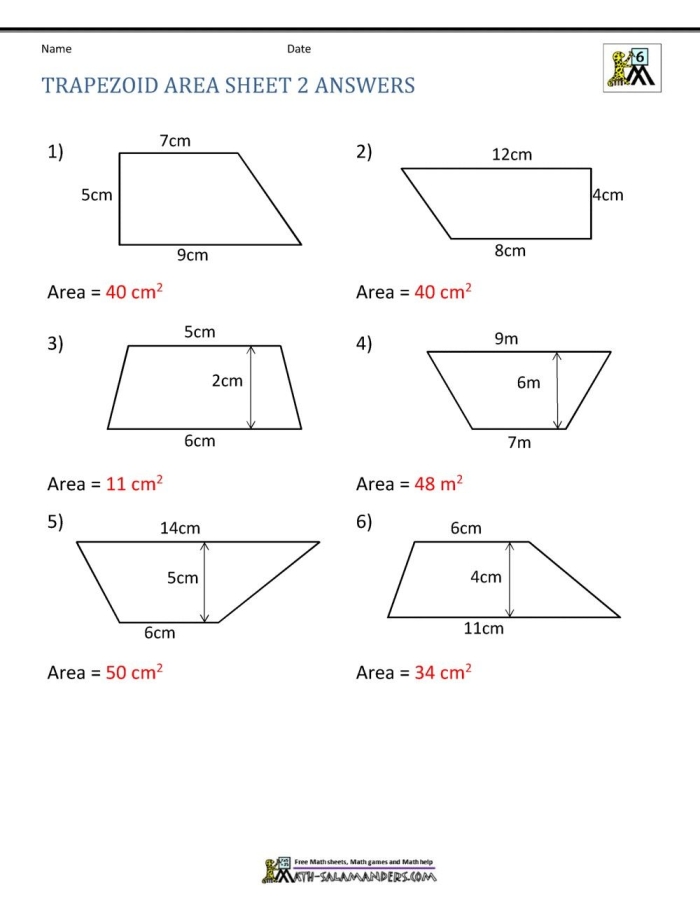
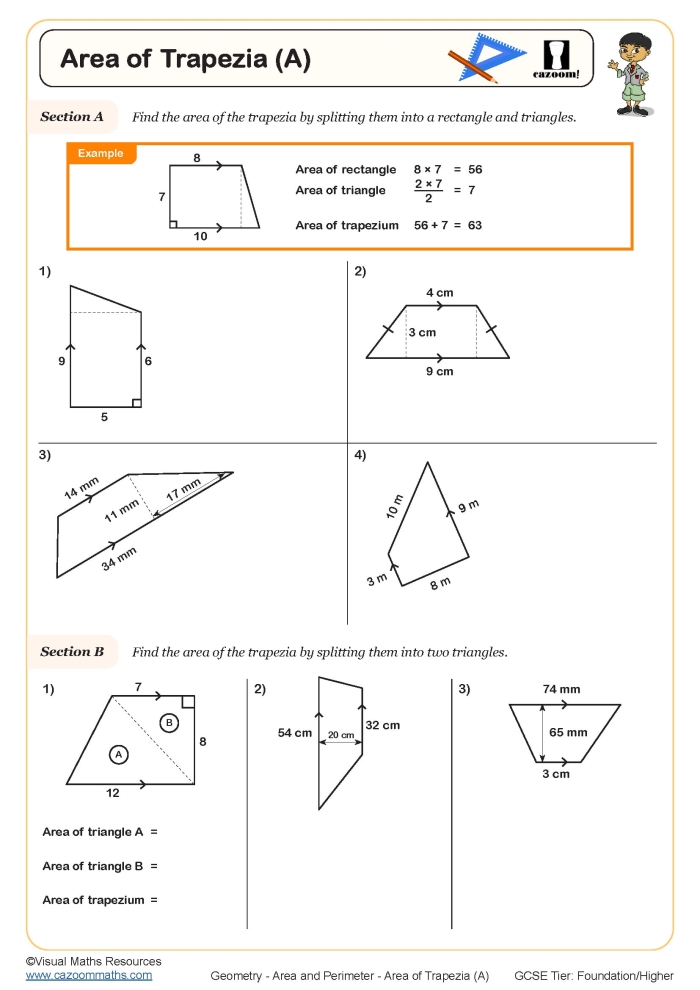
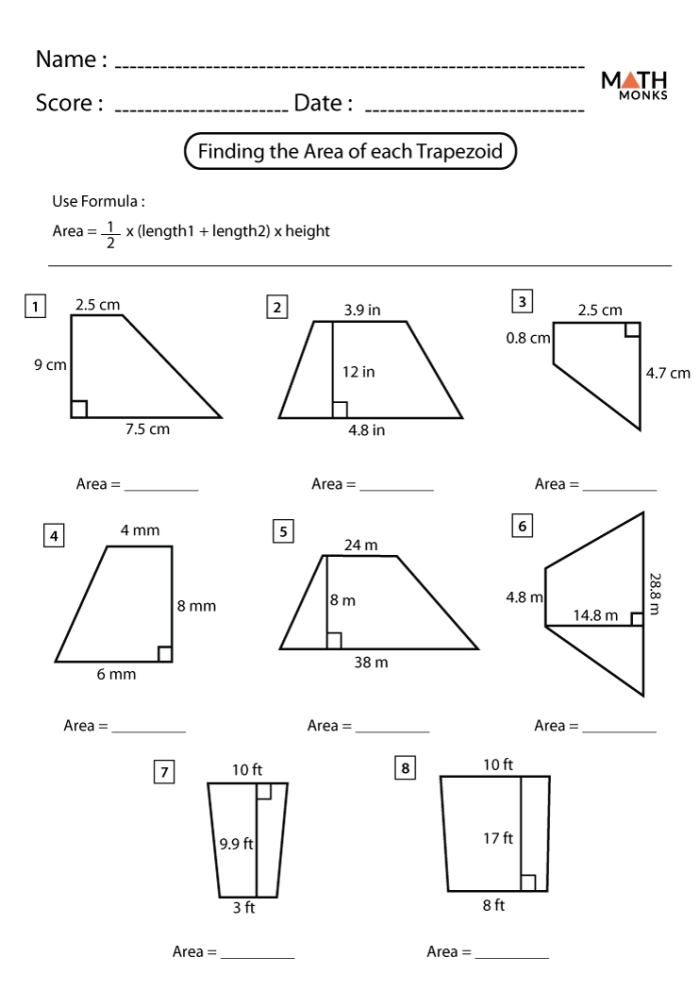
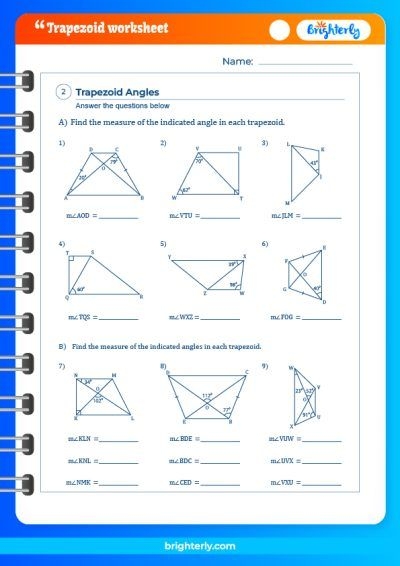
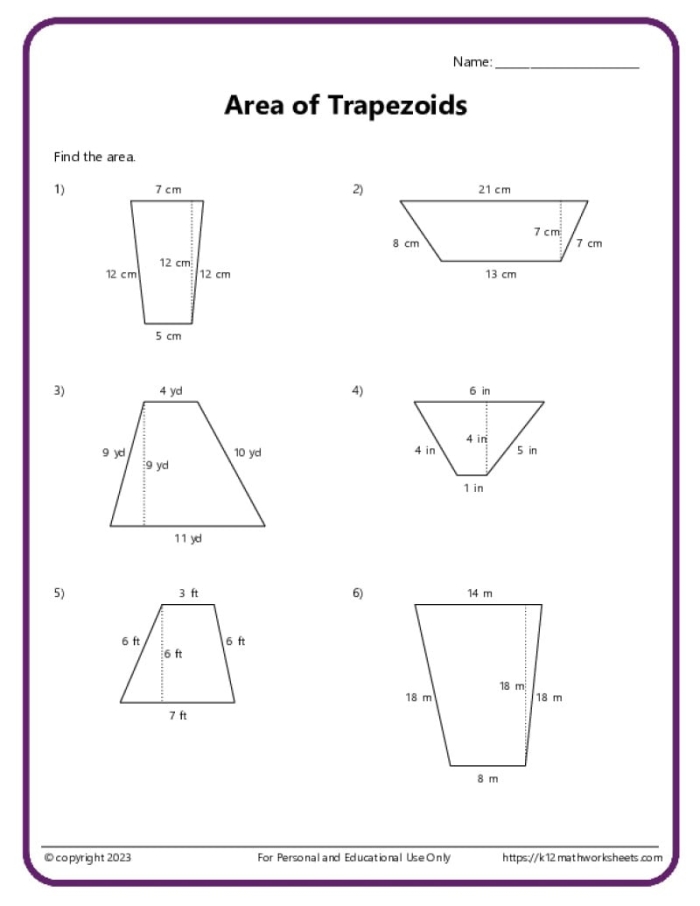
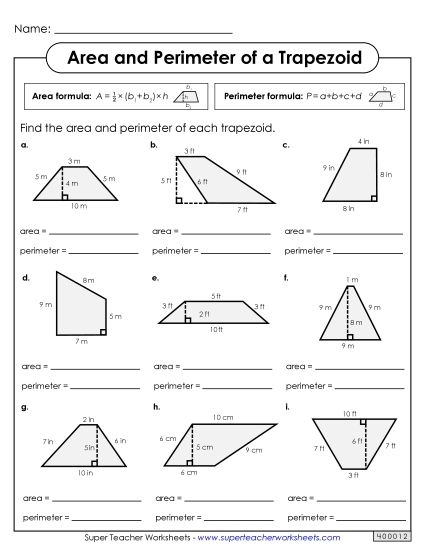
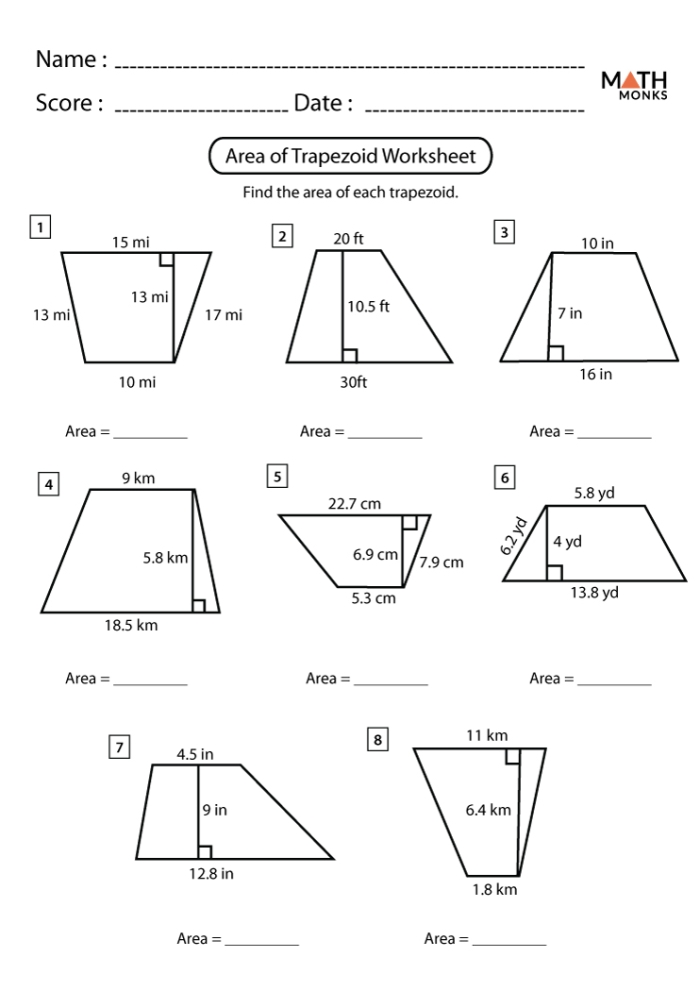
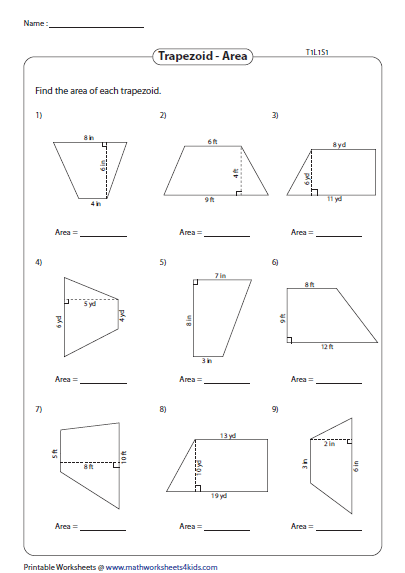
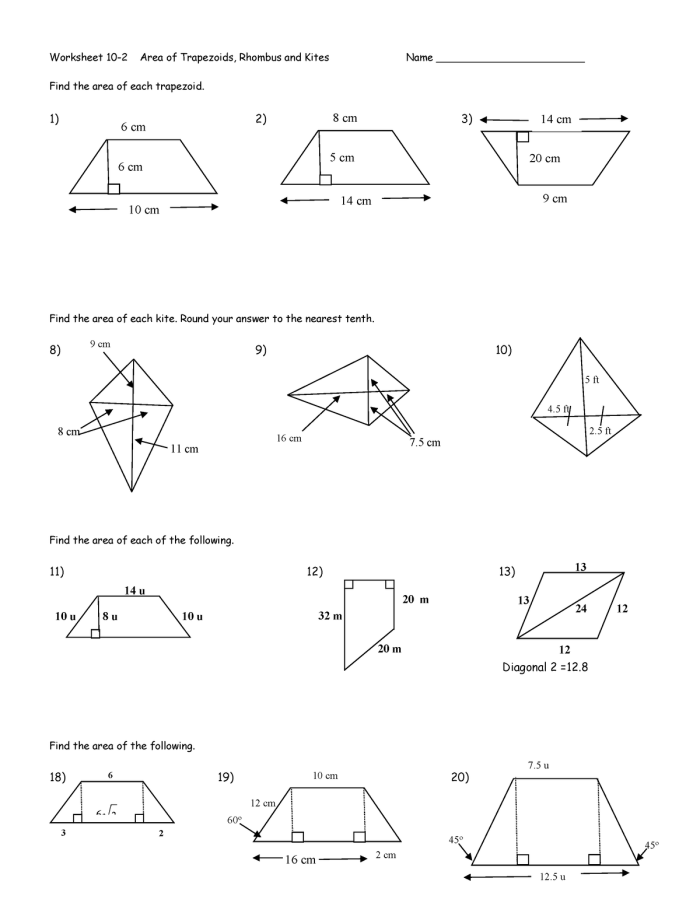
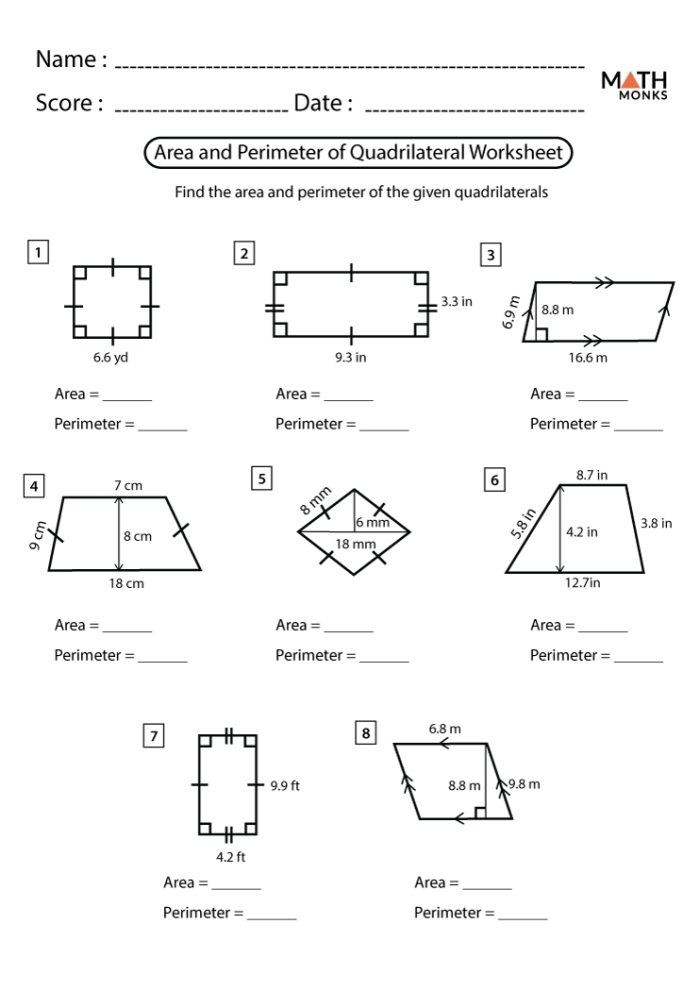
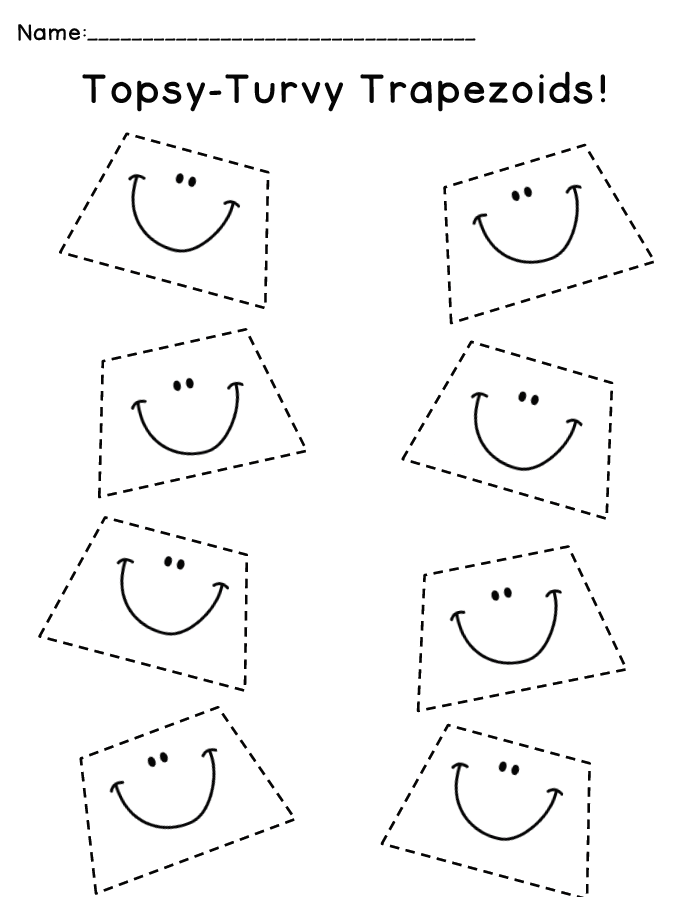
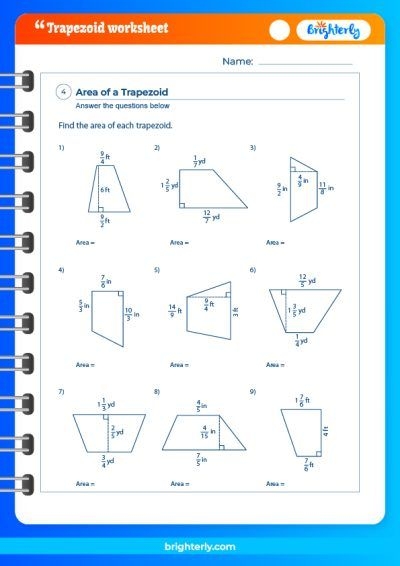
Incorporating practical exercises can make this learning experience more enjoyable. Printable trapezoid perimeter worksheets allow children to practice this skill repeatedly, reinforcing their understanding. These worksheets often include various trapezoid shapes, encouraging kids to visualize and apply their knowledge in different contexts. You can find some helpful resources for these worksheets that align with the third-grade curriculum, such as decomposing polygons to find area or properties of exponents.
As students work through these exercises, they not only grasp basic geometric concepts but also enhance their problem-solving skills. Engaging with trapezoid perimeter calculations lays a strong foundation for future mathematical learning, making it a crucial part of their third-grade education.
Printable Worksheets for Practice