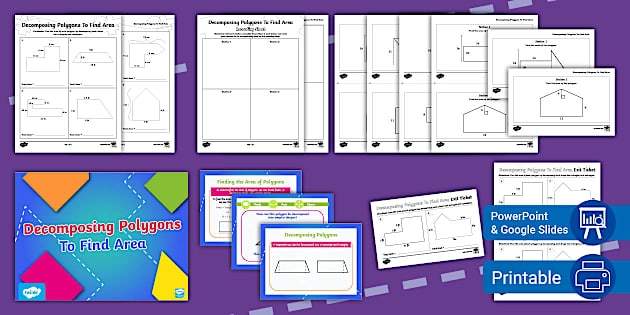
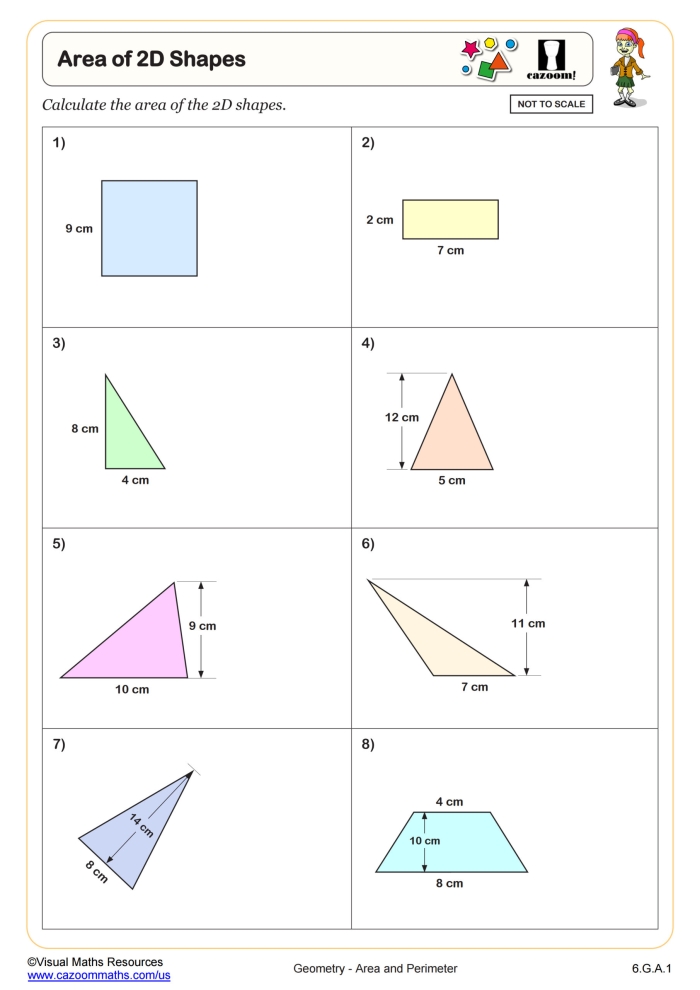
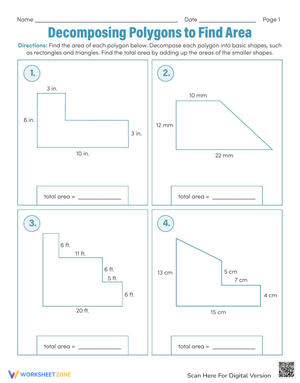
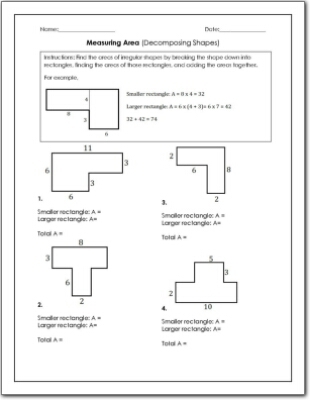
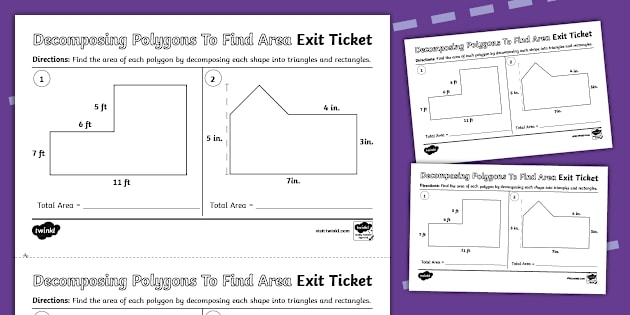
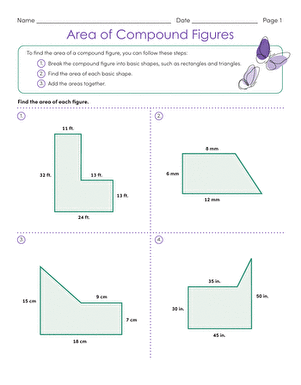
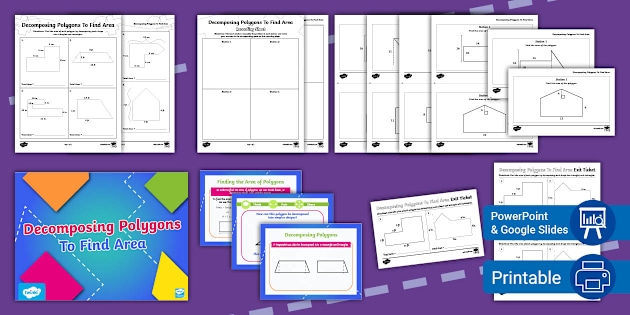
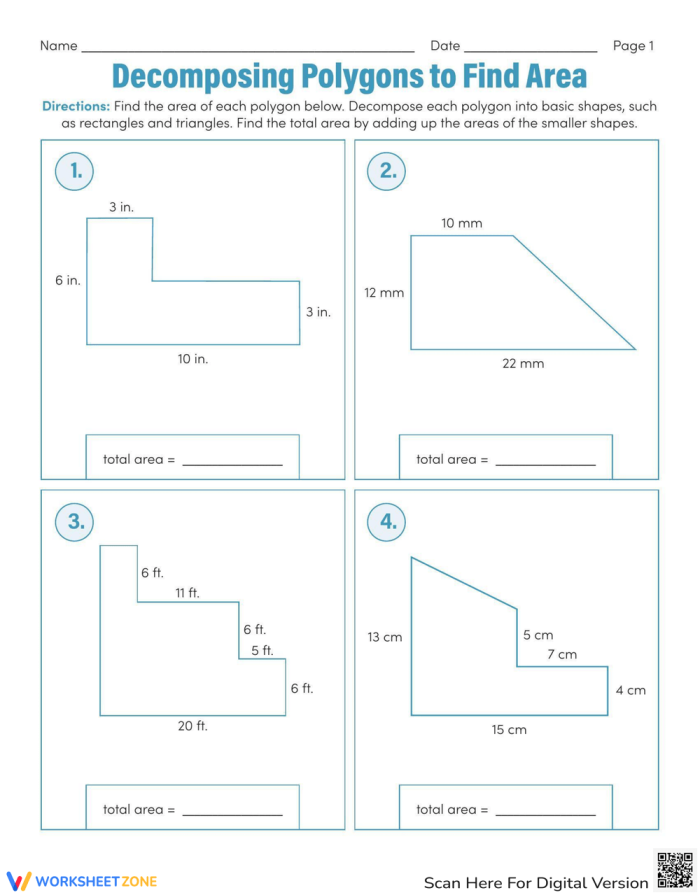
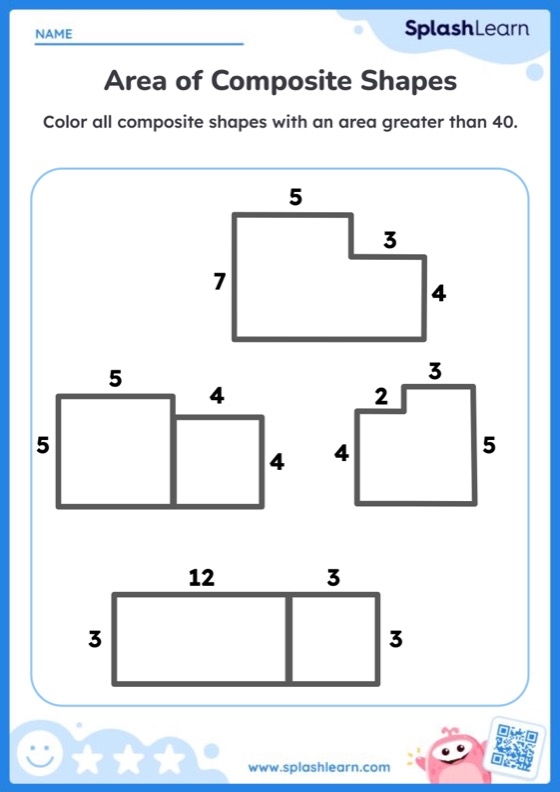
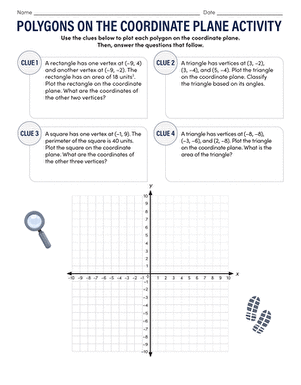
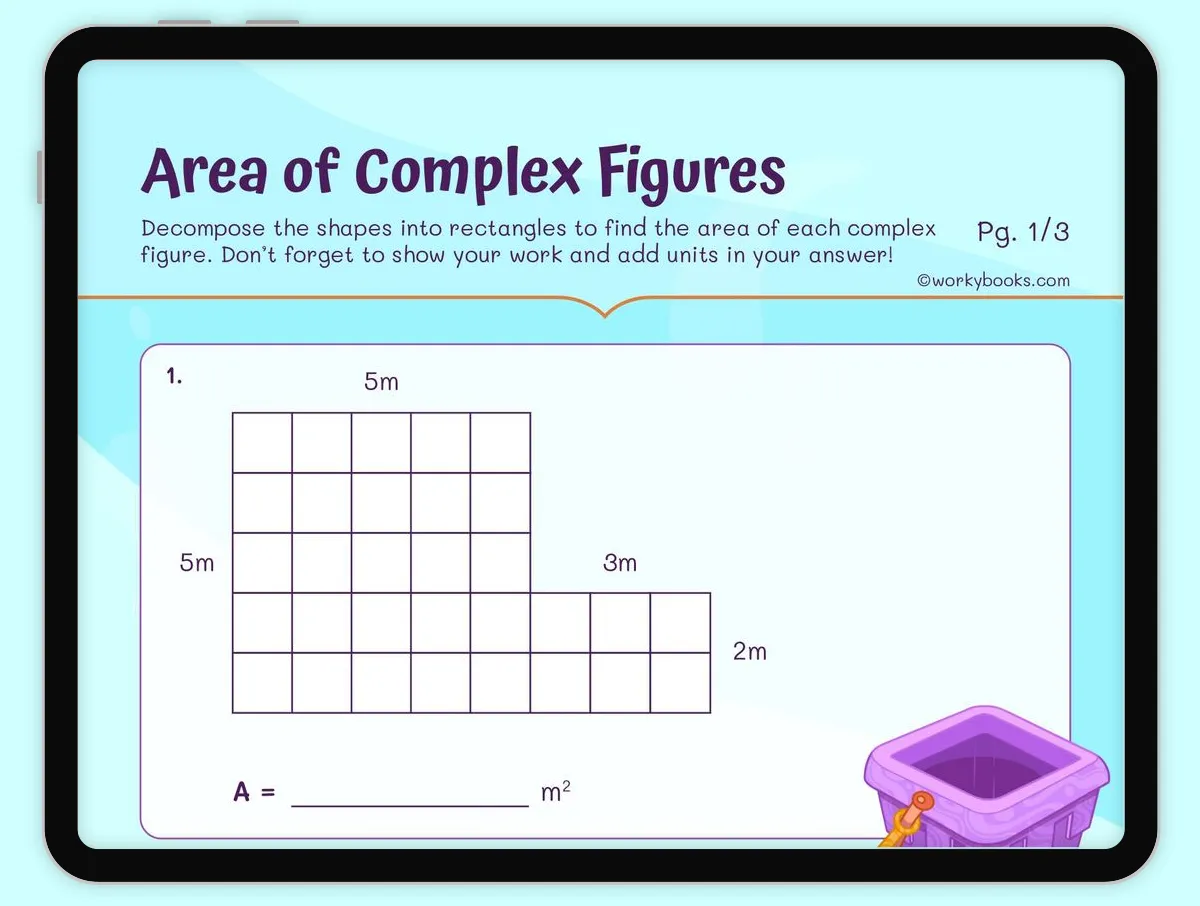
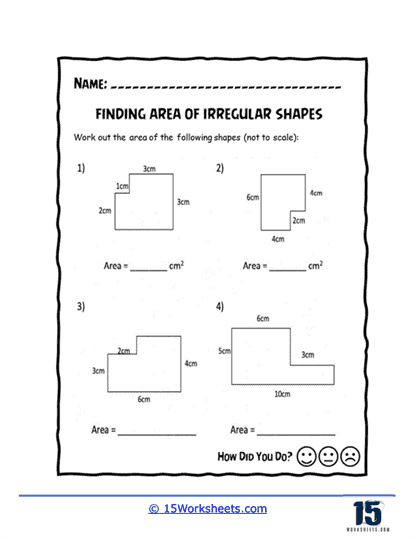
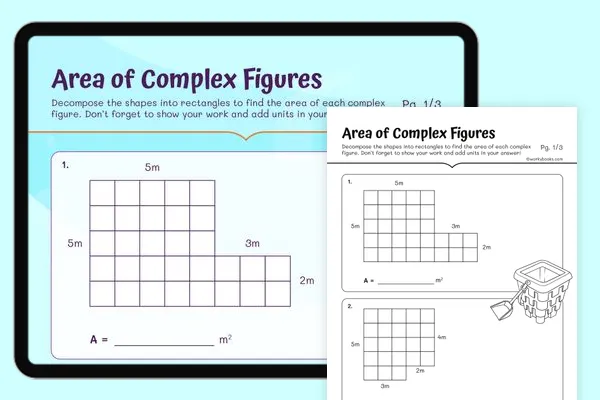
Finding the area of irregular shapes trips up a lot of sixth grade students because they’re used to simple rectangles and triangles. The moment a shape has more than four sides or combines multiple shapes together, many kids freeze. This is where decomposing polygons becomes a lifesaver, and a solid two-page worksheet can make the difference between confusion and confidence.
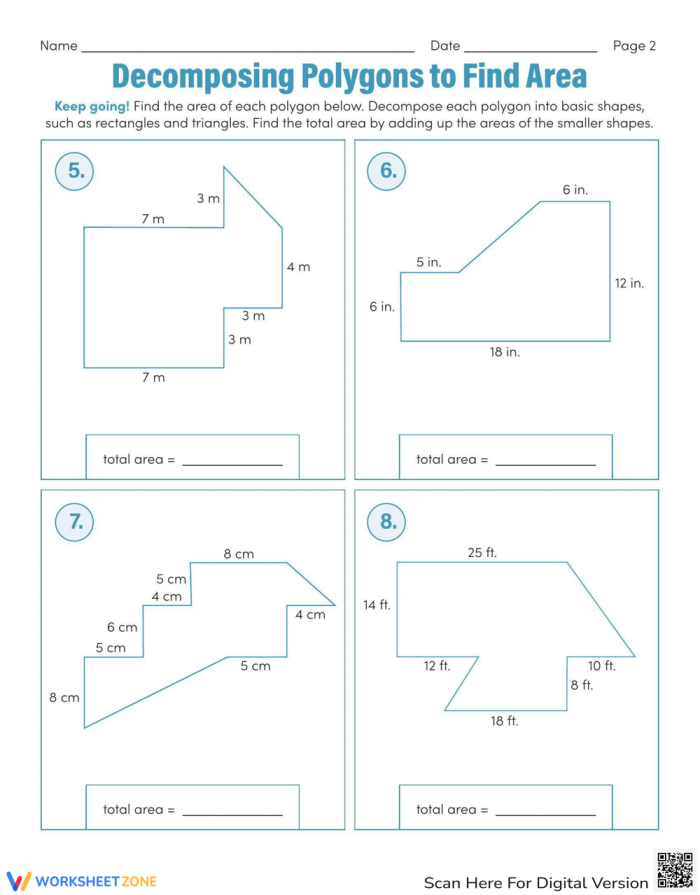
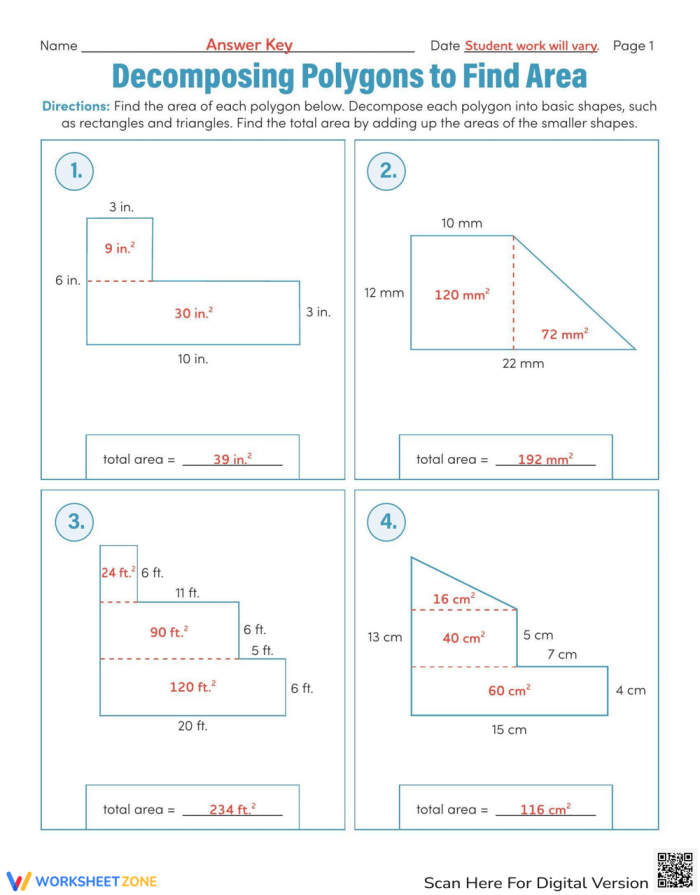
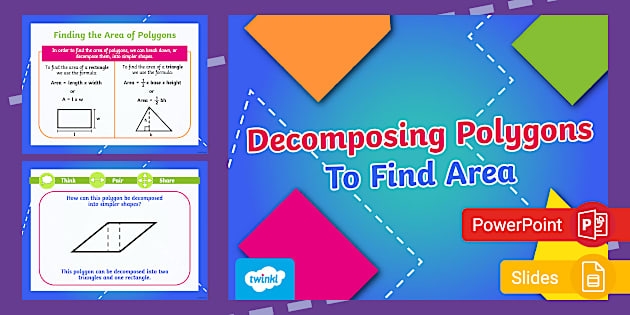
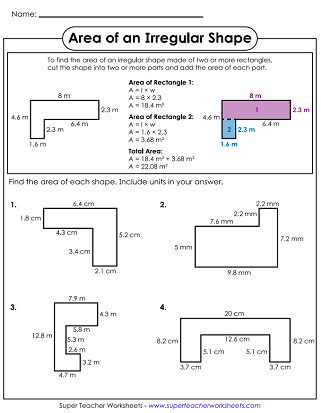
Decomposing means breaking a complex shape into simpler pieces you already know how to calculate. Instead of staring at a pentagon or an L-shaped figure, you divide it into rectangles, triangles, or trapezoids. Once you’ve split it up, you find the area of each piece separately, then add them together. It’s straightforward once you see how it works.
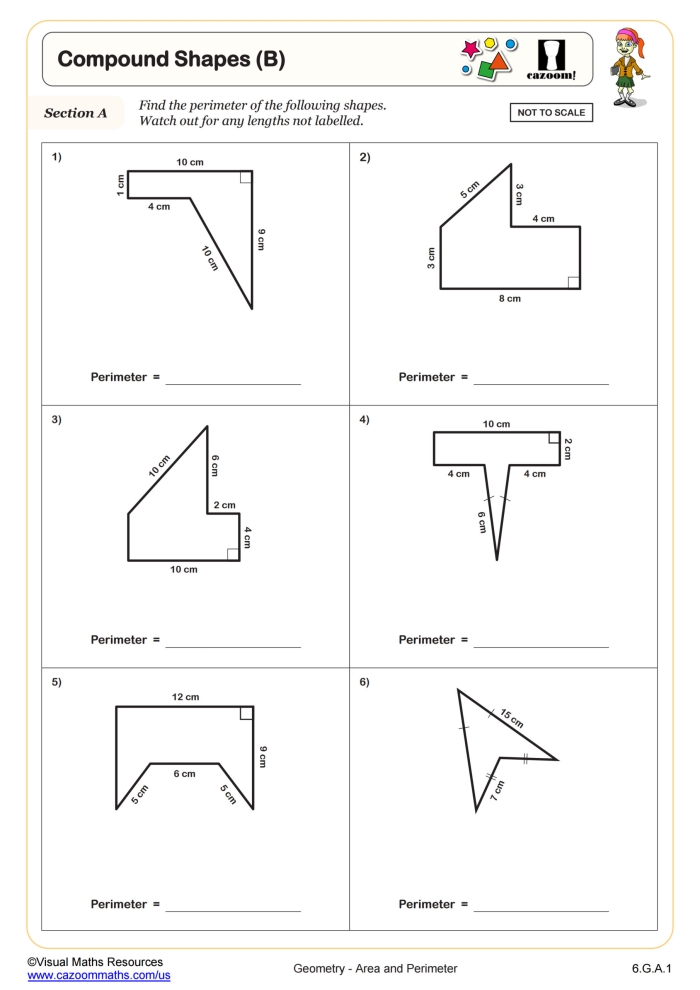
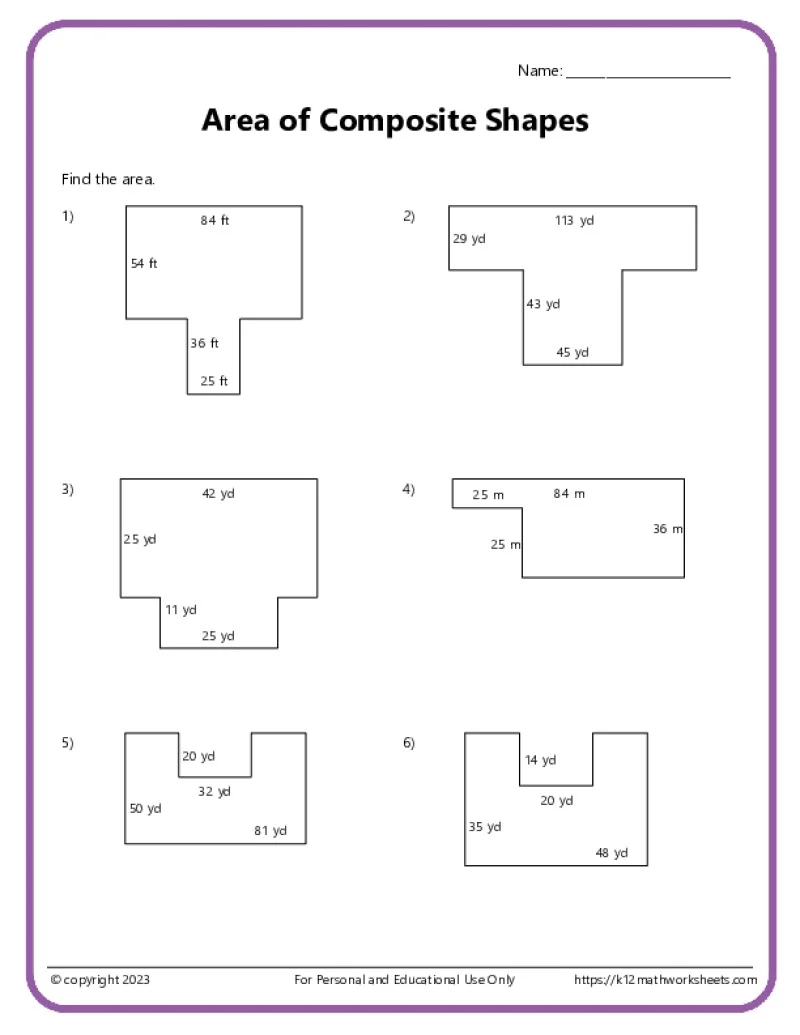
The beauty of this approach is that it works for any compound shape. A sixth grade math student might encounter an irregular hexagon, a shape that looks like a house (rectangle with a triangle on top), or something more abstract. The strategy stays the same: identify natural lines where you can cut the shape, calculate each section, and combine your answers.
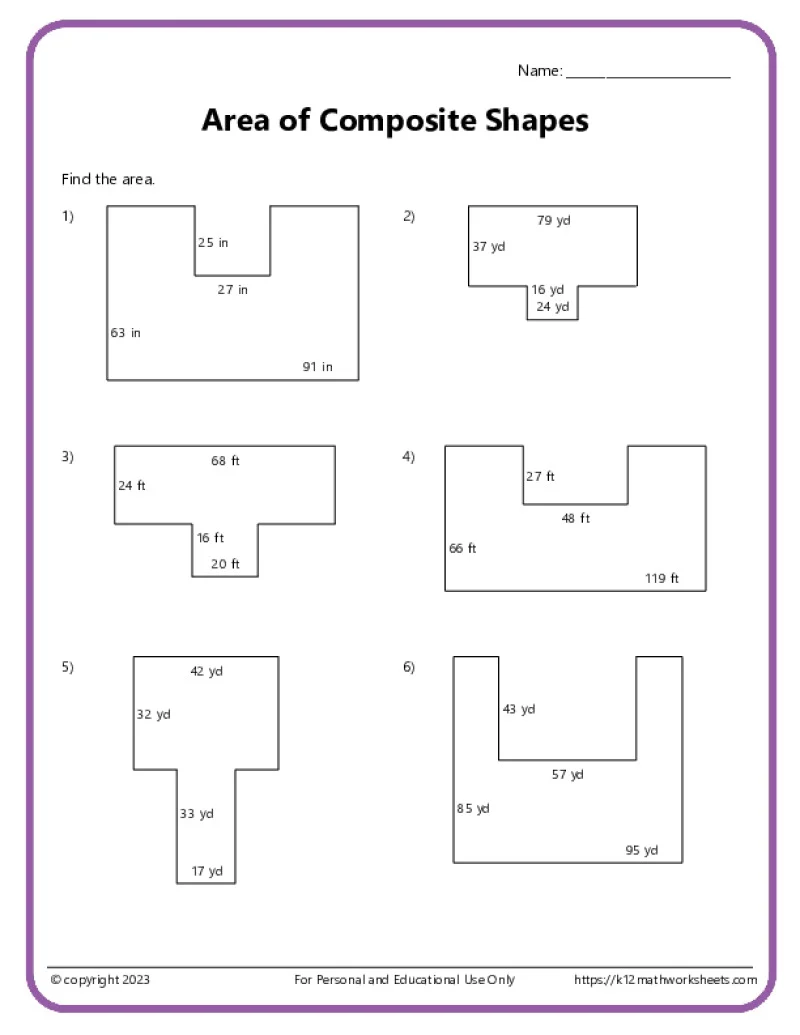
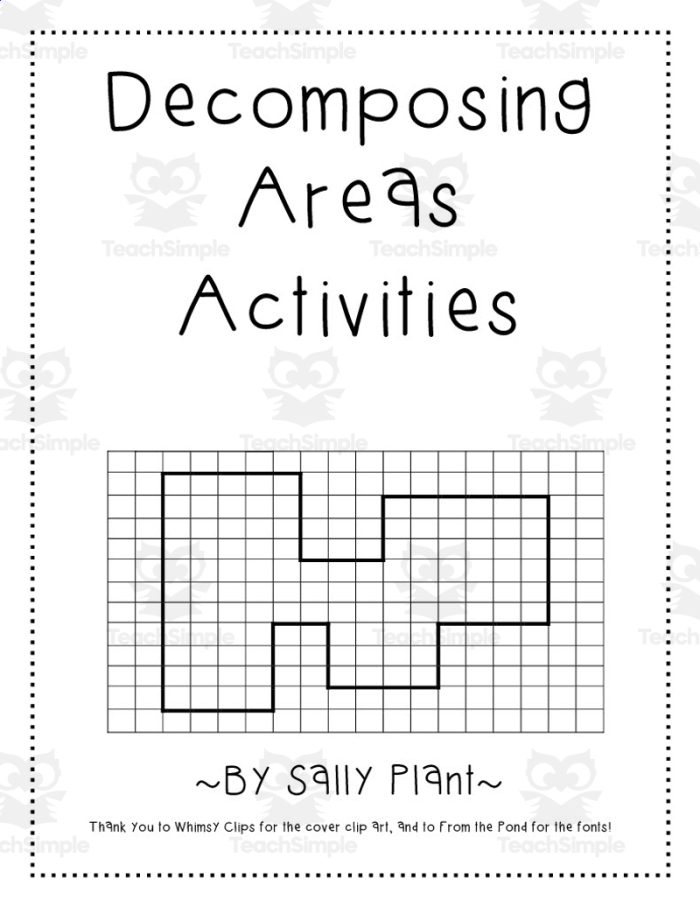
A well-designed worksheet gives students multiple shapes to practice with, gradually increasing difficulty. Early problems might show the decomposition lines already drawn in, while later ones require students to figure out where to split the shape themselves. This progression builds real understanding rather than just memorization.
Working through printable decomposing polygons to find area worksheets helps students develop spatial reasoning skills that extend far beyond geometry class. They start seeing complex problems as collections of manageable pieces, a mindset that applies to everything from architecture to engineering.
The two-page format gives enough space for practice without overwhelming learners. Students can work through examples, check their understanding, and build fluency with the method before moving on.
Try These Printable Worksheets