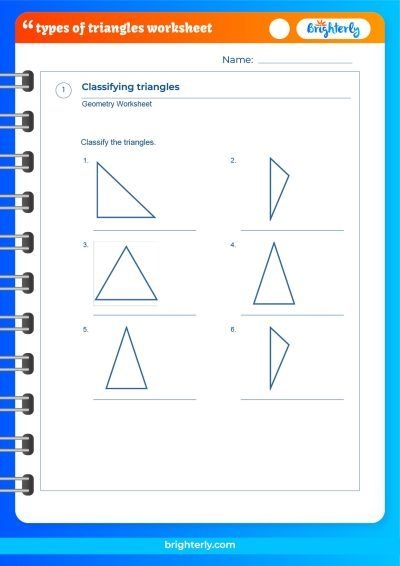
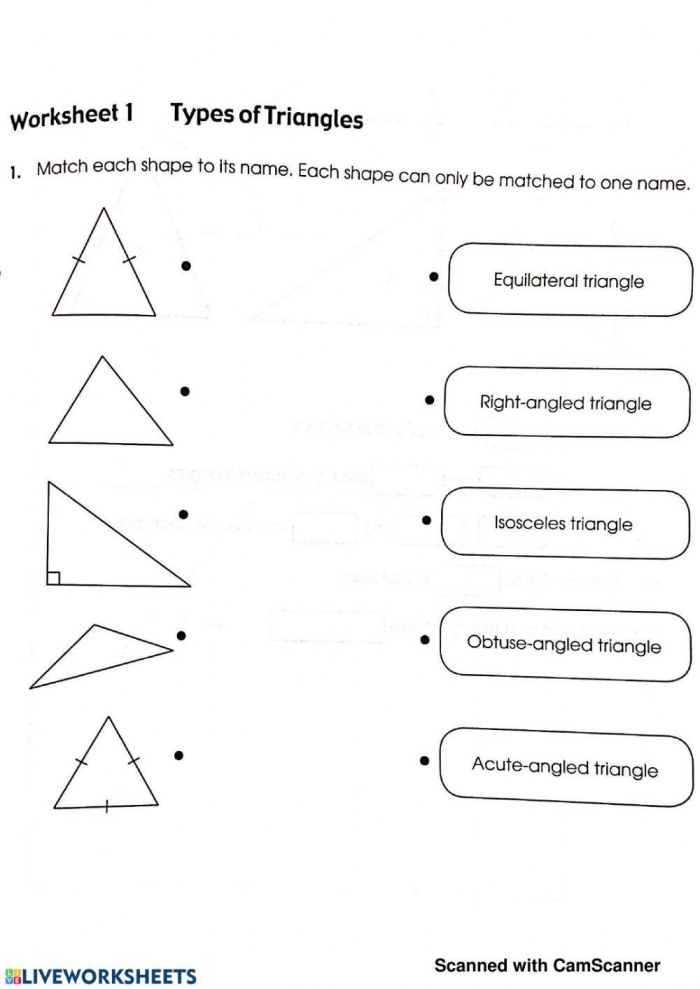
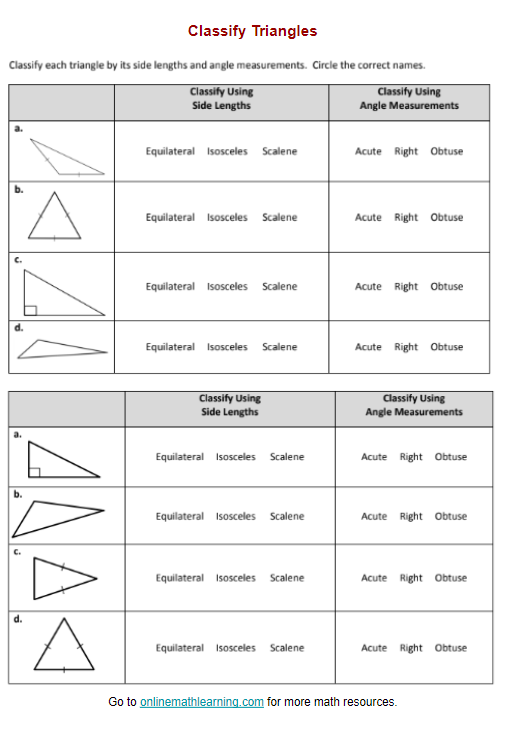
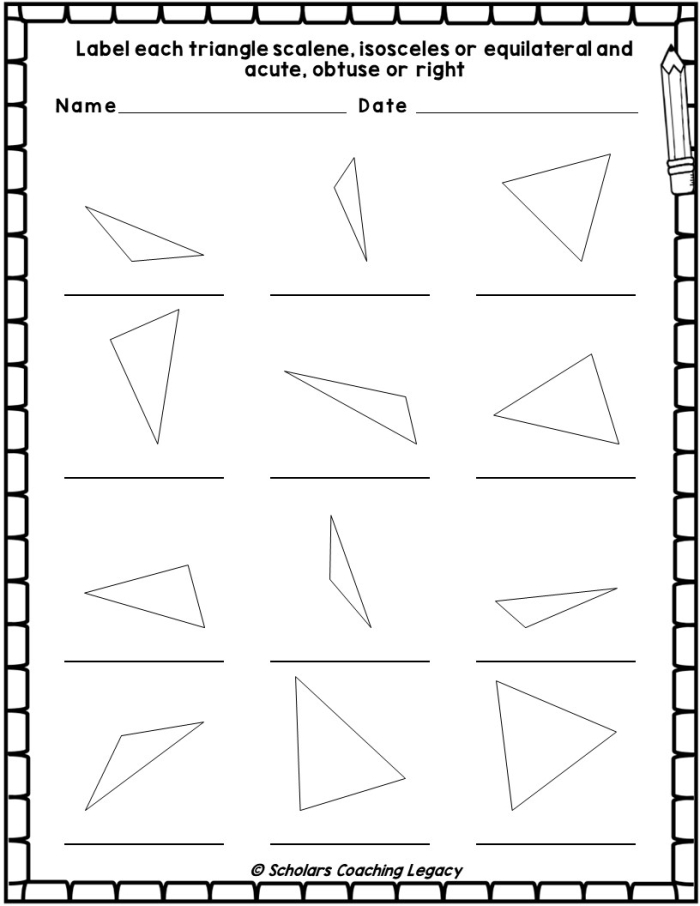
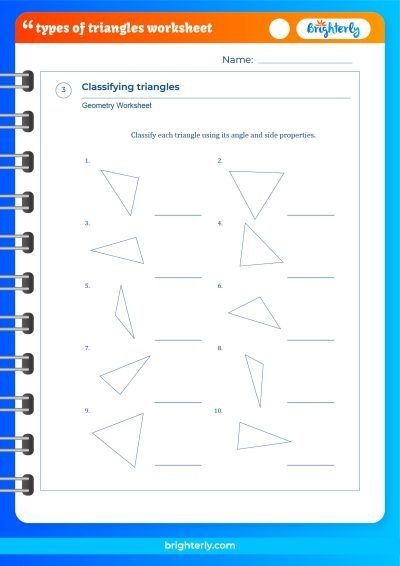
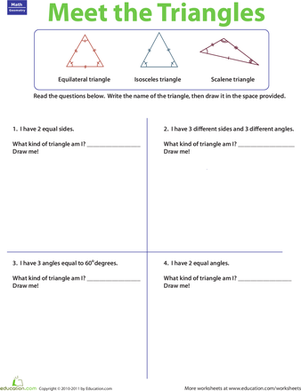
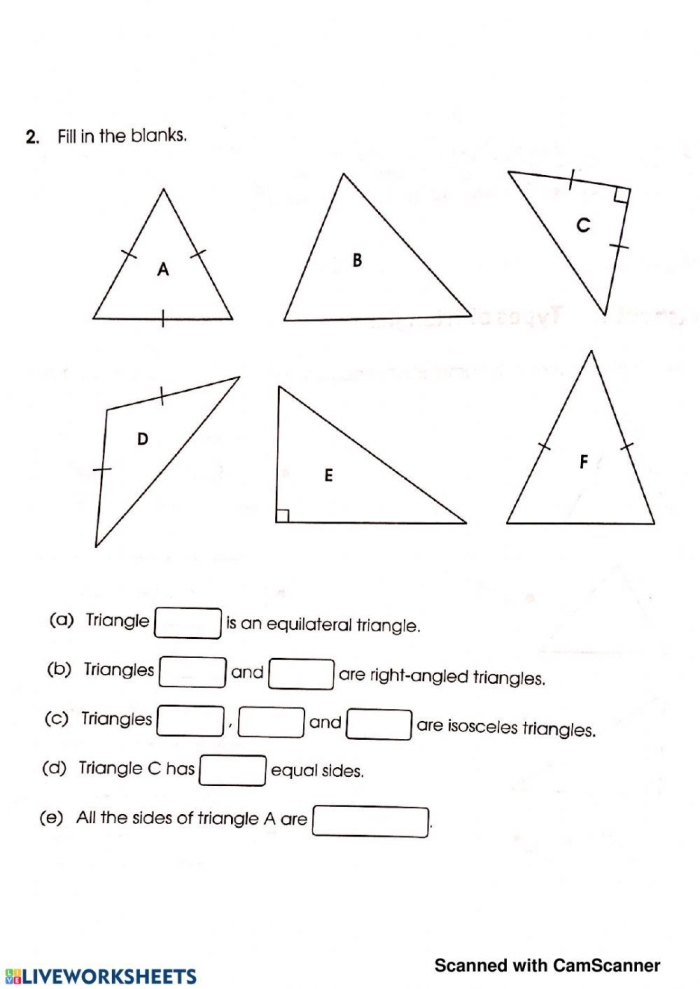
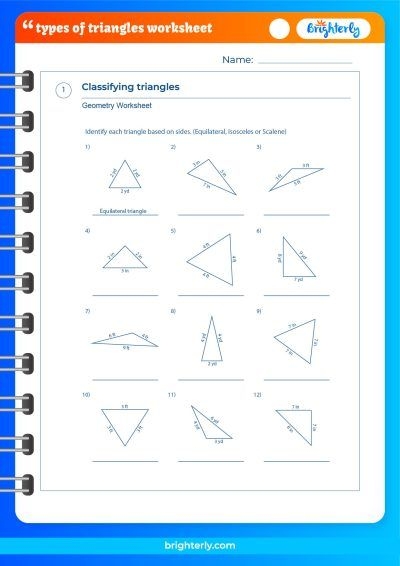
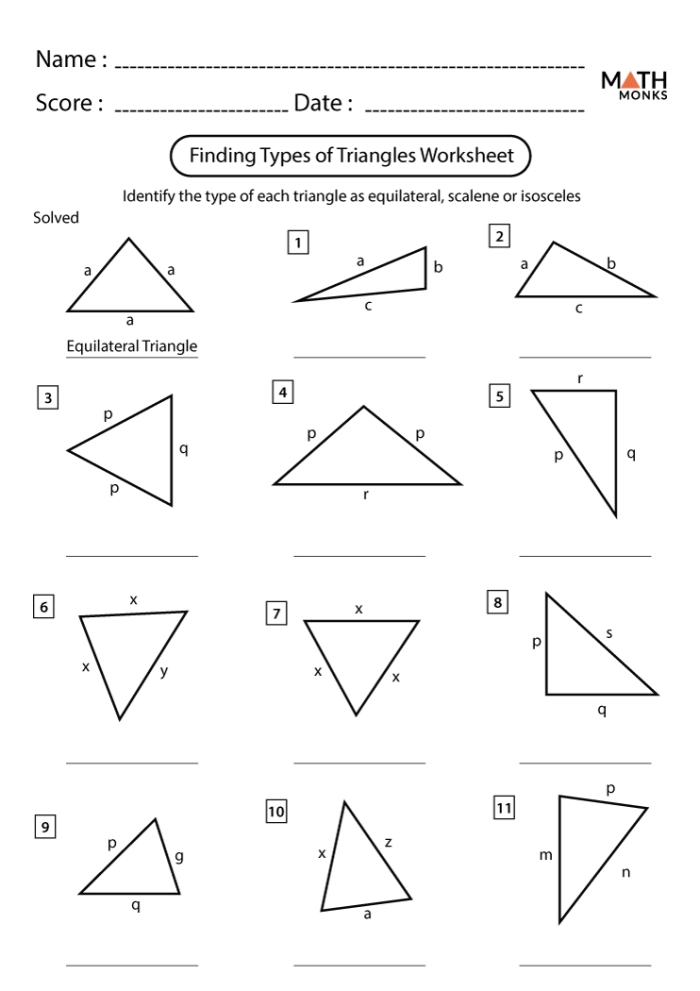
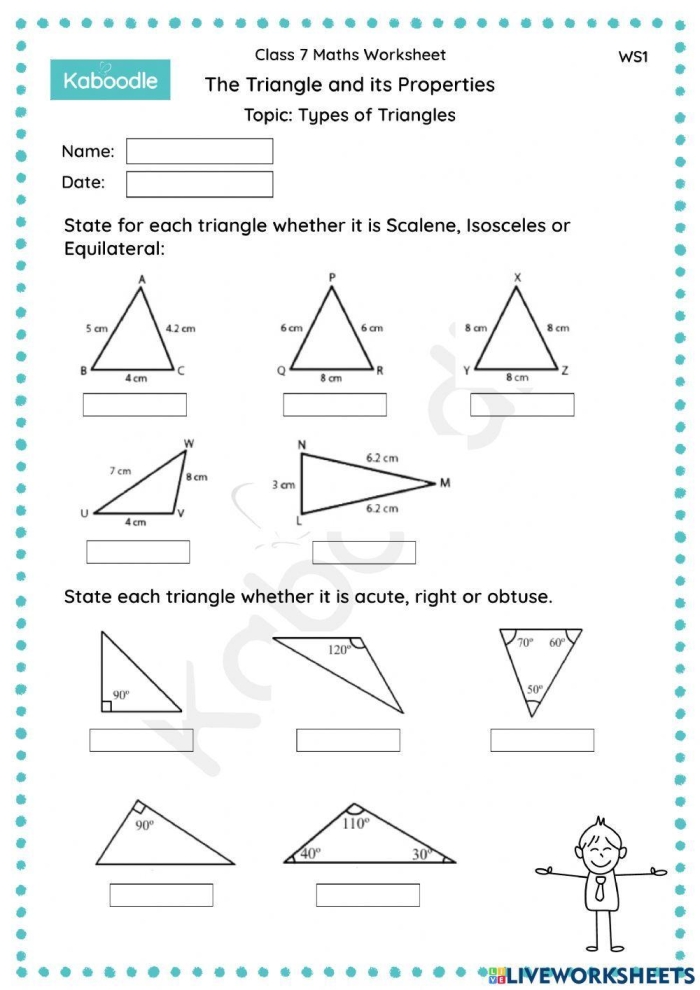
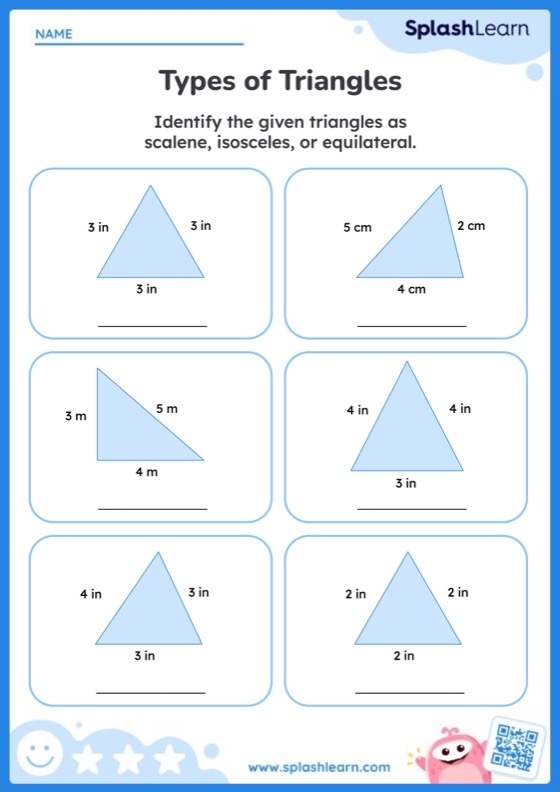
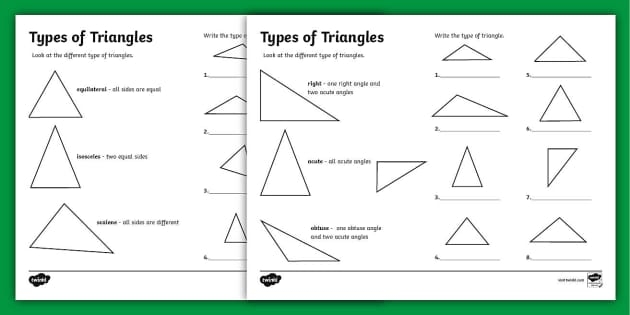
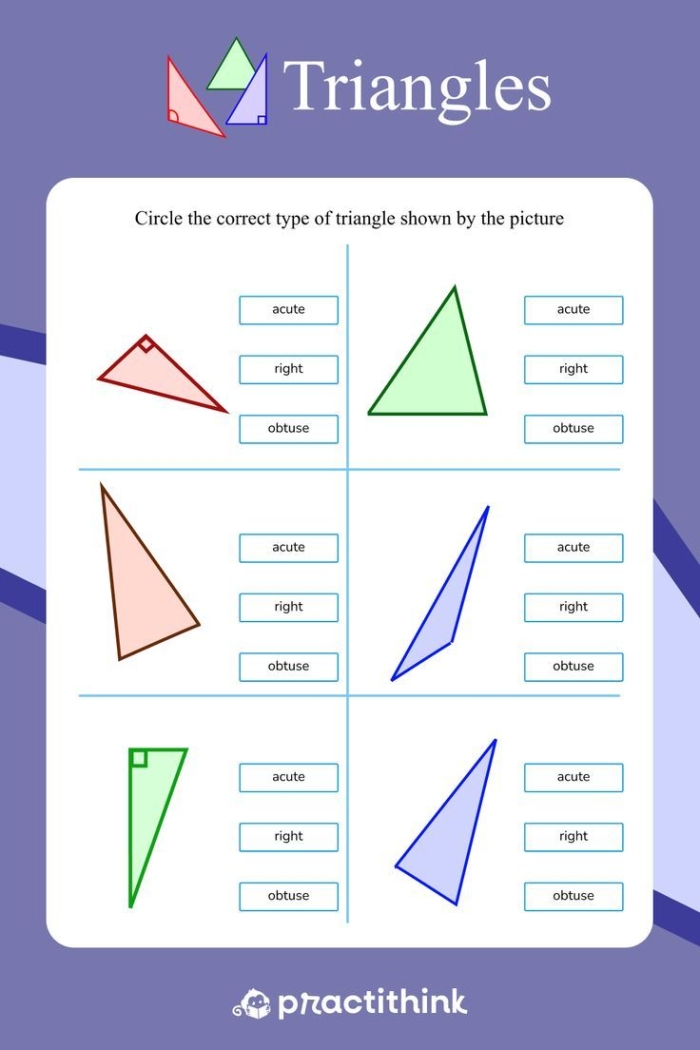
When third graders first encounter geometry, triangles often become their entry point into understanding shapes and their properties. This worksheet introduces your child to the three types of triangles, each with its own distinct characteristics that make it worth recognizing.
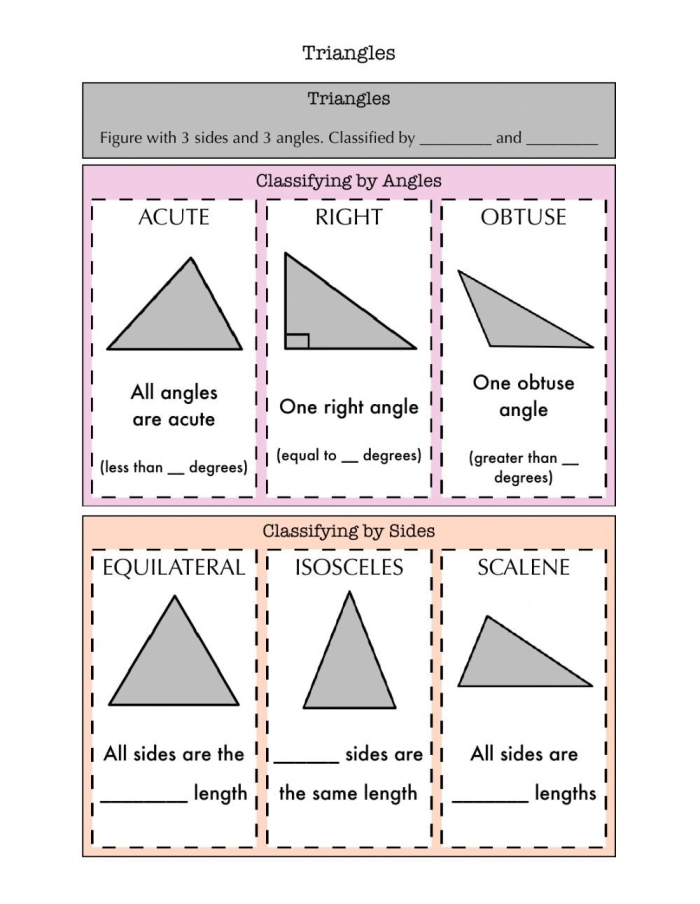
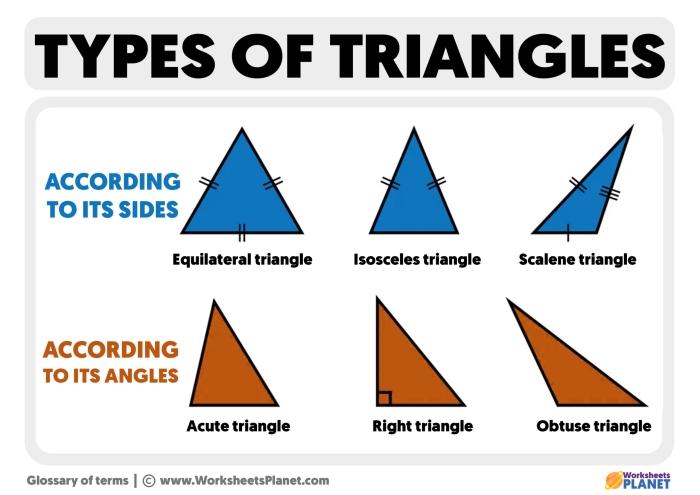
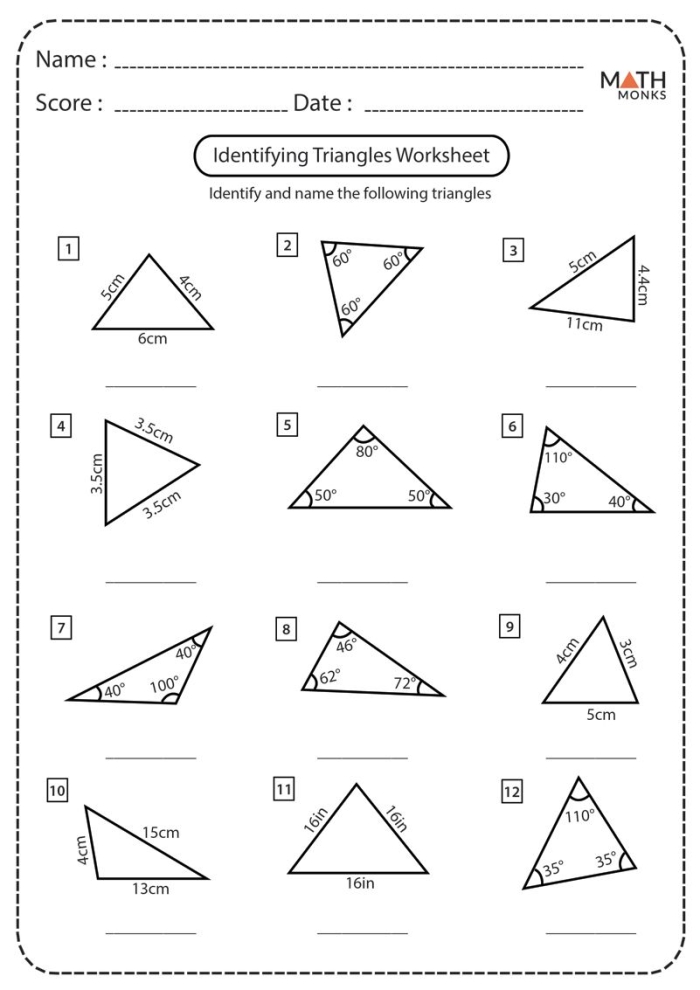
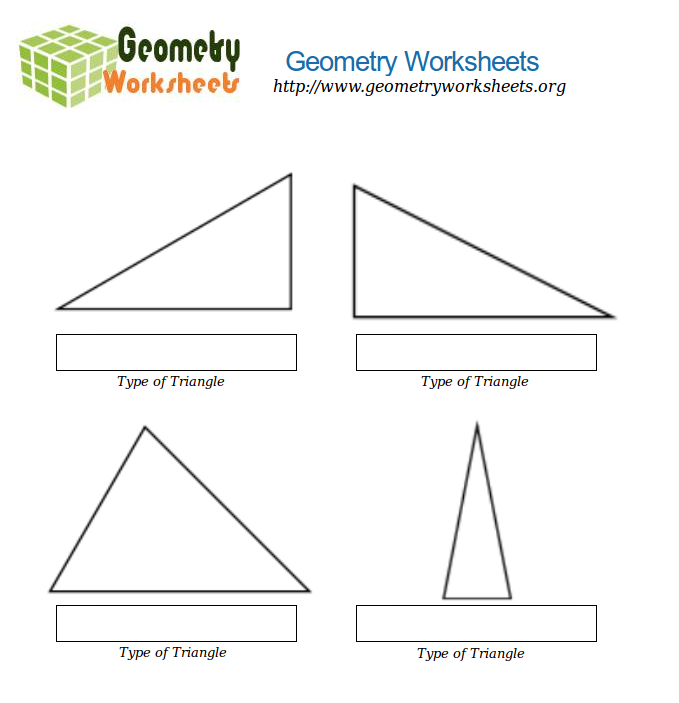
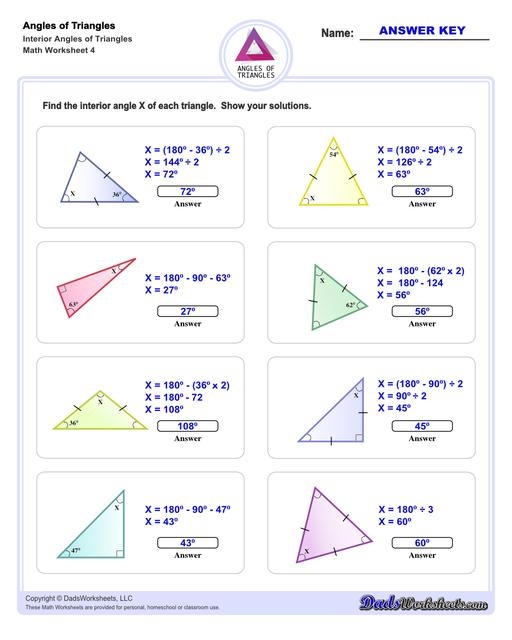
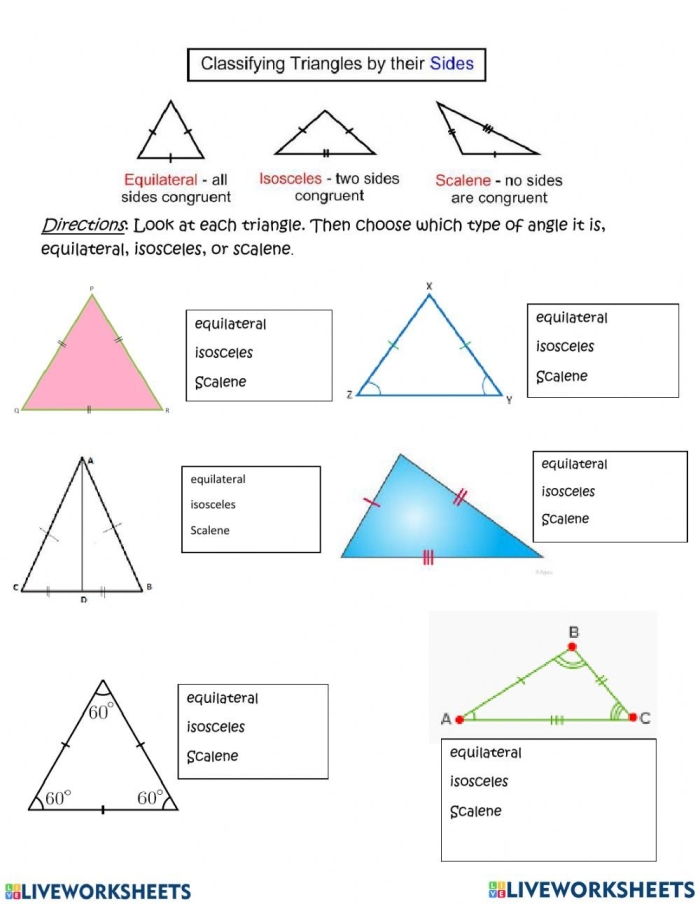
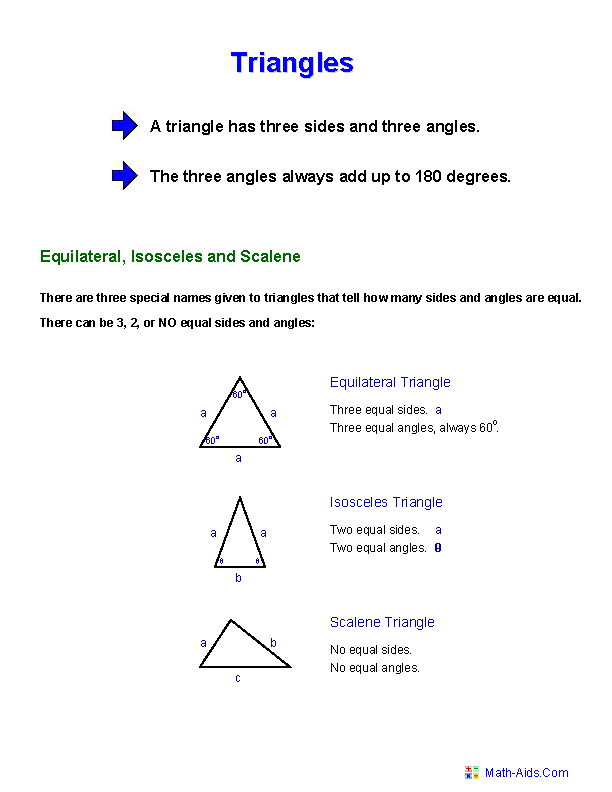
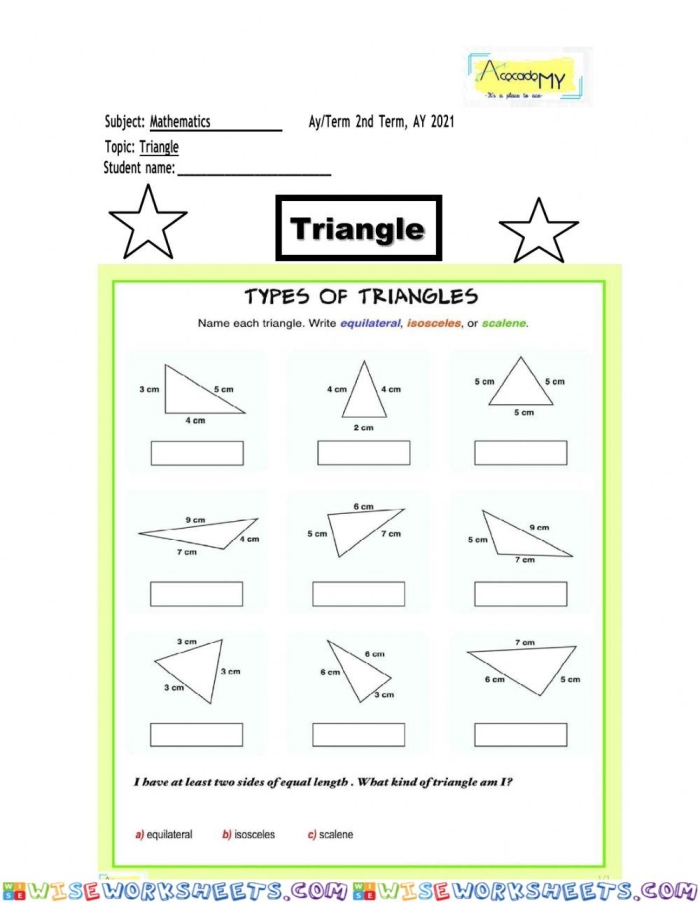
The equilateral triangle is the most symmetrical of the three. All three sides are exactly the same length, and all three angles measure 60 degrees. If you imagine a triangle that looks perfectly balanced, you’re picturing an equilateral triangle. Children often find this one easiest to identify because of its uniform appearance.
The isosceles triangle has two sides that are equal in length, while the third side differs. This means two of its angles are also identical. Many classroom flags and roof shapes follow this pattern, making it relatively easy for young learners to spot in the real world.
The scalene triangle stands apart because all three sides have different lengths, and consequently, all three angles are different too. This type appears less predictable than the other two, which can actually help students remember it as the “odd one out.”
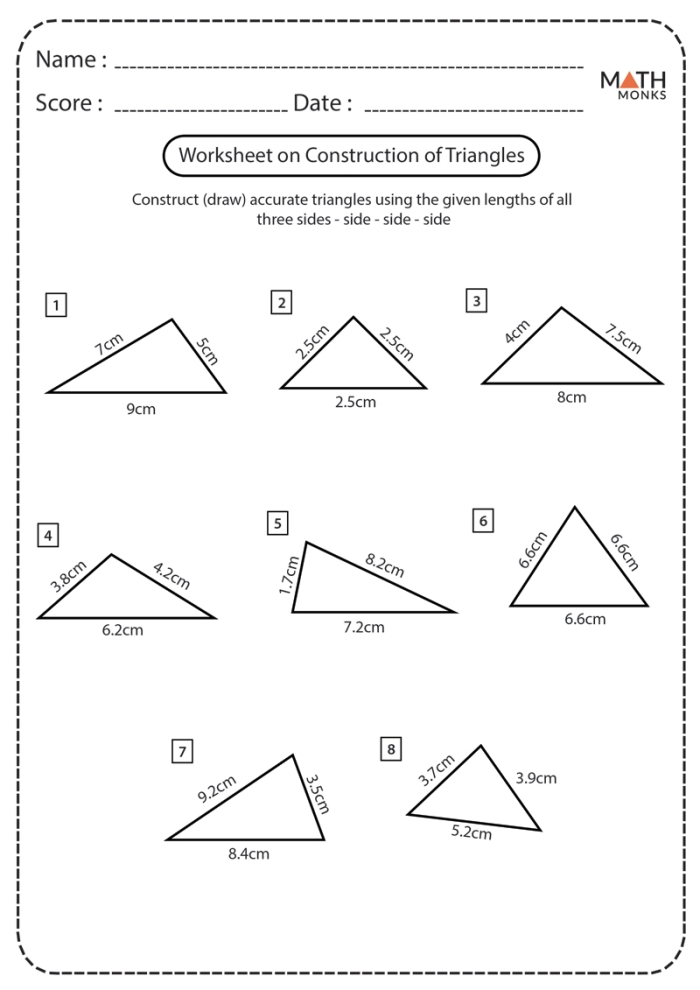
Working through this worksheet helps third graders develop visual recognition skills that extend beyond mathematics. As children practice identifying these shapes, they’re building foundational geometry knowledge that supports later learning. You might pair this activity with other math practice worksheets to reinforce their number skills, or use graph paper activities to help them draw and measure their own triangles.
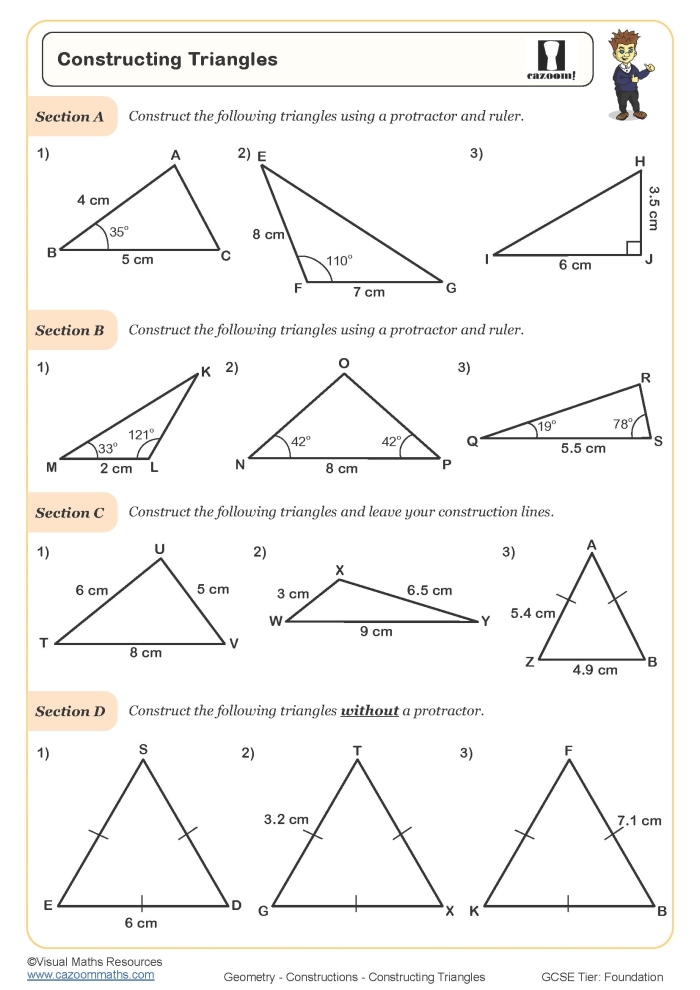
Having your child draw examples of each type strengthens their understanding far more than simply reading about them. Let them create triangles using rulers or string, then classify what they’ve made. This hands-on approach transforms an abstract concept into something tangible and memorable.
Boost Skills with These Worksheets