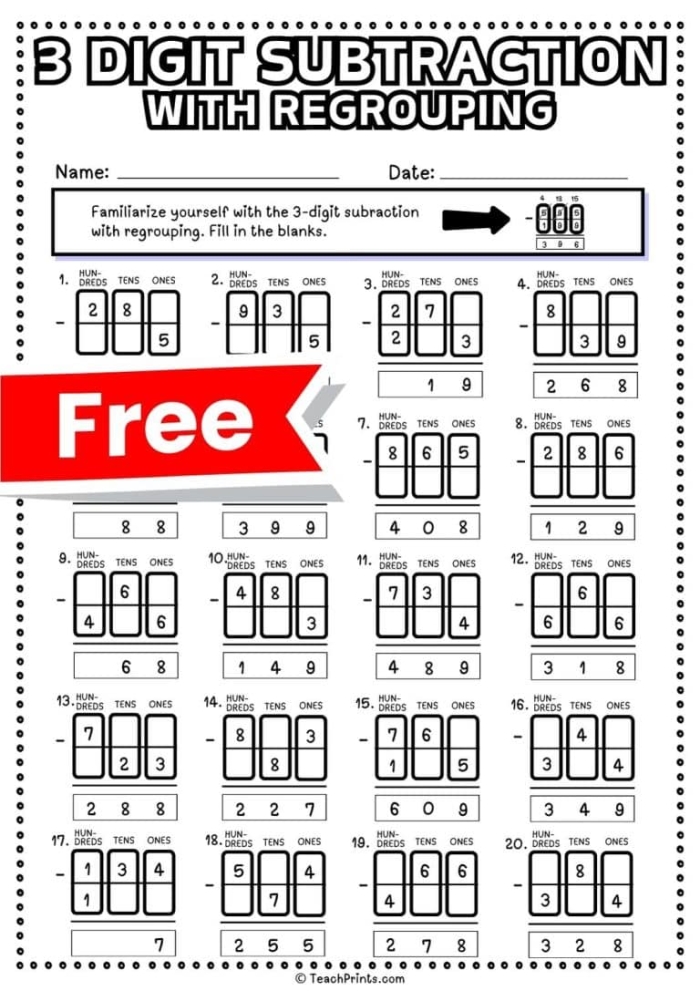
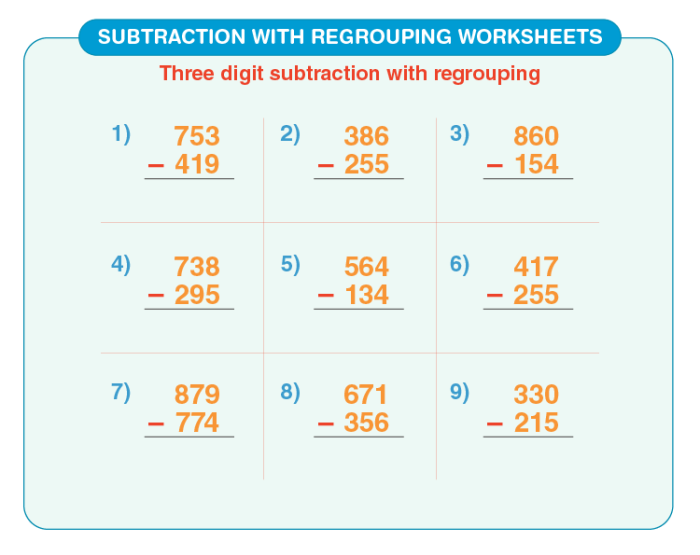
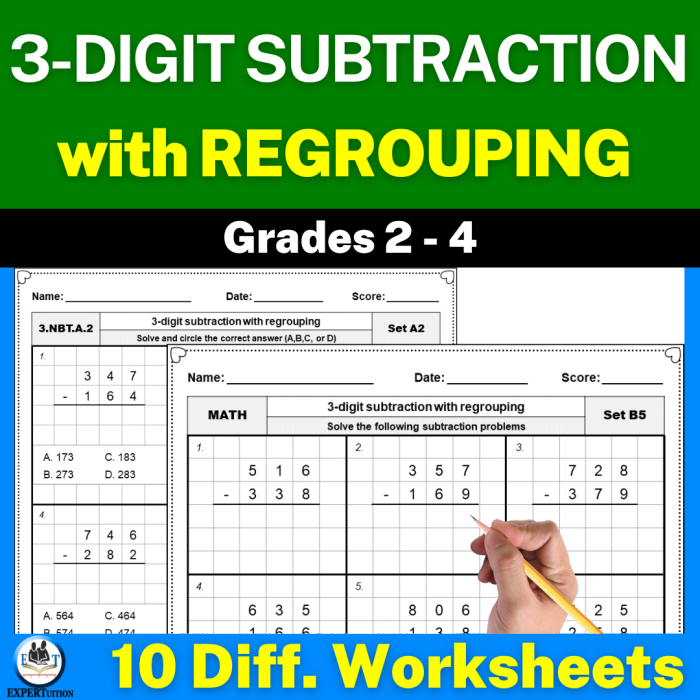
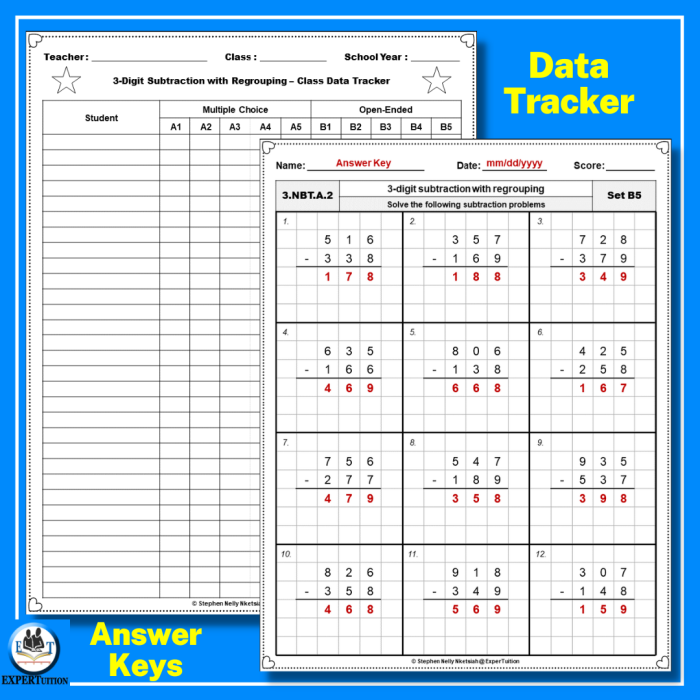
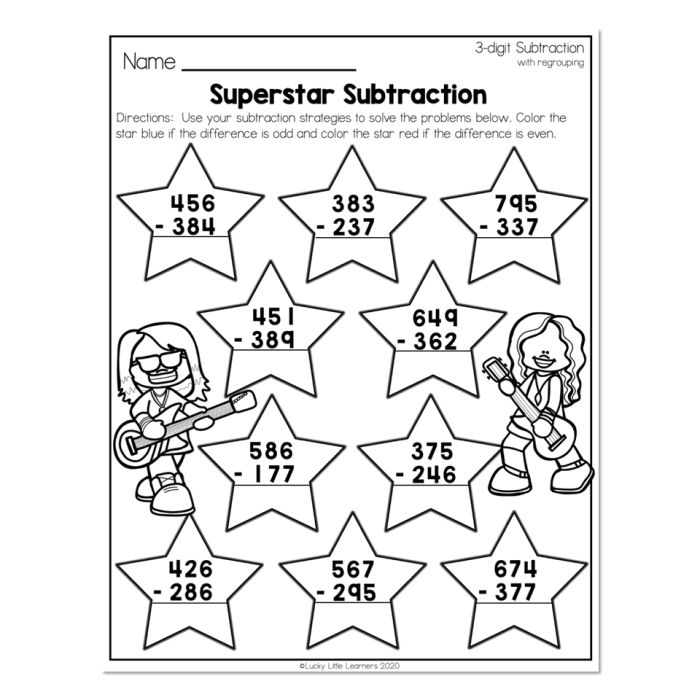
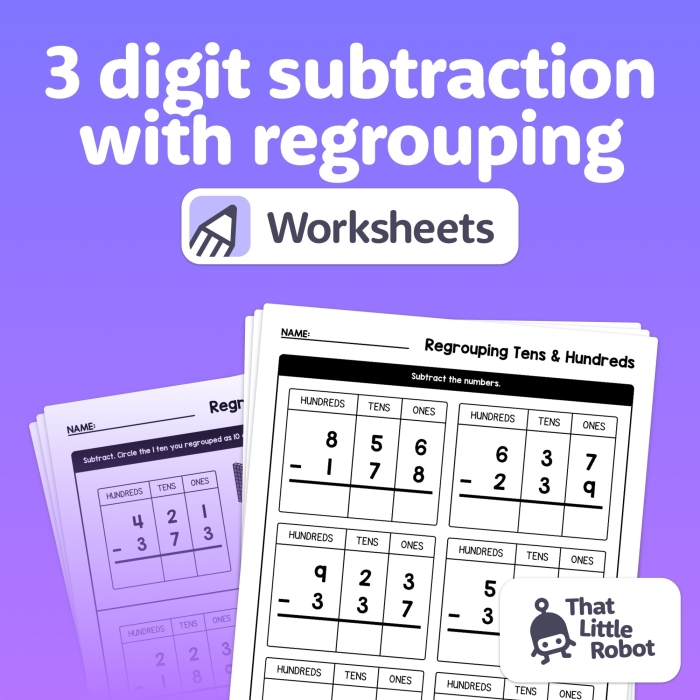
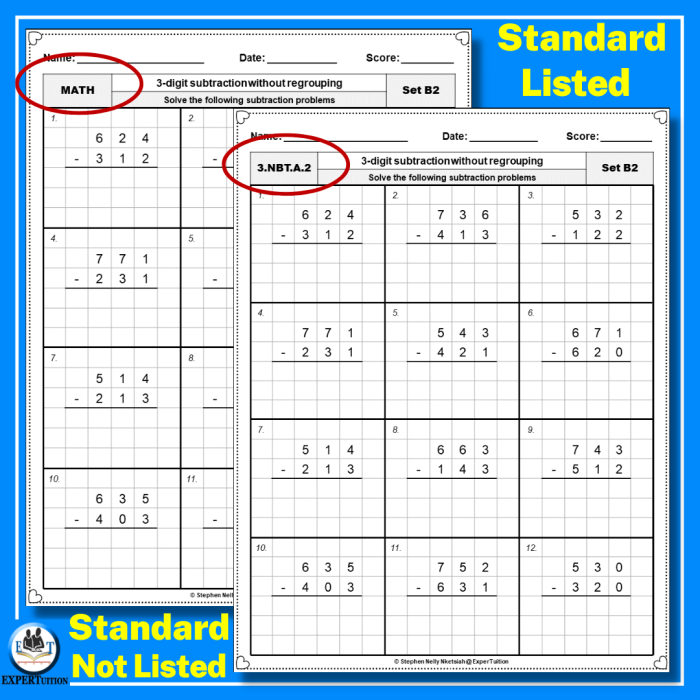
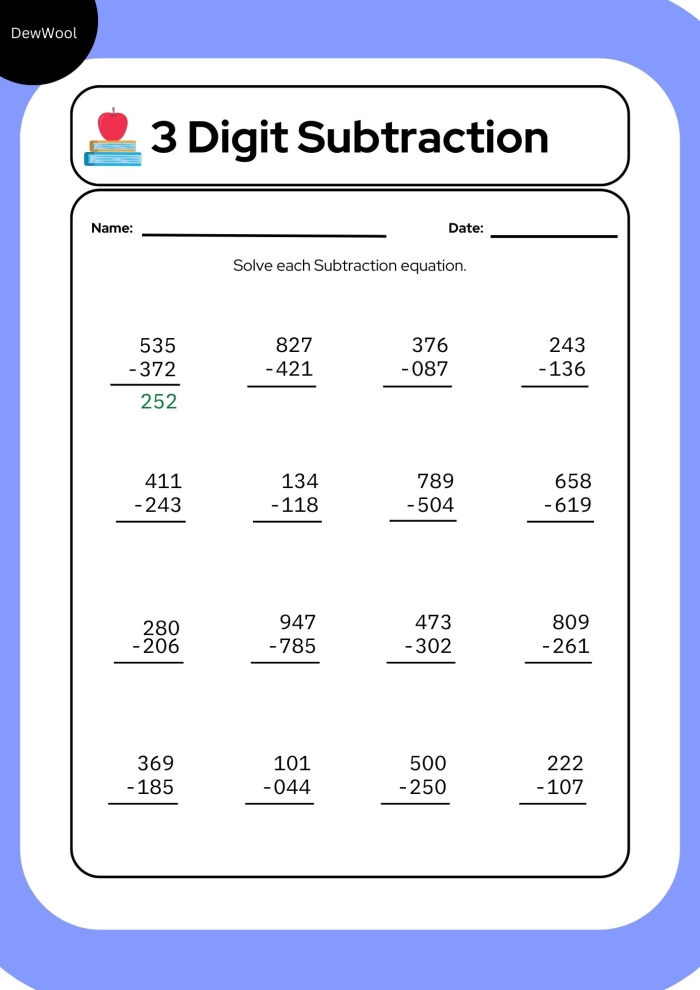
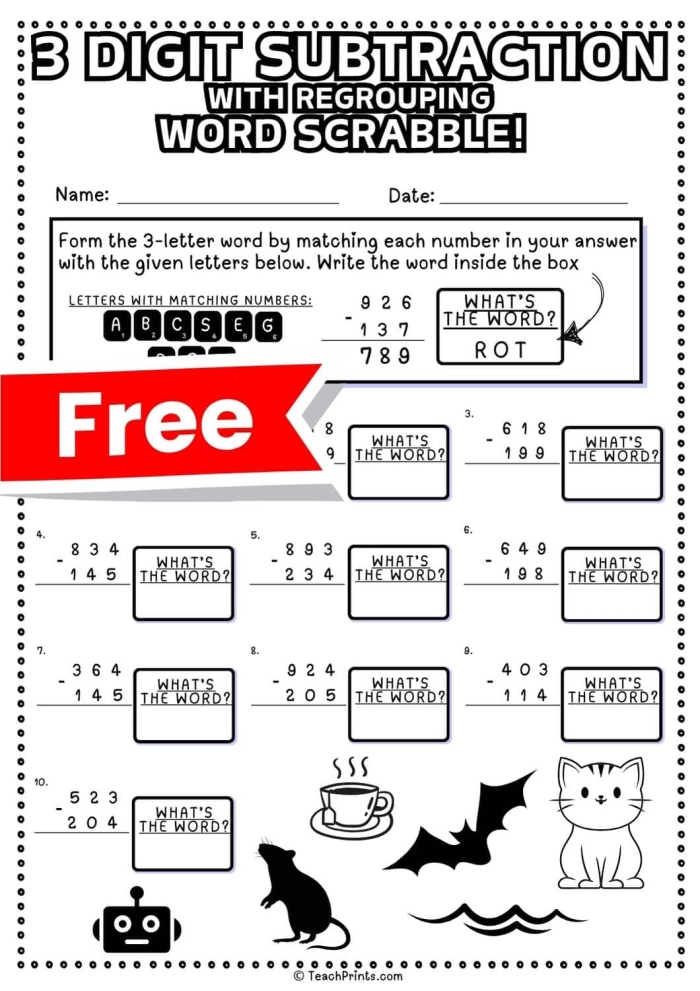
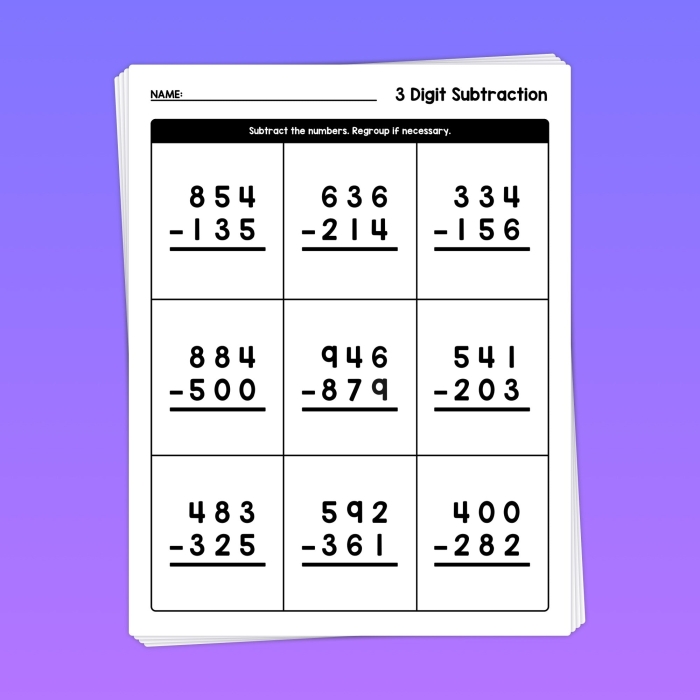
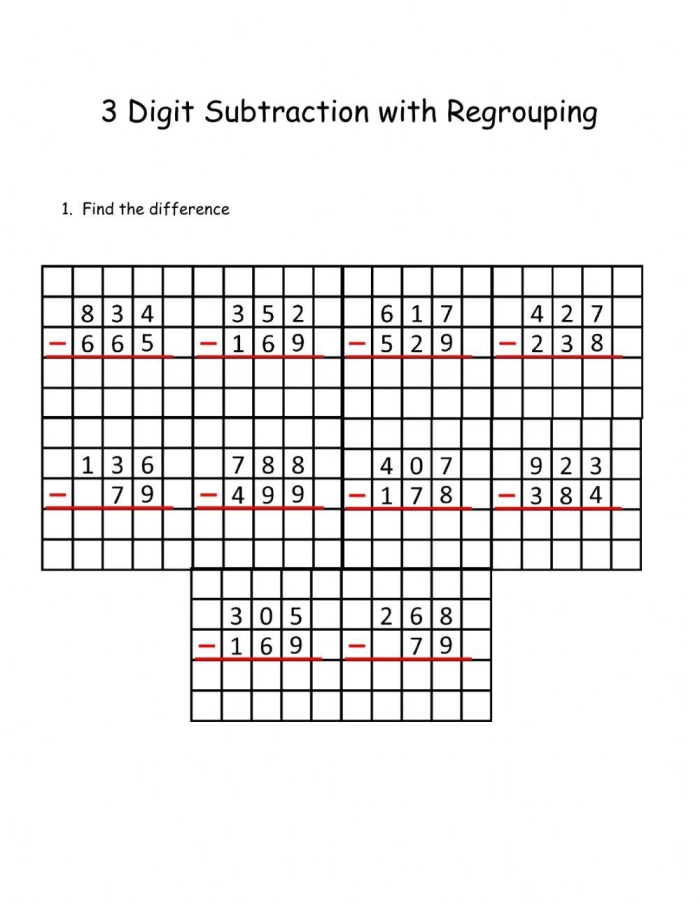
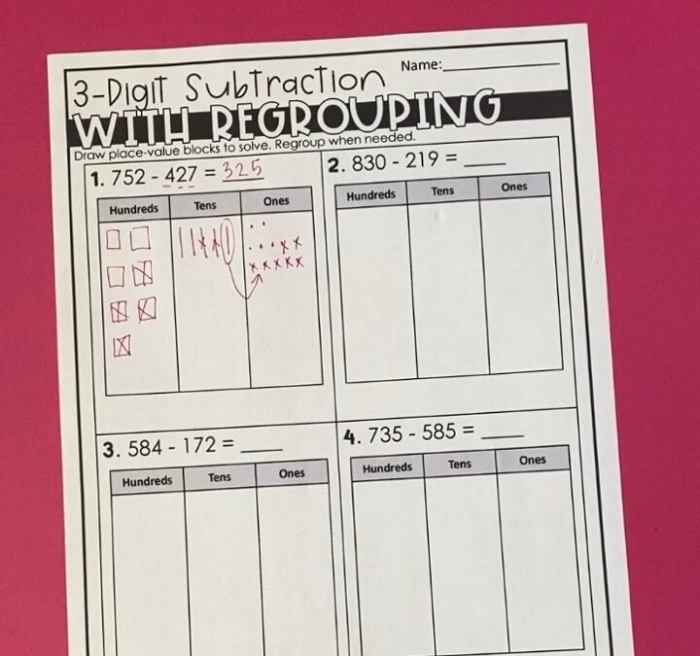
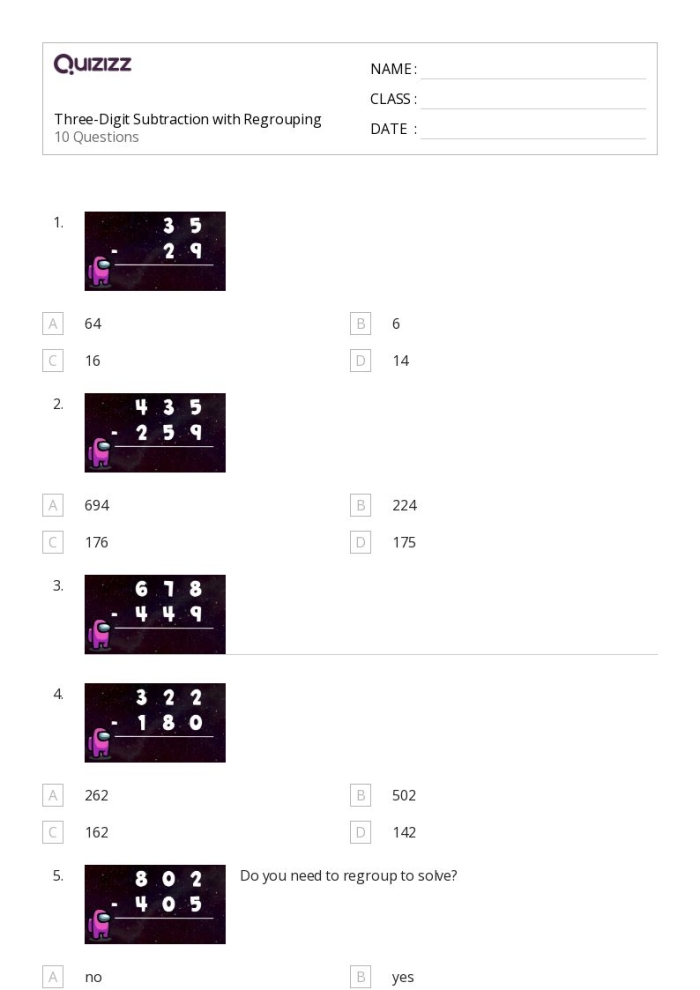
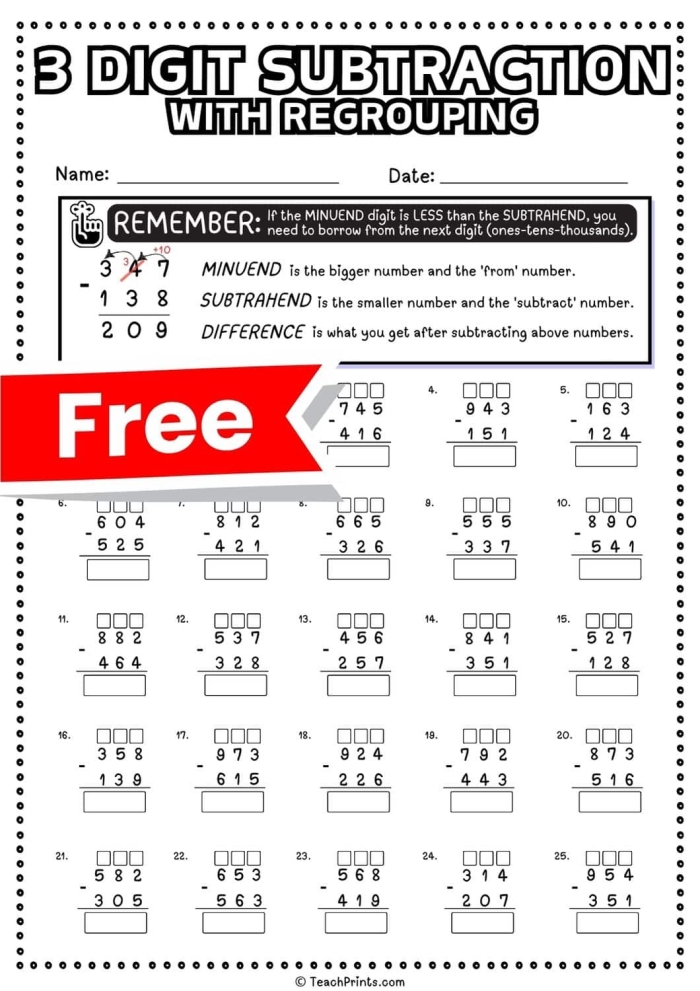
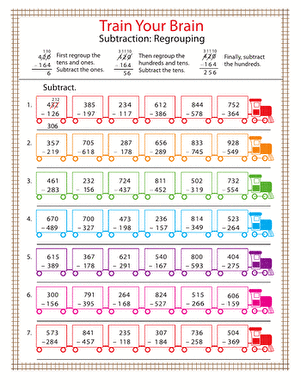
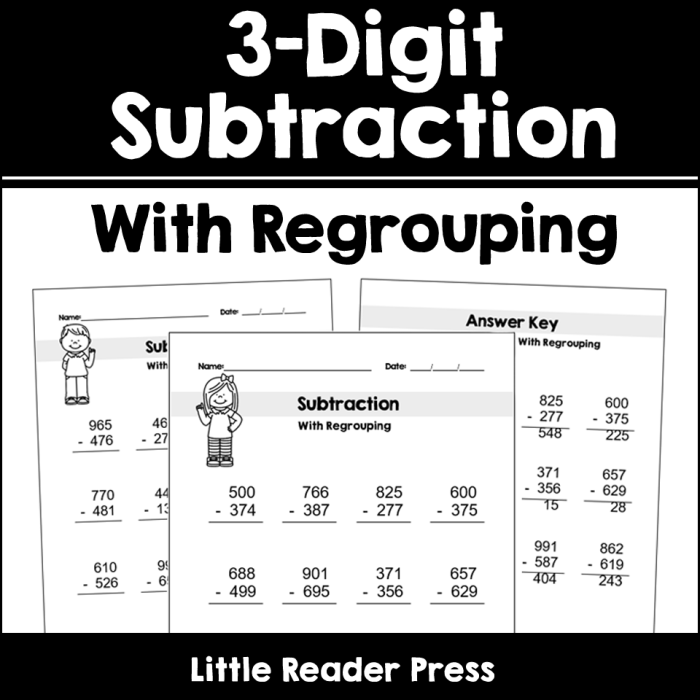
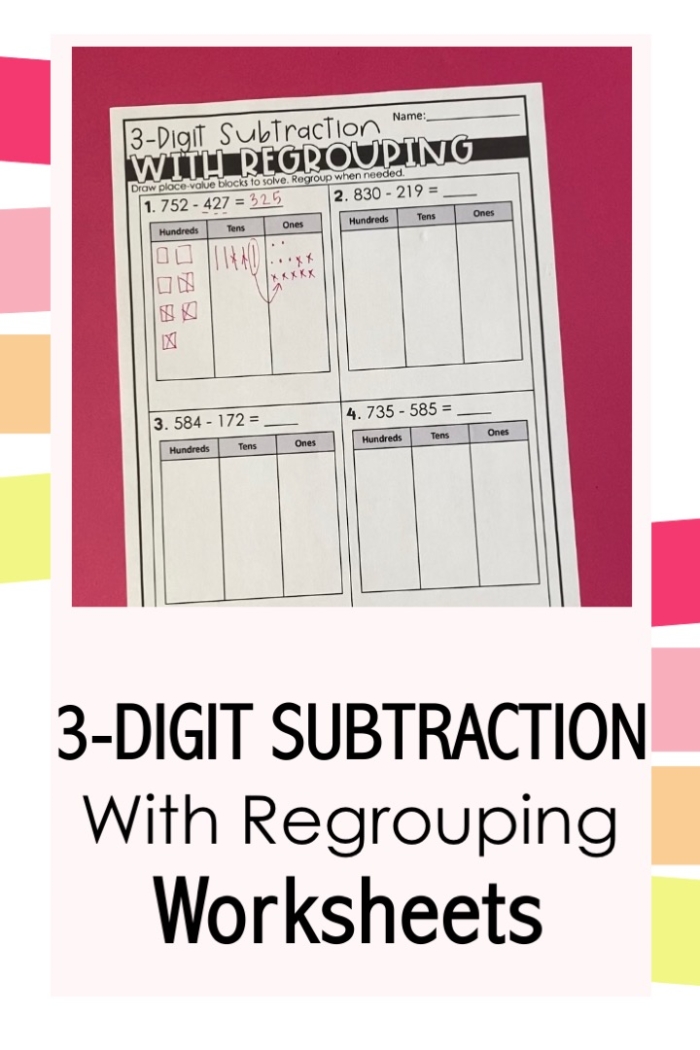
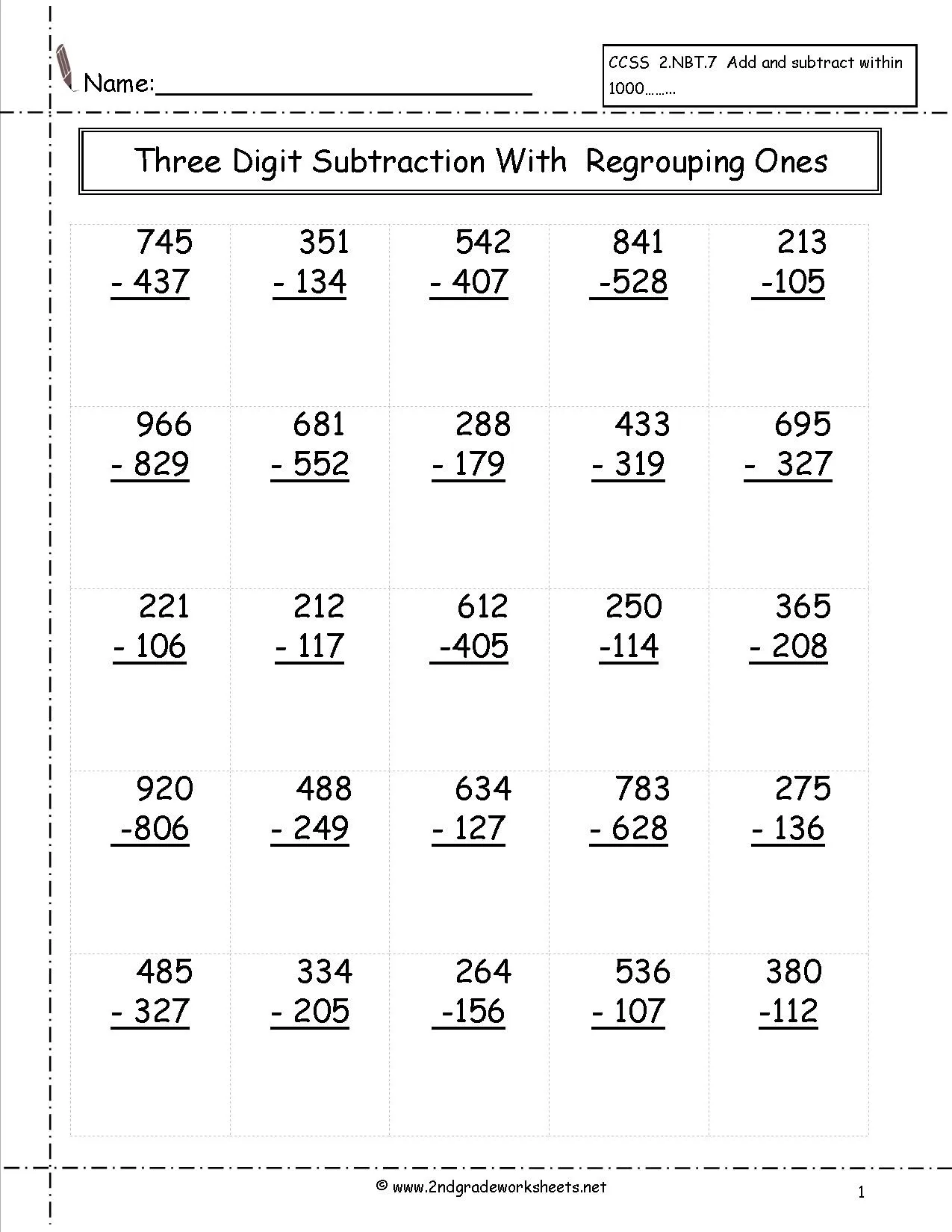
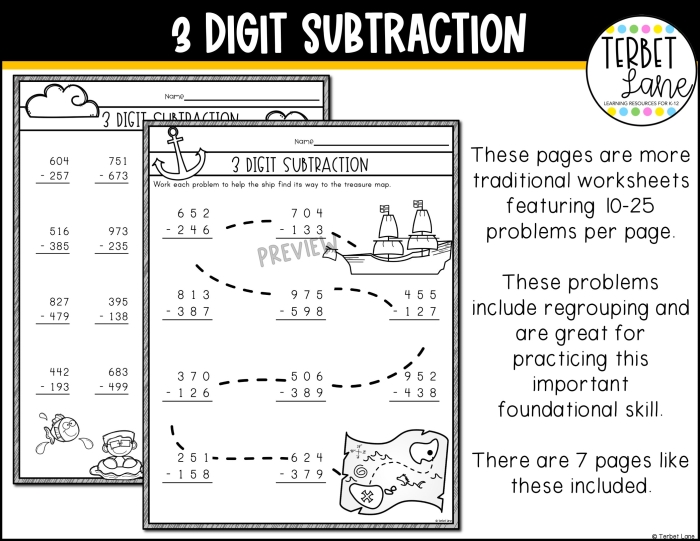
Three-digit subtraction with regrouping trips up plenty of second grade students, but a bouncy ball themed worksheet transforms the frustration into something closer to a game. The premise is straightforward: kids solve subtraction problems, and each correct answer lets them “catch” a bouncy ball on the page. It sounds simple, but the mechanics of regrouping require genuine understanding, not just memorization.
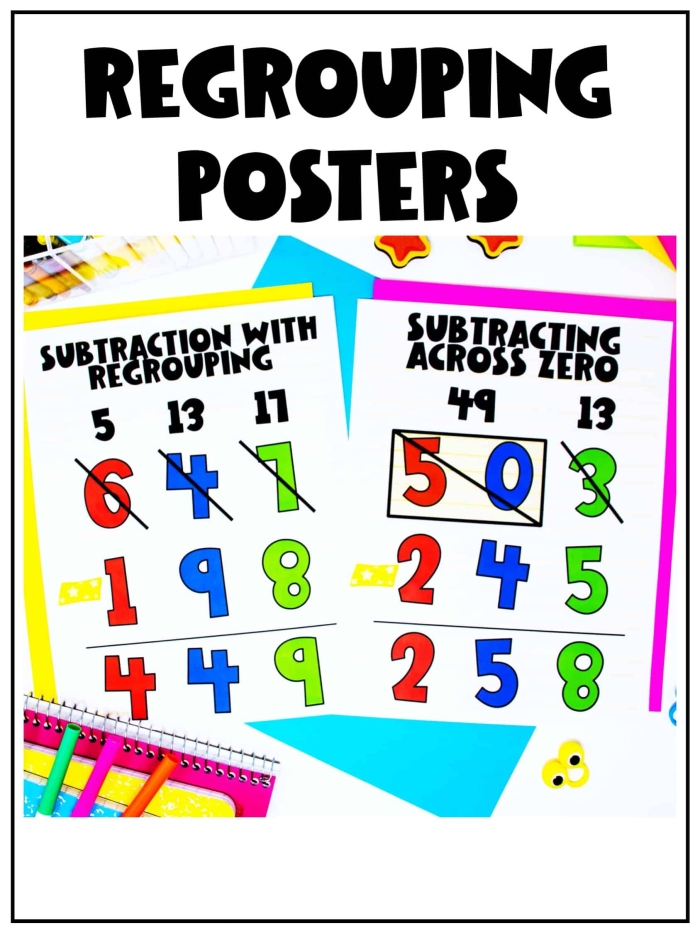
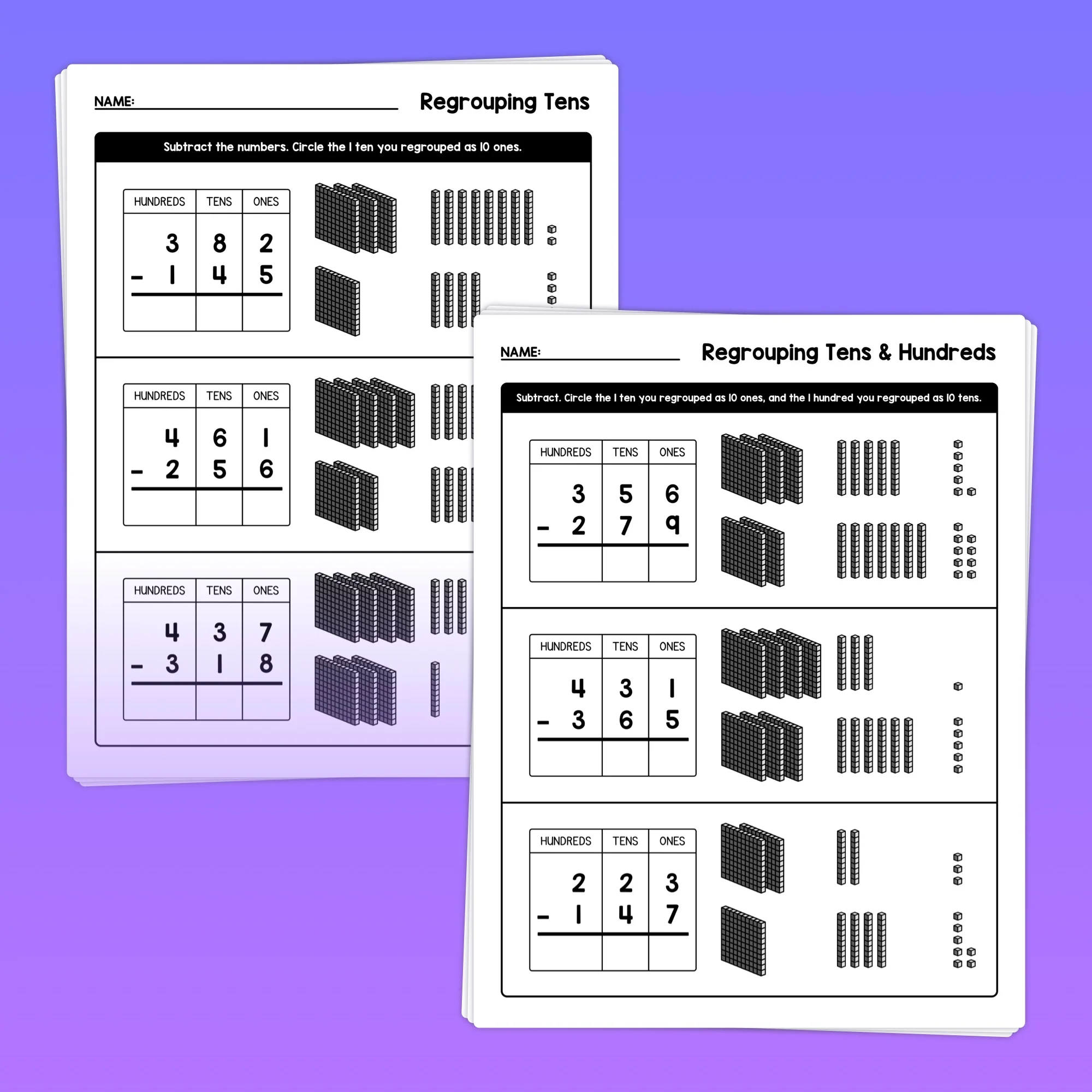
Regrouping is where many students stumble. When you subtract 247 from 500, you can’t take 7 from 0 in the ones place, so you need to borrow from the tens column. This borrowing process, or regrouping, demands that students think about place value and the relationship between columns. A worksheet that makes this practice feel like catching something rather than grinding through problems keeps kids engaged long enough to build actual competency.
The visual element matters more than it might seem. Second graders still think concretely, so seeing a bouncy ball they’ve earned through correct work provides immediate, tangible feedback. They’re not just checking off answers. They’re building a collection, which triggers the same satisfaction that makes other second grade activities stick. If your students respond well to this type of gamified learning, you might explore similar approaches with pictograph activities that layer in data skills alongside engagement.
The worksheet typically includes 10 to 15 problems, enough to build fluency without overwhelming. Problems are arranged in a way that bouncy balls appear scattered across the page, creating visual variety. Some teachers print these in color to make the bouncy balls more appealing, though black and white versions work just as well for the actual learning.
What makes this format effective is that regrouping practice stops feeling like punishment. Kids approach the problems with purpose, knowing each solution brings them closer to completing their bouncy ball collection. That shift in mindset often makes the difference between a worksheet that gets done and one that actually teaches.
Start Practicing with These Worksheets