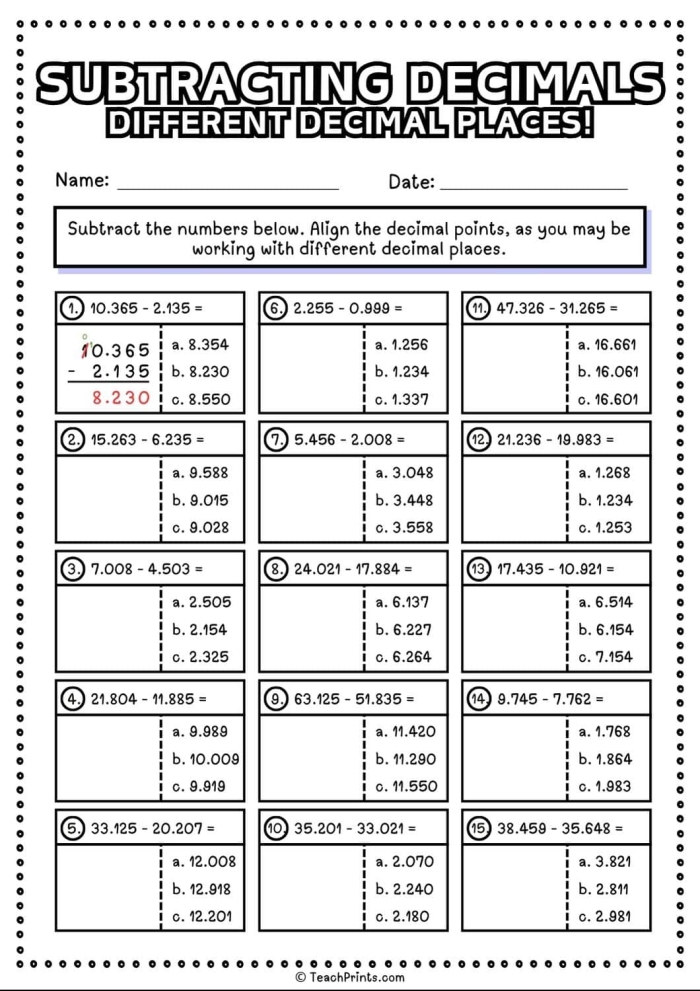
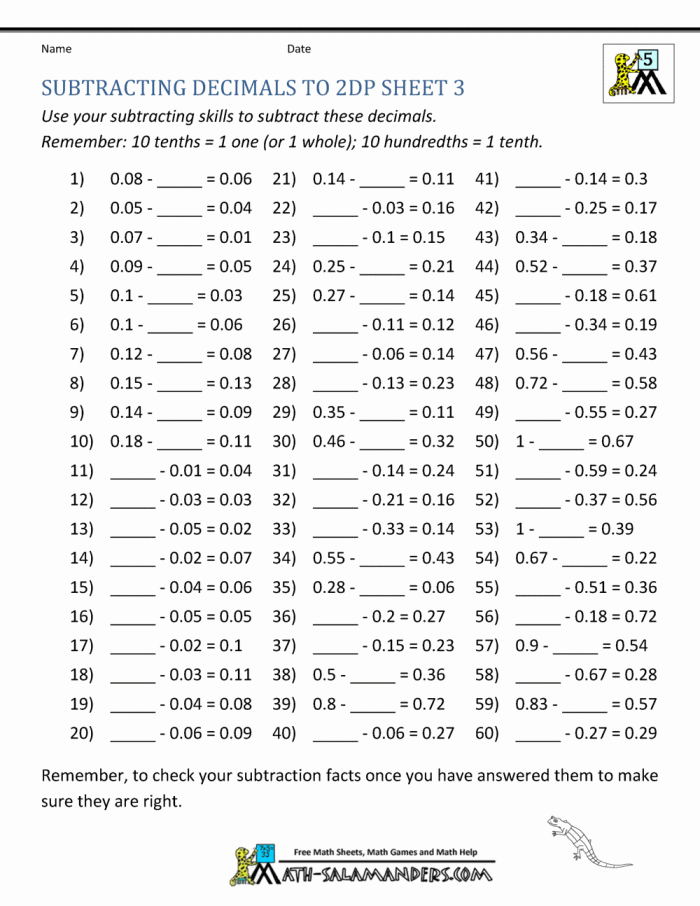
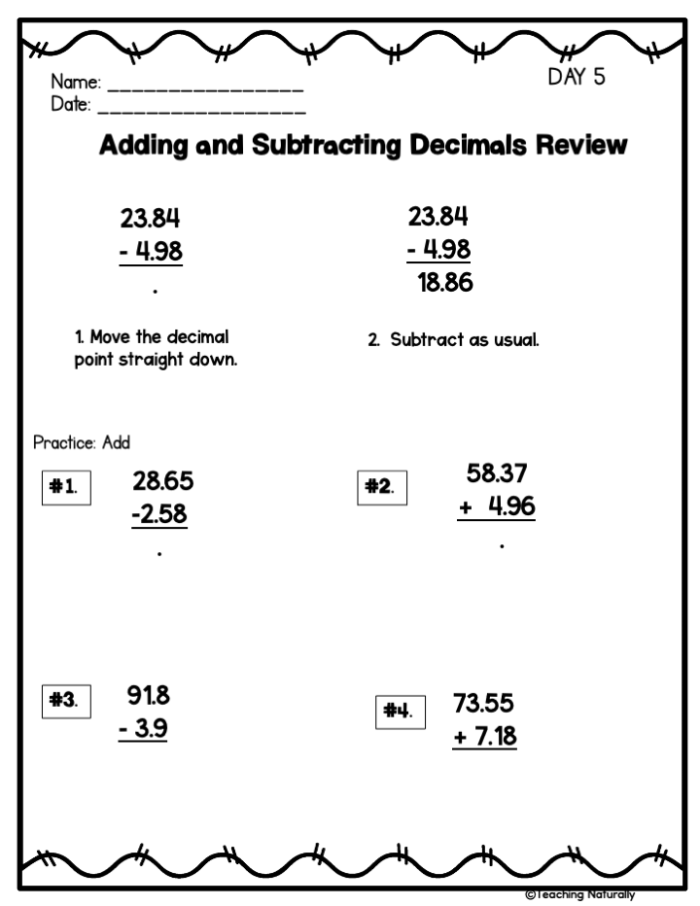
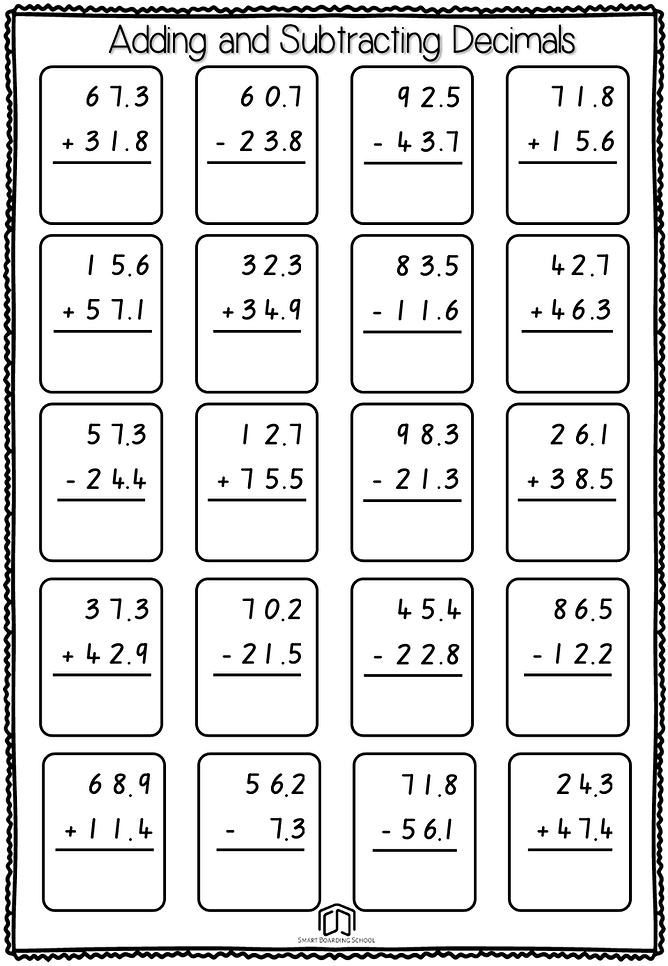
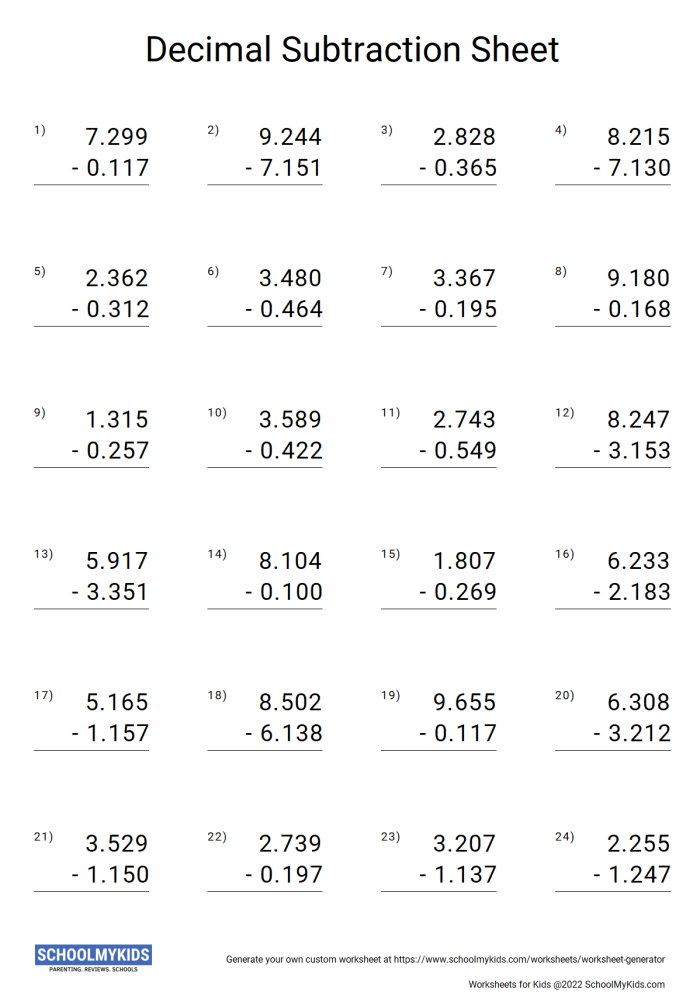
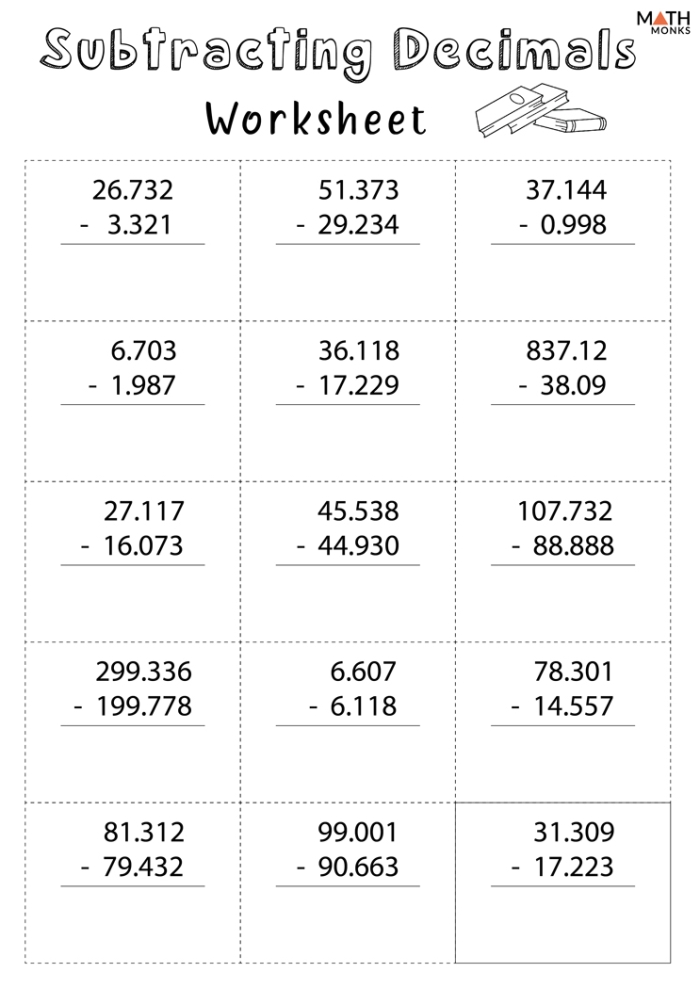
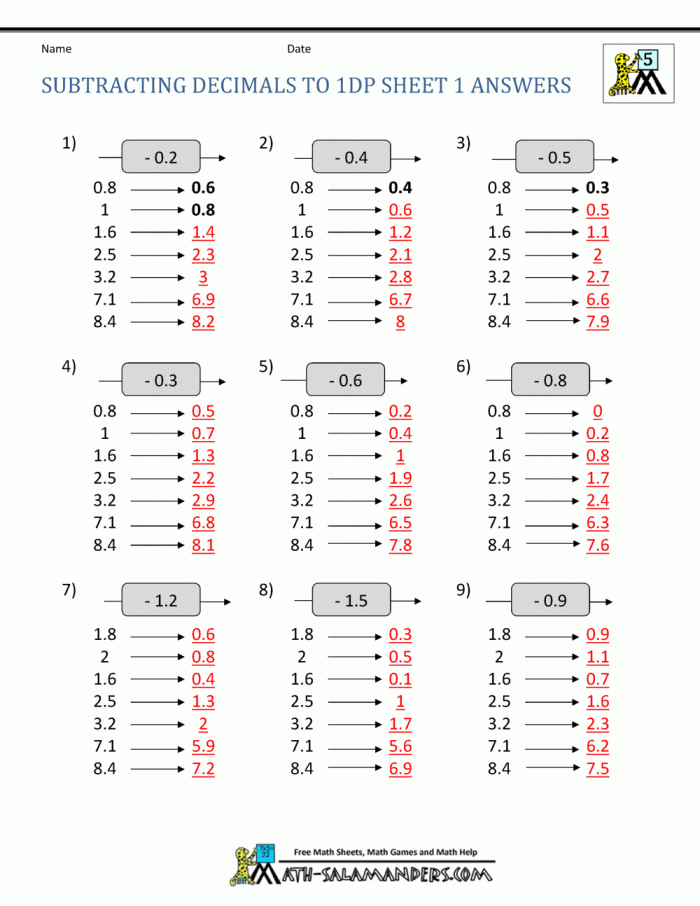
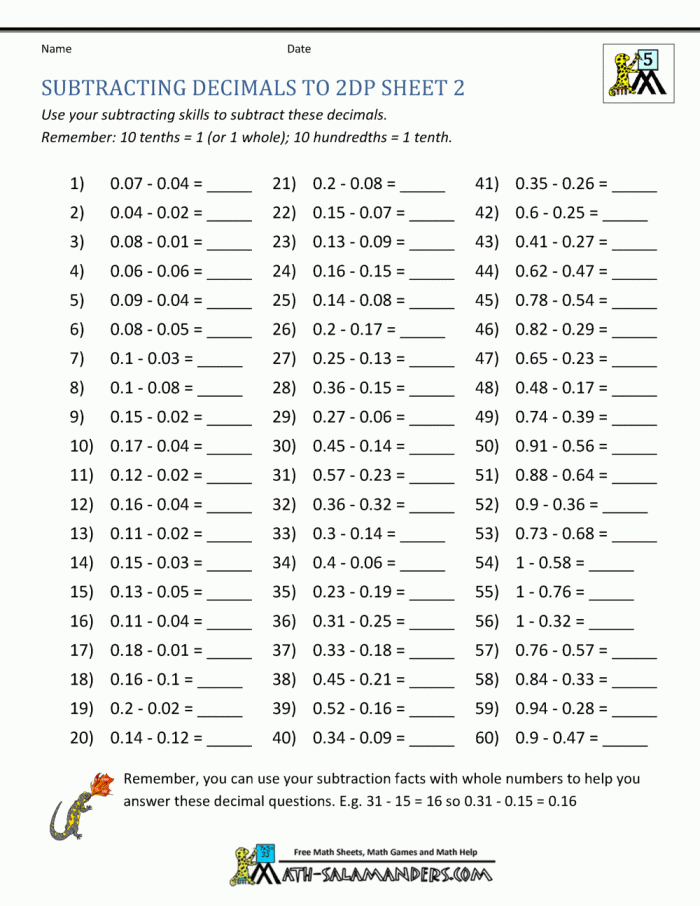
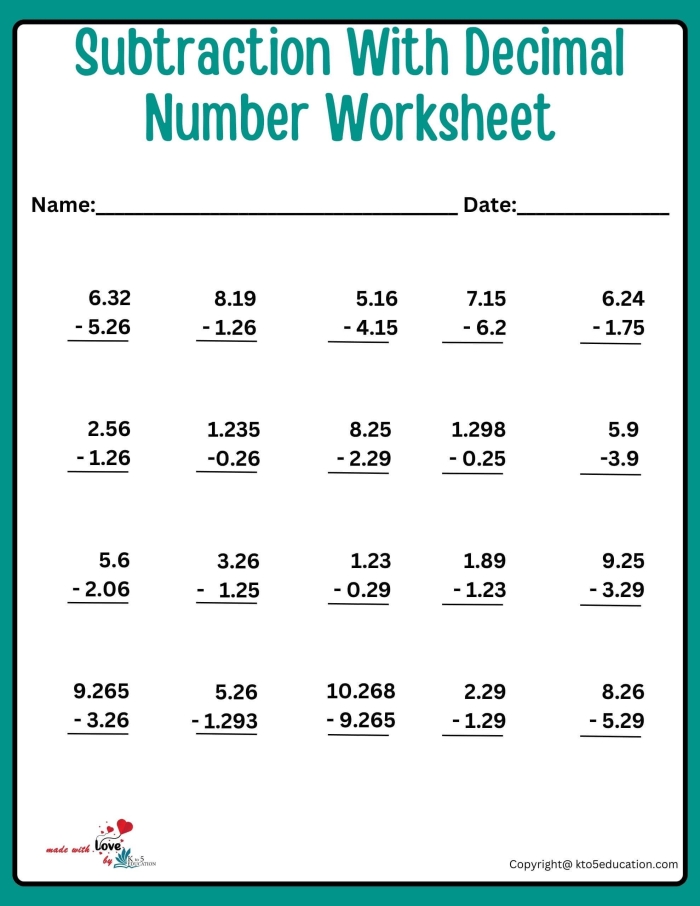
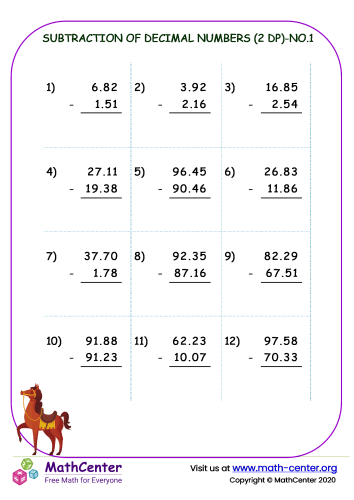
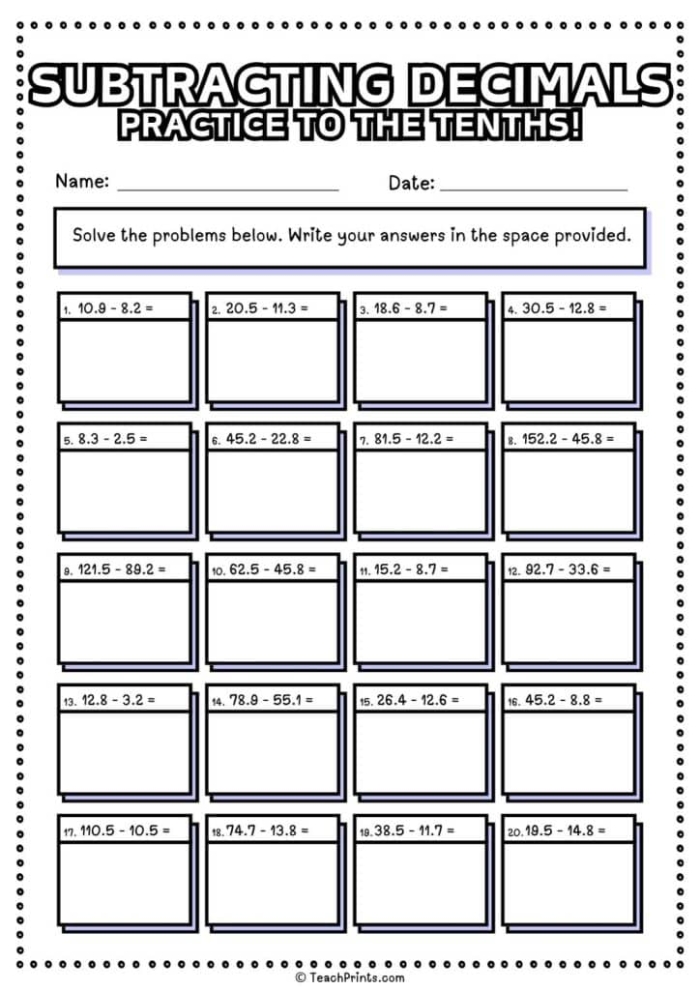
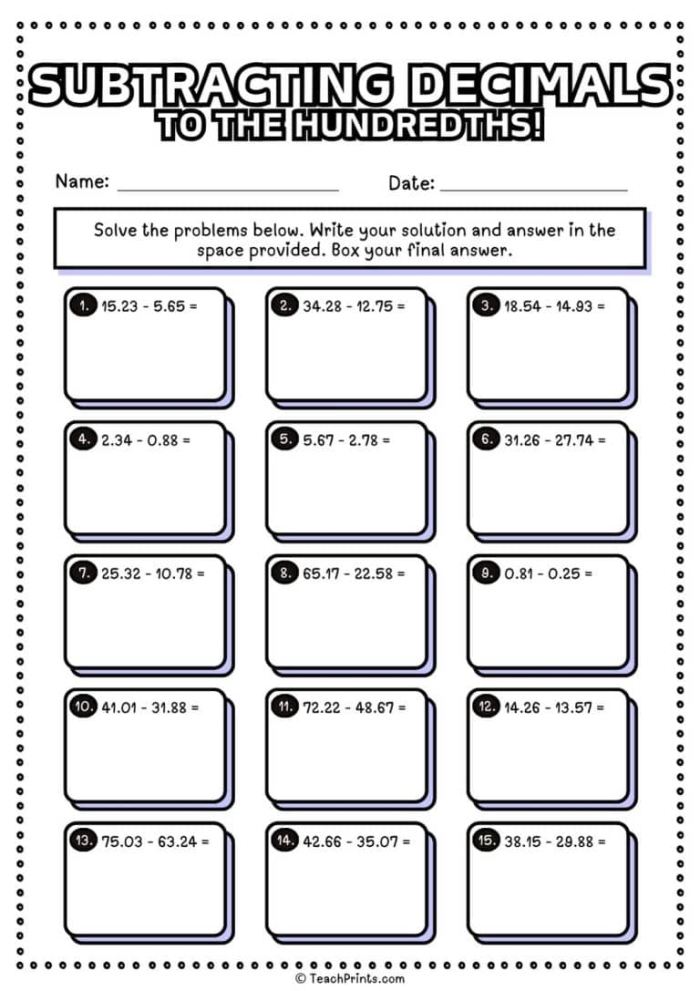
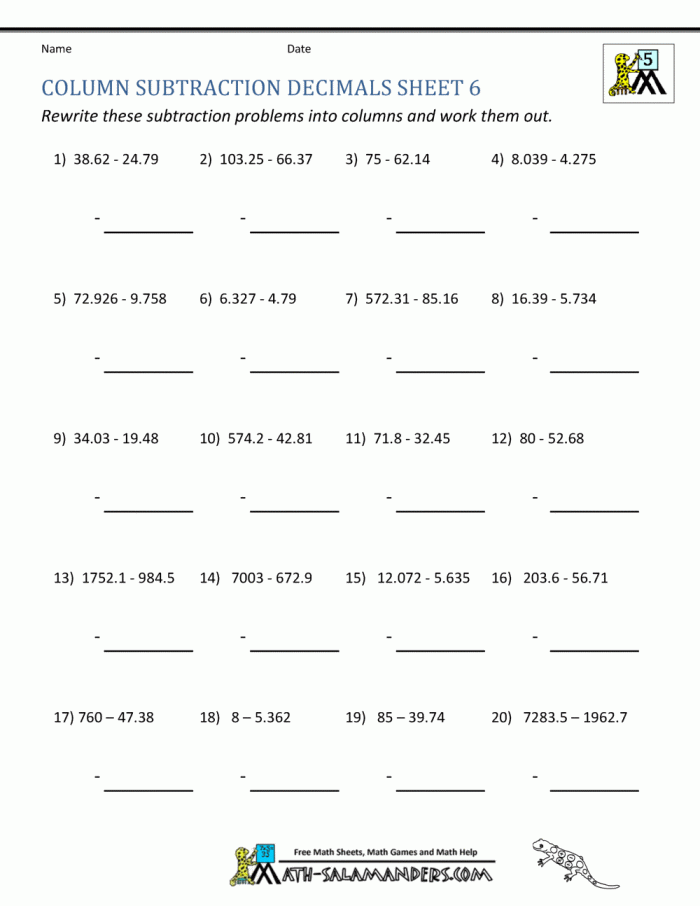
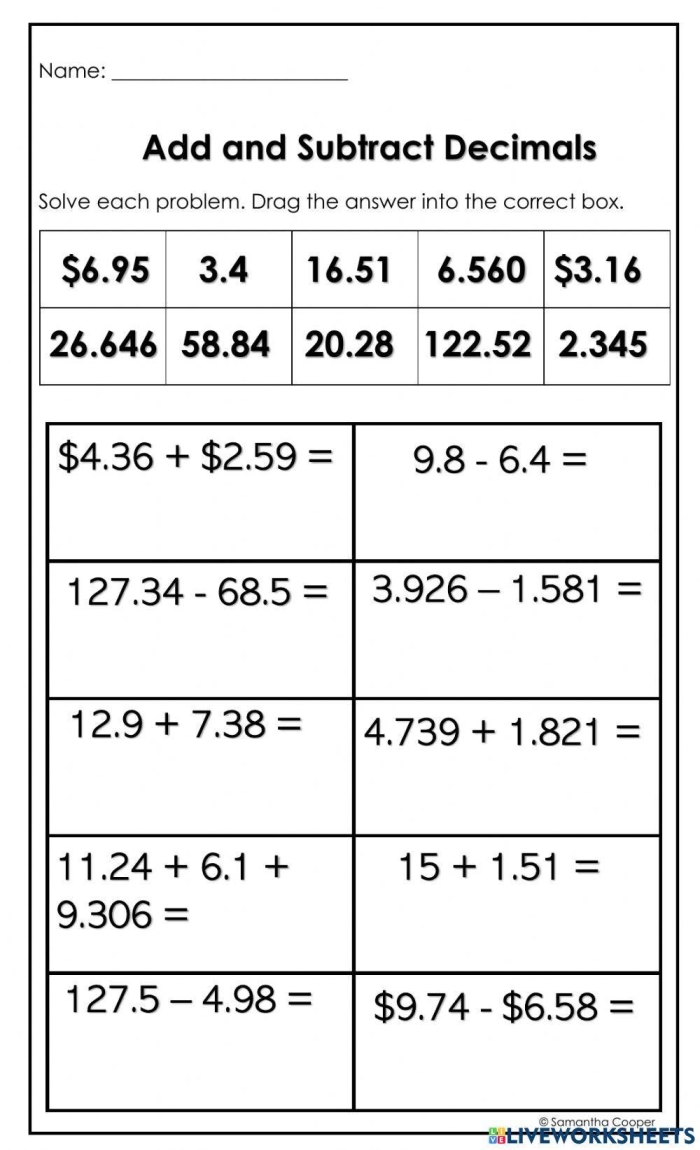
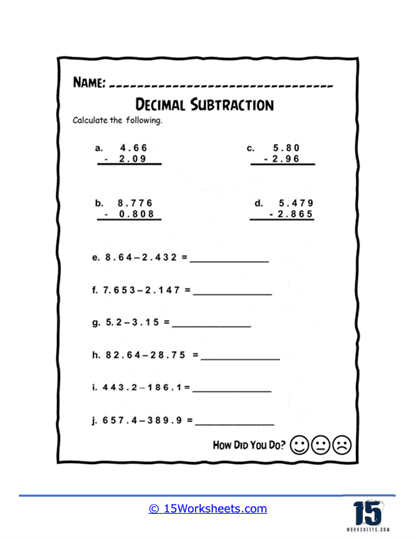
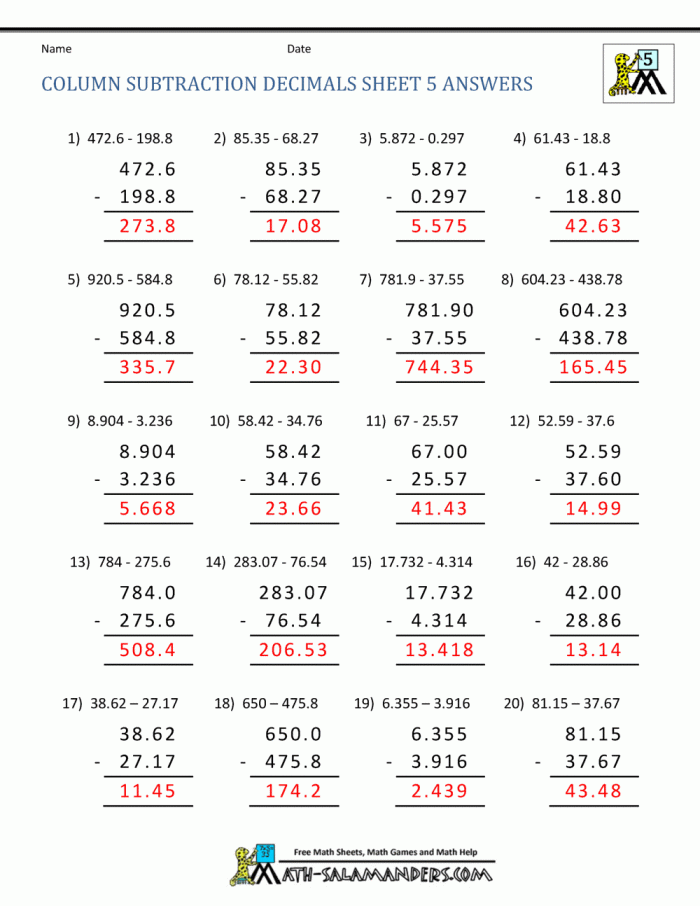
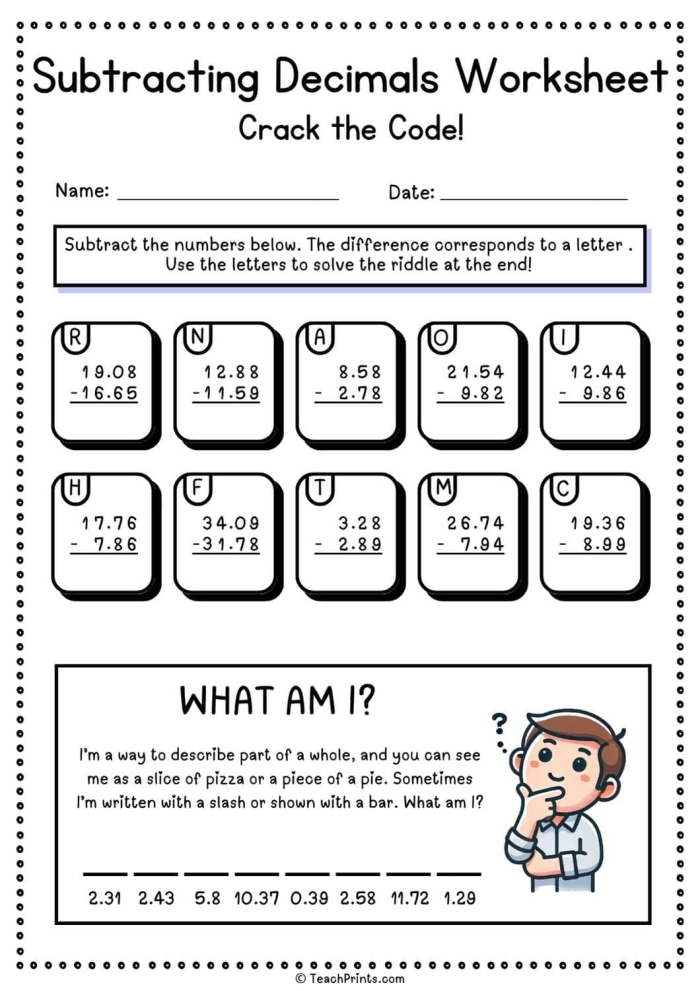
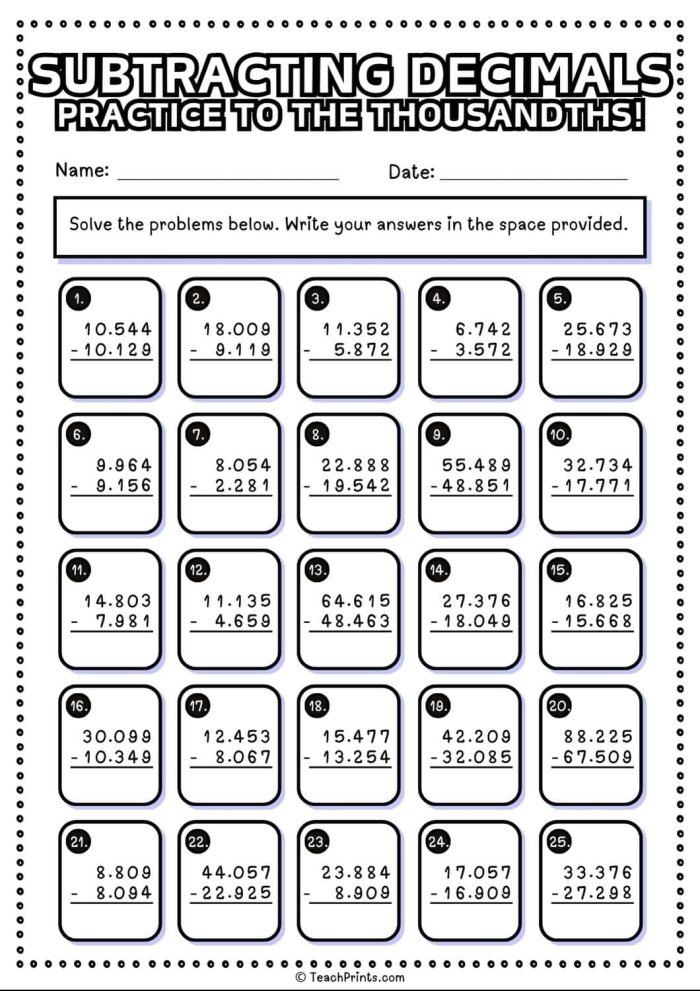
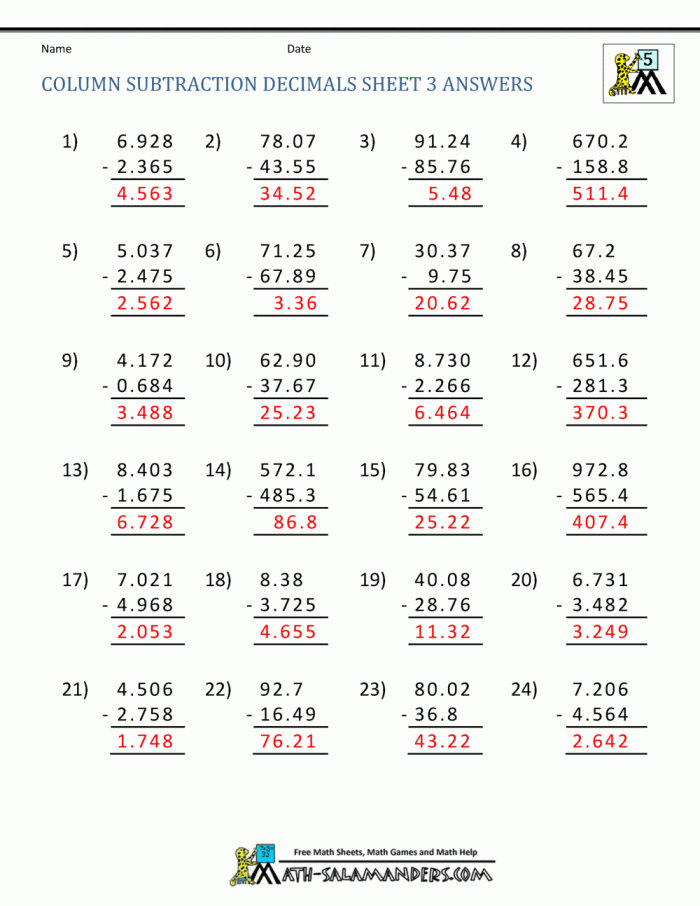
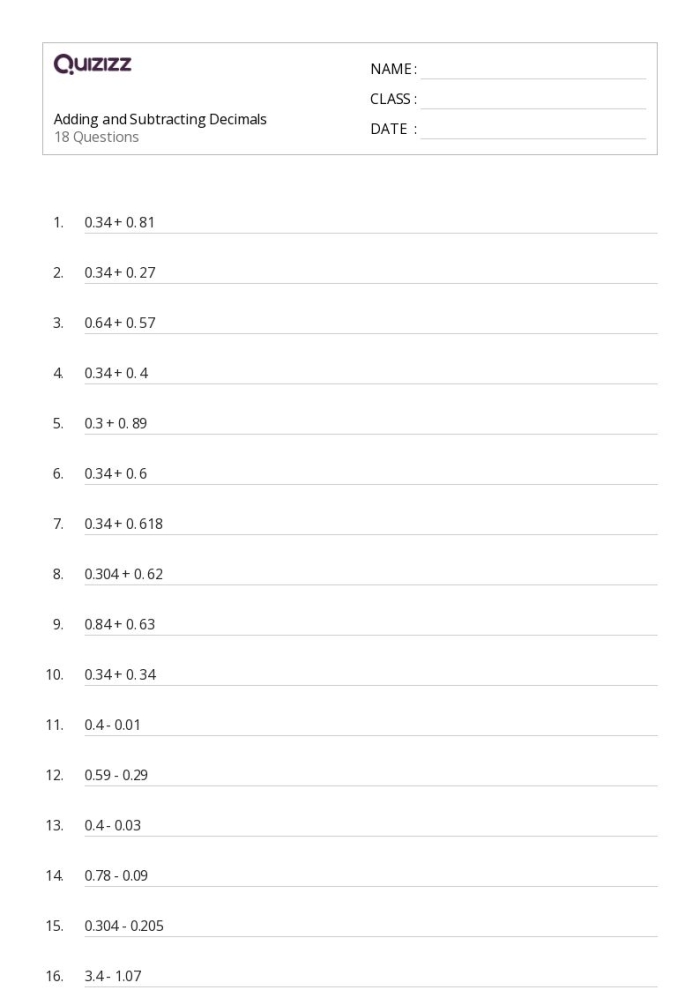
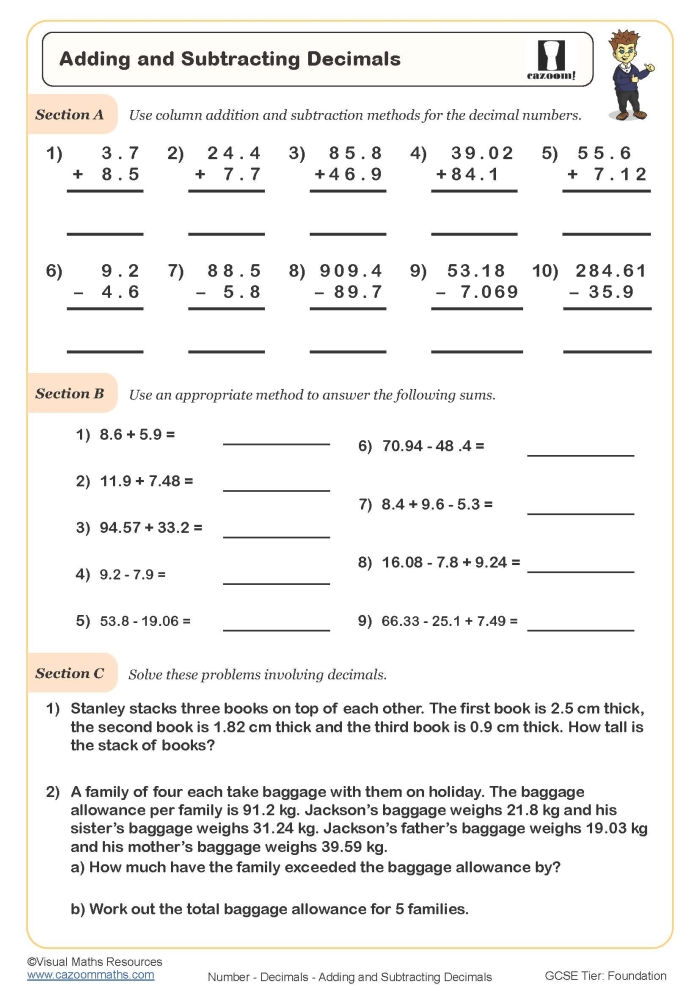
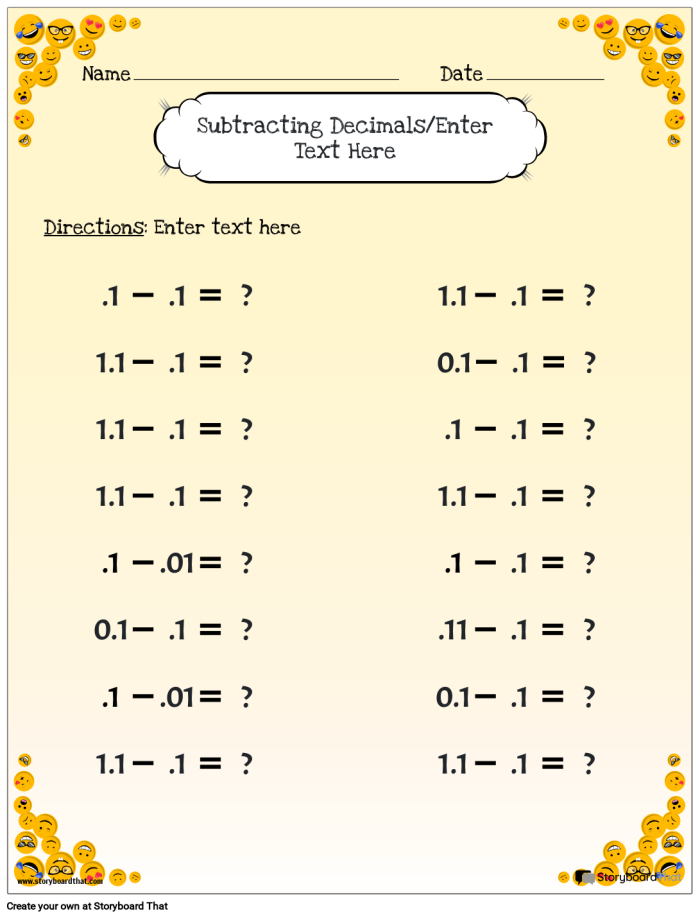
Subtracting decimals trips up plenty of fifth grade students, mostly because the concept feels like a jump from whole numbers. When kids first encounter decimal subtraction, they’re often uncertain about where to place the decimal point in their answer or how to handle borrowing across decimal places. A solid practice worksheet addresses these exact pain points by giving children multiple chances to work through problems at their own pace.
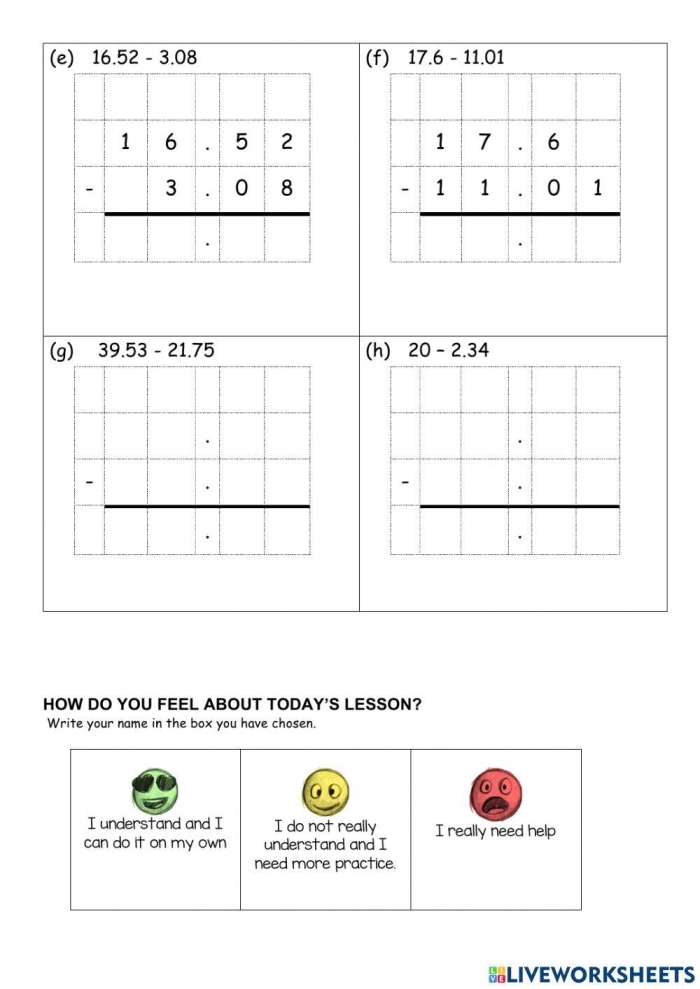
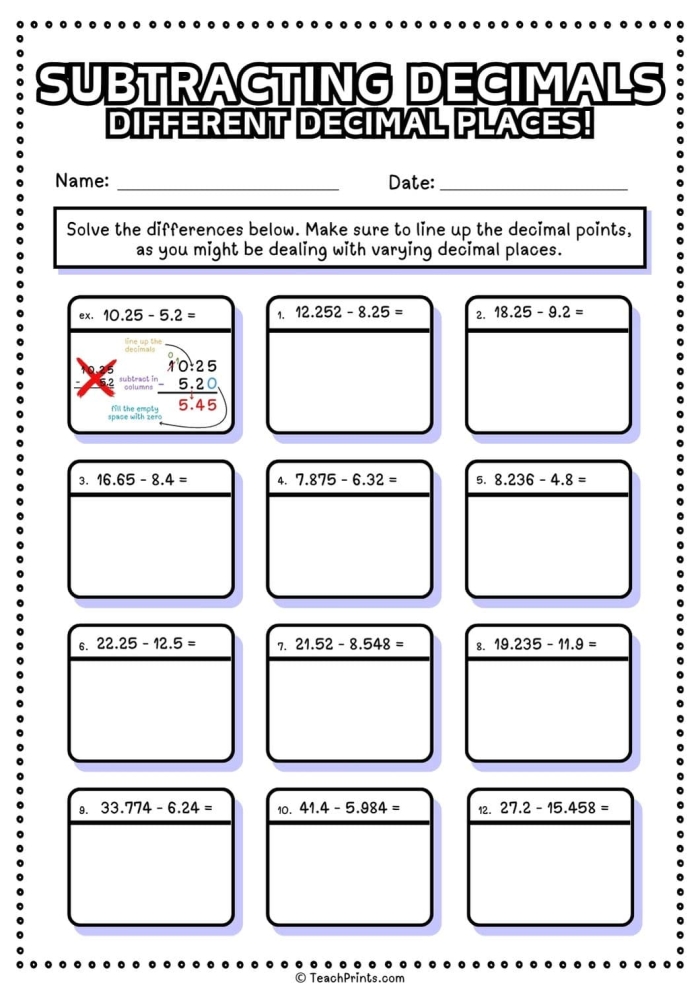
The mechanics of decimal subtraction require students to line up decimal points vertically, which is the critical first step. Many mistakes happen right here, before any actual subtraction occurs. Once the decimals are aligned properly, the subtraction process mirrors what students already know from whole number work. The real challenge emerges when regrouping becomes necessary. For example, subtracting 2.7 from 5.3 requires borrowing from the ones place, and some children struggle to understand that 5.3 is really 5 and 3 tenths, not 5 and 30 tenths.
Practice worksheets work best when they build gradually. Early problems might involve subtracting tenths from tenths, then progress to mixing tenths and hundredths. This scaffolding helps fifth graders develop confidence before tackling more complex problems. Worksheets also benefit from including visual representations alongside numerical problems, allowing students who think in pictures to connect abstract decimal notation to concrete understanding.
Beyond decimal subtraction itself, these worksheets strengthen broader math skills. Students who can confidently subtract decimals find it easier to tackle related concepts like adding decimals or working with money. If your fifth graders are also building skills in other areas, you might explore how order of operations with fractions connects to decimal work, or how understanding place value with larger numbers supports decimal comprehension.
The goal of any decimal practice worksheet is simple: repetition with purpose. Children need enough problems to develop automaticity, but not so many that frustration sets in. A well-designed worksheet strikes that balance and gives students a genuine sense of progress.
Worksheet Practice Section