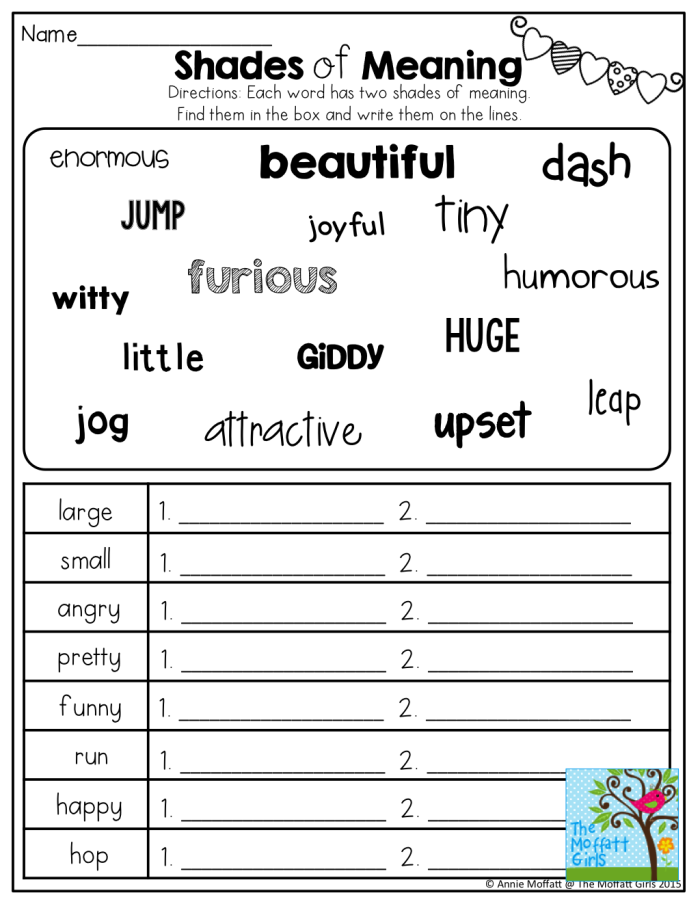
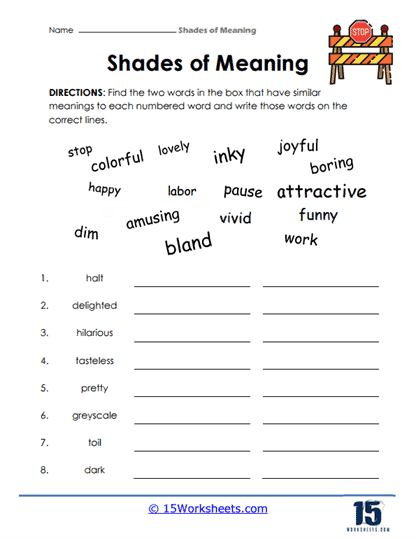
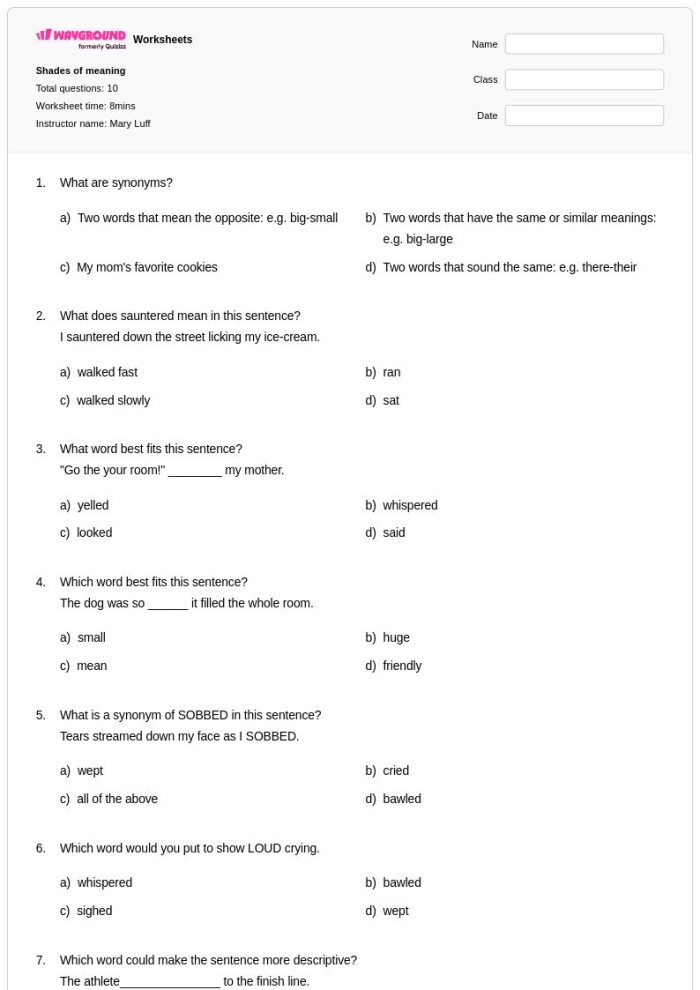
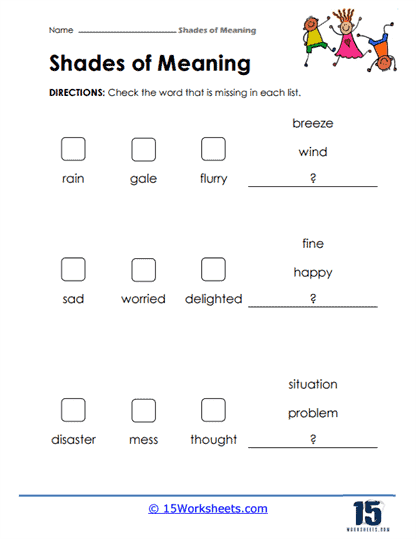
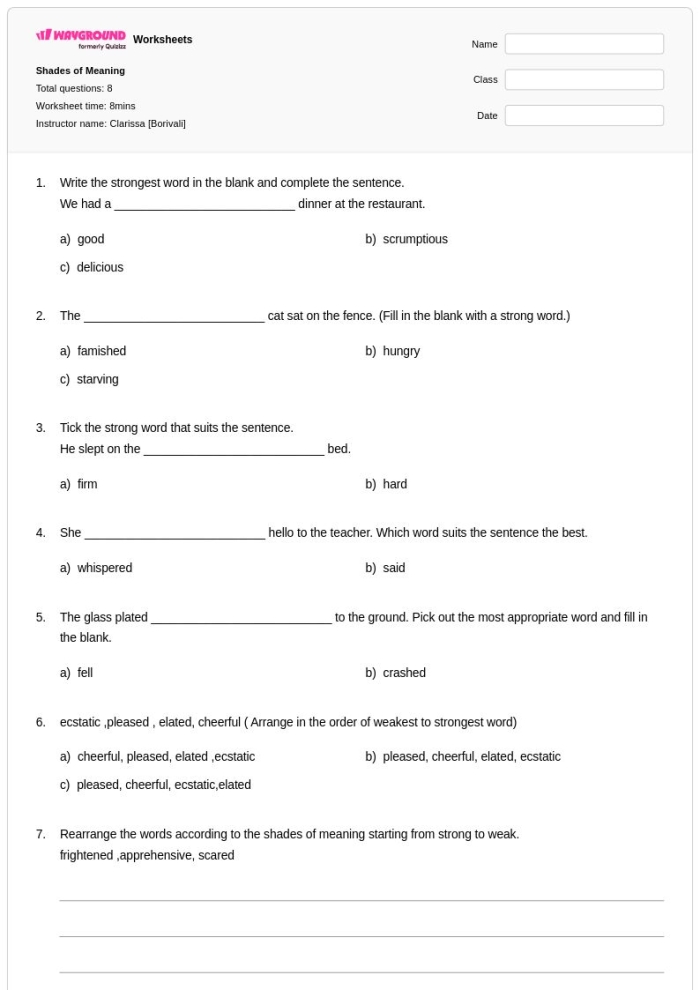
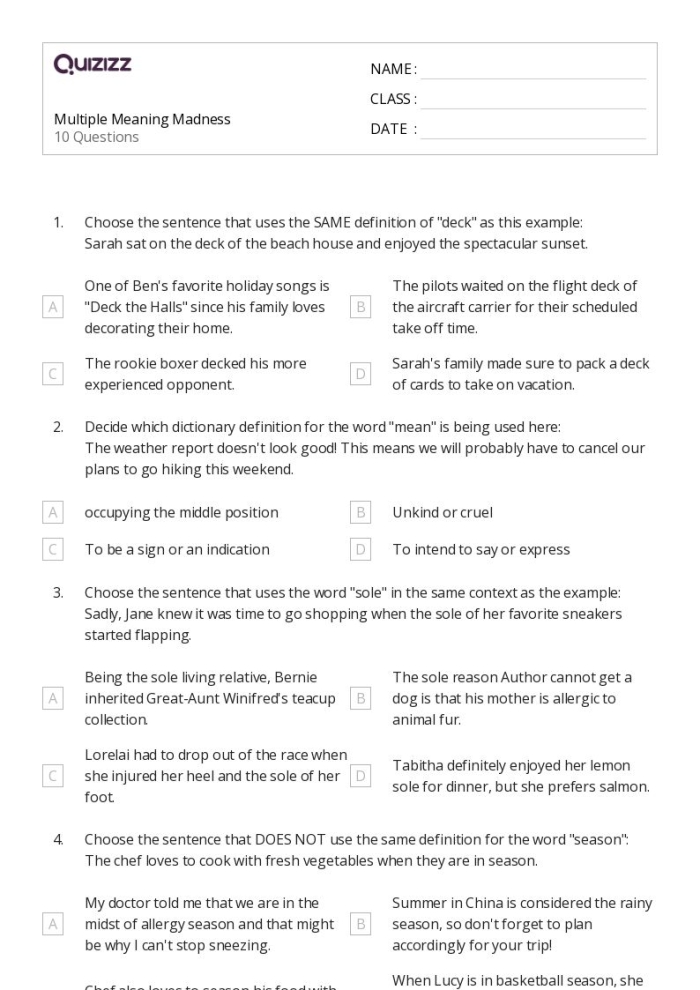
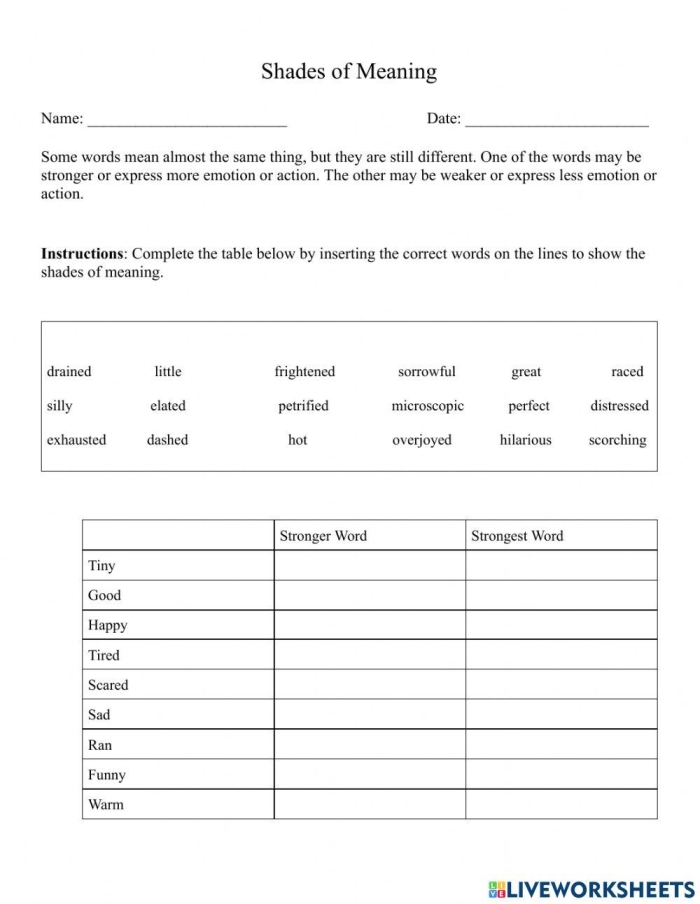
Helping third-grade students understand the subtle differences between related words is a crucial step in developing their language skills. This is where exploring shades of meaning becomes invaluable. When children learn to distinguish between words that are similar but not identical in meaning, they gain a deeper appreciation for nuance in language. For example, understanding how the words “happy,” “joyful,” and “content” differ can improve their reading comprehension and writing precision.
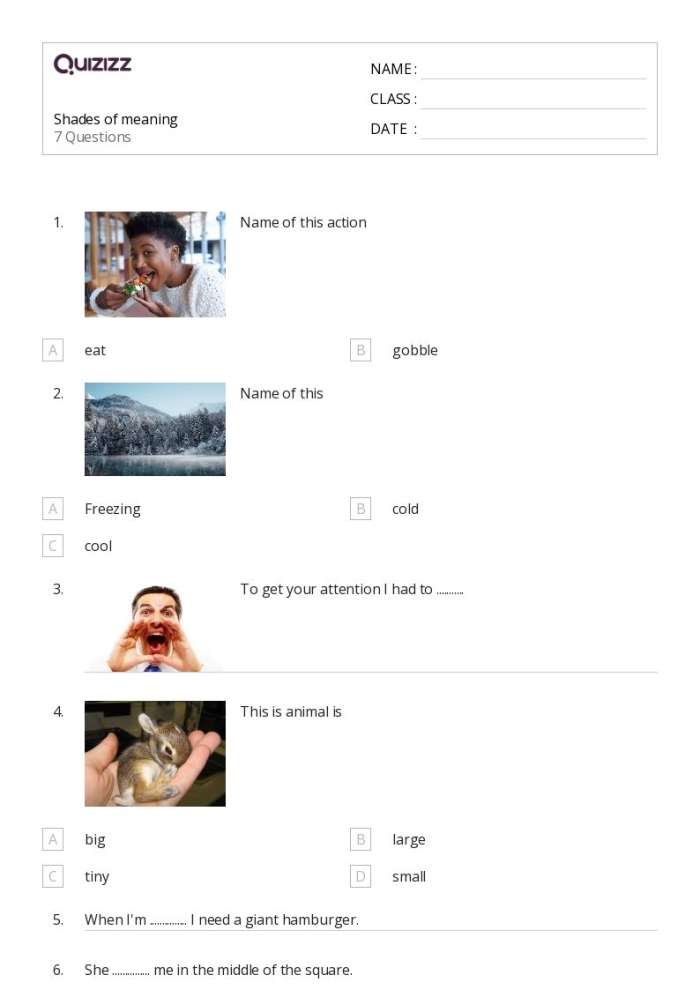
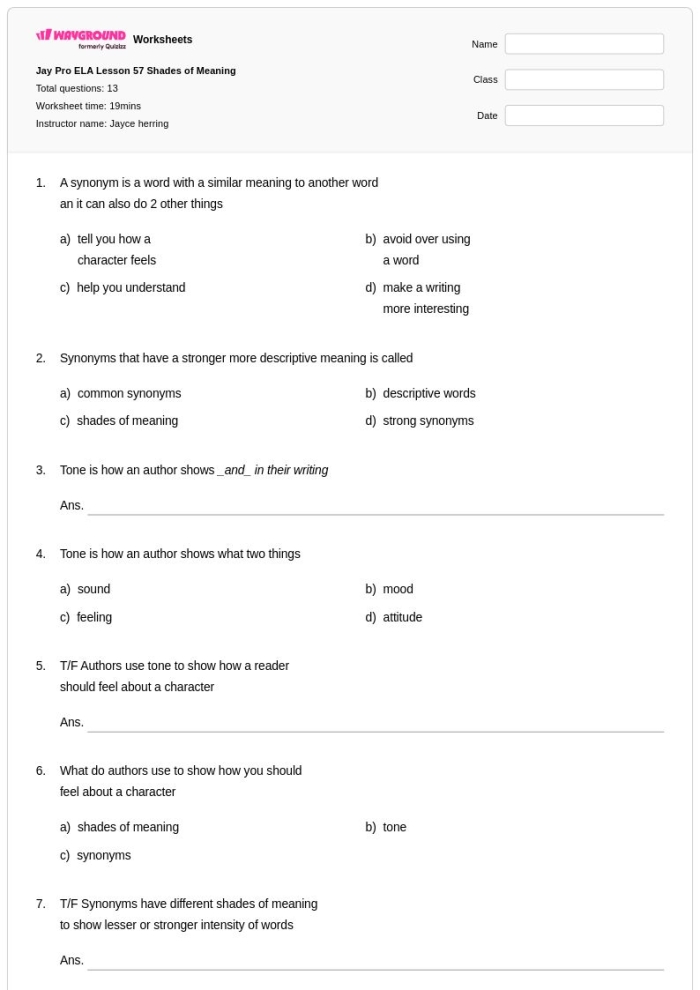
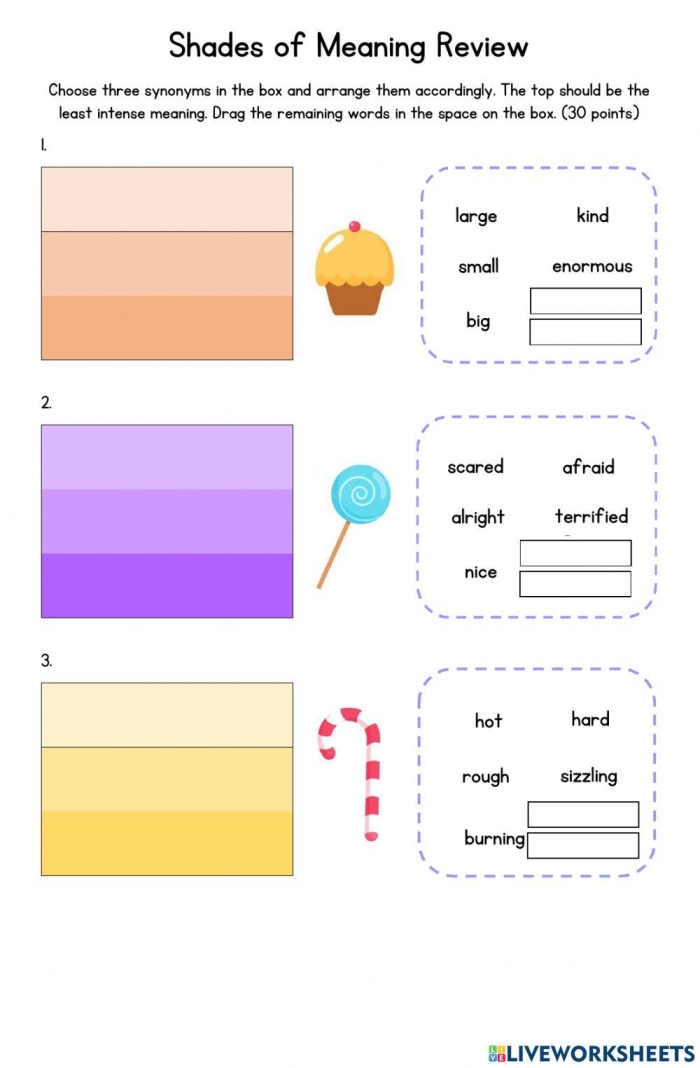
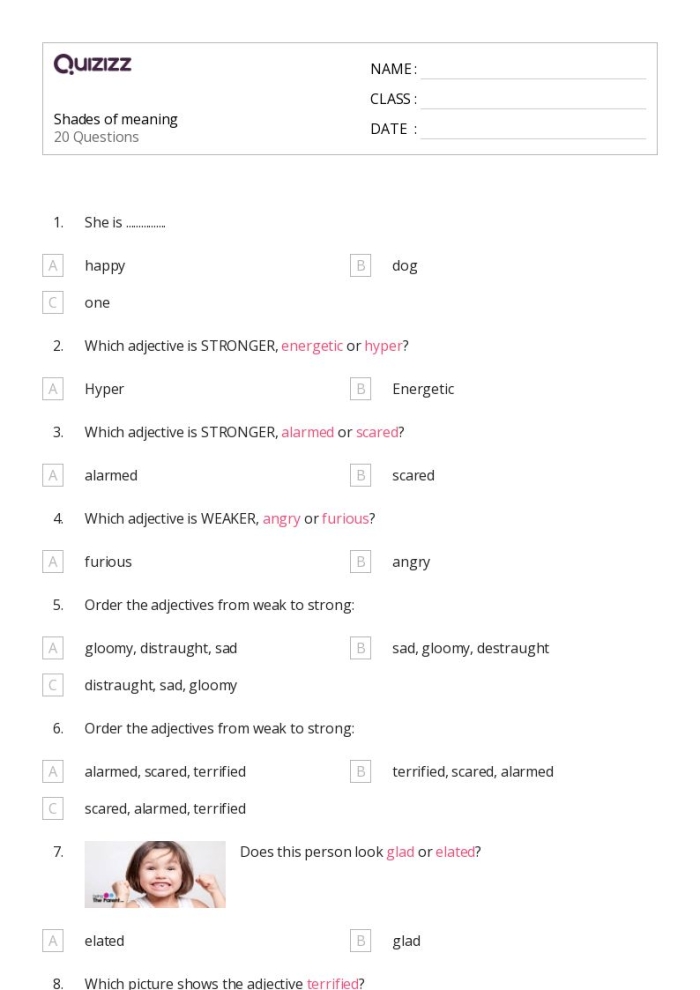
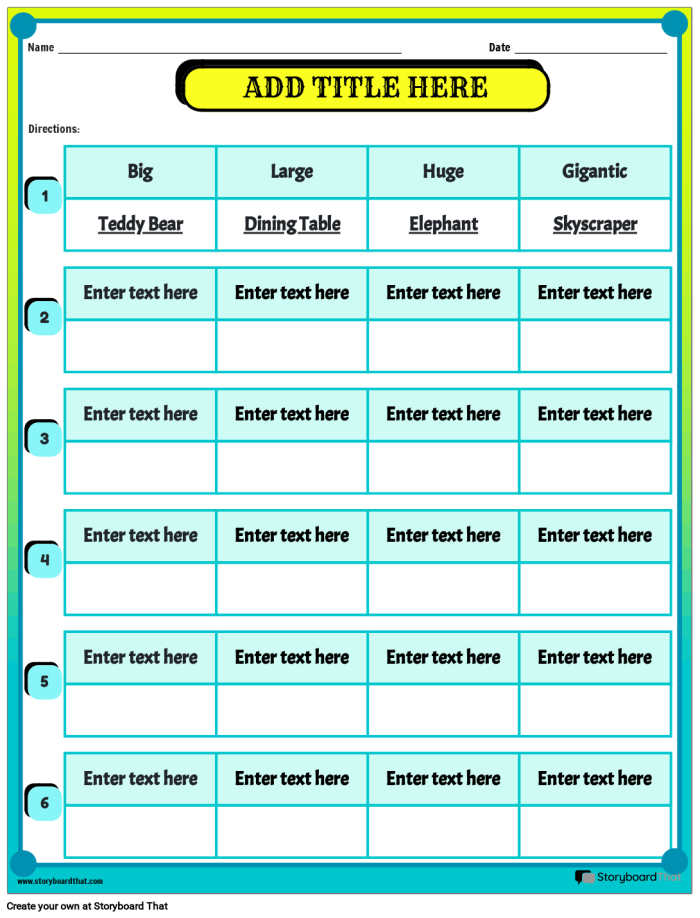
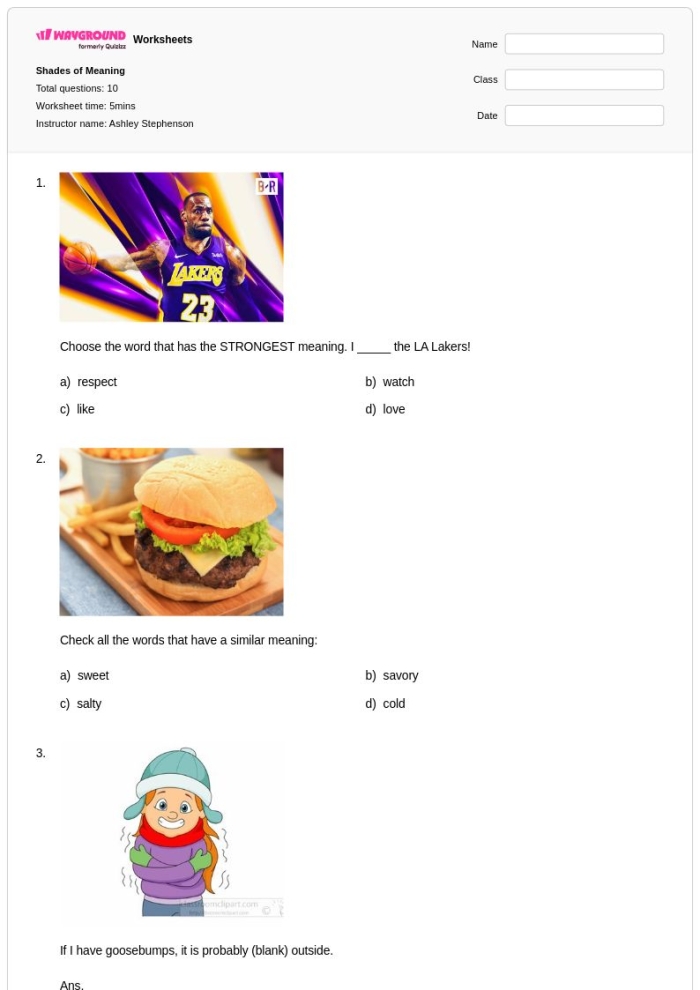
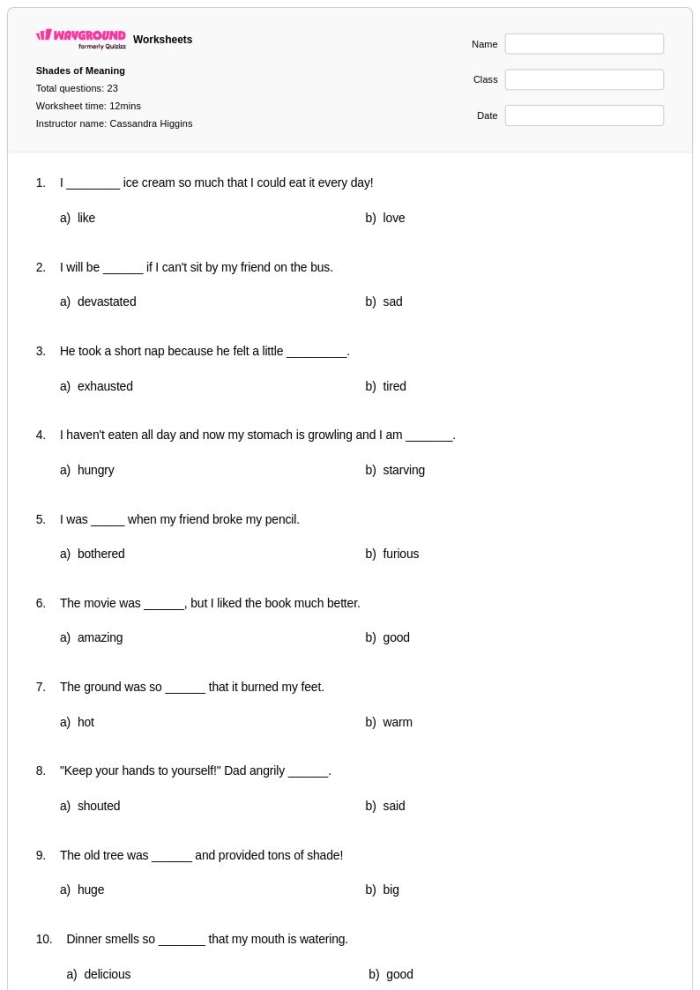
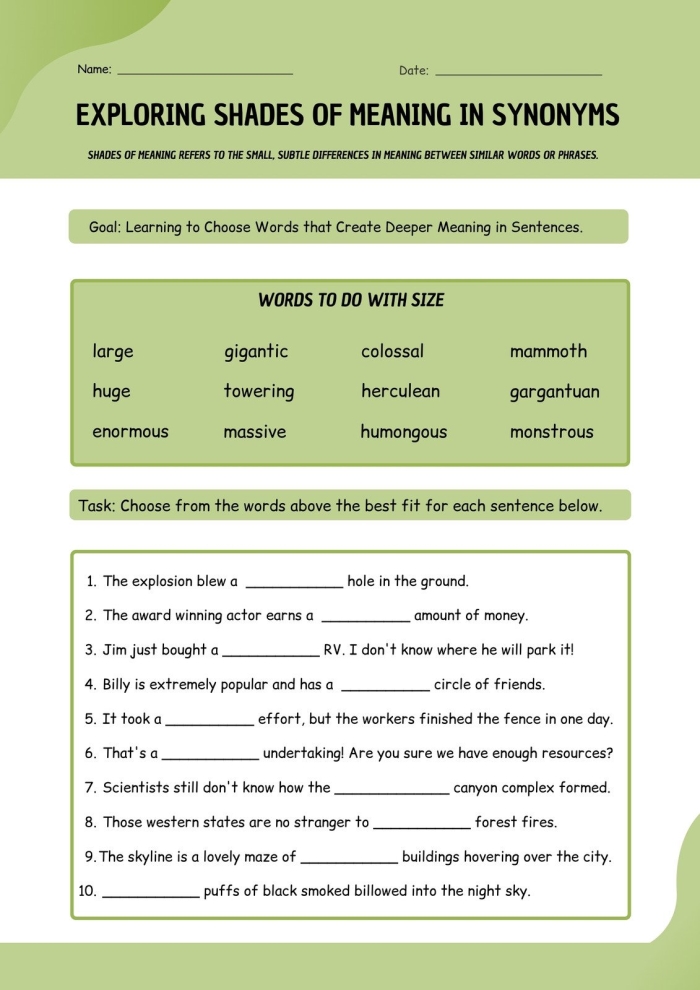
Printable Shades of Meaning: Which Word? worksheets provide a focused way to practice this skill. These worksheets challenge students to choose the word that best fits a sentence based on its specific meaning rather than just picking any synonym. This kind of exercise goes beyond memorizing vocabulary; it encourages critical thinking about context and word choice, which is essential for mastering grammar and mechanics at the third-grade level.
One practical benefit of working with these worksheets is that they prepare students to use language more effectively in both reading and writing tasks. When children are comfortable with subtle distinctions in meaning, they can add variety to their writing and avoid repetition. This skill also supports better understanding of descriptive writing, as students learn to select words that convey precise emotions or actions.
For teachers and parents looking to reinforce this skill, combining these worksheets with other grammar resources can be effective. For instance, integrating activities from related exercises on suffixes or final consonant endings can create a well-rounded approach to language mechanics. Additionally, pairing this with descriptive writing prompts helps students apply their understanding of word choices in creative ways.
Exploring shades of meaning aligns well with third-grade language standards, which emphasize vocabulary development and the use of context clues. As students work through these exercises, they become more confident readers and writers. If you want to see how this skill connects with broader language activities, you might find it helpful to explore resources like descriptive writing prompts or lessons on suffixes to build a stronger foundation in grammar and mechanics.
Printable Worksheets for Practice