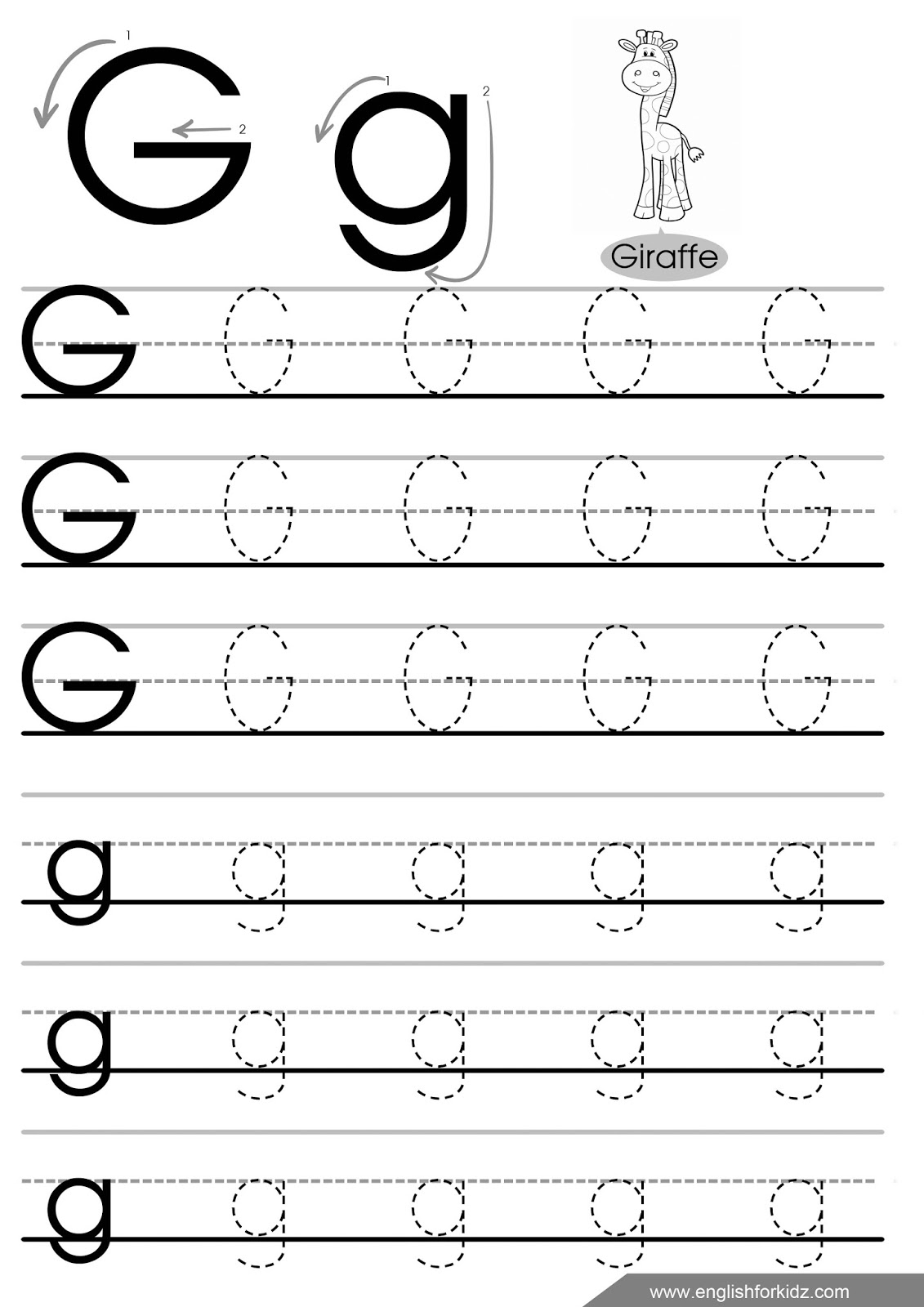
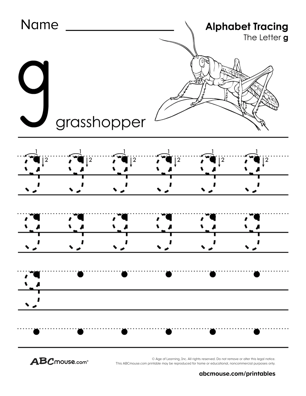
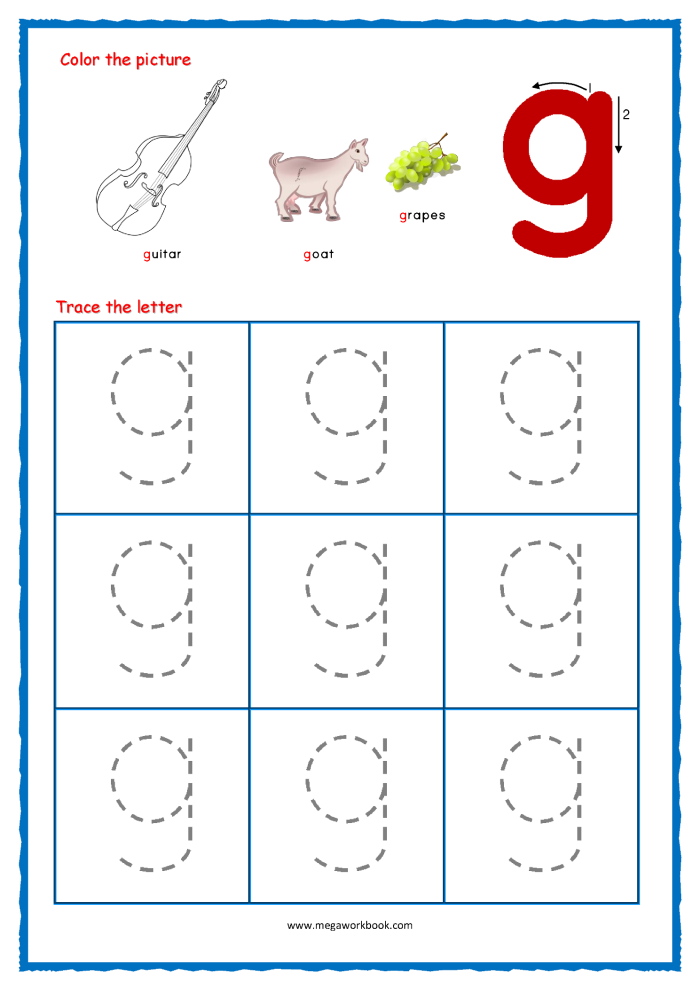
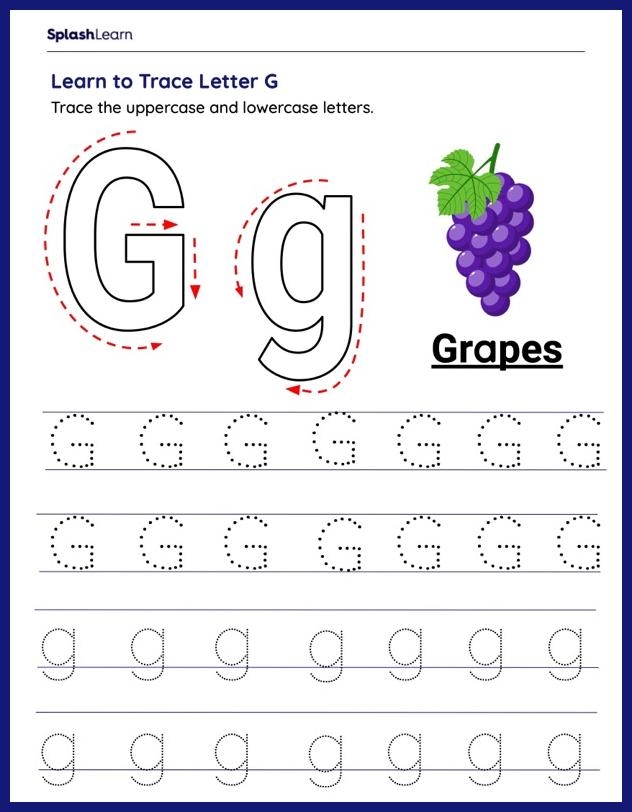
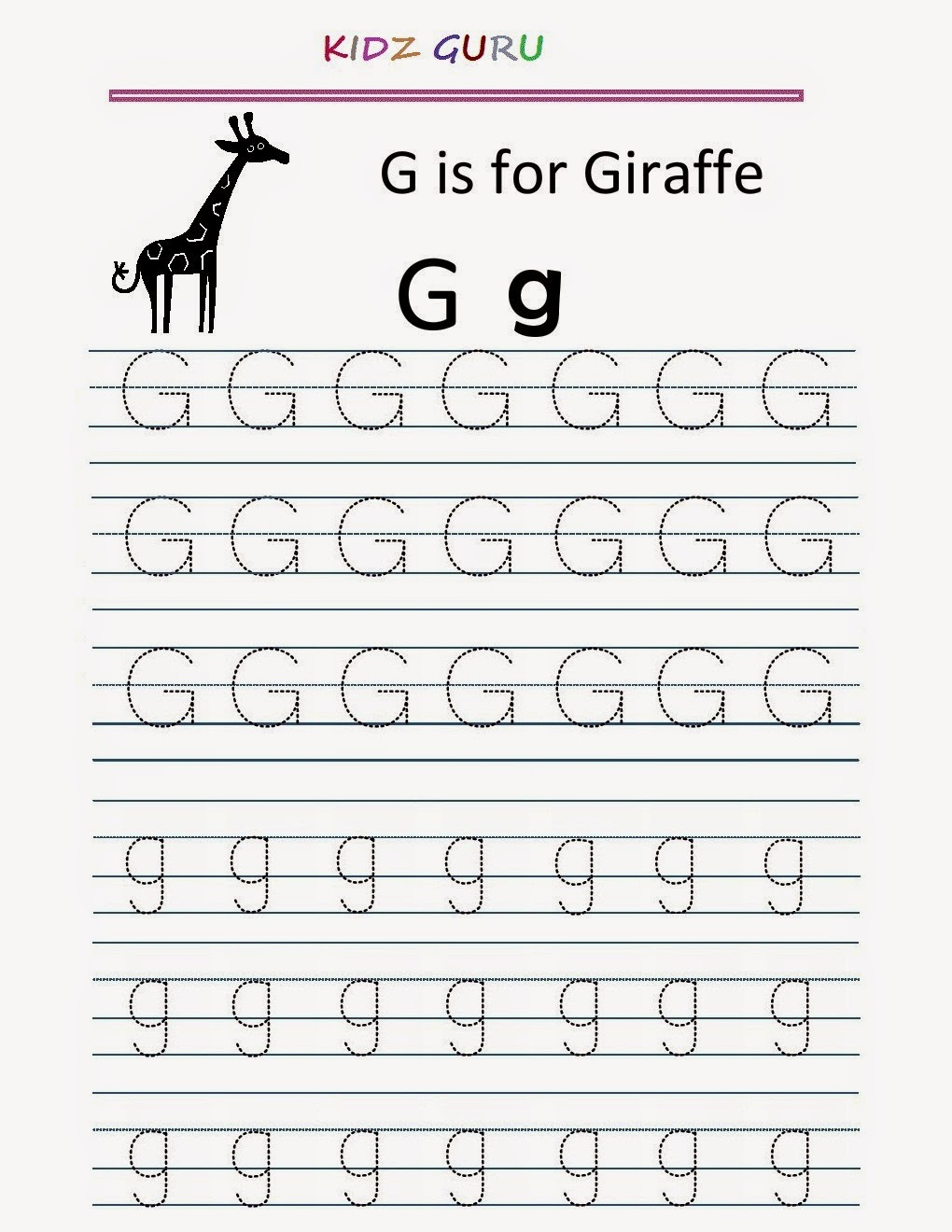
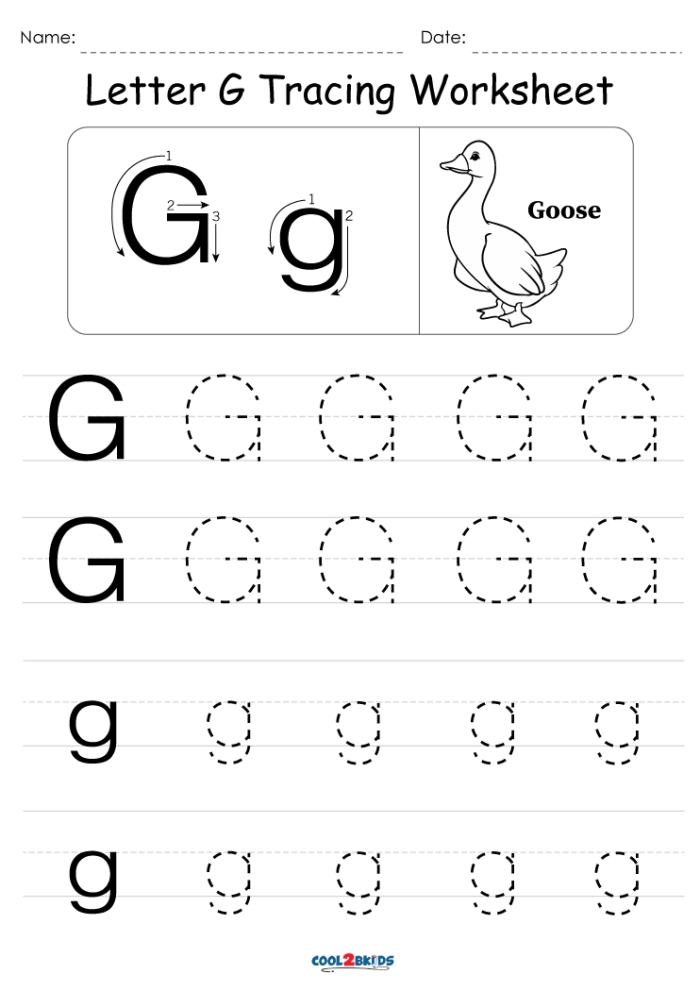
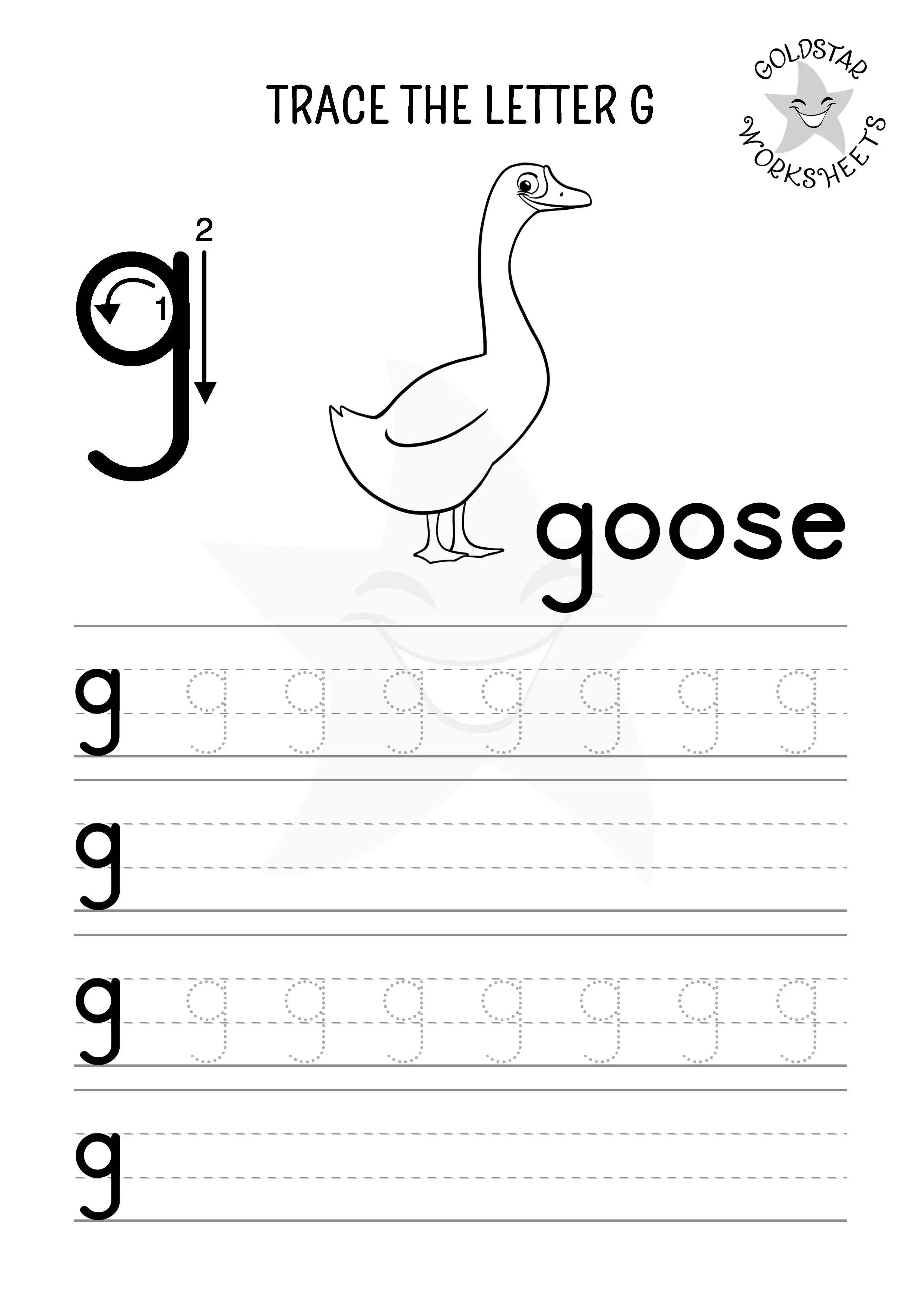
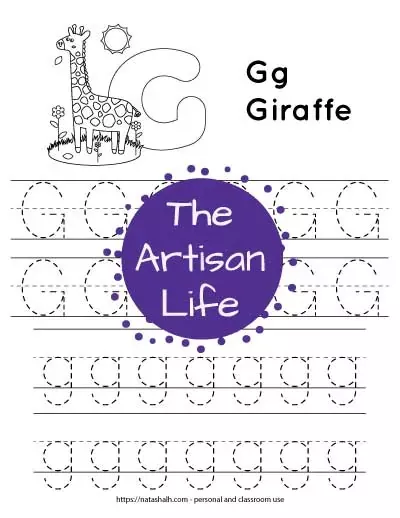
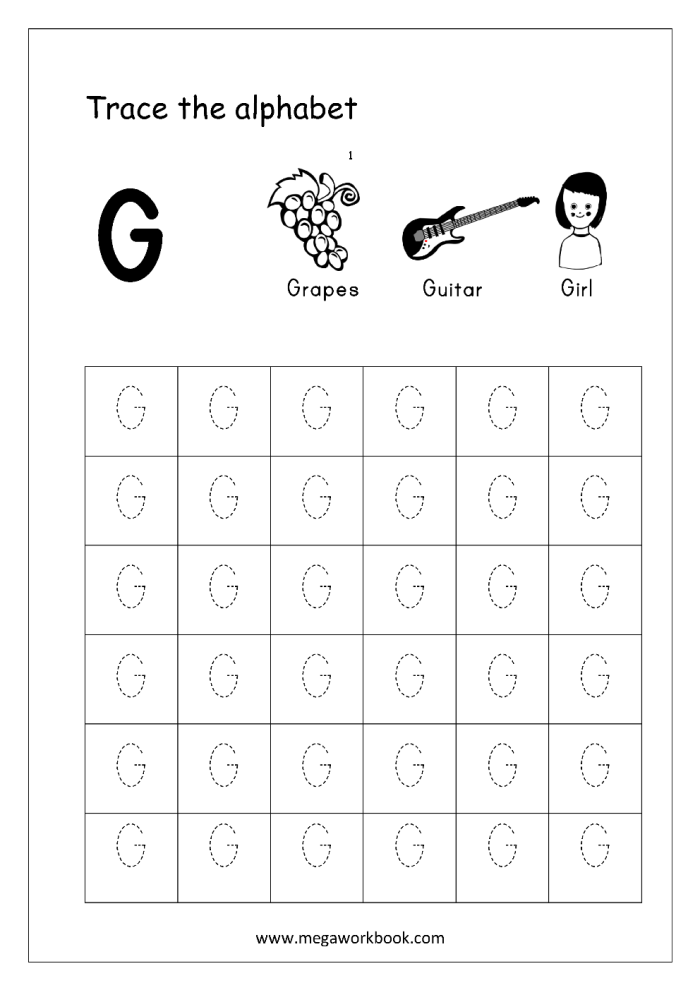
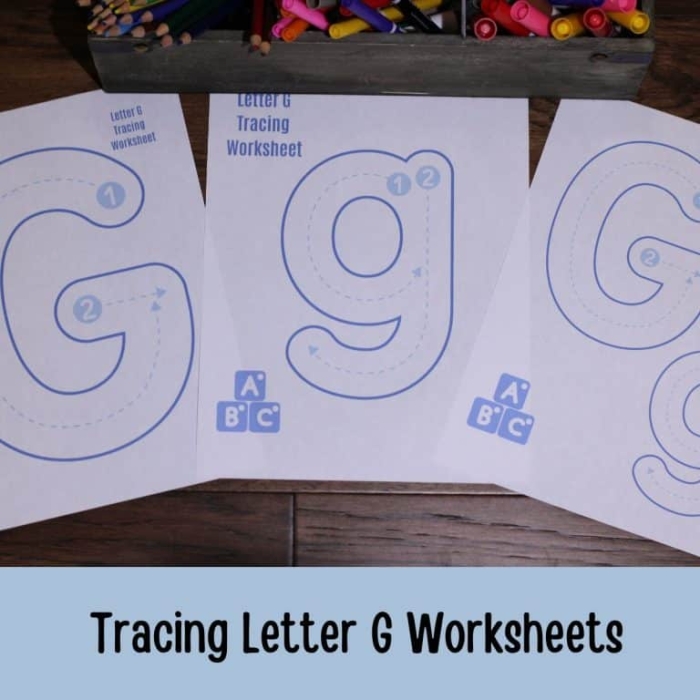
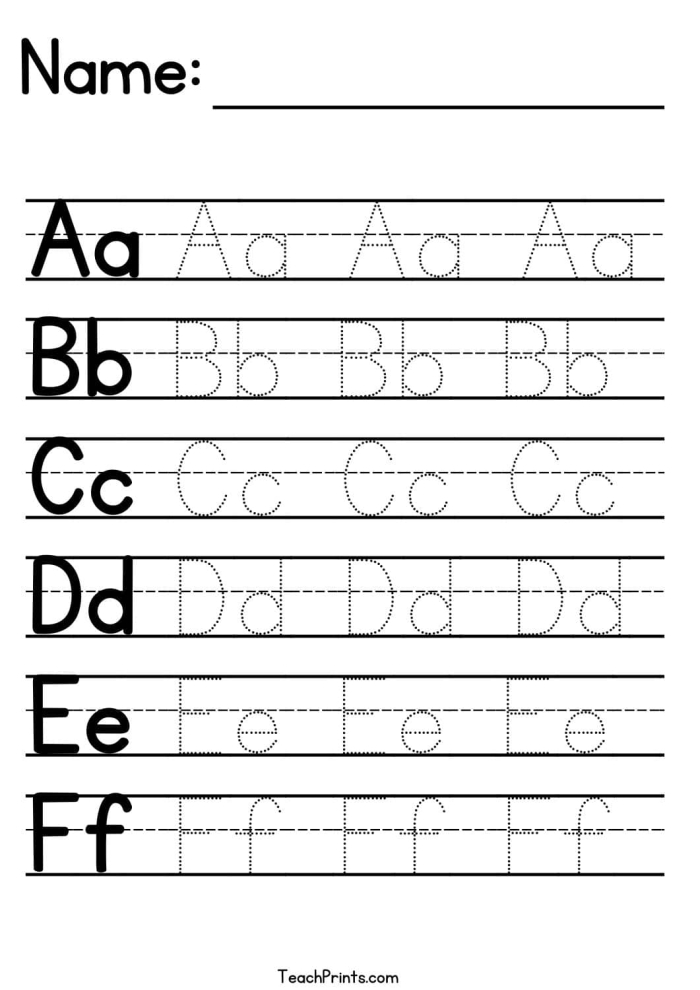
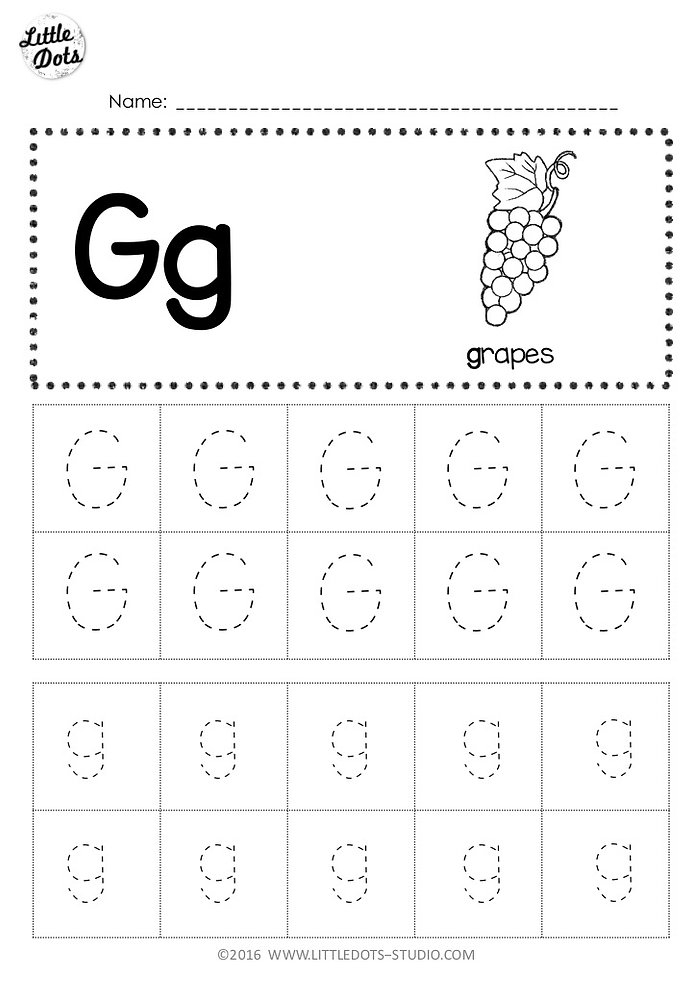
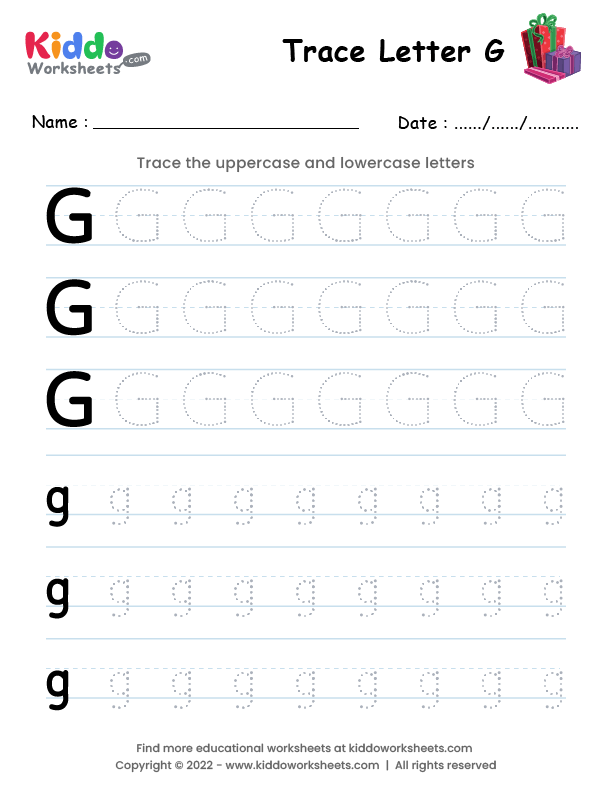
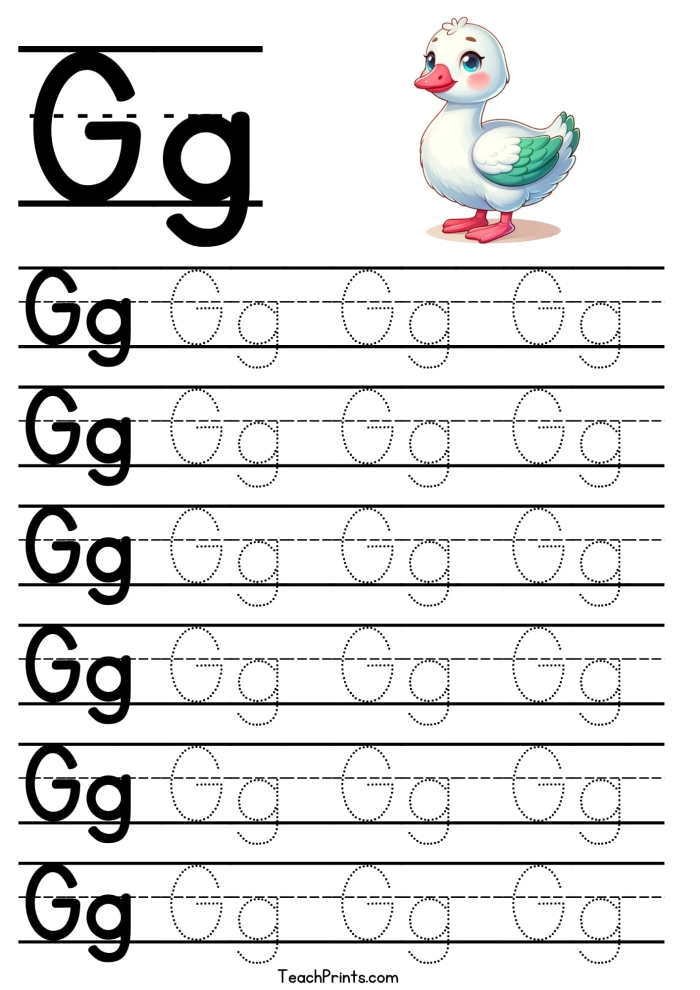
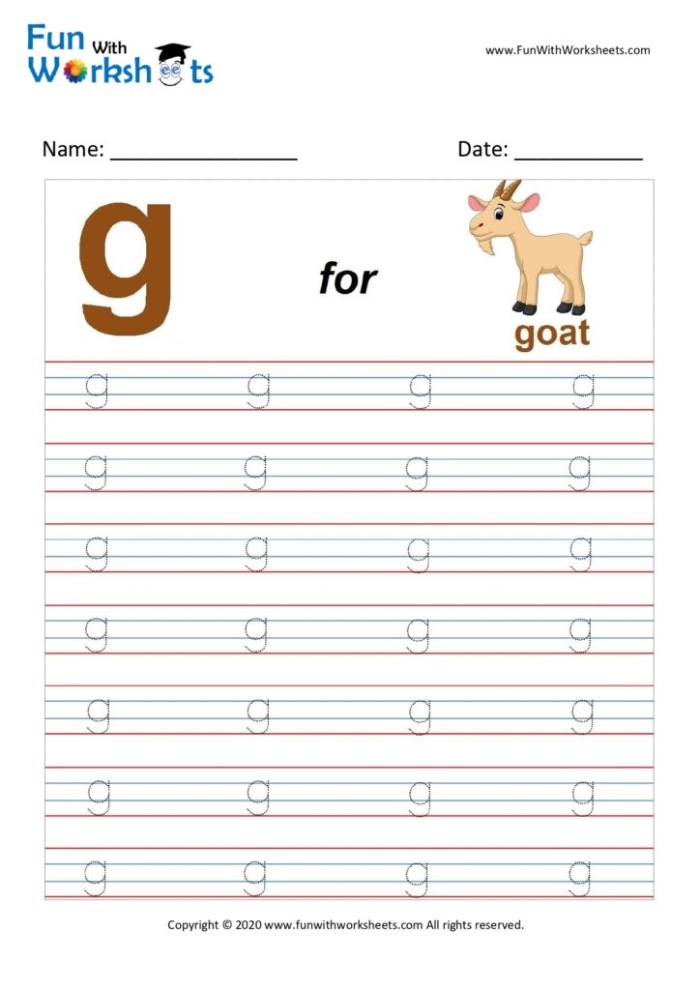
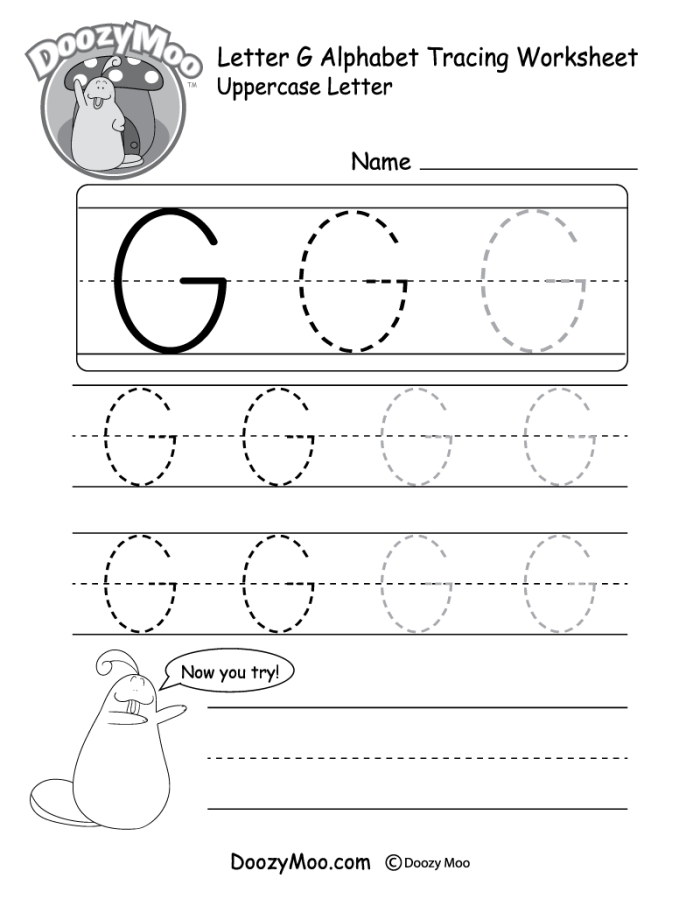
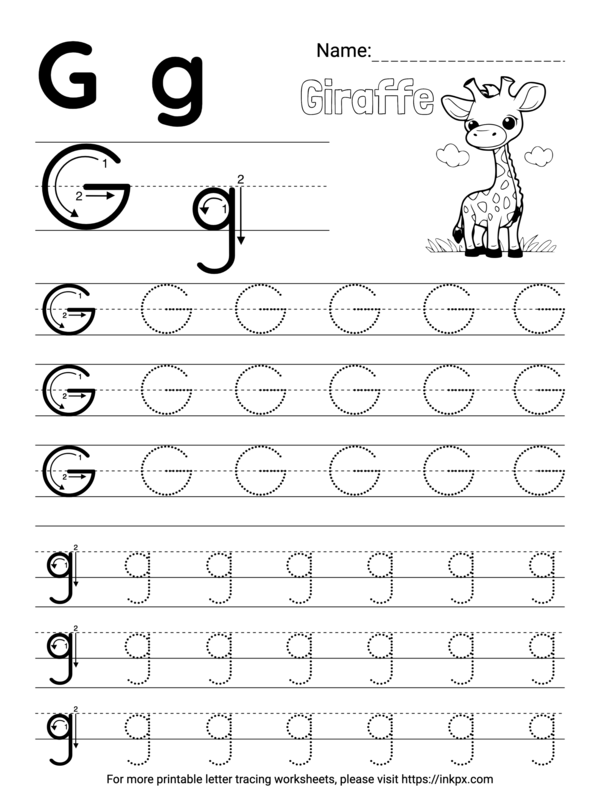
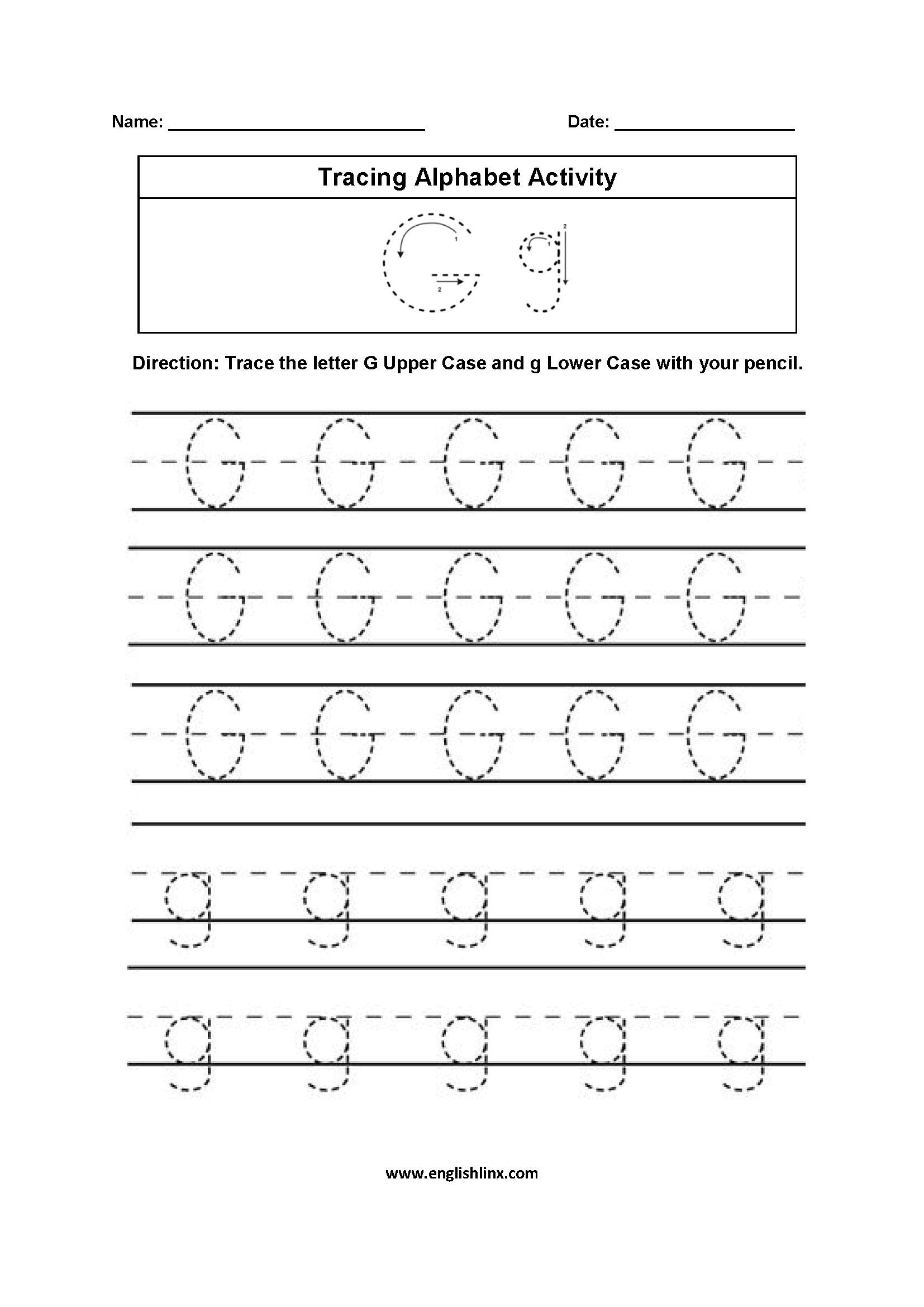
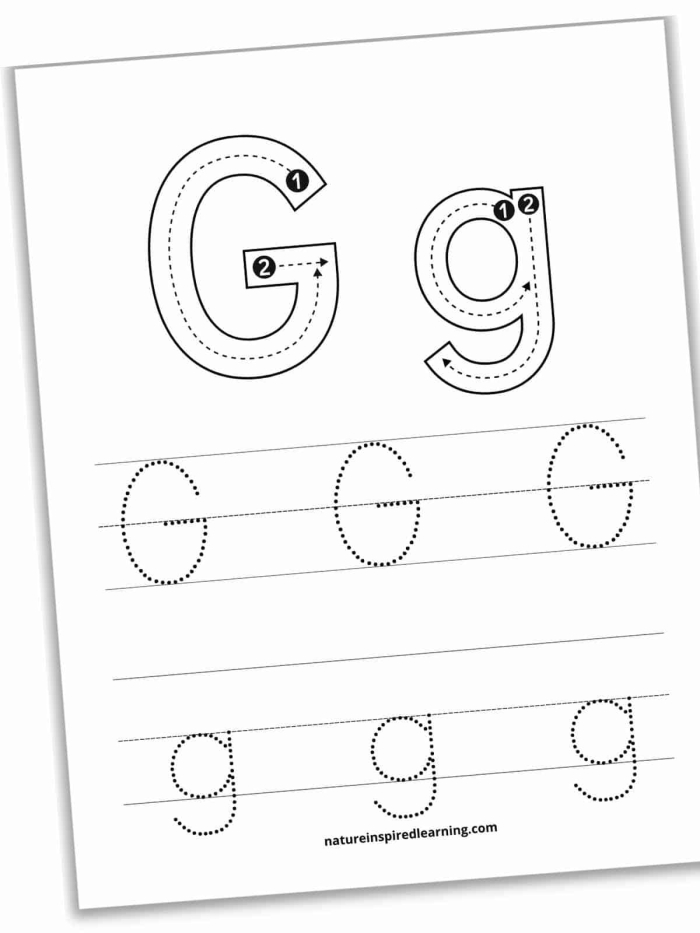
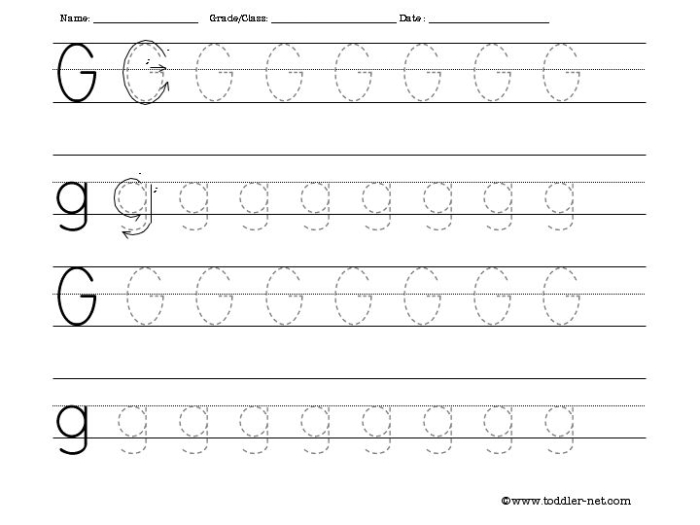
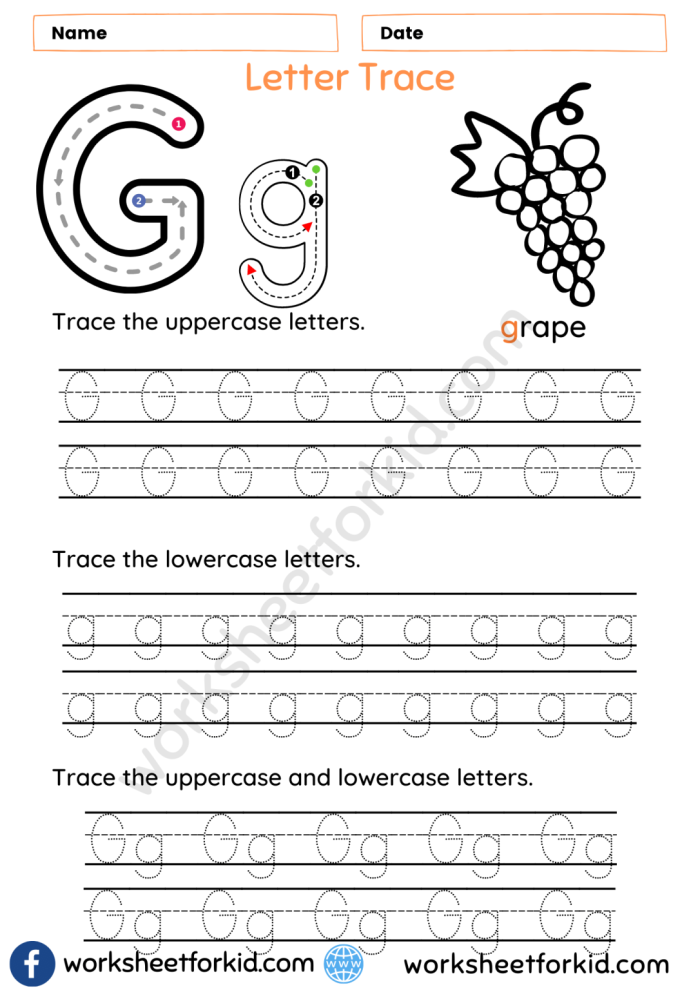
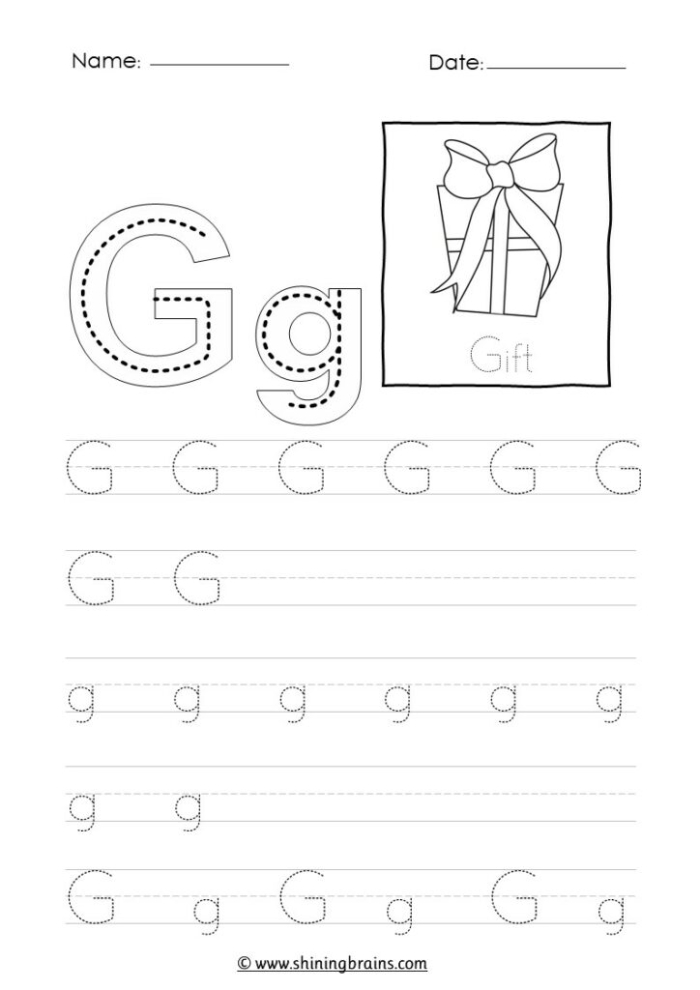
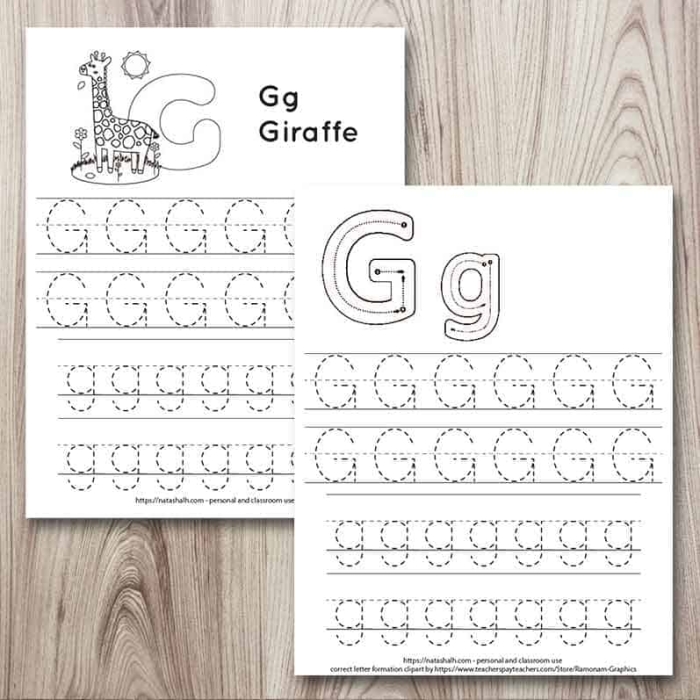
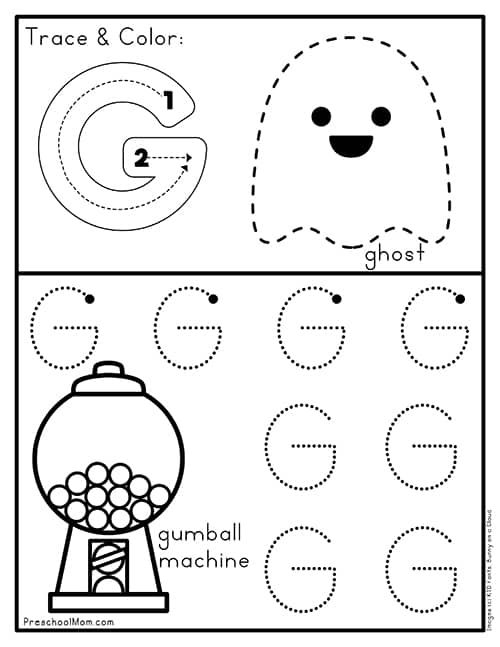
Tracing lines before writing letters is a key step for pre-K children developing their handwriting skills. When kids first trace lines on a worksheet designed specifically for practicing the letter G, they are not just copying shapes—they are building the fine motor skills necessary to control a pencil with precision. These early exercises help strengthen finger muscles and improve hand-eye coordination, making the actual letter formation easier and more accurate.
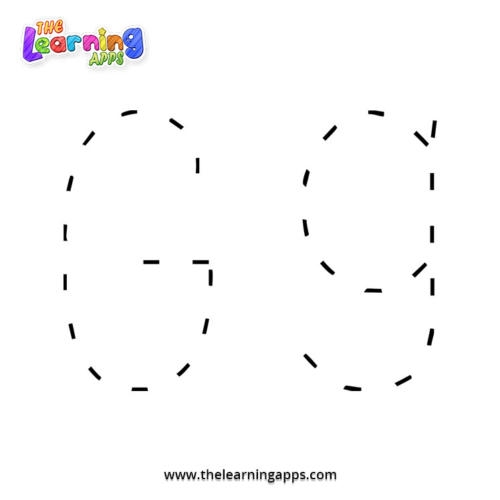
After completing the initial line tracing, children move on to tracing the letter G itself. This two-step process gradually introduces the unique curves and shapes of the letter without overwhelming young learners. The letter G, with its circular loop and tail, can be tricky for little hands that are still mastering pencil grip and movement control. Tracing helps children internalize the motions involved, which supports muscle memory and confidence in writing.
Using printable practice tracing the letter G worksheets tailored for pre-K age groups allows for repetition in a fun and engaging way. It’s important to note that the success of such activities depends on the worksheet design—clear, simple lines and visual cues make a big difference. In fact, research on early childhood handwriting development highlights that consistent tracing with guided support improves letter recognition and writing fluency.
For educators and parents looking to expand handwriting practice beyond just letters, incorporating related worksheets can be beneficial. For instance, combining letter tracing with exercises that focus on sorting shapes or exploring colors helps reinforce fine motor and cognitive skills simultaneously. Worksheets like those focusing on three-dimensional shapes or color knowledge and graphing offer complementary activities that keep young learners engaged while supporting their overall development.
Practicing handwriting through tracing is more than just learning letters; it’s about laying a foundation for reading and writing success. Starting with tracing lines and then moving on to letters like G ensures that pre-K children develop the motor skills and confidence needed for future writing tasks.
Start Practicing with These Worksheets