Building a three-dimensional square pyramid transforms how children understand geometry. Rather than staring at flat drawings in a textbook, your child gets to hold a real shape, rotate it, and see how the pieces fit together. This hands-on approach sticks with kids in a way that lectures simply cannot.
The process is straightforward. Start by having your child color the pyramid template with markers, colored pencils, or crayons. Let them choose their own color scheme, add patterns, or draw designs on each face. This creative step keeps them engaged and invested in the final product. Next comes the cutting stage, where they carefully trim along the solid lines. For second grade learners, this develops fine motor skills and precision. After cutting, your child folds each flap along the dotted lines, creating the three-dimensional structure. The final step involves applying glue to the flaps and pressing them together until the pyramid holds its shape.
Once the pyramid is complete, the learning opportunities expand. Your child can count the four triangular faces and the square base. They can trace the edges and vertices with their fingers. You can even use the finished pyramid for math practice, such as working with ratios and proportions or exploring how polygons relate to three-dimensional shapes.
This activity reinforces spatial reasoning, which develops before children fully grasp abstract math concepts. When they later encounter subtraction problems or more complex geometry, they’ll already have a physical memory of how shapes work. The pyramid sits on a shelf as both a decoration and a tangible reminder that learning shapes doesn’t require sitting at a desk.
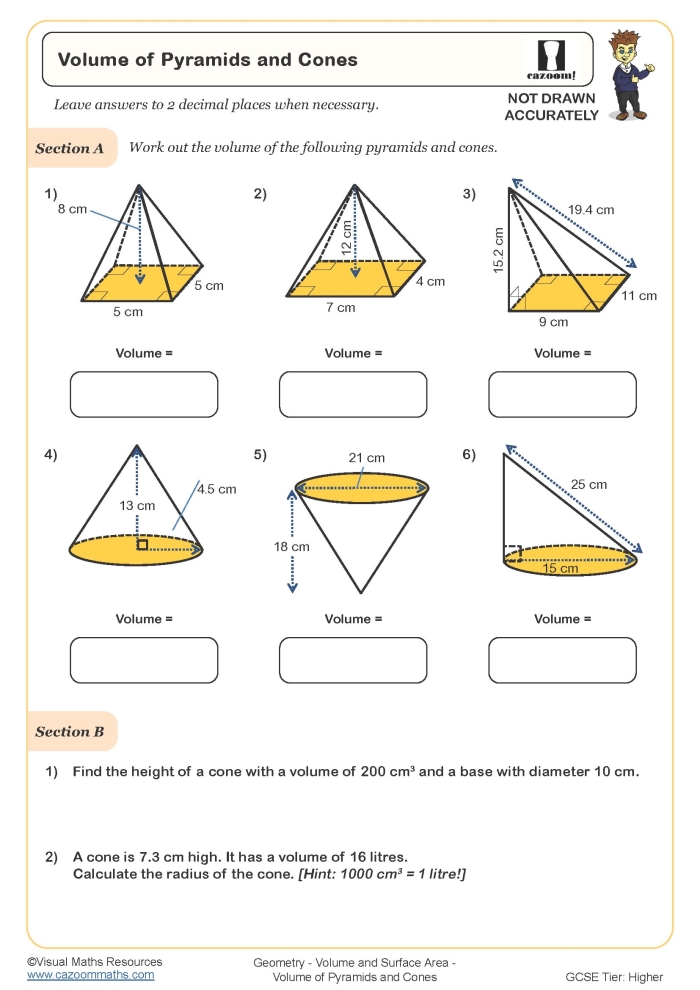
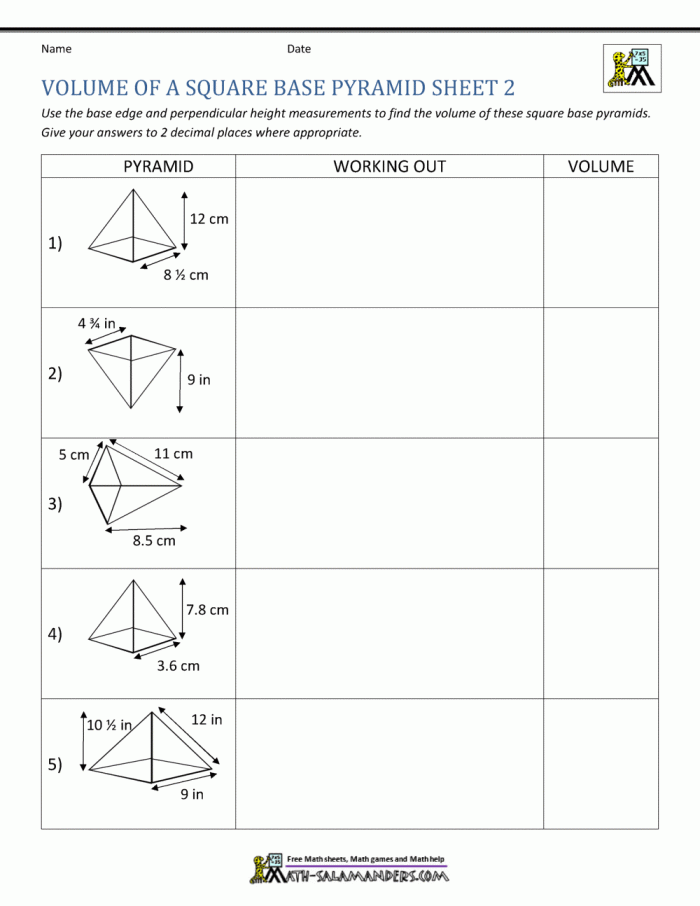
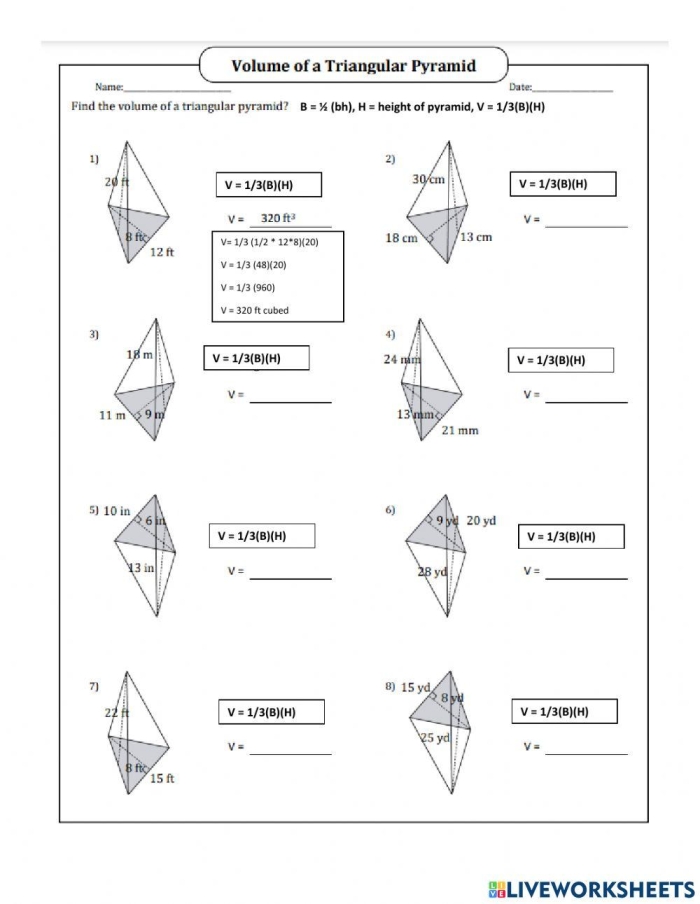
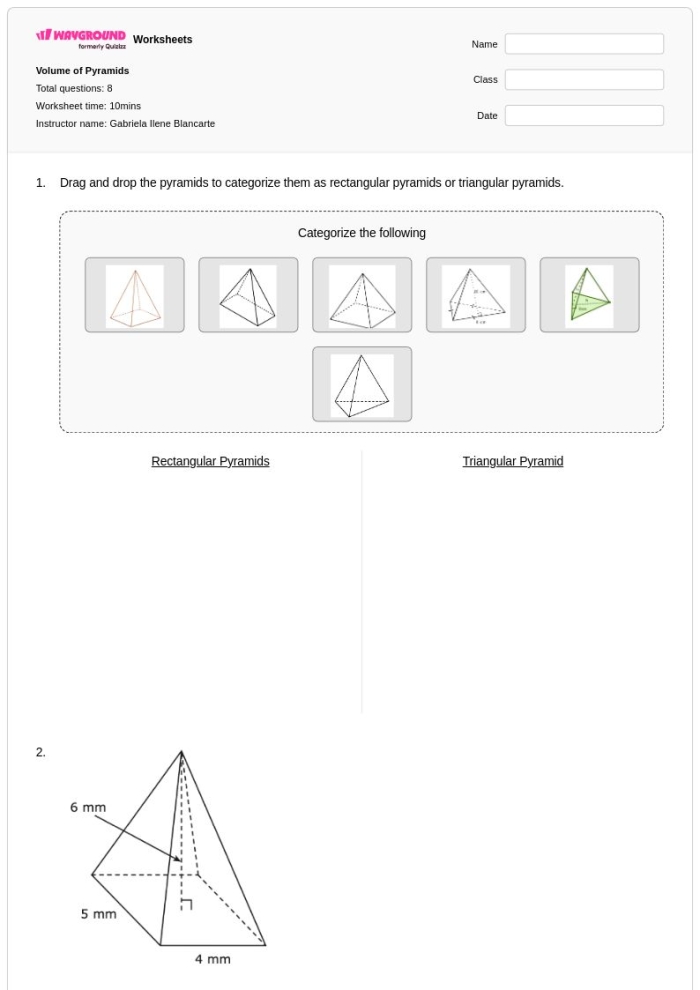
Worksheet Practice Section