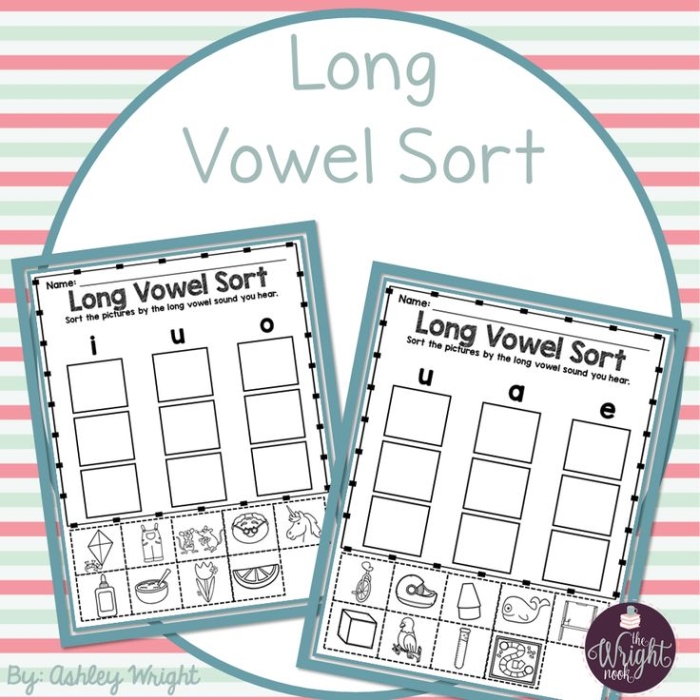
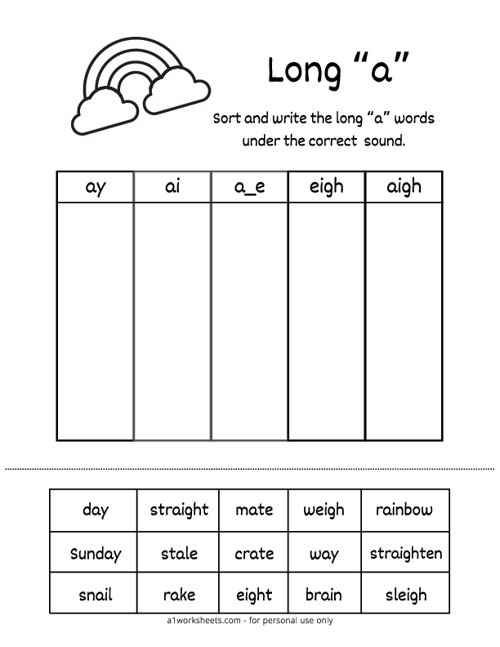
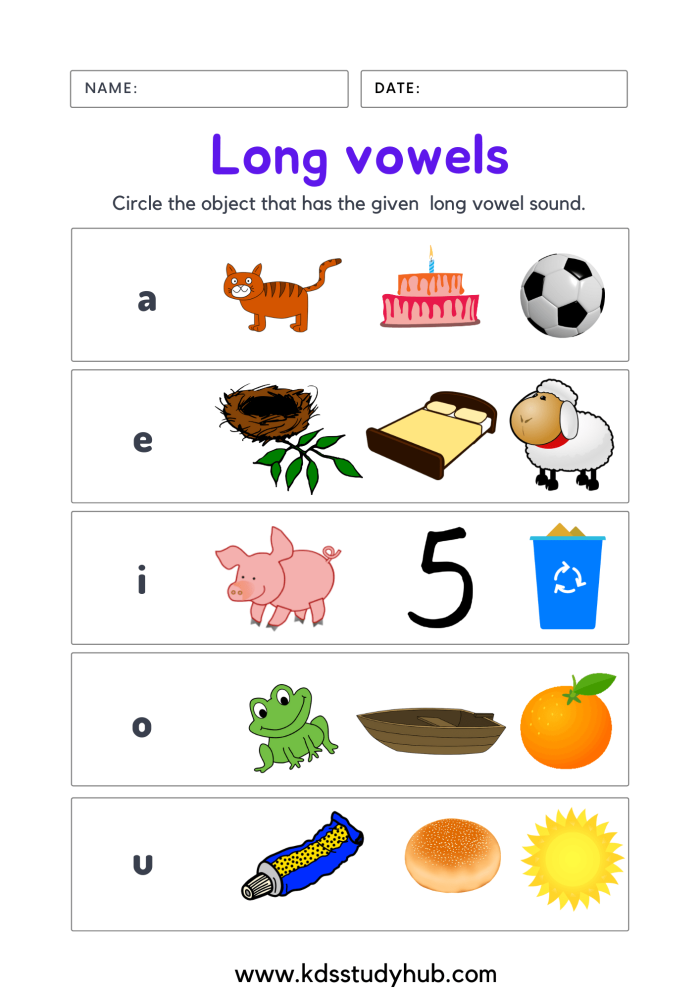
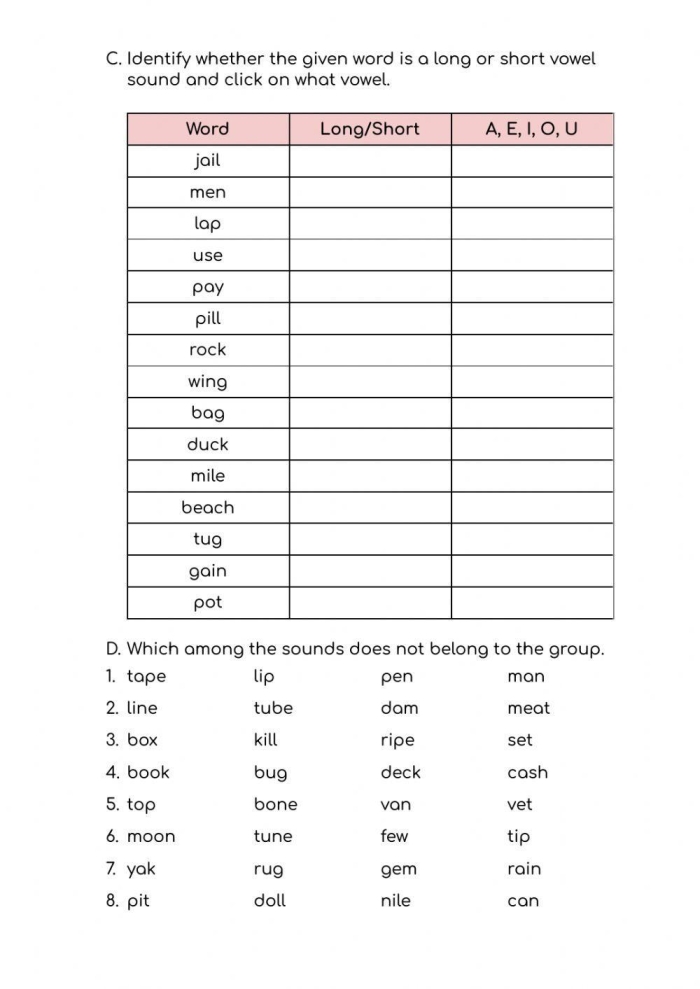
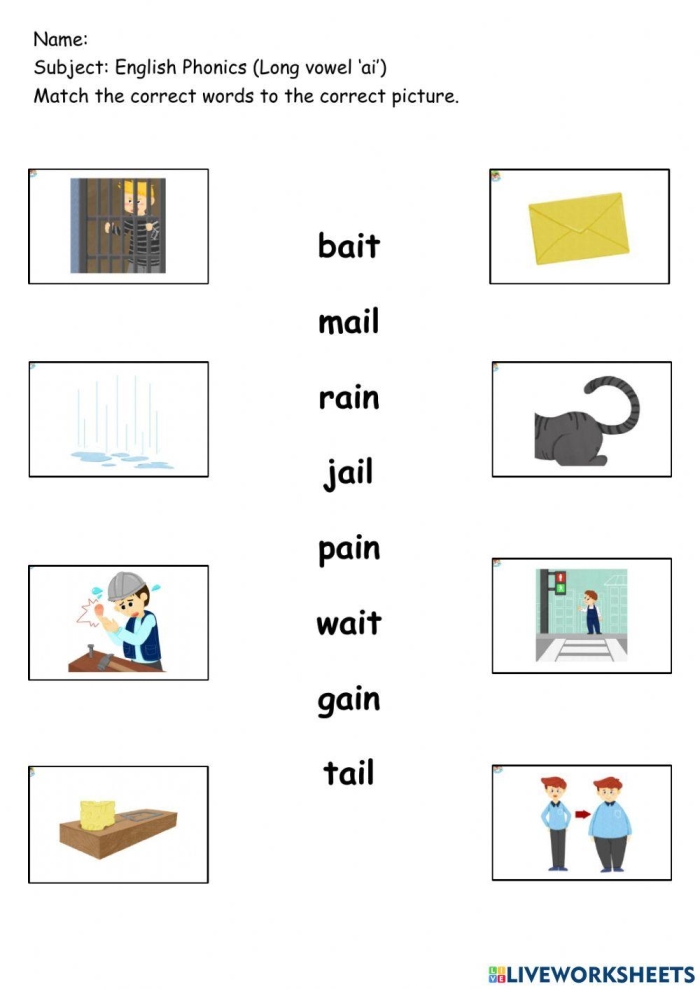
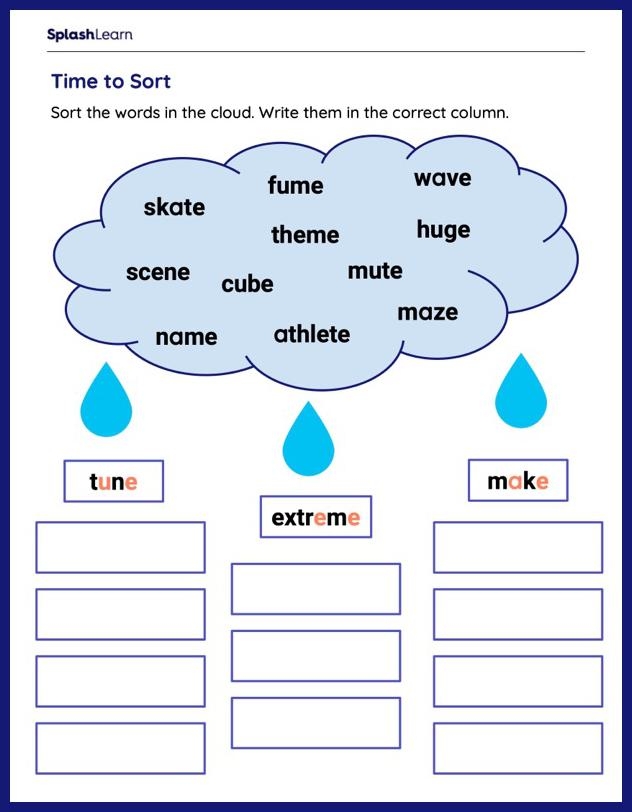
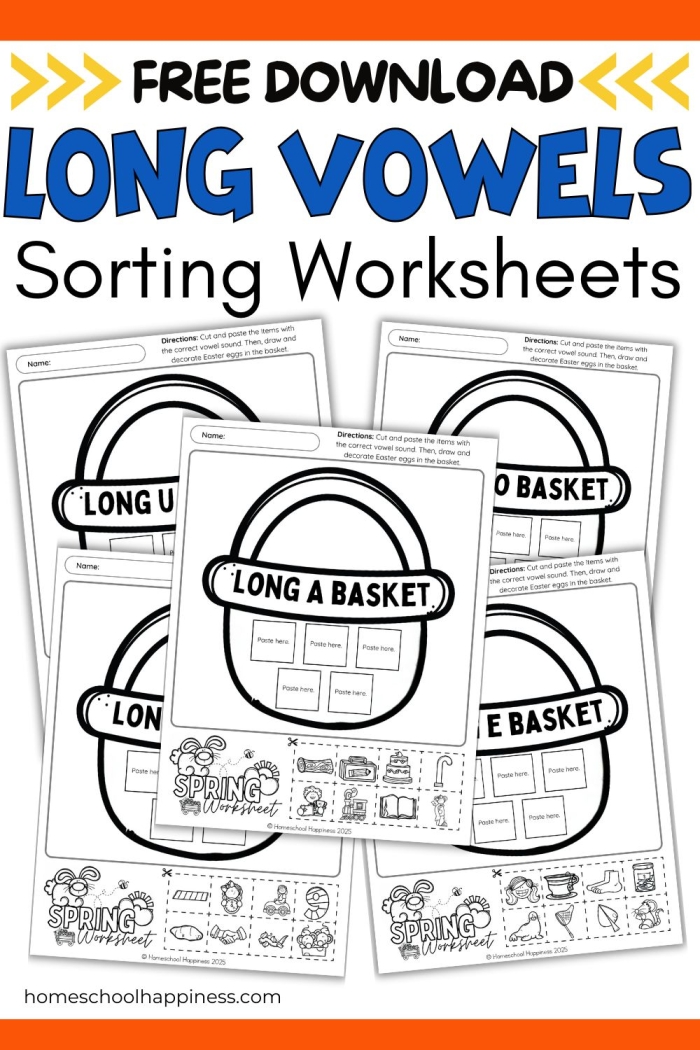
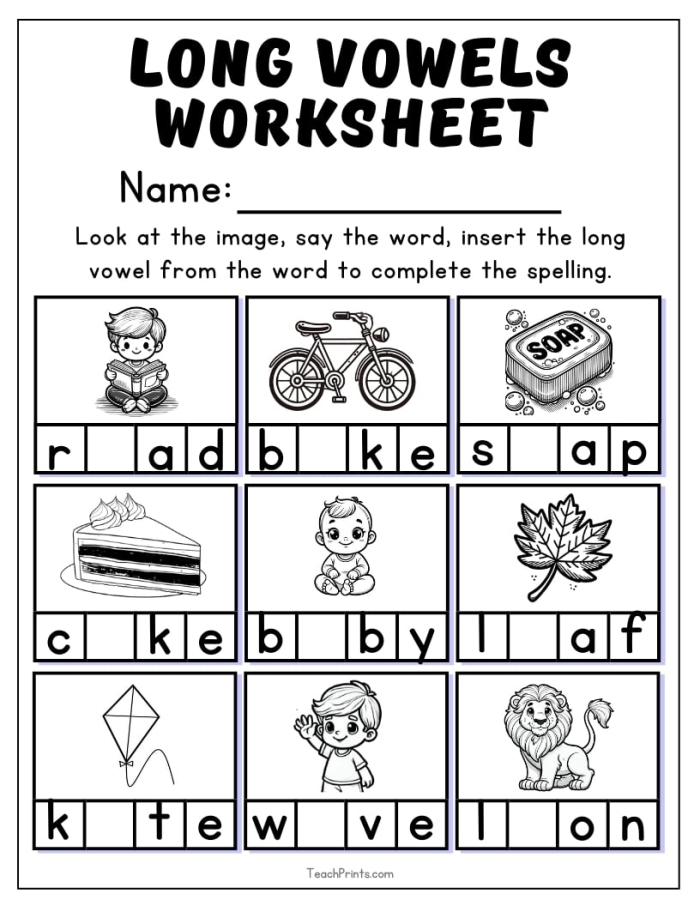
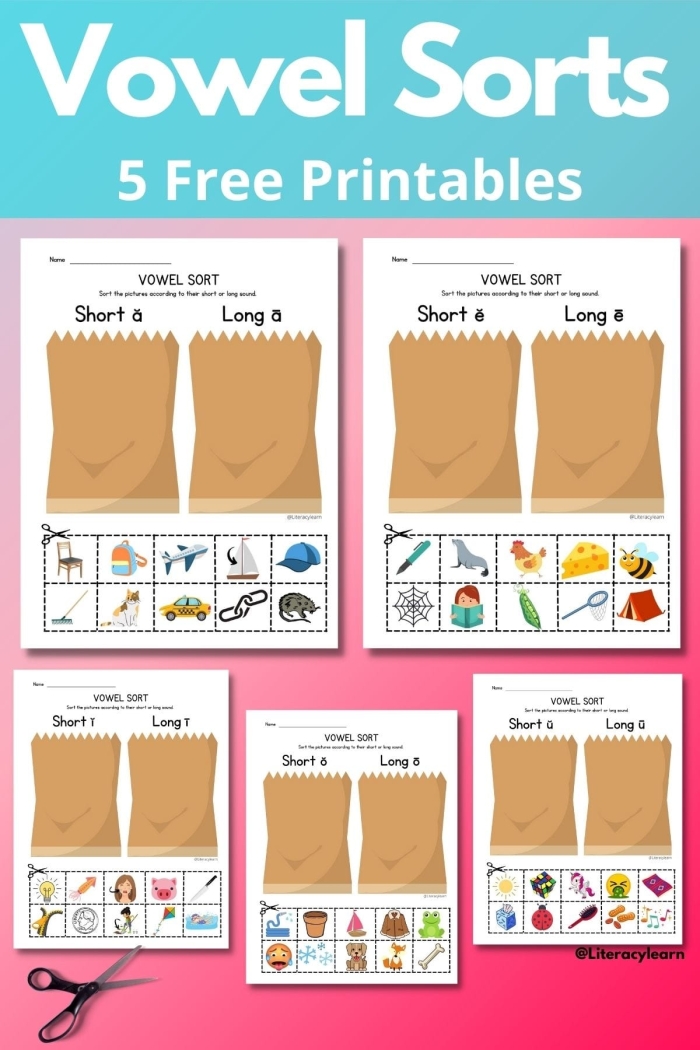
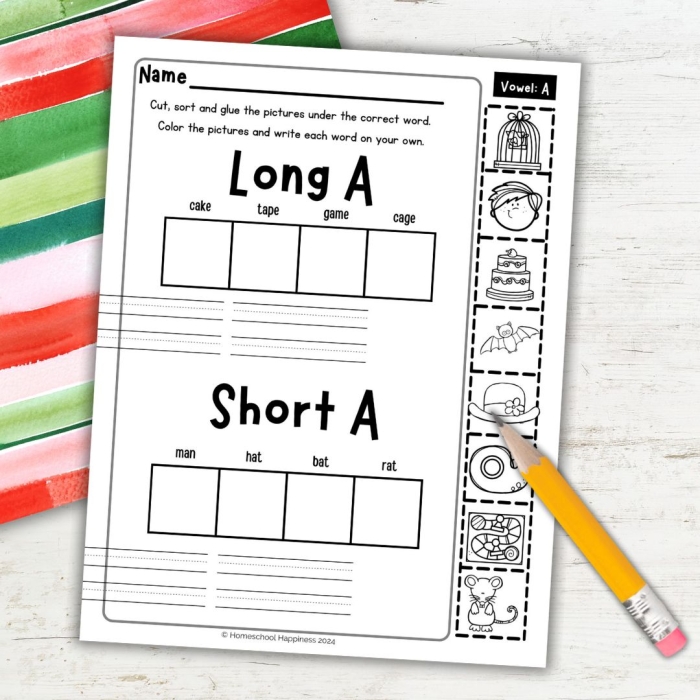
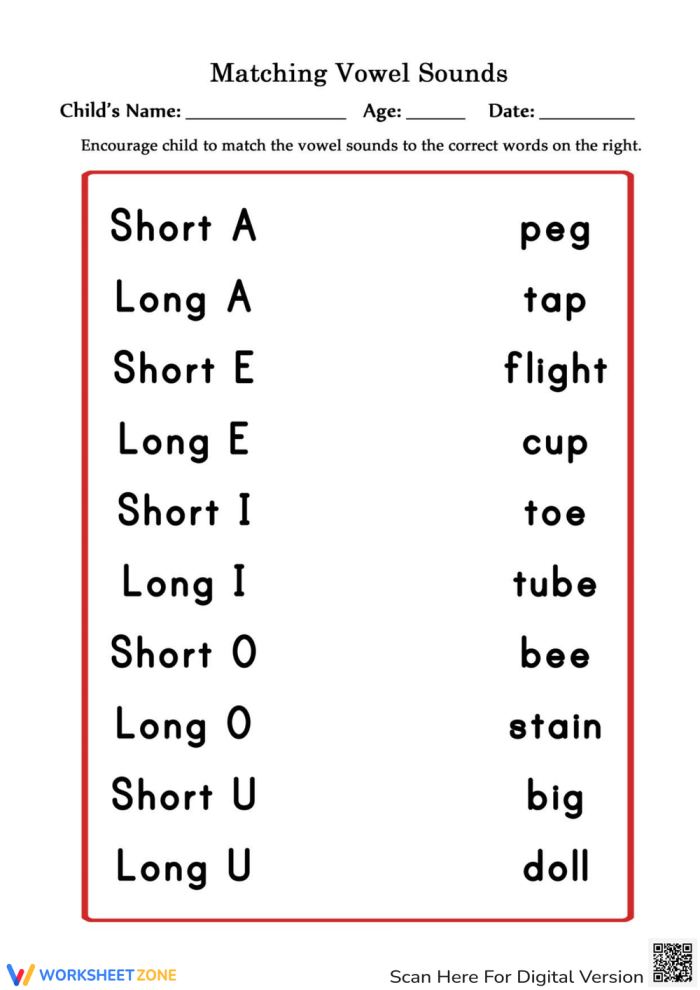
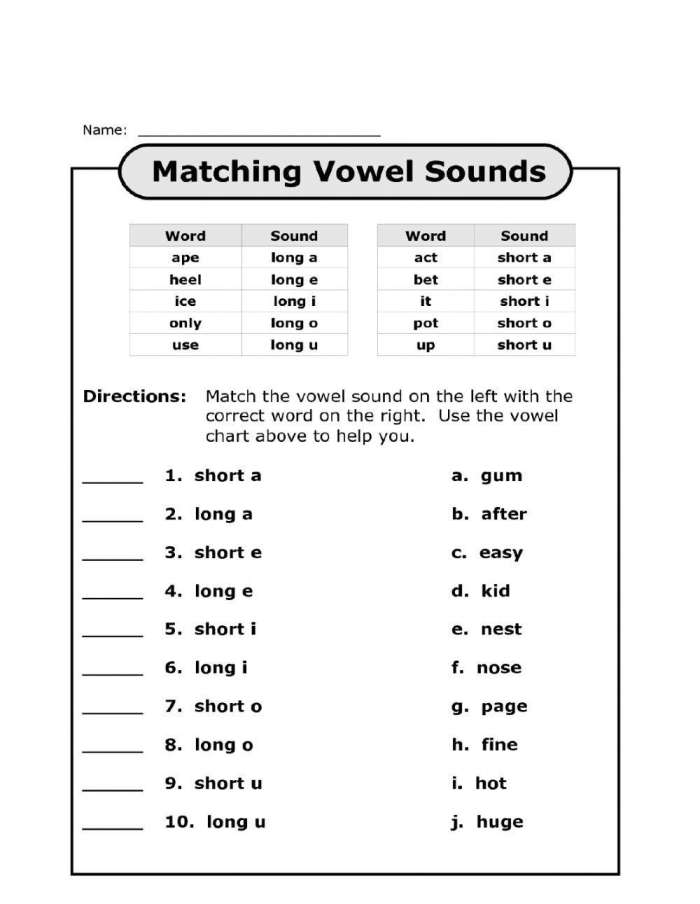
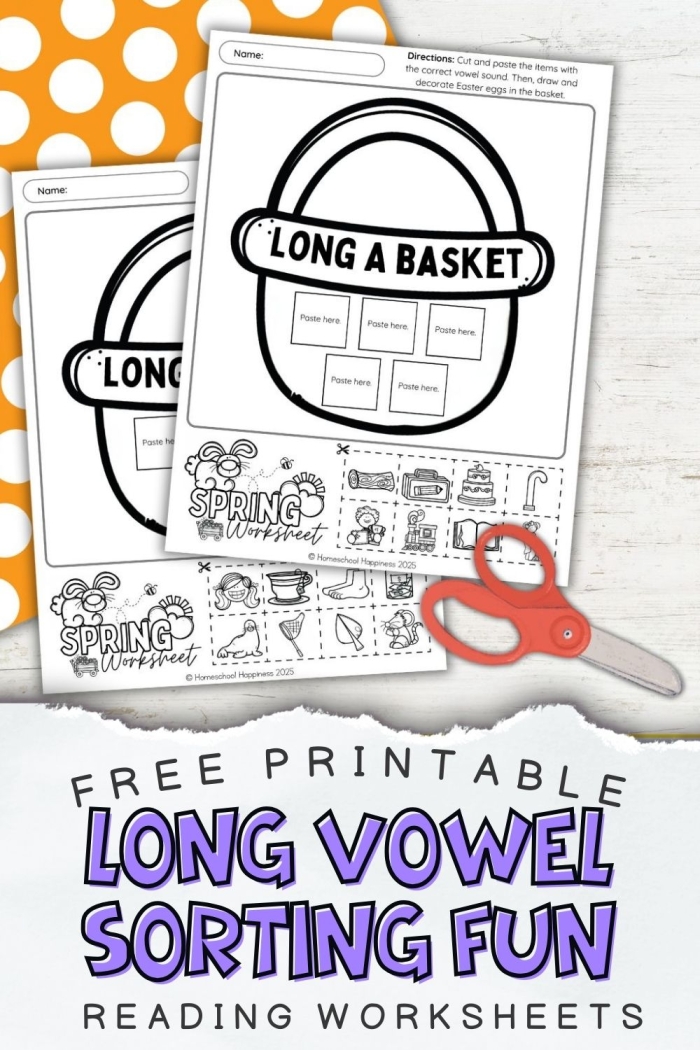
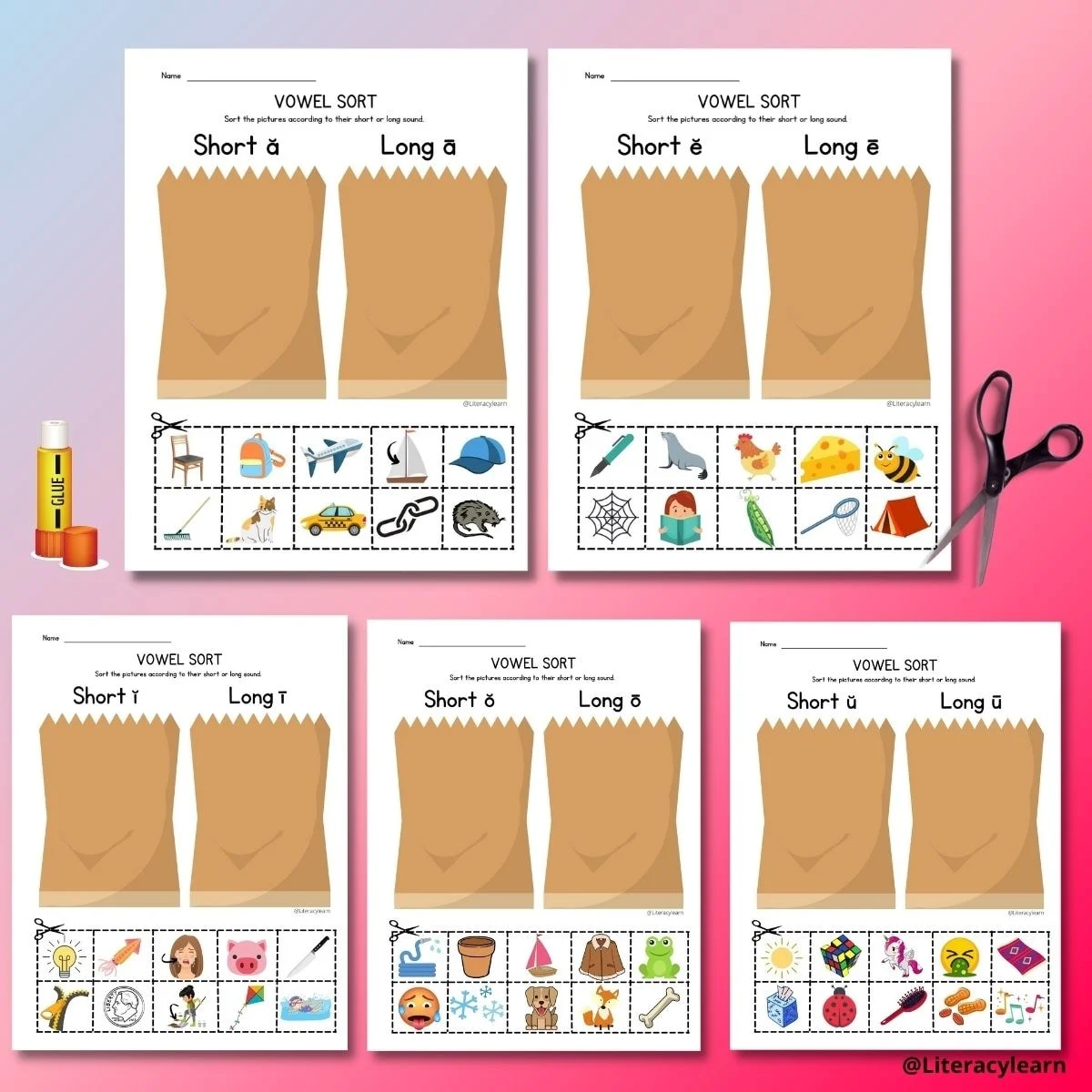
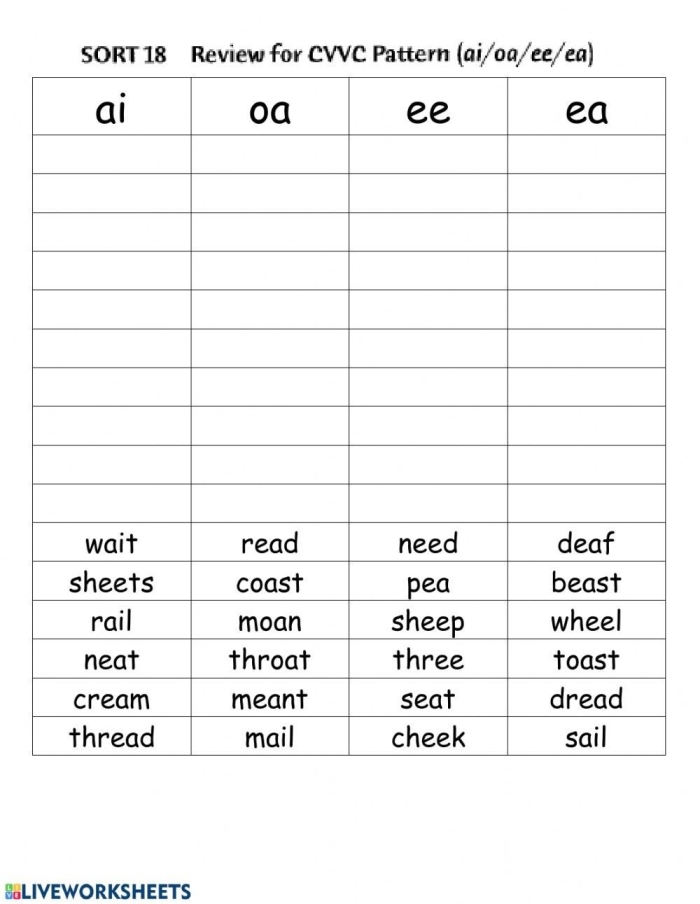
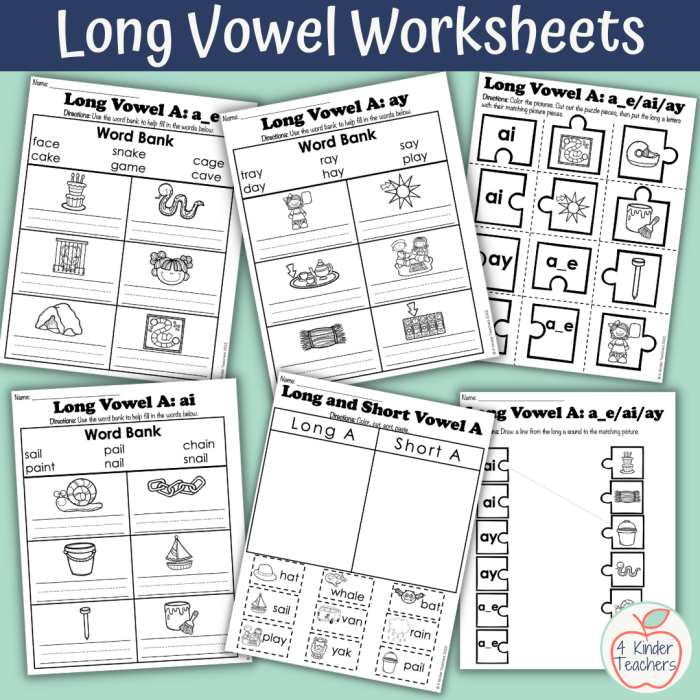
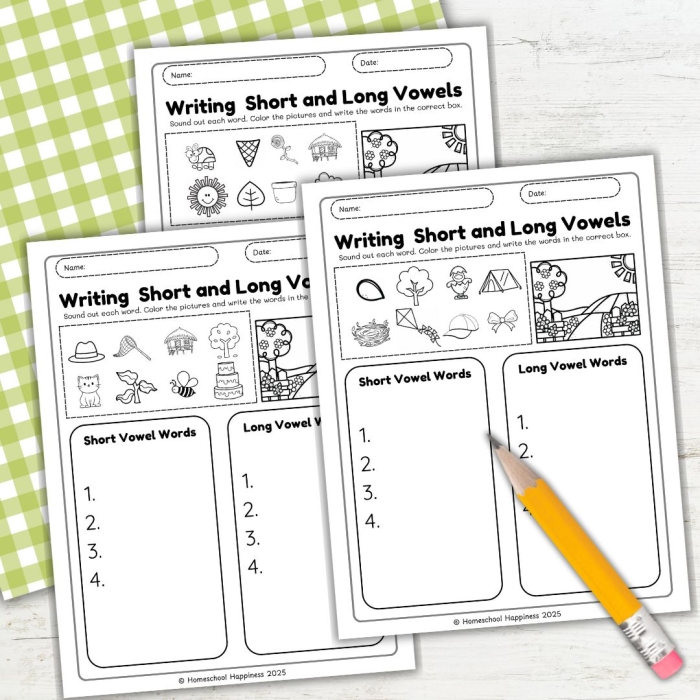
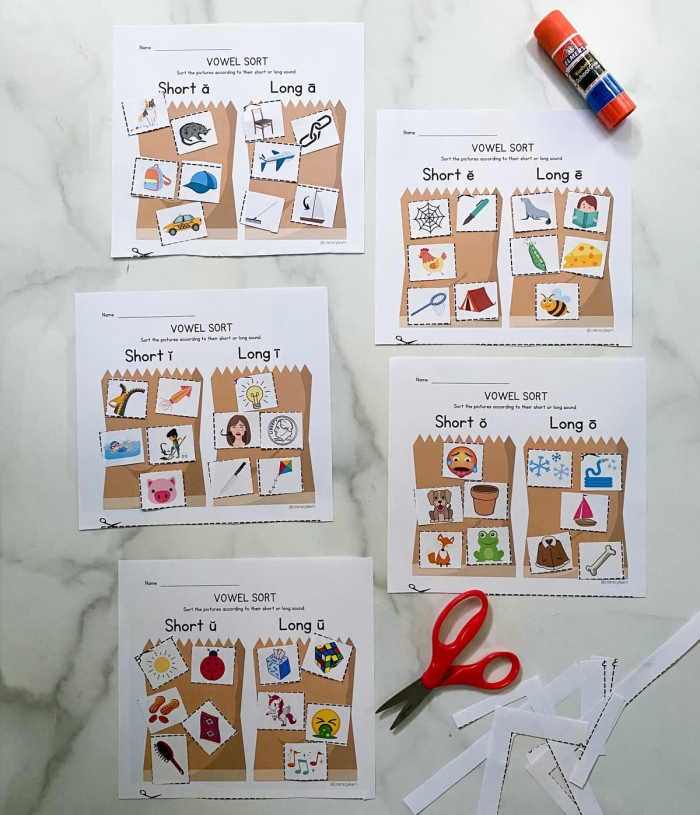
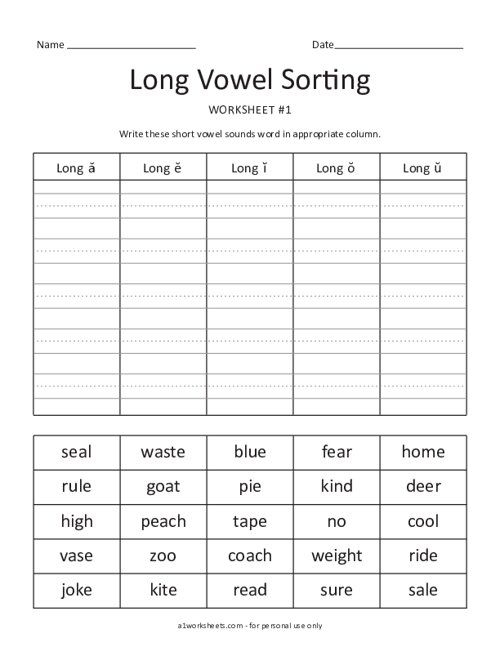
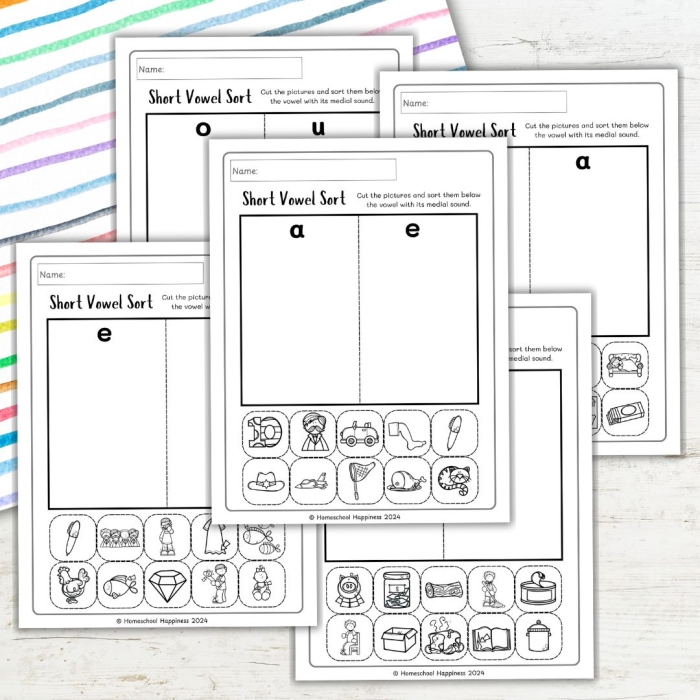
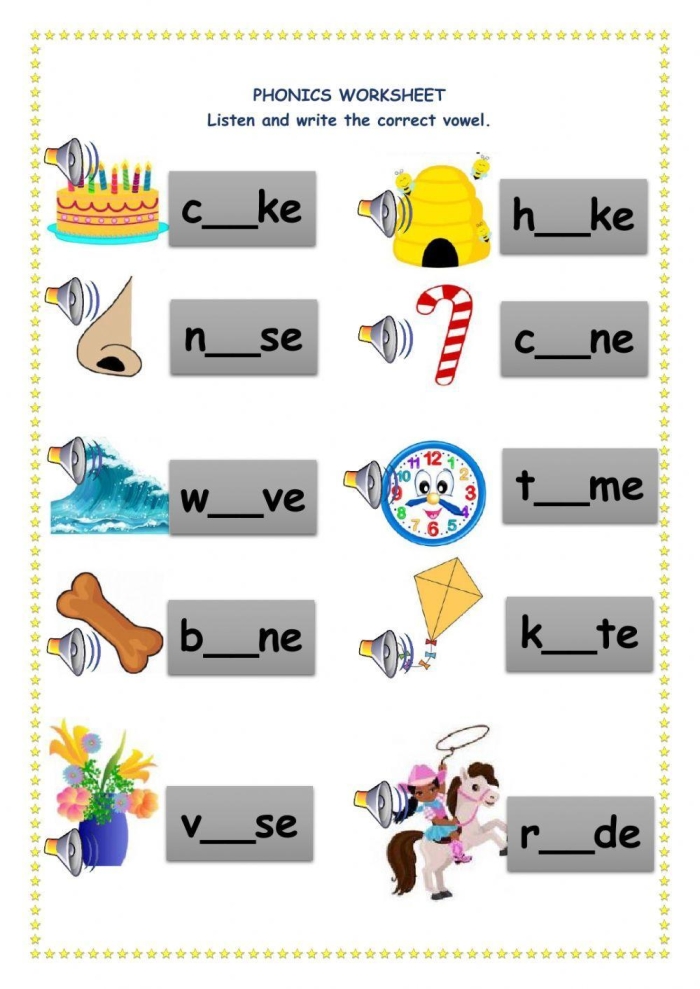
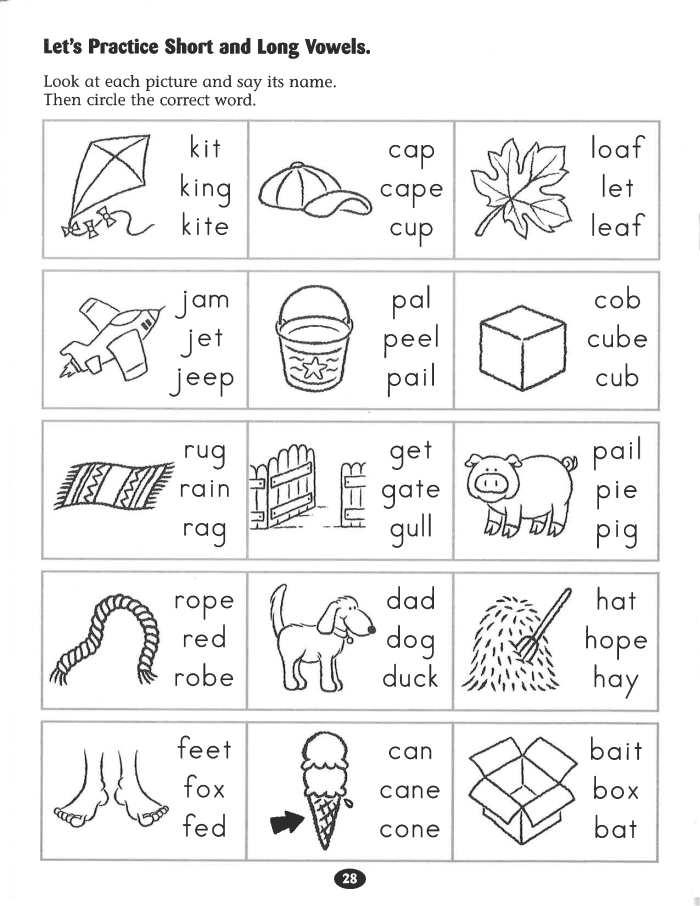
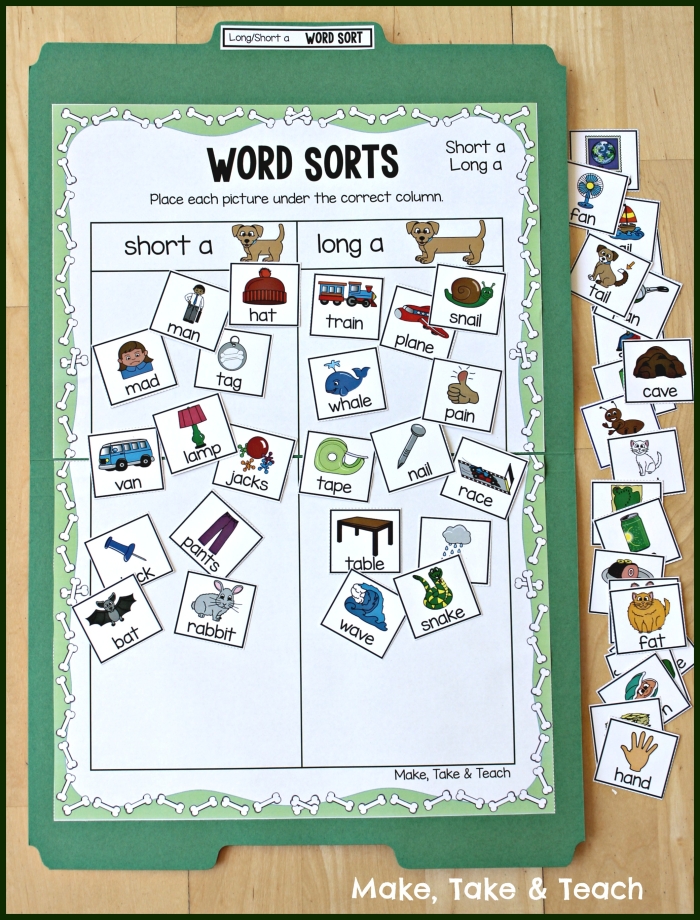
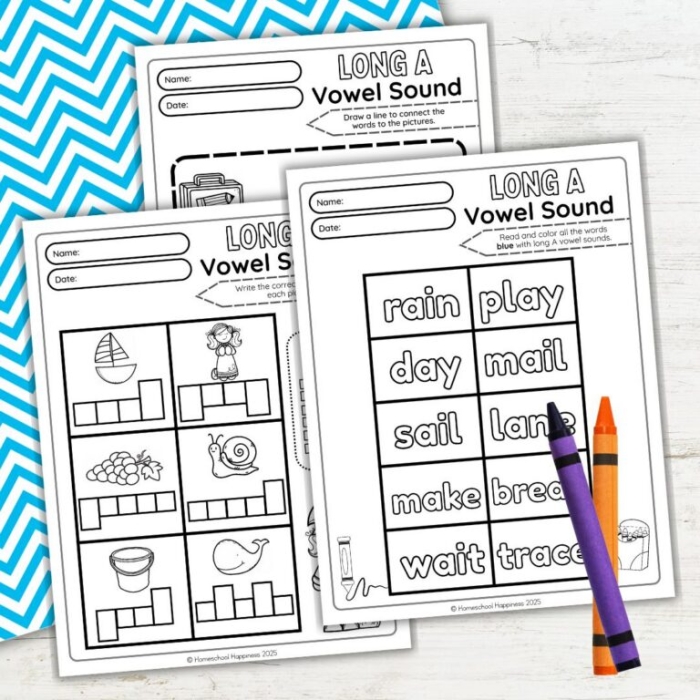
Sorting activities build foundational literacy skills that second graders need to recognize patterns in language. A long A vowel word sort worksheet gives students hands-on practice identifying words that share the same vowel sound, whether spelled as “a-e,” “ai,” “ay,” or “ea.”
The mechanics are straightforward. Students receive a list of mixed words and sort them into columns based on how the long A sound appears. For example, “cake” and “make” go in one column, while “rain” and “train” belong in another. This sorting process trains the brain to notice spelling patterns rather than just memorizing individual words. Second graders working through these activities develop phonemic awareness, which directly supports their reading fluency and spelling accuracy.
What makes word sorting effective is the repetition without monotony. Unlike drilling lists, sorting feels like a puzzle to solve. Students stay engaged because they’re actively categorizing rather than passively reviewing. Teachers often pair these worksheets with other learning tools to reinforce related skills, such as sorting out adverbs or practice giving directions, which build complementary language abilities.
The printable format matters for classroom flexibility. Teachers can laminate copies for reusable practice or print fresh sheets for independent work. Second graders benefit from having a tangible worksheet they can mark up, circle words, and physically move through the sorting process. This tactile element reinforces learning better than screen-based alternatives for this age group.
Long A vowel word sorts also connect to broader geometry and spatial reasoning when students organize information into distinct categories. The cognitive work of classification extends beyond phonics into mathematical thinking. Pairing this worksheet with activities like cube cut-out geometry or tally marks creates a balanced literacy and math curriculum.
Download These Worksheets for Practice