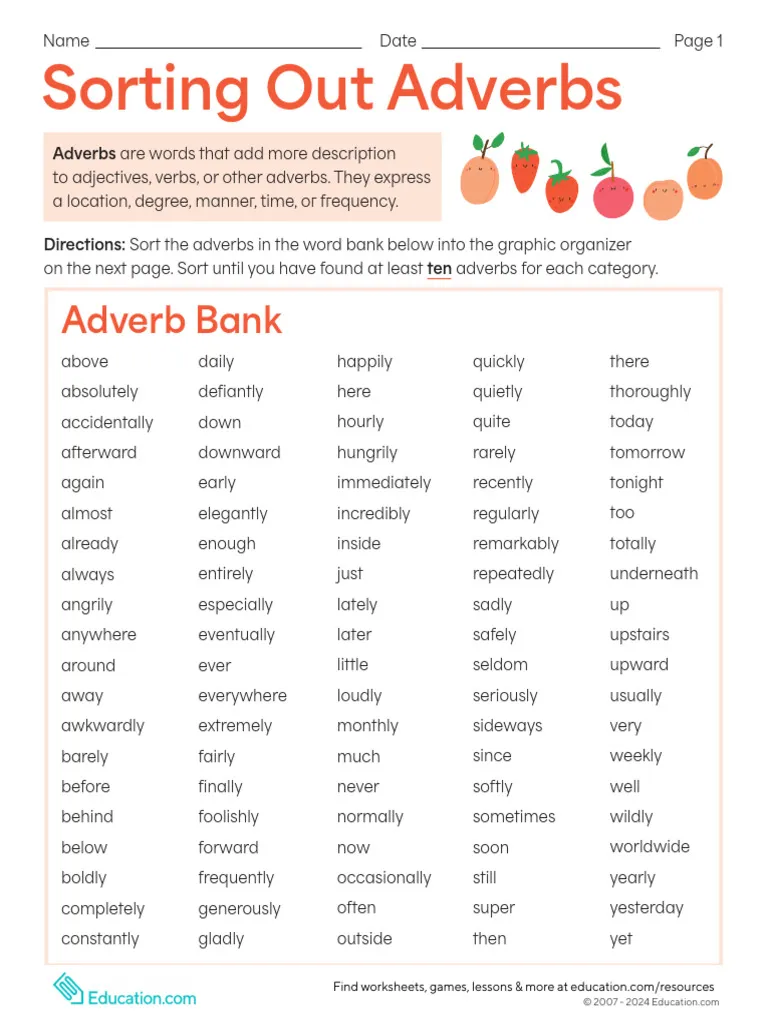
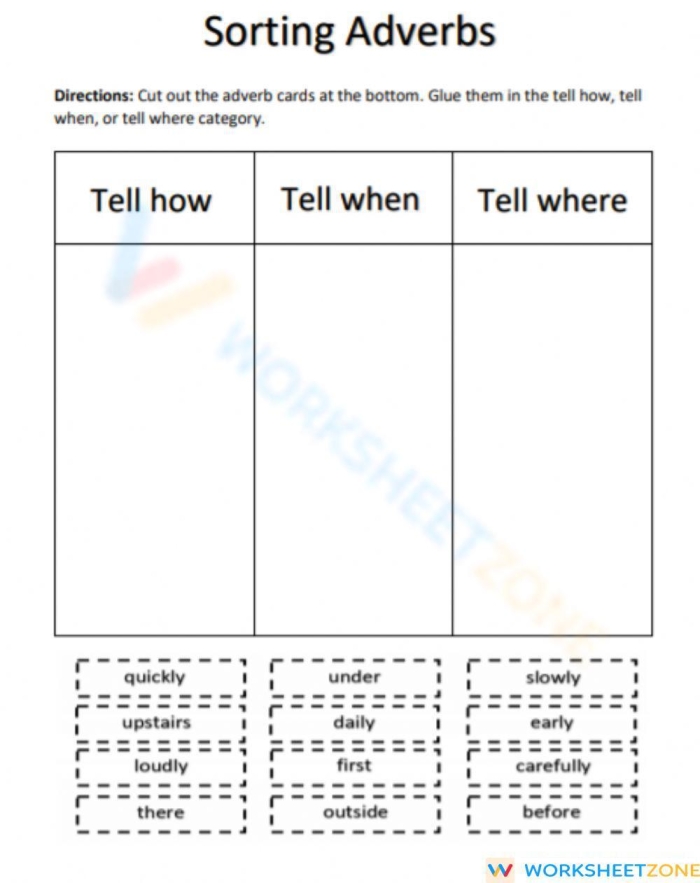
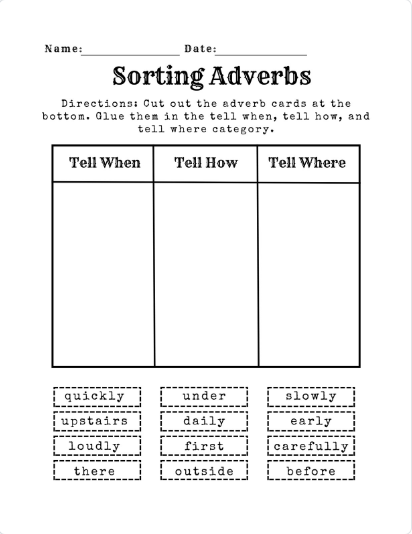
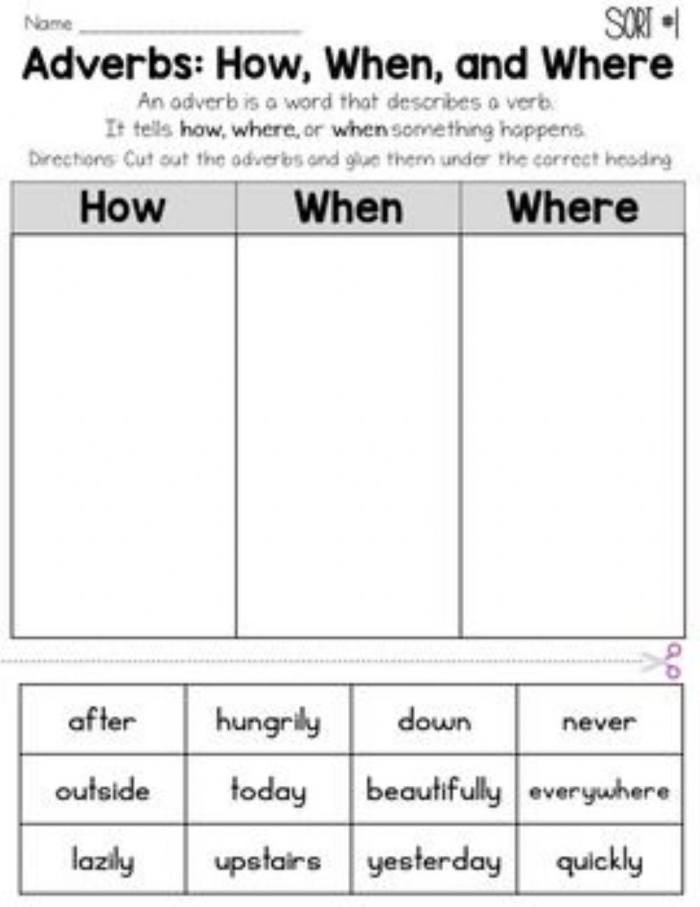
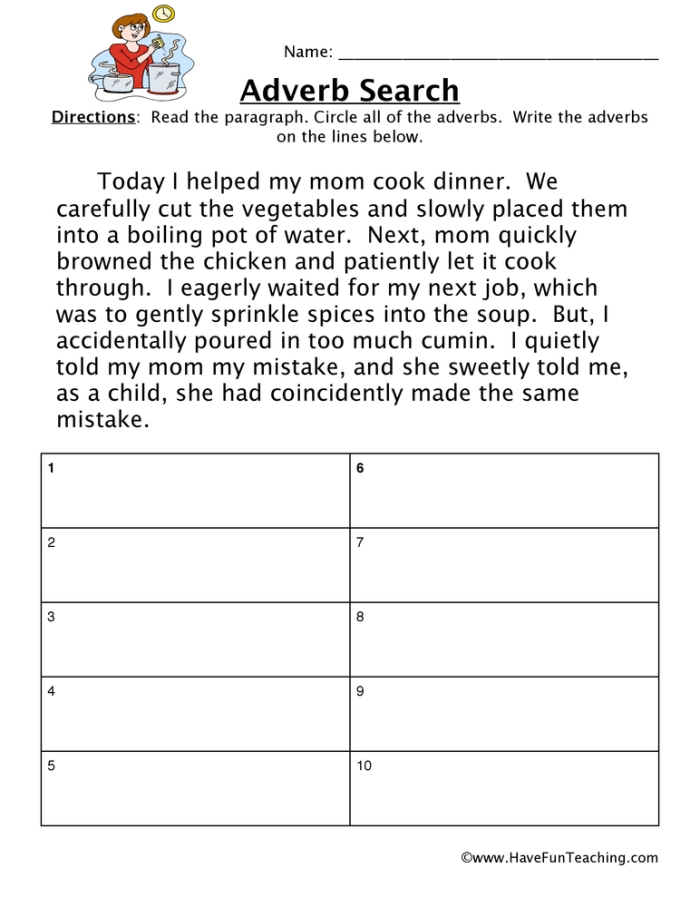
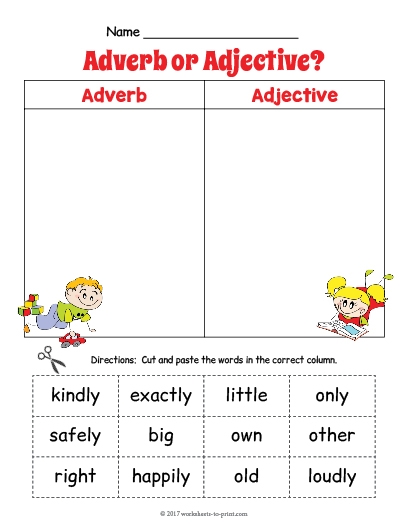
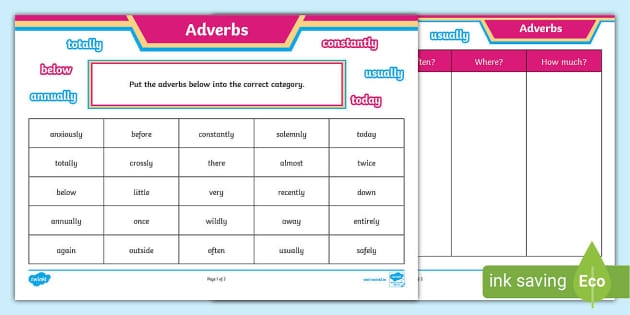
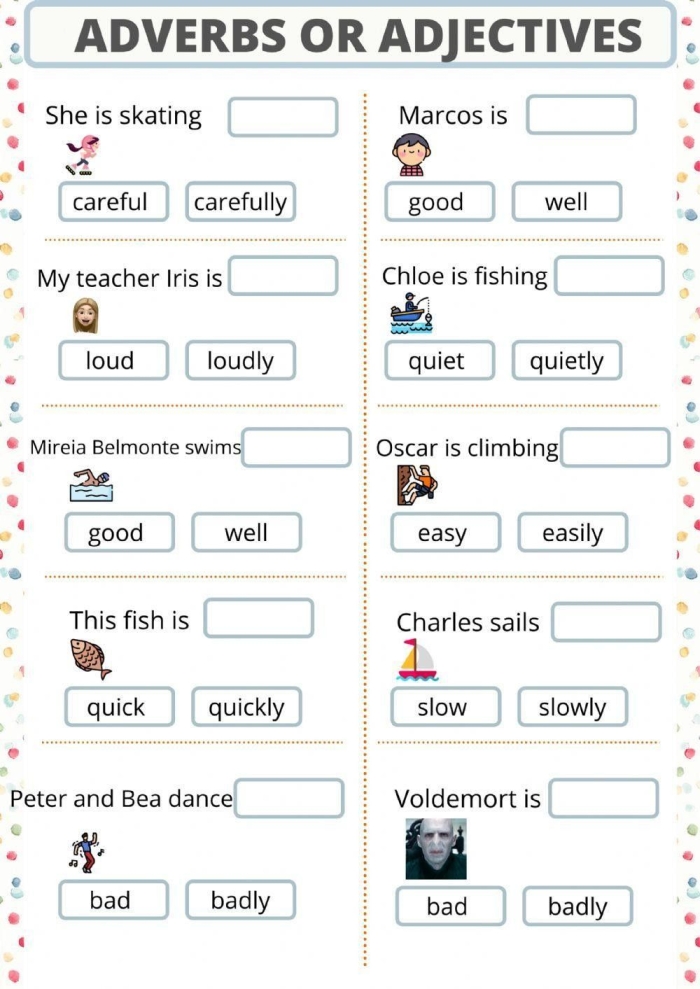
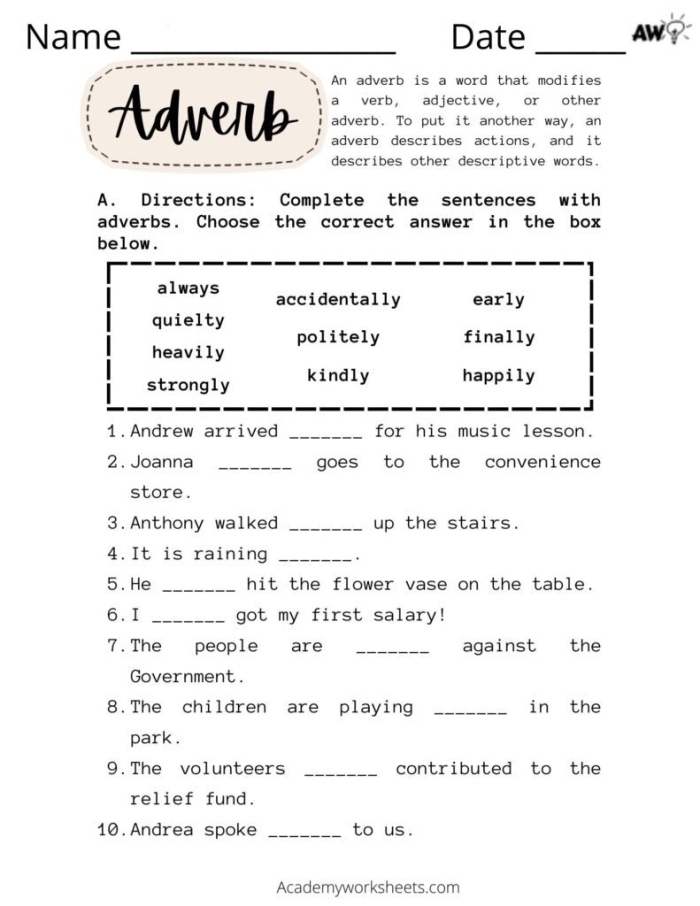
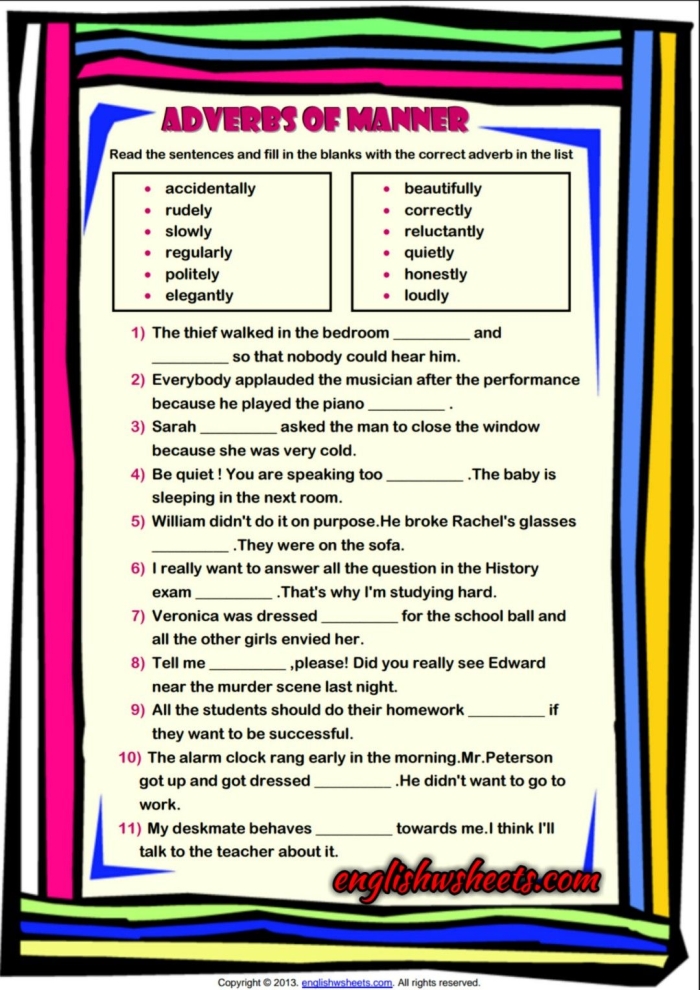
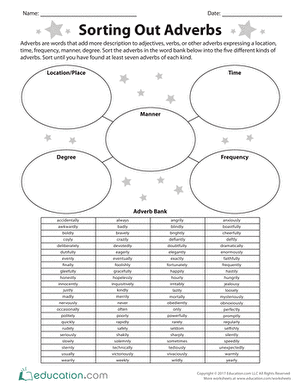
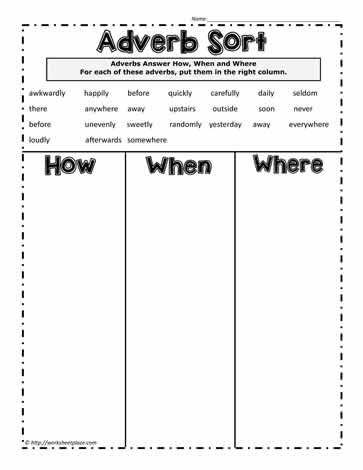
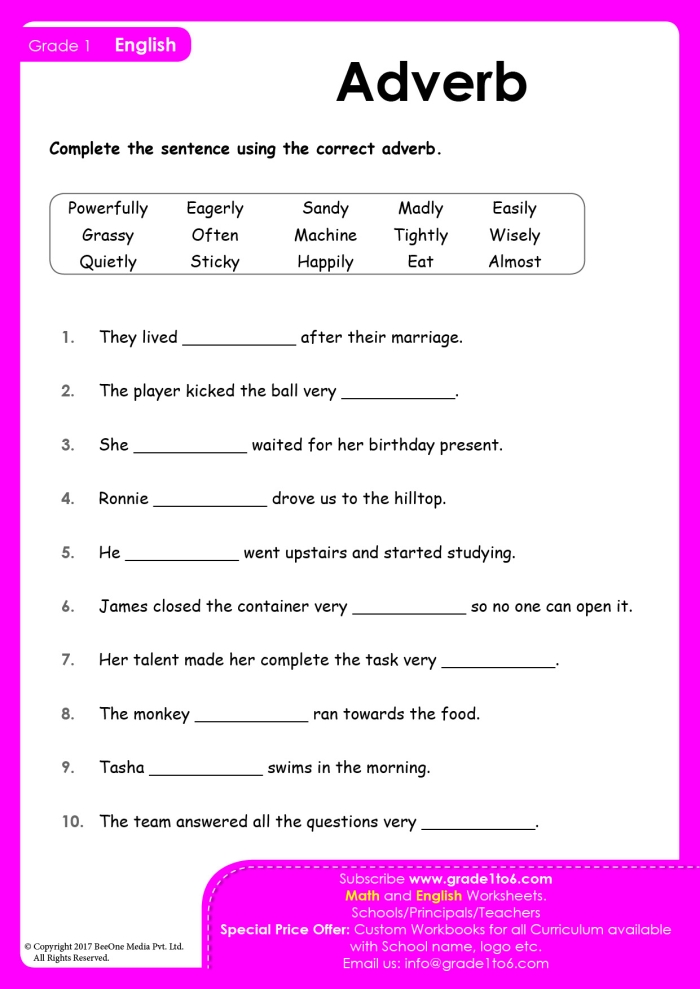
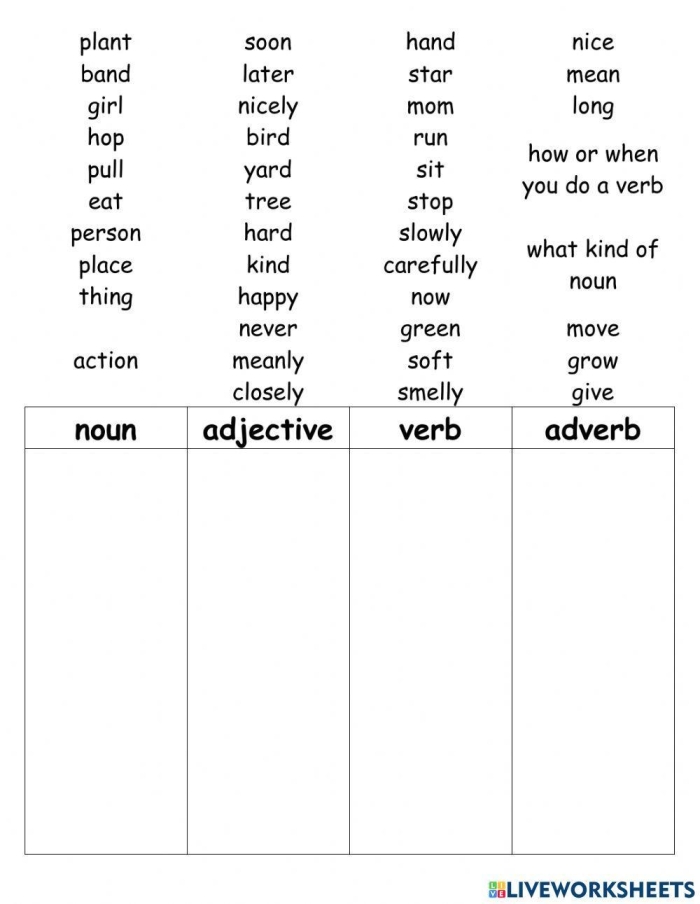
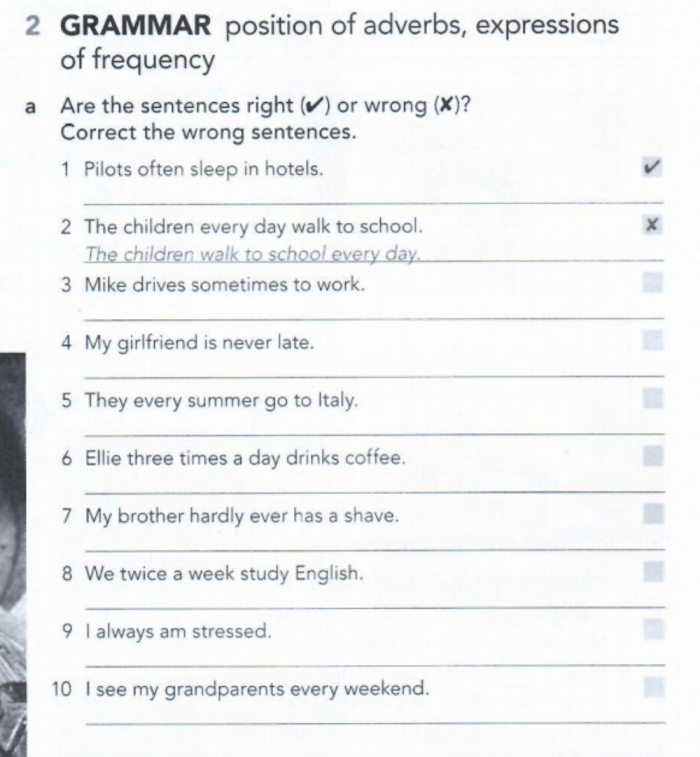
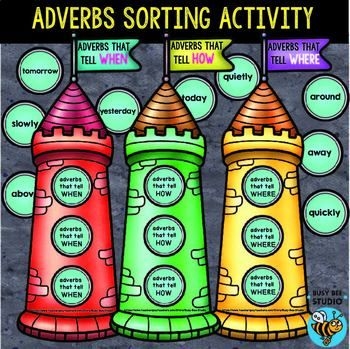
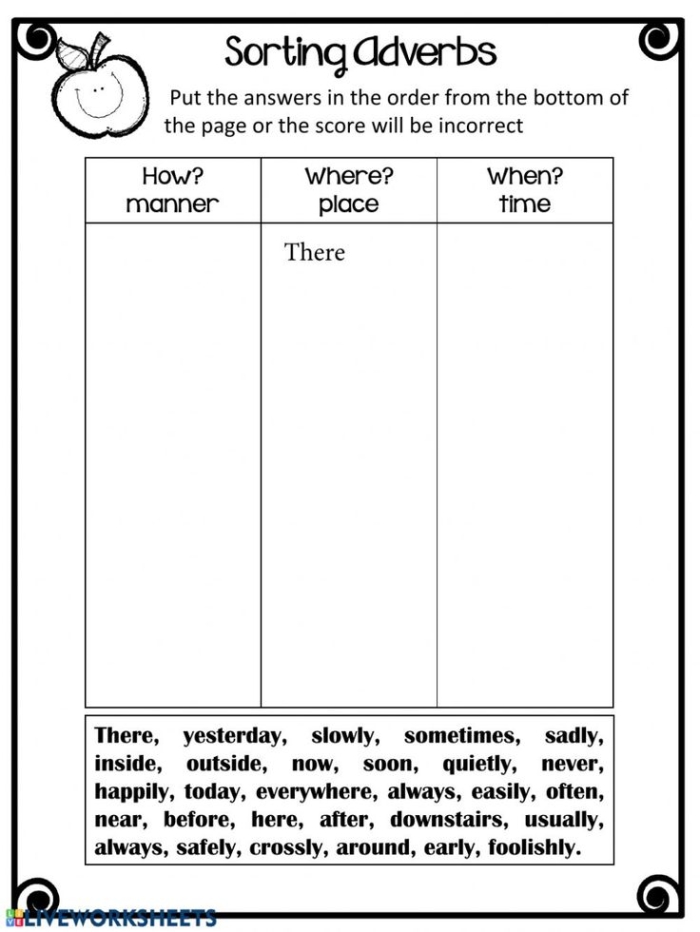
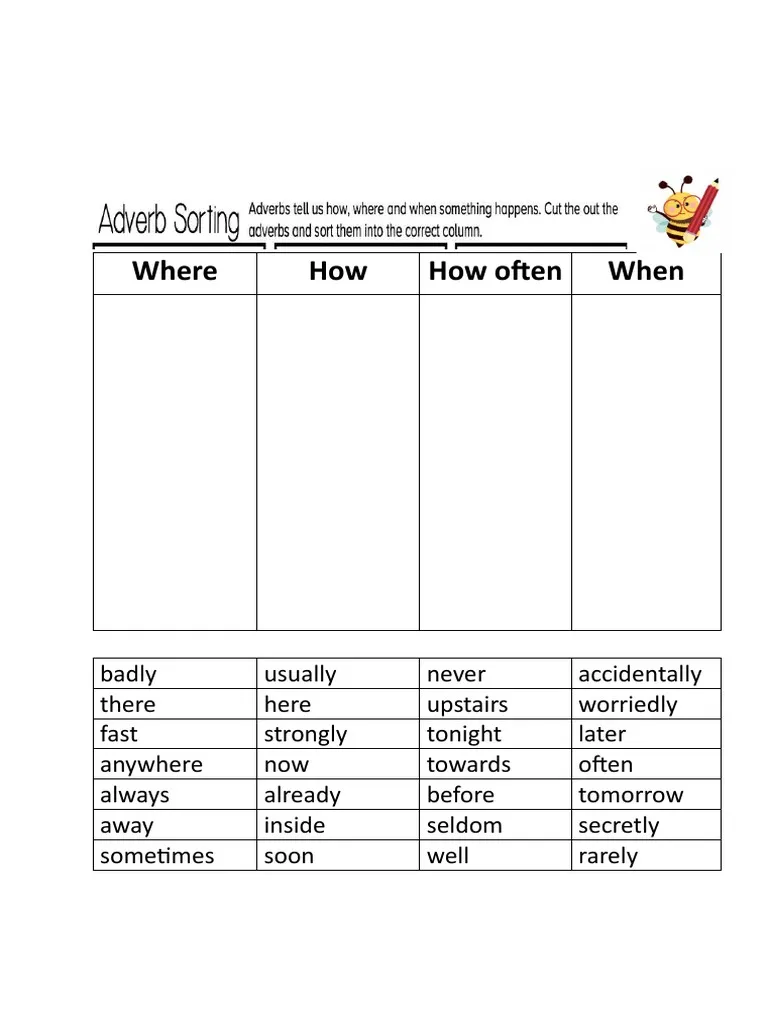
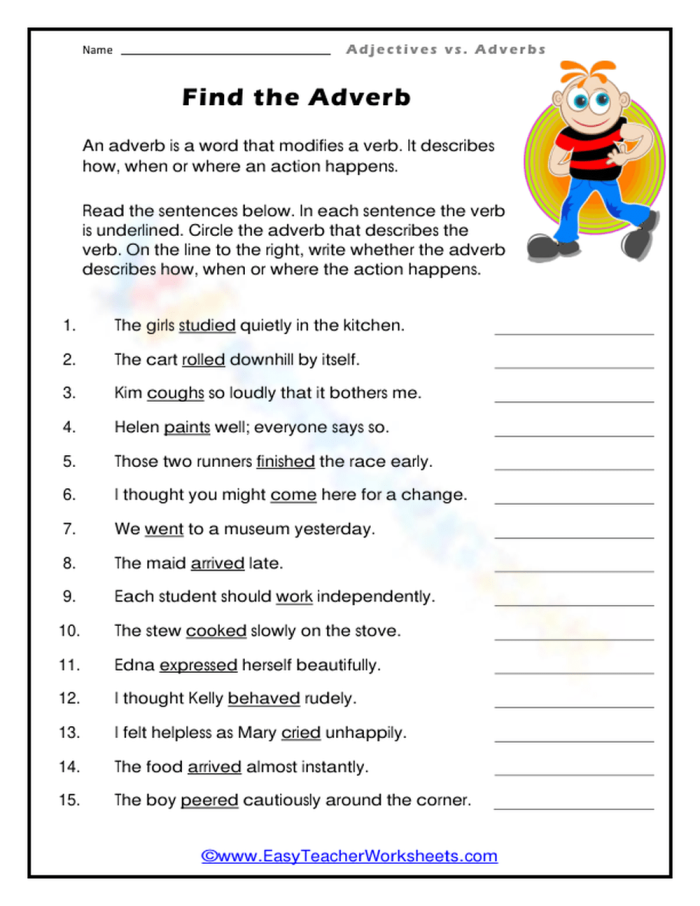
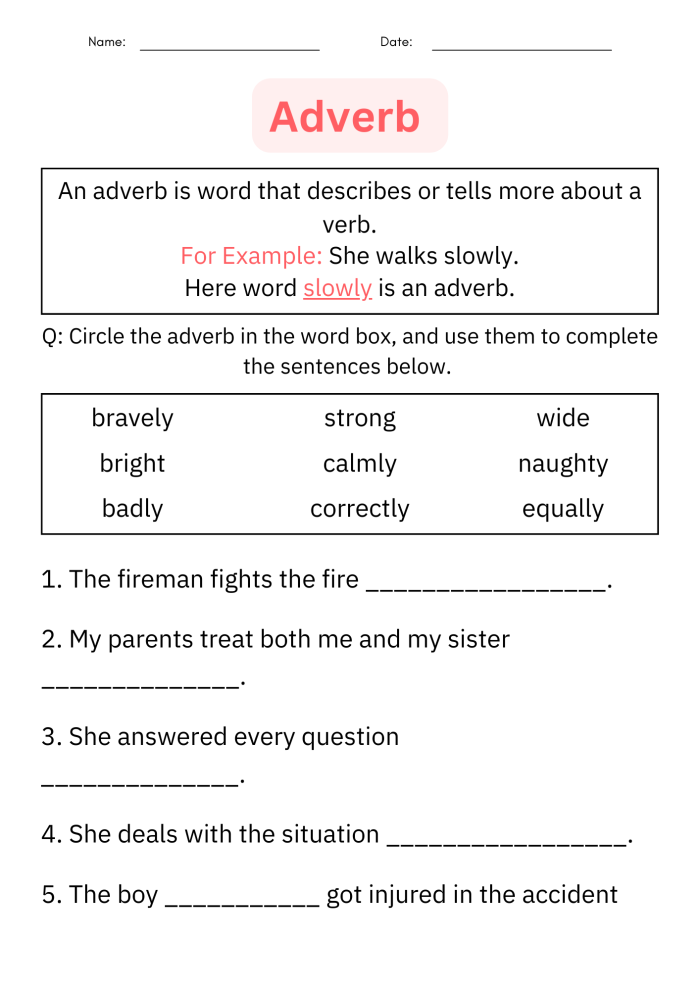
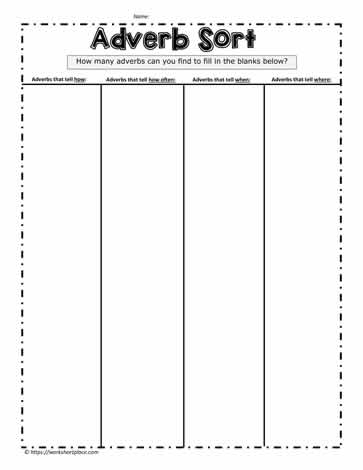
Sorting adverbs is a vital skill for second graders as they develop their grammar knowledge. By categorizing adverbs based on location, degree, manner, time, and frequency, students can gain a deeper understanding of how these words enhance their sentences. A hands-on grammar worksheet can provide an engaging way for young learners to practice this important concept.
Adverbs play a crucial role in language, offering details that clarify verbs, adjectives, or other adverbs. For instance, when we describe how an action is performed, we often turn to manner adverbs, like “quickly” or “carefully.” By using a worksheet that requires students to sort these adverbs, they can see patterns and improve their writing skills. Similarly, they can identify time adverbs such as “yesterday” or “soon,” which help indicate when an action occurs.
In a classroom setting, this activity can be particularly beneficial. Teachers can encourage students to work in pairs or small groups to discuss their choices. This collaboration not only reinforces their understanding but also allows them to learn from each other. Engaging in discussions about why certain adverbs fit into specific categories can promote critical thinking. For example, students might debate whether “always” belongs with frequency or time, leading to deeper comprehension.
Moreover, these worksheets can be easily integrated into geometry lessons. For example, students might write sentences about shapes using adverbs to describe their characteristics. Phrases like “the triangle stands tall” or “the square is perfectly aligned” can incorporate adverbs effectively while reinforcing geometry vocabulary.
To explore more educational resources, consider checking out other worksheets like those focusing on learning symmetry or capitalization rules. These tools not only support grammar skills but also enhance overall understanding of geometry concepts in a fun and interactive way.
Try These Printable Worksheets