When you put on a blue shirt, you probably don’t think about the physics happening right at the surface of the fabric. The shirt appears blue because of how light bounces off it and reaches your eyes, not because the shirt actually contains the color blue itself. Understanding this process requires looking at how light interacts with objects, a key concept in third grade physical science.
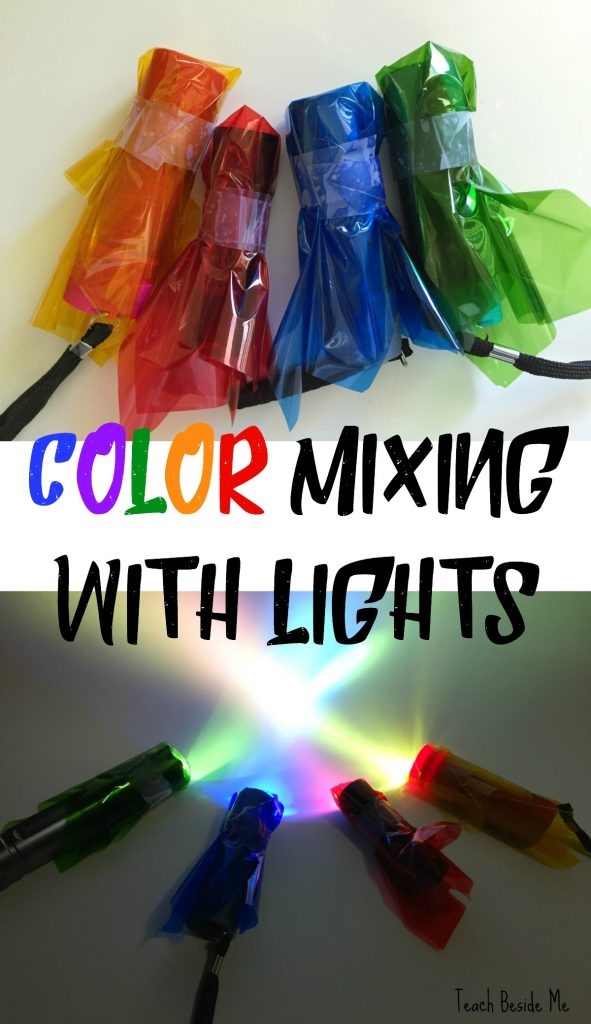
Light travels from the sun or a lamp in waves, and each color of light has a different wavelength. When white light hits your blue shirt, something interesting happens: the fabric absorbs most wavelengths of light but reflects the blue wavelengths back toward your eyes. The dye in the fabric is specifically designed to absorb red, yellow, green, and other colors while letting blue light bounce away. This reflected blue light is what your brain interprets as the shirt’s color.
The shirt isn’t actually blue in a dark room with no light. Without light waves to reflect, there’s no color perception at all. This fundamental relationship between light and color forms the foundation of how we see the world around us. Learning about the direction of light helps students understand why objects look different under various lighting conditions.
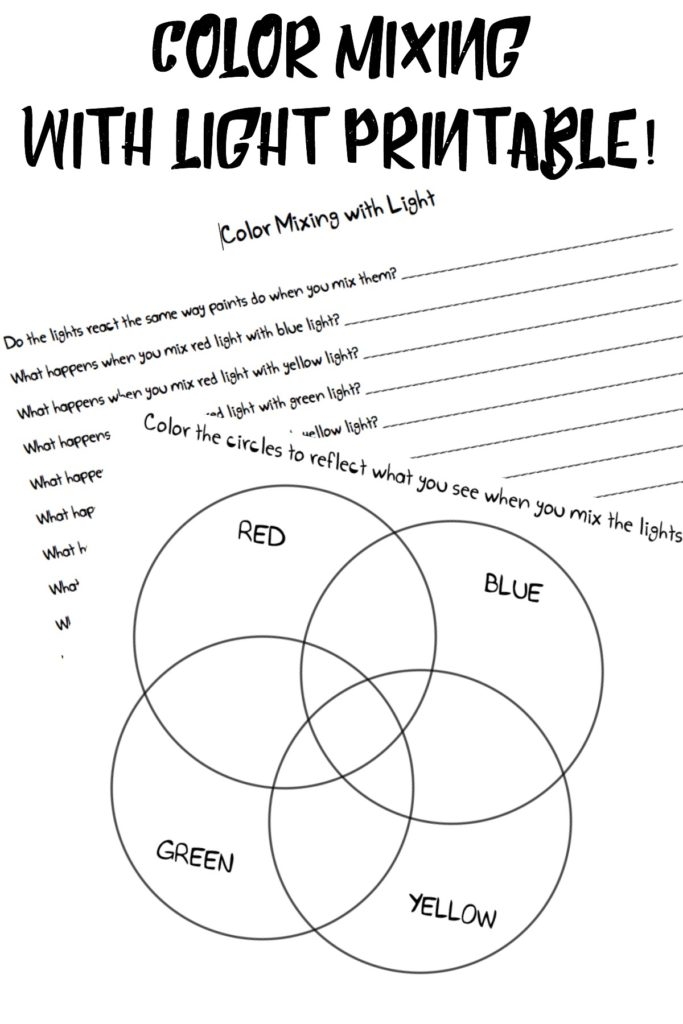
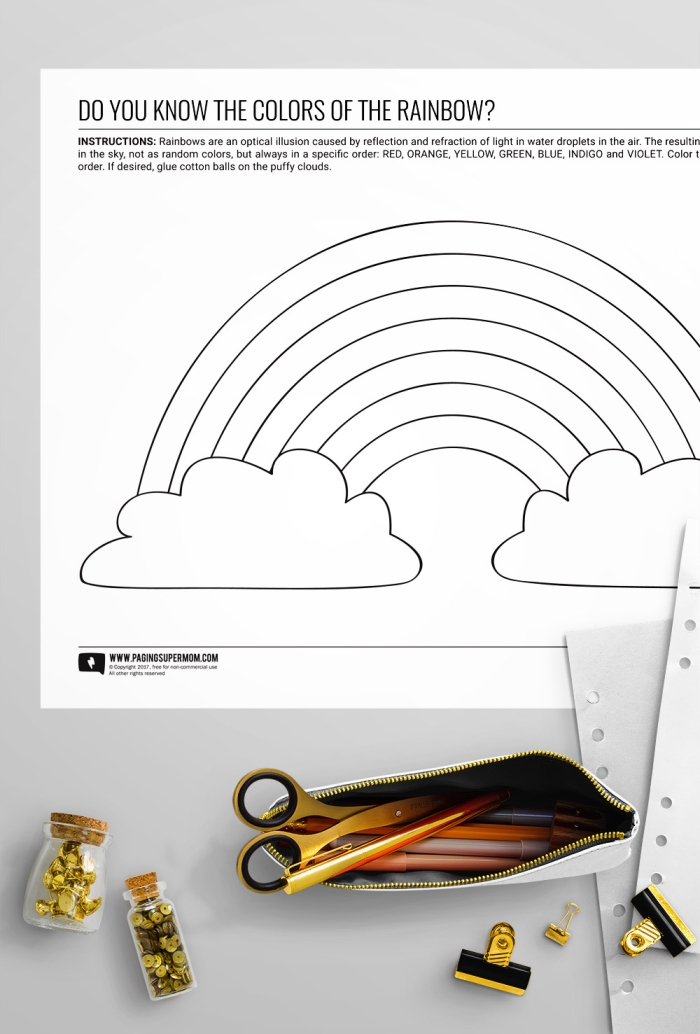
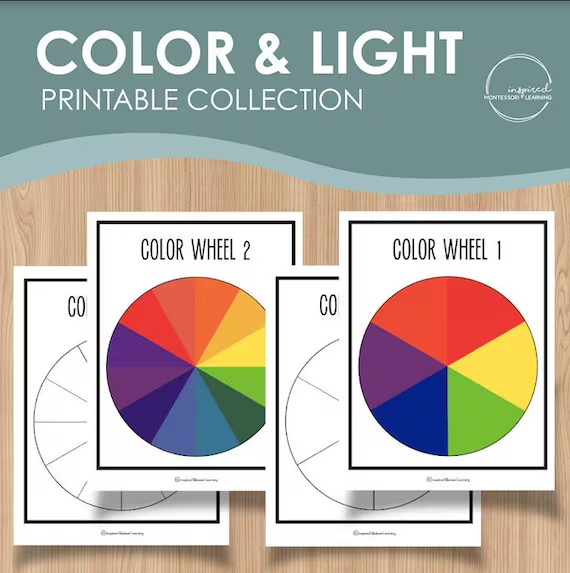
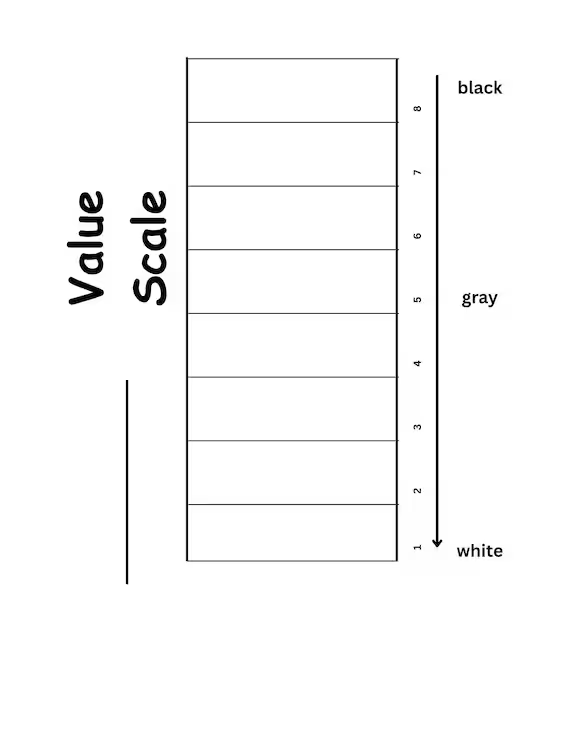
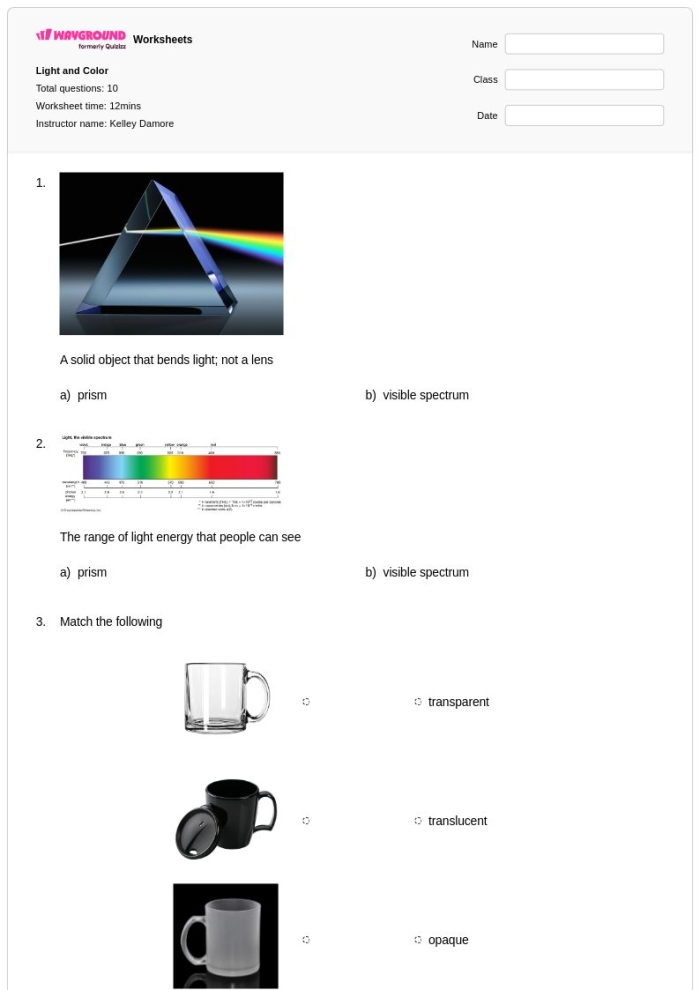
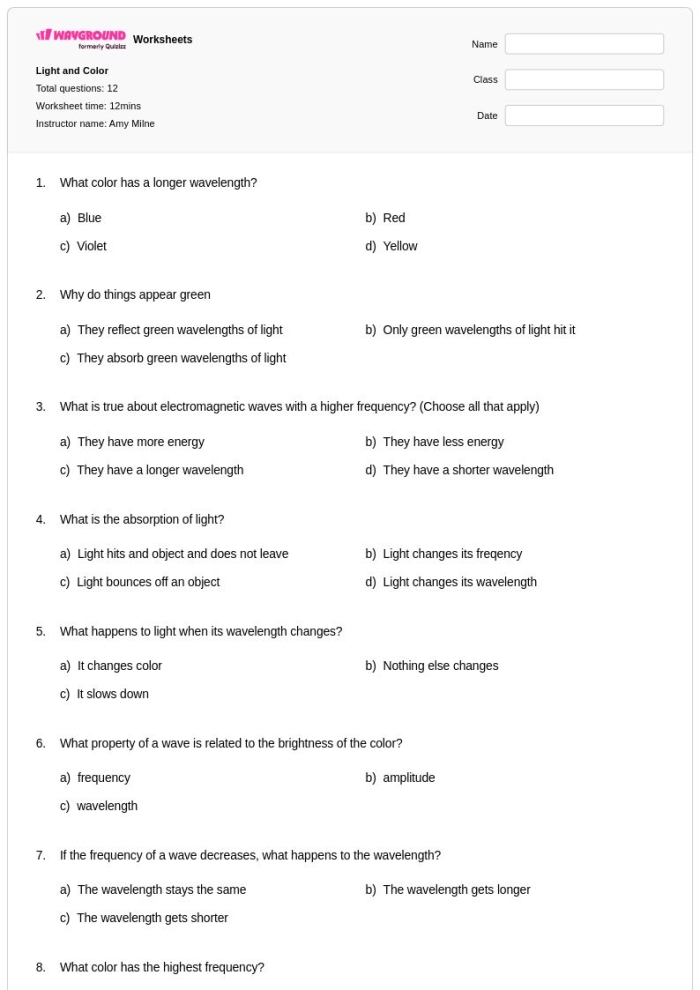
Third graders exploring physical science benefit from hands-on activities that reveal these principles. Worksheets examining how colors relate to each other and studying complementary colors provide practical ways to see light and color in action. These activities transform an abstract concept into something students can observe and understand through direct experience with the world.
Use These Worksheets Today