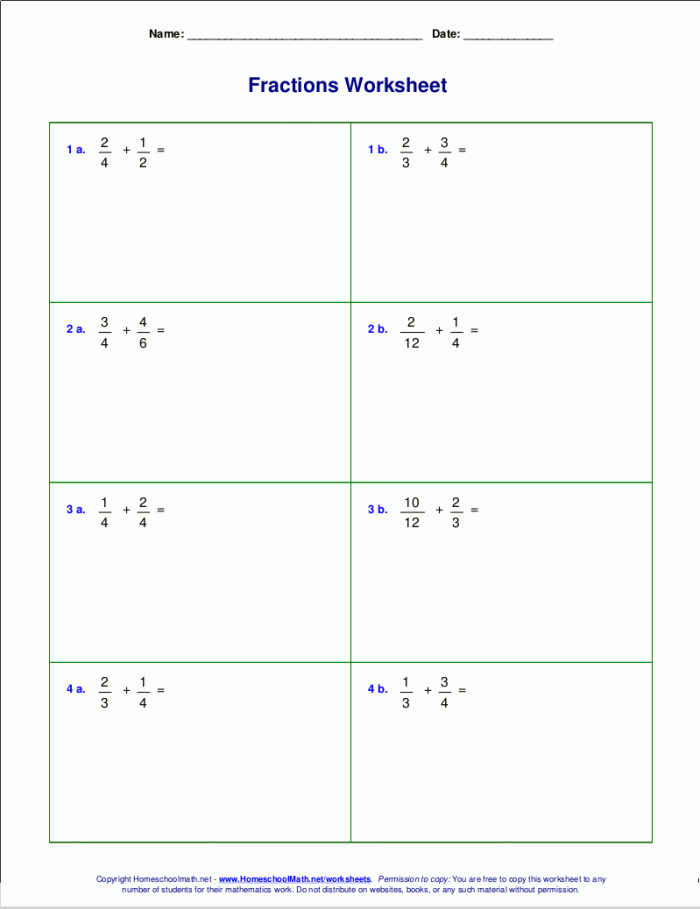
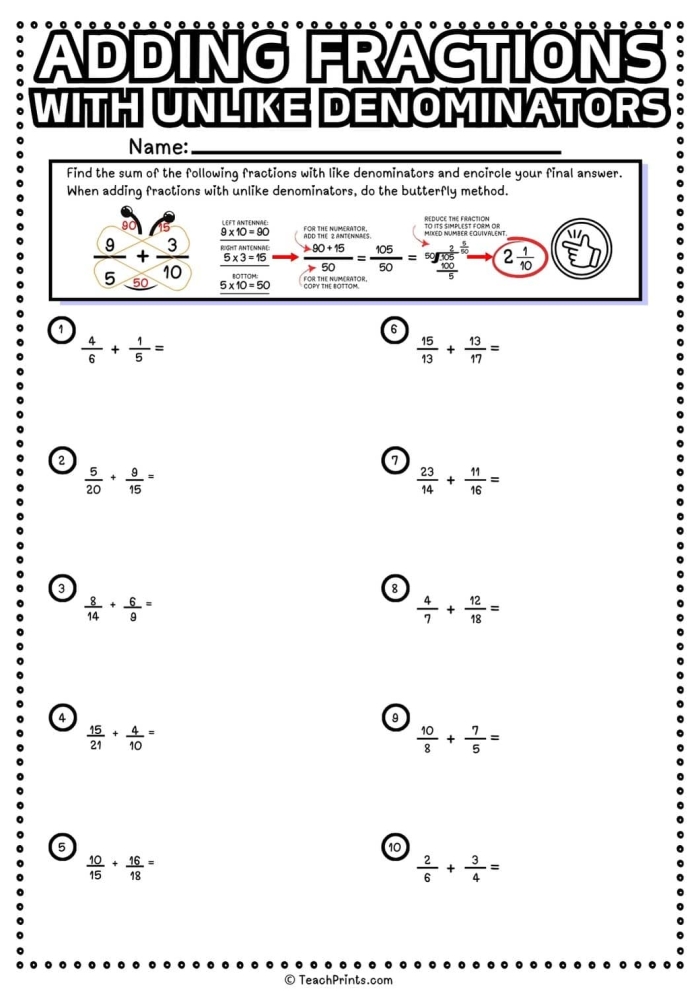
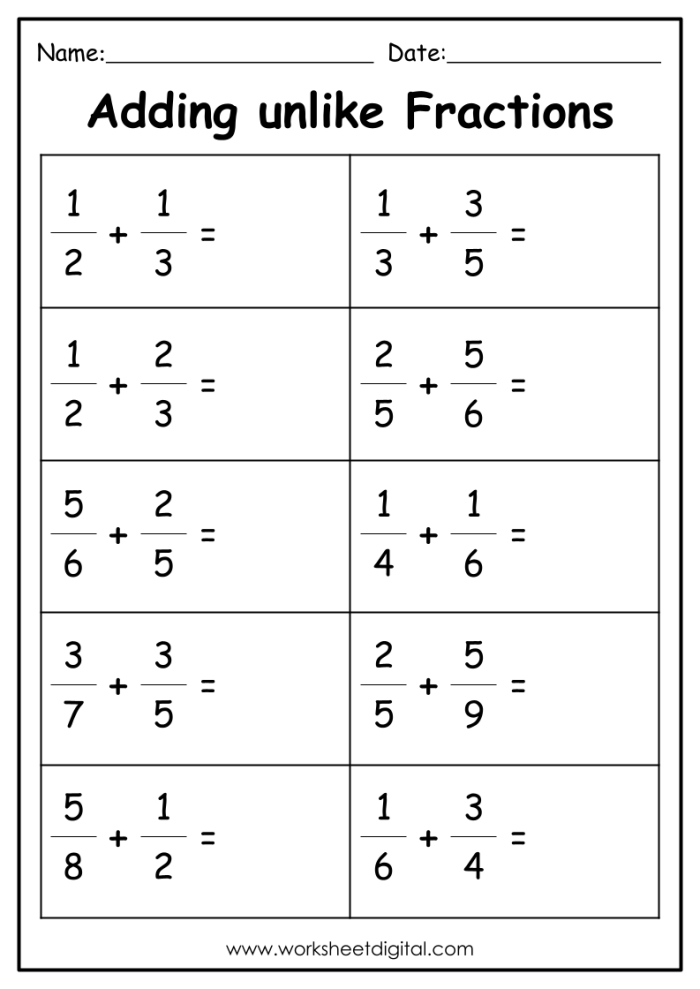
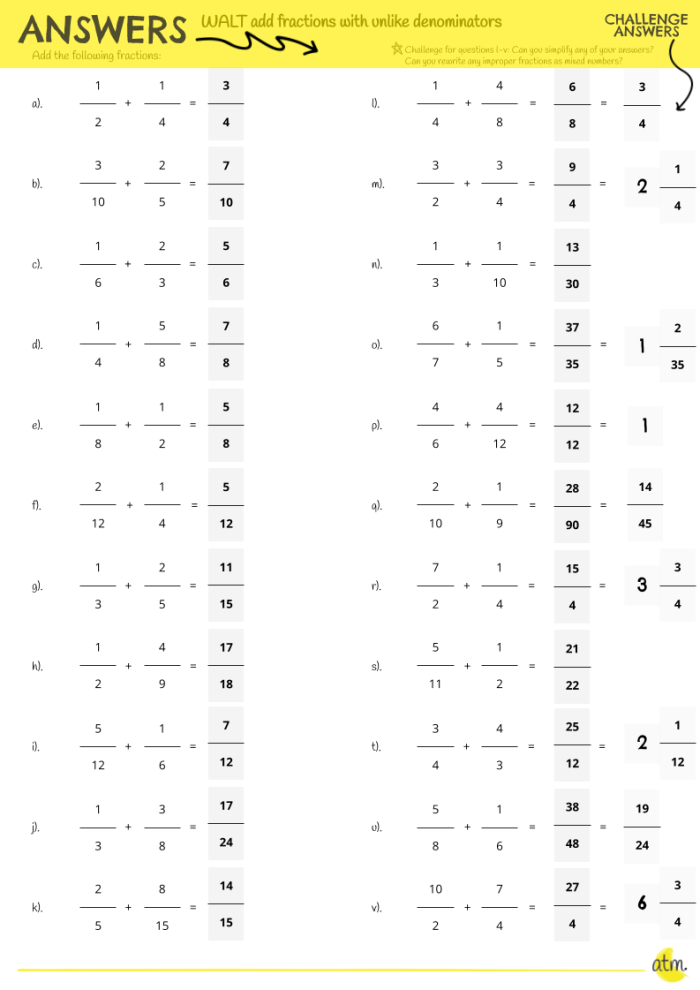
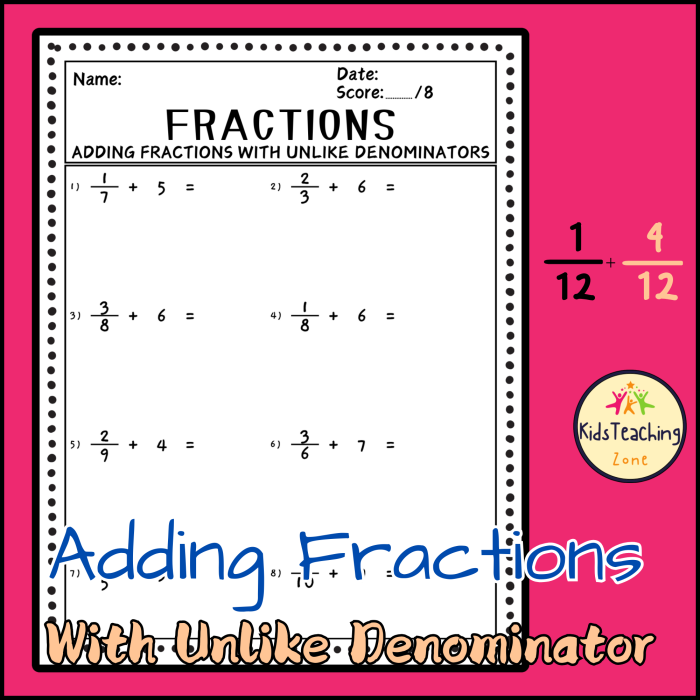
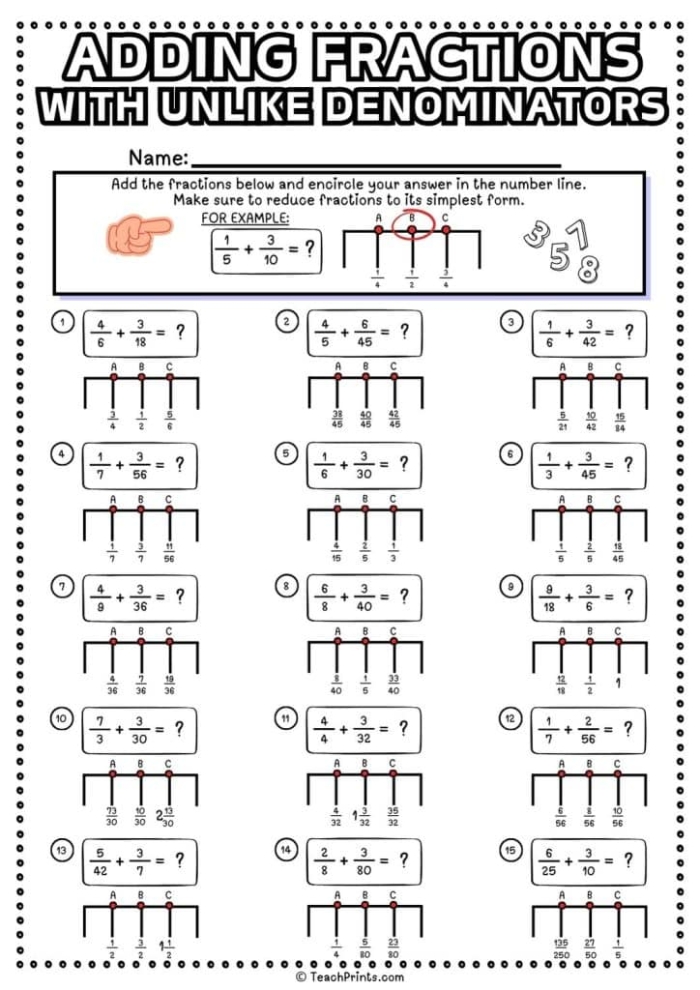
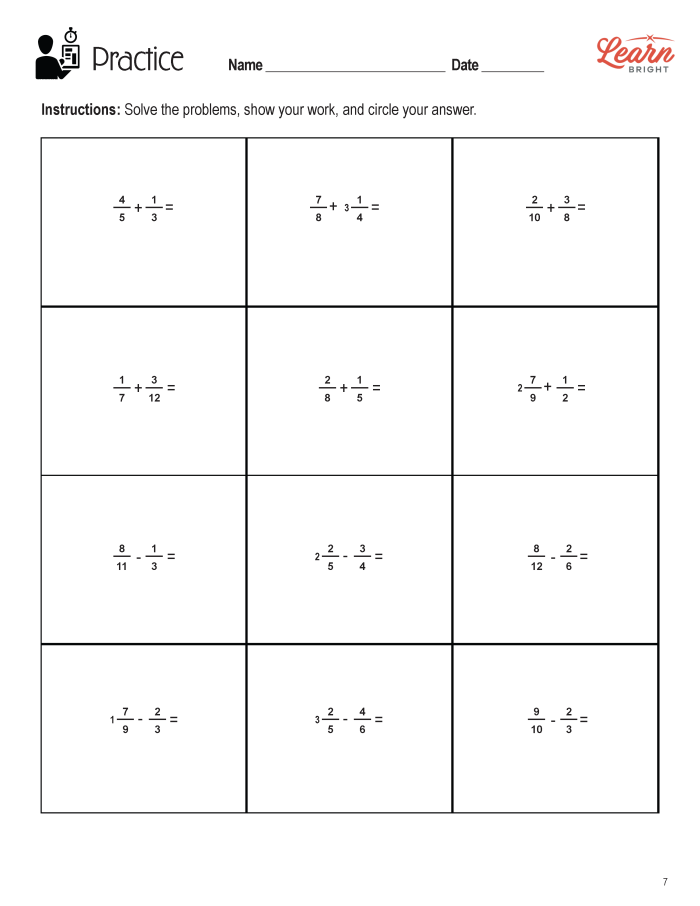
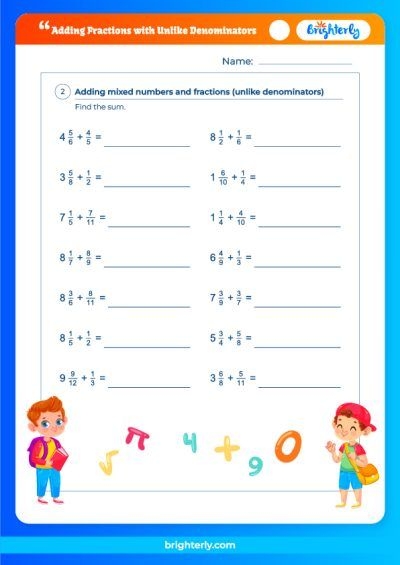
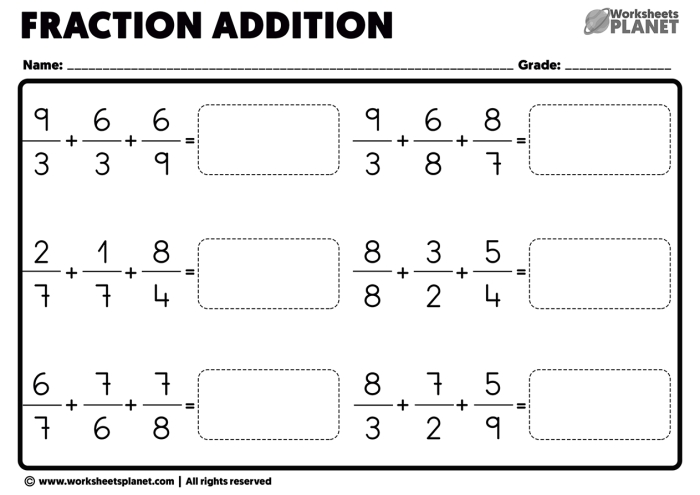
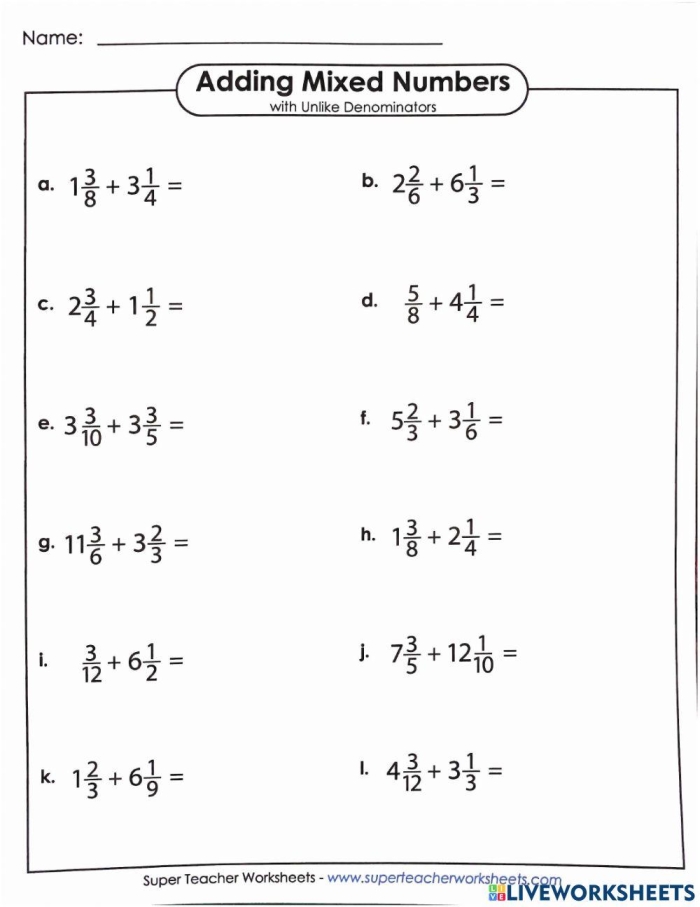
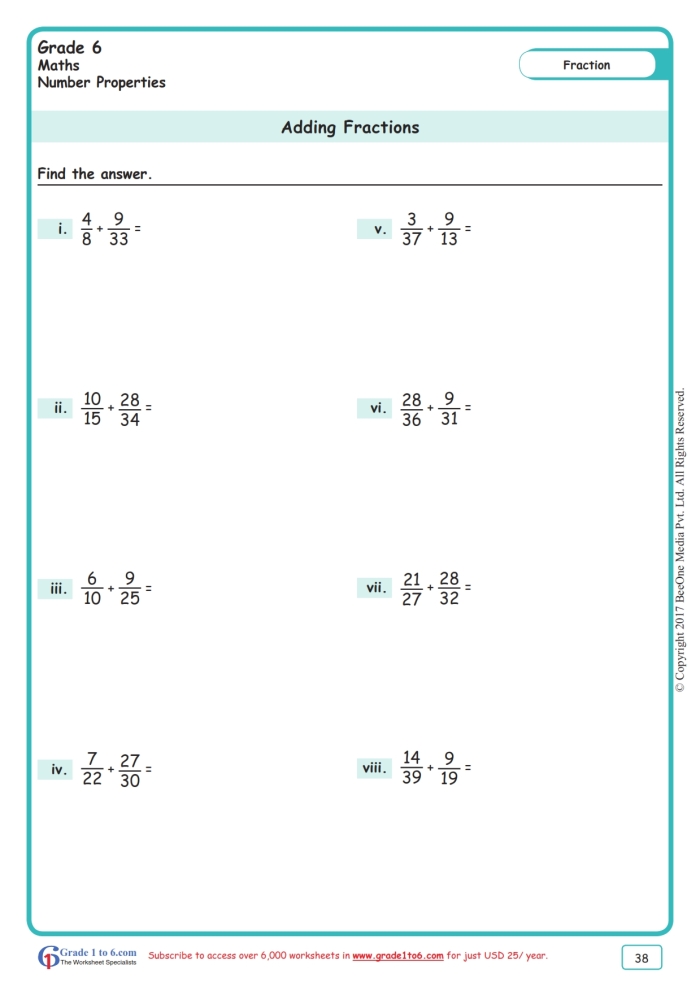
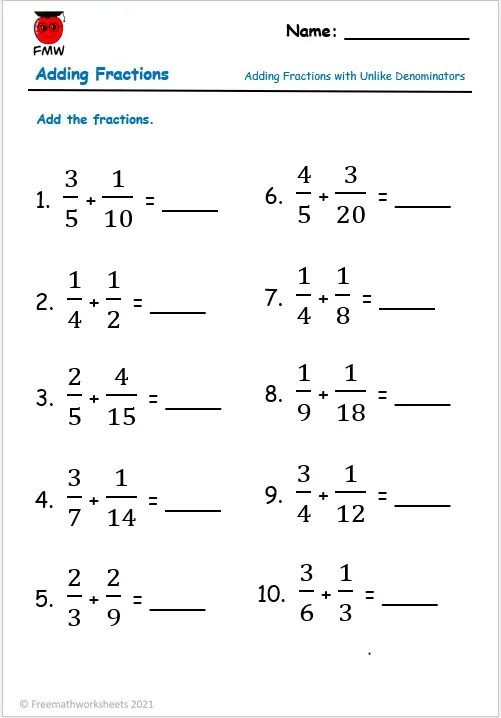
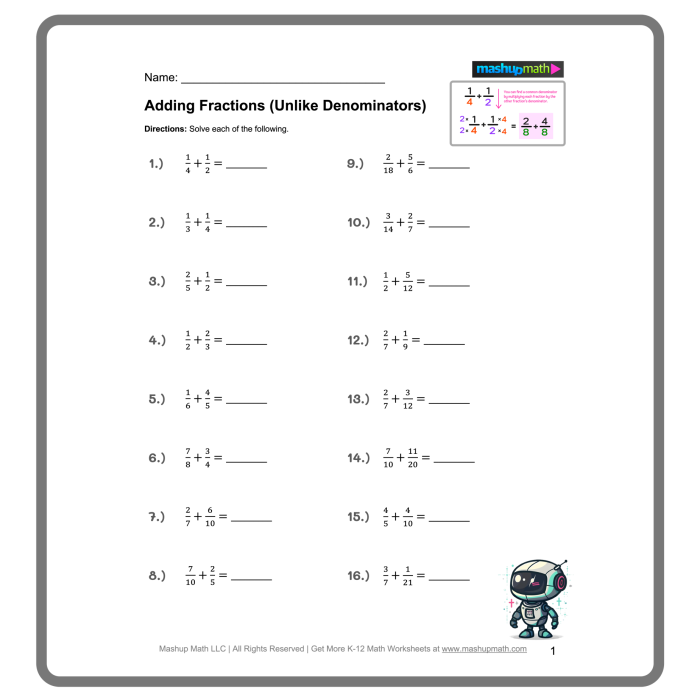
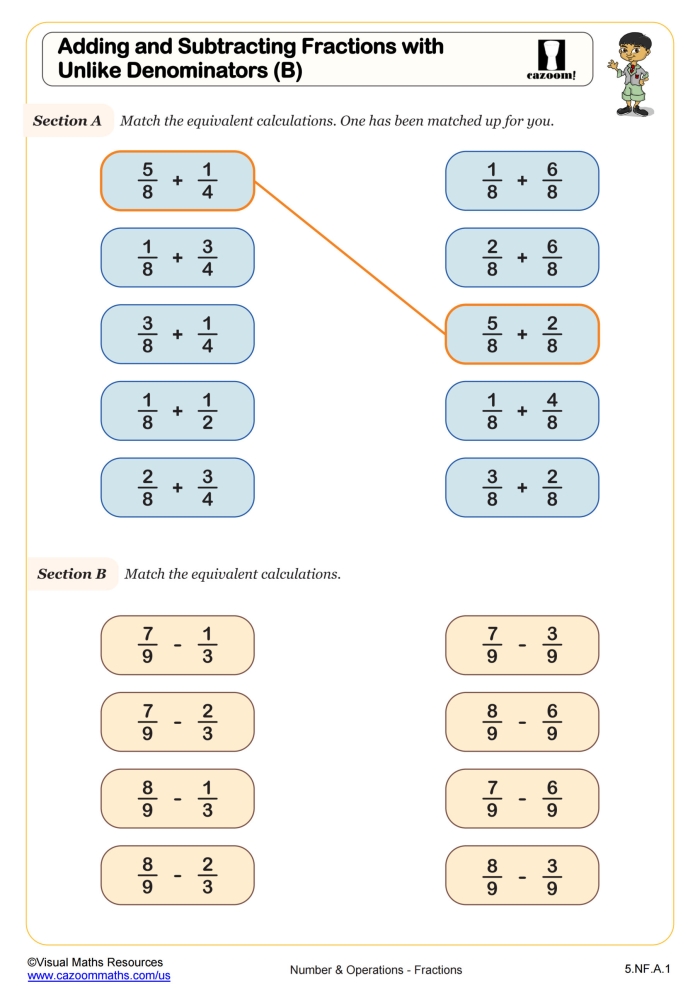
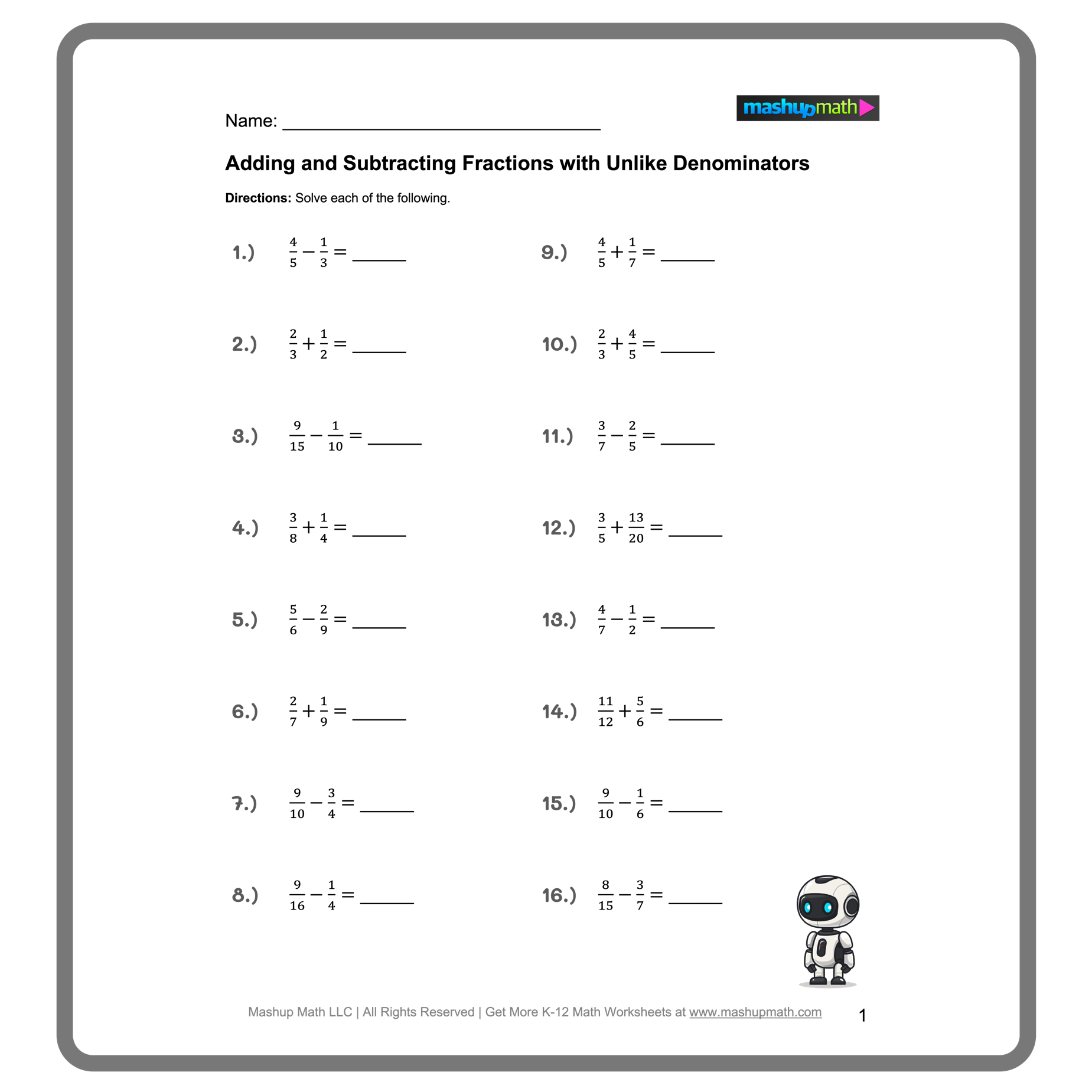
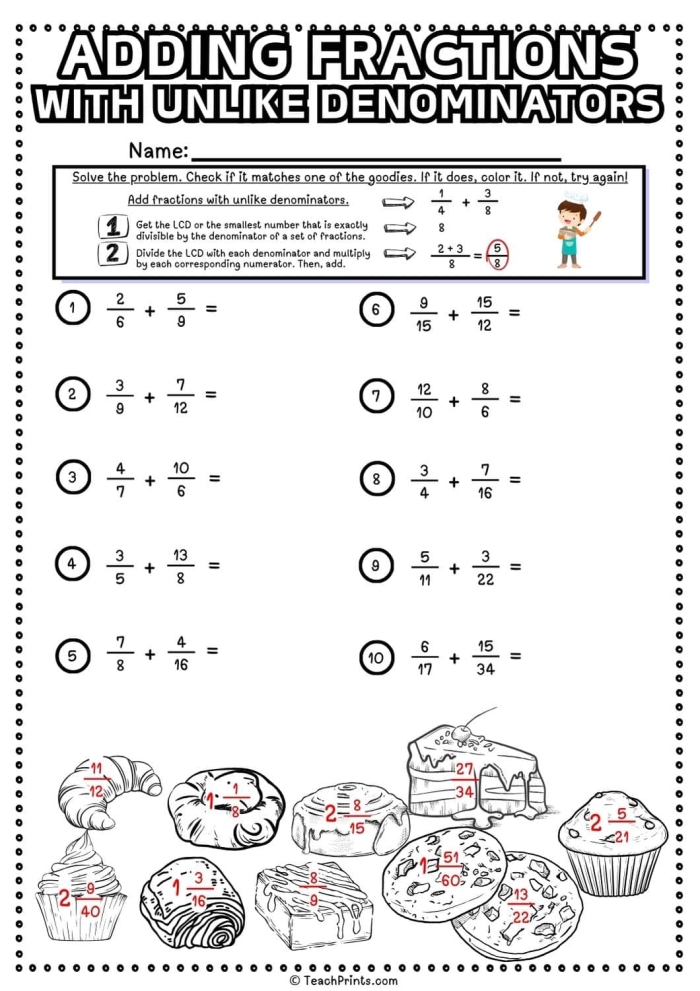
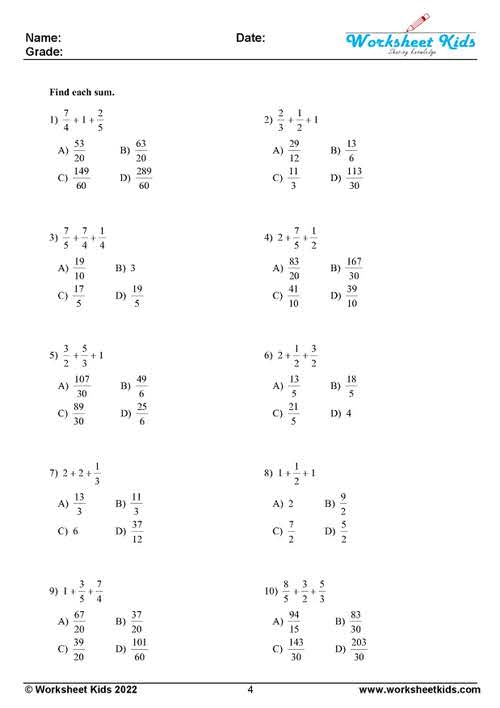
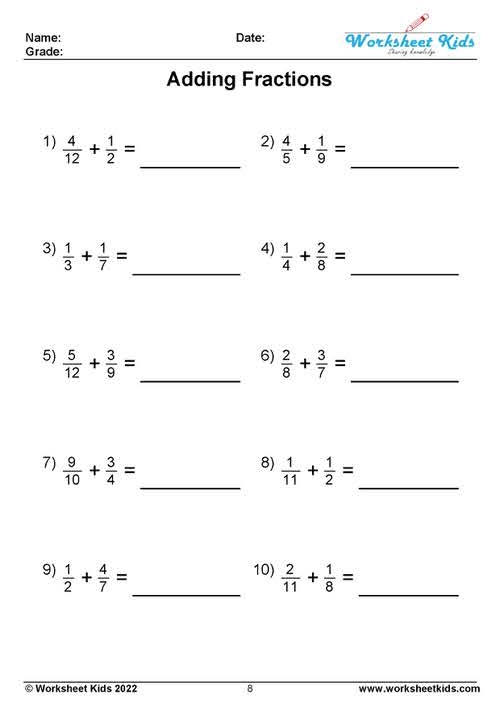
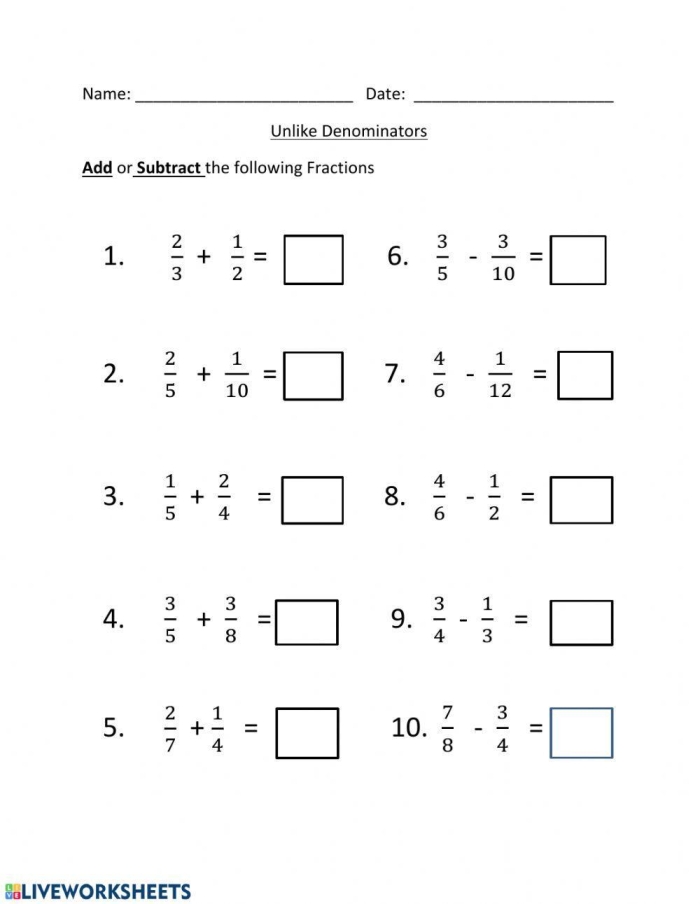
Adding fractions with unlike denominators trips up most fifth grade students the first time they encounter it. The challenge isn’t really about fractions themselves, but about understanding why you can’t simply add the numerators and denominators together. A clear, straightforward worksheet gives learners the repetition they need to move past confusion and build genuine confidence with this skill.
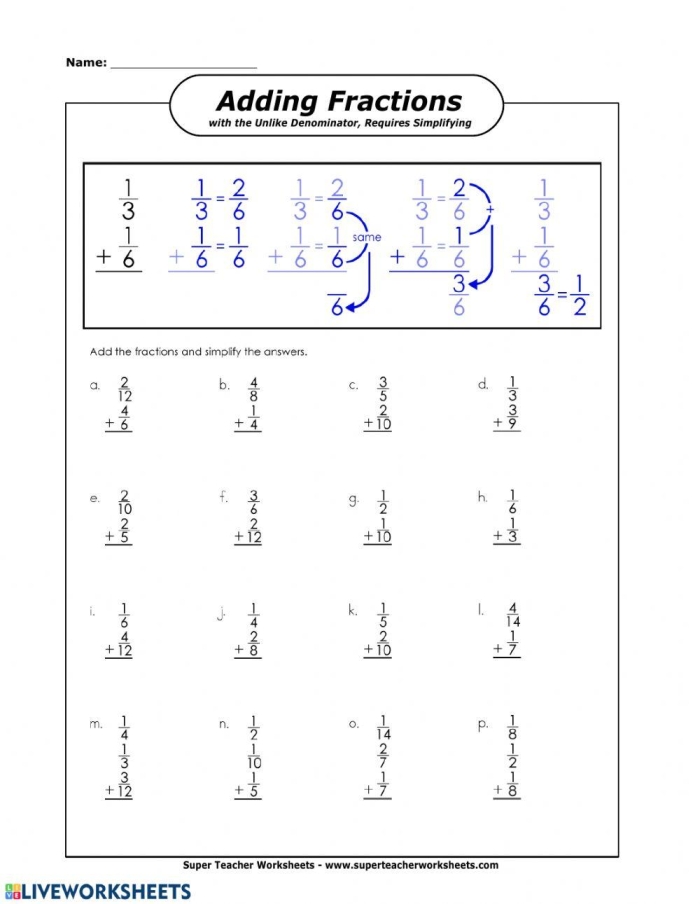
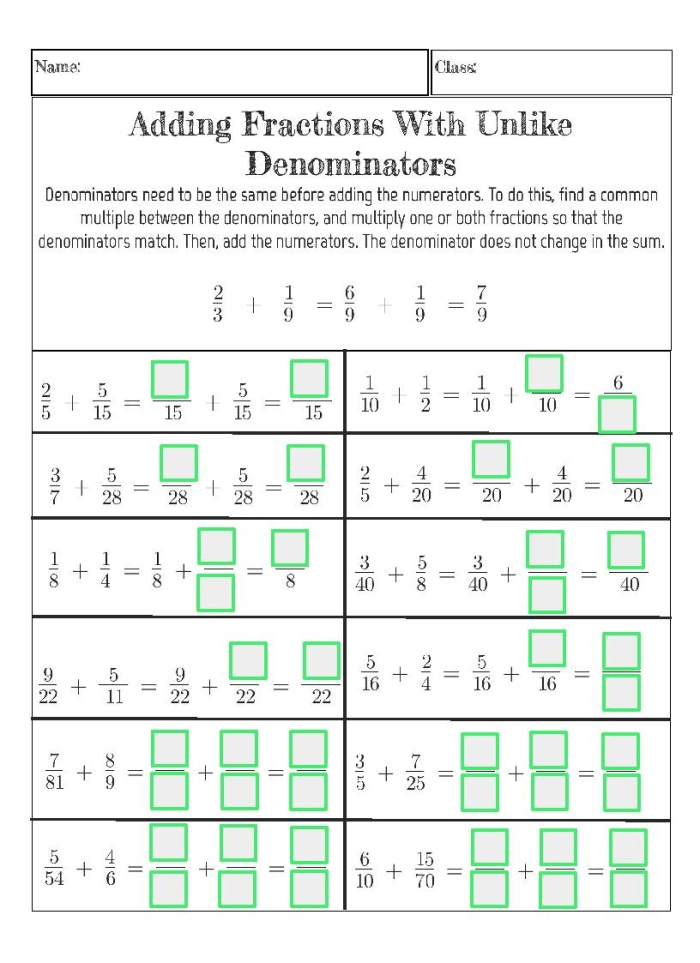
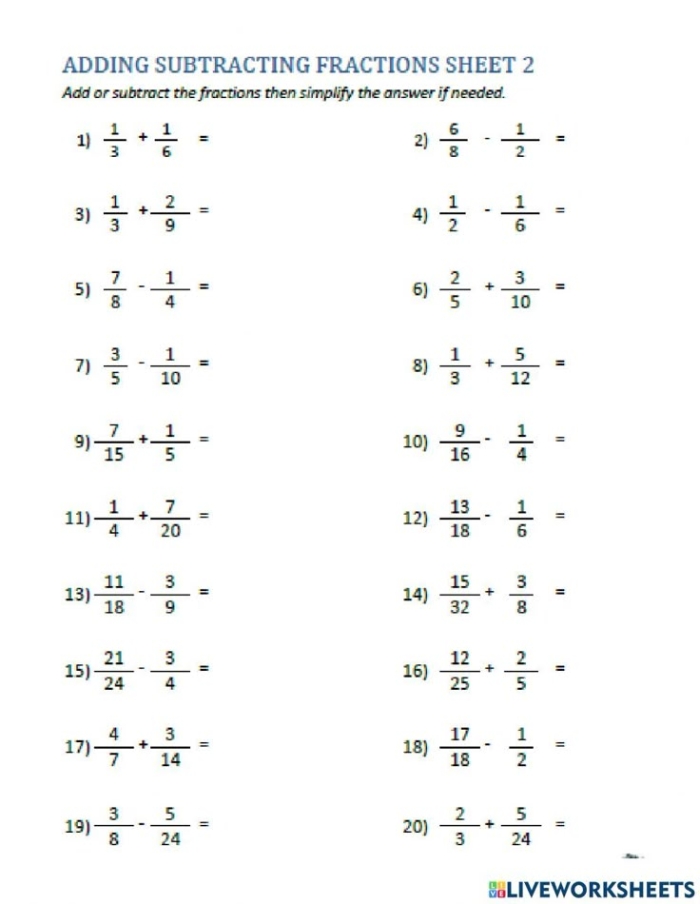
When students work through practice problems on paper, they develop muscle memory for the process. They learn to identify when denominators don’t match, find a common denominator, convert each fraction, and then add. This sequence becomes automatic only through doing it multiple times. A well-designed worksheet walks through examples step by step before asking students to solve problems independently.
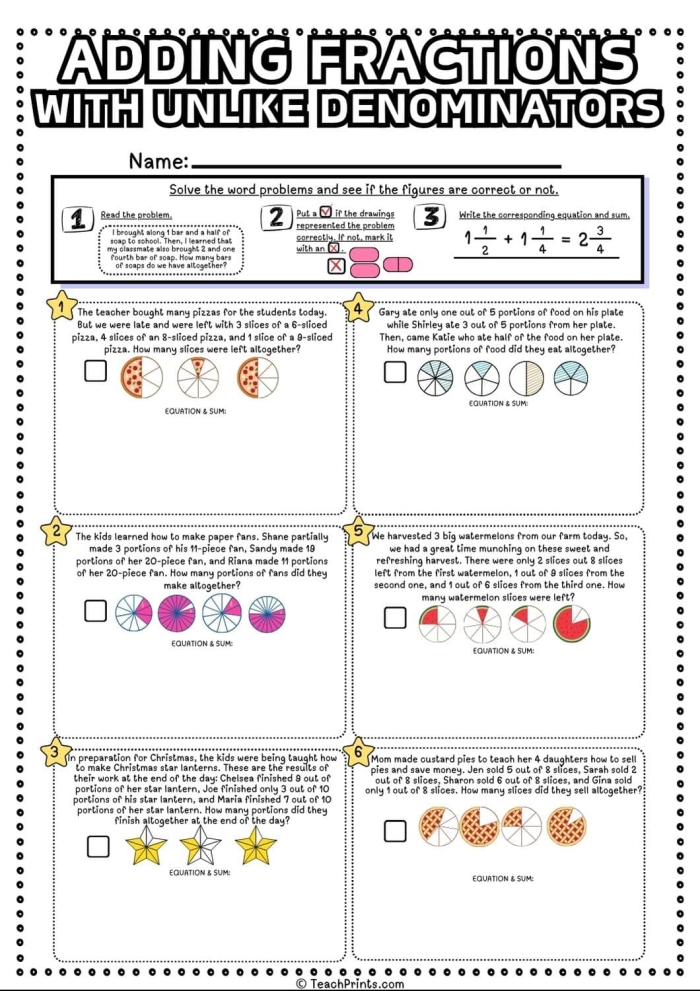
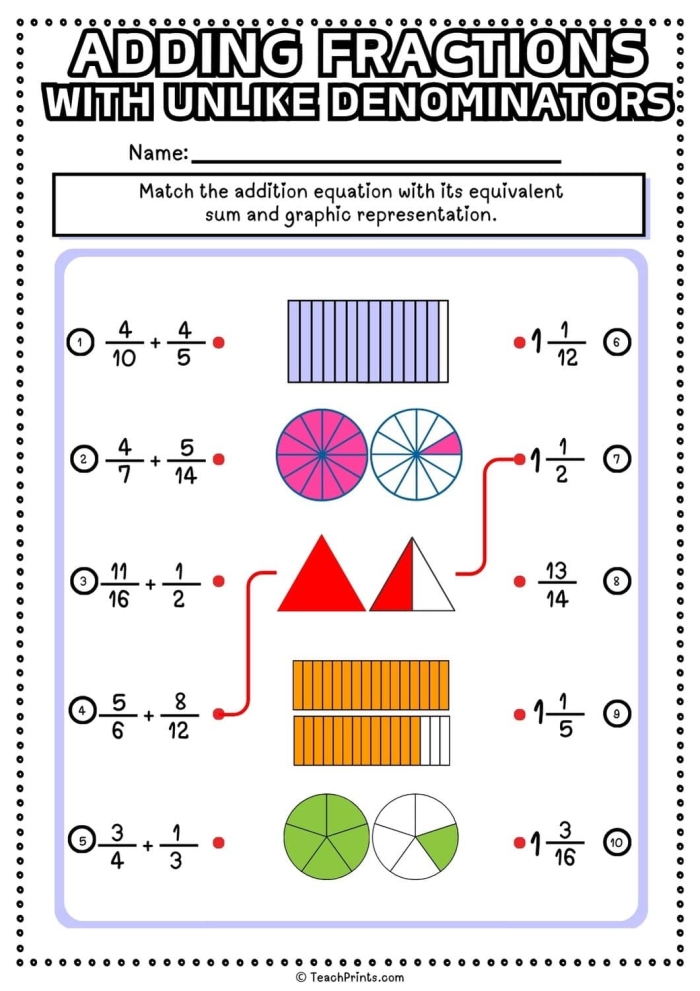
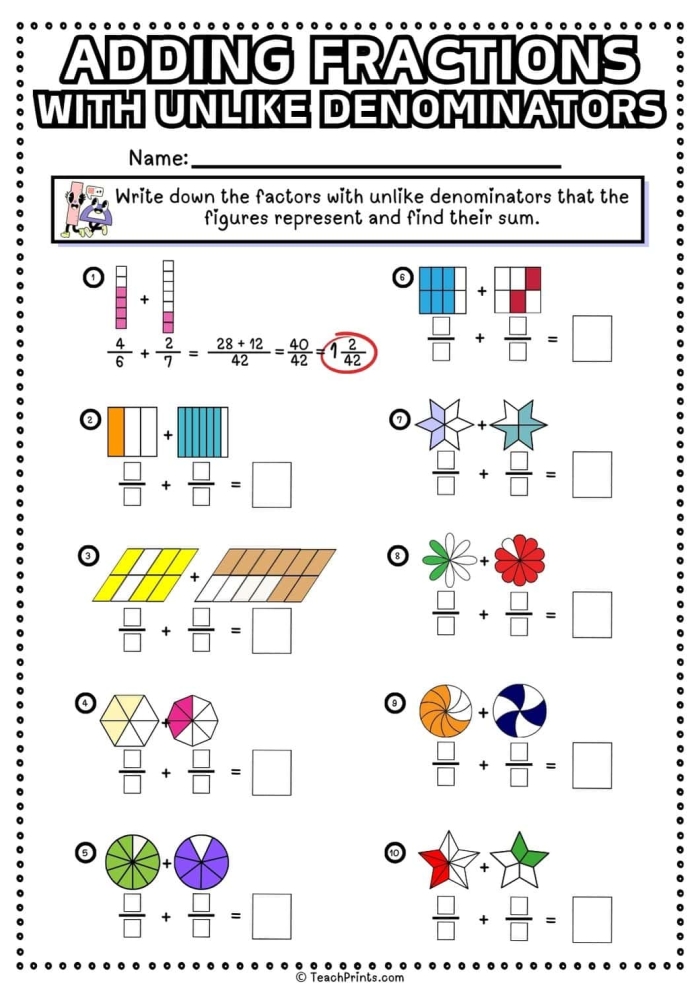
The best worksheets for this topic include visual supports alongside the written problems. Fraction bars or circles help fifth graders see why 1/3 plus 1/4 requires finding a common denominator before combining. When students can picture what’s happening, the abstract arithmetic makes more sense. Some learners also benefit from worksheets that show two methods for finding common denominators, letting them choose the approach that clicks for their brain.
Pairing fraction practice with related skills strengthens overall math understanding. Students who understand order of operations with fractions can tackle more complex problems. Similarly, solidifying place value concepts earlier in the year creates a foundation that makes fraction work feel less overwhelming.
The right worksheet removes barriers to learning. Clear instructions, manageable problem sets, and space to show work help fifth graders focus on understanding rather than feeling lost. When students finish a worksheet and see they’ve solved problems correctly, that success builds the momentum they need to tackle harder fraction concepts down the road.
Worksheet Practice Section