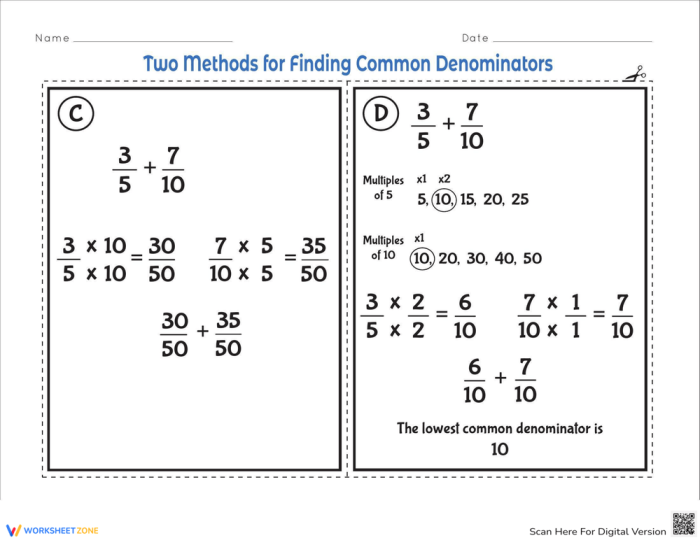
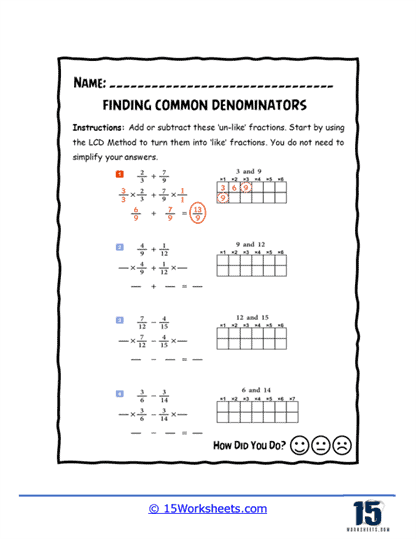
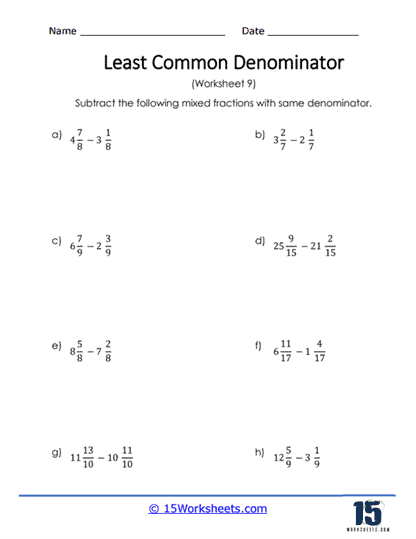
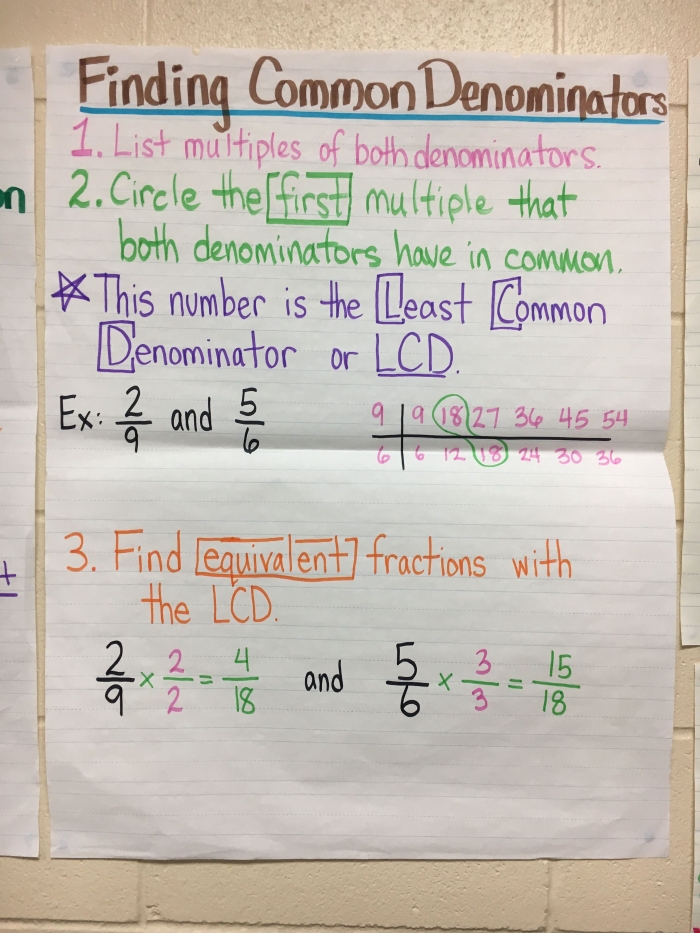
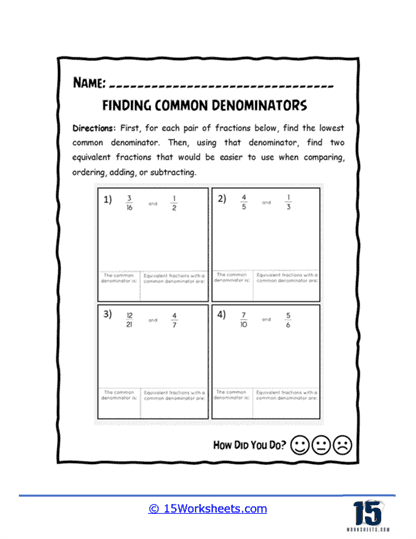
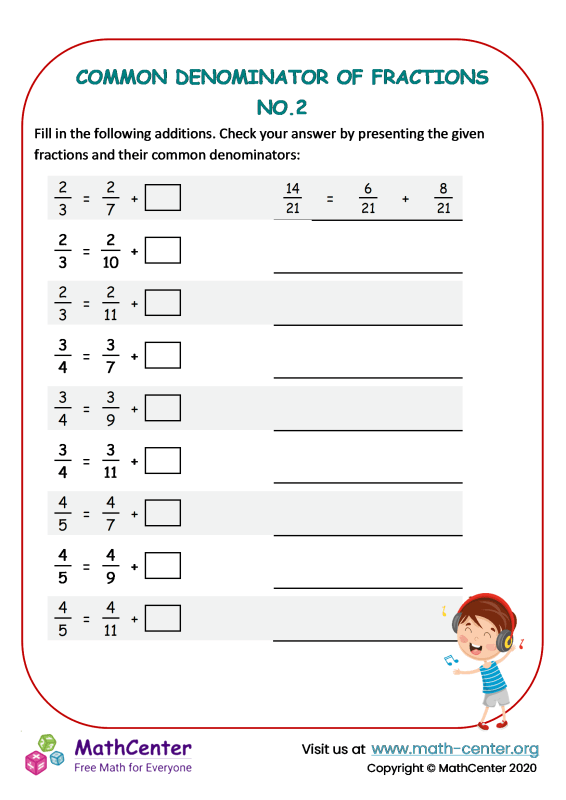
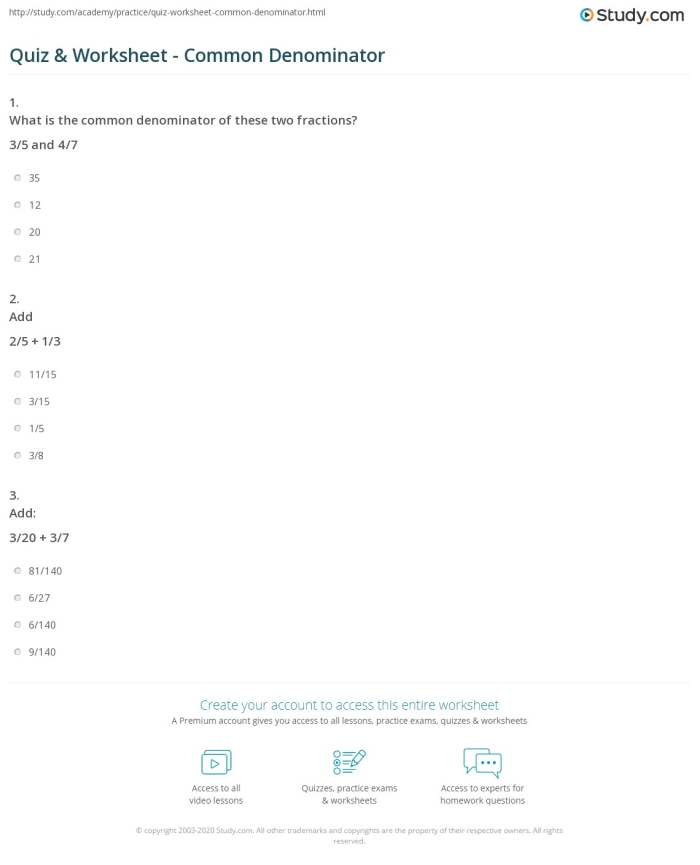
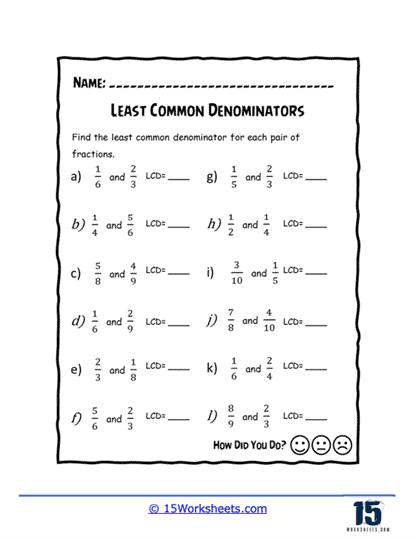
When teaching fifth-grade students about fractions, understanding how to find common denominators is crucial. By using comparison cards, educators can effectively illustrate two methods for achieving this, enhancing students’ grasp of the concept. These cards help learners visualize the differences and similarities between the strategies, making the learning process more engaging.
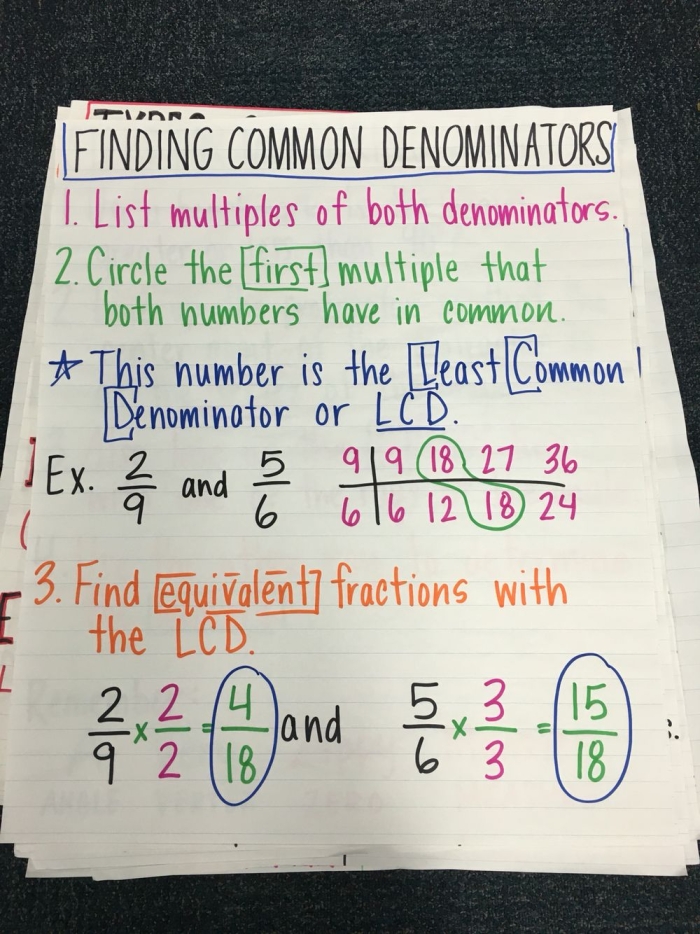
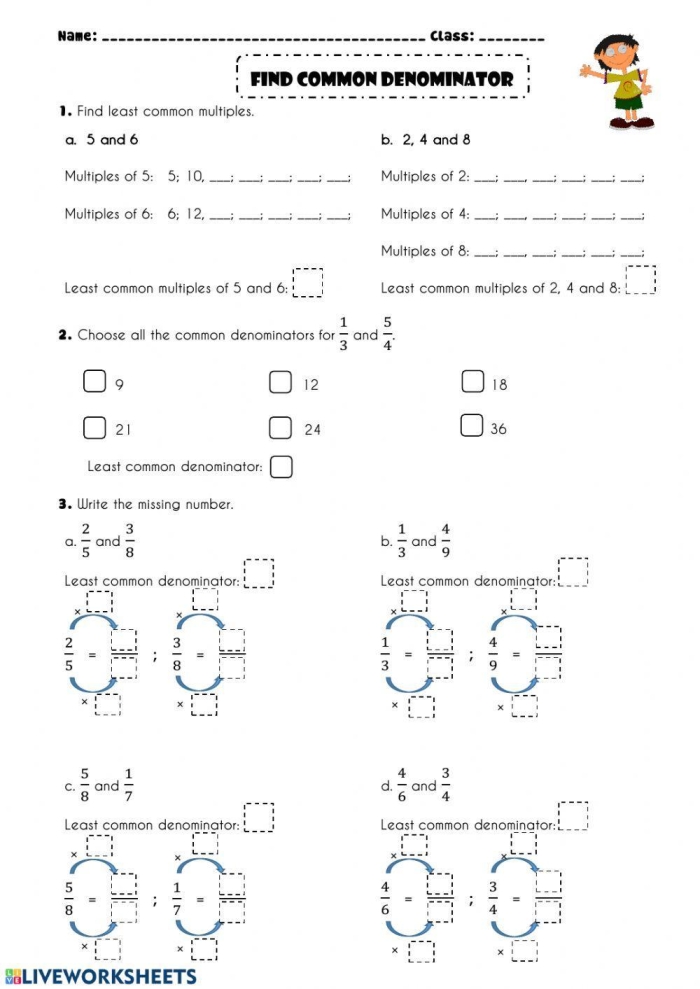
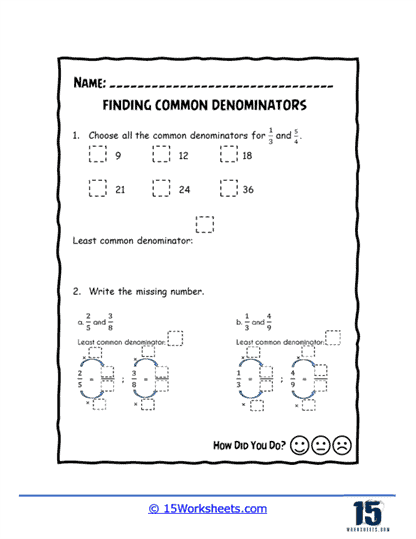
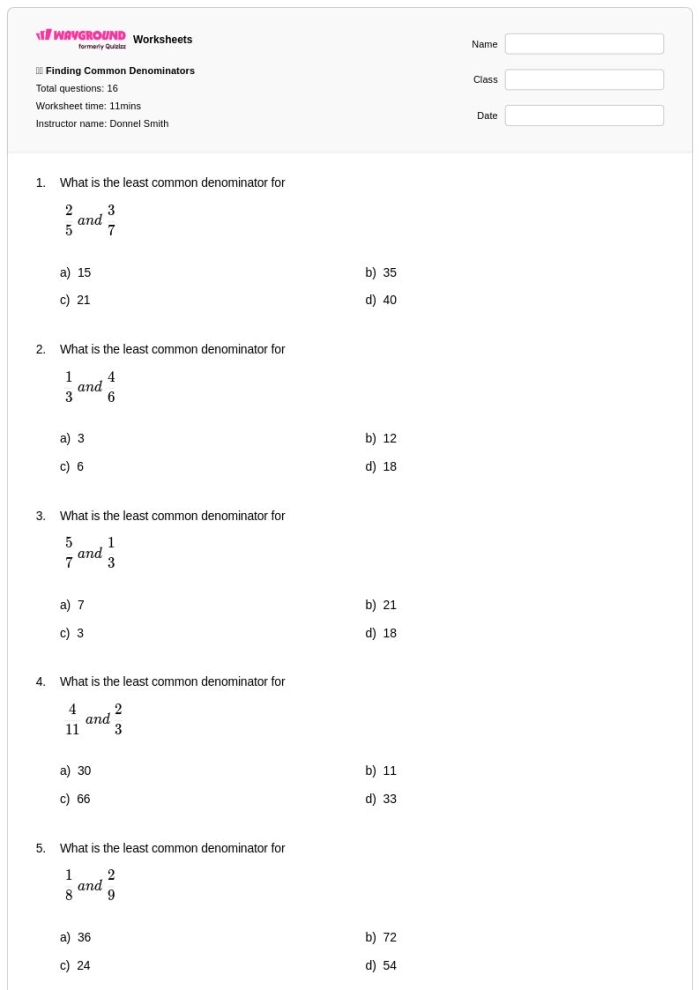
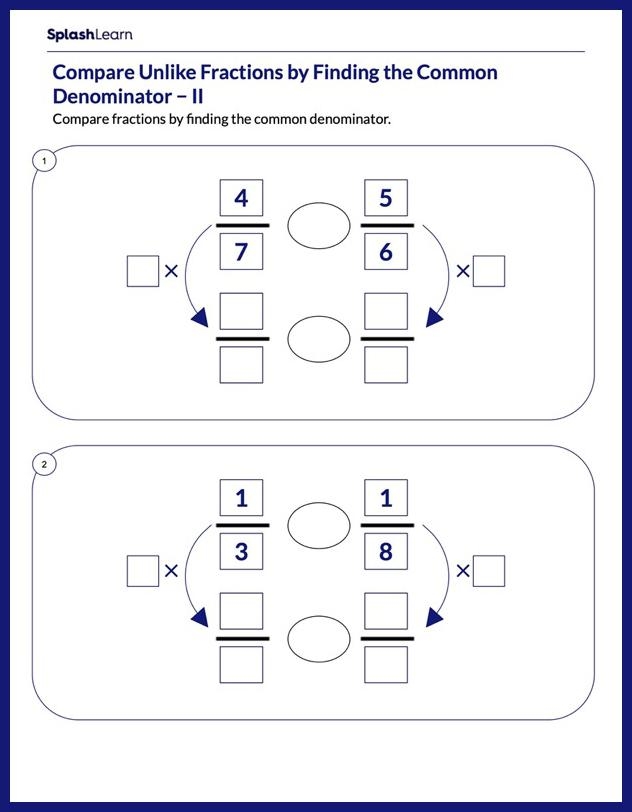
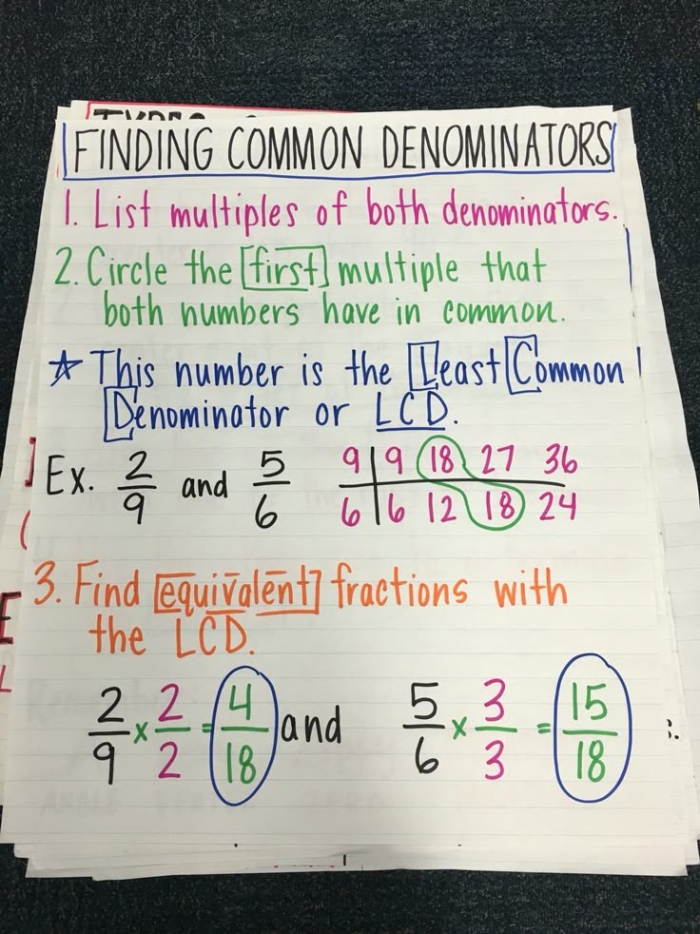
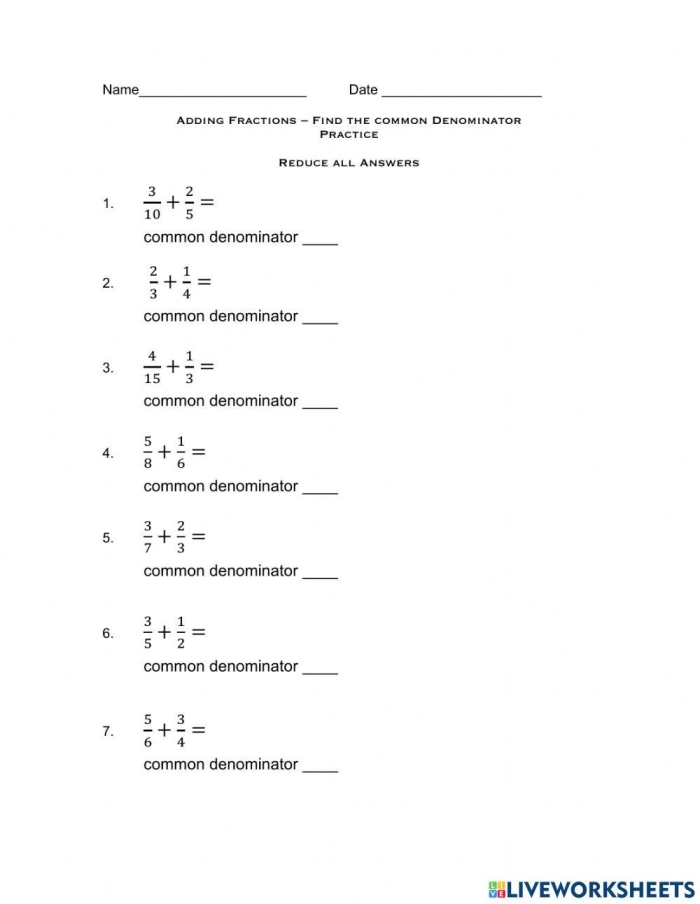
One common method involves listing the multiples of each denominator until a common one is found. For example, if students are working with the fractions 1/3 and 1/4, they would list the multiples: 3, 6, 9, 12 for 1/3 and 4, 8, 12 for 1/4. The smallest common multiple here is 12. This method is straightforward and helps students see the relationship between the numbers clearly.
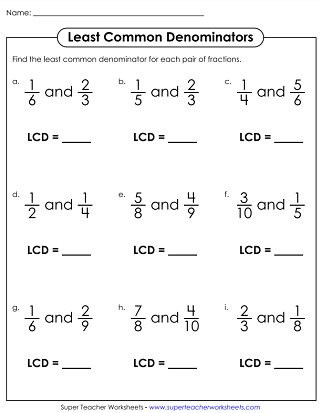
The second method is using the least common multiple (LCM), which is often more efficient. Students can calculate the LCM by finding the prime factors of each denominator. Taking the same fractions, 1/3 and 1/4, the prime factors are 3 and 2 respectively. The LCM of these numbers is again 12, but this method might streamline the process for more complex fractions. Utilizing these cards allows students to practice both strategies side by side, reinforcing their understanding of fractions.
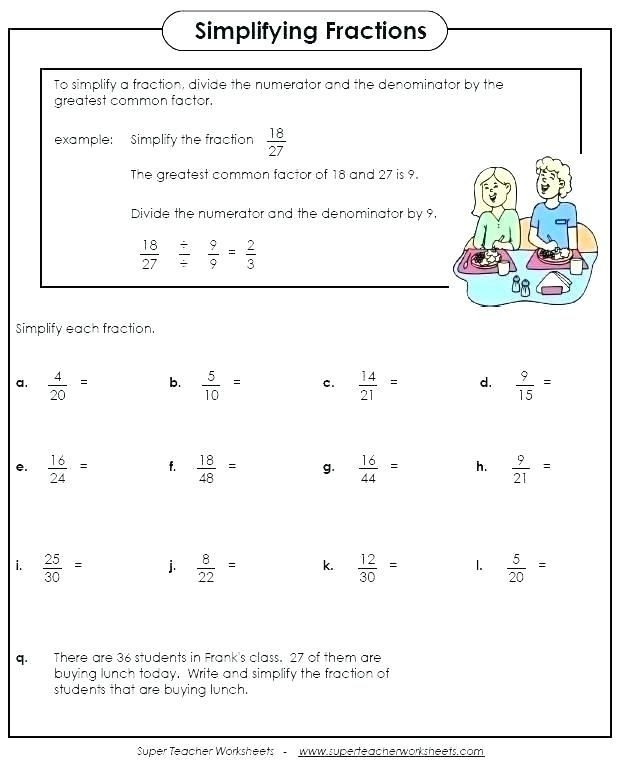
Incorporating these hands-on materials into lessons not only supports visual learning but also encourages critical thinking. As students compare the two methods, they can discuss which approach they find more intuitive, fostering a deeper engagement with the material. For additional practice, consider using resources like the Order of Operations with Fractions worksheets to reinforce their skills.
Ultimately, these comparison cards are effective tools for teaching fifth graders about finding common denominators. By providing a structured way to explore both methods, educators can enhance their students’ mathematical reasoning and problem-solving abilities.
Use These Worksheets Today