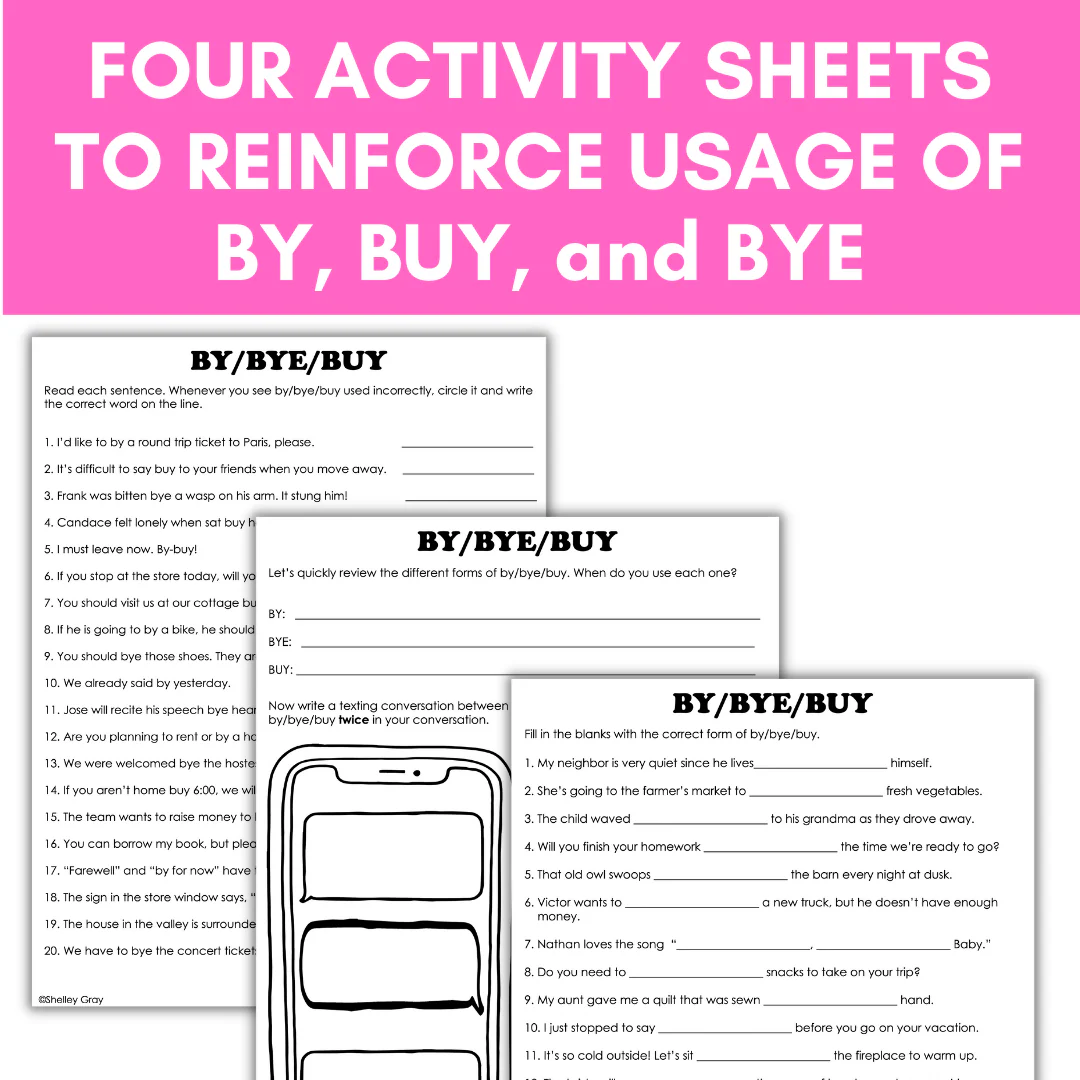
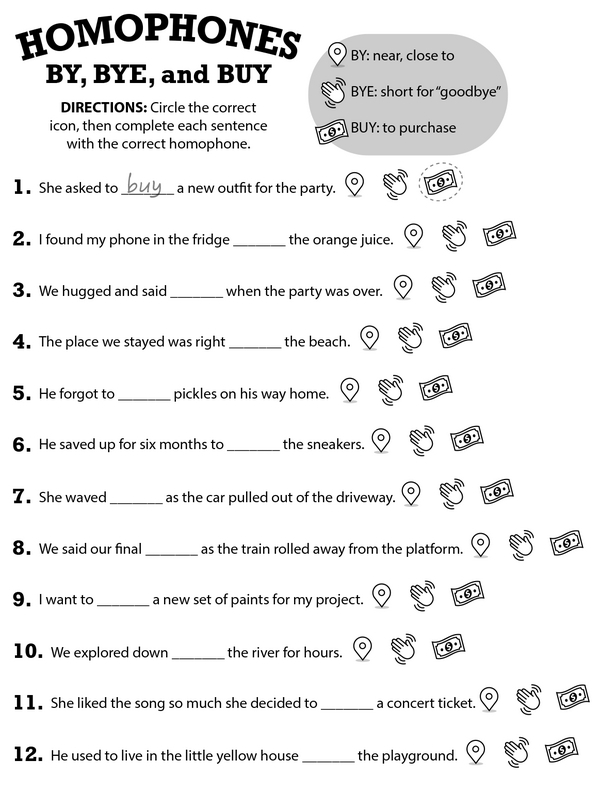
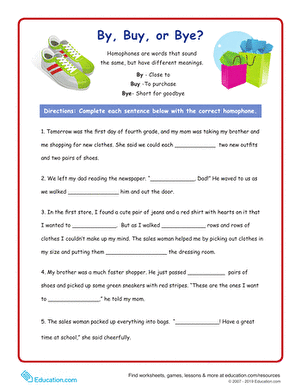
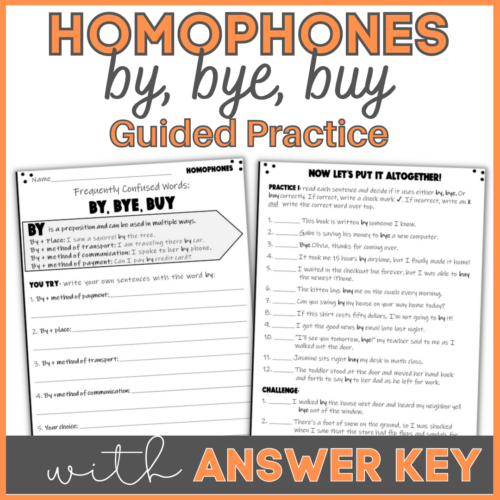
Most fourth graders stumble over homophones at some point, and the trio of by, buy, and bye ranks among the trickiest. These three words sound identical when spoken aloud, yet they carry completely different meanings. Without clear understanding, students mix them up in writing, leading to sentences that confuse readers or change meaning entirely.
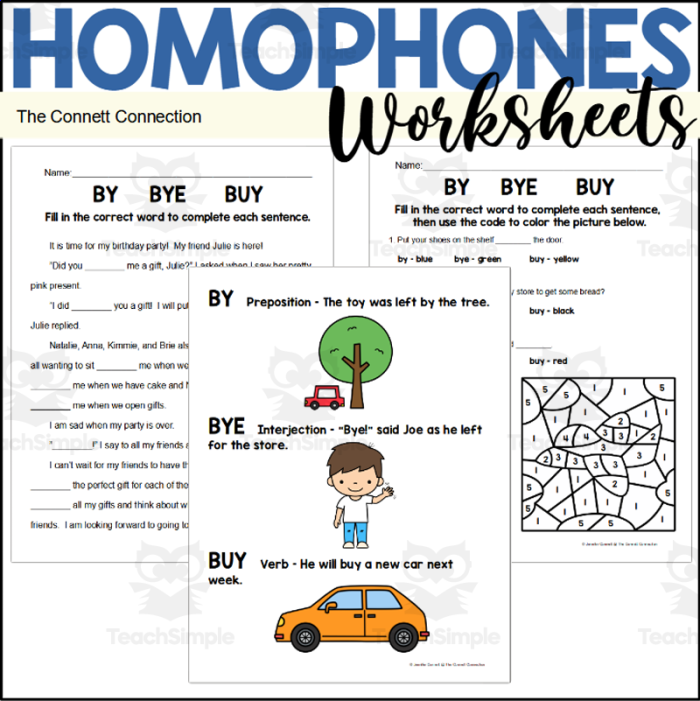
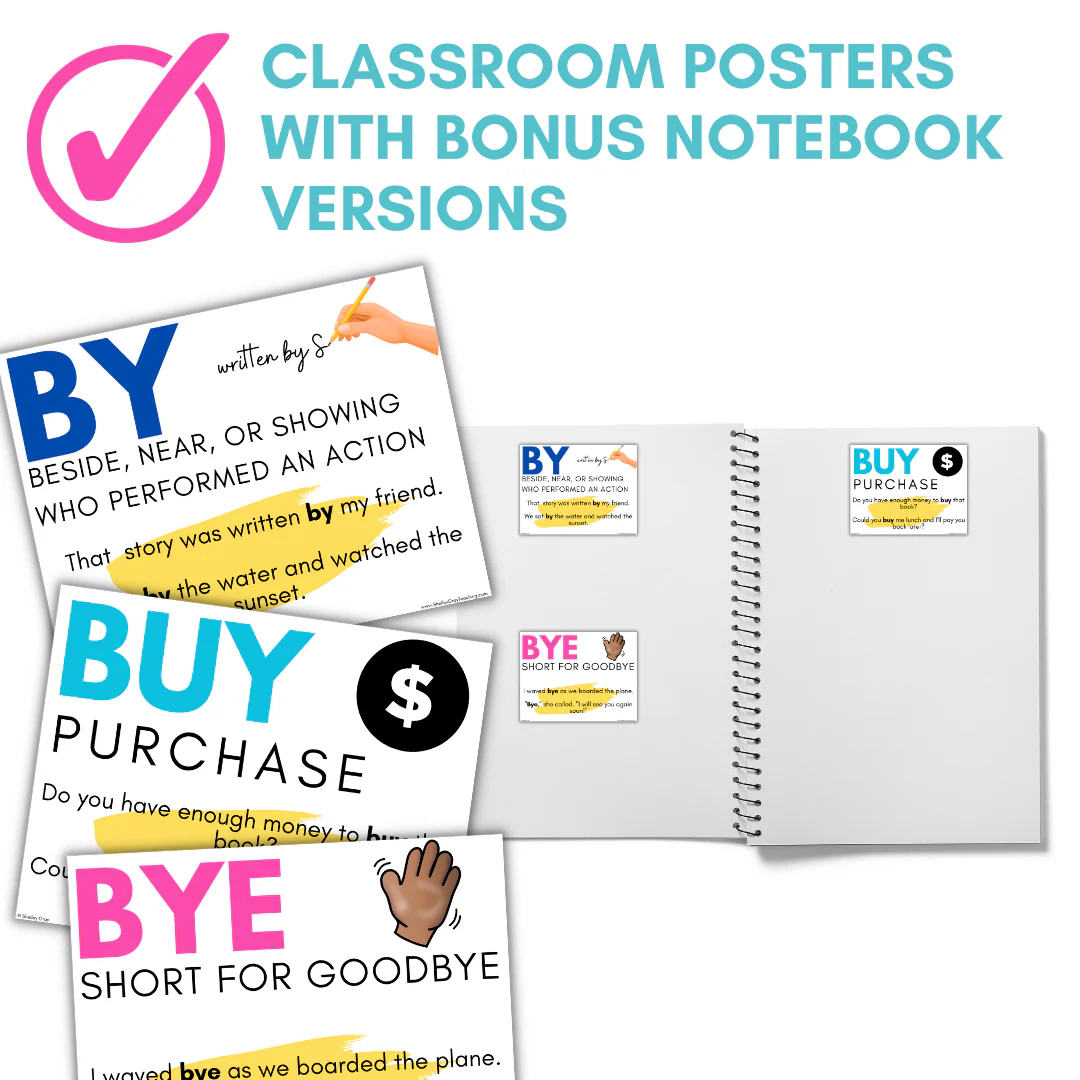
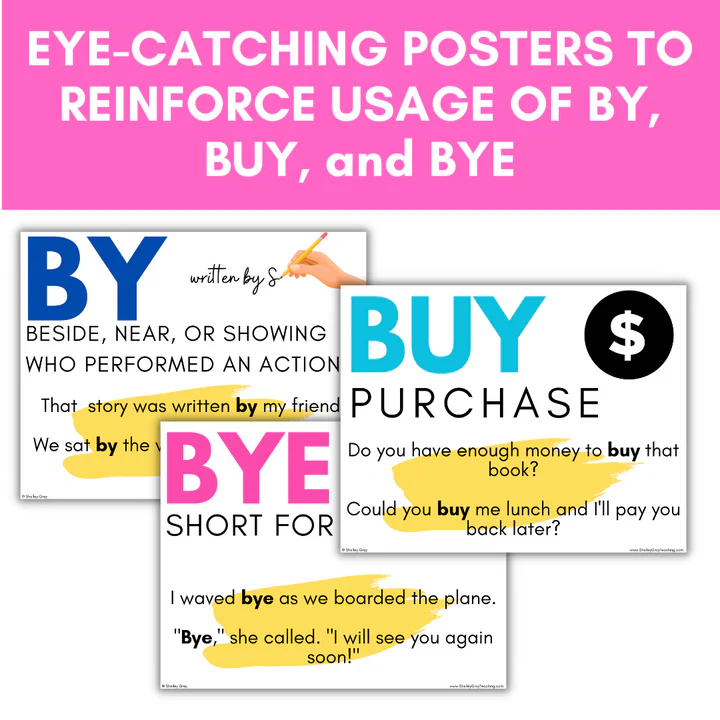
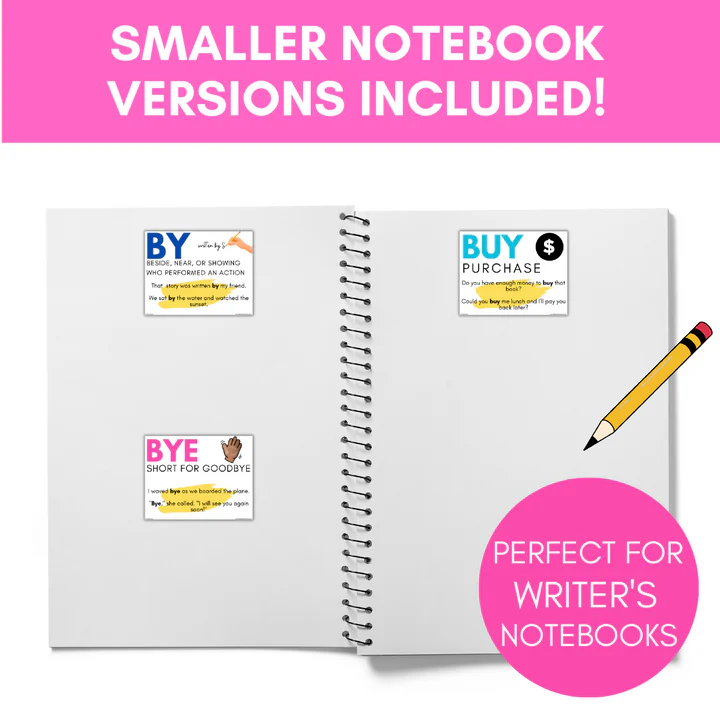
The word by functions as a preposition or part of a verb phrase. You use it to show location, direction, or the agent performing an action: “I walked by the park” or “The book was written by my teacher.” It also appears in expressions like “by tomorrow” or “by hand.”
Buy is a verb meaning to purchase something. When your child goes to the store to acquire a toy or snack, they buy it. This is the most concrete of the three, which makes it easier to anchor in memory: “Mom will buy groceries on Saturday.”
Bye serves as an informal farewell. It’s a shortened form of goodbye. You wave and say “bye” when leaving someone. Children naturally encounter this word daily in casual conversation.
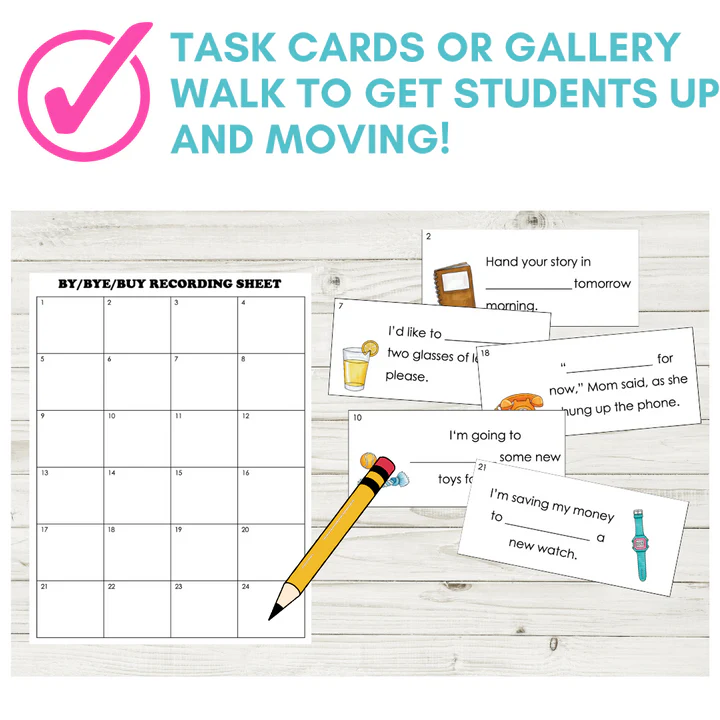
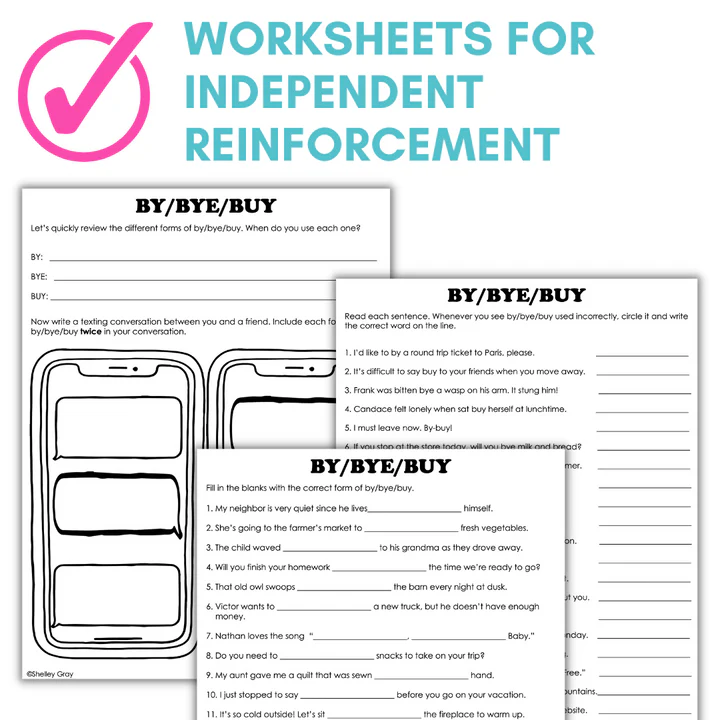
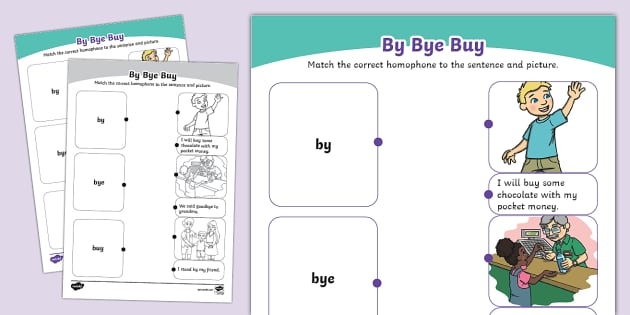
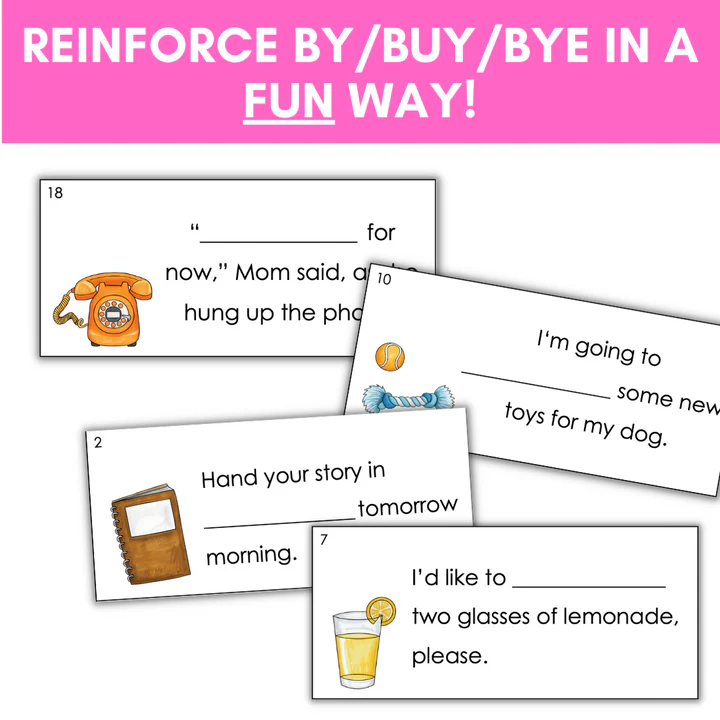
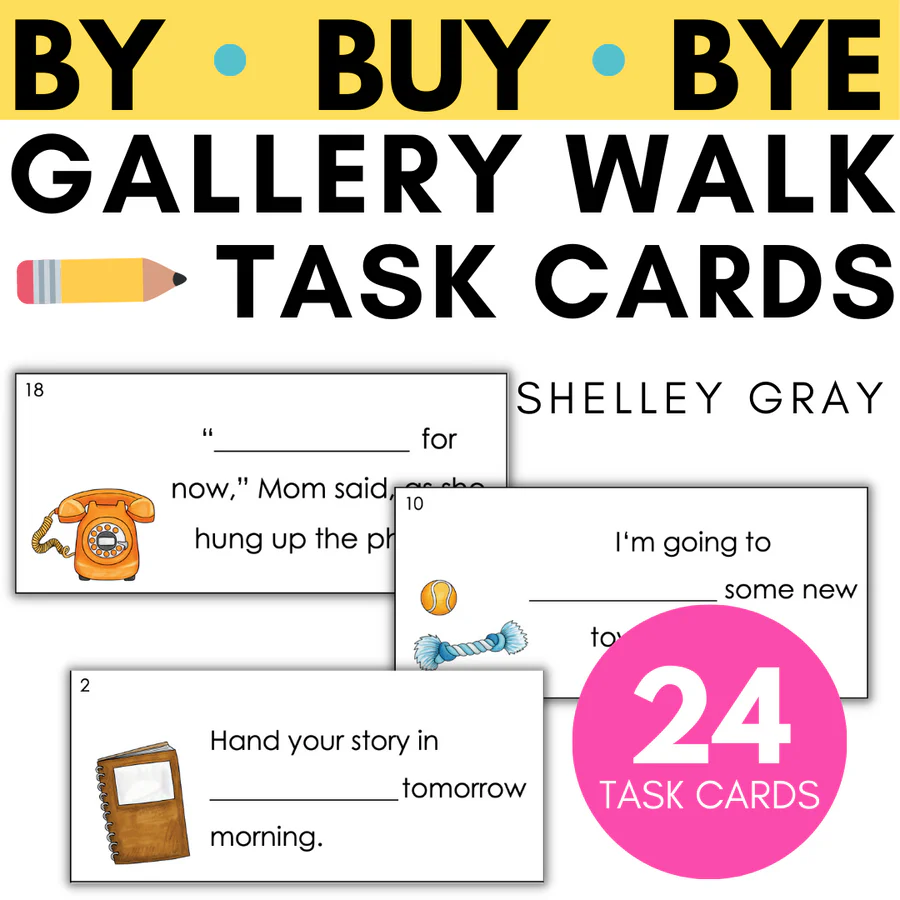
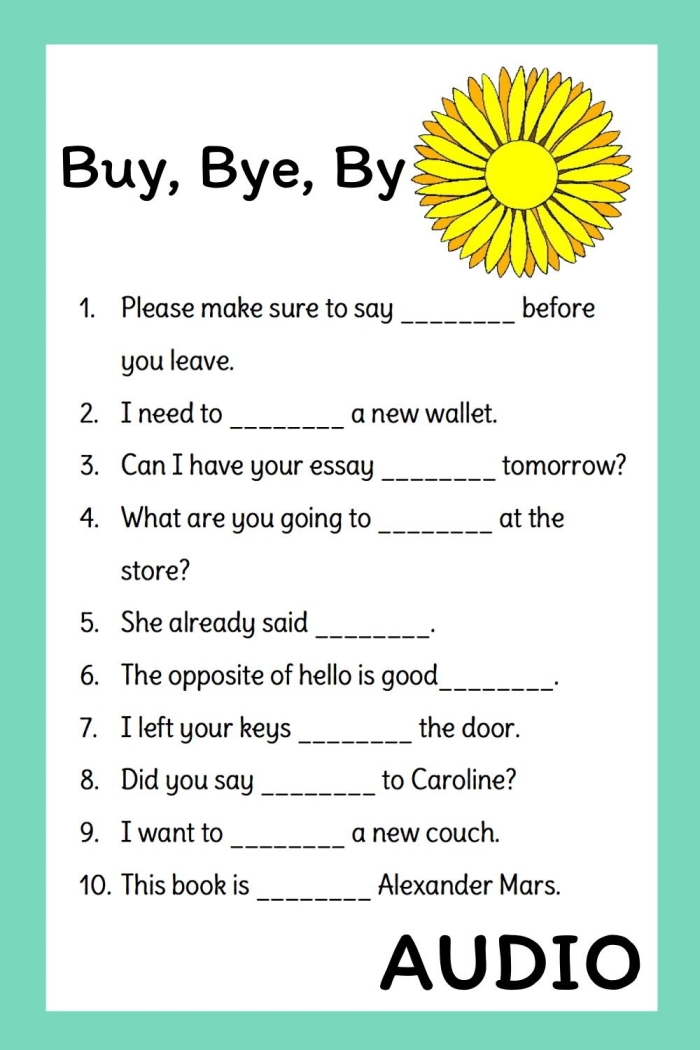
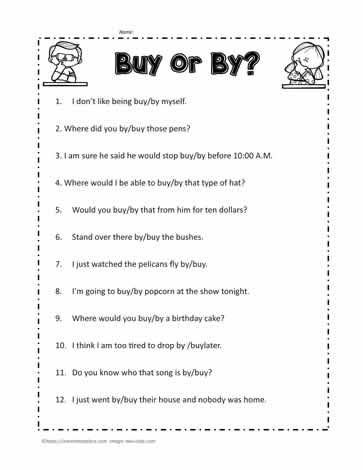
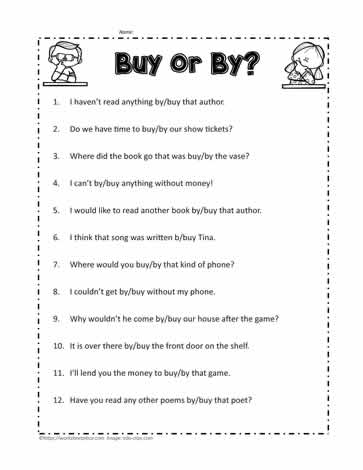
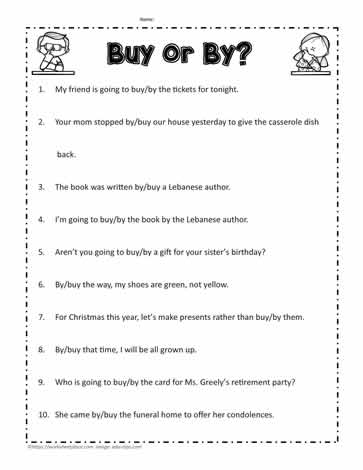
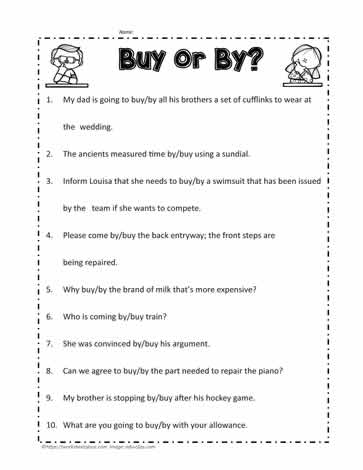
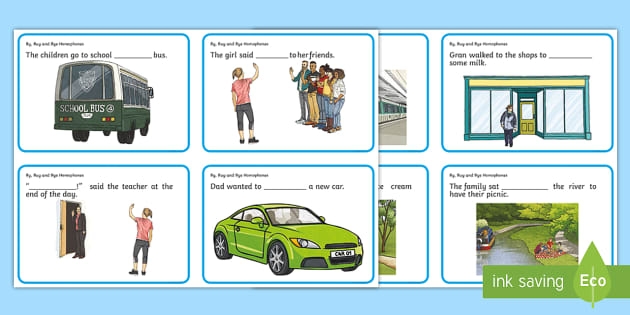
The key to mastering these homophones lies in repetition and context. Fourth graders benefit from seeing each word used correctly in multiple sentences, then practicing with printable worksheets that reinforce the distinctions. Activities that ask students to match words to their definitions, fill in blanks, or write original sentences work particularly well. Like working through subtraction problems that require consistent practice, homophone mastery comes from exposure and application.
Consider pairing homophone practice with other grammar work. Resources like grammar and mechanics worksheets often include related exercises that strengthen overall language skills. The more your learner encounters these words in meaningful contexts, the faster they’ll internalize the differences and use them correctly without hesitation.
Use These Worksheets Today