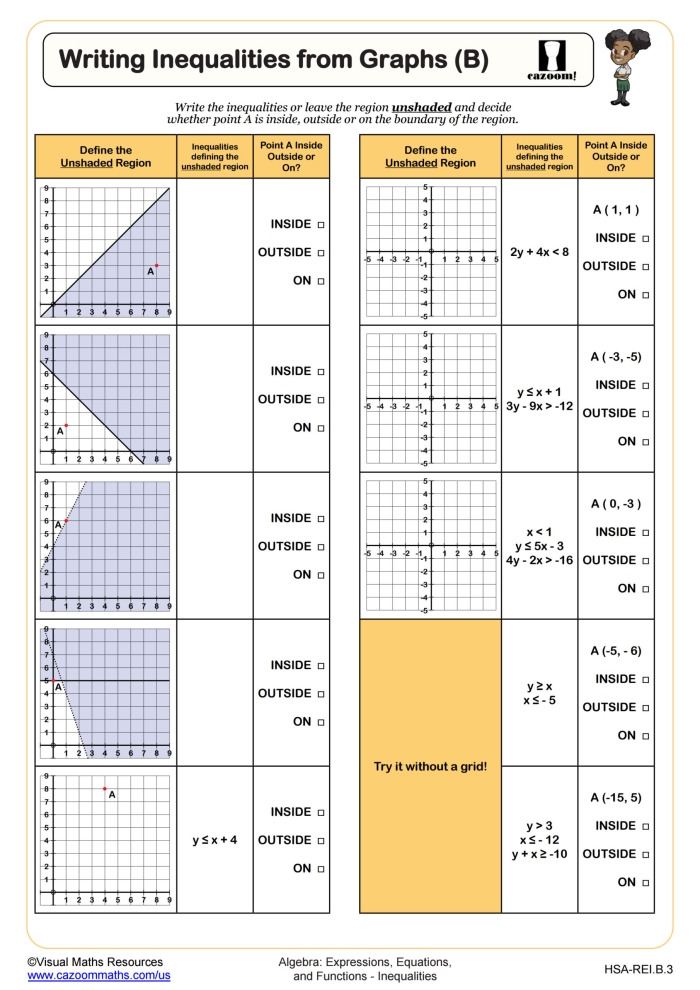
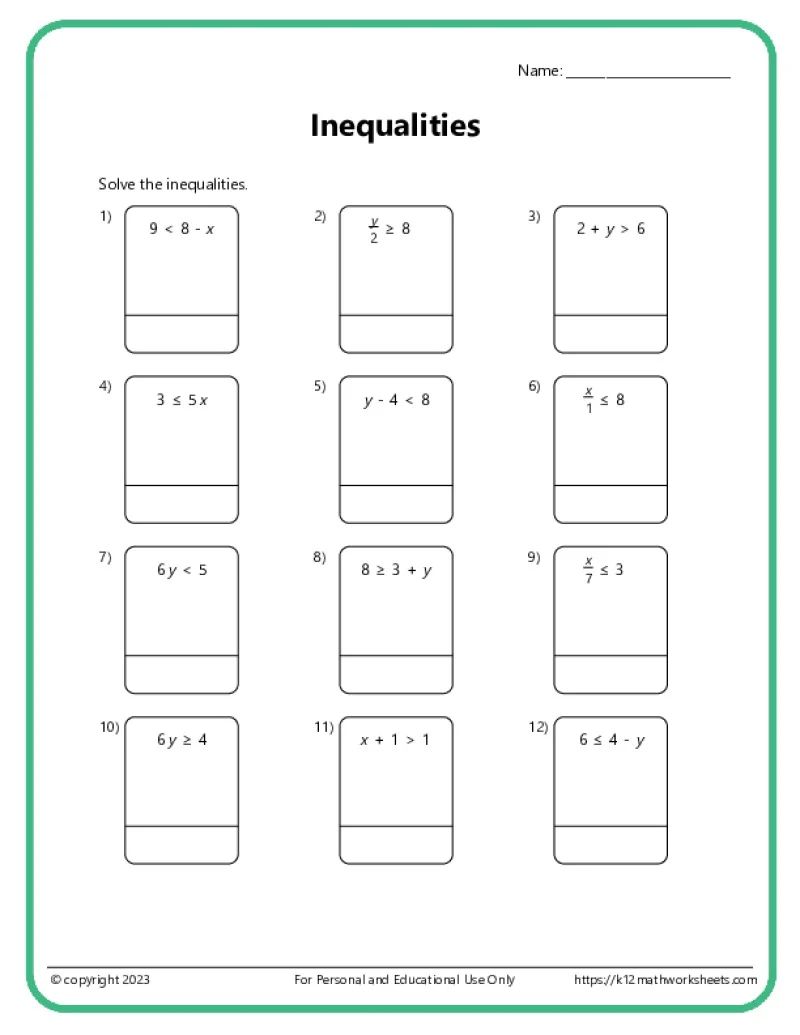
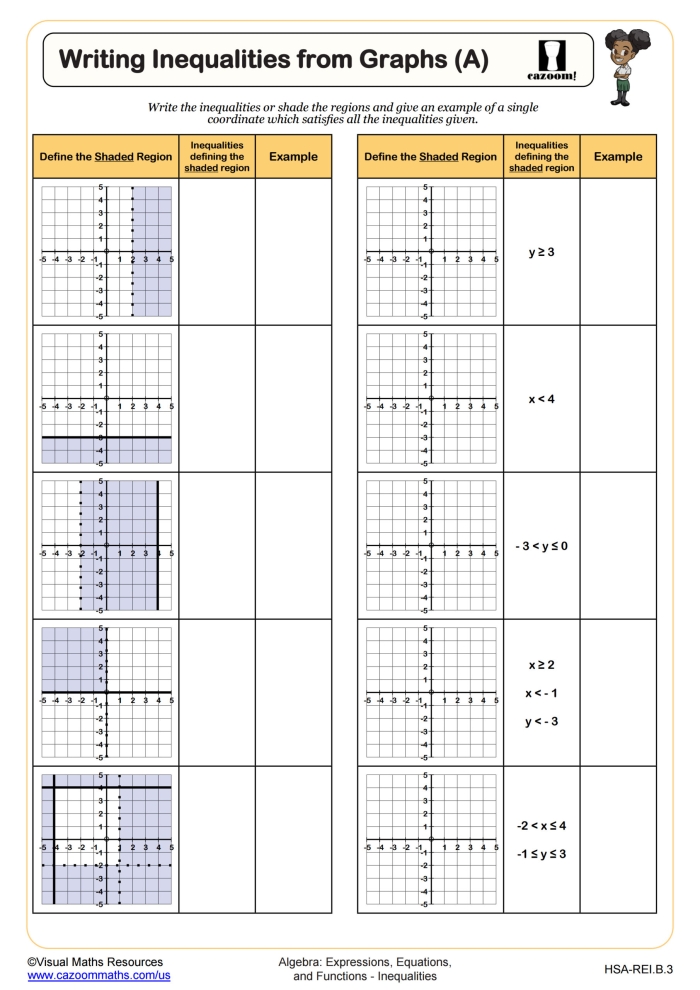
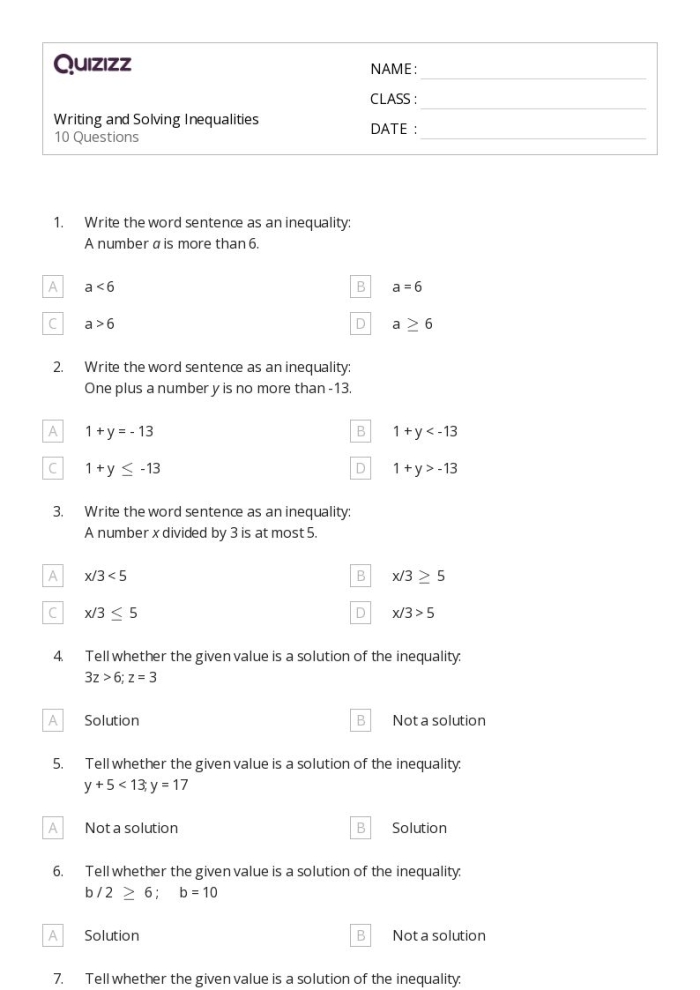
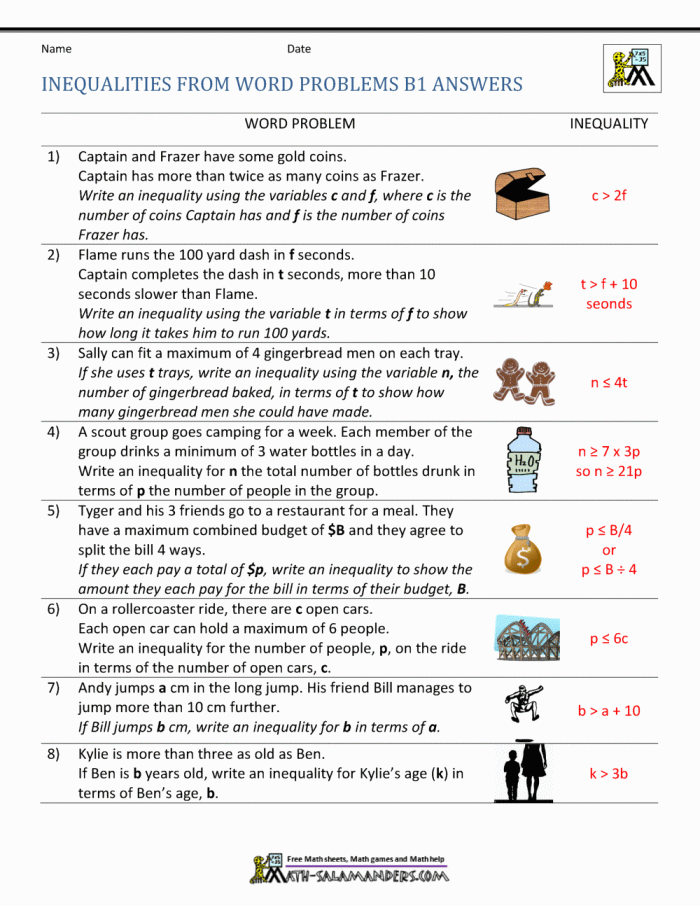
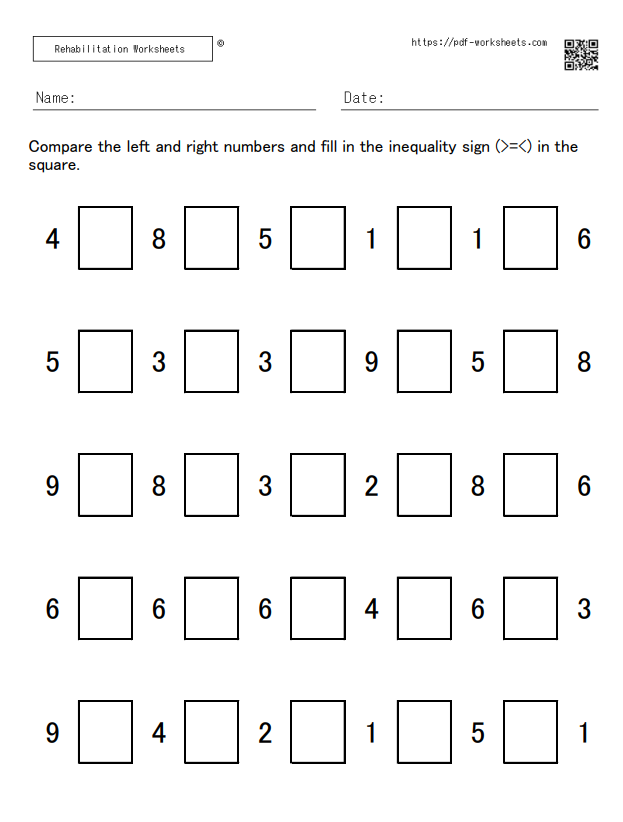
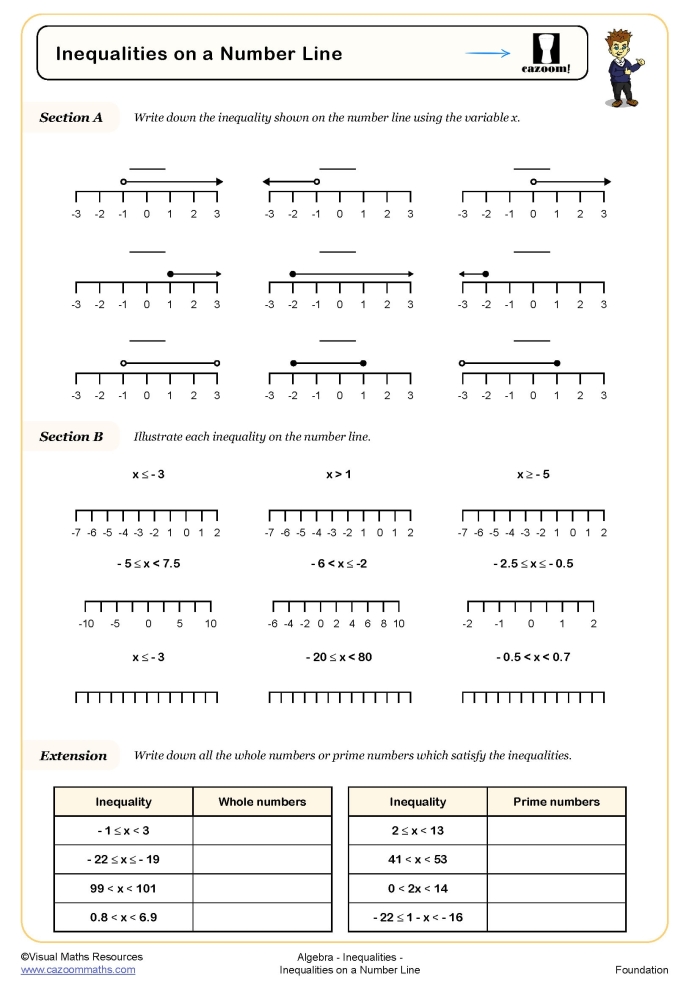
When sixth graders first encounter inequalities in math class, many struggle to see how these abstract symbols connect to anything real. The breakthrough happens when they start translating everyday situations into mathematical language. A worksheet focused on writing inequalities with variables transforms that confusion into confidence by grounding the concept in scenarios students actually recognize.
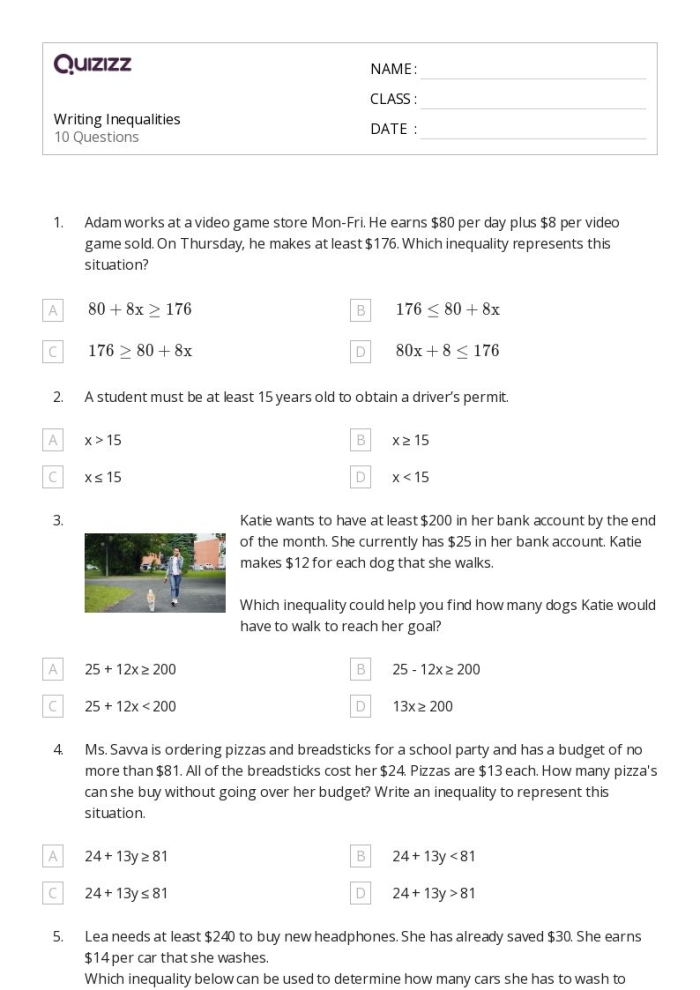
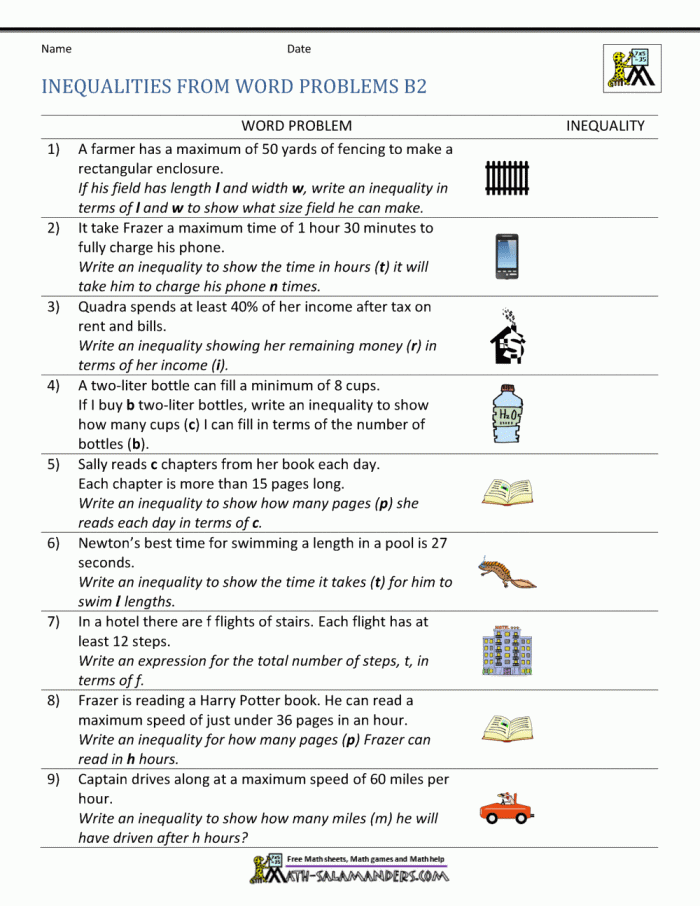
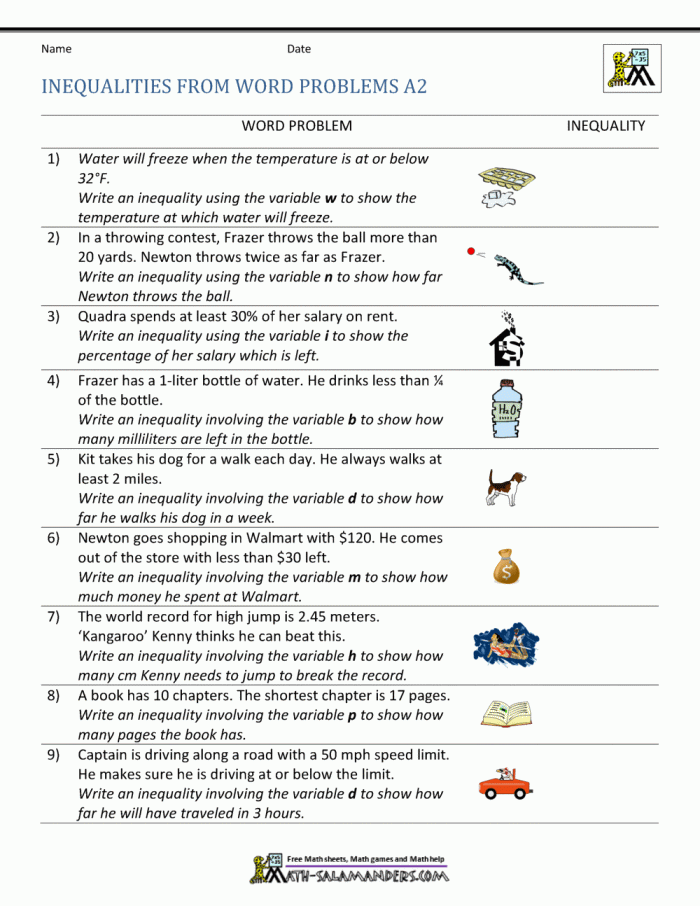
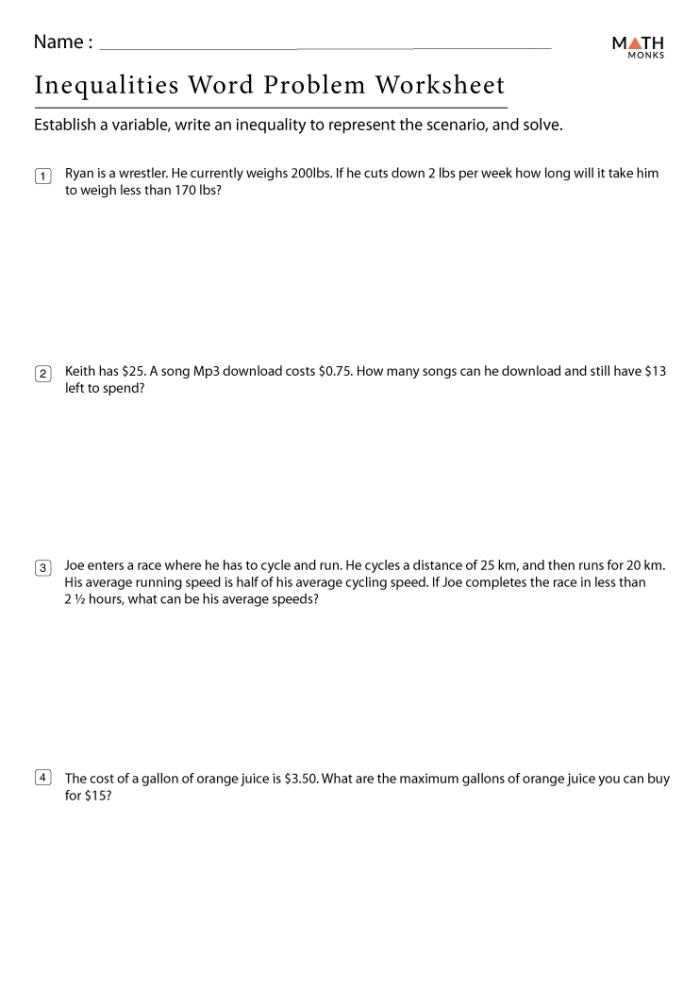
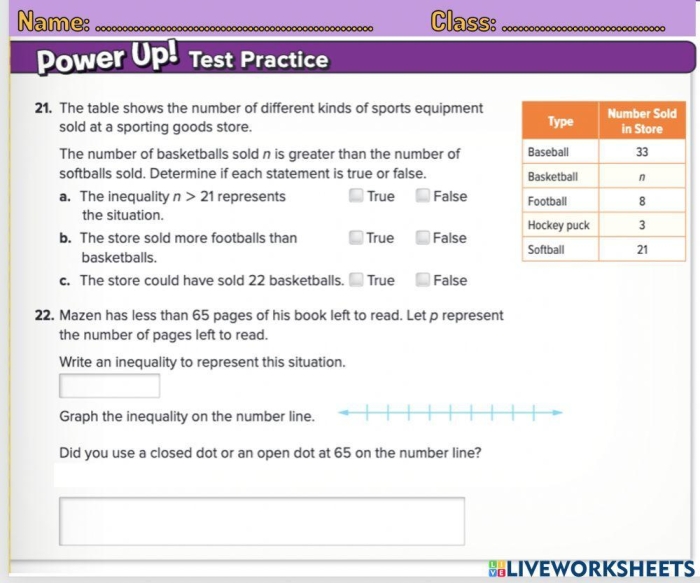
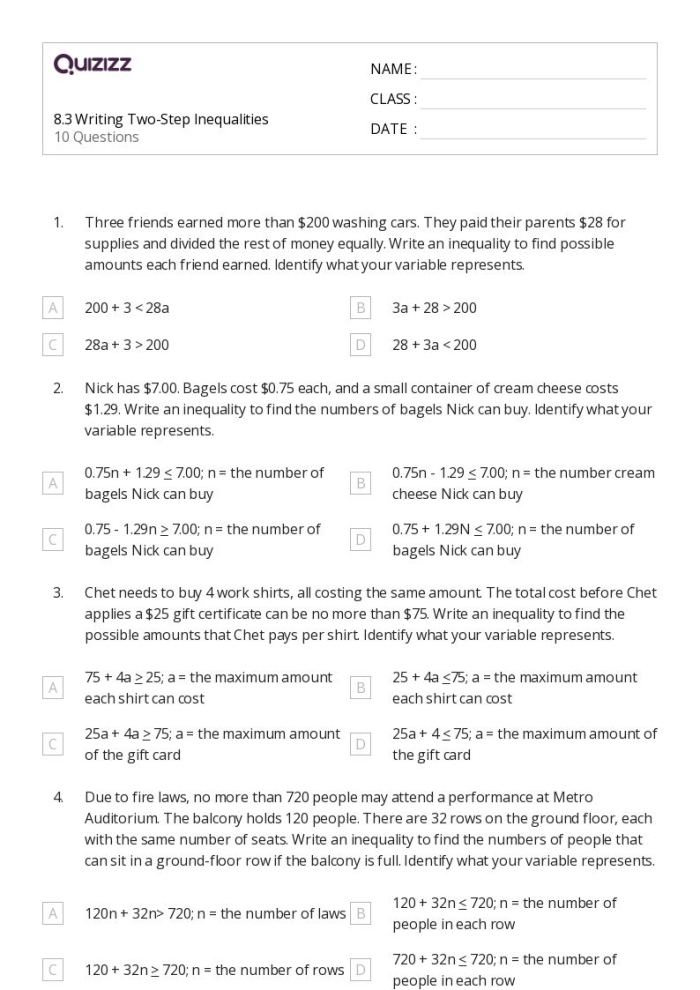
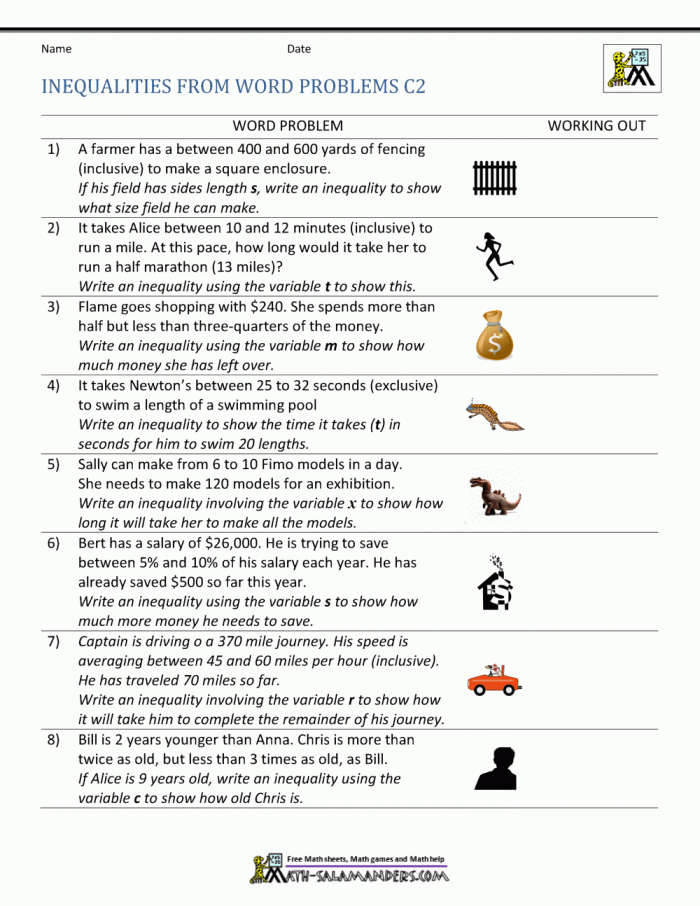
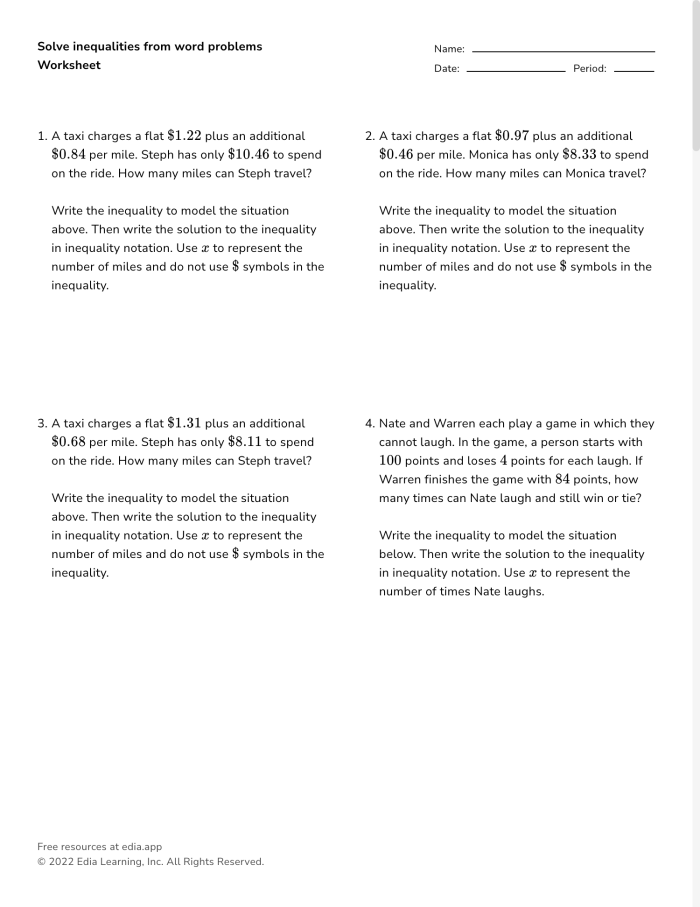
Real-world inequality problems ask students to think like problem-solvers. Instead of just solving a pre-written inequality, they’re asked: “If a concert ticket costs at least $45, how would you write that?” or “A recipe needs fewer than 3 cups of flour. Show this with an inequality.” These questions force students to identify what the variable represents, determine which inequality symbol fits the situation, and construct the mathematical statement correctly. This process builds stronger mathematical reasoning than memorizing symbol rules ever could.
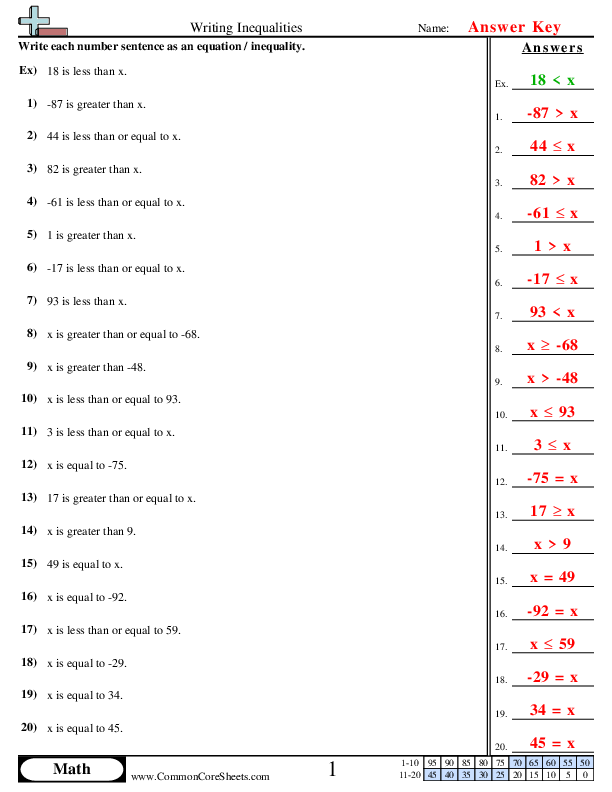
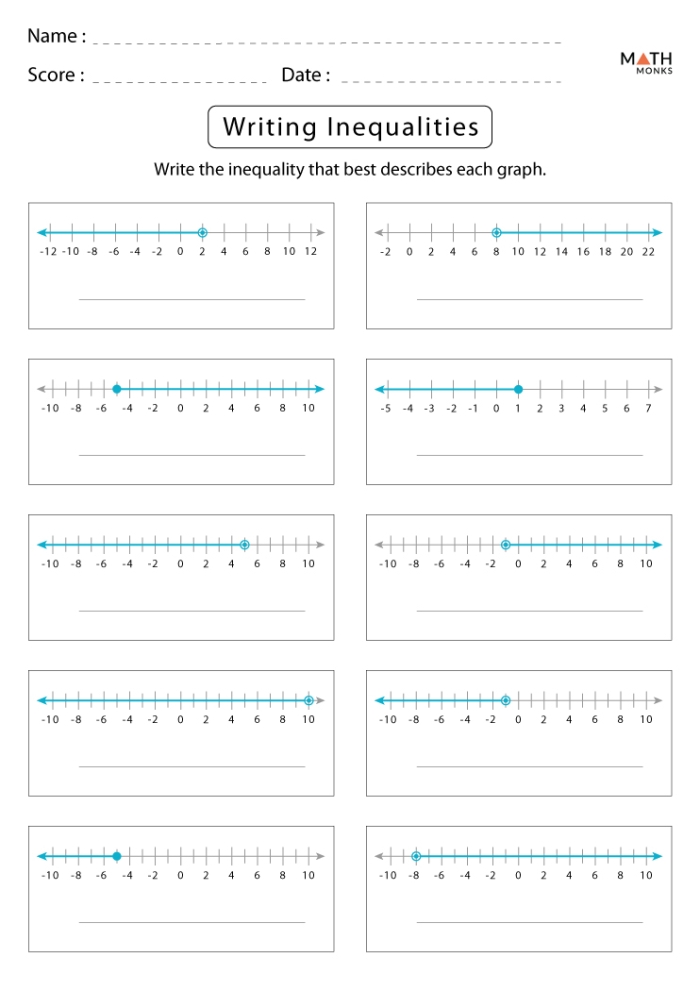
The practical value shows up immediately. Students working through these worksheets develop the ability to recognize when a problem calls for “less than” versus “less than or equal to,” or “greater than” versus “at least.” These distinctions matter in real applications, from budget planning to safety standards. A sixth grader who can translate “you need more than 10 hours of practice to master this skill” into the inequality x > 10 has gained genuine mathematical literacy, not just procedural knowledge.
Pairing inequality practice with other reading-based math work strengthens overall comprehension skills. Students who work through reading comprehension activities involving integers and rational numbers develop better pattern recognition across different math contexts. Similarly, combining inequality worksheets with economic systems activities that use algebra shows students how variables and inequalities apply across multiple subjects.
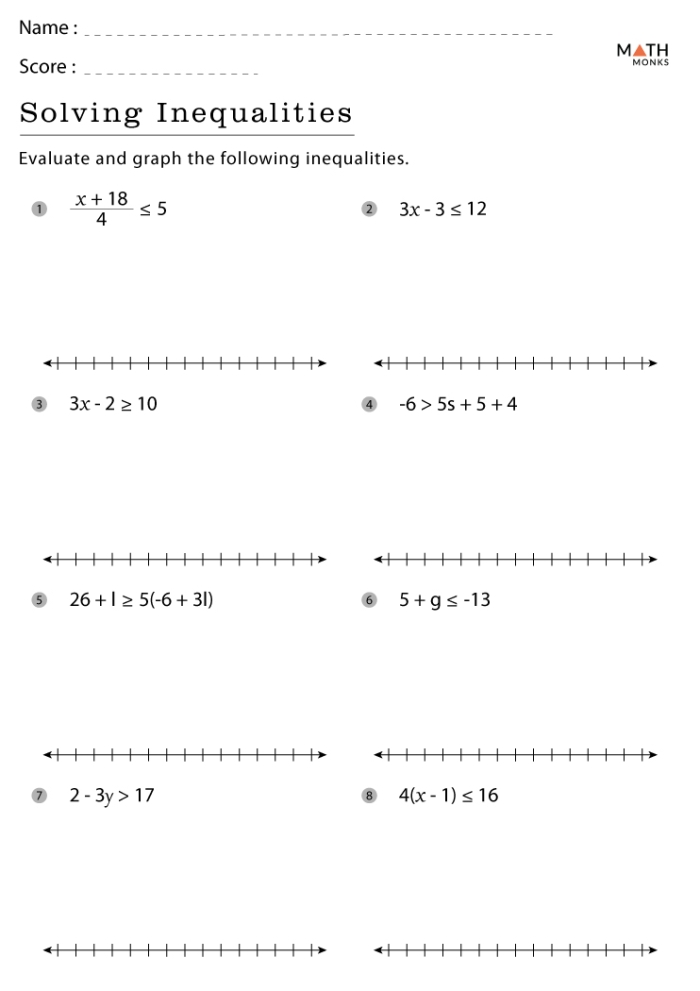
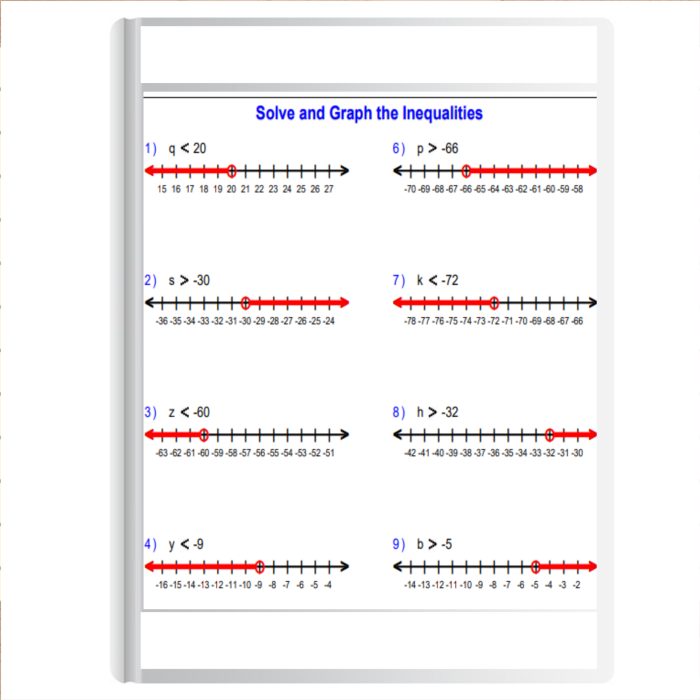
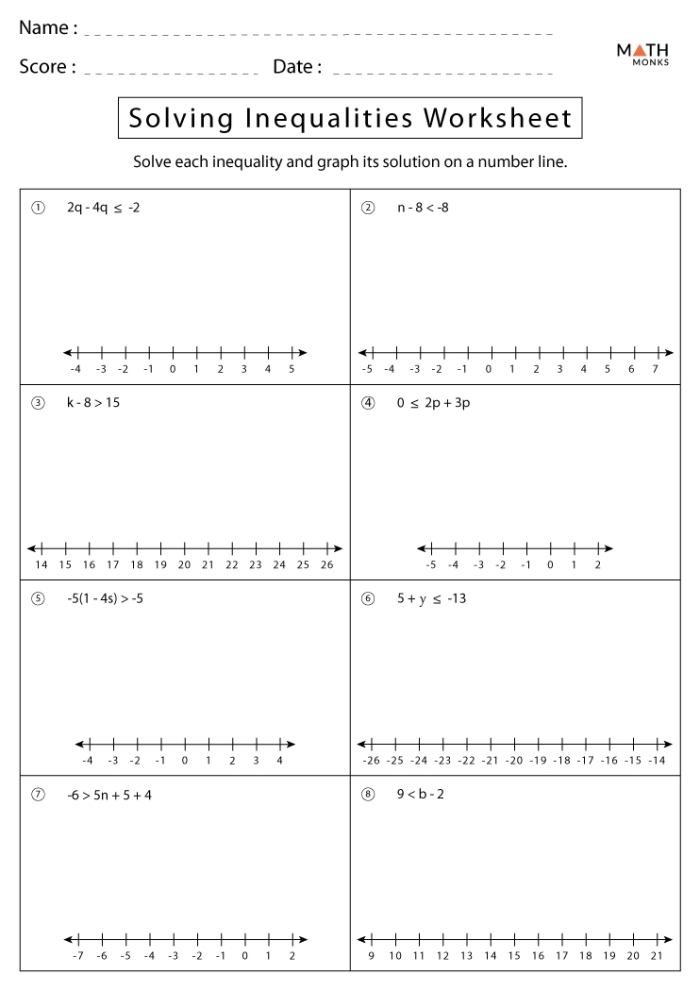
The best printable writing inequalities worksheets include a mix of straightforward situations and slightly more complex scenarios. This progression helps students build confidence before tackling tougher applications. By the end of focused practice, sixth graders move from hesitant to capable when they encounter inequality problems in any context.
Download These Worksheets for Practice