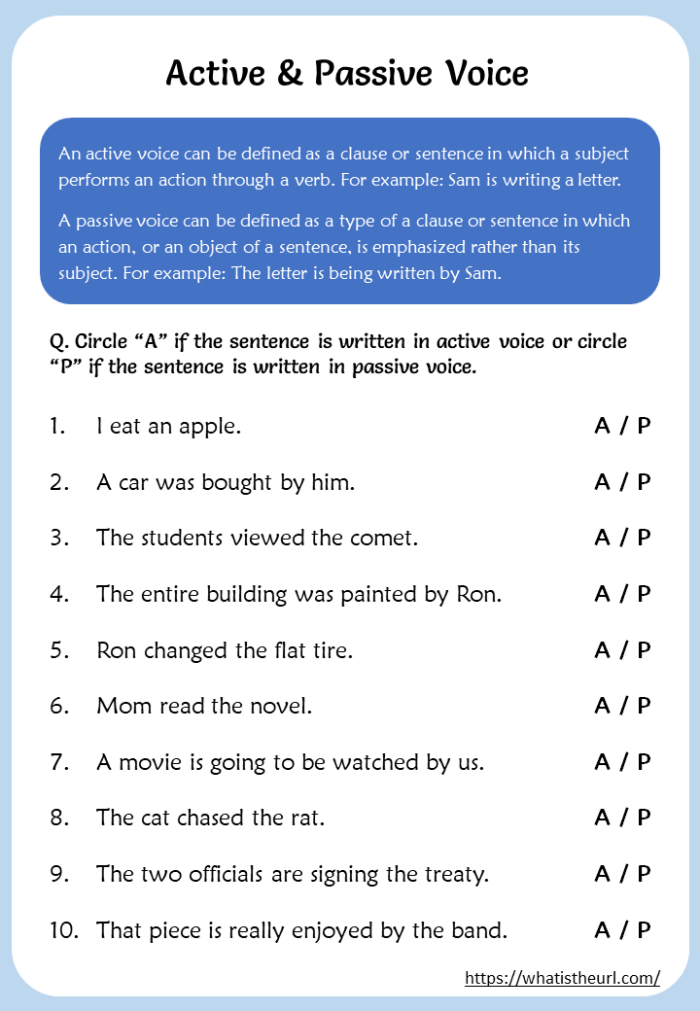
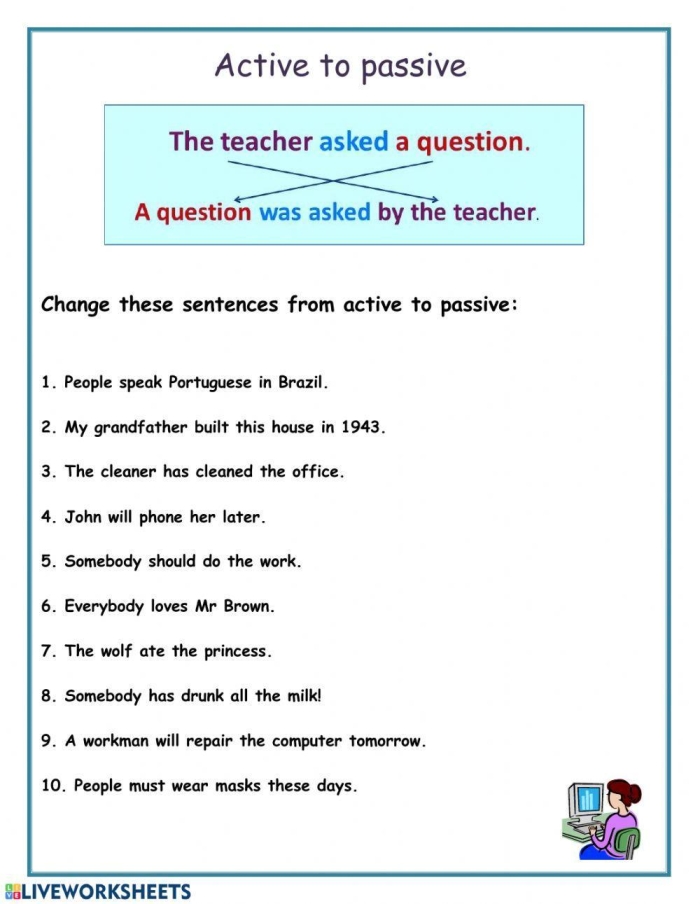
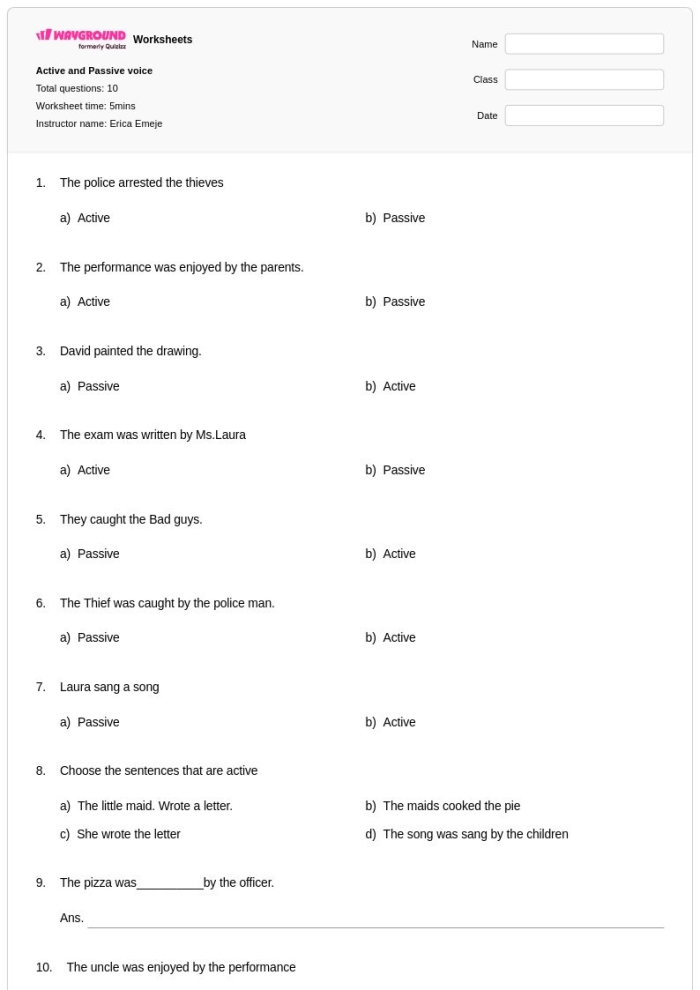
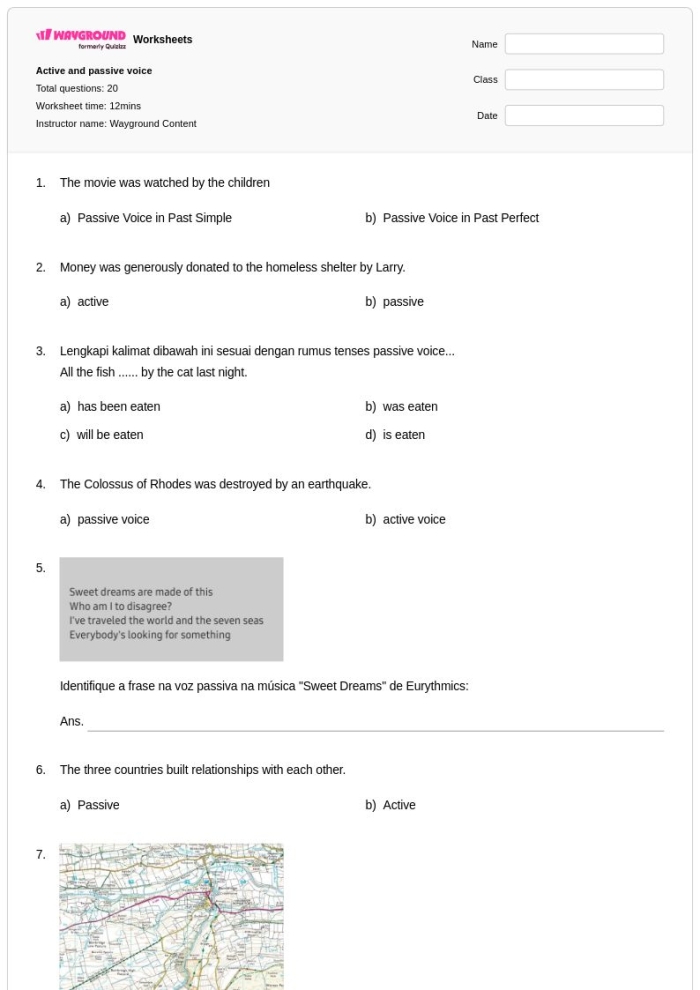
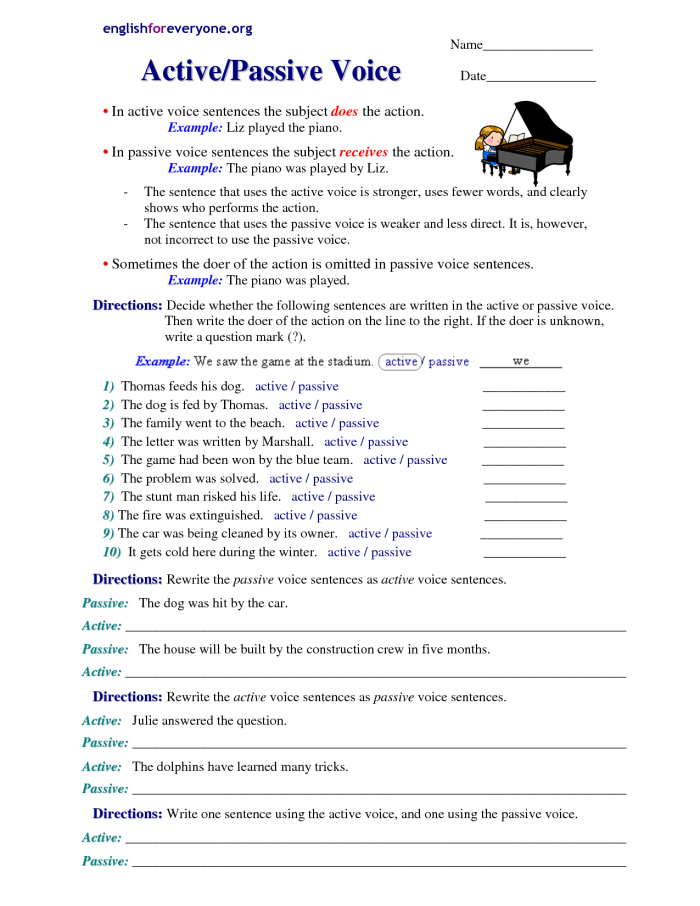
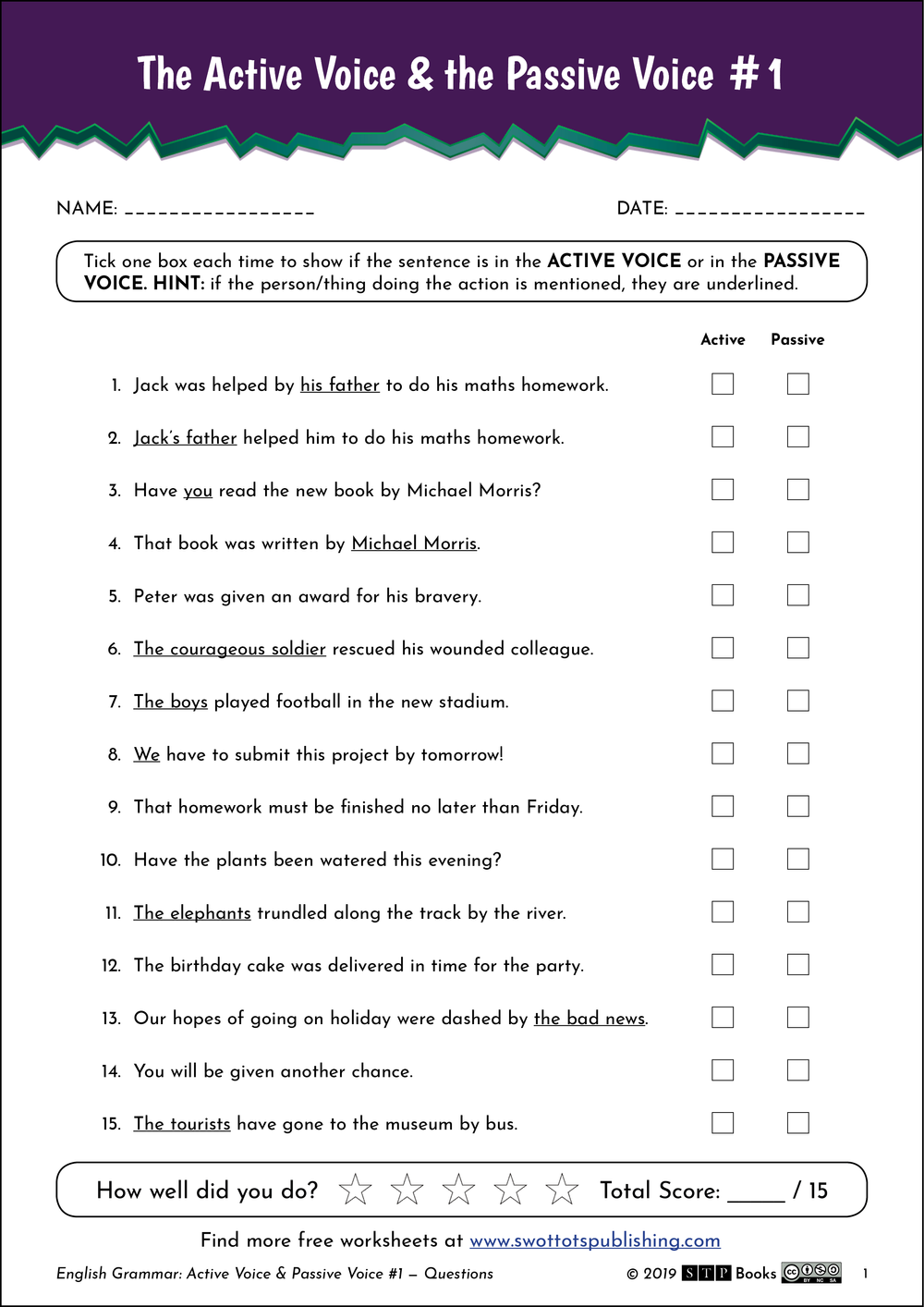
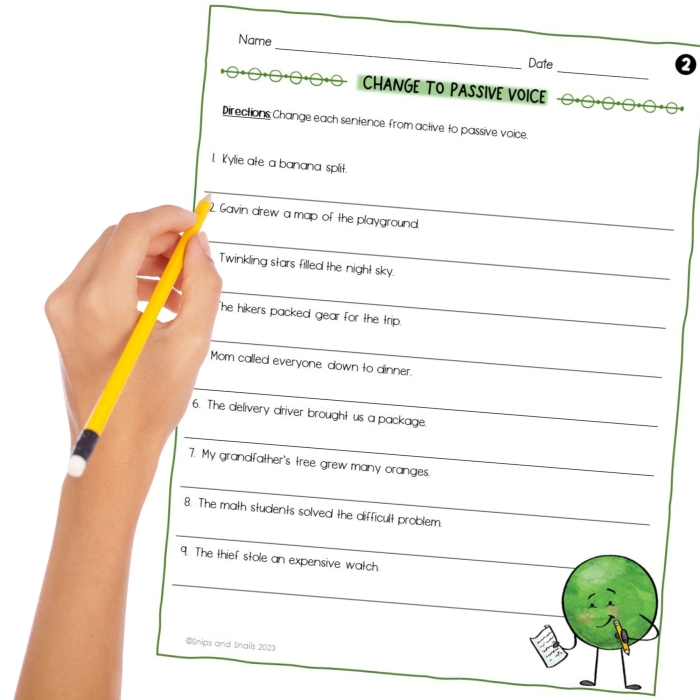
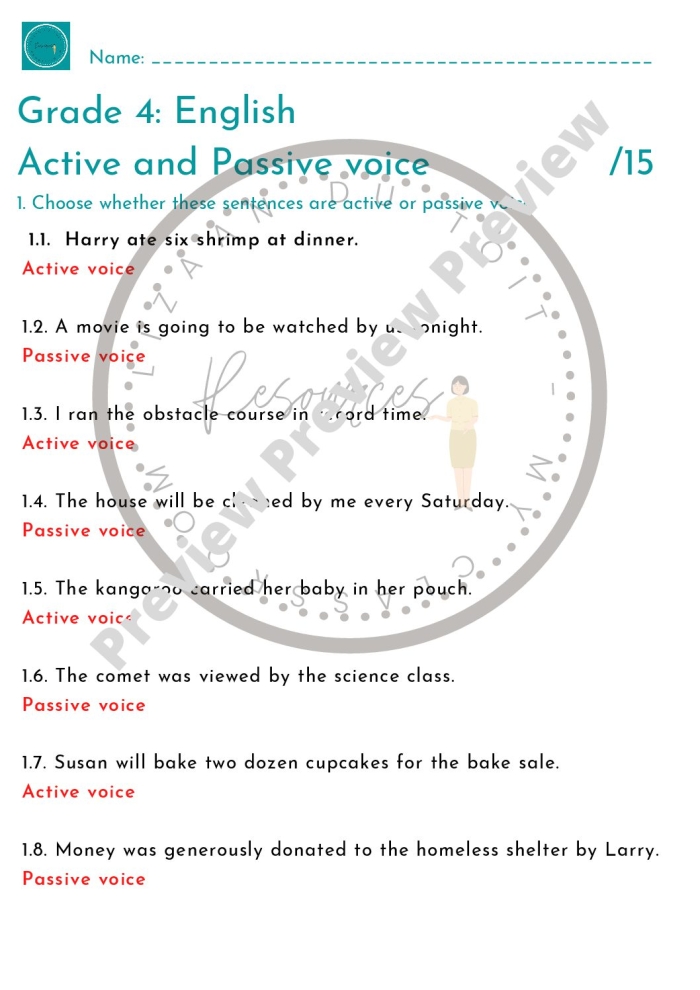
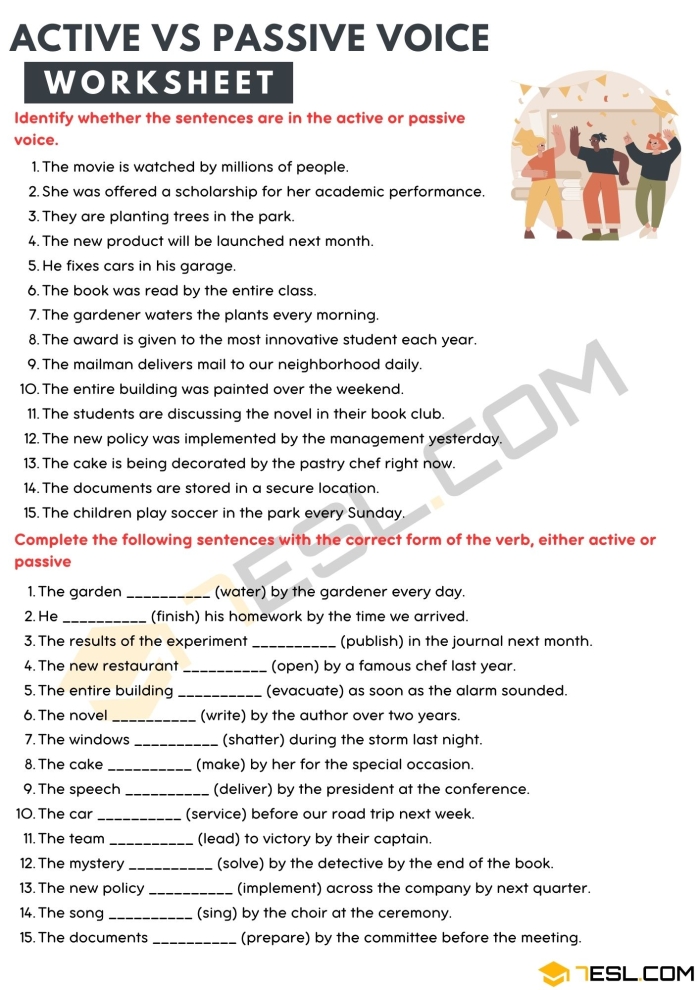
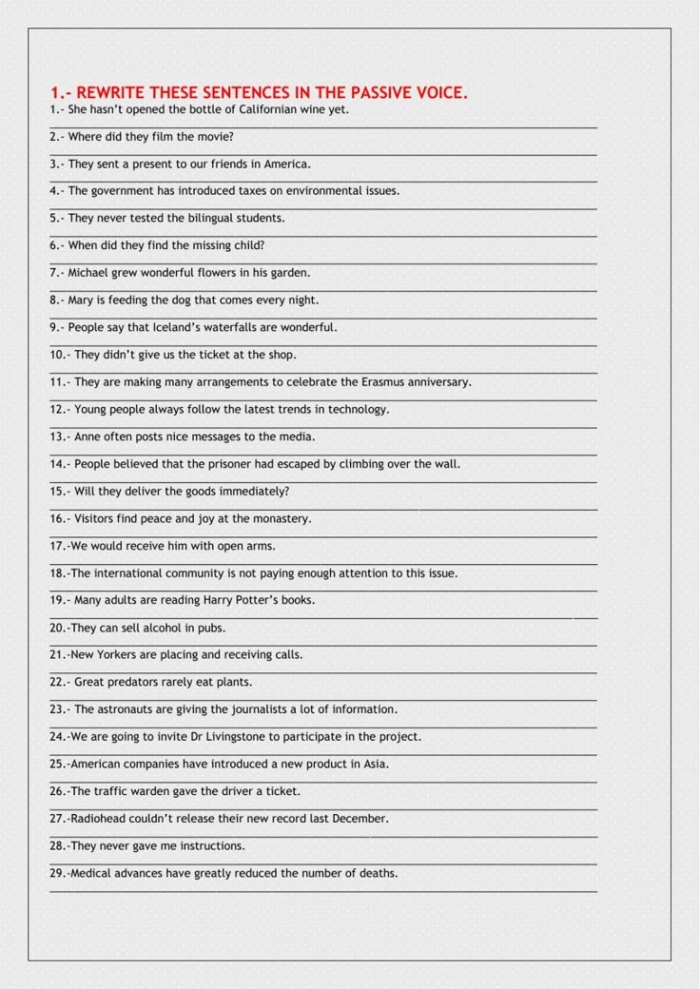
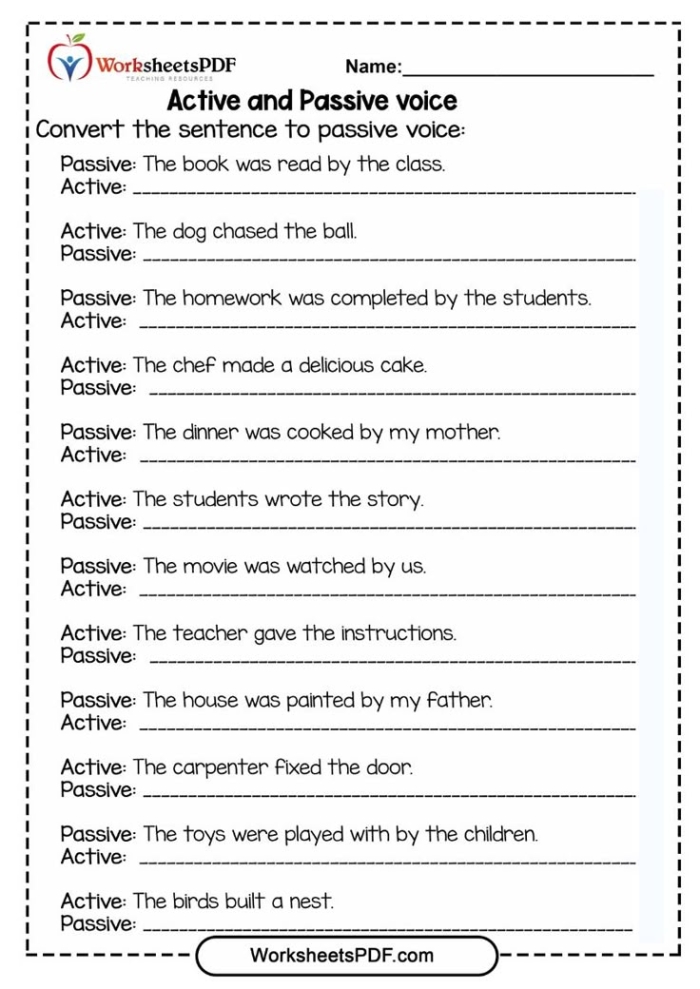
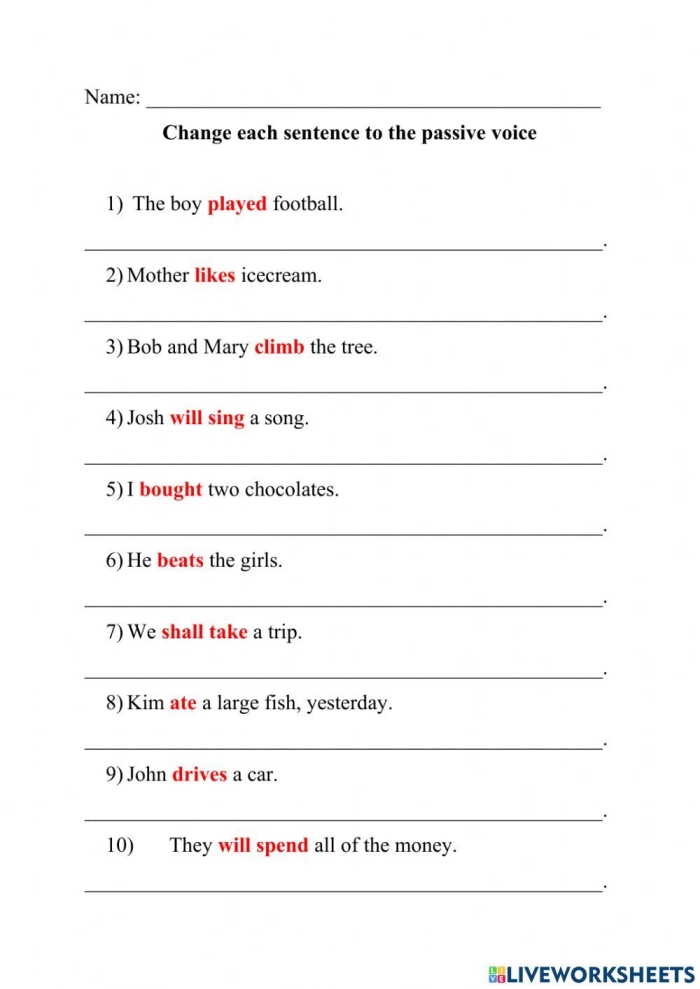
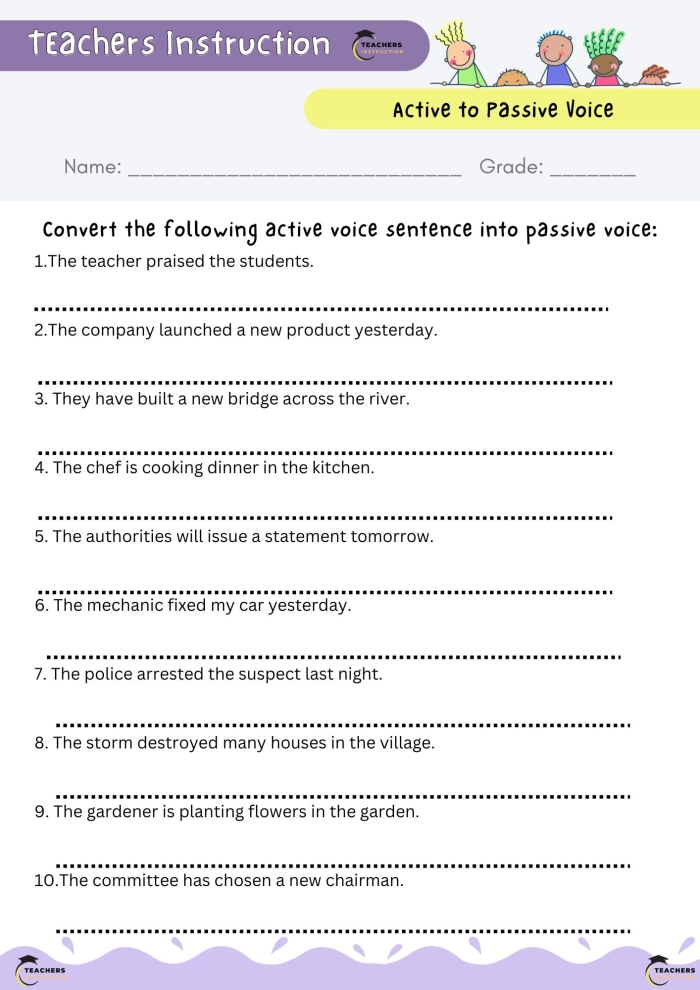
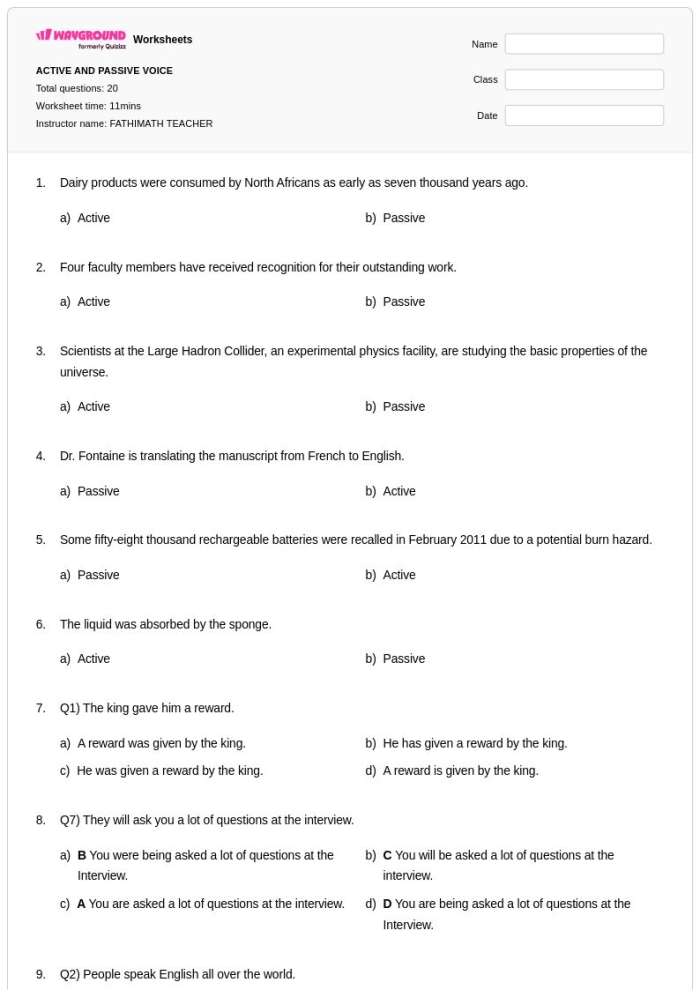
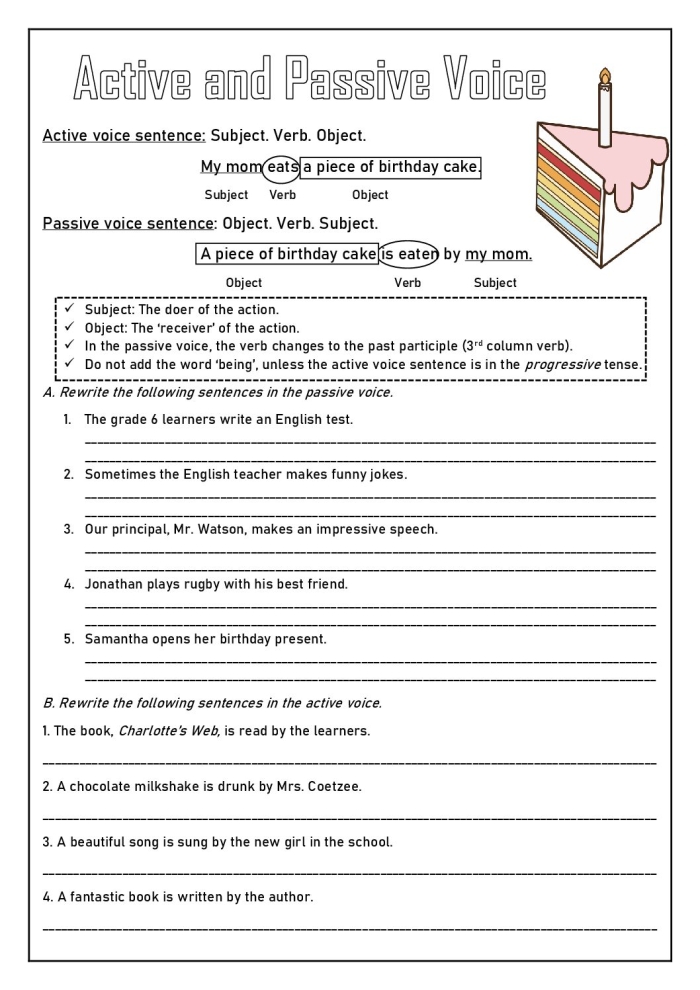
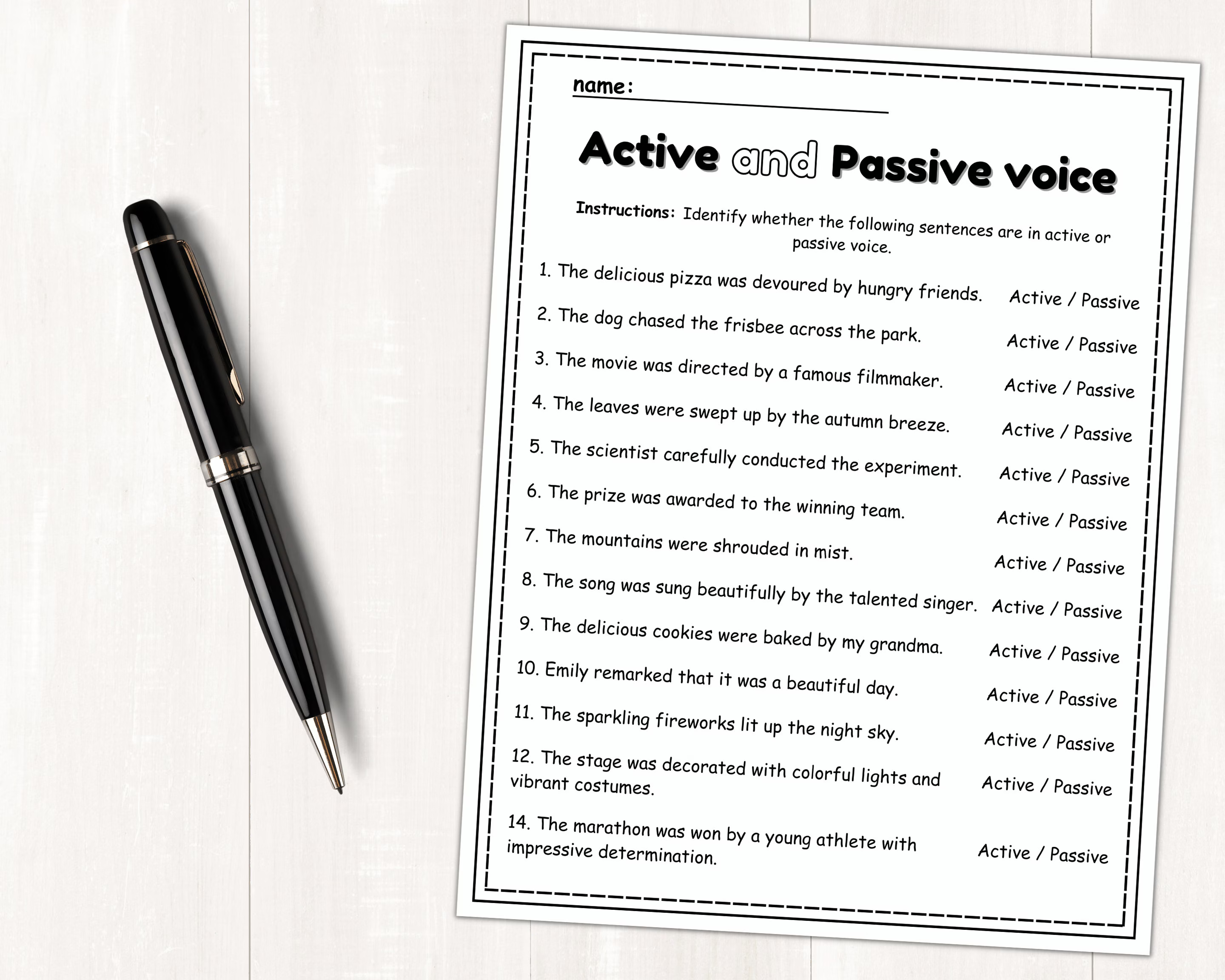
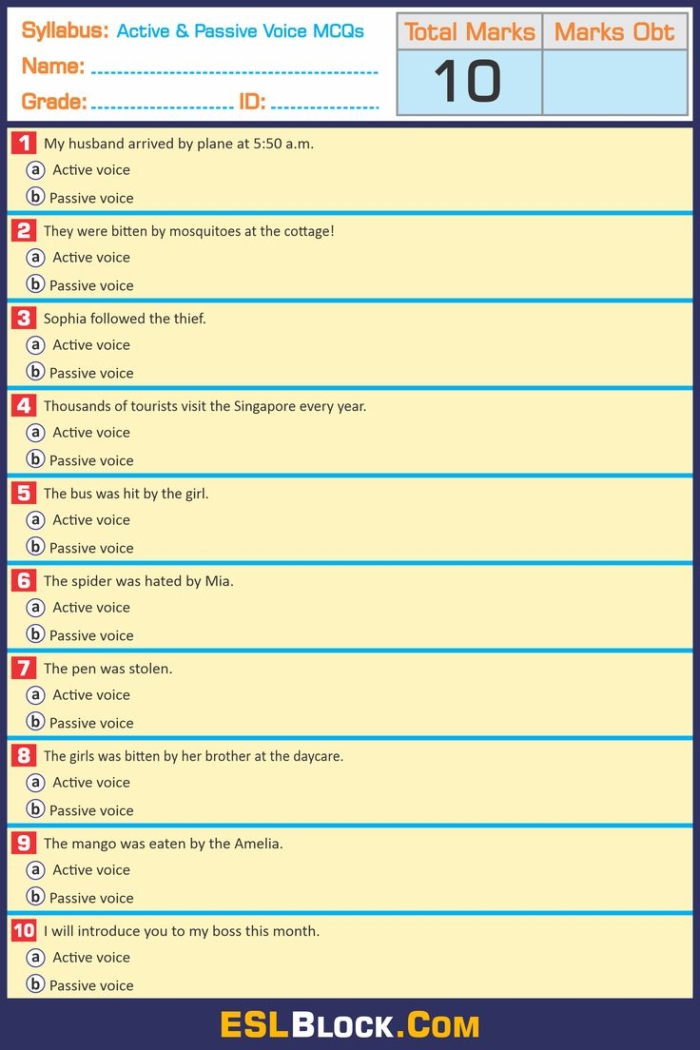
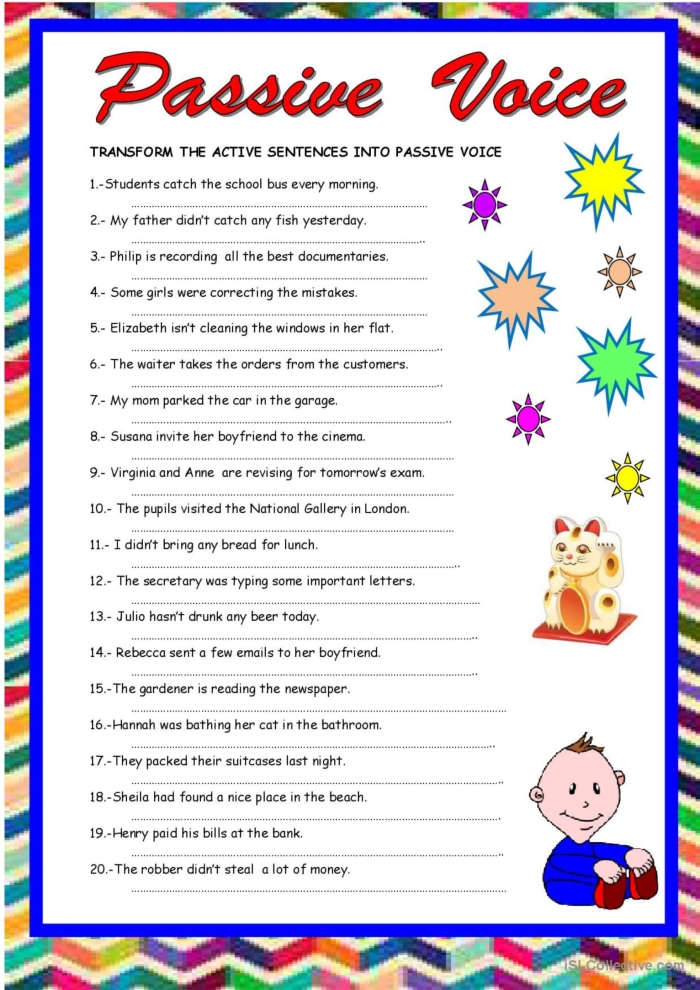
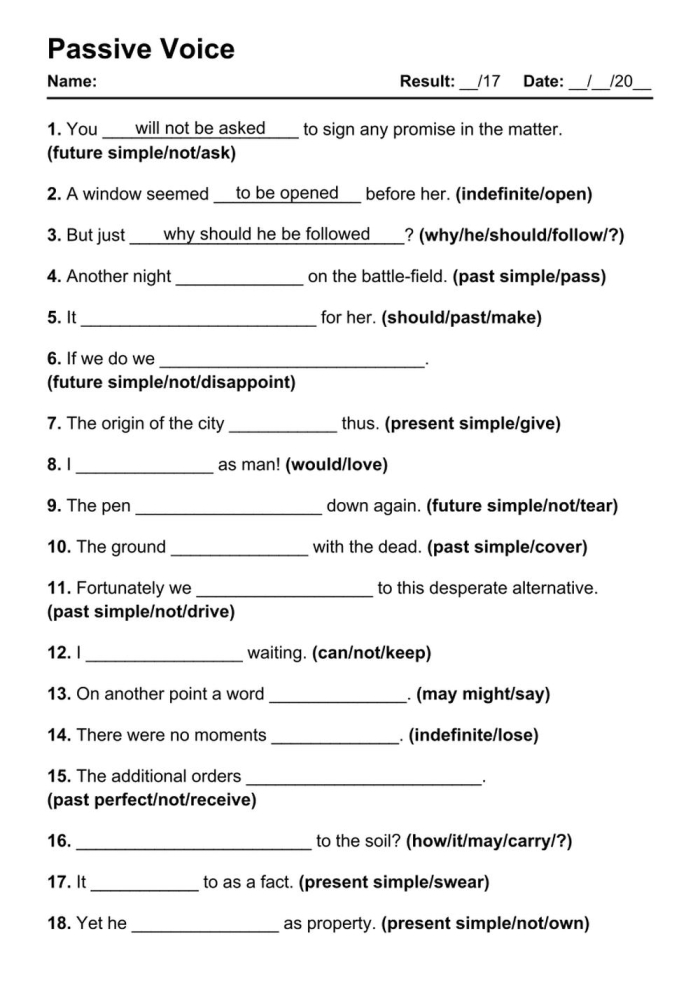
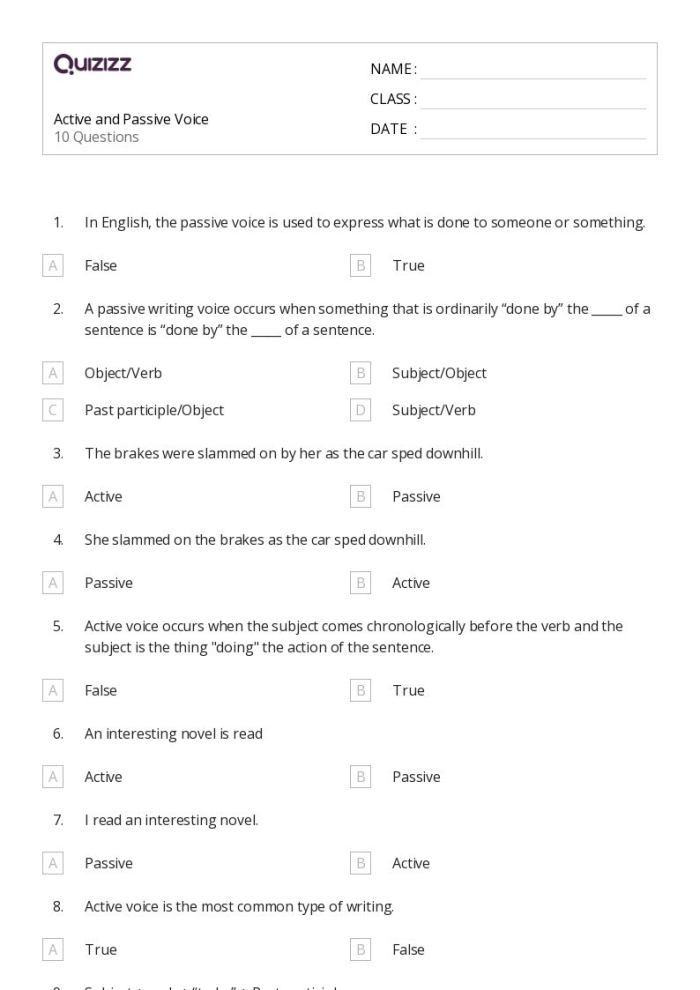
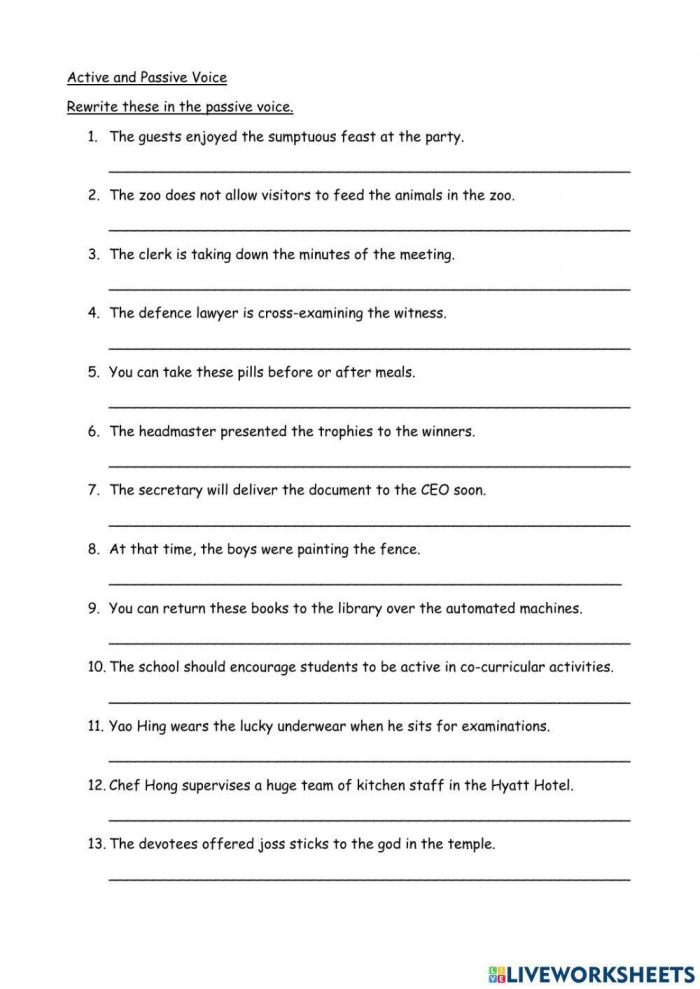
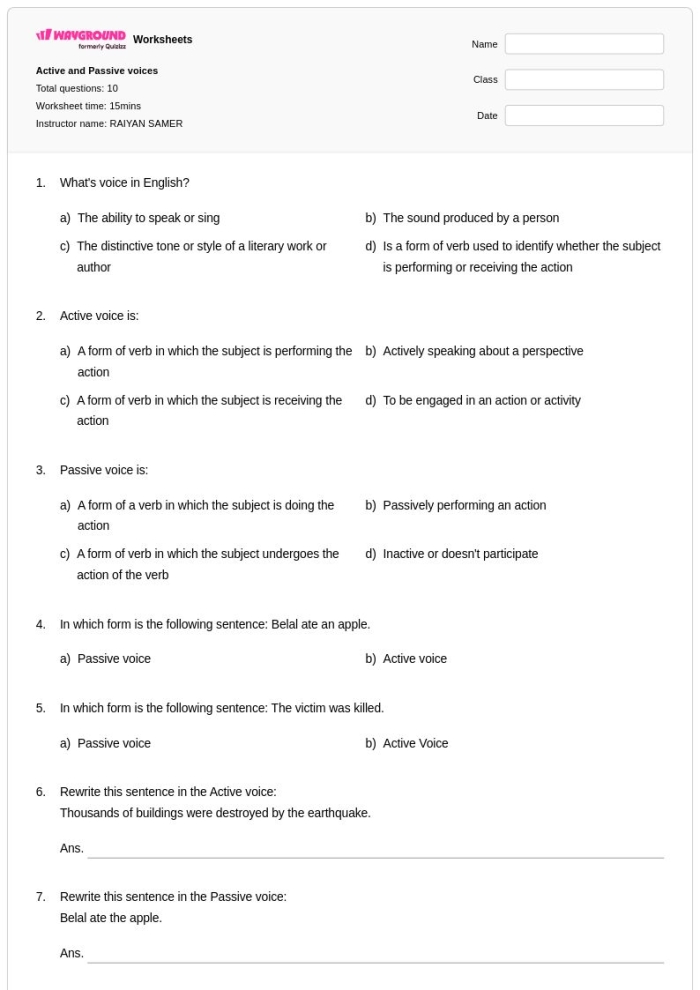
Understanding the difference between active and passive voice is crucial for students, especially in eighth grade, where language skills become increasingly sophisticated. This grammar worksheet provides an effective way to give students practice in identifying these two types of voice through various sentences.
Active voice is straightforward: the subject performs the action. For example, “The scientist conducted the experiment” clearly shows who is doing what. In contrast, passive voice shifts the focus away from the subject. In this case, the sentence would read, “The experiment was conducted by the scientist.” This subtle shift can change the emphasis and clarity of a sentence, making it vital for students to understand both forms.
By using this worksheet, students can engage in activities that require them to identify whether sentences are written in active or passive voice. This practice not only reinforces their understanding of voice but also enhances their overall writing skills. When students learn to recognize the difference, they can choose which voice to use more effectively, tailoring their writing to better suit their audience or purpose.
Incorporating lessons about active and passive voice into physical science contexts can also make the learning experience more relevant. For instance, students can analyze sentences from scientific articles or textbooks, identifying the voice used in descriptions of experiments or discoveries. This real-world application helps solidify their understanding and shows the importance of precise language in scientific communication.
For additional resources, educators can explore other worksheets that focus on different aspects of writing and language, such as gratitude acrostic poems or literal and nonliteral language. These materials can further enrich students’ learning experiences, providing them with diverse opportunities to enhance their writing skills.
Grab These Worksheets Now