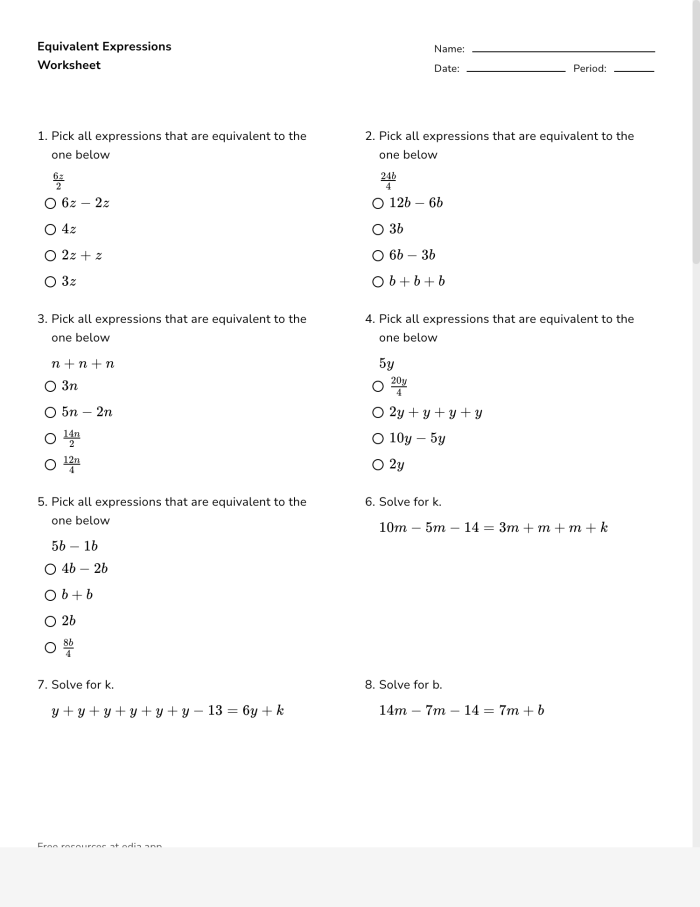
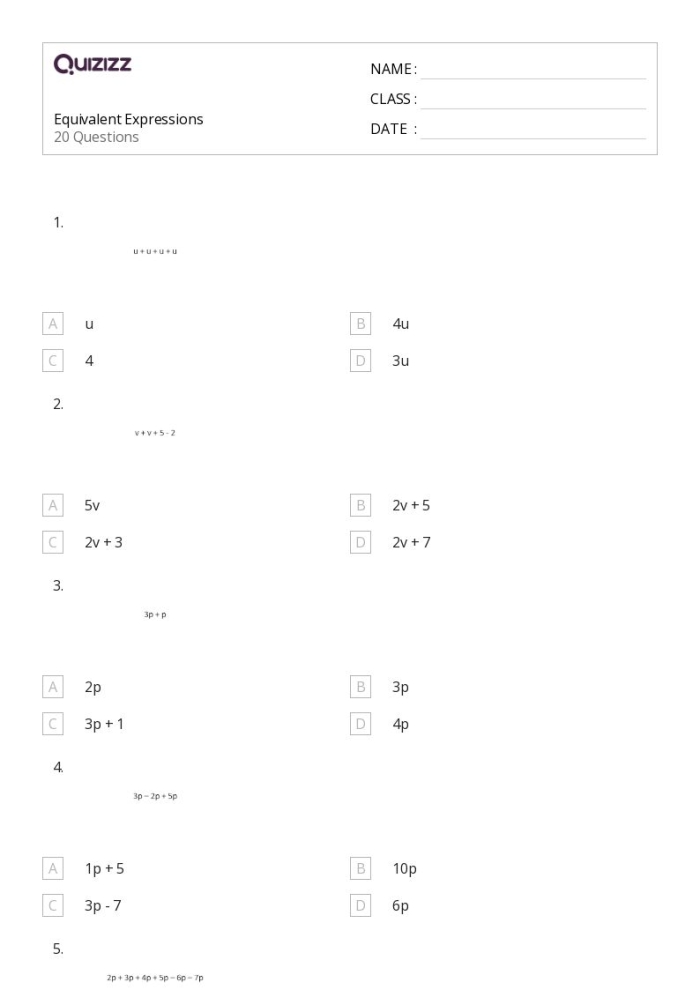
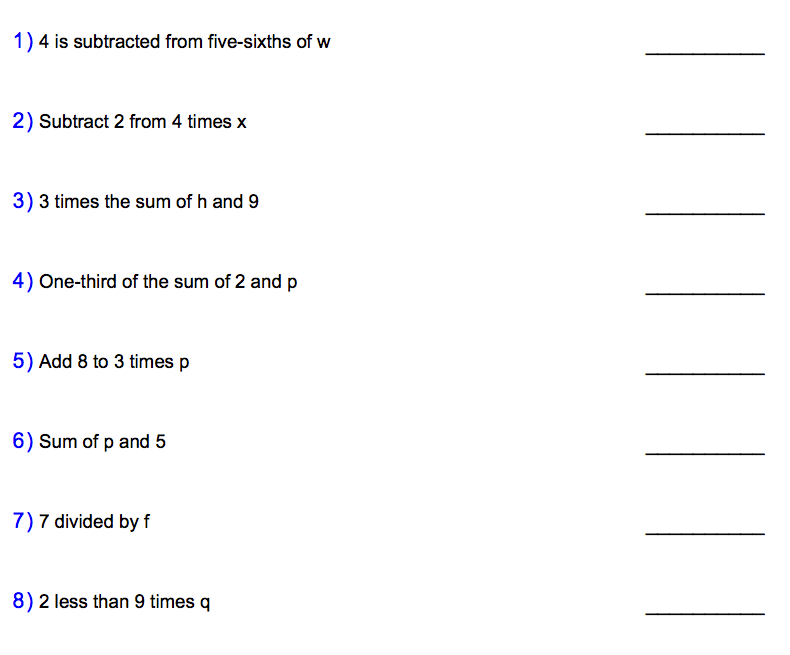
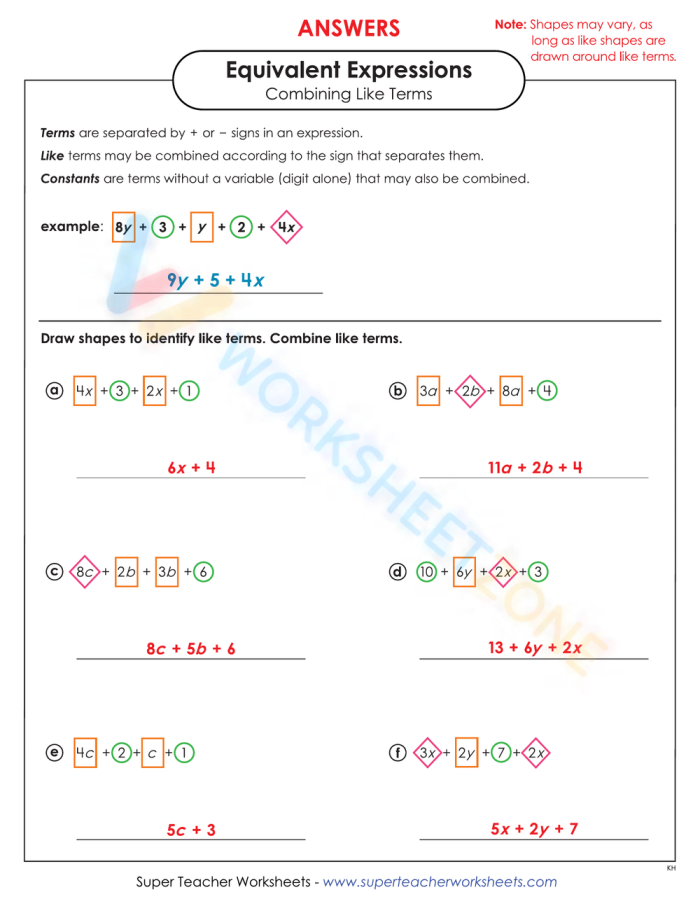
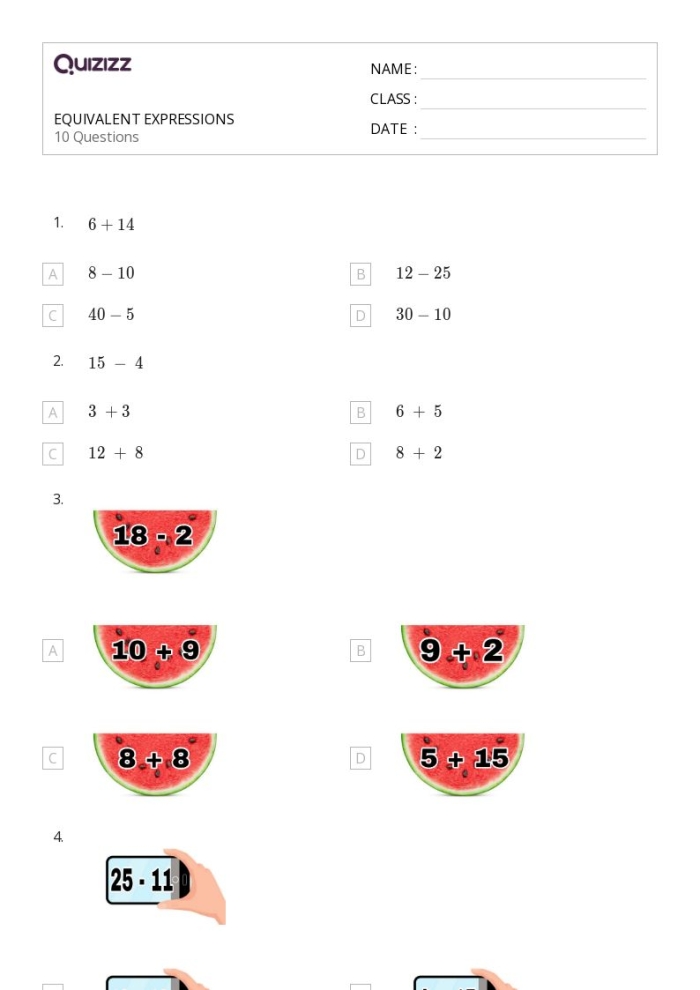
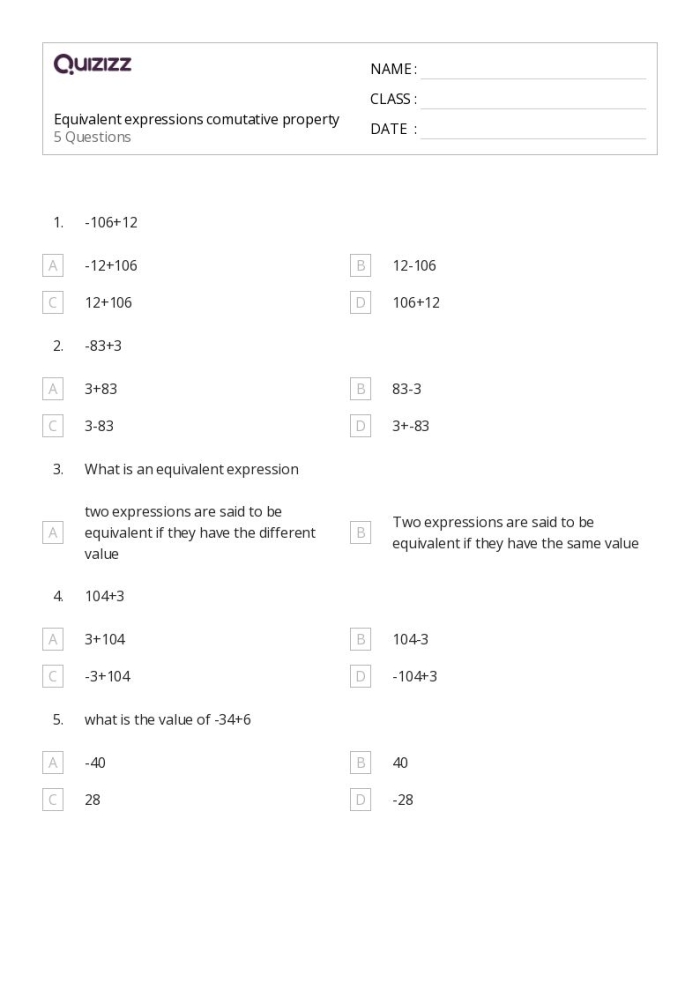
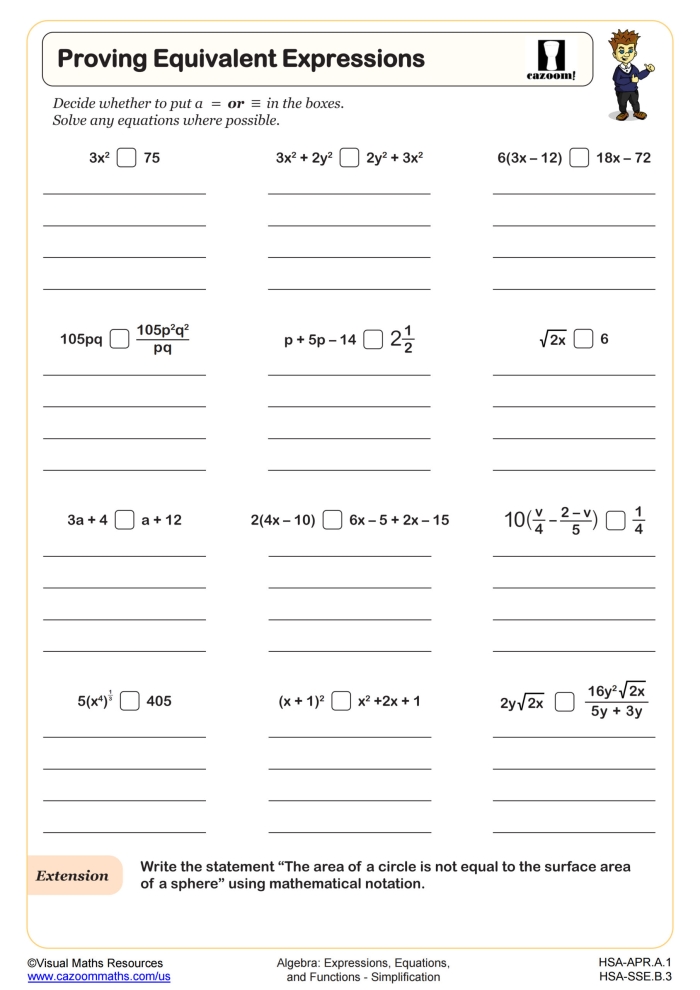
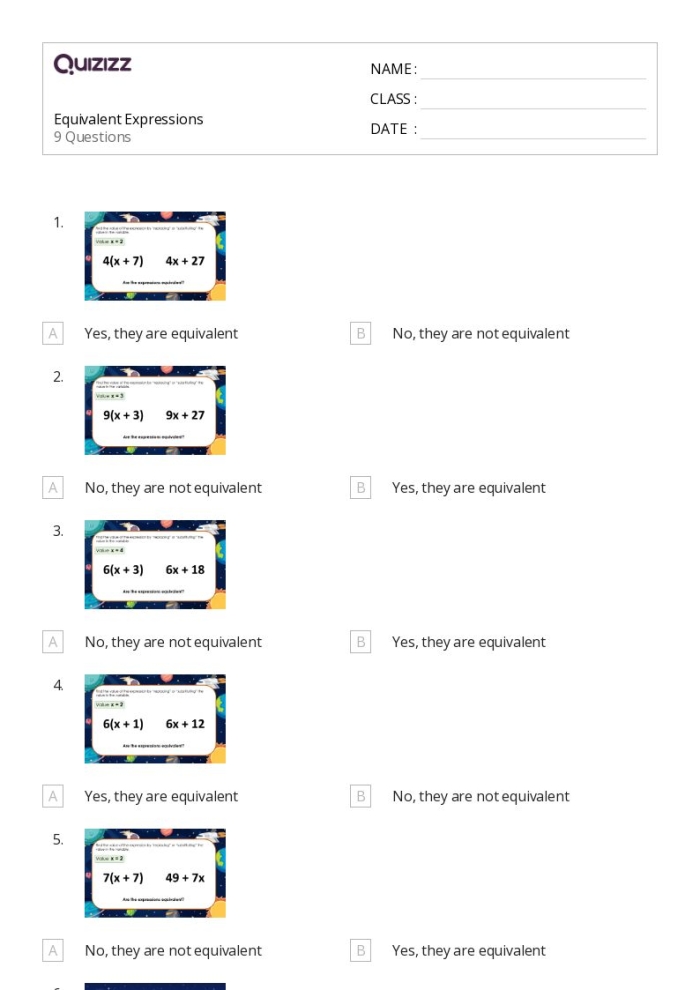
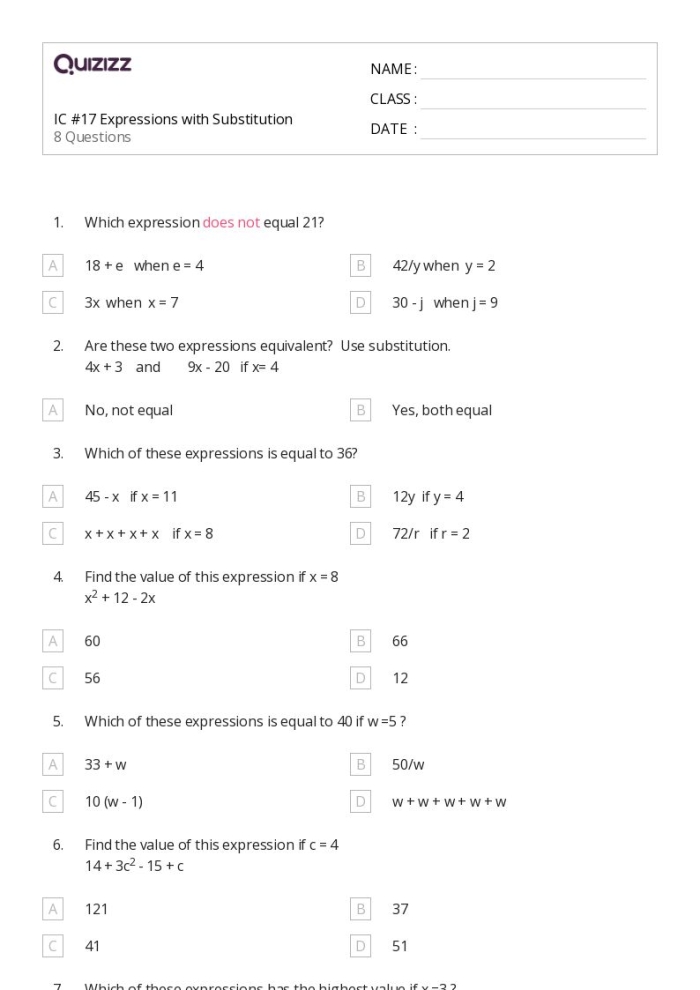
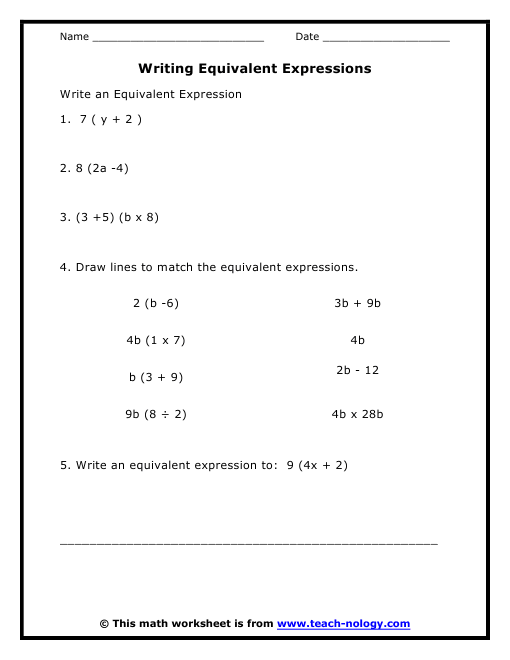
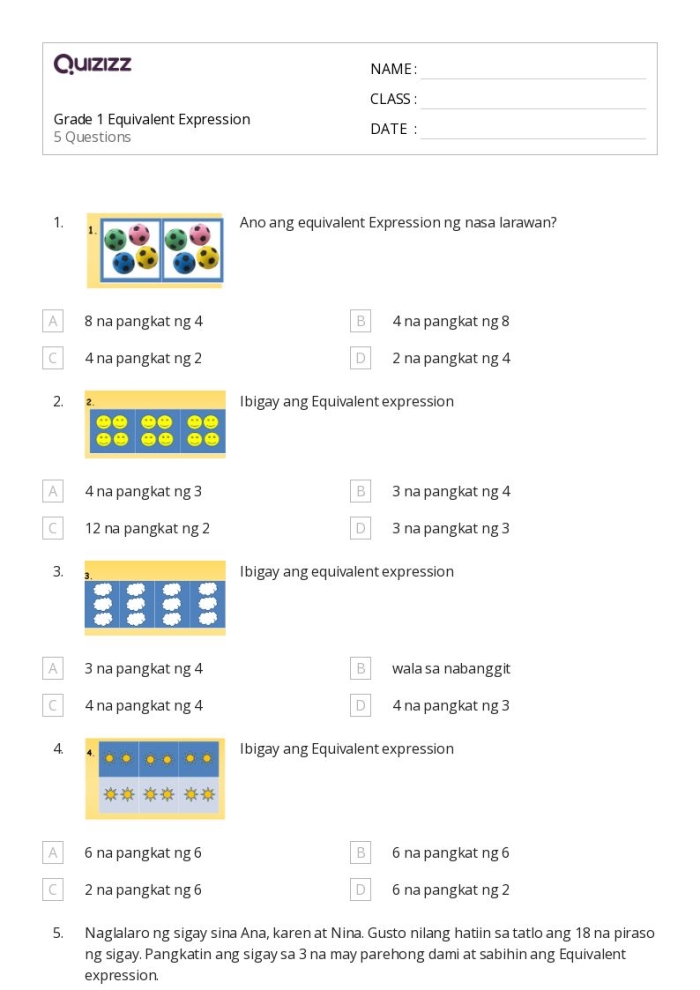
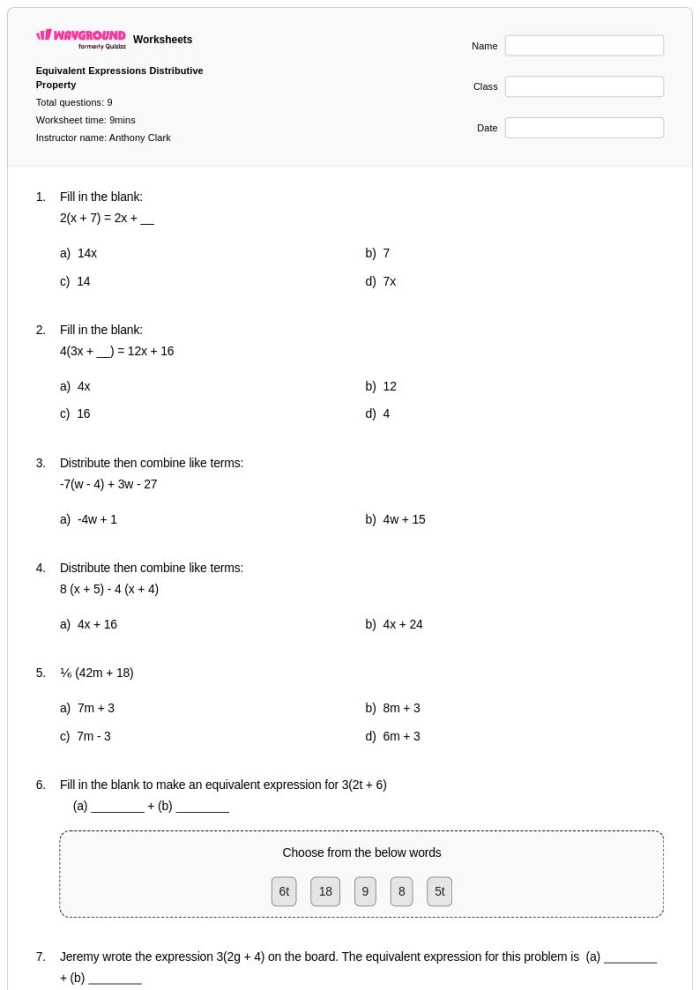
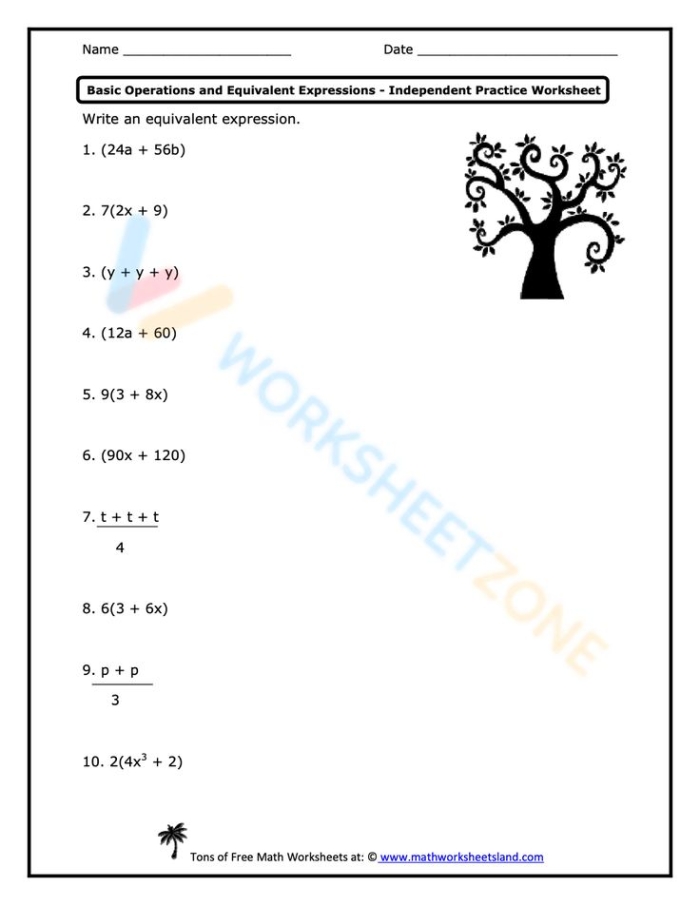
Sixth-grade algebra can feel abstract and intimidating when students first encounter it, but worksheets focused on writing equivalent expressions transform the experience into something concrete and manageable. These materials give students the chance to practice recognizing patterns and applying fundamental mathematical properties in ways that actually stick.
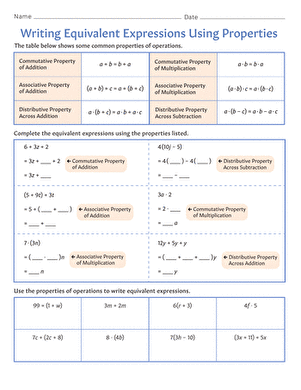
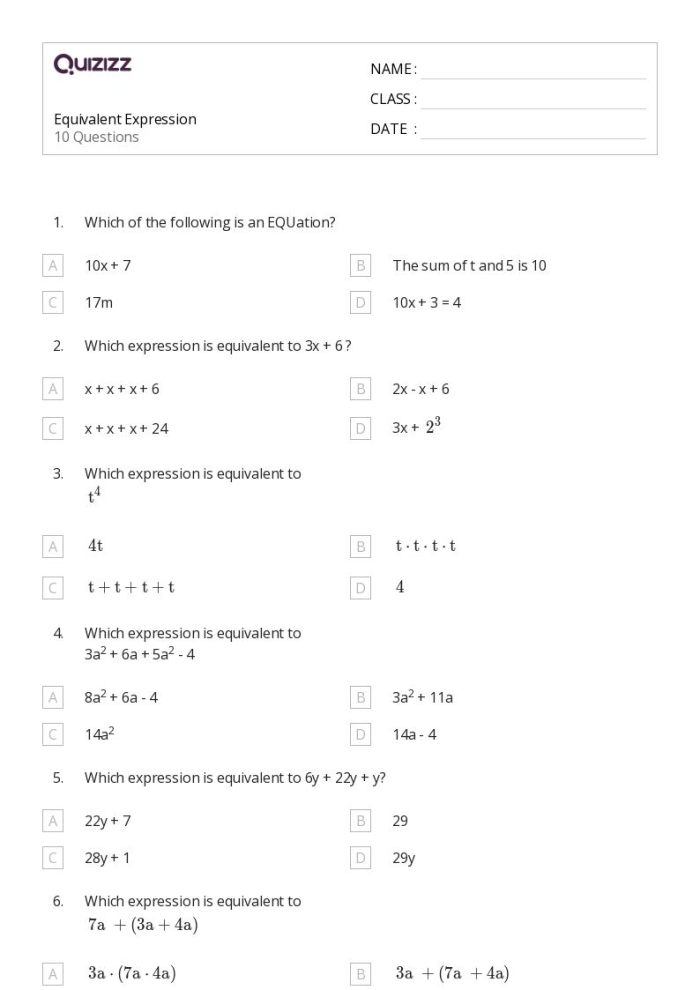
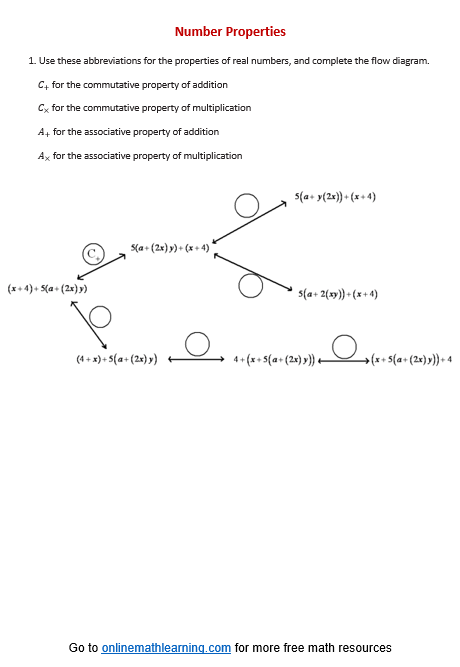
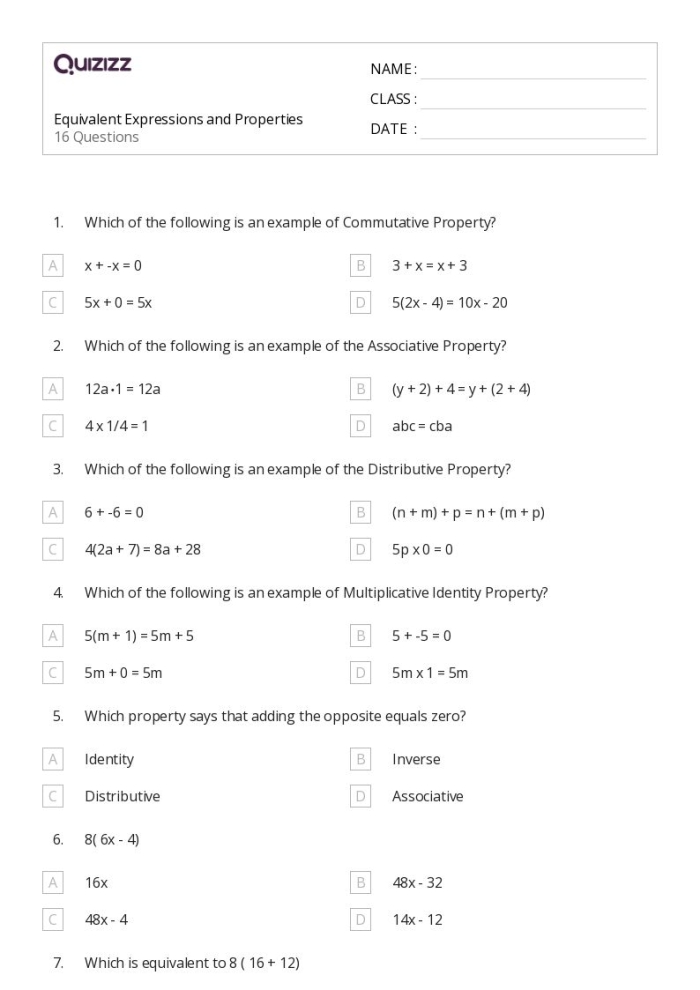
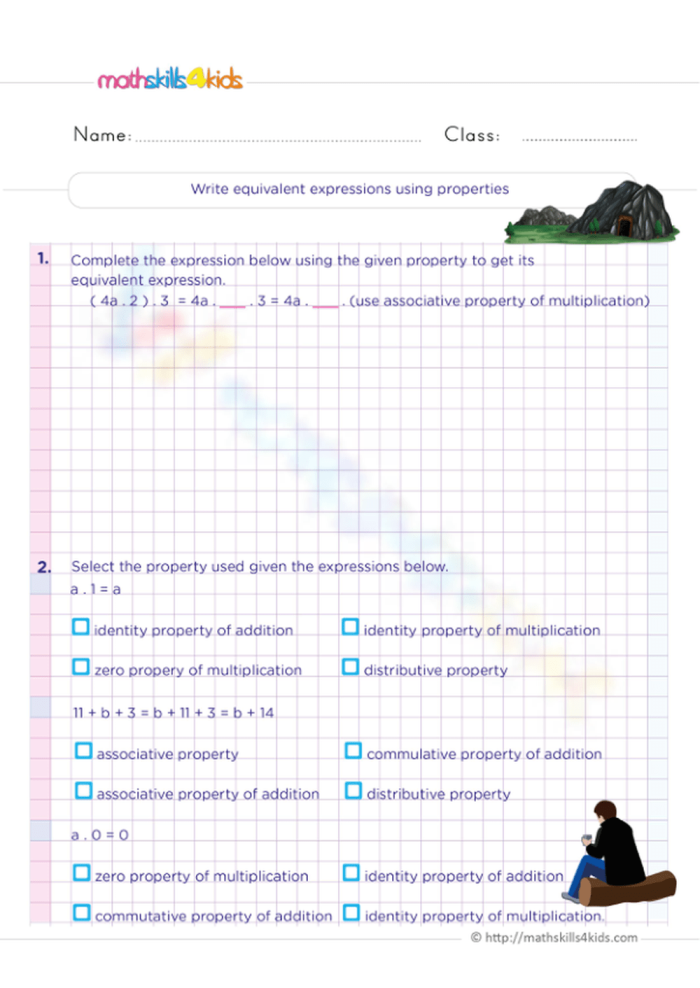
The core concept here involves helping students understand that different-looking expressions can represent the same value. When a student writes 3 + 5 and 5 + 3 as equivalent expressions, they’re applying the commutative property of addition. Similarly, recognizing that 2 × (3 × 4) equals (2 × 3) × 4 demonstrates the associative property of multiplication. These aren’t just abstract rules to memorize. They’re tools that make computation easier and faster.
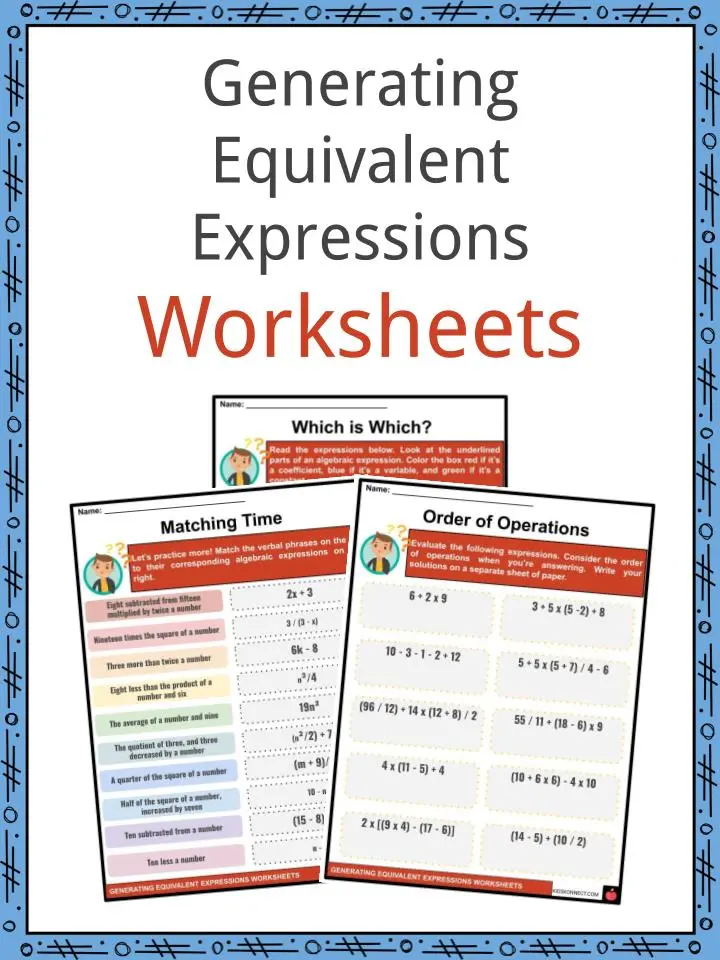
A well-designed worksheet guides students through concrete examples before pushing them toward independent practice. Early problems might show the original expression and ask students to rewrite it using a specific property. Later problems require students to identify which property applies without being told. This progression builds confidence and deepens understanding.
The benefit of using these worksheets extends beyond algebra itself. Students who develop fluency with equivalent expressions find it easier to simplify fractions, solve equations, and tackle more complex algebraic concepts in seventh and eighth grade. The skills transfer across mathematical domains.
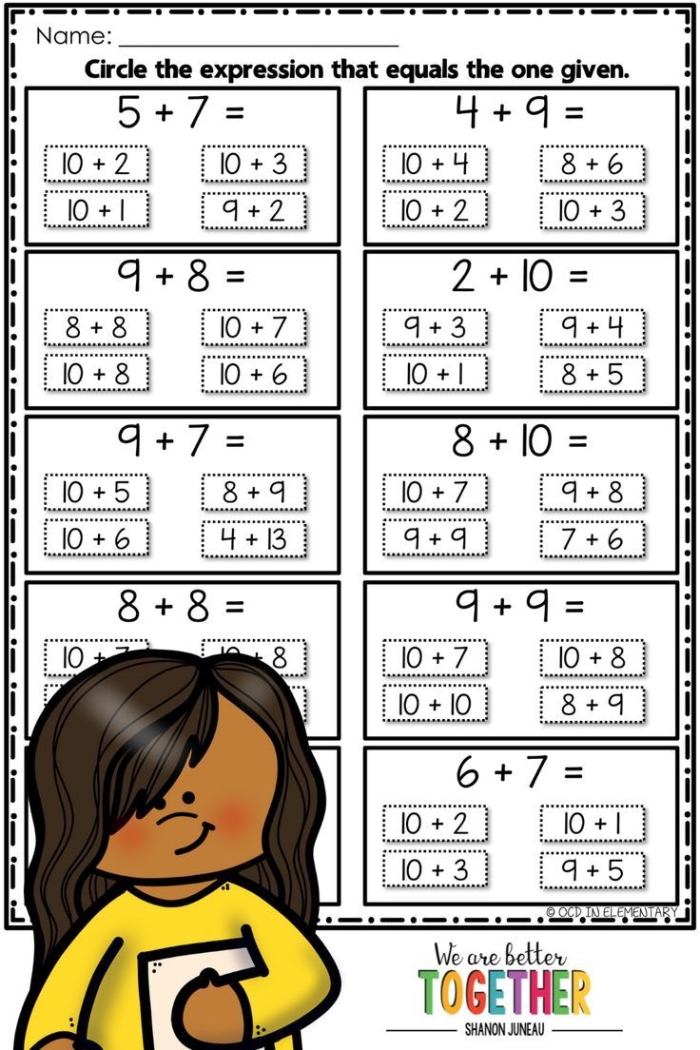
Pairing algebra practice with other subjects reinforces learning across the curriculum. For instance, combining this work with grammar exercises that teach sentence structure helps students understand how different forms can express the same idea. You might also explore how addition concepts develop in earlier grades to appreciate the foundation sixth graders build upon.
When students engage with these worksheets consistently, they develop the algebraic thinking patterns that support success in higher mathematics. The repetition solidifies understanding without becoming tedious when problems vary meaningfully.
Grab These Worksheets Now