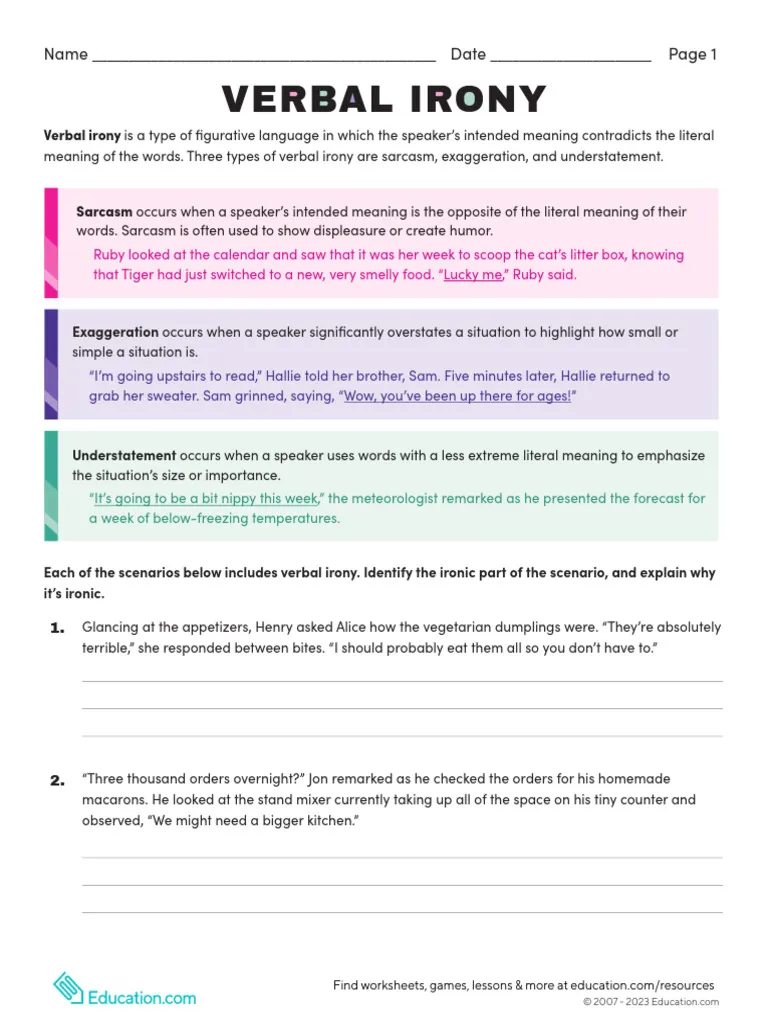
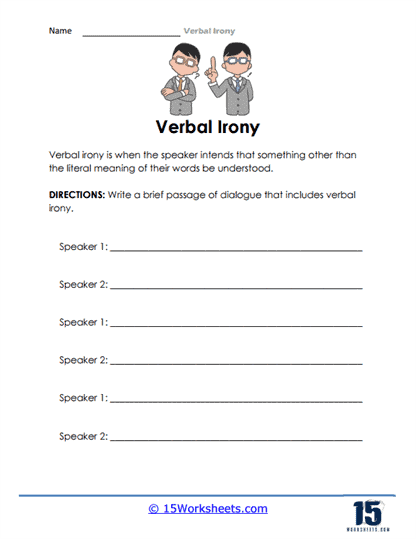
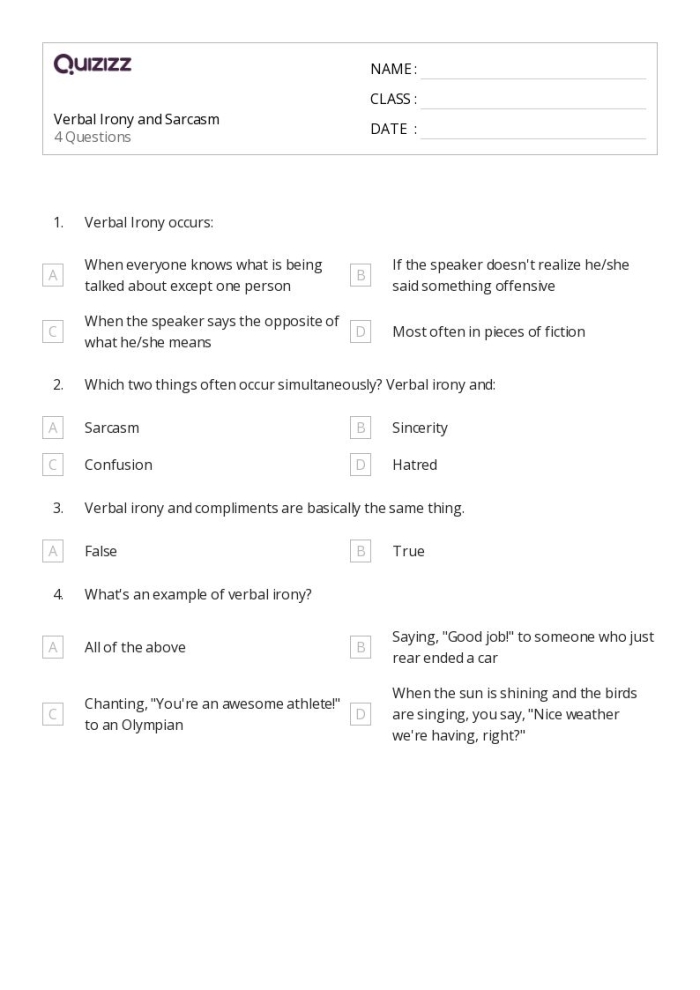
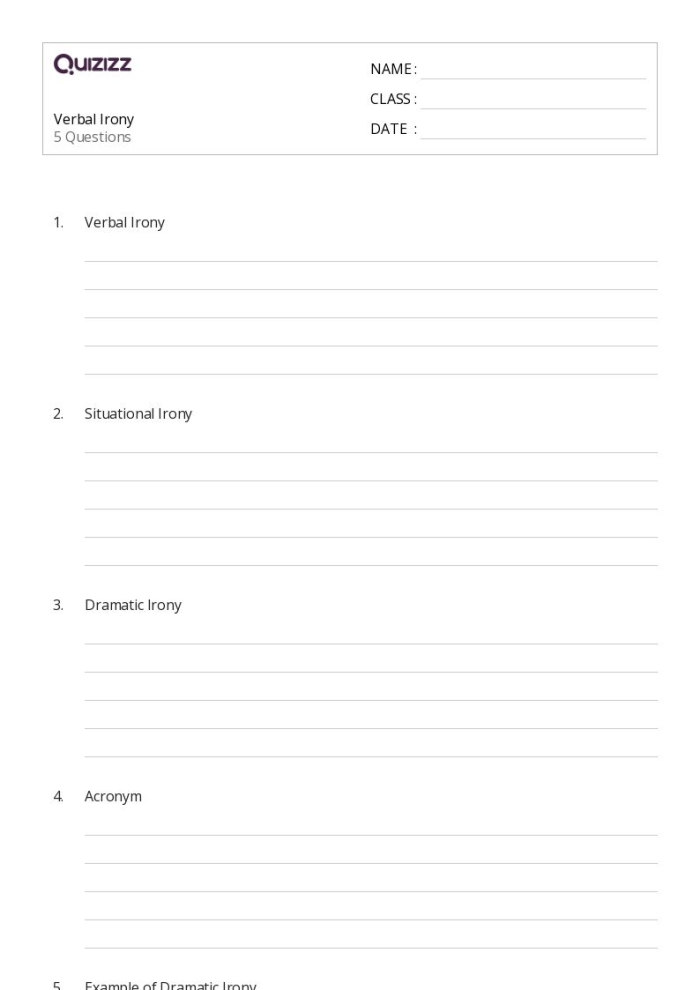
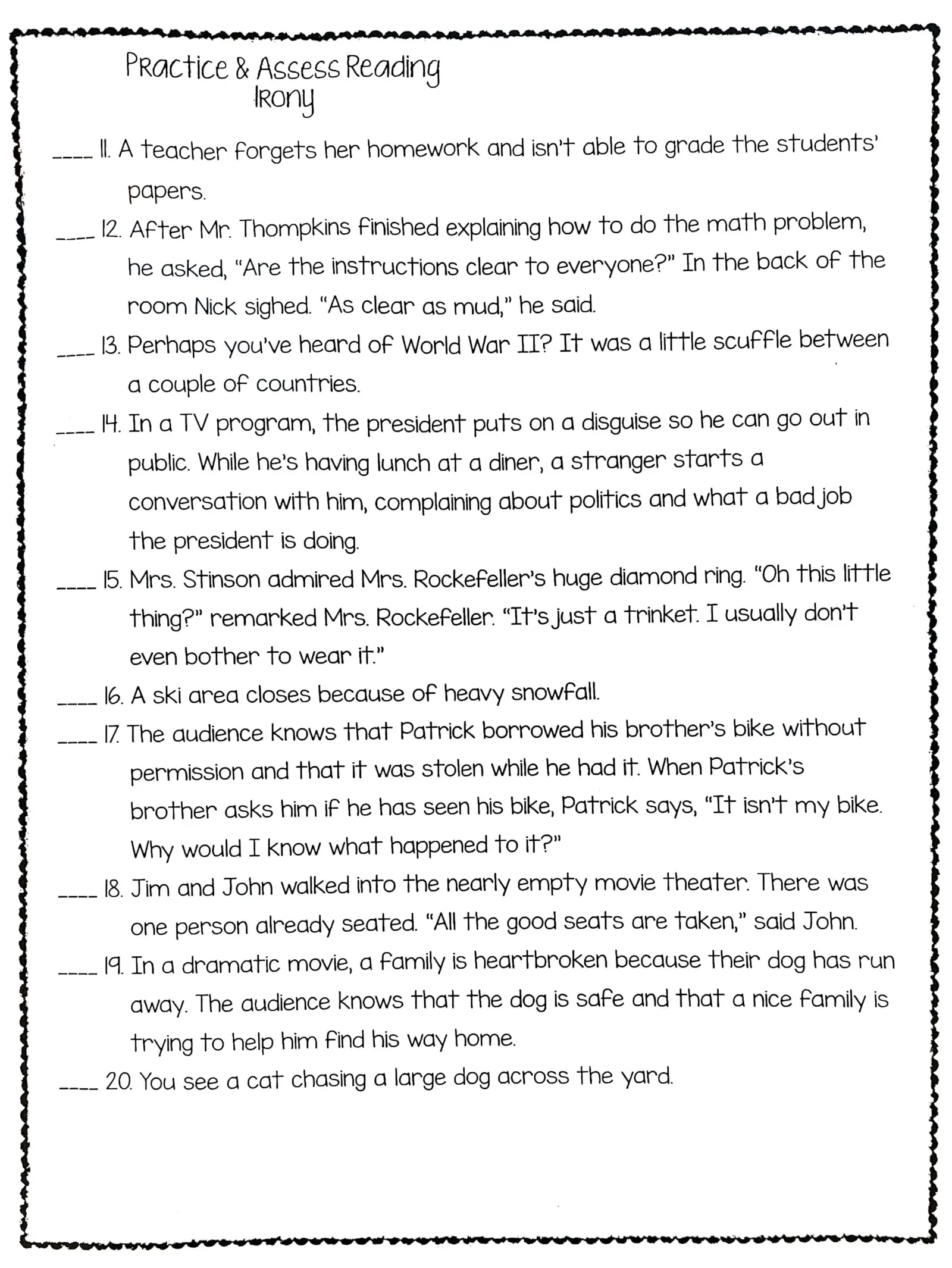
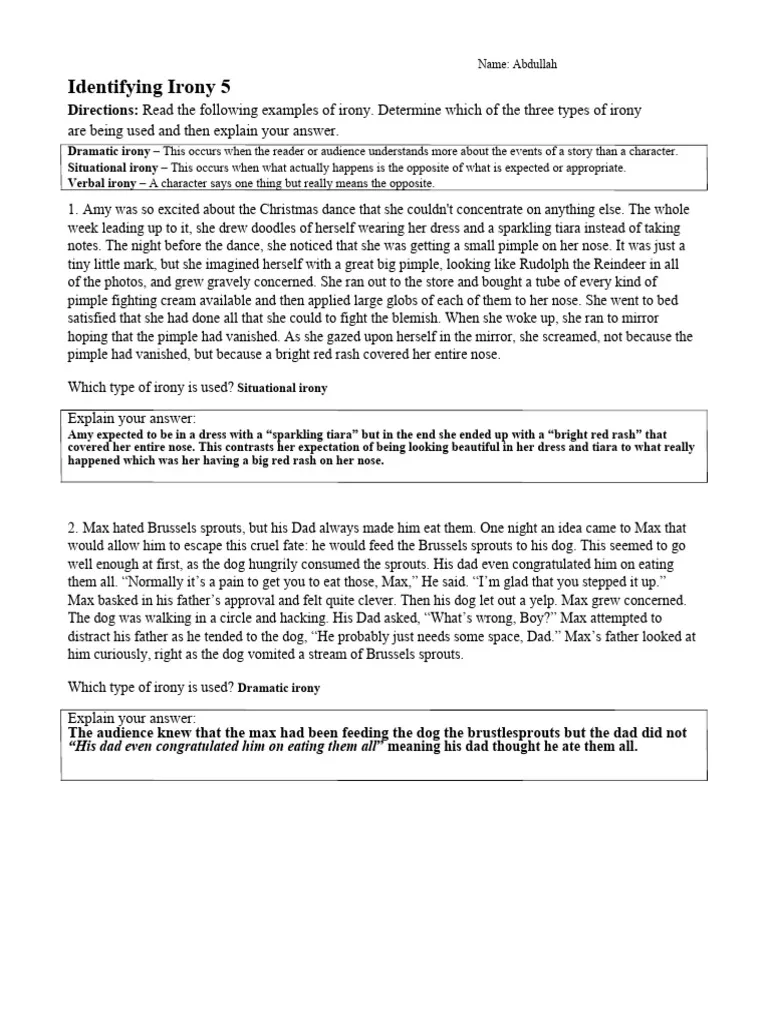
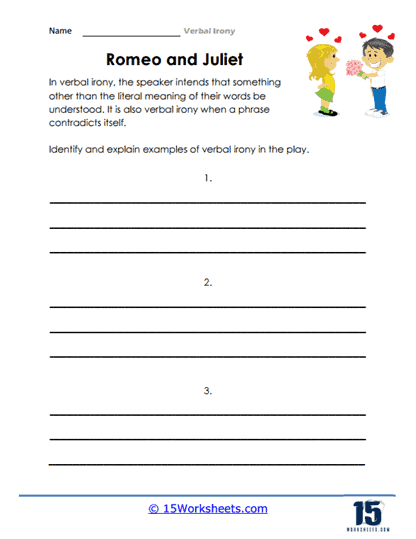
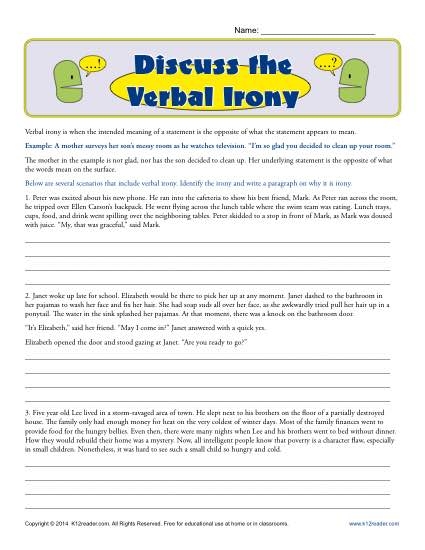
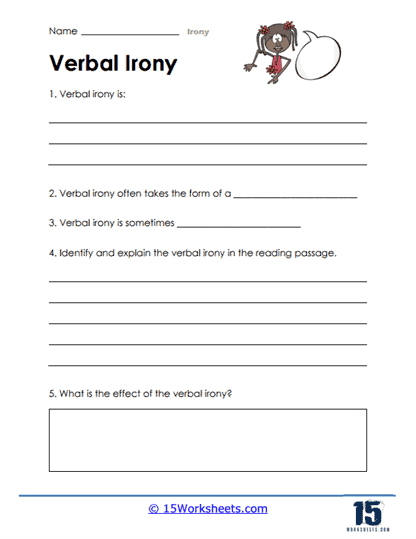
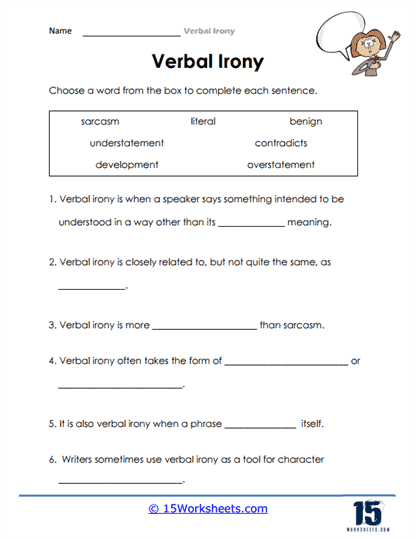
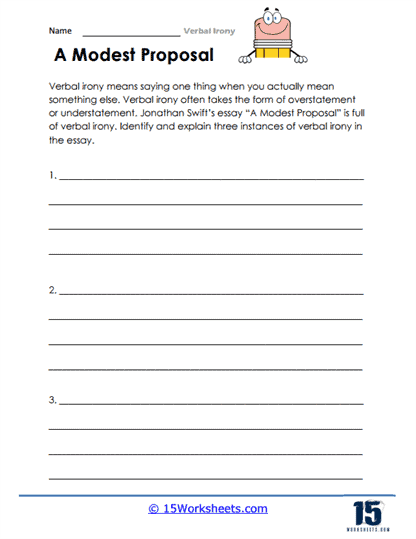
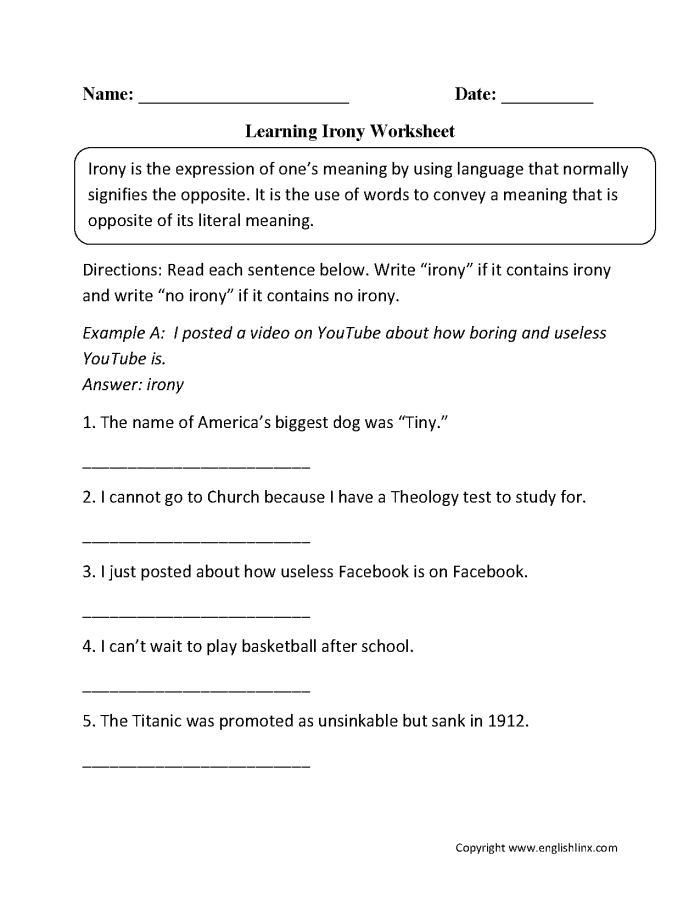
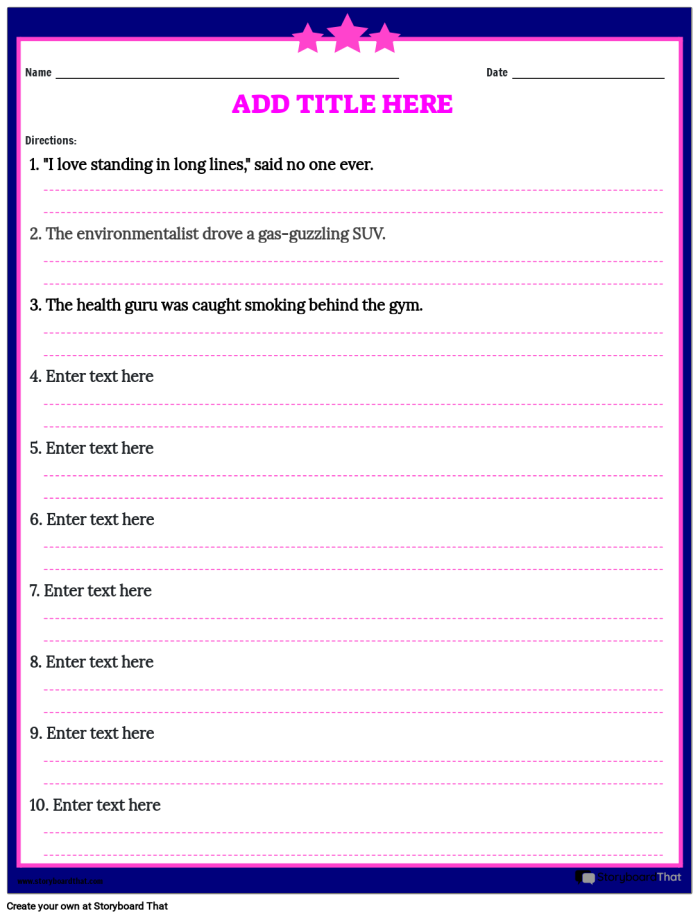
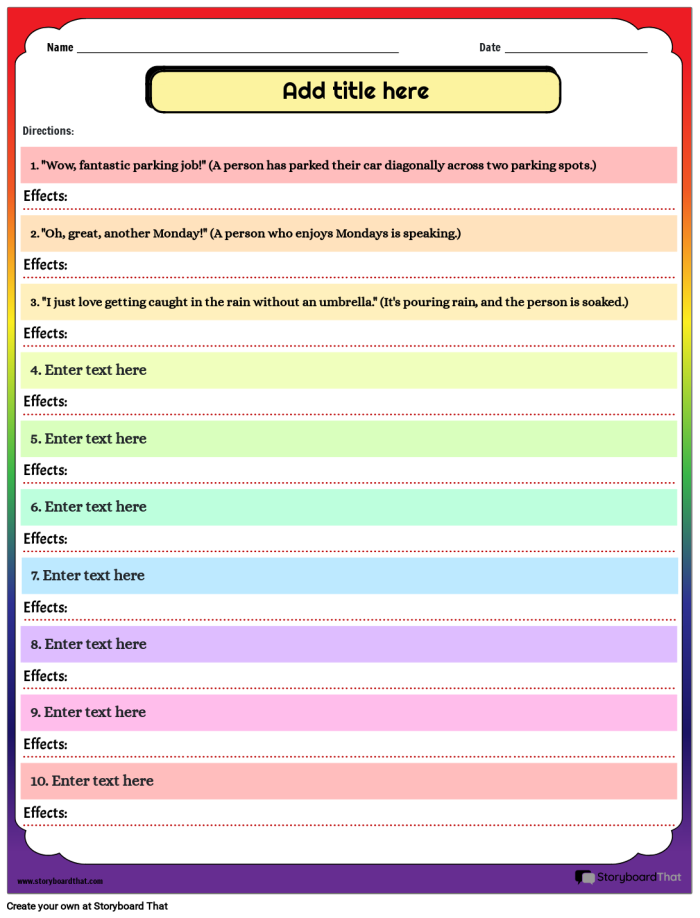
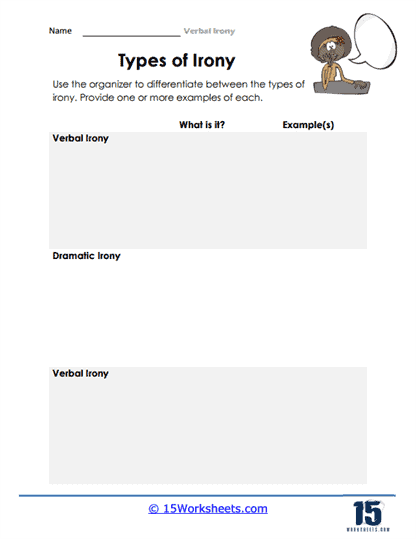
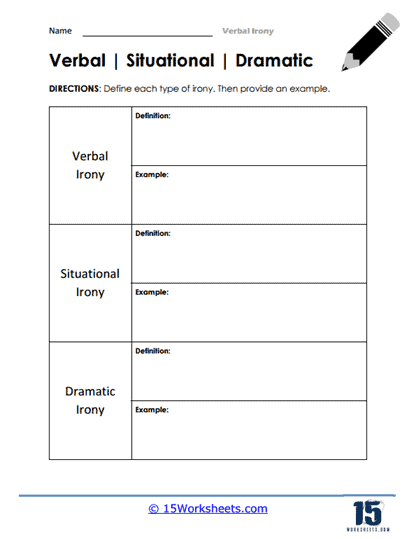
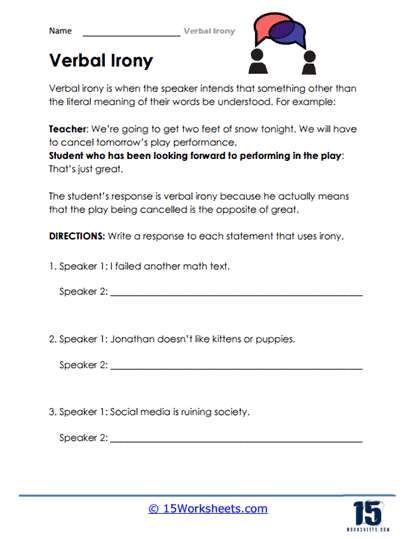
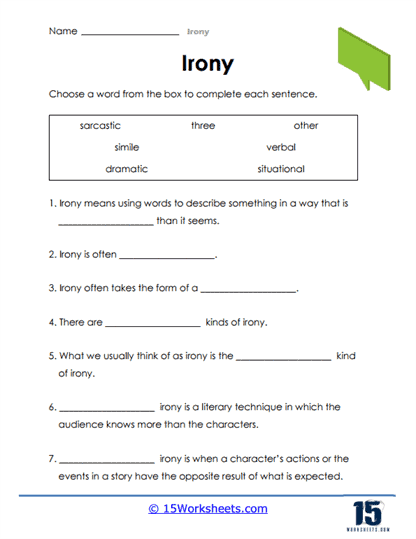
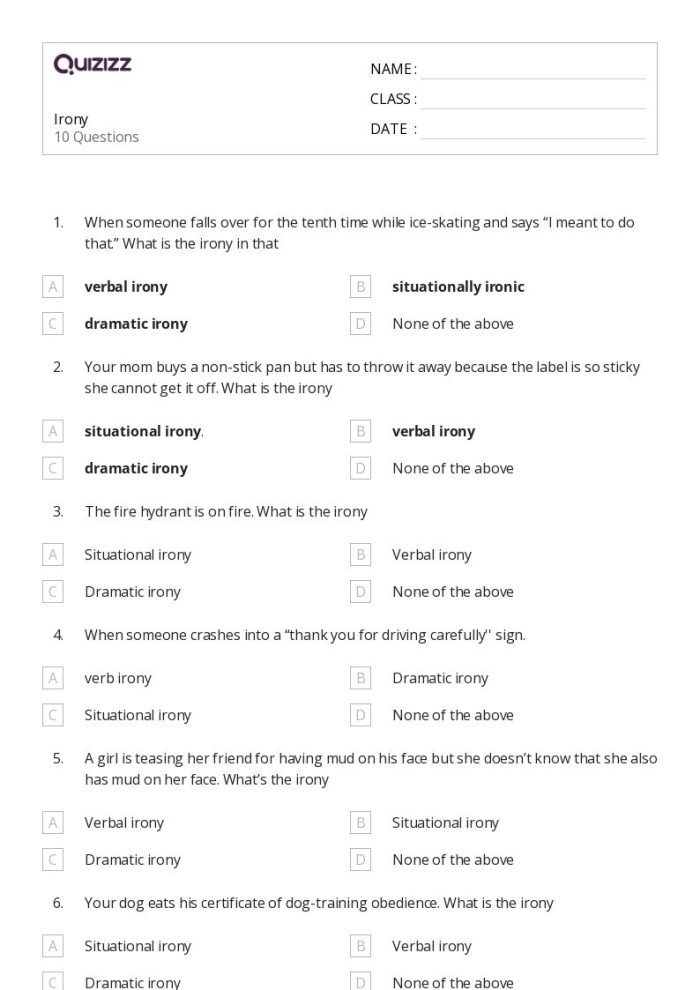
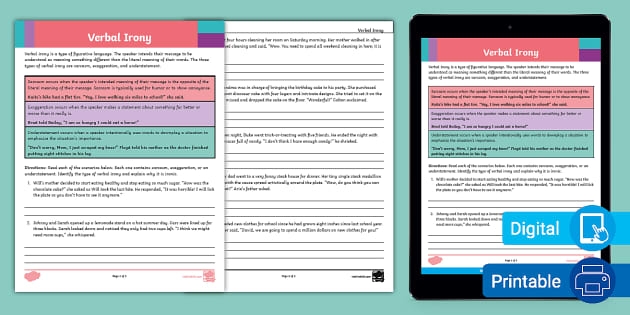
Verbal irony is a fascinating form of expression that can add depth and humor to language. It involves saying one thing while meaning another, often with a sharp or witty twist. An engaging way to explore this concept is through a figurative language worksheet focused on sarcasm, exaggeration, and understatement. These elements not only enhance students’ understanding of verbal irony but also cultivate their critical thinking skills.
Students can begin by examining sarcasm, which is often delivered in a mocking tone. For example, if a student hands in a messy assignment and a teacher remarks, “Wow, this is so neat!” the teacher is clearly not praising the work. This exercise encourages students to identify sarcasm in everyday situations, making it relatable and easier to grasp.
Next, the worksheet delves into exaggeration, often used for dramatic effect. A classic example is saying, “I’m so hungry I could eat a horse.” This phrase doesn’t mean one would actually consume such a large animal; instead, it emphasizes a strong feeling of hunger. Understanding exaggeration can help students recognize when language is used creatively, enhancing their own writing skills.
Understatement, on the other hand, is when something is presented as less significant than it is. For instance, saying “It’s just a scratch” when referring to a large dent in a car can be amusing and effective in certain contexts. By exploring these three elements, students develop a richer appreciation for language and its nuances.
Using a structured worksheet can help eighth-grade students practice these concepts effectively. They can work through examples and create their own to share with peers. This hands-on approach not only reinforces learning but also encourages collaboration and discussion, making the learning process enjoyable. For more resources, educators might find it beneficial to explore worksheets on topics like the Pythagorean theorem or two-way frequency tables.
Printable Worksheets for Practice