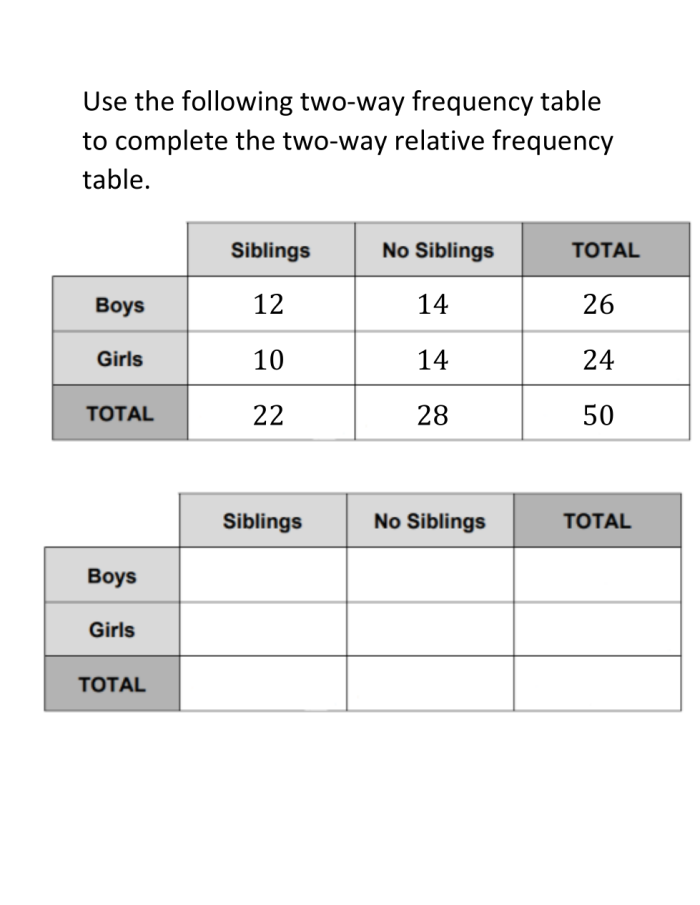
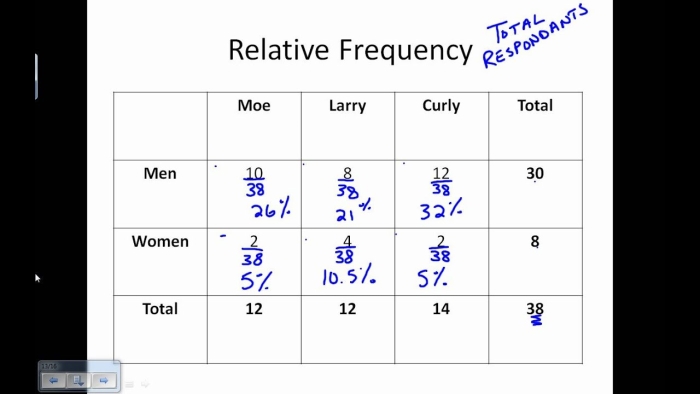
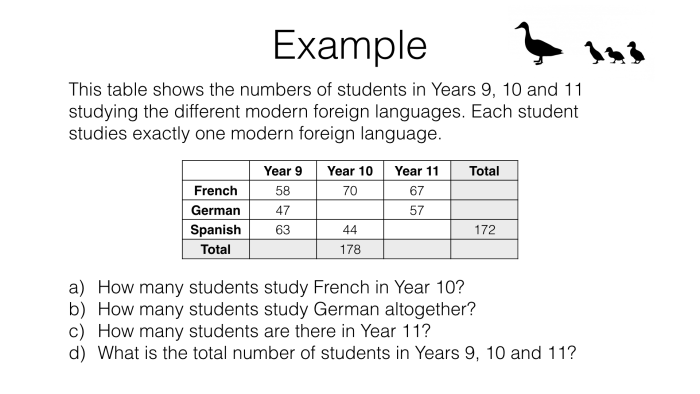
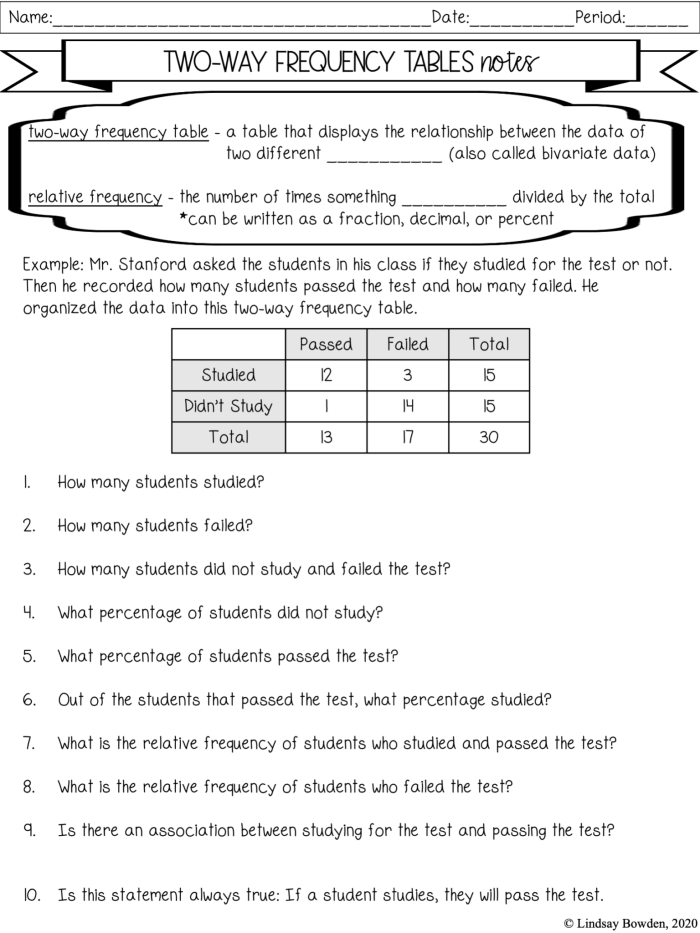
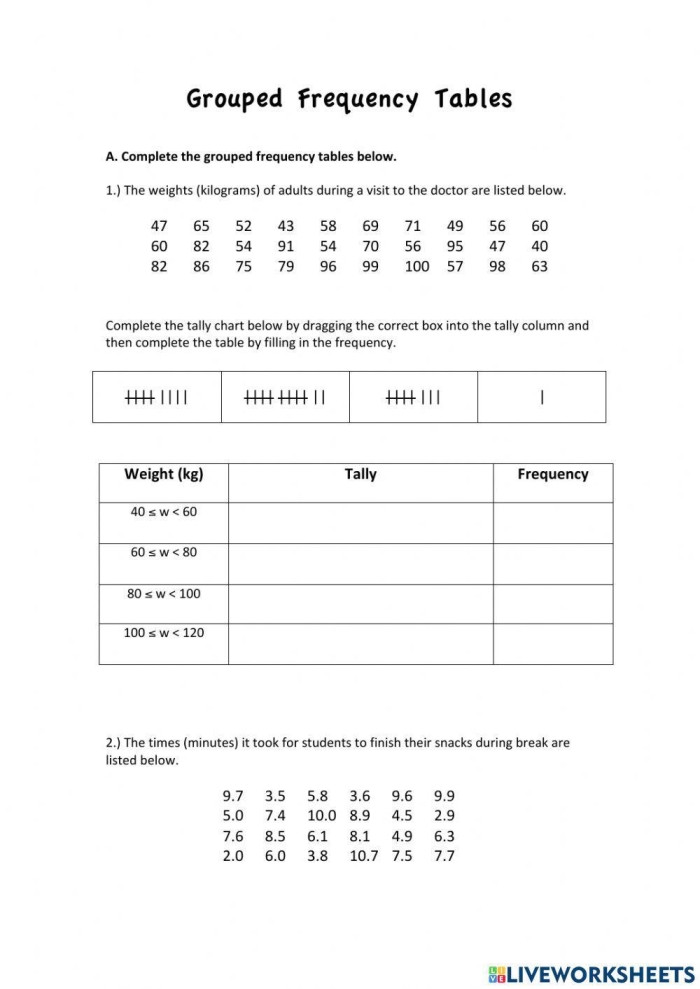
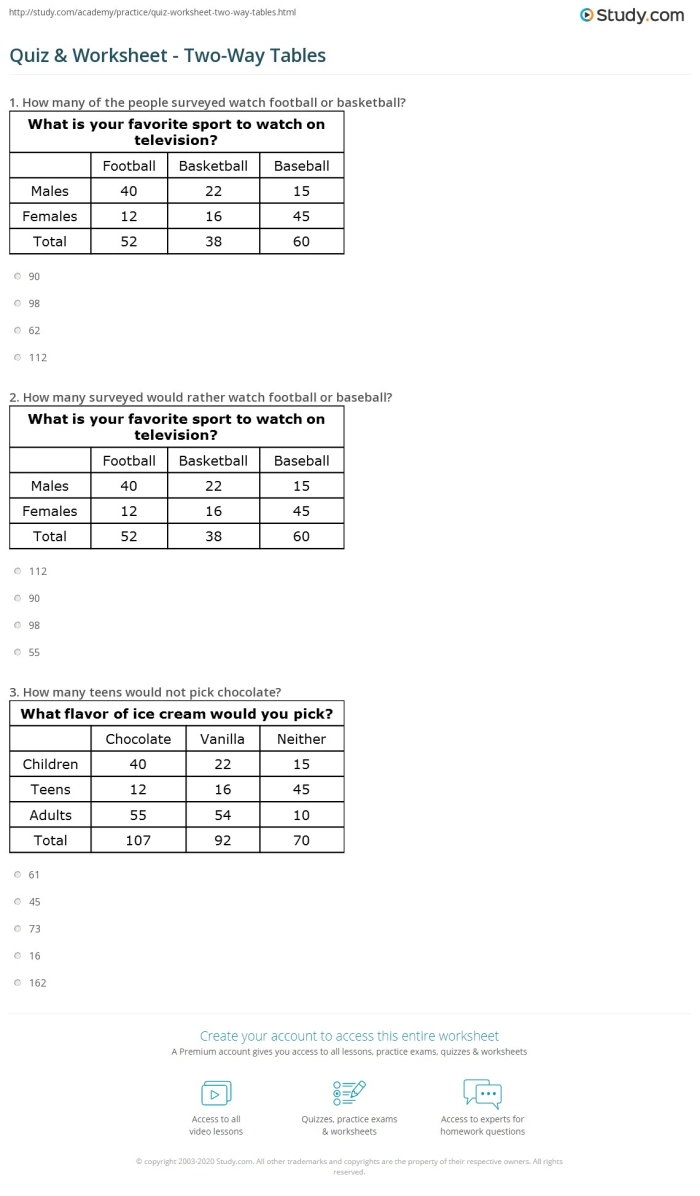
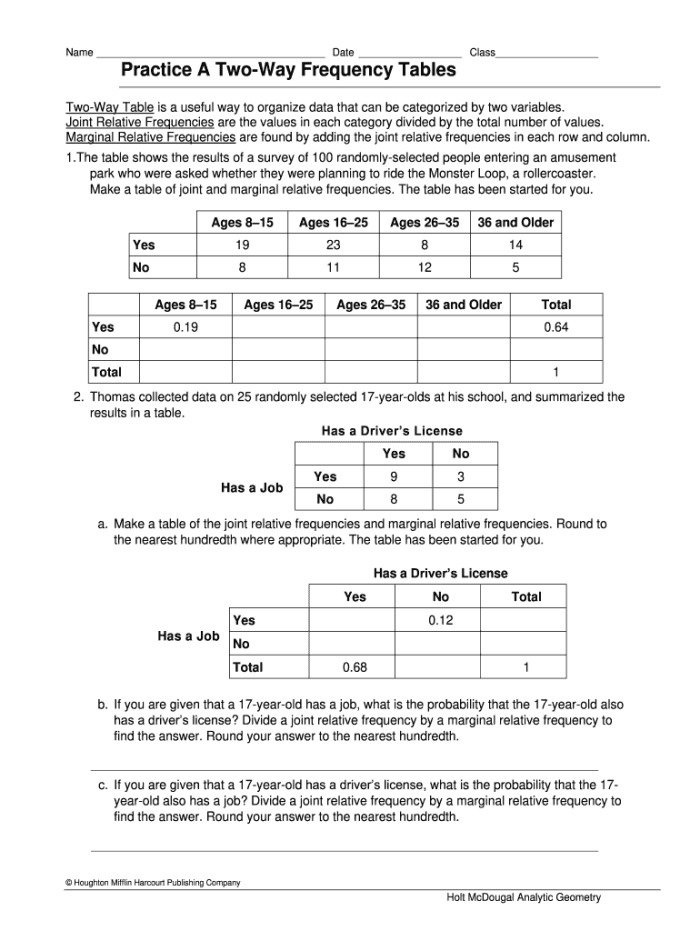
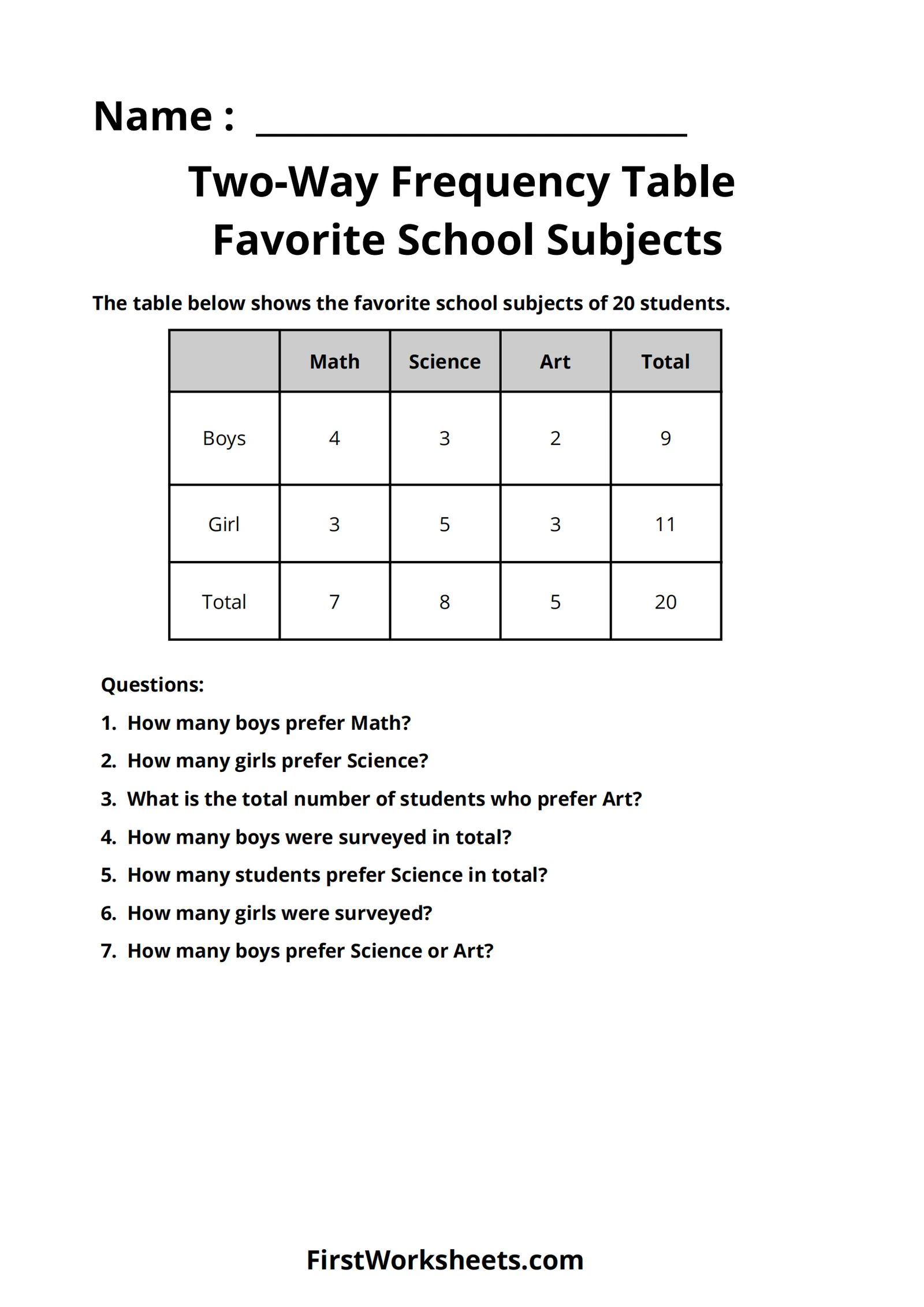
Understanding two-way frequency tables is essential for eighth-grade students as they explore the world of data analysis. These tables provide a way to organize and interpret data by showing the relationship between two categorical variables. By using relatable scenarios, students can see the practical applications of these concepts in their everyday lives.
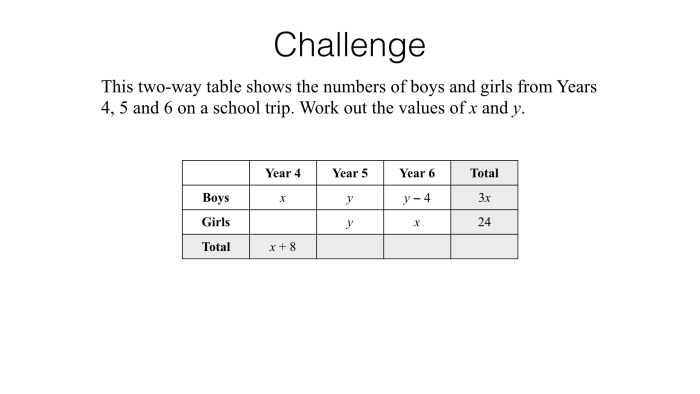
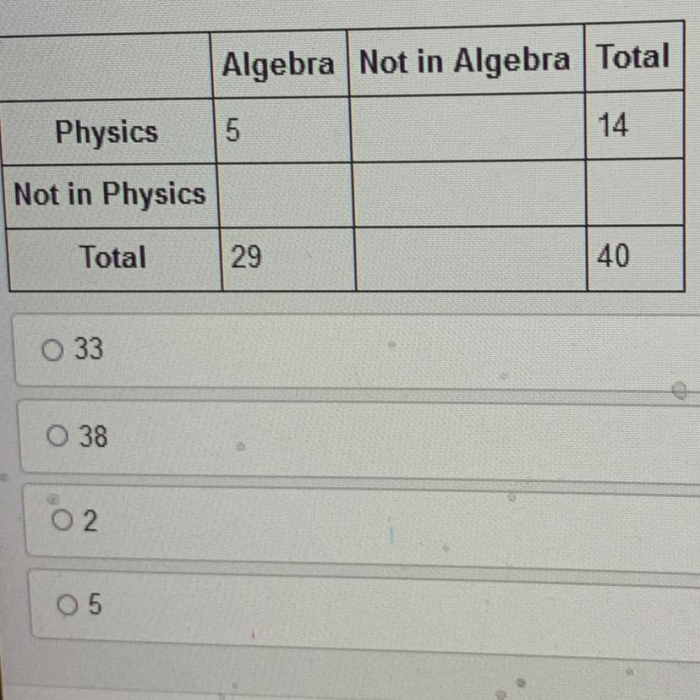
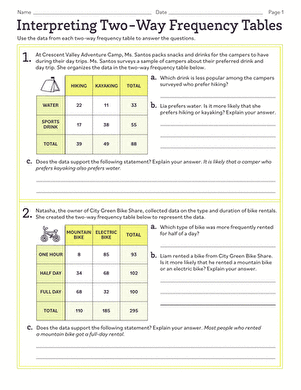
For example, consider a two-way frequency table that displays the preferences of students for different types of sports and their favorite seasons. By analyzing this table, students can determine how many students enjoy soccer in the summer versus those who prefer basketball in the winter. This exercise not only sharpens their analytical skills but also helps them understand how to draw conclusions from data.
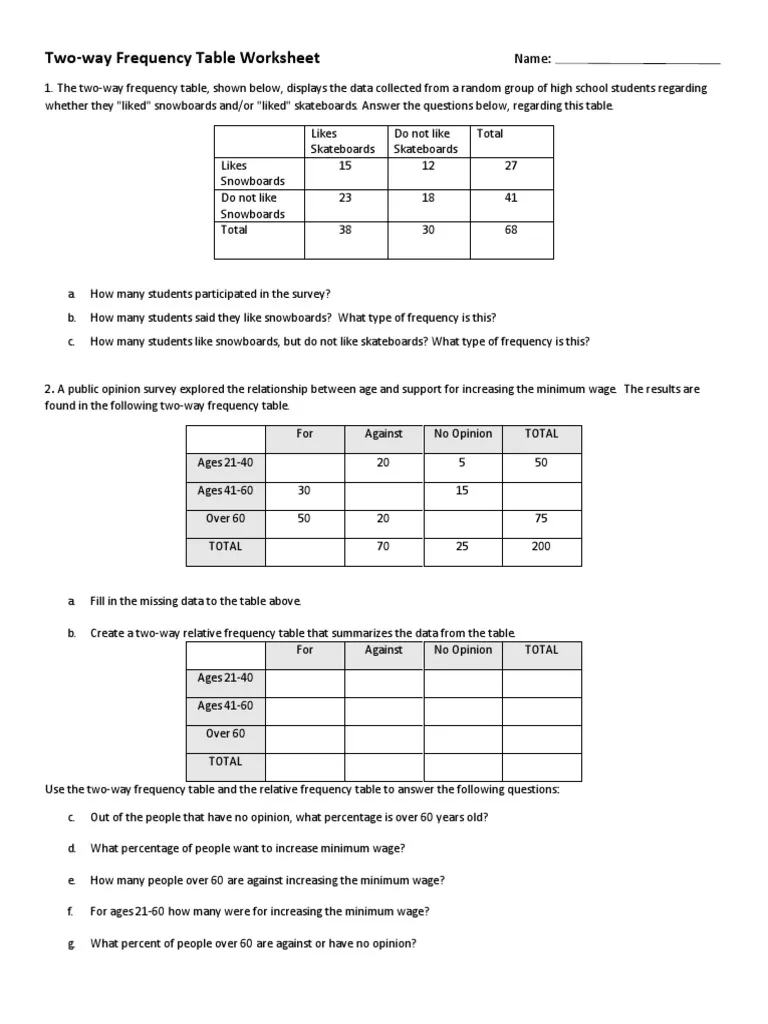
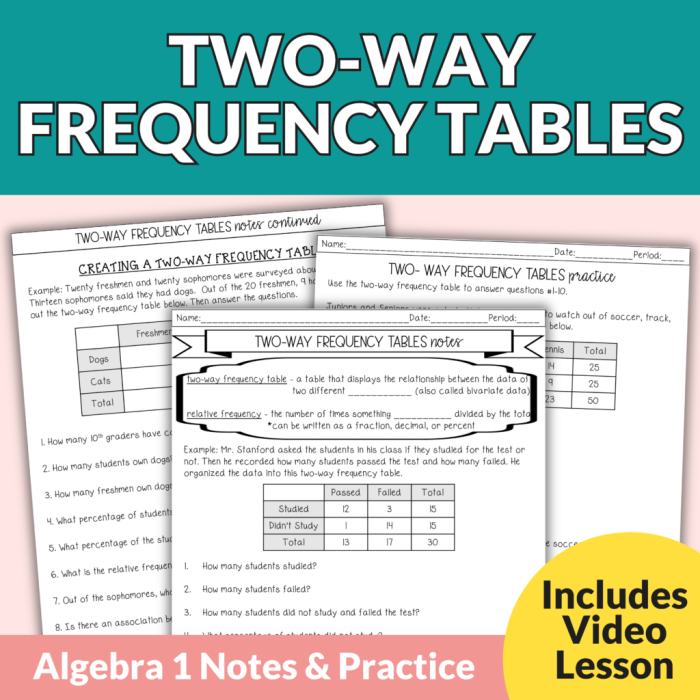
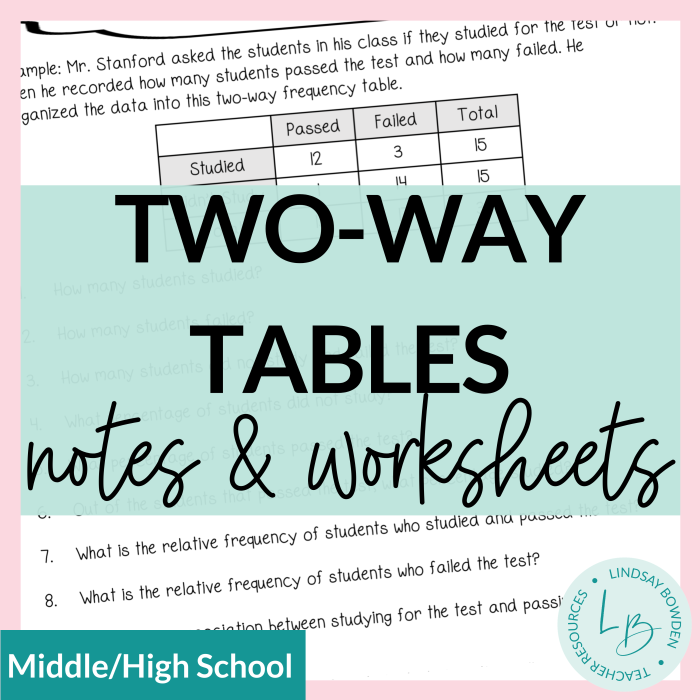
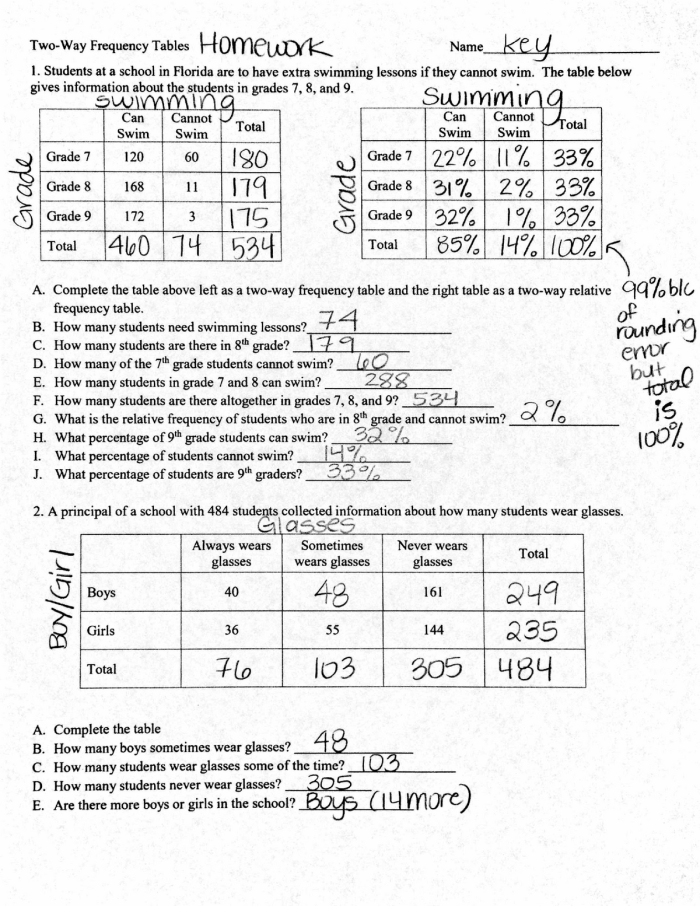
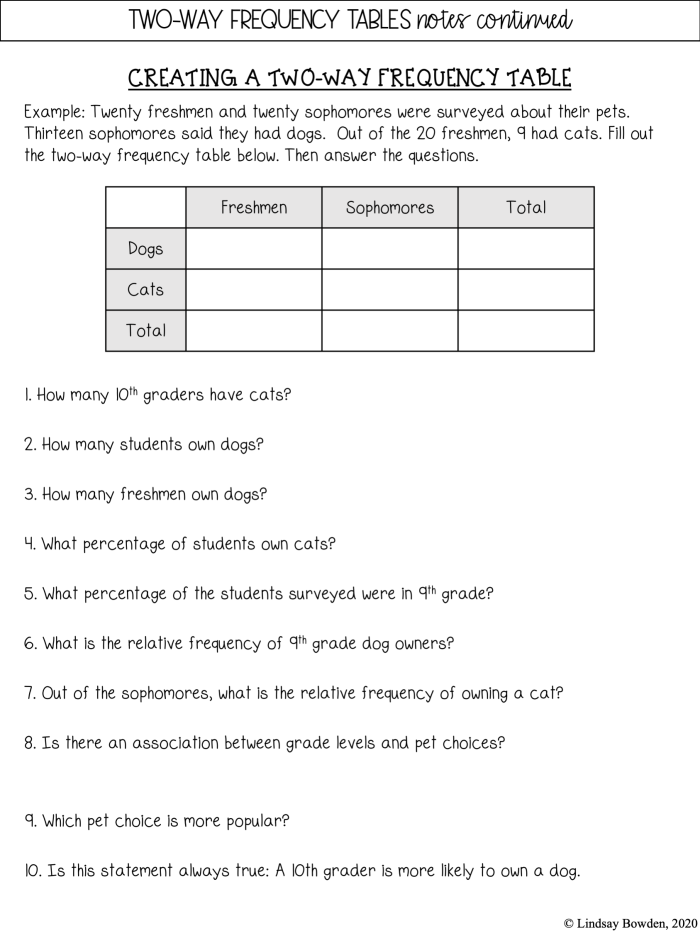
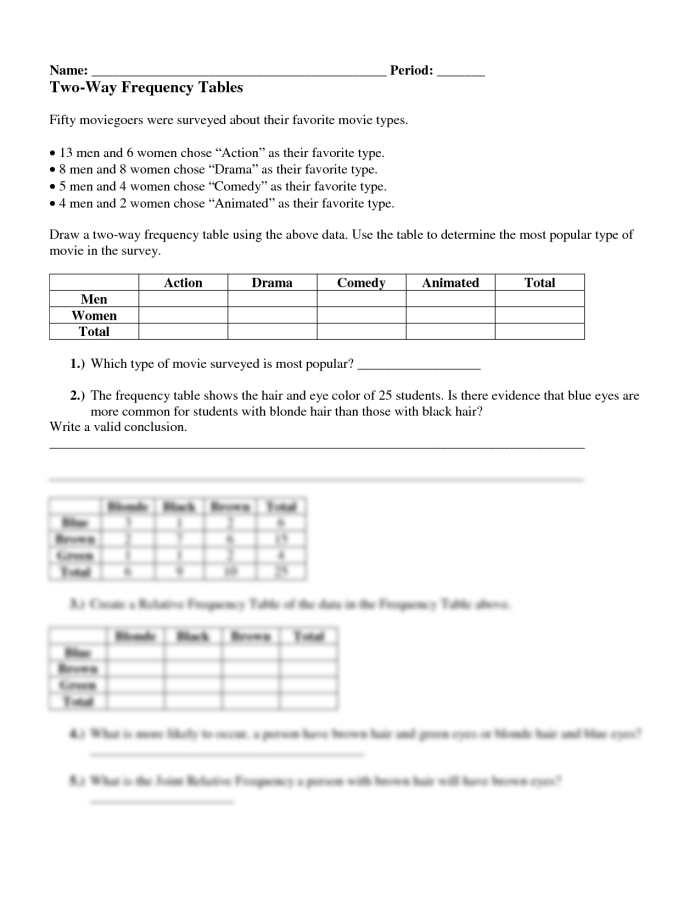
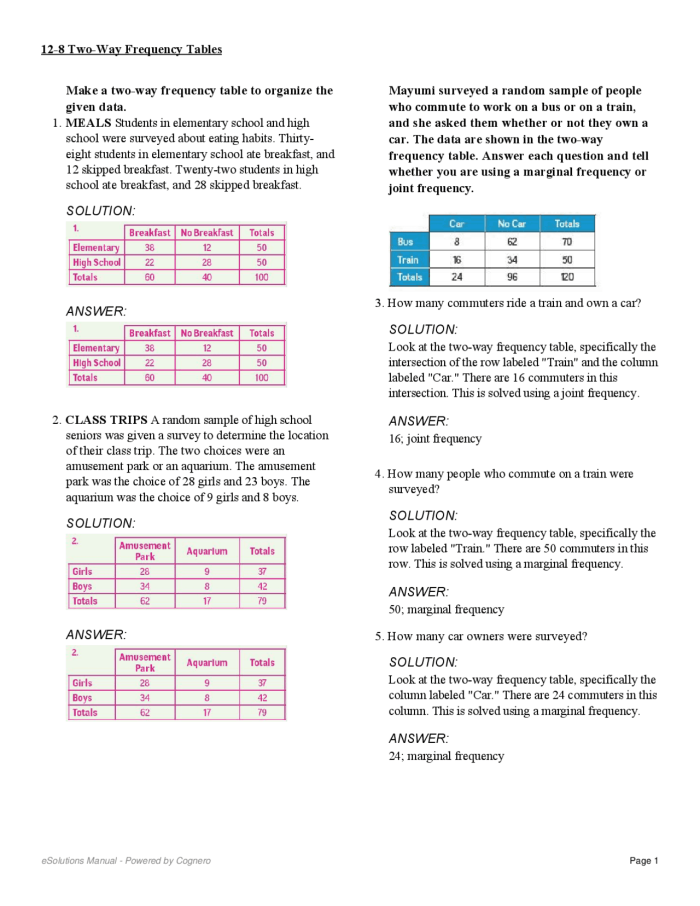
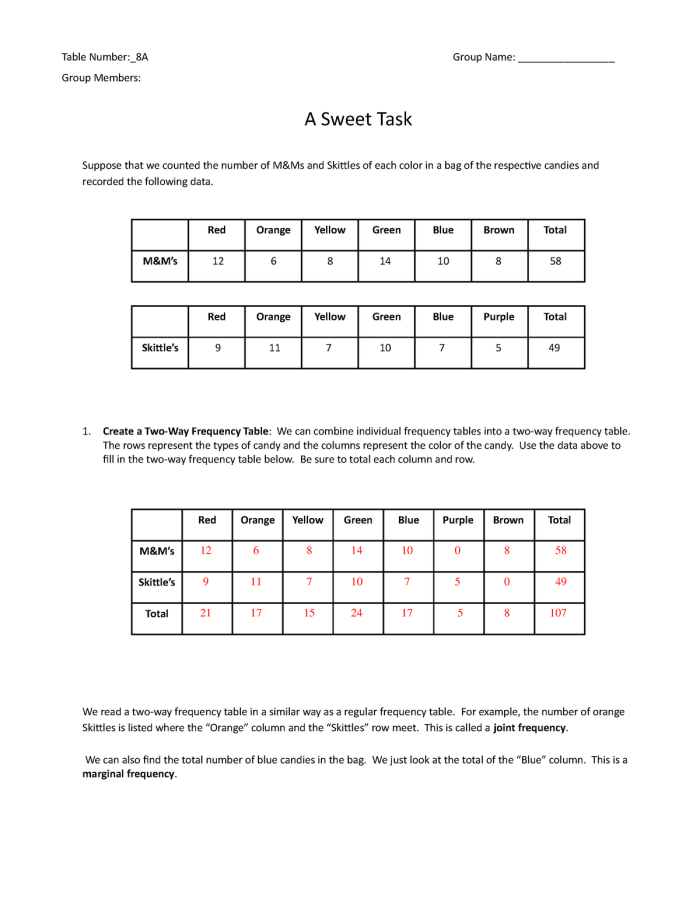
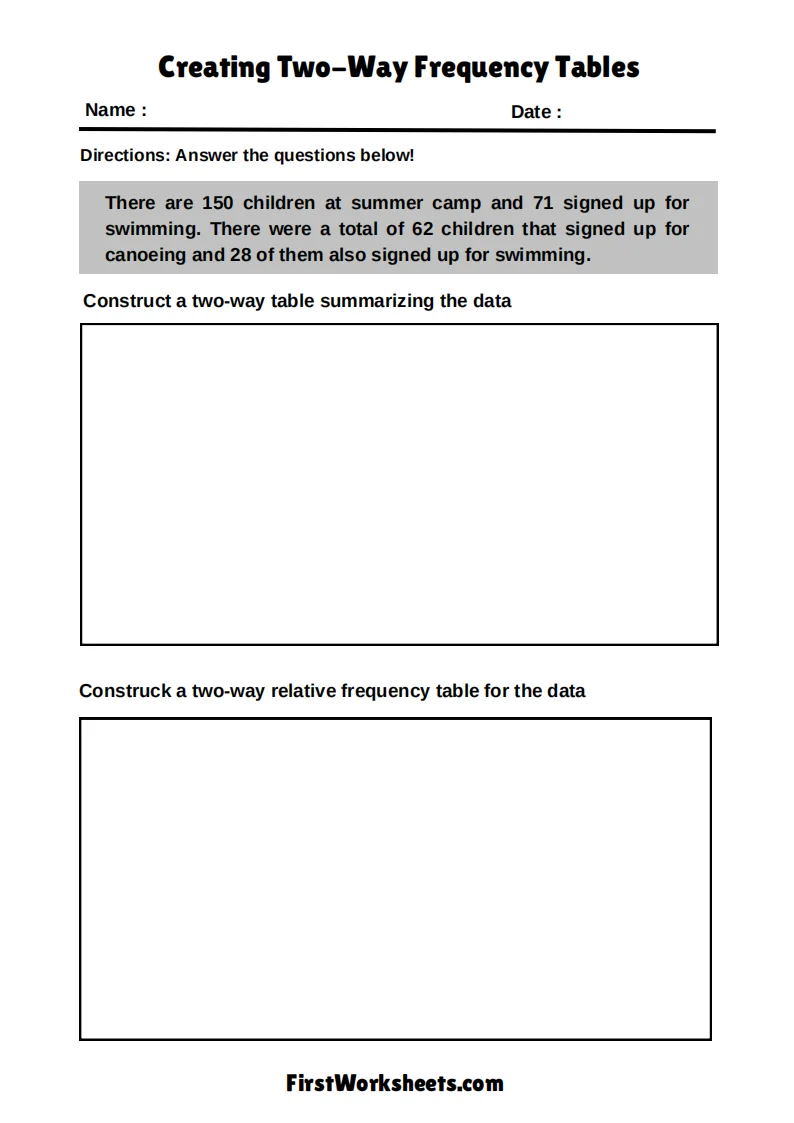
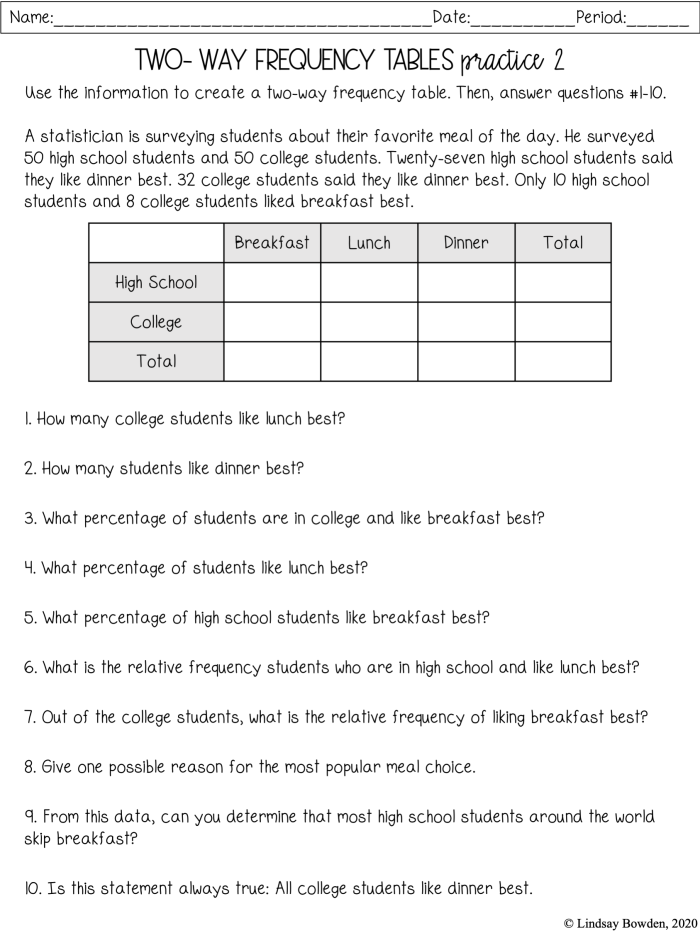
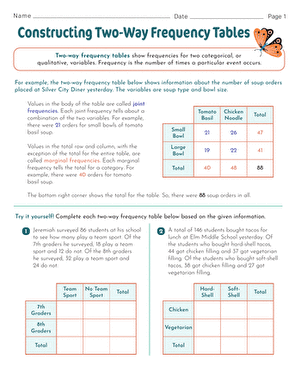
Such worksheets, like the printable Interpreting Two-Way Frequency Tables Worksheets, are designed to engage students with real-world scenarios that make learning enjoyable. By working through these problems, eighth-graders can practice their division skills while gaining confidence in their ability to interpret data. This combination of math and practical application is particularly beneficial in a classroom setting.
Moreover, analyzing two-way frequency tables encourages critical thinking. Students learn to ask questions such as, “What does this data tell us?” or “How can we use this information to make decisions?” These skills are not only vital in mathematics but also in everyday situations, whether it’s making plans with friends or understanding trends in social media.
Incorporating two-way frequency tables into the curriculum fosters a deeper understanding of data representation. As students work through these exercises, they become adept at recognizing patterns and making informed decisions based on data, skills that are increasingly important in our data-driven world.
Boost Skills with These Worksheets