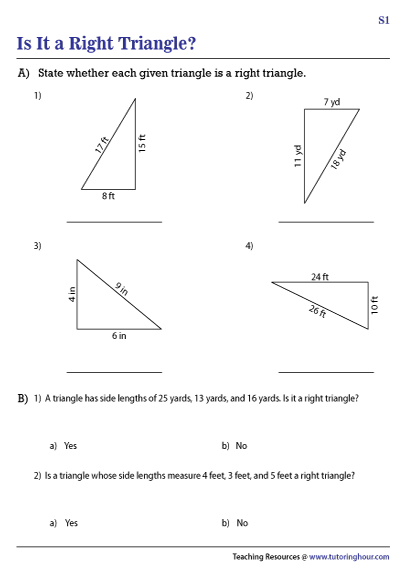
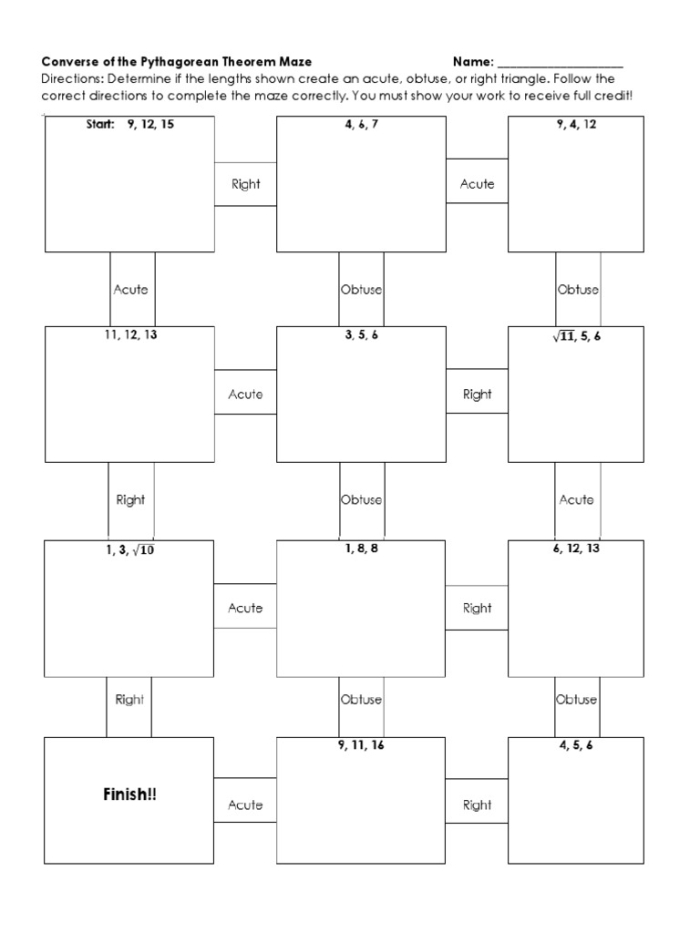
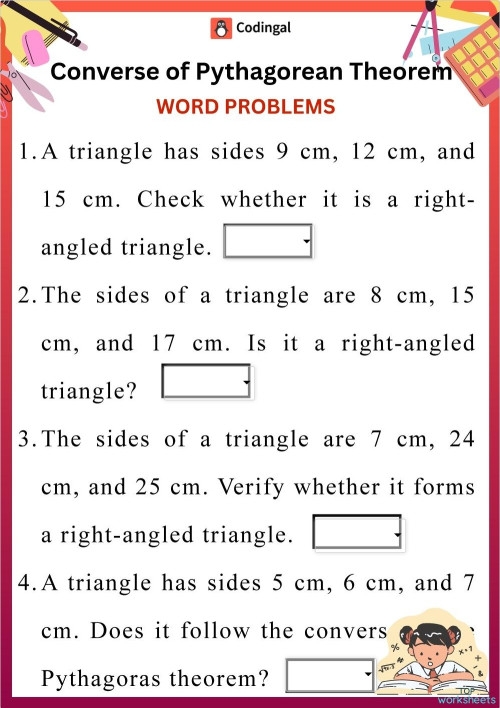
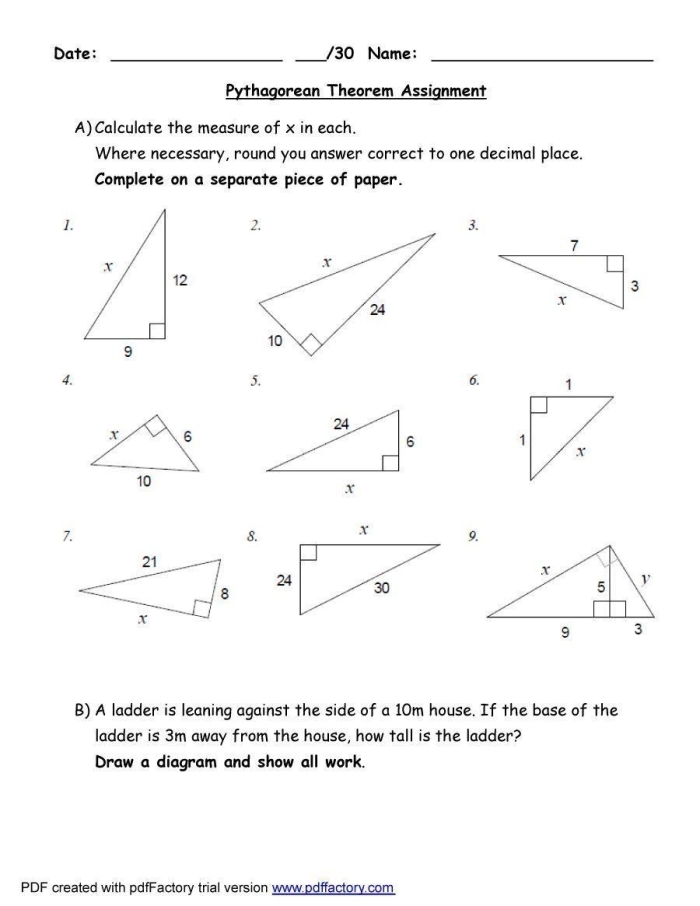
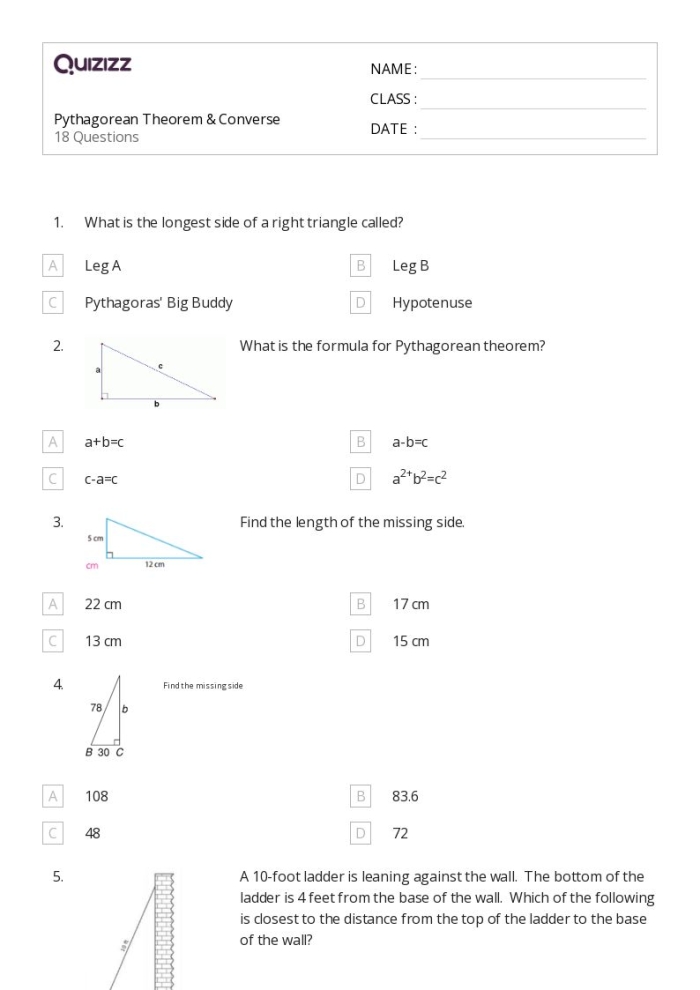
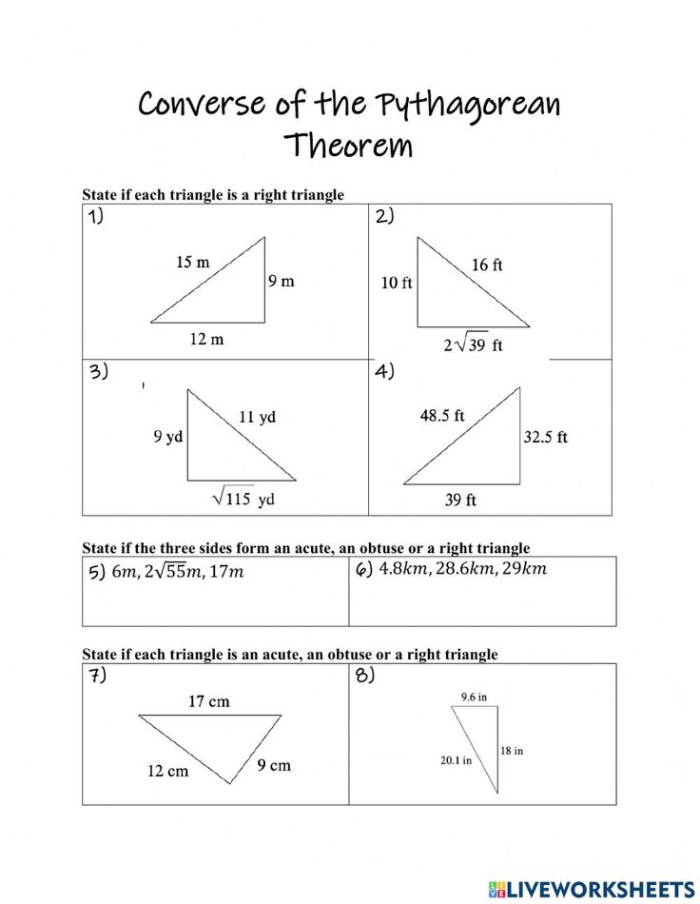
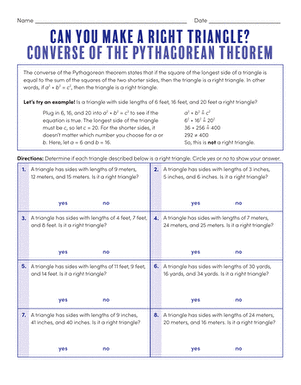
Identifying right triangles is a key skill in eighth-grade math, particularly in the realm of number theory. The converse of the Pythagorean theorem is a powerful tool that helps students determine whether a triangle is a right triangle based on the lengths of its sides. This concept is not only foundational for geometry but also essential for real-world applications.
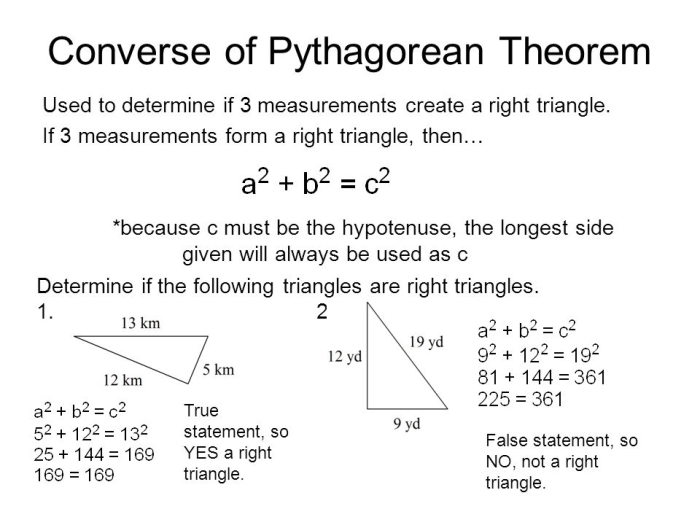
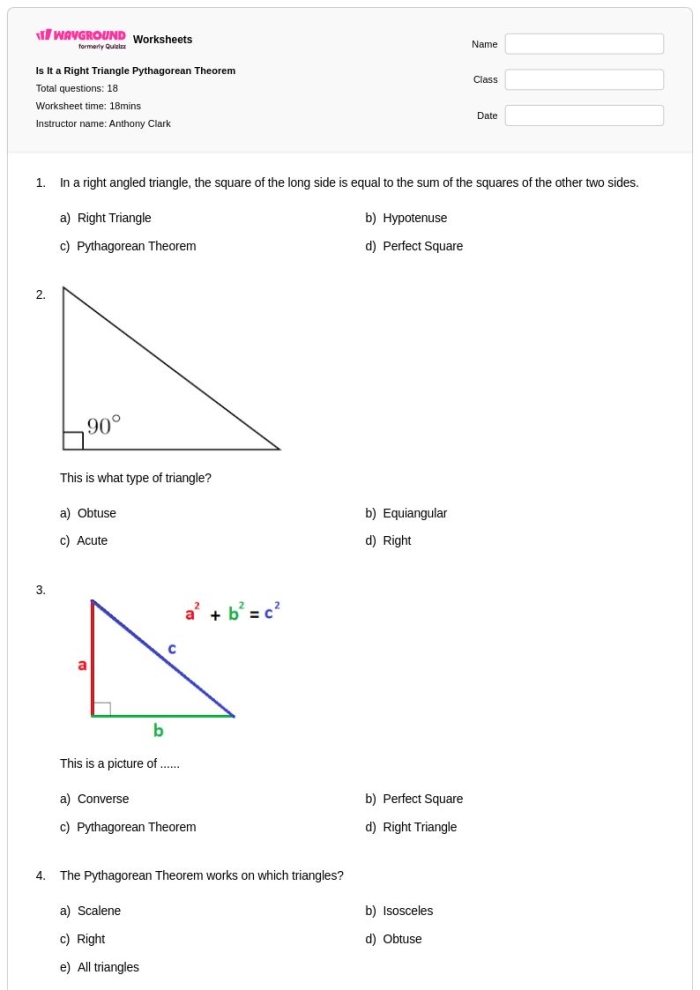
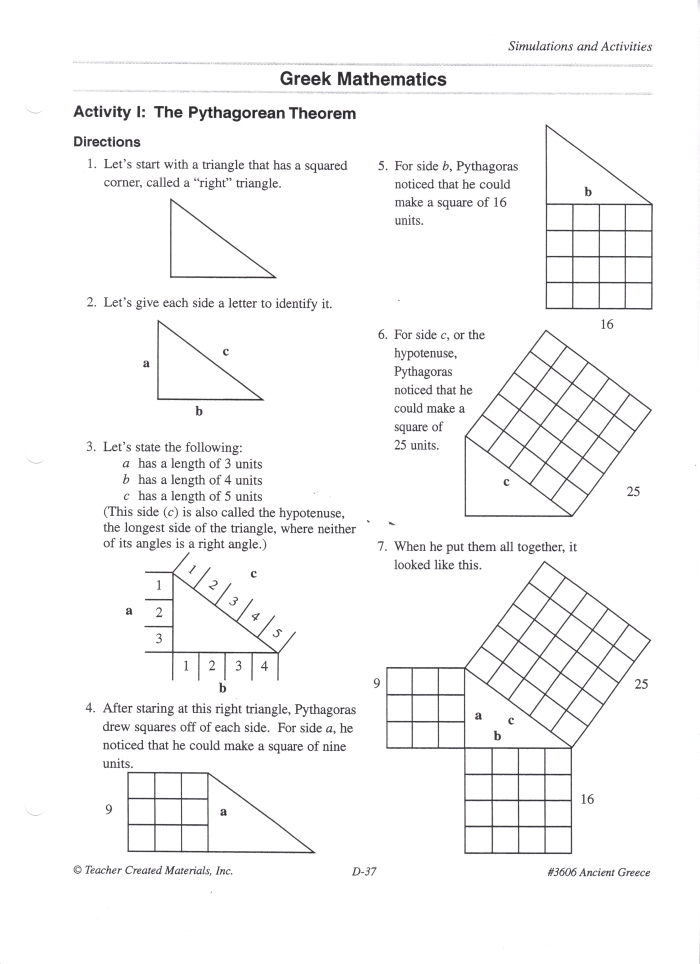
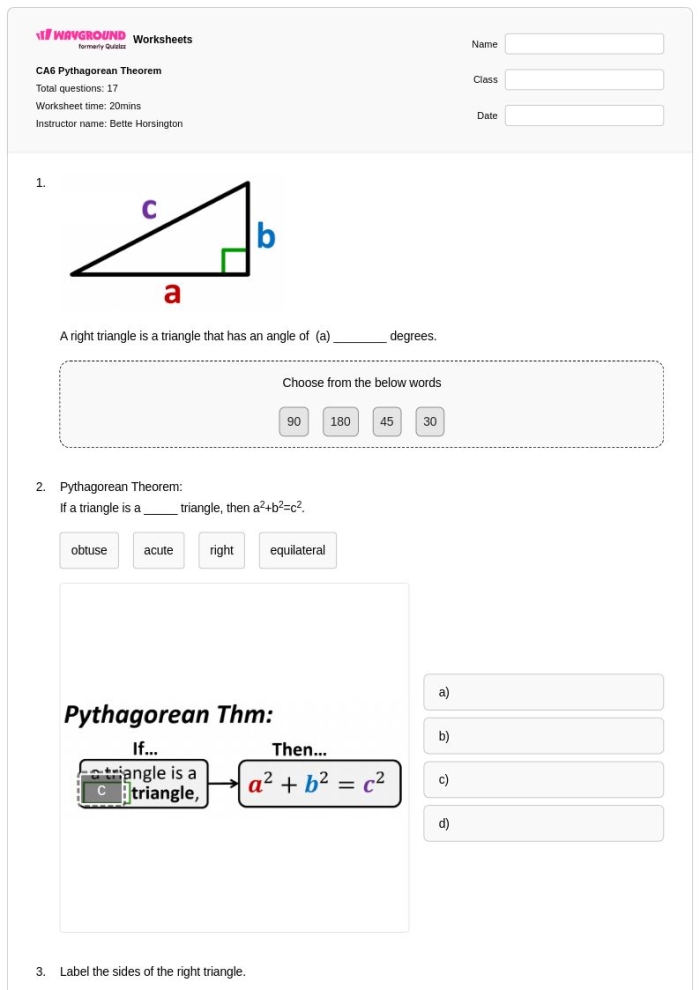
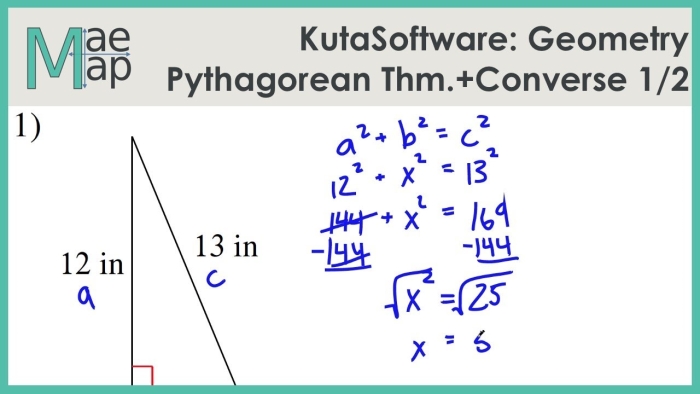
To engage with this topic practically, consider the Pythagorean theorem itself: for any right triangle, the square of the length of the hypotenuse (the side opposite the right angle) is equal to the sum of the squares of the other two sides. The converse states that if the squares of the lengths of the two shorter sides add up to the square of the longest side, then the triangle is a right triangle.
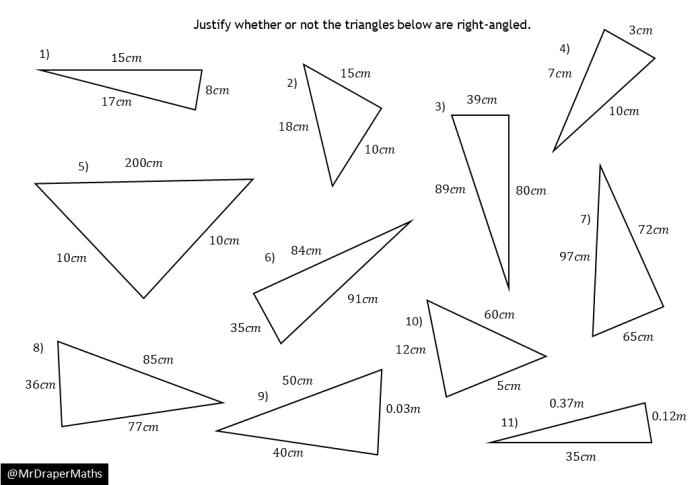
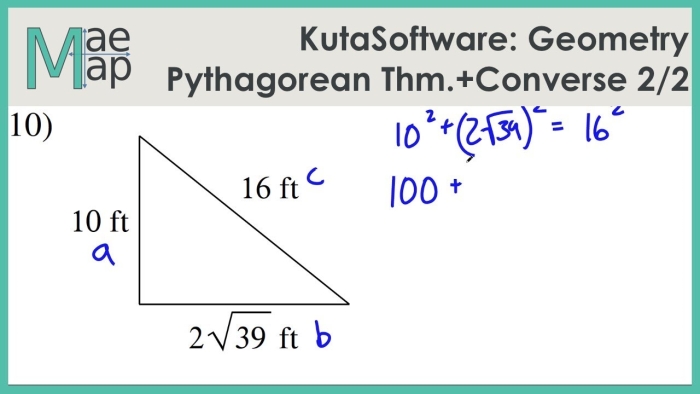
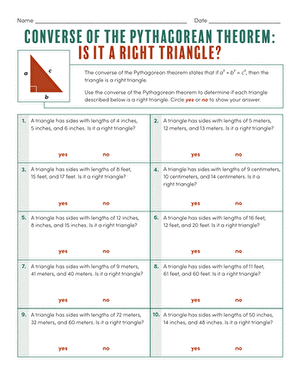
For example, if you have a triangle with sides measuring 3, 4, and 5 units, you can use the converse of the Pythagorean theorem to check if it’s a right triangle. Calculate \(3^2 + 4^2 = 9 + 16 = 25\), which equals \(5^2\). This confirms the triangle is indeed a right triangle. Such exercises can be practiced effectively through worksheets designed for eighth graders, like those available on various educational platforms.
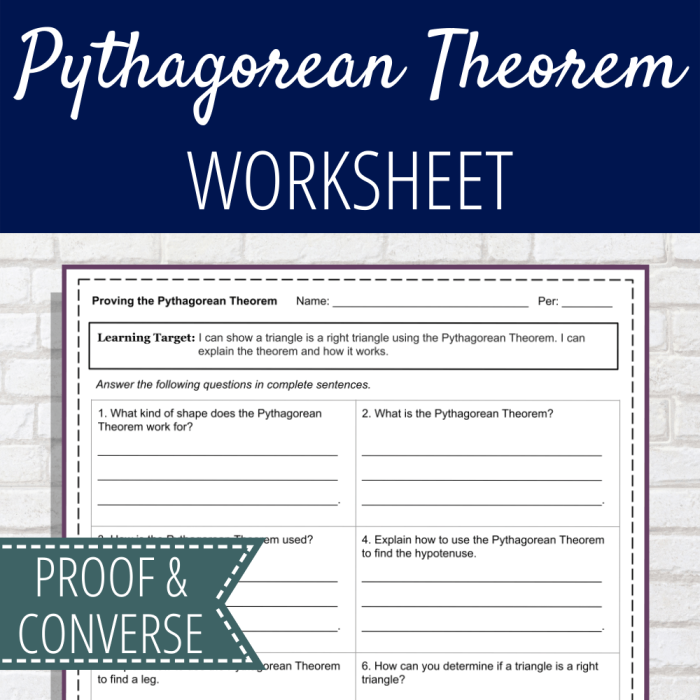
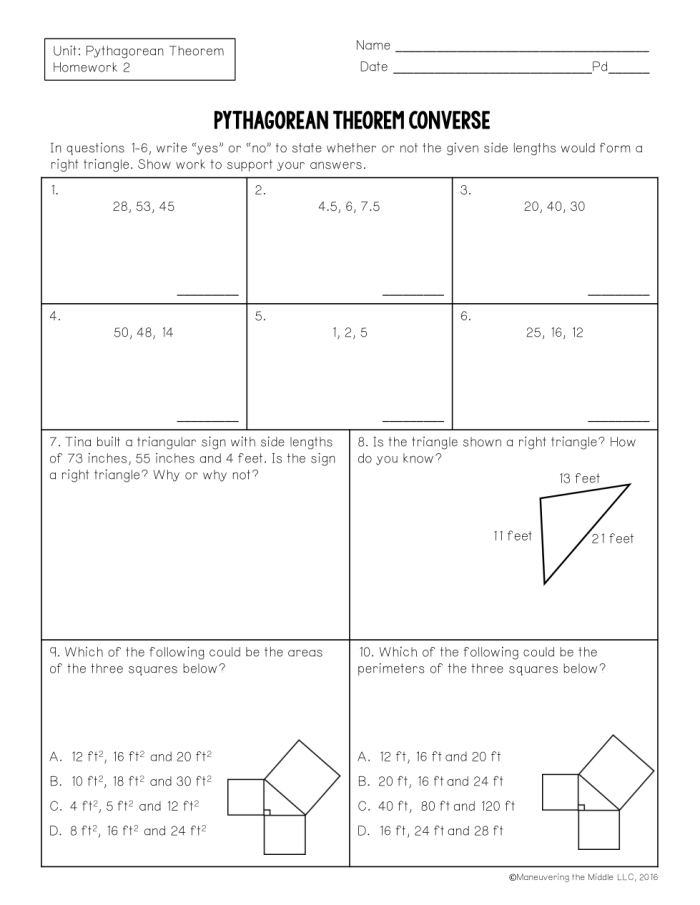
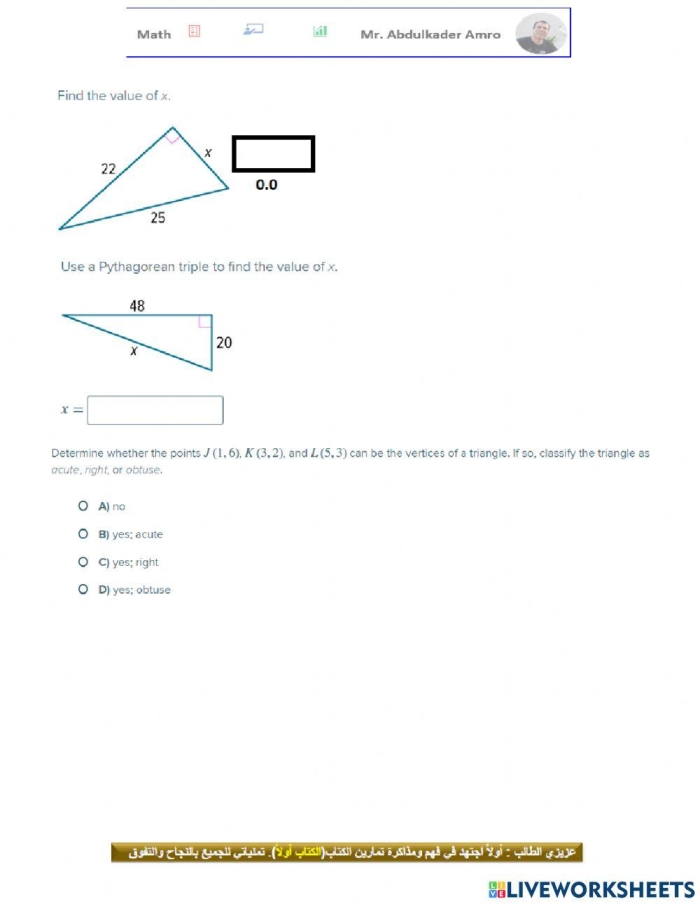
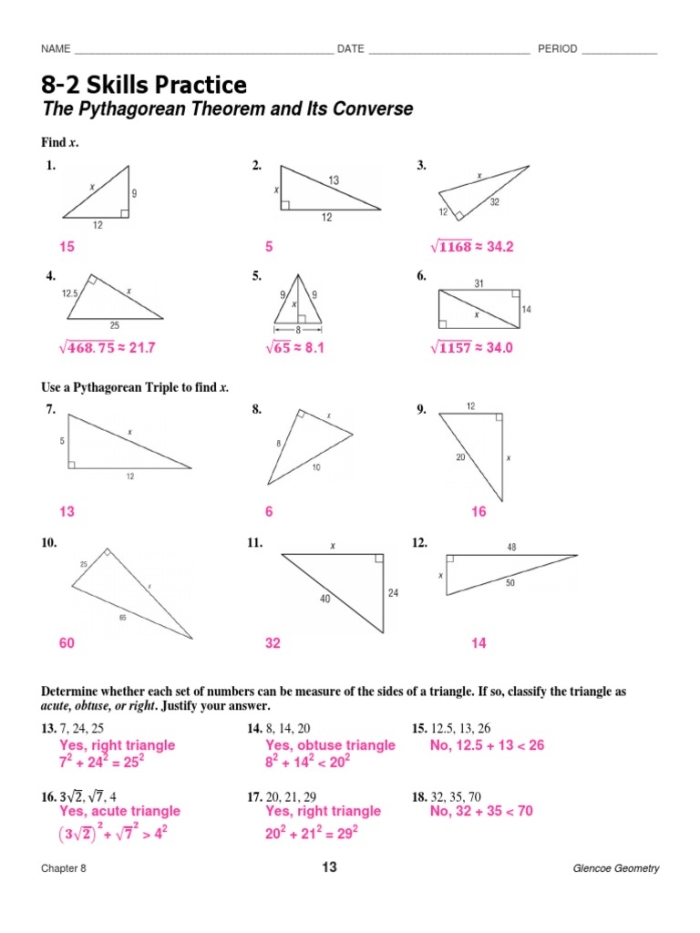
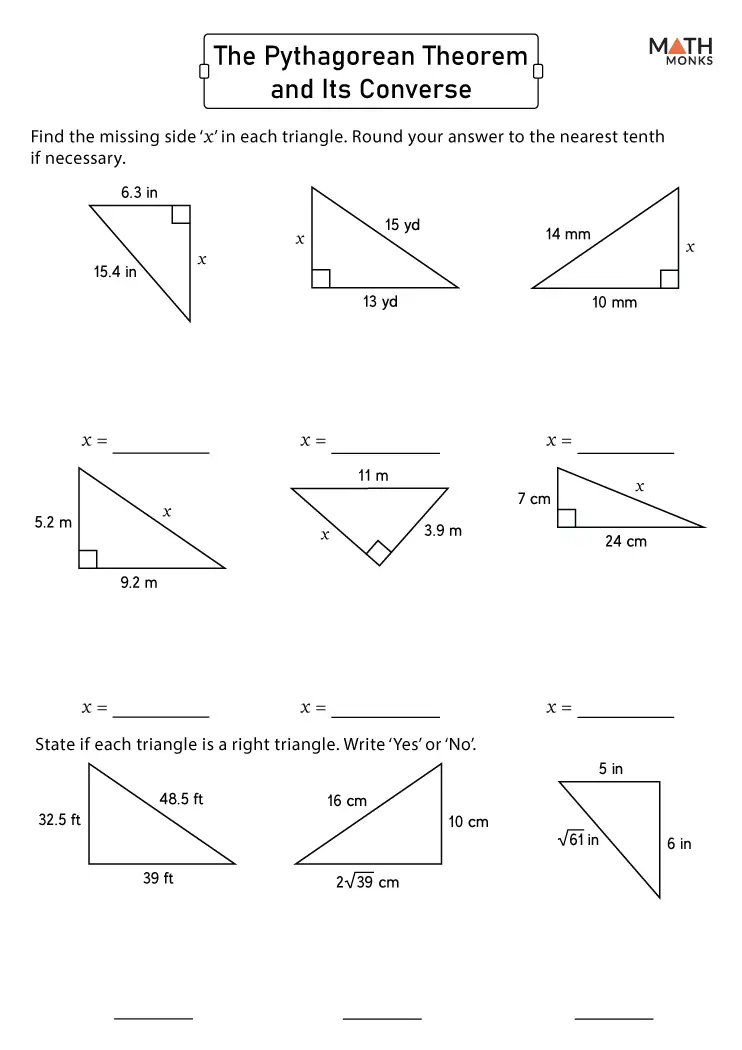
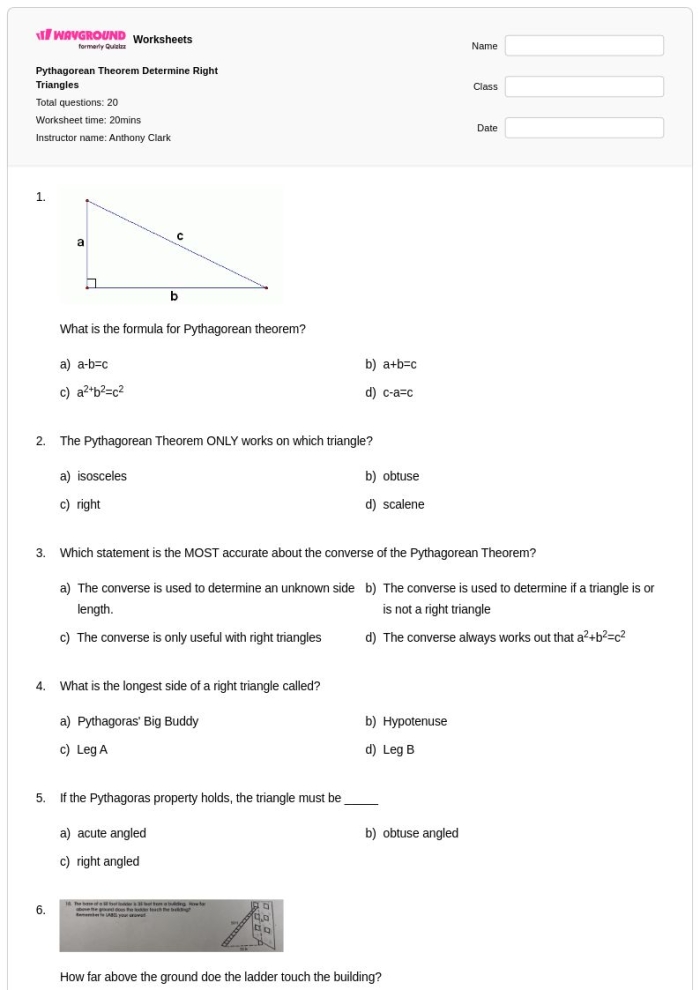
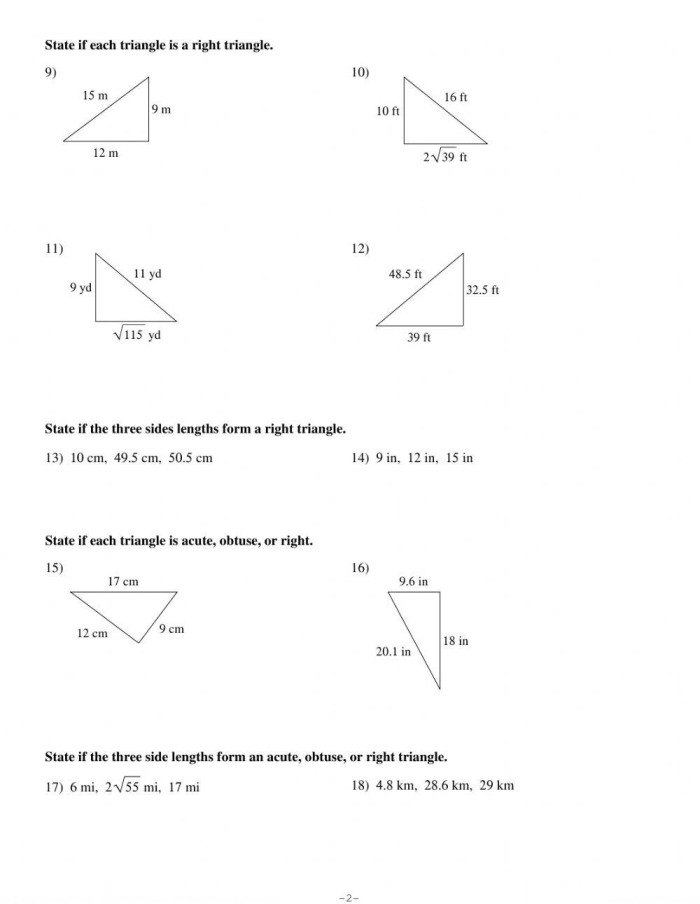
These printable worksheets not only reinforce the concept but also provide students with the opportunity to engage in hands-on learning. By working through problems that require them to apply the converse of the Pythagorean theorem, students develop critical thinking skills and a deeper understanding of triangle properties. Engaging with this material can help students feel more confident in their mathematical abilities.
If you’re looking for a way to practice this important concept, try out the worksheets available online. They offer a variety of problems that challenge students to identify right triangles, making learning both fun and effective.
Worksheet Practice Section