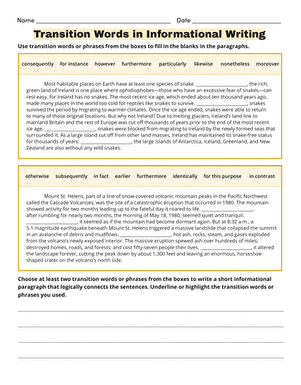
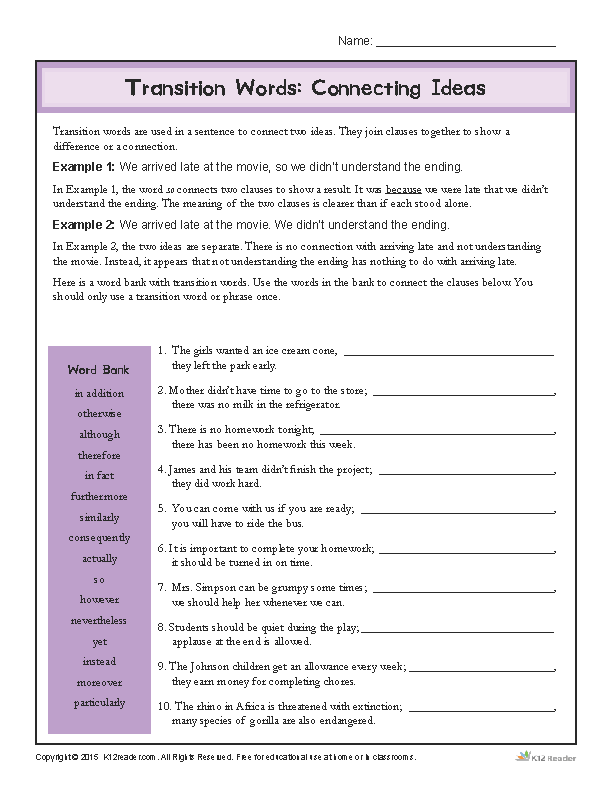
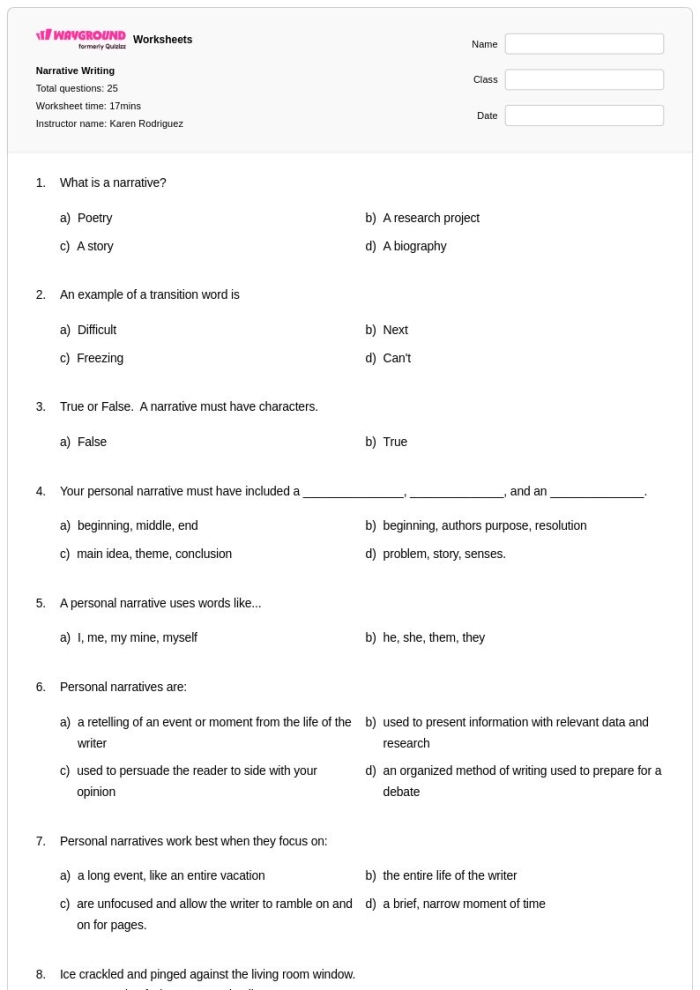
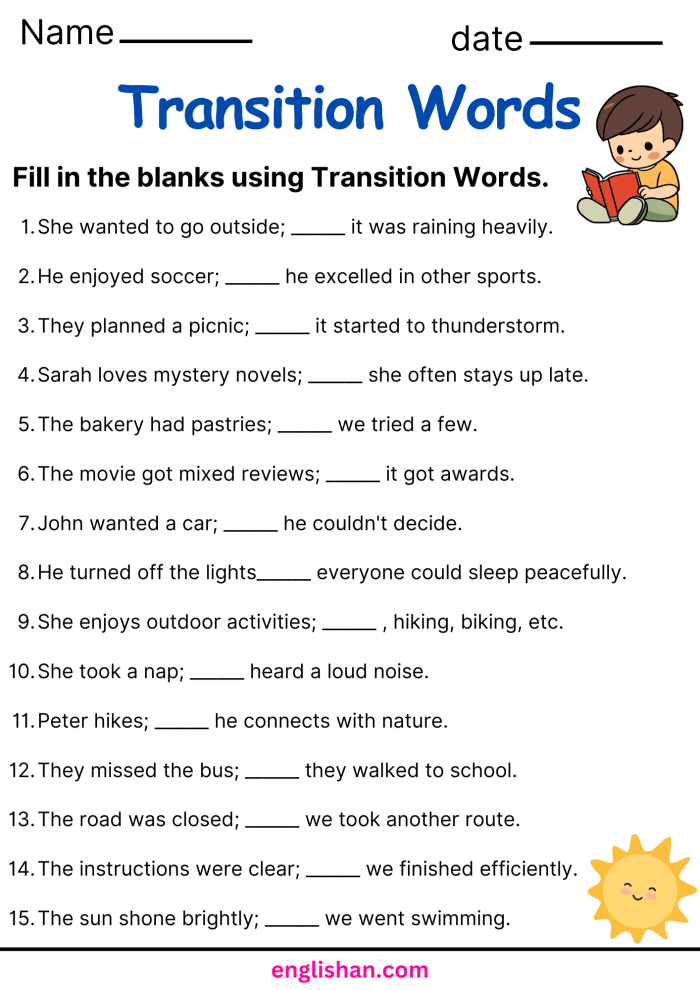
Transition words are the connective tissue that holds narrative writing together, yet many sixth grade students treat them as optional flourishes rather than essential tools. This printable transition words in narrative writing worksheet tackles that gap directly by asking learners to identify and select the most effective transitions within short story passages.
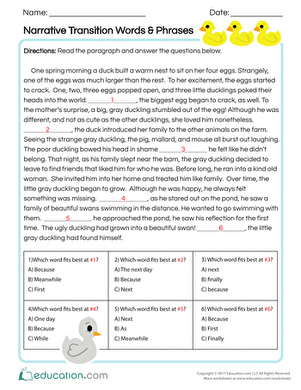
The exercise works like this: students read a brief narrative, then encounter sentences where transitions have been removed or presented as multiple choice options. They must decide whether a passage needs “meanwhile,” “suddenly,” “after that,” or another connector based on the logical flow of events. This forces active thinking about how ideas relate to one another rather than passive reading.
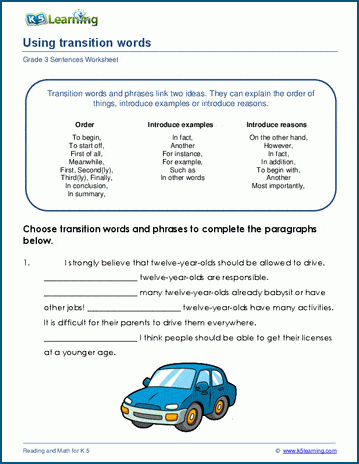
What makes this approach valuable is its focus on real narrative context. Rather than memorizing lists of transitions in isolation, sixth grade students see how these words function in actual writing. A transition that works perfectly in one passage might feel clunky in another depending on pacing and tone. When students choose transitions within complete sentences, they develop an intuition for what sounds natural and what disrupts the reader’s experience.
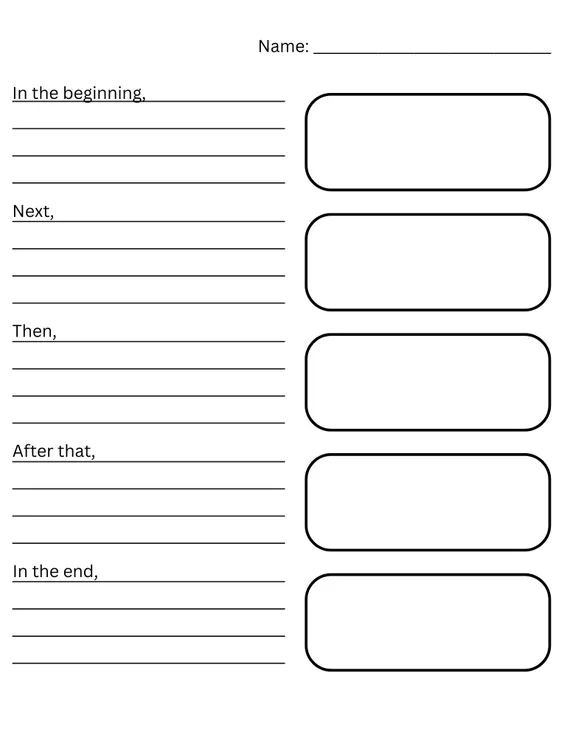
The worksheet also builds awareness of temporal relationships, causation, and contrast. Students learning ratios and proportions in math class benefit from similar pattern recognition here: identifying which transition logically follows from the previous sentence requires the same analytical thinking. Both skills involve understanding how components relate and connect.
This type of grammar practice pairs well with other sixth grade learning. Students studying types of reproduction in organisms or the respiratory system benefit from clear, connected writing when explaining scientific concepts. Even subjects like the judicial branch require students to write coherent explanations where transitions guide the reader through complex ideas.
The real payoff emerges when students apply these skills to their own writing. Once they recognize how transitions create flow in published passages, they naturally incorporate them into their own narratives with greater confidence and clarity.
Start Practicing with These Worksheets