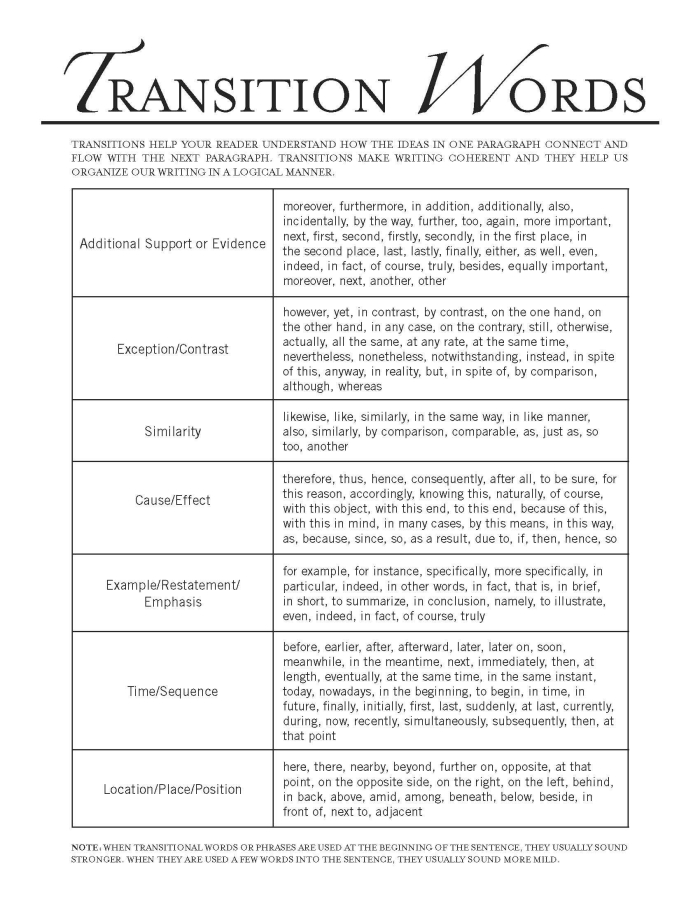
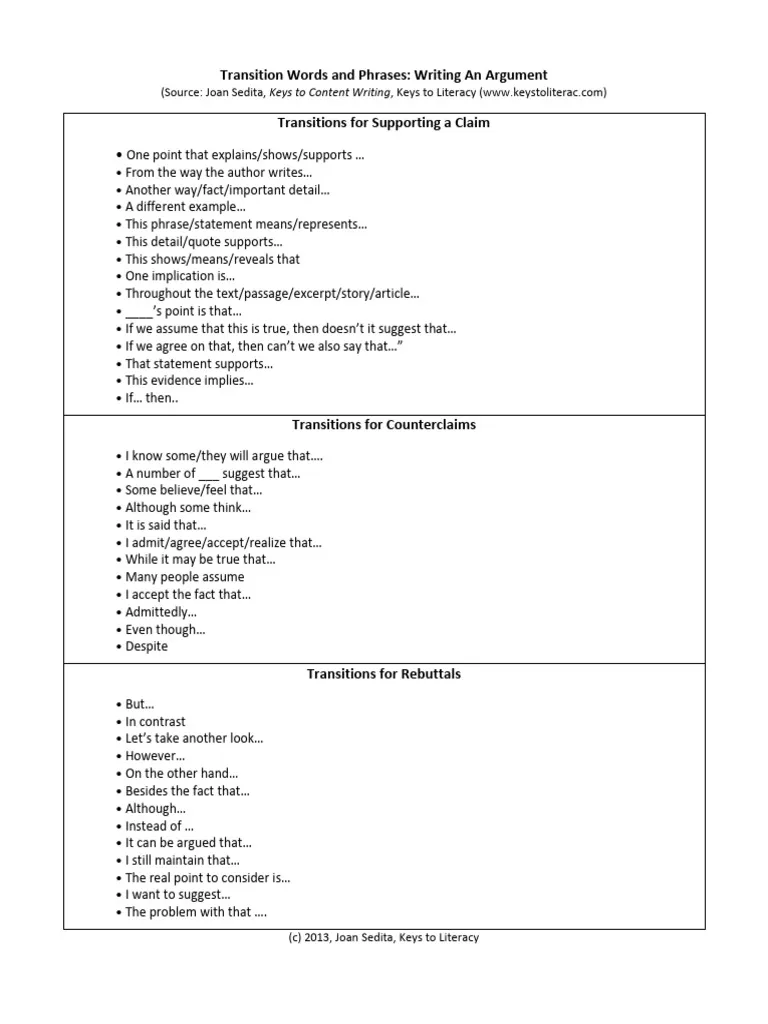
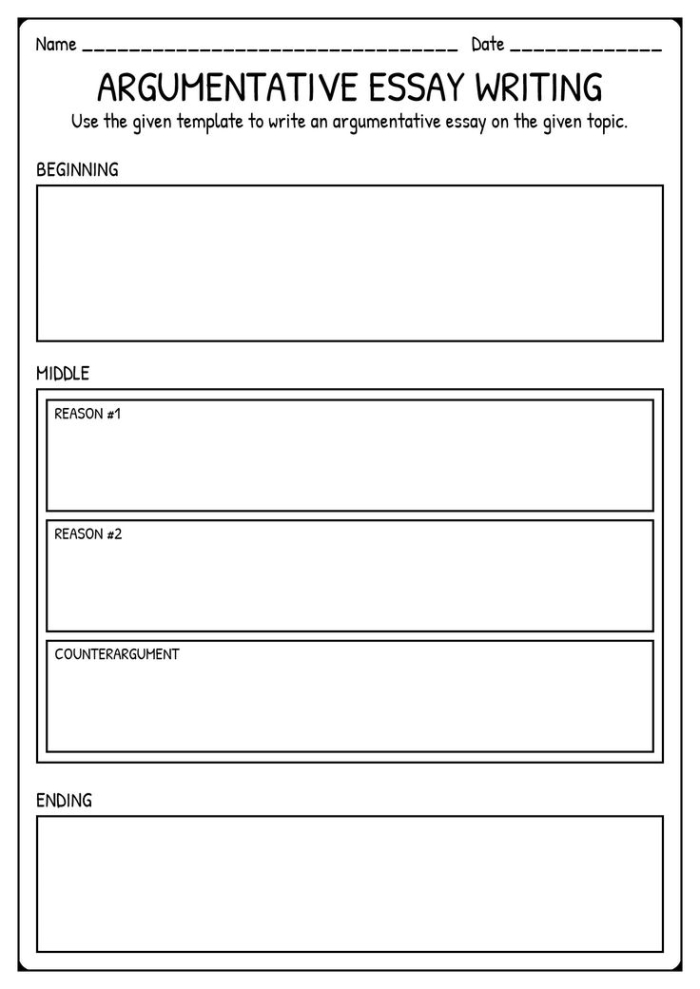
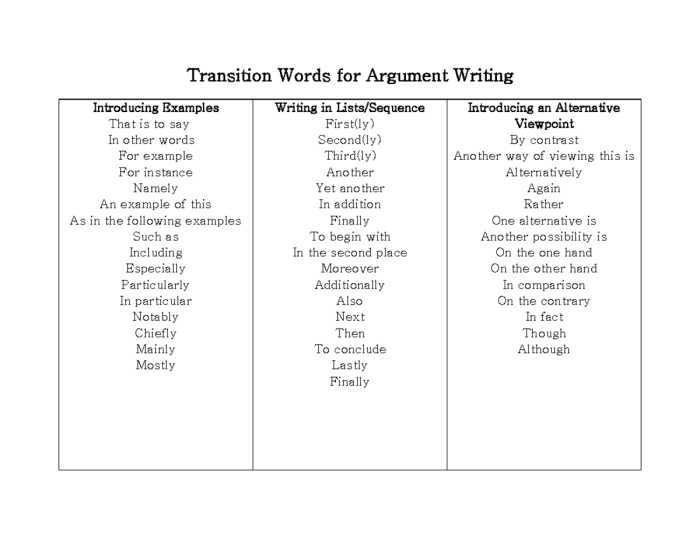
Transition words are the connective tissue that holds writing together, and sixth graders who master them gain a real advantage in argument writing. Without these linking words, ideas feel disconnected and choppy. With them, arguments flow naturally from one point to the next, making persuasive writing far more convincing.
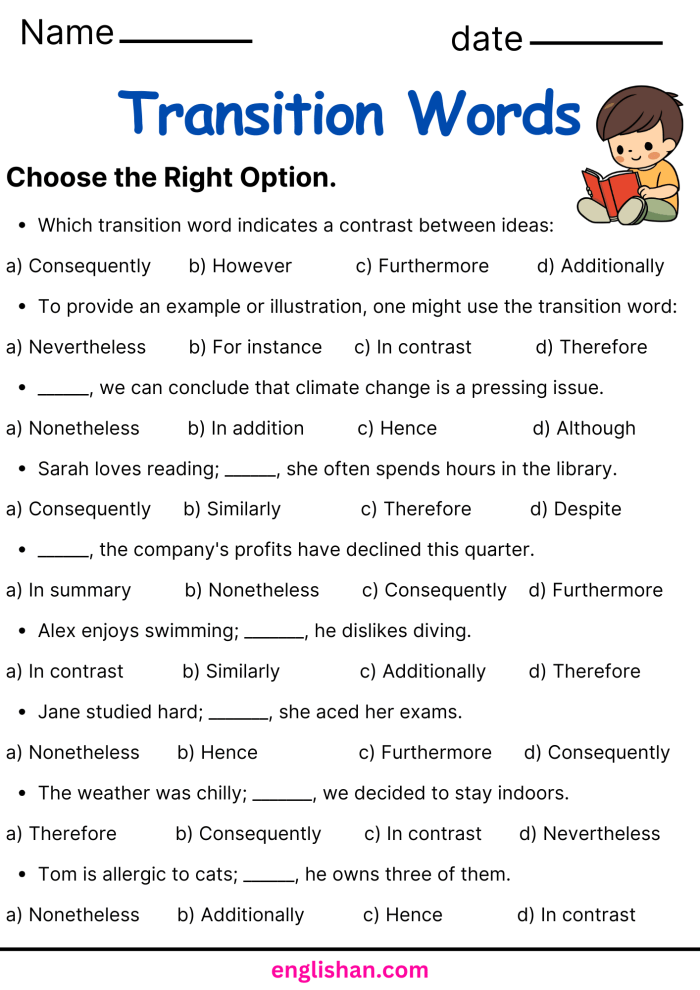
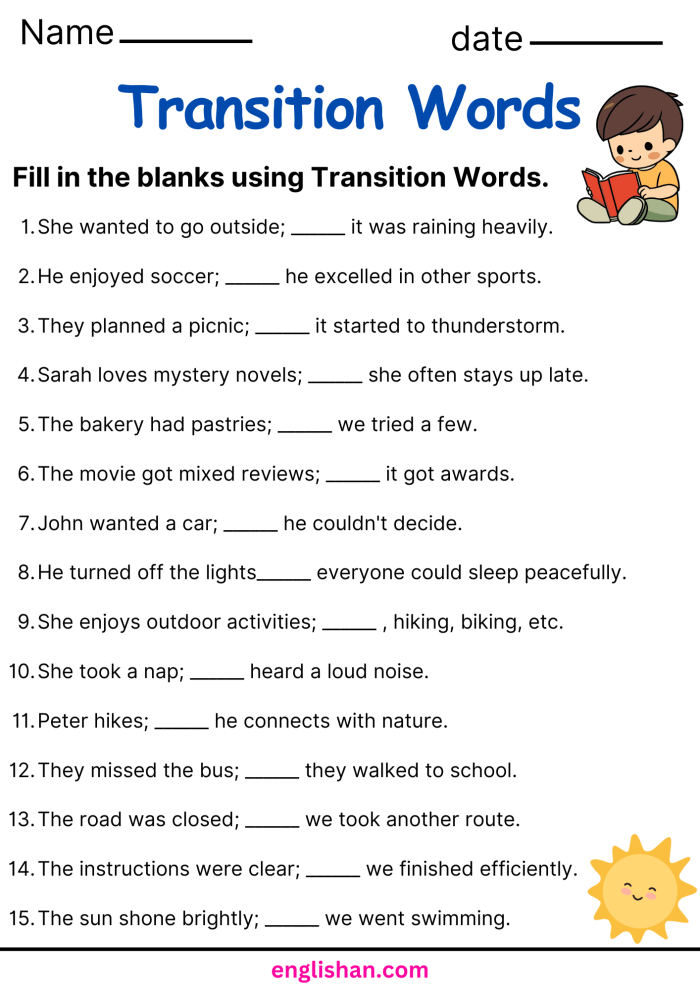
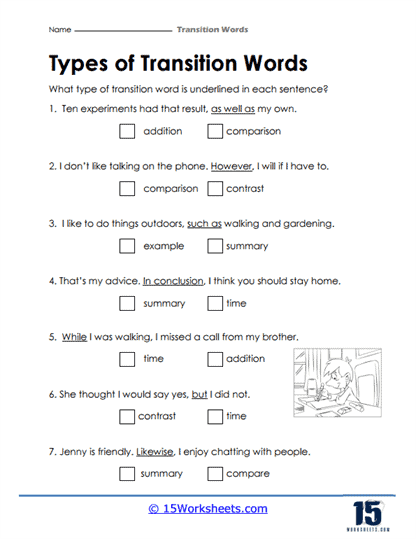
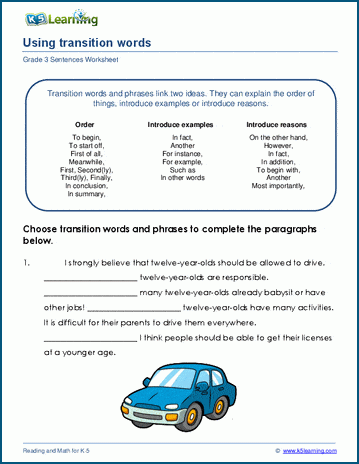
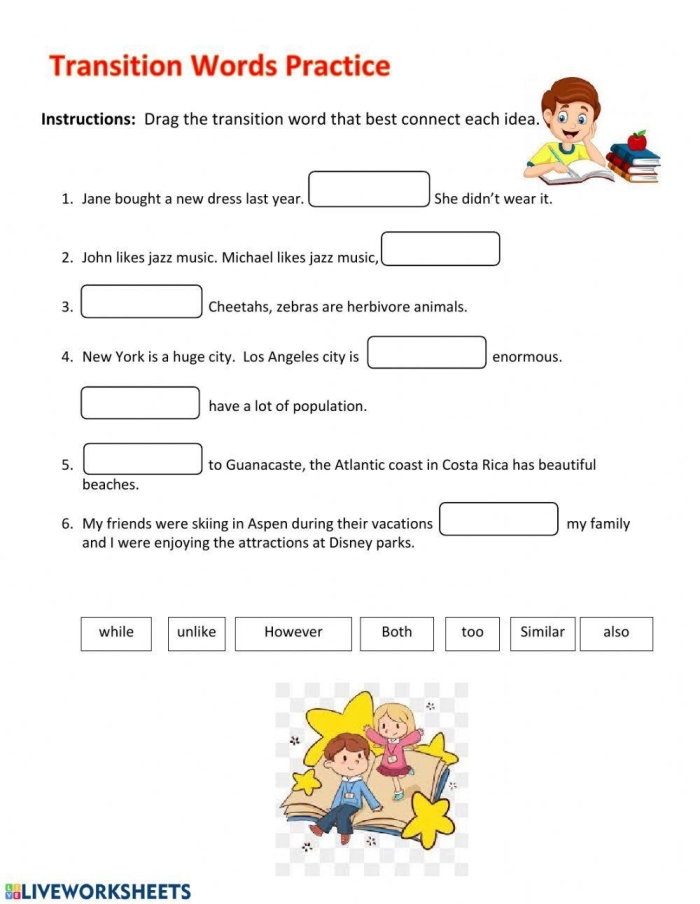
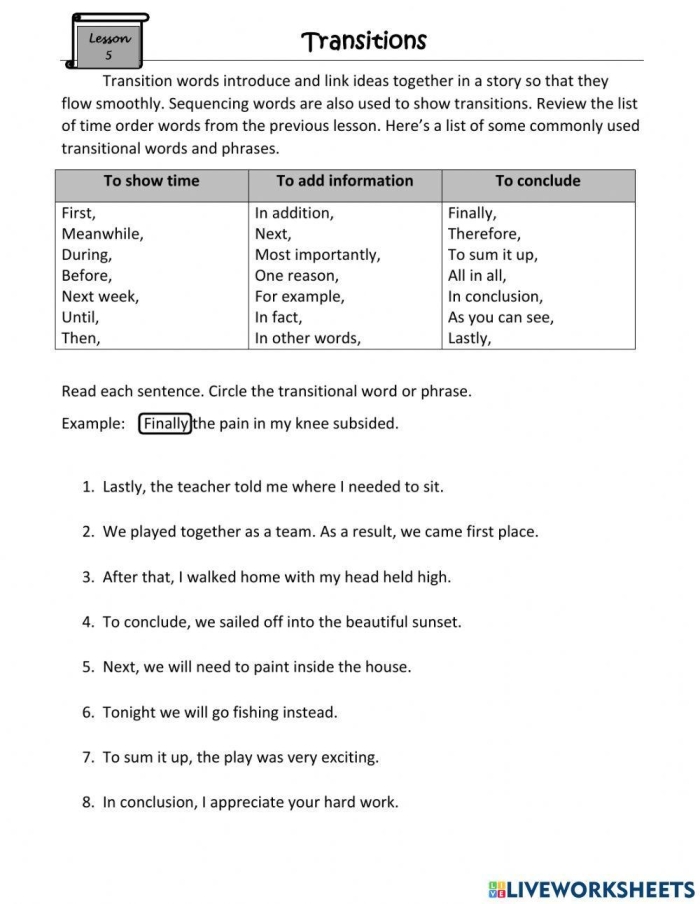
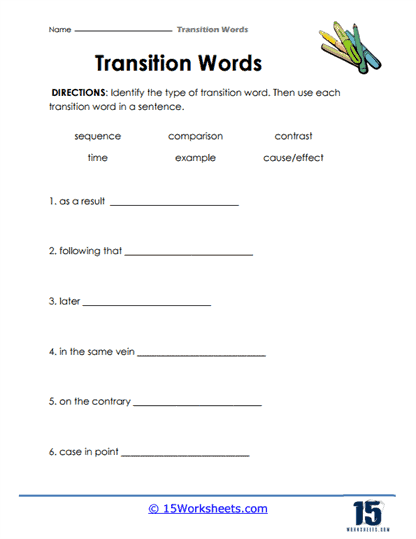
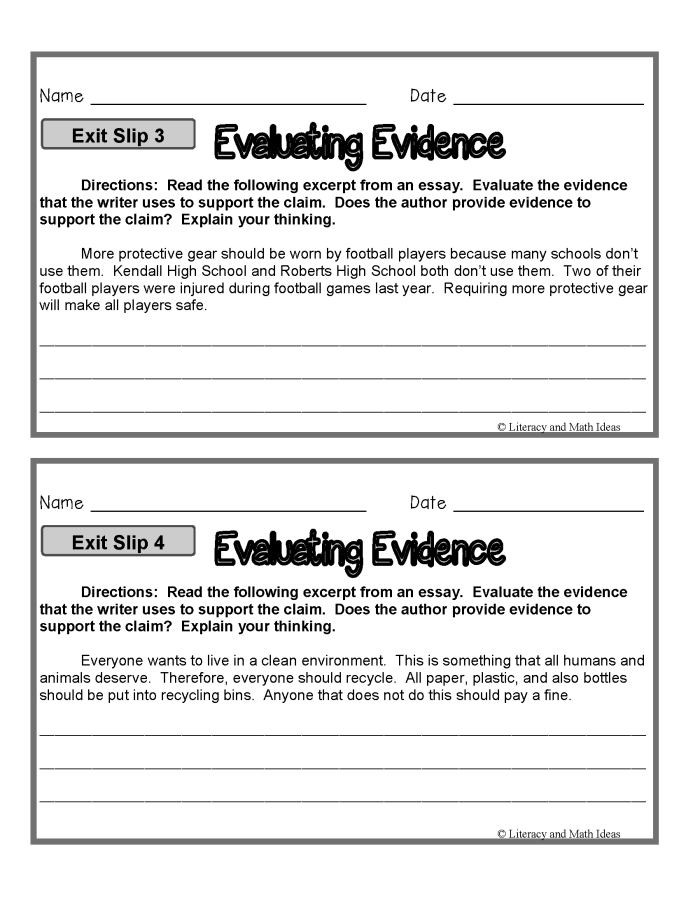
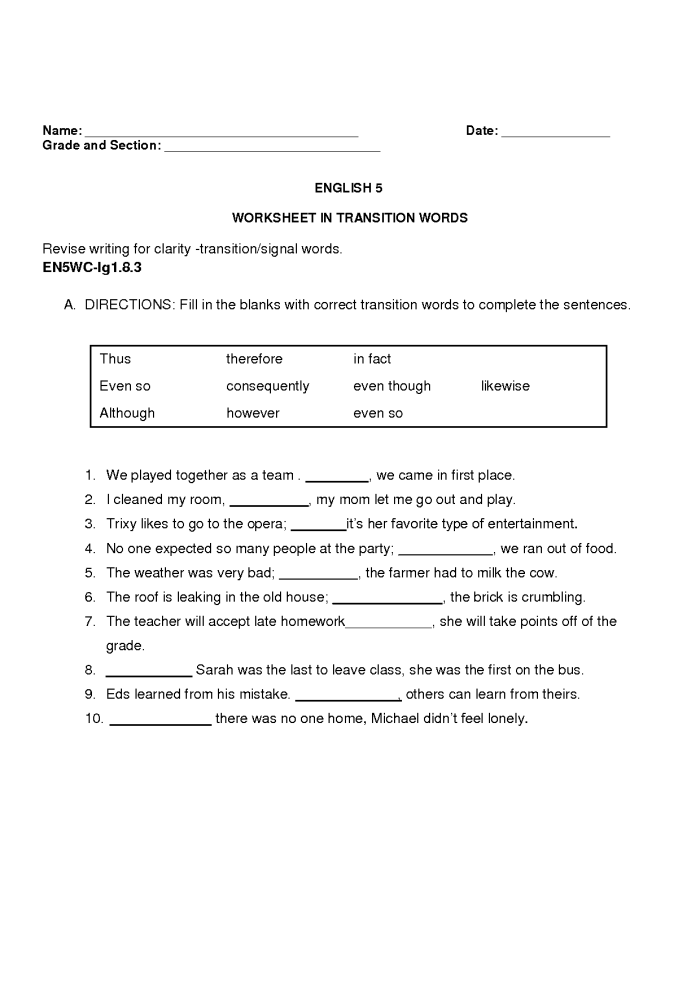
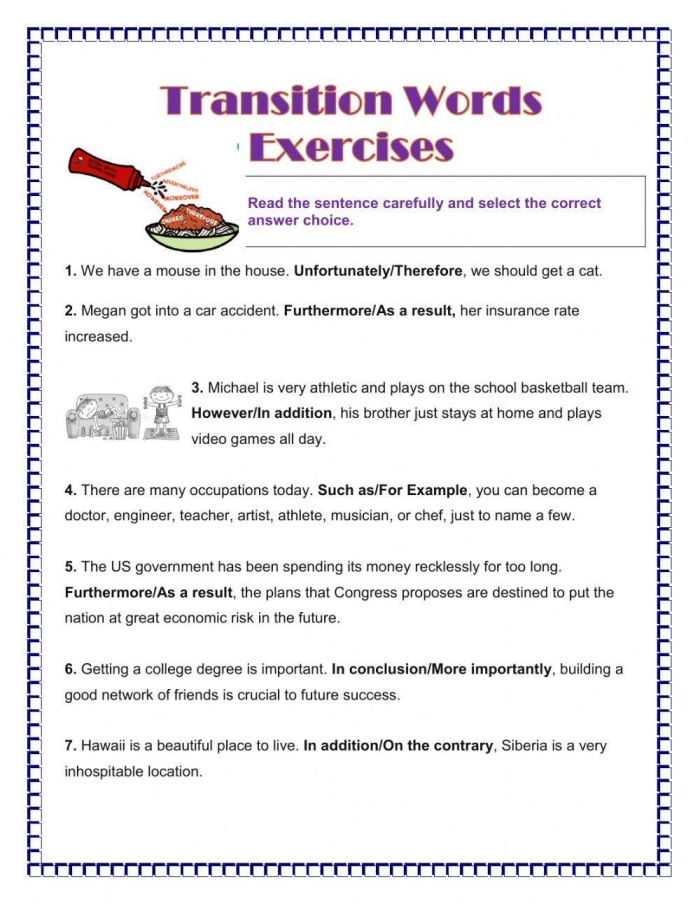
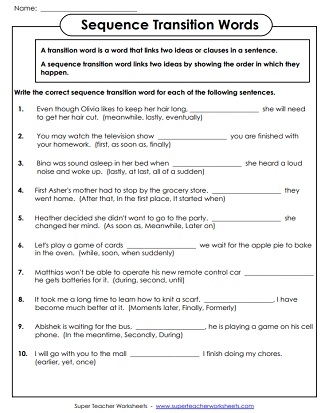
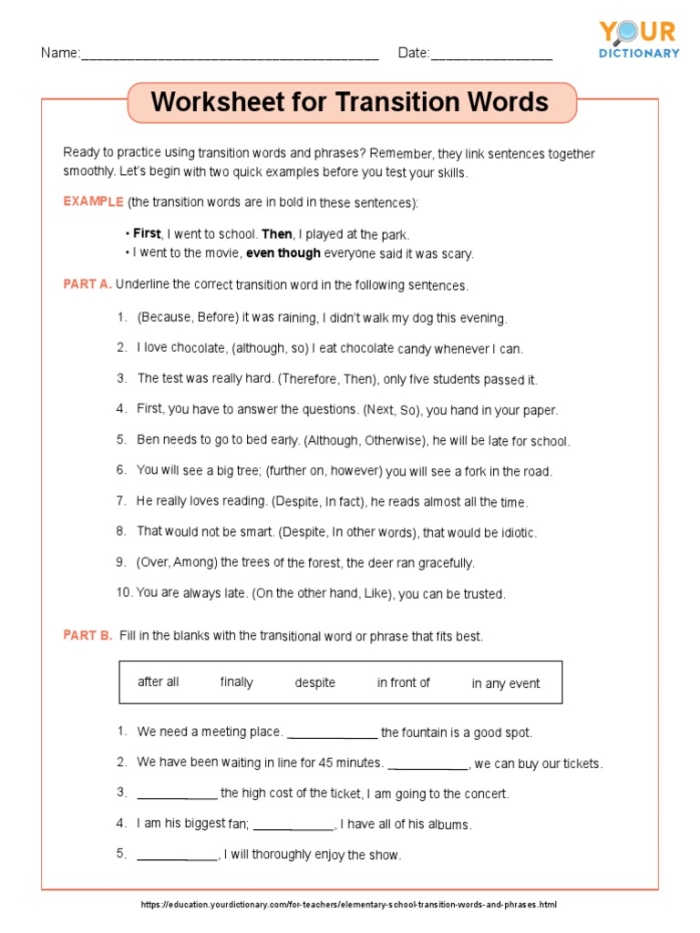
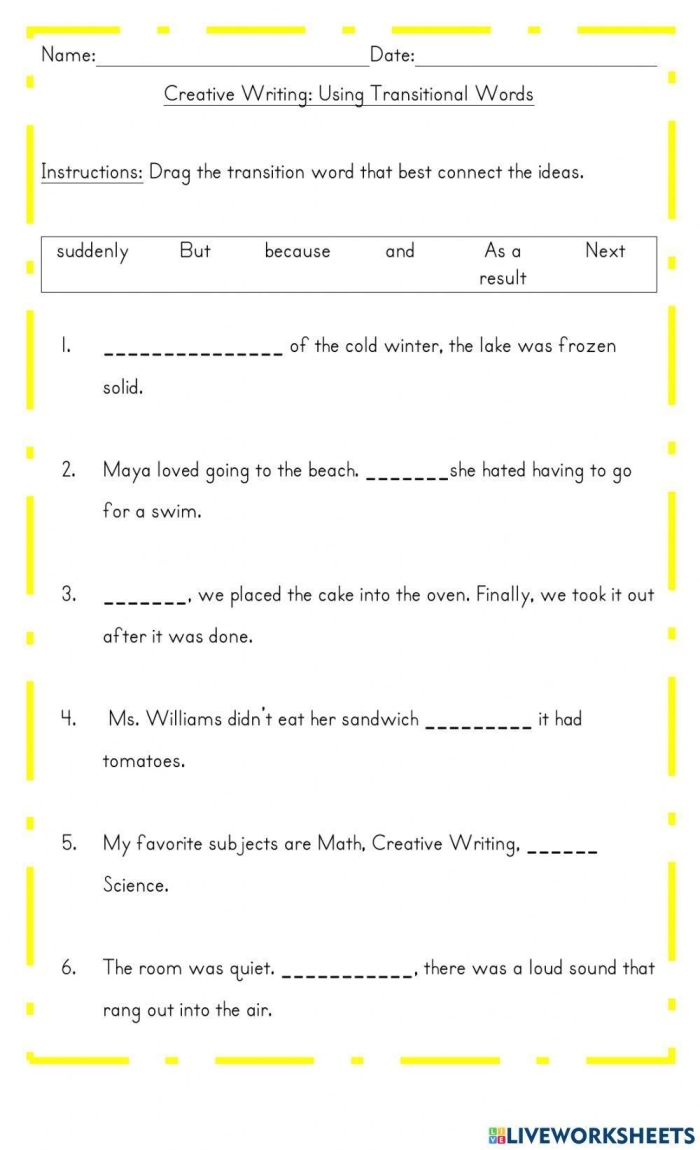
This language and vocabulary worksheet asks learners to read two short passages and choose the transition words that best connect the ideas and sentences. The exercise forces students to think critically about how ideas relate to each other. Does the next sentence add to the previous one, contradict it, or provide an example? The right transition word signals that relationship clearly to the reader.
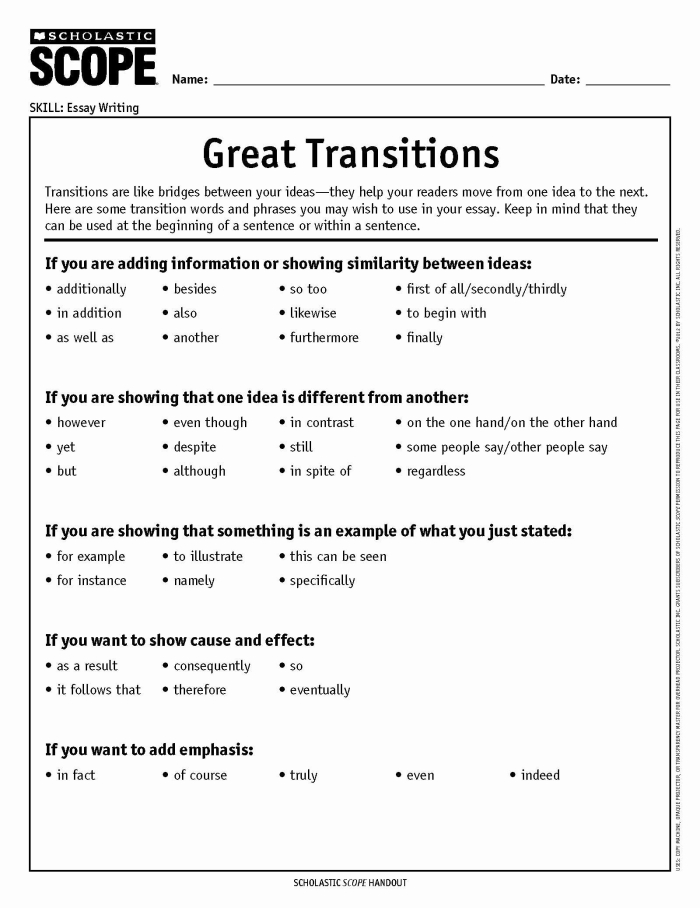
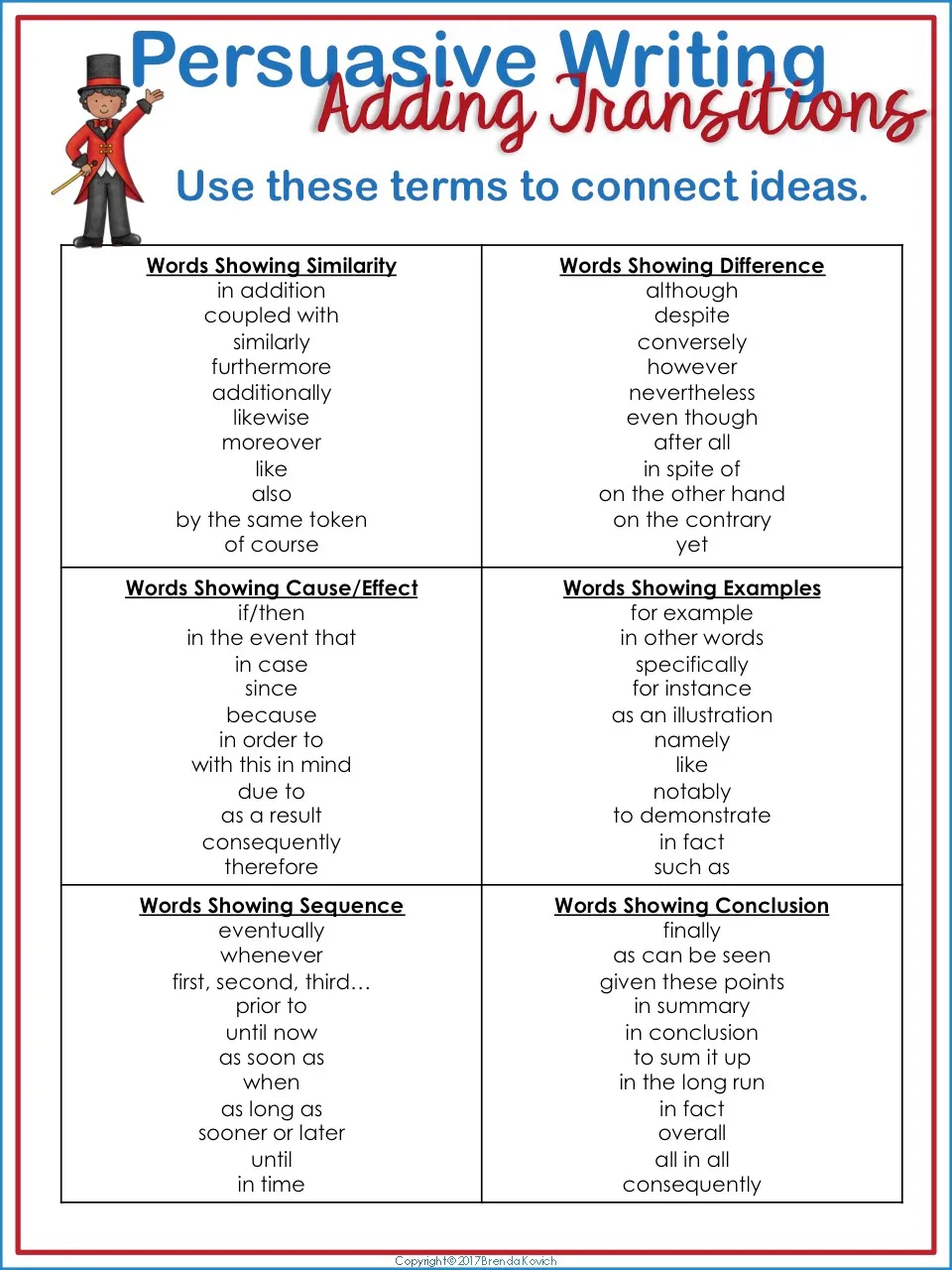
The value here goes beyond simple grammar practice. When sixth graders work through these passages, they’re learning to recognize logical connections between thoughts. They see how words like “furthermore,” “however,” “for example,” and “as a result” shape meaning. This awareness transfers directly into their own writing, whether they’re crafting persuasive essays or developing arguments in other subjects.
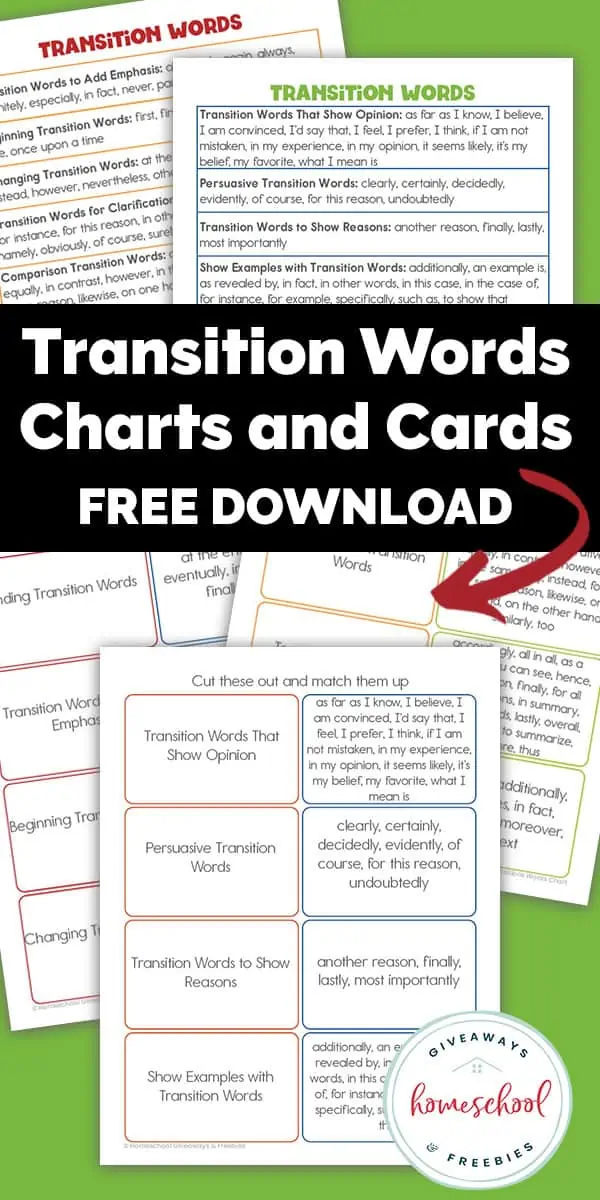
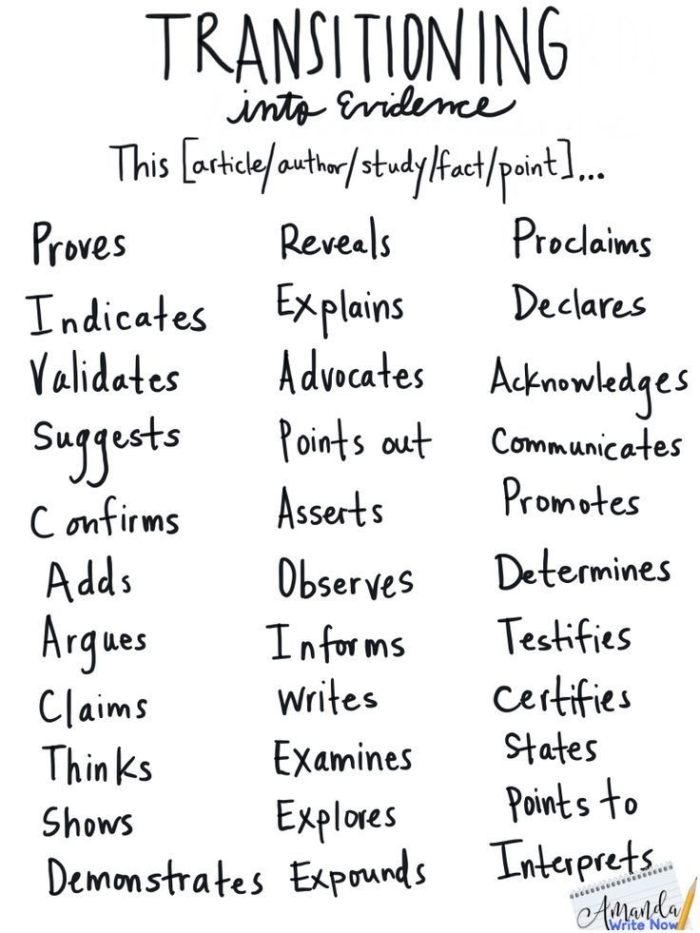
Handwriting worksheets that focus on transition words also reinforce muscle memory. Students who physically write these connective phrases develop stronger recall when drafting their own pieces. The combination of reading comprehension and handwriting practice creates a more complete learning experience than worksheets that rely solely on selecting answers.
For students ready to strengthen their broader writing skills, exploring related resources like grammar and mechanics in historical writing or practicing comprehension strategies across subject areas can deepen their understanding of how language works in different contexts. Transition words matter everywhere writing happens.
Practice with These Worksheets