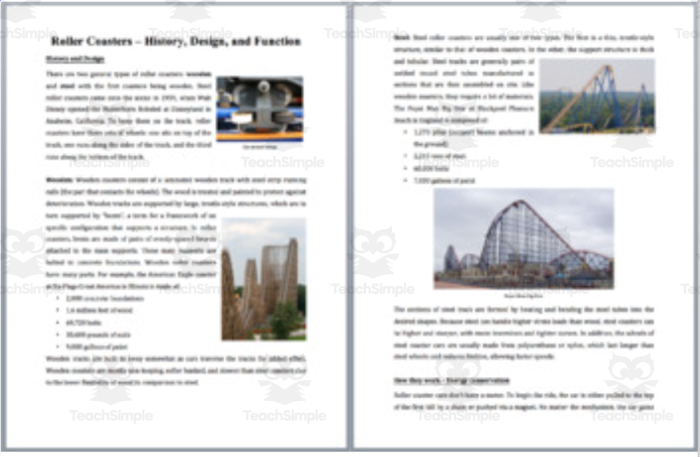
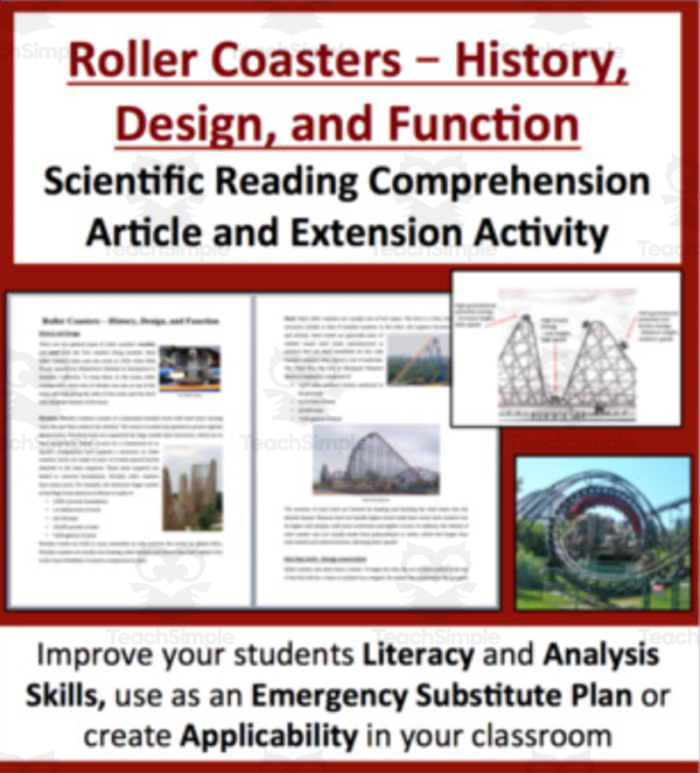
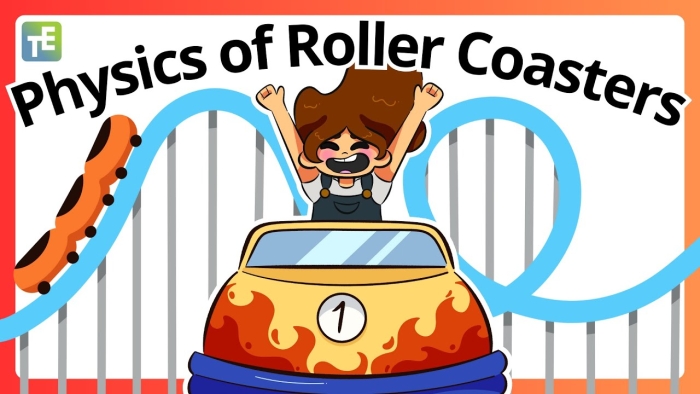
Roller coasters offer one of the clearest real-world demonstrations of physics principles in action. When students watch a coaster climb a hill, hang upside down through a loop, or accelerate down a steep drop, they’re witnessing gravity, velocity, and energy conversion happening simultaneously. A nonfiction reading comprehension worksheet focused on this topic bridges the gap between abstract physics concepts and something students can actually visualize and understand.
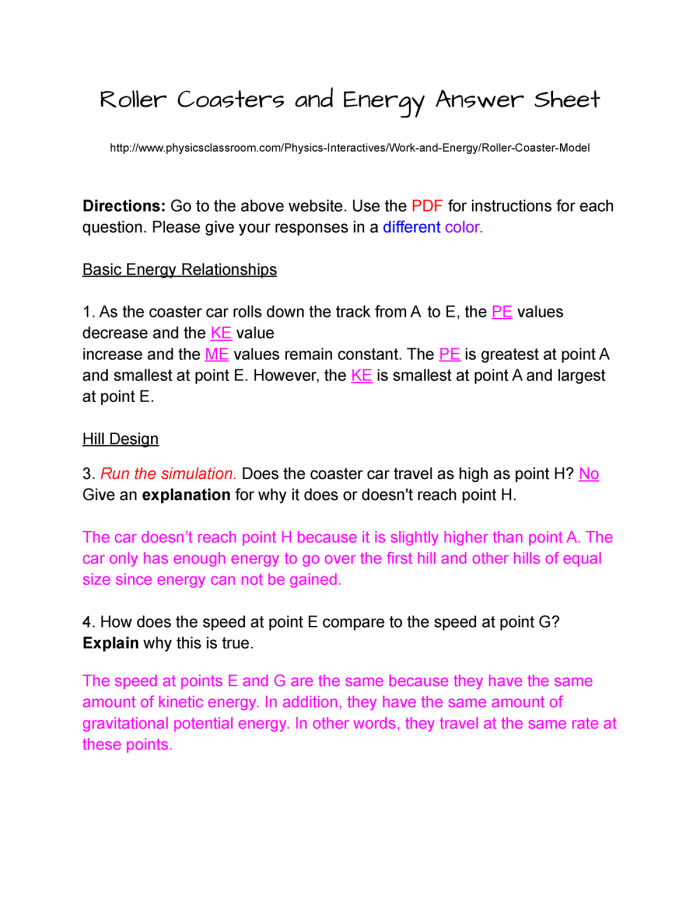
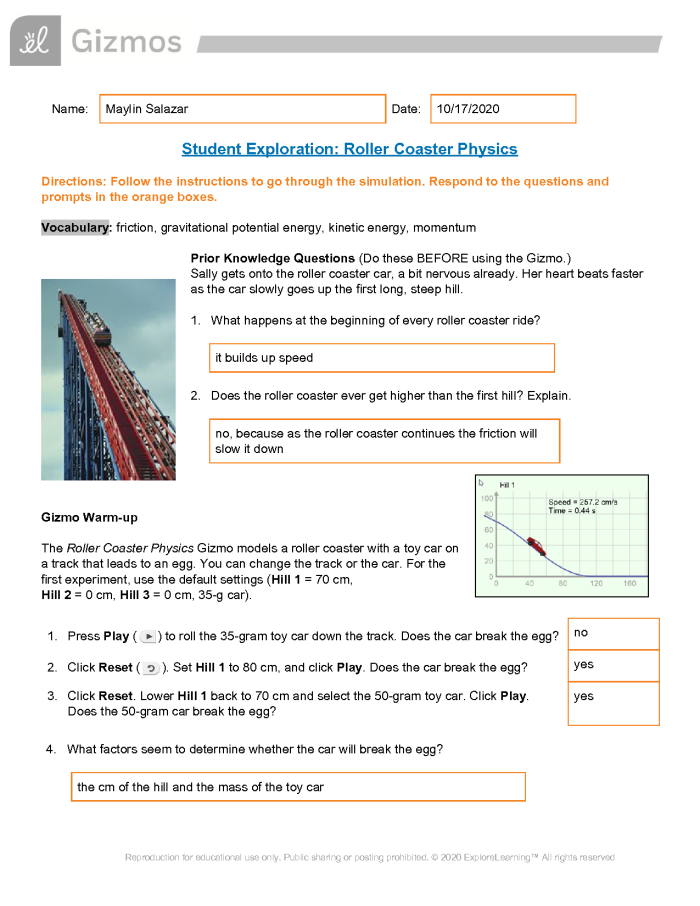
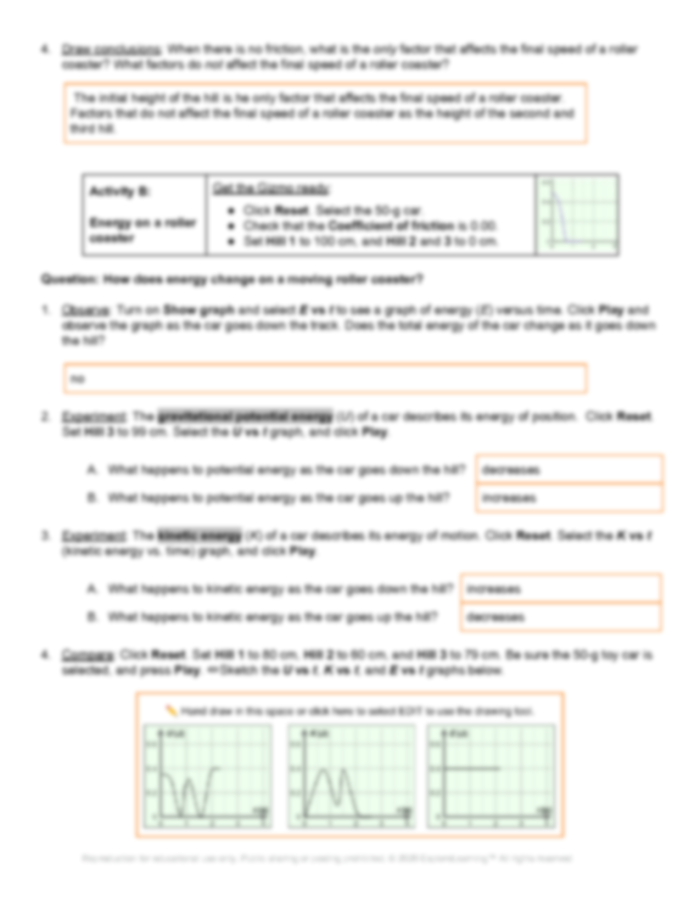
For eighth grade physical science classes, roller coasters provide an engaging entry point to studying forces and motion. The reading material typically explains how potential energy transforms into kinetic energy as a coaster descends, why loops don’t require constant power to function, and how friction affects speed. Students learn that a coaster at the top of a hill possesses maximum potential energy, which converts to kinetic energy as it falls. By the time it reaches the bottom, that stored energy has transformed into pure speed.
The loop presents a particularly useful teaching moment. Many students assume a coaster needs an engine to push through an upside-down section, but the physics tells a different story. The coaster’s initial speed, combined with the circular path, creates the centripetal force needed to keep passengers pressed into their seats even at the peak of the loop. This challenges intuitive thinking and makes the concept memorable.
Using a worksheet about physics at play in roller coasters allows students to practice reading comprehension while absorbing legitimate scientific content. Rather than reading generic passages, they’re analyzing real physics principles applied to something exciting. Pairing this with exercises on active and passive voice in physical science contexts reinforces both literacy and content mastery simultaneously.
The practical benefit extends beyond test scores. Students develop the ability to extract technical information from nonfiction text, a skill they’ll need in science, engineering, and countless other fields throughout their education and careers.
Grab These Worksheets Now