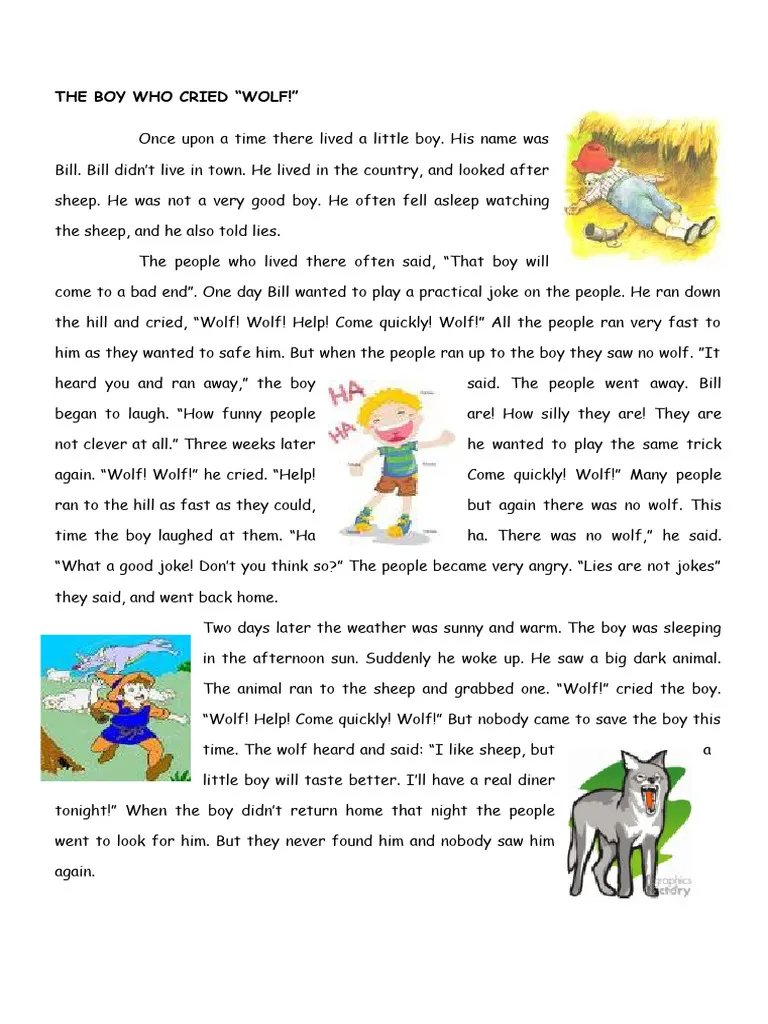
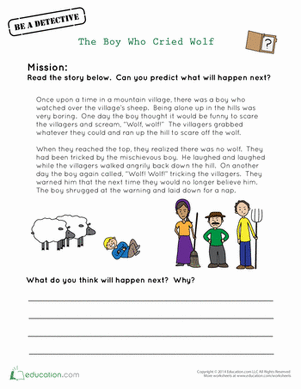
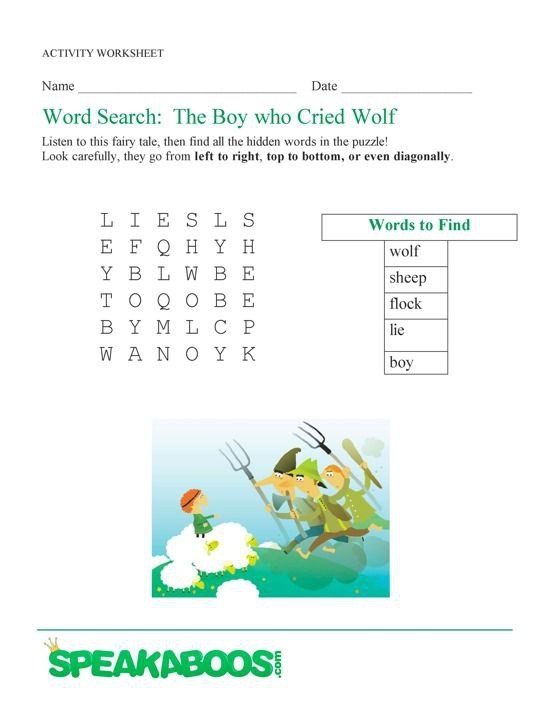
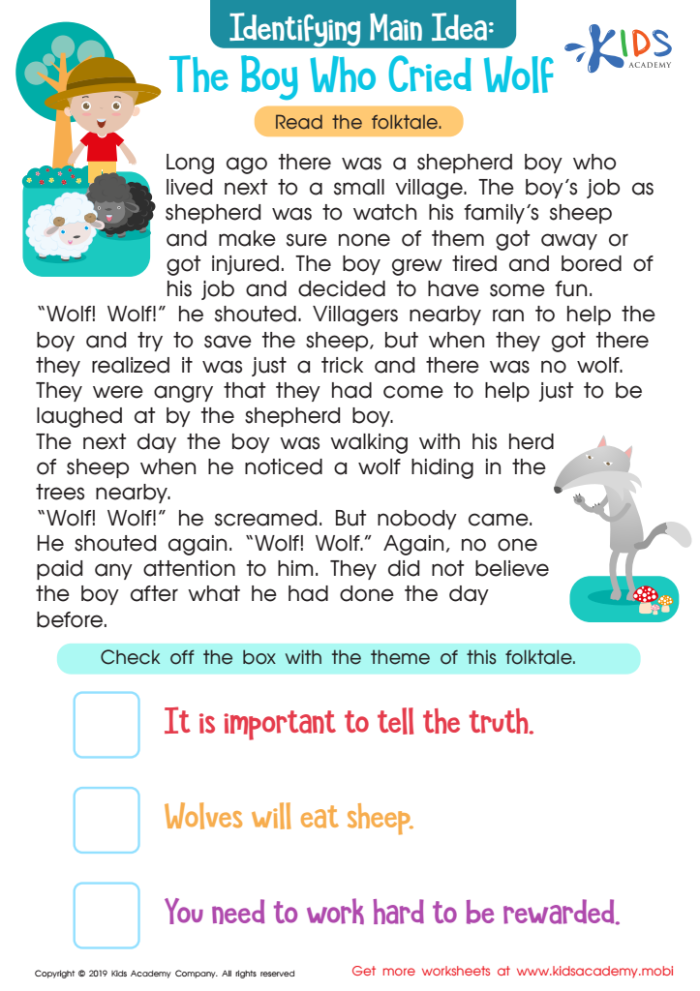
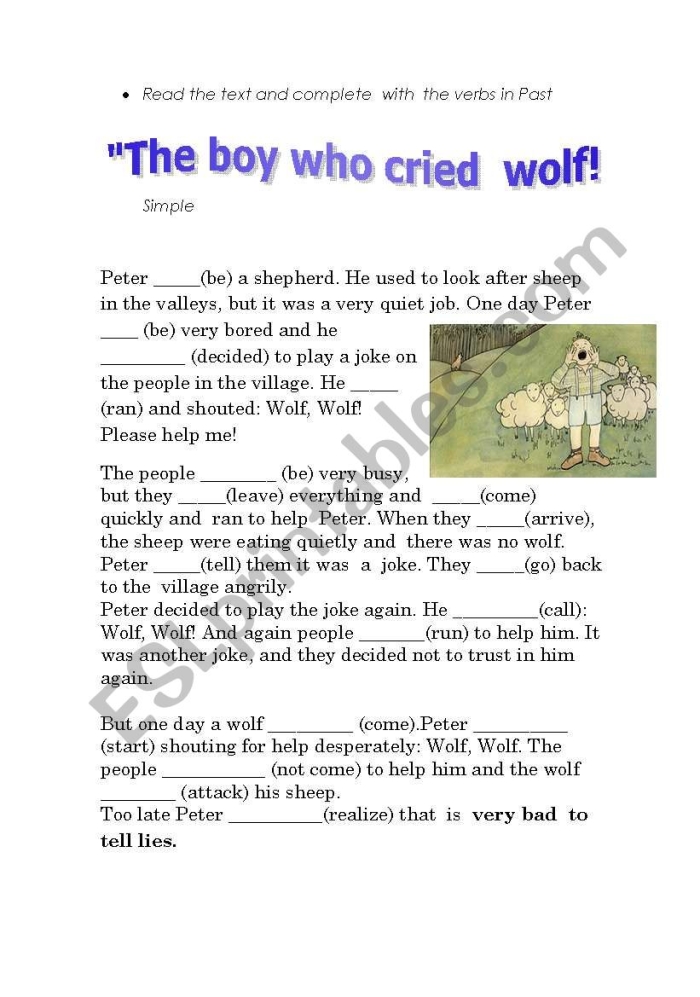
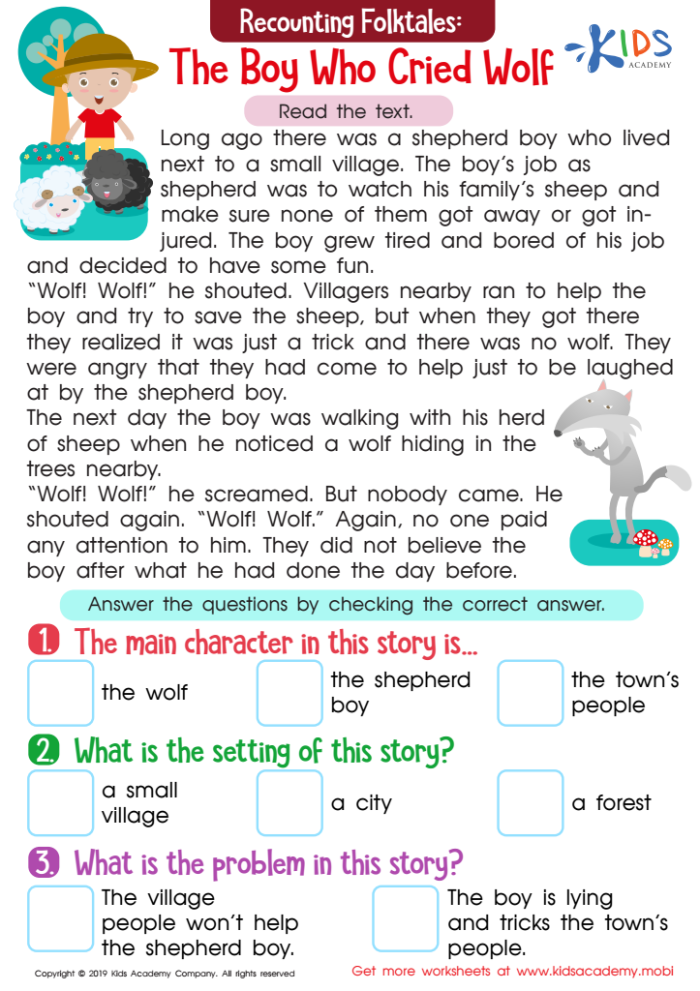
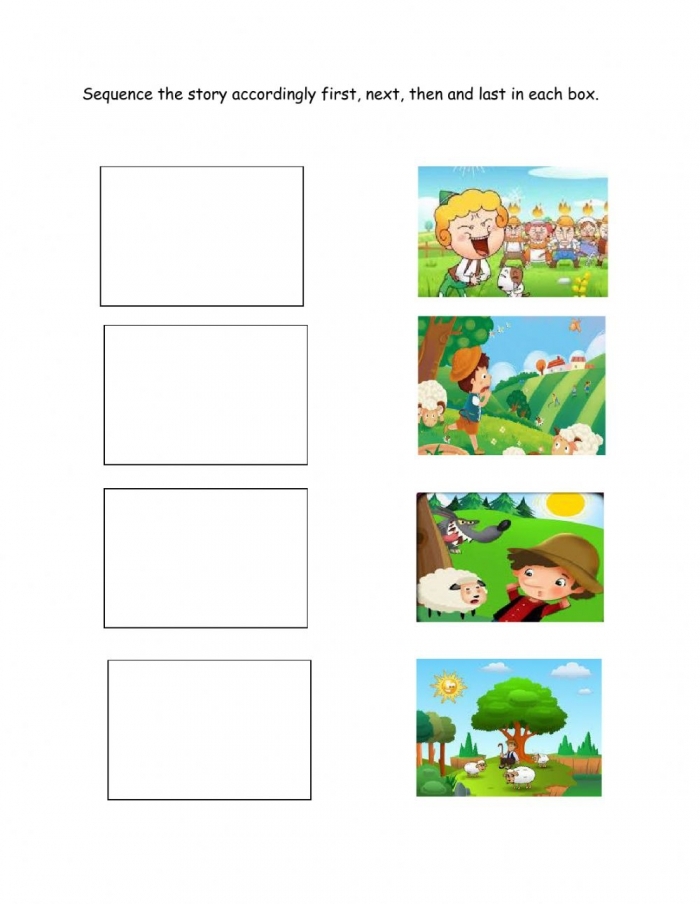
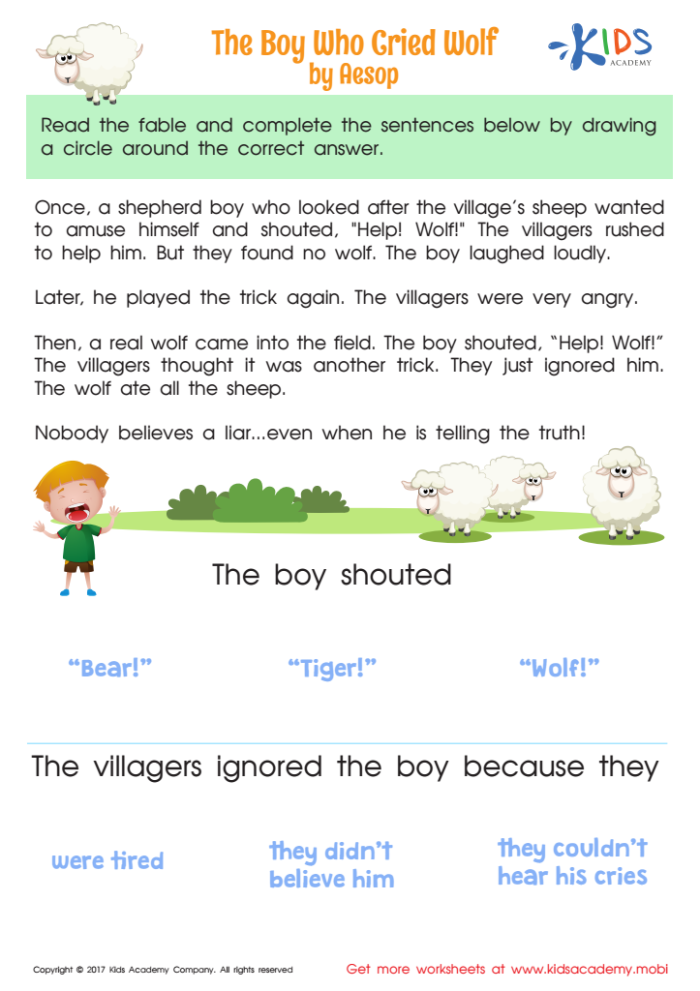
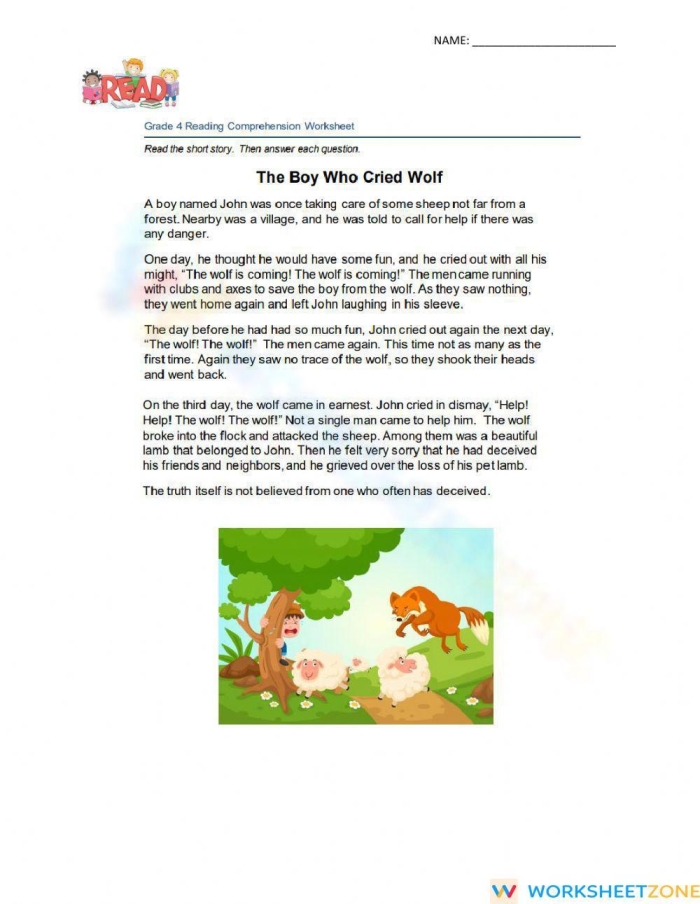
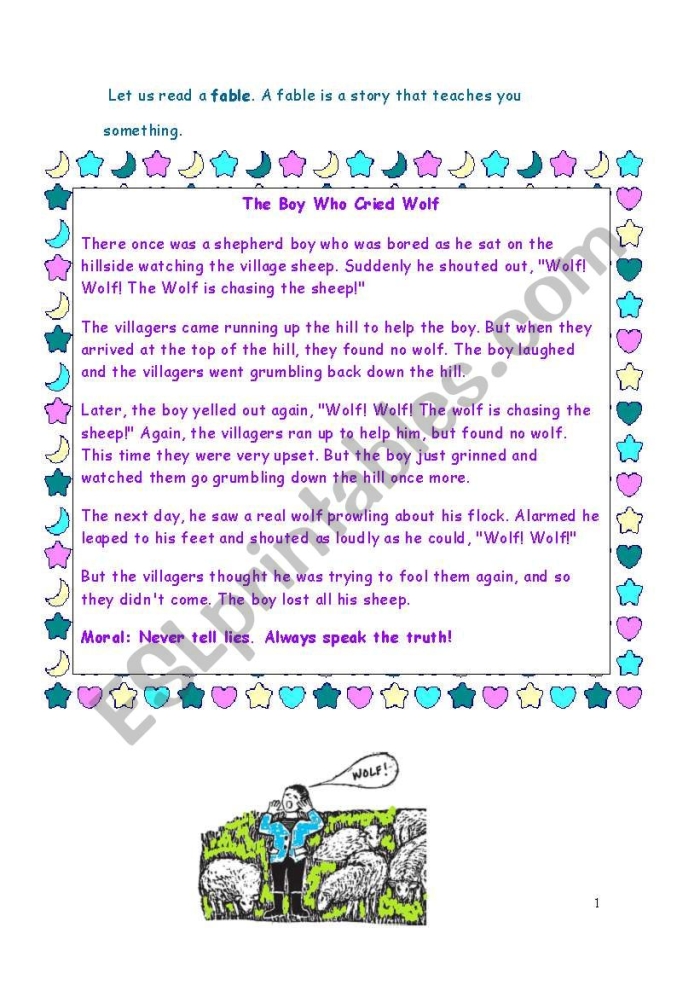
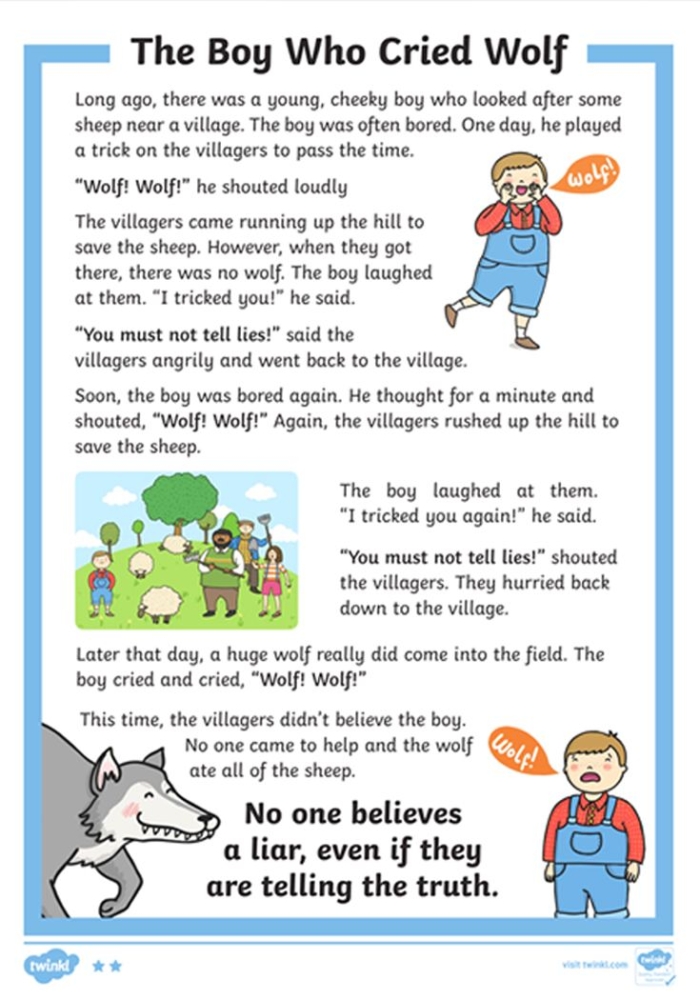
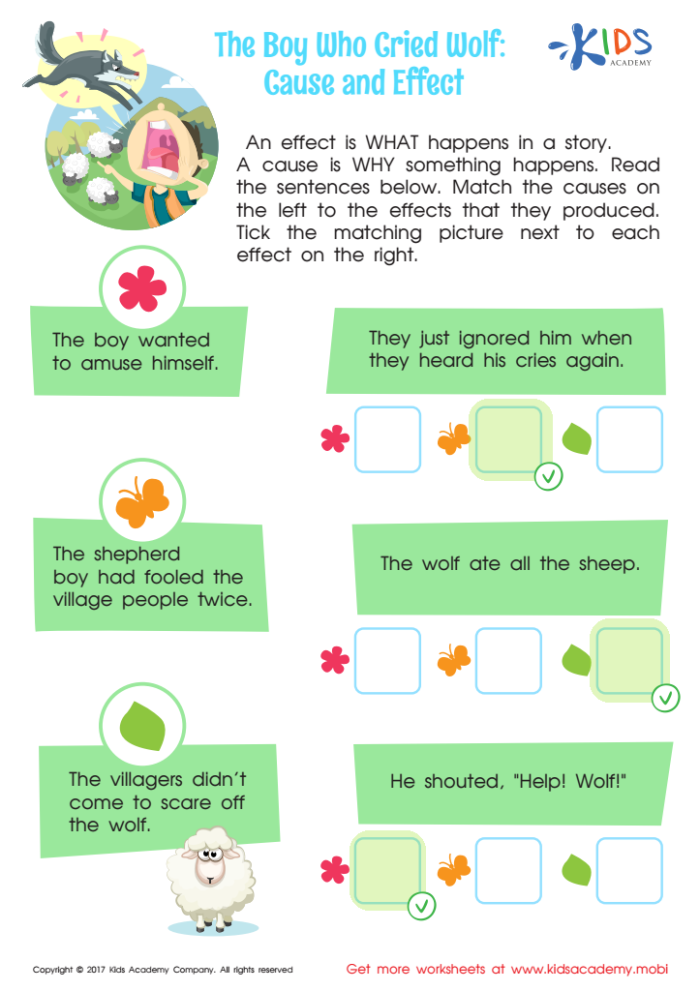
Teaching second grade students to think ahead while reading is one of the most valuable skills you can build early on. This worksheet focuses on prediction and comprehension through Aesop’s classic fable “The Boy Who Cried Wolf,” a story that naturally invites kids to guess what happens next and understand why characters make certain choices.
The fable works perfectly for developing these reading skills because the plot unfolds in a way that rewards careful attention. As students read about the boy who repeatedly tricks his village with false alarms, they encounter moments where prediction becomes almost instinctive. They start to see patterns and consequences, which is exactly what you want happening in their minds at this stage of learning.
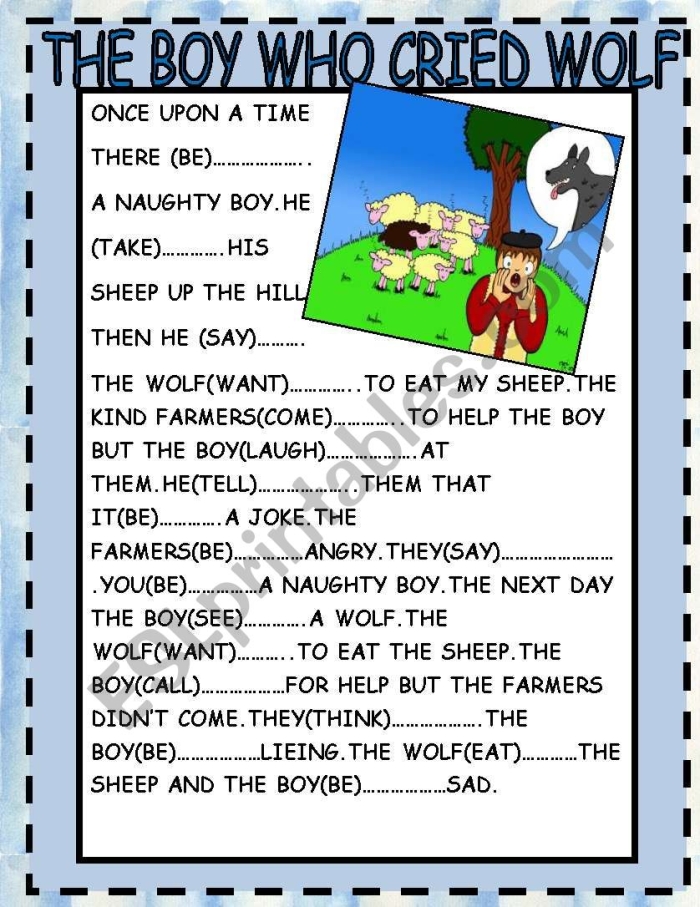
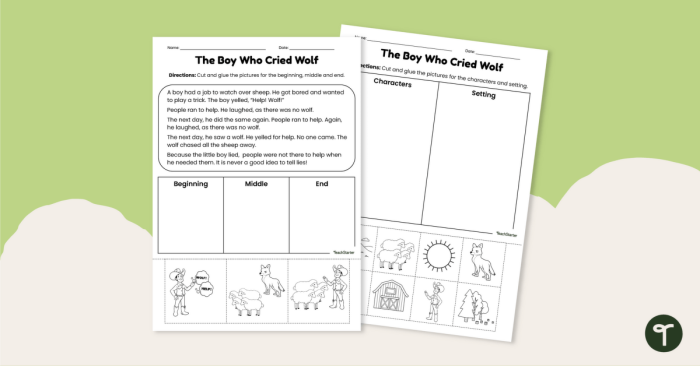
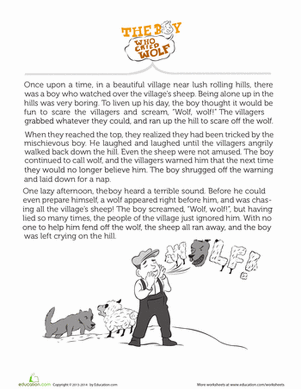
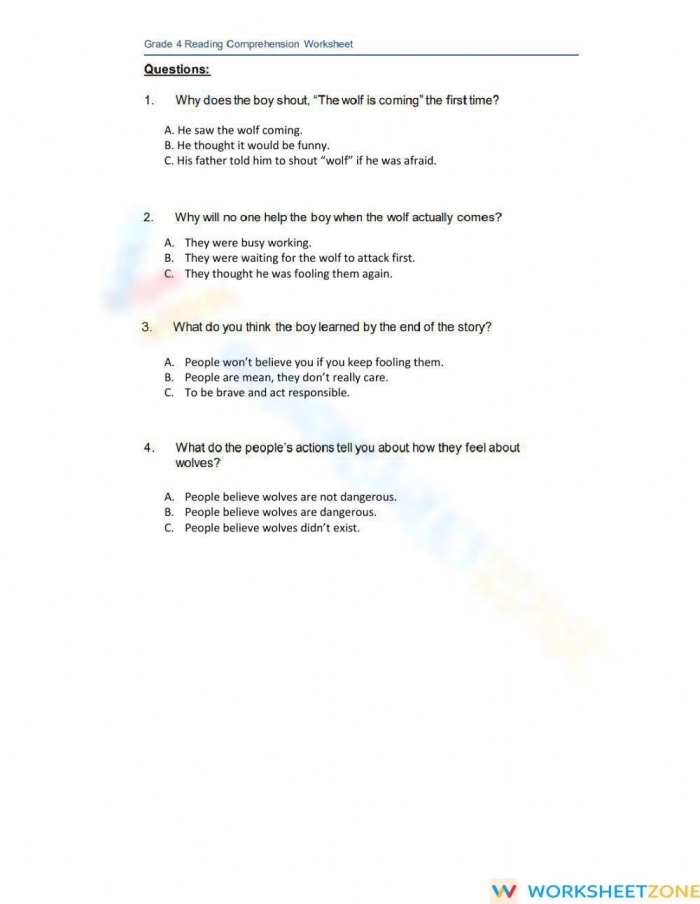
The worksheet structure keeps things straightforward for second graders. Kids read through the story passage, then answer written prompts that ask them to think about what might happen next or why characters acted as they did. This combination of reading and writing reinforces both comprehension and critical thinking without overwhelming them. The prompts encourage them to look back at the text for clues rather than relying on guesses alone.
What makes this approach effective is that prediction isn’t treated as a separate skill from comprehension. When students predict what the wolf will do or how the villagers will react, they’re actually demonstrating that they understand the story’s logic and character motivations. They’re learning that reading involves active thinking, not just moving through words on a page.
This worksheet pairs well with other literacy and math activities. If you’re working on building foundational skills across subjects, you might also explore resources like antonyms and opposites to strengthen vocabulary, or incorporate subtraction word problems to show how reading comprehension applies across different types of assignments.
For second graders, consistent practice with stories like this builds confidence in their ability to understand what they read and think critically about text. That foundation matters far more than rushing through material.
Use These Worksheets Today