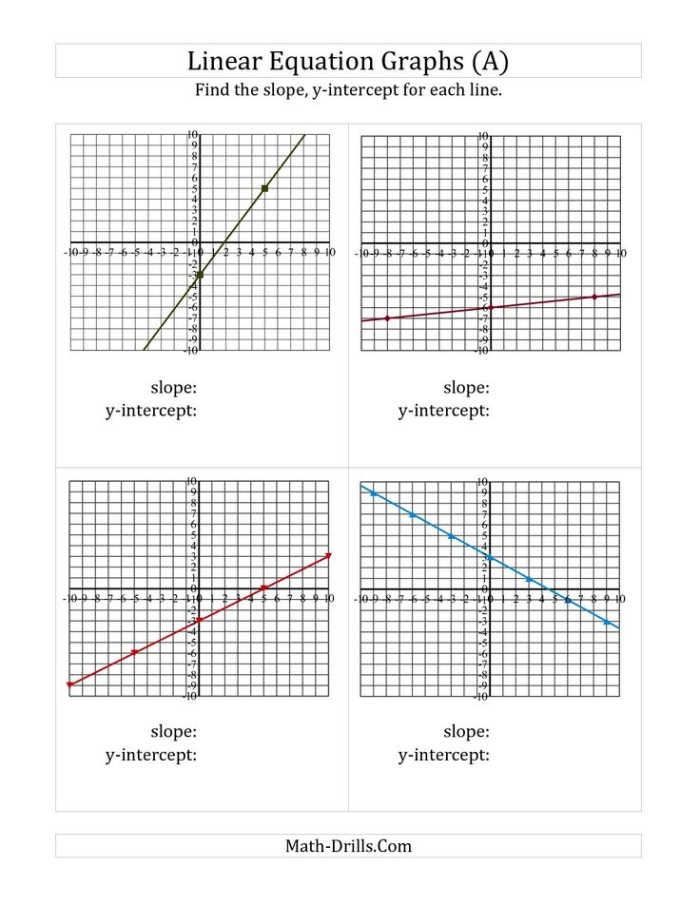
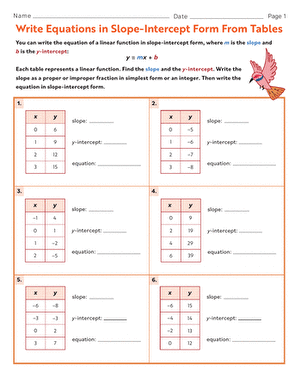
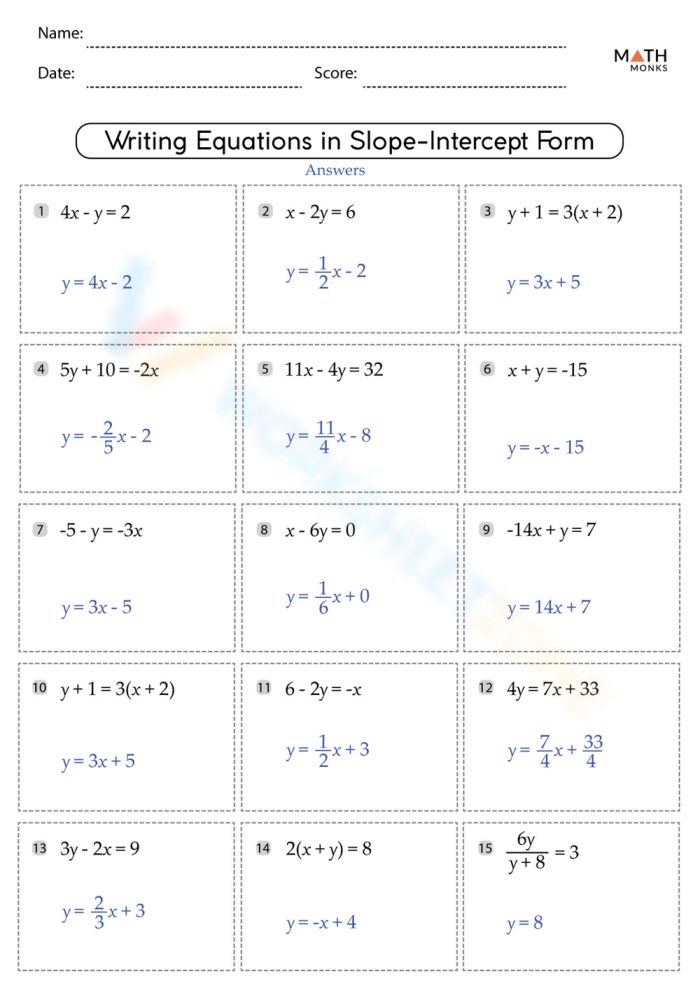
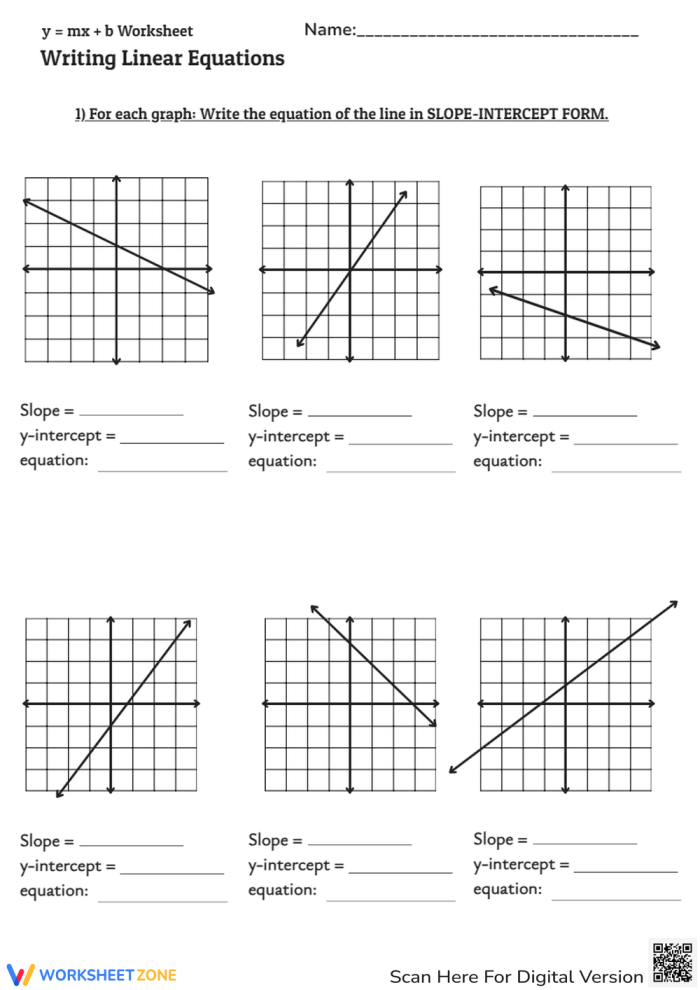
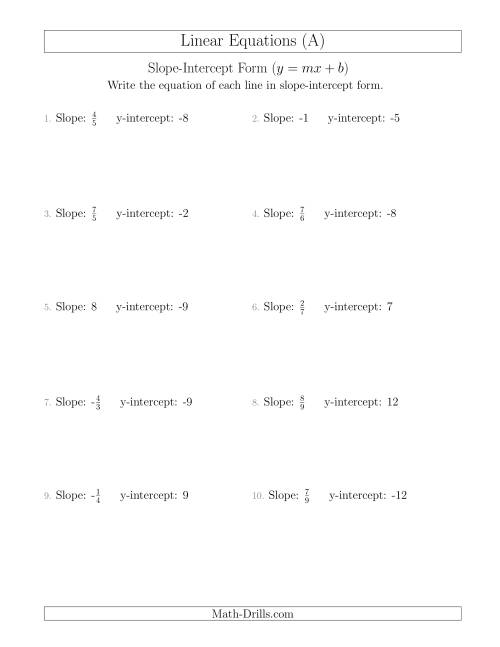
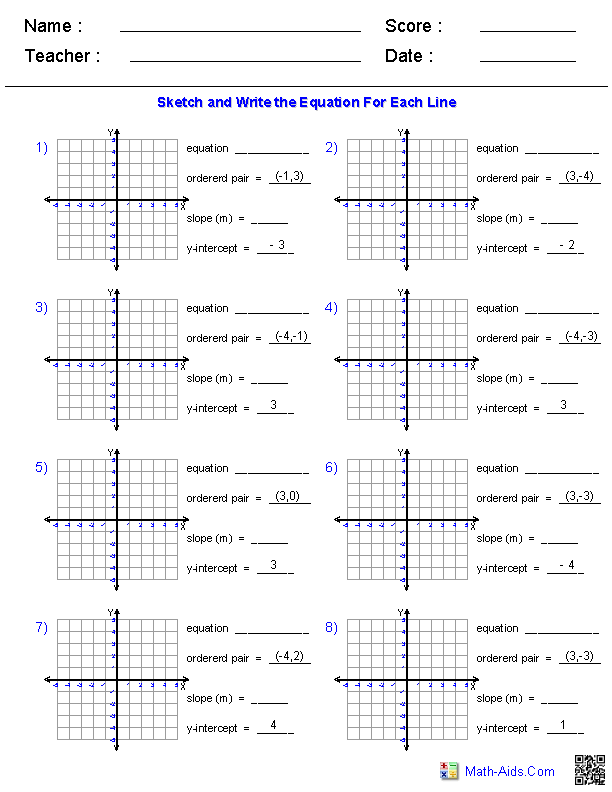
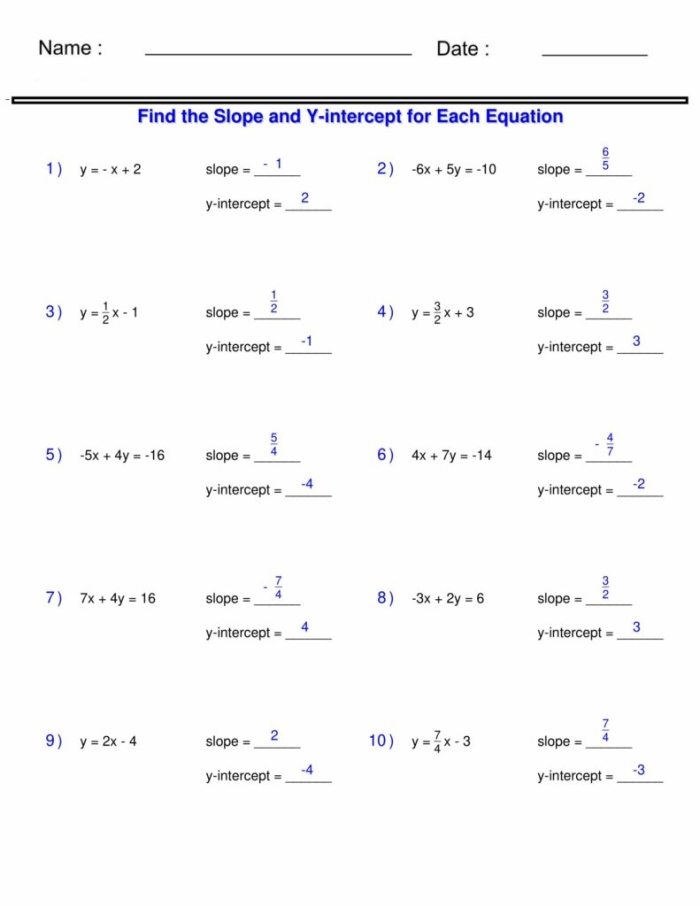
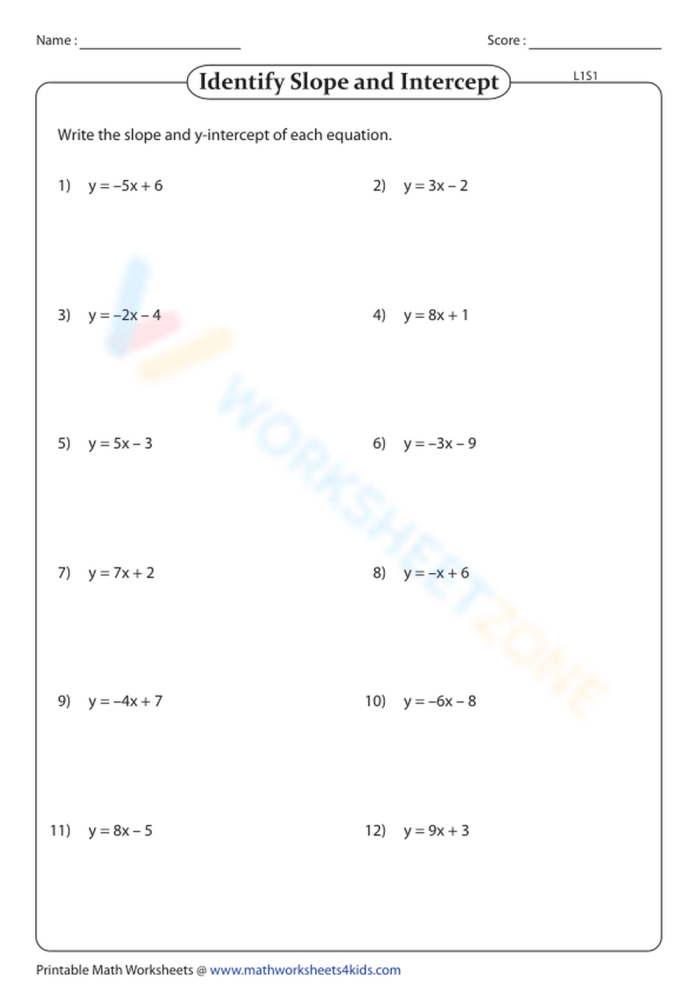
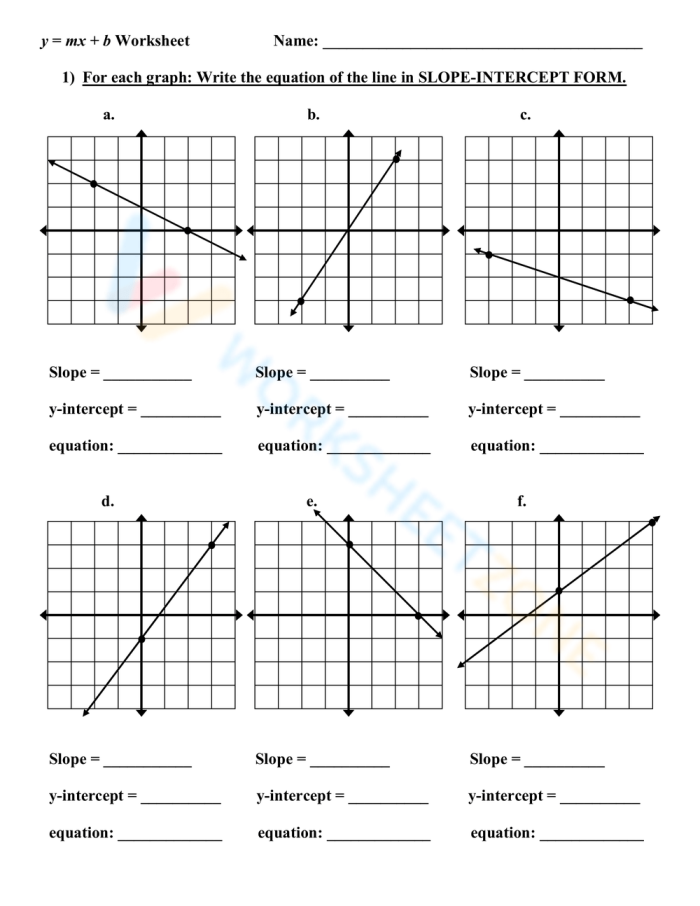
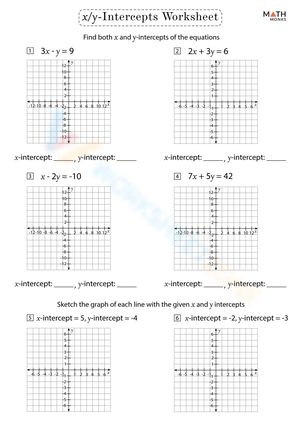
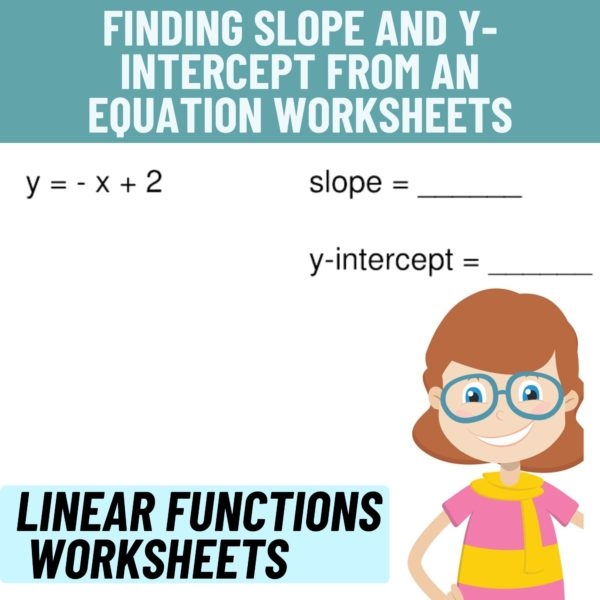
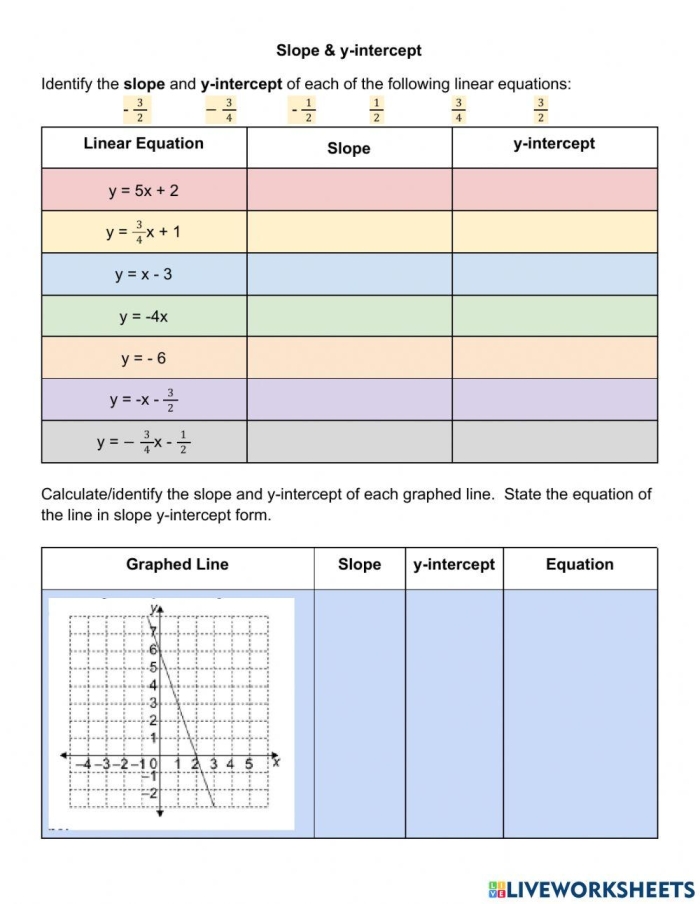
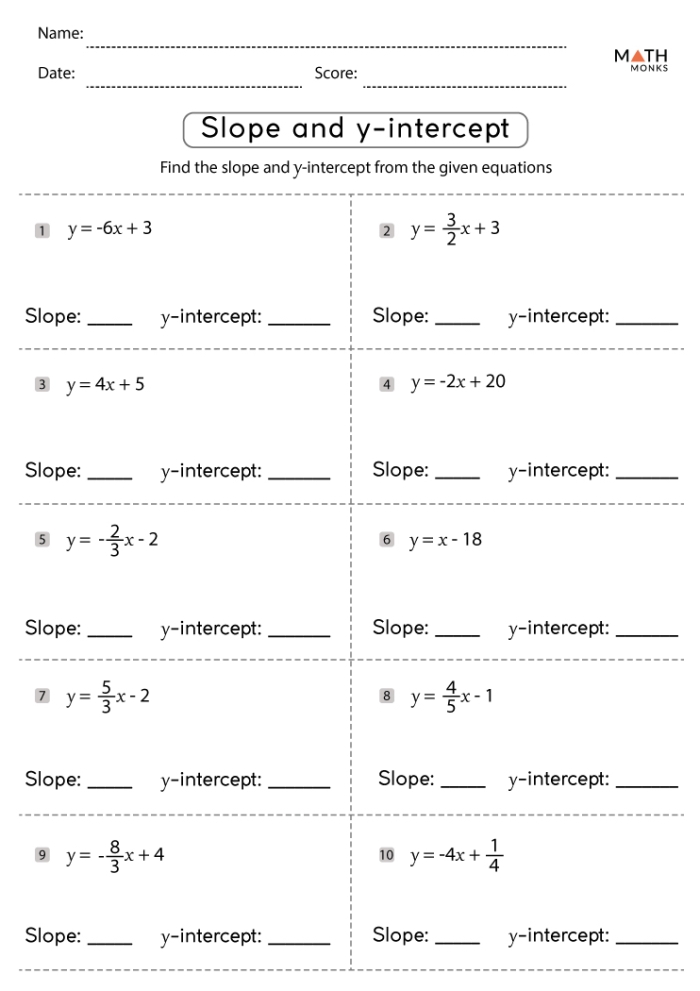
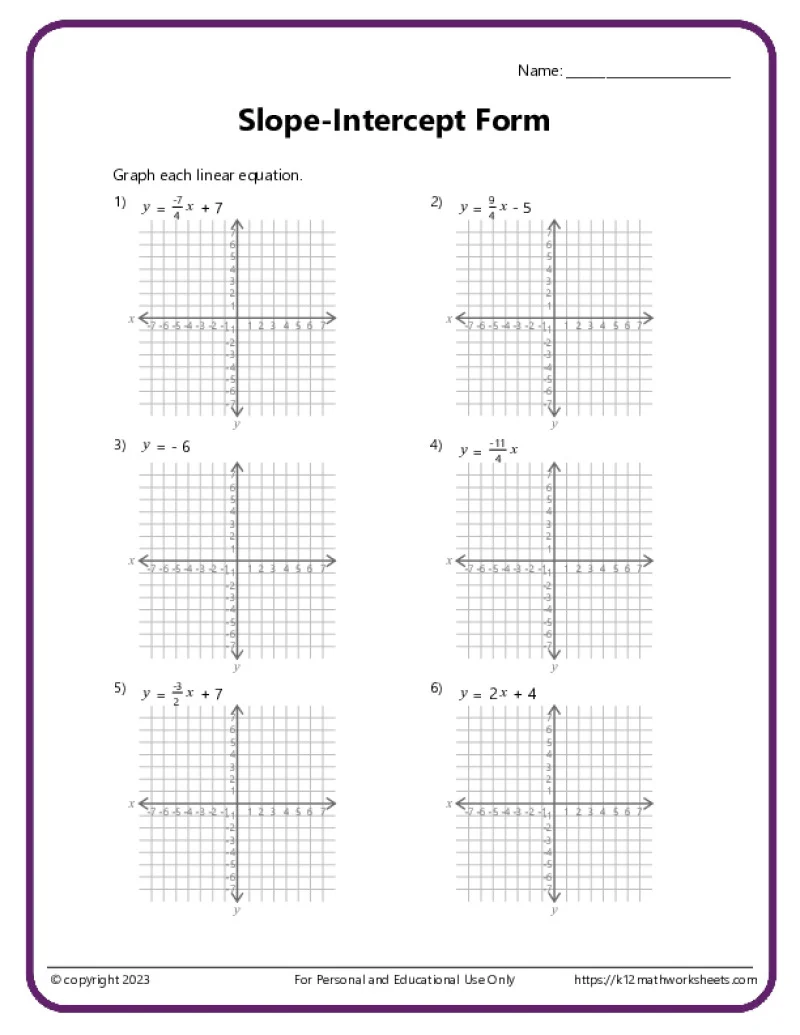
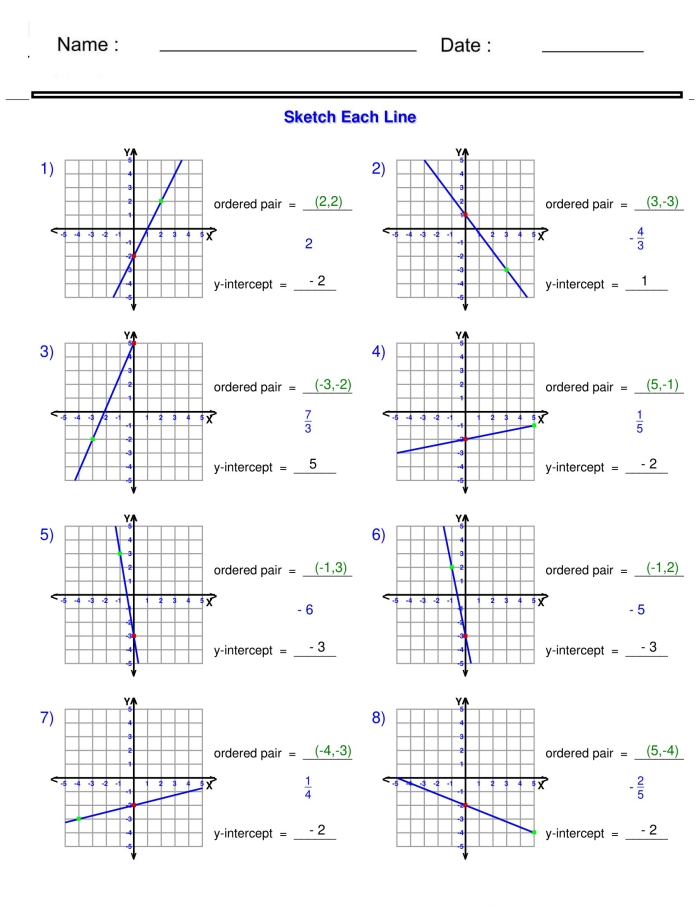
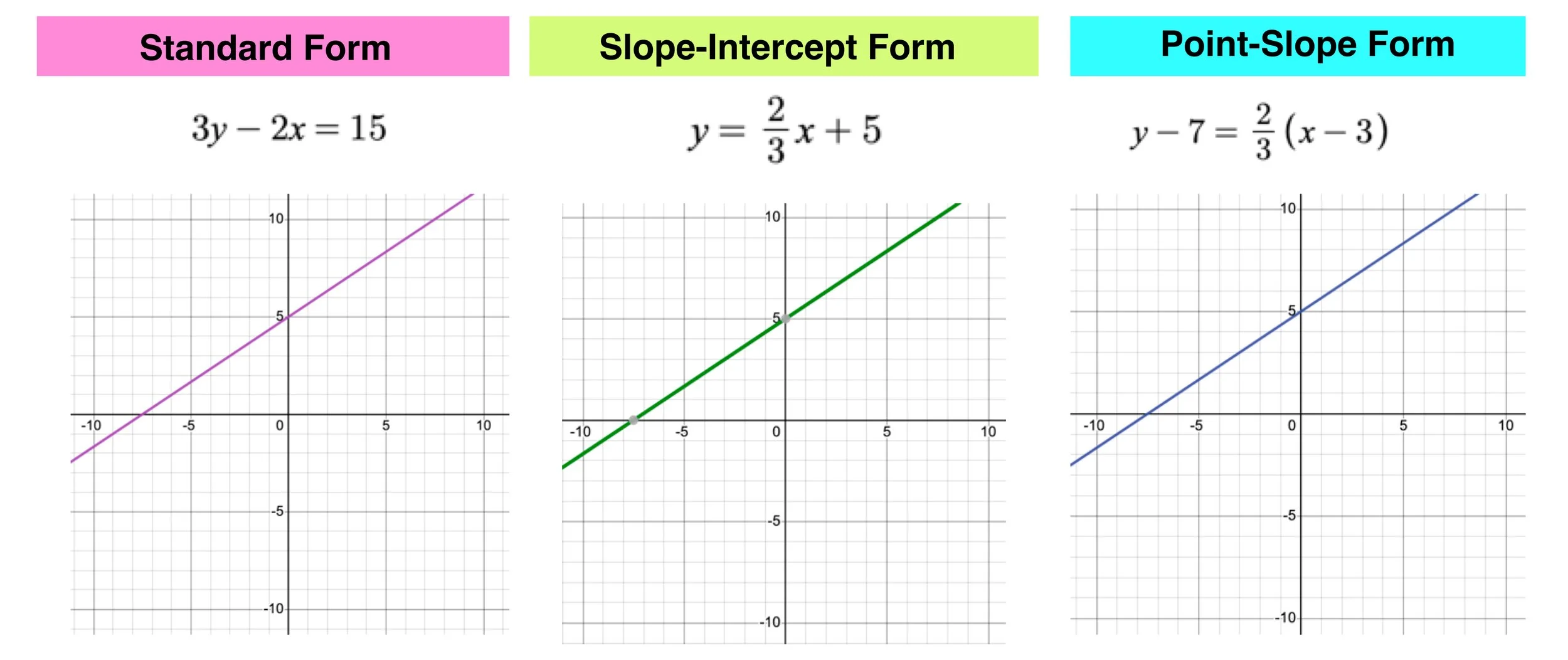
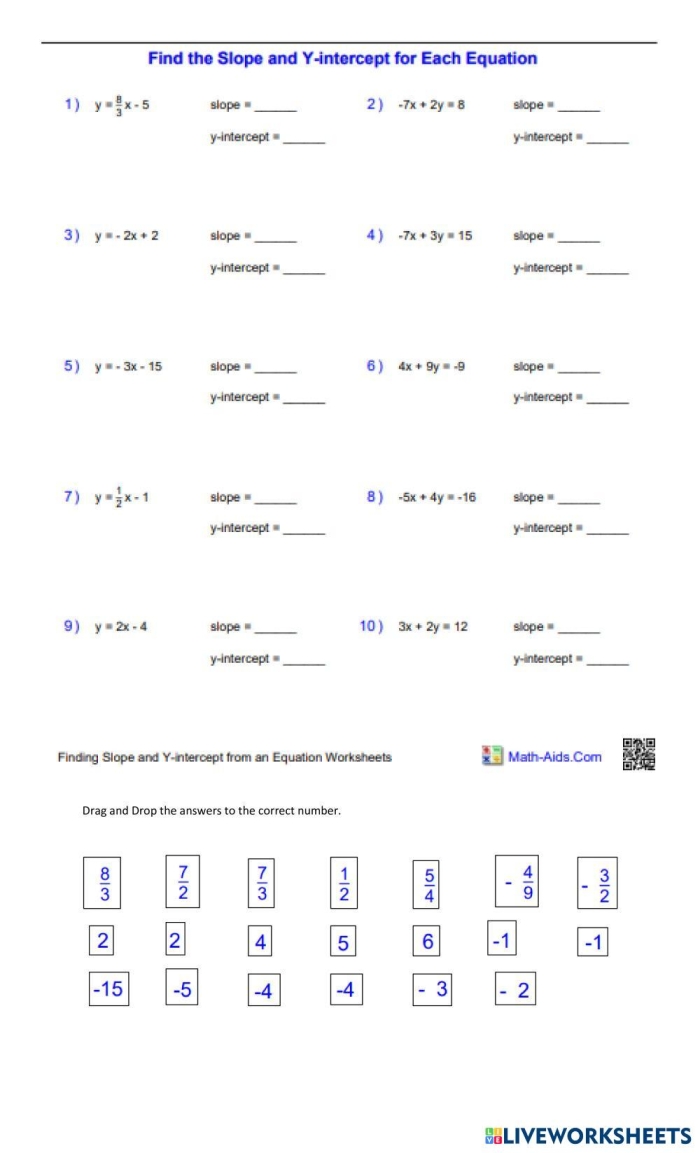
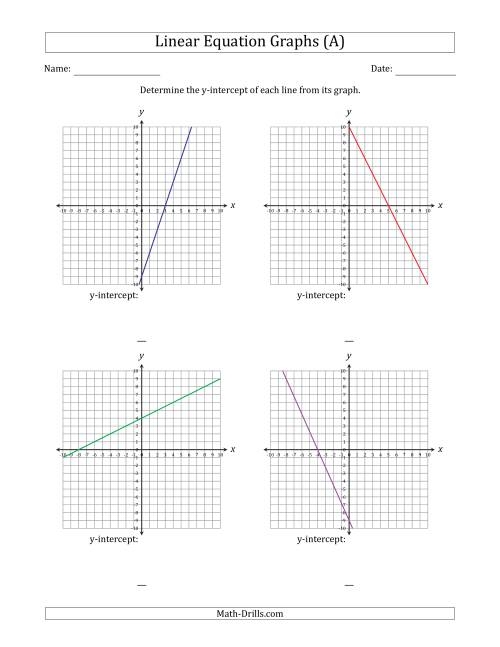
When eighth-grade students first encounter linear equations, they often struggle with the abstract nature of slope and intercepts. This worksheet addresses that challenge by giving students concrete information: a y-intercept value and a single point on the line. From these two pieces of data, they must reconstruct the entire equation in slope-intercept form.
The y-intercept is where a line crosses the y-axis, and it’s always written as the constant term in the equation y = mx + b. When students already know this value, they’ve eliminated half the work. The remaining task is finding the slope, which requires using the given point along with the y-intercept to calculate the rate of change. This two-step process reinforces why the slope-intercept form exists in the first place: it separates the starting point (b) from the rate of change (m).
What makes this approach effective is that it mirrors real-world scenarios. Engineers, economists, and scientists frequently know a starting value and one additional measurement, then need to predict the relationship between variables. By working through these problems, eighth-grade students build intuition for how equations model actual situations rather than treating them as purely abstract symbols.
The syllable structure of mathematical vocabulary matters too. Words like “slope-intercept” and “linear” have distinct syllable patterns that help students retain terminology when they speak aloud during group work. Repetition across multiple problems solidifies both the procedural steps and the language itself.
For students who need additional practice with foundational concepts, exploring how linear equations connect to other algebraic skills can deepen understanding. Similarly, students tackling more advanced problems might benefit from reviewing equations involving square roots to see how different equation types build on the same foundational reasoning.
Worksheet Practice Section