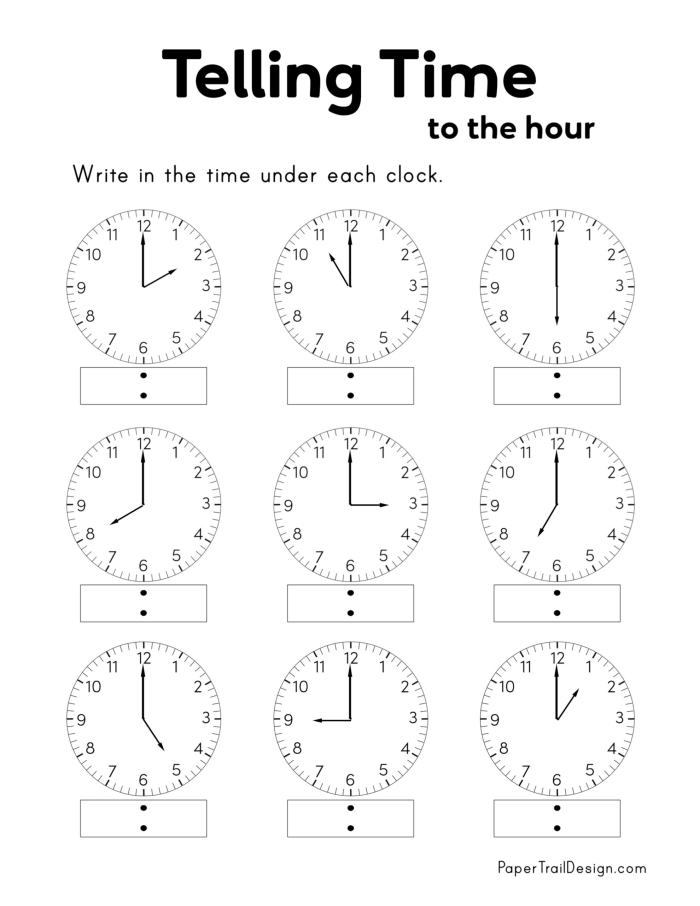
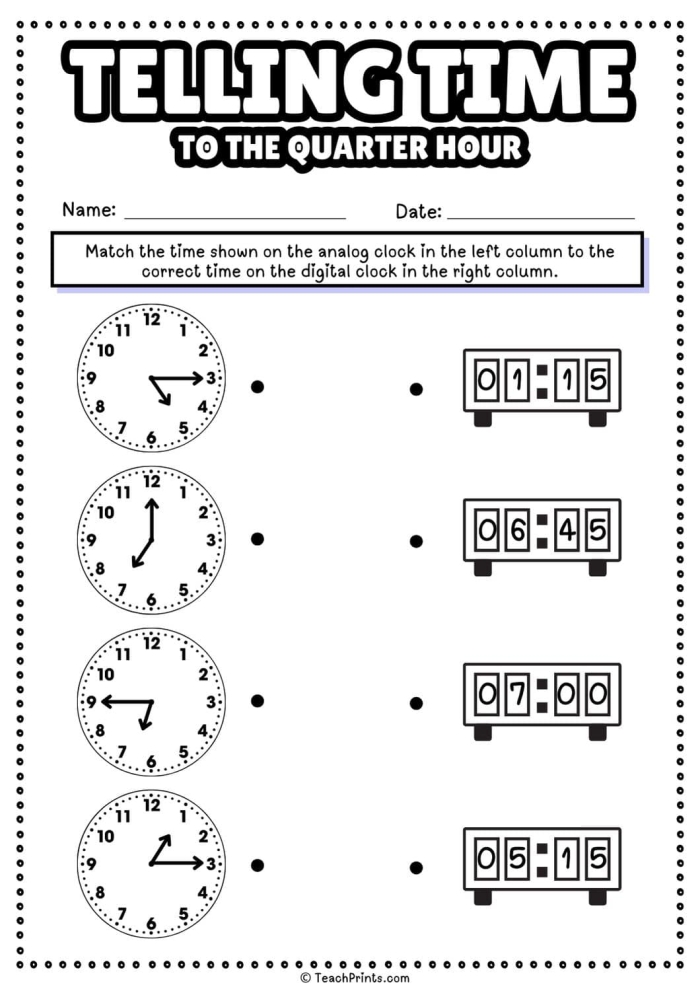
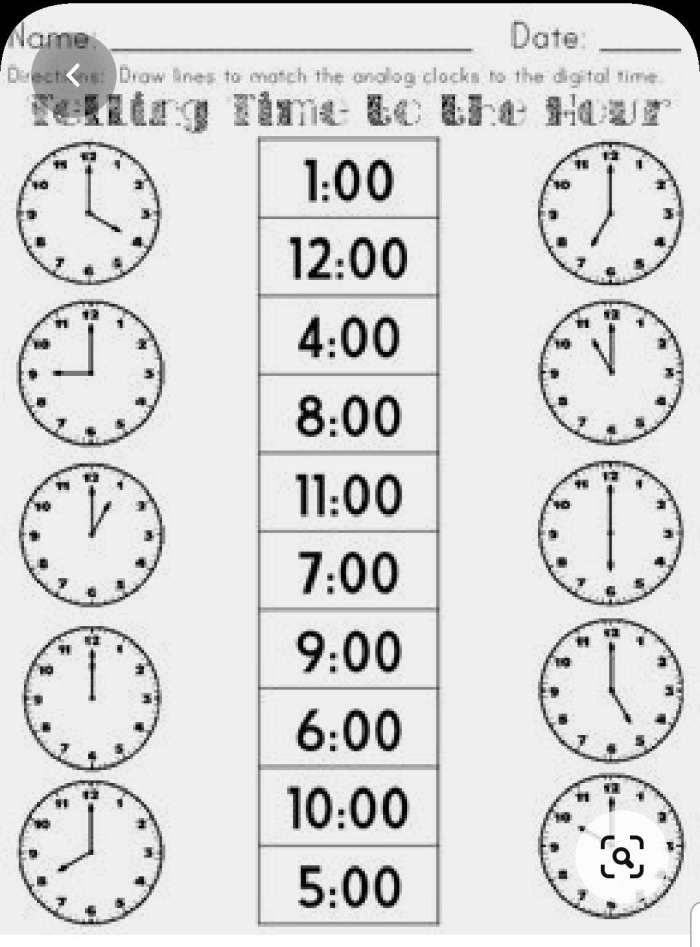
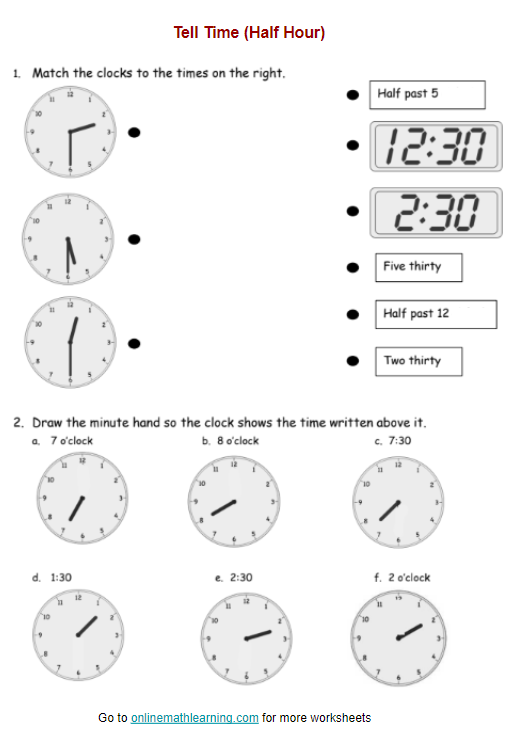
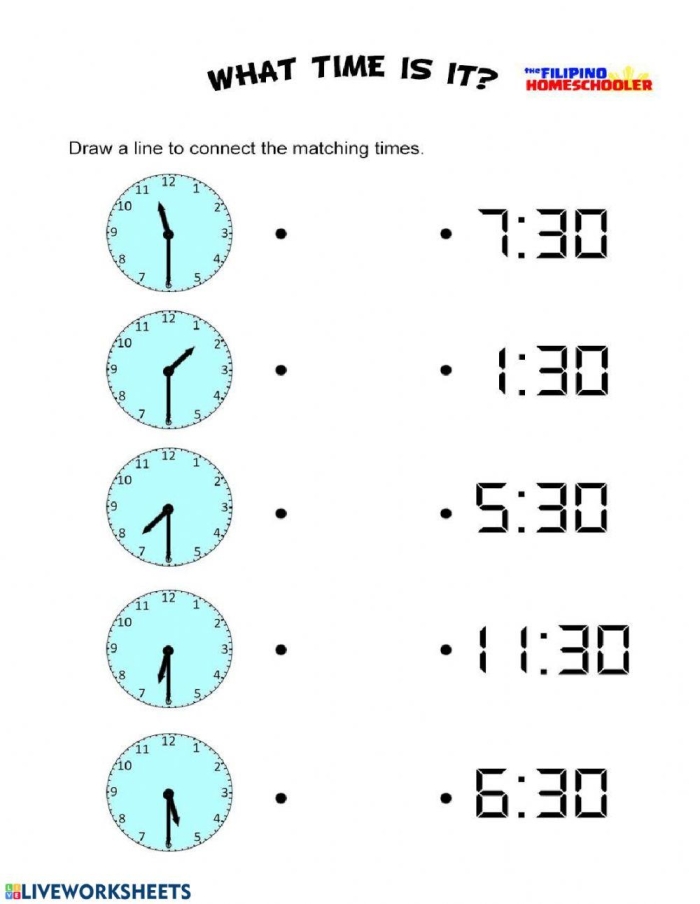
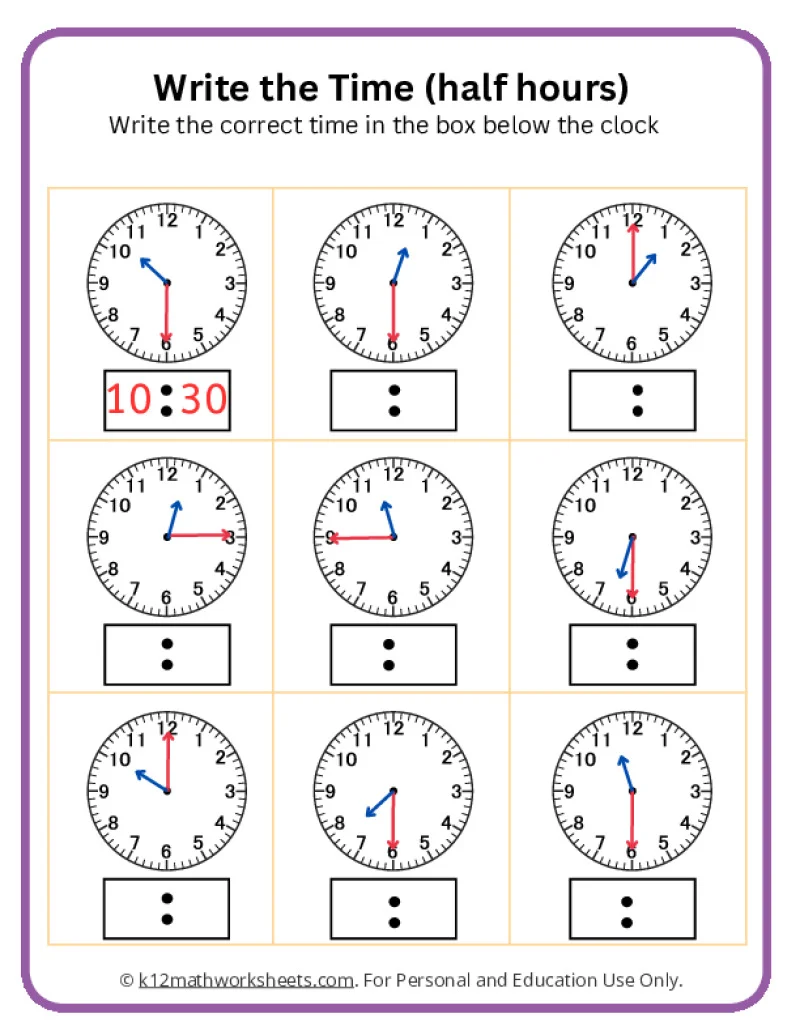
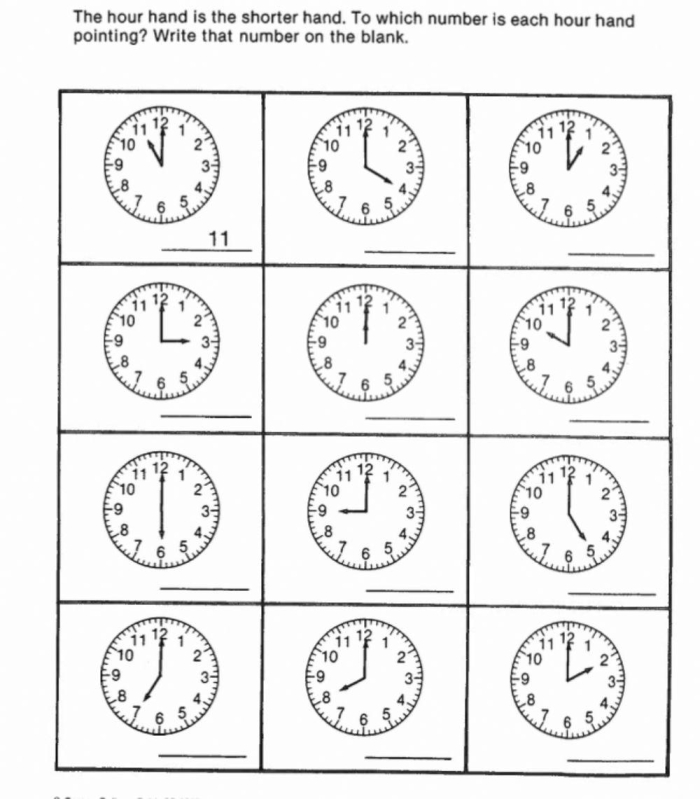
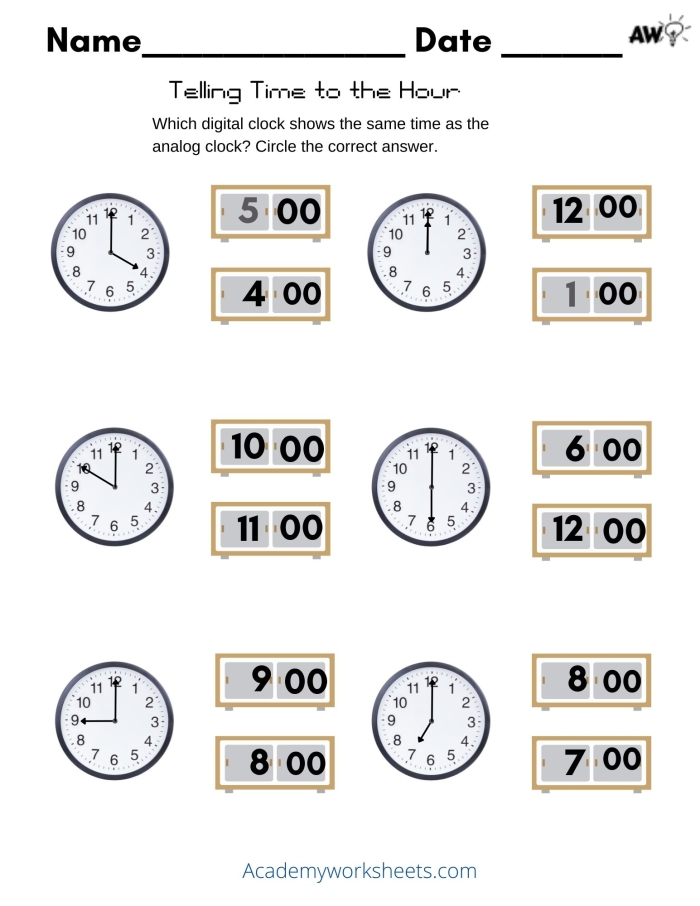
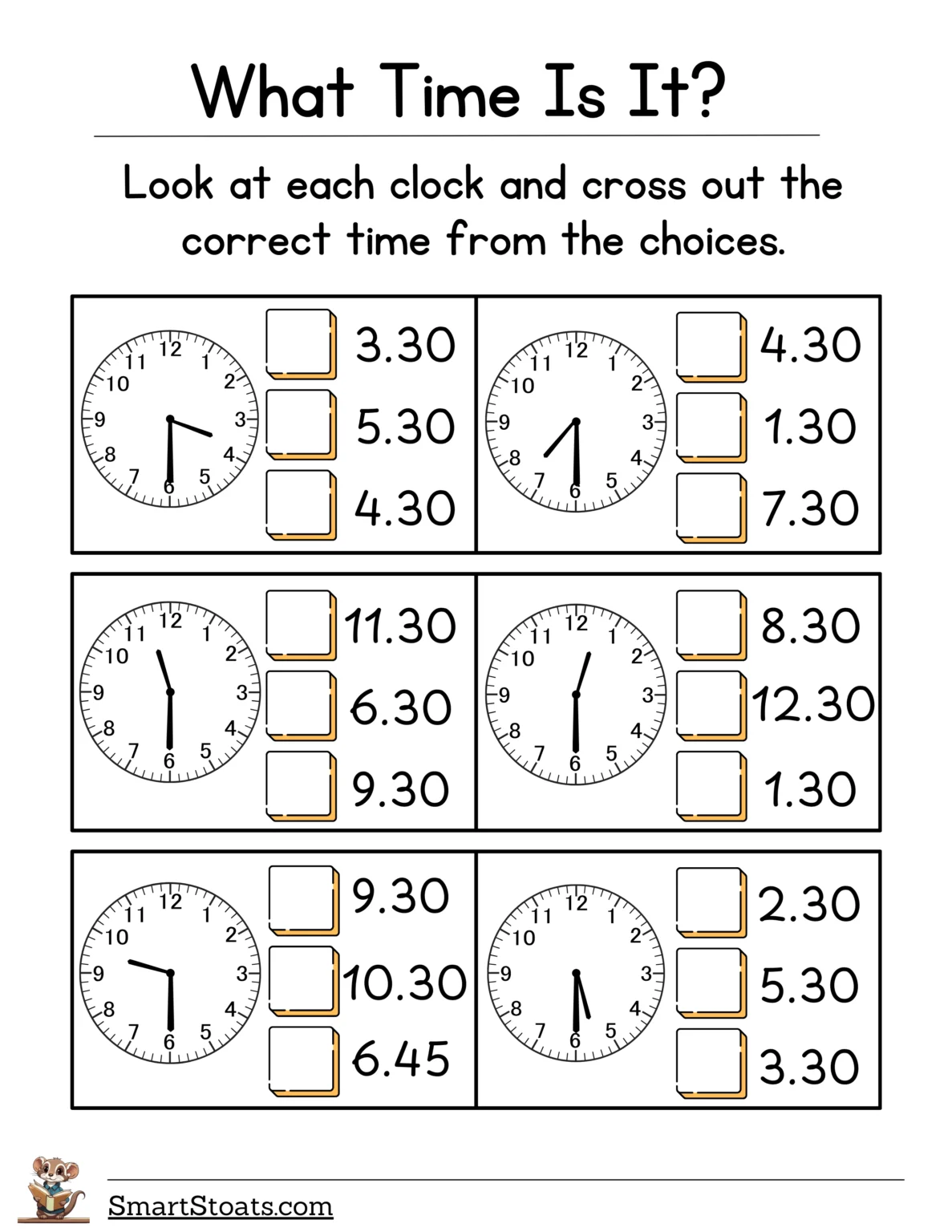
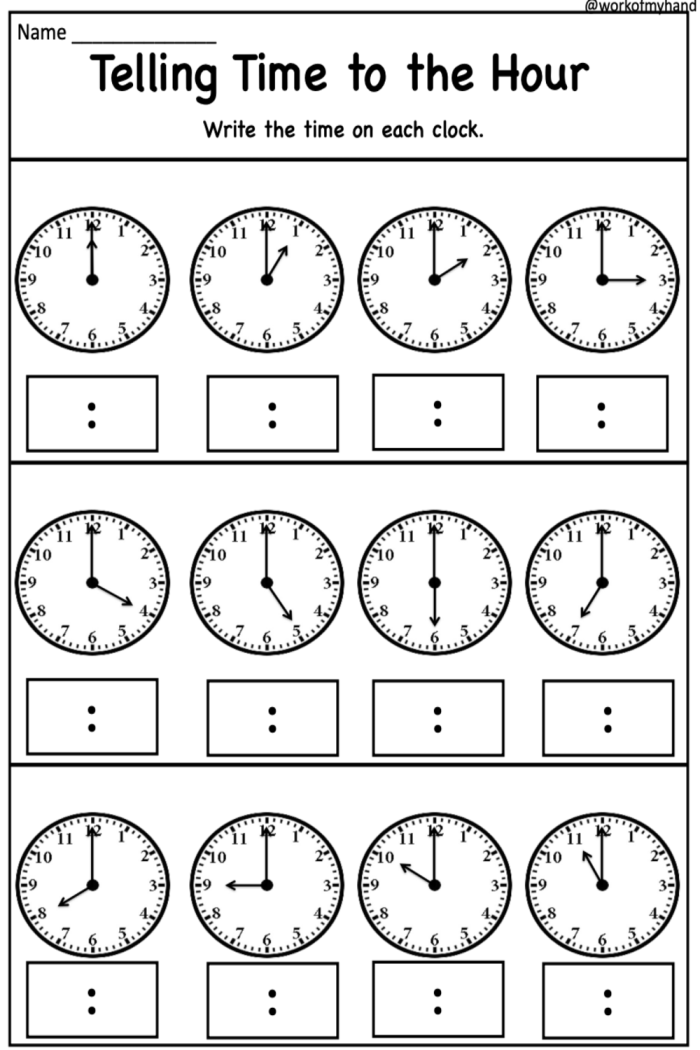
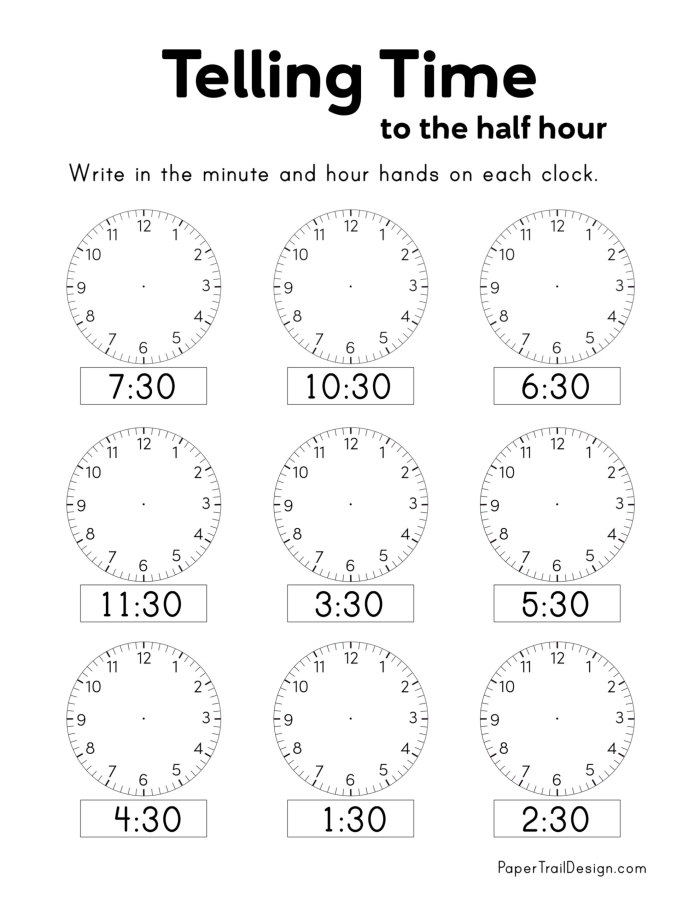
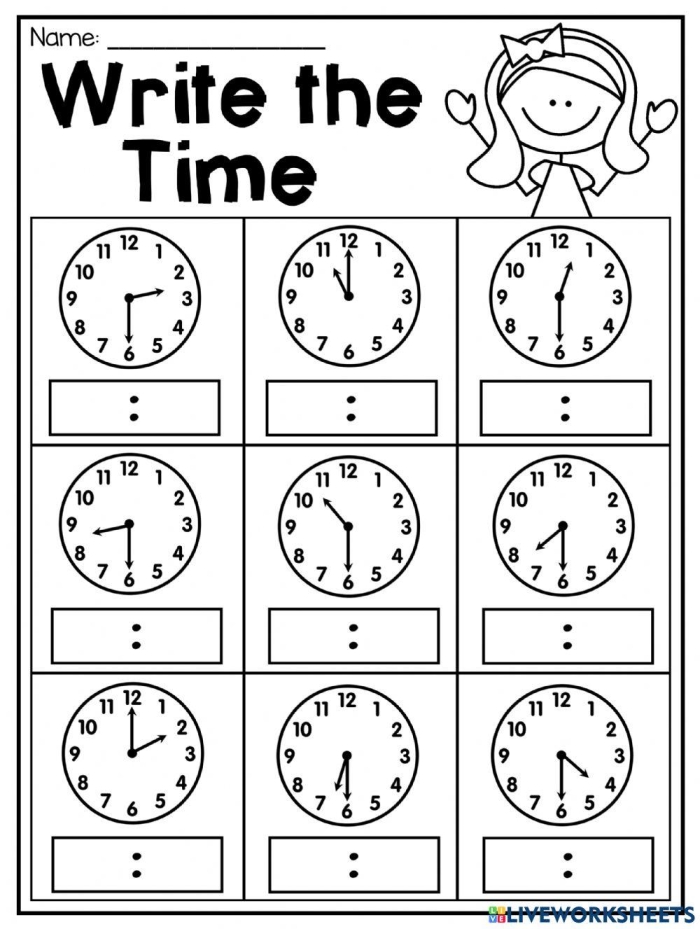
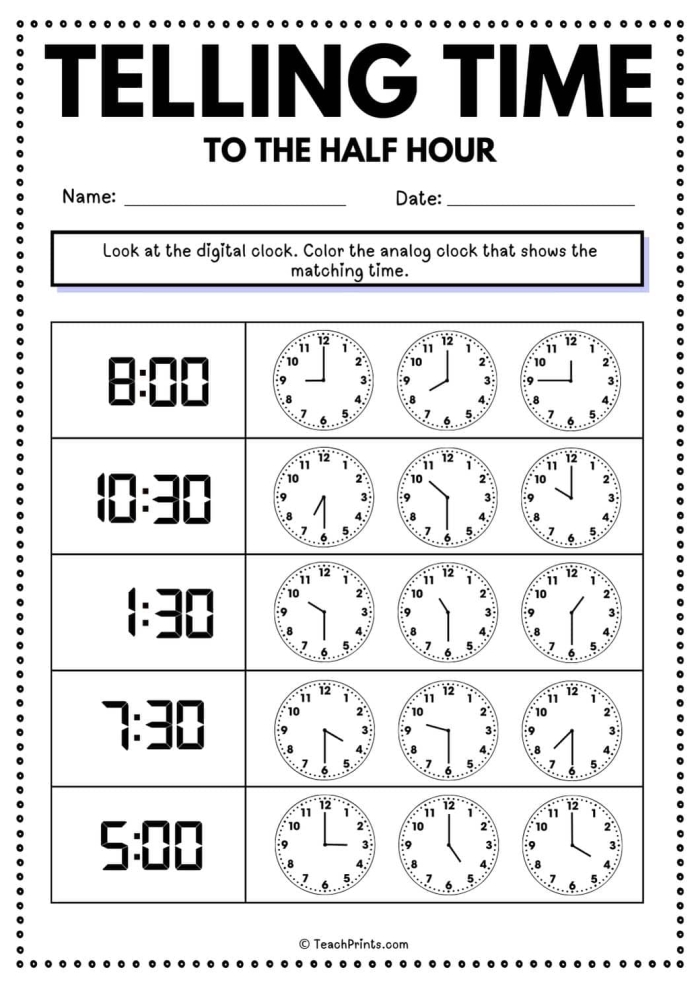
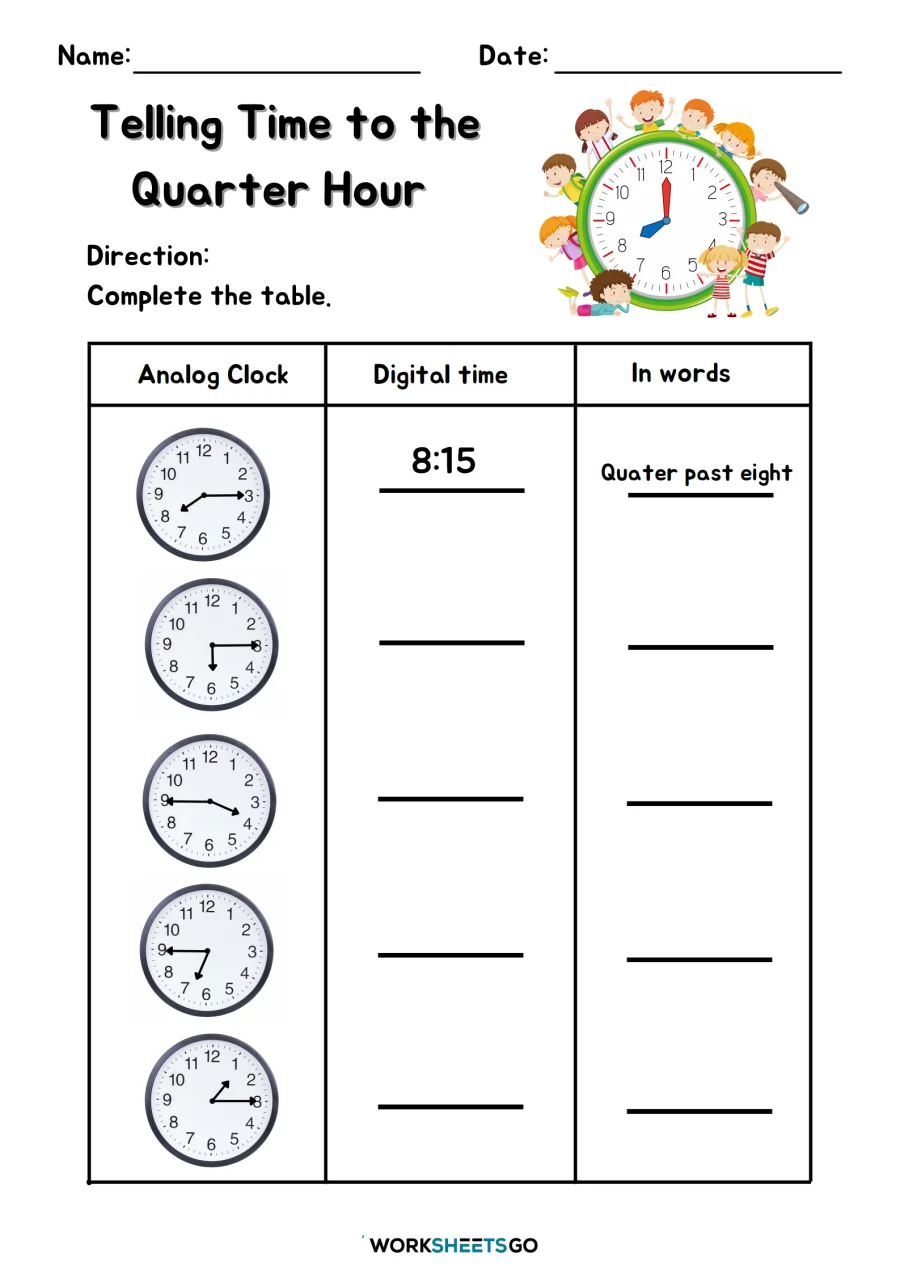
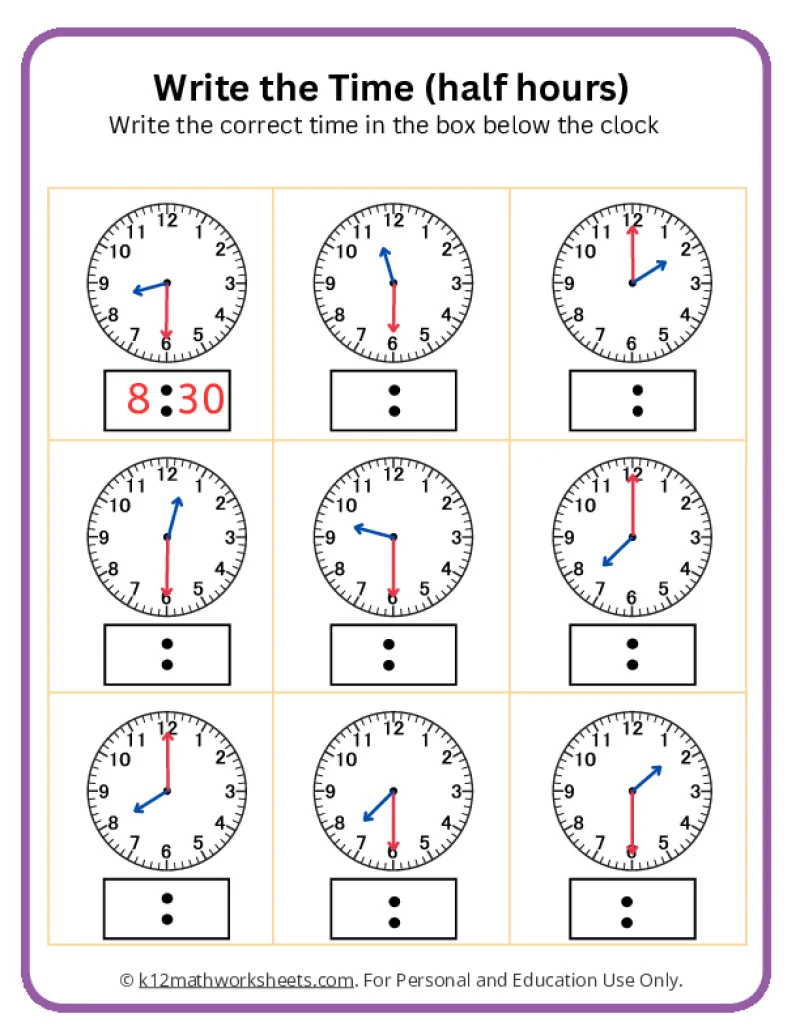
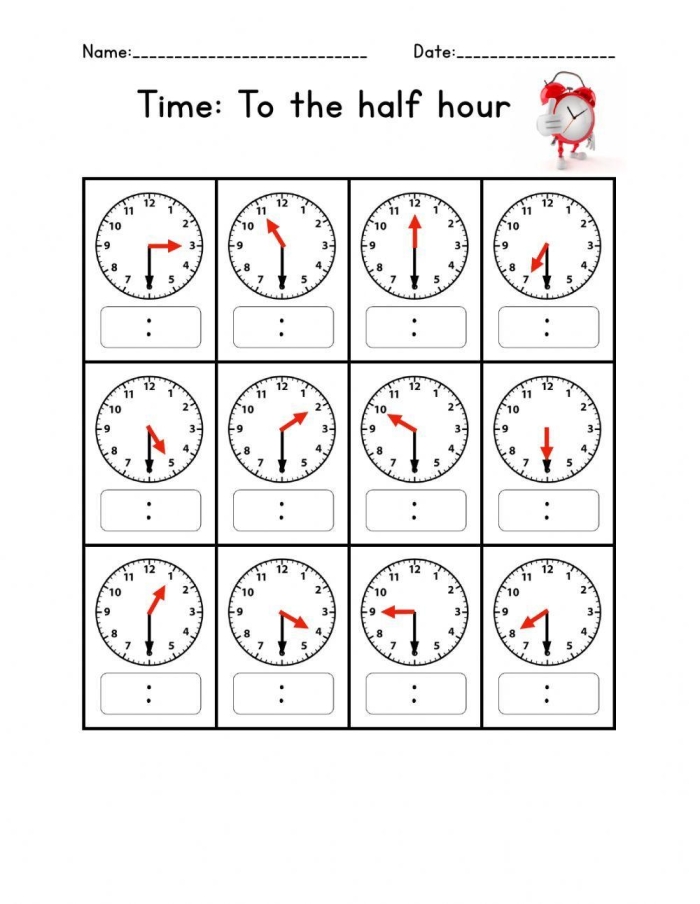
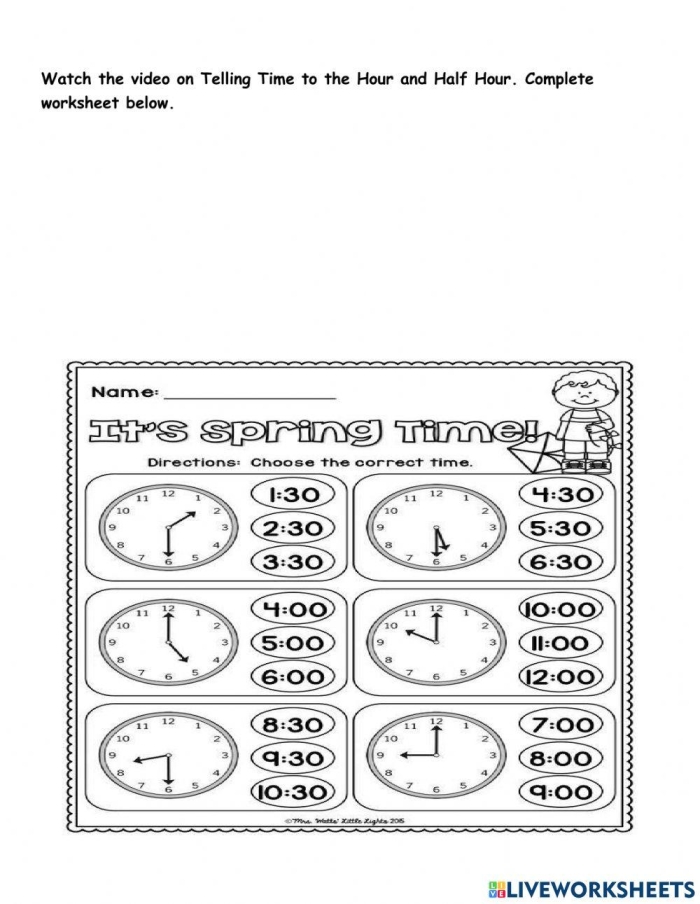
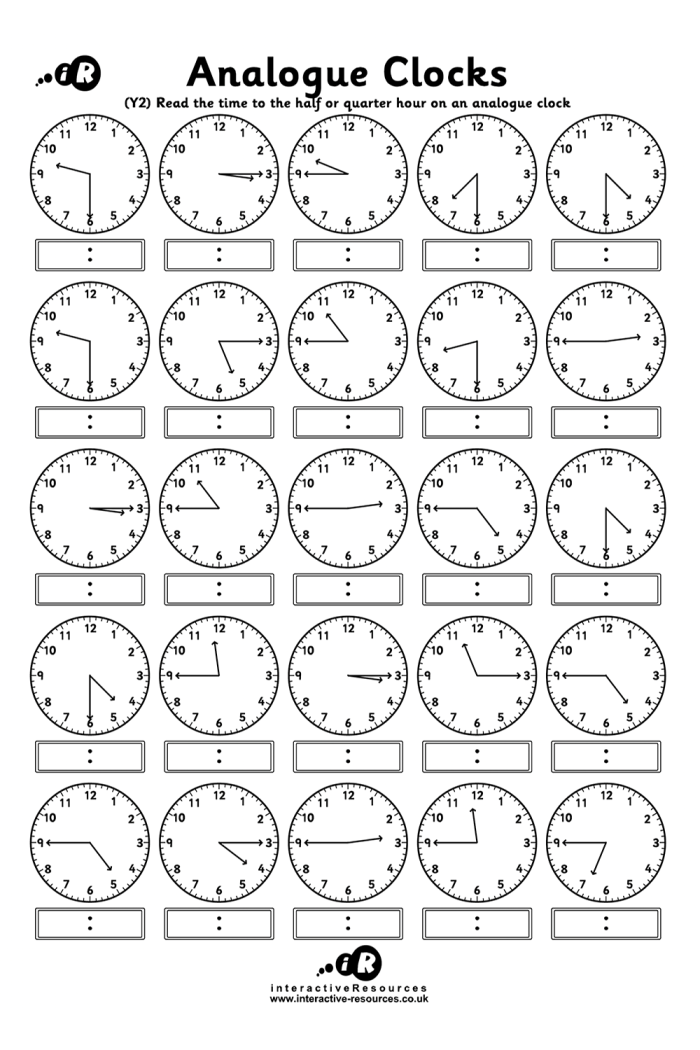
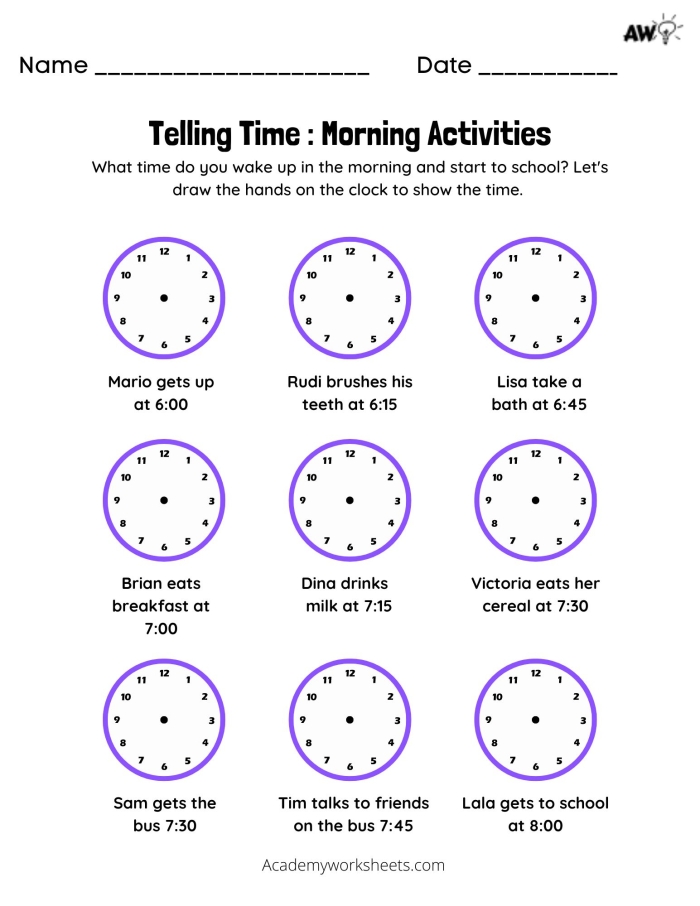
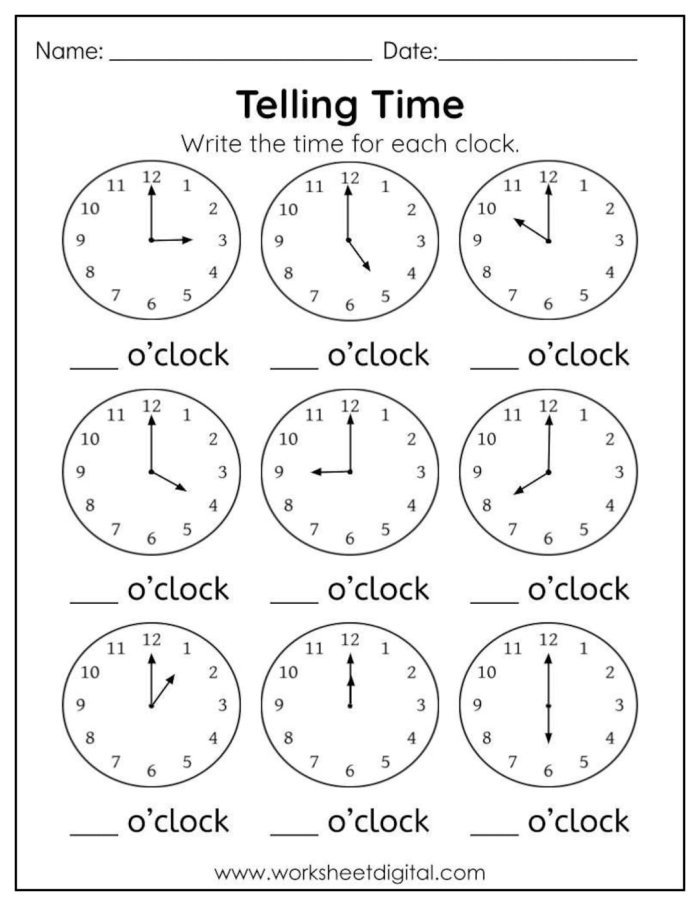
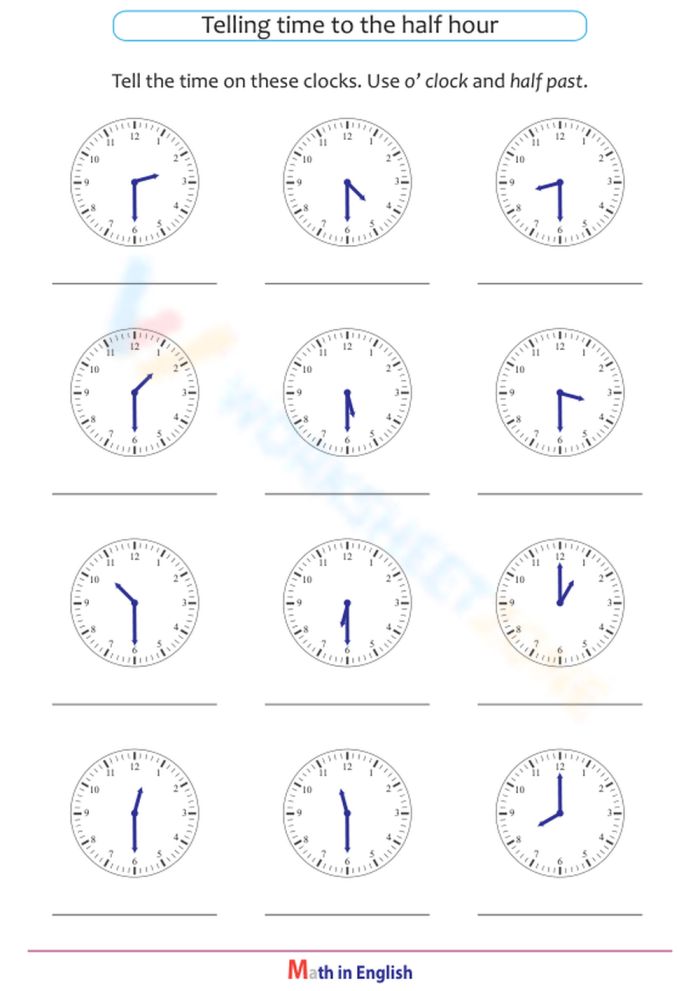
Learning to read time on the half hour represents a natural stepping stone in second grade math instruction. Once children grasp the concept of the hour hand and minute hand, understanding that the minute hand points to 6 when thirty minutes have passed becomes the next logical skill to build.
The half hour sits at an interesting middle point in time-telling progression. It’s more intuitive than random minute intervals, yet it requires students to recognize that 30 minutes equals half of 60. This connection between fractions and time helps solidify both concepts simultaneously. A worksheet focused specifically on this skill allows children to practice without the distraction of learning quarter hours or five-minute intervals at the same time.
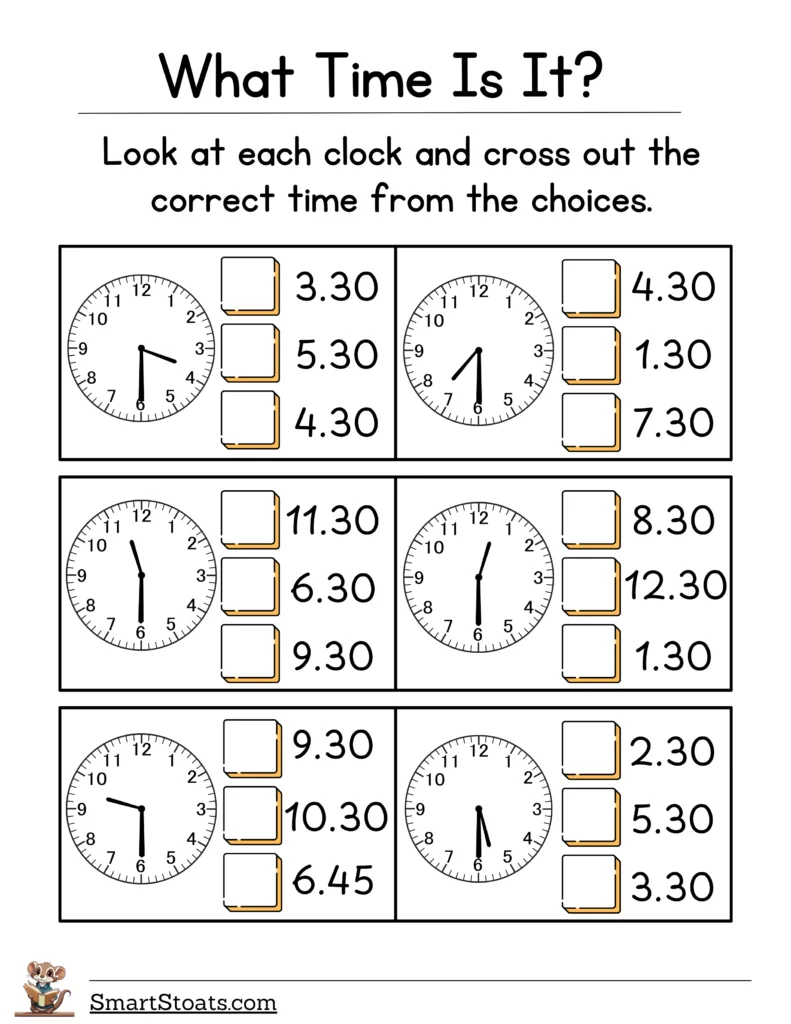
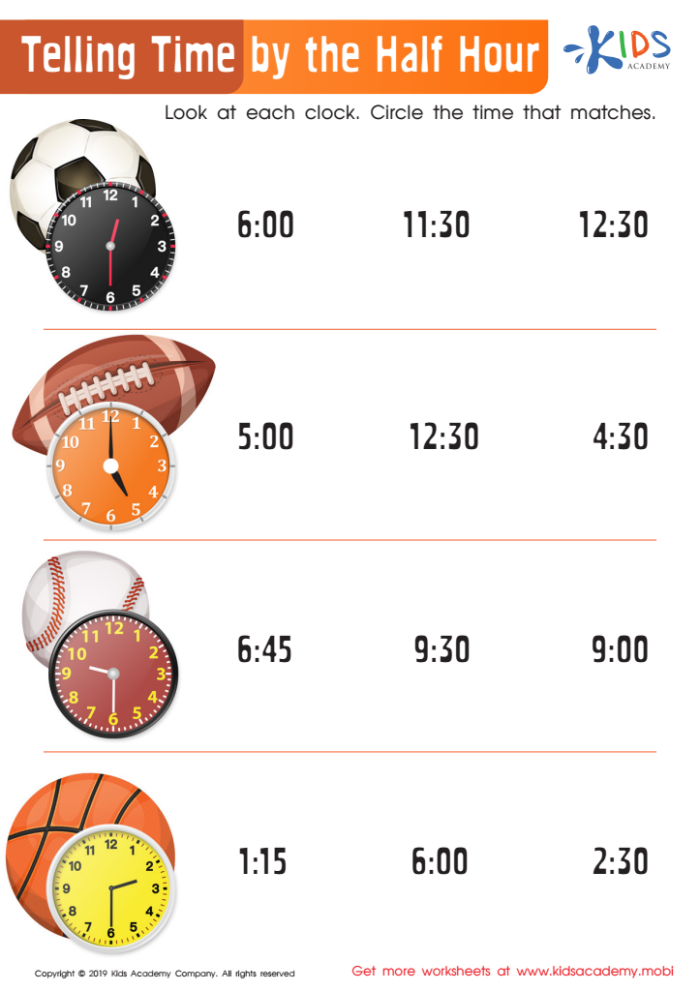
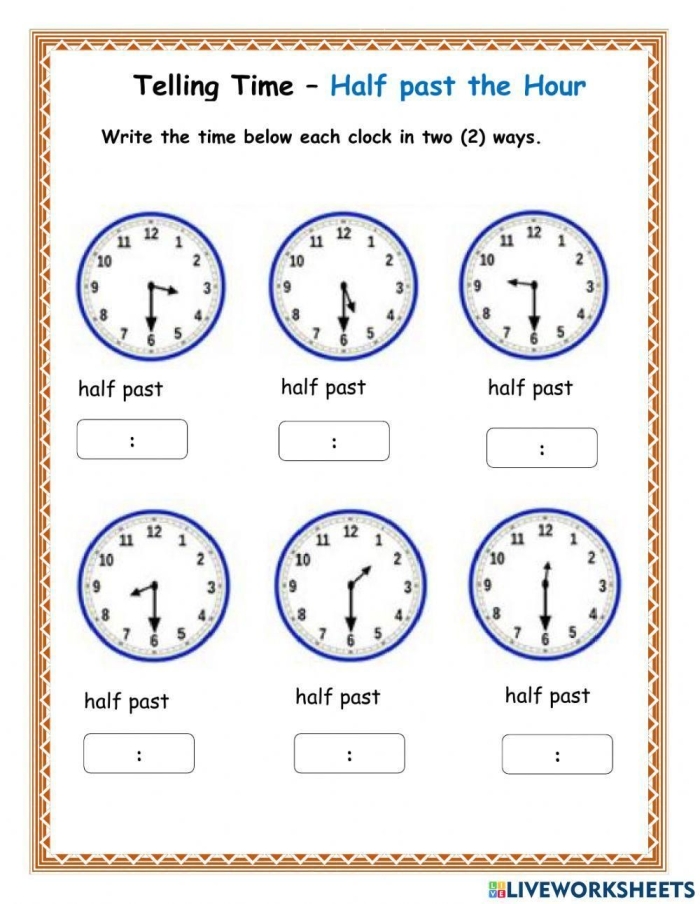
When designing practice materials for this concept, repetition with visual clarity matters most. Students benefit from seeing multiple clock faces where the minute hand consistently points to the 6, paired with hour hands in different positions. Writing the time as both “3:30” and “half past three” helps reinforce the language variation they’ll encounter in real life.
Second grade teachers often find that worksheets serve as useful diagnostic tools as well. By observing which half-hour times cause confusion, educators can identify whether students struggle with reading the hour hand’s position, understanding the number 30, or simply remembering the concept of “half past.” This insight guides small group instruction or one-on-one support.
Pairing time-telling practice with other second grade fundamentals works well too. Students working on two-digit addition can apply those skills by adding 30 minutes to given times. Similarly, those strengthening their grasp of comparison symbols might compare different times throughout the day.
A focused worksheet on half-hour time-telling provides the concentrated practice children need to move confidently toward more complex time concepts.
Printable Worksheets for Practice