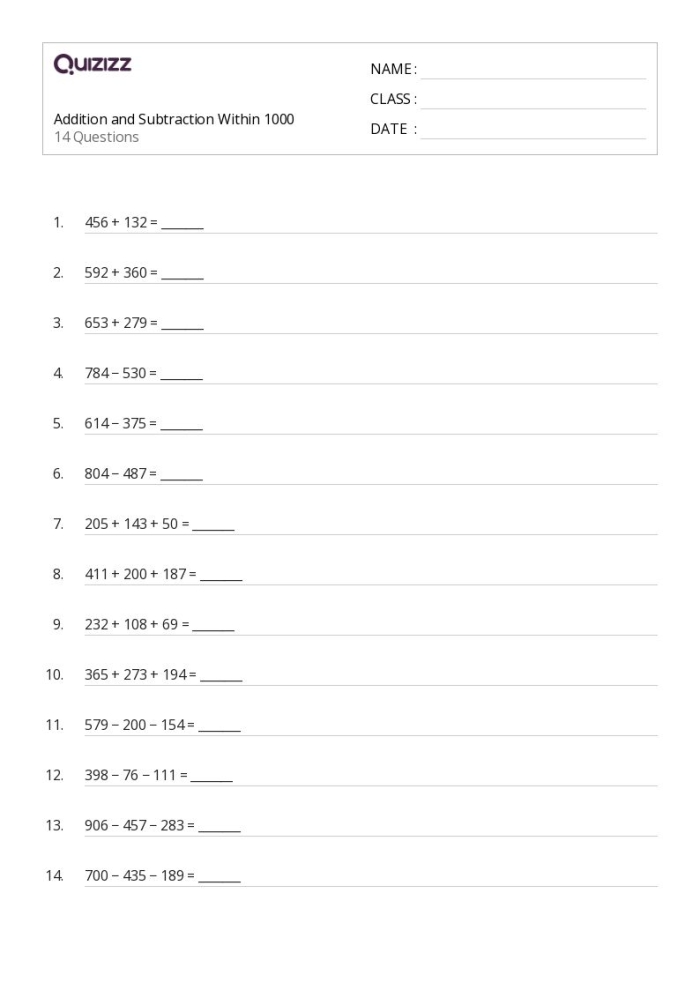
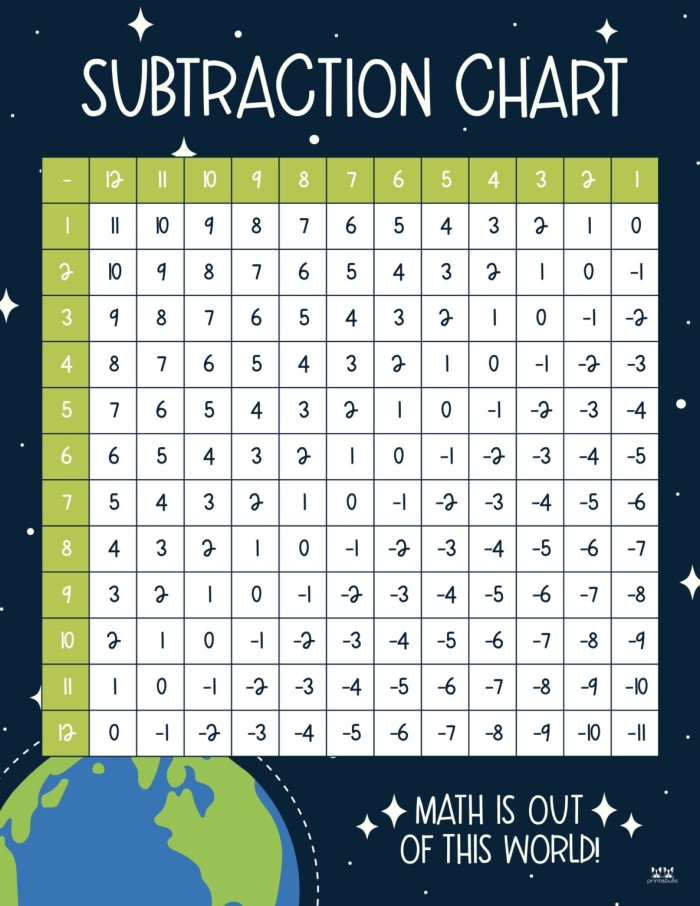
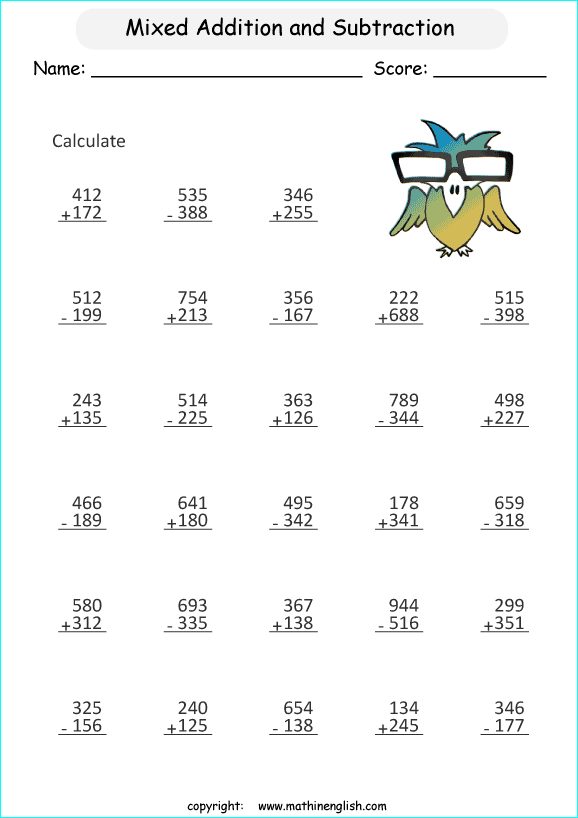
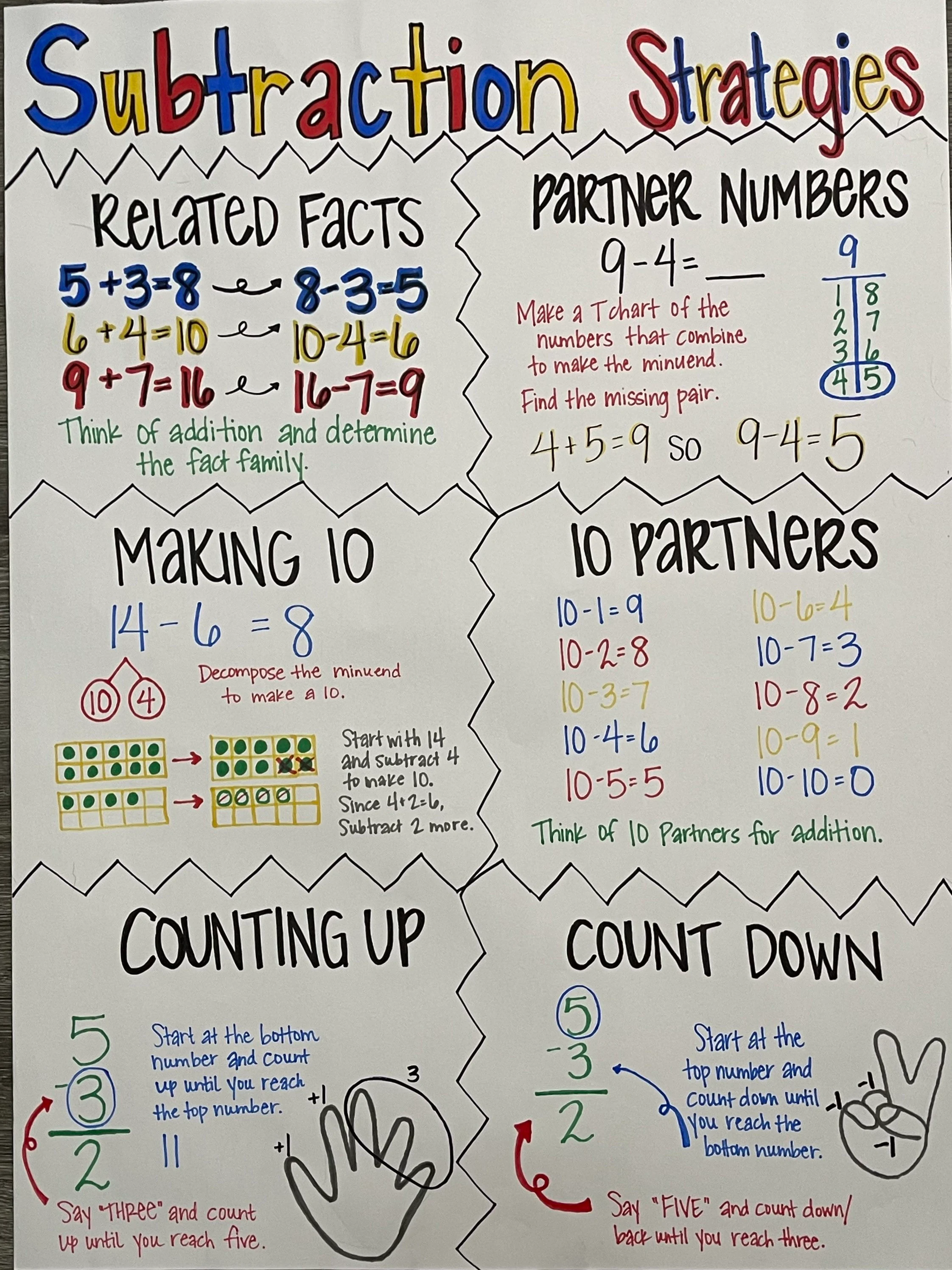
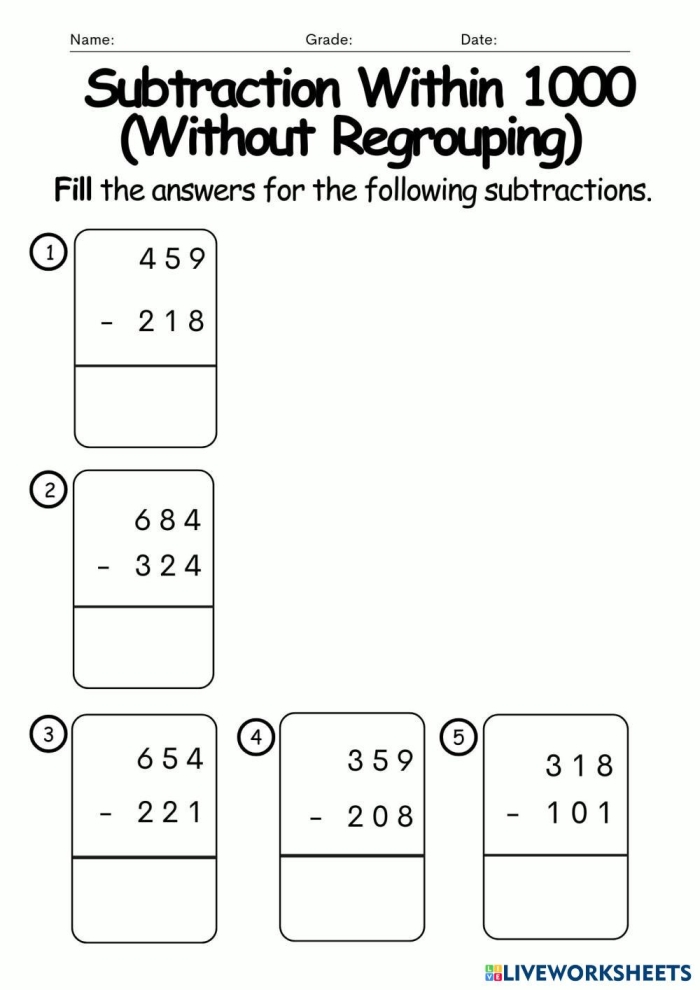
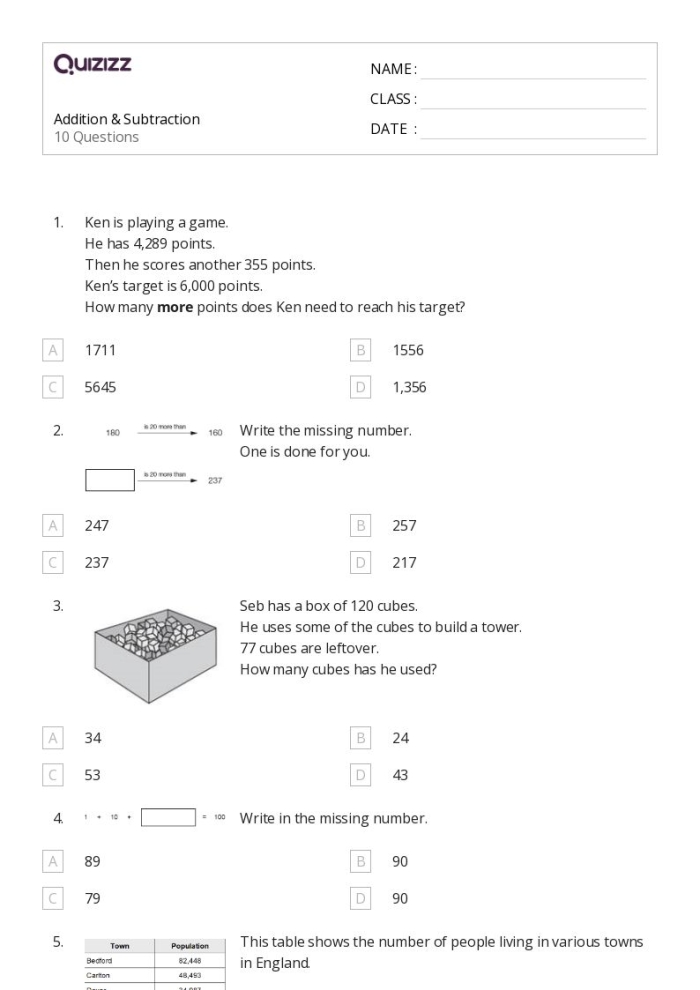
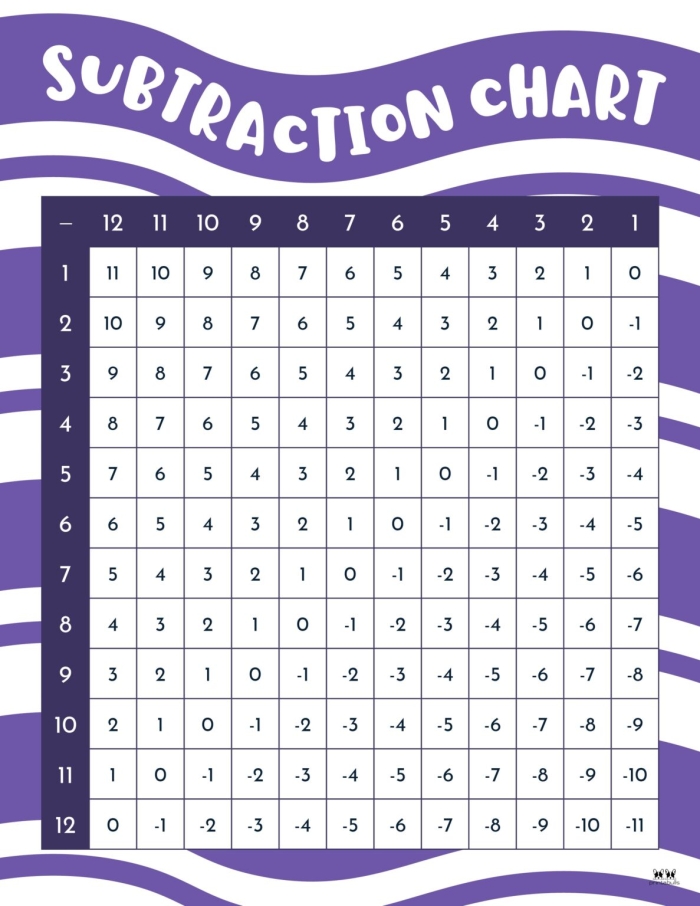
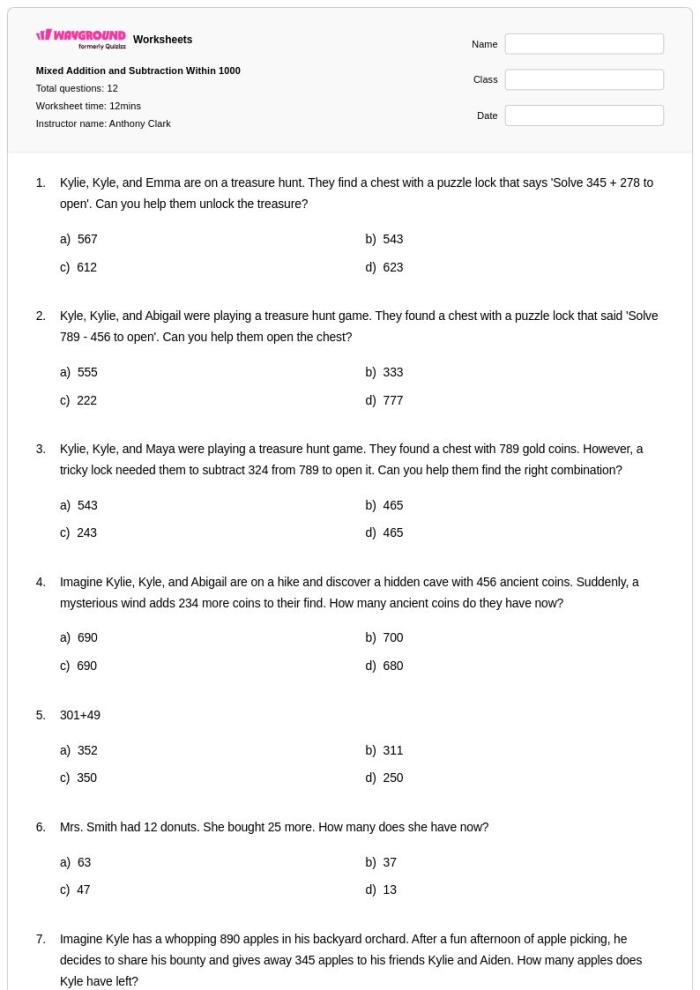
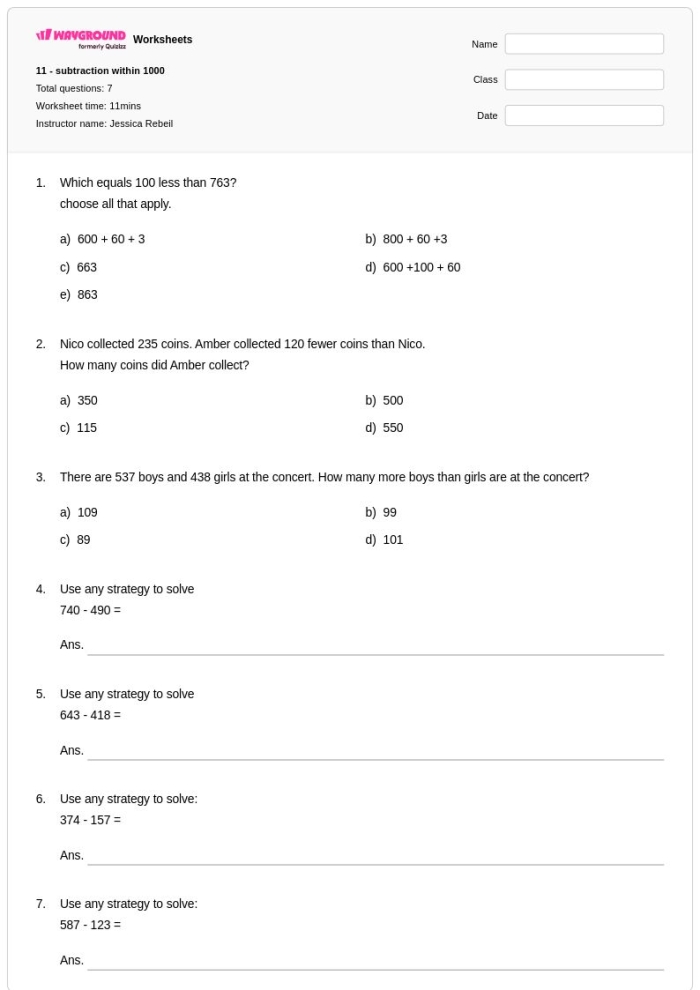
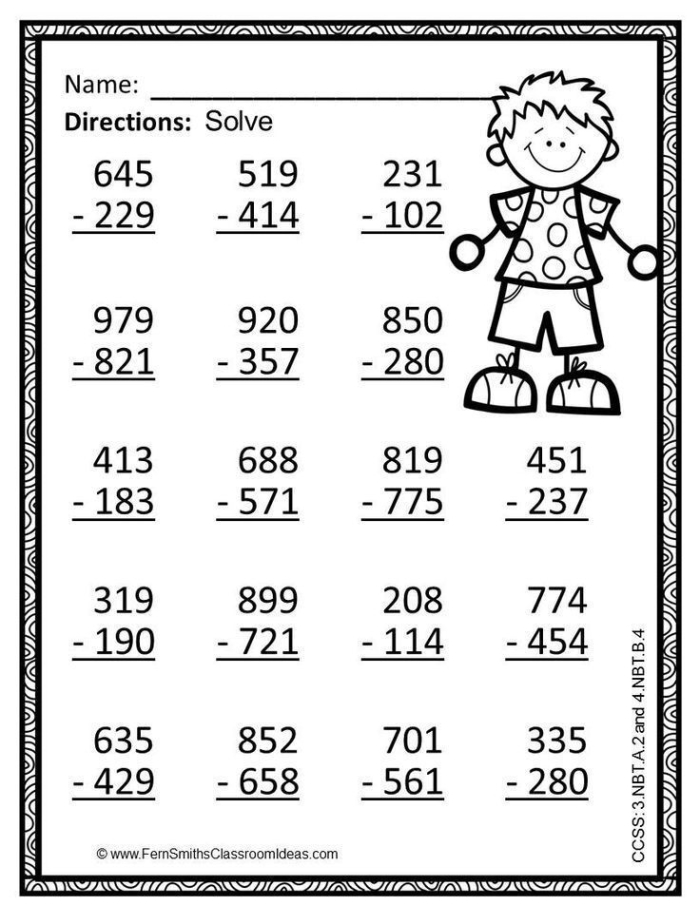
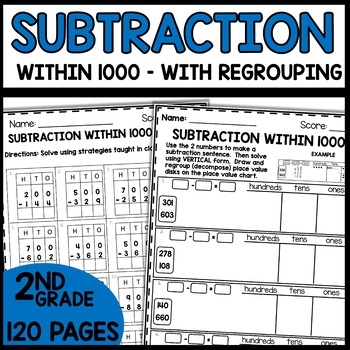
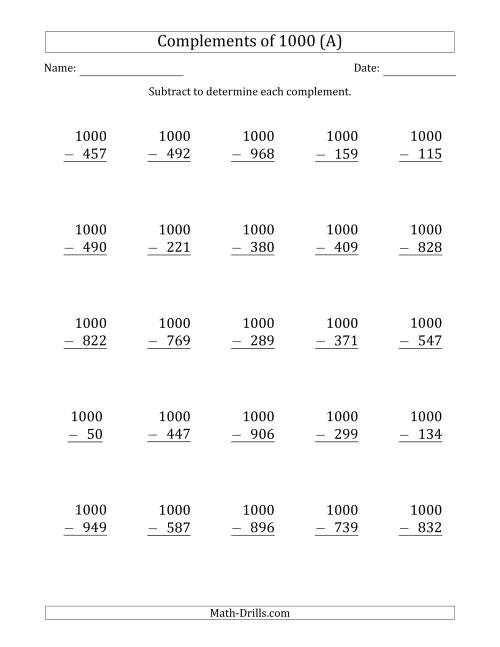
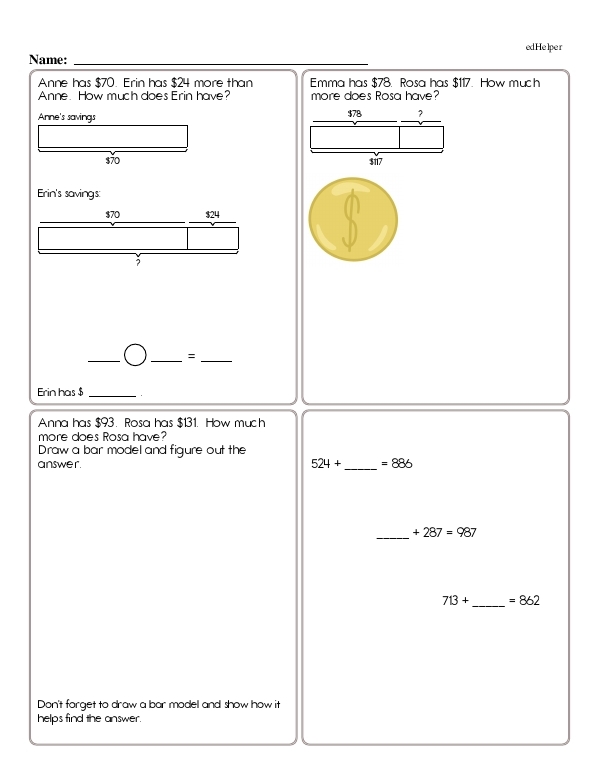
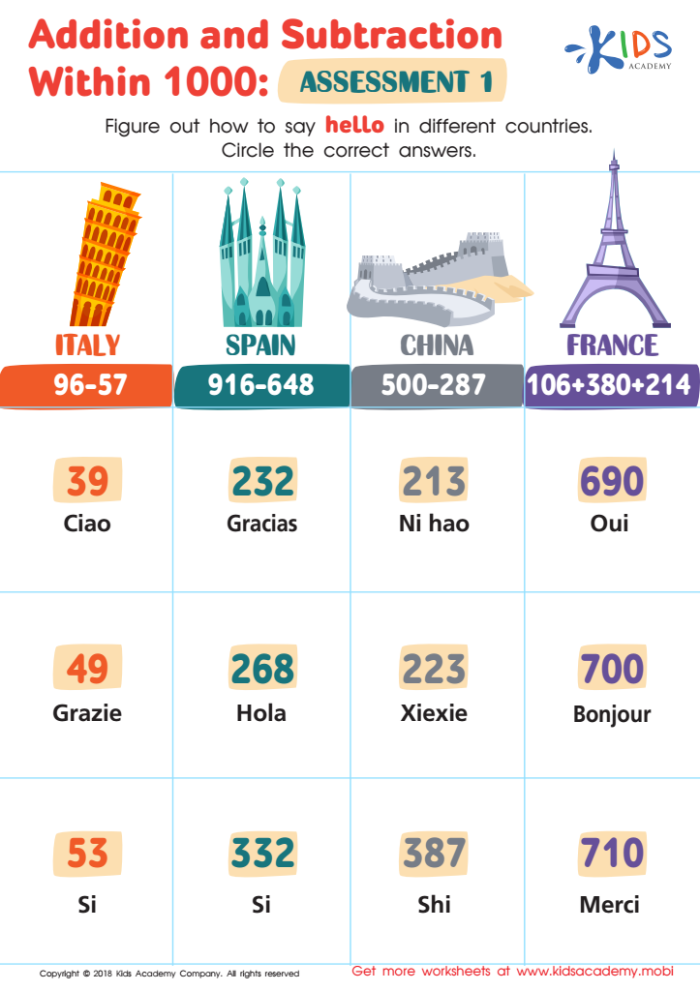
Tracking a second grader’s progress in subtraction can be challenging, especially when it comes to three-digit numbers. That’s why a quick, focused assessment like the Subtraction Within 1000 Check-in is so valuable. It gives students a chance to apply their subtraction skills in a way that feels natural to them, allowing them to pick whichever strategy works best. Whether they prefer borrowing, using number lines, or breaking numbers into parts, this approach respects individual thinking while highlighting areas that need more practice.
This kind of check-in isn’t just about finding the right answer. It also encourages young learners to reflect on their method and understand subtraction as a flexible process. For example, a student might break 643 minus 278 into smaller steps: subtracting 200, then 70, then 8, instead of trying to do it all at once. This strategy helps them see the relationship between numbers more clearly and builds confidence in tackling larger problems.
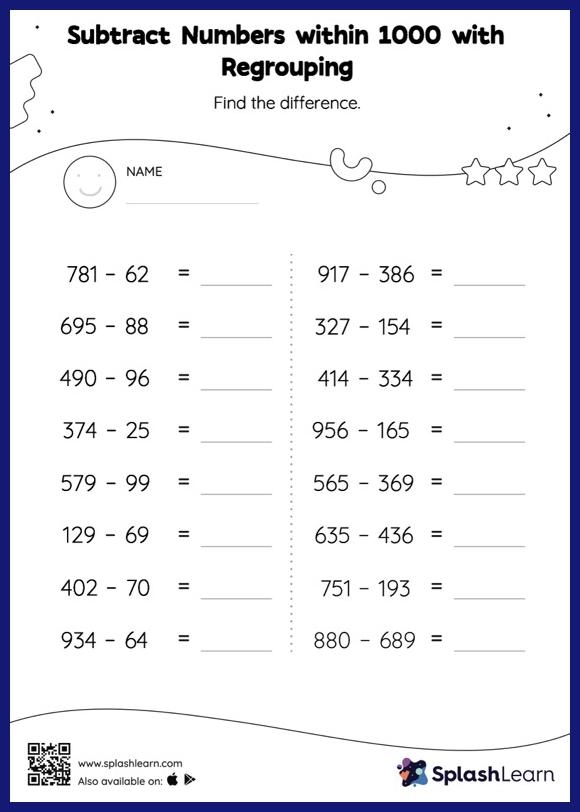
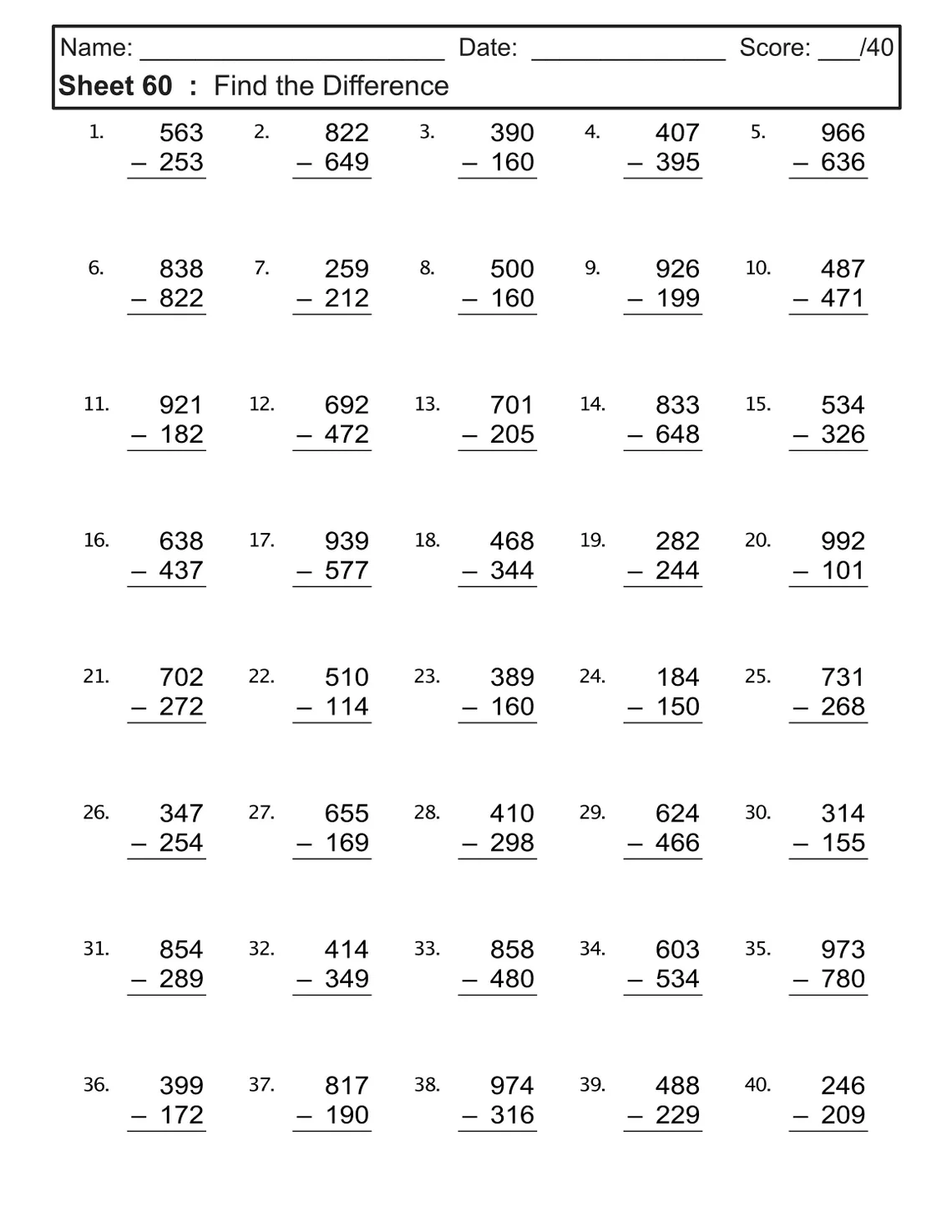
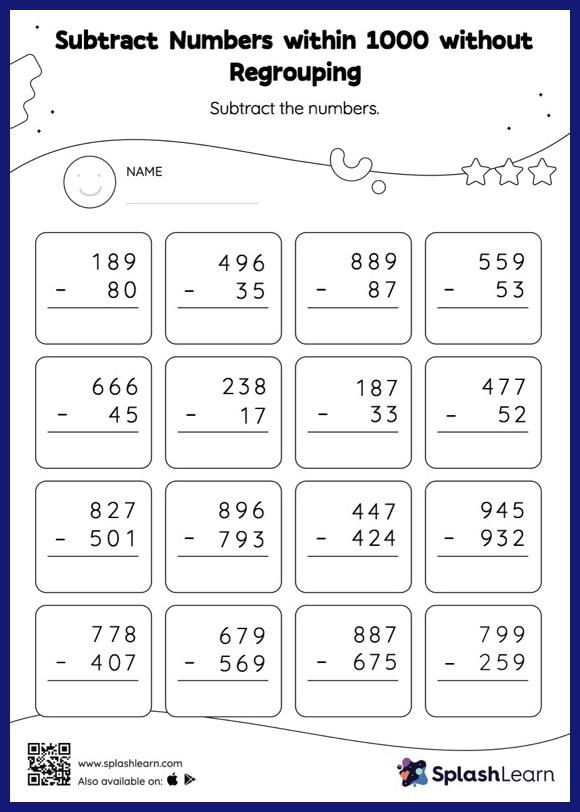
By using printable subtraction within 1000 check-in worksheets, parents and teachers can easily monitor progress without spending hours creating materials from scratch. These worksheets provide structured practice while allowing room for creativity in problem-solving. Integrating this type of assessment into regular writing activities can also be beneficial. Writing helps solidify math concepts by encouraging students to explain how they arrived at their answers, which deepens their understanding.
For those interested in expanding their second grader’s skills beyond subtraction, related exercises like identifying coins and exploring shapes can complement math learning. For instance, combining subtraction problems with simple money calculations or geometry tasks, like those found in resources on identifying coins or geometry topics, reinforces numerical fluency in practical contexts.
Using a quick subtraction check-in regularly gives a clear snapshot of where a second grader stands and what steps to take next. It’s a straightforward way to keep math learning on track while encouraging students to think critically and independently about numbers.
Try These Printable Worksheets