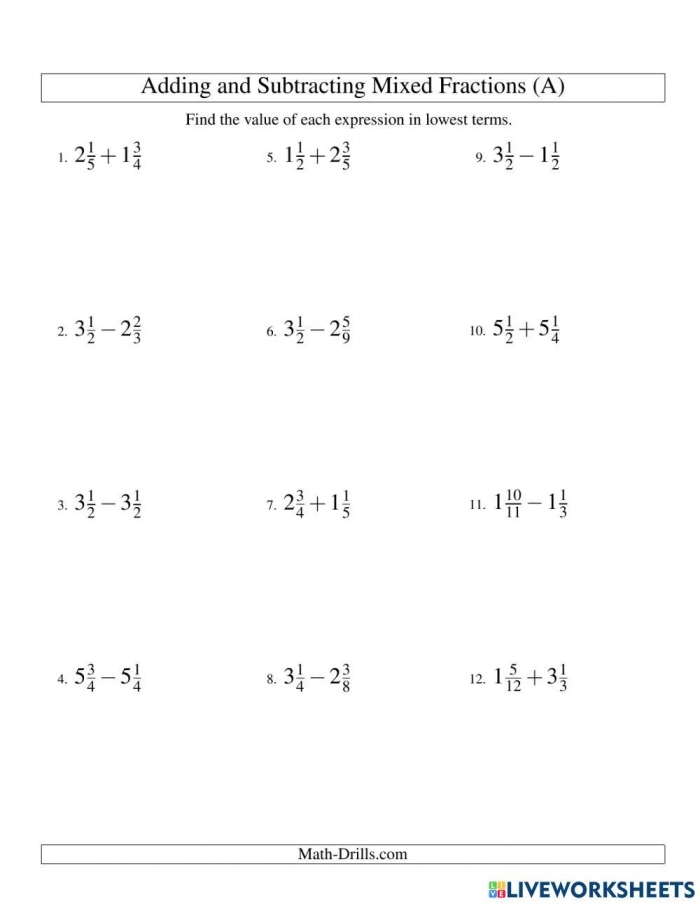
Subtracting fractions with unlike denominators can initially seem challenging, but with the right approach and practice, it becomes a straightforward process. In a typical fifth-grade geometry class, students often encounter this topic, which requires a solid understanding of fractions and their components.
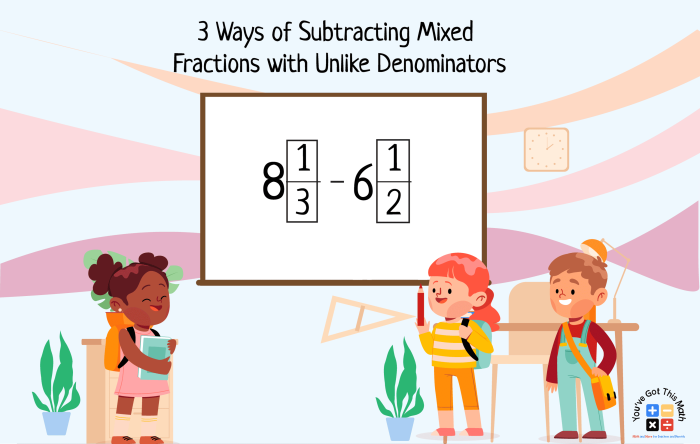
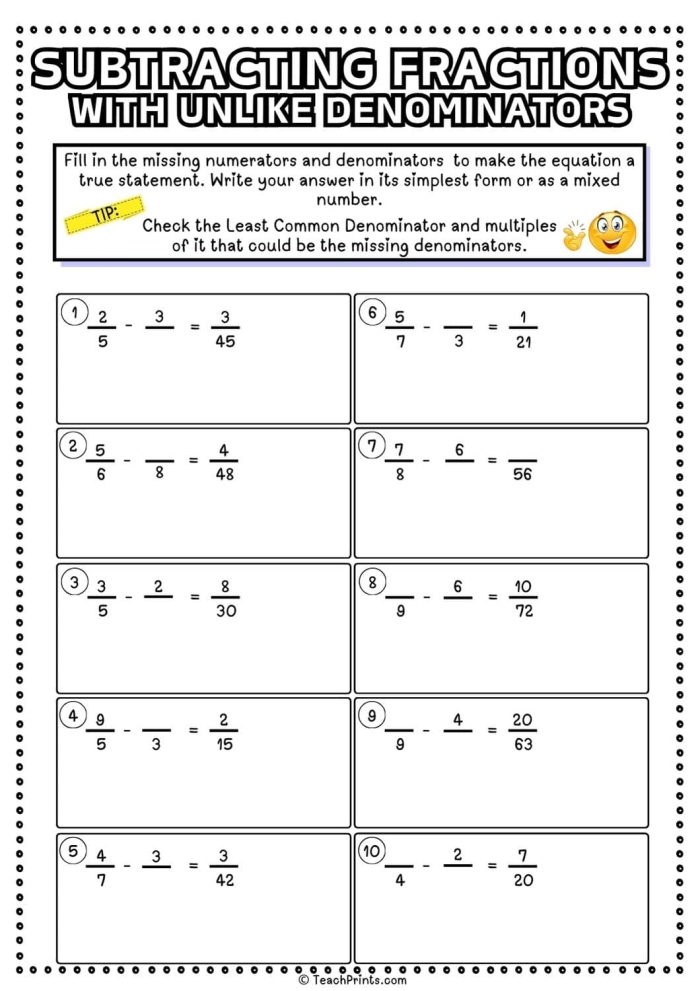
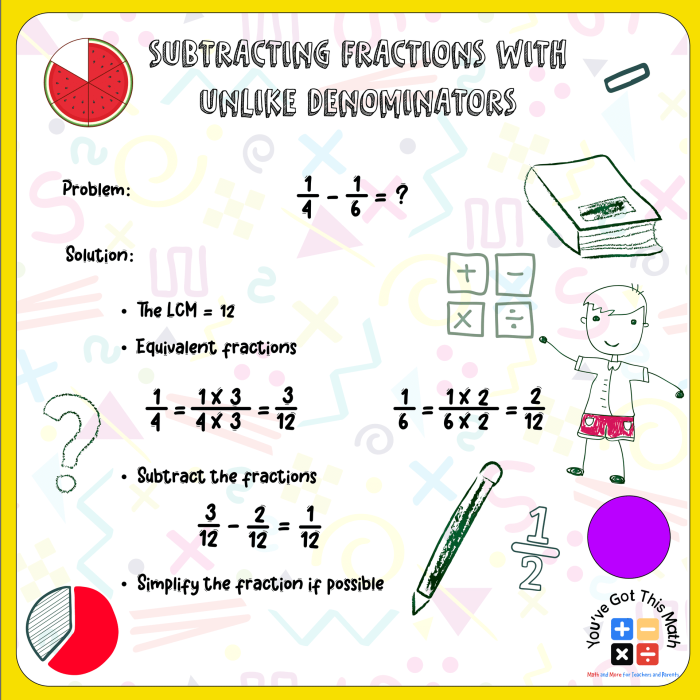
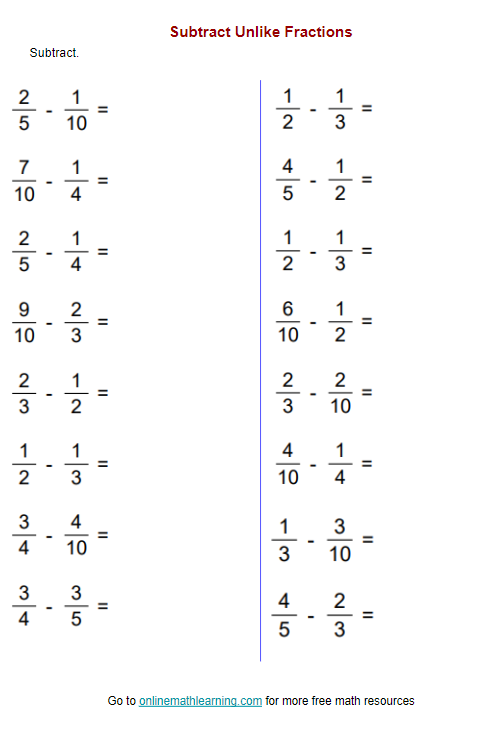
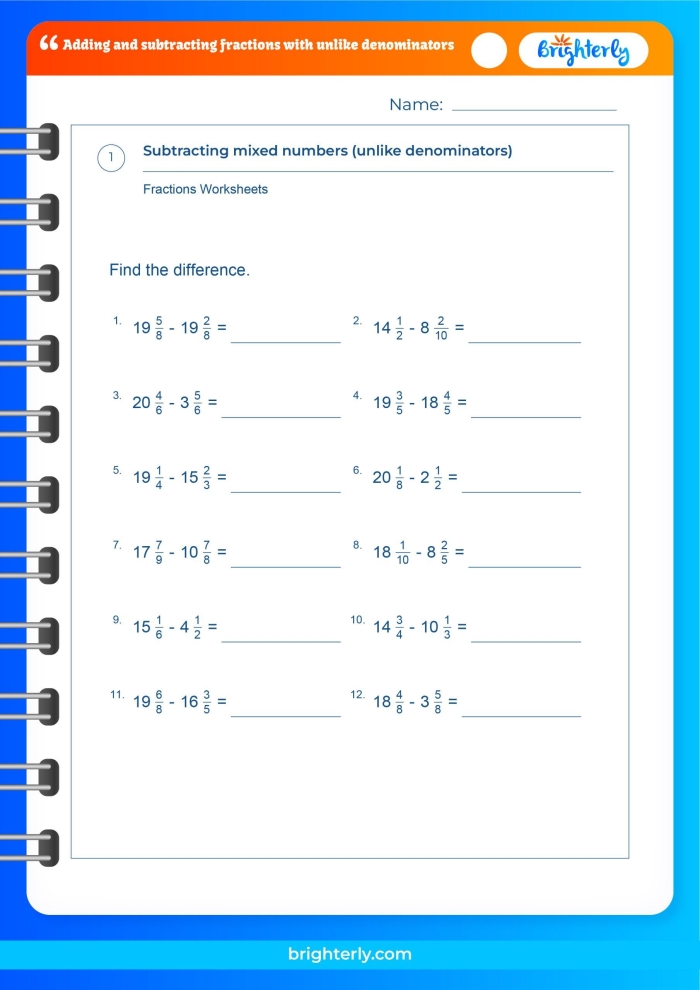
To subtract fractions with different denominators, the first step is to find a common denominator. This common denominator is usually the least common multiple (LCM) of the two denominators. For example, if you want to subtract 1/4 from 1/6, the LCM of 4 and 6 is 12. This means you’ll convert both fractions to have a denominator of 12. The fraction 1/4 becomes 3/12 (since 1 times 3 is 3, and 4 times 3 is 12), and 1/6 becomes 2/12 (1 times 2 is 2, and 6 times 2 is 12).
Once the fractions have the same denominator, subtraction is simple. You subtract the numerators while keeping the common denominator the same. So, 3/12 – 2/12 results in 1/12. This process emphasizes the need for practice and familiarity with finding common denominators, which is a key skill in fifth-grade geometry.
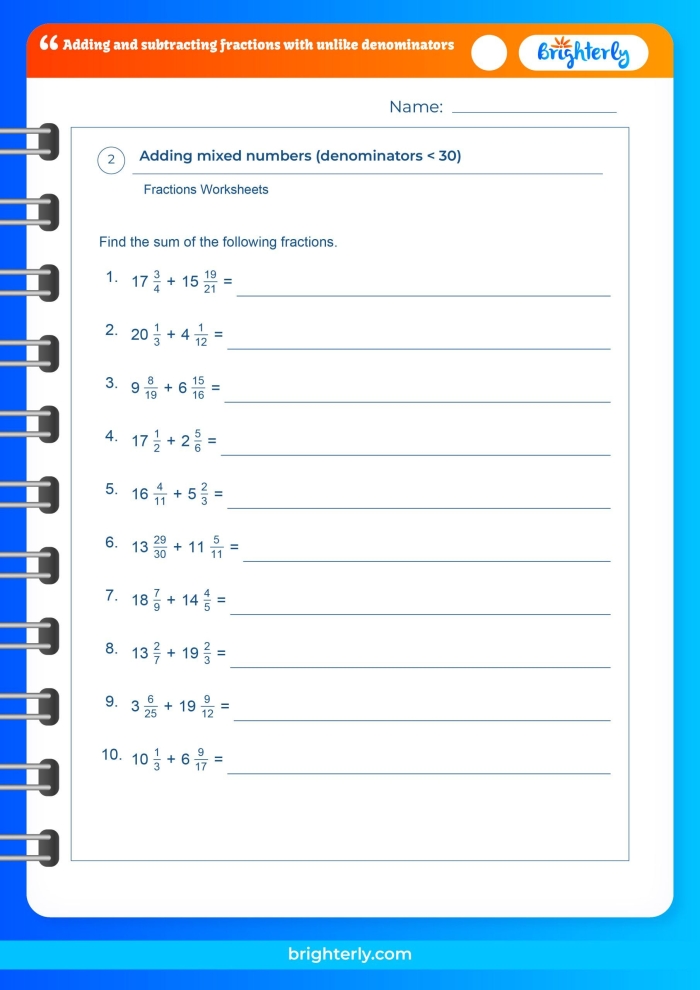
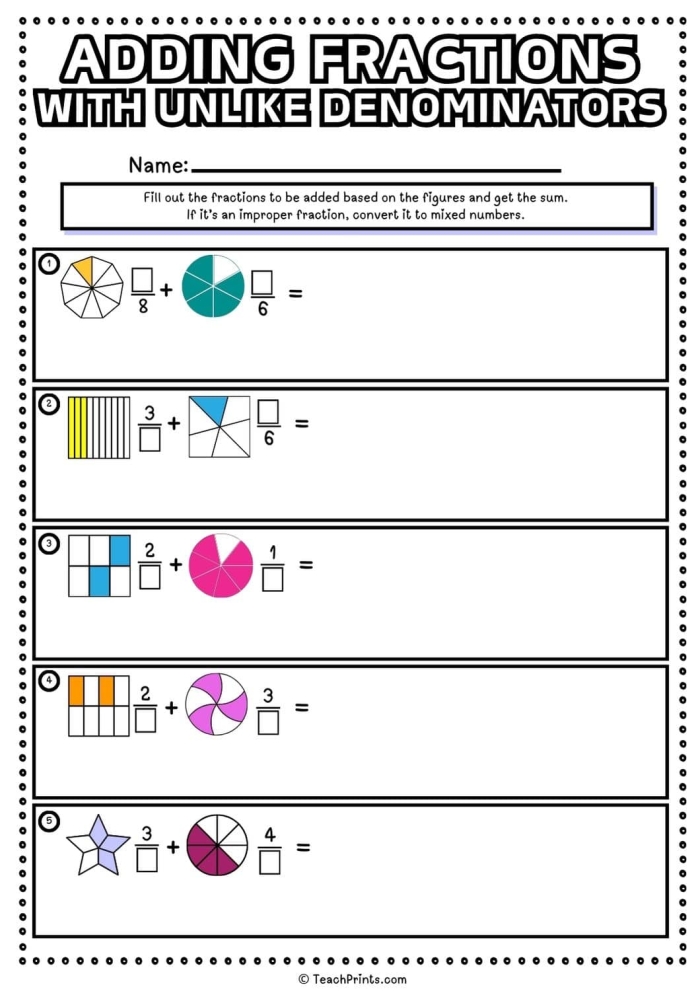
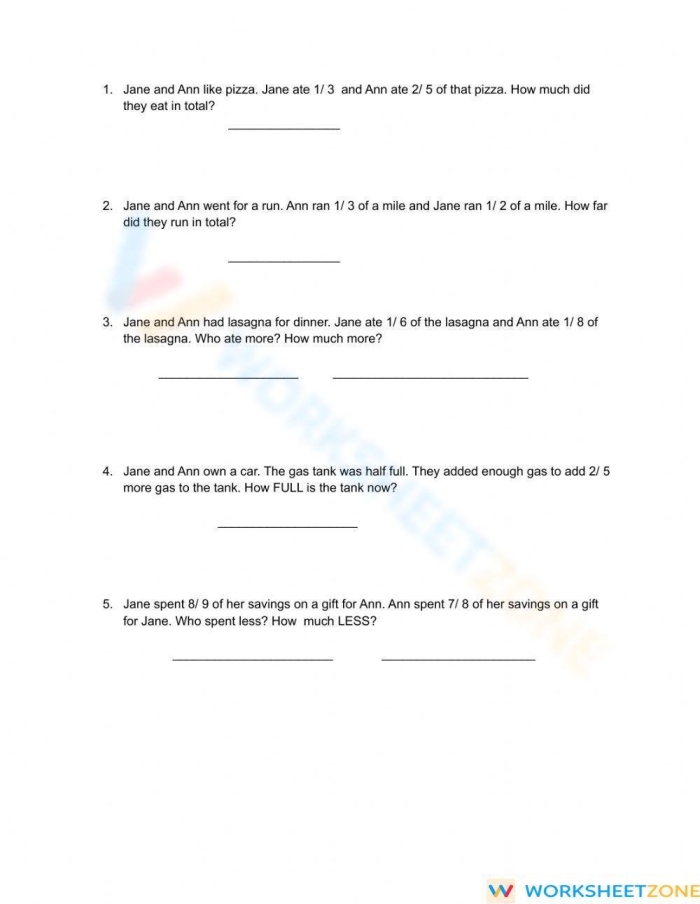
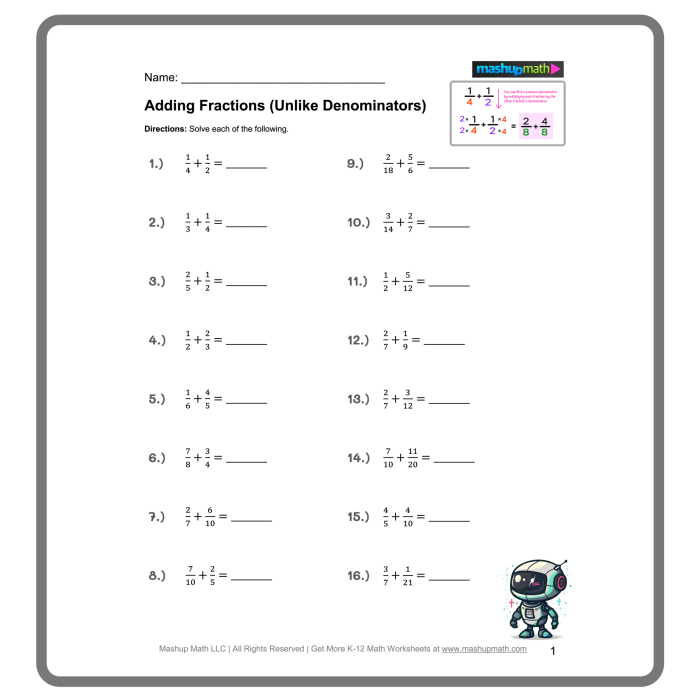
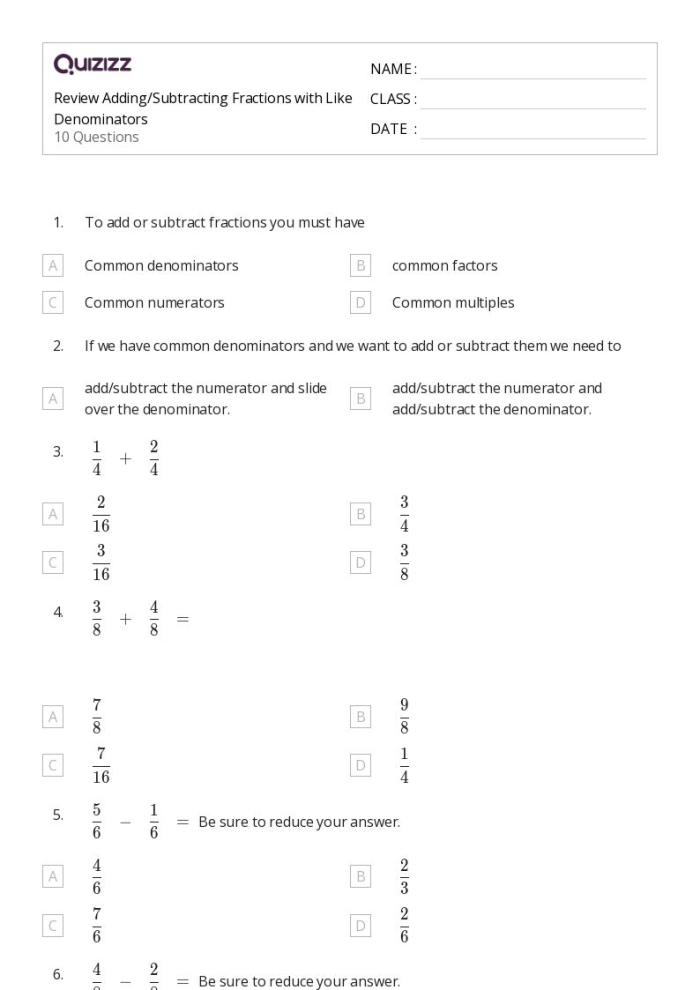
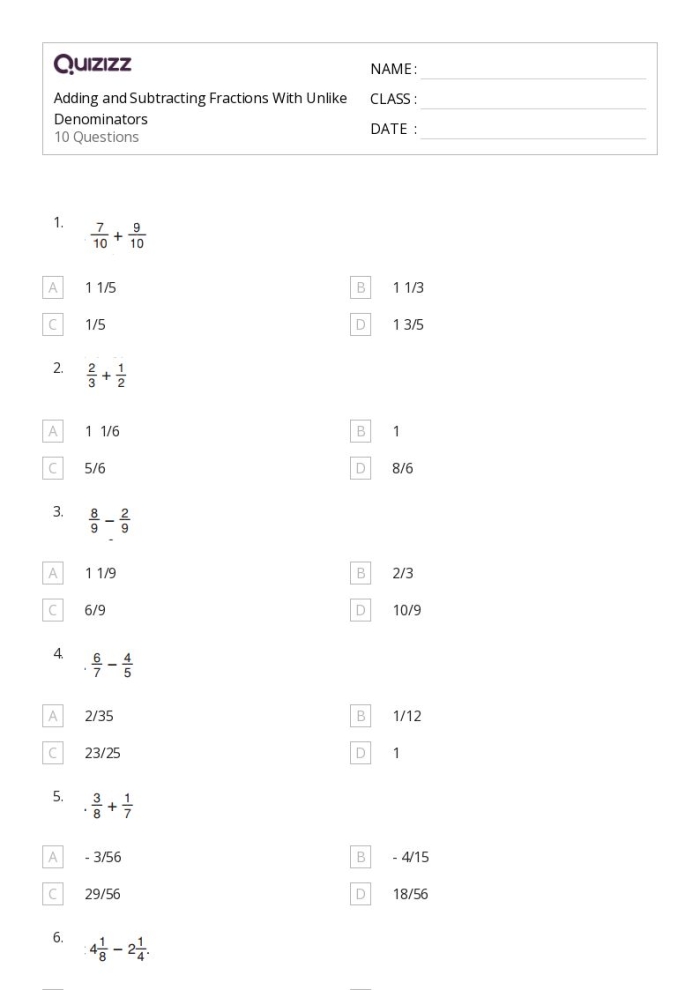
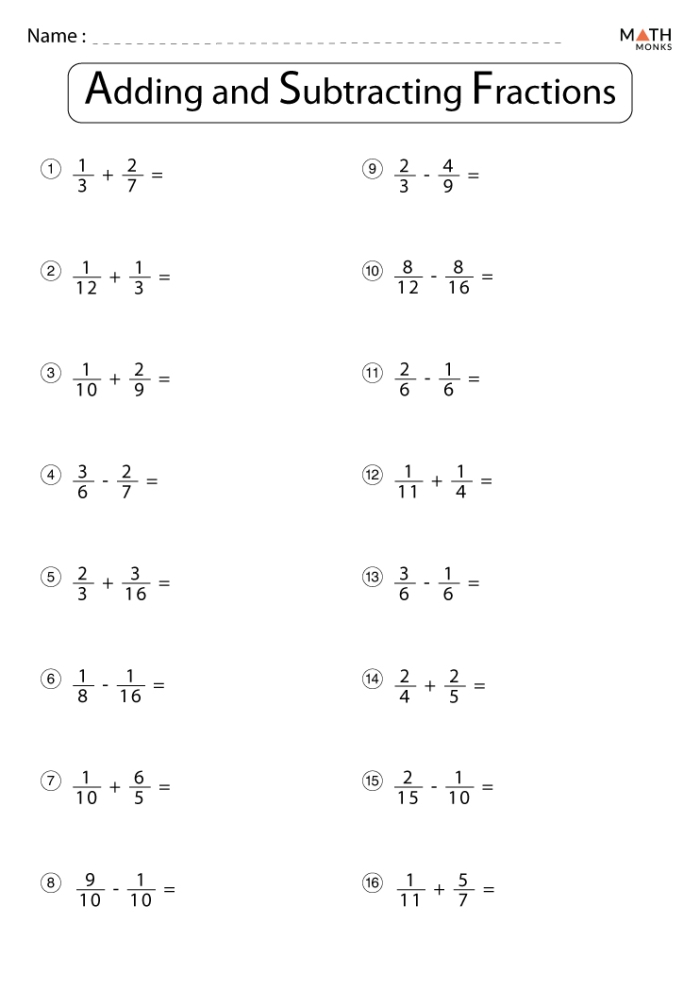
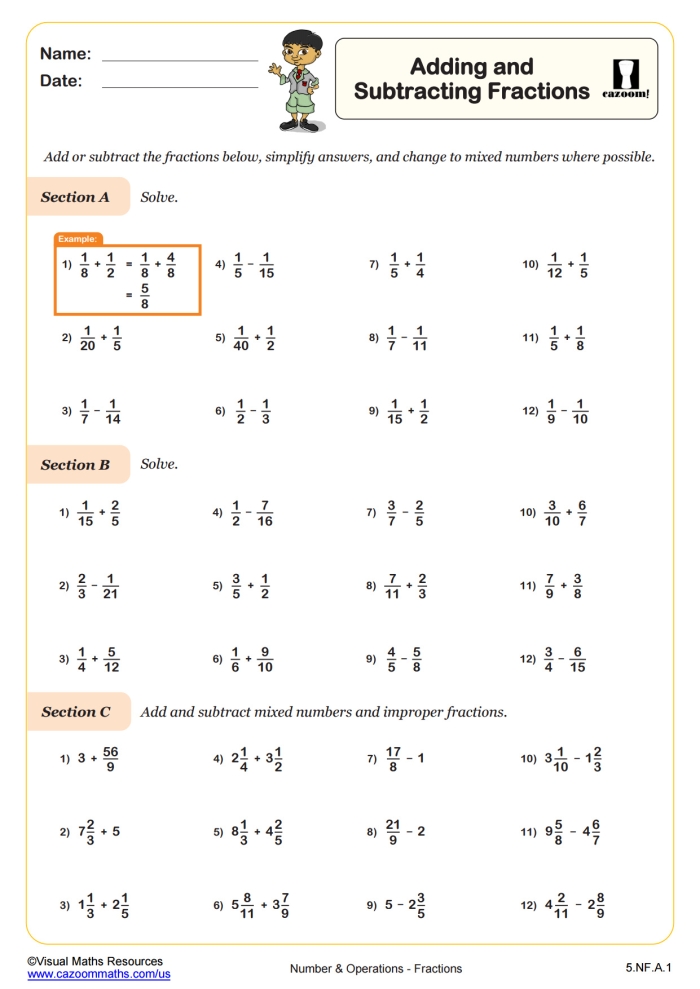
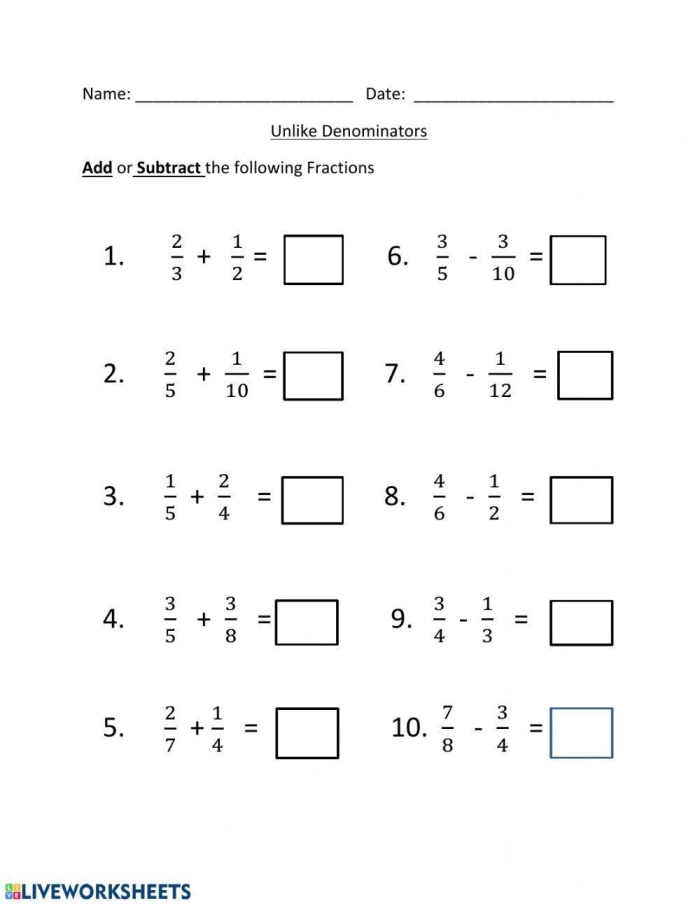
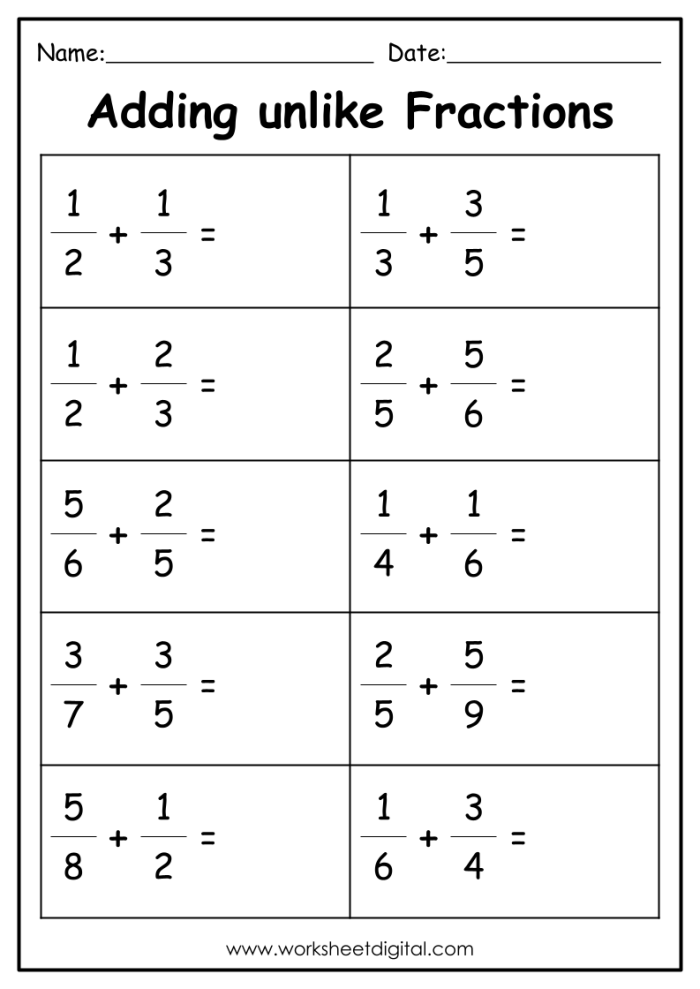
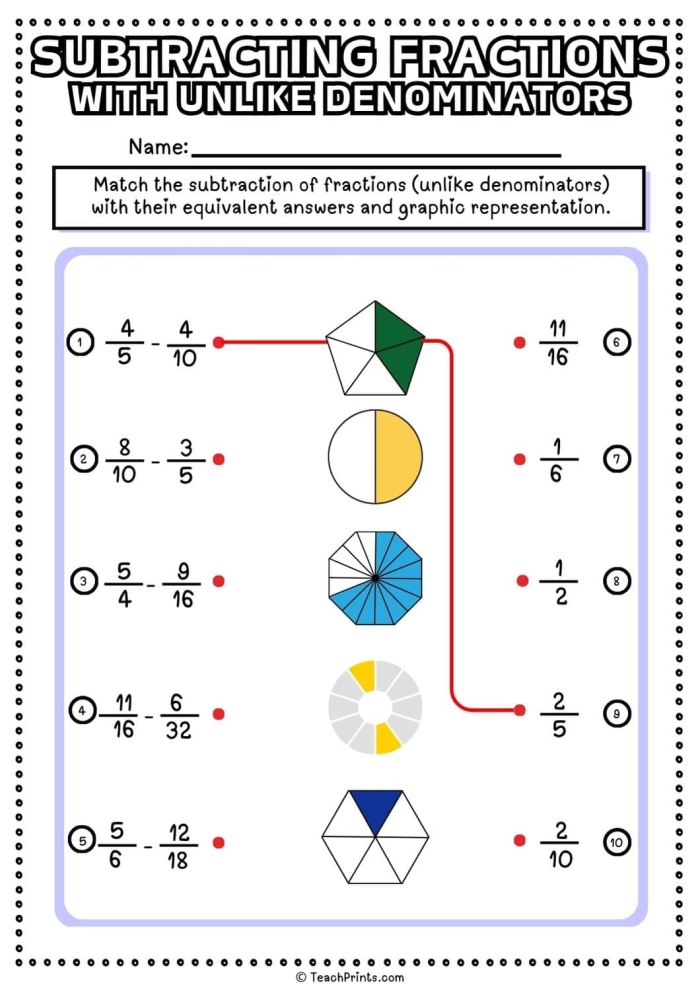
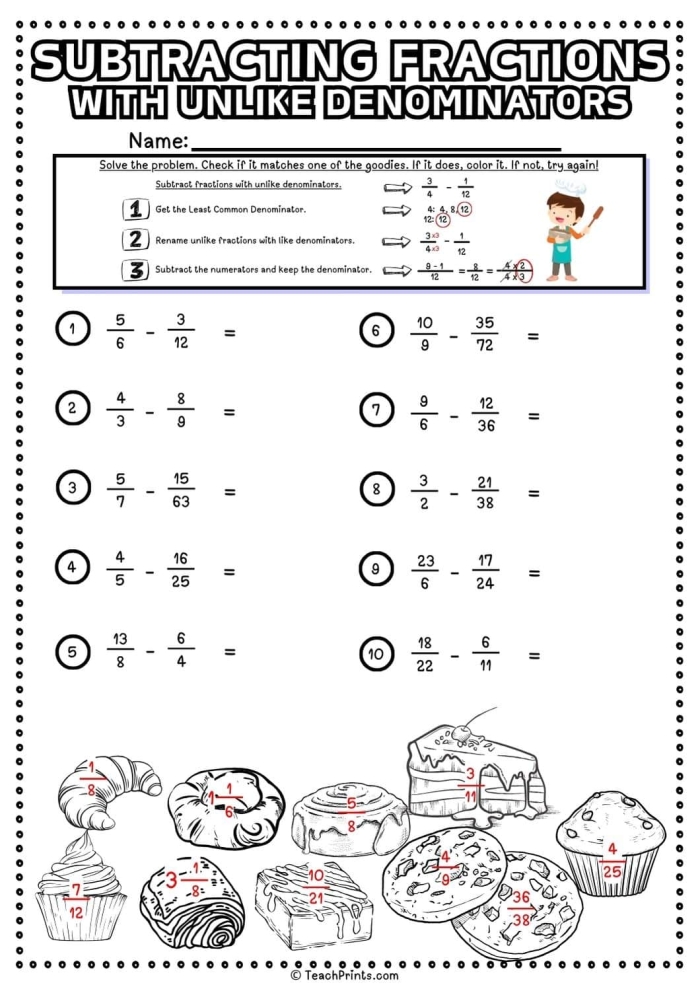
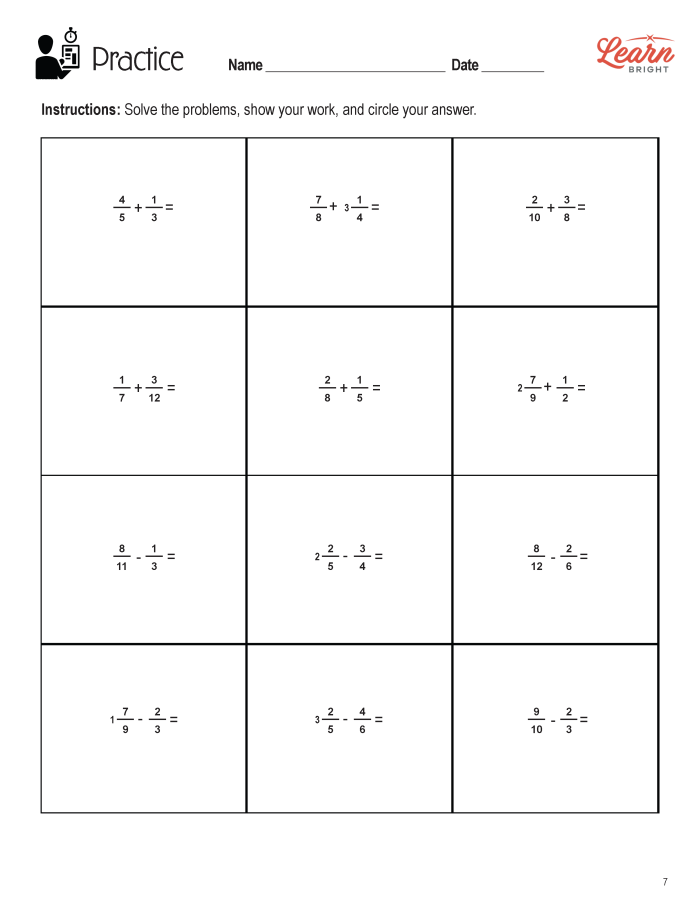
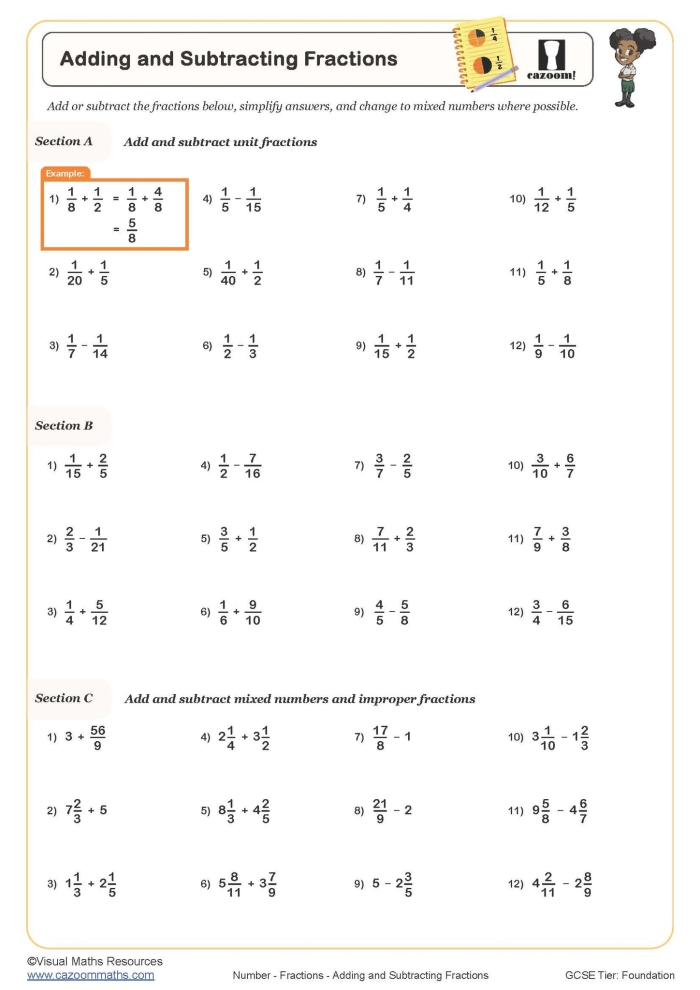
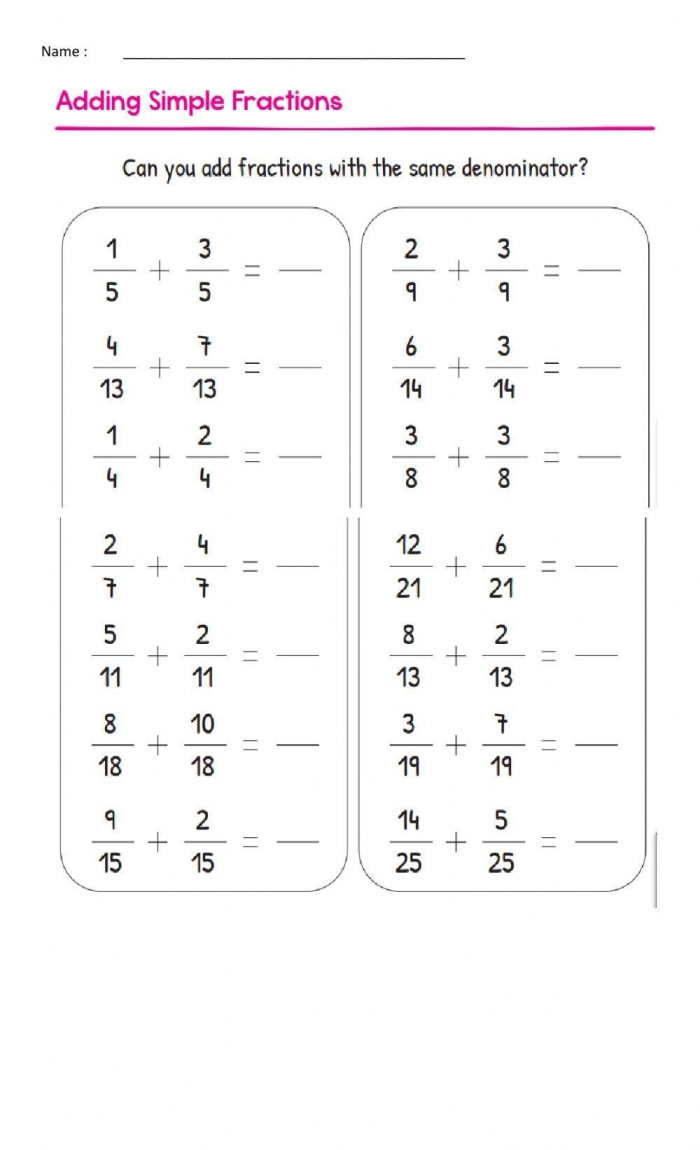
For further practice, worksheets that focus on subtracting fractions with unlike denominators can be incredibly beneficial. They offer a variety of problems that help reinforce these concepts. You might find resources like fraction multiplication word problems and geometry review worksheets useful as well, as they incorporate different aspects of fractions and geometry.
By regularly practicing these types of problems, students can build confidence and develop a stronger grasp of fractions, preparing them for more advanced mathematical concepts in the future.
Download These Worksheets for Practice