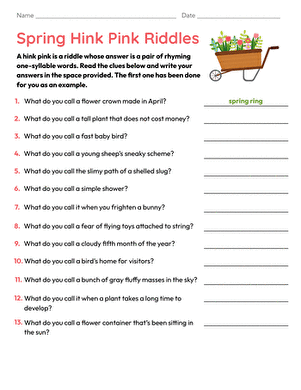
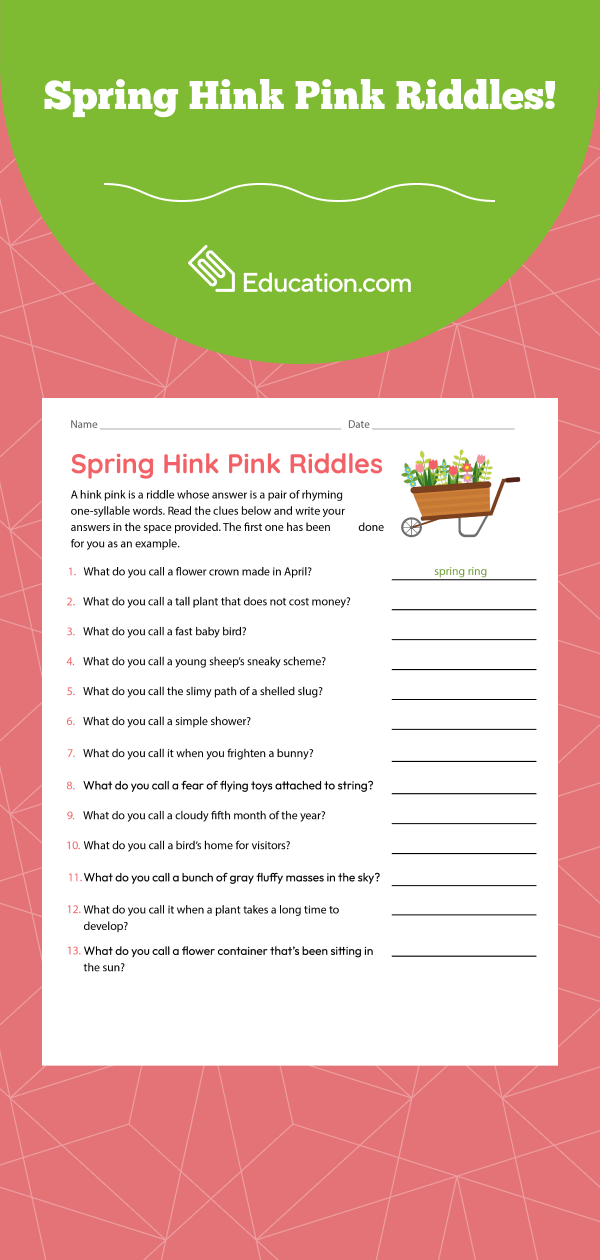
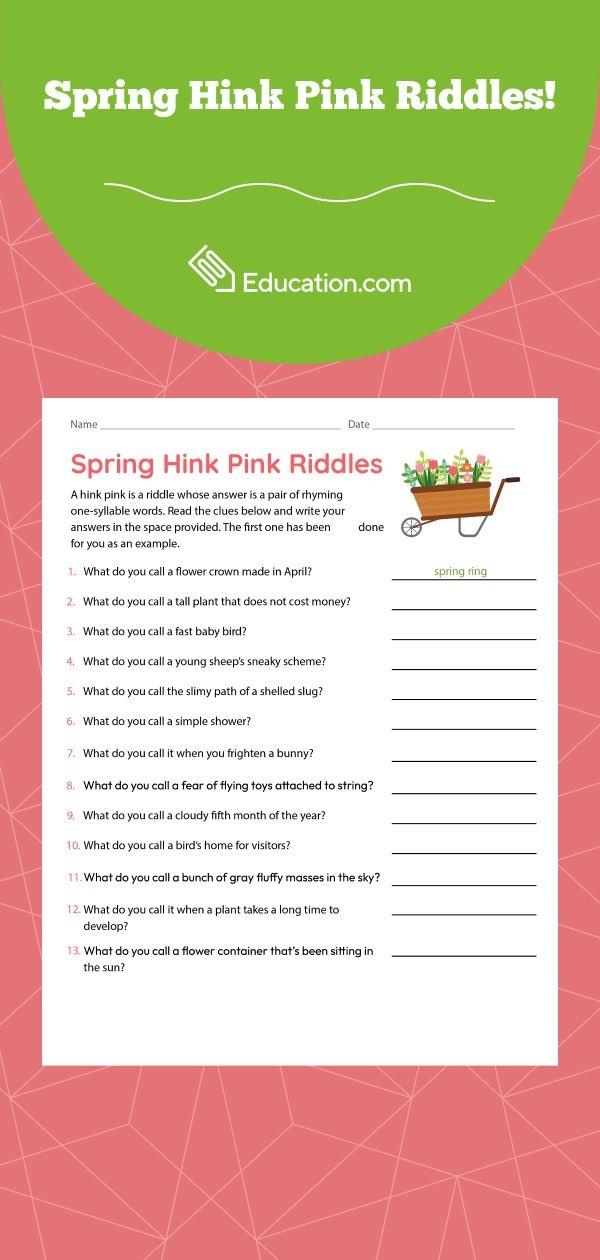
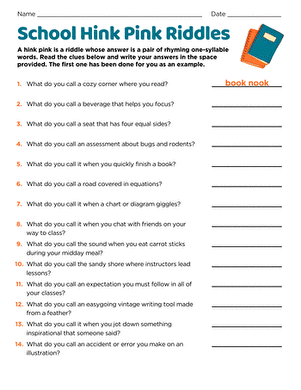
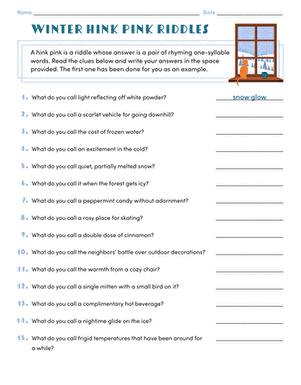
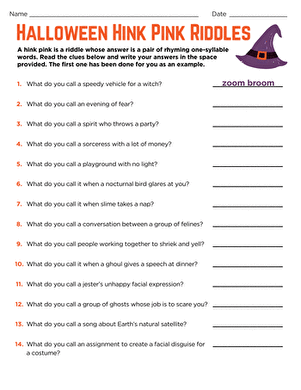
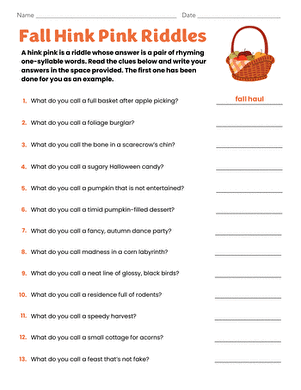
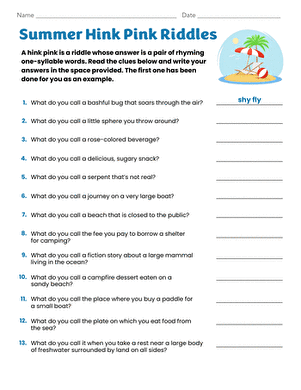
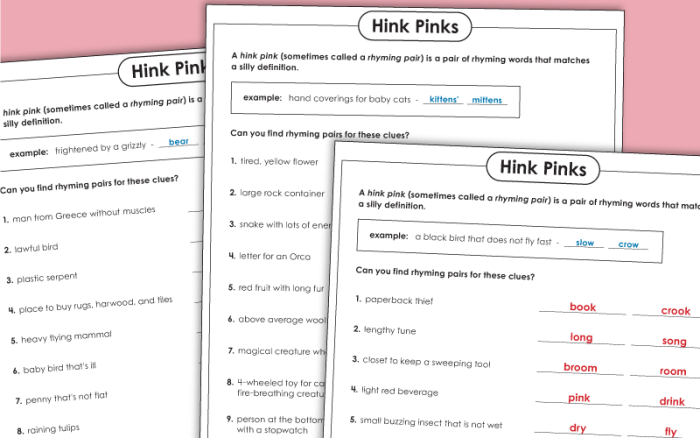
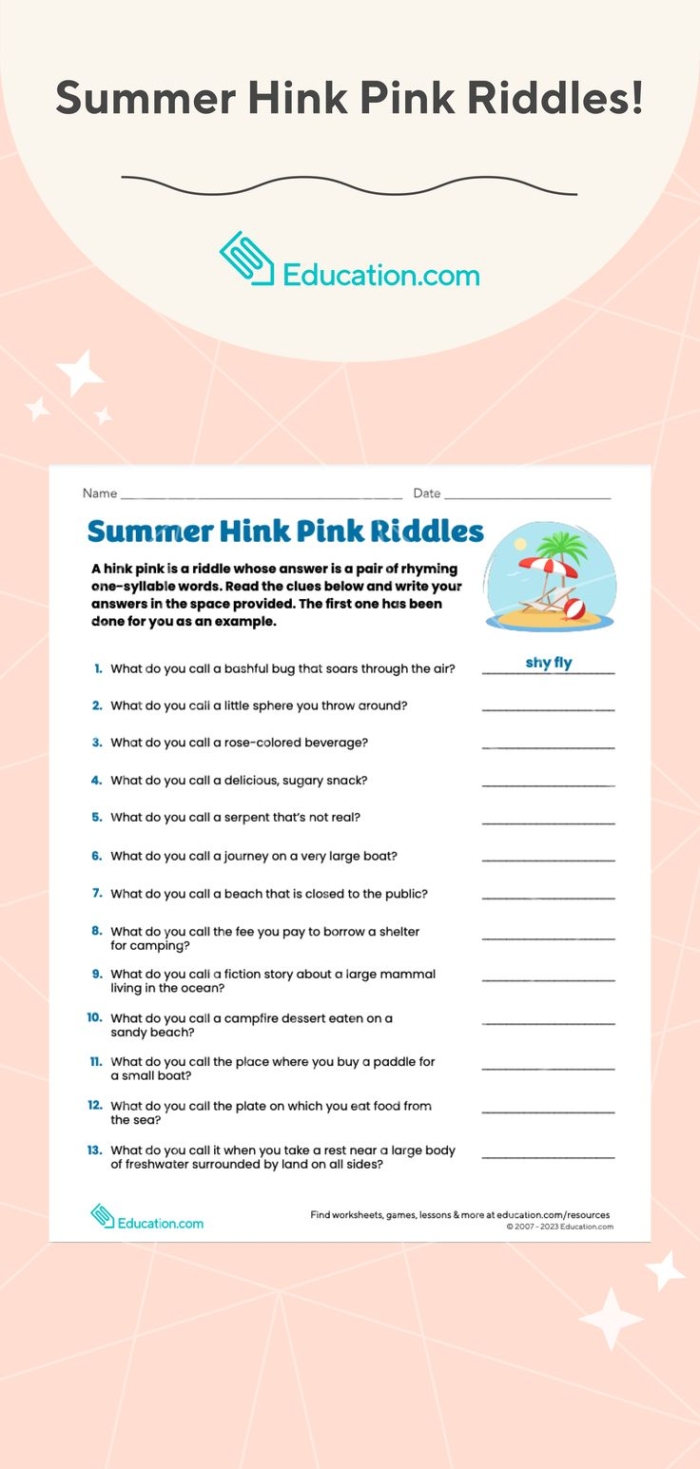
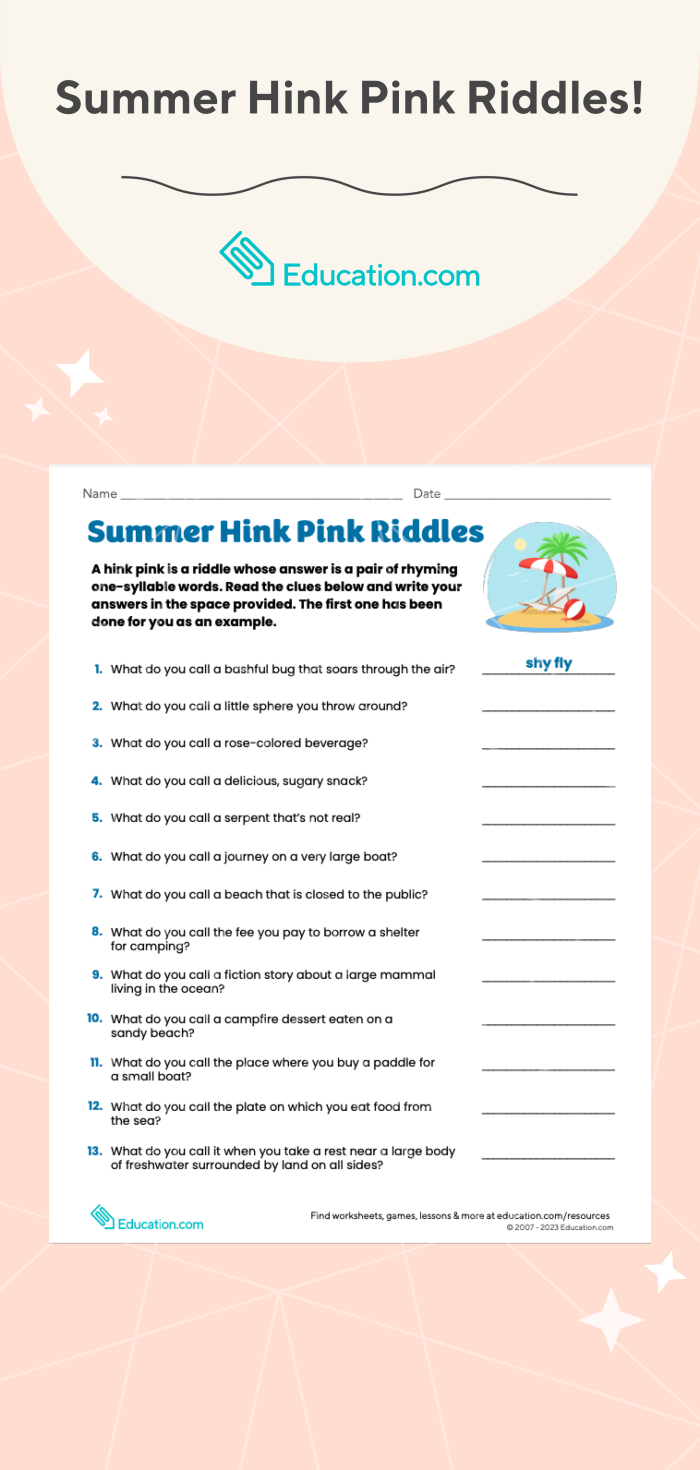
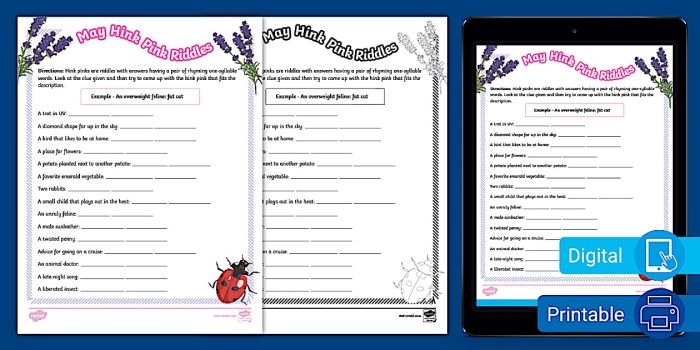
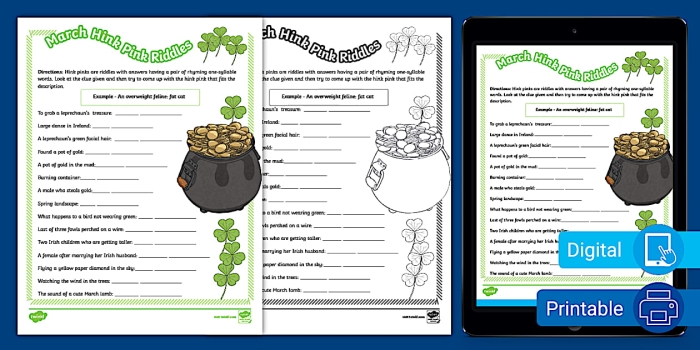
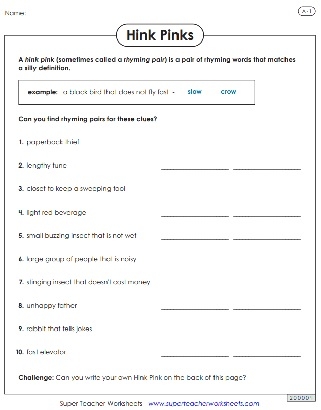
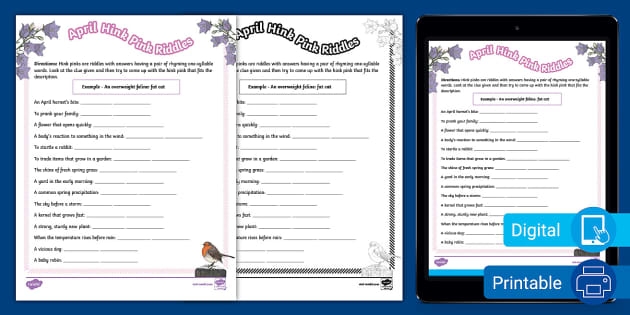
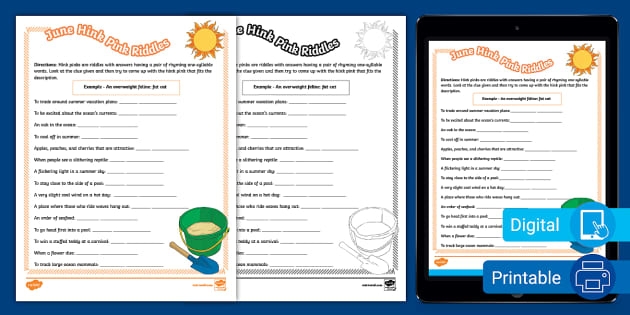
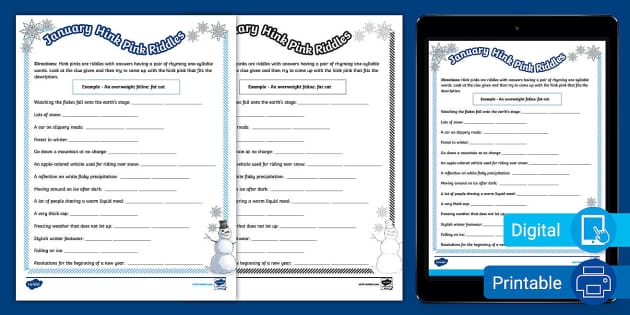
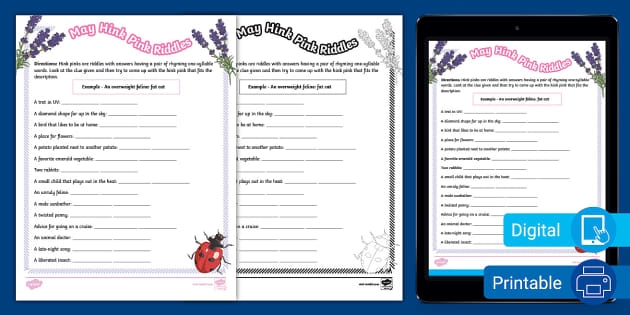
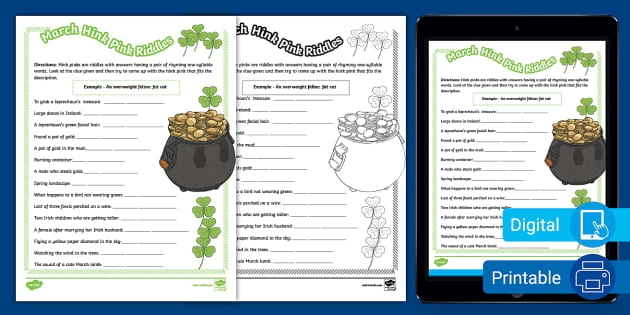
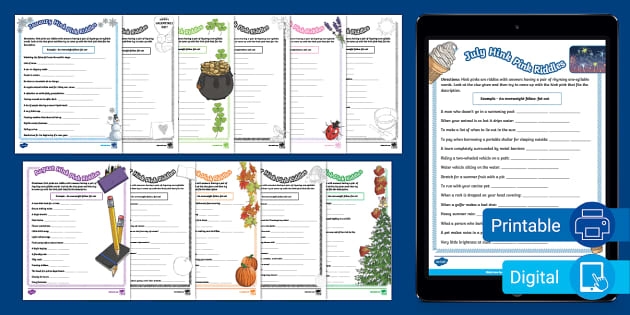
Hink pinks are a clever word puzzle where you describe something using two rhyming words, and the solver has to figure out what you’re describing. For sixth grade students, these riddles offer a refreshing break from traditional geometry worksheets while still keeping their minds sharp. Spring-themed hink pink riddles combine this playful format with seasonal vocabulary, making them perfect for classrooms in March through May.
The beauty of hink pinks lies in their simplicity and flexibility. When you give a clue like “an unhappy father,” students work backward to find the answer: “sad dad.” The riddle requires them to think about rhyming patterns, vocabulary meanings, and creative associations simultaneously. This mental exercise strengthens language skills in ways that straightforward drills cannot match.
Spring hink pink worksheets introduce seasonal elements like blooming flowers, baby animals, and warmer weather. A riddle might ask for “a cheerful rabbit” (happy bunny) or “a tiny insect’s home” (bug rug). These clues connect to what students observe during spring, making the puzzles feel relevant rather than abstract.
Using these worksheets in your sixth grade classroom serves multiple purposes. Students practice vocabulary expansion and synonym recognition while enjoying the puzzle format. The riddles also encourage peer collaboration when students work in pairs to solve them, turning individual worksheet time into social learning moments.
If you’re looking to expand your puzzle collection, consider pairing spring hink pinks with other brain-teasing activities. Resources like analyzing the fossil record or acute triangles practice offer different cognitive challenges that complement word puzzles well. You might also explore writing expressions with variables for a mathematical angle on creative thinking.
Spring hink pink riddles work best when you print them as worksheets students can mark up and share their answers with classmates. The seasonal timing makes them feel special rather than like routine assignments, which naturally boosts student engagement and enthusiasm.
Boost Skills with These Worksheets