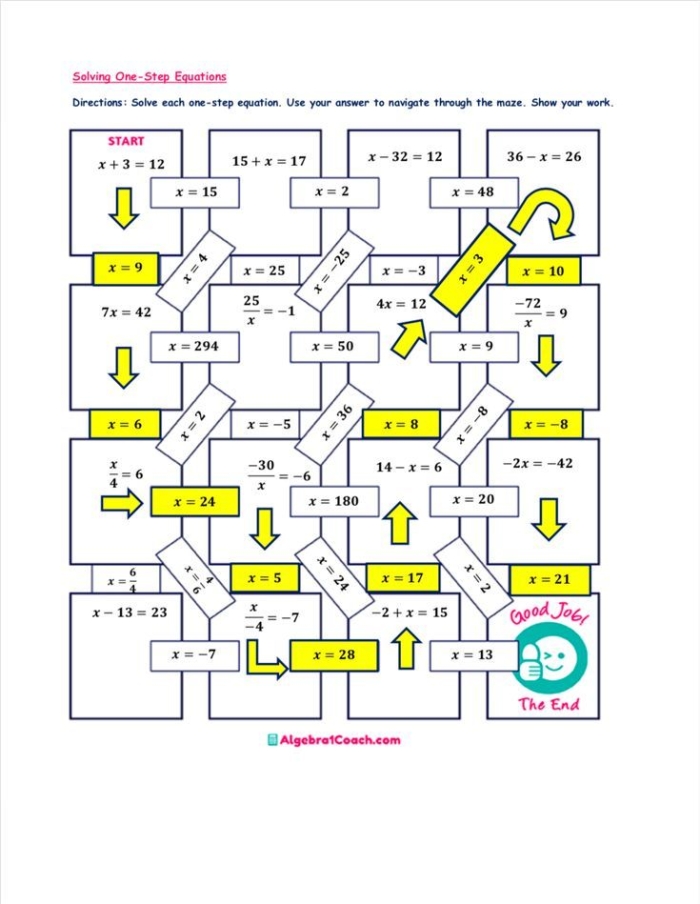
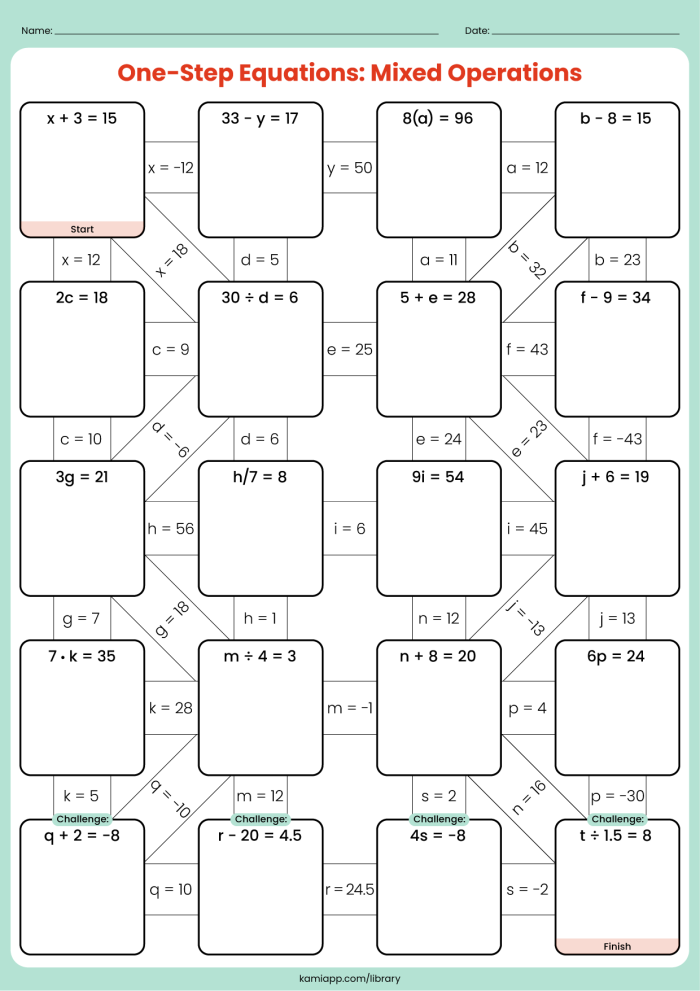
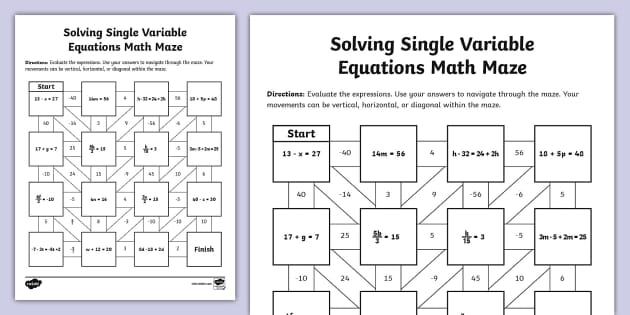
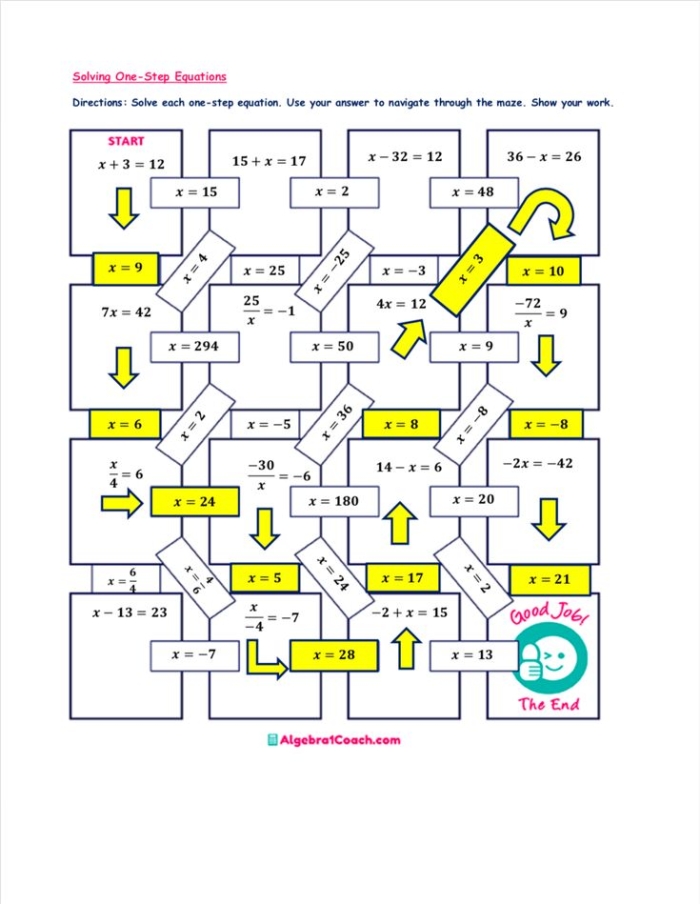
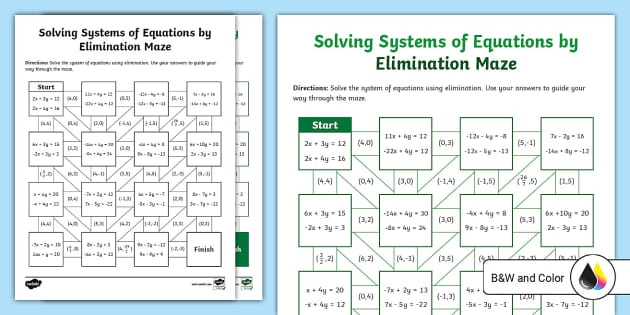
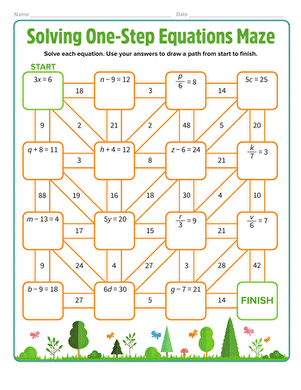
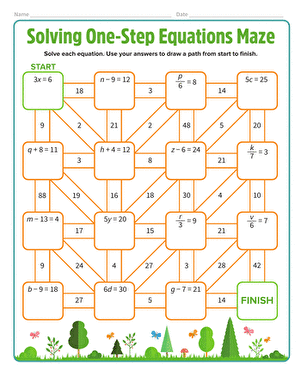
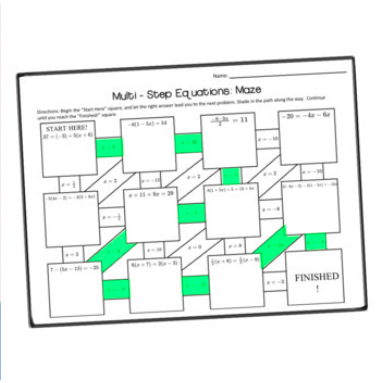
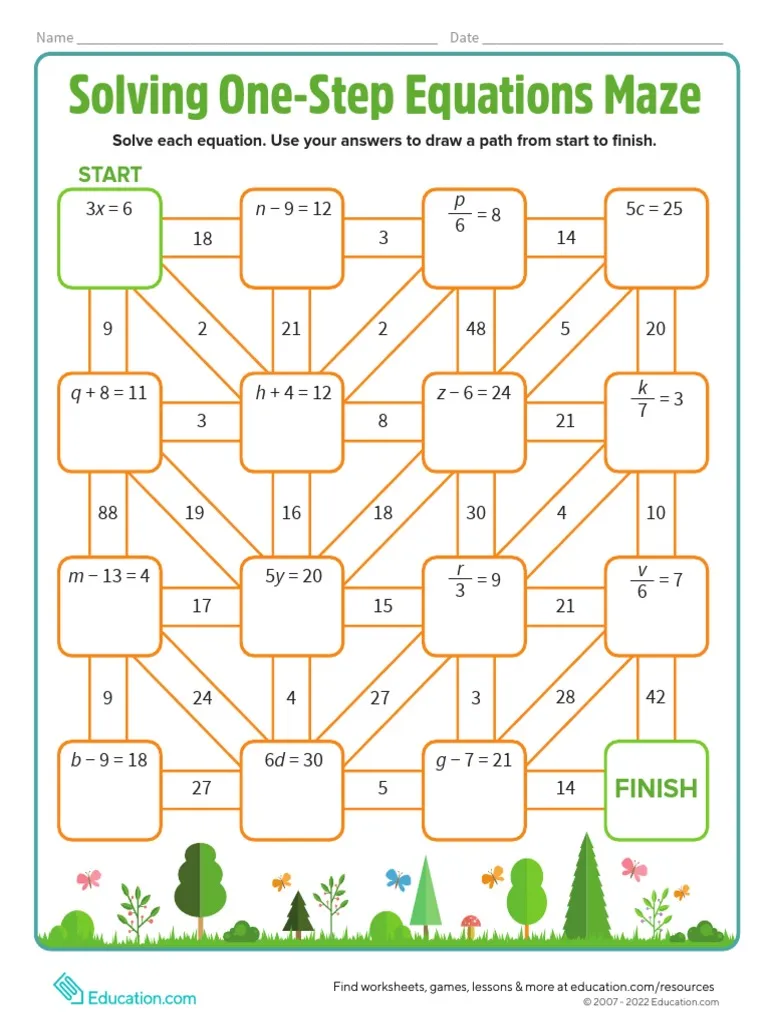
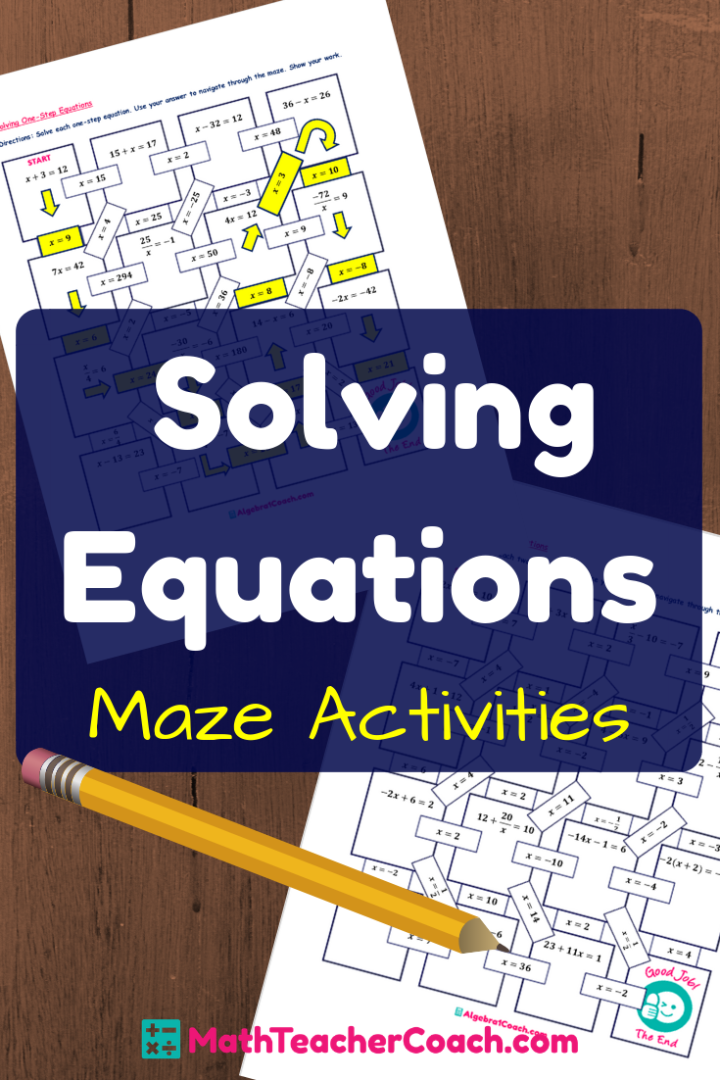
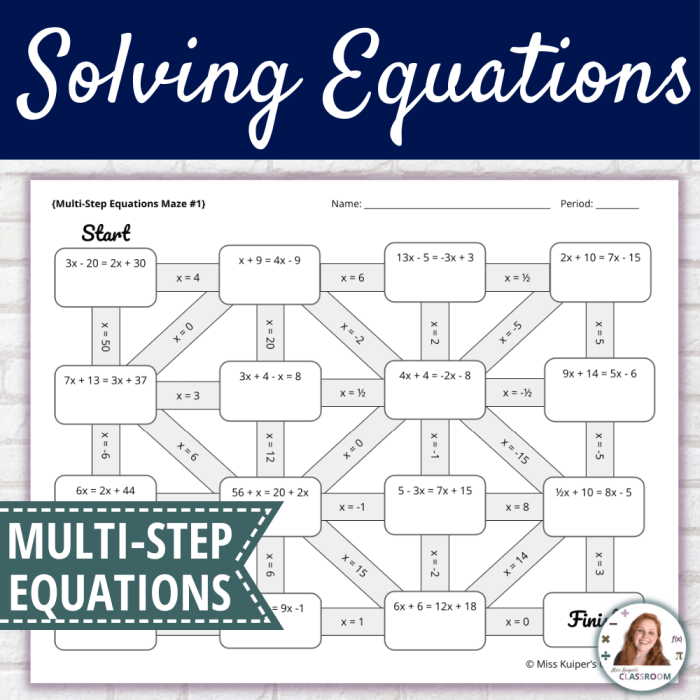
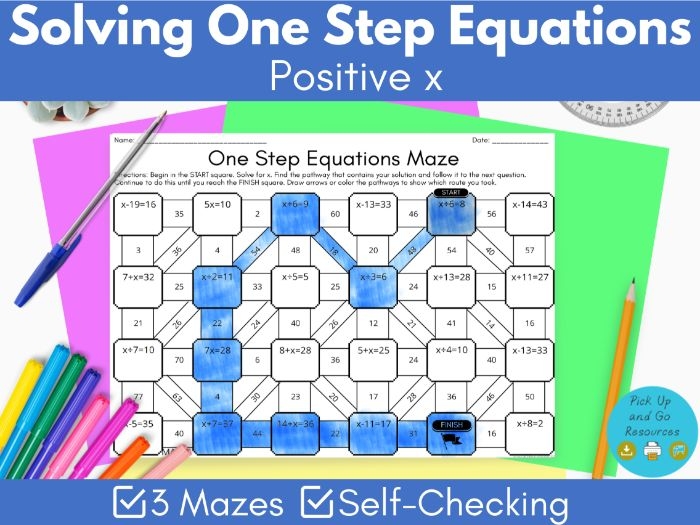
Mazes aren’t just about finding your way from start to finish anymore. When you combine them with math practice, they become a tool that keeps sixth grade students engaged while building confidence with fundamental operations. A solving one-step equations maze does exactly this: it transforms what could feel like repetitive drill work into something that feels more like a puzzle to solve.
The mechanics are straightforward. You encounter an equation at each junction in the maze, solve it to find the correct answer, and follow that path forward. This structure forces you to actually work through each problem rather than skip ahead or guess. You can’t cheat your way through a maze by just picking random turns and hoping you reach the exit. Every wrong answer sends you down a dead end, which provides immediate feedback about whether you solved the equation correctly.
What makes this approach effective for sixth graders is that it addresses all four basic operations in one activity. Addition equations like x + 5 = 12 appear alongside subtraction problems like x – 3 = 8, multiplication questions such as 4x = 20, and division equations like x ÷ 2 = 6. This variety prevents boredom and ensures students practice the full range of one-step solving skills they need to master.
The visual element matters too. Rather than staring at a worksheet full of numbered problems, students navigate through an actual maze structure. This changes how the brain processes the task. Some students who struggle with traditional worksheets find they can concentrate better when there’s a spatial component involved.
If you’re looking for similar activities that blend learning with engagement, you might explore other sixth grade resources like using integers in the real world word problems or informational essay writing prompts. These materials take the same principle of making academic work feel less like work and more like something worth doing.
Boost Skills with These Worksheets