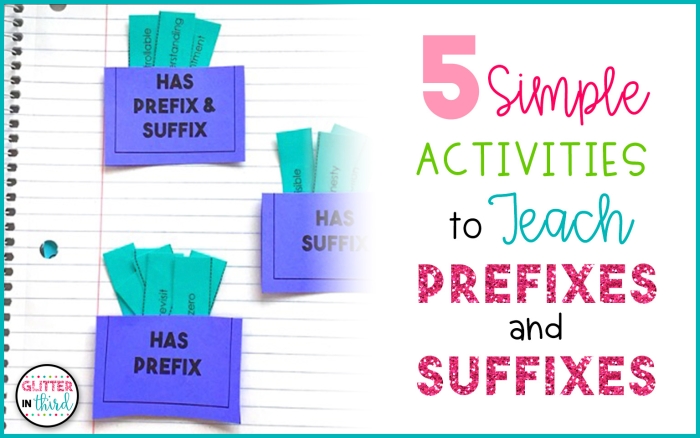
Breaking down words into their building blocks is one of the most powerful tools second grade students can develop for reading and writing. When children understand how prefixes, suffixes, and root words work together, they unlock the ability to figure out unfamiliar words on their own, rather than stopping to ask for help every time they encounter something new.
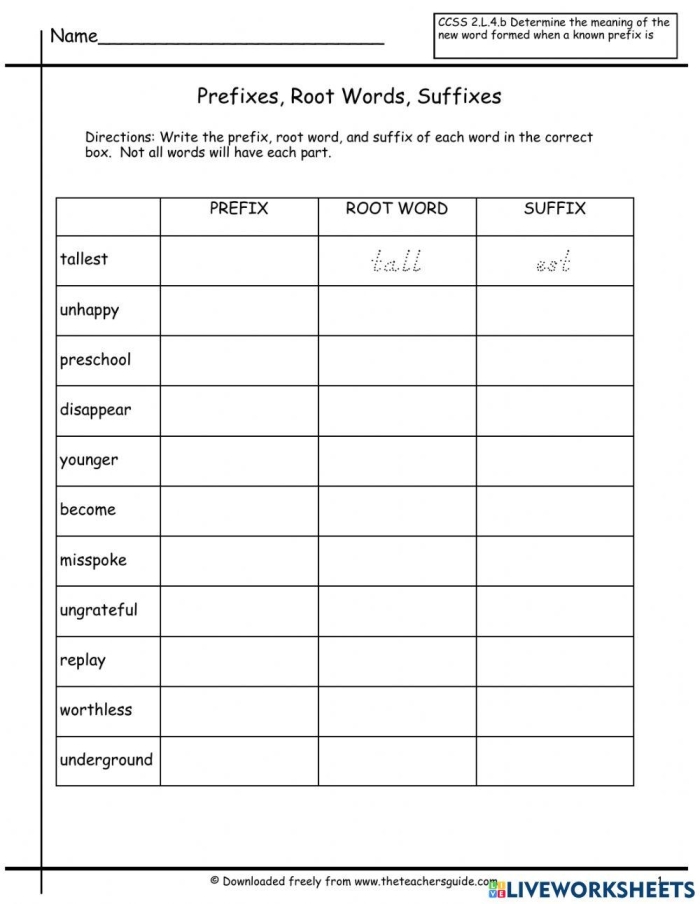
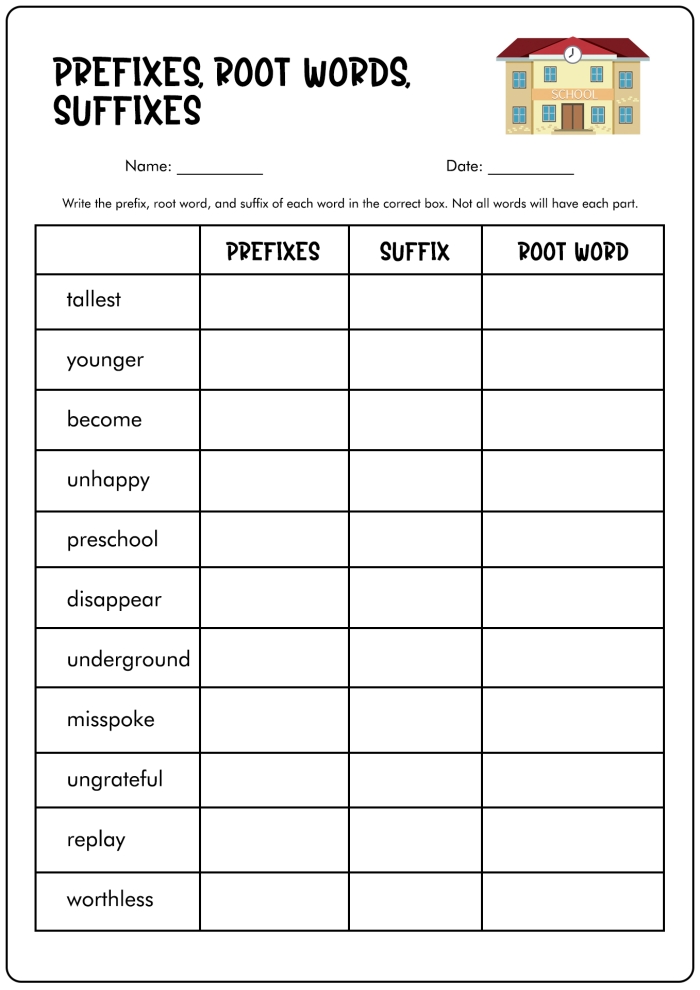
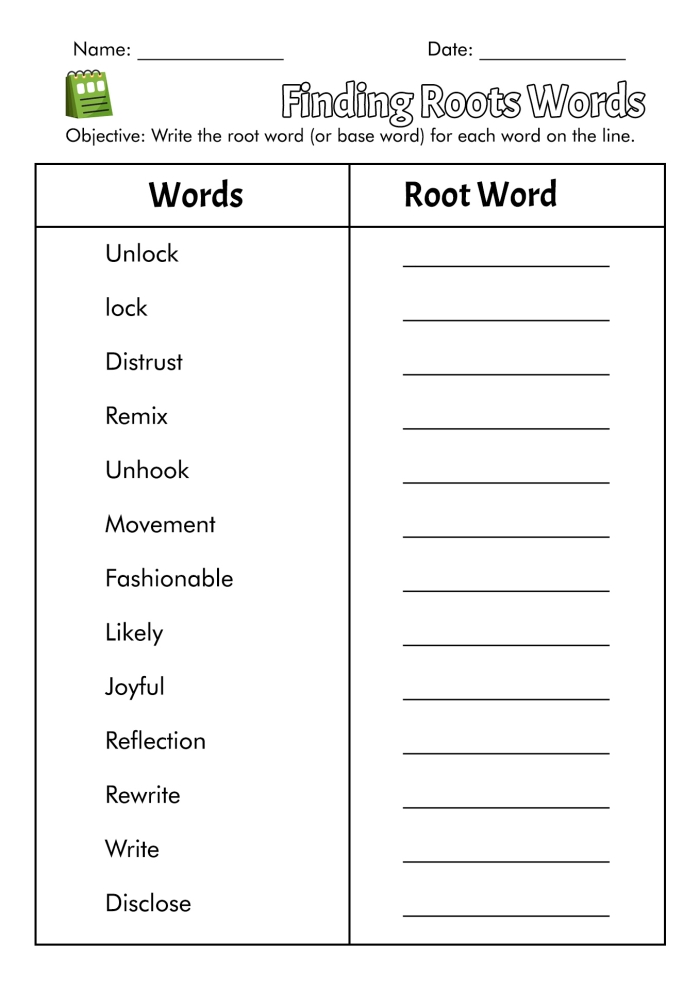
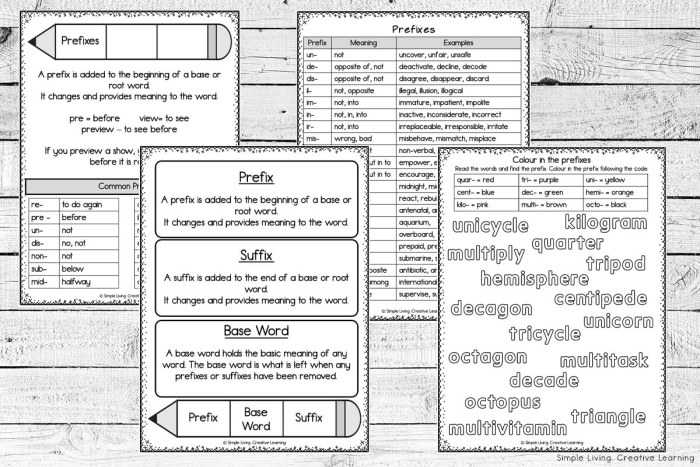
The magic of this approach lies in its simplicity. A root word is the core meaning, the part that stands alone. A prefix comes before the root and changes its meaning, like “un-” in “unhappy.” A suffix comes after and also shifts the meaning, like “-ful” in “helpful.” Once students grasp this pattern, they can decode thousands of words they’ve never seen before.
Young readers benefit tremendously from recognizing these patterns early. Rather than memorizing vocabulary lists, they start to see language as a system where pieces fit together logically. This builds confidence and reduces frustration when reading becomes more challenging.
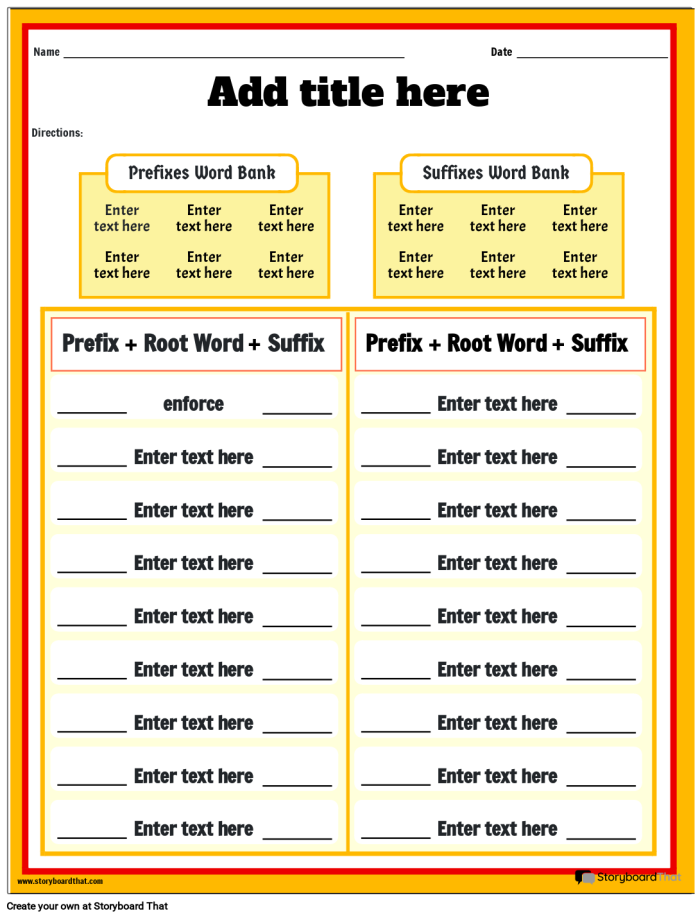
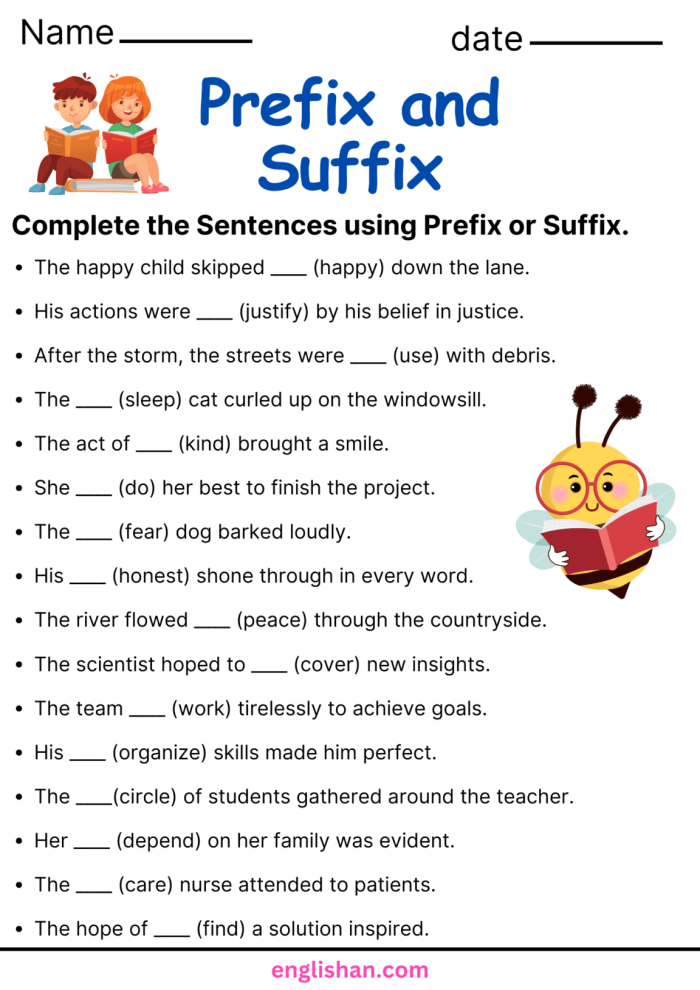
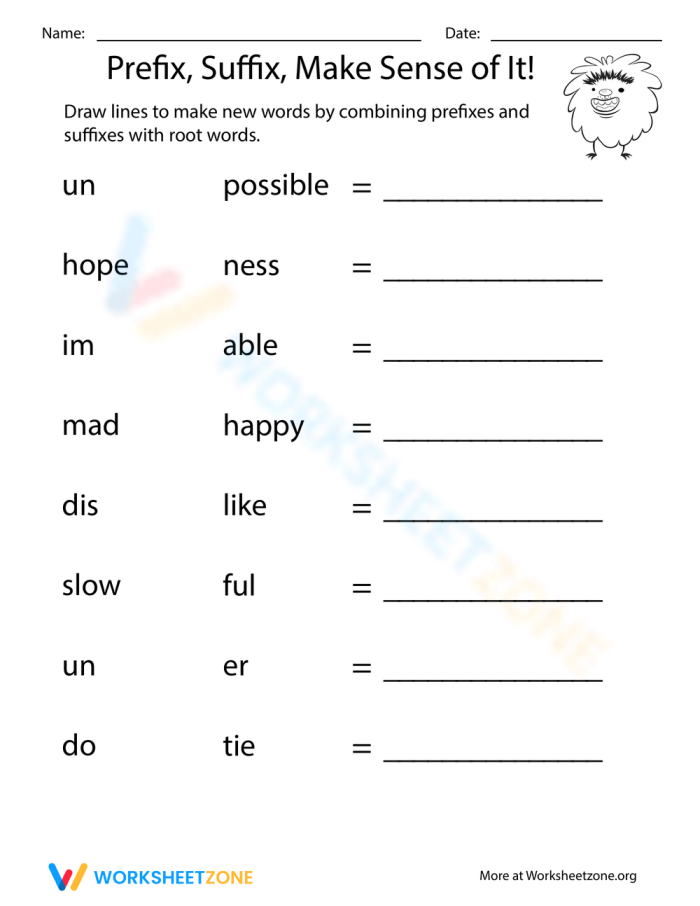
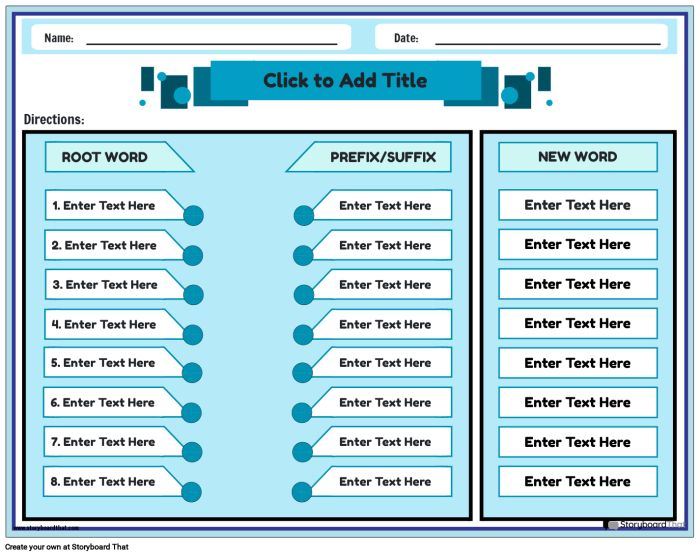
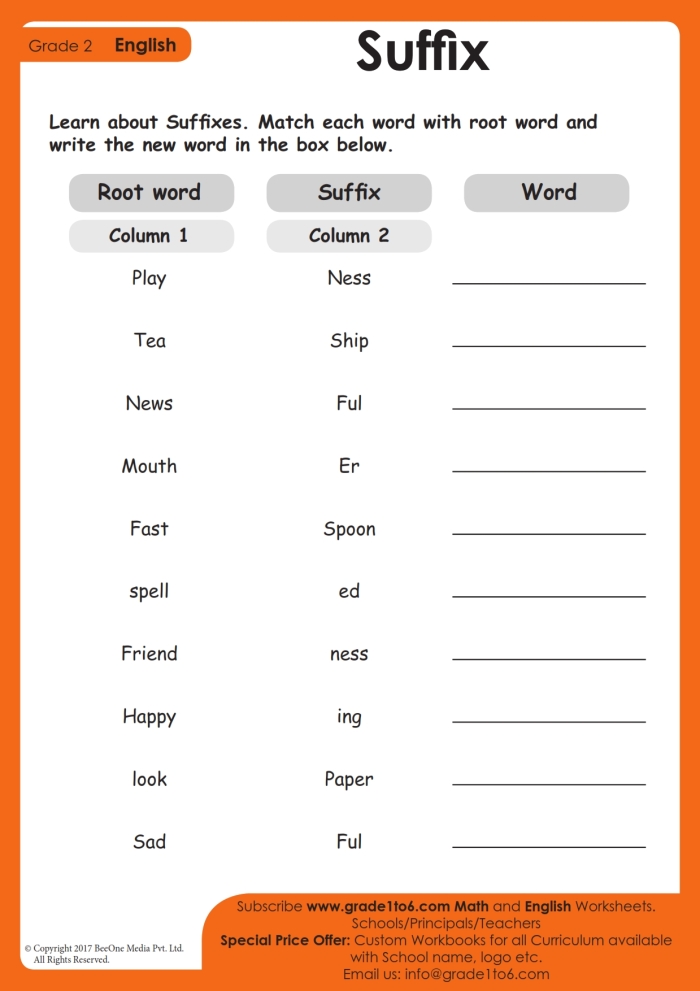
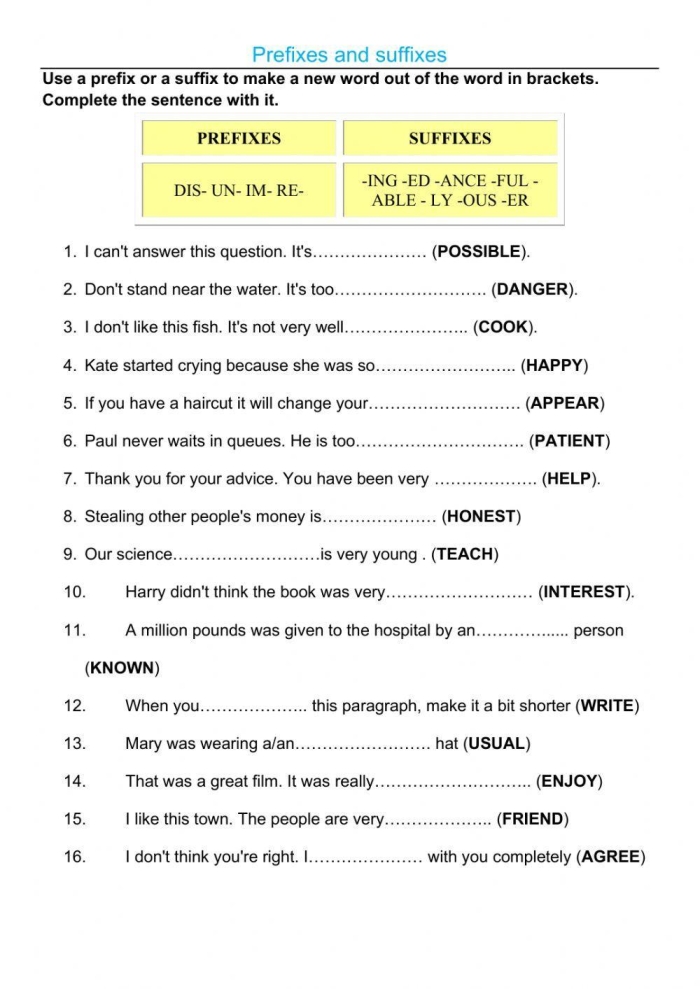
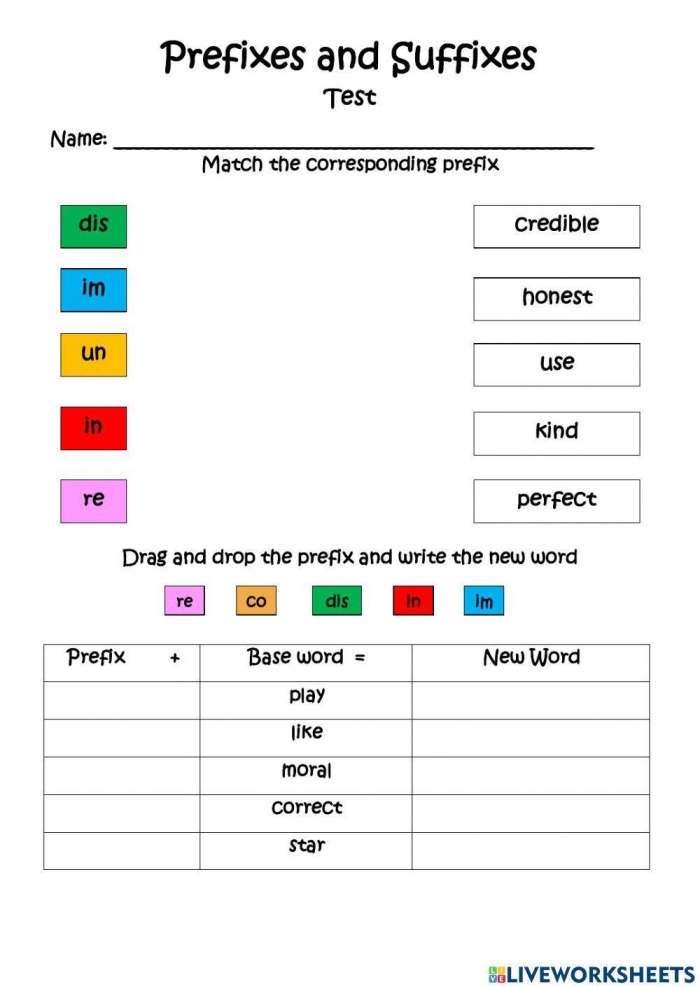
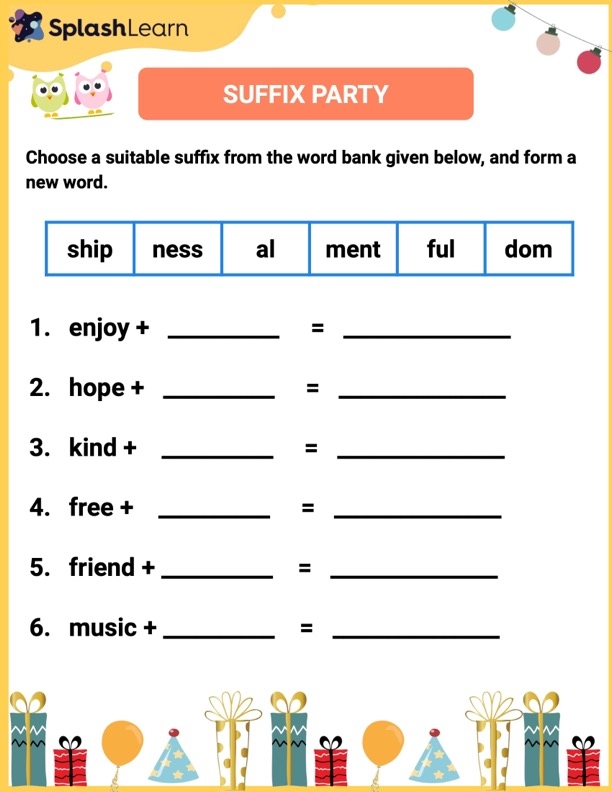
In a practical classroom activity for second grade grammar and mechanics, students can combine these elements to create new words. For instance, starting with “happy,” they might add “un-” to make “unhappy,” or add “-ness” to make “happiness.” This hands-on approach makes the concept concrete and memorable.
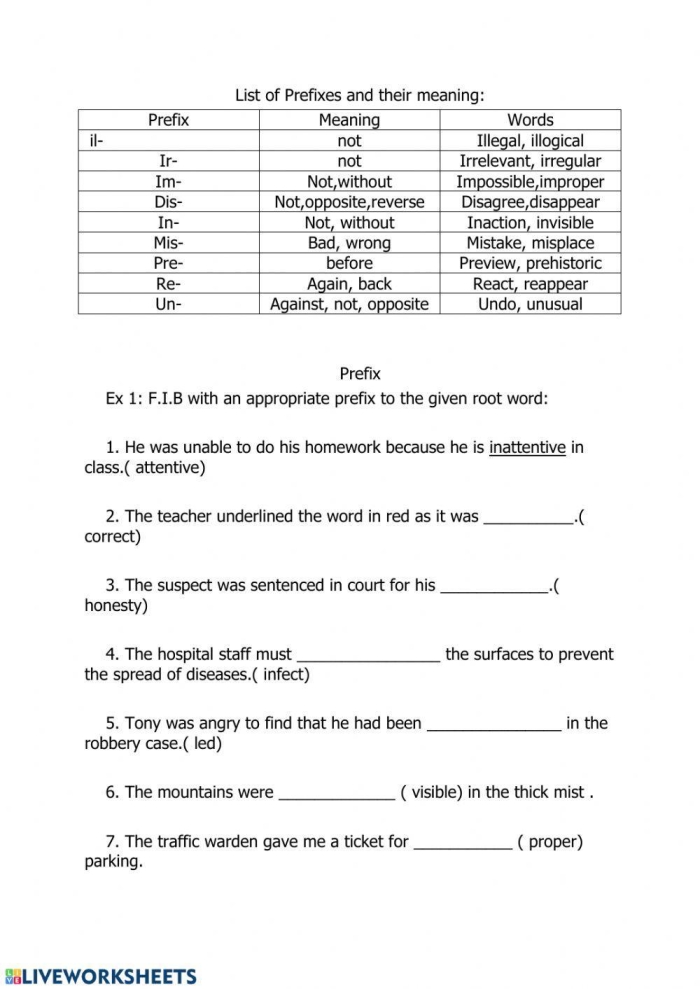
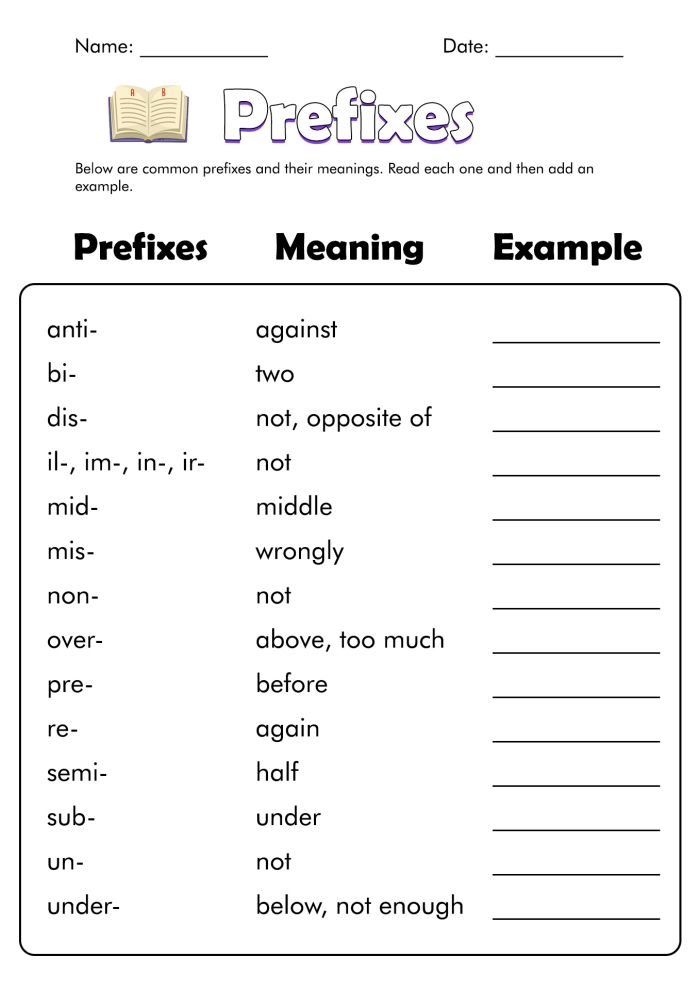
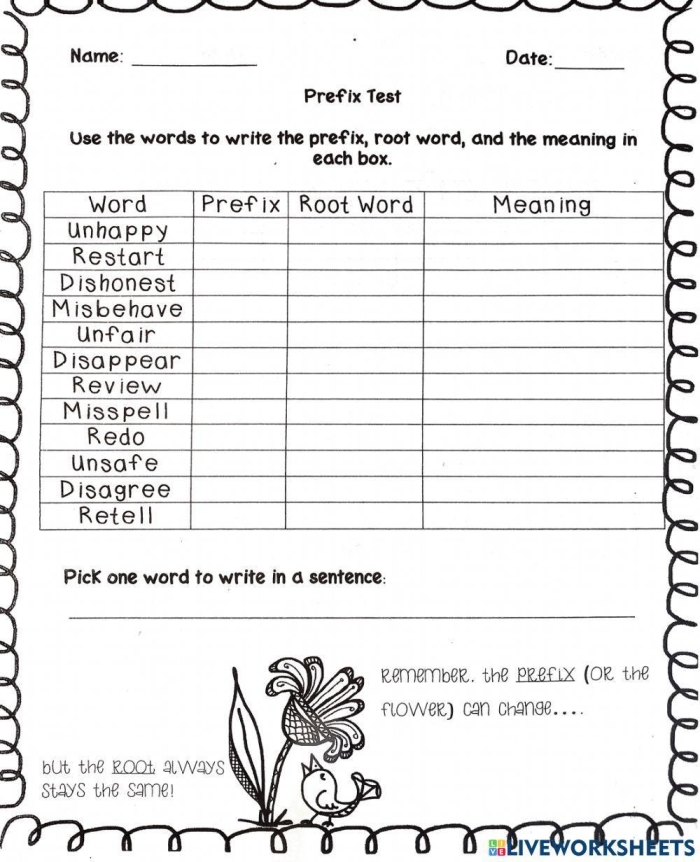
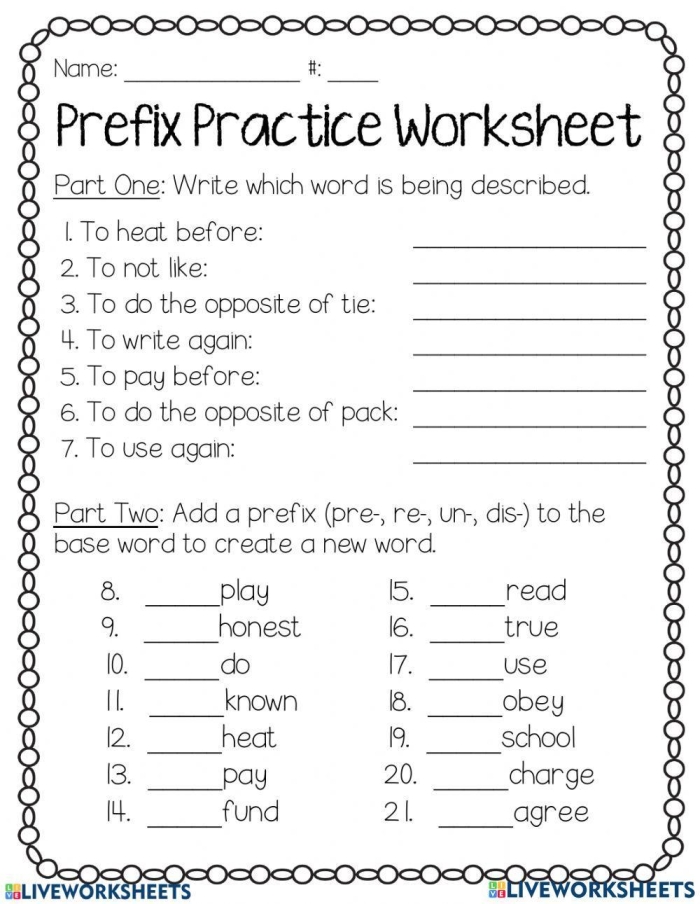
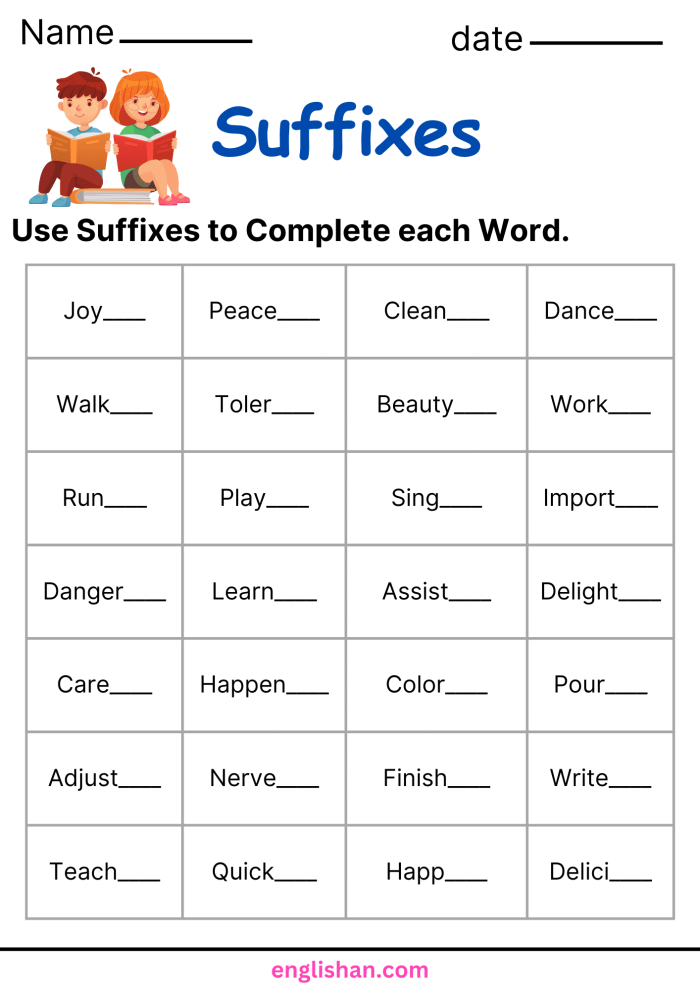
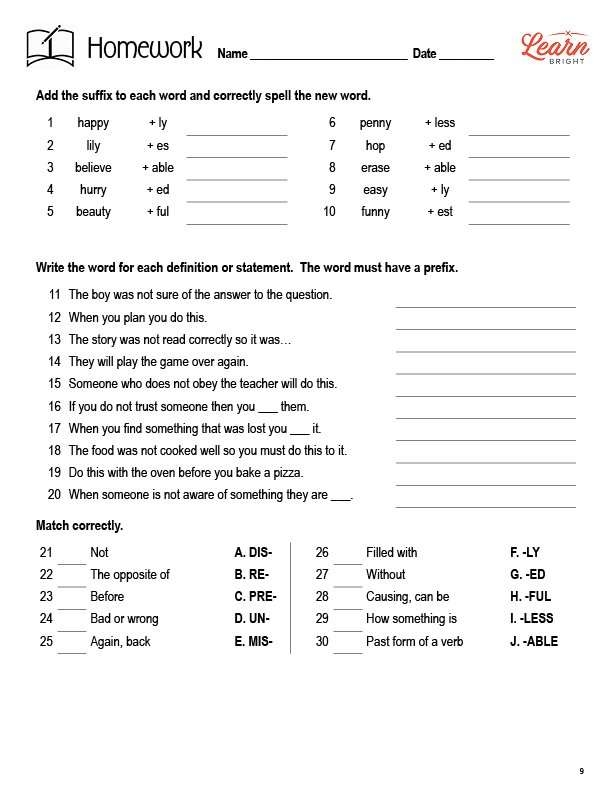
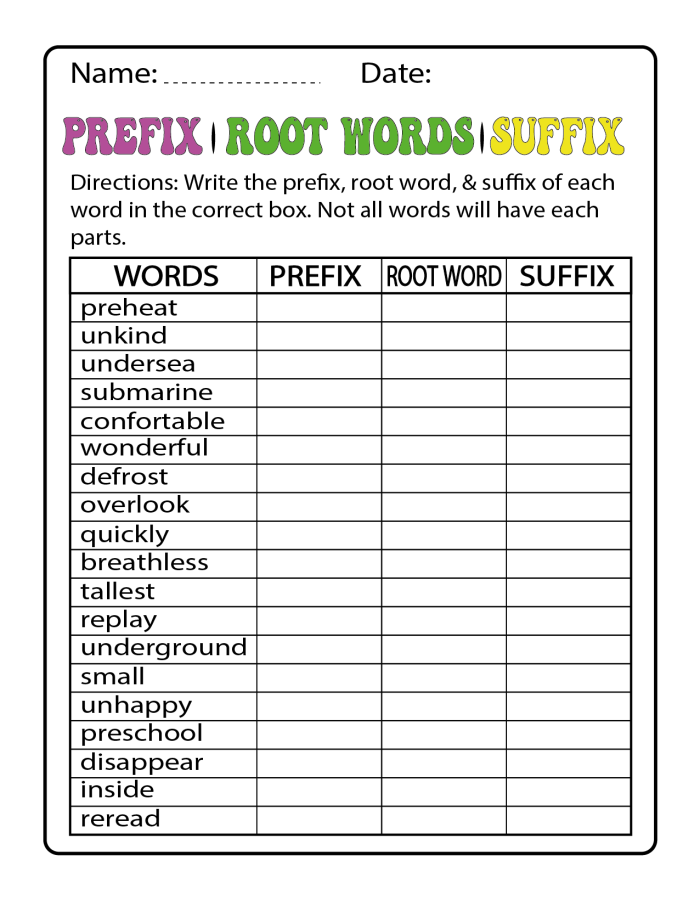
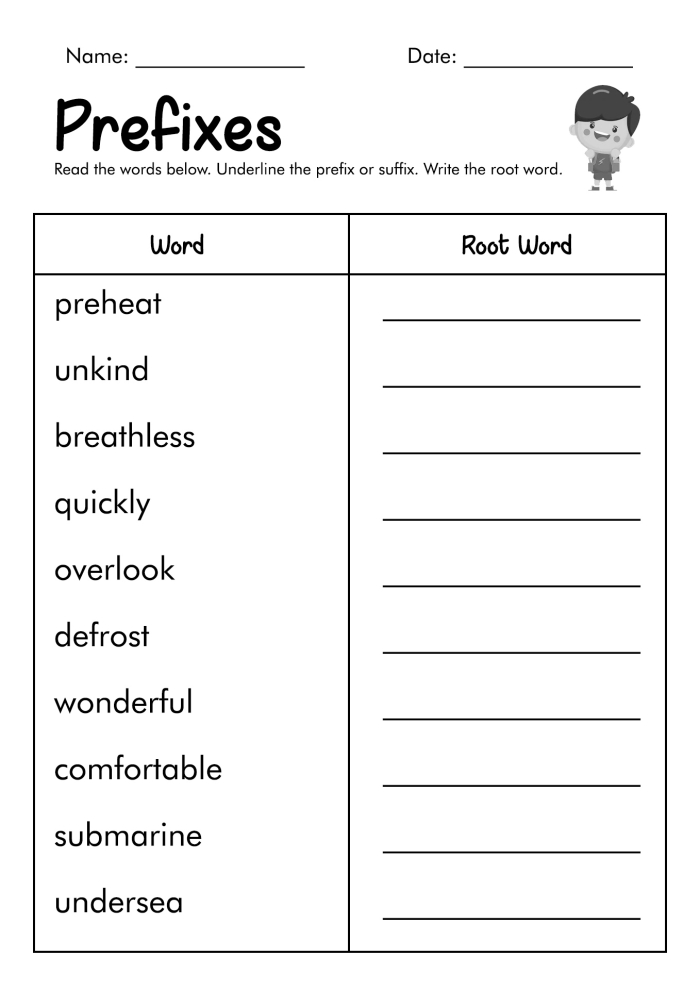
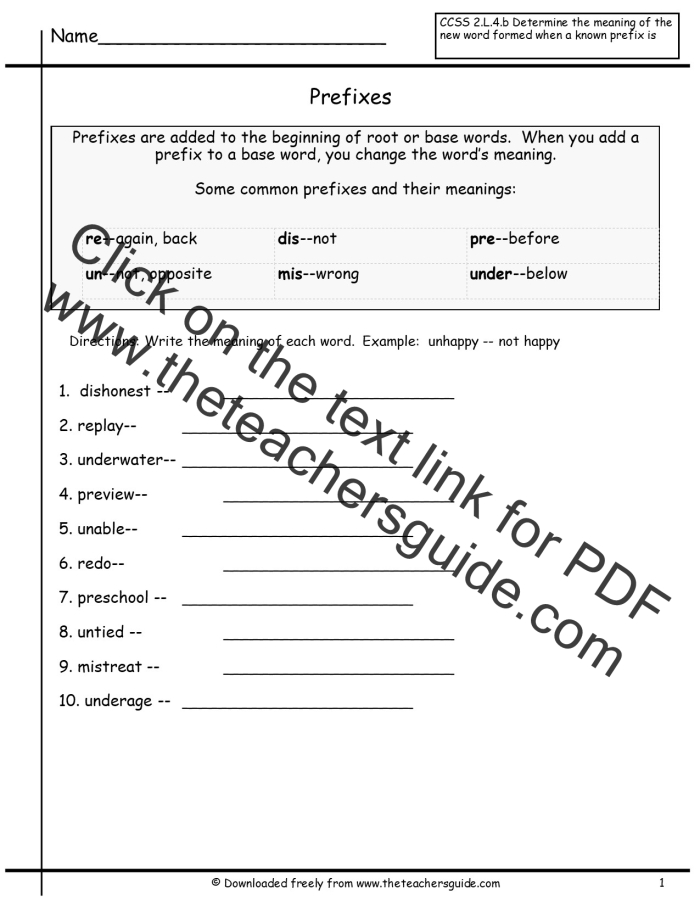
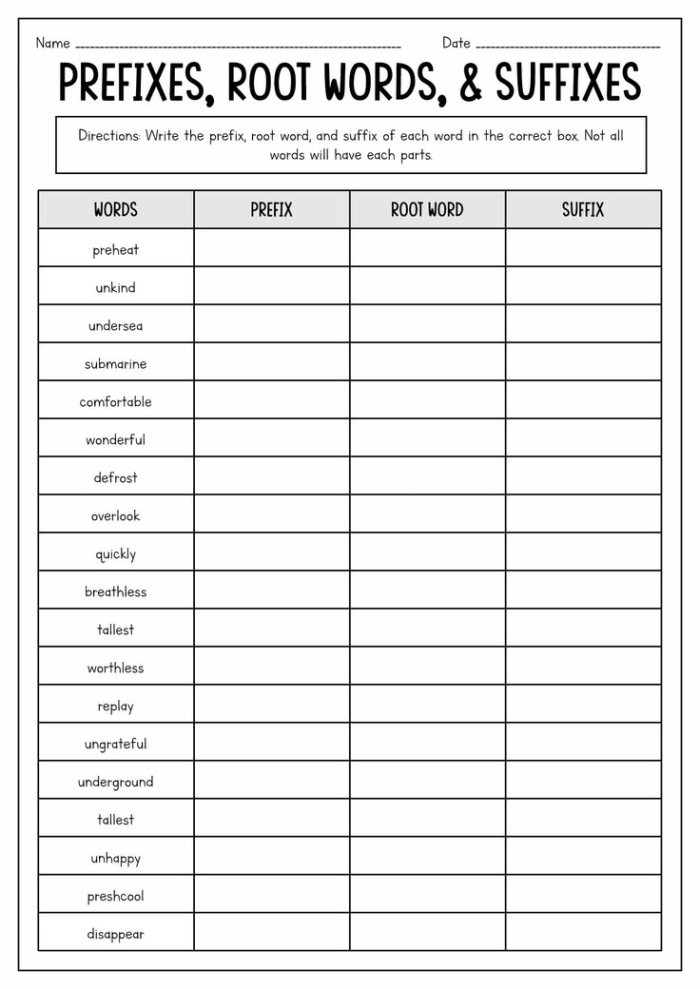
Worksheets designed around this concept help reinforce the skill through repetition. Activities like fill-in-the-blank exercises with themed content or story-based punctuation practice keep students engaged while they work on word construction skills alongside other grammar fundamentals.
When students practice combining prefixes, suffixes, and root words regularly, they develop a vocabulary expansion strategy they’ll use for the rest of their academic careers. This foundation makes every reading experience more independent and rewarding.
Start Practicing with These Worksheets