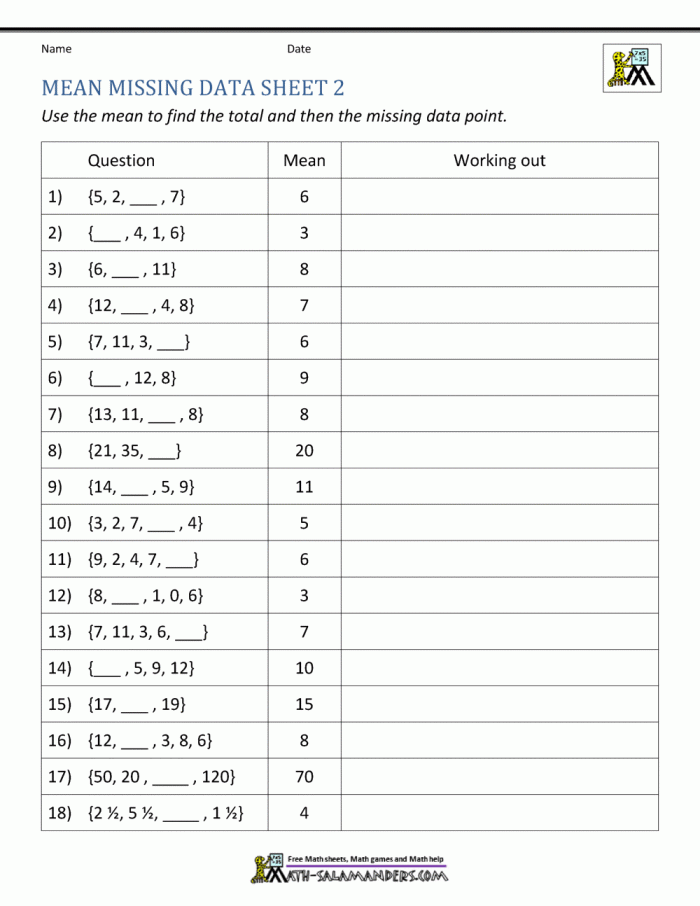
Finding the mean of a data set is one of those foundational skills that sixth-grade students need to master before moving into more complex statistical analysis. When learners understand how to calculate the mean, they’re building the mental math and addition skills that underpin so much of what comes later in mathematics.
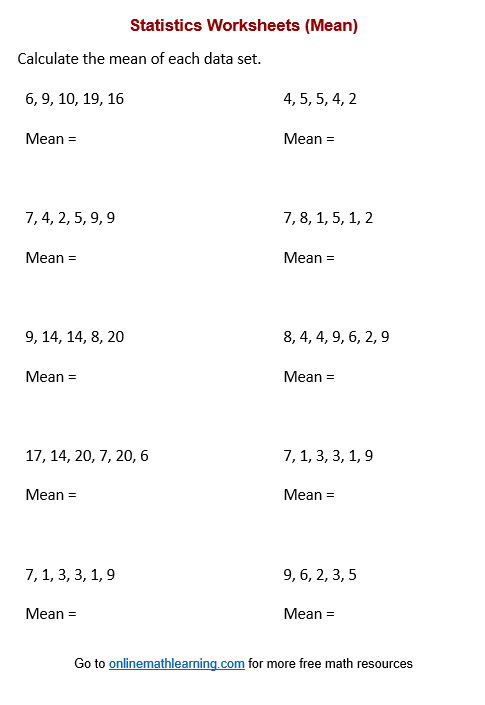
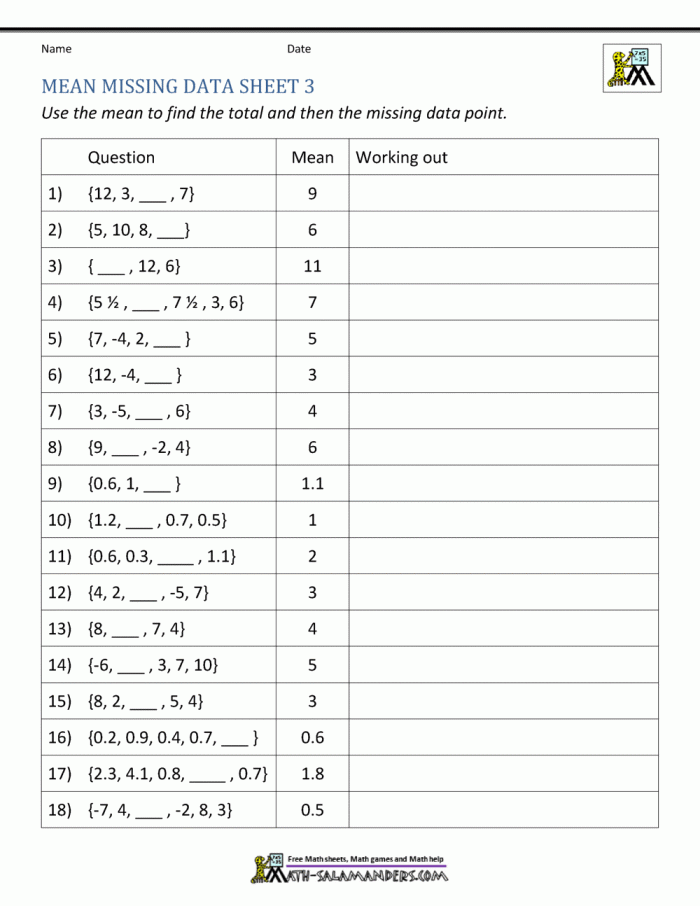
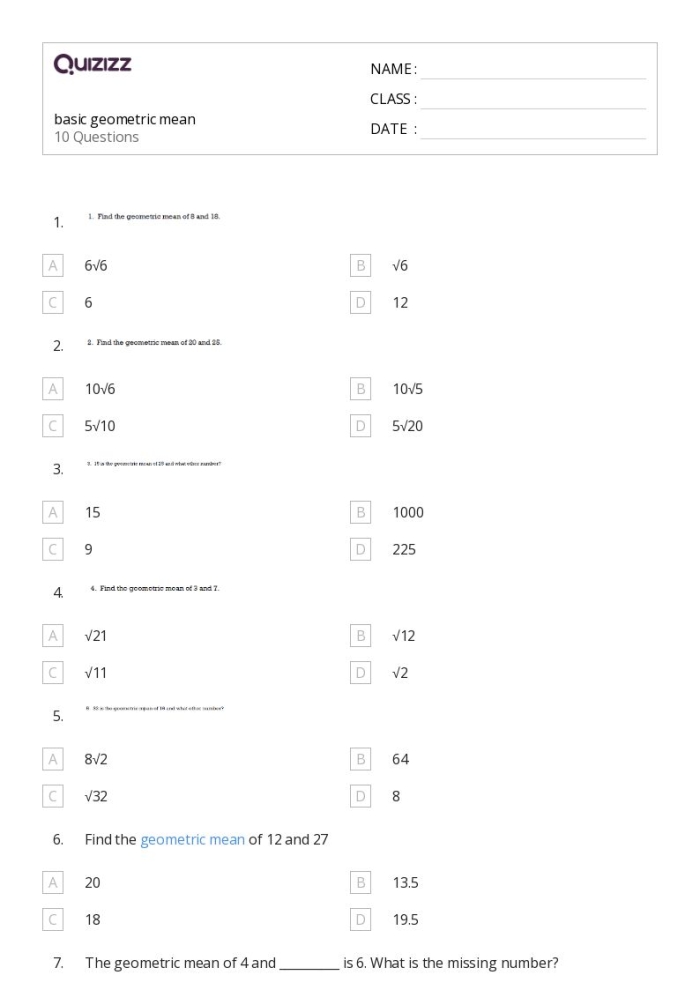
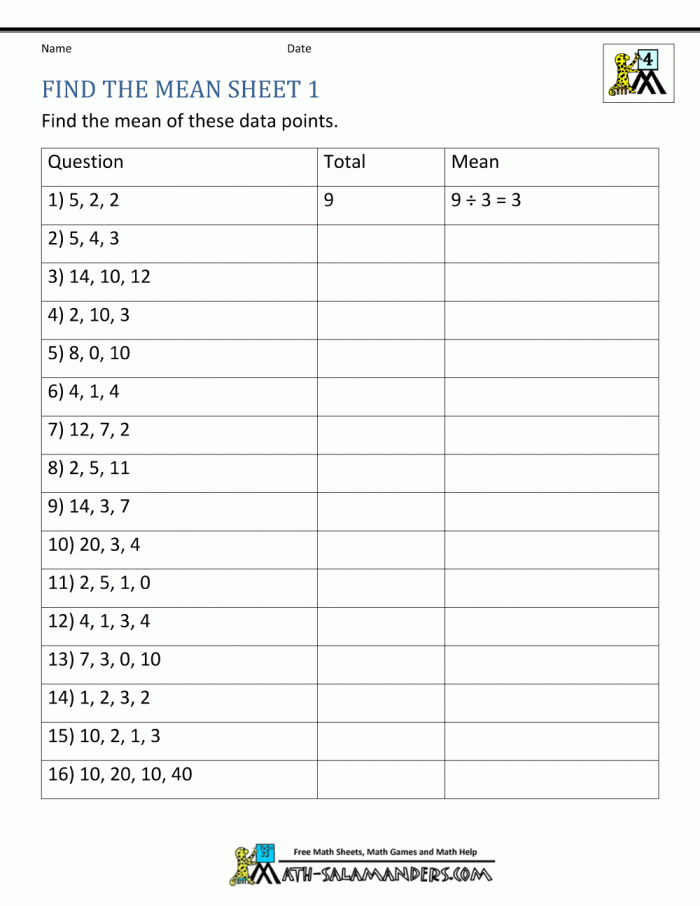
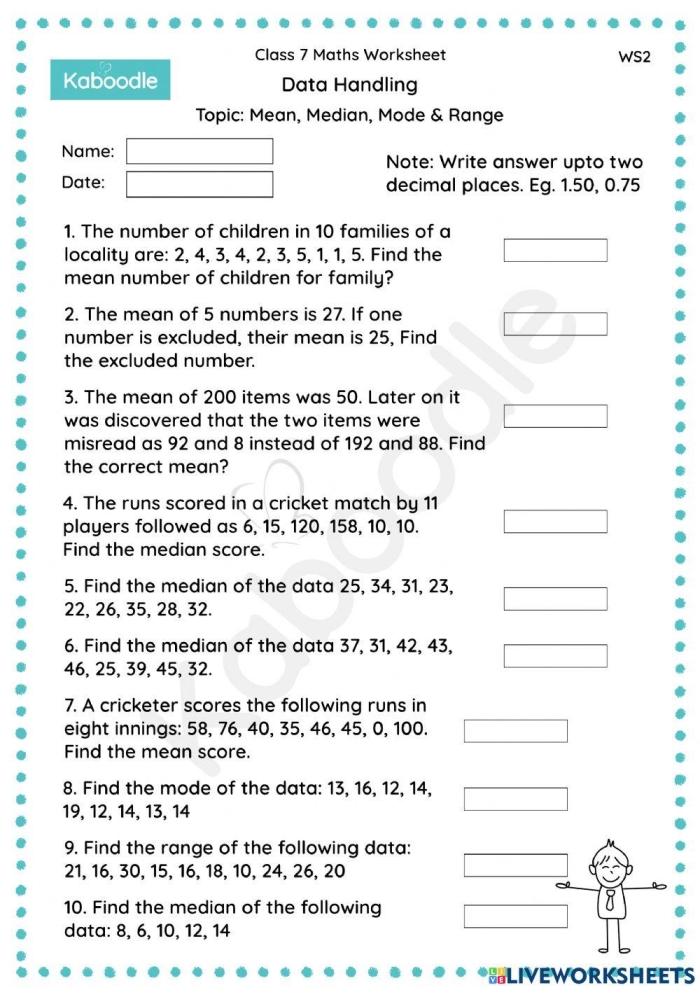
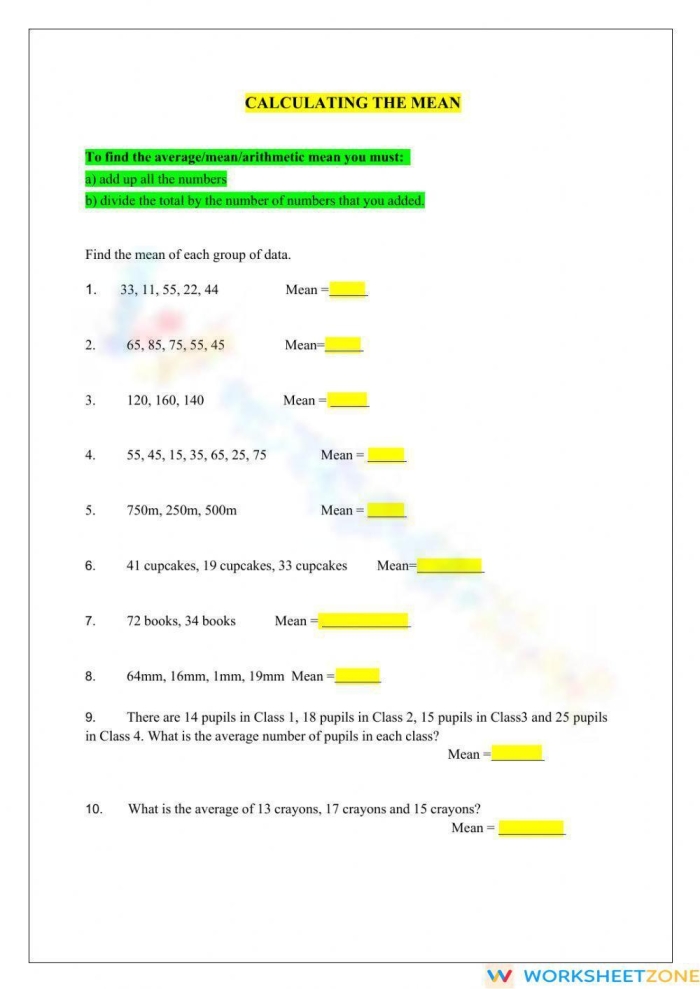
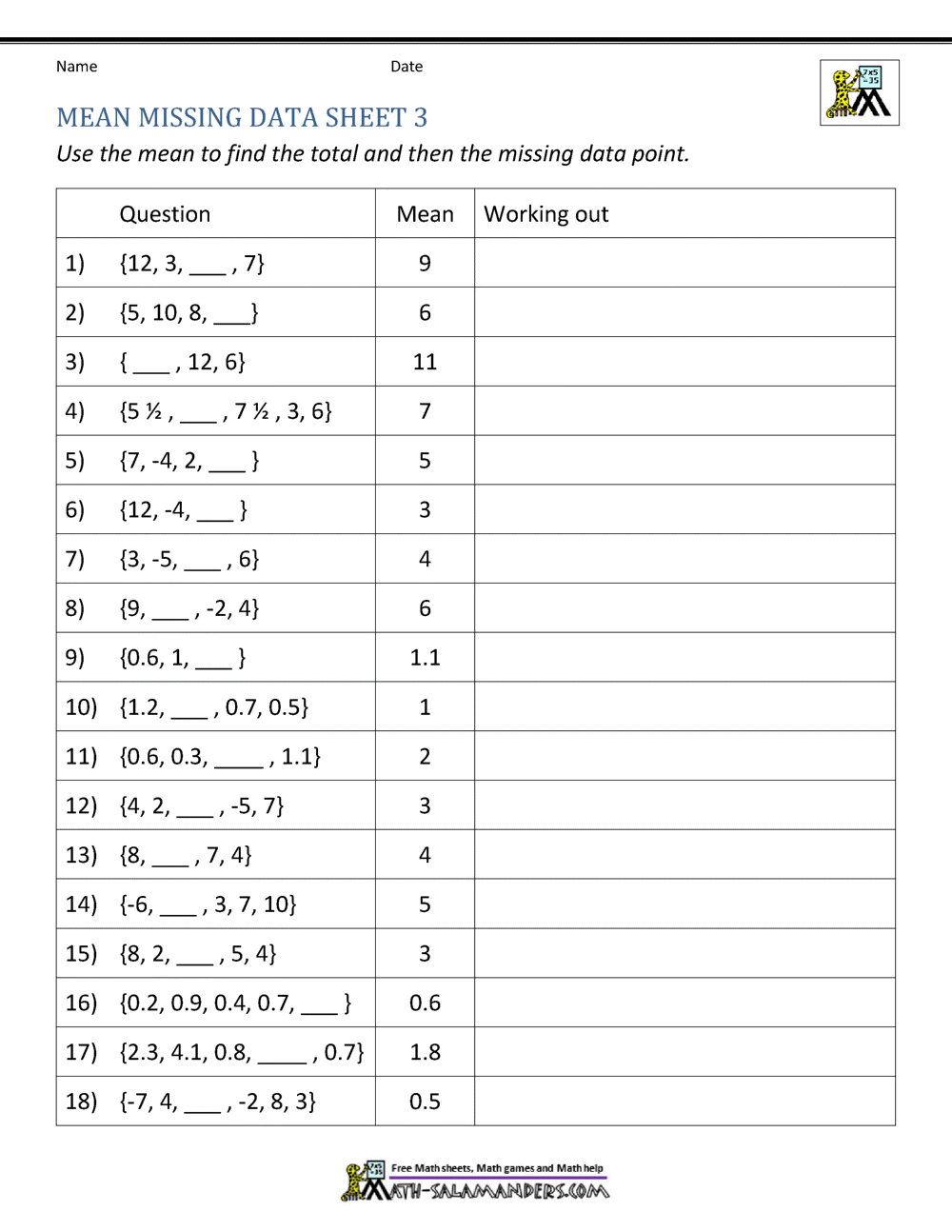
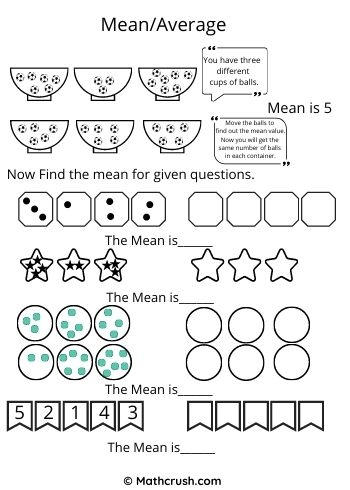
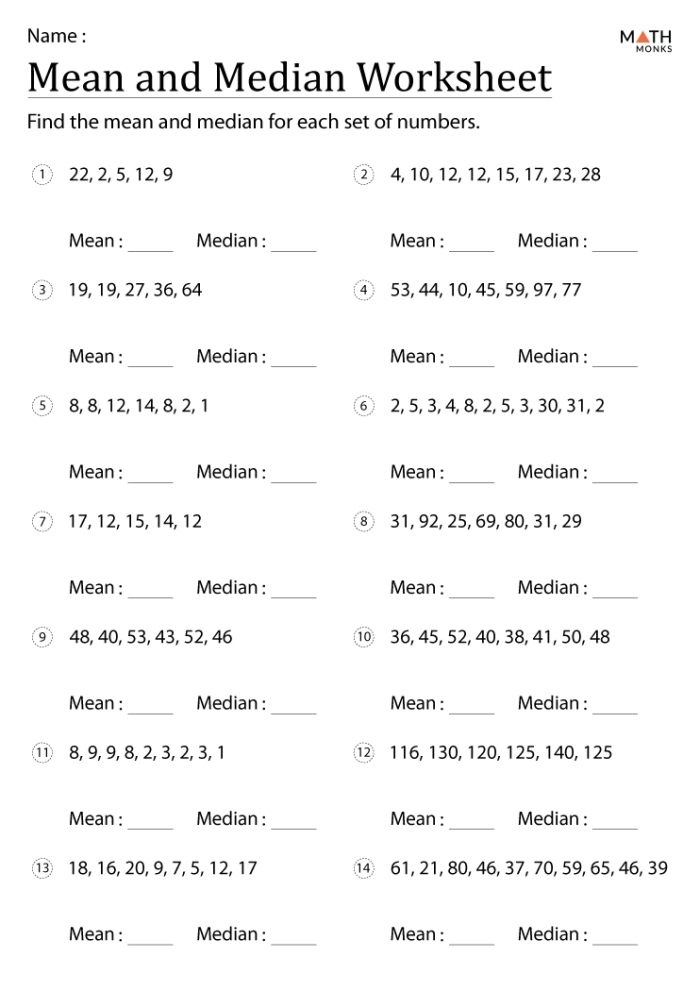
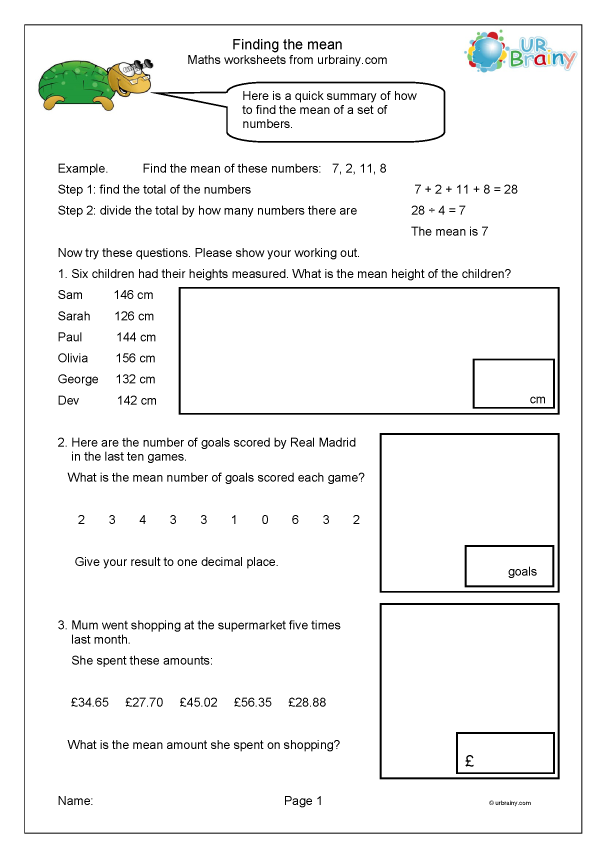
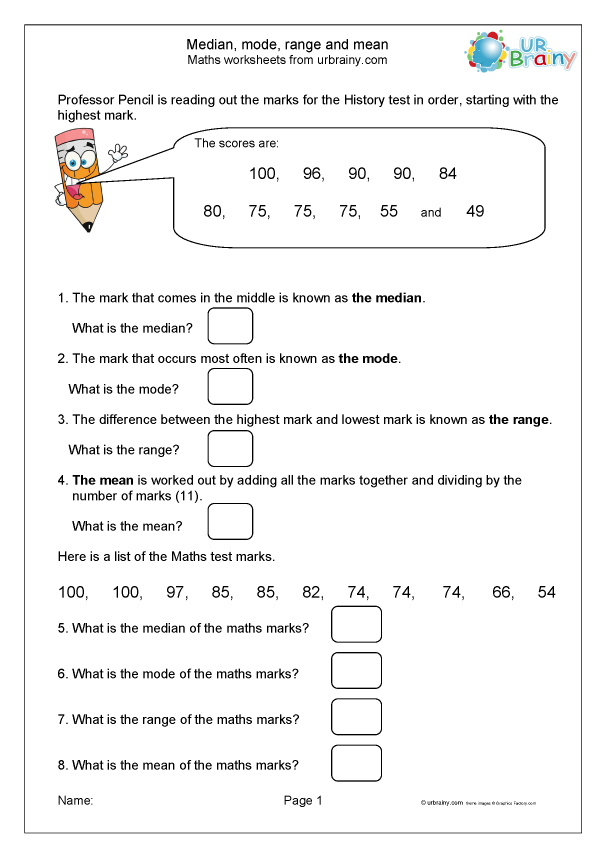
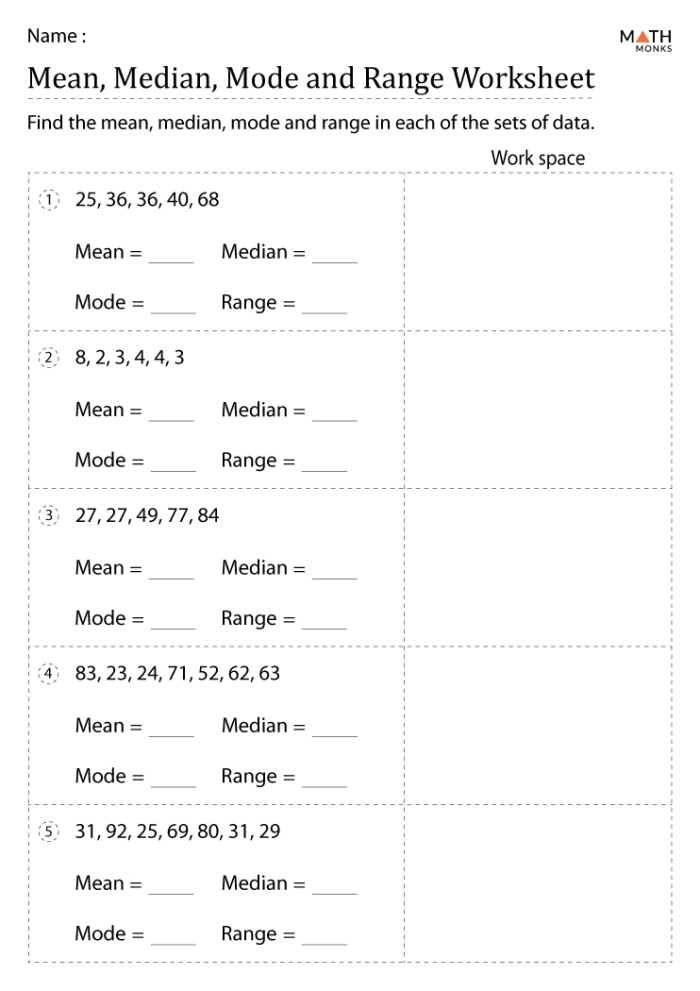
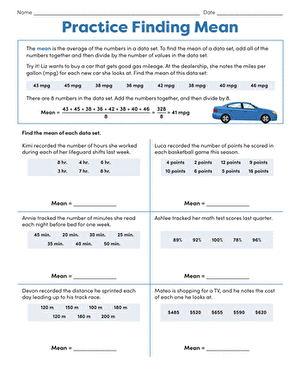
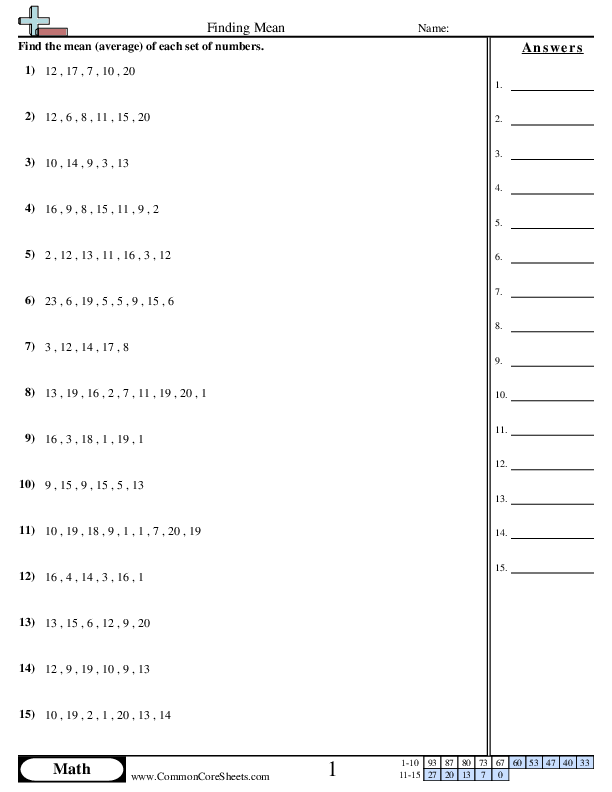
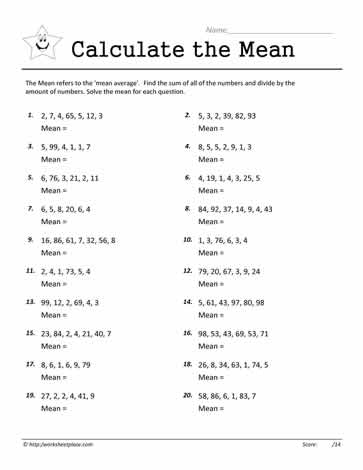
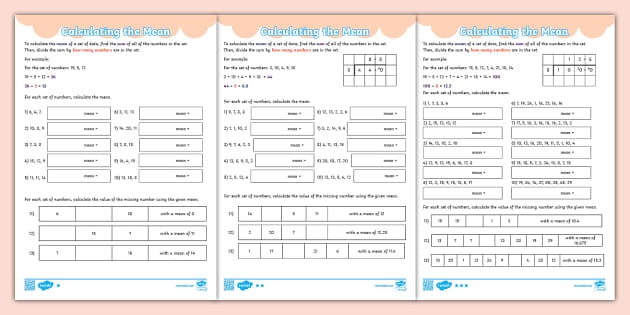
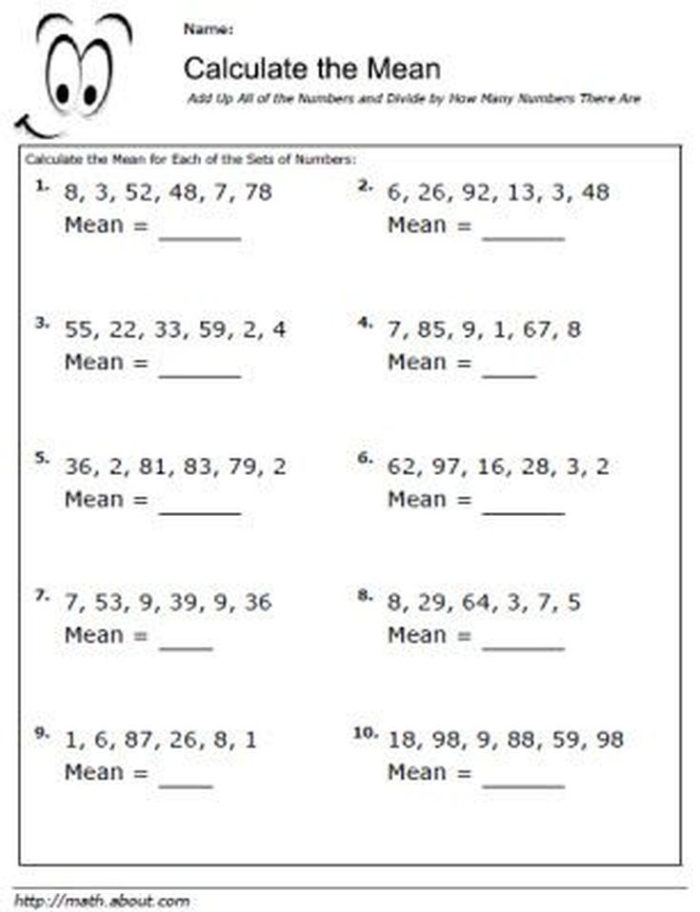
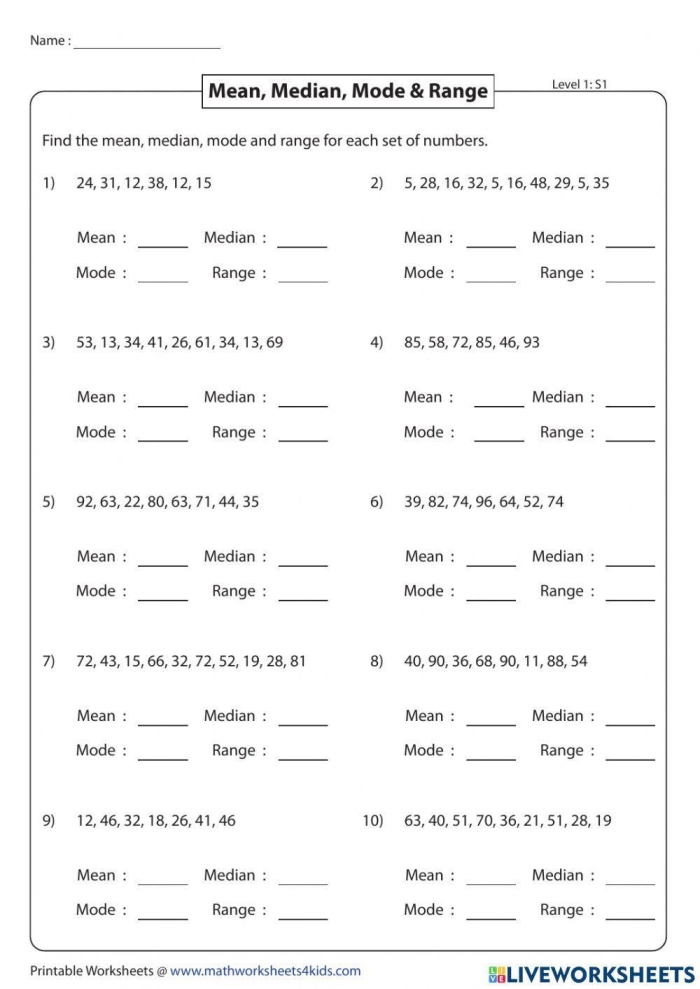
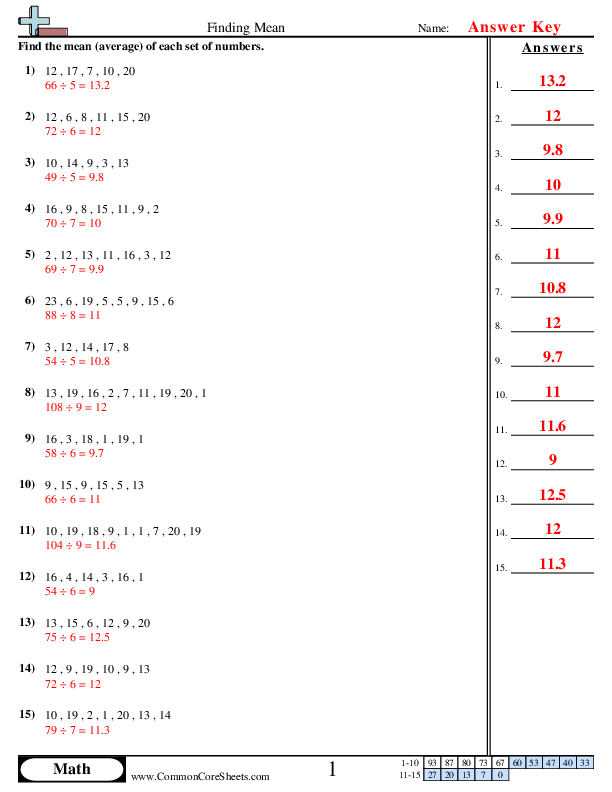
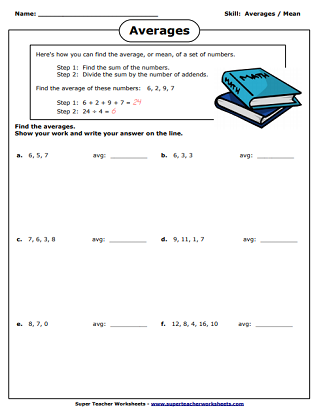
The mean, or average, requires students to add all values in a data set and then divide by the number of values. This process combines two critical operations: addition and division. For sixth graders still solidifying their grasp of these fundamentals, working through multiple practice problems helps cement the procedure until it becomes automatic. A well-designed worksheet gives them the repetition they need without the tedium of solving identical problems over and over.
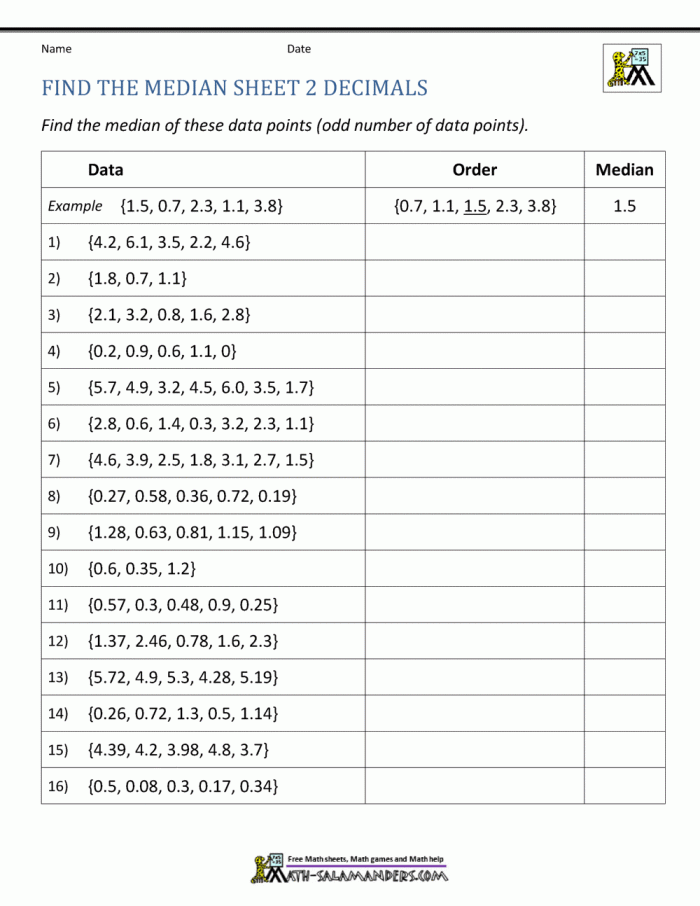
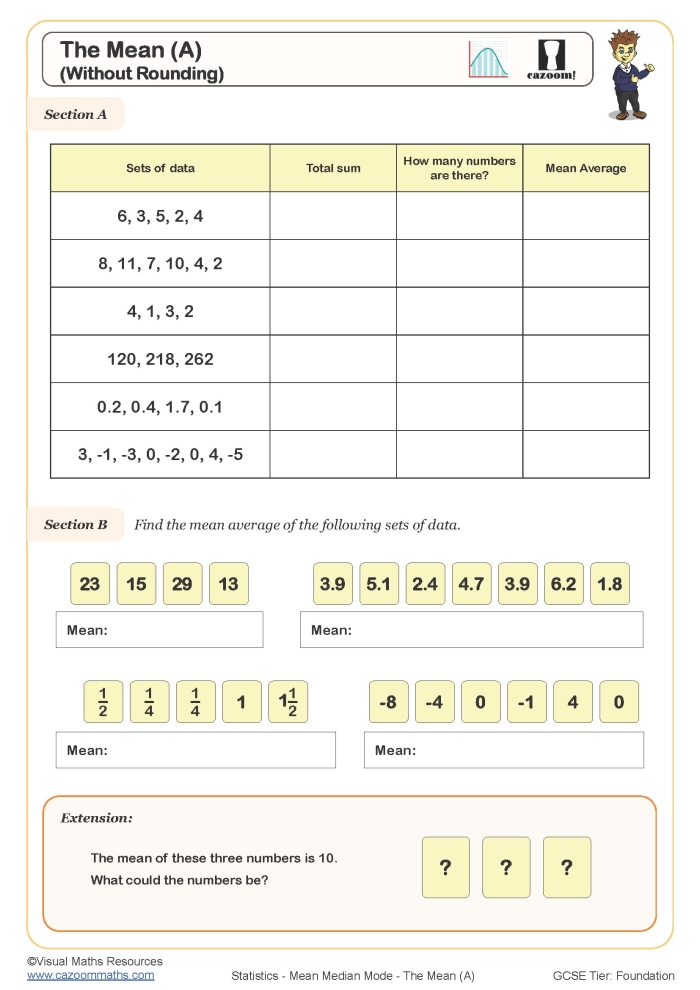
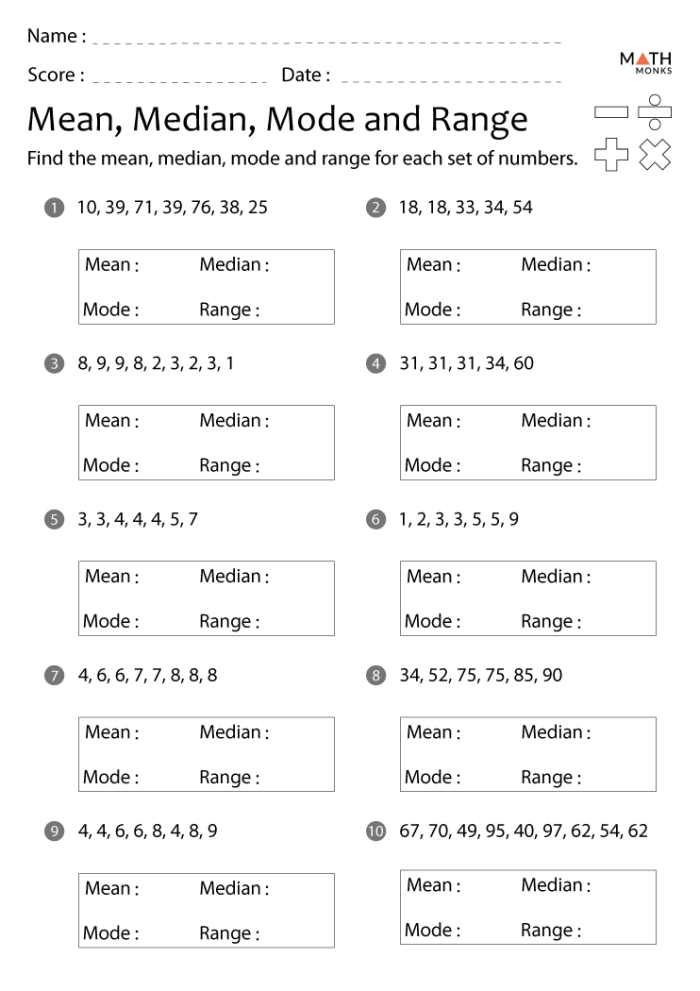
What makes a good practice worksheet is variety in the data sets themselves. Some problems might involve whole numbers only, while others introduce decimals or negative numbers. Students benefit from seeing how the mean behaves differently depending on whether outliers are present in the data. If one unusually large or small value sits in the set, the mean shifts accordingly, teaching learners to think critically about what the average actually represents.
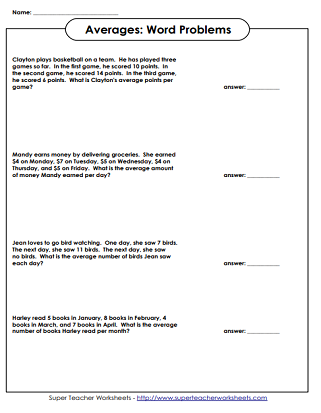
Beyond isolated computation, students should see how finding the mean connects to real-world scenarios. A worksheet might ask them to calculate the mean rainfall across several months, the average test scores in a class, or the typical number of hours spent on homework. These contexts make the skill feel purposeful rather than abstract.
Pairing this practice with other sixth-grade math worksheets strengthens overall numeracy. Resources like those covering data and graphing skills or decimal operations complement mean-finding activities by reinforcing the broader toolkit students need for data literacy.
Try These Printable Worksheets