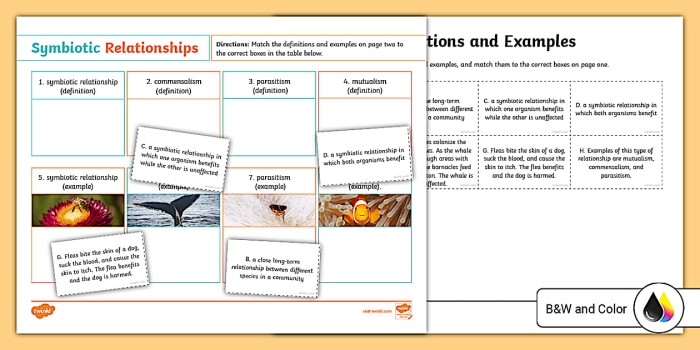
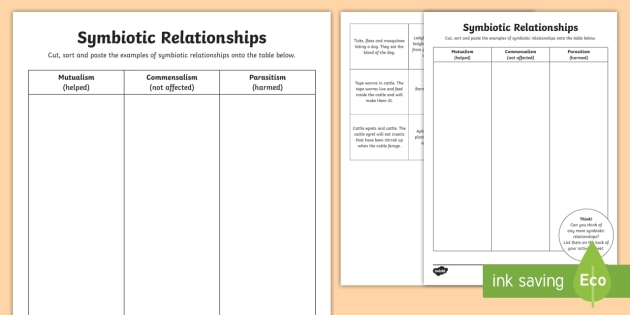
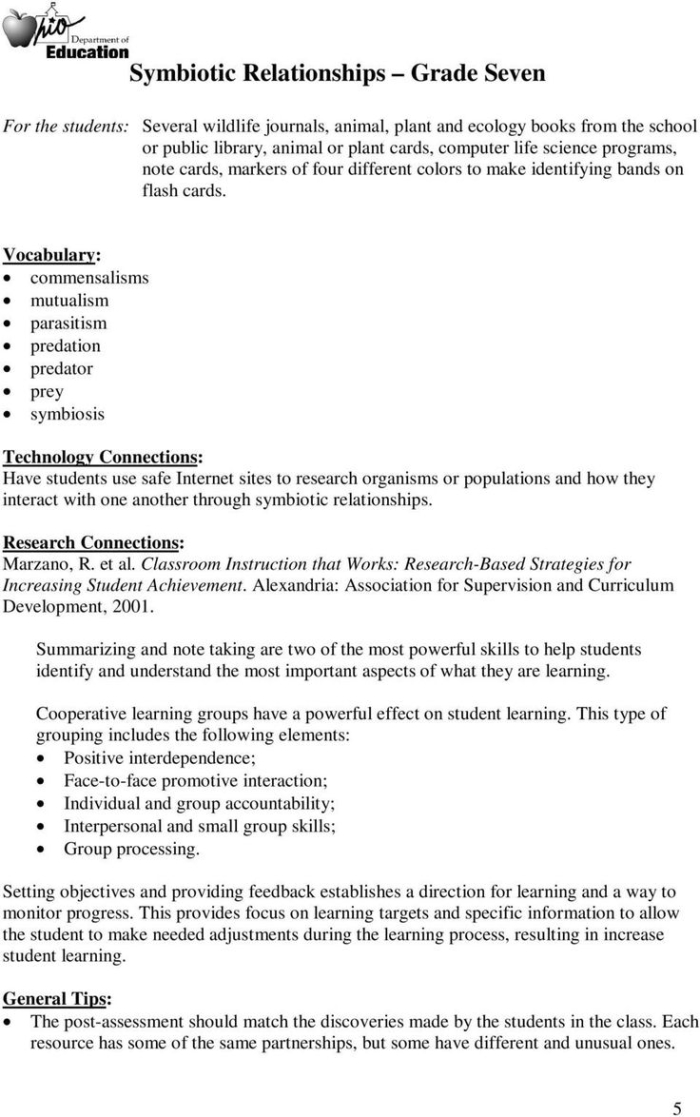
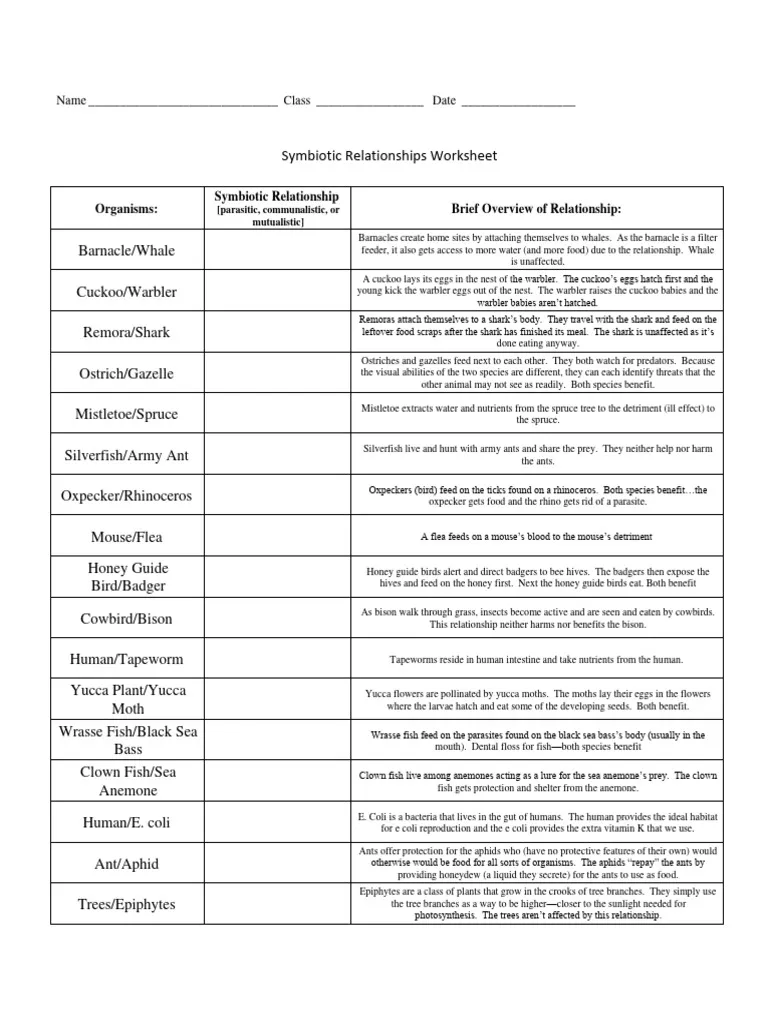
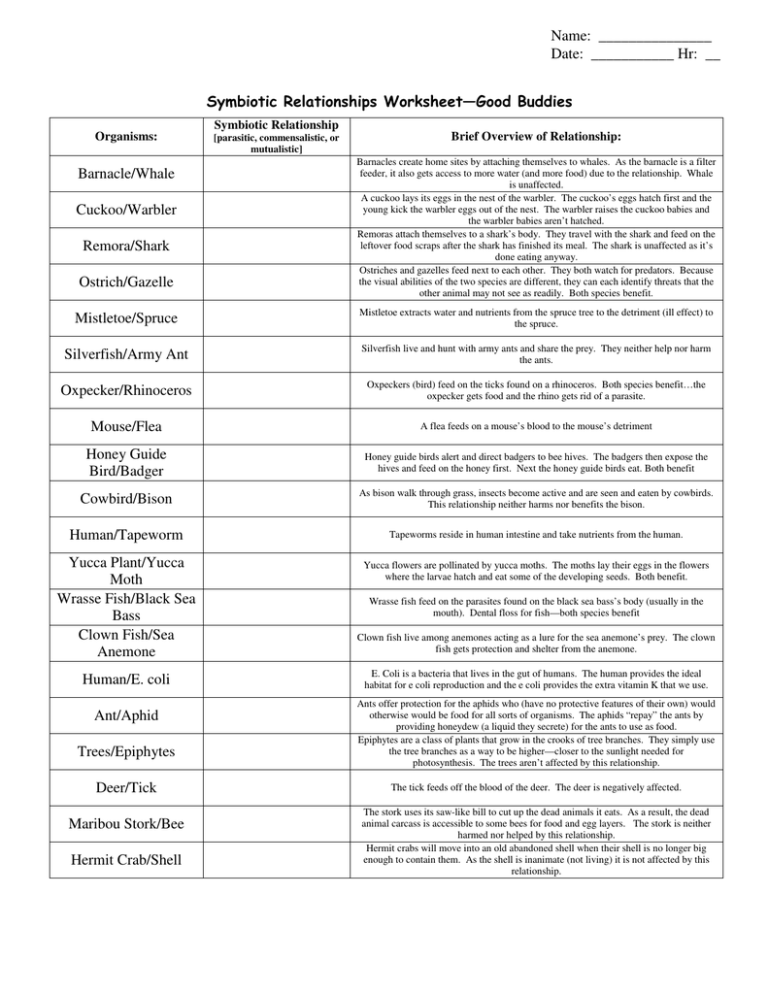
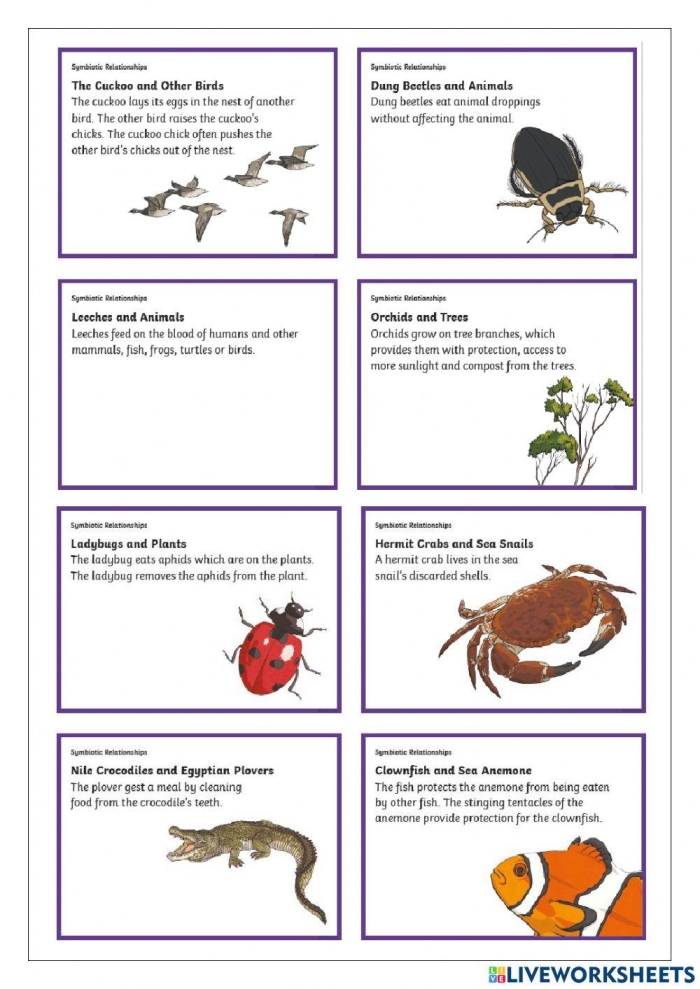
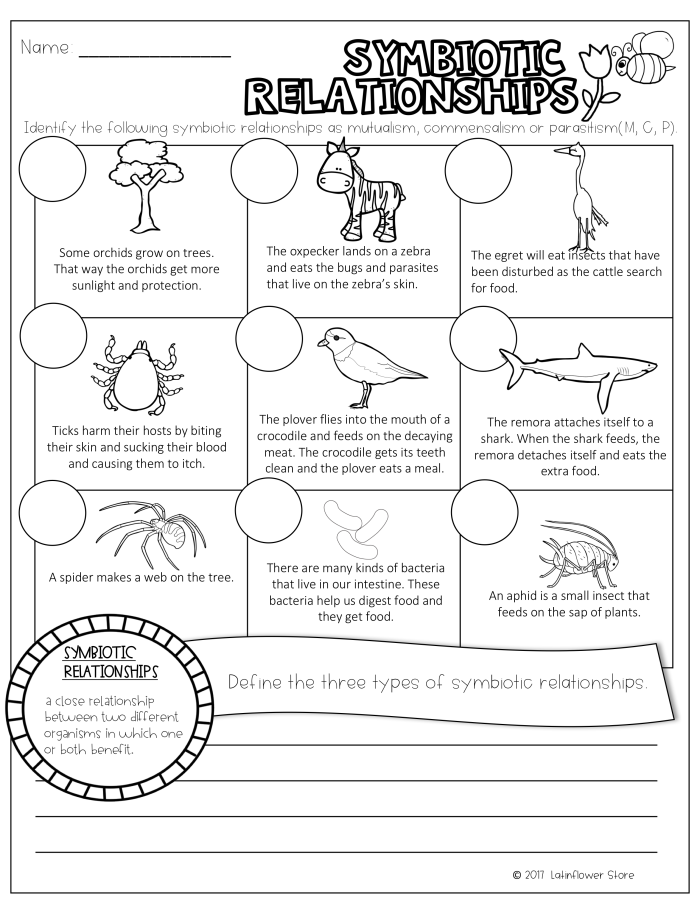
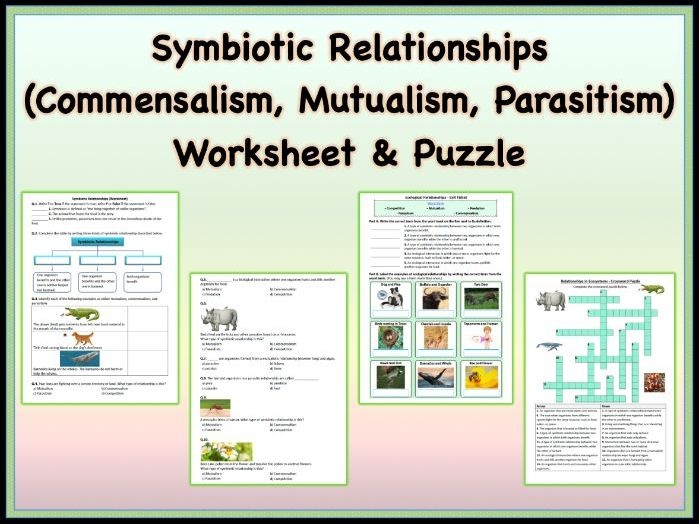
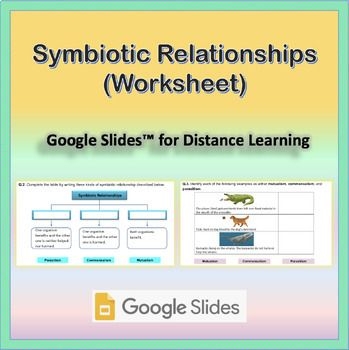
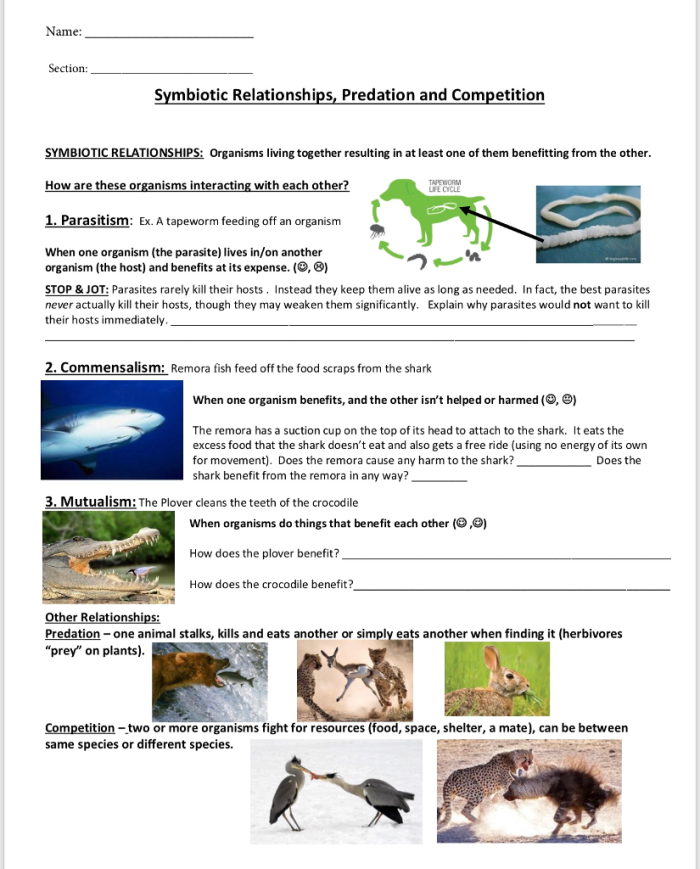
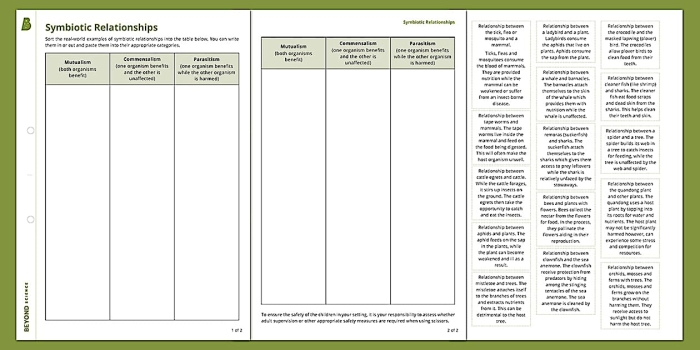
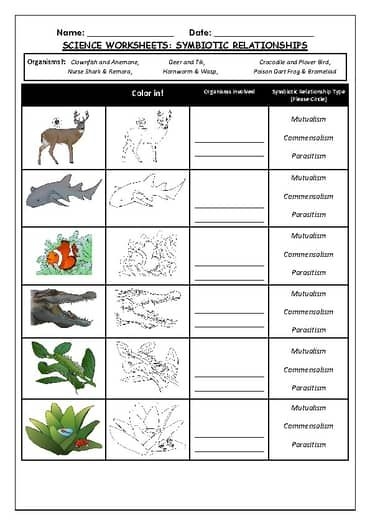
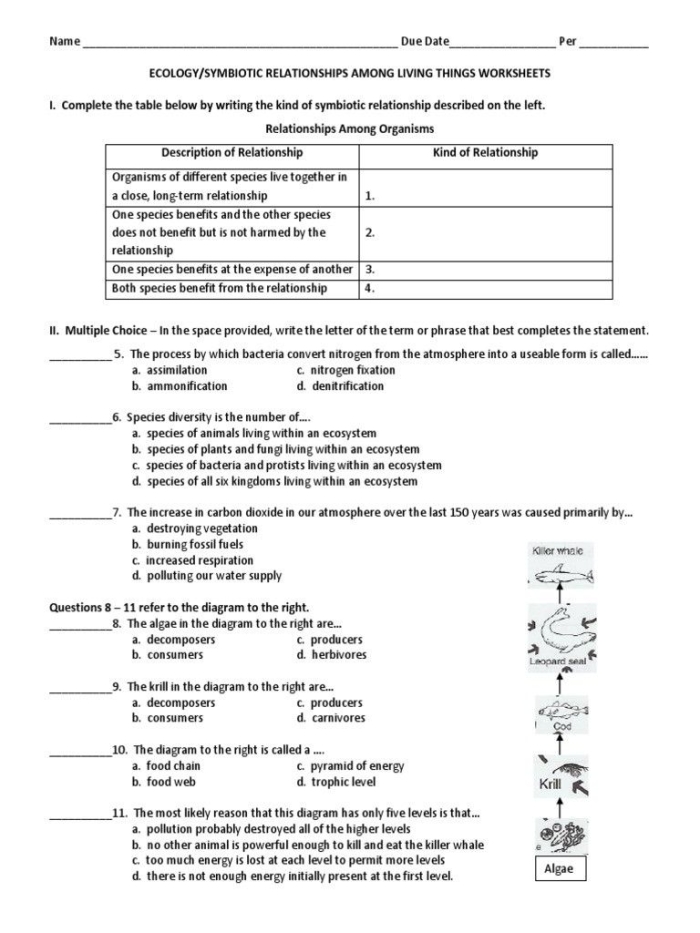
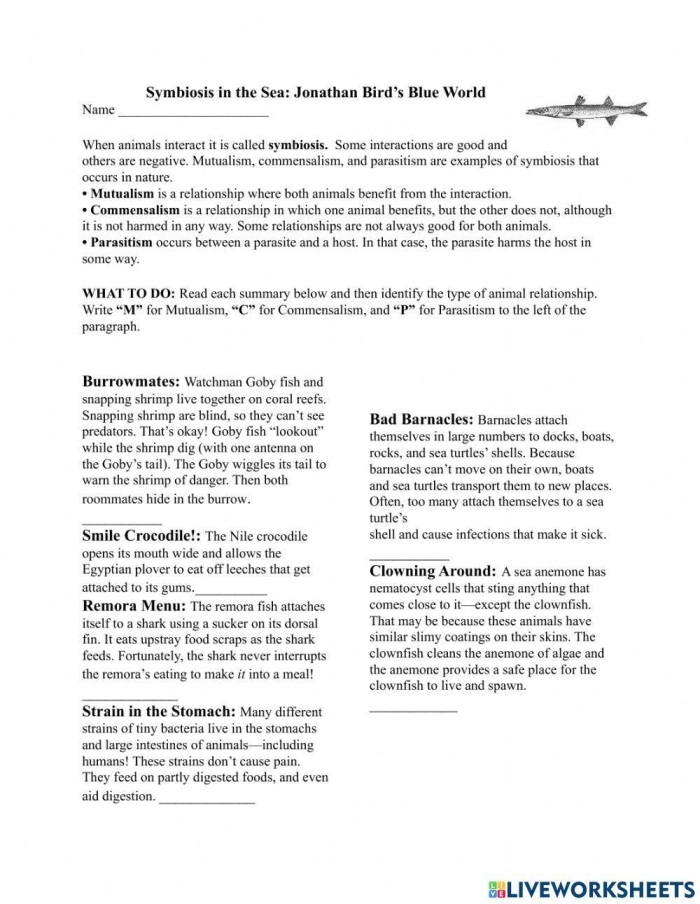
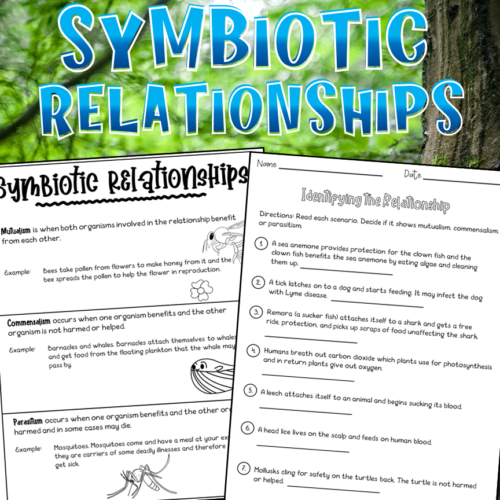
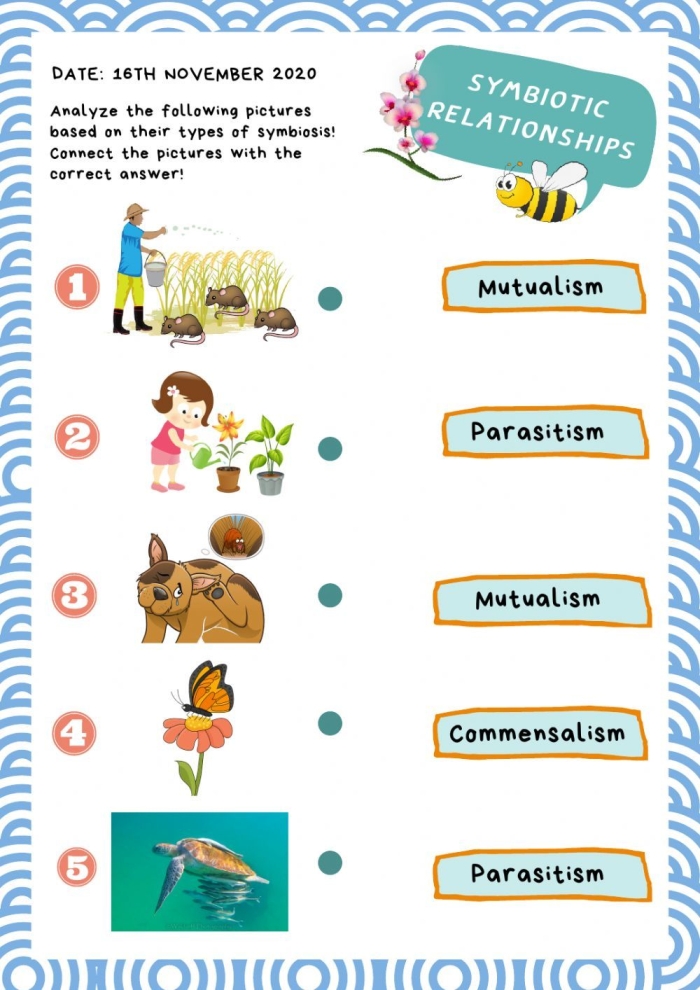
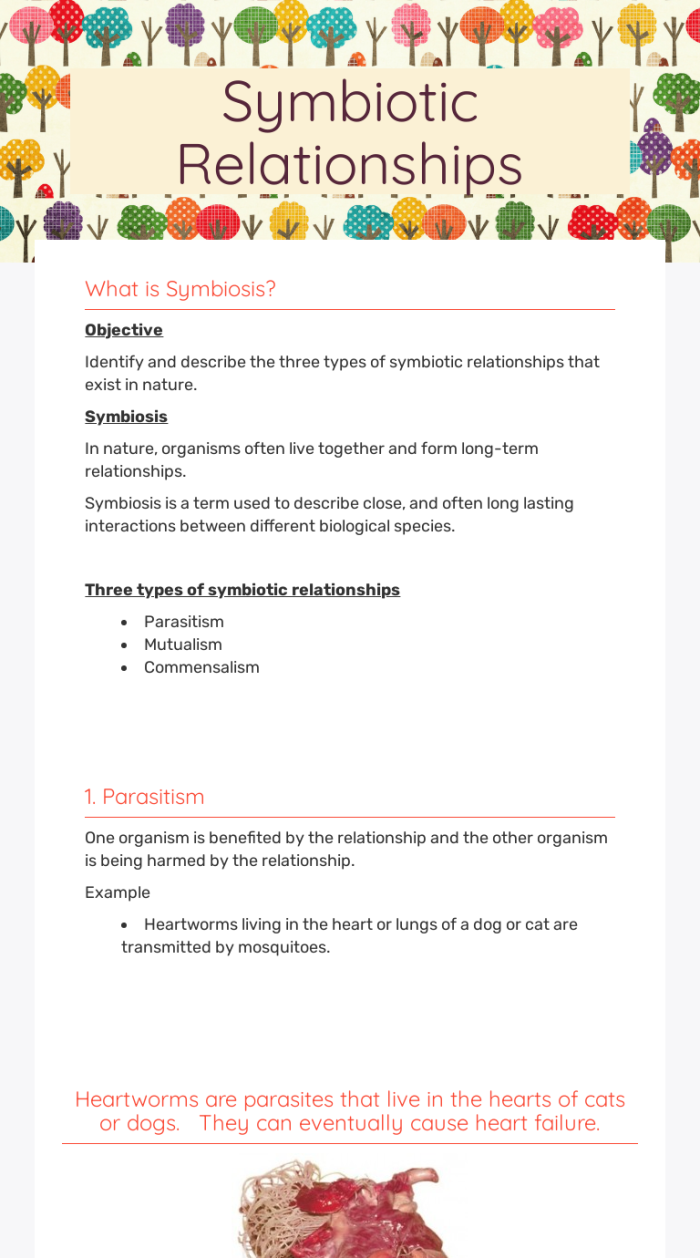
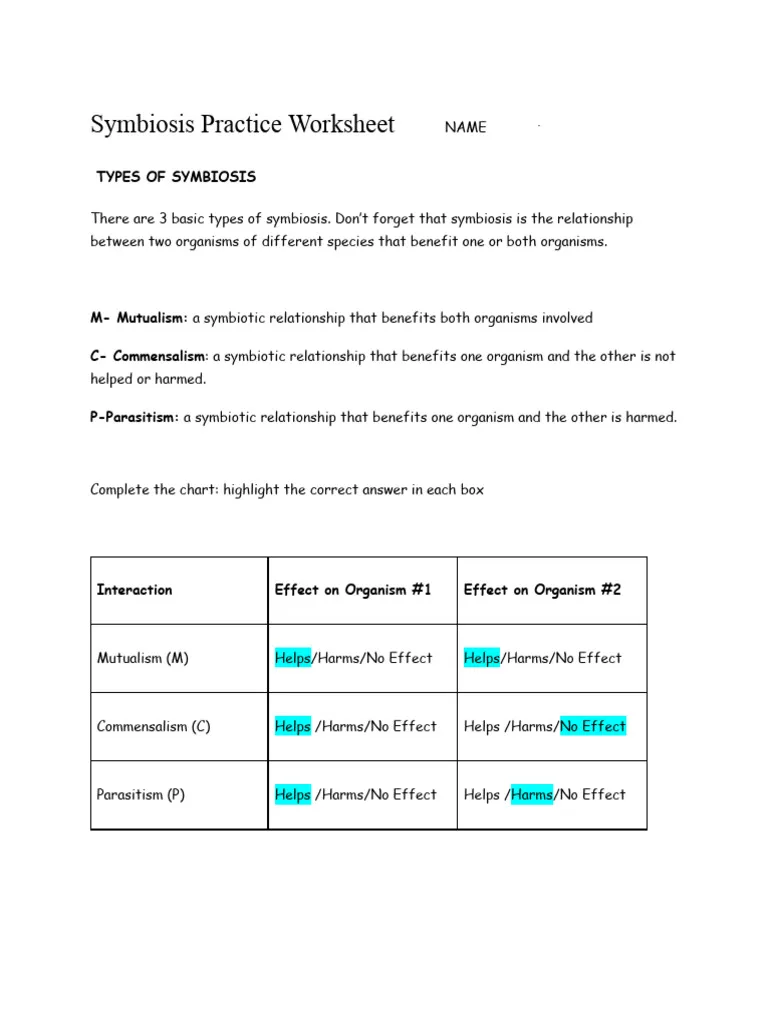
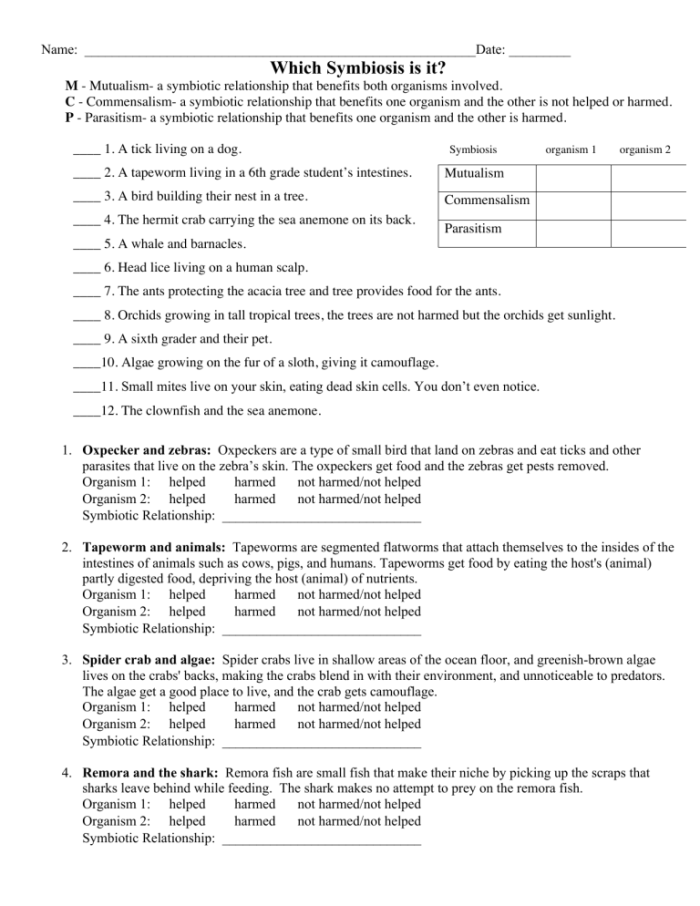
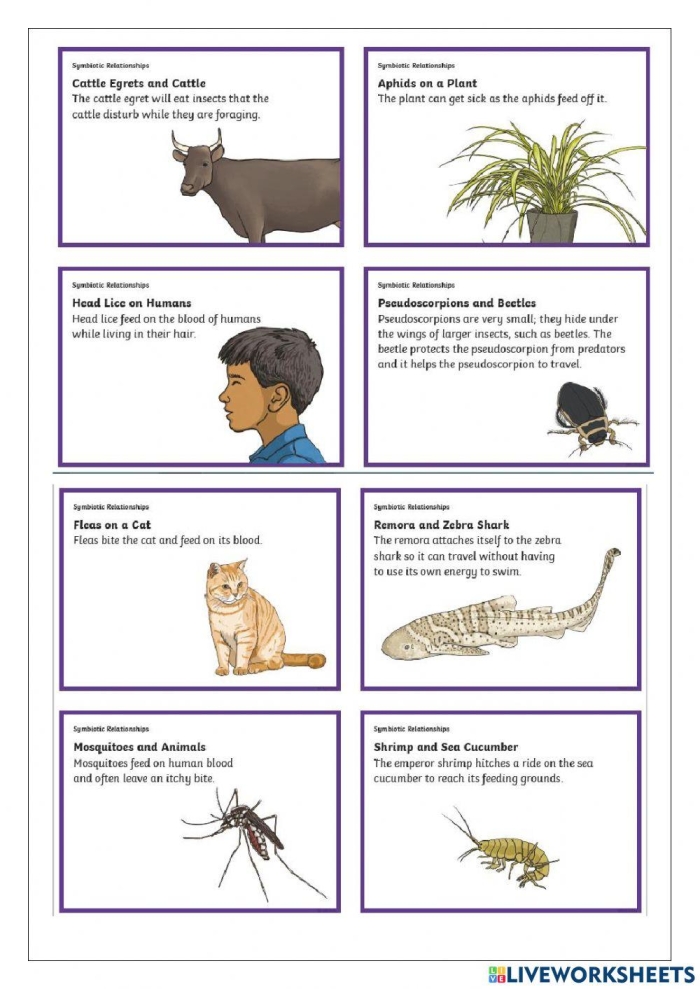
Understanding symbiotic relationships is essential for sixth graders studying life sciences. These relationships illustrate how different species interact within ecosystems, showcasing the complexity and interdependence of life. In a typical life science worksheet, students explore three primary types of symbiosis: mutualism, commensalism, and parasitism. Each type plays a unique role in maintaining ecological balance.
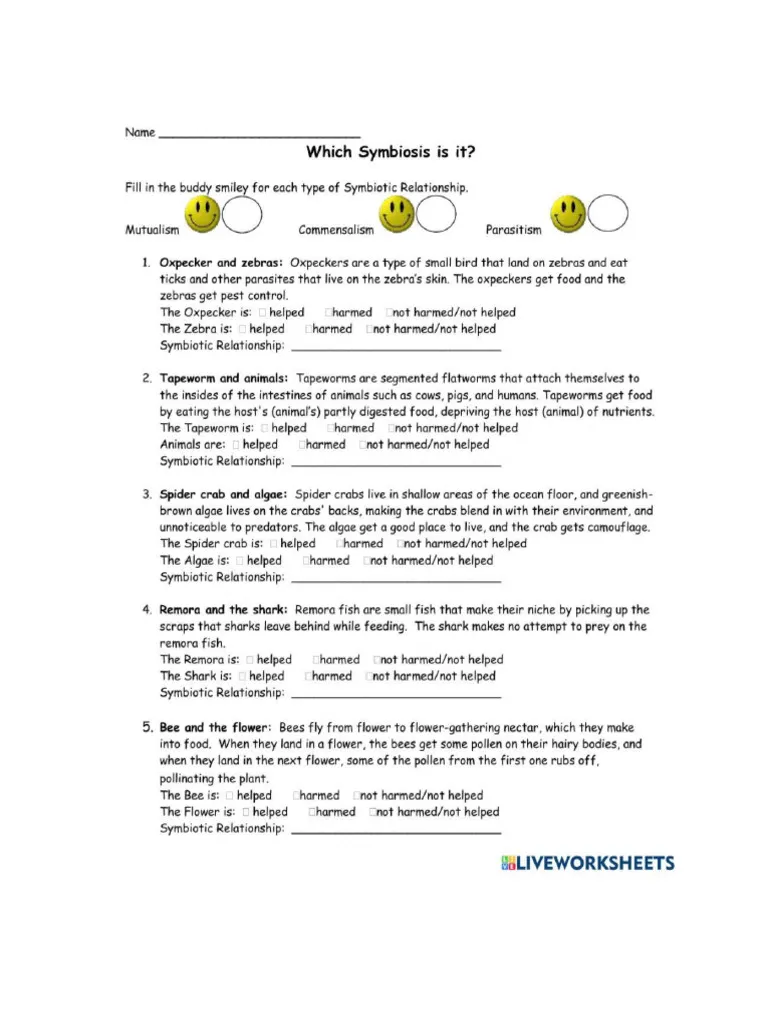
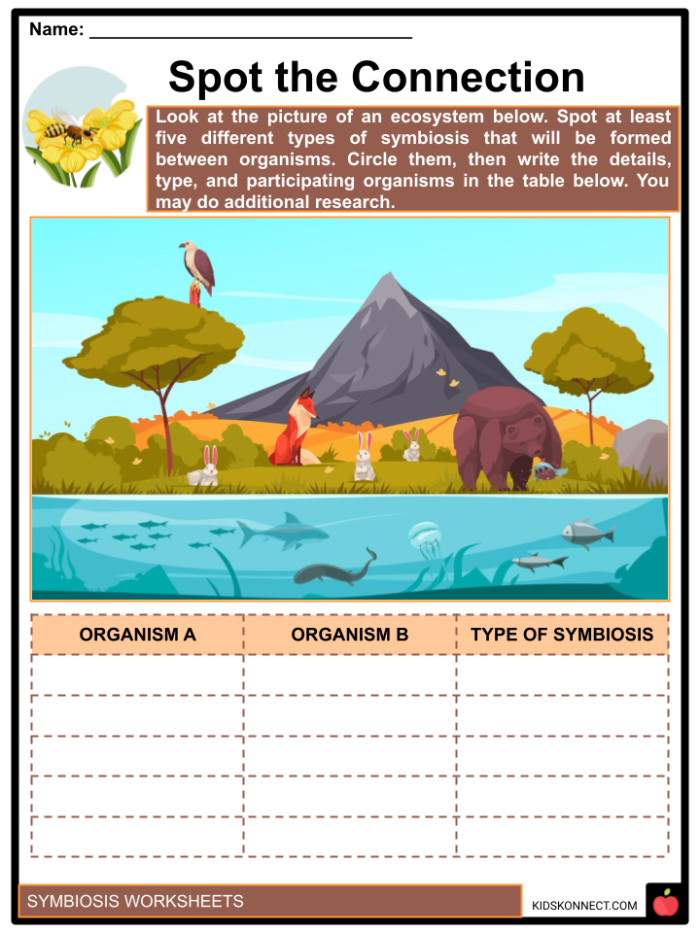
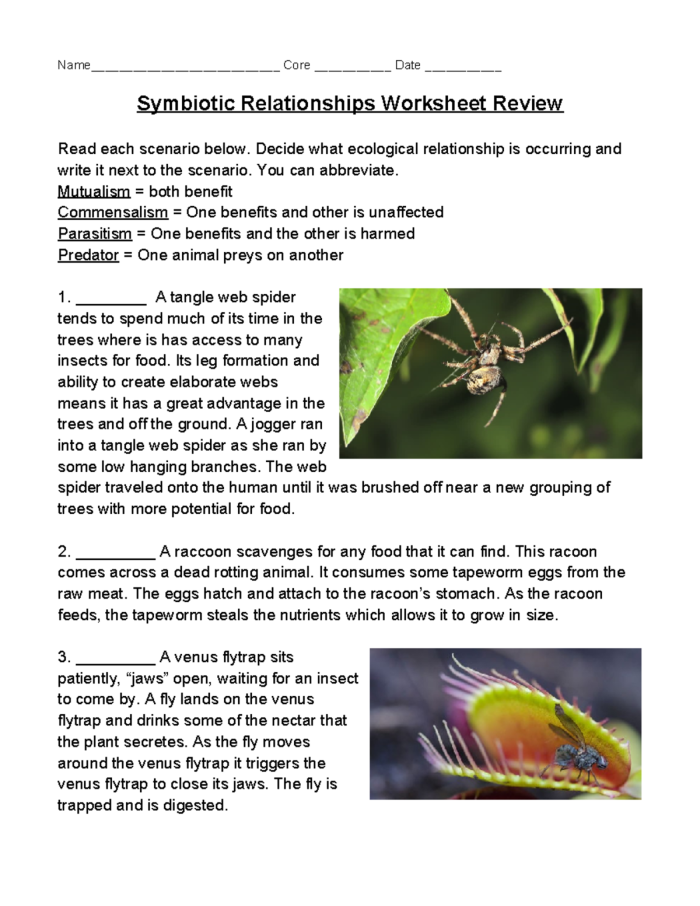
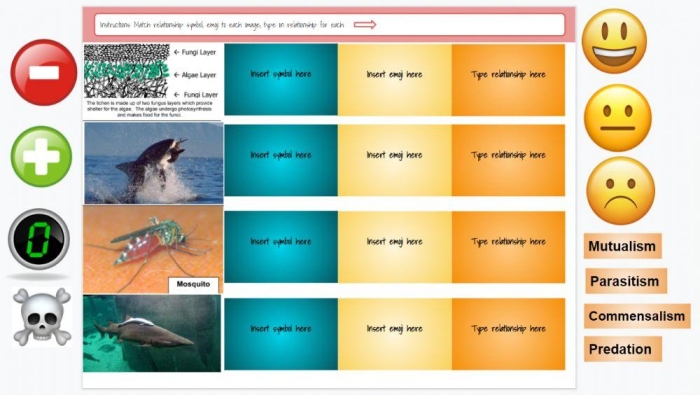
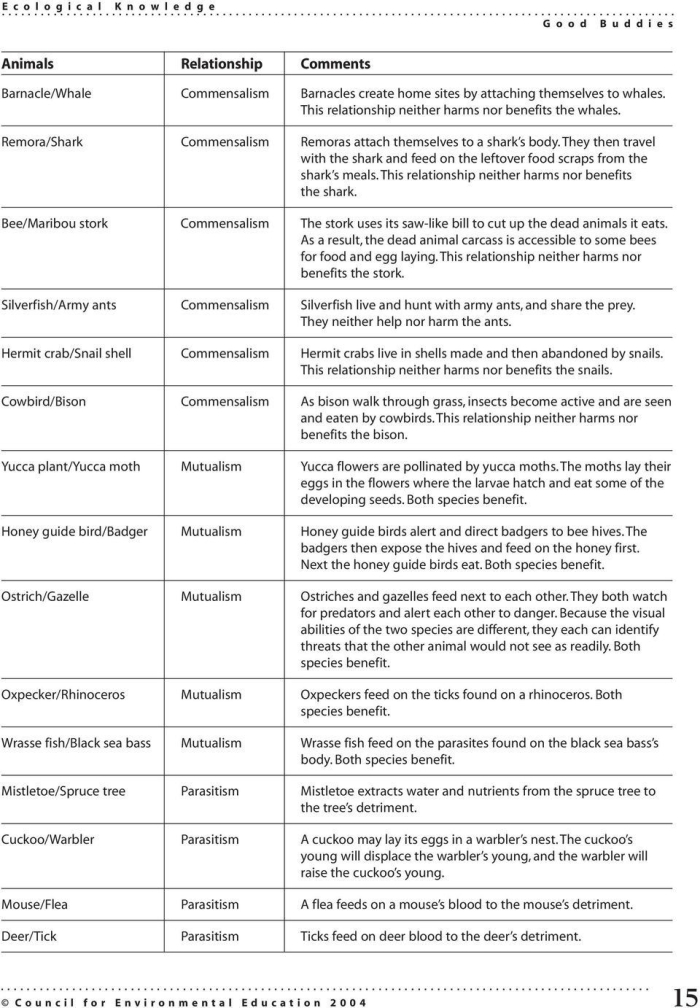
In mutualism, both species benefit from the interaction. A classic example is the relationship between bees and flowering plants. Bees collect nectar for food while simultaneously pollinating the plants, which helps them reproduce. This relationship demonstrates how cooperation can enhance survival for both parties involved.
Commensalism, on the other hand, involves one species benefiting while the other is neither helped nor harmed. An example is barnacles attaching themselves to whales. The barnacles gain a free ride through nutrient-rich waters, while the whale remains unaffected by their presence. This type of relationship provides insight into how organisms can coexist in their environments.
Parasitism presents a different dynamic, where one organism benefits at the expense of another. A common example is ticks feeding on mammals. While the tick gains nourishment, the host may suffer from health issues. This relationship highlights the darker side of symbiosis, emphasizing the struggles for survival within ecosystems.
These concepts are not just theoretical; they have real-world implications. For instance, understanding these relationships can help students grasp the importance of biodiversity and conservation efforts. As they work through these concepts in printable symbiotic relationships worksheets, they develop critical thinking skills and a deeper appreciation for the natural world.
By engaging with these worksheets, students not only learn about symbiotic relationships but also how these interactions can be quantified through decimals, linking their math skills with their understanding of biology. Exploring these connections fosters a more holistic view of science education.
To learn more about symbiotic relationships and access a variety of worksheets designed for sixth-grade students, check out the resources available at Lumina Worksheets.
Start Practicing with These Worksheets