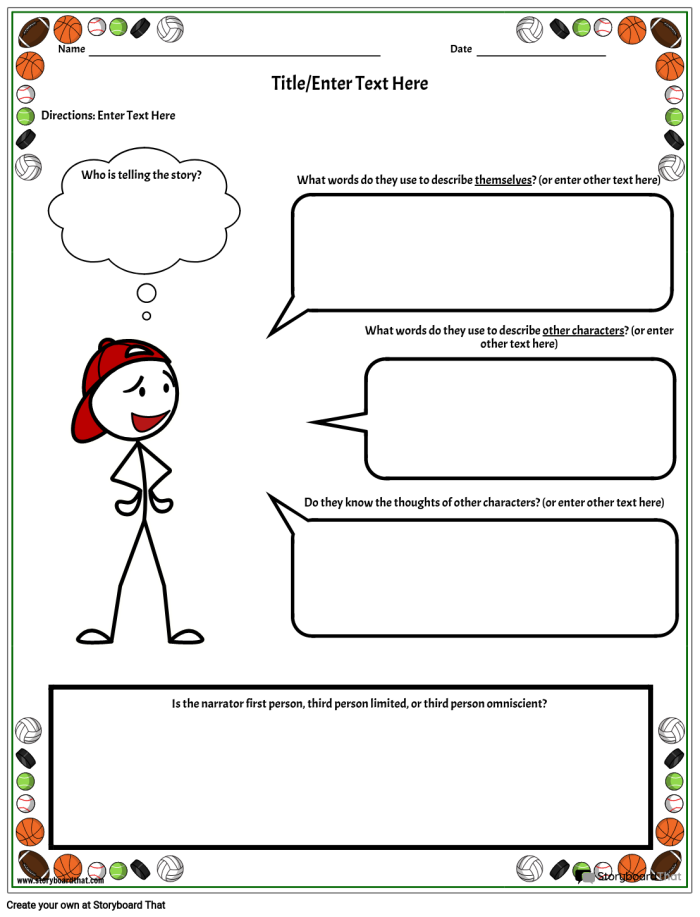
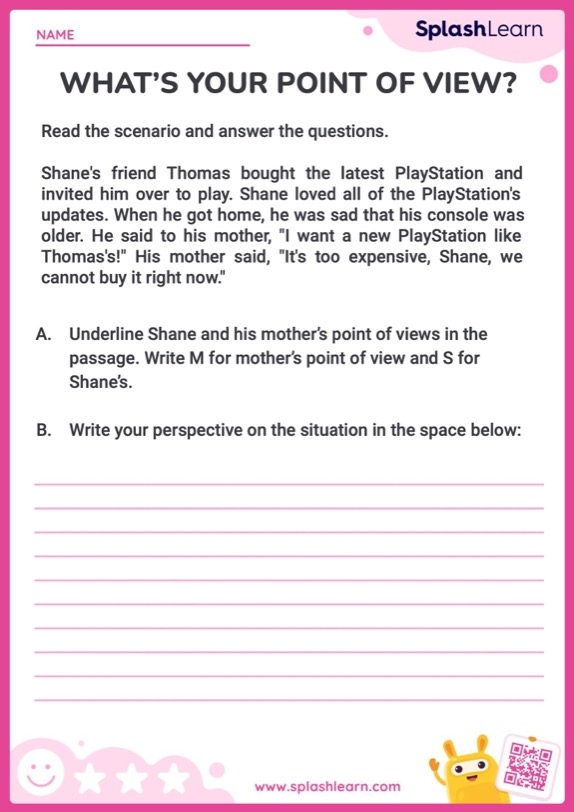
When second grade students pick up a book, they rarely stop to think about who is actually telling the story. Yet this question, “Who is telling this story?” becomes the foundation for understanding everything that happens on the page. Teaching young readers to identify point of view early on helps them become more thoughtful, engaged readers who understand that every story comes from a specific perspective.
Point of view determines what information readers receive and how they interpret events. A story told from a character’s perspective feels different from one narrated by an outside observer. Second graders benefit from hands-on practice that helps them recognize these differences. When students actively work with point of view exercises, they start noticing patterns in how authors choose to tell their stories.
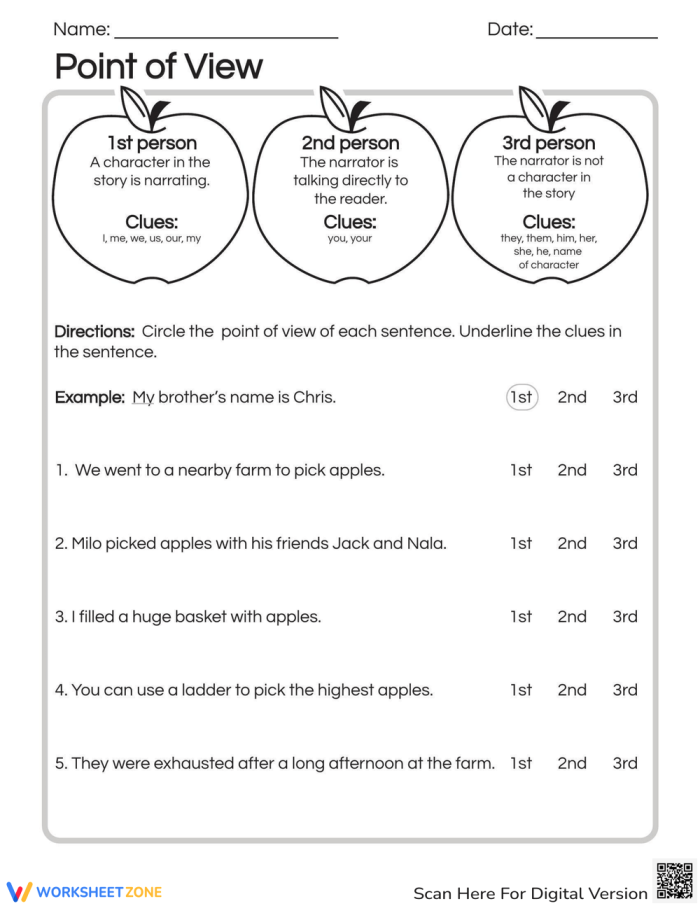
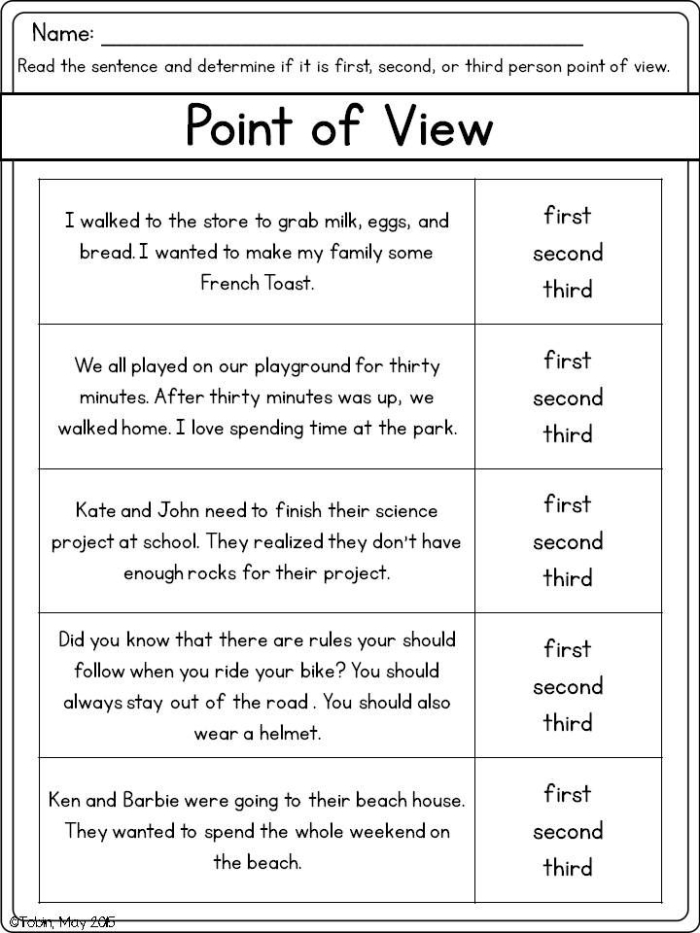
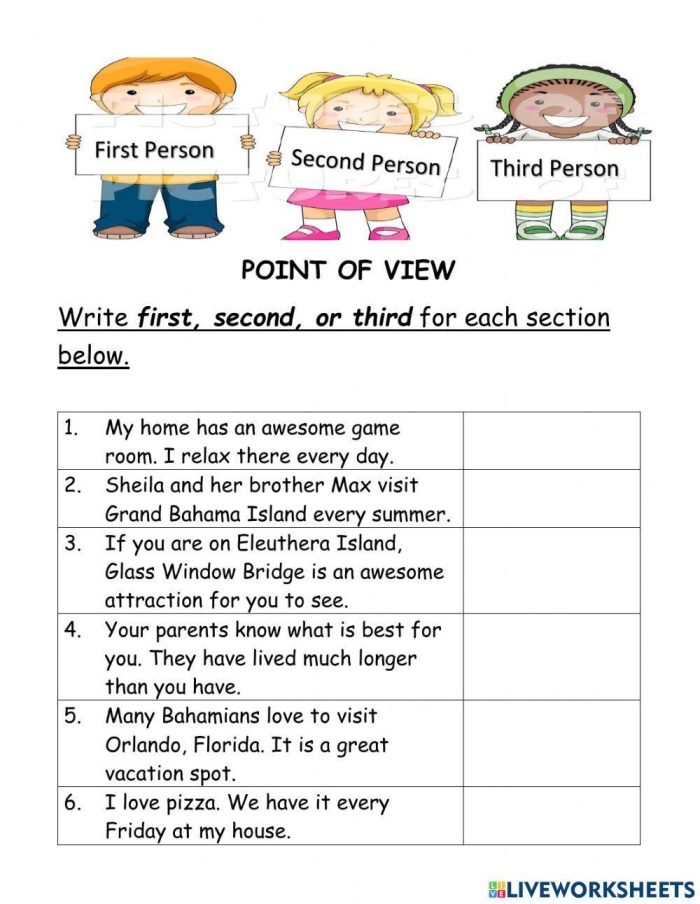
The most effective approach combines identification with creation. Students first learn to spot point of view in existing sentences, then write their own examples. This dual practice reinforces the concept. For instance, a sentence like “I saw the puppy run across the yard” uses first-person perspective, while “She watched the puppy run across the yard” shifts to third person. By comparing these versions side by side, students grasp how the narrator’s position shapes the narrative.
Incorporating point of view practice with other literacy skills strengthens overall reading comprehension. When students work through sentence structure exercises, they naturally encounter different perspectives. Similarly, creative writing activities like using similes in sentences become richer when students understand whose voice is speaking.
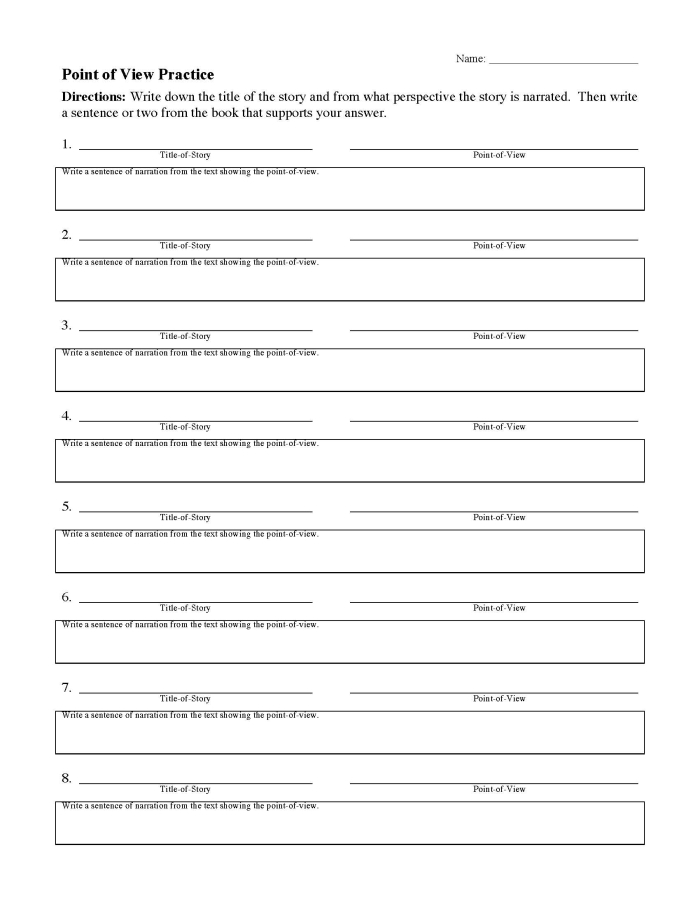
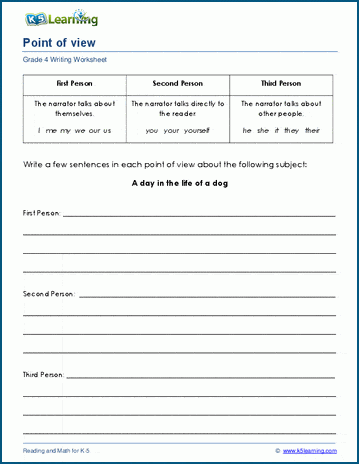
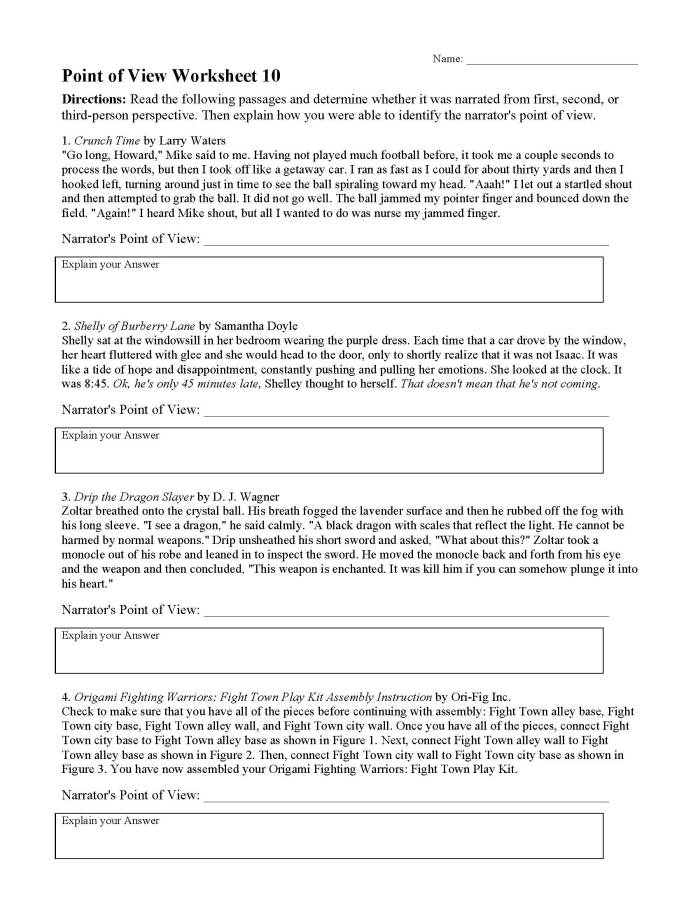
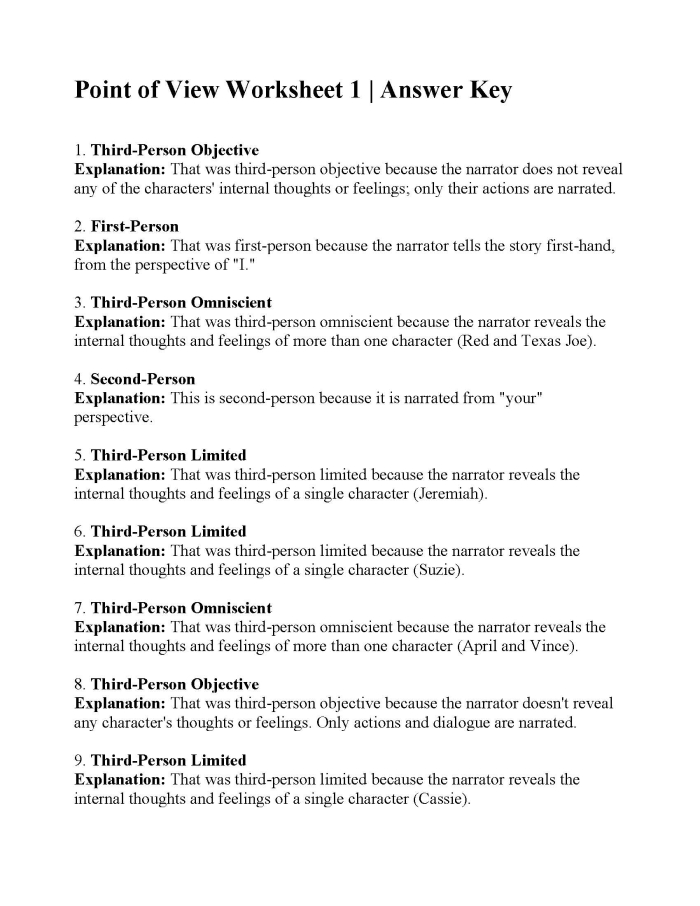
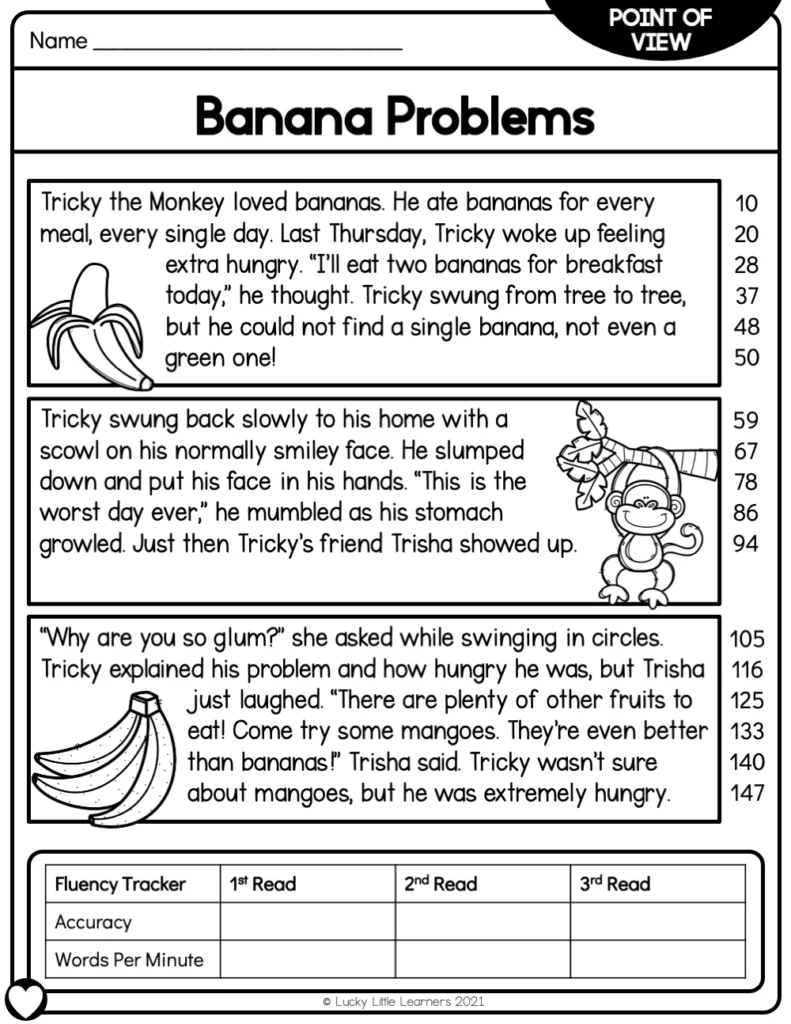
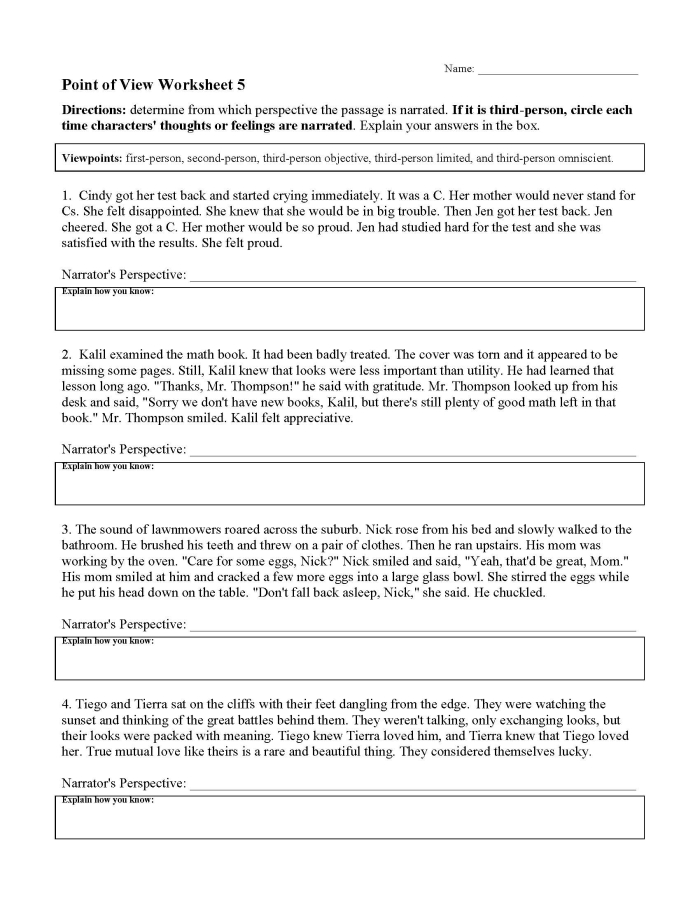
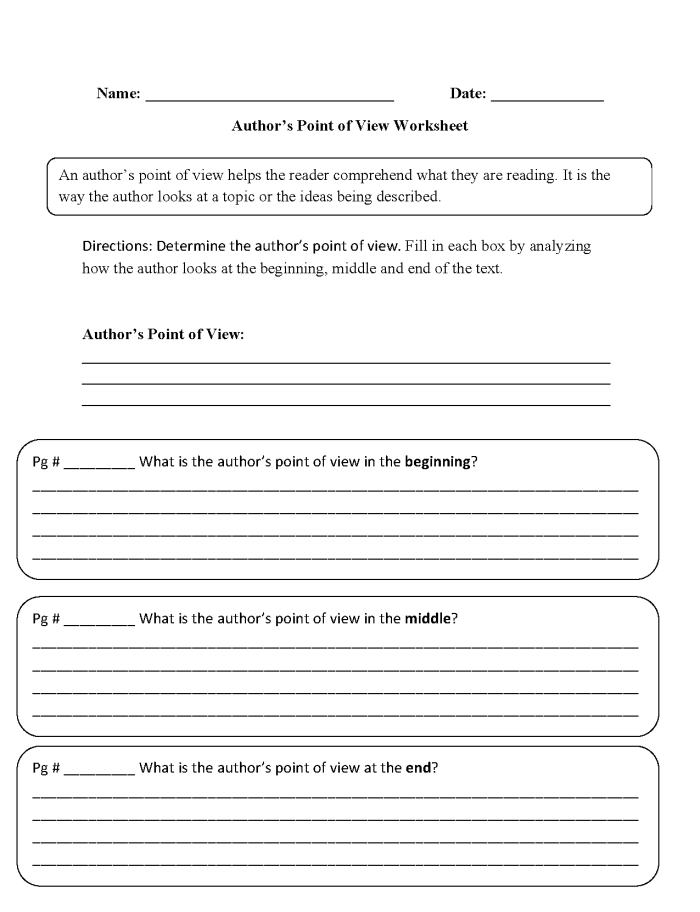
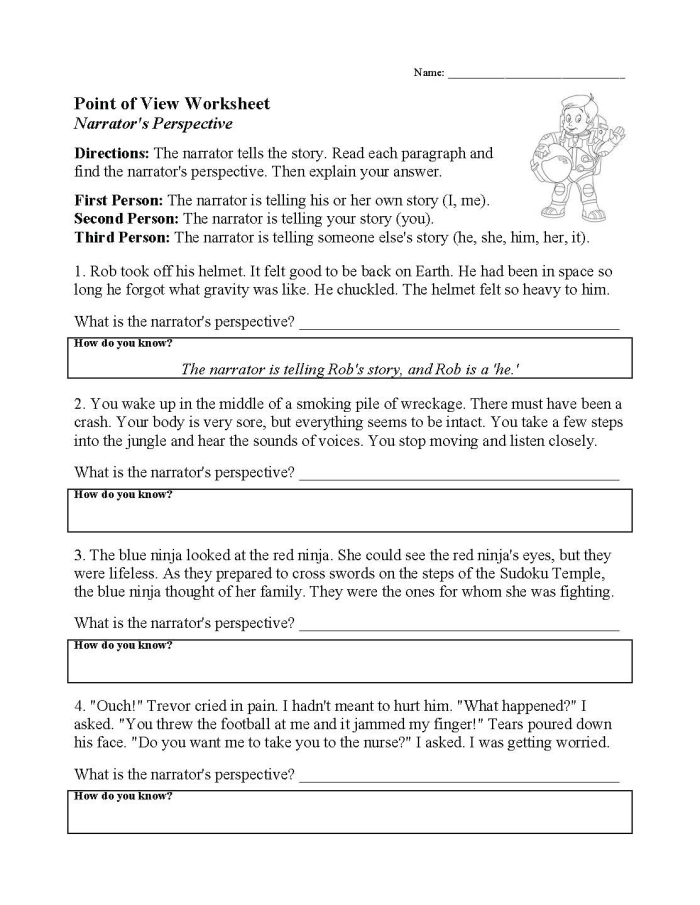
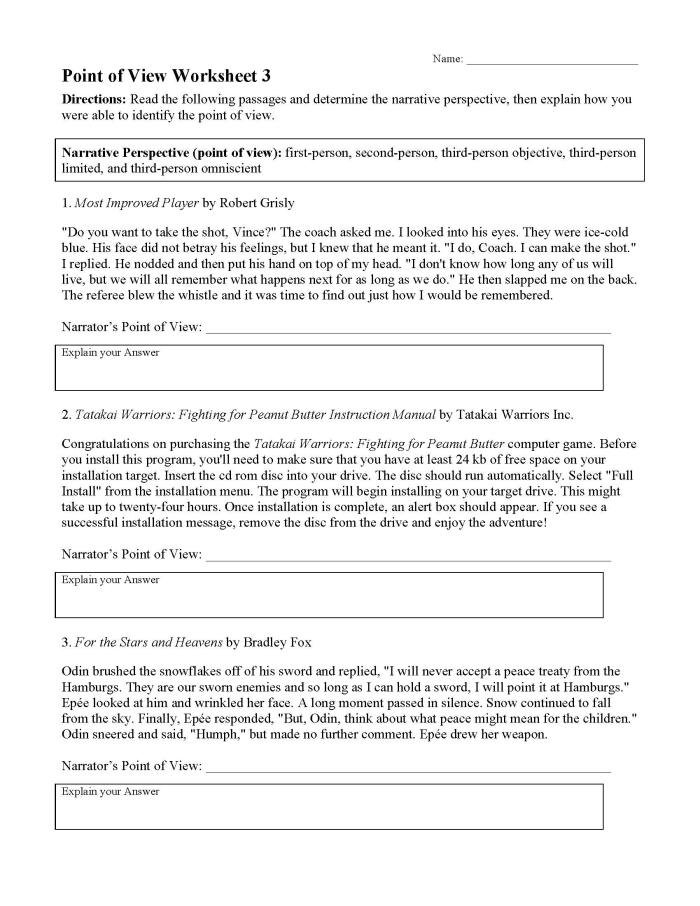
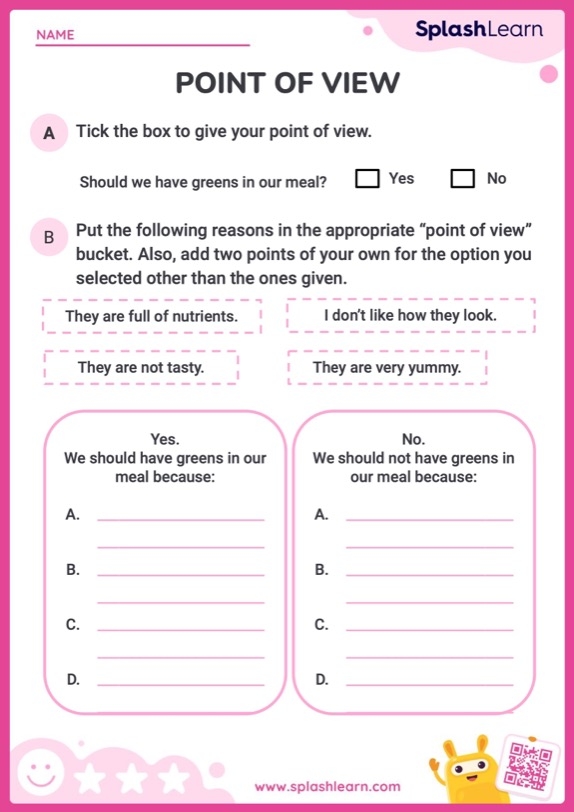
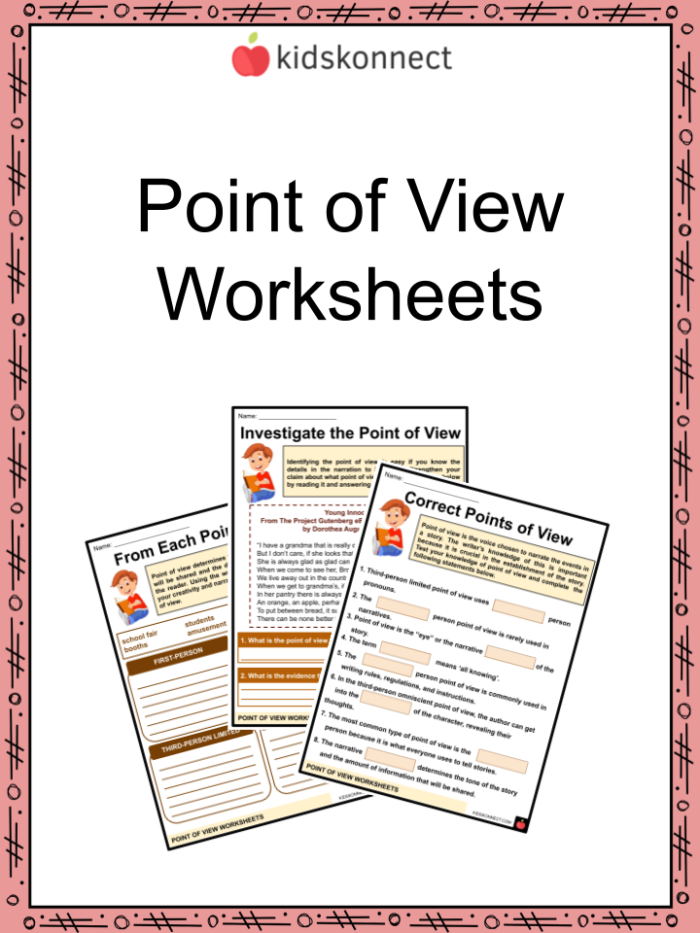
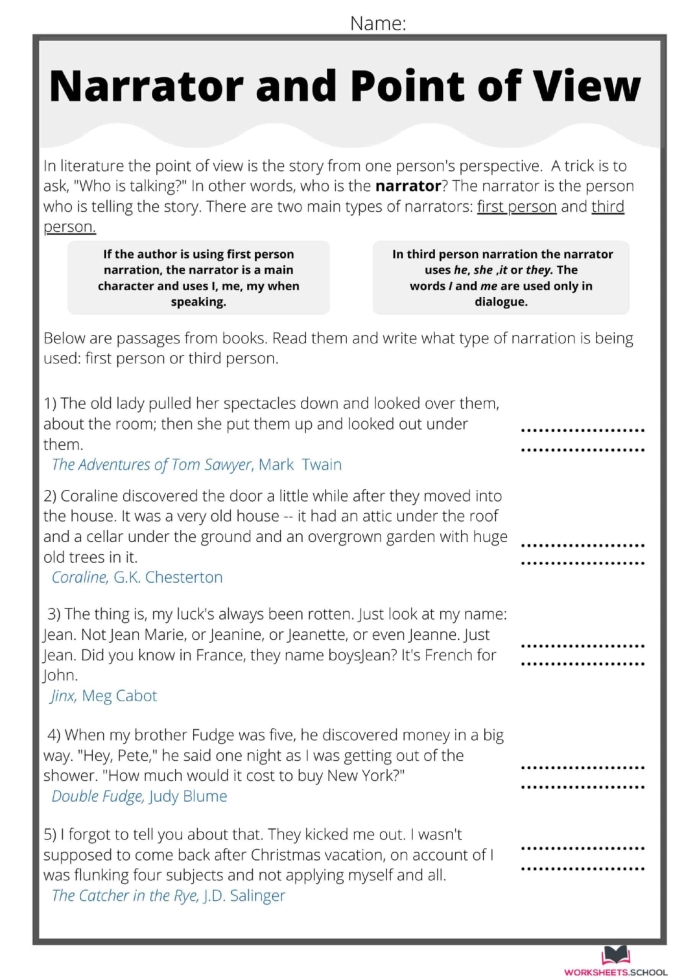
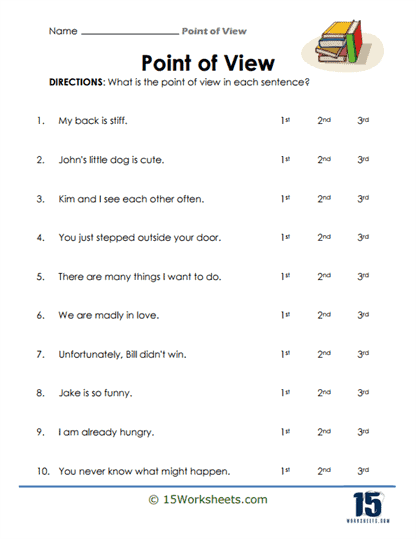
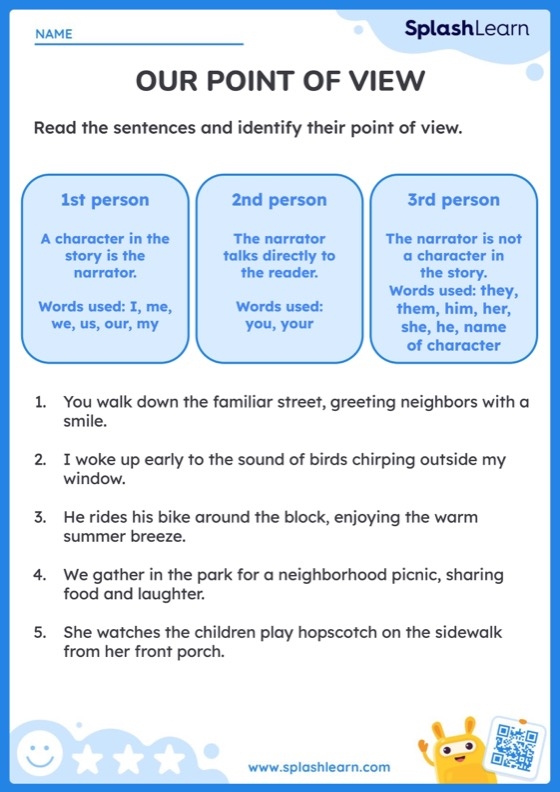
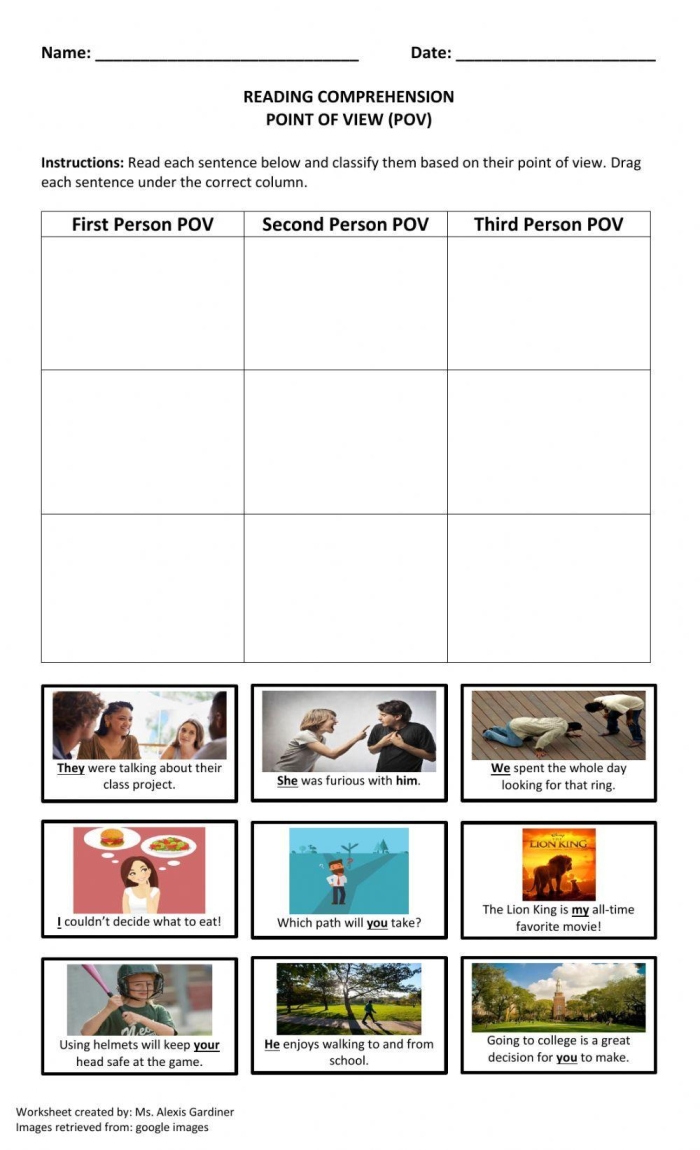
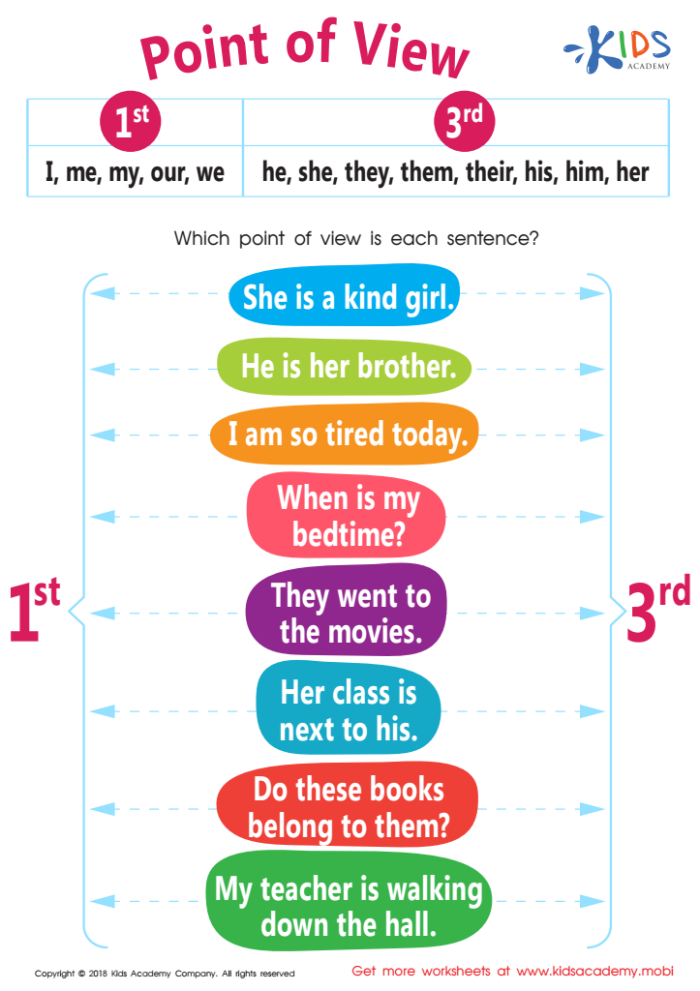
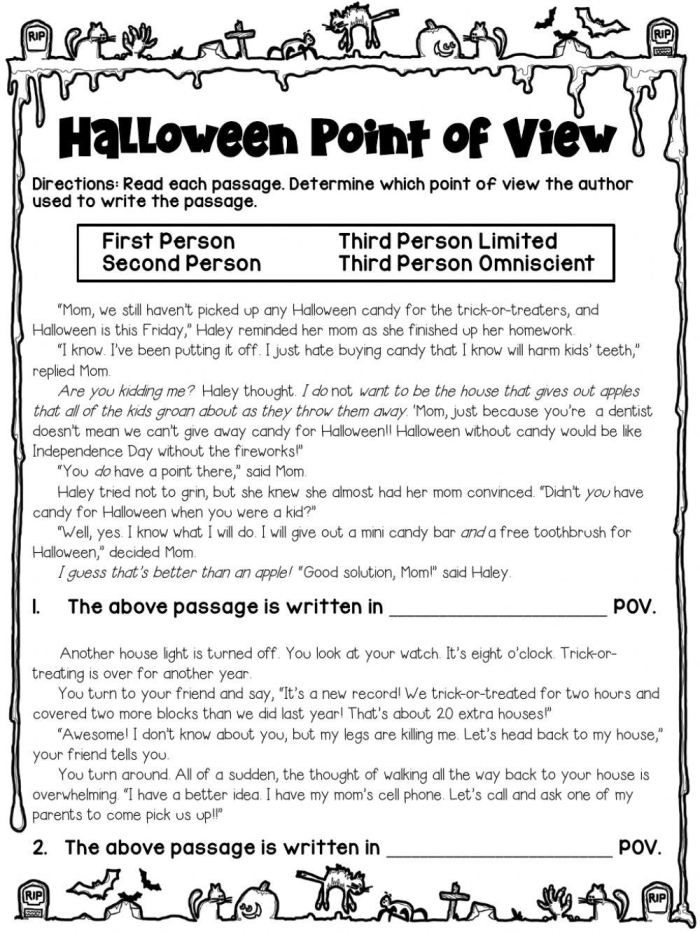
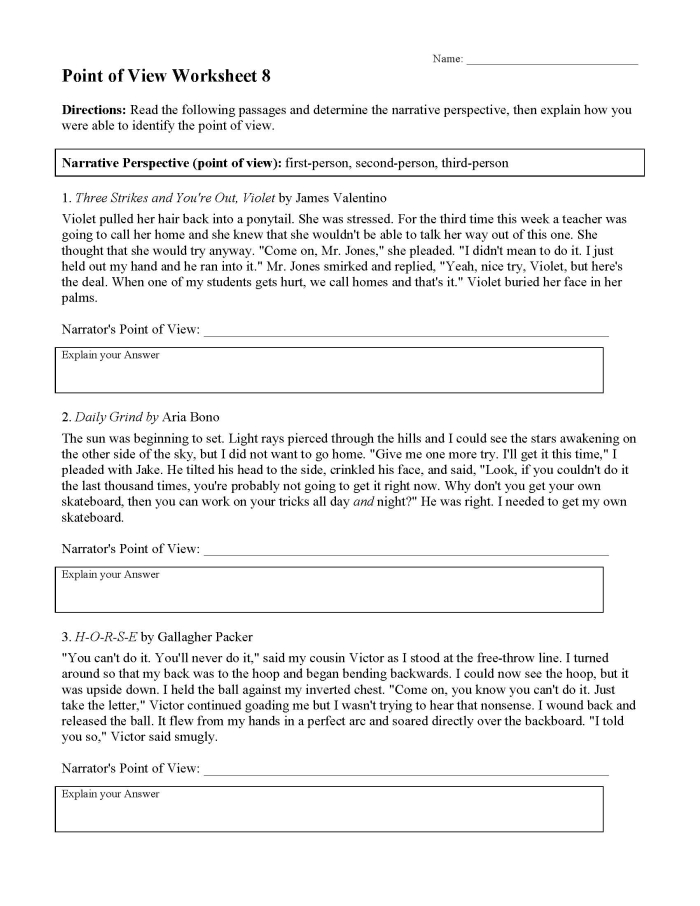
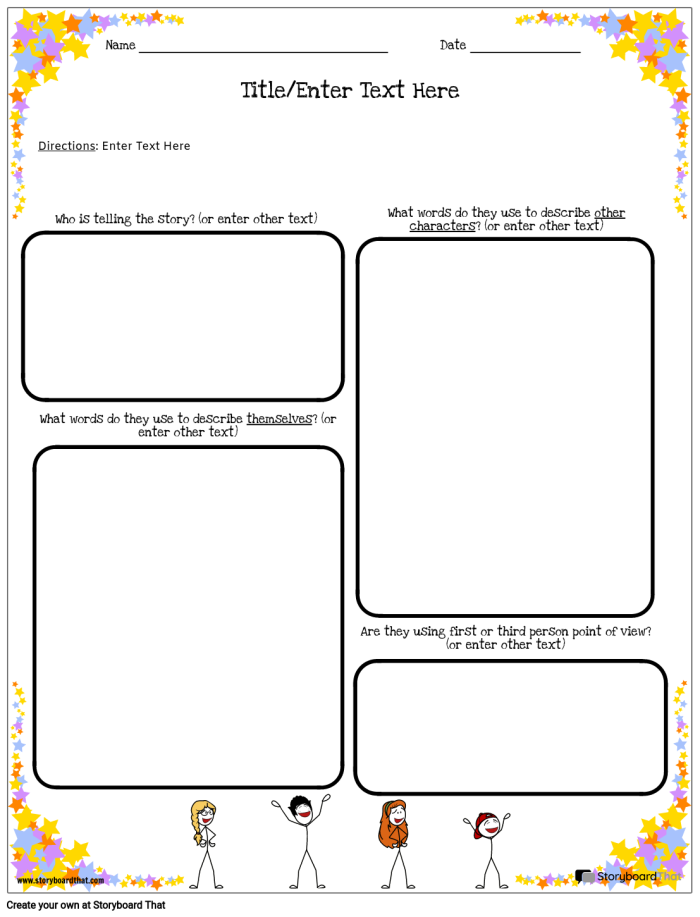
Printable point of view practice worksheets give teachers ready-made resources for this instruction. These materials typically include sentences written from different perspectives, asking students to identify which narrator is speaking. The follow-up writing section challenges students to rewrite sentences from alternate viewpoints, deepening their understanding of how perspective shapes meaning.
Worksheet Practice Section