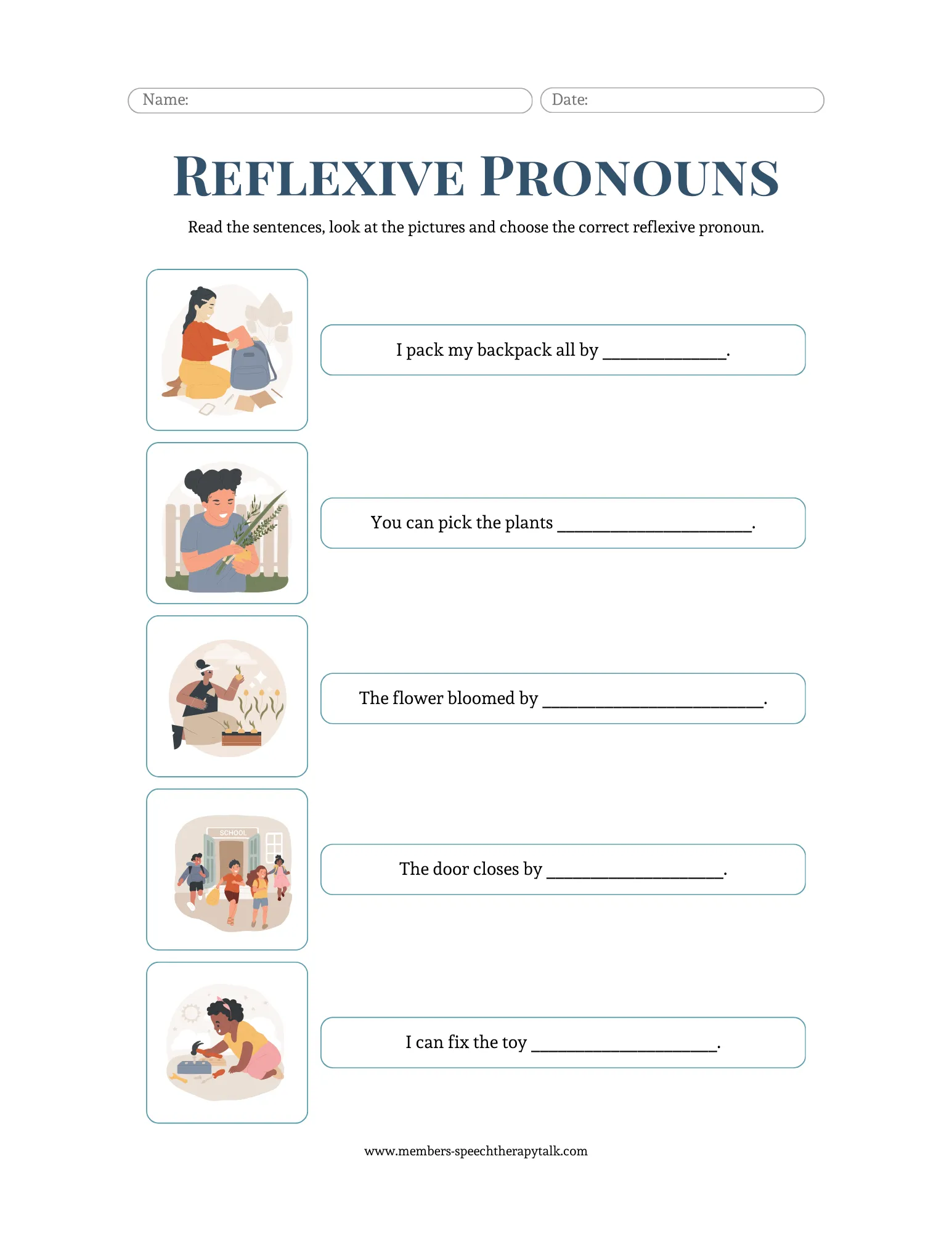
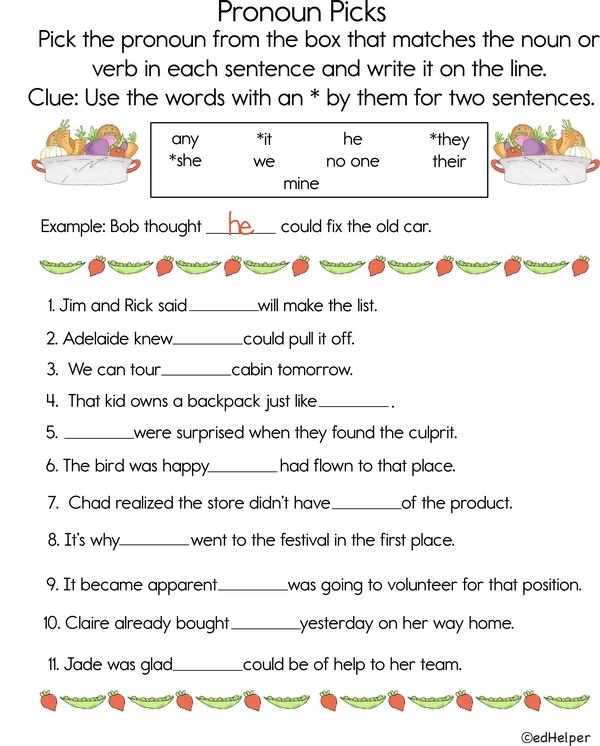
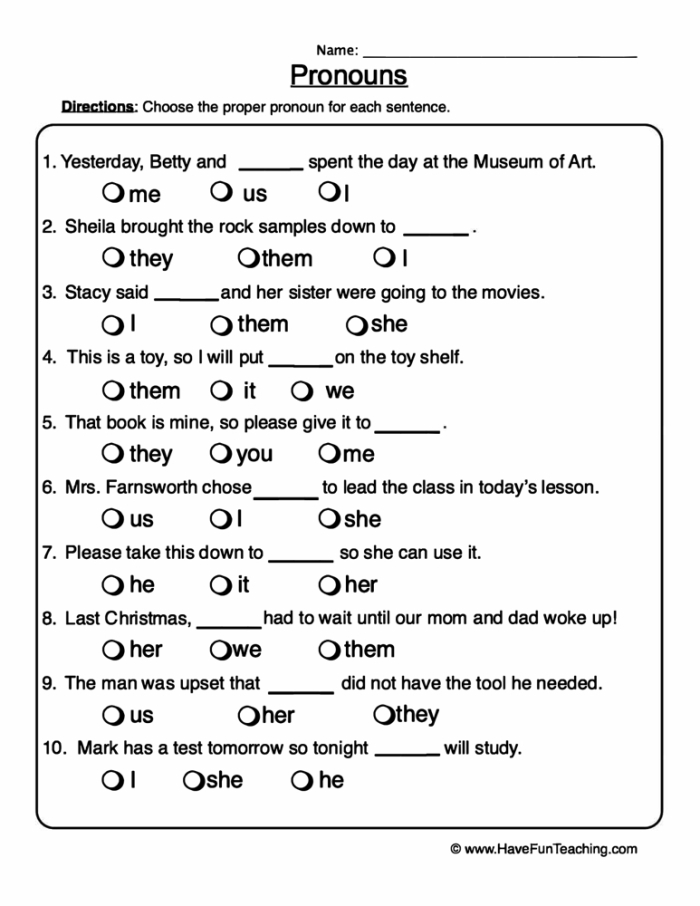
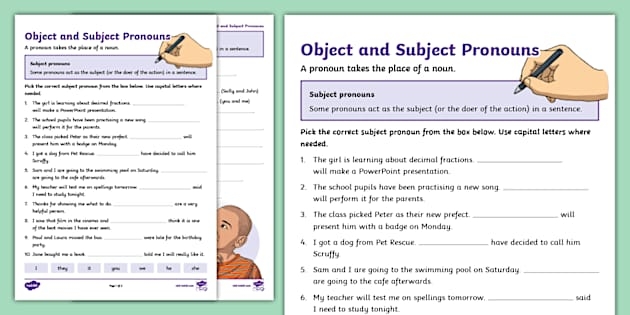
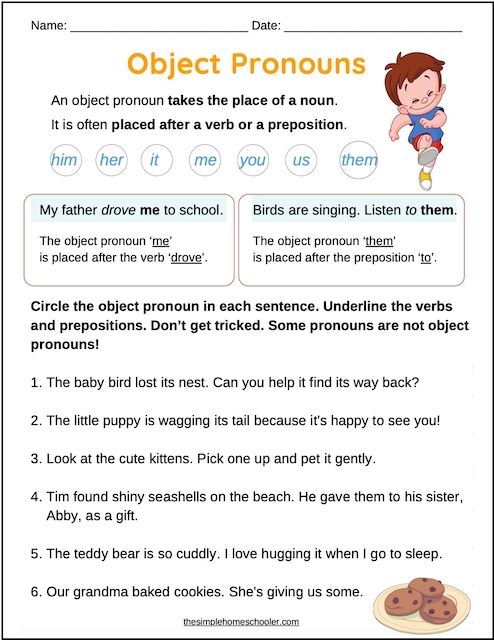
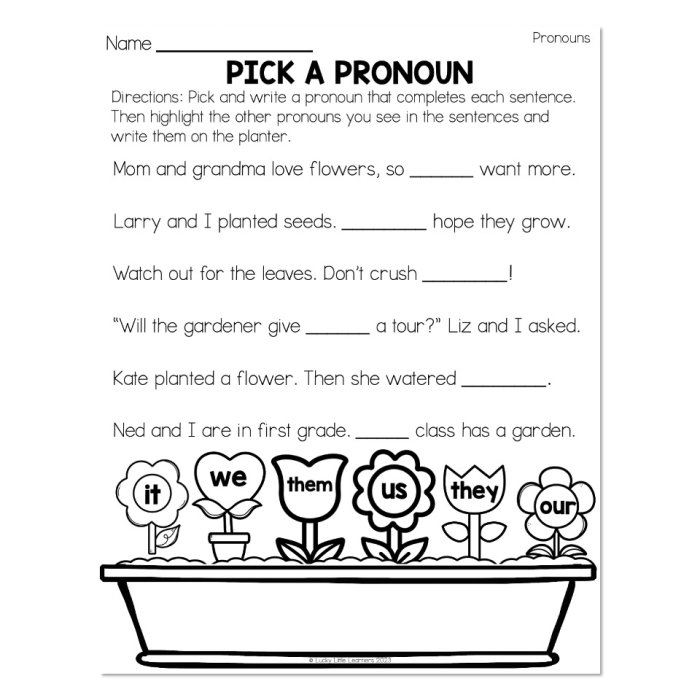
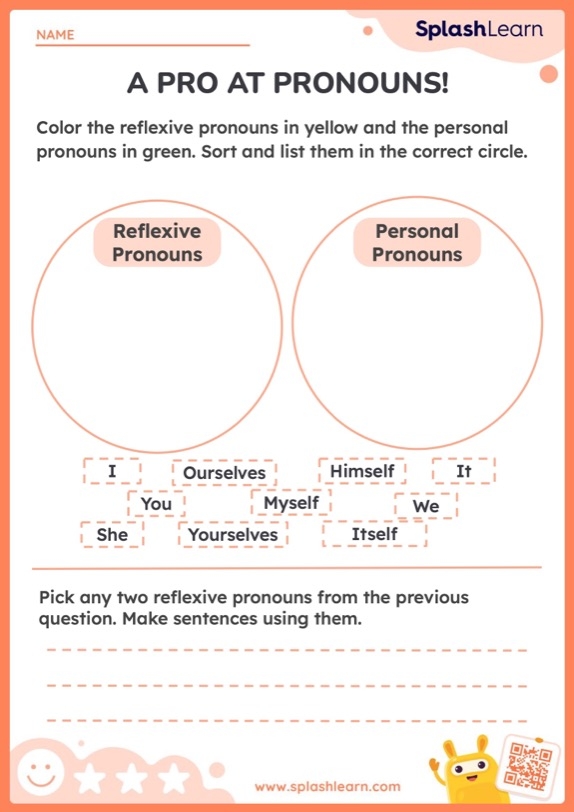
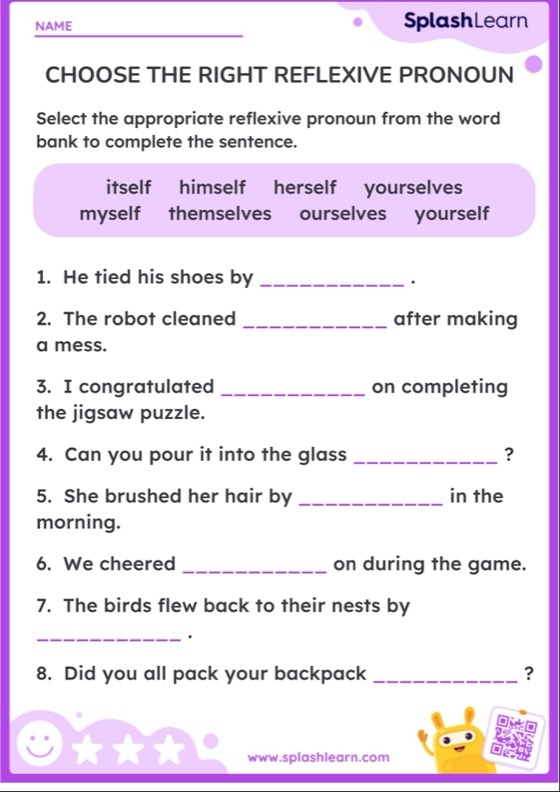
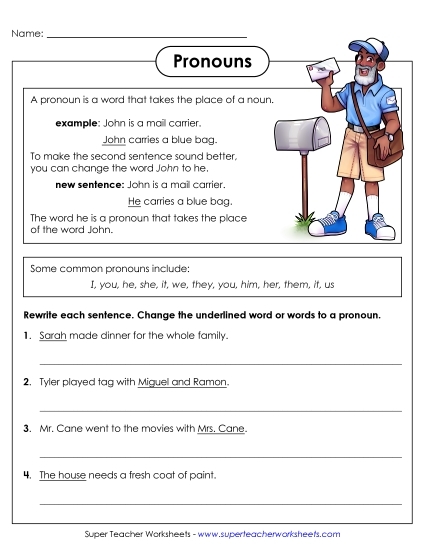
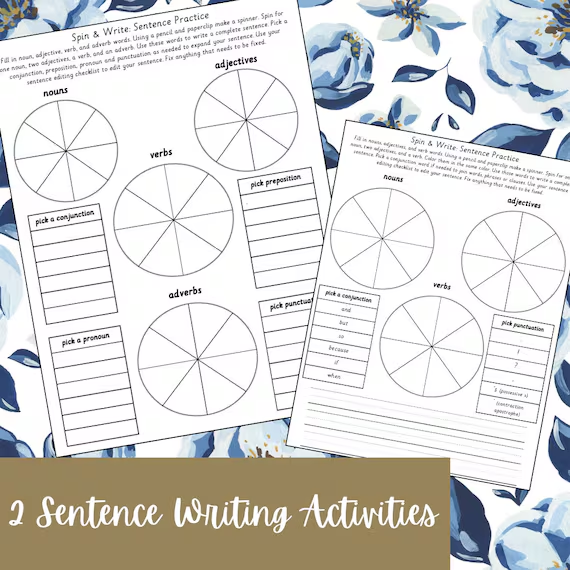
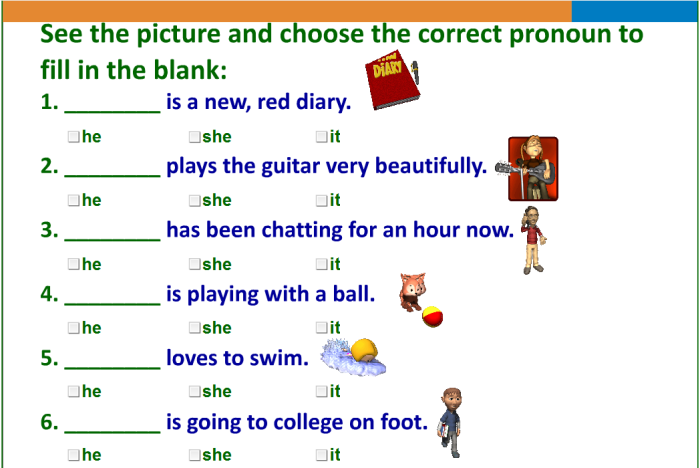
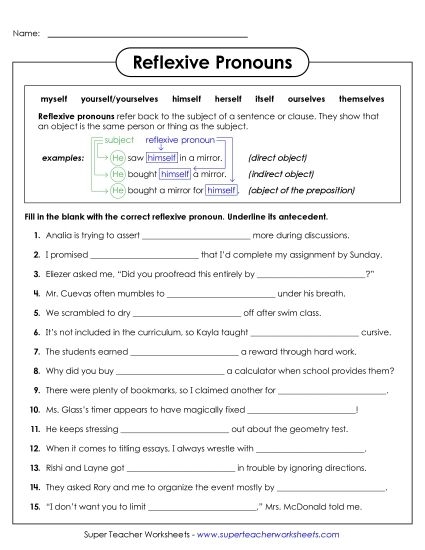
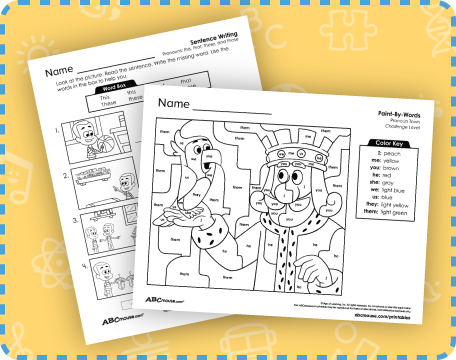
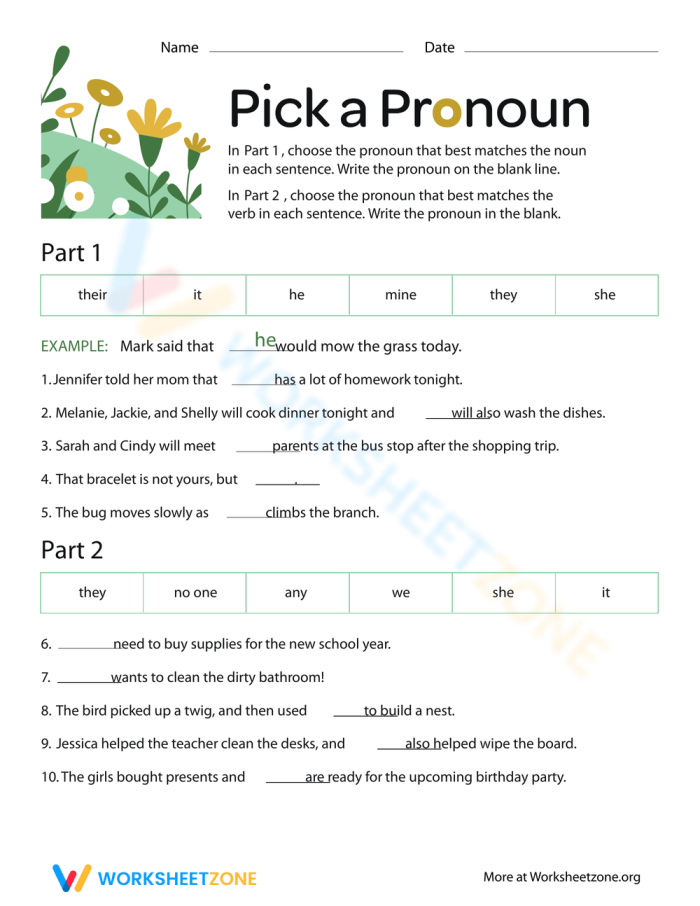
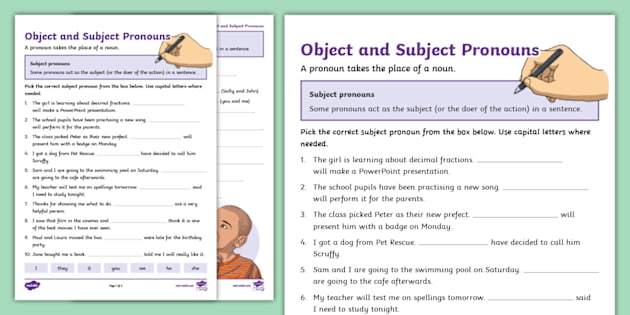
Grammar skills don’t develop through memorization alone. Third graders need to see pronouns in action, replacing nouns in real sentences where they actually belong. A fill-in-the-blanks pronoun worksheet gives students exactly that kind of practice, forcing them to think about which pronoun fits each blank rather than just identifying pronouns on a list.
When children encounter a sentence like “Sarah went to the store. ___ bought milk,” they’re doing more than guessing. They’re recognizing that “she” or “her” could work, then deciding which one makes grammatical sense. This contextual learning sticks better than abstract rules because students see pronouns doing their actual job: standing in for nouns to avoid repetition.
Why Context Matters for Third Grade Learners
Third graders are at a developmental stage where they benefit from seeing language patterns in familiar situations. A worksheet featuring everyday scenarios, like friends playing at recess or families having dinner, helps pronouns feel relevant rather than like random grammar rules. The sentences should use pronouns that students naturally hear and use themselves: he, she, it, they, we, and you.
The structure of fill-in-the-blanks exercises also teaches careful reading. Students must look at surrounding words to determine the correct pronoun. Does the sentence talk about one person or multiple people? Is the pronoun the subject doing something, or the object receiving an action? These questions guide learners toward the right answer without the worksheet explicitly stating the rules.
Connecting Grammar to Broader Skills
Pronoun practice in third grade connects to other language arts standards. Once students master picking the right pronoun, they’re ready for more complex writing. They’ll use pronouns correctly in their own stories, emails, and explanations. This foundation also helps when third graders work on quotation marks in dialogue, where pronouns often appear in character speech.
A well-designed pronoun worksheet keeps sentences short and clear, avoiding confusion while still providing enough context for students to make thoughtful choices. The repetition across multiple sentences reinforces patterns without becoming tedious, letting third graders build confidence in their pronoun usage through genuine practice.
Boost Skills with These Worksheets