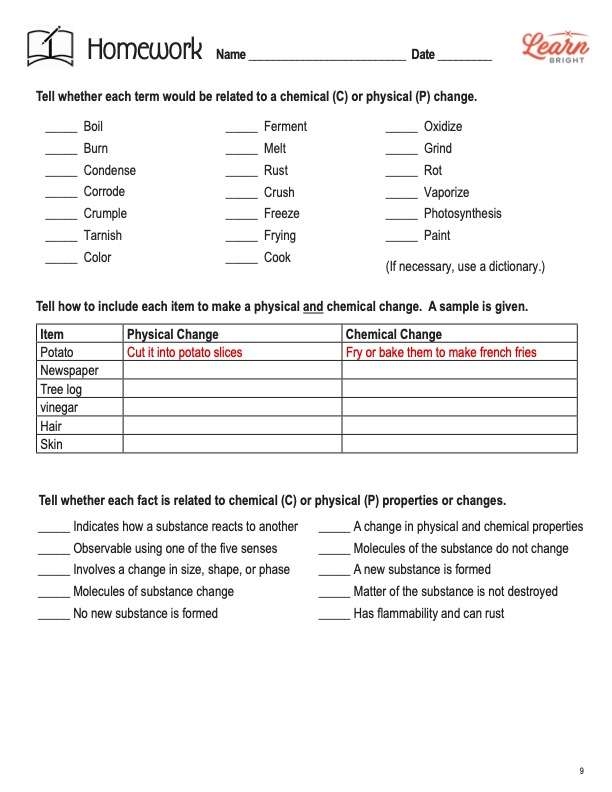
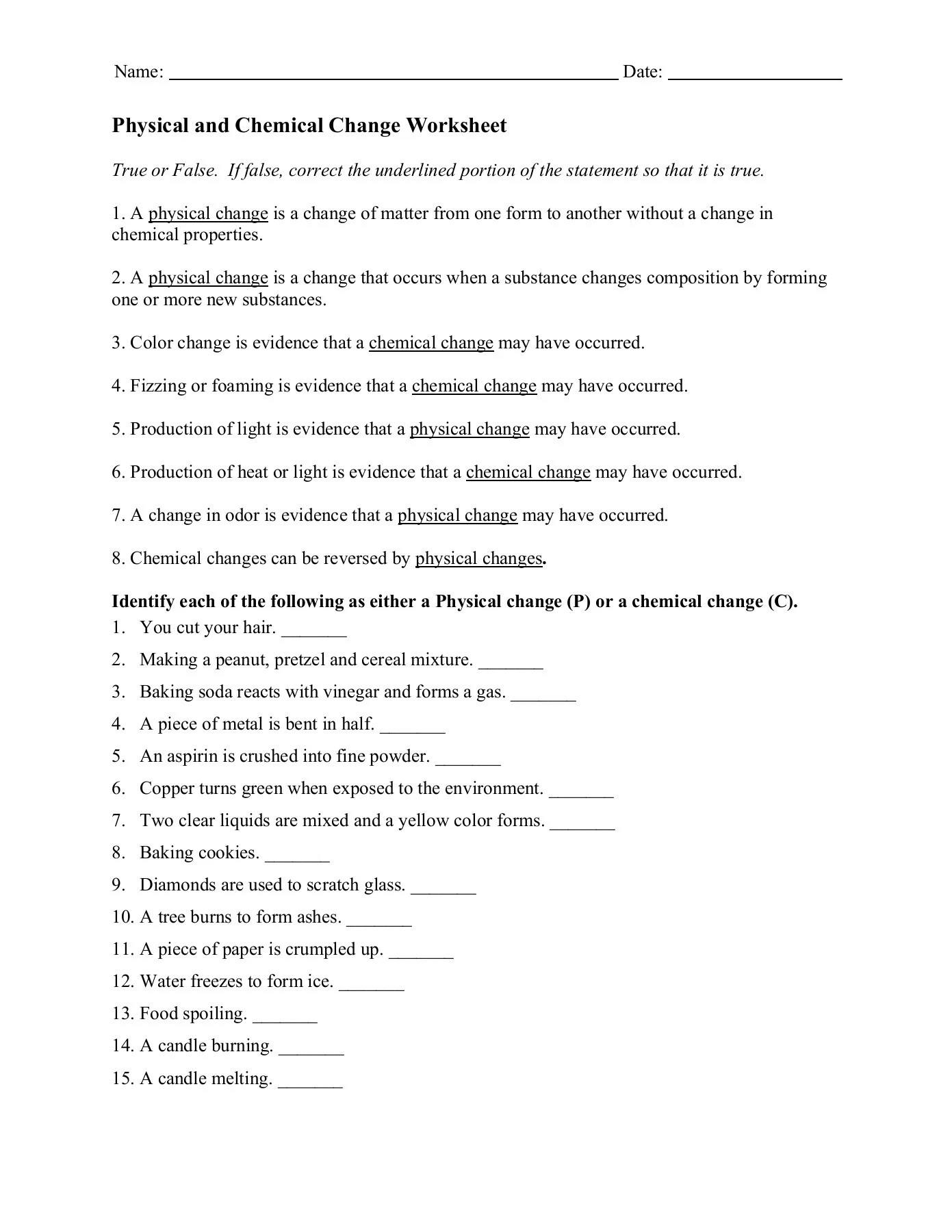
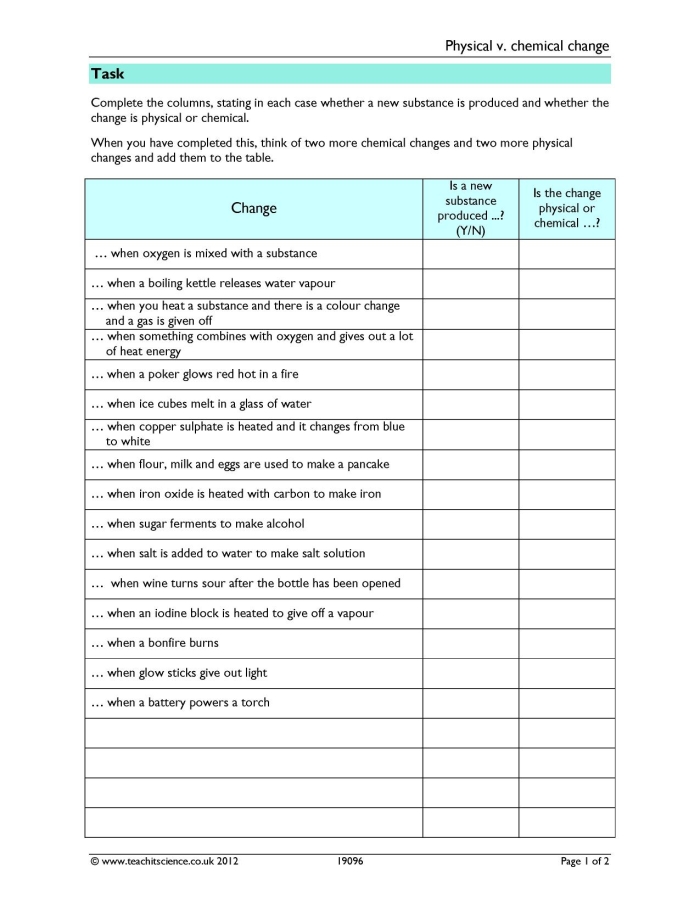
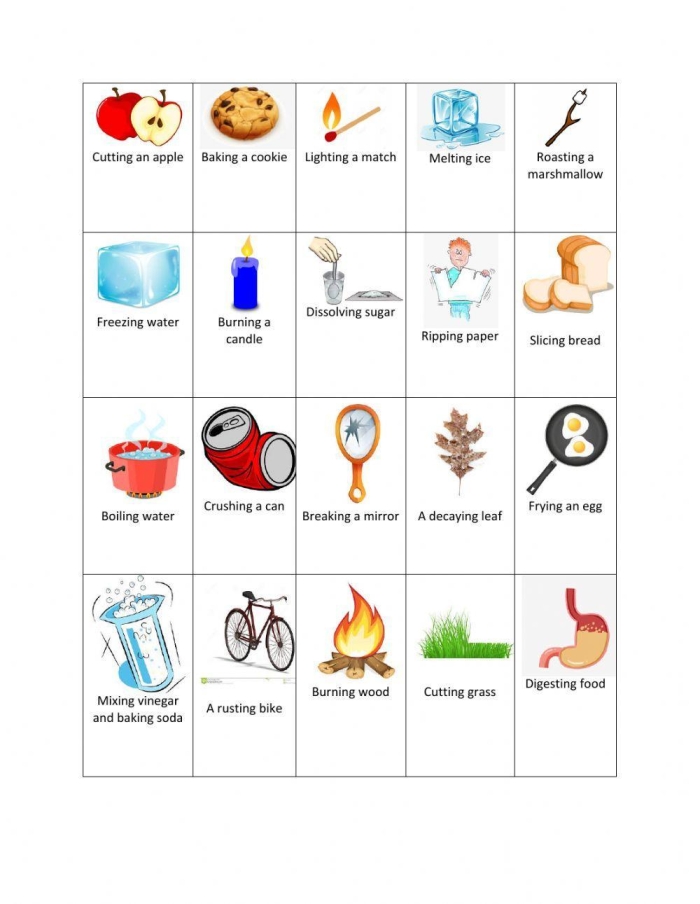
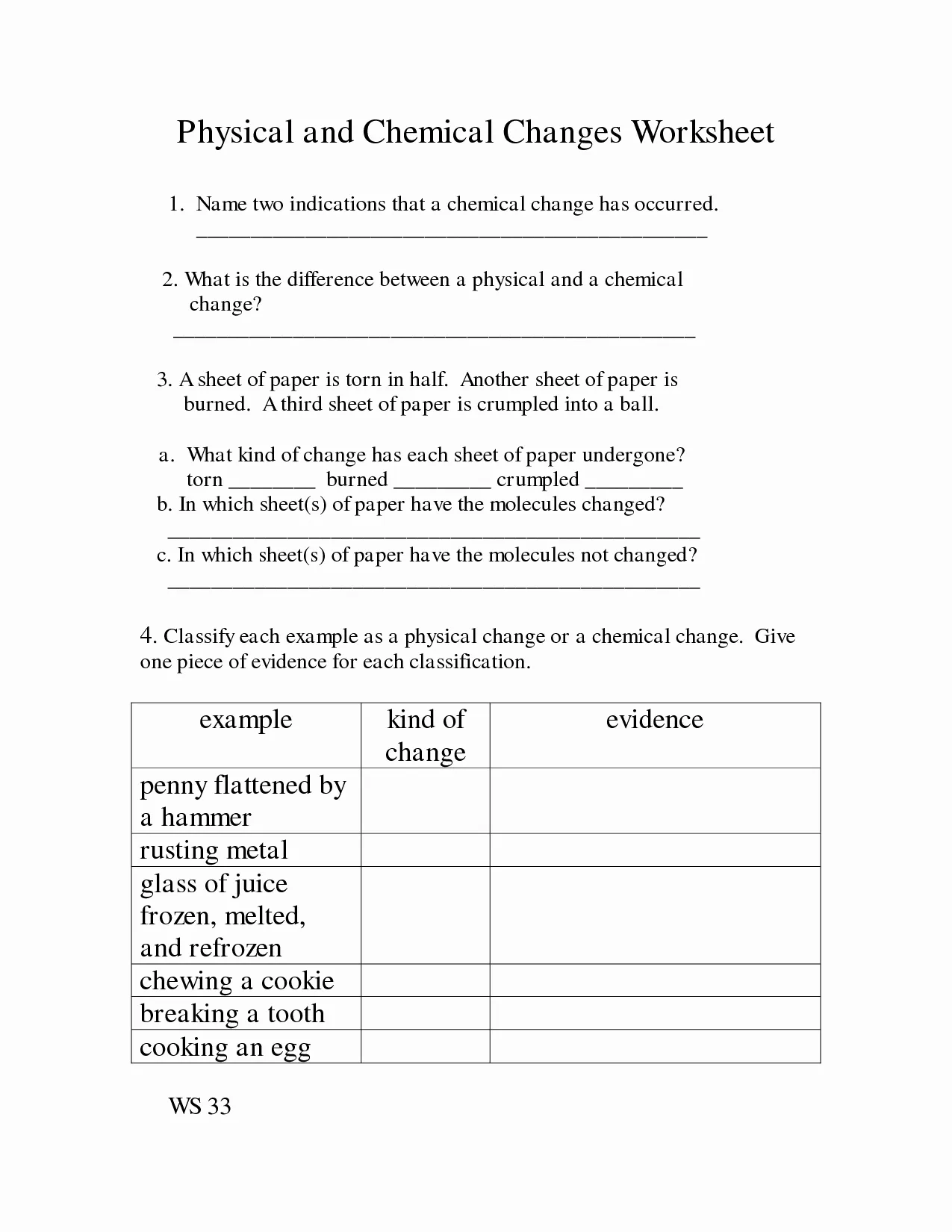
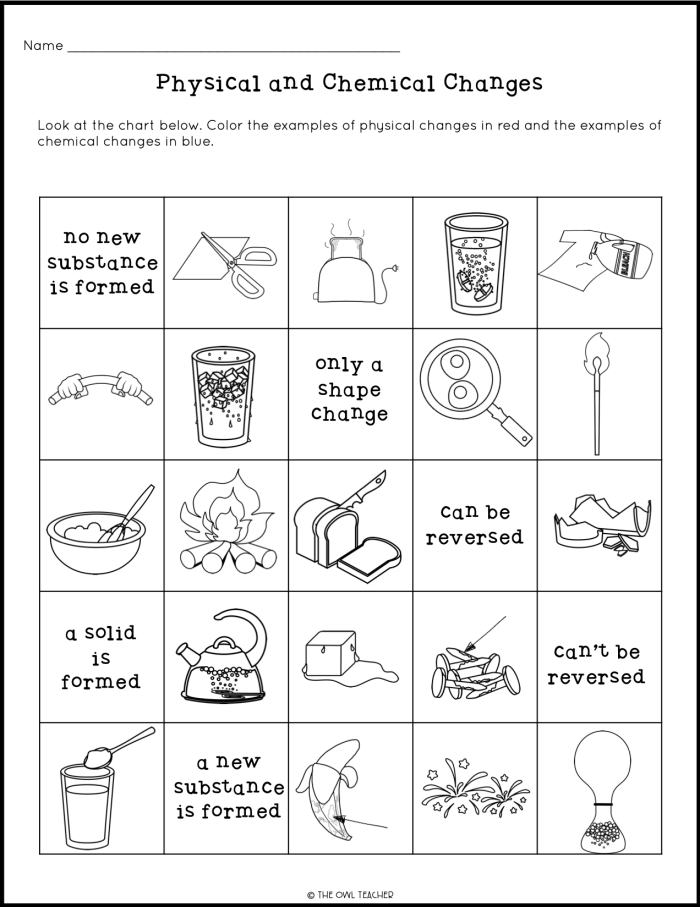
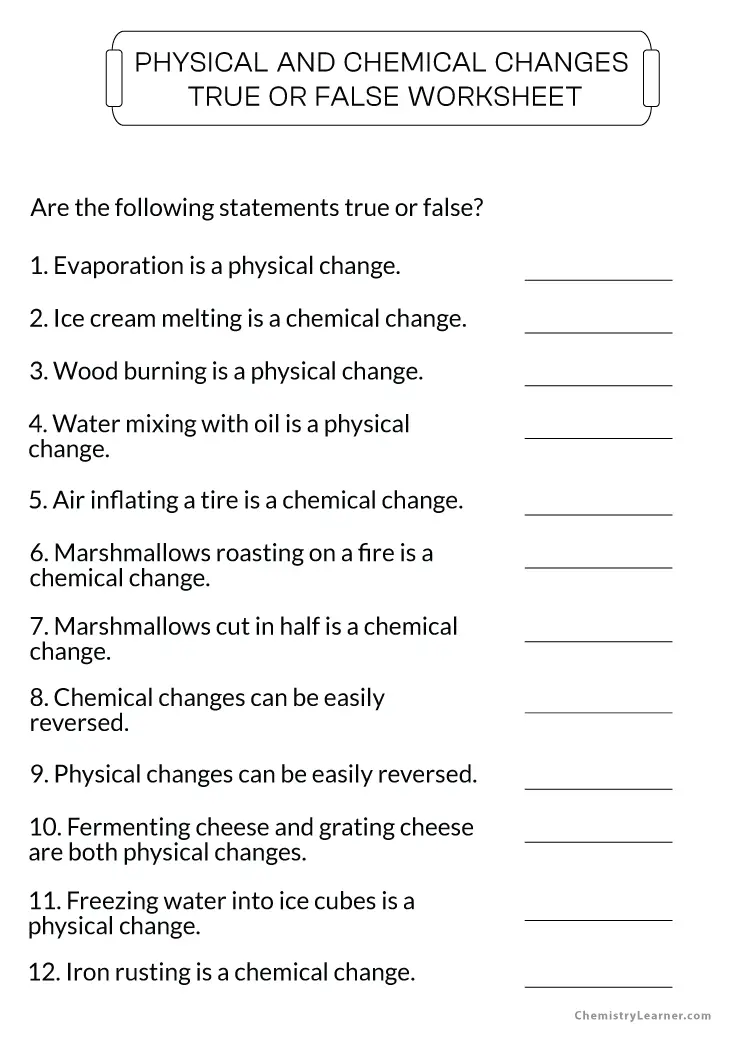
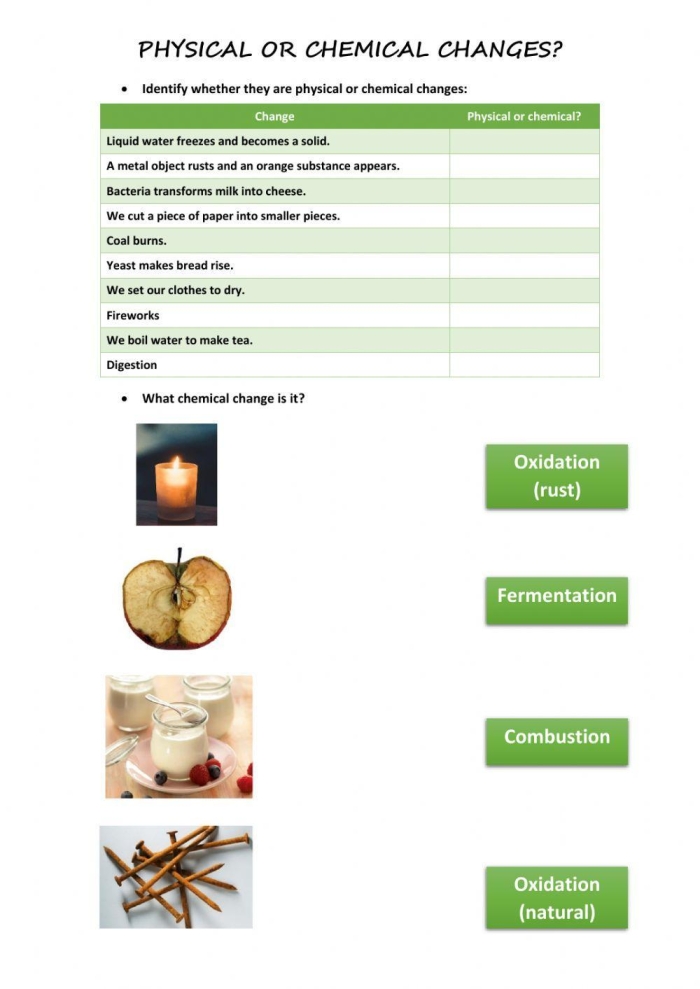
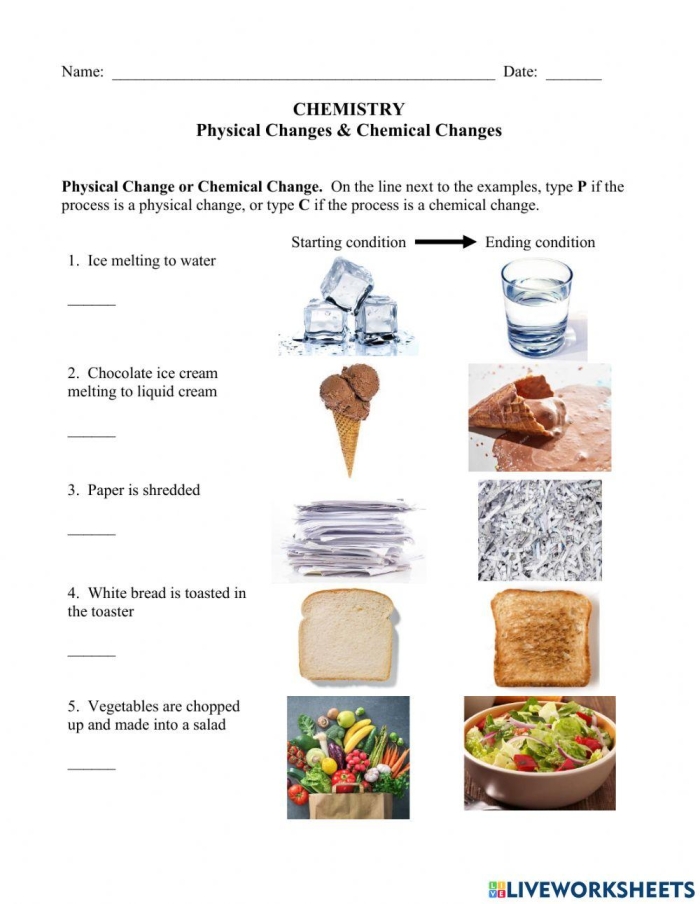
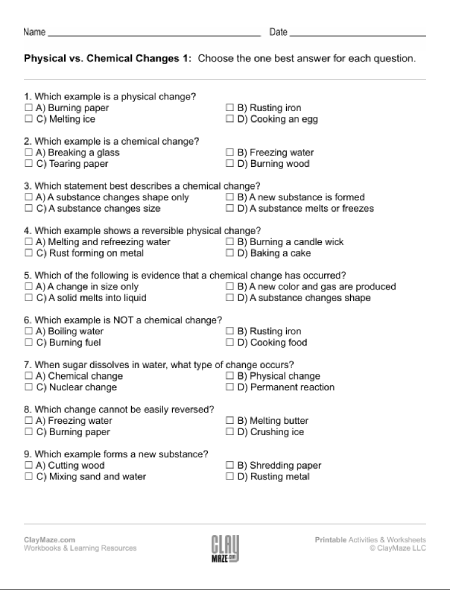
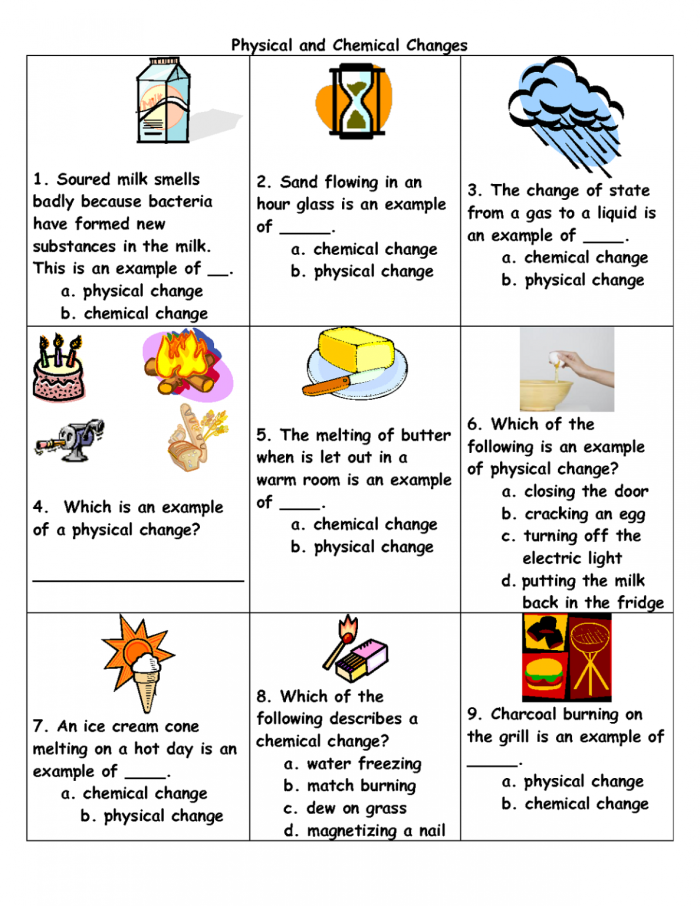
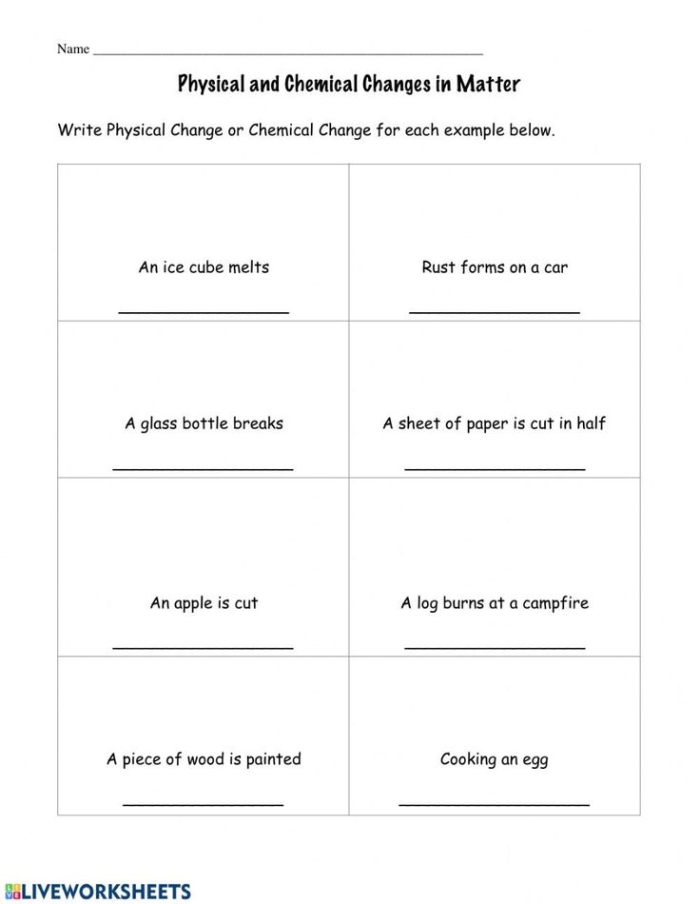
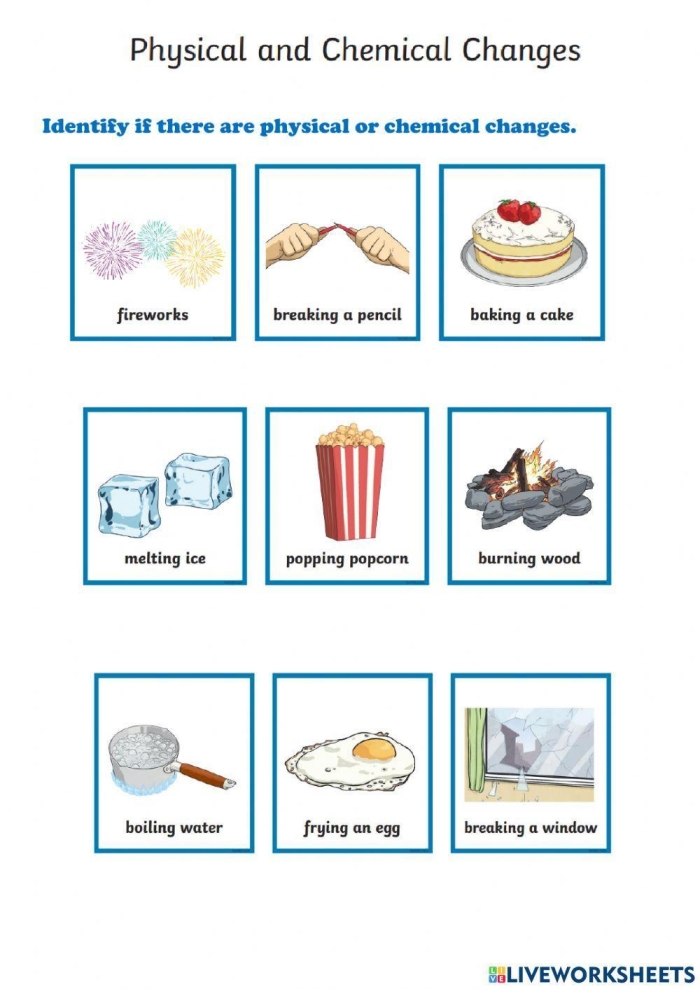
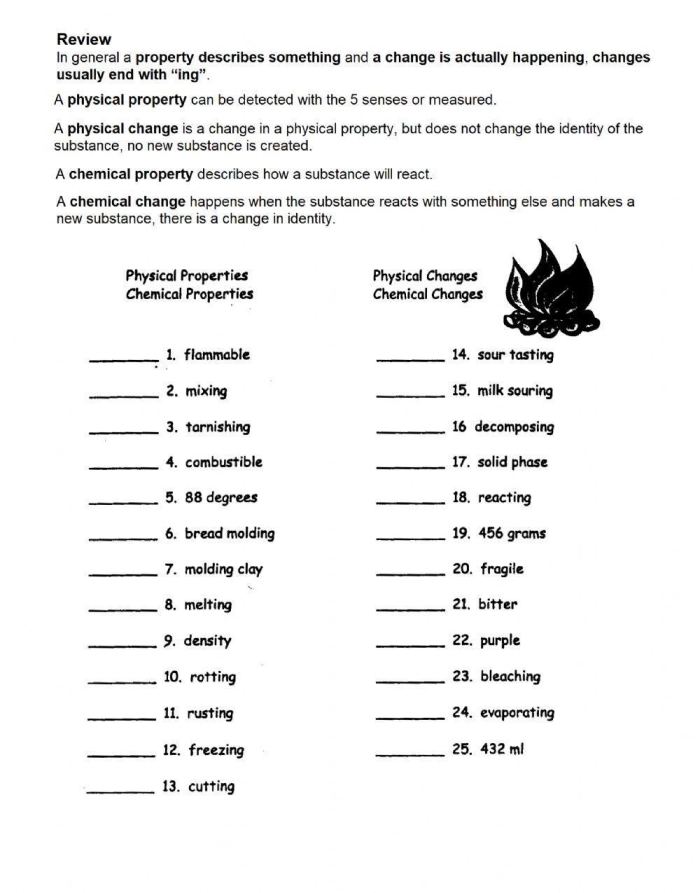
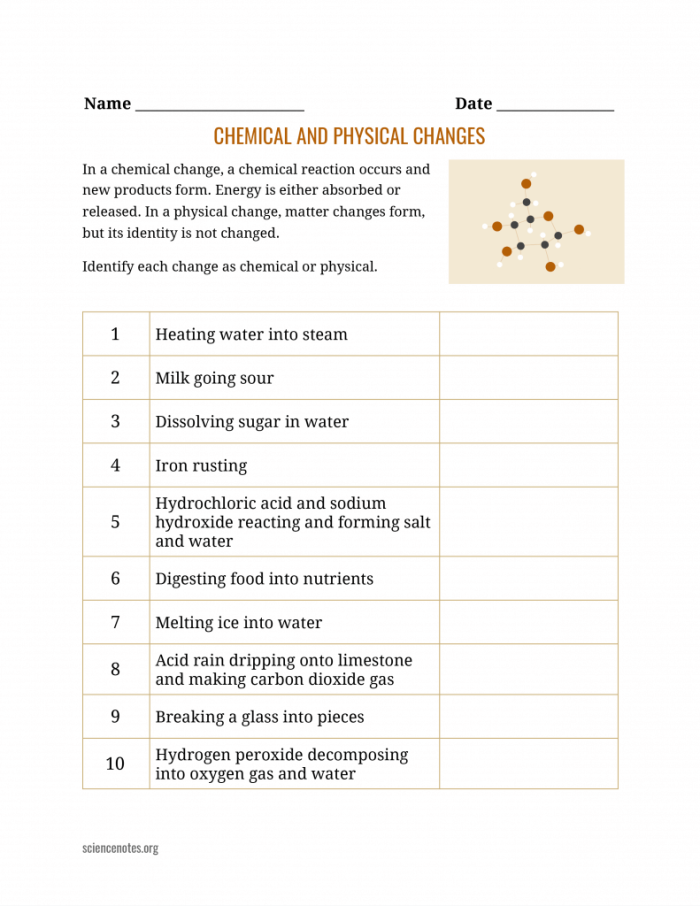
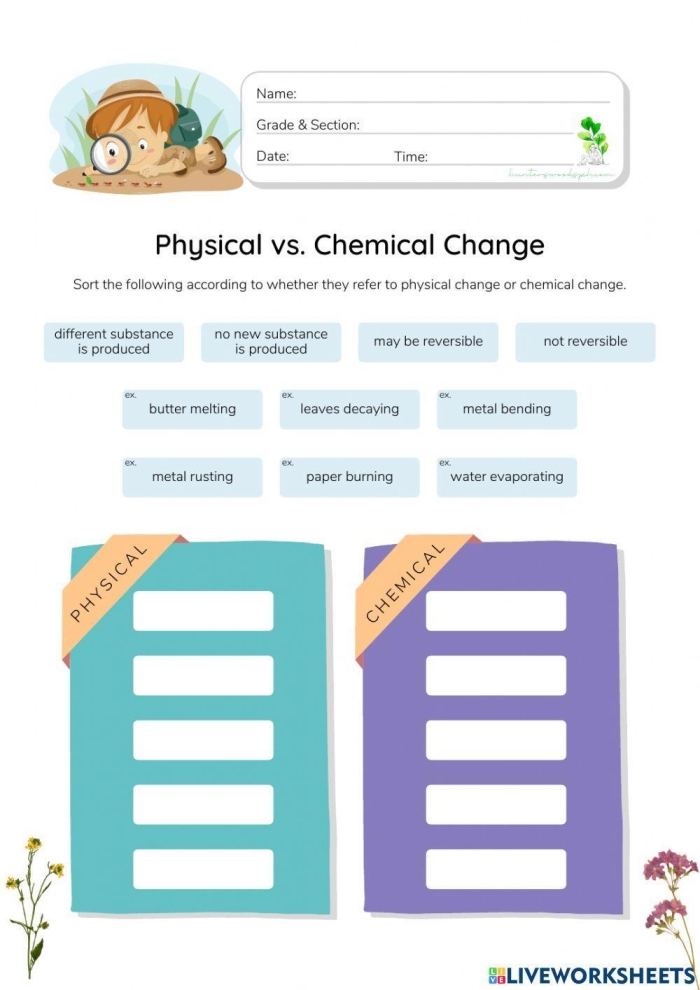
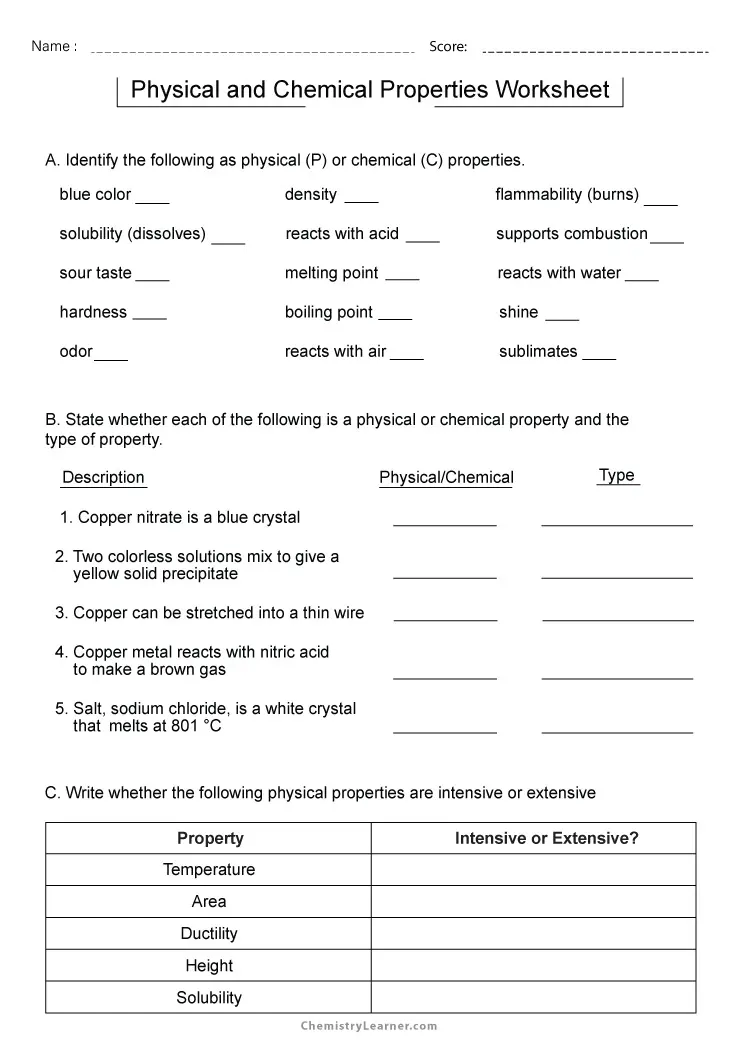
Understanding the differences between physical and chemical changes is vital for fourth-grade students as they begin to explore the world of science. This topic not only lays the foundation for future learning but also sparks curiosity about how matter interacts in various scenarios. With the right resources, such as printable worksheets on physical change vs chemical change, students can engage with these concepts in an interactive way.
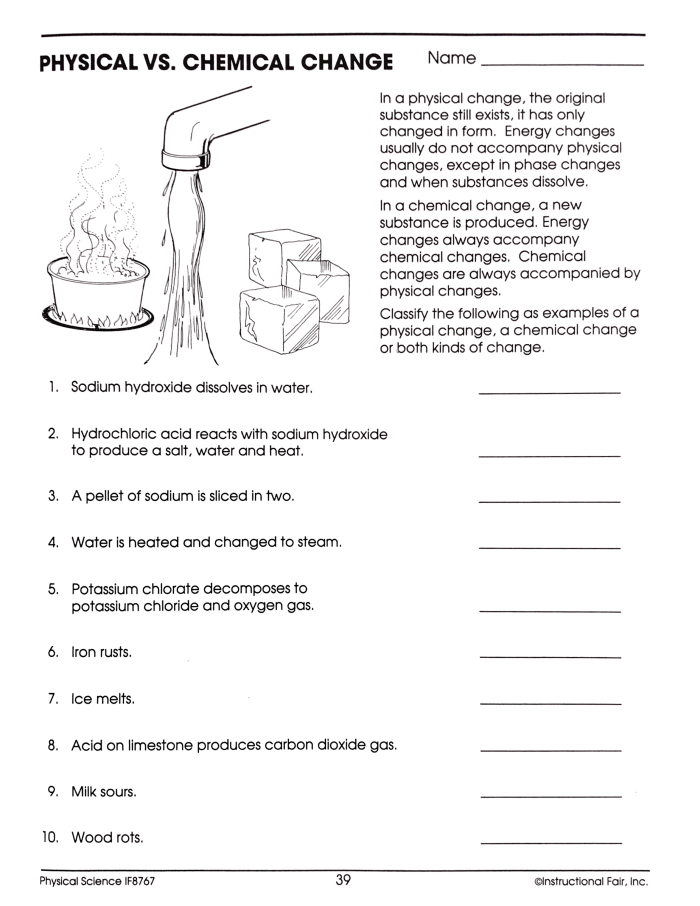
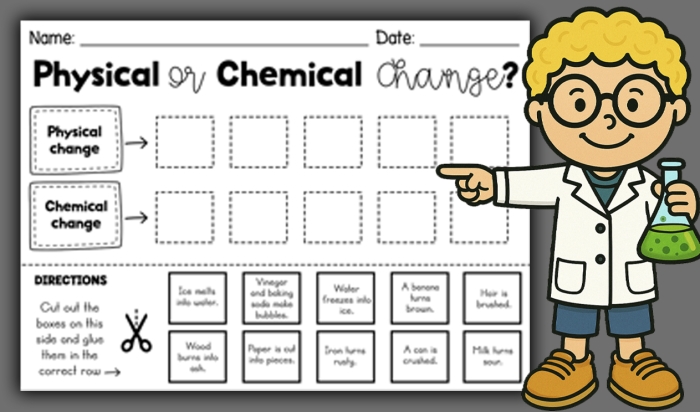
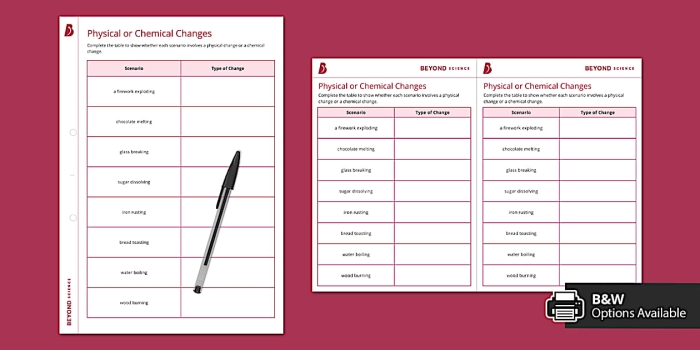
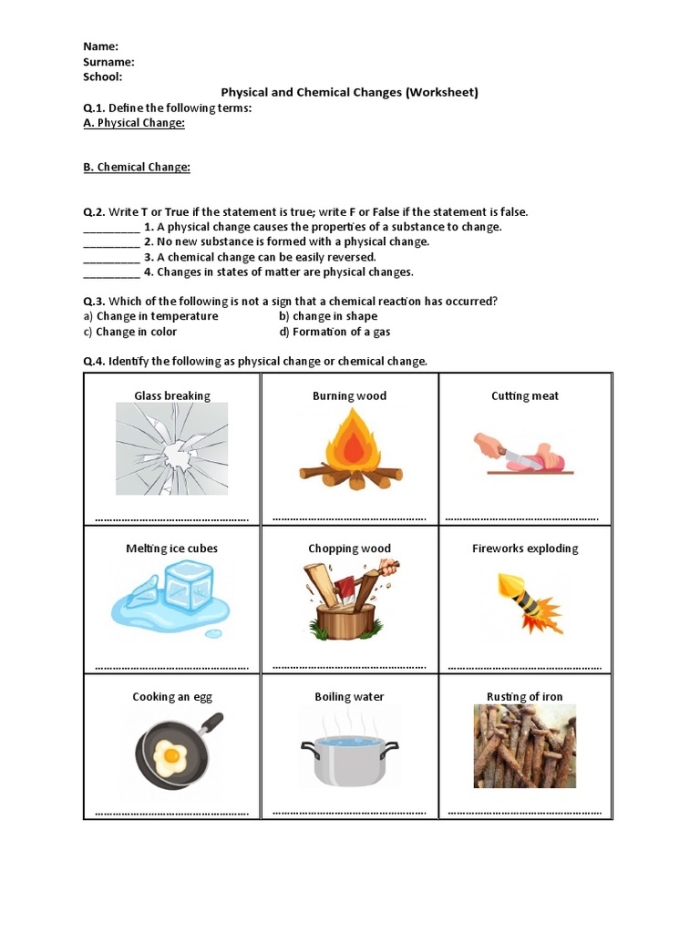
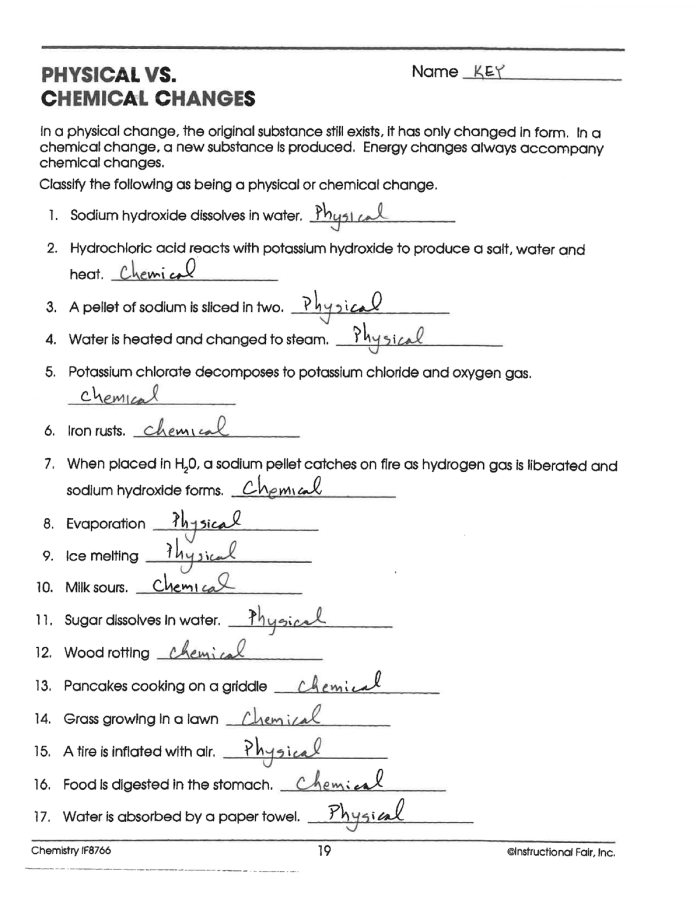
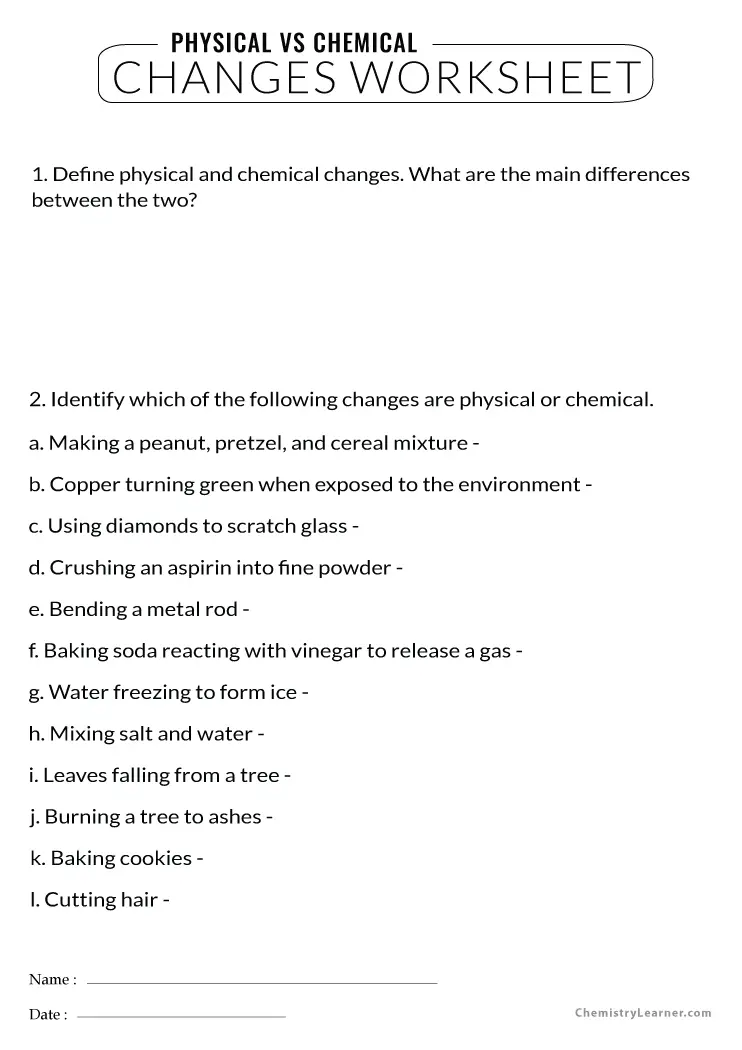
Physical changes involve alterations in the state or appearance of a substance without changing its chemical composition. For example, when ice melts into water, it remains H2O, but its form changes from solid to liquid. In contrast, chemical changes result in the formation of new substances. A classic example is the rusting of iron, where iron reacts with oxygen to create iron oxide, a completely different material.
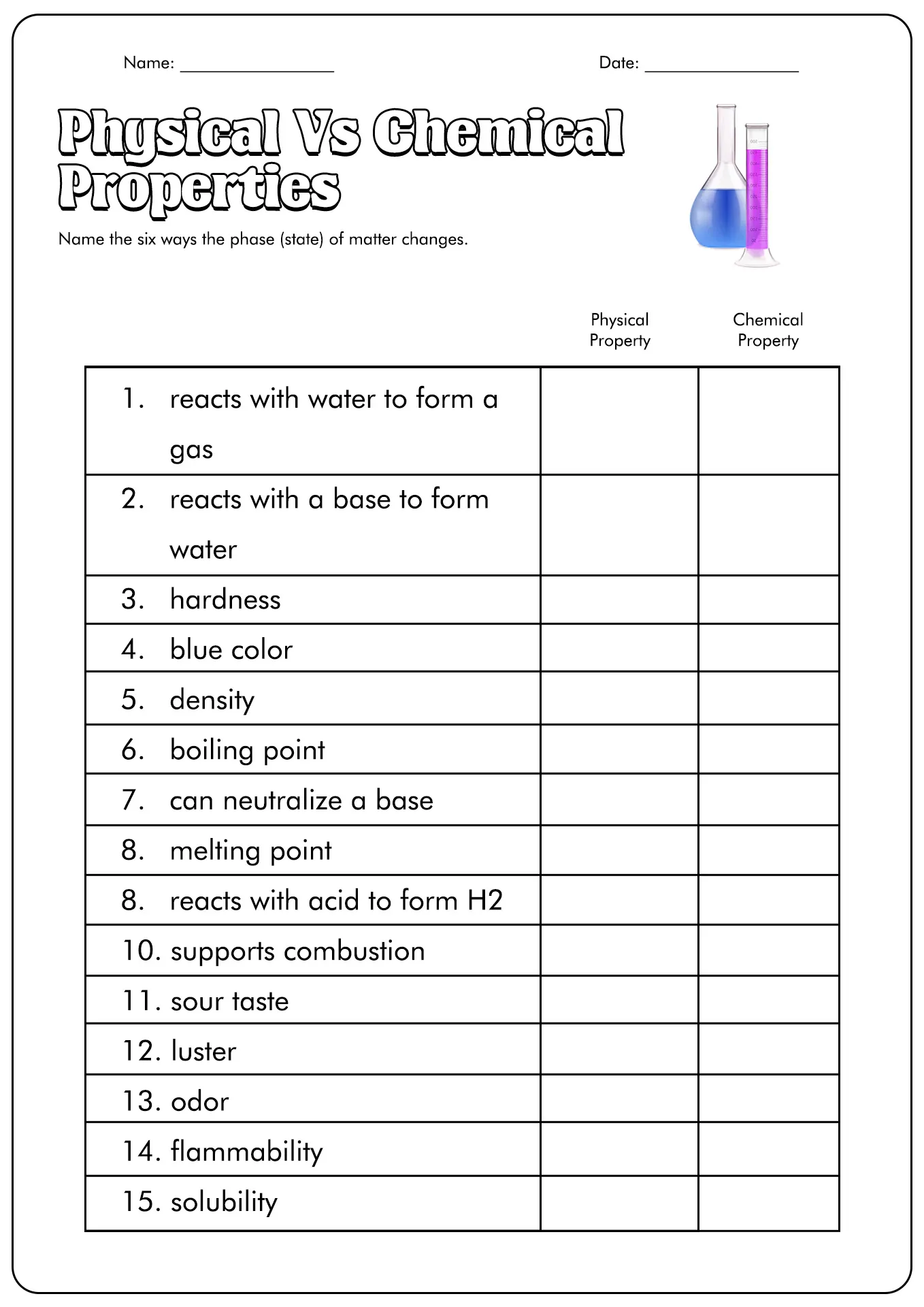
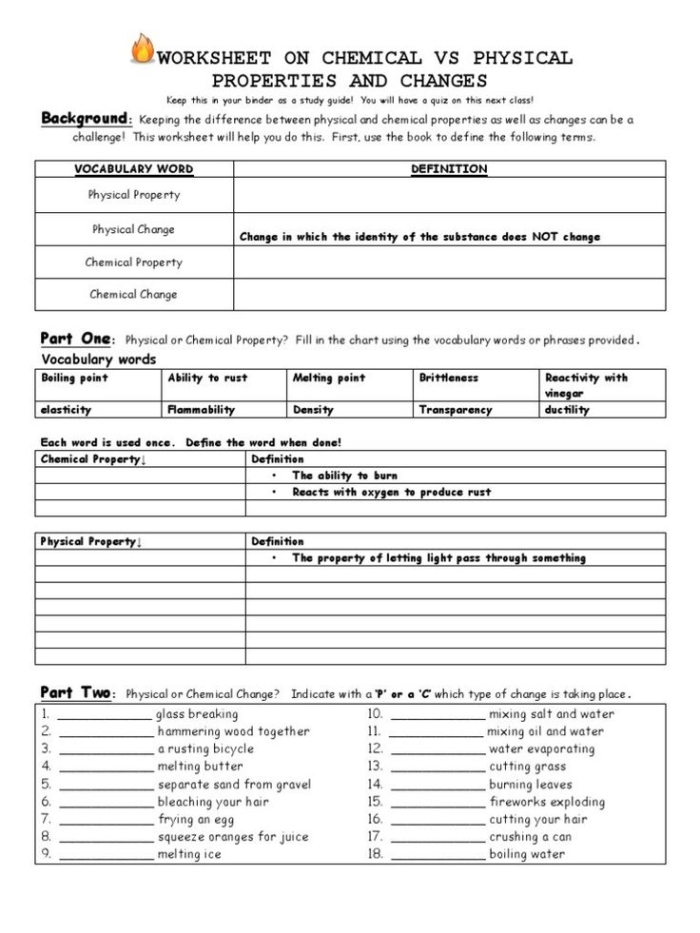
The worksheet designed for fourth graders not only defines these changes but also introduces the concepts of matter, mass, and properties. Matter is anything that has mass and takes up space, while mass refers to the amount of matter in an object. Properties are characteristics that help us identify substances, such as color, density, and boiling point.
To reinforce these concepts, the worksheet includes an exciting experiment. Students can combine vinegar and baking soda to observe a chemical reaction that produces carbon dioxide. As they see the fizzing and bubbling, they can learn firsthand how substances change and what signs indicate a chemical change, such as gas formation or temperature change.
This hands-on approach not only makes learning enjoyable but also helps solidify the concepts of matter and changes in the physical world. By engaging students with practical activities, they are more likely to retain information and develop a lasting interest in science. For additional practice, educators can explore worksheets on other subjects, such as finding equivalent fractions or creating travel brochures, to round out their learning experience.
Hands-On Worksheet Activities