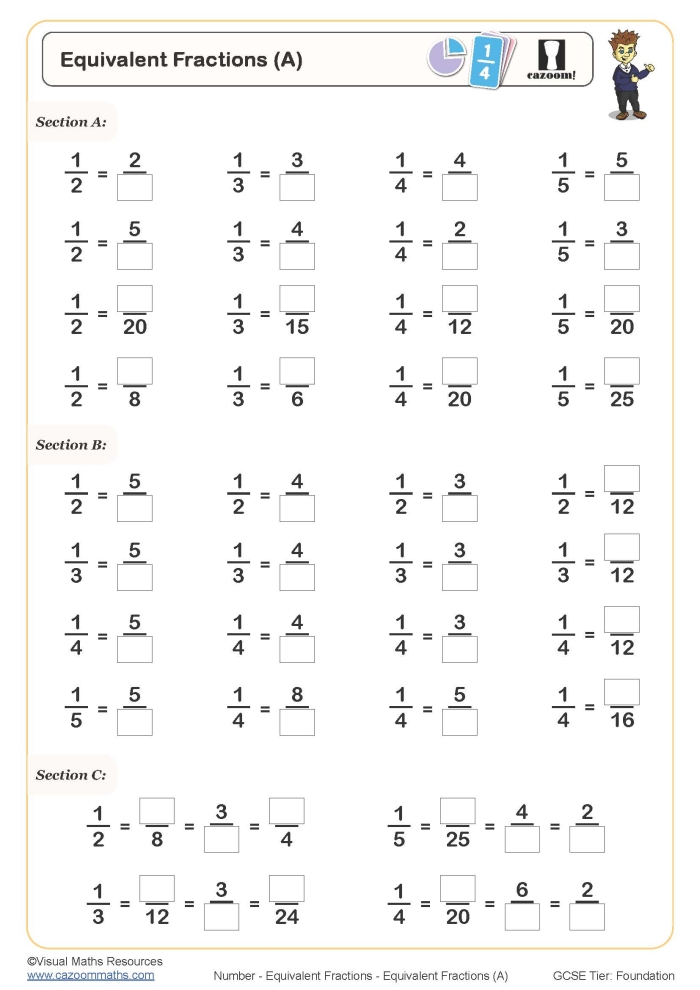
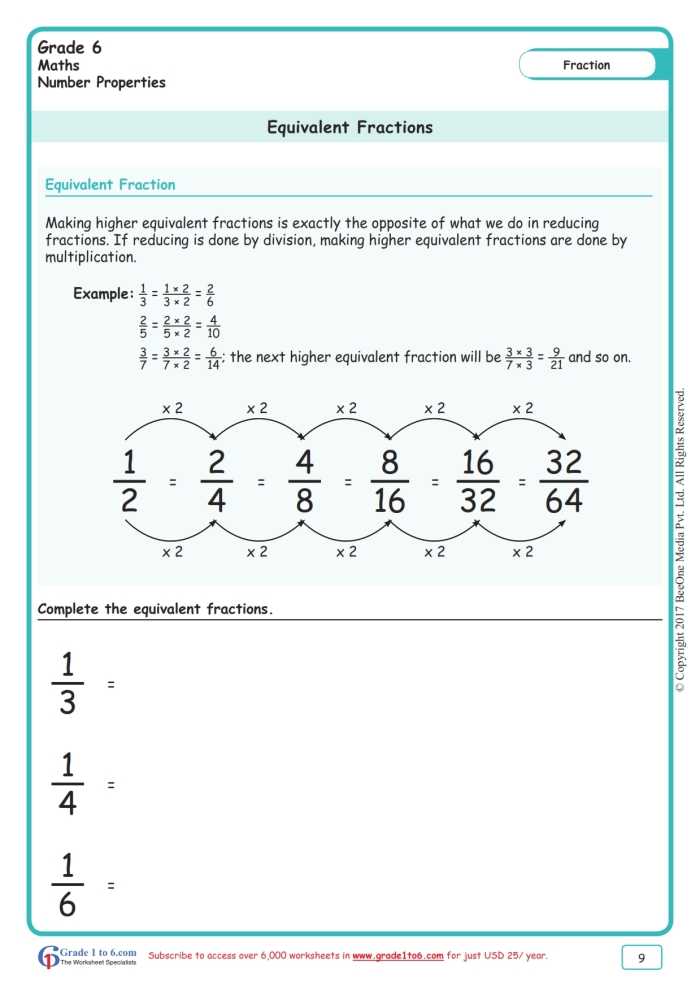
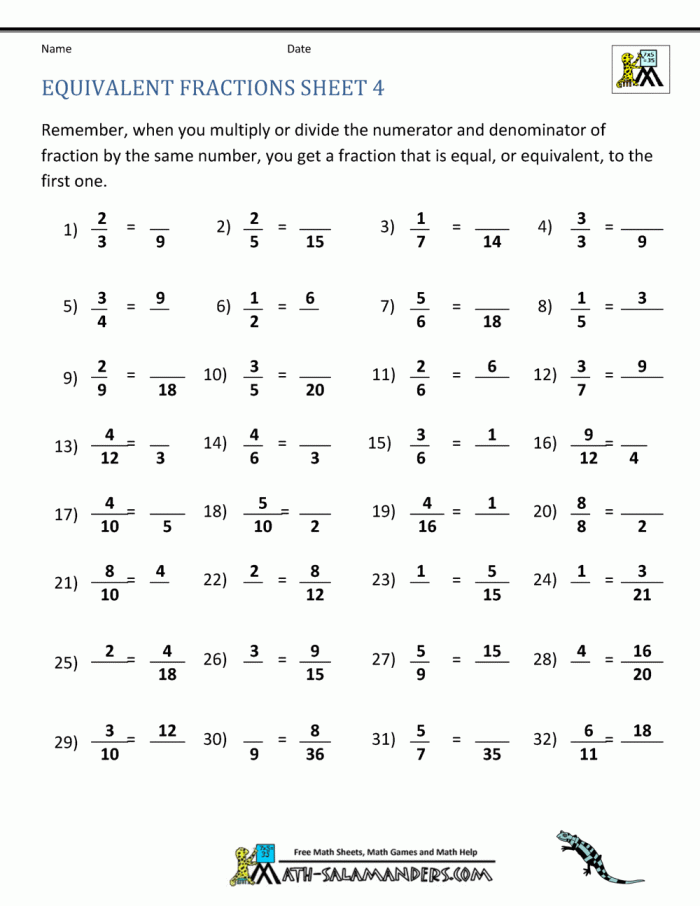
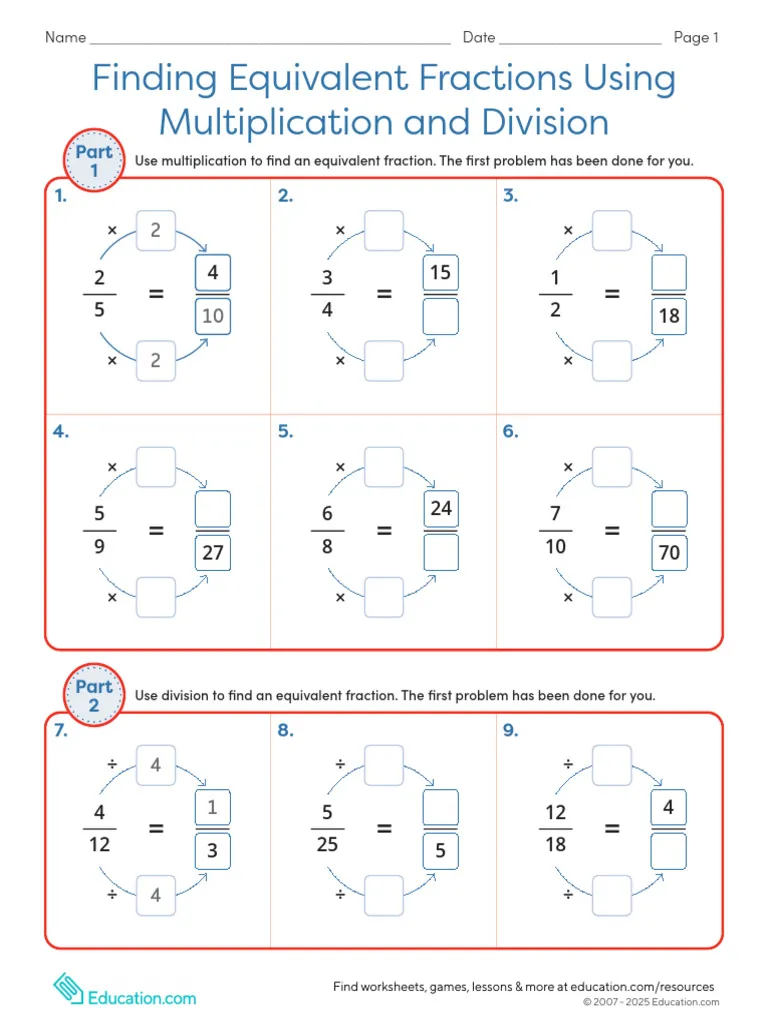
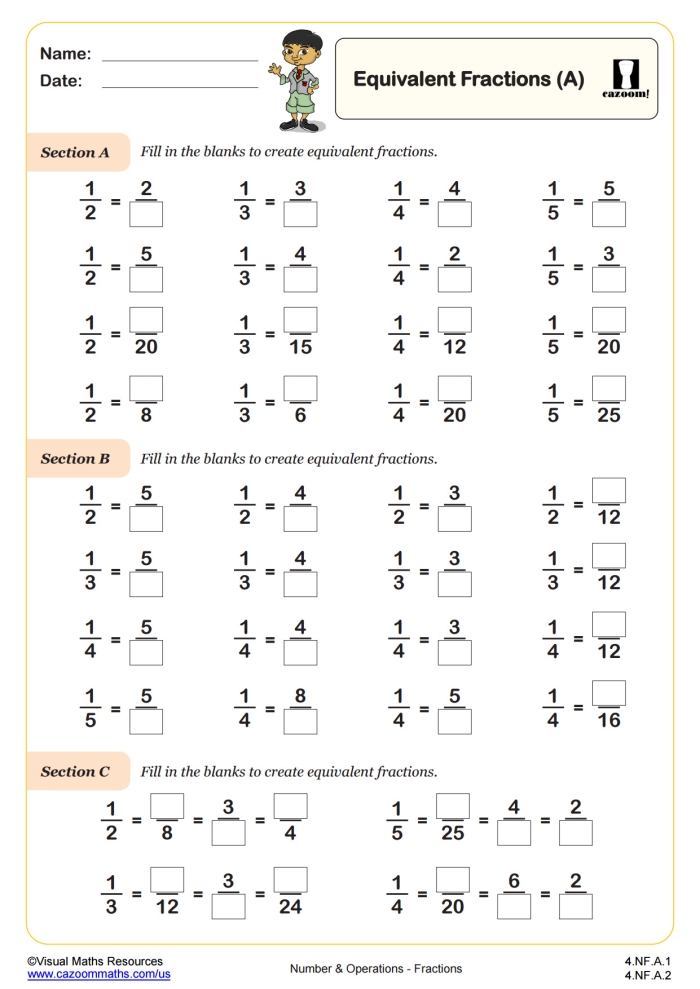
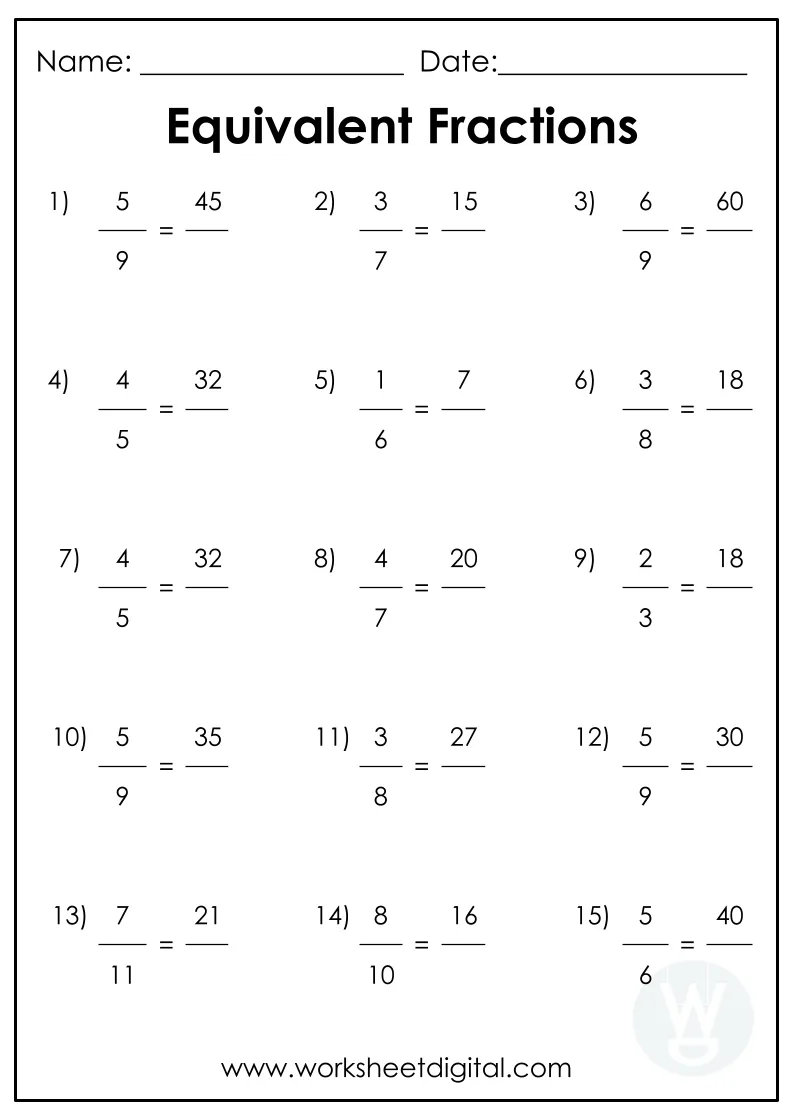
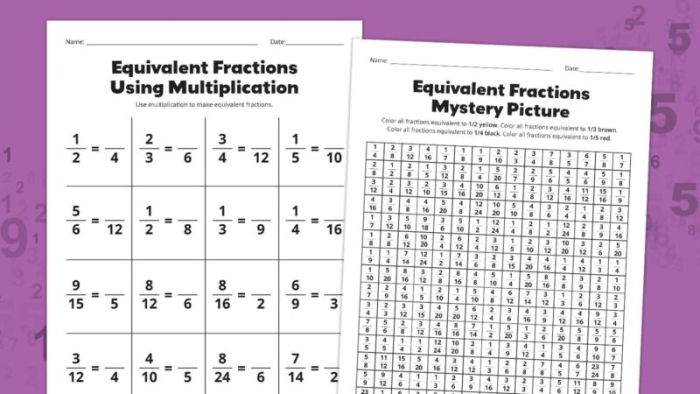
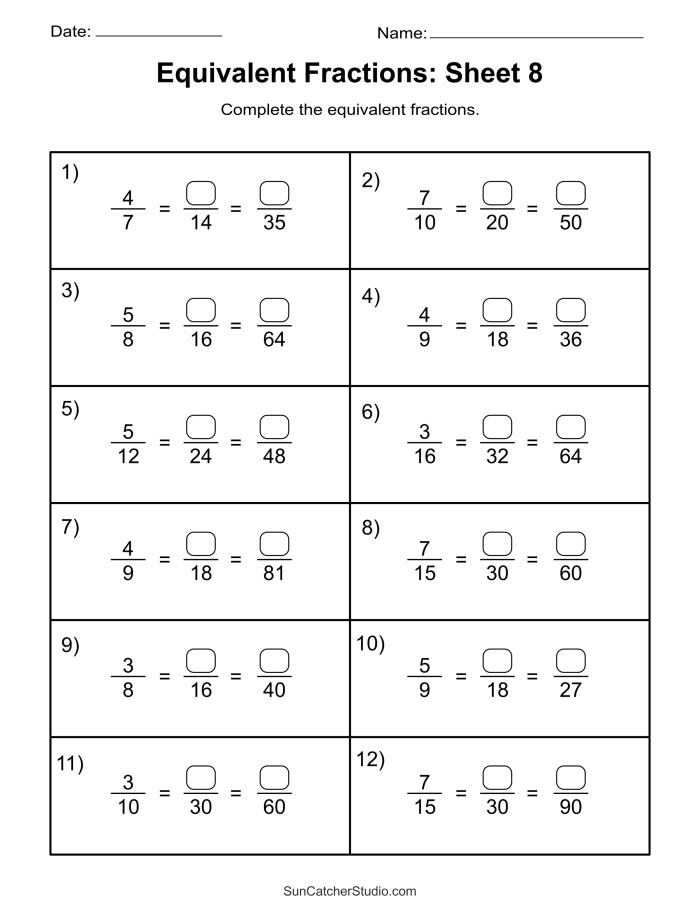
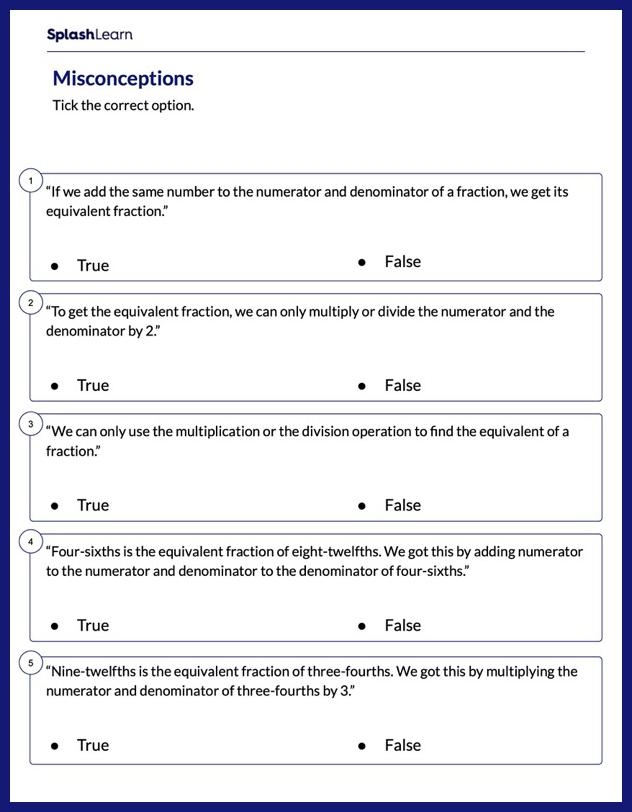
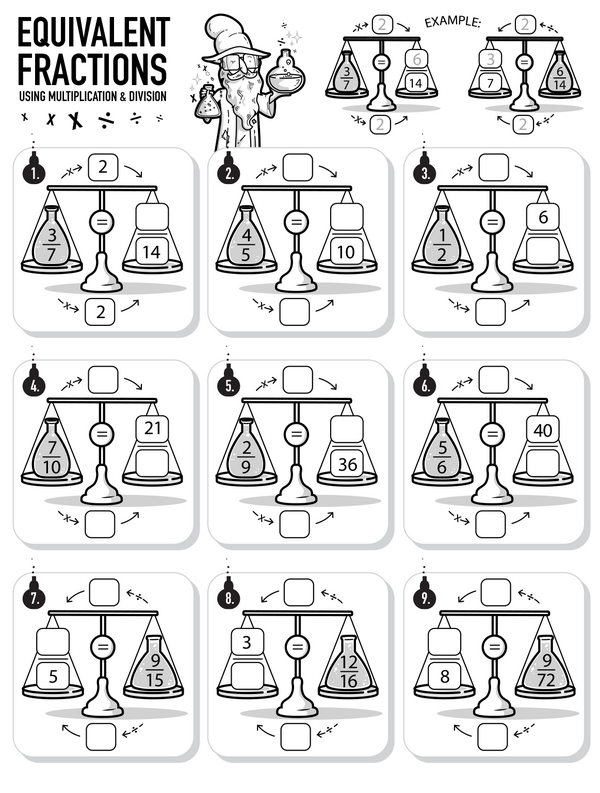
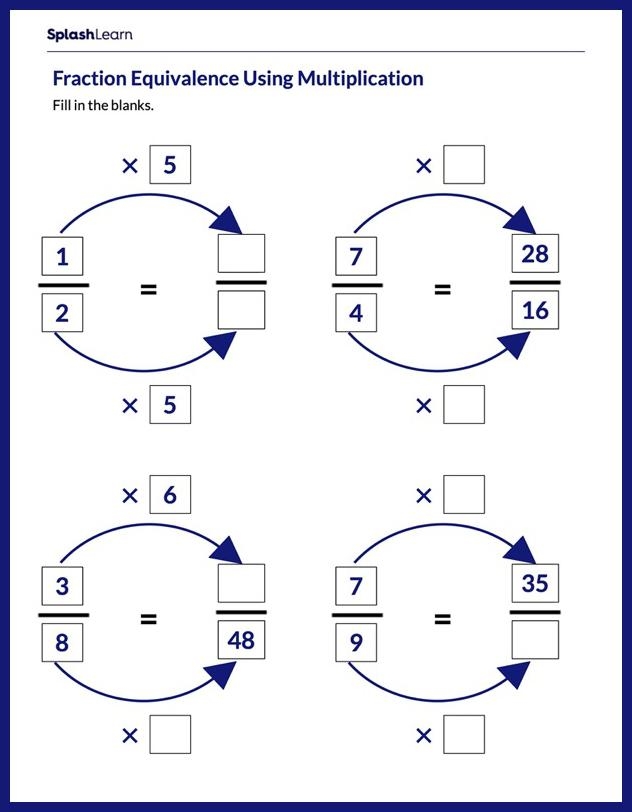
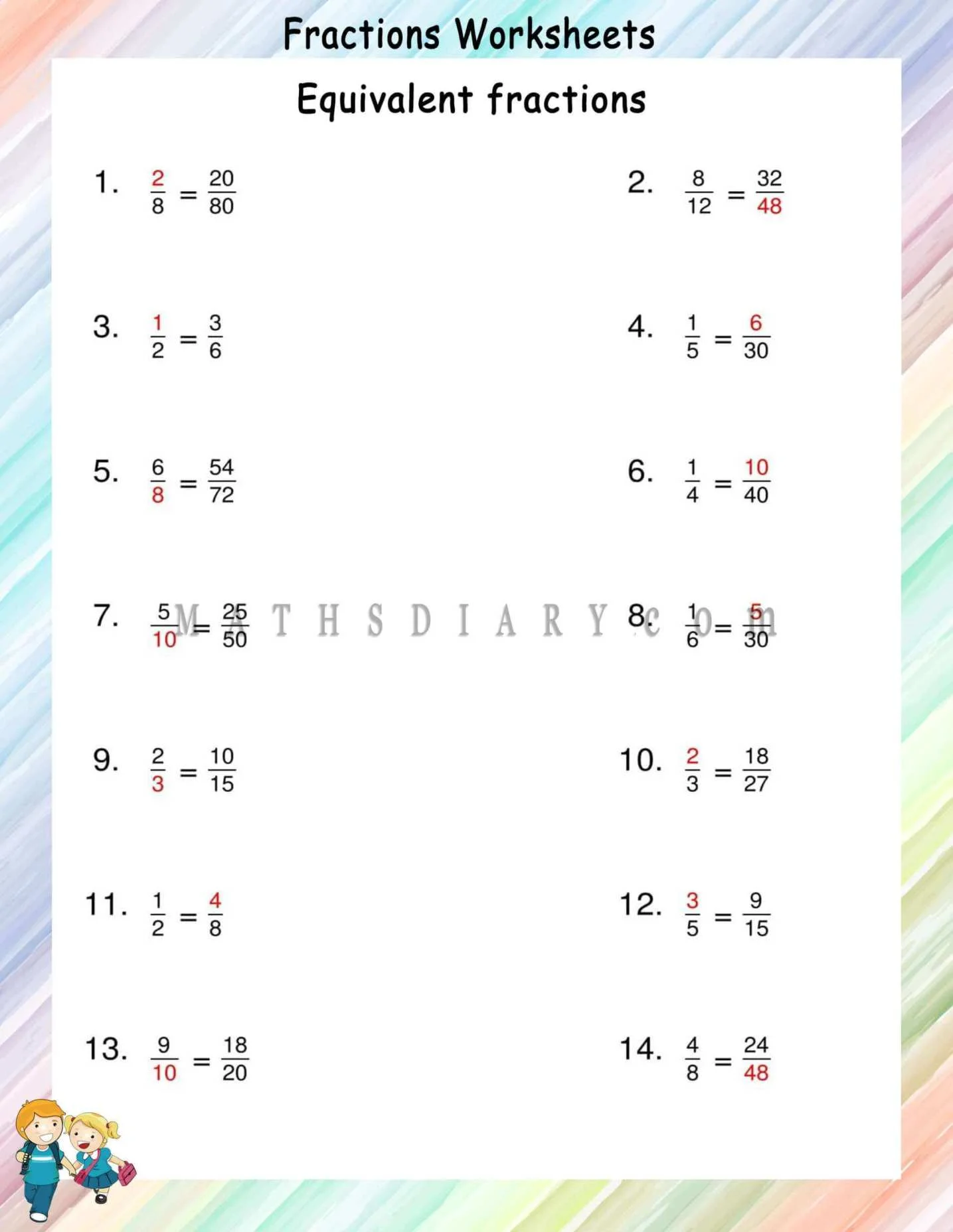
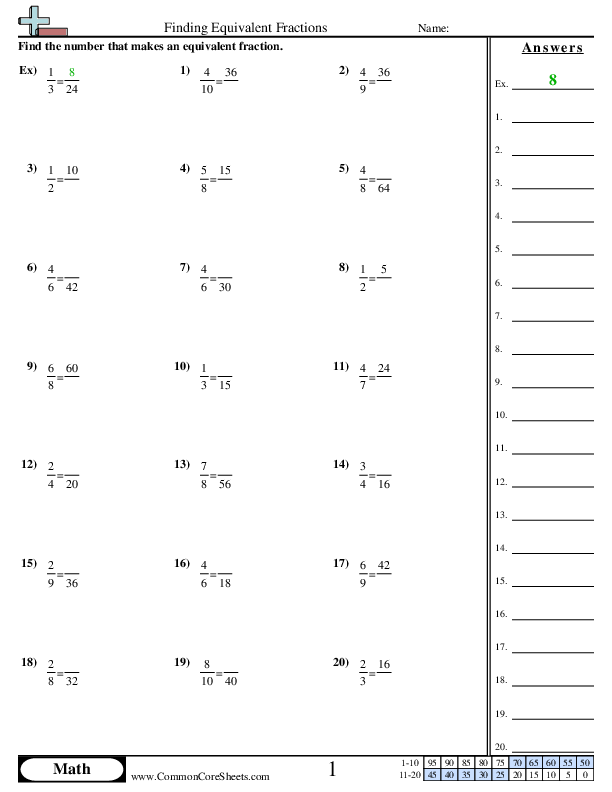
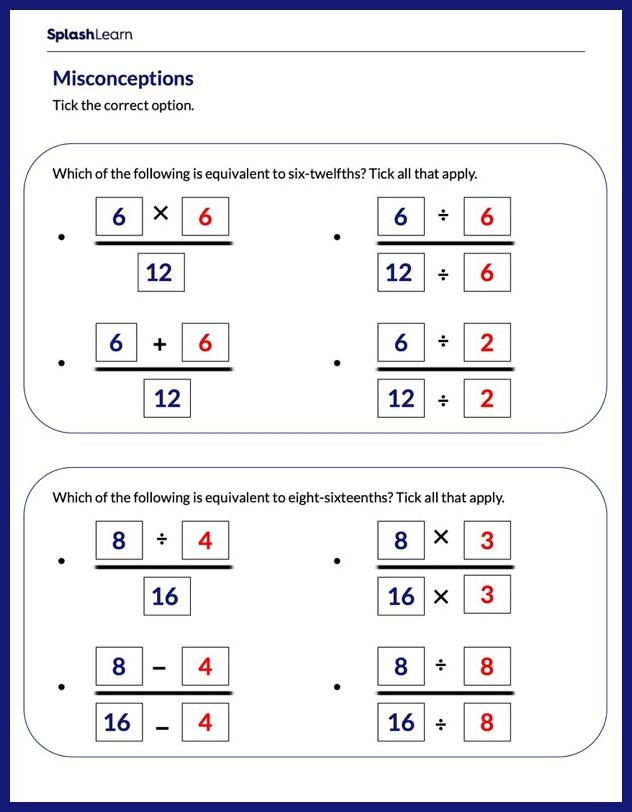
Fourth graders often struggle with the abstract concept of fractions, but equivalent fractions are actually one of the most practical skills they’ll learn in algebra. Once students grasp that 1/2 equals 2/4 equals 4/8, they unlock the ability to compare, add, and subtract fractions with confidence. The key is understanding that multiplying or dividing both the numerator and denominator by the same number creates a fraction that looks different but holds the same value.
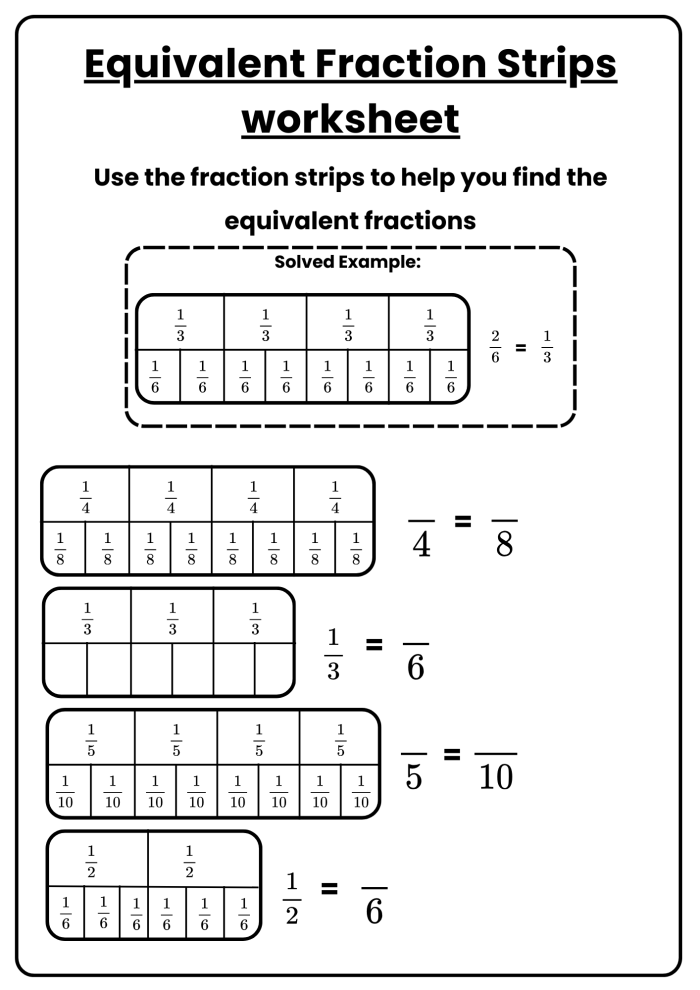
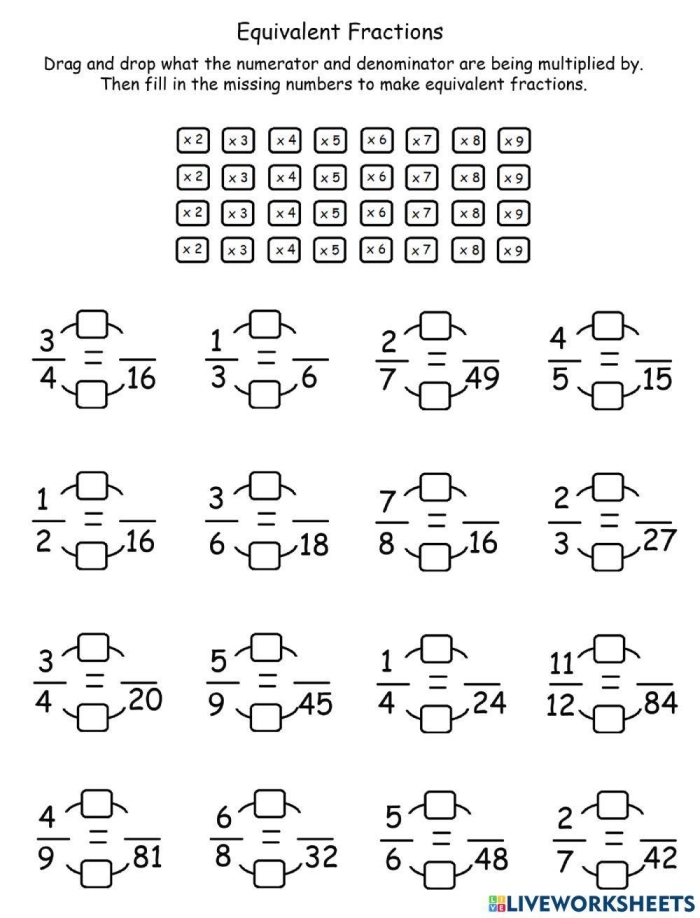
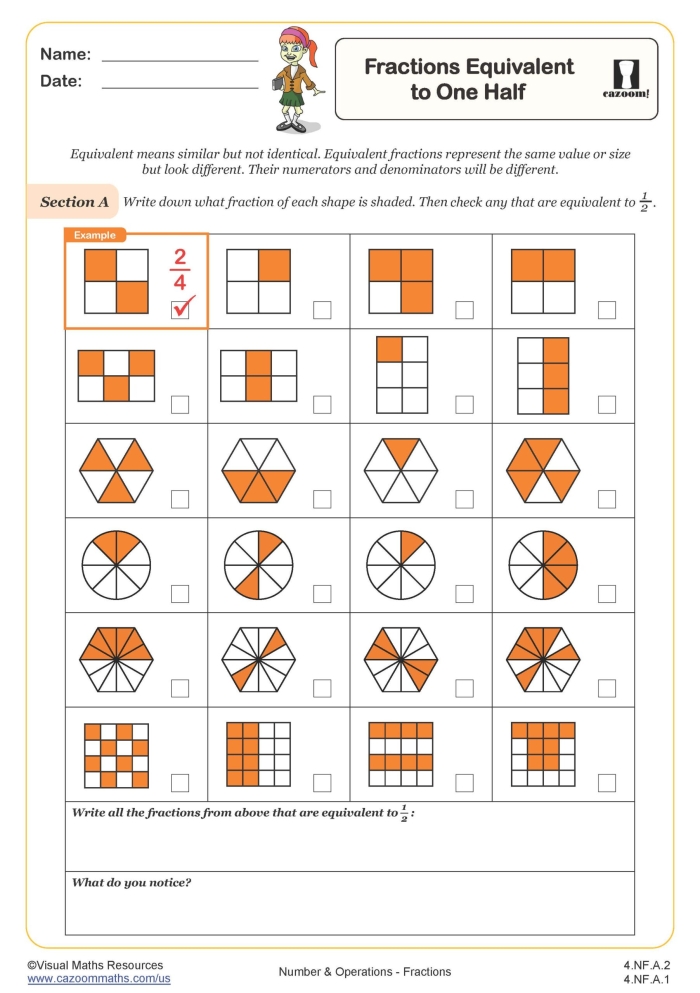
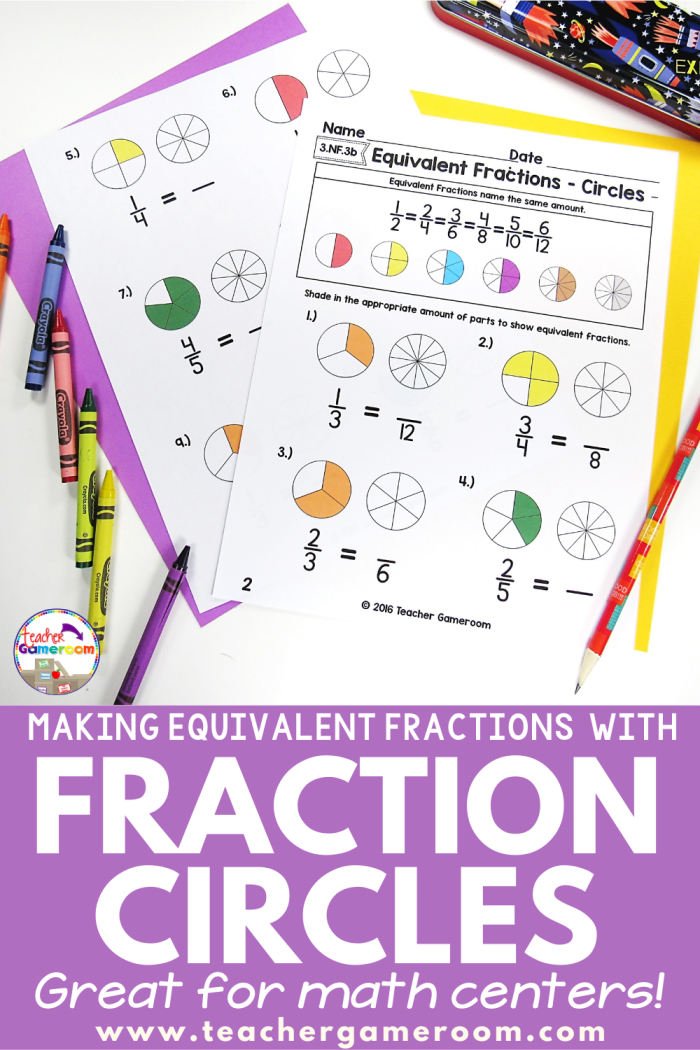
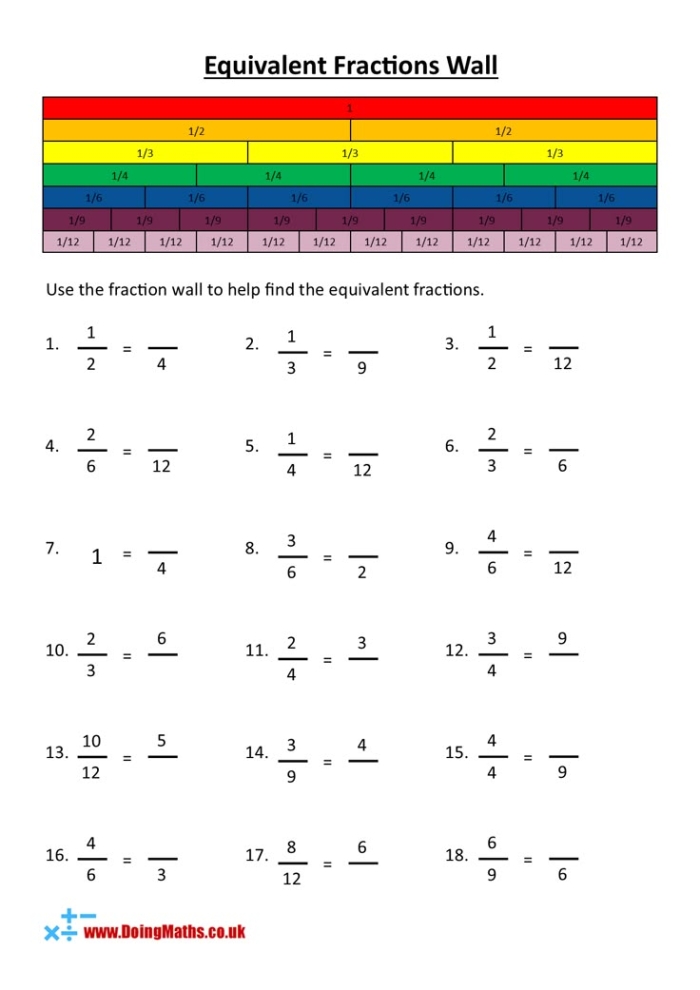
Working through multiplication and division problems helps students see this relationship firsthand. When a student multiplies 2/3 by 2/2, they get 4/6. They can physically verify these are equivalent by drawing circles or using fraction bars. This concrete approach bridges the gap between abstract math and something they can actually see and touch.
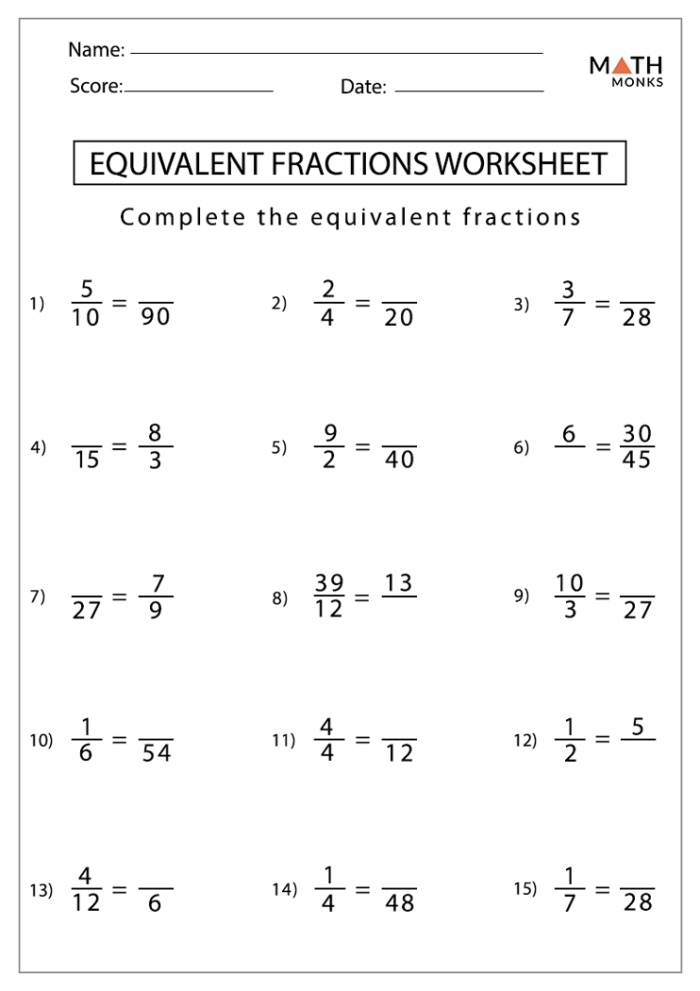
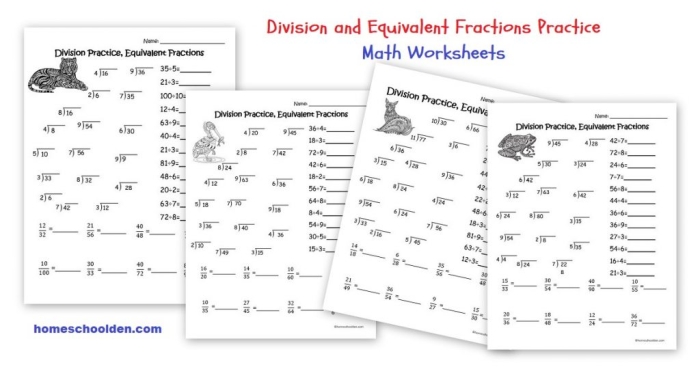
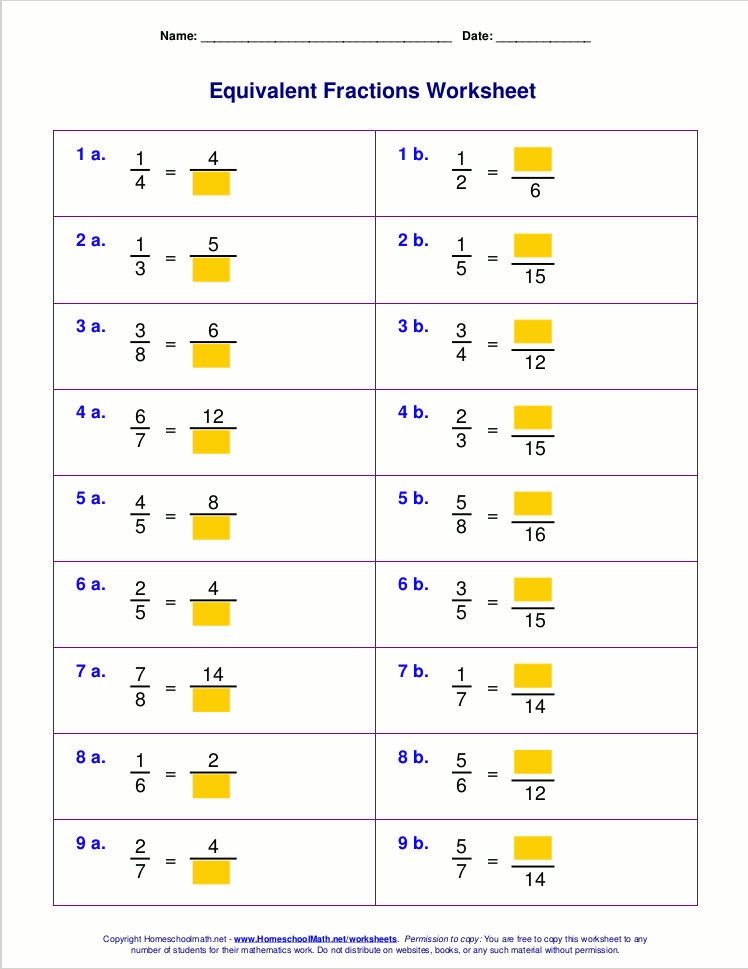
A solid worksheet on this topic should include problems where students multiply fractions to create larger equivalent versions, as well as problems where they divide to simplify. For instance, reducing 8/12 to 2/3 by dividing both numbers by 4 feels like solving a puzzle. Fourth graders respond well to this kind of problem-solving structure because it gives them agency in their learning.
Pairing fraction practice with other algebra skills strengthens overall mathematical thinking. You might combine equivalent fractions work with autumn word problems in algebra to show real-world applications, or use Venn diagrams to compare and contrast different fraction families. These connections help students recognize patterns across their math curriculum.
The most effective worksheets include a mix of difficulty levels, starting with visual models and progressing to purely numerical problems. This scaffolding ensures every student finds an entry point while still being challenged to think deeper about how multiplication and division transform fractions without changing their actual value.
Download These Worksheets for Practice