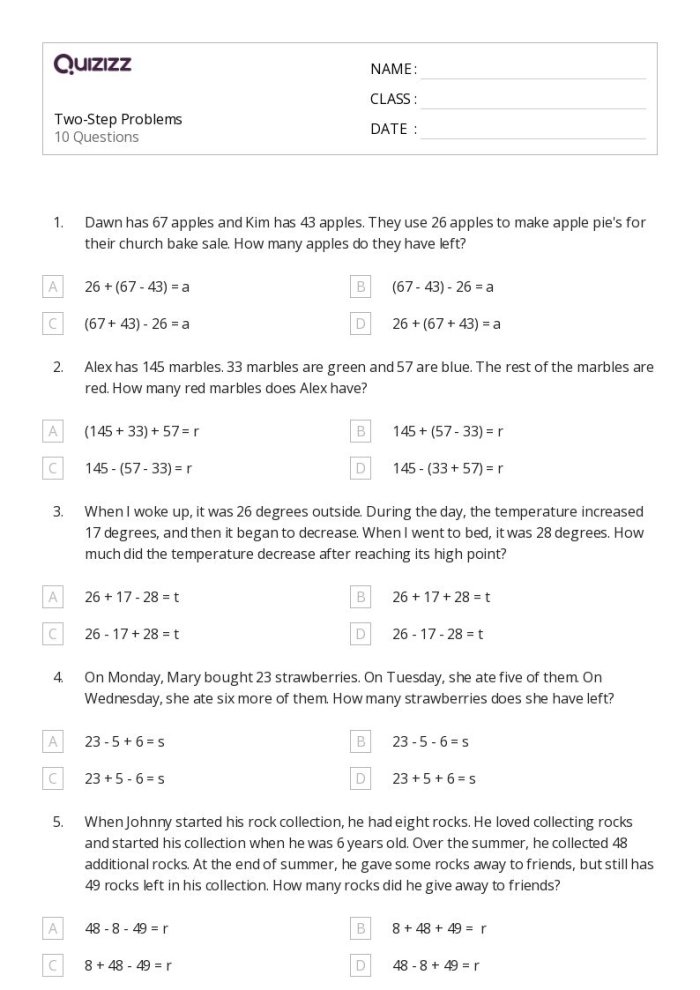
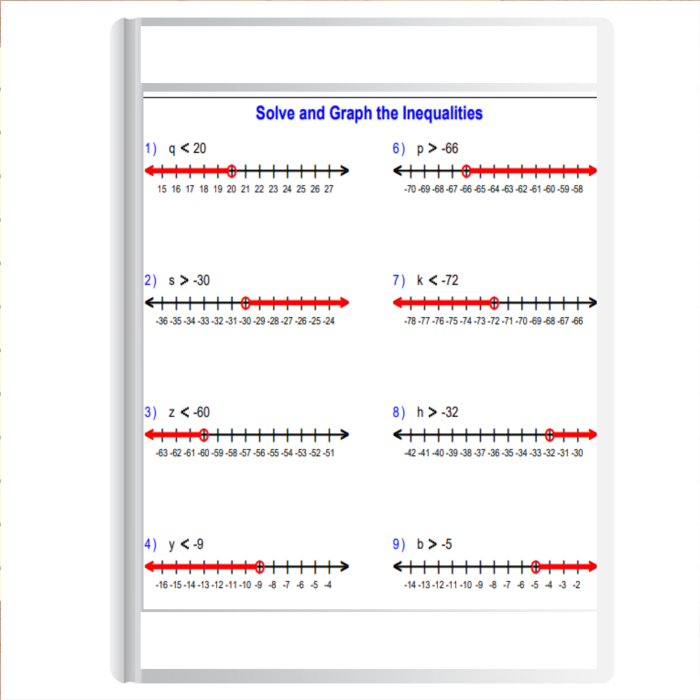
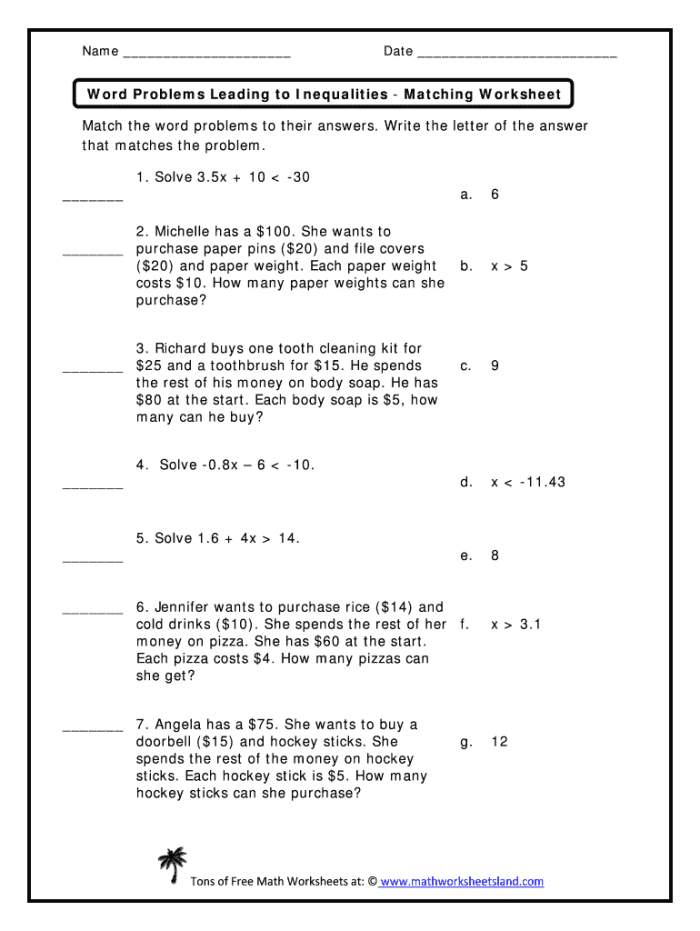
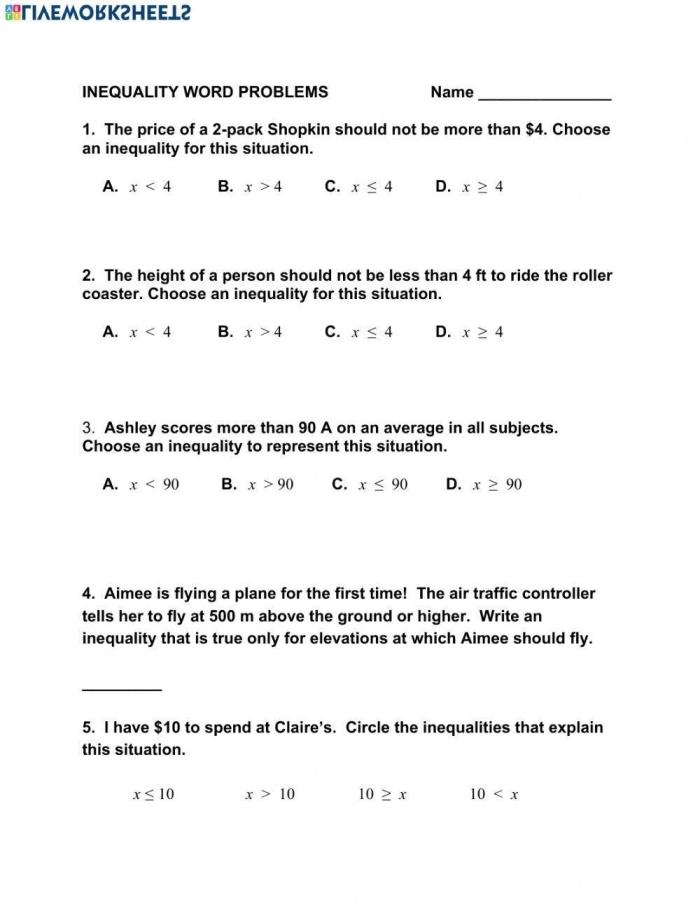
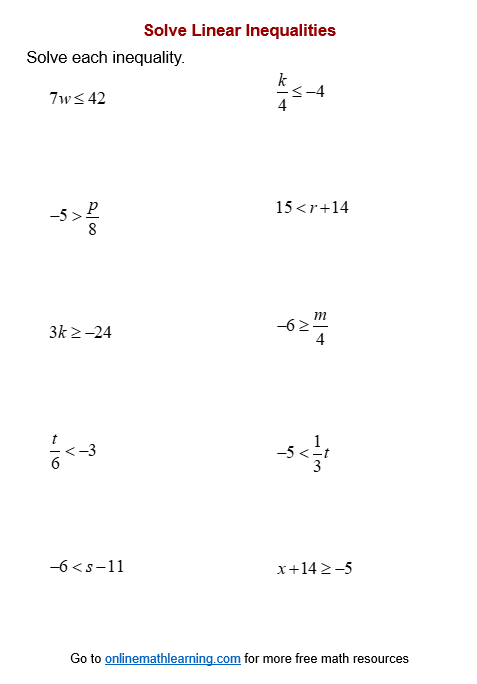
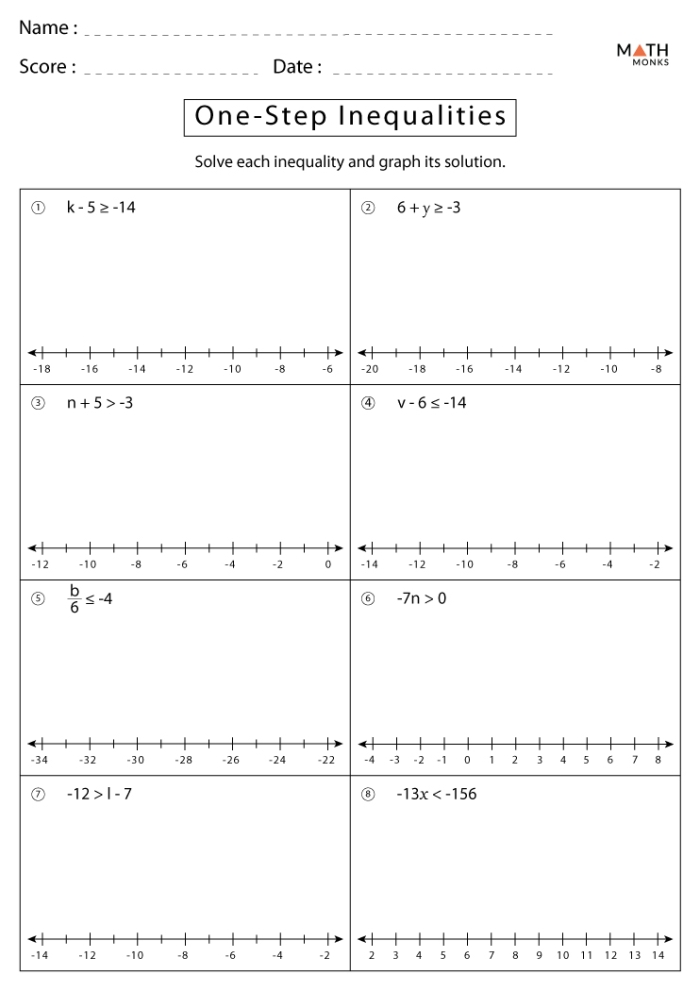
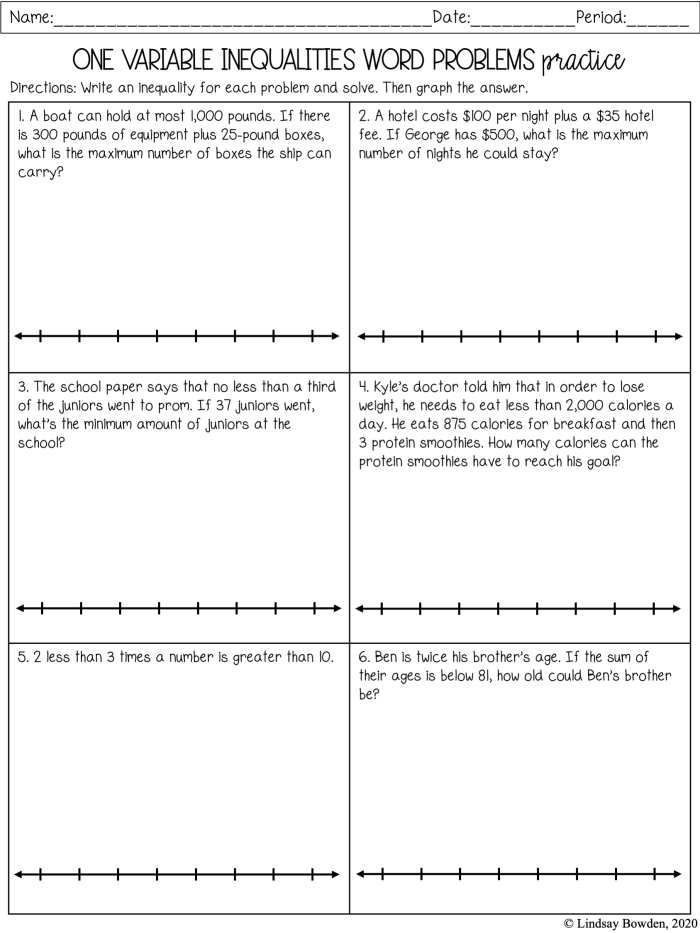
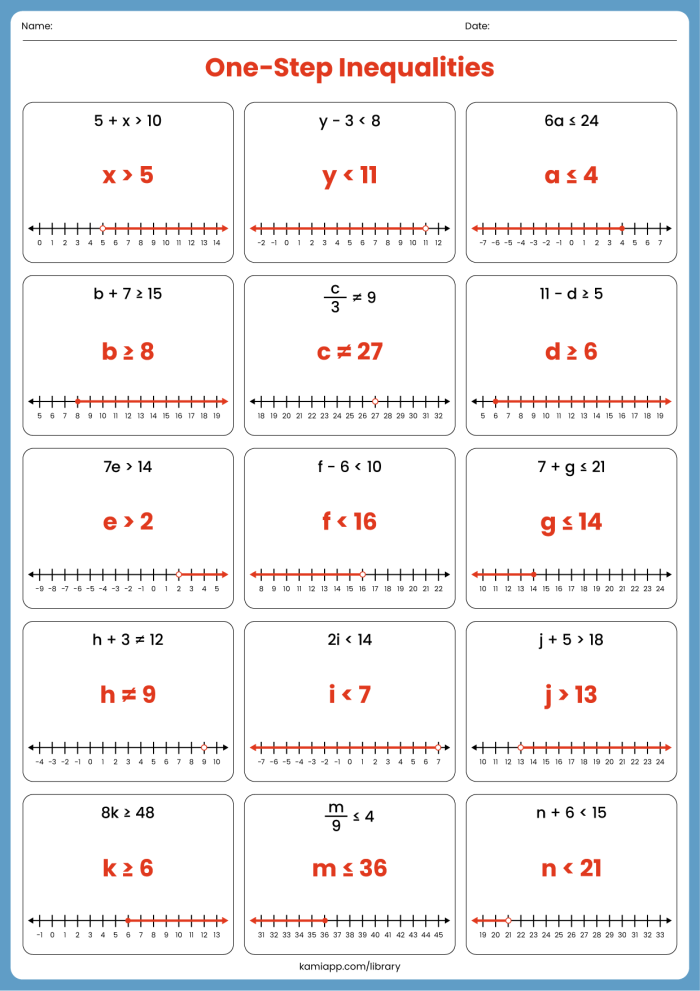
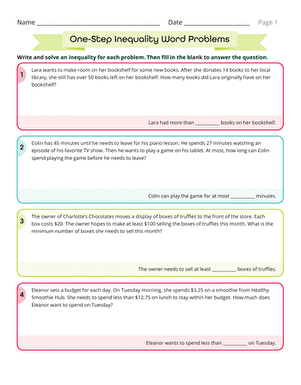
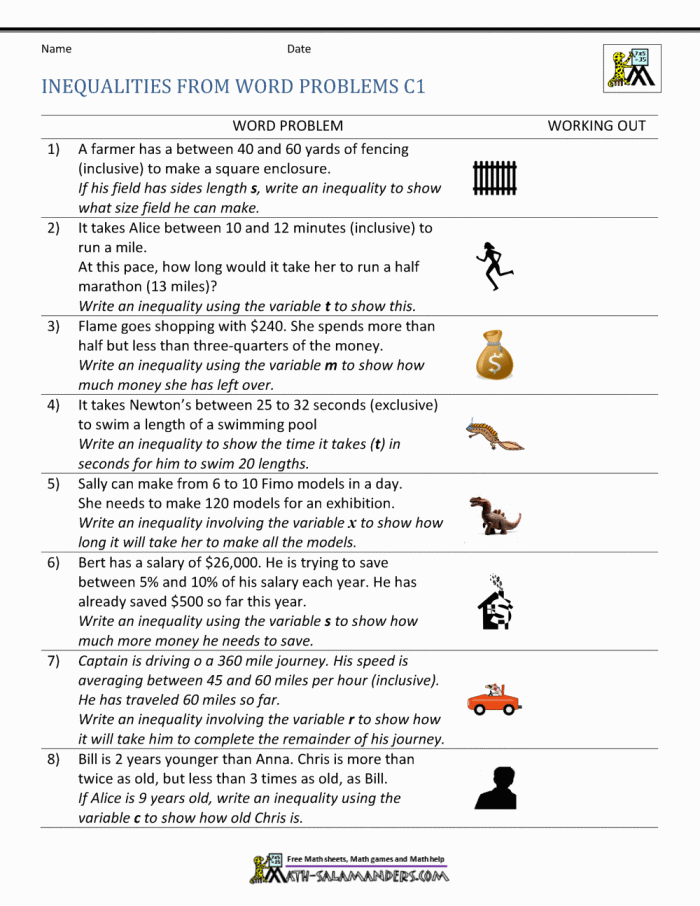
Word problems force students to translate real situations into mathematical language, and one-step inequalities are the perfect vehicle for this skill in seventh grade. When you ask students to write and solve these inequalities, you’re asking them to do something deeper than just plug numbers into a formula. They have to read carefully, identify what’s unknown, and decide whether they need a less-than or greater-than symbol.
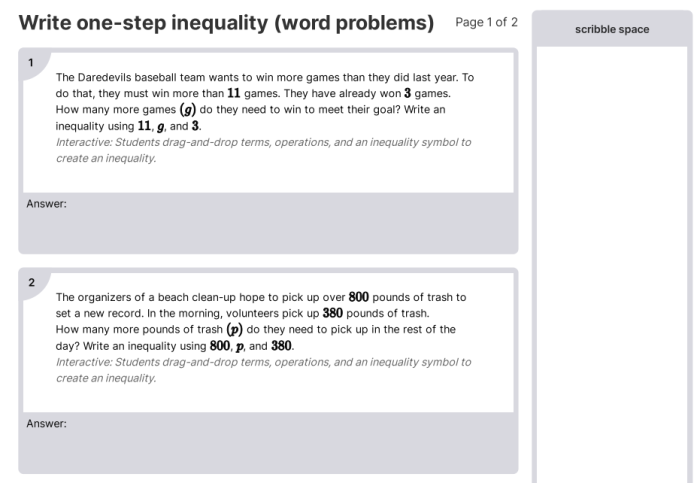
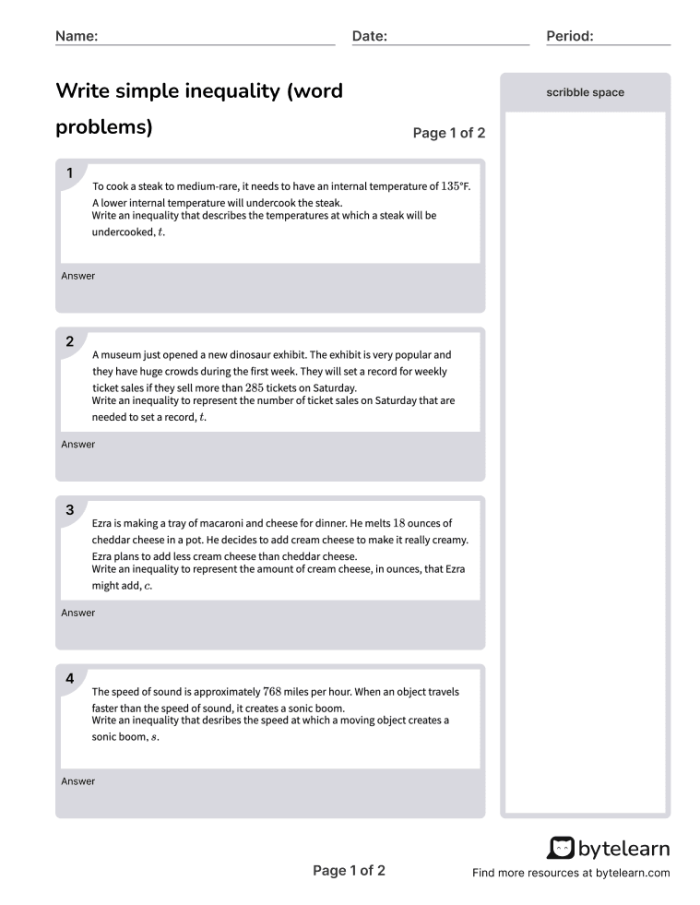
The beauty of one-step inequality word problems is that they bridge the gap between concrete scenarios and abstract thinking. A student might encounter a problem like “Marcus has at most $50 to spend on supplies” and need to write an inequality that represents his spending limit. This isn’t just math; it’s learning to think in constraints and boundaries that exist in everyday life.
When seventh grade students work through these problems, they develop fluency with inequality symbols and gain confidence in their algebraic reasoning. The writing component is crucial because it forces them to show their thinking. You can see exactly where a student gets stuck: Are they struggling to understand what the words mean, or do they know the concept but make an error when solving?
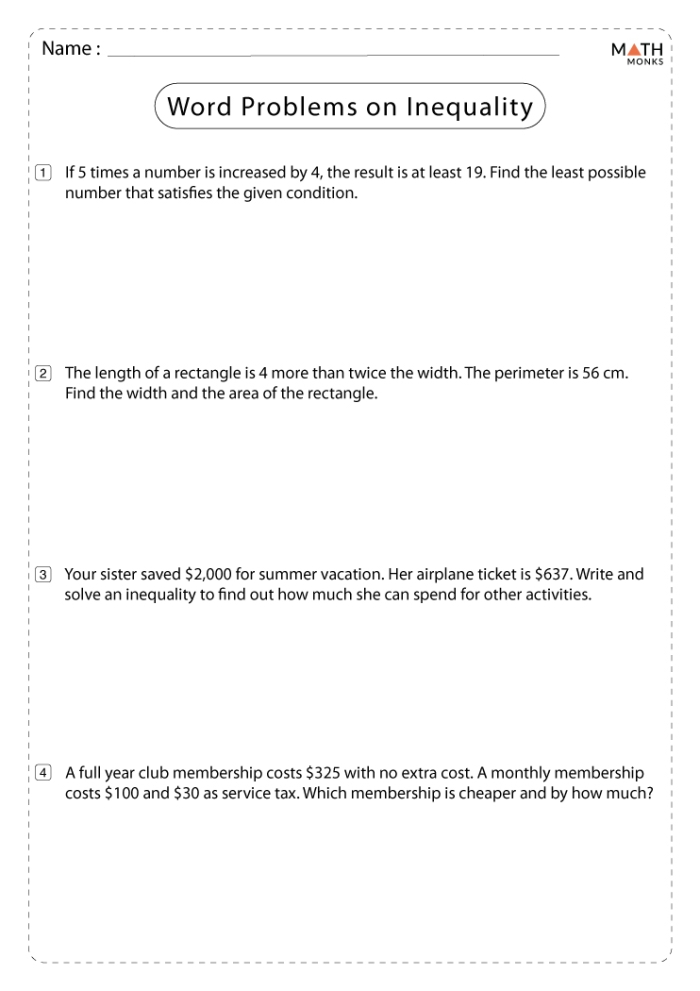
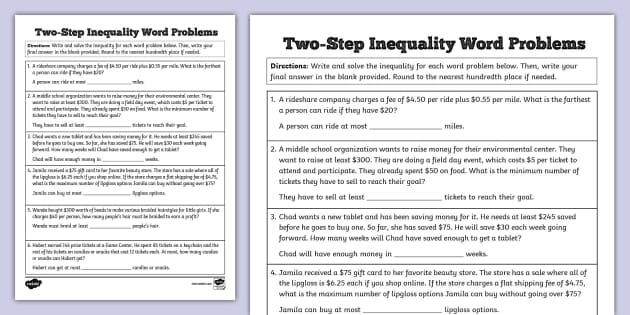
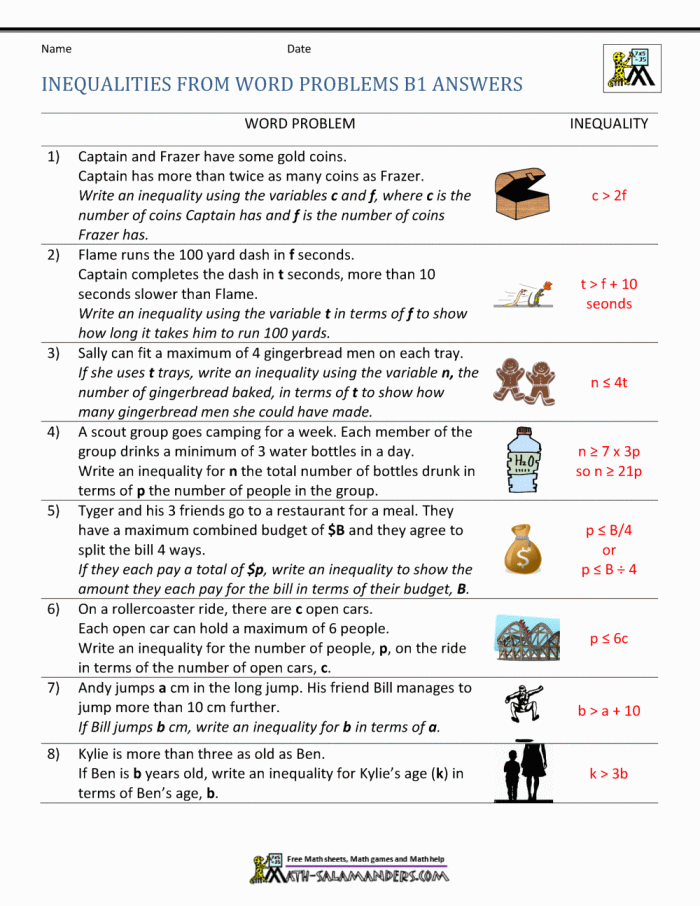
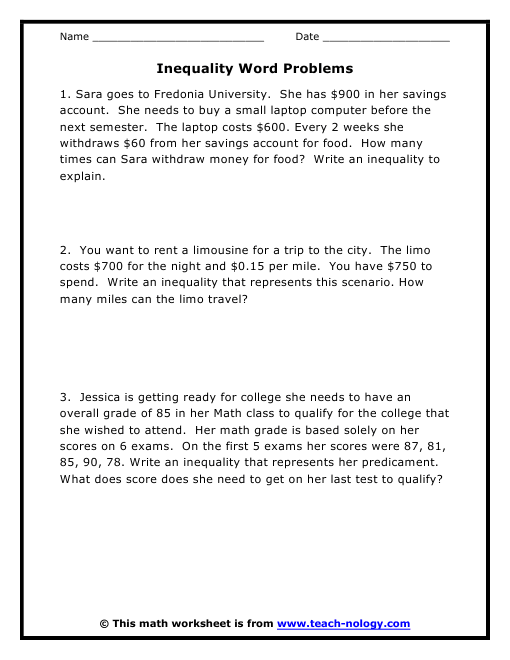
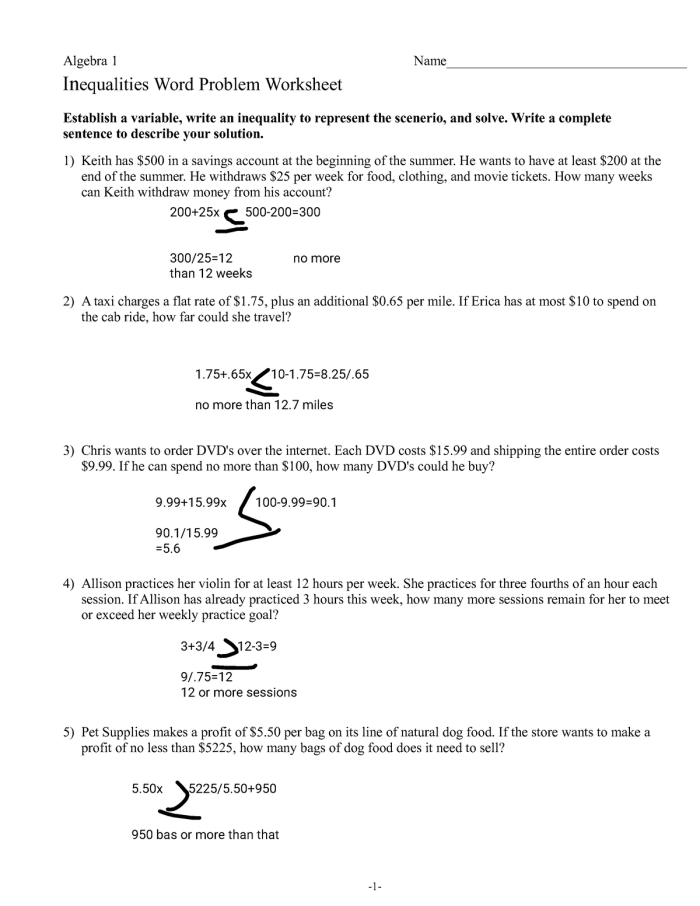
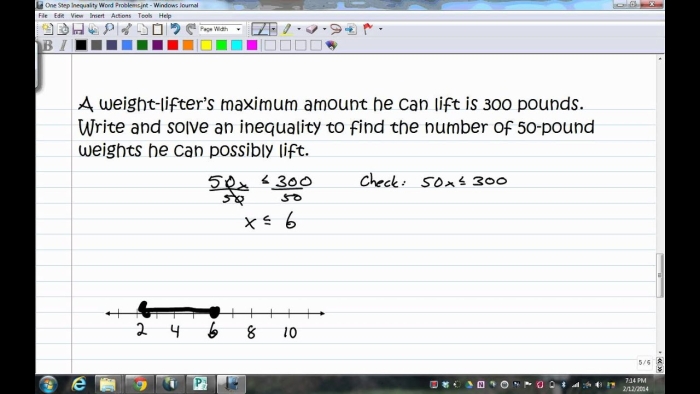
A solid worksheet on this topic typically includes scenarios involving money, time, distance, or quantities where a limit or minimum applies. Students benefit from seeing how different phrases translate to different inequality symbols. The phrase “no more than” means less than or equal to, while “at least” means greater than or equal to.
If you’re looking to strengthen other mathematical foundations alongside inequalities, consider pairing this work with activities on the constant of proportionality in tables and graphs, which helps students understand relationships between variables in different formats. You might also explore probability concepts through hands-on activities to round out a comprehensive math curriculum.
Try These Printable Worksheets