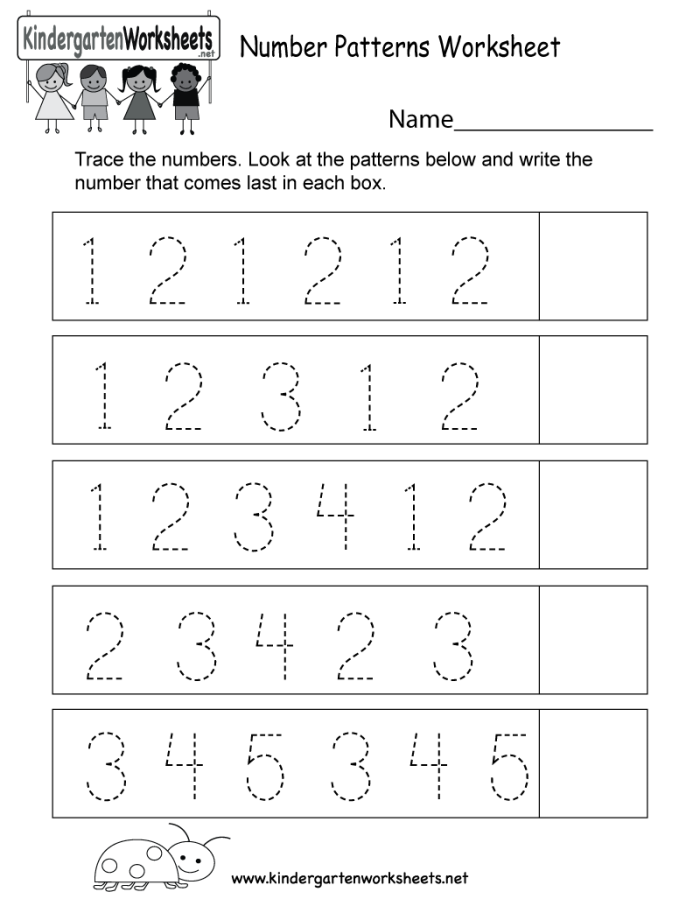
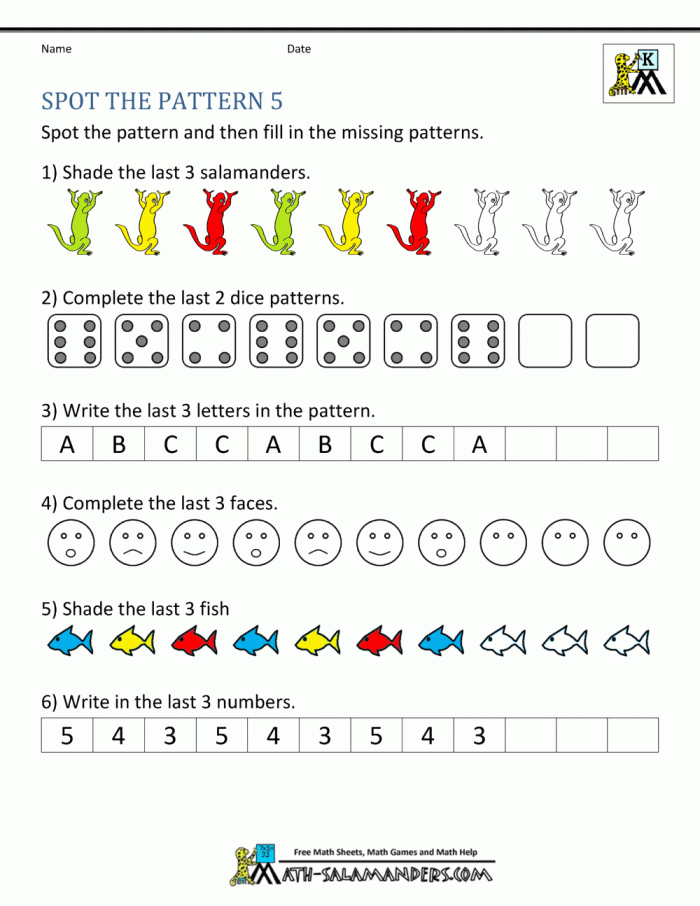
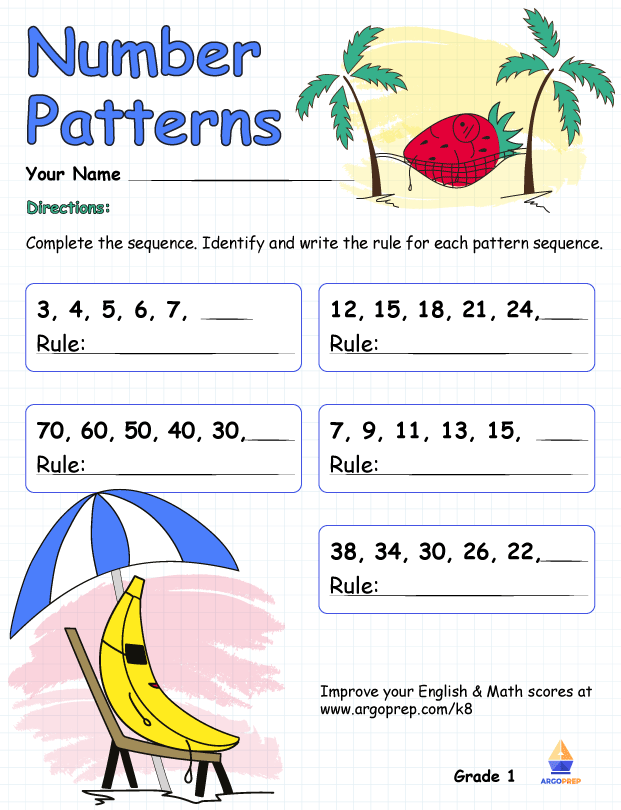
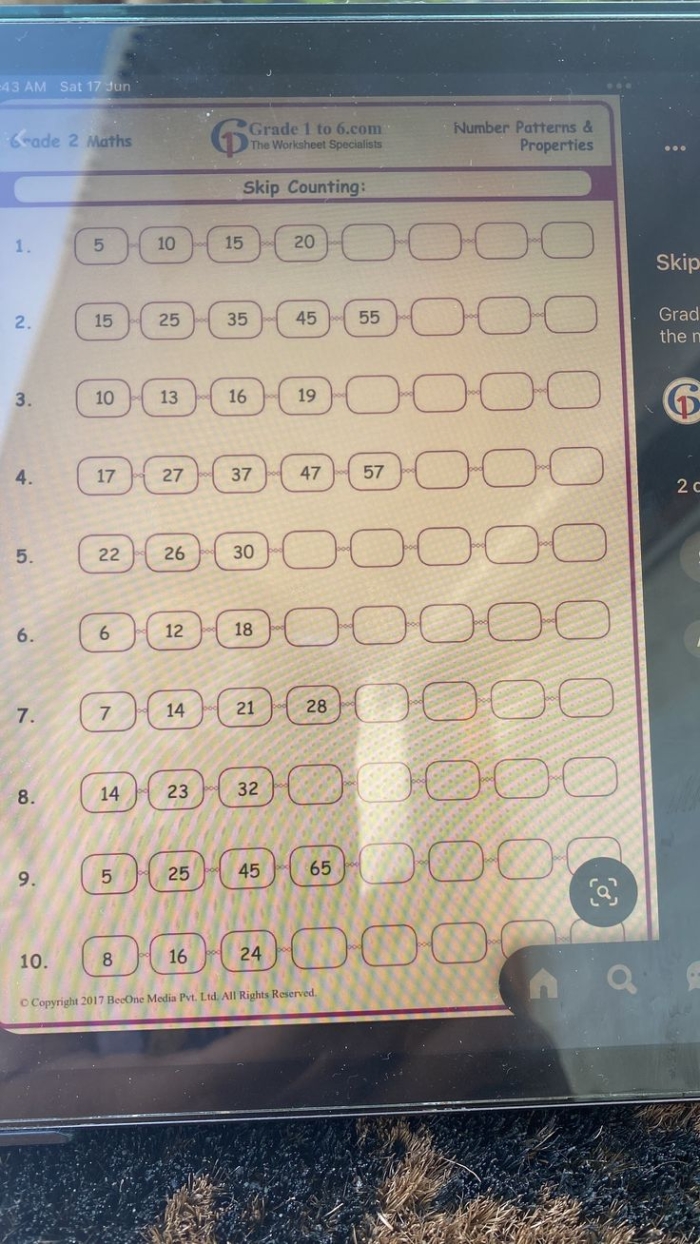
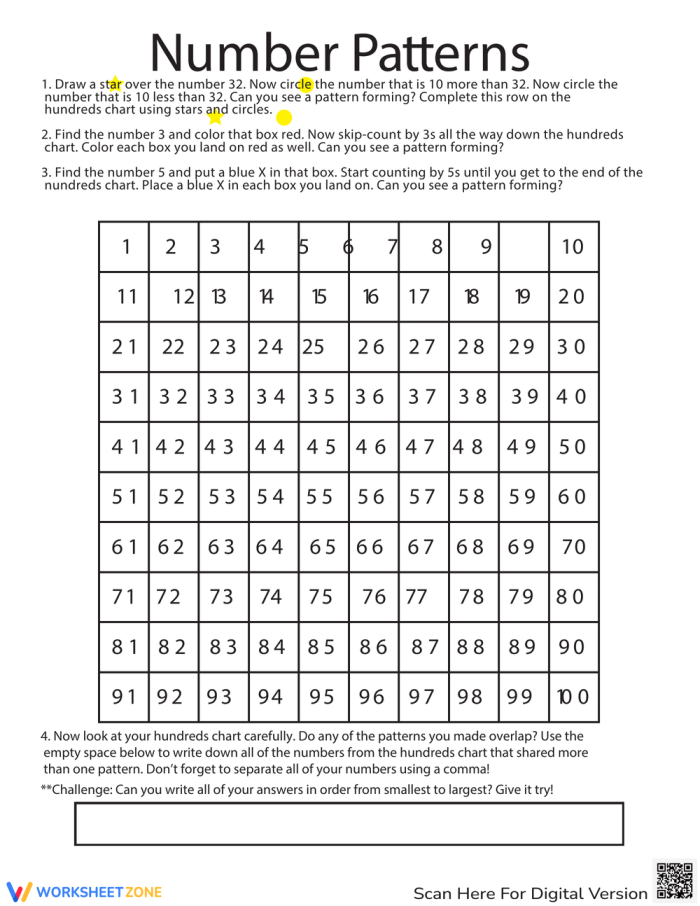
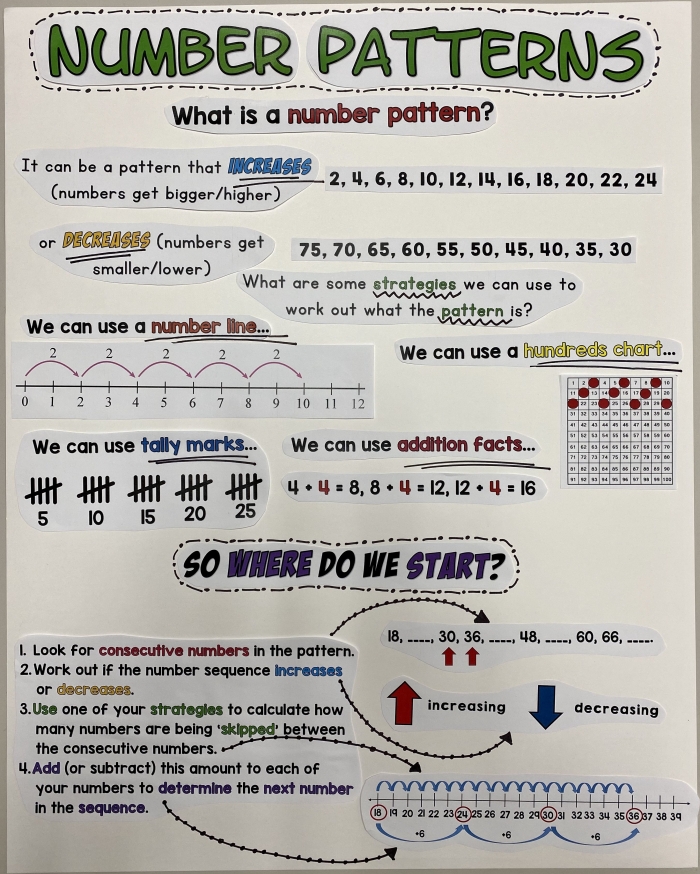
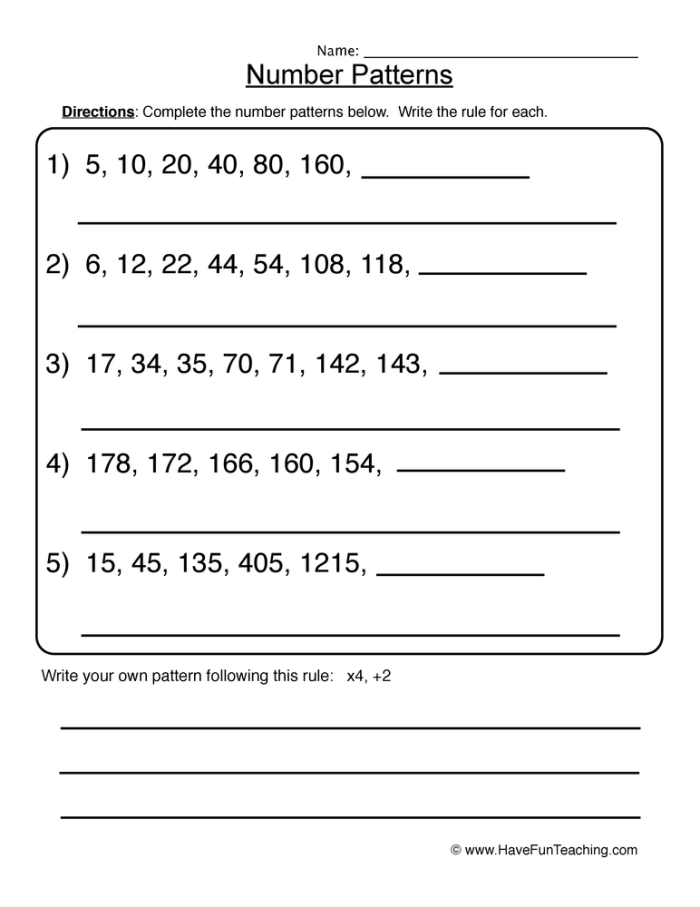
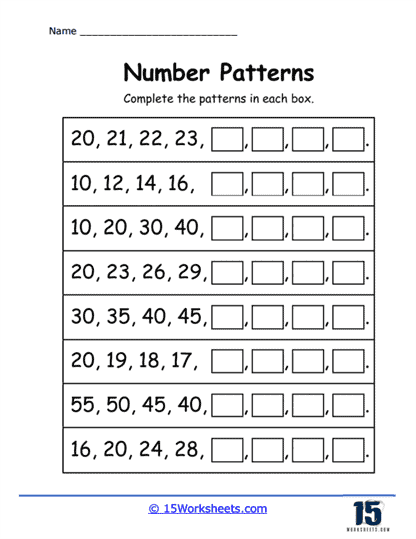
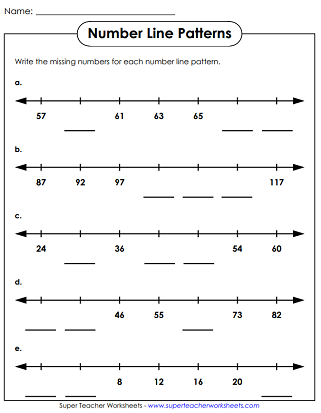
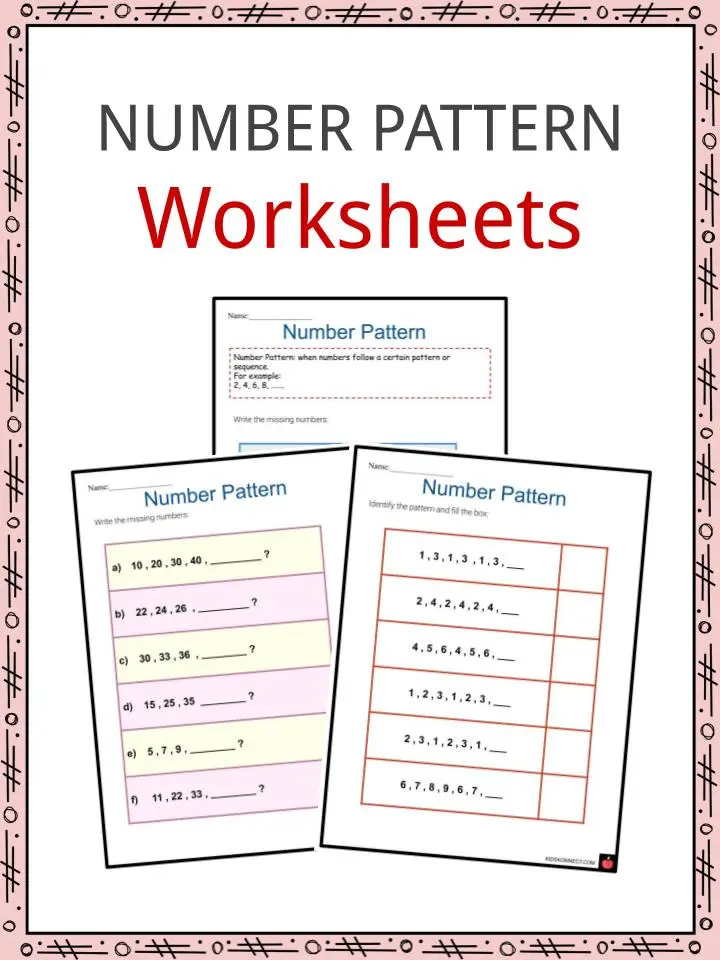
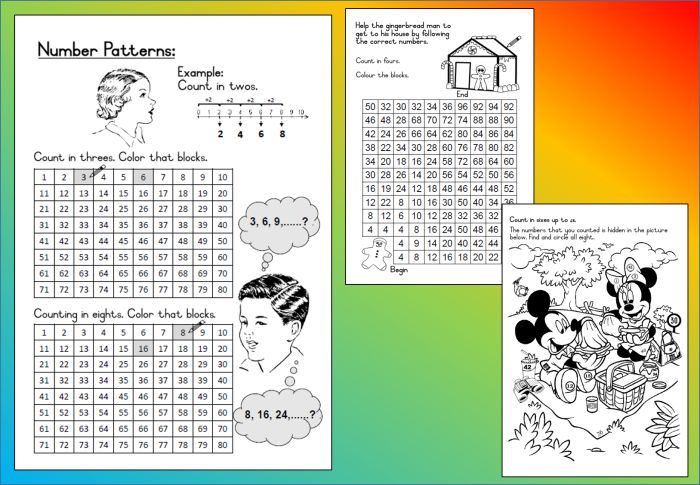
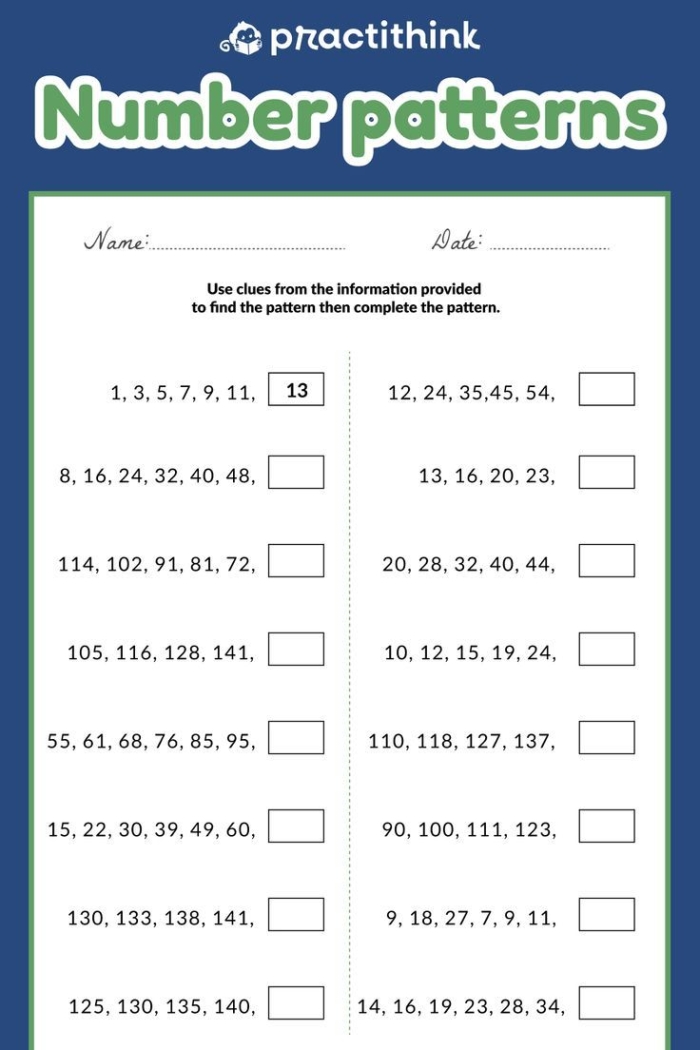
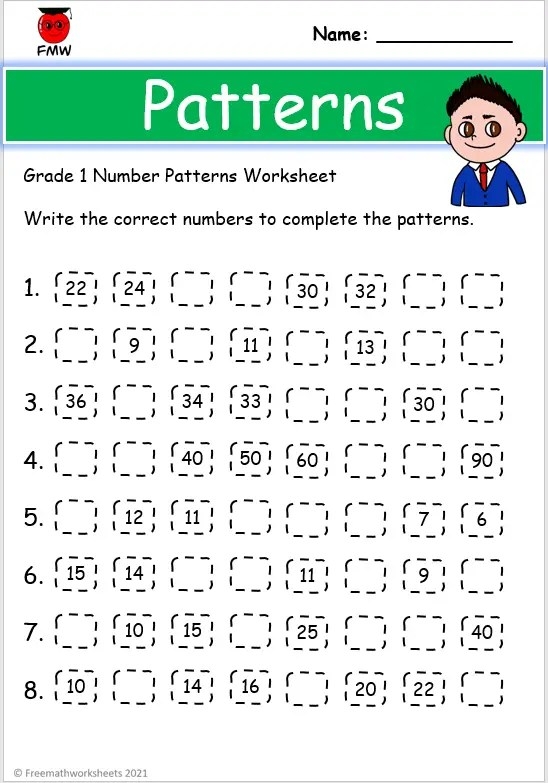
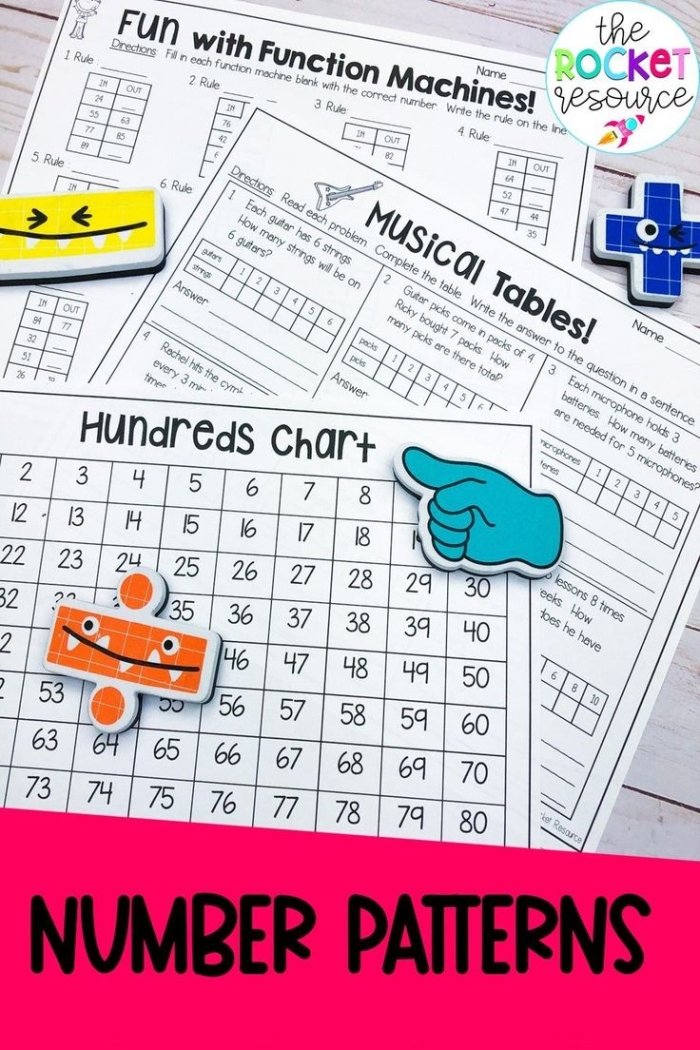
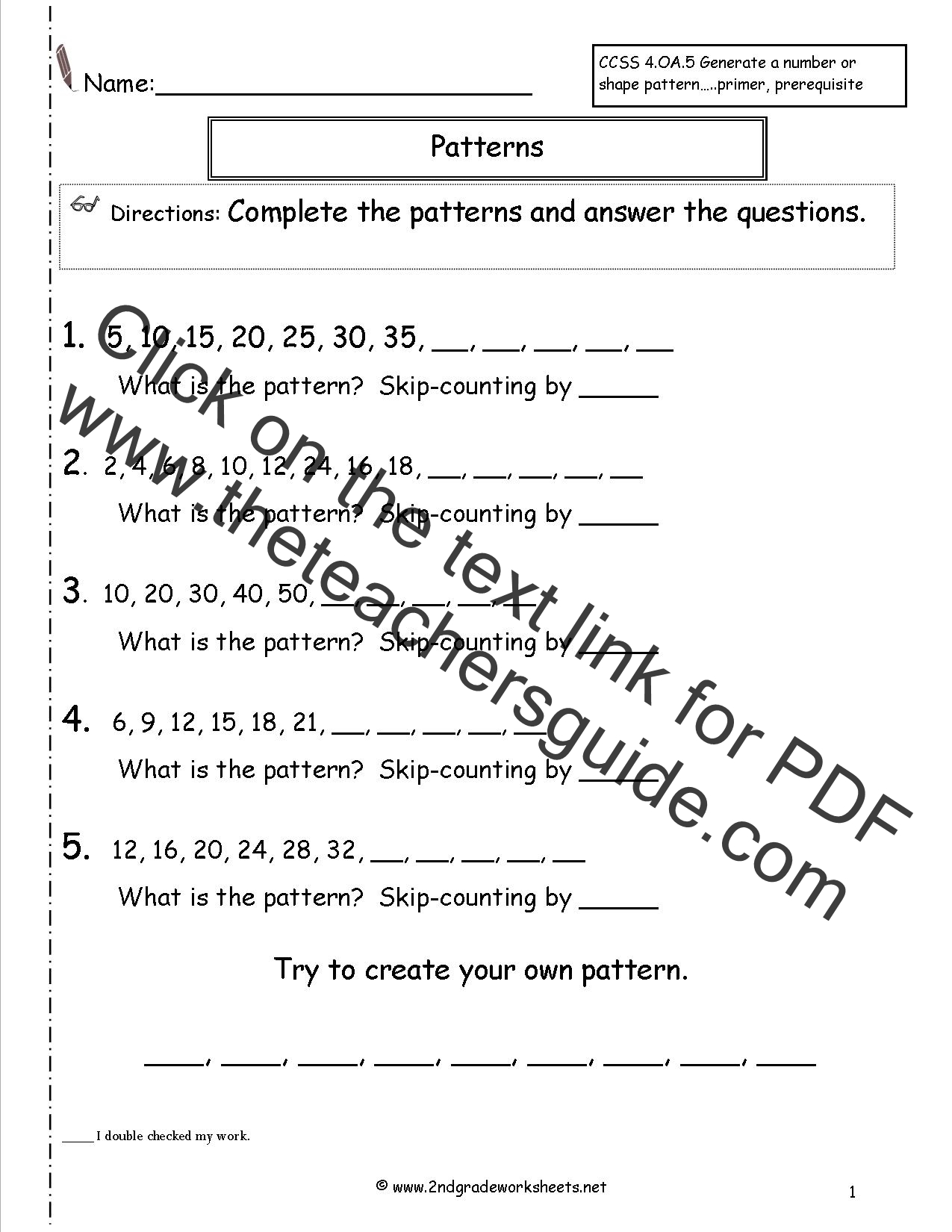
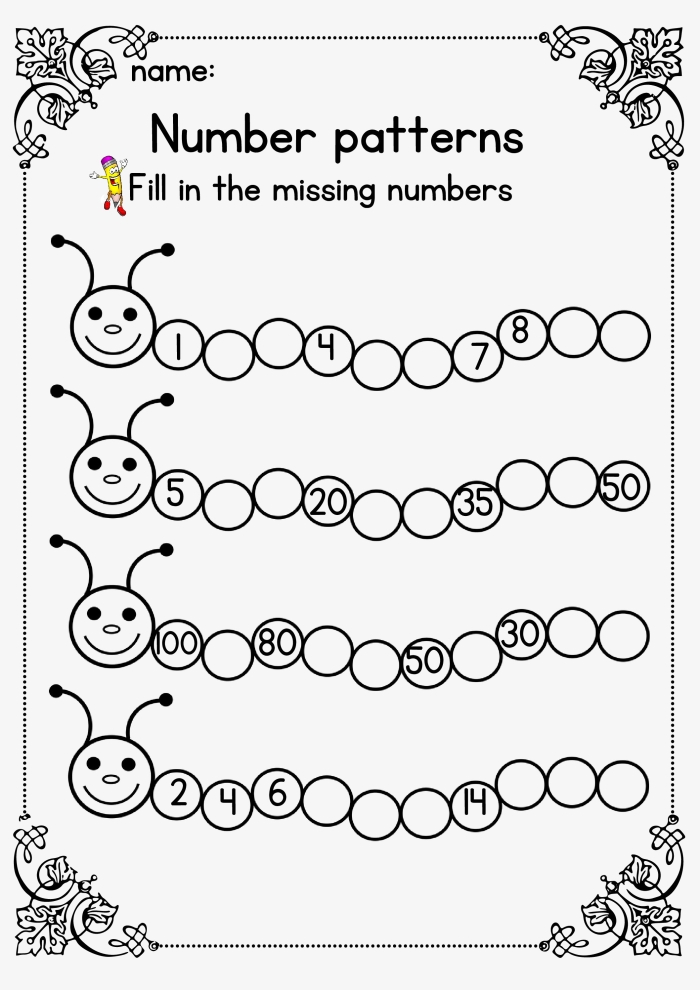
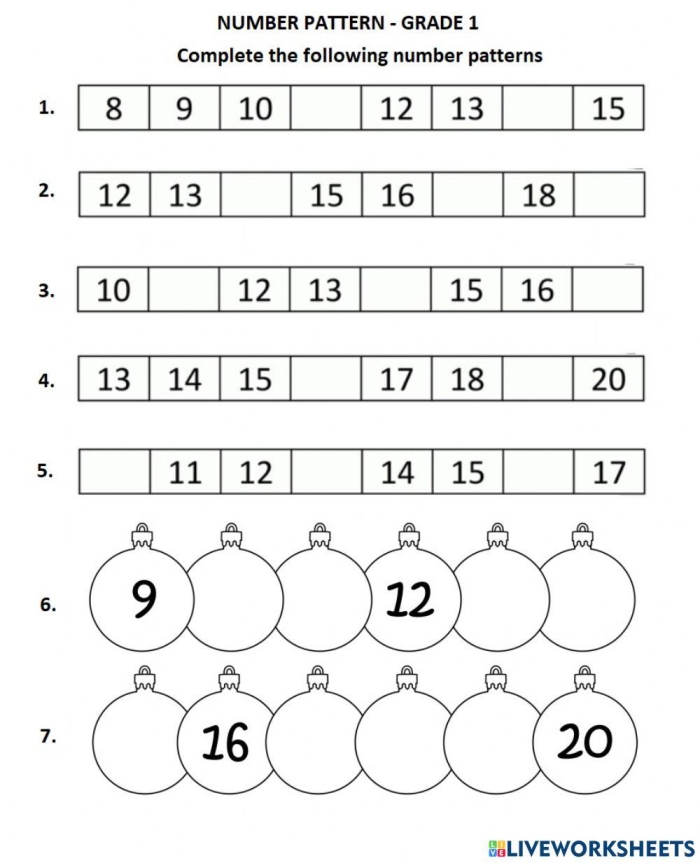
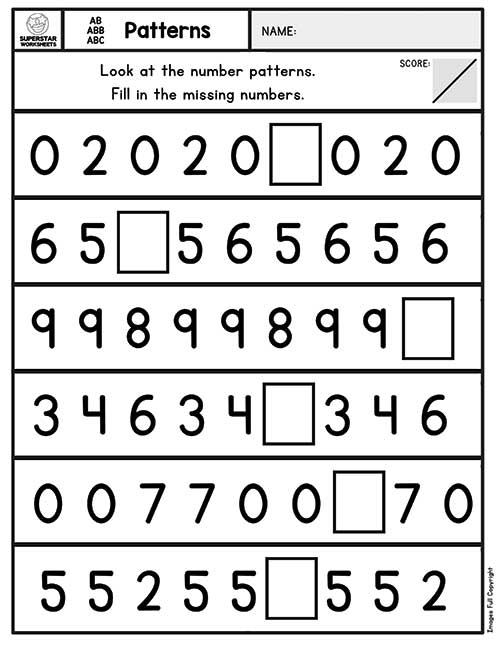
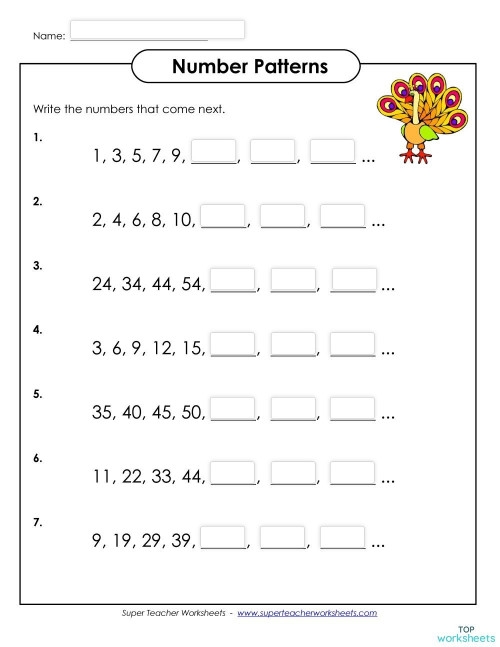
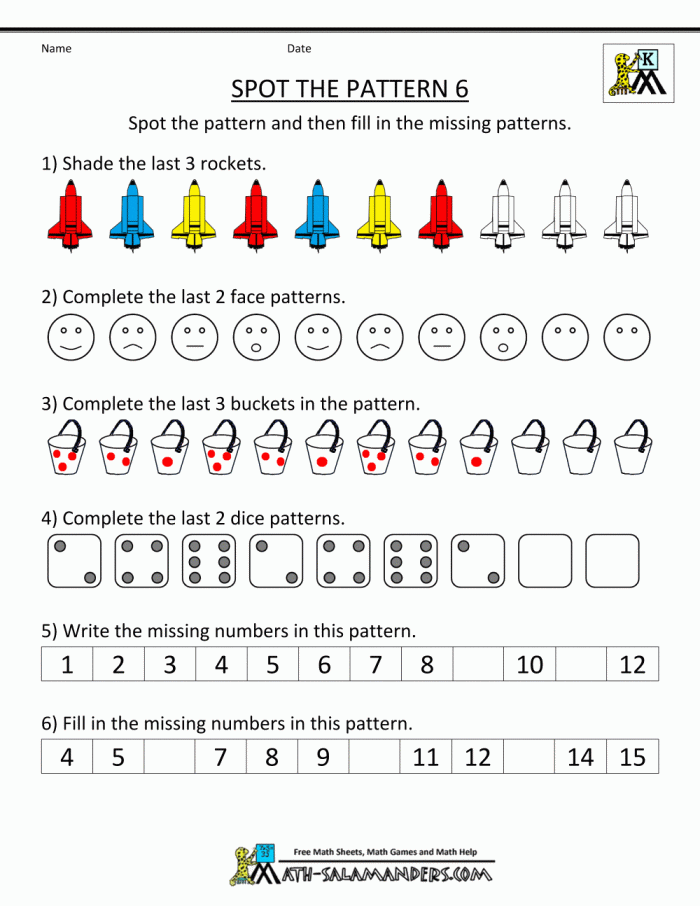
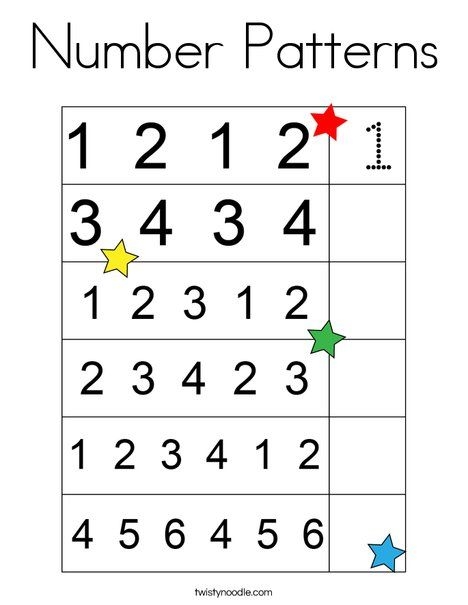
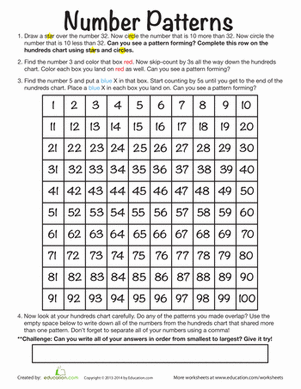
Seeing patterns in numbers is a foundational skill that can enhance a child’s mathematical understanding. With a handy Number Patterns Chart, first graders can engage in skip counting while adding a creative twist by coloring as they go. This dual approach not only makes learning enjoyable but also reinforces the connection between numerical patterns and visual representation.
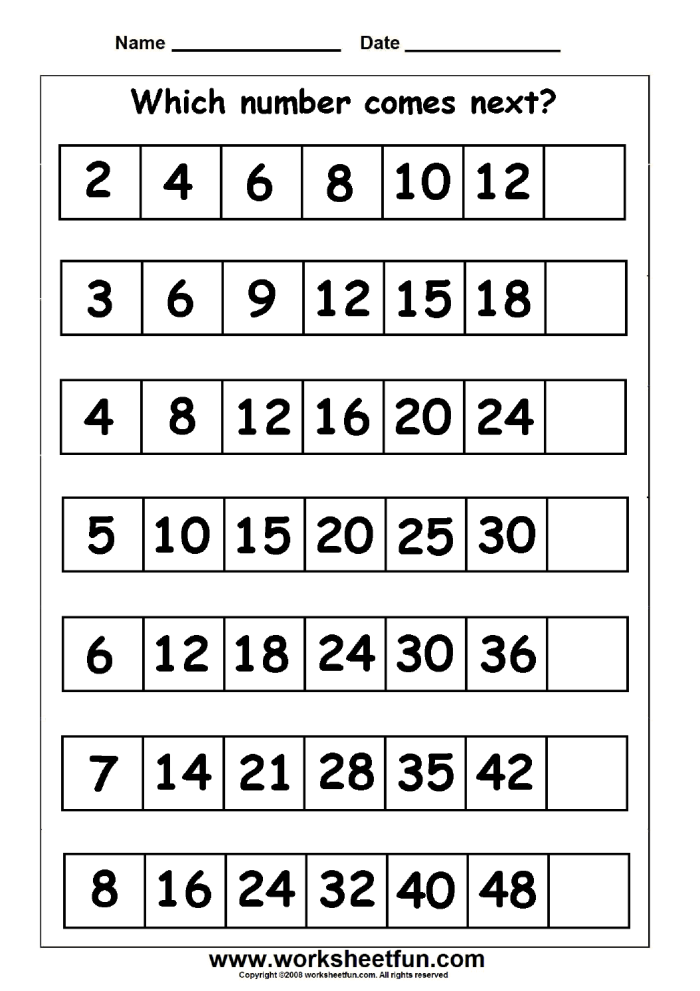
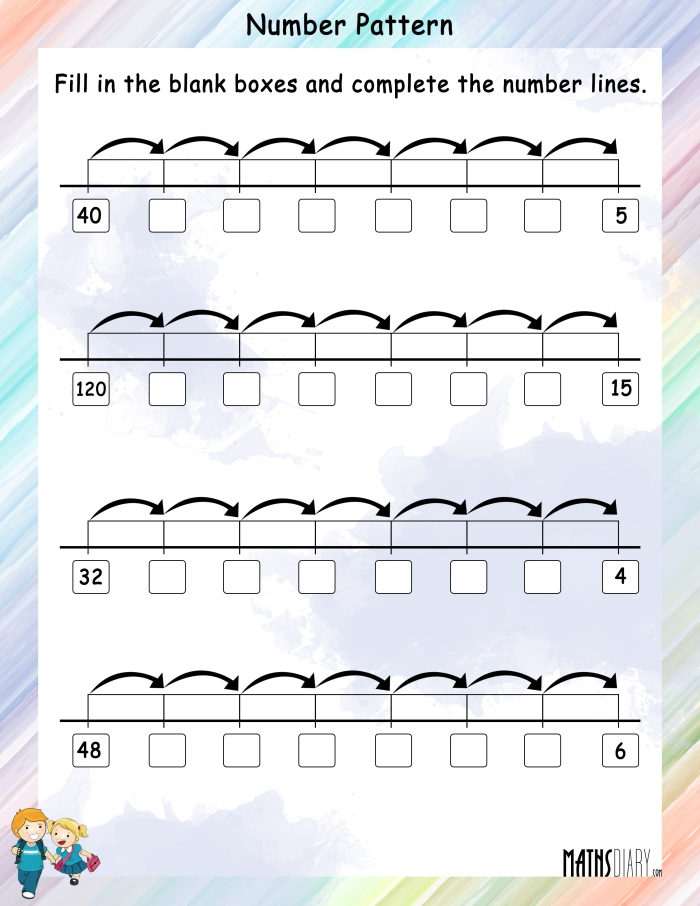
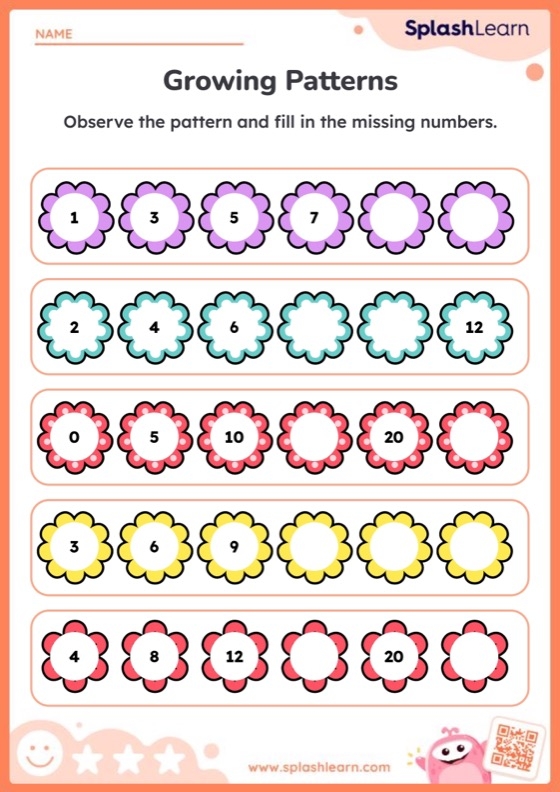
Skip counting is a method that helps children recognize sequences in numbers, such as counting by twos, fives, or tens. For instance, when children count by twos (2, 4, 6, 8…), they start to see the relationship between each number. A printable worksheet can make this process interactive. Kids can fill in the chart while coloring different patterns, which adds a tactile element to the learning experience.
The benefits of this hands-on approach are significant. Coloring while counting keeps children engaged and encourages them to focus on the task at hand. They not only learn how to skip count but also develop fine motor skills as they color within the lines. This combination of cognitive and physical activities enhances memory retention and reinforces their understanding of number patterns.
Additionally, using a Printable Number Patterns Chart Worksheet provides a visual aid that can be particularly helpful for visual learners. By associating colors with specific numbers, children can establish stronger mental connections. For example, if the number 10 is colored blue, a child may find it easier to remember that number’s significance in various mathematical contexts.
Incorporating these worksheets into a first-grade curriculum can make a noticeable difference in students’ grasp of basic math concepts. To further support grammar and mechanics, consider integrating activities that involve sentence building alongside counting exercises. Resources like building sentences worksheets can complement the learning experience.
Encouraging children to explore math through patterns and creativity not only makes learning fun but also lays a solid foundation for their future studies. With the right tools, like a Number Patterns Chart, first graders will be well-equipped to tackle more complex math challenges ahead.
Start Practicing with These Worksheets