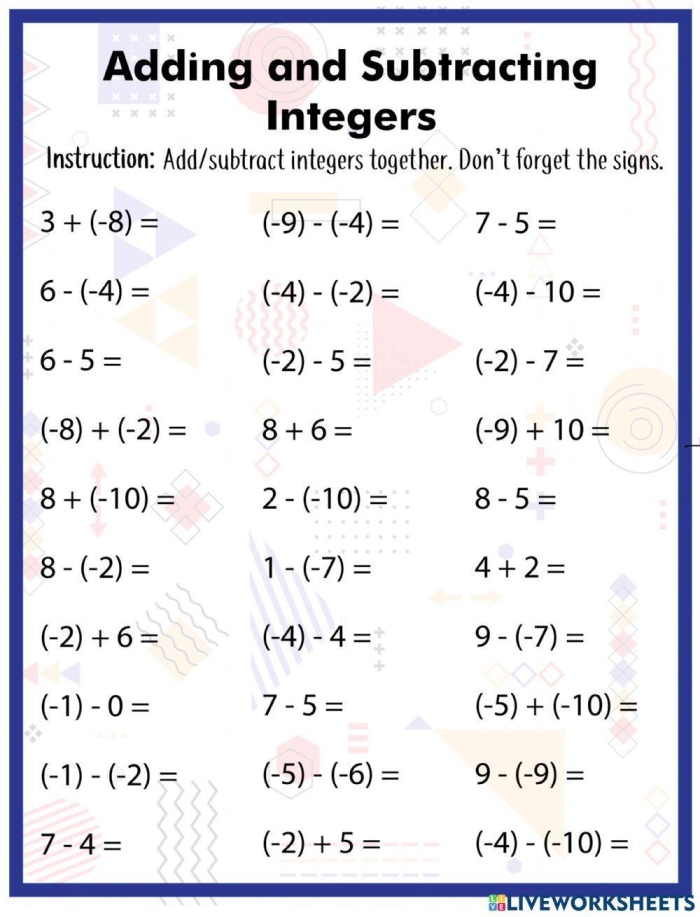
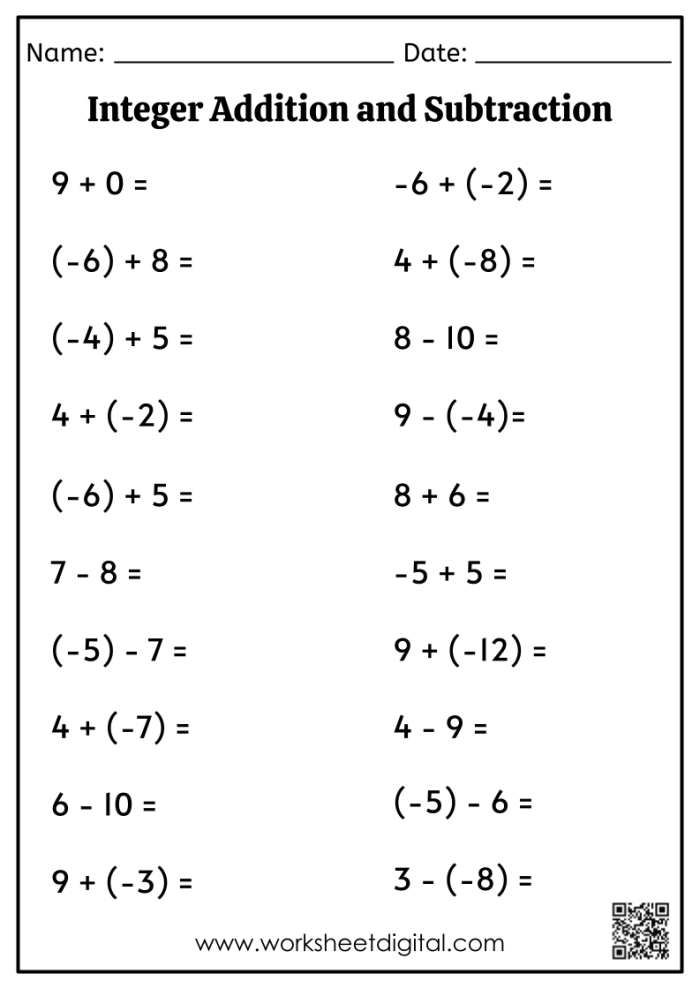
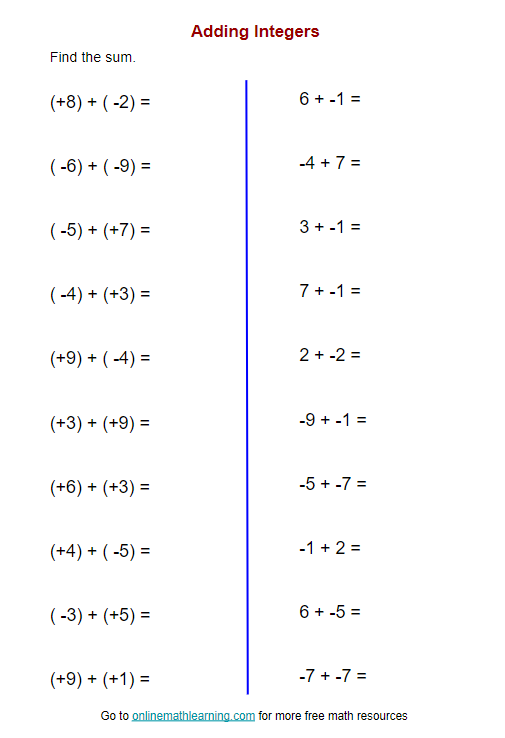
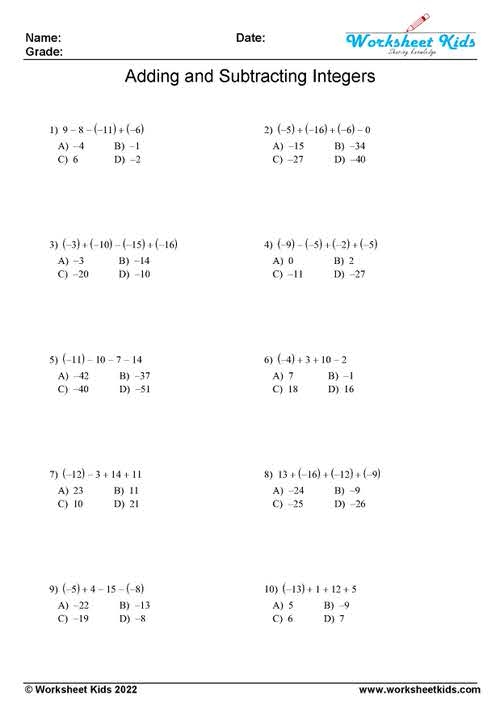
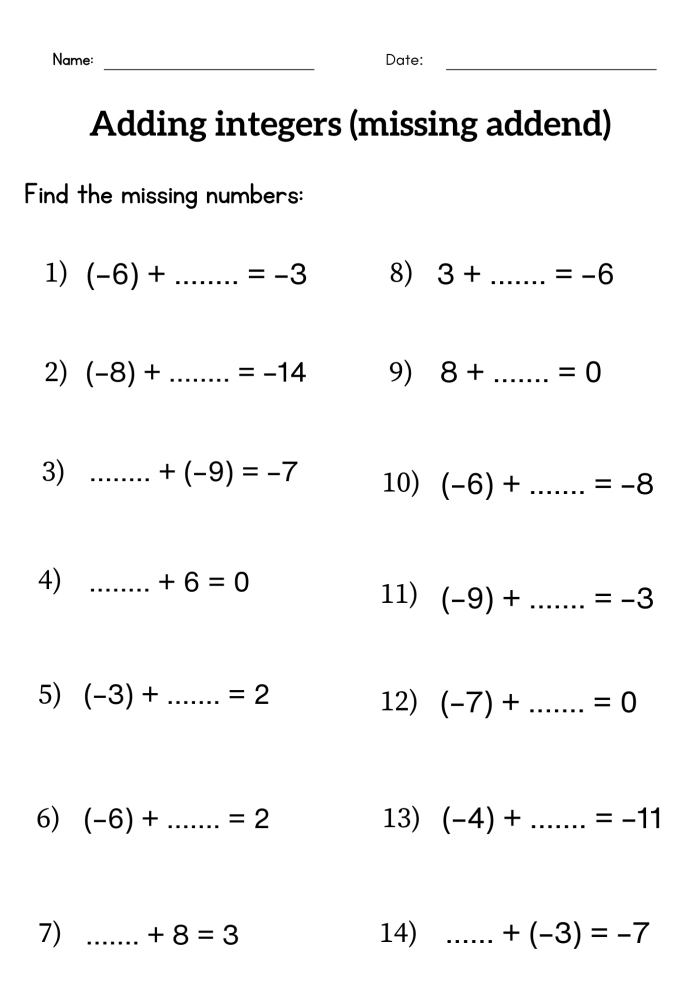
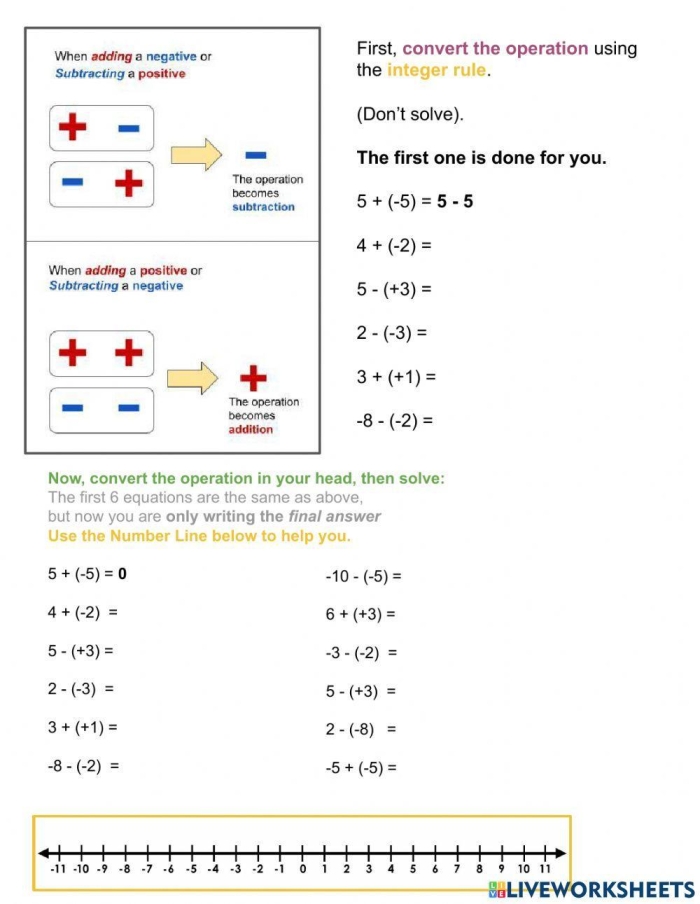
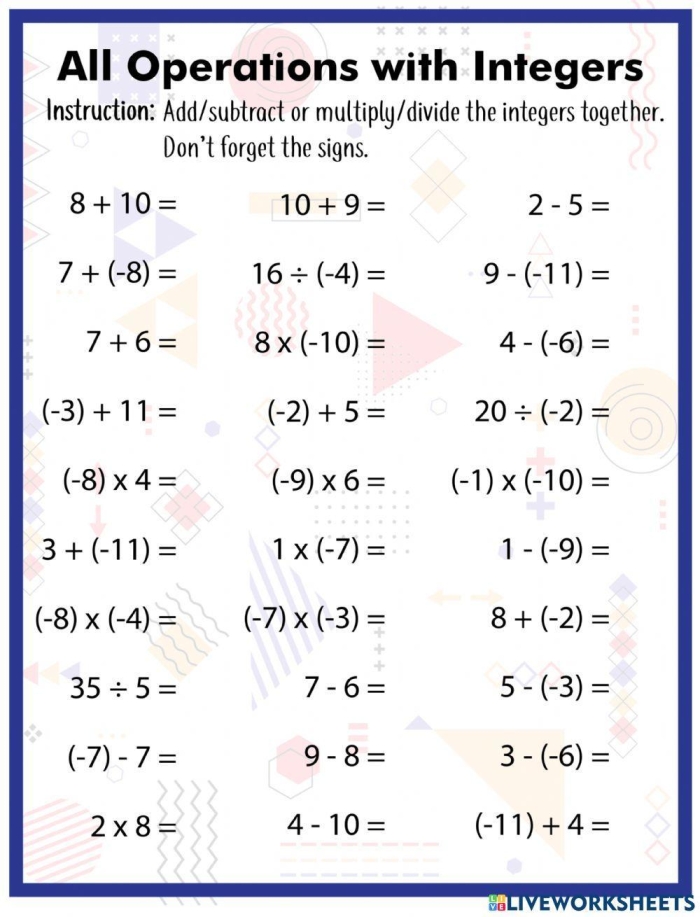
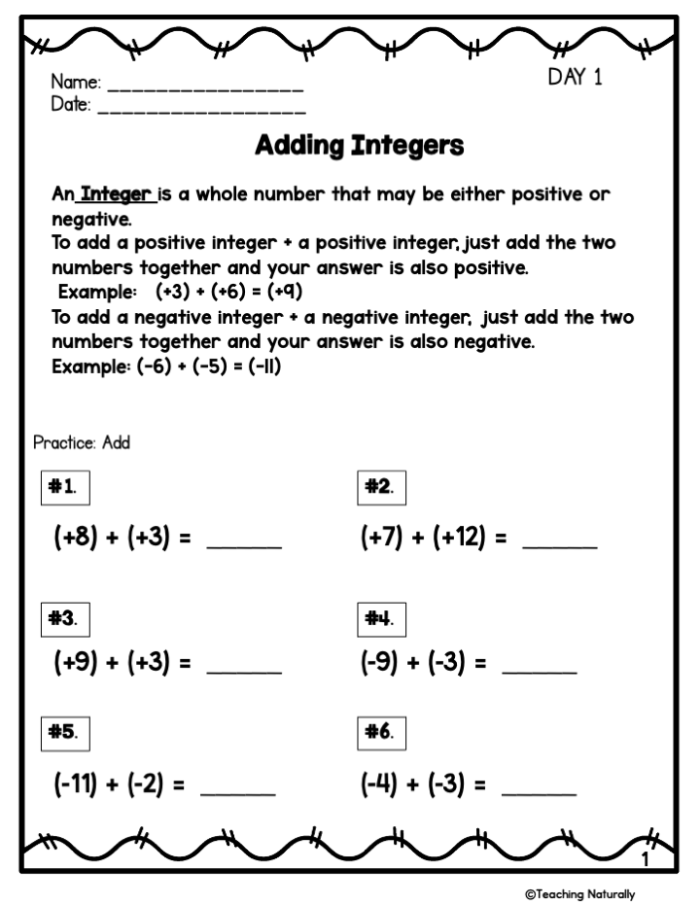
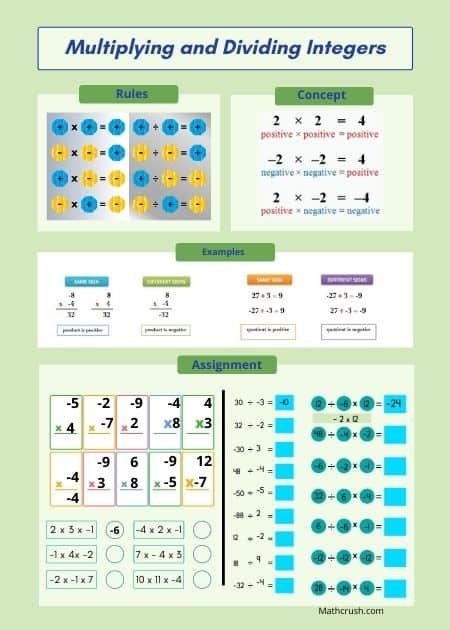
Seventh-grade students often struggle when they first encounter negative numbers and the rules that govern them. Integer operations form the foundation for everything that comes later in algebra, so getting this right early matters. A well-designed worksheet can make the difference between confusion and clarity when introducing these concepts.
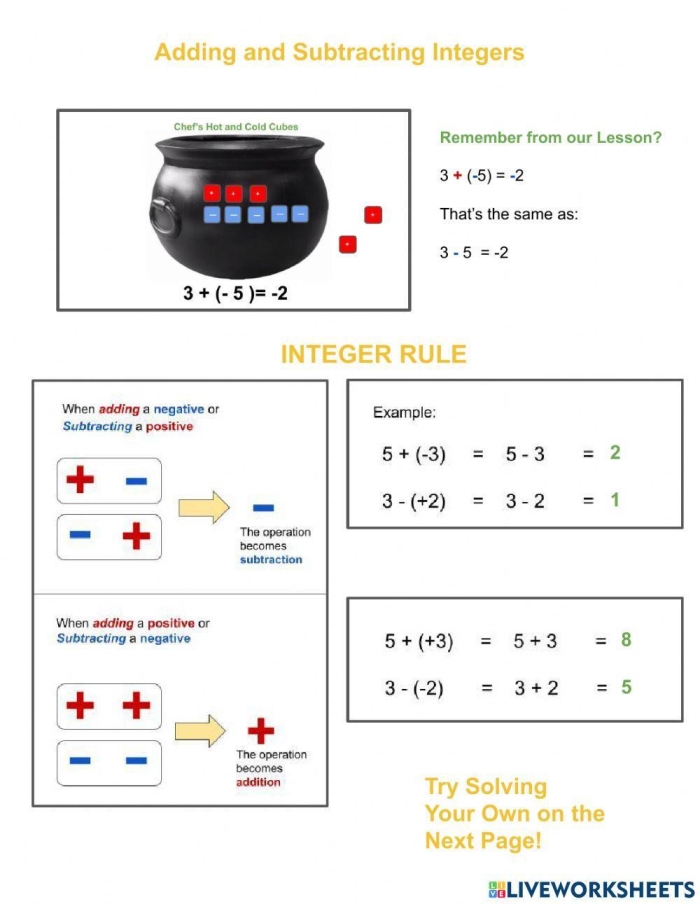
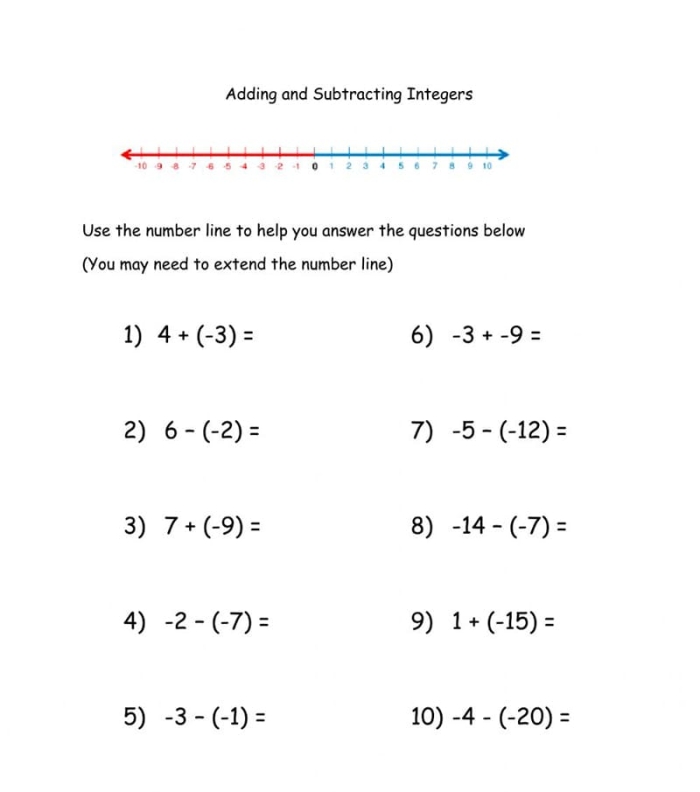
When students work with integers, they’re learning to manipulate numbers that exist on both sides of zero. This includes understanding how to add, subtract, multiply, and divide with positive and negative values. The challenge isn’t just memorizing rules, it’s developing intuition for why those rules work. A practical worksheet guides students through concrete examples before asking them to apply the concepts independently.
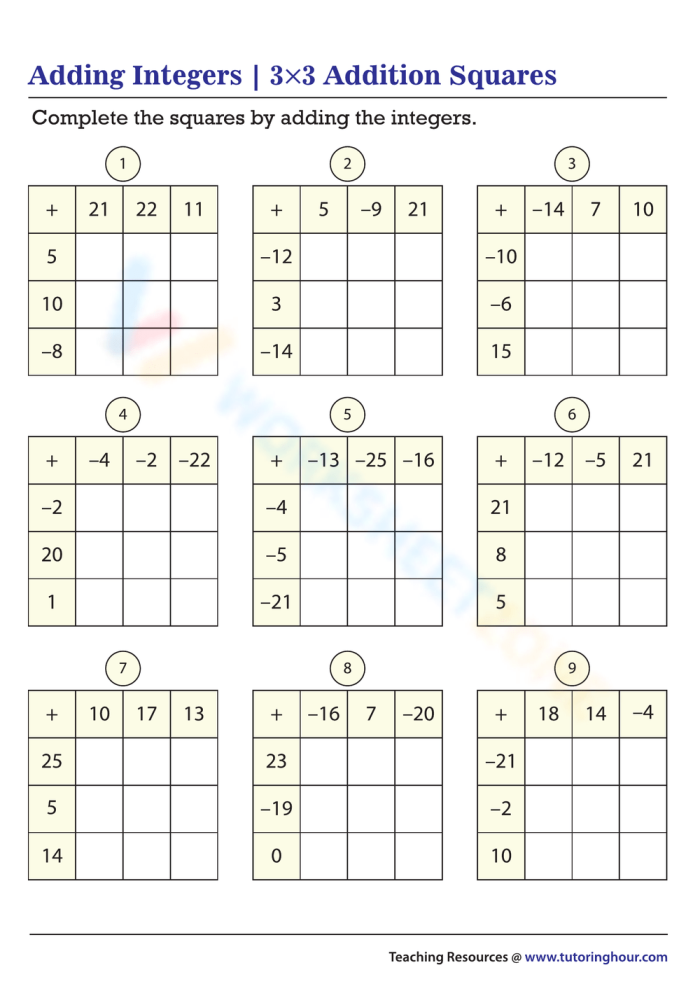
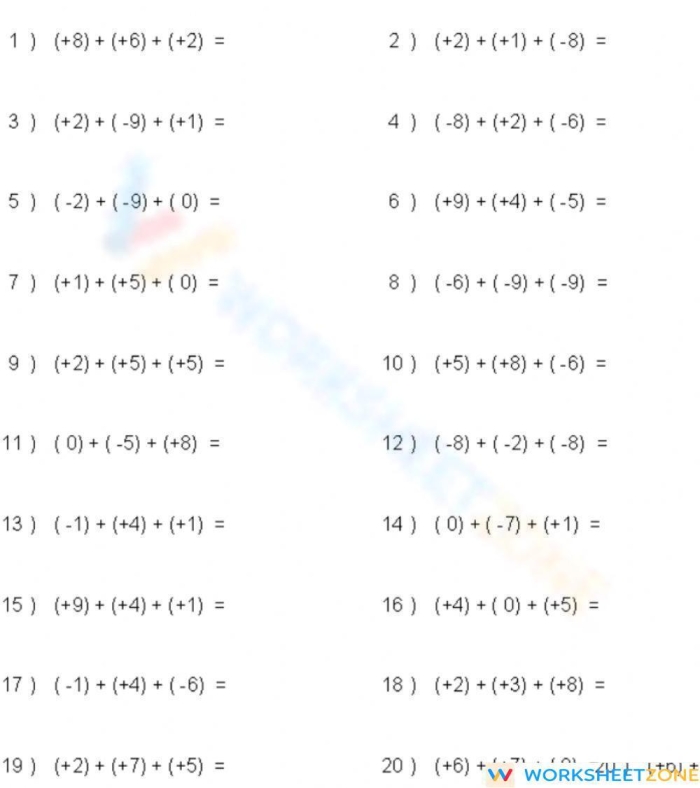
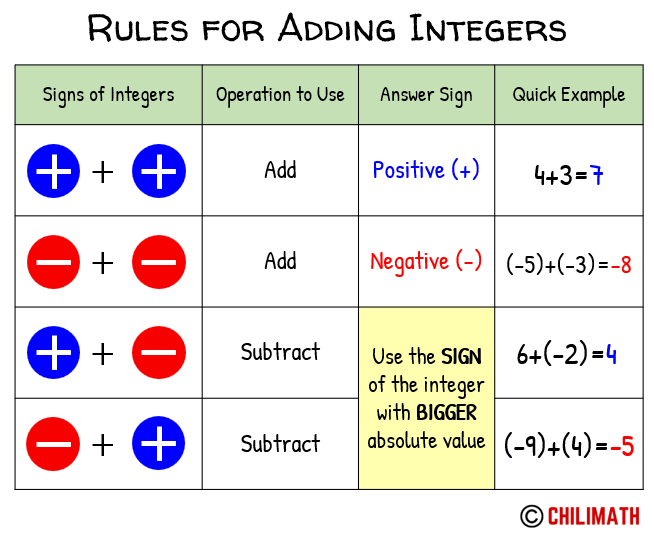
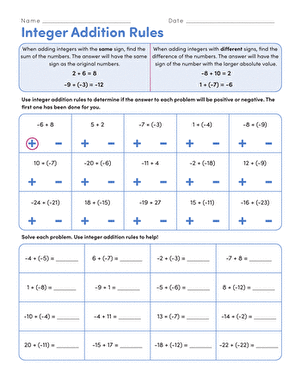
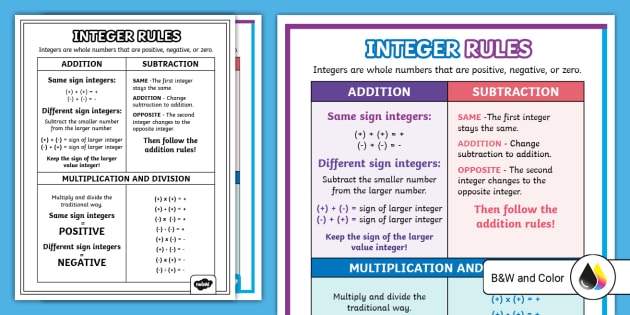
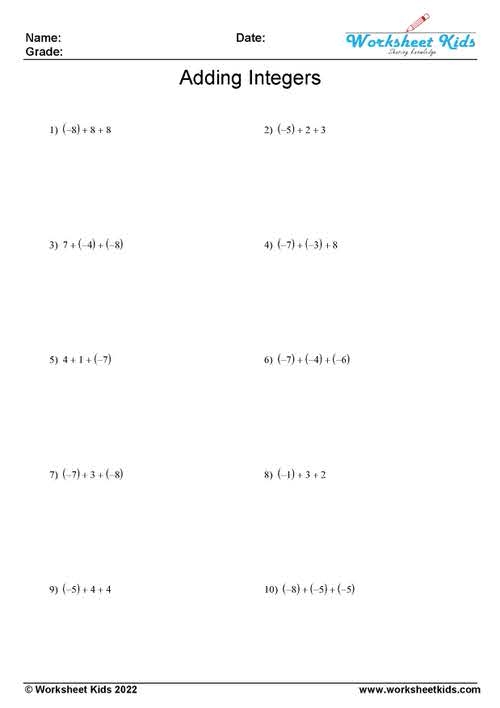
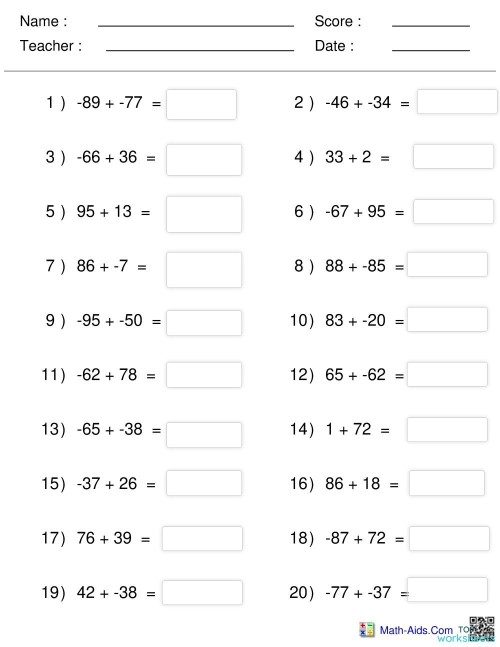
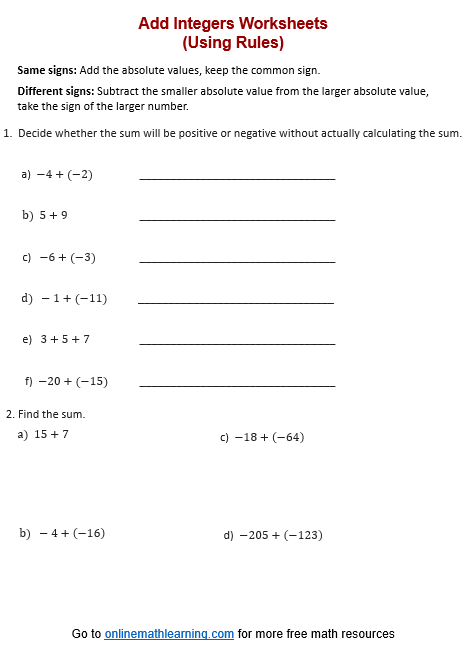
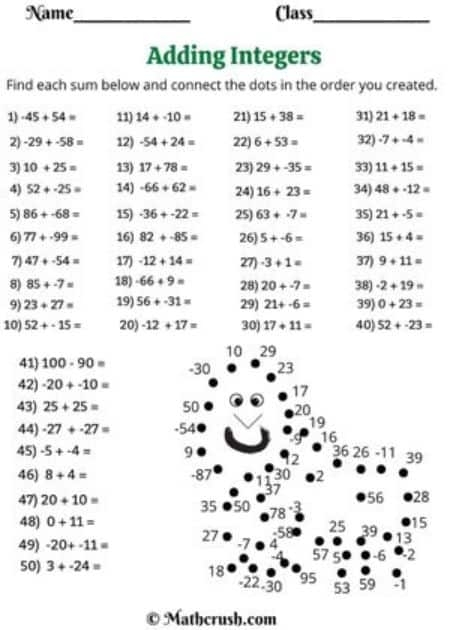
The most effective seventh-grade math worksheets on this topic start with addition, since that’s where students typically begin. Integer addition rules establish the groundwork: when you add two positive integers, the result is positive; when you add two negative integers, the result is negative; when you add a positive and negative integer, you find the difference and use the sign of the larger absolute value. Once students grasp this pattern, they can move forward with confidence.
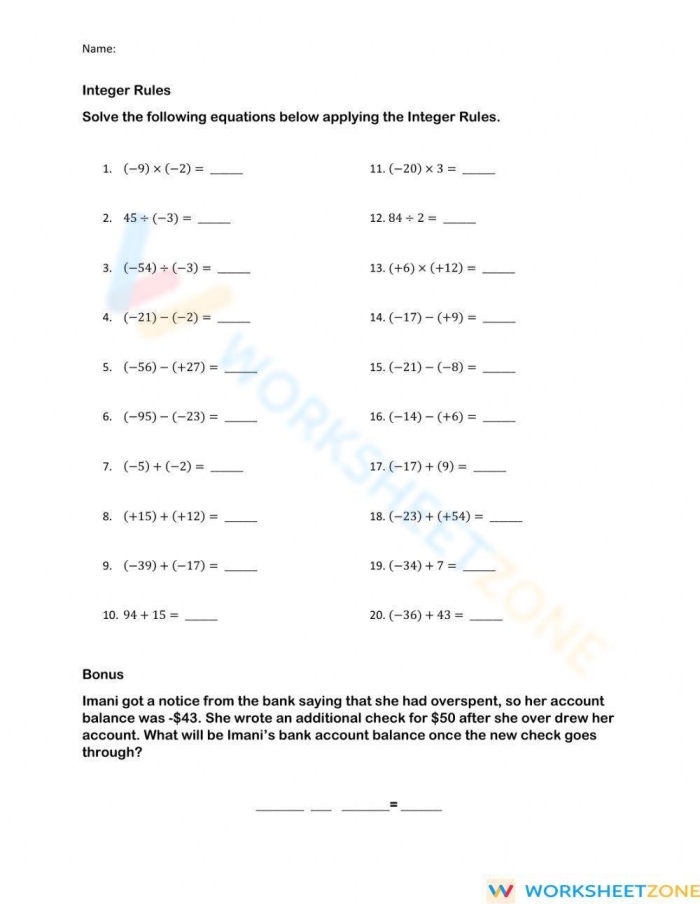
Beyond basic addition, students benefit from seeing how integers connect to real-world contexts. Temperature changes, elevation gains and losses, and financial transactions all involve integer operations. Worksheets that weave these scenarios into practice problems help students see why they’re learning this material.
A comprehensive seventh-grade worksheet should also introduce how integer operations relate to broader mathematical concepts. Understanding proportional relationships and working with ratios often requires solid integer skills as a prerequisite. Similarly, problems involving probabilities of compound events may require students to work with negative values in certain contexts.
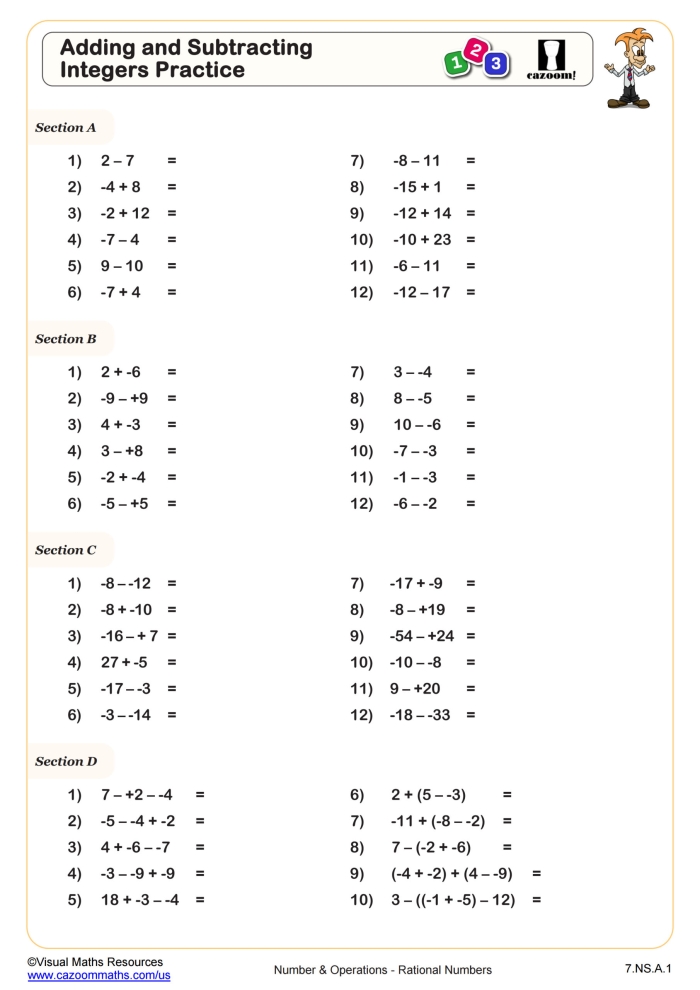
The structure of the worksheet matters as much as the content. Problems should progress from simple to complex, with clear instructions and space for students to show their work. This approach builds confidence and helps teachers identify exactly where misconceptions occur.
Start Practicing with These Worksheets