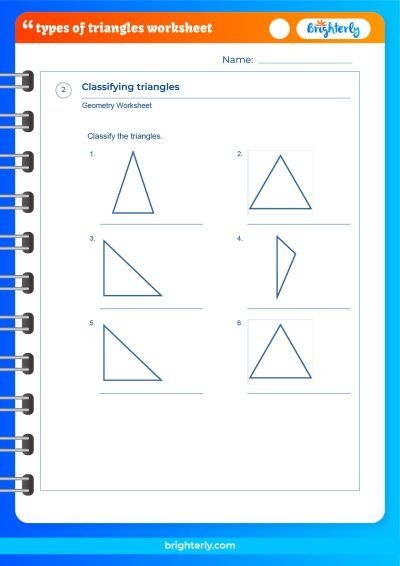
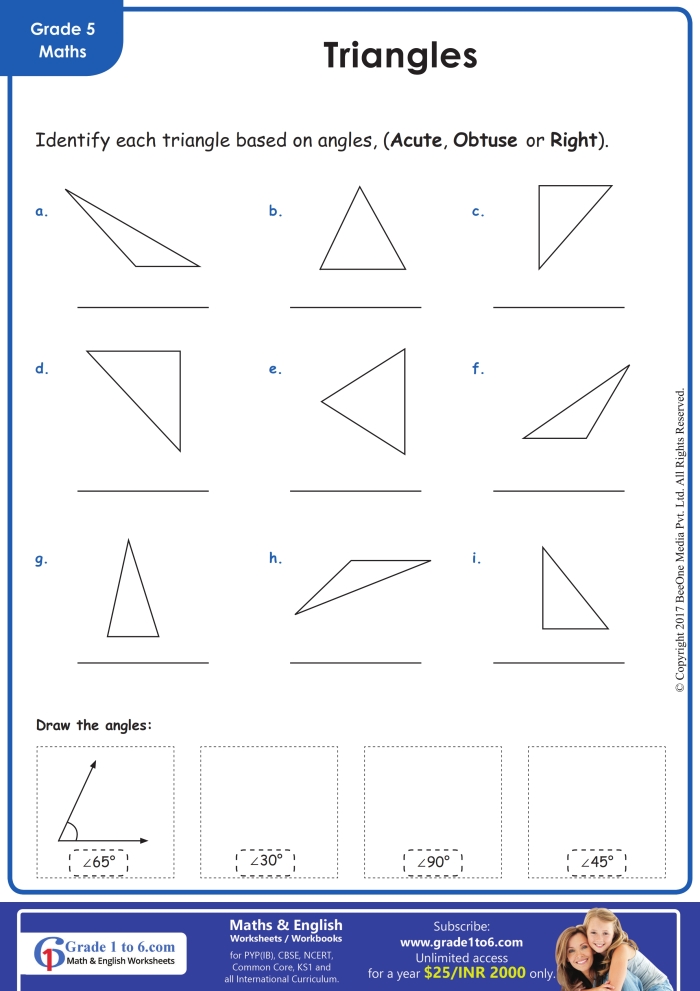
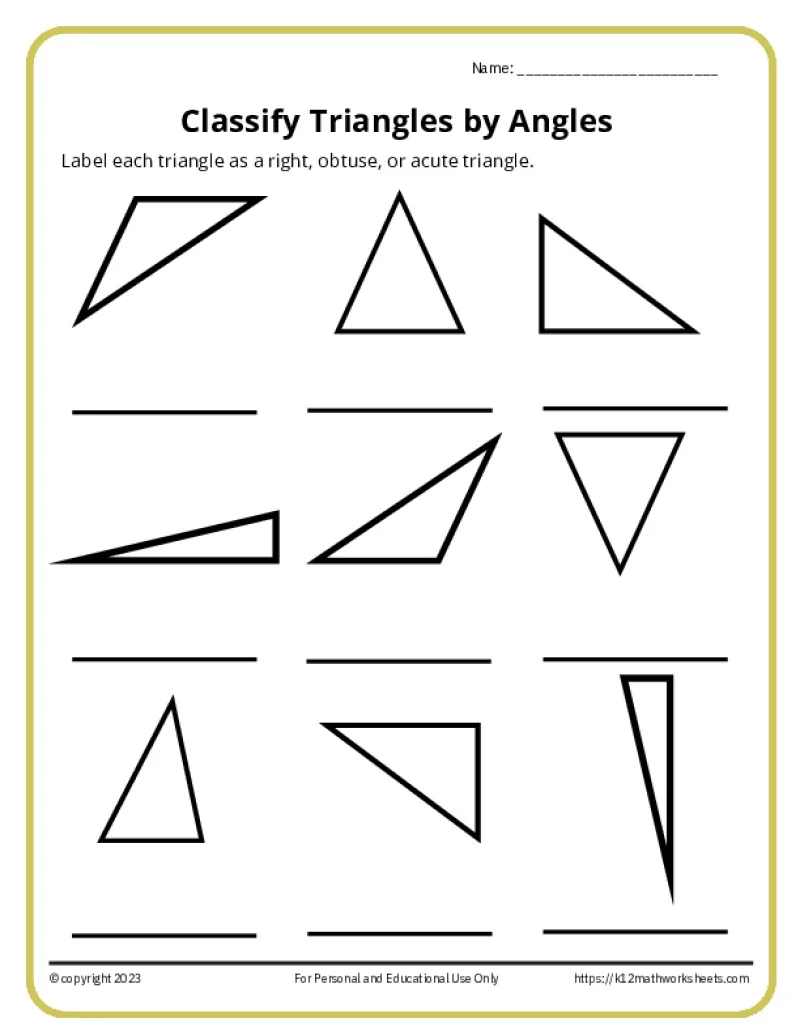
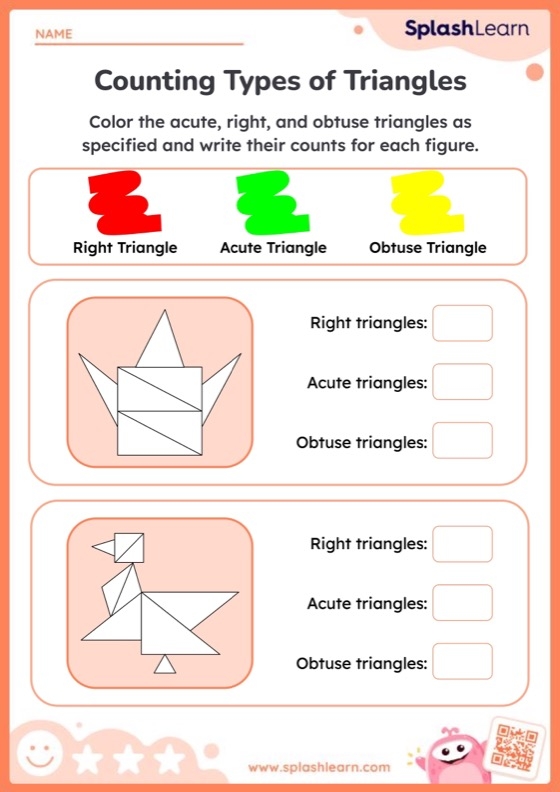
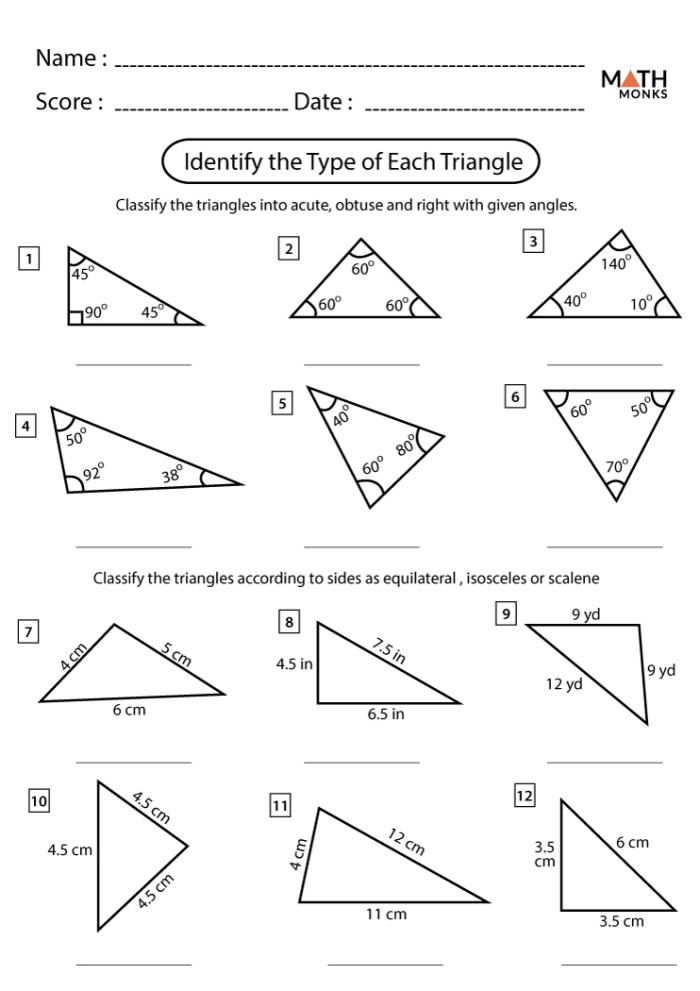
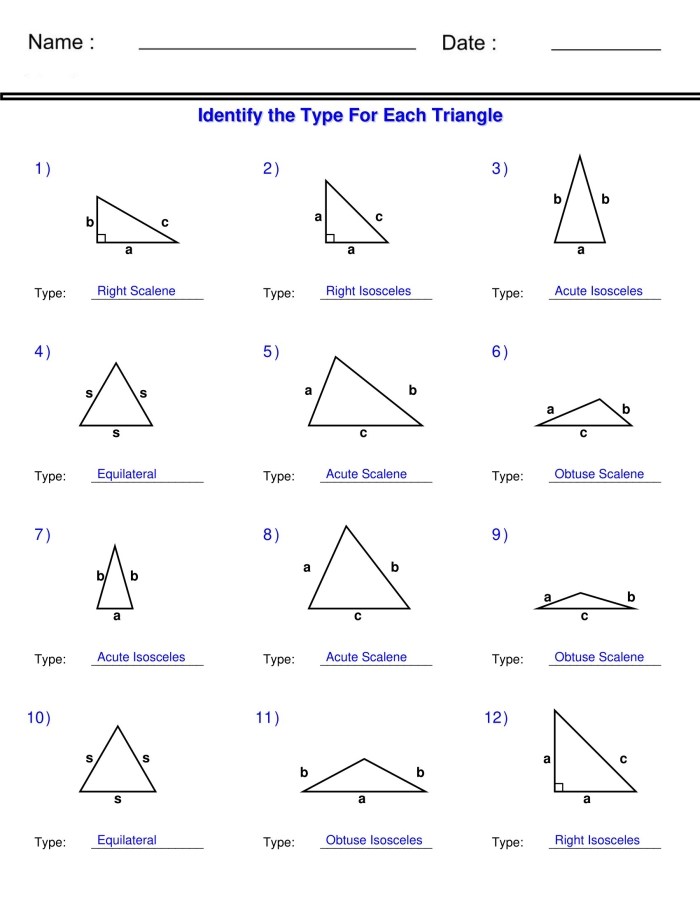
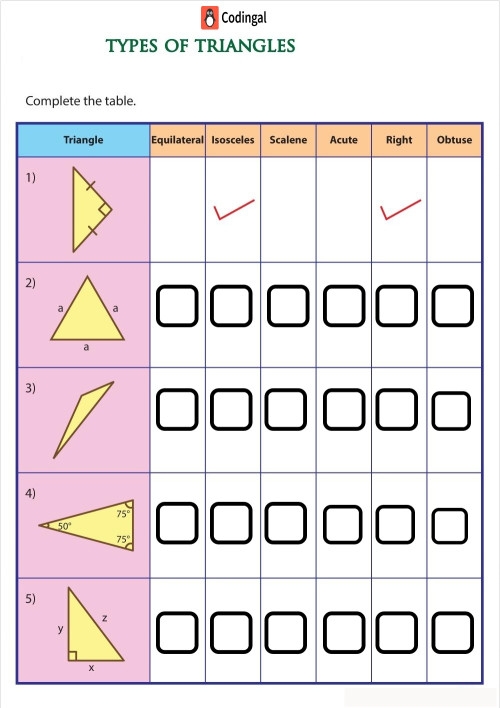
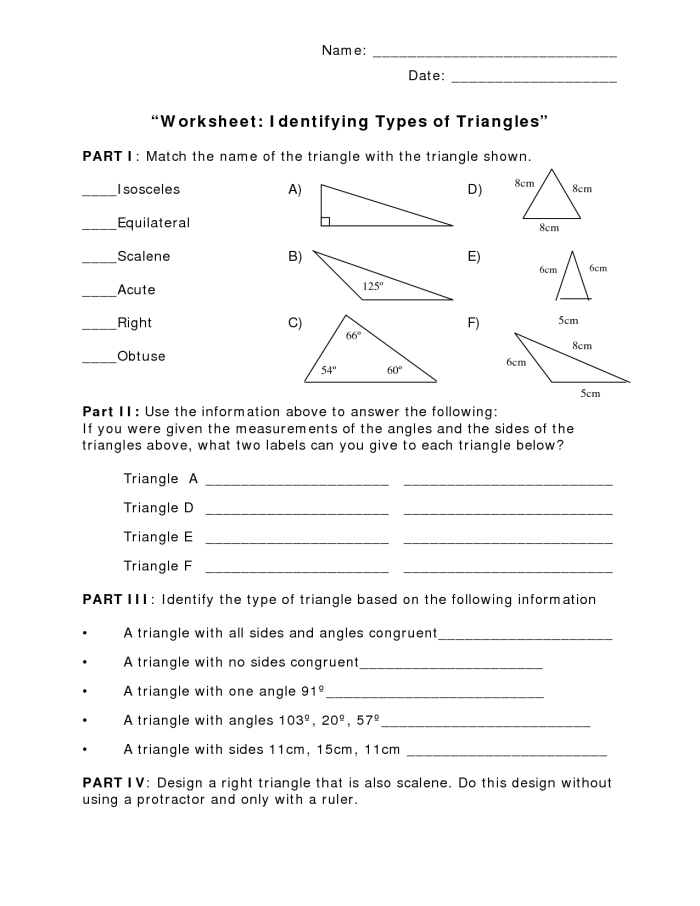
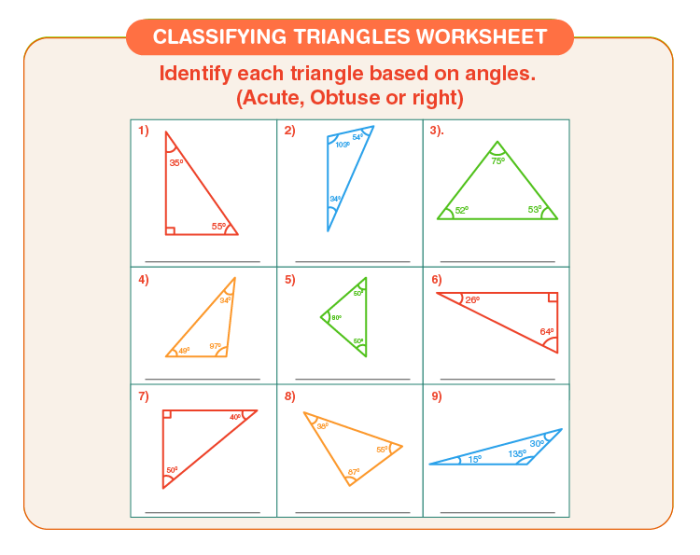
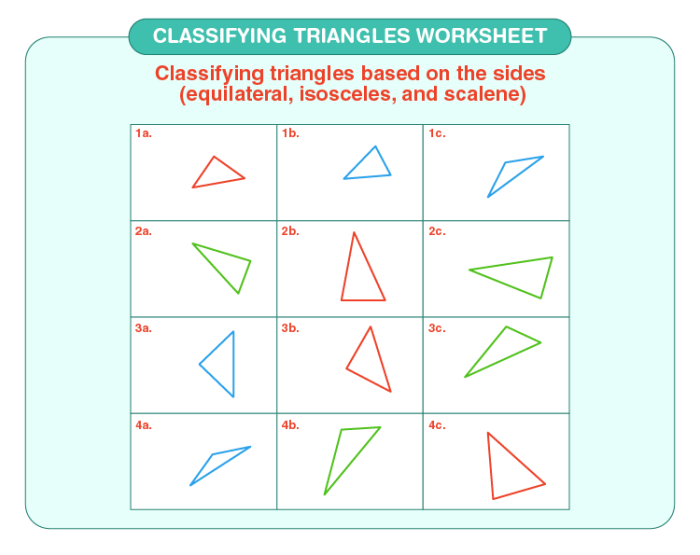
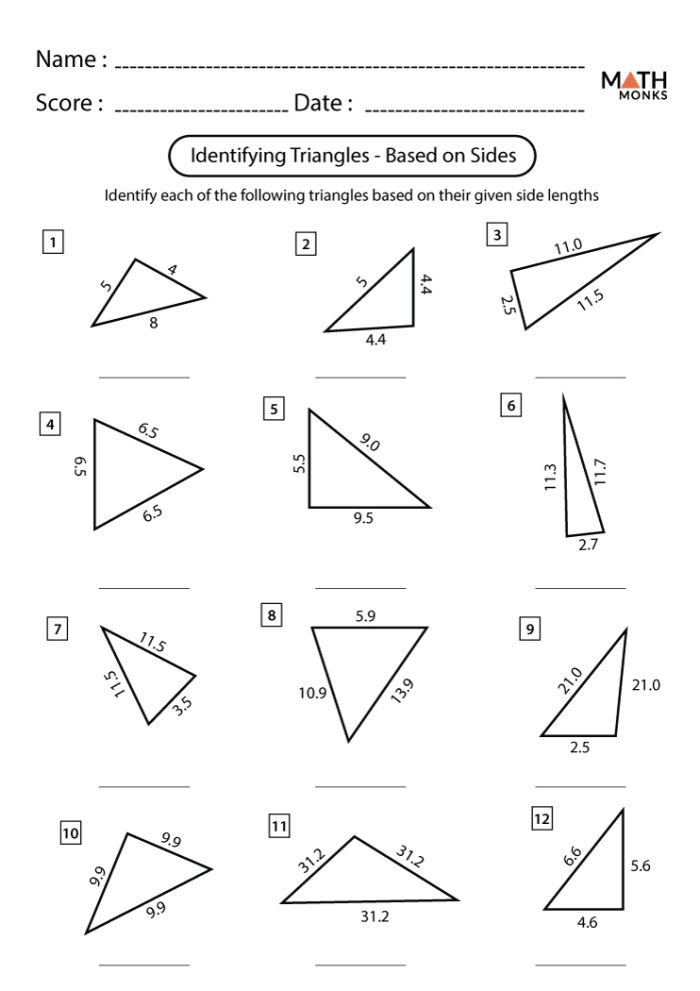
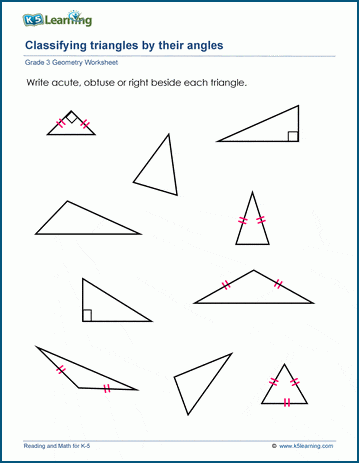
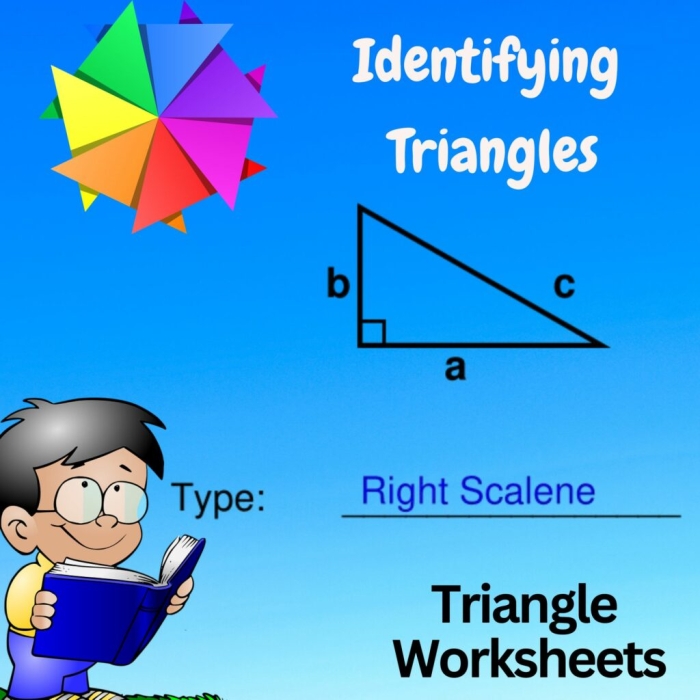
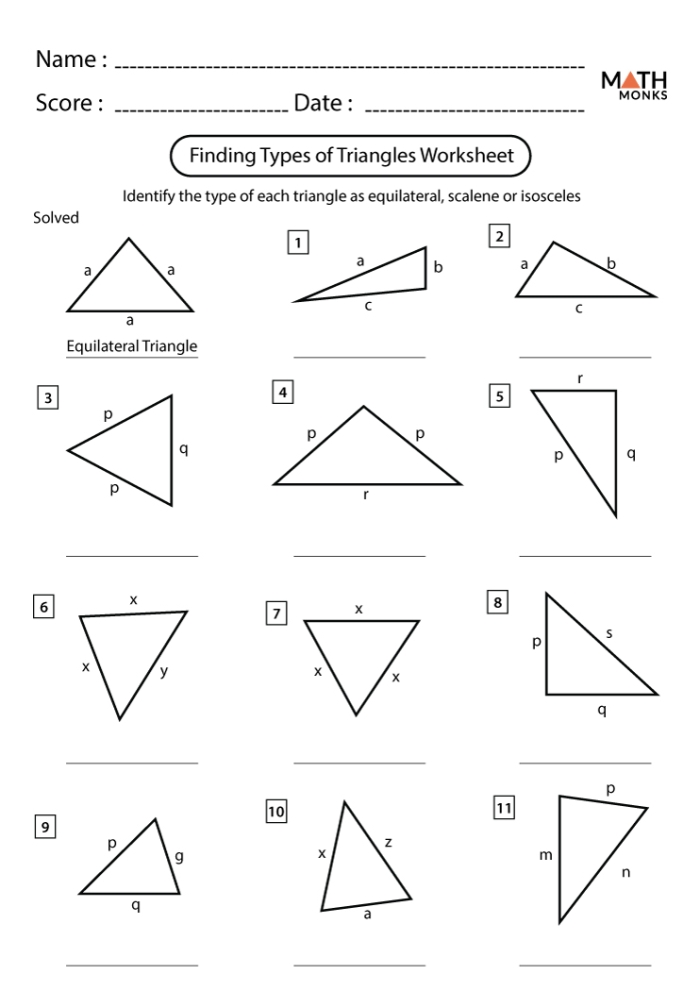
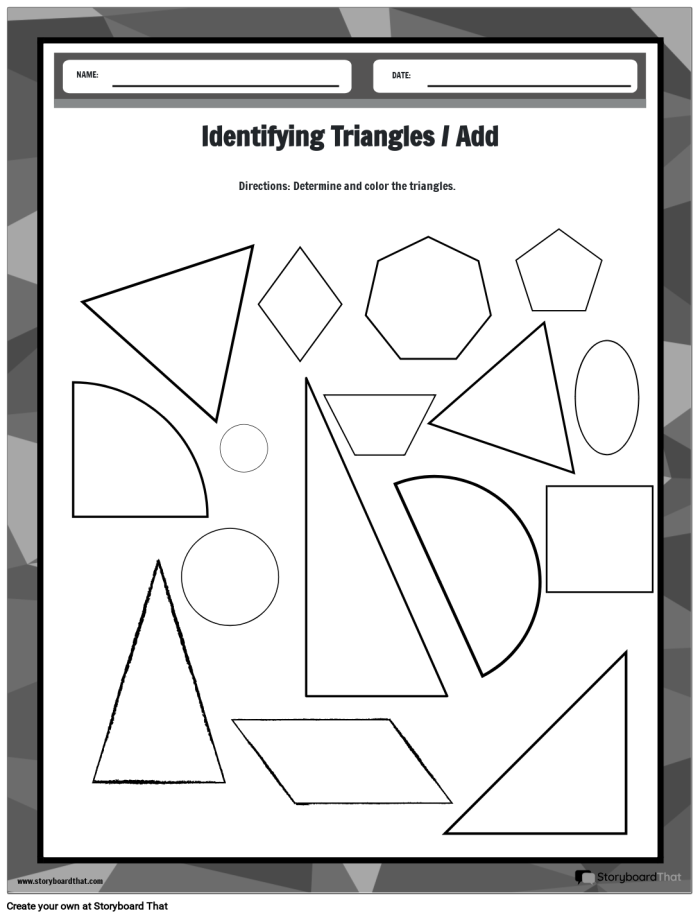
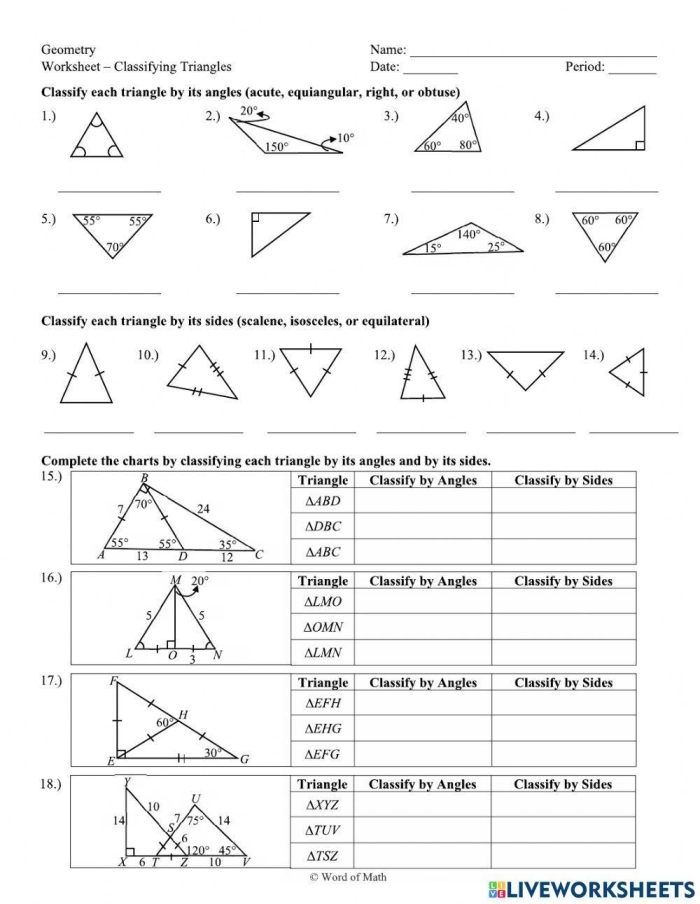
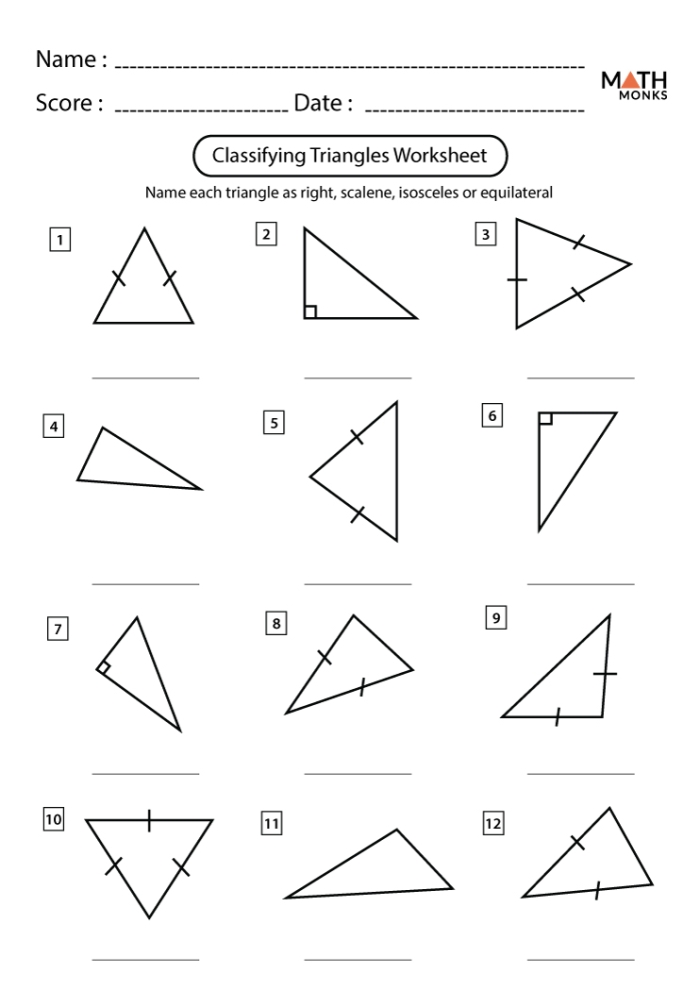
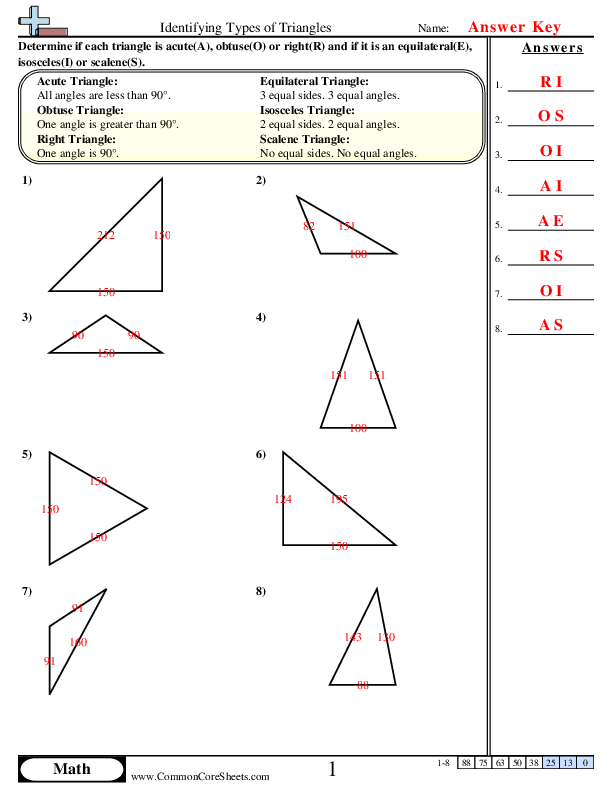
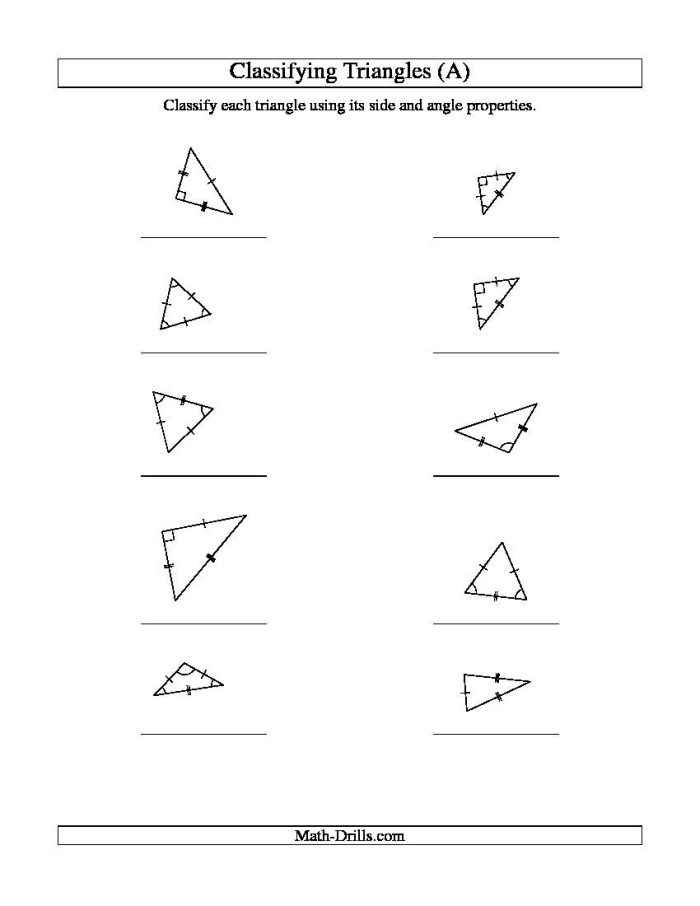
When third graders first encounter triangles, they often see them as simply three-sided shapes. This geometry worksheet pushes that understanding further by asking students to classify triangles based on their side lengths, a skill that builds the foundation for more complex geometric reasoning later on.
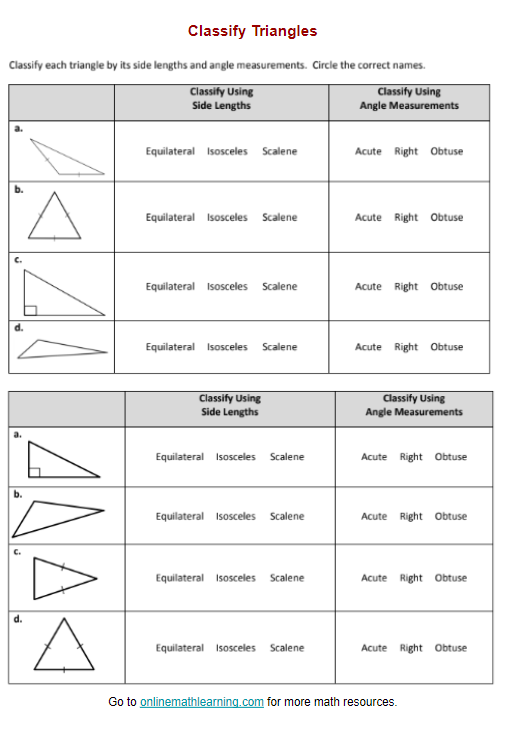
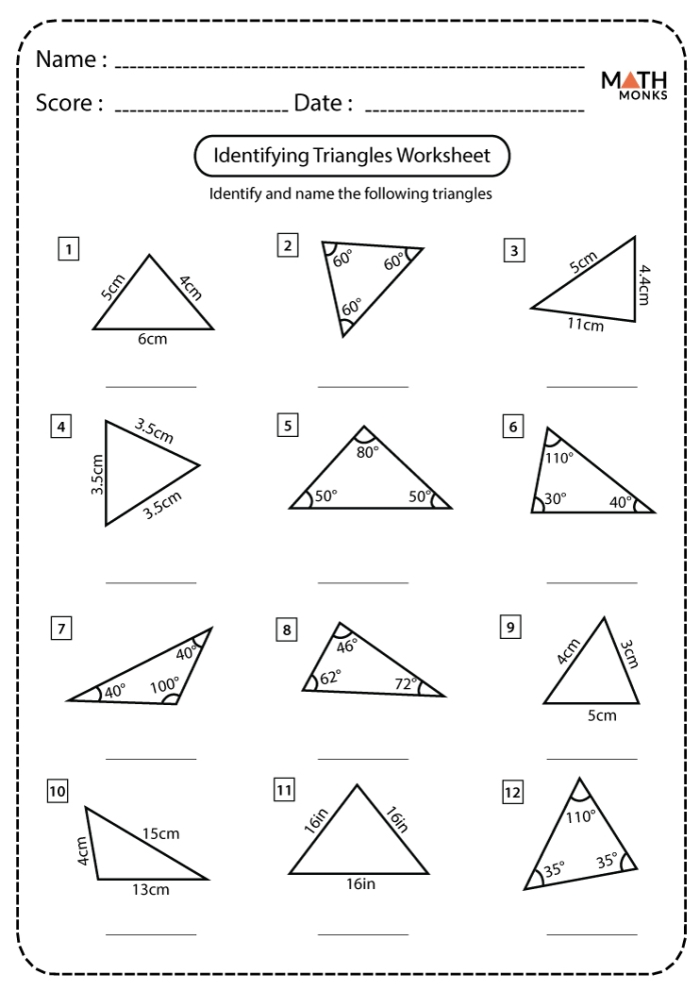
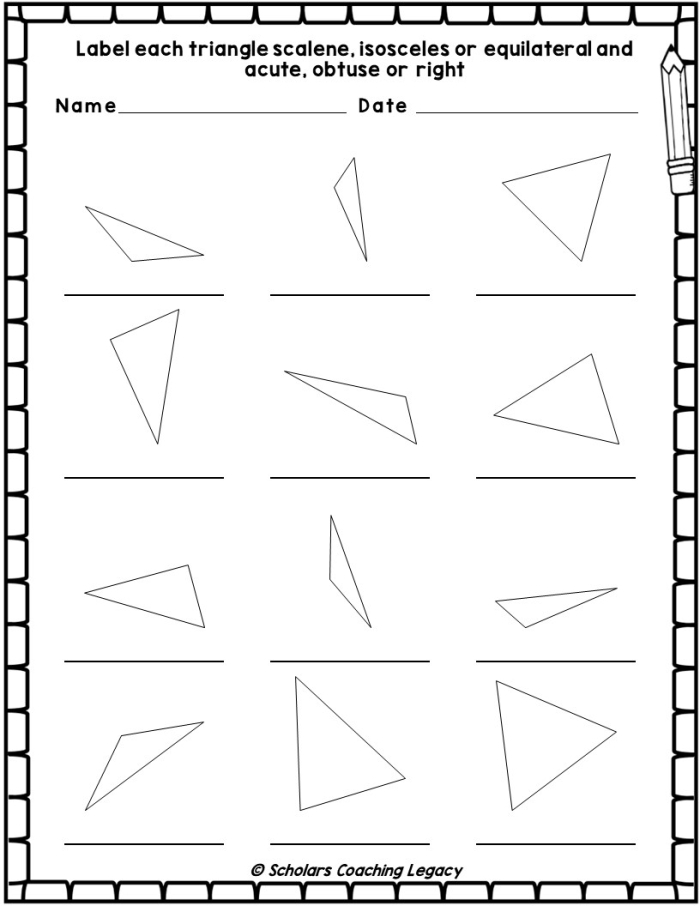
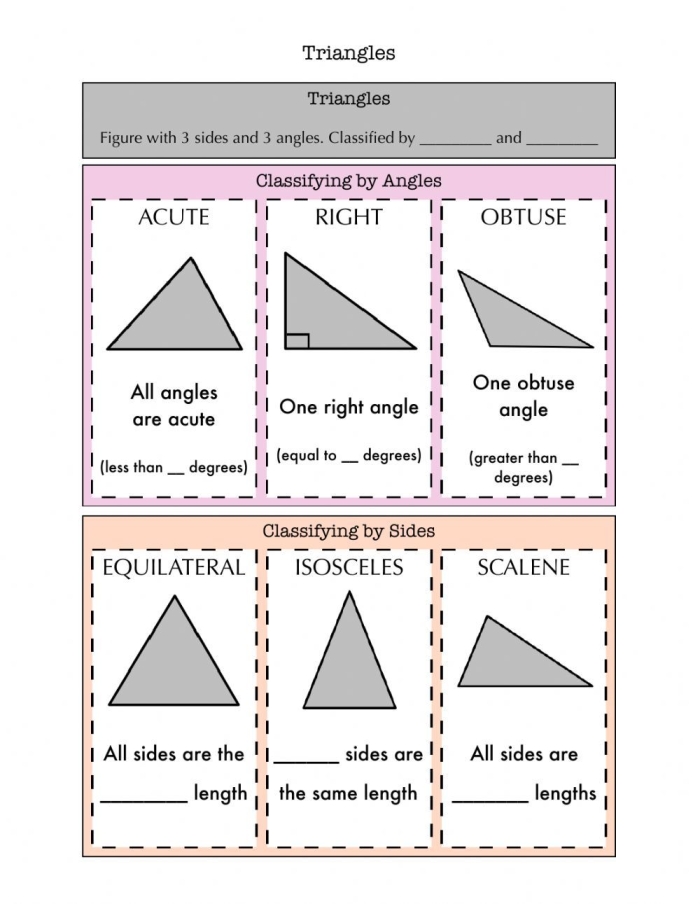
The worksheet presents your student with several triangles and asks them to identify each one as equilateral, isosceles, or scalene. Each category has distinct characteristics. An equilateral triangle has all three sides of equal length, making it the most symmetrical option. An isosceles triangle has exactly two sides that match in length, while a scalene triangle has all three sides of different lengths. The visual distinction becomes clearer once students practice spotting these patterns repeatedly.
What makes this activity valuable for third graders is that it combines visual recognition with mathematical vocabulary. Rather than simply drawing or coloring shapes, students engage in active classification, which strengthens both their observational skills and their ability to apply geometric terms accurately. This type of analytical thinking connects to other grammar and mechanics skills, much like how understanding line graphs requires careful observation of data patterns.
The repetition built into these worksheets matters. When a student labels five or six triangles in succession, the characteristics of each type become more memorable. They start to internalize that equilateral triangles always look balanced, while scalene triangles appear more irregular.
For teachers and parents, this worksheet serves as both a learning tool and an assessment. It reveals whether a student can distinguish between the three types without relying on verbal explanations alone. Pairing geometry practice with other third grade skills, such as correcting incomplete sentences, creates a more well-rounded learning experience across different subject areas.
Practice with These Worksheets