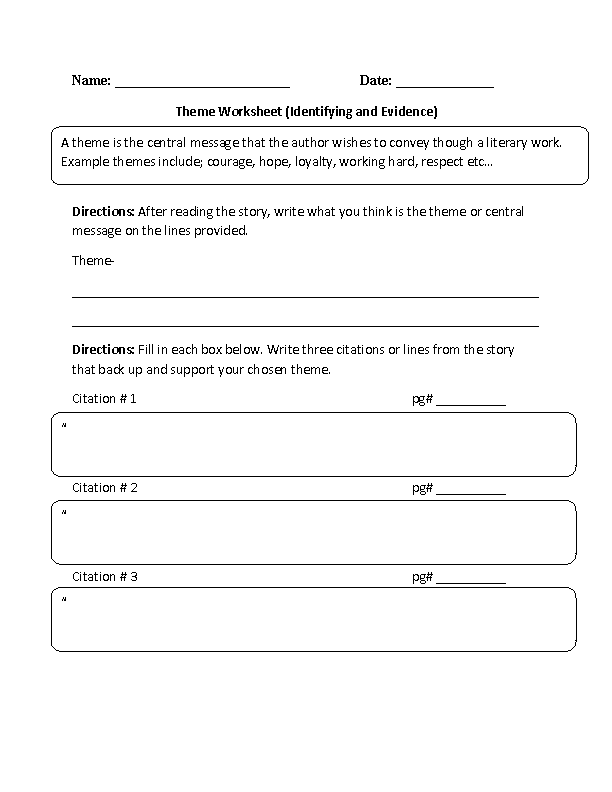
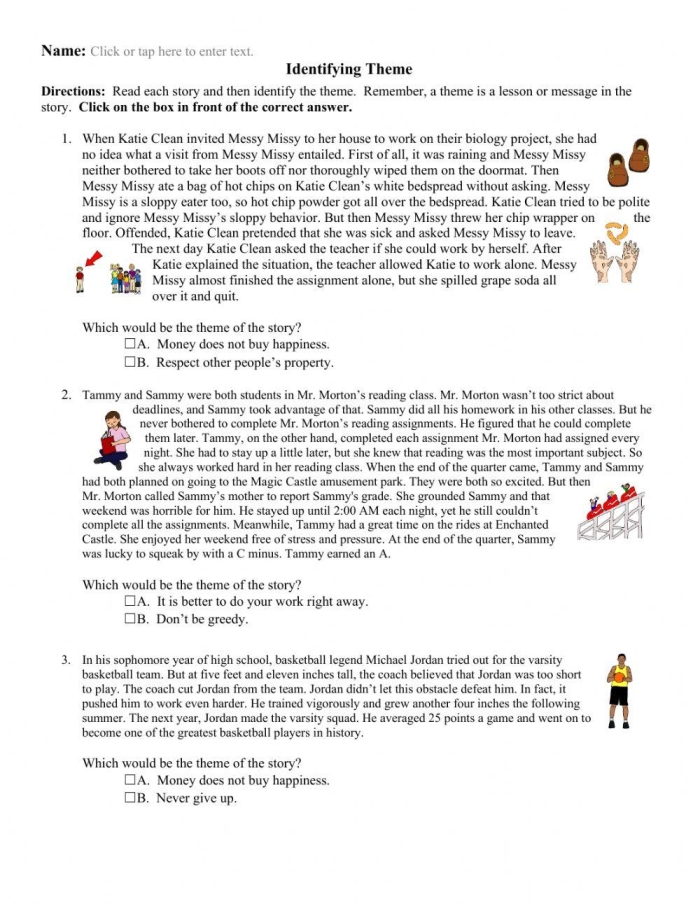
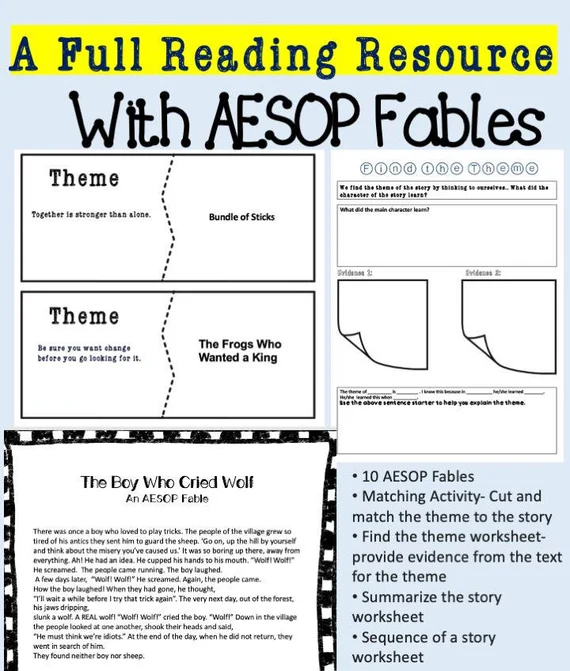
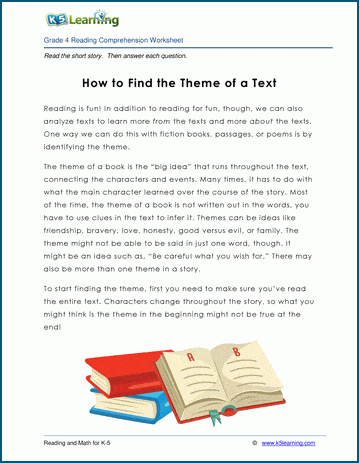
Theme is one of those reading skills that separates surface-level comprehension from real understanding. When fourth grade students learn to identify a story’s theme, they’re learning to look beyond the plot and ask what the author actually wants them to think about. This skill takes practice, which is why structured exercises work so well.
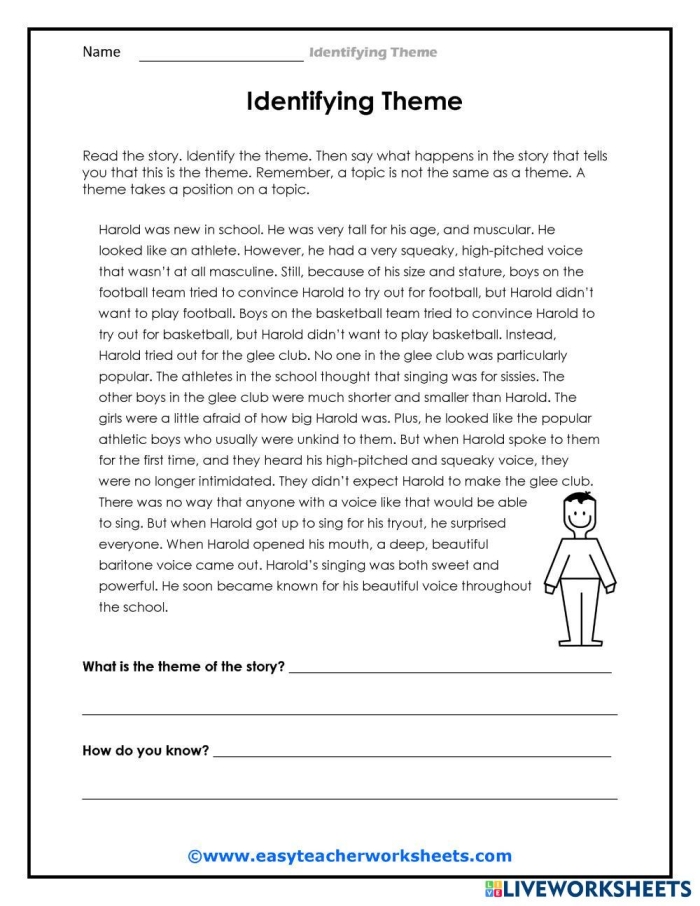
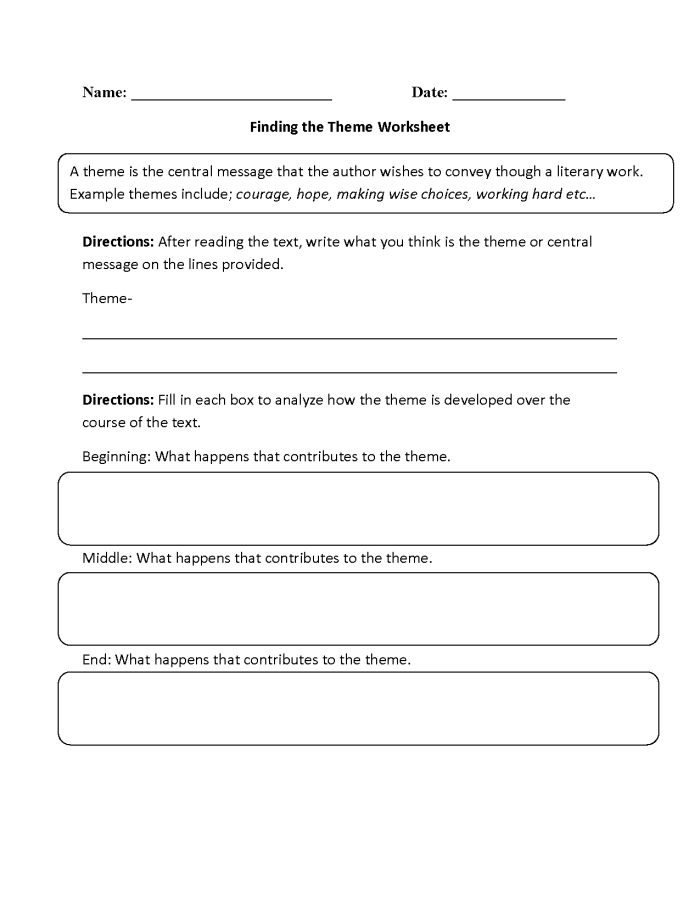
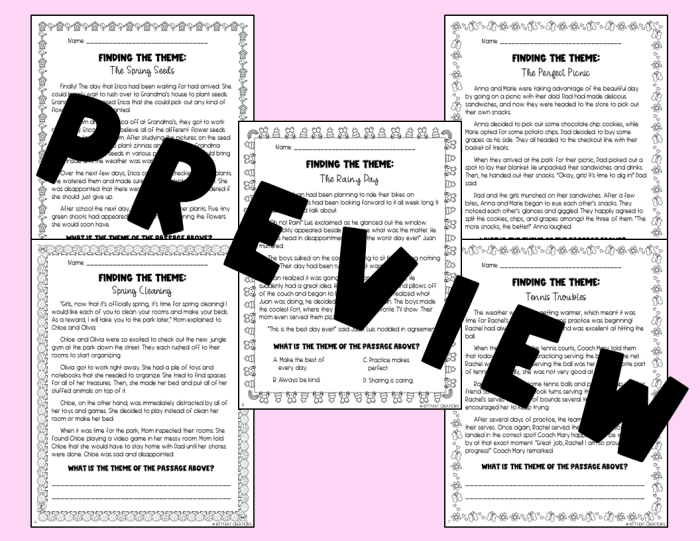
The exercise itself is straightforward: students read a short passage and then answer four comprehension questions designed to guide them toward discovering the theme. The questions typically start with concrete details about what happened in the story, then gradually push students to think about why those events matter and what message the author was sending. This scaffolded approach helps learners build confidence before tackling more complex texts.
What makes this method effective is that it combines reading with critical thinking. A student might identify that a character worked hard to solve a problem, but recognizing that the story’s theme is “persistence pays off” requires one more step of reasoning. That step is where real learning happens. Fourth grade is the right age for this work because students have enough reading fluency to focus on meaning rather than decoding words.
The four-question format also works well alongside other academic skills. For instance, while students are learning theme identification, they might be working on understanding how characters develop throughout a story, or they could be applying math skills like calculating perimeter in word problems that require similar analytical thinking.
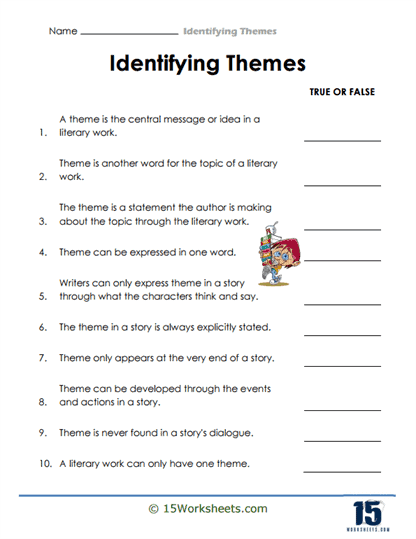
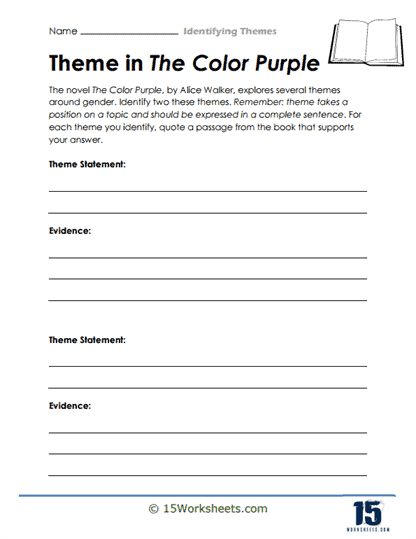
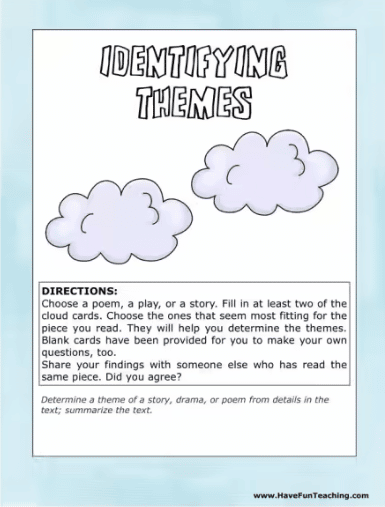
Teachers find that printable finding the theme worksheets give students a consistent framework for this work. The repetition across multiple passages helps the skill stick. By answering the same types of questions about different stories, students internalize what theme actually means and how to spot it in any text they encounter.
Use These Worksheets Today