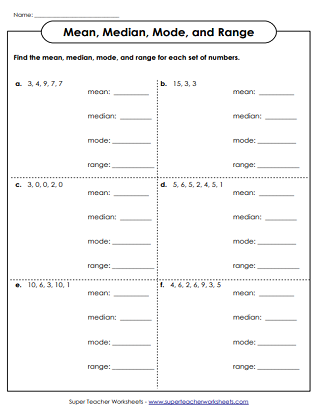
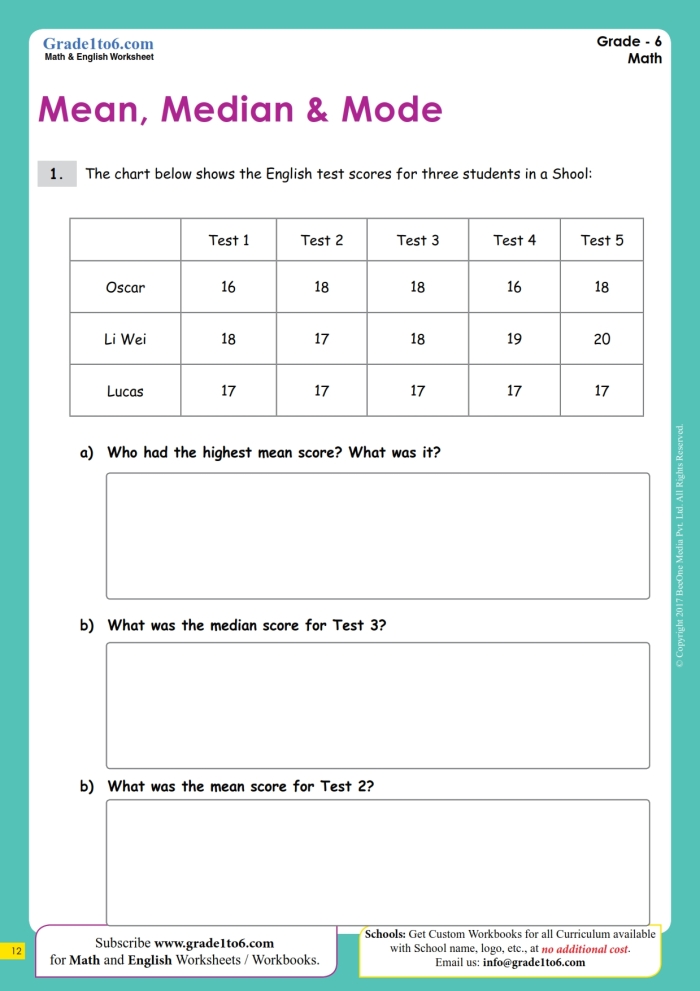
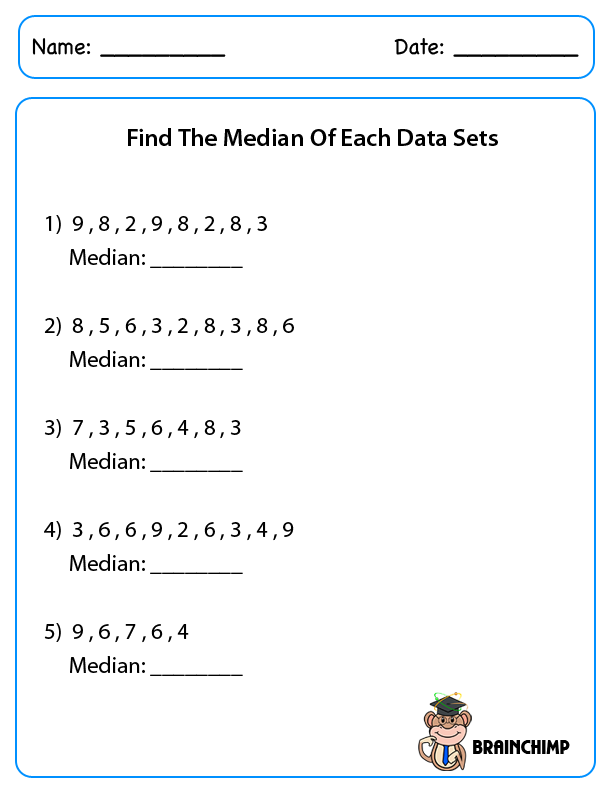
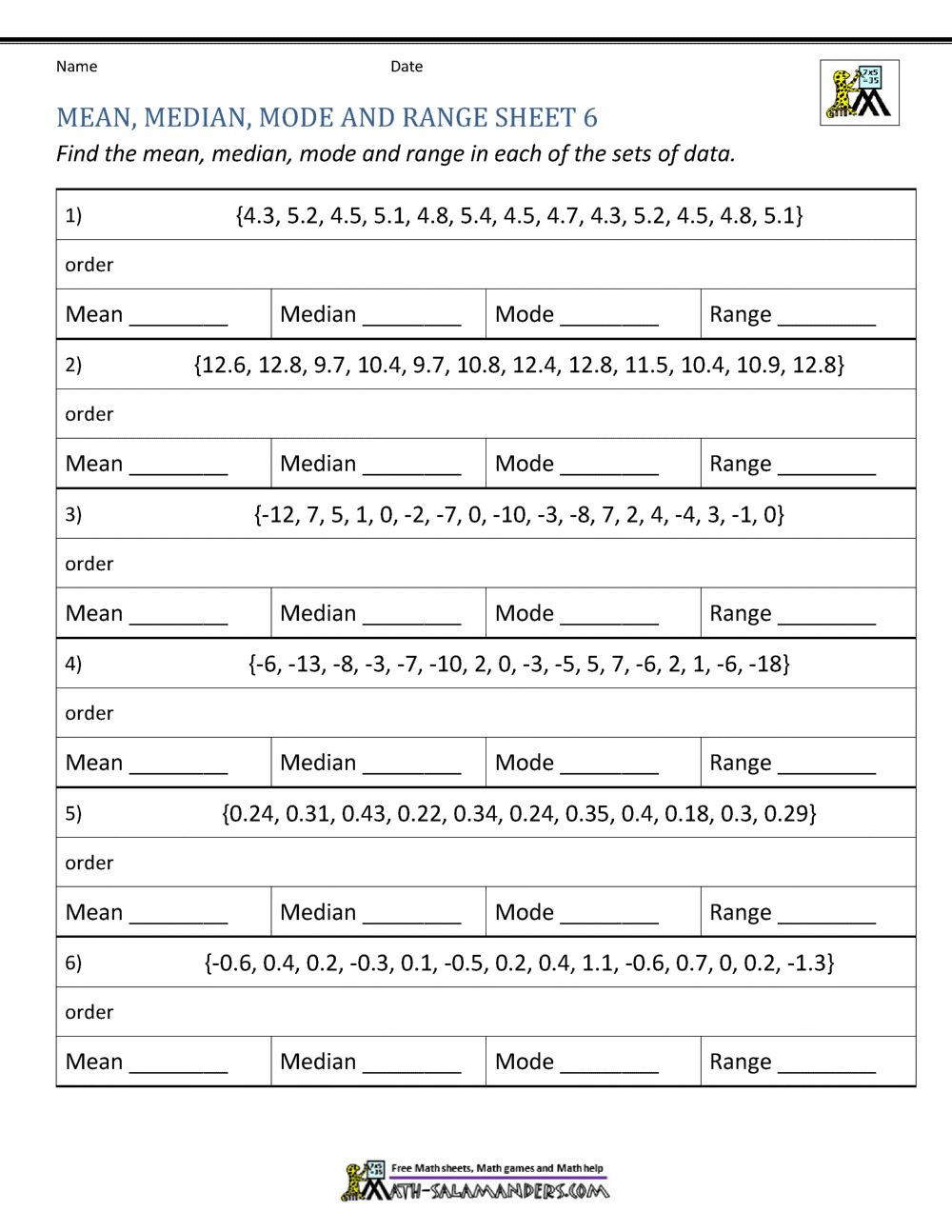
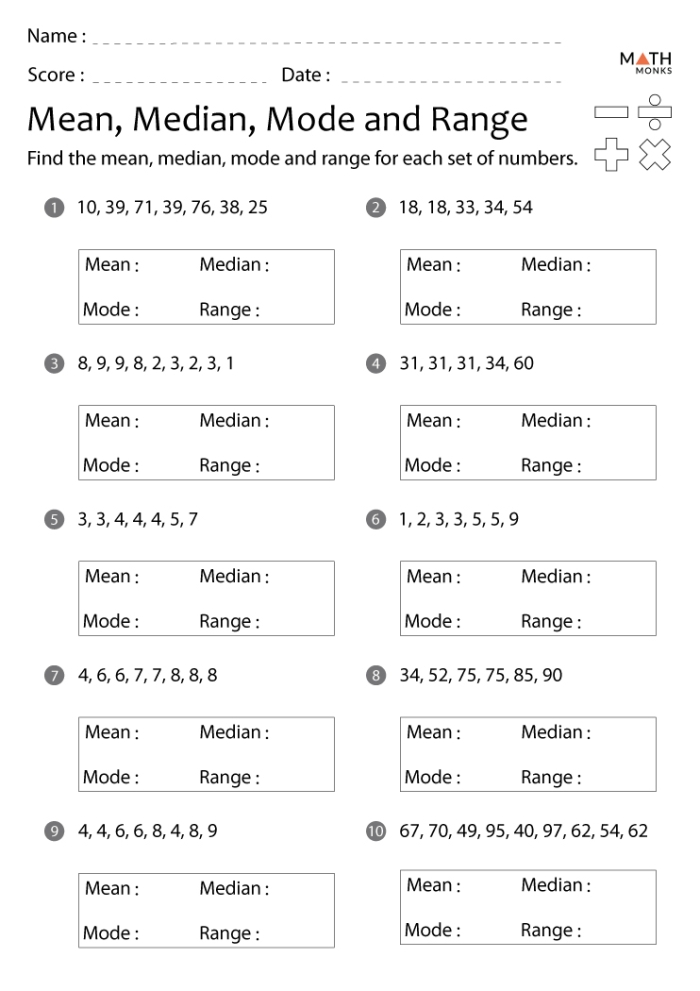
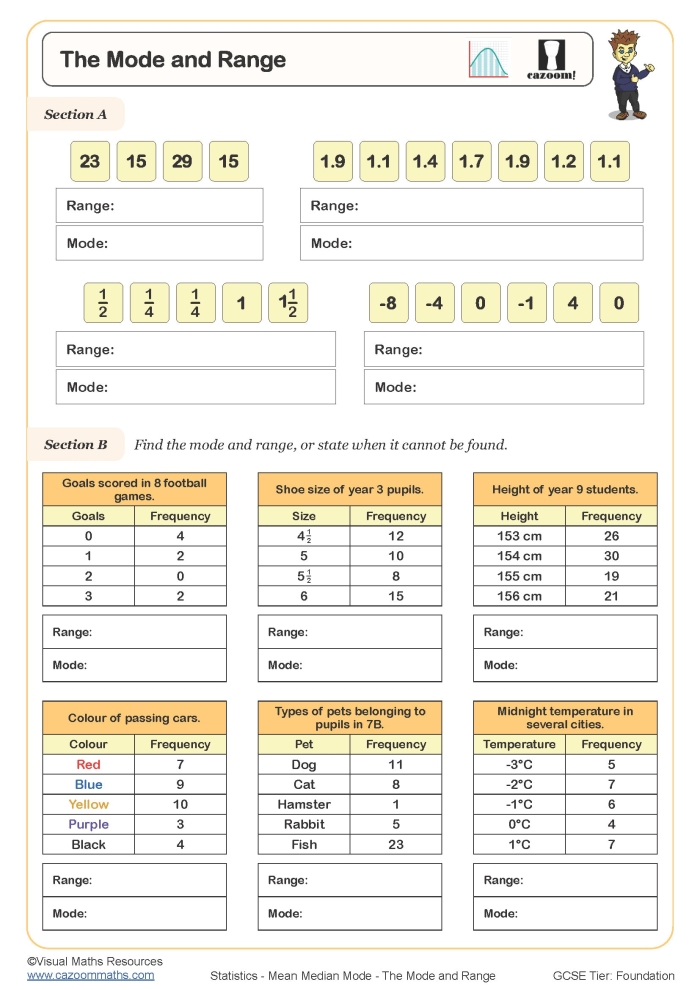
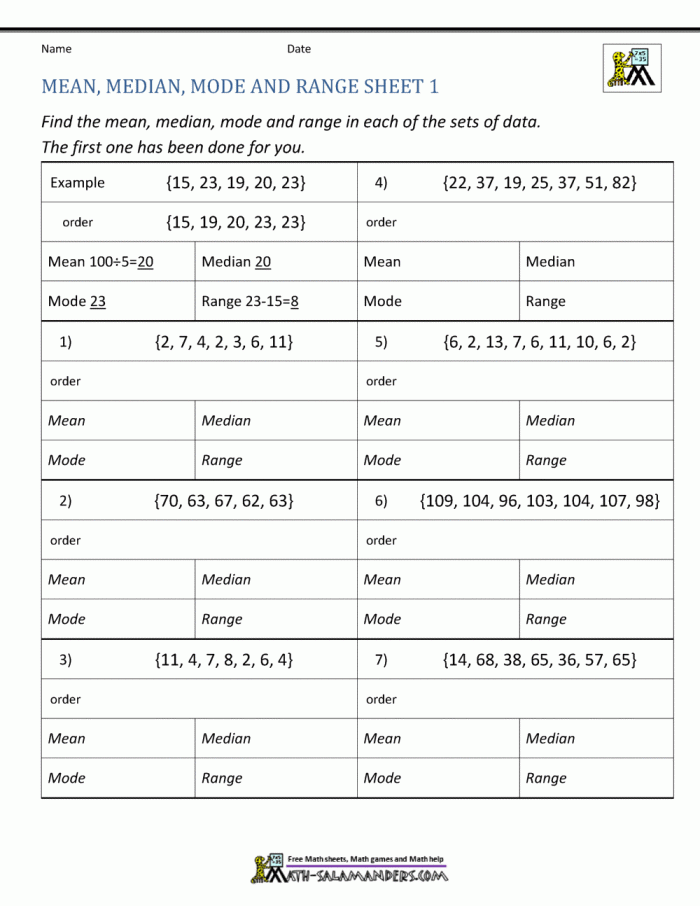
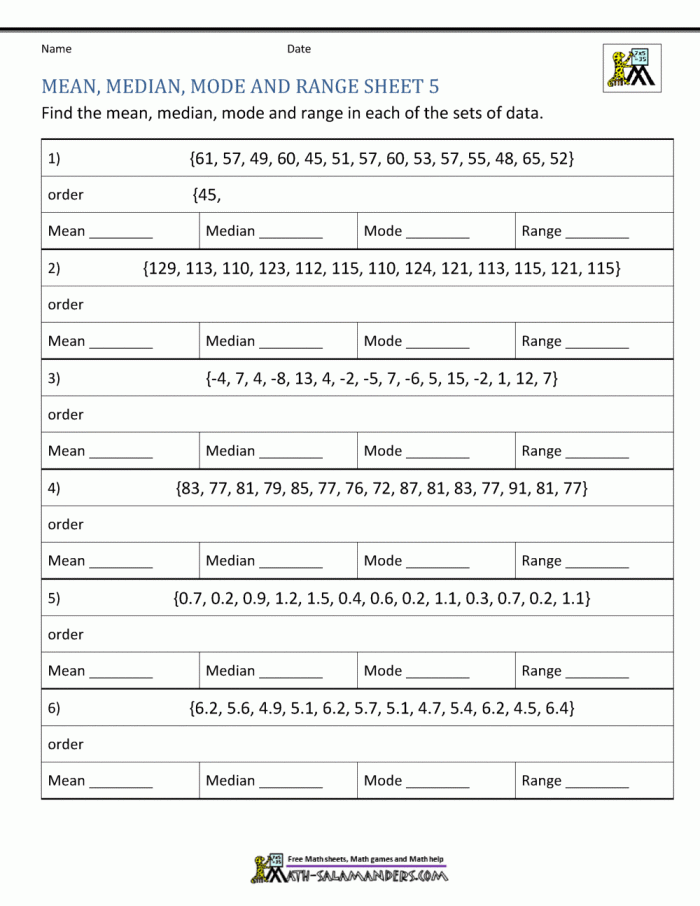
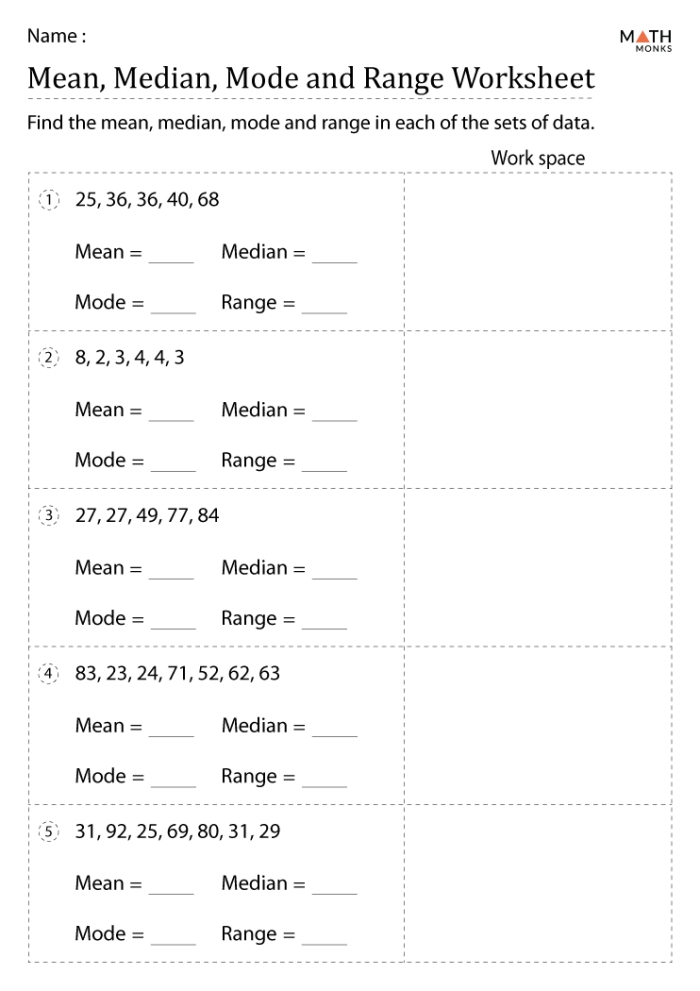
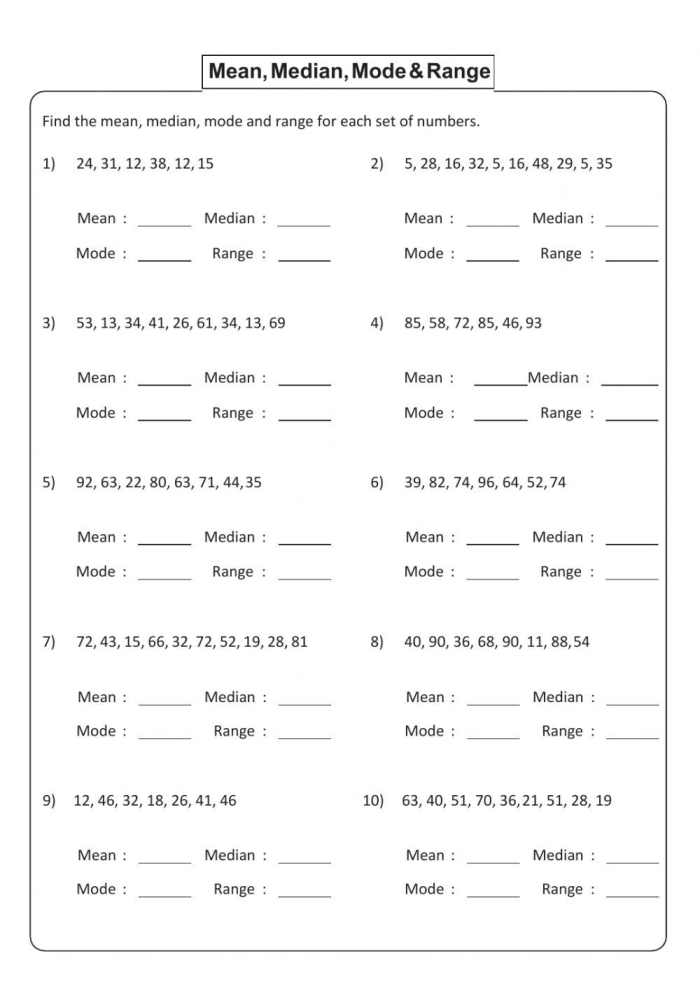
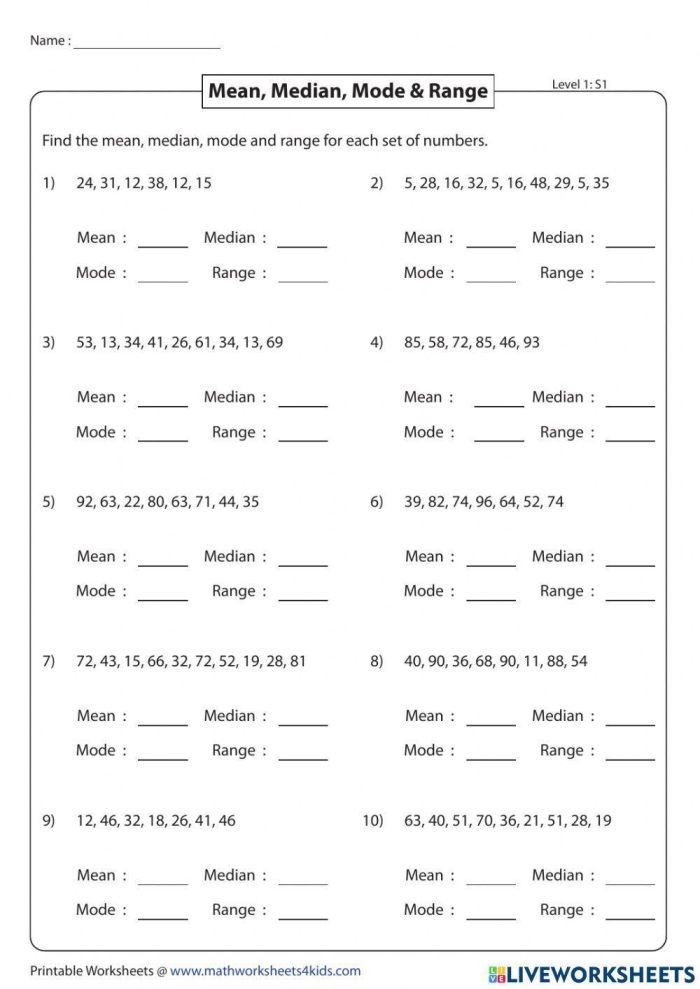
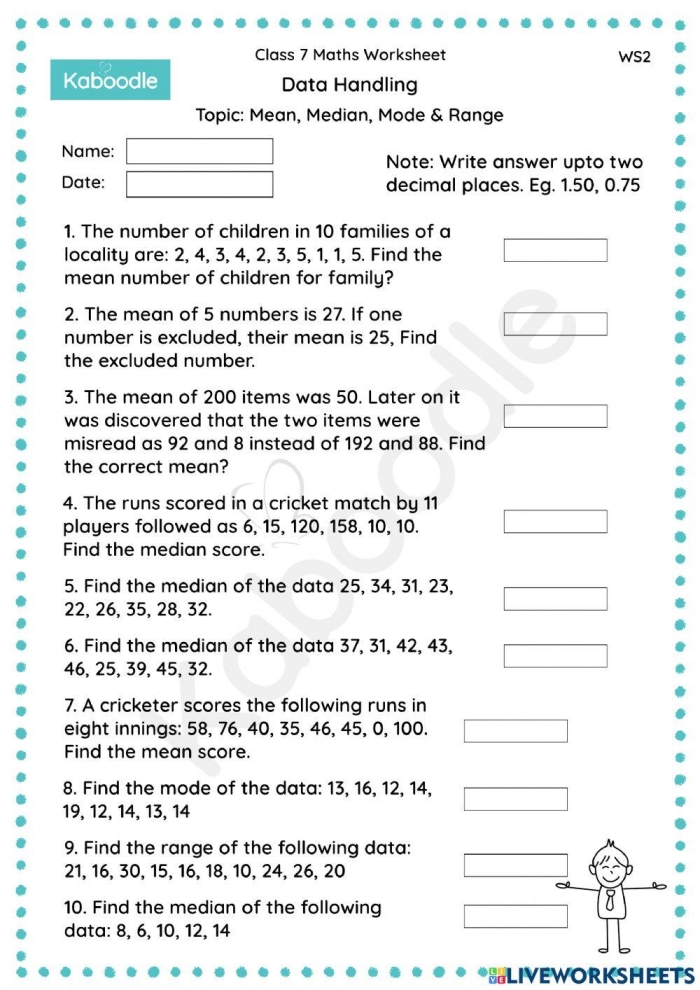
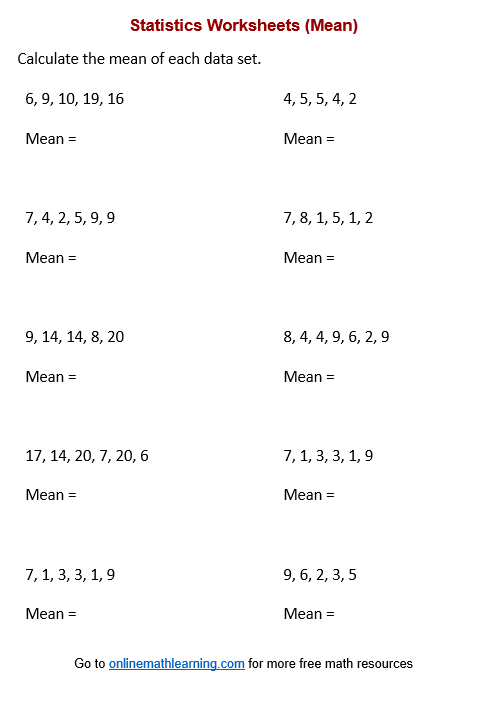
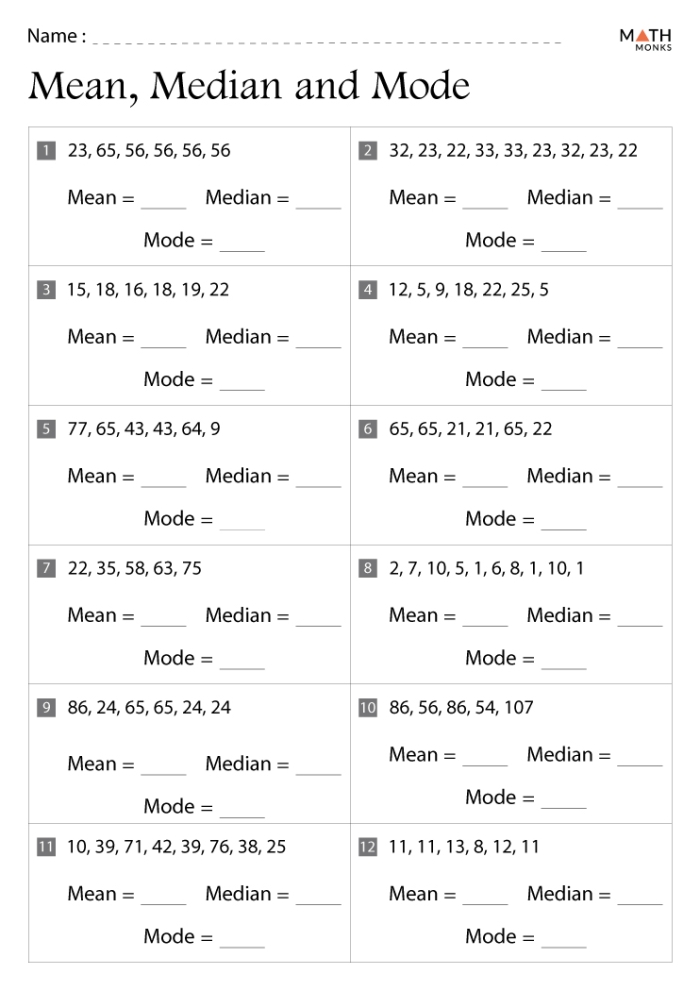
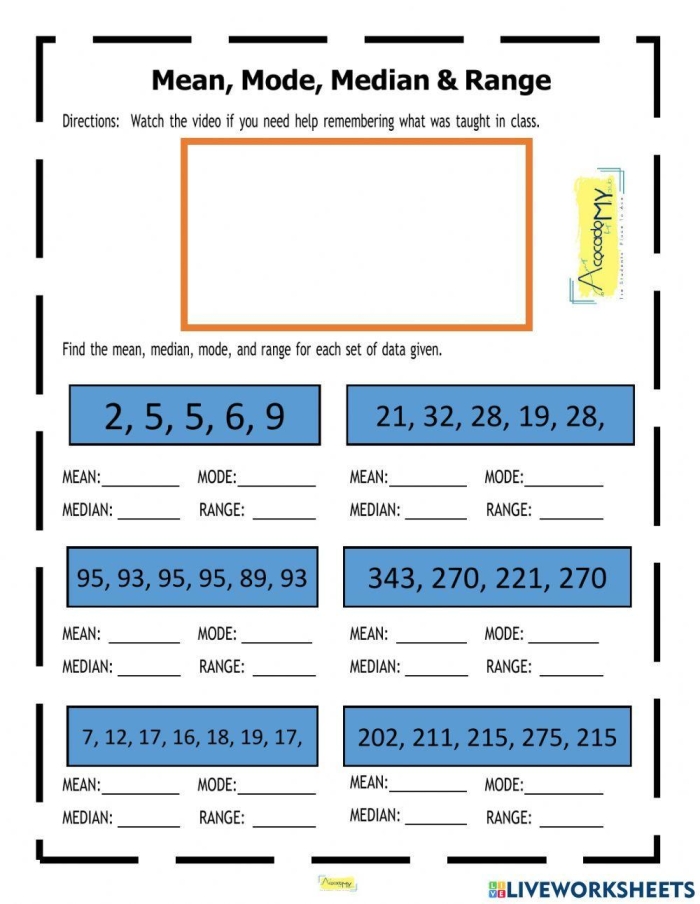
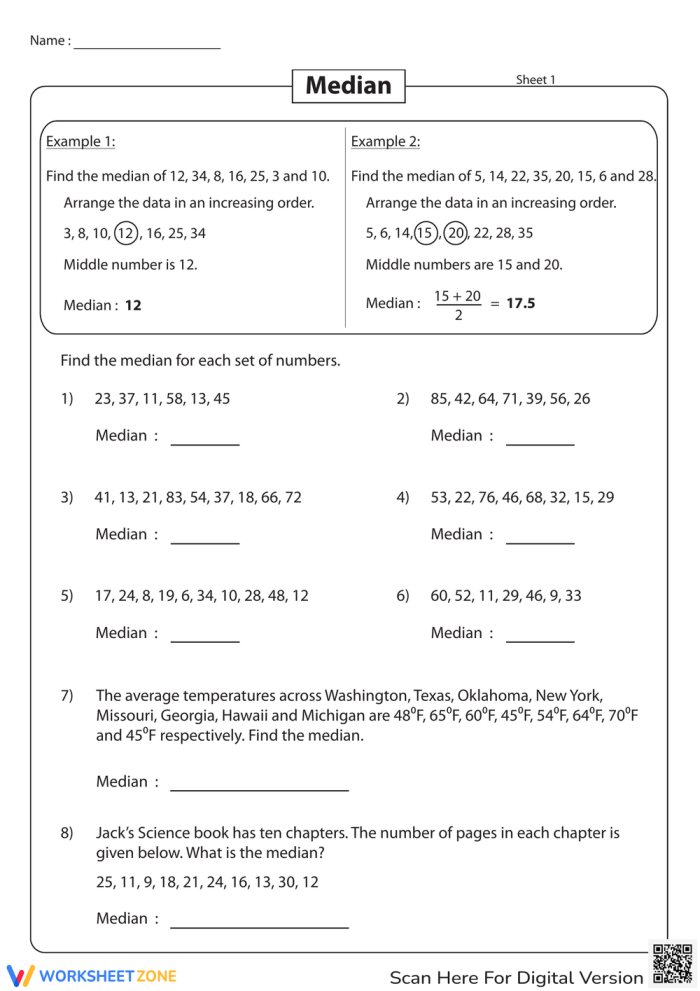
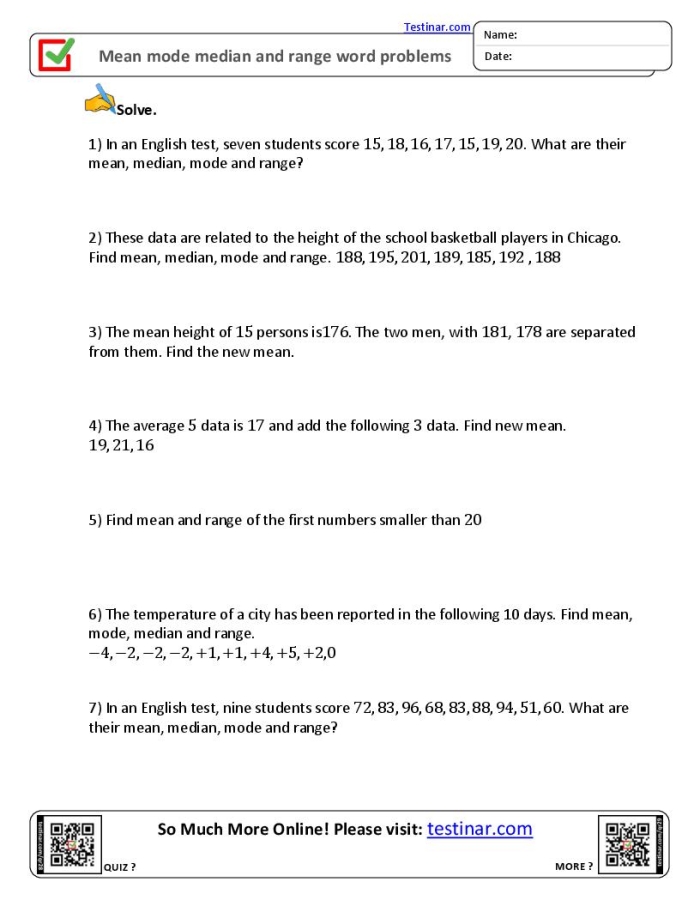
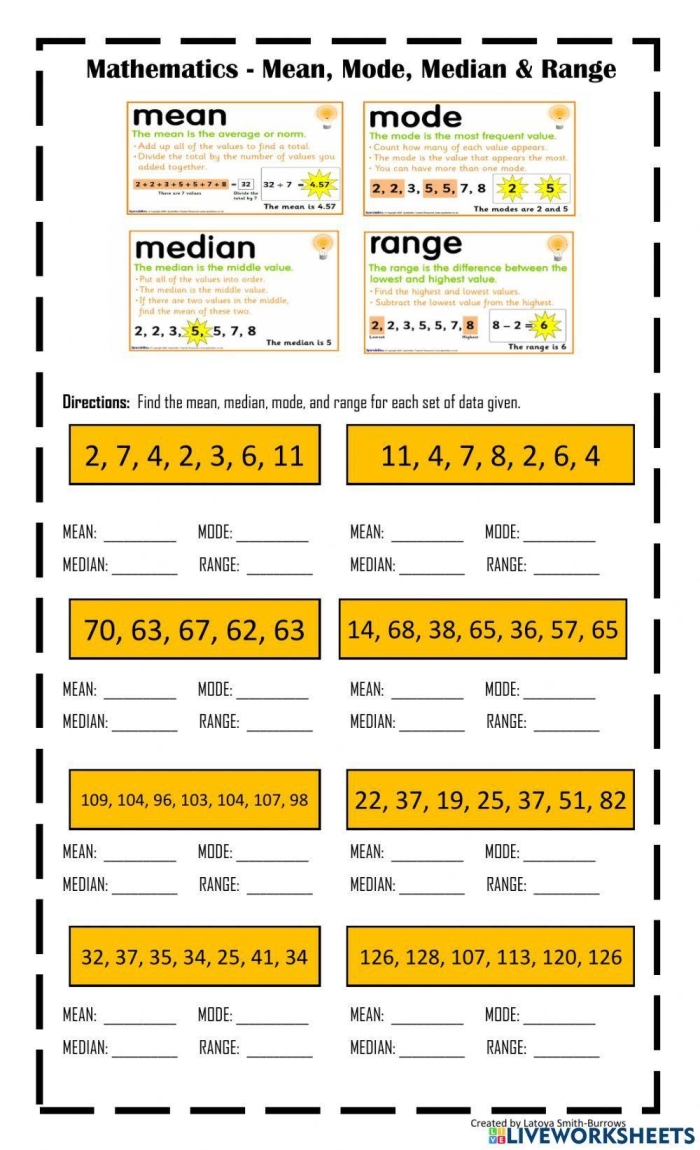
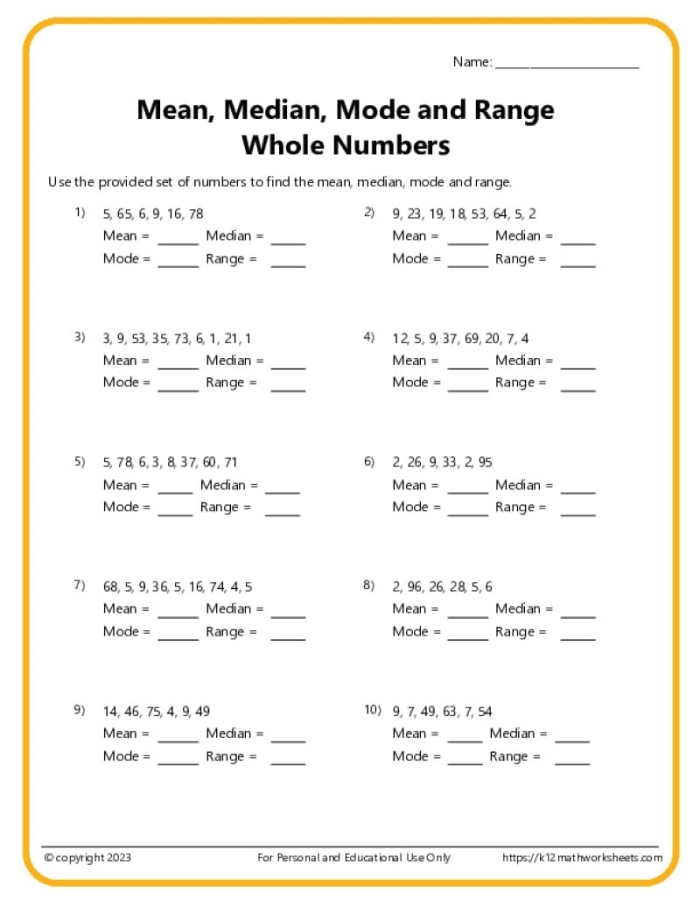
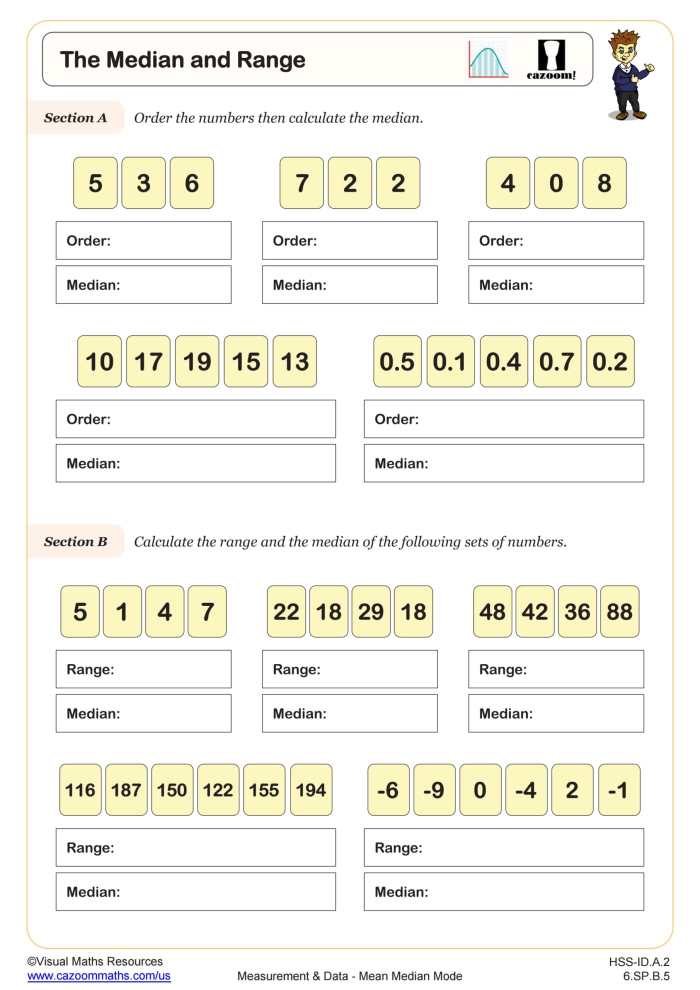
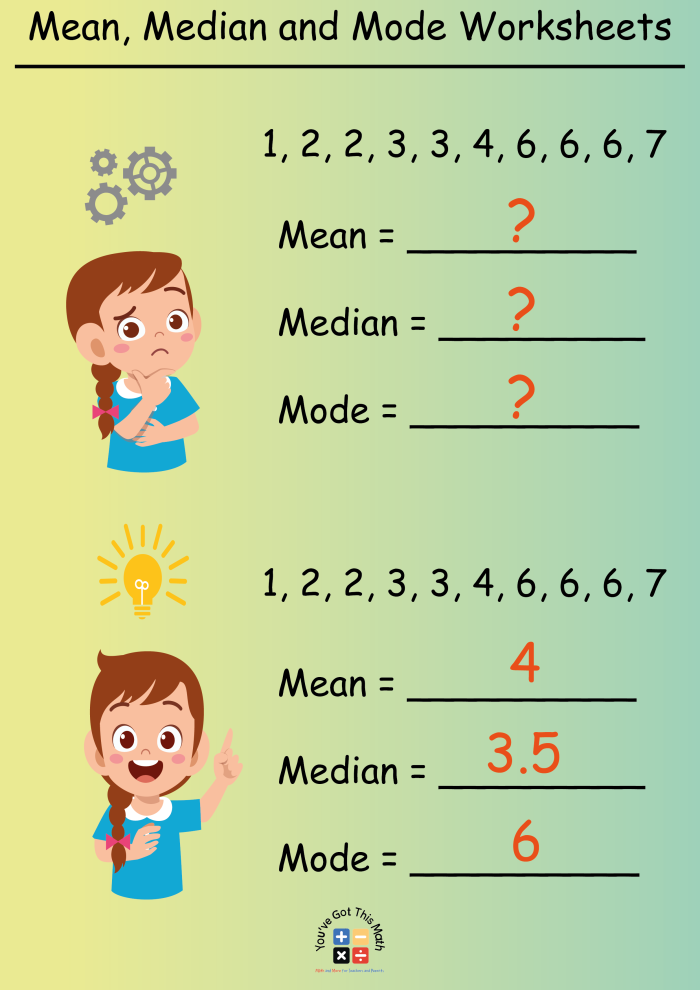
Most fifth graders hit a wall when they first encounter averages. The concept feels abstract because they’re juggling three different calculations, mean, median, and mode, all at once. A focused worksheet that isolates each method makes a real difference in helping students understand what’s actually happening with their numbers.
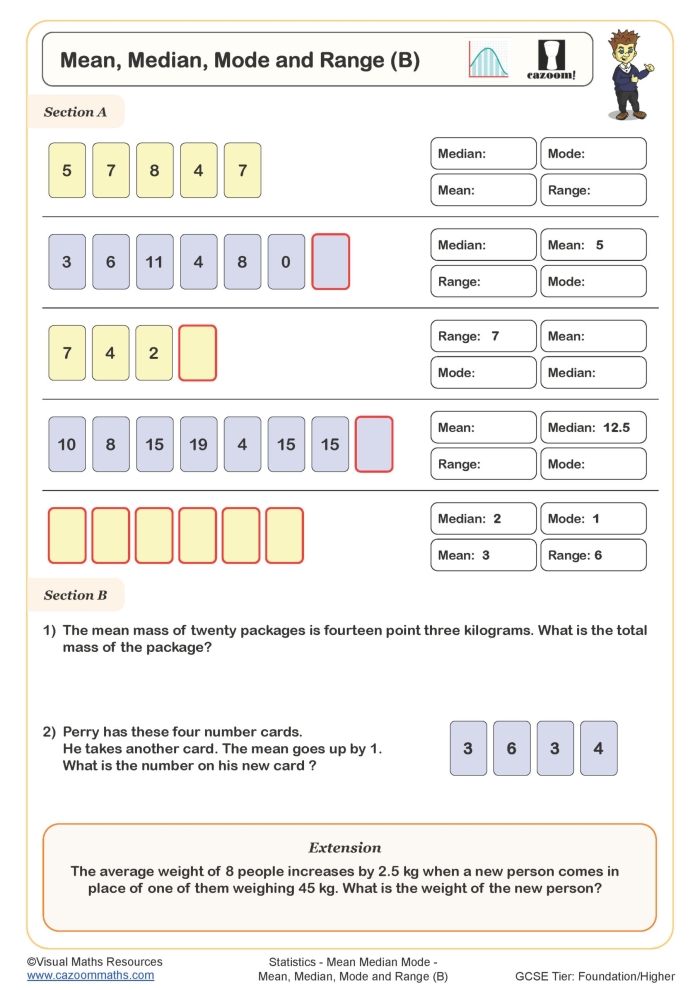
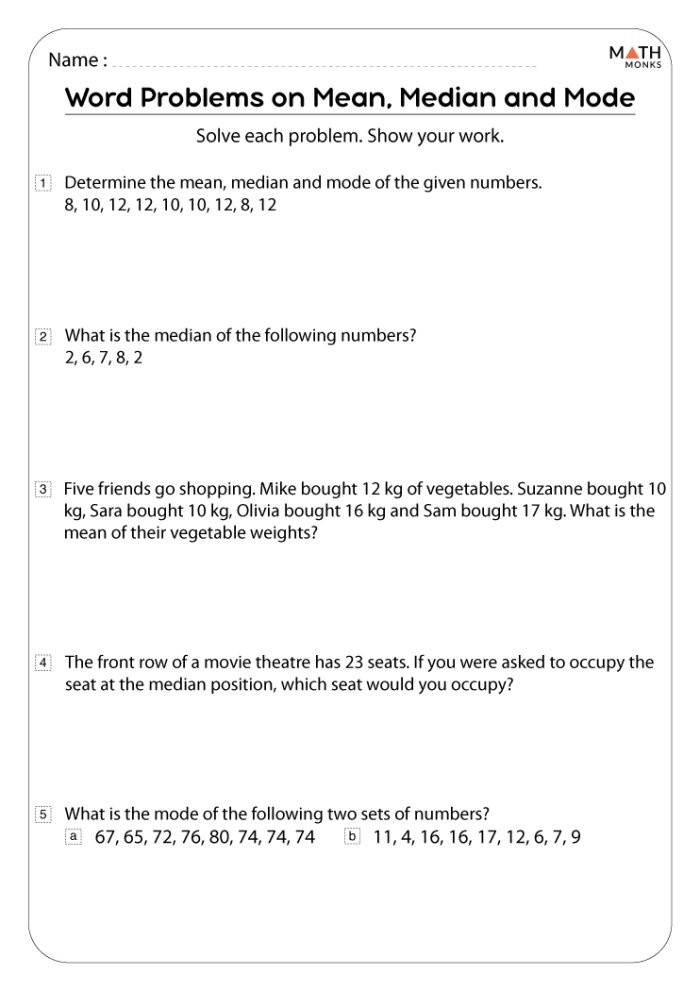
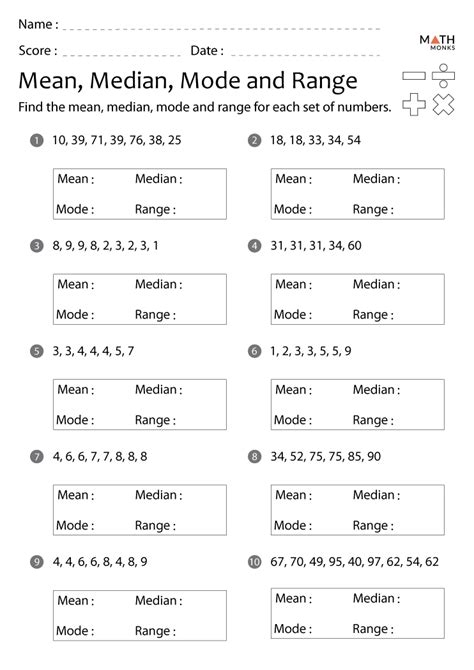
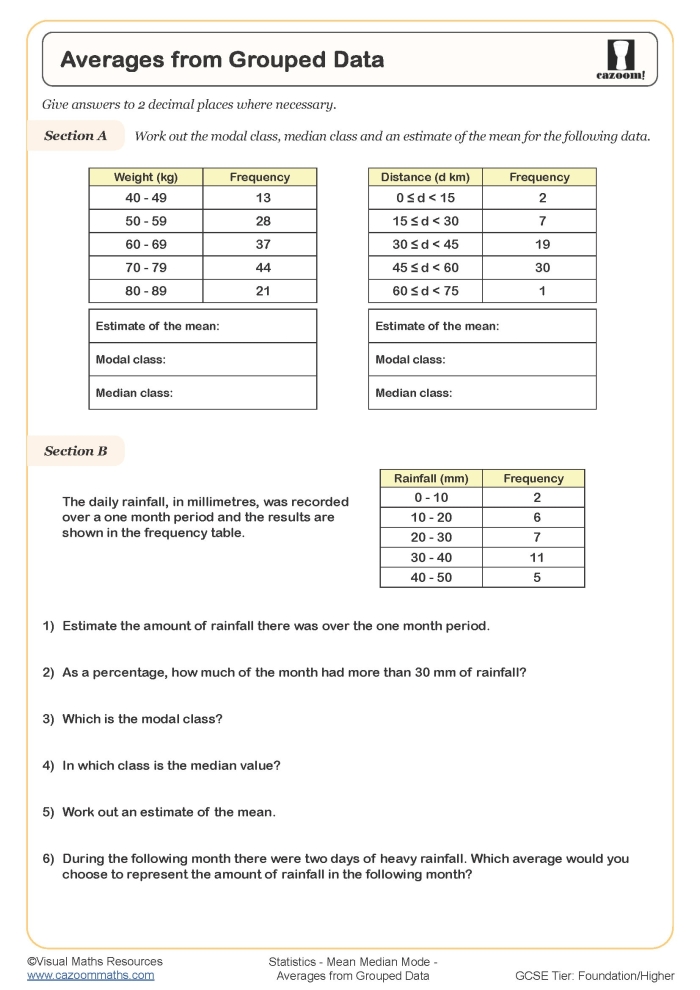
The mean is the sum of all values divided by how many values you have. This is what most people mean when they casually say “average.” A fifth grader calculating the mean of test scores, 85, 90, 78, and 92, adds them to get 345, then divides by 4 to get 86.25. The median is the middle value when numbers are arranged in order, which handles situations where one extreme number skews the results. Mode is simply the number that appears most often in a set. These three methods give different information, and understanding when each one matters is crucial.
Worksheets work best when they move from simple to complex. Starting with small datasets of three or four numbers lets students practice the mechanics without becoming overwhelmed. Once they’ve done a few rounds correctly, they can tackle larger lists with 10 or more values. Real-world examples help too: average height in a classroom, most common shoe size, or median allowance among friends.
The grammar and mechanics skills your fifth grader develops while working through these problems extend beyond math. Reading word problems carefully, organizing work clearly on paper, and checking calculations all strengthen their overall academic foundation. Pairing this type of focused practice with other fifth grade worksheets on practical topics creates a more well-rounded learning experience. When students see how these mathematical concepts connect to real situations, the abstract becomes concrete.
Start Practicing with These Worksheets