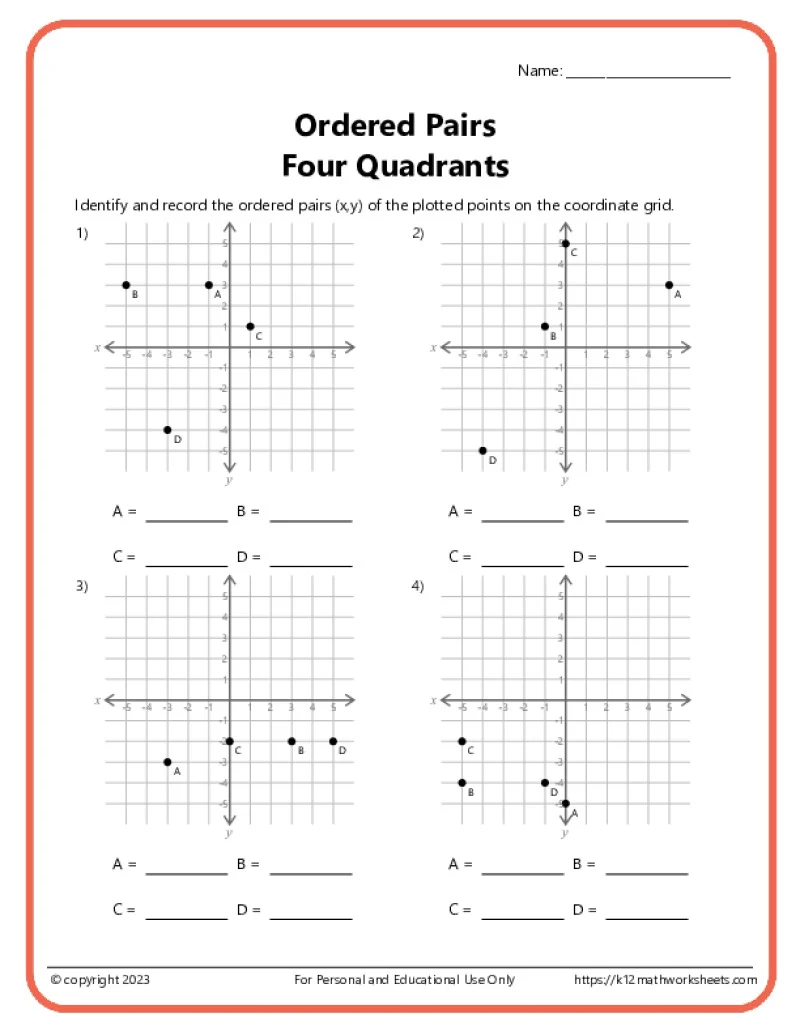
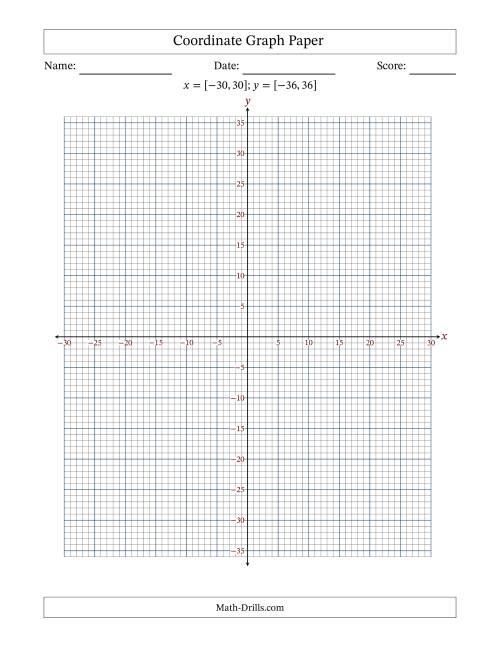
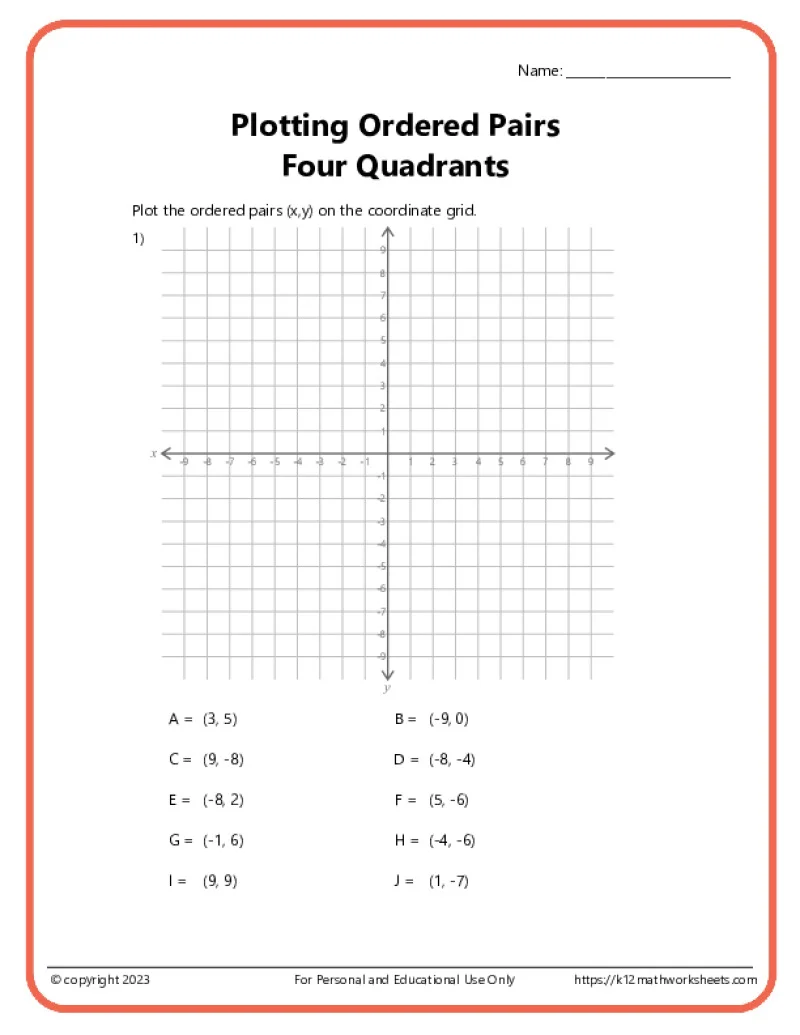
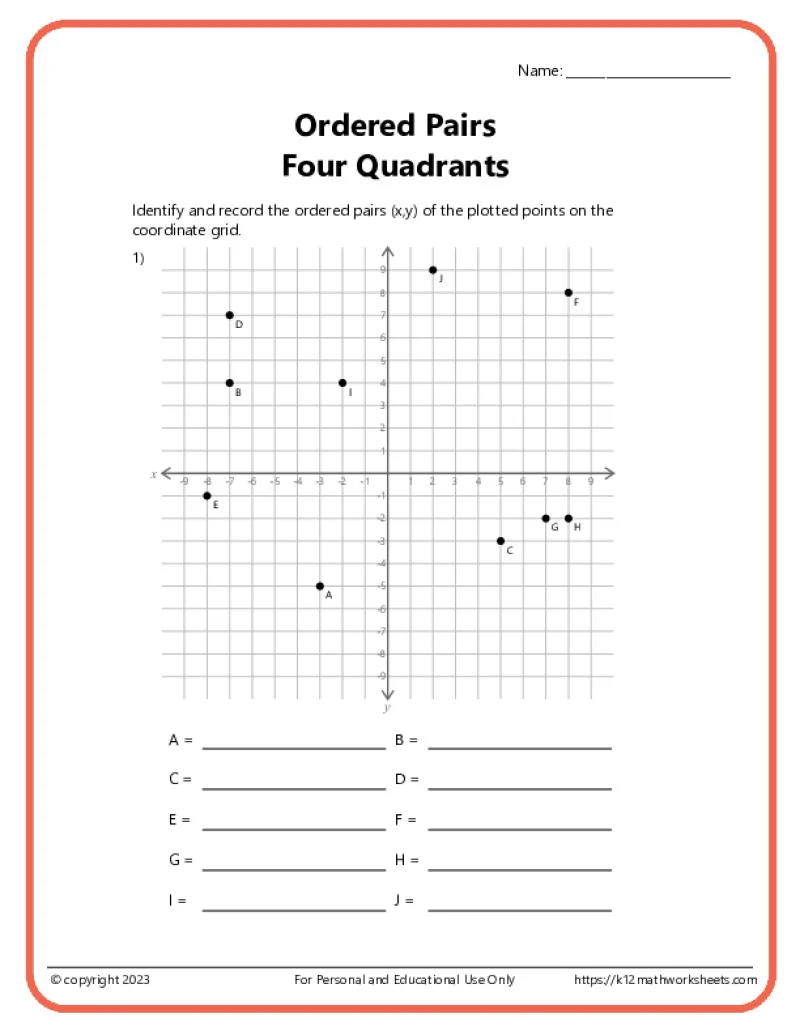
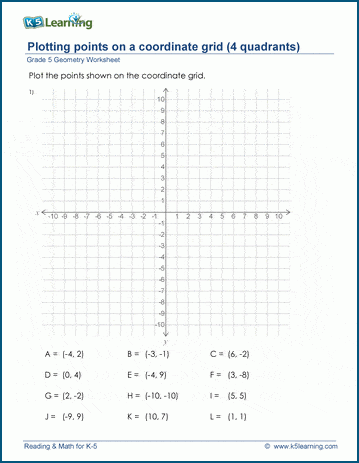
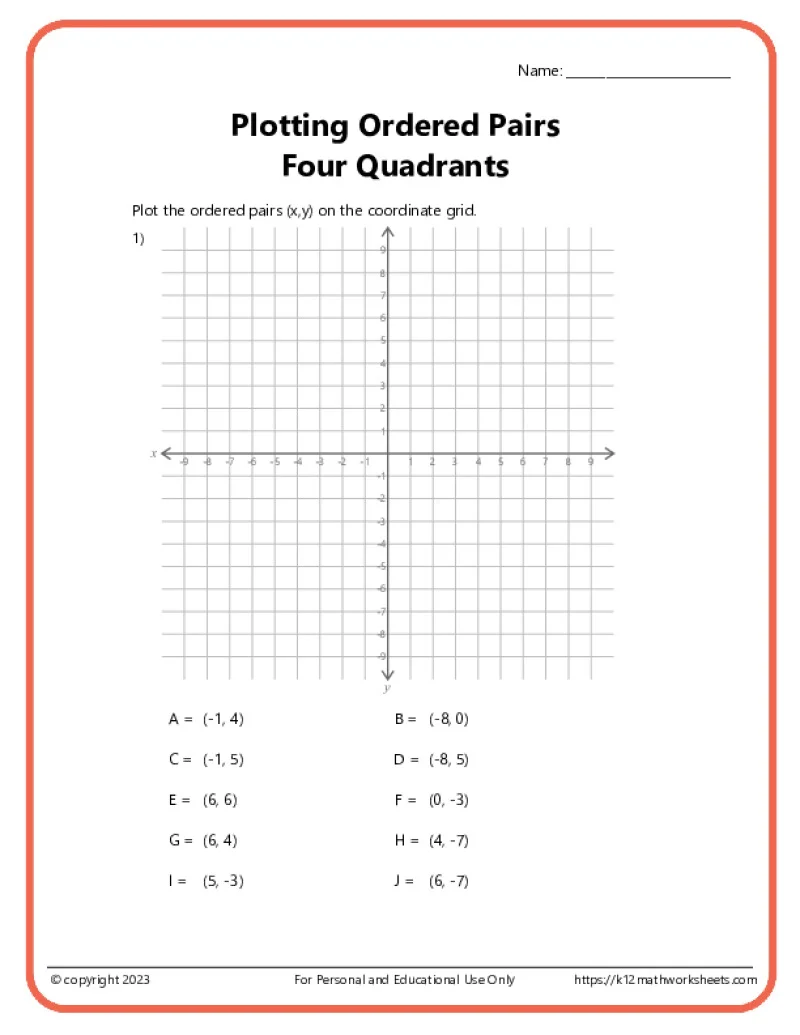
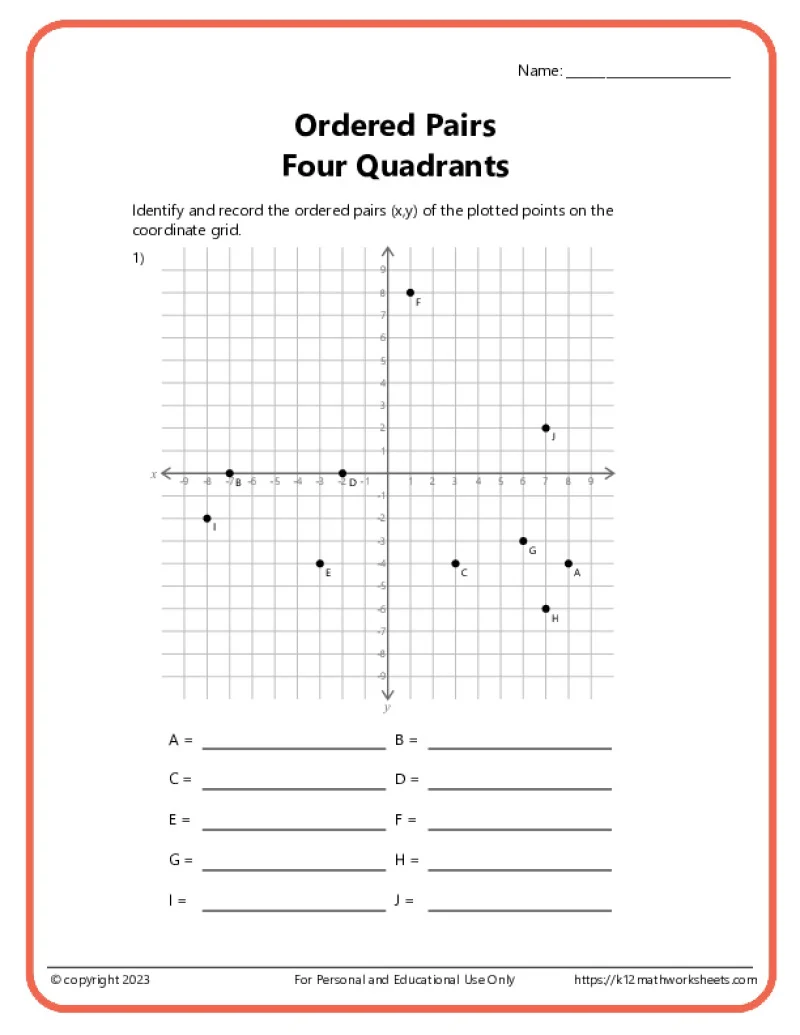
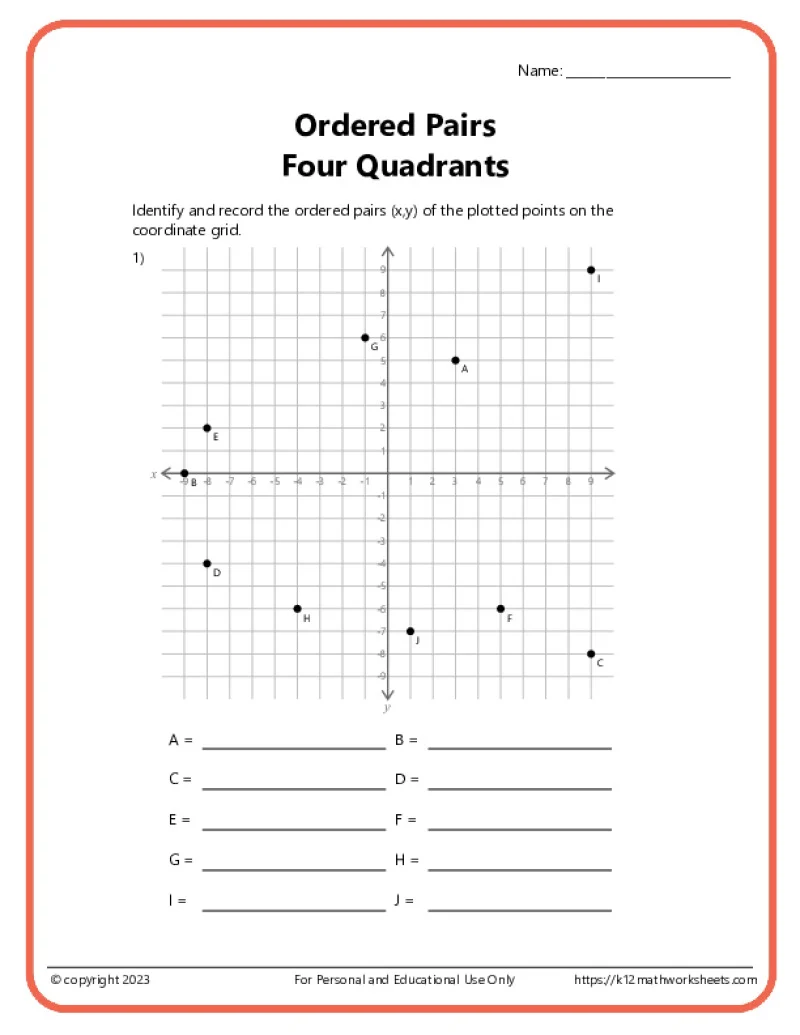
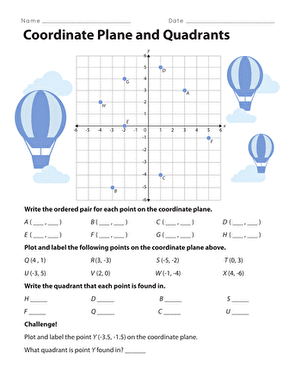
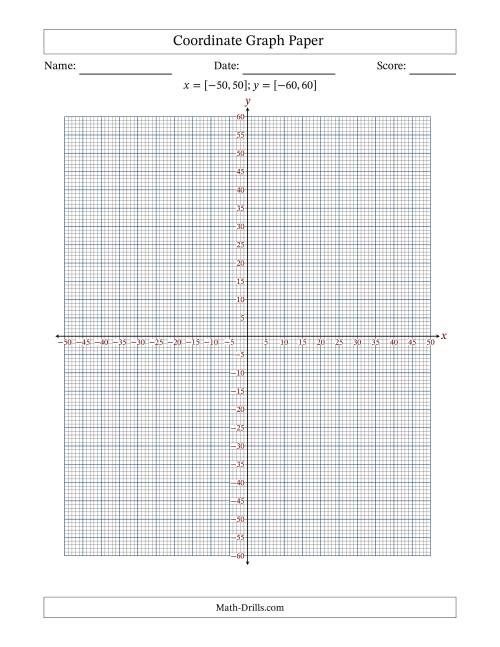
Once you move beyond the basic first quadrant, the coordinate plane opens up into a much larger space. The full plane stretches across all four quadrants, and learning to navigate it changes how you approach graphing problems in sixth grade math. Instead of staying confined to positive numbers, you suddenly have the freedom to plot points anywhere on the grid, including negative coordinates.
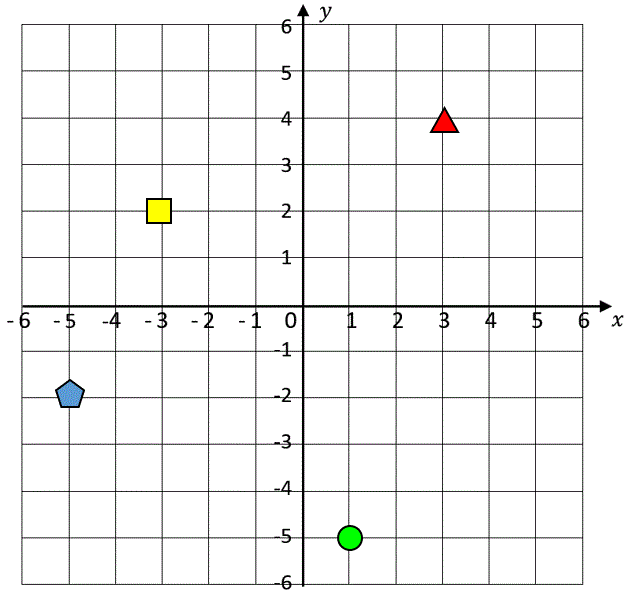
Understanding quadrants starts with recognizing the basic structure. The horizontal x-axis and vertical y-axis divide the plane into four sections. The first quadrant contains positive x and y values. Moving counterclockwise, the second quadrant has negative x values but positive y values. The third quadrant sits in the lower left with both coordinates negative. The fourth quadrant rounds out the plane with positive x values and negative y values. This pattern becomes automatic once you work through several examples.
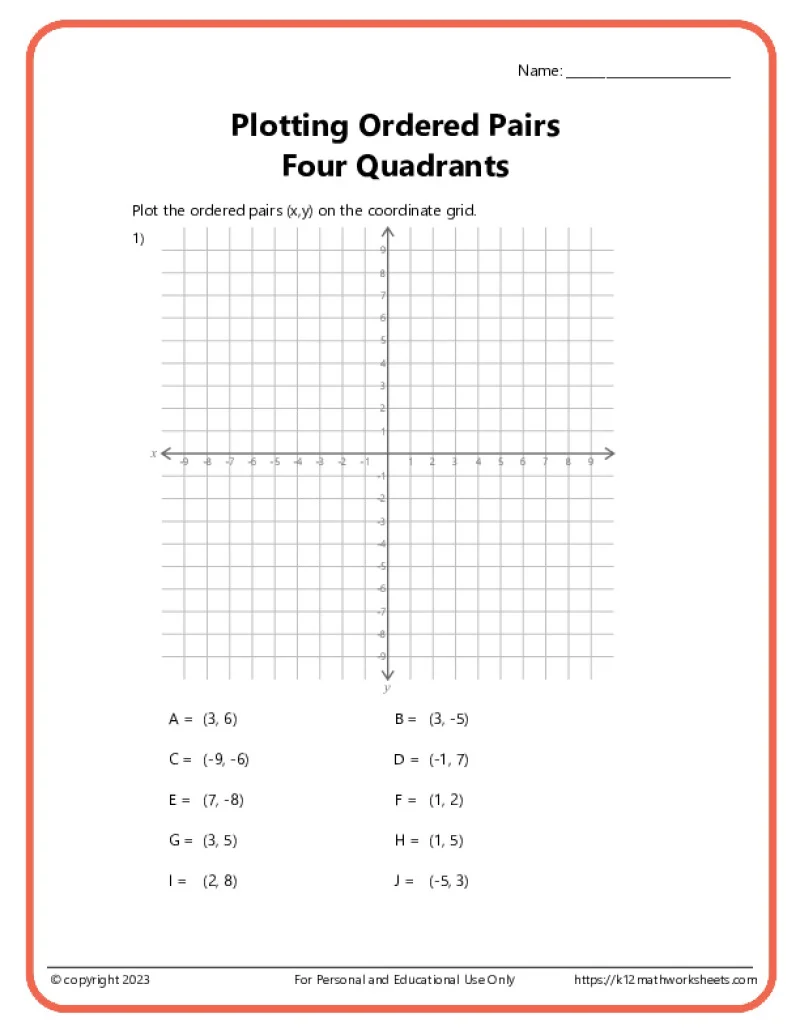
Plotting points across all four quadrants requires you to read ordered pairs carefully. An ordered pair like (-3, 5) tells you to move three units left and five units up from the origin. The negative sign in the first position changes your direction entirely. When both coordinates are negative, like (-2, -4), you’re working in the third quadrant, moving left and down simultaneously. This spatial reasoning strengthens your overall math skills beyond just graphing.
Sixth grade students benefit from consistent practice with these concepts. Working through printable coordinate plane and quadrants worksheets helps you internalize the patterns. You might also strengthen related skills by practicing with graphing inequalities activities alongside your coordinate work.
The more points you plot, the more natural the four quadrants become. Soon you’ll move points without hesitation, whether they land in positive or negative territory.
Start Practicing with These Worksheets