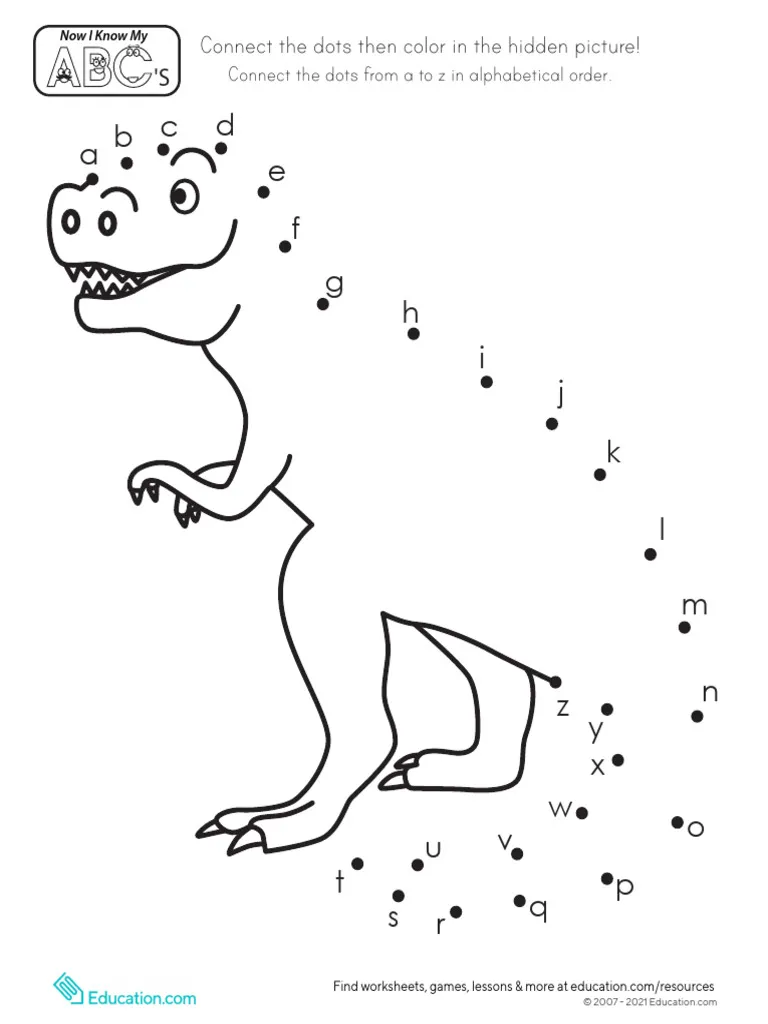
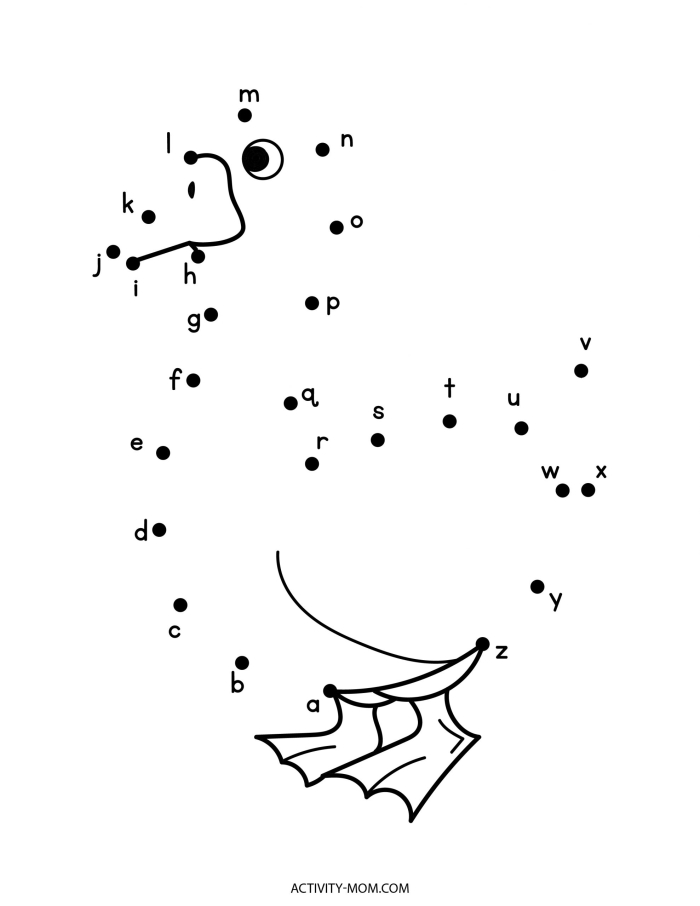
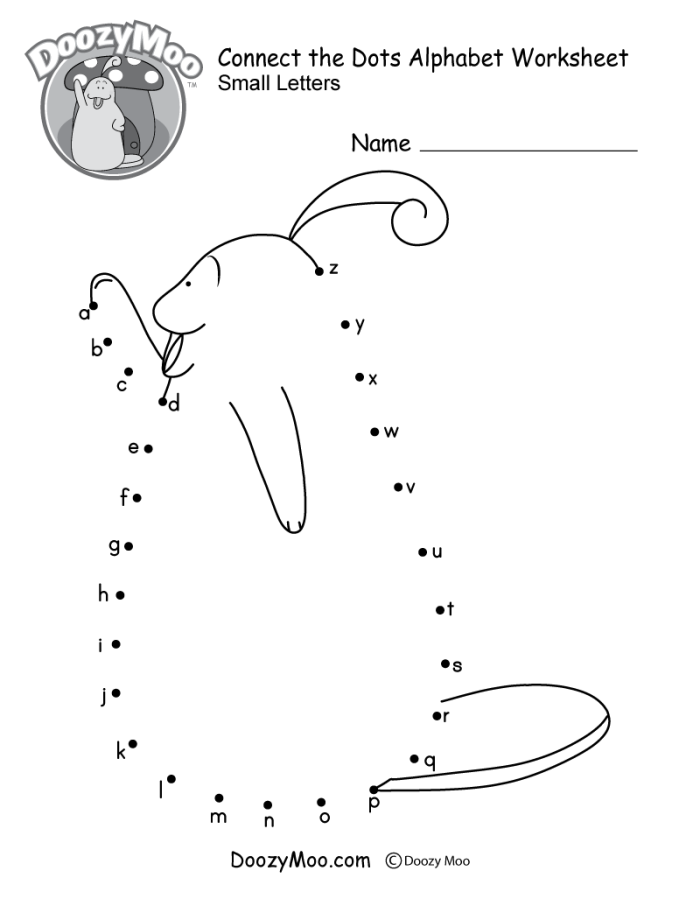
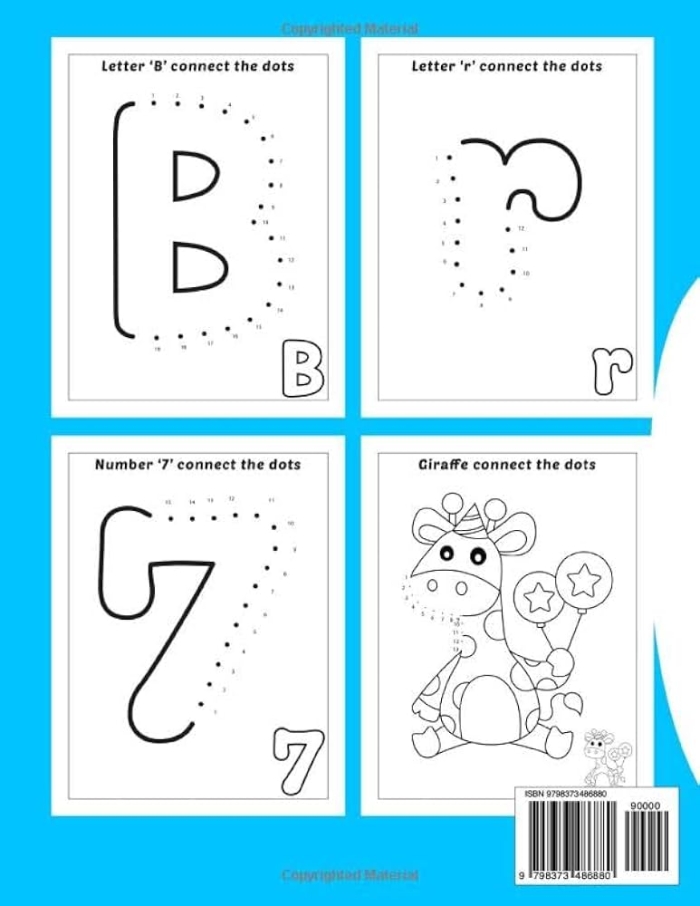
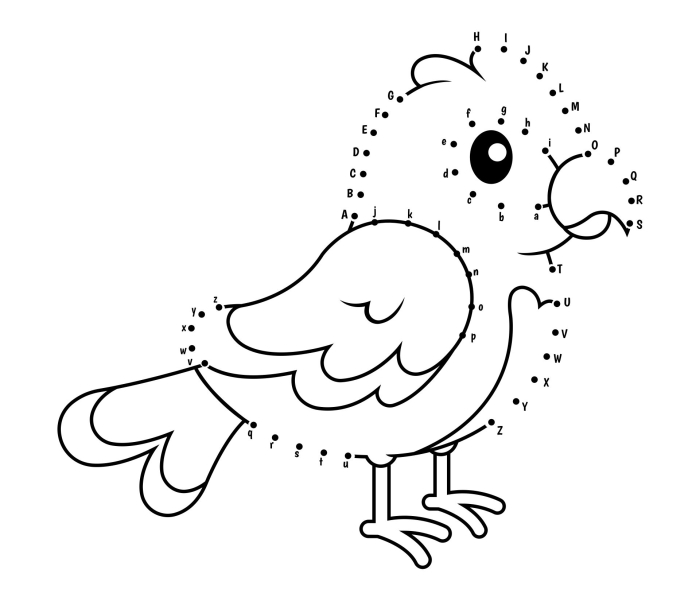
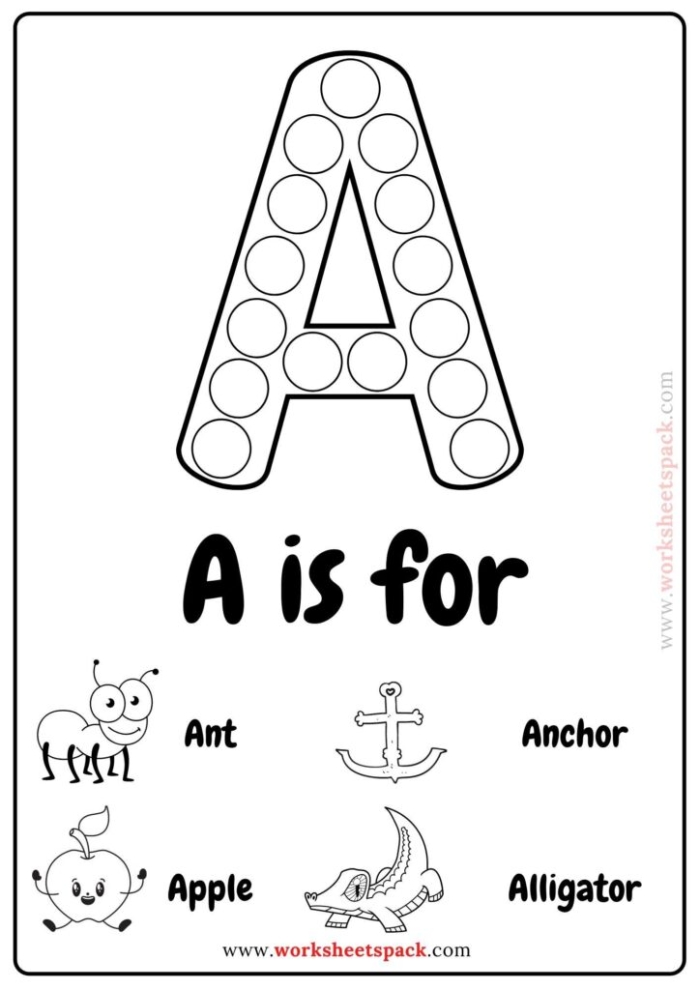
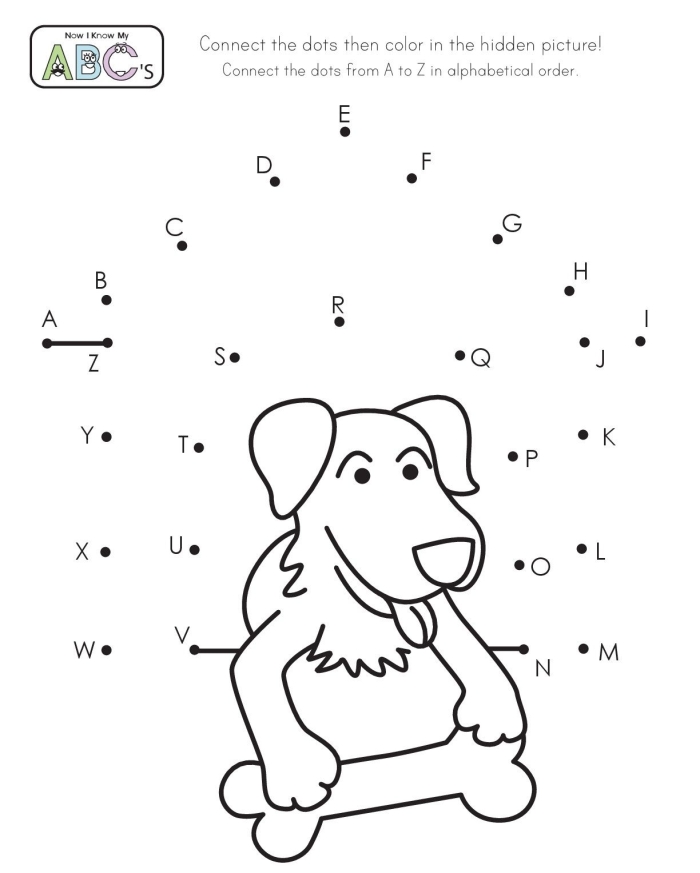
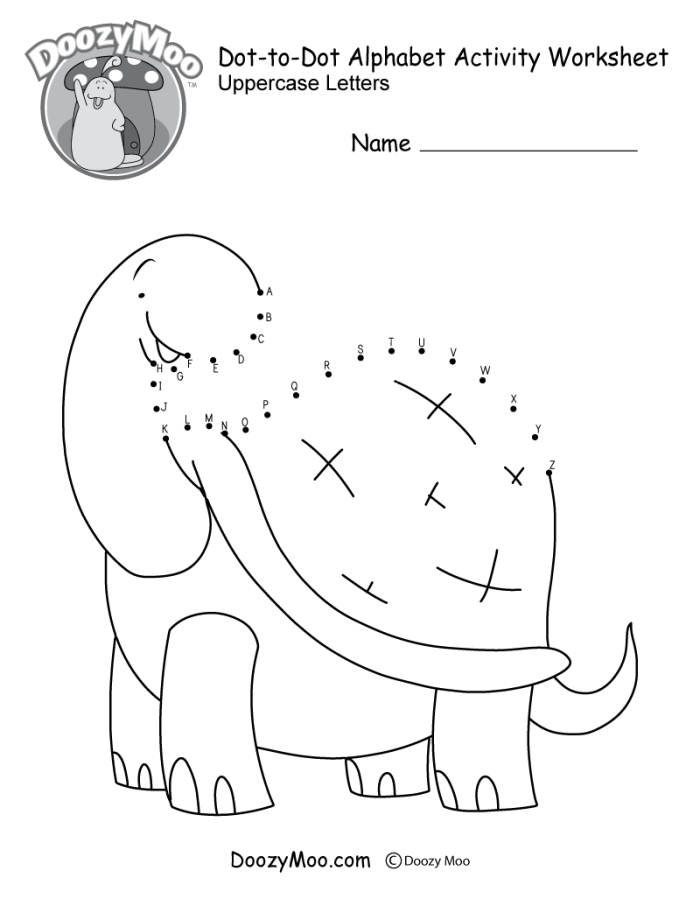
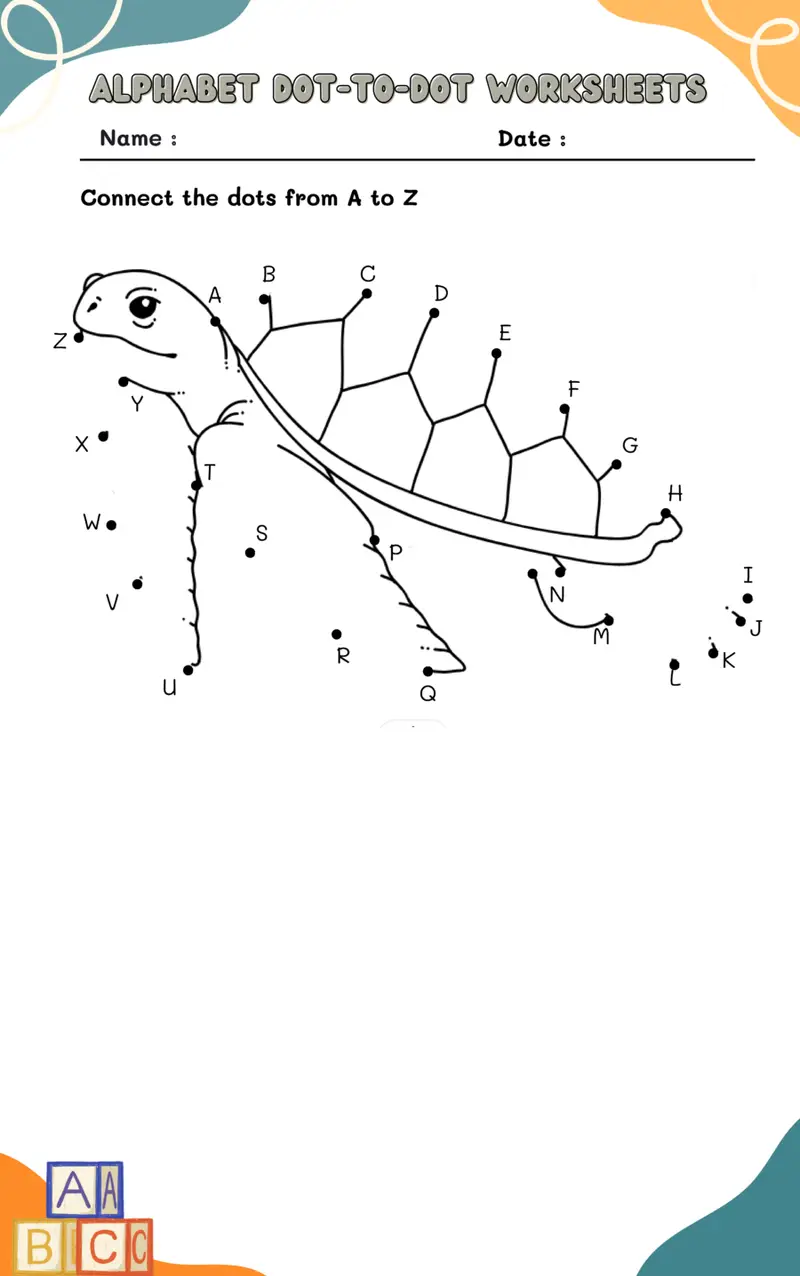
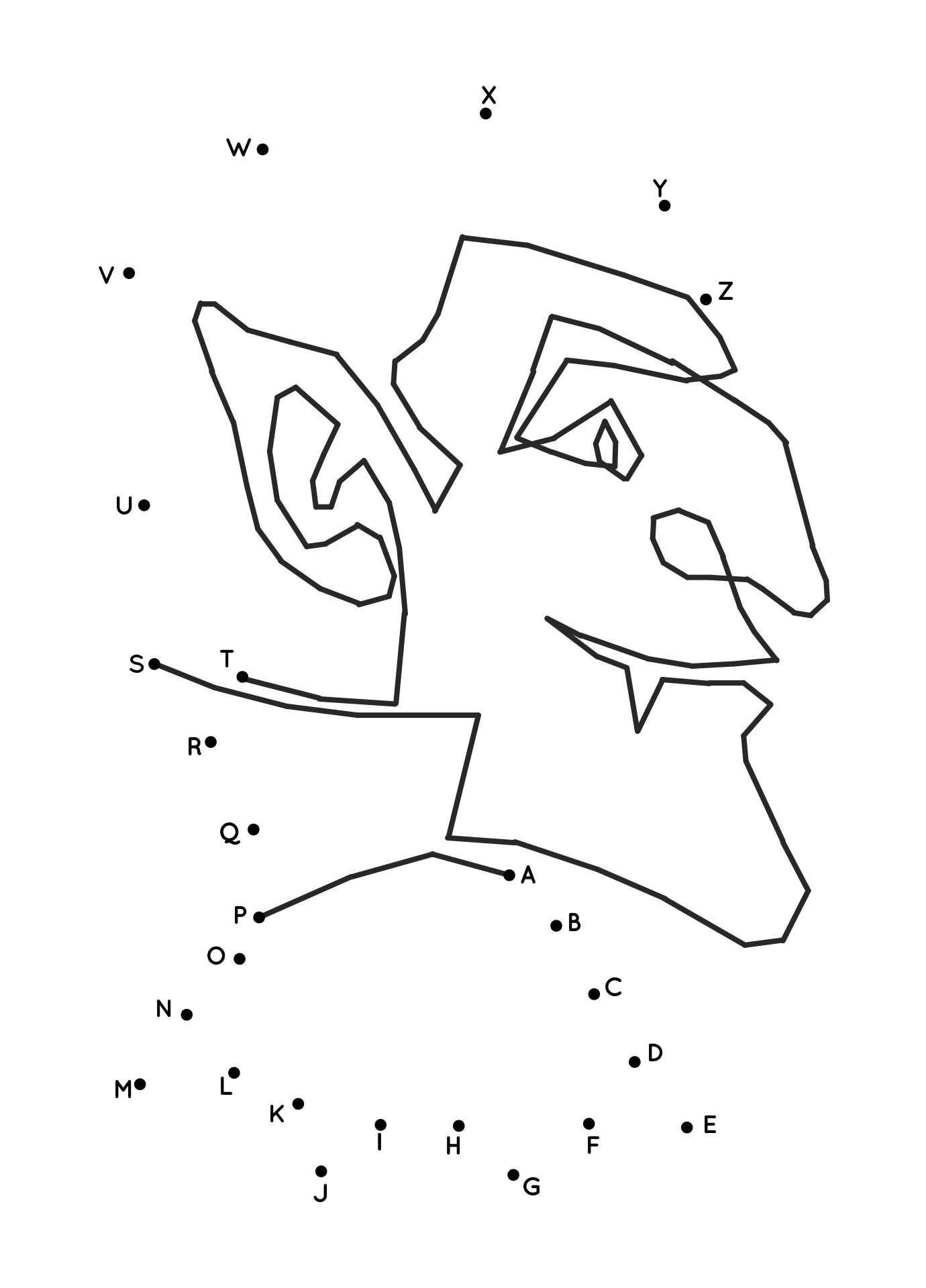
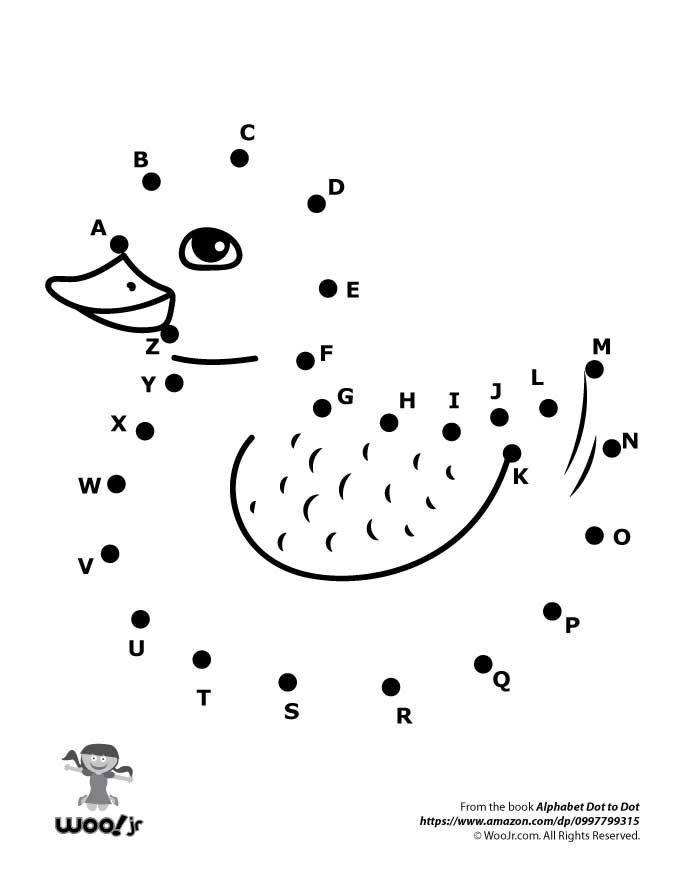
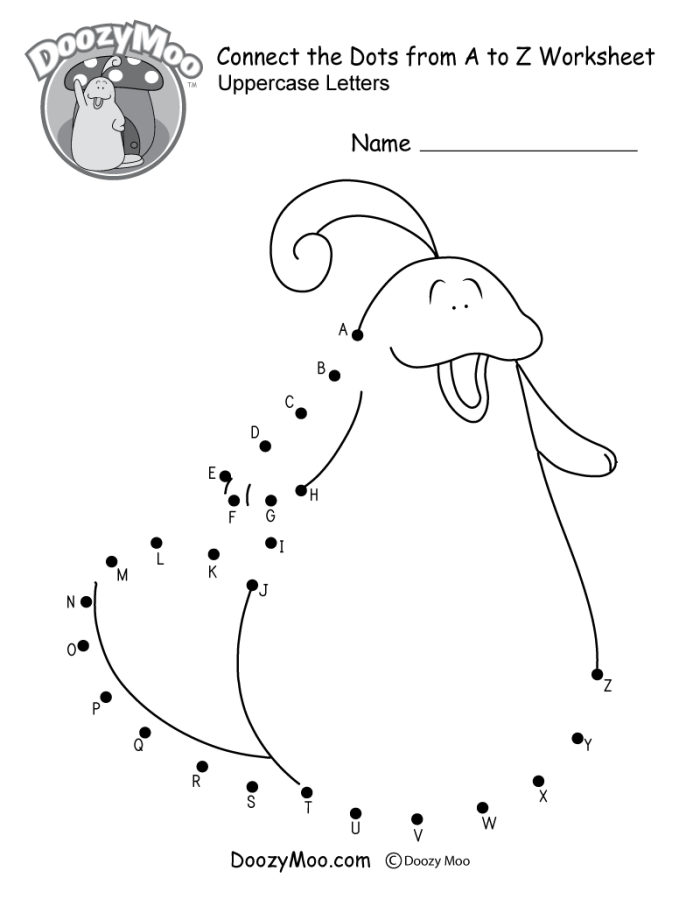
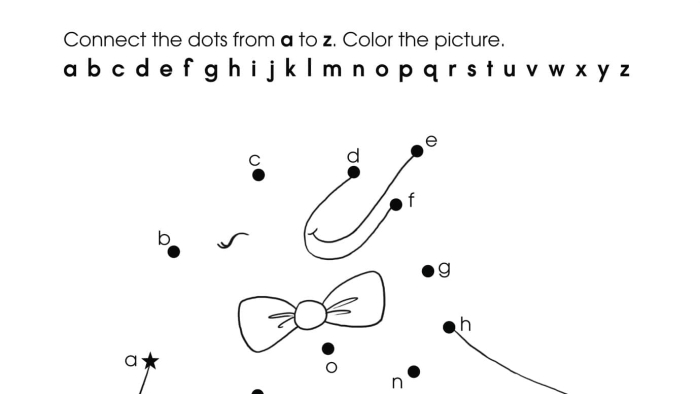
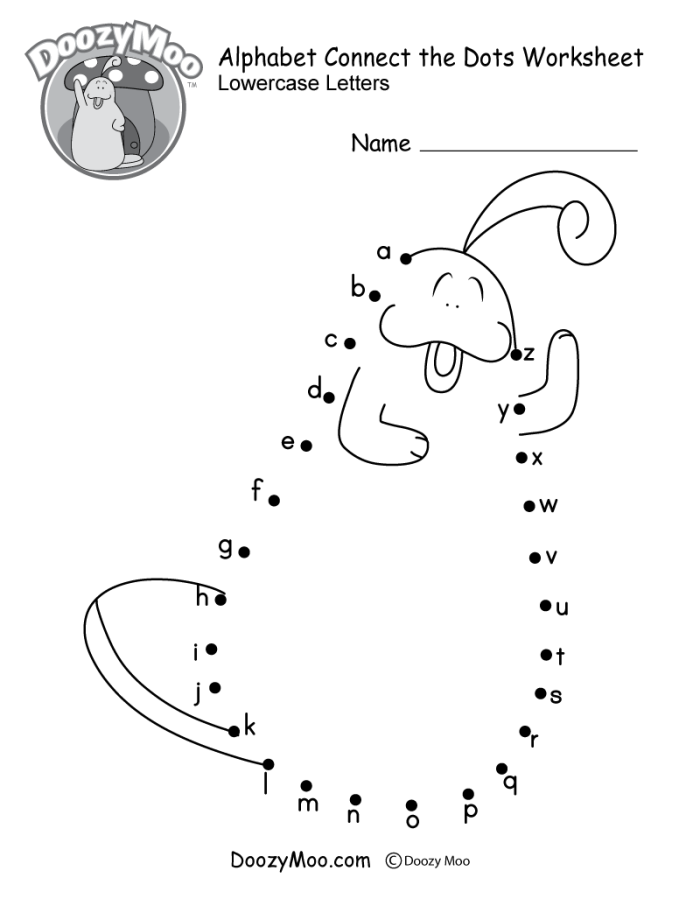
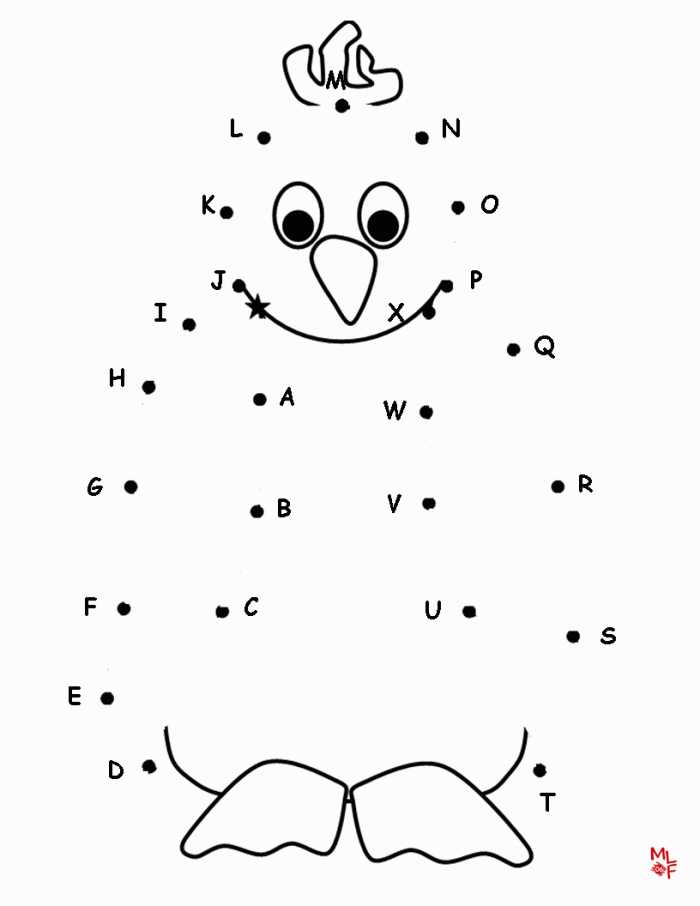
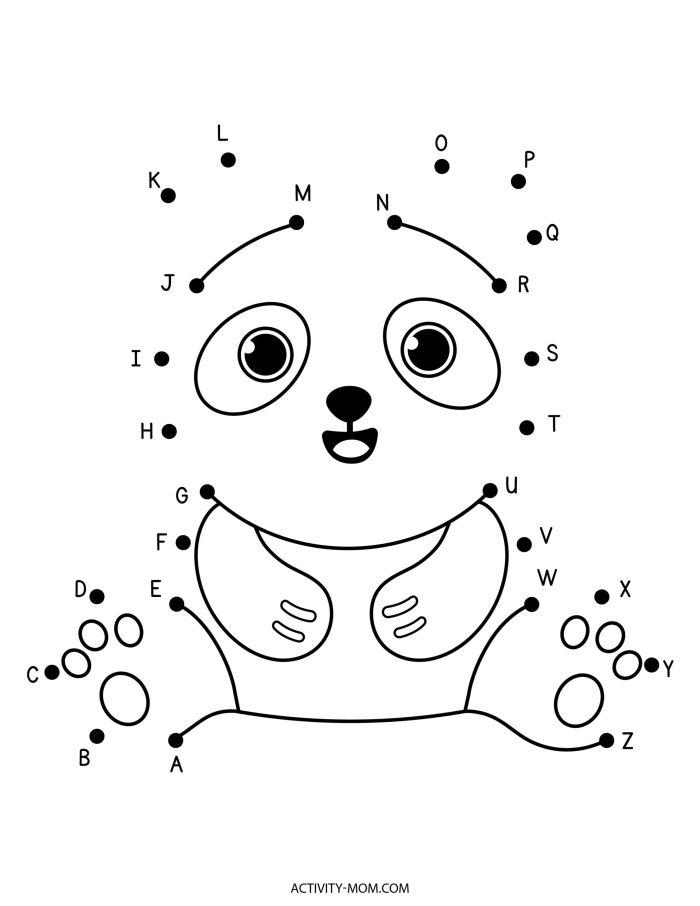
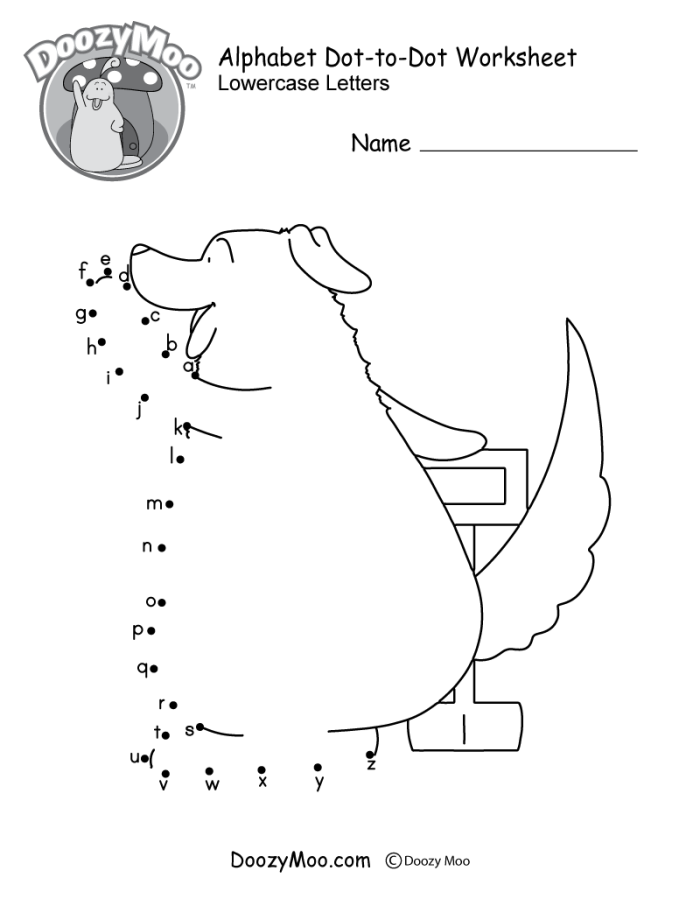
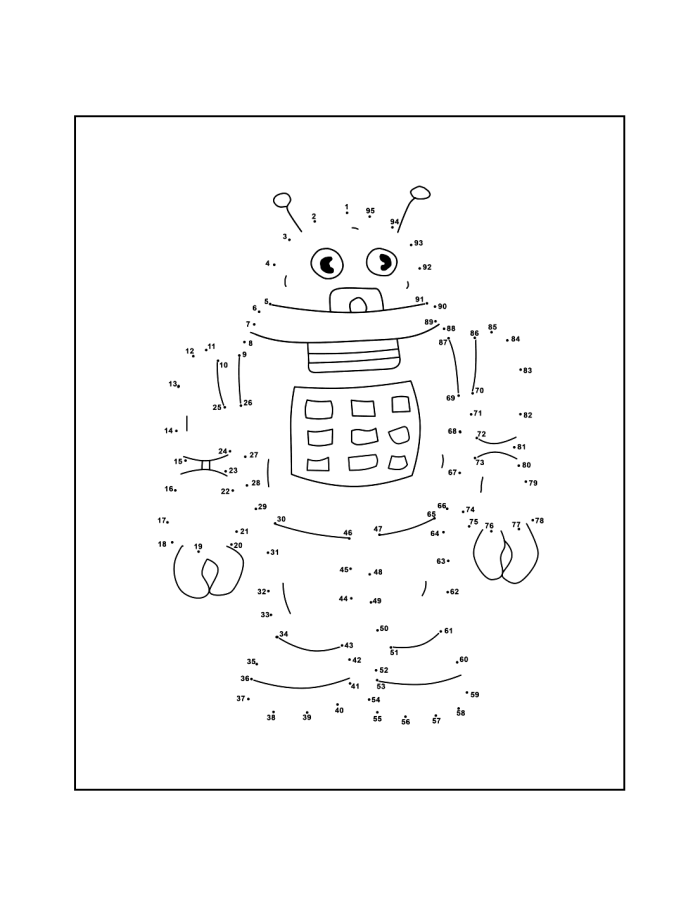
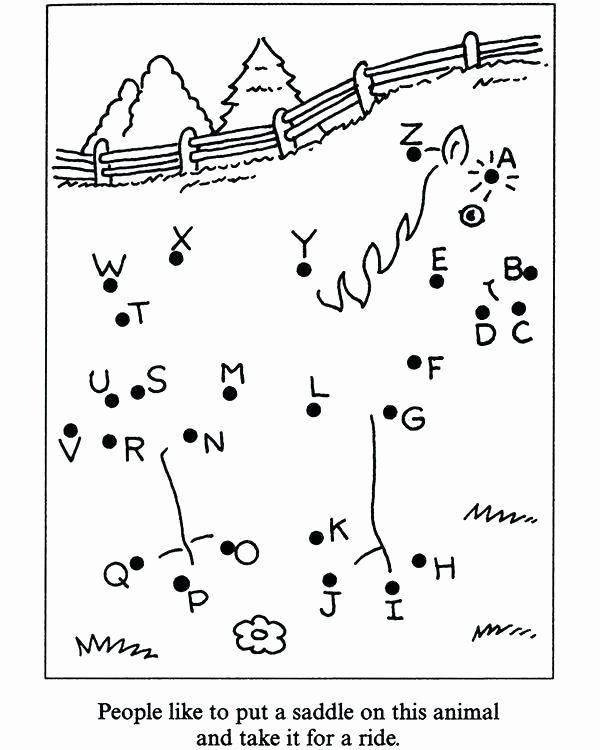
A dinosaur connect-the-dots worksheet with alphabet letters offers Pre-K students a simple but effective way to build two critical skills at once: letter recognition and hand control. Kids work through the lowercase alphabet by connecting numbered dots that form the shape of a dinosaur, turning what could feel like rote practice into something more engaging.
The appeal of this approach lies in how it combines learning objectives without feeling like separate lessons. When a child traces from dot to dot following alphabetical order, they’re not just practicing fine motor skills needed for writing. They’re also reinforcing letter sequence and lowercase letter formation, which are foundational for early literacy. The dinosaur theme taps into the natural curiosity many young learners have about Earth and Space Science topics, making the worksheet feel less like an academic exercise and more like a discovery activity.
Fine motor development at this age matters because it directly impacts a child’s ability to hold a pencil correctly and control it with precision. Connecting dots requires the small muscles in the fingers, hand, and wrist to work together in a coordinated way. Unlike free-form drawing, the dots provide clear waypoints that guide movement and build confidence. A child sees immediate visual progress as each connection appears, which reinforces the effort.
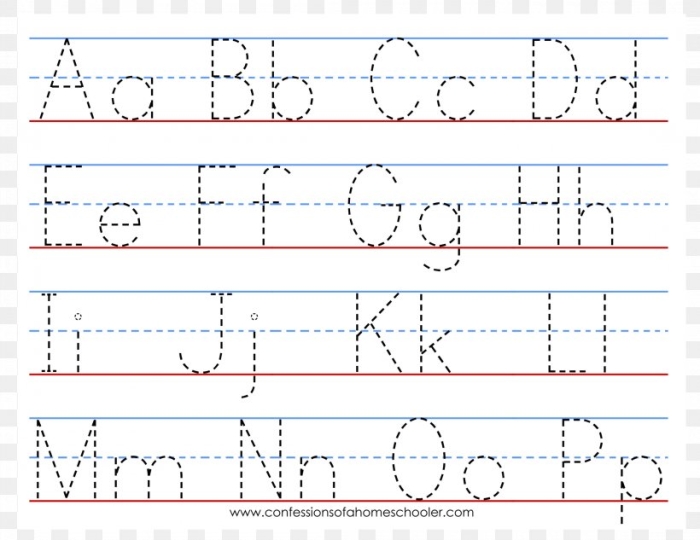
The lowercase letter focus is intentional too. Many Pre-K programs emphasize uppercase letters first, but lowercase letters appear far more frequently in everyday text. Introducing them through a playful activity helps normalize their shapes early on. When paired with other foundational activities like exploring word mystery alphabet worksheets, children build a more complete understanding of written language.
Teachers and parents appreciate these worksheets because they’re simple to implement, require minimal materials, and deliver measurable skill development. The dinosaur element keeps attention longer than a plain alphabet worksheet would, which matters when working with young learners who have shorter attention spans.
Use These Worksheets Today