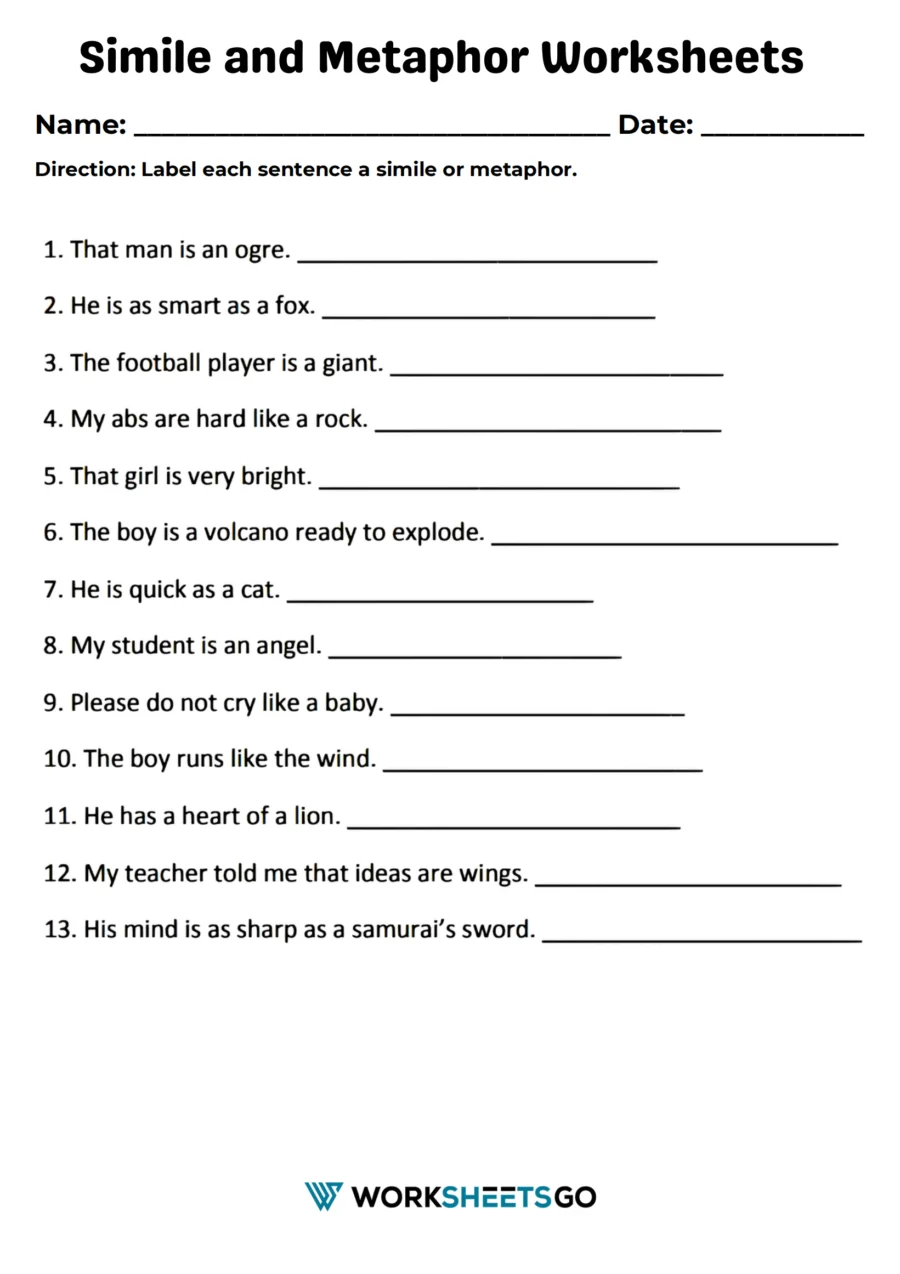
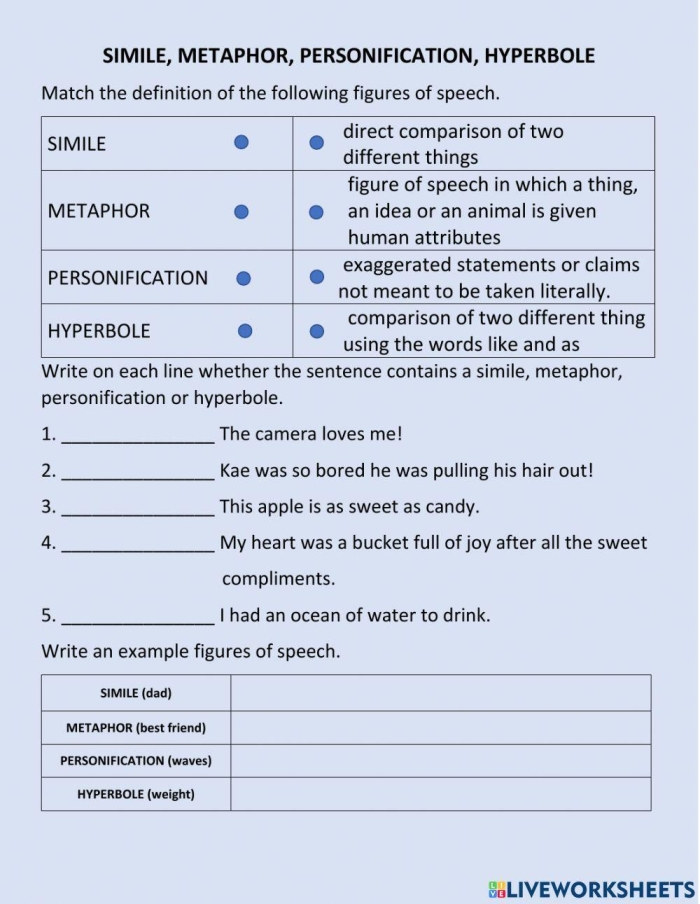
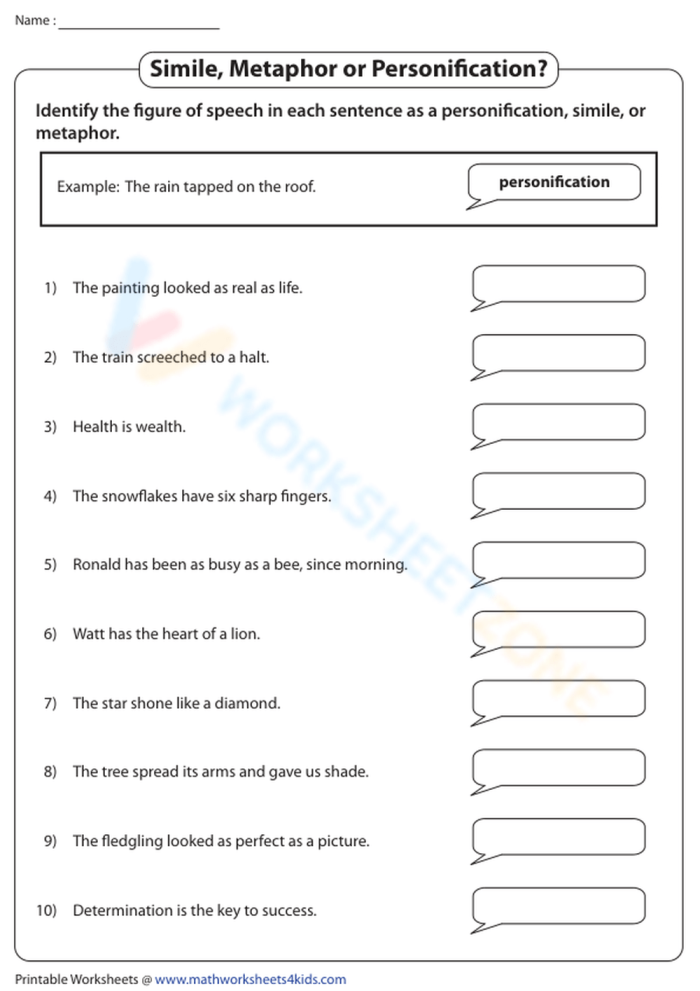
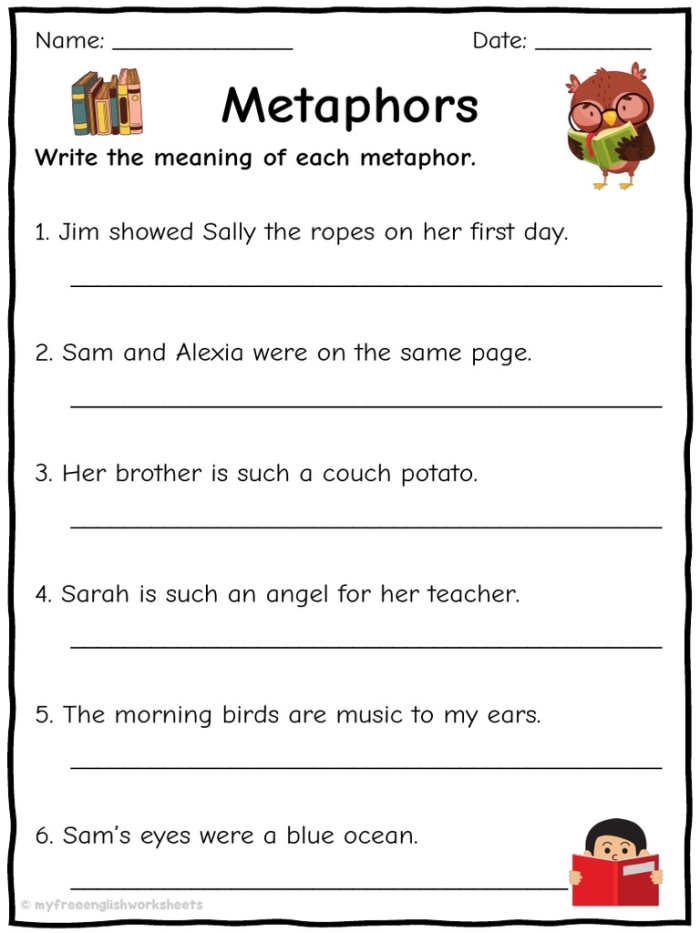
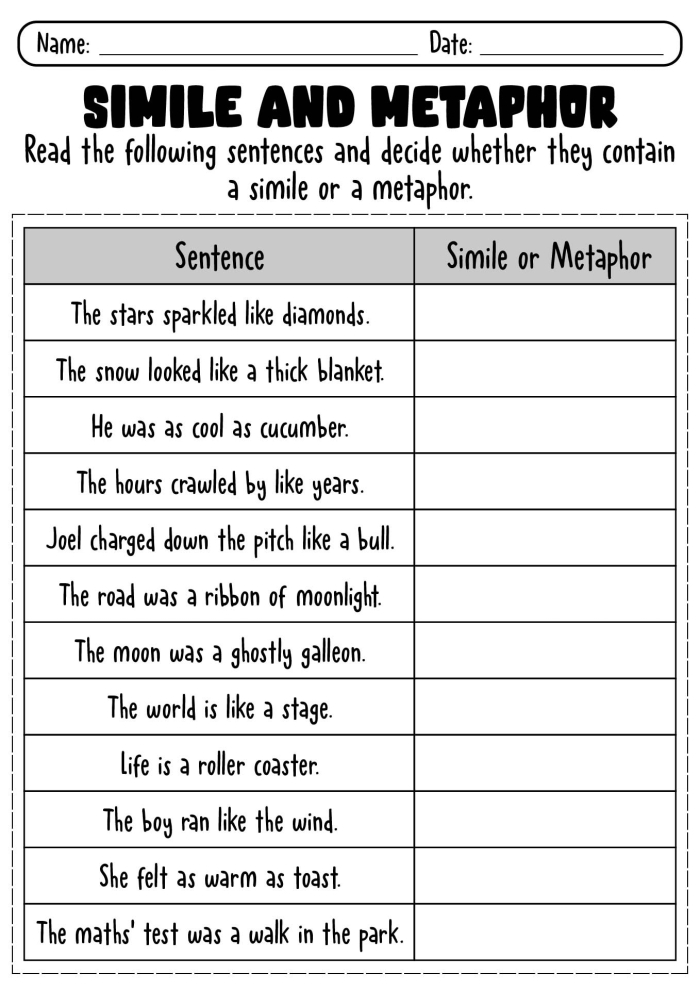
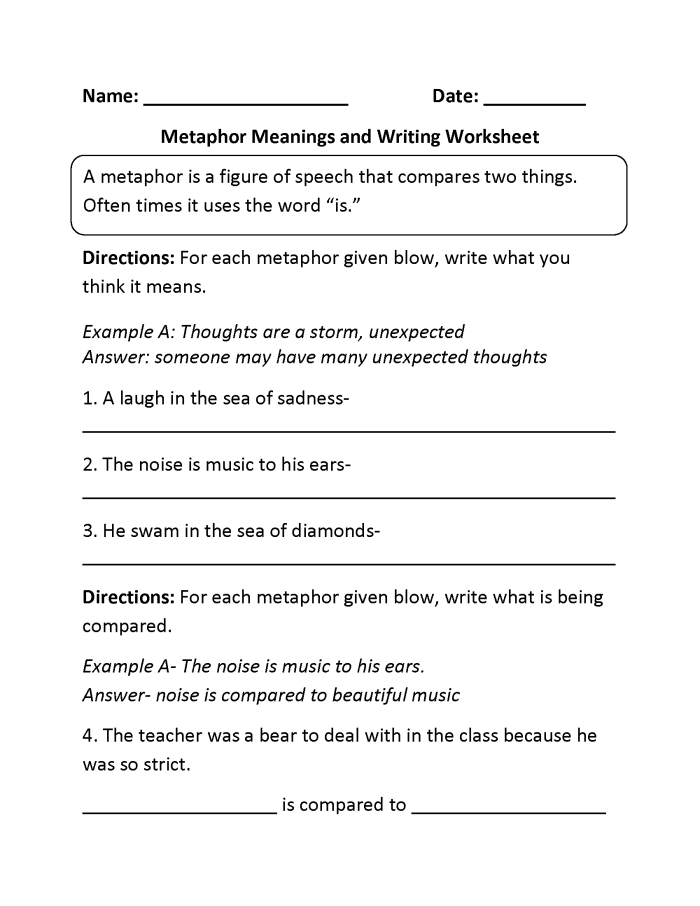
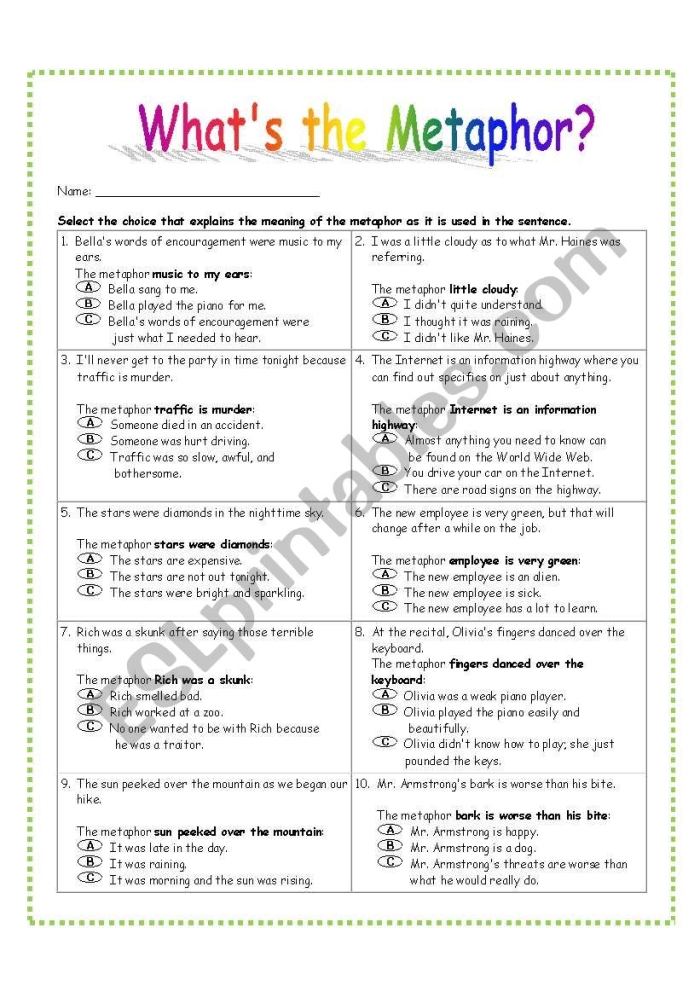
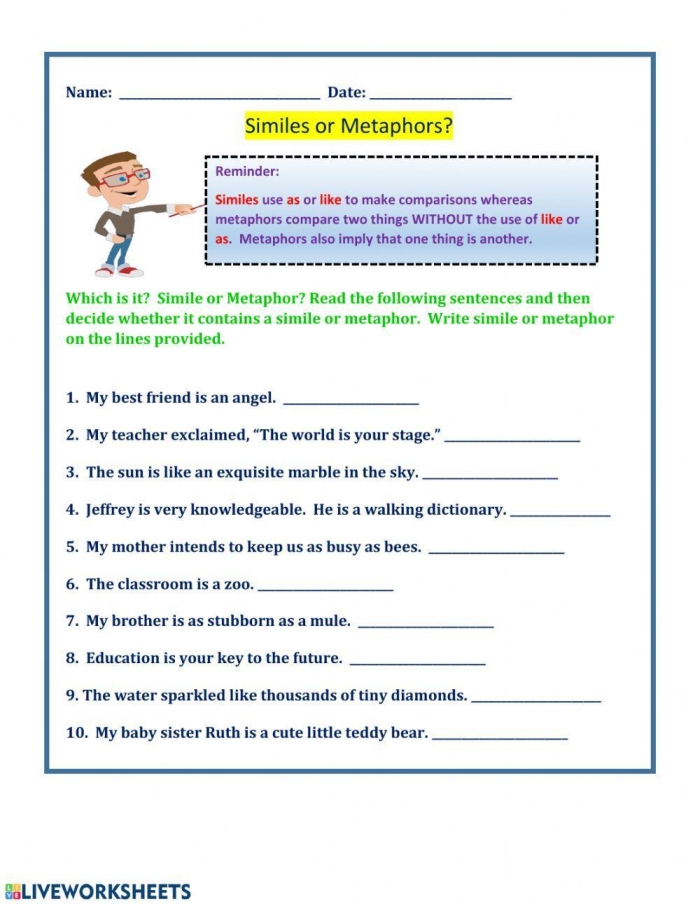
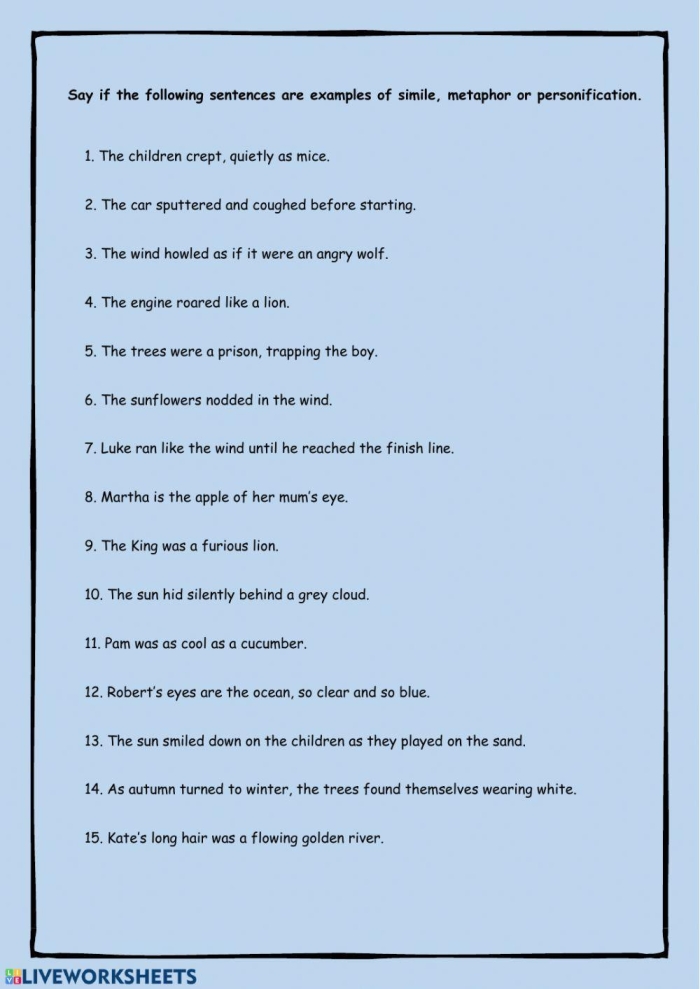
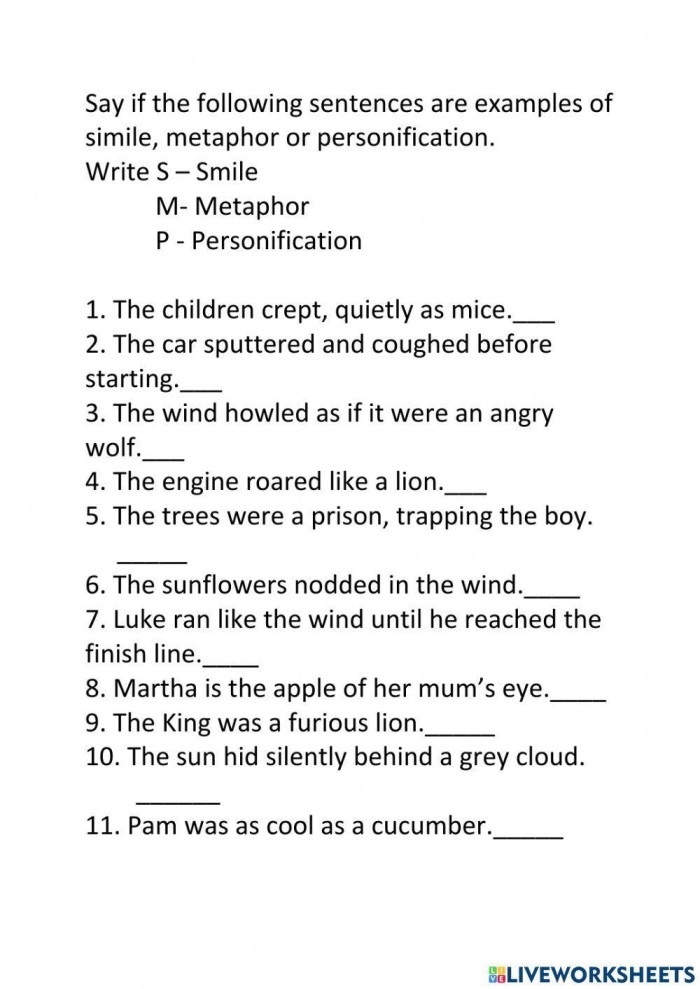
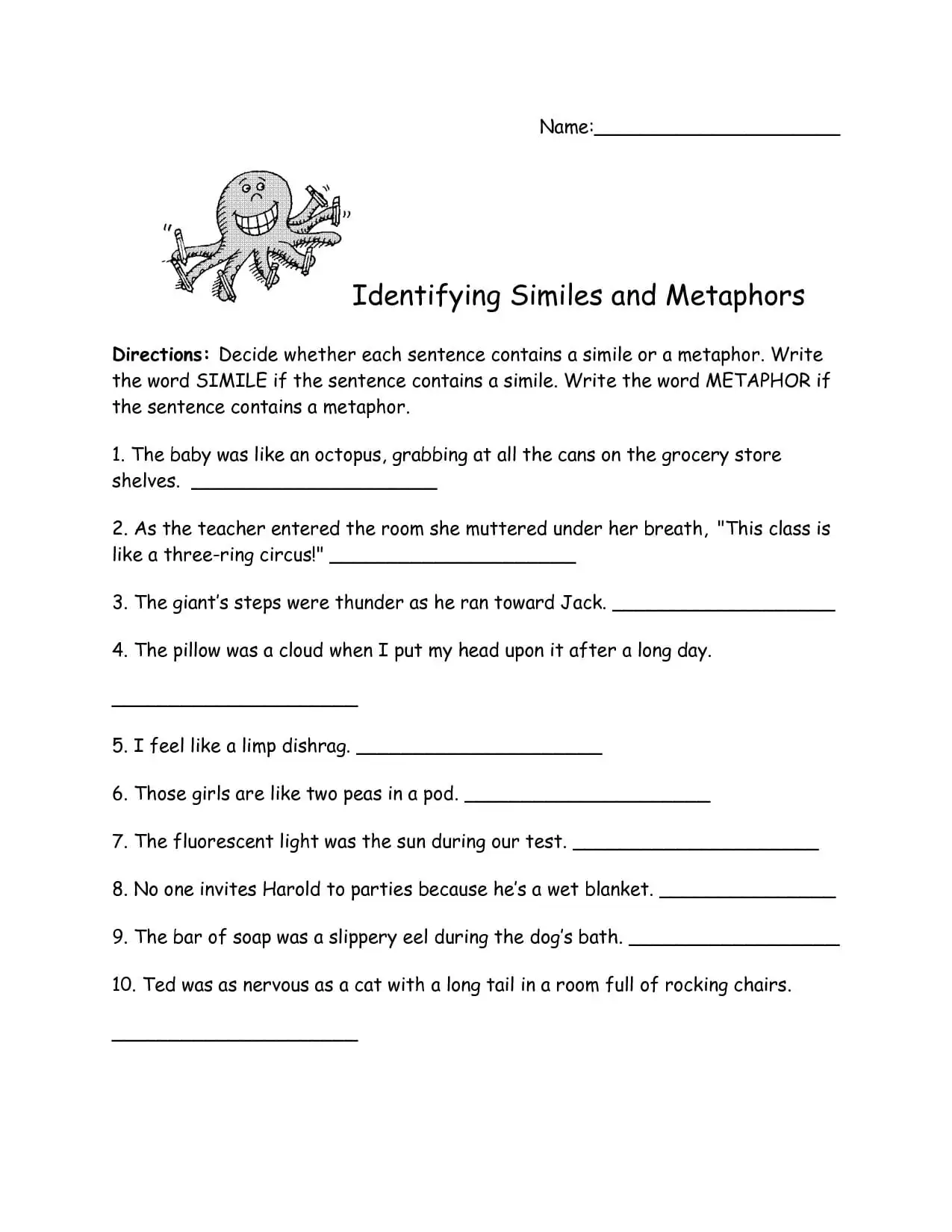
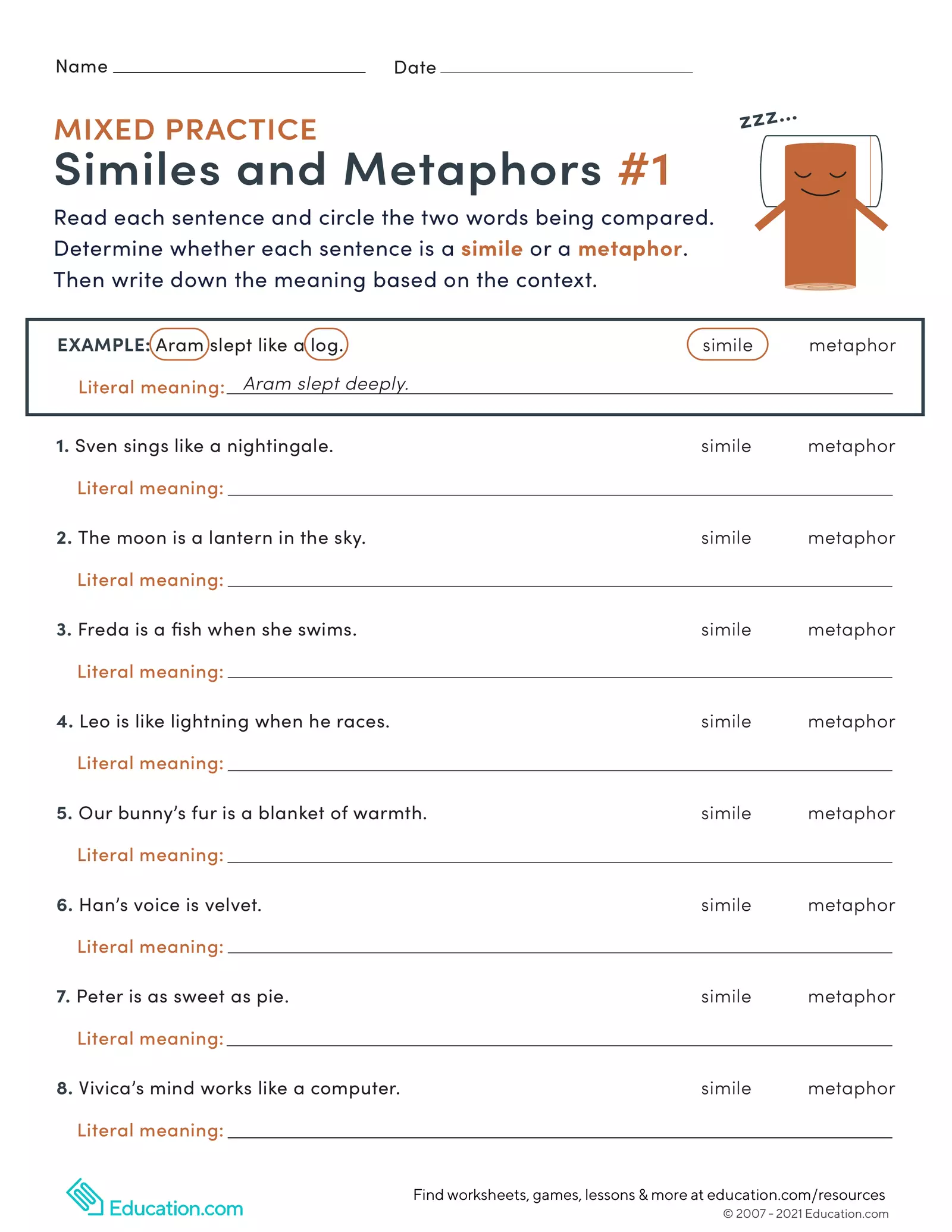
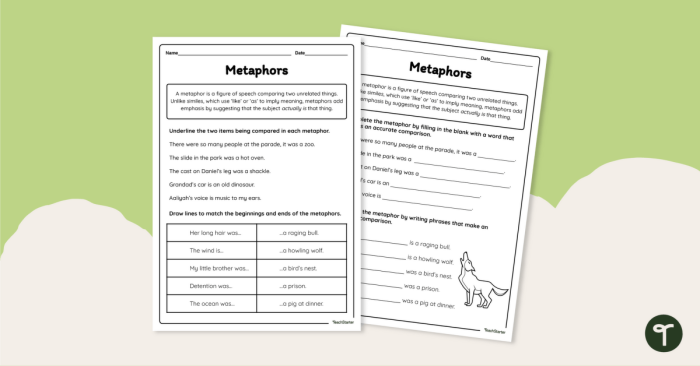
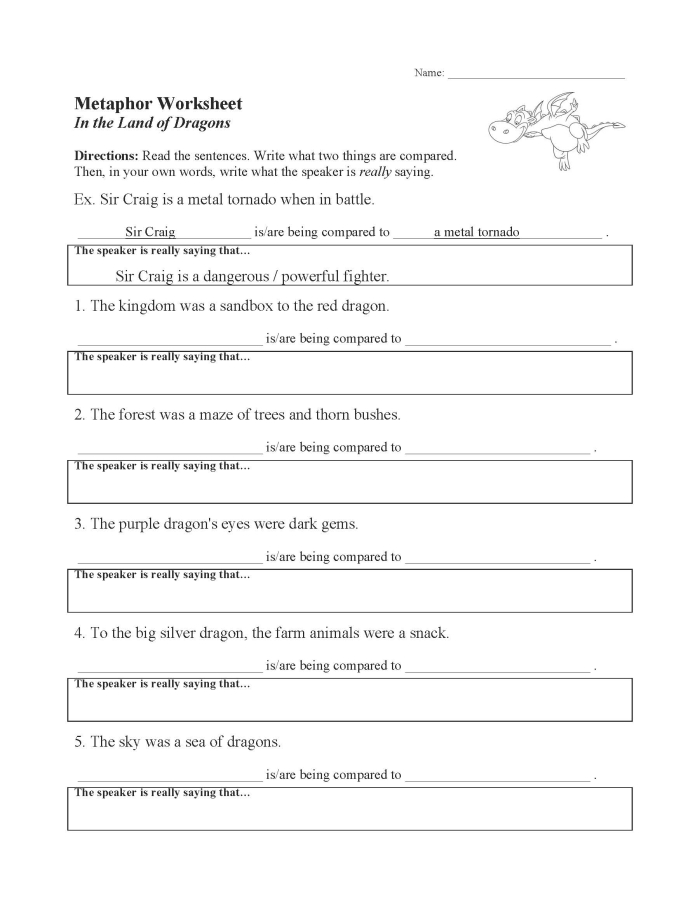
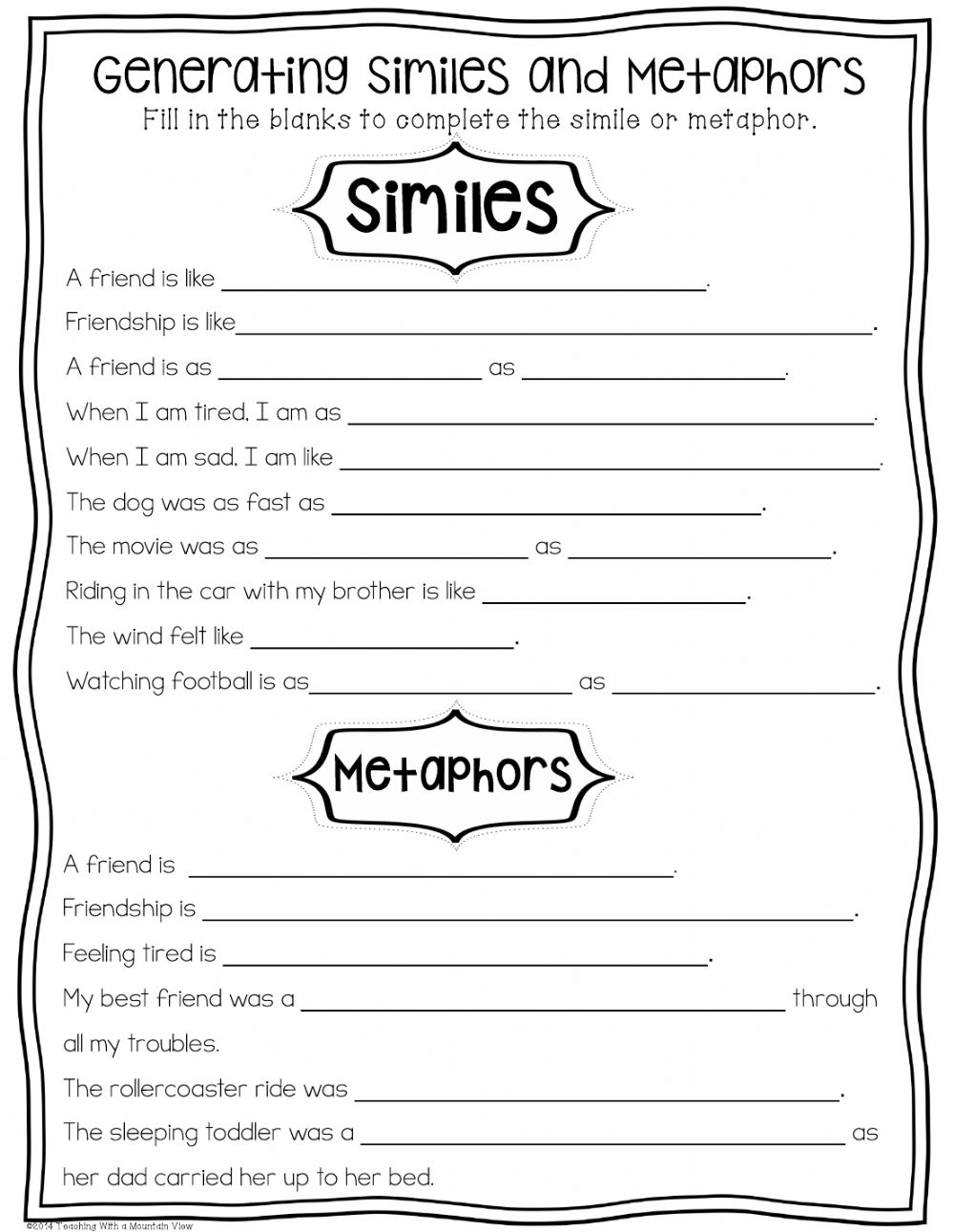
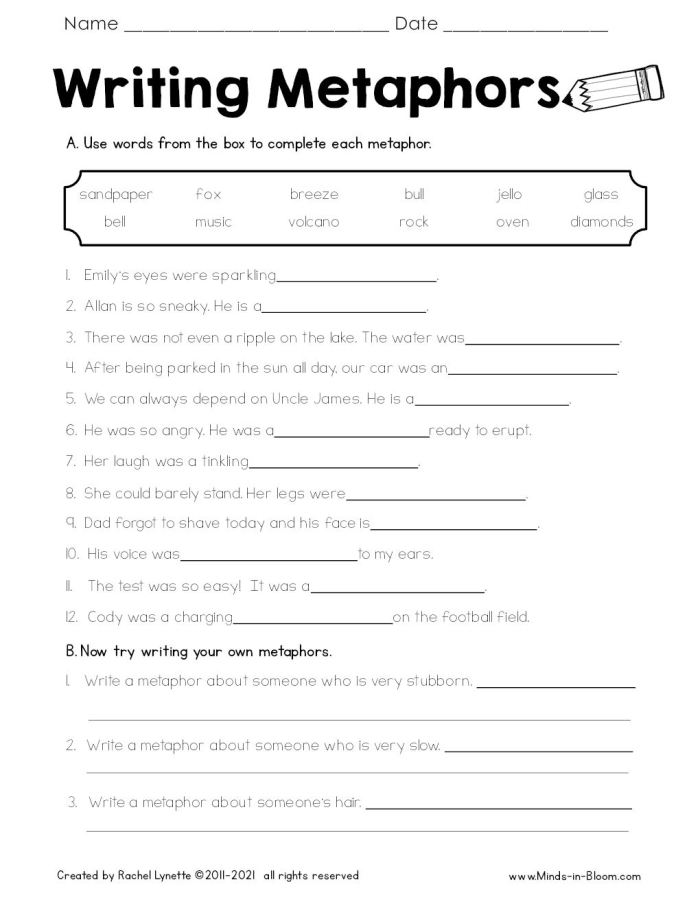
Metaphors can feel slippery for third grade readers who are just beginning to recognize that words can mean more than what’s written on the surface. This worksheet takes a hands-on approach to building that skill by combining visual learning with the act of identifying metaphors in context.
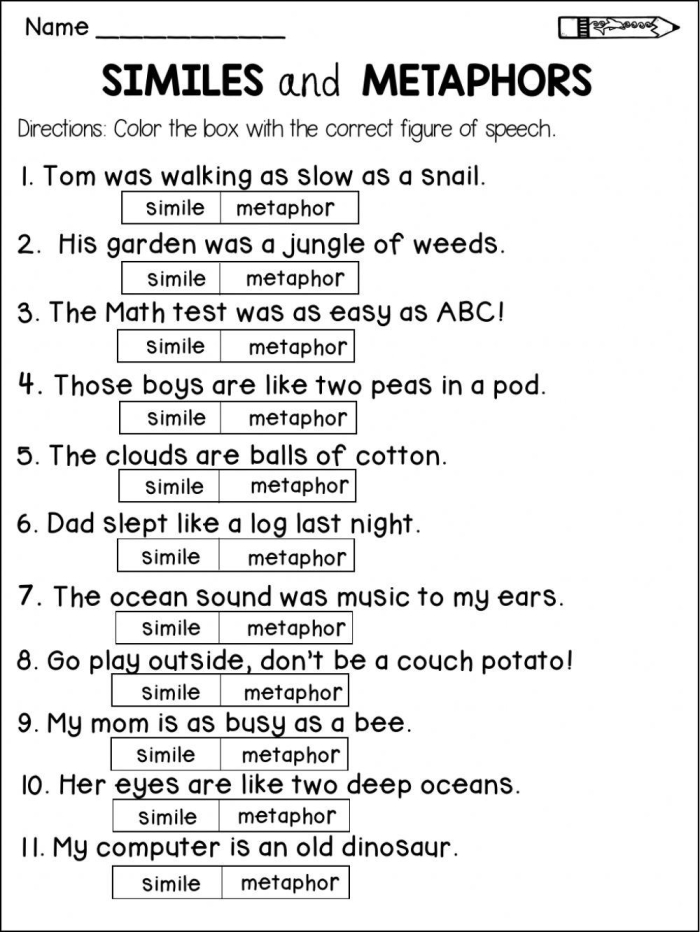
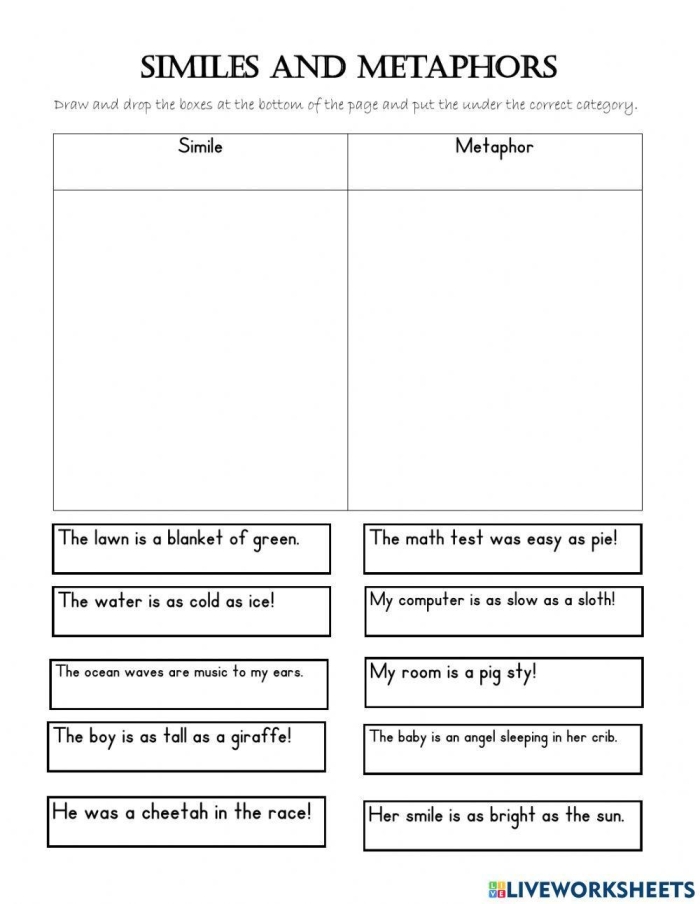
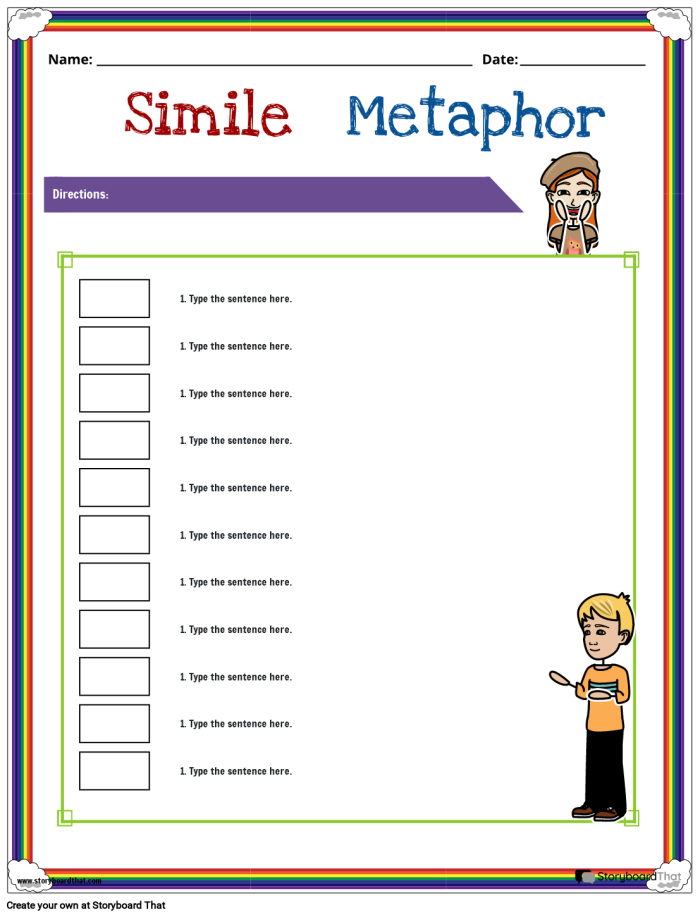
The activity works like this: learners read through a set of sentences or short passages, spot the ones containing metaphors, and color in the logs (or boxes) that hold them. The coloring element matters because it keeps younger students engaged while they’re doing the analytical work. Instead of simply circling answers or filling in blanks, they’re creating something visual, which helps cement the concept in their minds.
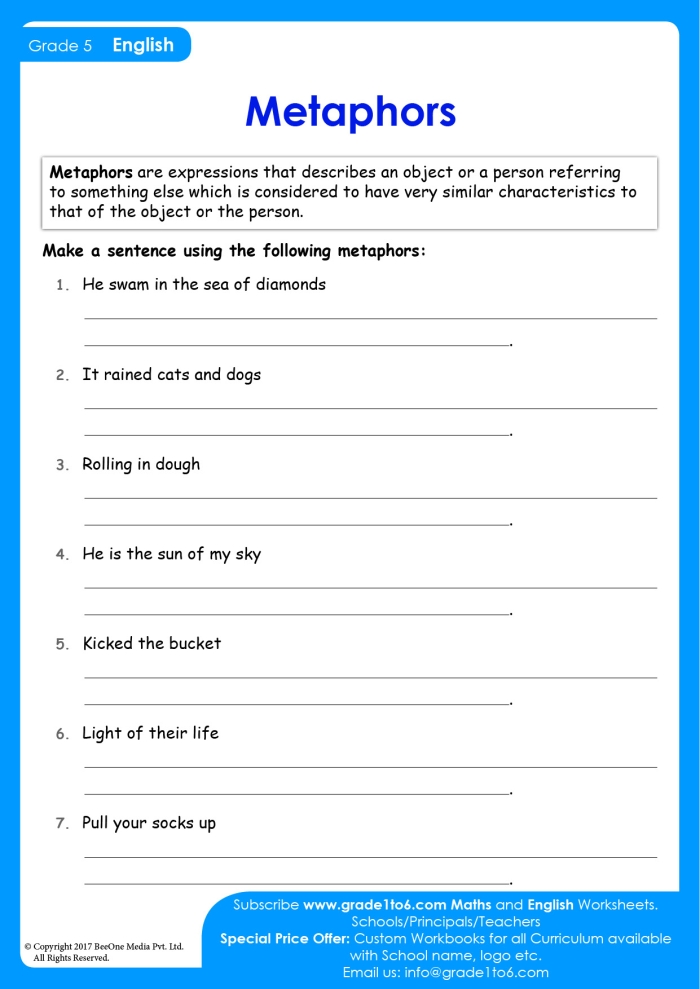
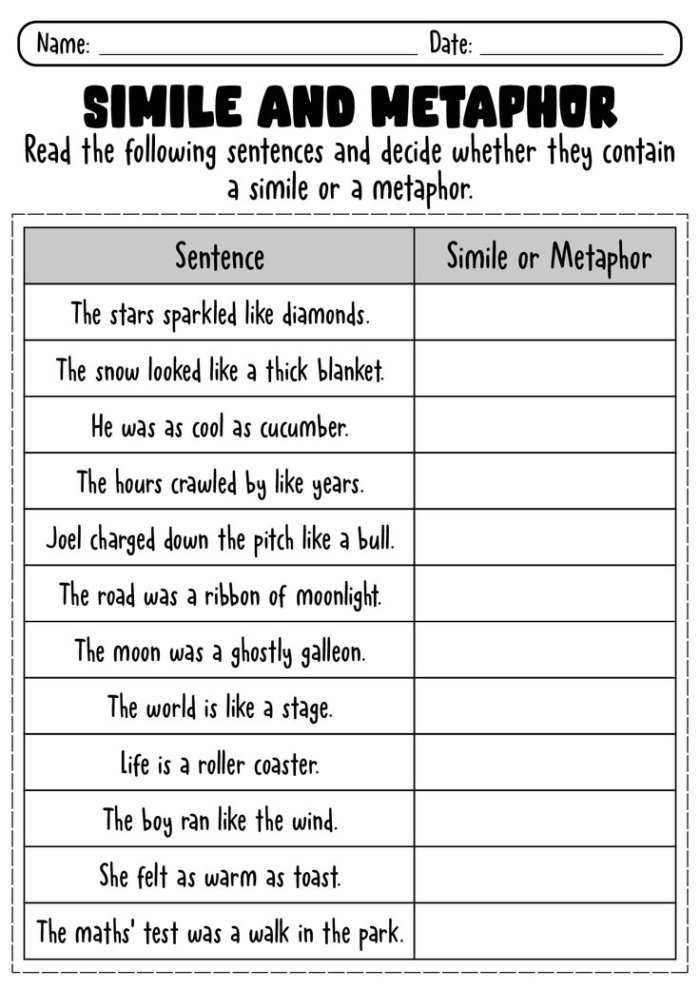
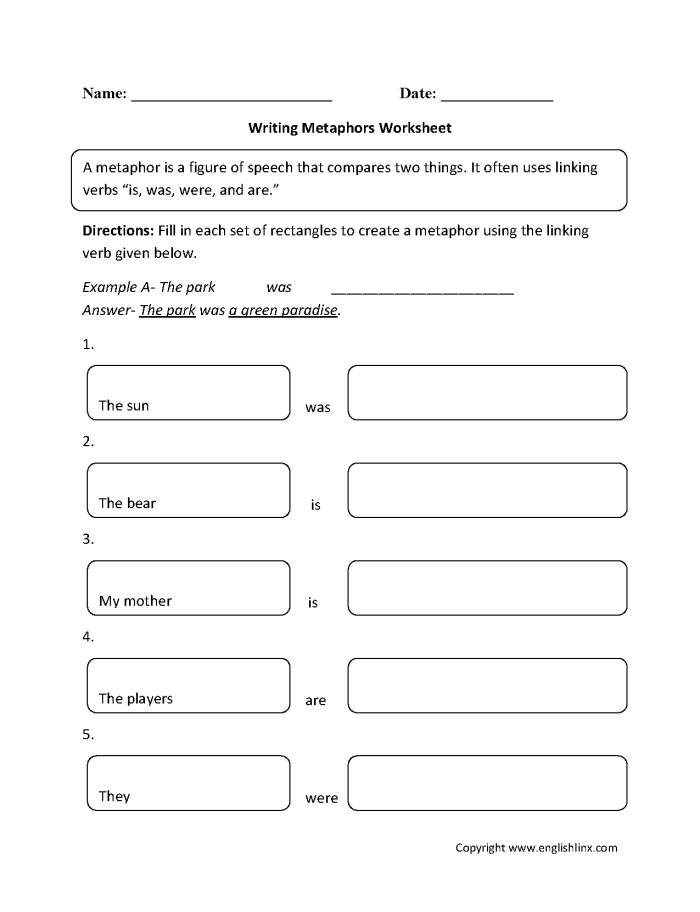
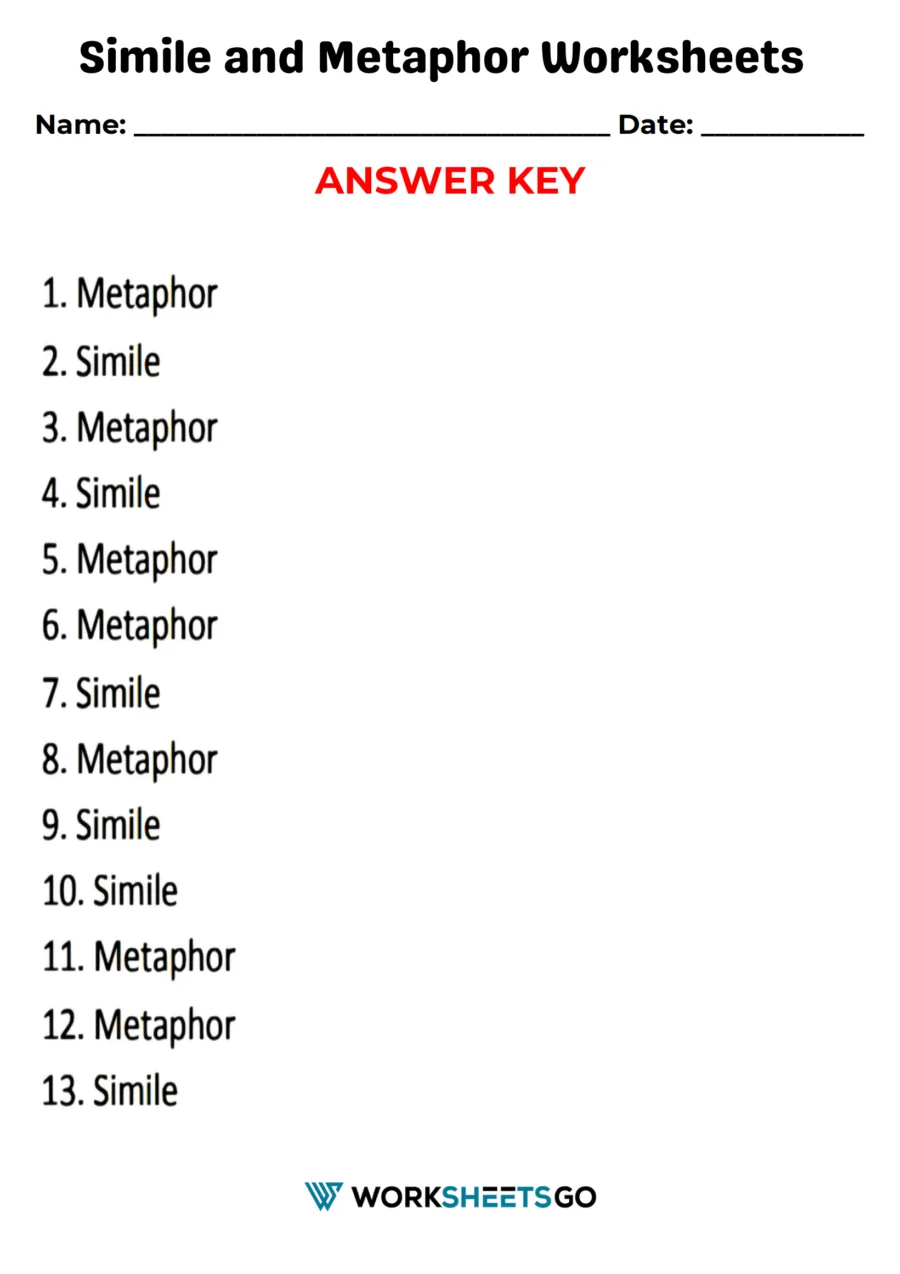
Third grade is the right moment for this kind of practice. At this level, students have moved beyond basic decoding and can start thinking about language more creatively. They’re ready to understand that when someone says “time is money” or “the world is a stage,” they’re not being literal. A metaphor compares two different things without using “like” or “as,” which sets it apart from similes that third graders might have encountered earlier.
This worksheet pairs well with other reading activities. Students working on how to write their own persuasive paragraphs can later use metaphors to make their writing more vivid. Similarly, learners practicing reading a bar graph or working through fraction basics benefit from exposure to figurative language across different subjects.
The coloring-based format also keeps things low-pressure. Students can focus on understanding the concept rather than worrying about getting the “right” answer in a traditional test format. This builds confidence as they develop their reading comprehension skills throughout the year.
Worksheet Practice Section