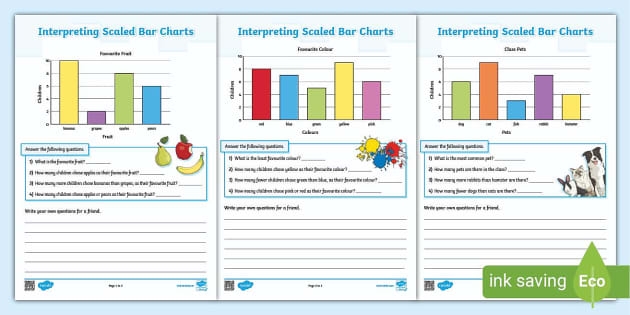
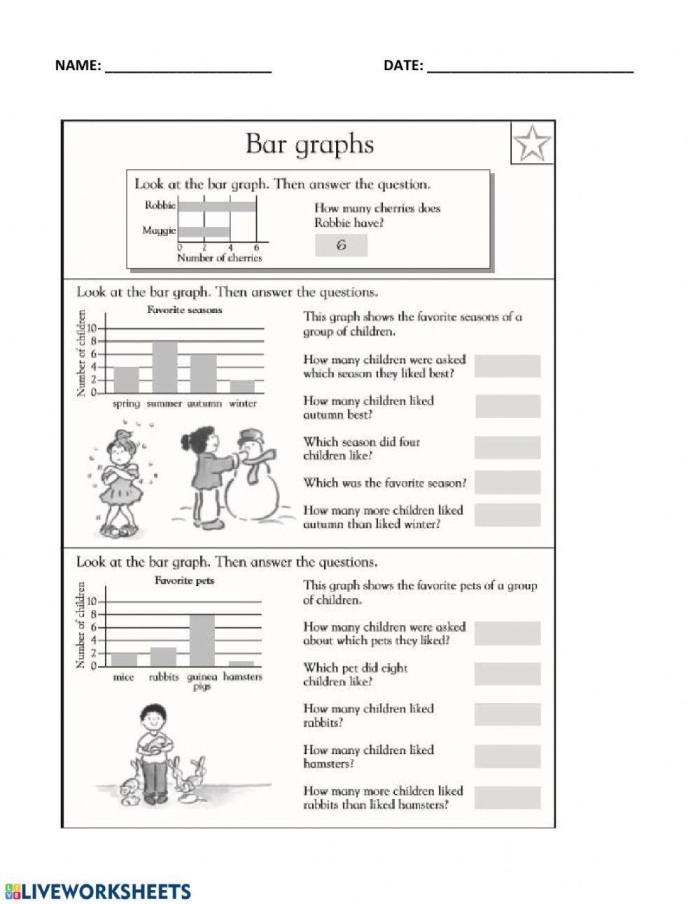
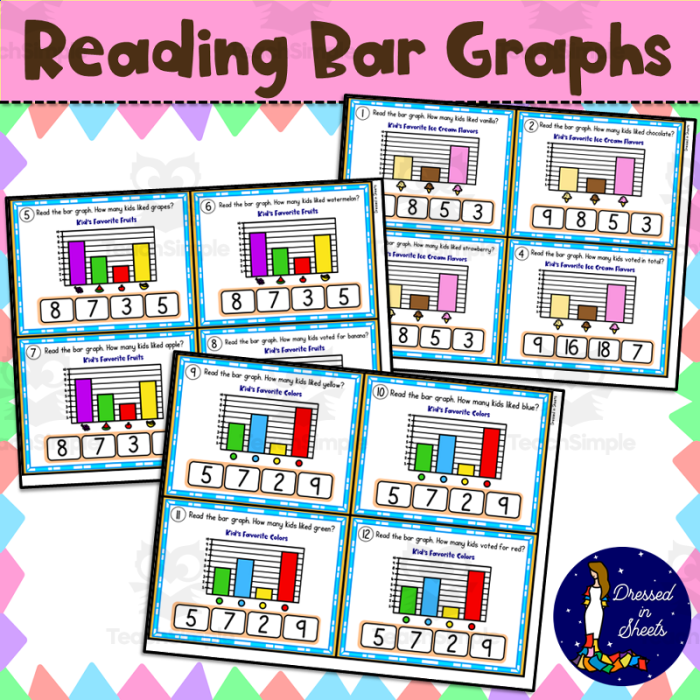
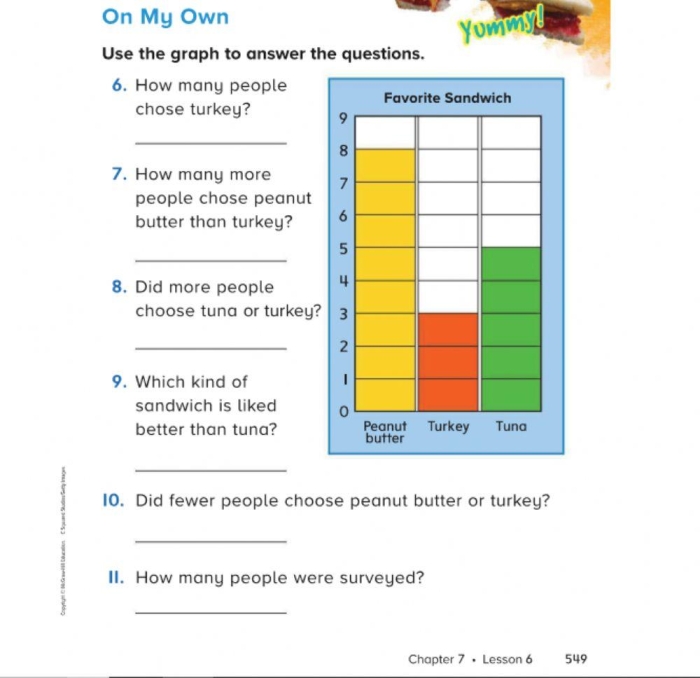
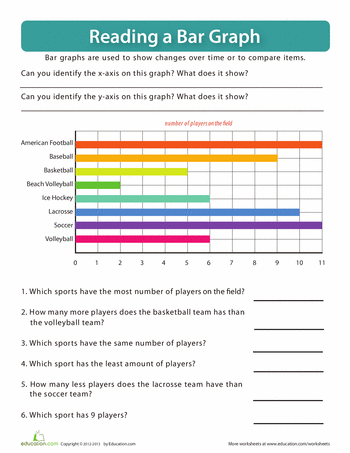
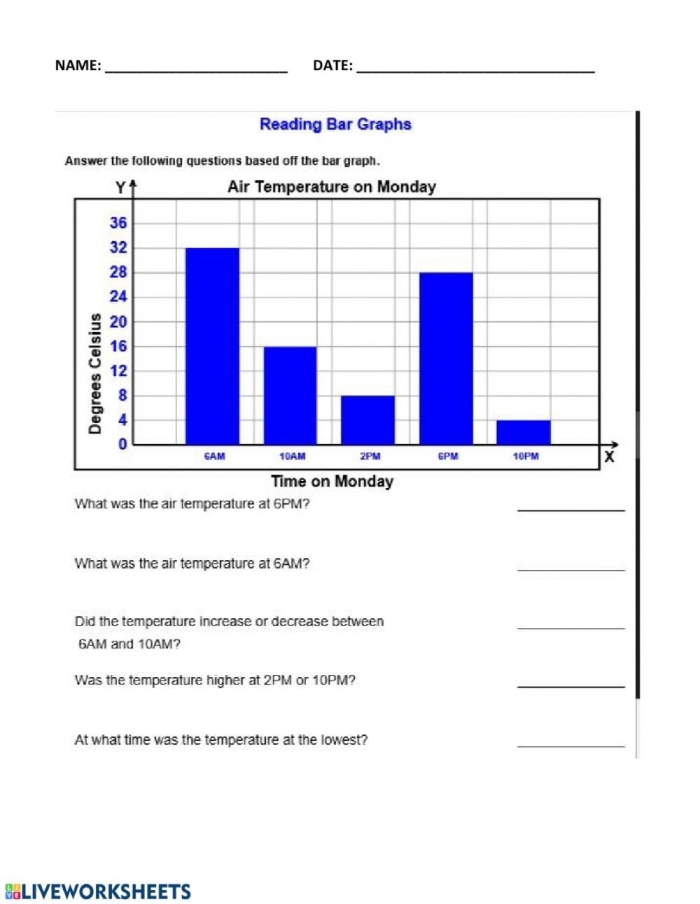
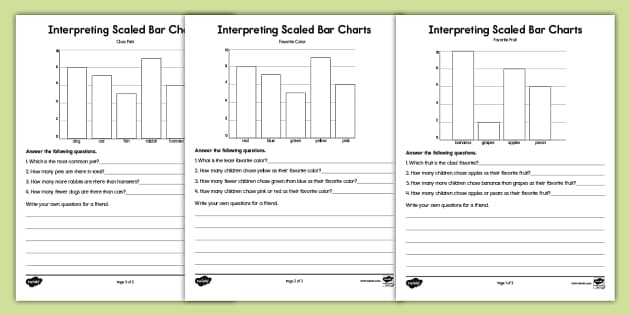
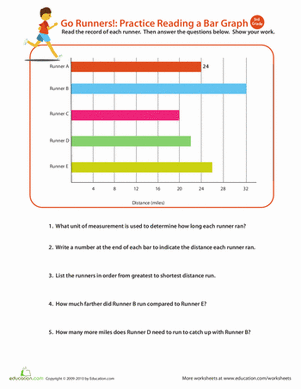
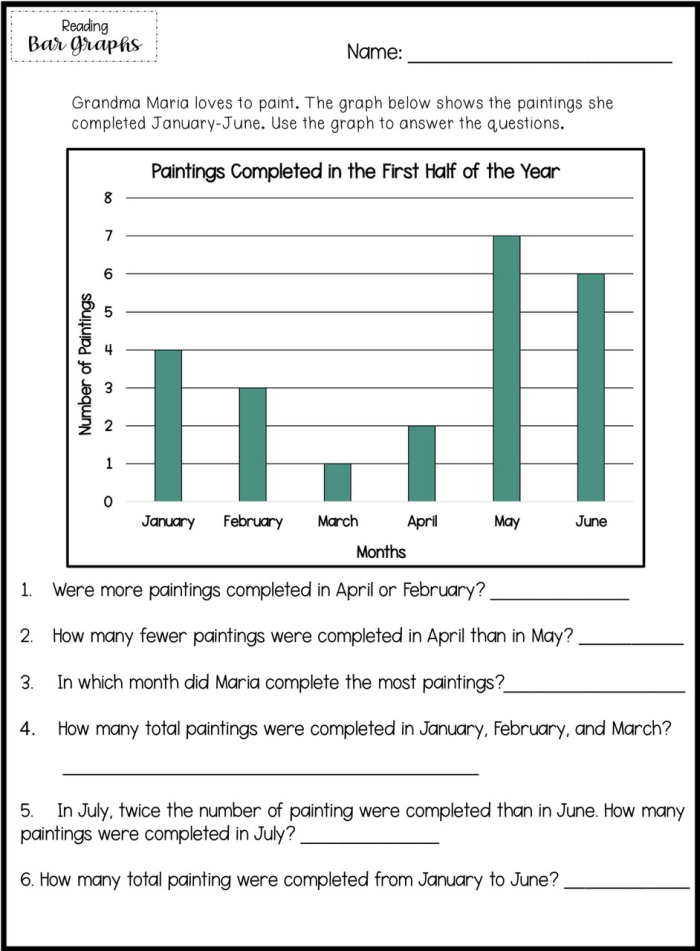
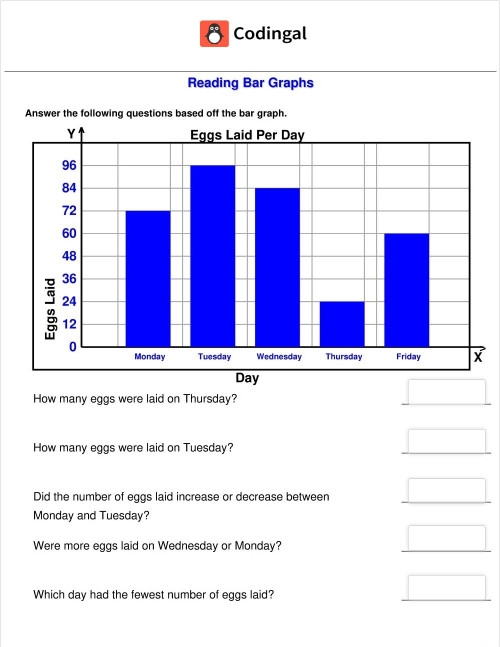
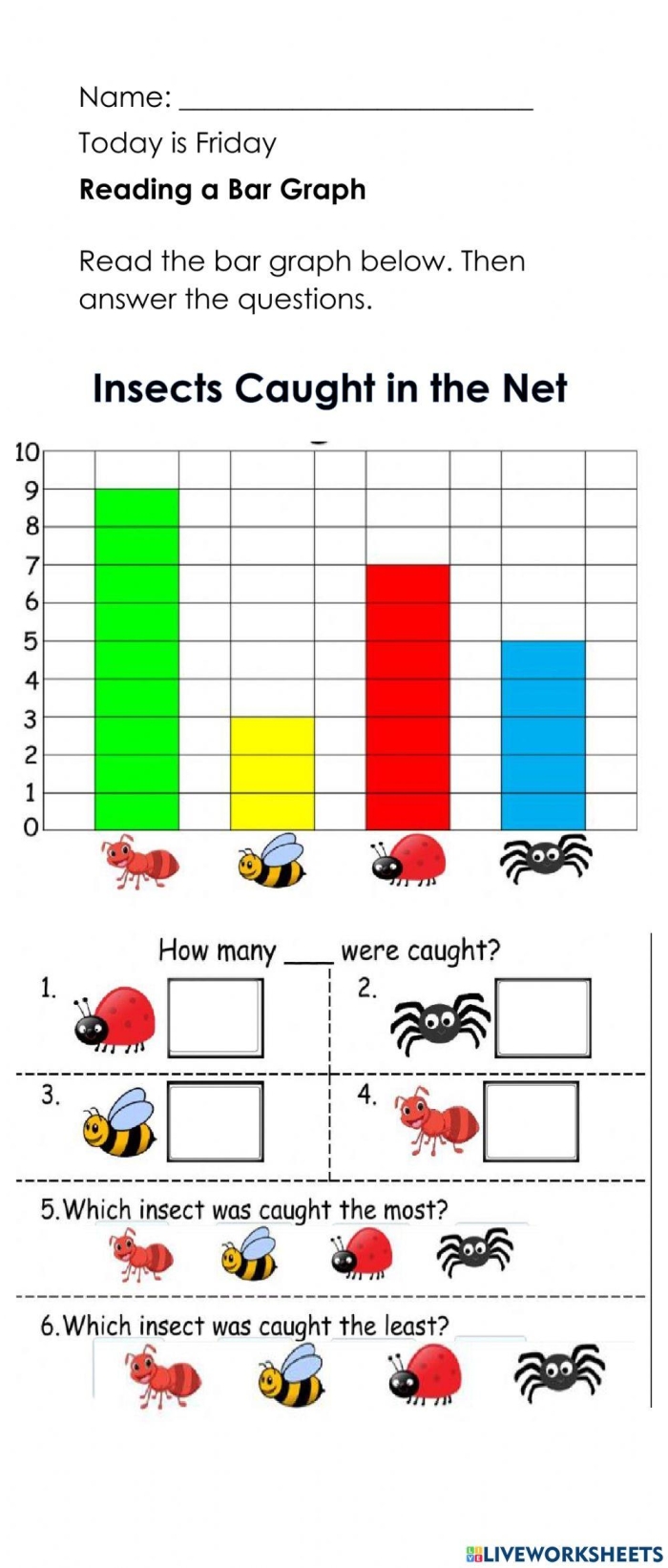
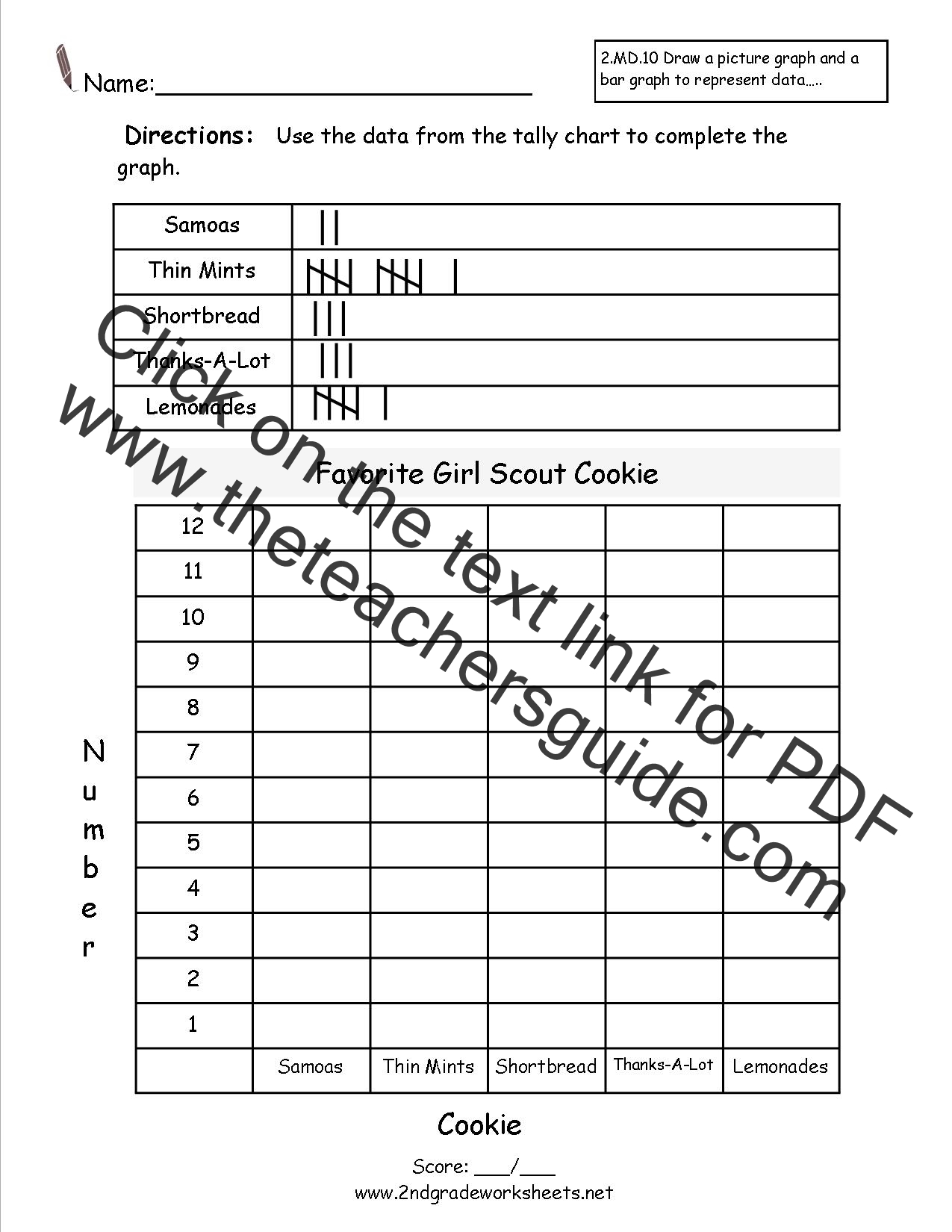
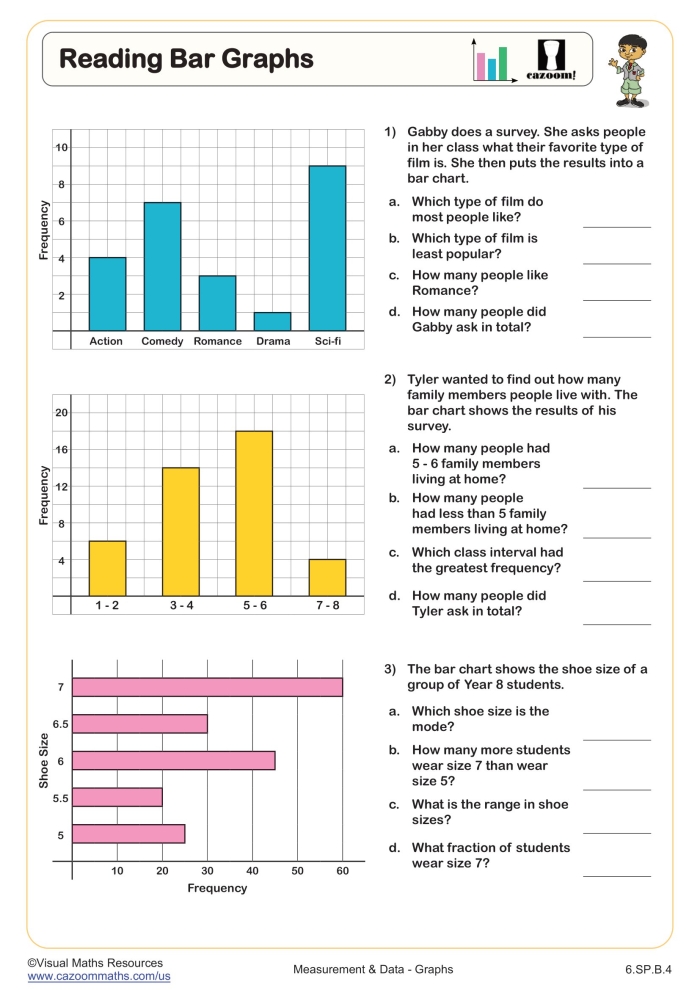
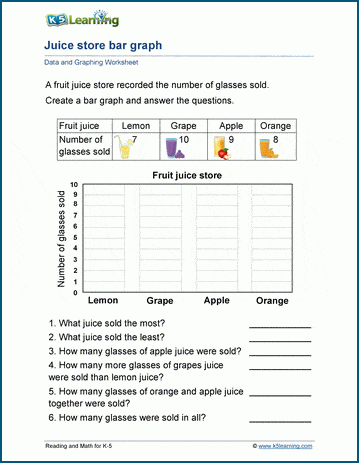
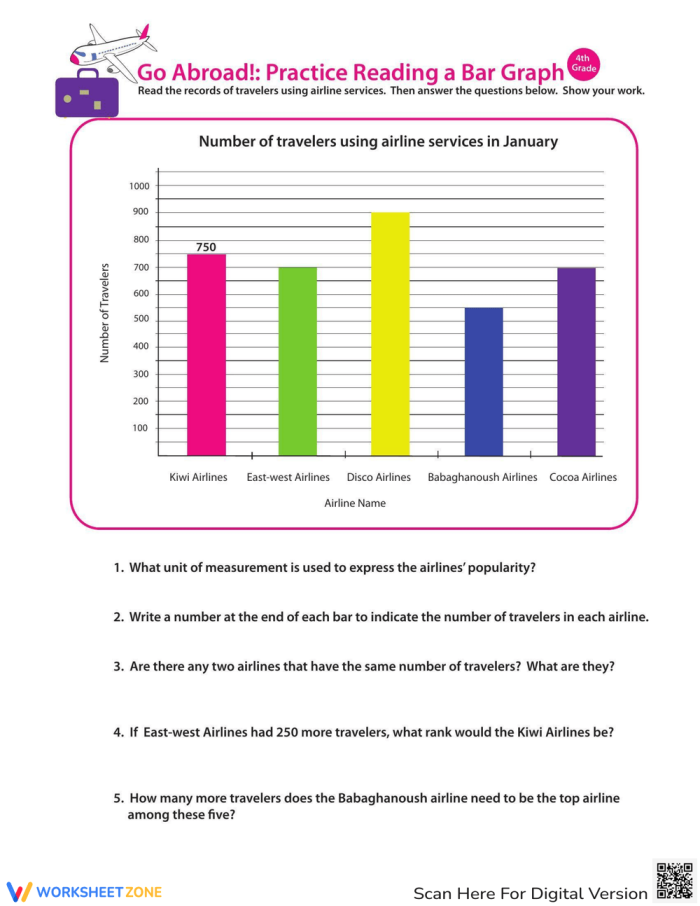
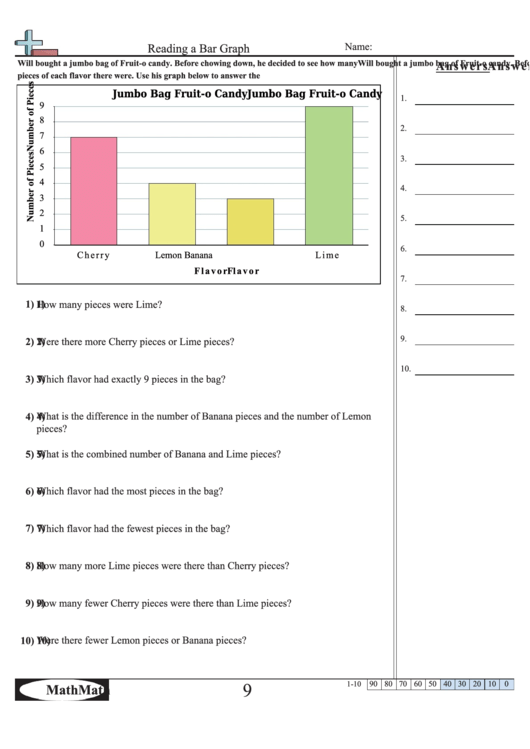
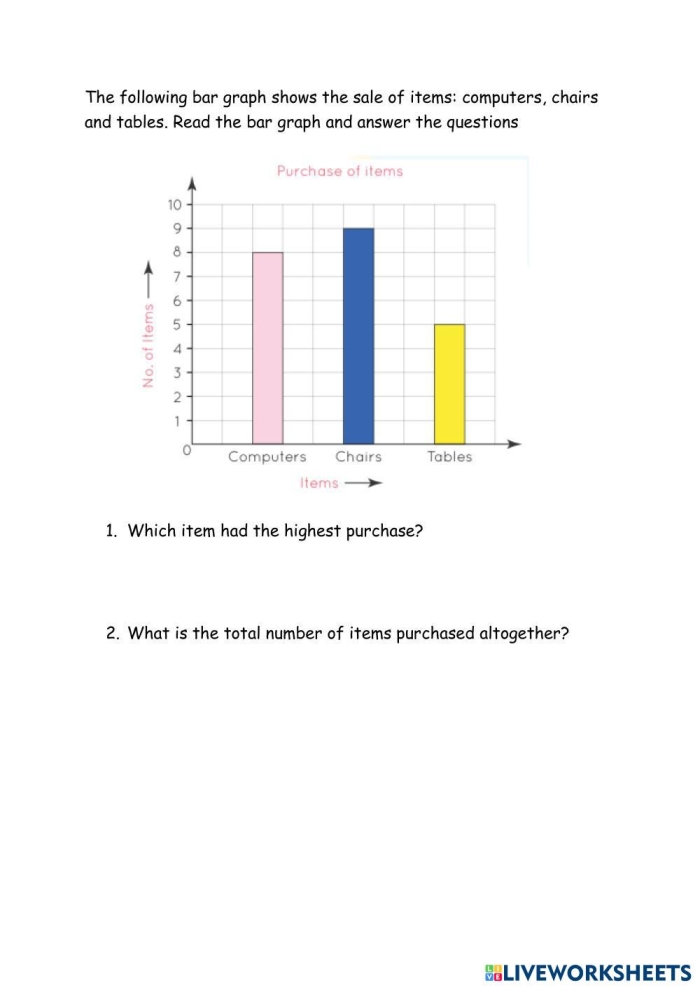
Bar graphs are one of those math skills that stick with kids long after third grade ends. When your child learns to read and interpret a bar graph, they’re building a foundation for data literacy that matters in science, social studies, and real-world decision-making. This particular worksheet focuses on exactly that: having students extract information from a visual representation and use it to answer specific questions.
The strength of this approach lies in how it combines two essential skills at once. Your child doesn’t just look at a bar graph and identify the tallest or shortest bar. Instead, they must understand what the graph represents, read the values accurately, and then apply that information to answer questions that require actual thinking. A question might ask, “How many more runners finished on Tuesday than on Monday?” This forces your child to locate two different values, perform a mental calculation, and explain their reasoning.
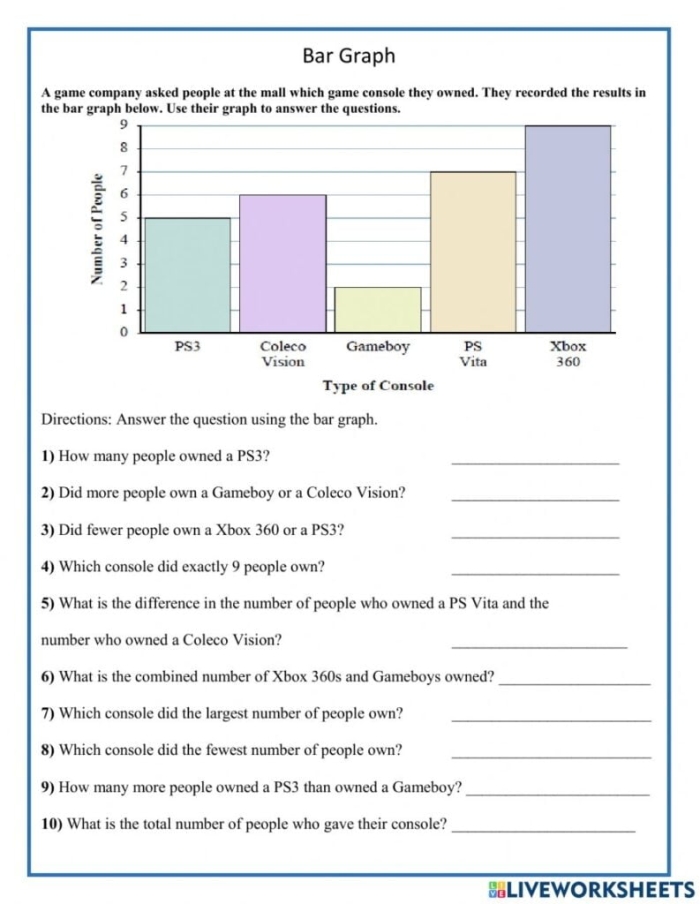
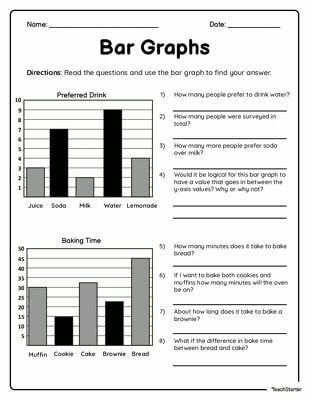
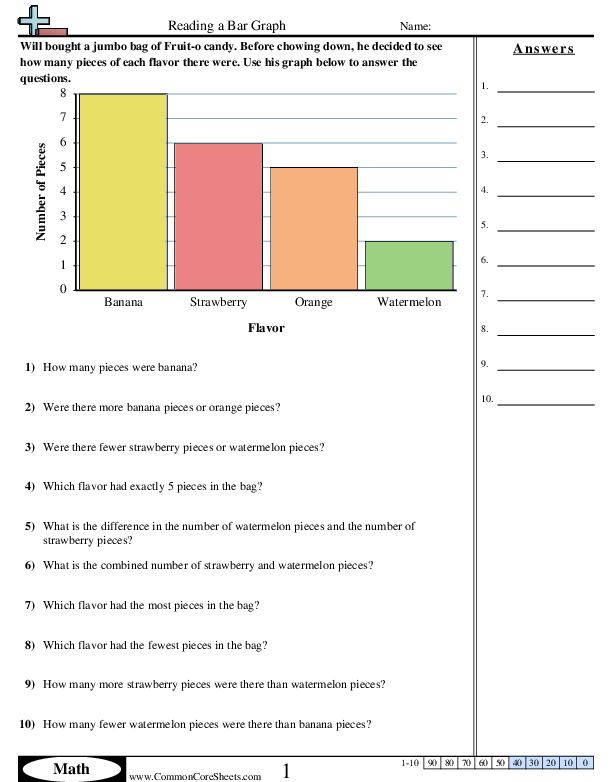
In third grade, Numbers and Counting becomes more sophisticated than simple addition. Students begin working with data representation, which is why bar graphs appear in curriculum standards. The visual nature of a bar graph makes abstract numbers concrete. A child can see that one bar reaches the 8 mark and another reaches the 5 mark without needing to imagine the quantities.
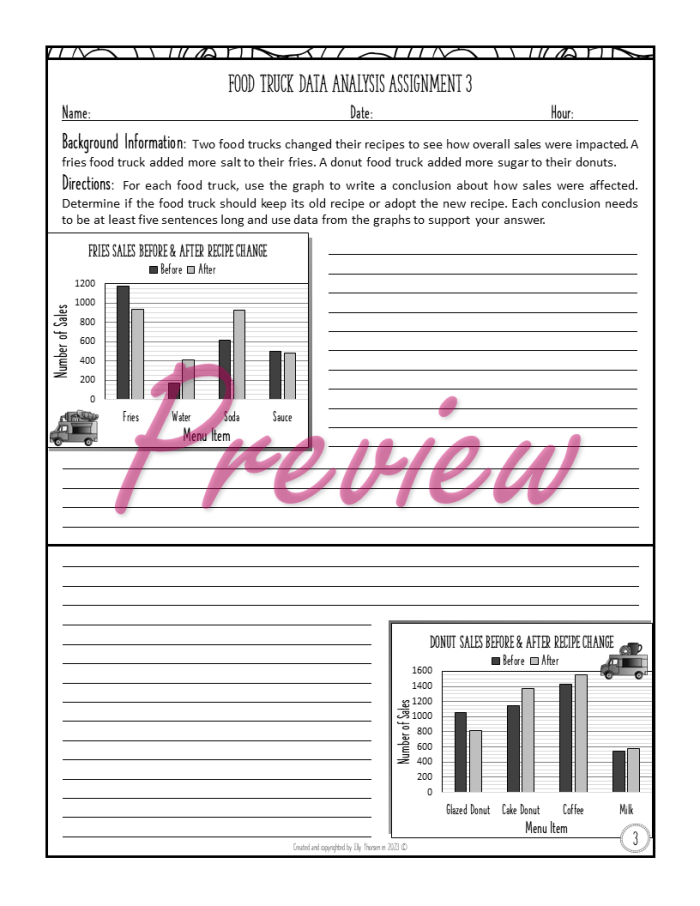
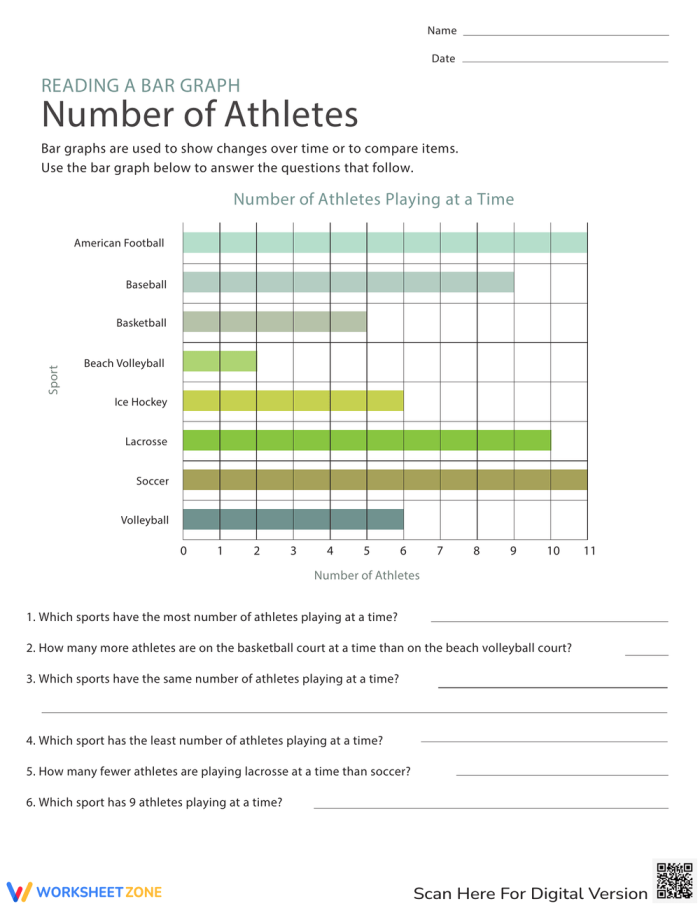
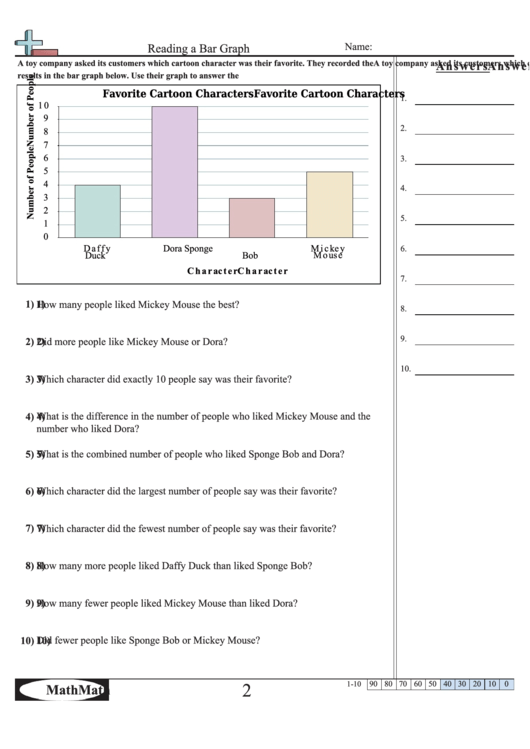
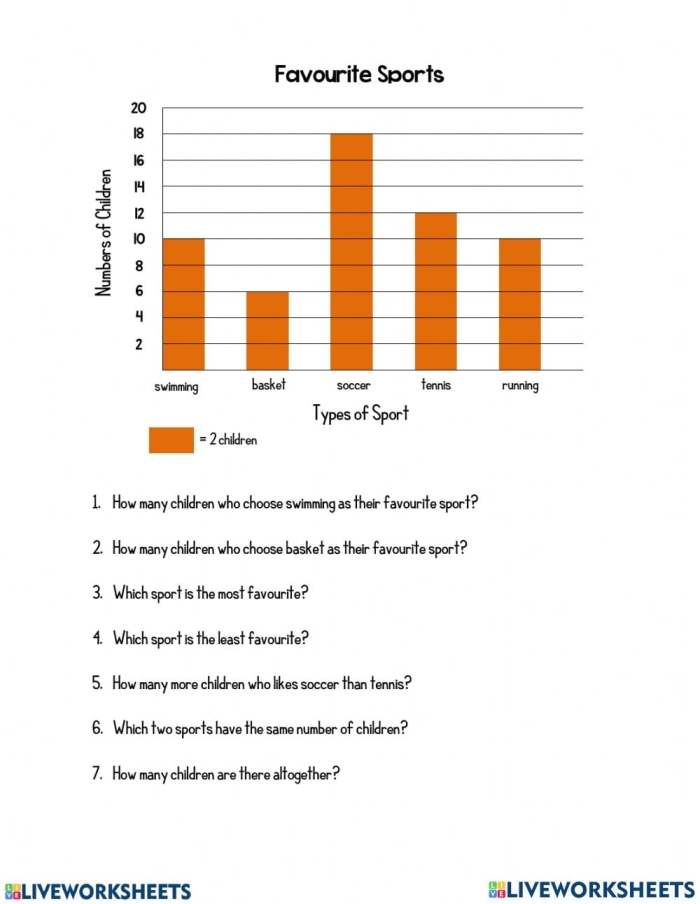
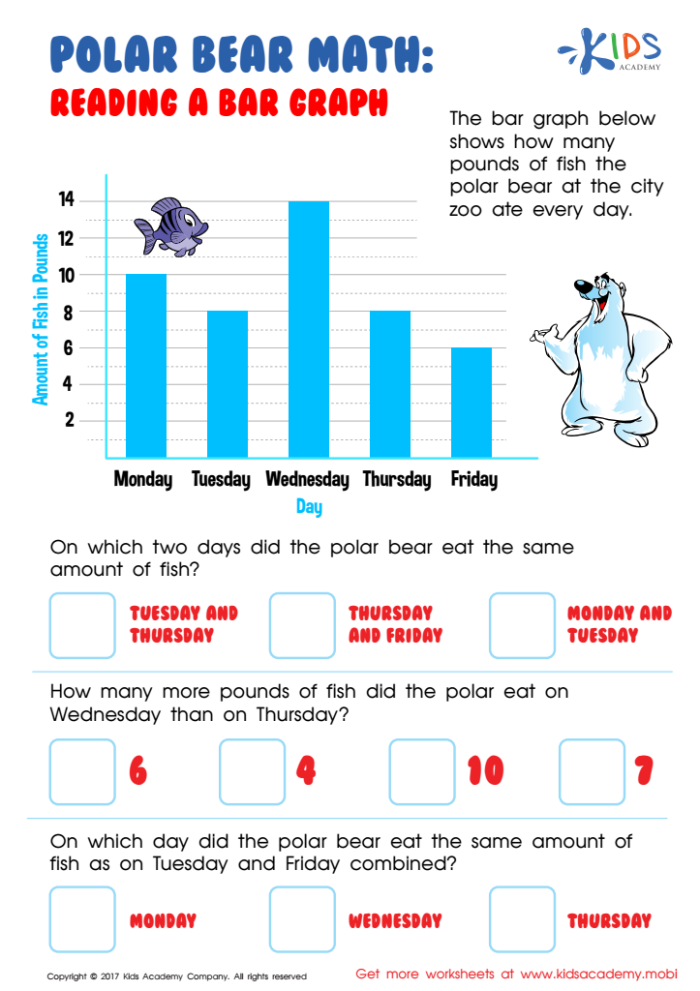
This worksheet follows a logical structure: the graph itself appears at the top, labeled clearly with a title, axis labels, and a scale. The questions progress from straightforward reading tasks to slightly more complex comparisons. Some questions ask students to find specific values, while others require them to compare, add, or subtract the data they’ve gathered.
Working through similar practice activities helps your child develop confidence with data interpretation. The skills practiced here connect to broader mathematical thinking that appears in later grades, much like how learning probability concepts builds on foundational number sense.
Practice with These Worksheets